
Trauma Awareness Month: The Stories We Carry, The Healing We Claim

“Trauma doesn’t make you weak. It makes you a witness to your own survival.”

-This Puzzled Life

Light the charcoal. Sprinkle the sage. Let the smoke rise like it’s clocking in for a shift. And let the air shift like it’s bracing itself for whatever truth you’re about to drag into the daylight. Today isn’t about pretending everything’s fine or slapping a smile on top of a wound. It’s not about the vibes, snacks, or cats doing interpretive dance in the sunbeam. It’s about trauma awareness. It is about naming the things we survived. The things we carried alone. The things we laughed through so we wouldn’t crumble. It’s a Southern‑fried, emotionally honest, and funny enough to keep you from dissolving into a puddle on the kitchen floor. 

Trauma Awareness is the kind that hides in your shoulders, jaw, breath, memories, and your jokes. And if we’re going to talk about it, we’re going to do it the only way I know how. Complete with honesty, humor, and the kind of emotional courage that feels like taking your bra off after a long day. It’s painful, relieving, and absolutely necessary.

There’s a moment right before you talk about trauma where your whole spirit goes, “Are we sure we want to do this?” It’s the same tone you use when someone says, “Let’s just run into Walmart real quick.” You know it’s not going to be quick. You know you’re going to see something you can’t unsee. You know you’re going to come out changed. Talking about trauma is like that. Except instead of a man in pajama pants buying raw chicken and fireworks, it’s your nervous system holding up a sign that says, “We’ve been through some things, ma’am.”

Trauma doesn’t just show up when you’re ready. Trauma is that one cousin who arrives early. Eats all the good snacks. And then says, “Why you look stressed?” It pops up at the worst times especially when you’re trying to relax. When you’re trying to sleep. When you’re trying to enjoy a sandwich. When you’re trying to mind your business. And when you’re trying to be a functioning adult for five minutes. Trauma will tap you on the shoulder like, “Hey bestie, remember that thing from 1998? No? Well, I do.” And suddenly you’re staring at the wall like it owes you money.

Your body remembers everything. Even the stuff you tried to bury under humor, iced coffee, and pretending you’re fine. You’ll be walking through Wal-Mart. Touching a throw pillow. And your body will whisper, “Hey, remember that time?” And you’re like, “No I do not. I am touching a pillow. Let me live.” But trauma doesn’t care. Trauma is like a Southern grandmother with a memory like a steel trap. And no sense of timing.

People talk about healing like it’s a spa day. Let me tell you something. Healing is not cucumber water and a robe. Healing is crying in the shower because your shampoo smells like 2007. Healing is realizing you’ve been clenching your jaw since the Bush administration. Healing is sitting in your car after therapy like you just got hit by an emotional freight train. Healing is messy. Healing is loud. Healing is quiet. Healing is confusing. Healing is holy. Healing is exhausting. Healing is worth it. But cute? Absolutely not.

So, buckle up. Because the cats have decided it’s Trauma Awareness Hour. And apparently they’ve all been waiting their whole lives to trauma dump with the enthusiasm of a group therapy circle run by toddlers. And today is the day they ask deeply personal questions with the emotional sensitivity of a toddler holding a chainsaw. They have formed a circle. They have snacks. They have opinions. And apparently, they have questions about my trauma.

Me: “Okay, girls. Today we’re talking about trauma. Share whatever you feel comfortable with.”

She raises paw like she’s in kindergarten

Piper: “I’ll go first because my story is the most dramatic. Obviously.”

Coco: “Oh lord.”

Tinkerbell: “Let the child speak. She needs this.”

Piper: “So picture this. Me and my siblings. In a metal box. In the Mississippi heat, basically sautéing like tiny furry cornbread muffins.”

Me: “Baby, that’s awful.”

Piper: “I know. I was basically a rotisserie chicken with trauma.”

Coco: “You were a sweaty raisin with opinions.”

Piper: “Anyway, I survived because I’m dramatic and stubborn. And now every time the sunbeam hits me wrong, I flop over like a Victorian woman fainting at a garden party.”

Tinkerbell: “You faint because you forget to breathe when you get excited.”

Piper: “Trauma. Tinkerbell. Let me have this.”

Coco clears throat like she’s about to deliver a TED Talk

Coco: “My siblings and I were found under a house. A house. Do you know what lives under houses? Darkness. Ghosts. Tax evasion. I was basically a feral raccoon with trust issues.”

Me: “You’ve come so far.”

Coco: “Yes. And now I cope by judging everyone. It’s called growth.”

Piper: “You judge me the most.”

Coco: “You give me the most material.”

Tinkerbell: “I don’t remember my trauma.”

Me: “At all?”

Tinkerbell: “No. I simply chose not to be present. I was spiritually unavailable.”

Coco: “You had worms.”

Tinkerbell: “Yes, apparently my intestines were hosting a music festival.”

Piper: “You pooped like you were trying to summon something.”

Tinkerbell: “I was summoning peace. And a vet. Preferably both.”

Me: “You really don’t remember anything?”

Tinkerbell: “I remember diarrhea. And then I remember you. Everything else is optional.”

Me: “Well, we’ve all been through some things.”

Piper: “Yeah, but now we’re together! A family! With two crazy brothers who scream at dust!”

Coco: “We are a support group. A dysfunctional one, but still.”

Tinkerbell: “We heal one memory at a time. Preferably with snacks.”

Piper: “And naps!”

Coco: “And boundaries. Mostly for Piper.”

Piper: “I don’t believe in boundaries.”

Tinkerbell: “We know.”

Piper: “Sometimes I get scared when it’s hot outside. So, I cope by yelling at the sun.”

Coco: “I cope by staring at people until they feel bad.”

Tinkerbell: “I cope by leaving my body spiritually whenever something stressful happens. Like when the vacuum turns on. Or when Piper breathes too loud.”

Piper: “I have big emotions.”

Coco: “You have no volume control.”

Tinkerbell: “You have the energy of a toddler who drank a Red Bull.”

Piper: “Momma, what is your trauma about?”

Me: “Oh absolutely not. We are not opening that can of worms. We’ll be here until this time next year. And I don’t have enough snacks or emotional stamina.”

Coco: “Is that why you have panic attacks in Walmart?”

Me: “Yes.”

Tinkerbell: “But what’s scary about going to the pharmacy?”

Me: “Everything.”

Piper: “Everything?? Like the shelves? The people? The lighting?”

Me: “Yes.”

Coco: “The lighting is aggressive.”

Tinkerbell: “The vibes are hostile.”

Piper: “The blood pressure machine is a demon.”

Me: “Exactly.”

Coco: “So what did our therapist tell you?”

Me: “She said, ‘I’ll see you in another couple of days.’”

Tinkerbell: “Translation: ‘You’re a lot. But I believe in you.’”

Piper: “Translation: ‘You have so many issues we need a punch card.’”

Coco: “Translation: ‘You’re keeping the lights on in that office.’”

Me: “But look at us now. We’re safe. We’re loved. We’re healing together.”

Piper: “And we have snacks!”

Coco: “And stability.”

Tinkerbell: “And indoor plumbing.”

Me: “We survived things we never should’ve had to survive. And now we get to build something soft and silly and sacred together.”

All Three Cats: “Group hug!”

Coco: “But don’t touch me too long.”

Piper: “I’m crying!”

Tinkerbell: “I’m dissociating!”

Me: “Perfect. Exactly the emotional range I expected.”

In small Southern towns, admitting trauma is treated like a social crime. The moment you name what happened, you’re not just telling your story. You’re “disgracing the family,” “embarrassing the community,” and threatening the carefully polished illusion of stability that everyone works so hard to maintain. The culture teaches people to swallow their pain. Protect the reputation of the town at all costs. And never, under any circumstances, call out the people who caused the harm. And because the “good ole boy” network is alive and well. And sitting in every position of authority from the courthouse to the church pews, the truth gets buried right alongside the accountability. Even when the perpetrators are known. Especially when they’re known. Nothing is done. The silence is enforced. The victims are shamed. And the town keeps smiling for the church directory photo like nothing ever happened. But the truth doesn’t disappear just because the town refuses to look at it. It lingers in the air, the families, the generations, waiting for someone brave enough to break the cycle and say, “This happened. And it mattered.” And I am that one in my family who refuses to stay quiet about the trauma that happened in the small city of Petal, MS.

Trauma will have you doing things that make absolutely no sense. Things like apologizing to furniture when you bump into it. Jumping at sounds that aren’t even loud. Overthinking texts like you’re decoding ancient scripture. Saying “I’m fine” in a tone that suggests you are, in fact, not fine. And crying because someone said, “I’m proud of you.” And your body wasn’t prepared for that level of kindness. Trauma will also make you emotionally attached to random objects. A mug. A blanket. A rock you found on a walk. A pen that writes really smooth. Your brain will be like, “This is my emotional support spoon. Touch it and perish.”

Trauma awareness isn’t about reliving the pain. It’s about naming it, so it stops owning you. It’s about understanding why you react the way you do. It’s about giving yourself grace for surviving things you never should’ve had to survive. It’s about learning that your triggers aren’t flaws. They’re evidence that you lived through something real. And it’s about knowing you’re not broken.

You’re healing. You’re growing. You’re learning how to breathe again. You’re learning how to trust softness again. You’re learning how to exist without bracing for impact. That’s not weakness. That’s strength with stretch marks.

May your healing be gentle. May your memories lose their sharp edges. May your nervous system unclench one muscle at a time. May your heart learn safety. May your voice return to you. May your laughter come back louder. May your story be yours again. And not something that happened to you. But something you rose from.

So, if no one told you today. You’re not dramatic. You’re not broken. And you’re not “too much.” You’re a whole human who lived through storms that would’ve snapped lesser souls in half. And you’re still here healing. Laughing. Unlearning, Softening. Reclaiming. That’s not survival. That’s resurrection. And baby, if that isn’t holy, I don’t know what is. Drop the sage. Keep the truth. And walk away knowing this. Your story didn’t end in the dark. You did.

Affirmation:  I honor the parts of me that survived. I honor the parts of me that are still healing. I am allowed to grow, to rest, to feel, and to reclaim my peace. And I can do it one breath at a time.

***Don’t forget to watch the video!***

#ThisPuzzledLife
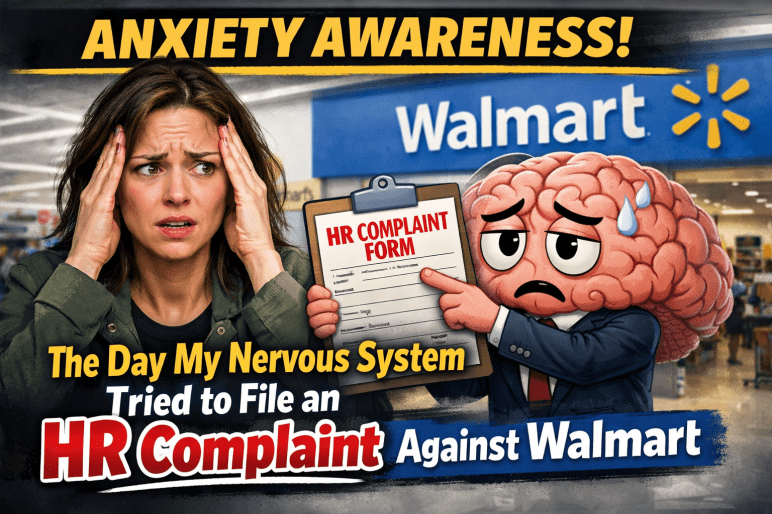
Anxiety Awareness: The Day My Nervous System Tried to File an HR Complaint Against Walmart

“Anxiety tried to schedule a meeting with me today, but I declined because I was already overbooked with minding my business and avoiding Walmart.”

-This Puzzled Life

Light the charcoal. Sprinkle the sage. Today we are not just cleansing the room. We are cleansing the entire nervous system that has been acting like a raccoon on Red Bull since 1986. If we’re going to talk about anxiety awareness, we might as well sanctify the whole atmosphere before my nervous system starts acting like it’s auditioning for The Exorcist: Southern Edition. Also, somebody please hold my sweet tea. And hide my debit card. Because my anxiety just whispered, “Let’s go to Walmart.” That is how generational trauma gets activated. And it just tried to file a noise complaint against my own heartbeat.

Let me tell you something. Anxiety is the only condition that will have you sitting in your own house. And minding your own business when suddenly your brain goes, “Hey, remember that embarrassing thing you did in 4th grade?” And now you’re sweating like you’re on trial for a crime you didn’t commit but might have thought about once.

Anxiety is a full-time employee in my life. No PTO. No sick days. No boundaries. It clocks in before I wake up and clocks out after I fall asleep. Sometimes it leaves sticky notes on my dreams like, “We need to talk.” And don’t get me started on the physical symptoms. Anxiety will have you convinced you’re dying because your left eyebrow twitched. Meanwhile your ancestors are watching from the spirit realm like, “Baby, that’s just dehydration and poor life consequences.”

And the worst part? Anxiety loves to show up at the most inconvenient times. Like a Southern auntie who pops up unannounced but brings no food. You ever try to relax? Just sit down. Breathe. And maybe watch a little TV? Anxiety busts through the door like, “Oh you thought. Let’s review every possible failure you’ve ever had.”

But here’s the thing. Awareness doesn’t mean we’re broken. It means we’re paying attention. It means we’re learning the choreography of our own nervous system. Even if the choreography looks like a baby deer on ice. It means we’re naming the thing so it can’t sneak up on us like a possum in the trash can at 2 a.m. And it means we’re not alone. Not in Mississippi. Not in the South. Not in this chaotic, holy, hilarious human experience.

But the real comedy? The way anxiety tries to prepare you for every possible scenario like a doomsday prepper with a Pinterest board. It is the only condition that will have you standing in the cereal aisle. Staring at 47 versions of Cheerios. And sweating like you’re defusing a bomb. Meanwhile your brain is like.

  • “What if you pick the wrong cereal?”
  • “What if everyone is watching you pick the wrong cereal?”
  • “What if you pass out in front of the cereal and become a local Facebook post?” 
  • Going to the grocery store? “What if you forget how to walk?”
  • Sending an email? “What if you accidentally confess to a felony?”
  • Meeting new people? “What if they can hear your thoughts and your thoughts are stupid?”

And that’s exactly when my cats, my emotional support staff and furry chaos consultants, decide to hold a household emergency meeting.

Piper (dramatic and convinced she’s the CEO): “Alright team, Mama’s going to Walmart. That’s a Code Orange. Everyone stay sharp.”

Tinkerbell (the eldest acting, the union rep, wearing imaginary glasses): “Should we call the therapist now or wait until she hits the checkout line and forgets her PIN again?”

Coco (the chaotic neutral gremlin): “I say we call the therapist the moment she steps into the parking lot. Walmart energy is unpredictable. Anything can happen. A rollback could roll back her entire sense of stability.”

Piper: “Coco, we can’t call the therapist every time Mama goes to Walmart.”

Coco: “Why not? She said to reach out when things feel overwhelming. Walmart is overwhelming. The lighting alone is a threat.”

Tinkerbell: “Plus, Mama always ends up in that aisle with the seasonal décor. And that’s when she starts questioning her entire life path. That’s textbook panic adjacent.”

Piper: “Okay, fine. But we need a plan. If Mama starts breathing like she’s running from a ghost, we call the therapist. If she starts sweating like she’s in a revival tent, we call the therapist. If she starts talking to herself-”

Coco: “Piper, she talks to herself every day.”

Piper: “Right. So, if she starts talking to herself louder than usual.”

Tinkerbell: “And if she buys anything from the middle aisle that she didn’t come for. That’s a red flag.”

Coco: “Like the time she went for milk and came home with a new bong?”

Piper: “Exactly. That was a cry for help.”

Tinkerbell: “Okay, so we’re agreed. Our therapist is on standby. Paws on deck. And if Mama ends up in the candle aisle sniffing things like she’s trying to inhale peace directly into her bloodstream, we intervene.”

Coco: “I’ll bring the emotional support snacks.”

Piper: “I’ll bring the drama.”

Tinkerbell: “I’ll bring the clipboard.”

And let the record show, anxiety may roll up on us like a tornado siren at 3 a.m. But we are not facing it alone. Not in this house. Not in this lifetime. Not with three cats who treat mental health like a full‑time group project.

Anxiety awareness isn’t about pretending we’re calm. It’s about knowing the signs. Naming the chaos. And having a furry emergency response team ready to call the therapist before you even realize you’re spiraling.

It’s about honoring the truth that Walmart is a battlefield. The fluorescent lights are the enemy. And the seasonal aisle is a spiritual test. It’s about laughing at the absurdity of it all. Not because it’s small, but because we’re bigger. And it’s about remembering this. You can have anxiety. You can have panic attacks. You can have days where your brain feels like a raccoon in a Dollar General dumpster. But you also have resilience. You have humor. You have sage, charcoal, and a whole household of four‑legged emotional support supervisors who refuse to let you fall apart alone.

So let anxiety know loudly, proudly, with your whole Southern chest, “I may panic in Walmart. But I do not panic alone. I come with a team. I come with a plan. And I come with three cats who will call my therapist before my knees even start to wobble. Anxiety dismissed with Southern hospitality and a side‑eye. Thanks for reading! And reach out when needed.

Affirmation: I am calm. Collected. And spiritually moisturized. And if my anxiety disagrees, it can take a number and wait behind the cats, the ancestors, and my iced coffee.

***Don’t forget to watch the video!***

#ThisPuzzledLife
Child Abuse Awareness: When Safety Was a Lie and Silence Was the Rule

“Child abuse doesn’t lose its cruelty just because it hides in a small town, a school hallway, a church pew, or any place adults pretend is safe. The truth is simple. Harm is harm. And its echoes outlive every secret kept to protect the wrong people.”

-This Puzzled Life

Light the candles. Hide the breakables. Tell the ancestors we’re not sugarcoating anything this month. And somebody hold your childhood diary. Because it’s Child Abuse Awareness Month. My internal system is doing the emotional equivalent of a protest march. While my cats are organizing a full‑blown intervention in the laundry basket.

Piper opened the morning by knocking over a framed photo of my childhood and announcing, “This energy is off.” Coco dragged a blanket into the hallway like she was staging a reenactment of emotional neglect. And Tinkerbell, the voice of clarity with zero tolerance for dysfunction, sat on the windowsill and whispered, “We don’t protect abusers here.” And they’re right.

This month isn’t about tiptoeing around secrets. It’s about naming what happened. Honoring the children who survived. And refusing to let silence win. It’s not about polite conversations. It’s about truth. It’s about healing. It’s about refusing to let ignorance dress up as tradition.

It’s about the children who were told to “respect their elders.” While those elders, both in their homes and communities, disrespected their humanity. It’s about the survivors who still flinch when someone says, “family first.” And the ones whose abuse didn’t happen in their family at all. It happened in schools, churches, programs, and institutions that were supposed to protect them. It’s about the ones who were gaslit. Scapegoated. Silenced. And then told they were “too sensitive.”

And let’s be very clear about the fact that ignorance is no longer a valid excuse for misunderstanding abuse. Education exists. Compassion exists. If someone chooses denial over growth, that’s not confusion. That’s commitment to dysfunction.

Has anyone ever been told, “That wasn’t abuse. It was just discipline”? Ah yes, the classic Southern remix of denial. If I had a dollar for every time someone said, “Well, my parents hit me and I turned out fine.” I’d have enough money to fund a national trauma‑education tour complete with snacks, therapy dogs, and a PowerPoint titled “Fine Is Not a Personality.”

Intent doesn’t erase impact. You can mean well and still cause harm. You can love someone and still traumatize them. And if your version of love includes fear, shame, manipulation, or control, it’s not love. It’s a power imbalance with a decorative throw pillow.

And then there’s the classic statement, “That was a long time ago.” So was slavery. So was the invention of mayonnaise. We still talk about both. Time doesn’t heal what’s never been acknowledged. Trauma doesn’t expire just because the calendar flipped.

This month, I light candles for the child I was. For the children still living in fear. For the adults still trying to make sense of it. For the truth that refuses to stay buried. For the ones who were told they were “too sensitive.” When they were actually just emotionally literate.

And for the cats who remind me daily that boundaries are sacred. Naps are healing. And knocking over symbols of dysfunction is a legitimate coping skill. So, if you came here for comfort, grab a weighted blanket and a snack. We’re lighting candles for the truth and the truth doesn’t whisper.

Let’s be crystal clear about something. Ignorance is no longer a valid excuse for misunderstanding abuse. We have books. We have therapists. We have podcasts, articles, survivors, and entire systems screaming for change. If someone chooses denial over education, silence over accountability, and tradition over truth. That’s not confusion. That’s complicity. And we don’t protect dysfunction here. We name it. We heal from it. We build something better. Because the truth is staying.

And this is the part nobody wants to talk about. But I’m going to do it anyway. And since we’re telling the truth about this month, let me go ahead and say the part that makes people shift uncomfortably in their church pews and PTA meetings is that I wasn’t abused at home. I was abused at school. The place where children are supposedly “safe.”

Yes, the institution covered in inspirational posters about kindness and responsibility. Yes, the adults who were trained. Certified. And paid to protect children. Yes, the environment where parents assume their kids are supervised by people with functioning moral compasses. Turns out, though, perpetrators don’t check IDs at the door. They don’t limit themselves to “bad homes.” They show up wherever power goes unchecked. Which include classrooms and government.

And the tactics used against me? Let’s just say they were the kind of psychological warfare that could flatten most adults. Much less a child who still believed recess was the highlight of the day. The cruelty was calculated. The gaslighting was Olympic‑level. The humiliation was public. And the message was clear “You don’t matter.”

That’s the part people don’t want to hear. It ruins their tidy narratives about “good schools” and “trusted educators.” It forces them to confront the uncomfortable truth that abuse doesn’t need a broken home. It just needs an adult who knows they can get away with it.

And the damage? It didn’t stay in childhood. It built an unstable foundation that I had to grow up on like trying to build a life on emotional quicksand. The scars left a crater in my soul. And it was one filled with conflicting messages. Their responsibilities as adults versus the impossible responsibilities they shoved onto me as a child. Their power versus my powerlessness. Their choices versus my survival.

And no matter how many years pass or how many therapy hours I stack up like emotional frequent‑flyer miles, the wound still carries a vivid truth. I didn’t choose. I was forced to decipher safety was an illusion. Adults weren’t always protectors. And when I screamed for help, no one heard me. So, I did what children do when every exit is blocked. I survived. Not because I was strong. But because I had no other option.

And if anyone wants to dismiss that with, “Well, that was a long time ago.” I invite them to sit down. Hydrate. And stop embarrassing themselves. Trauma doesn’t expire like a coupon. It stays. It shapes. It echoes. And the message I was left to decode? The one carved into my childhood like a warning label was painfully simple. I didn’t matter to the people who were supposed to protect me.

And before anyone tries to twist the conversation into knots, let’s make something unmistakably clear. It doesn’t matter where the abuse happens. A small‑town public school with a football‑field budget and a gossip‑mill PTA. A home that looks picture‑perfect from the outside. A religious school hiding behind scripture. A church where adults confuse authority with immunity. A state‑sponsored facility that claims to “rehabilitate.” Or the most infamous island on the planet.

Abuse is abuse. Location doesn’t soften the crime. Power doesn’t excuse it. Silence doesn’t erase it. And the impact doesn’t stop with the child who endured it. It echoes. It spreads. It roots itself in families, communities, and generations that follow. When a child is harmed, the wound doesn’t stay in childhood. It becomes a legacy. One that survivors spend years, sometimes lifetimes, trying to rewrite. No matter how hard people try to hide it. Minimize it. Or dress it up in excuses. The truth stands firm. Child abuse is a crime. And its mark lasts far longer than the lies told to cover it.

Let’s just go ahead and say the quiet part loudly. Child abuse doesn’t just happen in “bad homes.” It happens anywhere adults hold power and children are expected to stay silent. Including the places that swear they exist to protect them.

What happened to me wasn’t a misunderstanding. It wasn’t “discipline.” It wasn’t a “tough lesson.” It was abuse that was carried out by adults who weaponized authority and abandoned their responsibility the moment it became inconvenient. And the fallout wasn’t small. It shaped my future. It rewired my trust. It carved a crater in my soul that therapy can help me navigate. But will never pretend didn’t exist.

The message I was forced to decode as a child through cruelty, gaslighting, humiliation, and silence was that I didn’t matter. Here’s the part they never planned for. I matter now. My voice matters now. And I’m telling the truth they hoped I’d never survive long enough to speak. Their power ends where my truth begins. Silence only ever protected them, not me. Thanks for reading! And protect children.

Affirmation: My truth matters. My voice matters. I honor the child who survived what no child should face. And I rise today with the strength of someone who refuses to carry silence that never belonged to me.

***Don’t forget to watch the video!***

#ThisPuzzledLife
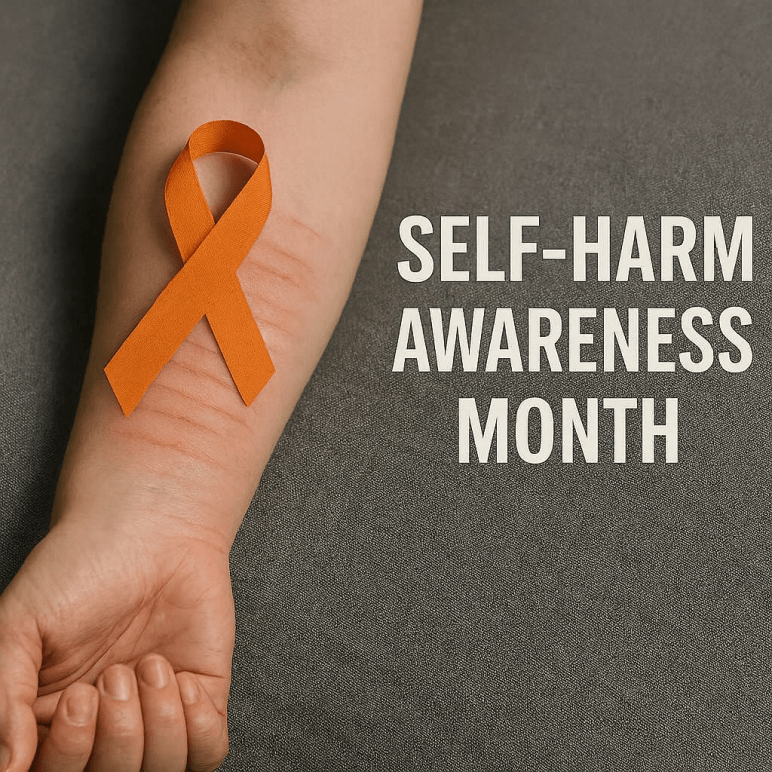
Self‑Harm Awareness Month: Where Growth Happens and My Nervous System Tries Its Best

“I didn’t choose the healing journey. The healing journey chose, dragged me and asked for gas money.”

-Unknown

Light the charcoal. Sprinkle the sage. Negative energy go away. It’s Self‑Harm Awareness Month, and if there’s one thing this month teaches us, it’s that healing is messy, sacred, and occasionally accompanied by a cat sitting on your chest like a furry emotional support paperweight.

Self‑harm is one of those topics people whisper about like it’s Voldemort, taxes, or the time they accidentally liked their ex’s Instagram post from 2014. But here? We talk about it with honesty, compassion, and the kind of humor that keeps us from spontaneously combusting. Self‑harm isn’t about attention. It’s about pain. And the people who say otherwise are usually the same ones who think essential oils can cure a broken femur.

Self‑harm doesn’t happen because someone is weak. It happens because someone is overwhelmed, hurting, or trying to survive emotions that feel too big for one body. It’s a coping mechanism. Not a character flaw. But the world loves to misunderstand what it doesn’t want to deal with. People will say things like, “Just think positive!,” “Have you tried yoga?,” “My cousin’s neighbor’s dog used to feel sad too.” Ma’am. Self‑harm is not cured by downward dog or inspirational throw pillows.

Let’s look at how the addiction occurs. The brain notices that shift and files it under: “This worked.” Not because it’s healthy. However, because it changed the emotional state quickly. The body reinforces it by sending a rush of endorphins, adrenaline, and dopamine. These chemicals temporarily reduce emotional pain or numbness. That relief, even if brief, can make the brain want to repeat the behavior. This is the same reinforcement loop seen in many addictions. Next, the cycle becomes automatic. And with overtime urgency , the brain starts linking stress → self‑harm, numbness → self‑harm, shame → self‑harm, and emotional overload → self‑harm. It becomes a reflex. A pattern, not a personality trait. A survival strategy, not a moral failing. And then shame strengthens the cycle. People who self‑harm often feel guilt, embarrassment, fear of being judged, or the pressure to hide. Those feelings can increase emotional distress. Which can then trigger the urge again. It becomes a loop that’s incredibly hard to break alone. And finally, it’s not about wanting to die. For many people, self‑harm is about wanting to feel something, wanting to feel less, wanting control, wanting relief, and wanting the emotional noise to stop. It’s a coping mechanism that becomes addictive because the pain underneath it is overwhelming. People don’t heal because they’re scolded. They heal because they’re understood.

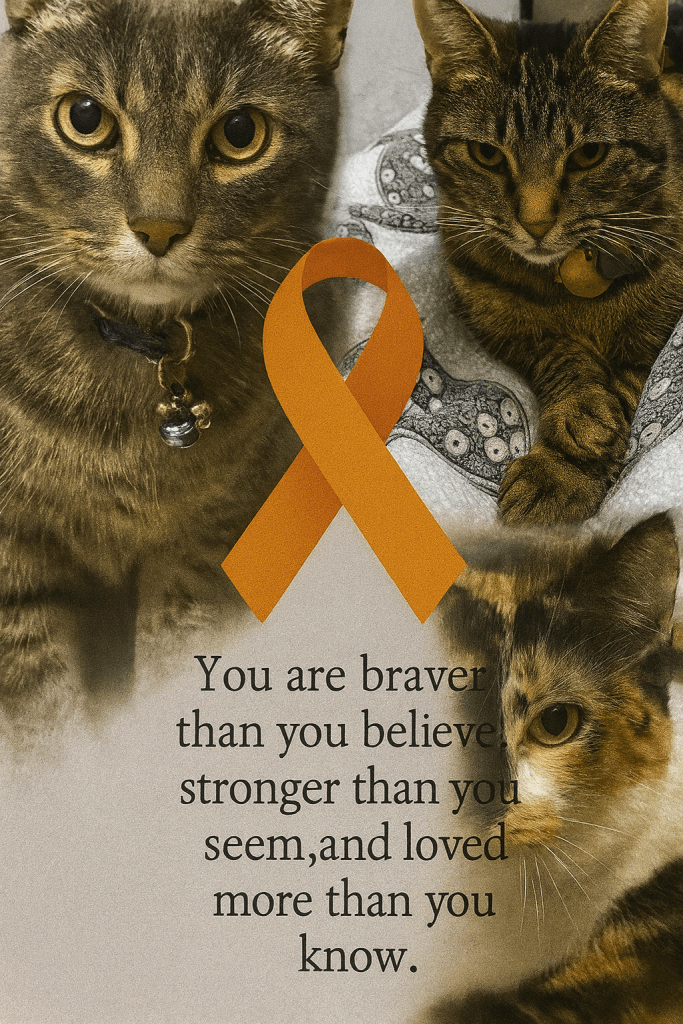
What does help? Why don’t you try some compassion, support, safe conversations, professional care, people who don’t minimize your pain, and a community that refuses to let shame win. Some days you glide. Some days you wobble. Some days you crash into a display of discounted cereal and pretend it was part of your spiritual journey. Healing is allowed to be imperfect. You are allowed to be imperfect. You are allowed to take up space while you figure things out. “Keep going. Rest when you need to. And stop carrying pain alone.” You deserve support. You deserve compassion. You deserve to be here. And you deserve to heal without shame breathing down your neck like a judgmental church lady.

Self‑Harm Awareness Month isn’t about fear. It’s about understanding. It’s about breaking silence. It’s about reminding people they’re not alone. Not now, not ever. So, here’s to choosing growth even when it feels like a group project we didn’t sign up for, choosing compassion even when our patience is on backorder, choosing to stay when our brains are acting like and the whole system is like, “Ma’am, I was not built for this.”

Then light your sage, drink your water, moisturize your spirit, and strut into the rest of the month like a woman who has survived every plot twist life has thrown at her. Including the ones that arrived unannounced, barefoot, and holding a casserole of chaos. Because you’re still here. You’re still growing. And honestly? You’re doing better than half the people who think essential oils are a personality. 

And as we wrap up this emotional rollercoaster of a topic, complete with sage smoke, hydration, and my nervous system acting like it’s auditioning for a disaster movie. It is like trying to assemble IKEA furniture with no instructions, three missing screws, and a mysterious extra piece that definitely wasn’t in the box. I’ve also realized something important. And it is that healing is basically like trying to reboot a Wi‑Fi router from 2007. You unplug it, you wait, you pray, you bargain, you threaten it, you light a candle, and somehow it still blinks at you like, “Girl, I’m doing my best.” Same, router. 

Here’s to all of us out here choosing growth even when our brains are running on 3% battery. Choosing compassion even when our patience is on backorder. And choosing to keep going even when life feels like a Walmart parking lot at 2 a.m. You’re doing your best, you’re sweating, you’re questioning your life choices, and at some point you whisper, “If this thing collapses, I’m blaming Sweden.” Thanks for reading and remember, Healing is holy, humor is medicine, and you are too stubborn to give up now. But you keep going. Because that’s what we do. And if anyone tries to judge your healing journey, just smile sweetly and say, “Sweetheart, I’m busy becoming emotionally stable. I don’t have the bandwidth for your nonsense.” Thanks for reading! Get educated.

Affirmation: I honor my healing by choosing compassion over shame, boundaries over chaos, and growth over the nonsense that used to break me.

***Don’t forget to watch the video!***

#ThisPuzzledLife
Children of Addiction: The Invisible Story

“What cannot be communicated to the mother cannot be communicated to the self.”

     -John Bowlby

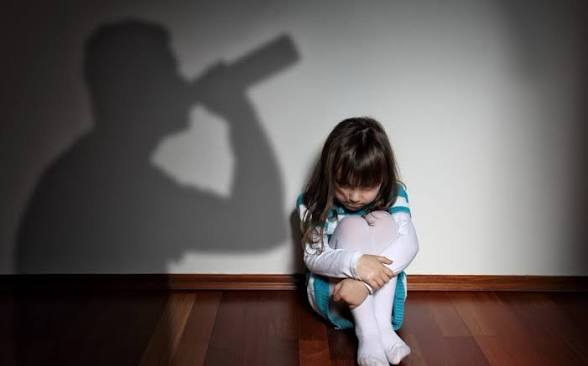
Light the charcoal. Sprinkle the sage. Negative energy go away. Some topics require us to slow down, breathe deeper, and open our hearts a little wider. Children of Addiction Awareness is one of those topics that are tender, urgent, and often hidden in plain sight. When we talk about addiction, the conversation usually centers on the person struggling. But in the quiet corners of those stories are children who carry the weight of what they cannot name.

They are not statistics. Not headlines. Not “someone else’s problem.” They are real kids. Real families. Real hearts trying to grow in soil that isn’t always steady. You don’t need a degree or special training to understand this. However, you just need to know this. When addiction lives in a home, children feel it in their bones. Even when they don’t have the words. Even when they pretend everything is fine.

Children growing up in homes affected by addiction often learn to read emotional weather patterns before they learn to read books. They become experts at sensing tension, anticipating conflict, and adjusting themselves to survive unpredictable environments.

They are the kids who:

  • Tiptoe around moods.
  • Become caretakers far too young.
  • Hide their fear behind perfection or silence.
  • Carry secrets that feel too heavy for their age.
  • Love their parents fiercely, even when life feels chaotic.

These children are not defined by the addiction around them. But they are shaped by it in ways that deserve understanding, compassion, and support.

Kids who grow up around addiction often learn to:

  • Stay quiet
  • Stay small
  • Stay out of the way
  • Stay “strong” even when they’re hurting

They become experts at reading moods, hiding feelings, and pretending everything is okay even when it’s not.

Growing up with addiction in the home can create emotional landscapes that are confusing and overwhelming. Many children experience:

  • Unpredictability: never knowing what version of a parent will appear.
  • Emotional neglect: not from lack of love, but from addiction’s consuming nature.
  • Role reversal: becoming the “adult” in the home.
  • Isolation: believing no one else lives this way.
  • Hypervigilance: always on alert for the next crisis.

And yet, these same children often develop extraordinary strengths: empathy, intuition, resilience, and emotional intelligence. They learn to survive in ways that would humble most adults.

But survival is different from thriving. Awareness is the bridge between the two. These children don’t need perfect parents. They don’t need someone to “fix” everything. They don’t need pity.

They need:

  • Consistency
  • Predictability
  • A safe adult who listens without judgment
  • Reassurance that none of this is their fault
  • Permission to feel their feelings — all of them

Sometimes the most healing words a child can hear are: “You didn’t cause this. You can’t control this. You are not alone.”

Whether you’re a teacher, neighbor, mentor, family member, or simply a caring human, you can make a meaningful difference.

  • Create safe spaces for conversation.
  • Model healthy coping skills.
  • Offer stability and routine.
  • Validate their emotions.
  • Connect them to supportive resources.

You don’t need a degree to change a child’s life. You just need to show up consistently, compassionately, and without judgment.

For the parents struggling with addiction, this conversation is not here to shame you. It’s here to remind you that healing is possible for you and for your child. Your effort matters. Your recovery matters. Your presence matters more than perfection ever could. Children don’t need flawless parents. They need honest ones. They need parents who try, who apologize, who grow, who keep coming back to love. Every step you take toward healing is a step toward breaking generational cycles.

Children of Addiction Awareness is not just a month, it’s a movement toward visibility, compassion, and collective responsibility. When we acknowledge these children, we give them language. When we give them language, we give them power. And when we give them power, we give them hope. So, take a breath and hold this truth close: Awareness opens the door. Connection keeps it open. Love walks a child through. Thanks for reading! Keep HOPE alive.

Affirmation: I didn’t cause it, I can’t control it, but I can take care of myself.

***Don’t forget to watch the video!***

#Thispuzzledlife