This Puzzled Life is a mental health and recovery blog exploring addiction, trauma healing, LGBTQ experiences, humor, and the strange moments that shape us.
“Some strains hit like a freight train. Donutz hits like a bakery door opening at 6 a.m. It is warm, sweet, and full of promise.”
-This Puzzled Life
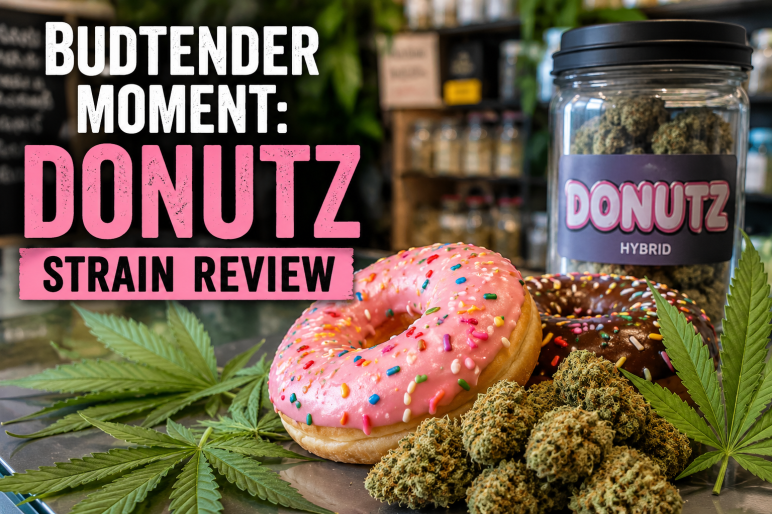
Light the charcoal. Sprinkle the sage. Today we’re stepping into the pastry case of the cannabis gods. And Donutz is the strain that shows up glazed. Iced. And ready to testify.
Donutz is a balanced hybrid. It’s a cross between Gelato × Zkittlez. Gelato is a cross between Sunset Sherbet × Thin Mint GSC. Zkittlez is a cross between Grape Ape × Grapefruit. This strain is not too couch‑locking. And not too sky‑rocketing. It’s just the right kind of “I can still function but also don’t ask me to do math” middle ground. It’s the strain you reach for when you want sweetness without chaos. Calm without sedation. And vibes without the existential spiral. This is basically the cannabis version of a family reunion where everyone brought a casserole and not a single one disappointed.
Donutz tastes like somebody melted a box of fruit‑glazed pastries in the backseat of a warm car in the best possible way. It has the flavors of sweet berry icing, vanilla dough, light citrus drizzle, and a warm, creamy finish that feels like a hug from a Southern auntie who calls everyone “baby.” It’s dessert-forward without being sticky. Loud without being obnoxious. And smooth enough to make you close your eyes on the exhale.
Major terpenes are Limonene, Caryophyllene, and Linalool. Together they create a terpene trio that says, “You’re safe. You’re held. And also, you deserve a treat.” Medical Benefits include stress relief, anxiety reduction, mild to moderate pain relief, mood elevation, and creative focus. It’s a strain that smooths the edges without erasing the day.
Please keep in mind that depending on differences in grows depends on what area of the country it is grown in. Ther will also be slight differences depending on when, where the plant was grown. Thanks for reading! And keep blazin.’ Have you tried this strain?
Affirmation: I allow sweetness into my life without apology. I deserve softness, joy, and moments that taste like peace.
“This strain hit me so soft and sweet I thought somebody had replaced my stress with a bag of Dollar General candy and told me to hush.”
-This Puzzled Life
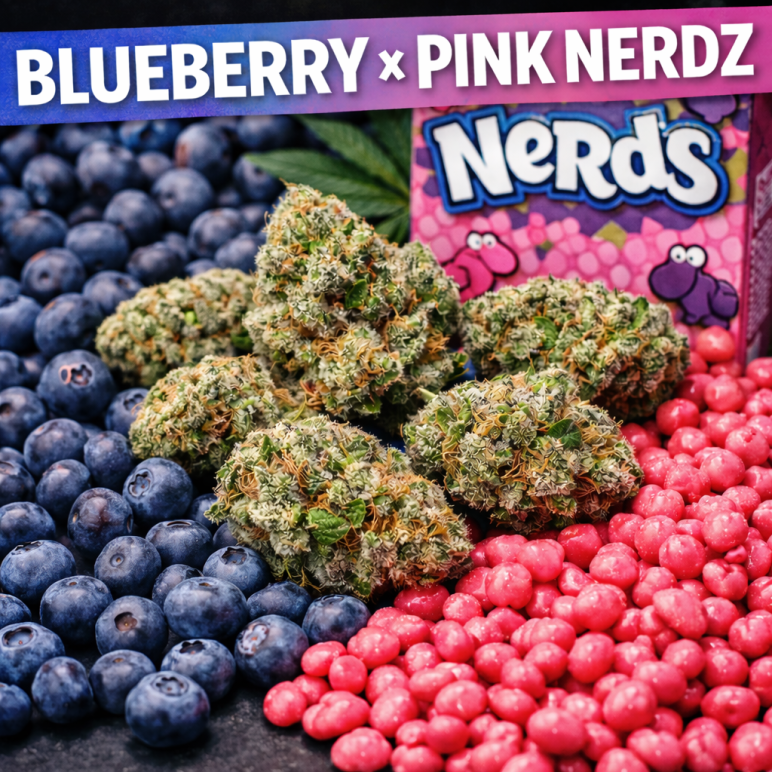
Light the porch lantern. Grab your insulated cup. And tell Piper to stop acting like she’s about to file a complaint with the HOA. Today’s Budtender Moment is a fruit‑snack fever. And for my transgender friends, this strain has you covered in blue and pink.
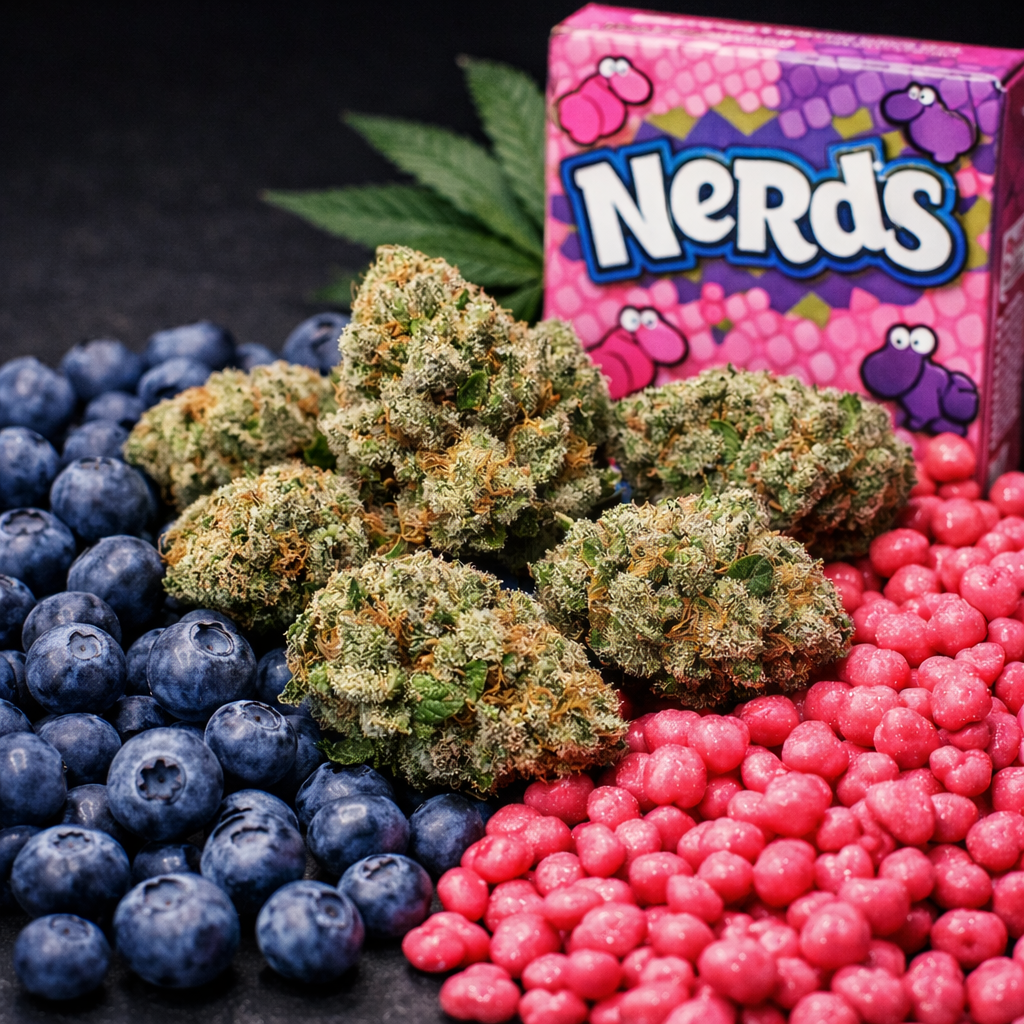
We’re talking about an infused preroll known simply as Blueberry × Pink Nerdz. It’s a strain that walks into your life smelling like childhood sugar highs and adult emotional stability. It’s sweet. It’s soothing. It’s the kind of high that makes you want to sit on the porch and narrate the neighborhood like you’re filming a documentary. Whisper, “Let the sweetness take me,” as you spark it.
This strain doesn’t just hit. It melts. It slides into your system like a fruit‑flavored cloud and says, “Sweetheart, we’re not stressing today.” Blueberry is an indica‑dominant hybrid created in the 1970s by legendary breeder DJ Short. Its confirmed lineage is Afghani (Indica Landrace), Thai (Sativa Landrace), and Purple Thai. Pink Nerdz is a balanced hybrid created by crossing Zkittlez × White Runtz. Zkittlez is a cross between Grape Ape × Grapefruit × (Undisclosed Third Parent). White Runtz is a cross between Gelato × Zkittlez. And this powerful little combo is further intensified from having some good concentrate that is infused in the bud. This strain goes through a few stages.
Top terpenes in this strain are Myrcene, Pinene, Caryophyllene, Linalool and Limonene. Patients report relief from stress, low mood, emotional fatigue, mild physical tension, evening relaxation, creative focus. This strain combo goes through three different stages.
1. The Sugar Rush It hits quick. Like opening a fresh pack of Nerds and immediately regretting nothing. Your mood lifts. Your brain brightens. You suddenly feel like you could reorganize the pantry and enjoy it.
2. The Berry Drift Euphoria settles slowly and warm. Thoughts loosen. Your shoulders drop. Coco walks by and you swear she smells like fruit snacks.
3. The Soft Landing Your body softens. Your mind steadies. You feel like a blueberry marshmallow floating through life unbothered. You are calm. You are sweet. You are not available for nonsense.
People love this strain for helping with stress, low mood, emotional fatigue, mild aches, creative blocks, and that “I need to sit down and breathe for a minute” feeling. It’s a perfect evening strain. It’s cozy, flavorful, and steady.
This Blueberry × Pink Nerdz hybrid is the strain for anyone who needs sweetness, calm, and a little candy‑coated confidence. It’s soothing, flavorful, and beautifully balanced. And the kind of high that makes you feel like you’re wrapped in a warm, fruity blanket. Please keep in mind that sometimes the genetics and terpene vary depending on the grow. Thanks for reading! Keep blazin.’
Affirmation: I welcome sweetness, calm, and the soft moments that carry me.
“Trauma doesn’t make you weak. It makes you a witness to your own survival.”
-This Puzzled Life
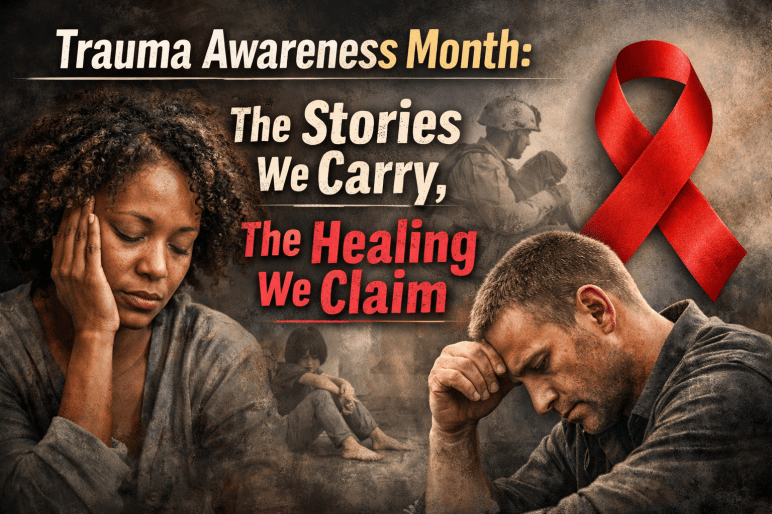
Light the charcoal. Sprinkle the sage. Let the smoke rise like it’s clocking in for a shift. And let the air shift like it’s bracing itself for whatever truth you’re about to drag into the daylight. Today isn’t about pretending everything’s fine or slapping a smile on top of a wound. It’s not about the vibes, snacks, or cats doing interpretive dance in the sunbeam. It’s about trauma awareness. It is about naming the things we survived. The things we carried alone. The things we laughed through so we wouldn’t crumble. It’s a Southern‑fried, emotionally honest, and funny enough to keep you from dissolving into a puddle on the kitchen floor.
Trauma Awareness is the kind that hides in your shoulders, jaw, breath, memories, and your jokes. And if we’re going to talk about it, we’re going to do it the only way I know how. Complete with honesty, humor, and the kind of emotional courage that feels like taking your bra off after a long day. It’s painful, relieving, and absolutely necessary.
There’s a moment right before you talk about trauma where your whole spirit goes, “Are we sure we want to do this?” It’s the same tone you use when someone says, “Let’s just run into Walmart real quick.” You know it’s not going to be quick. You know you’re going to see something you can’t unsee. You know you’re going to come out changed. Talking about trauma is like that. Except instead of a man in pajama pants buying raw chicken and fireworks, it’s your nervous system holding up a sign that says, “We’ve been through some things, ma’am.”
Trauma doesn’t just show up when you’re ready. Trauma is that one cousin who arrives early. Eats all the good snacks. And then says, “Why you look stressed?” It pops up at the worst times especially when you’re trying to relax. When you’re trying to sleep. When you’re trying to enjoy a sandwich. When you’re trying to mind your business. And when you’re trying to be a functioning adult for five minutes. Trauma will tap you on the shoulder like, “Hey bestie, remember that thing from 1998? No? Well, I do.” And suddenly you’re staring at the wall like it owes you money.
Your body remembers everything. Even the stuff you tried to bury under humor, iced coffee, and pretending you’re fine. You’ll be walking through Wal-Mart. Touching a throw pillow. And your body will whisper, “Hey, remember that time?” And you’re like, “No I do not. I am touching a pillow. Let me live.” But trauma doesn’t care. Trauma is like a Southern grandmother with a memory like a steel trap. And no sense of timing.
People talk about healing like it’s a spa day. Let me tell you something. Healing is not cucumber water and a robe. Healing is crying in the shower because your shampoo smells like 2007. Healing is realizing you’ve been clenching your jaw since the Bush administration. Healing is sitting in your car after therapy like you just got hit by an emotional freight train. Healing is messy. Healing is loud. Healing is quiet. Healing is confusing. Healing is holy. Healing is exhausting. Healing is worth it. But cute? Absolutely not.
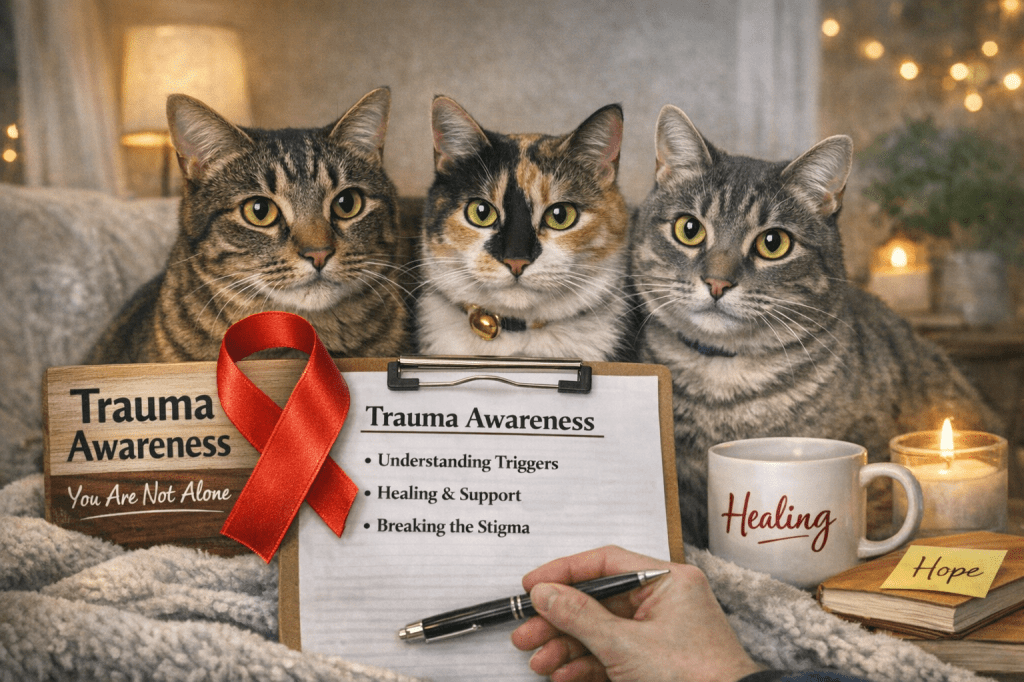
So, buckle up. Because the cats have decided it’s Trauma Awareness Hour. And apparently they’ve all been waiting their whole lives to trauma dump with the enthusiasm of a group therapy circle run by toddlers. And today is the day they ask deeply personal questions with the emotional sensitivity of a toddler holding a chainsaw. They have formed a circle. They have snacks. They have opinions. And apparently, they have questions about my trauma.
Me: “Okay, girls. Today we’re talking about trauma. Share whatever you feel comfortable with.”
She raises paw like she’s in kindergarten
Piper: “I’ll go first because my story is the most dramatic. Obviously.”
Coco: “Oh lord.”
Tinkerbell: “Let the child speak. She needs this.”
Piper: “So picture this. Me and my siblings. In a metal box. In the Mississippi heat, basically sautéing like tiny furry cornbread muffins.”
Me: “Baby, that’s awful.”
Piper: “I know. I was basically a rotisserie chicken with trauma.”
Coco: “You were a sweaty raisin with opinions.”
Piper: “Anyway, I survived because I’m dramatic and stubborn. And now every time the sunbeam hits me wrong, I flop over like a Victorian woman fainting at a garden party.”
Tinkerbell: “You faint because you forget to breathe when you get excited.”
Piper: “Trauma. Tinkerbell. Let me have this.”
Coco clears throat like she’s about to deliver a TED Talk
Coco: “My siblings and I were found under a house. A house. Do you know what lives under houses? Darkness. Ghosts. Tax evasion. I was basically a feral raccoon with trust issues.”
Me: “You’ve come so far.”
Coco: “Yes. And now I cope by judging everyone. It’s called growth.”
Piper: “You judge me the most.”
Coco: “You give me the most material.”
Tinkerbell: “I don’t remember my trauma.”
Me: “At all?”
Tinkerbell: “No. I simply chose not to be present. I was spiritually unavailable.”
Coco: “You had worms.”
Tinkerbell: “Yes, apparently my intestines were hosting a music festival.”
Piper: “You pooped like you were trying to summon something.”
Tinkerbell: “I was summoning peace. And a vet. Preferably both.”
Me: “You really don’t remember anything?”
Tinkerbell: “I remember diarrhea. And then I remember you. Everything else is optional.”
Me: “Well, we’ve all been through some things.”
Piper: “Yeah, but now we’re together! A family! With two crazy brothers who scream at dust!”
Coco: “We are a support group. A dysfunctional one, but still.”
Tinkerbell: “We heal one memory at a time. Preferably with snacks.”
Piper: “And naps!”
Coco: “And boundaries. Mostly for Piper.”
Piper: “I don’t believe in boundaries.”
Tinkerbell: “We know.”
Piper: “Sometimes I get scared when it’s hot outside. So, I cope by yelling at the sun.”
Coco: “I cope by staring at people until they feel bad.”
Tinkerbell: “I cope by leaving my body spiritually whenever something stressful happens. Like when the vacuum turns on. Or when Piper breathes too loud.”
Piper: “I have big emotions.”
Coco: “You have no volume control.”
Tinkerbell: “You have the energy of a toddler who drank a Red Bull.”
Piper: “Momma, what is your trauma about?”
Me: “Oh absolutely not. We are not opening that can of worms. We’ll be here until this time next year. And I don’t have enough snacks or emotional stamina.”
Coco: “Is that why you have panic attacks in Walmart?”
Me: “Yes.”
Tinkerbell: “But what’s scary about going to the pharmacy?”
Me: “Everything.”
Piper: “Everything?? Like the shelves? The people? The lighting?”
Me: “Yes.”
Coco: “The lighting is aggressive.”
Tinkerbell: “The vibes are hostile.”
Piper: “The blood pressure machine is a demon.”
Me: “Exactly.”
Coco: “So what did our therapist tell you?”
Me: “She said, ‘I’ll see you in another couple of days.’”
Tinkerbell: “Translation: ‘You’re a lot. But I believe in you.’”
Piper: “Translation: ‘You have so many issues we need a punch card.’”
Coco: “Translation: ‘You’re keeping the lights on in that office.’”
Me: “But look at us now. We’re safe. We’re loved. We’re healing together.”
Piper: “And we have snacks!”
Coco: “And stability.”
Tinkerbell: “And indoor plumbing.”
Me: “We survived things we never should’ve had to survive. And now we get to build something soft and silly and sacred together.”
All Three Cats: “Group hug!”
Coco: “But don’t touch me too long.”
Piper: “I’m crying!”
Tinkerbell: “I’m dissociating!”
Me: “Perfect. Exactly the emotional range I expected.”
In small Southern towns, admitting trauma is treated like a social crime. The moment you name what happened, you’re not just telling your story. You’re “disgracing the family,” “embarrassing the community,” and threatening the carefully polished illusion of stability that everyone works so hard to maintain. The culture teaches people to swallow their pain. Protect the reputation of the town at all costs. And never, under any circumstances, call out the people who caused the harm. And because the “good ole boy” network is alive and well. And sitting in every position of authority from the courthouse to the church pews, the truth gets buried right alongside the accountability. Even when the perpetrators are known. Especially when they’re known. Nothing is done. The silence is enforced. The victims are shamed. And the town keeps smiling for the church directory photo like nothing ever happened. But the truth doesn’t disappear just because the town refuses to look at it. It lingers in the air, the families, the generations, waiting for someone brave enough to break the cycle and say, “This happened. And it mattered.” And I am that one in my family who refuses to stay quiet about the trauma that happened in the small city of Petal, MS.
Trauma will have you doing things that make absolutely no sense. Things like apologizing to furniture when you bump into it. Jumping at sounds that aren’t even loud. Overthinking texts like you’re decoding ancient scripture. Saying “I’m fine” in a tone that suggests you are, in fact, not fine. And crying because someone said, “I’m proud of you.” And your body wasn’t prepared for that level of kindness. Trauma will also make you emotionally attached to random objects. A mug. A blanket. A rock you found on a walk. A pen that writes really smooth. Your brain will be like, “This is my emotional support spoon. Touch it and perish.”
Trauma awareness isn’t about reliving the pain. It’s about naming it, so it stops owning you. It’s about understanding why you react the way you do. It’s about giving yourself grace for surviving things you never should’ve had to survive. It’s about learning that your triggers aren’t flaws. They’re evidence that you lived through something real. And it’s about knowing you’re not broken.
You’re healing. You’re growing. You’re learning how to breathe again. You’re learning how to trust softness again. You’re learning how to exist without bracing for impact. That’s not weakness. That’s strength with stretch marks.
May your healing be gentle. May your memories lose their sharp edges. May your nervous system unclench one muscle at a time. May your heart learn safety. May your voice return to you. May your laughter come back louder. May your story be yours again. And not something that happened to you. But something you rose from.
So, if no one told you today. You’re not dramatic. You’re not broken. And you’re not “too much.” You’re a whole human who lived through storms that would’ve snapped lesser souls in half. And you’re still here healing. Laughing. Unlearning, Softening. Reclaiming. That’s not survival. That’s resurrection. And baby, if that isn’t holy, I don’t know what is. Drop the sage. Keep the truth. And walk away knowing this. Your story didn’t end in the dark. You did.
Affirmation: I honor the parts of me that survived. I honor the parts of me that are still healing. I am allowed to grow, to rest, to feel, and to reclaim my peace. And I can do it one breath at a time.
“Psych units may be chaotic. But at least my bitching is organized.”
-This Puzzled Life
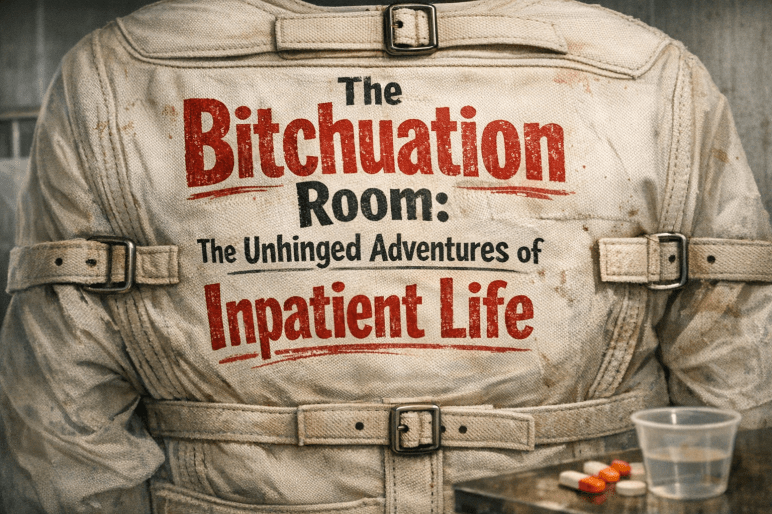
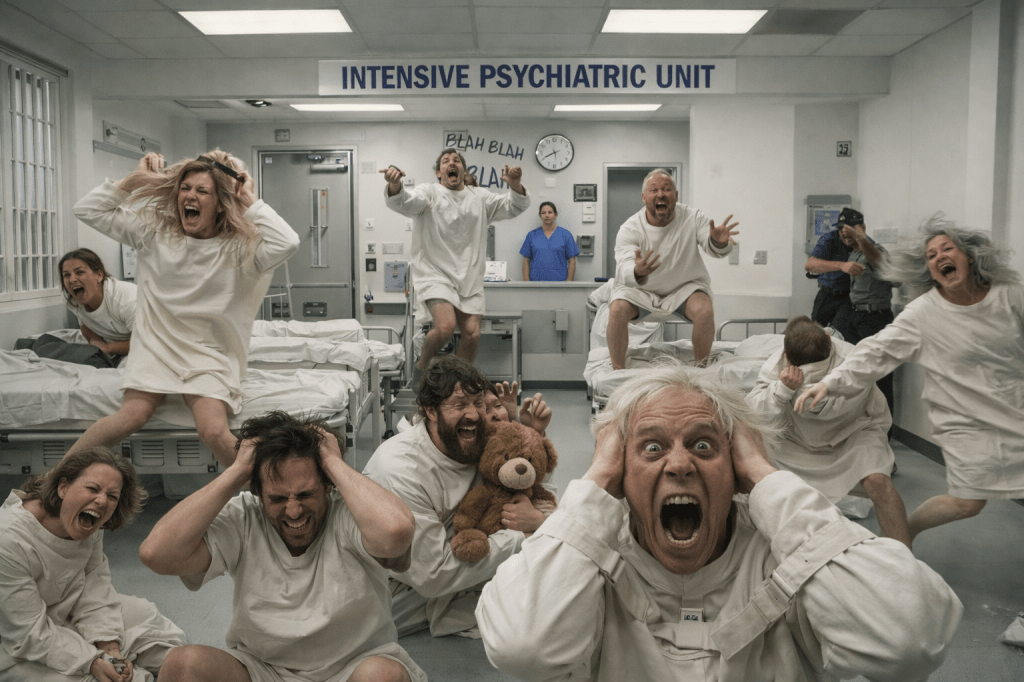
Light the charcoal. Sprinkle the sage. Somebody hand me a fan because the level of petty I’m about to describe requires ventilation. Psych units don’t just have pettiness. They cultivate it like a community garden complete with tomatoes, basil, and grudges. And if I’m going to talk about it, I need every ancestor, archangel, and neighborhood stray cat on standby.
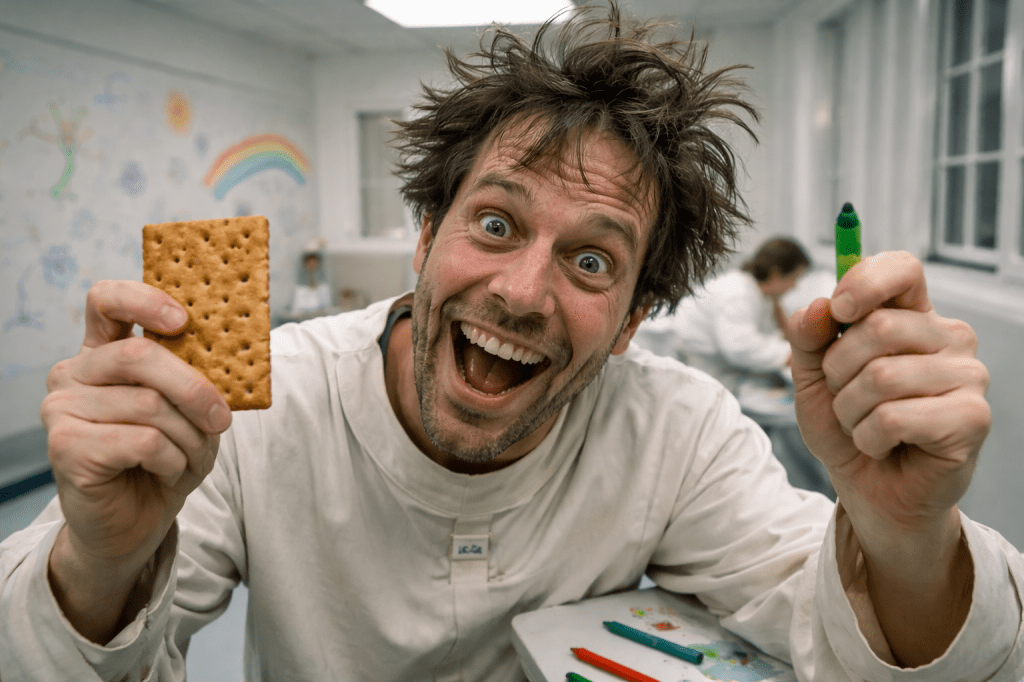
These places run on a spiritual cocktail of fluorescent lighting, lukewarm coffee, and the kind of petty that could power a small city. The spirits already know what time it is. We’re about to enter the only place on Earth where adults will fight over a graham cracker, a blanket, and who gets to sit closest to the fake plant in group therapy. Especially the kind that shows up wearing non‑slip socks and asking if you’ve “completed your feelings journal for the morning.” Buckle up. We are about to revisit the life of the unhinged.
Let me tell you something right now. Nobody does pettiness like a psych unit. Not your auntie at Thanksgiving. Not your ex who still watches your Instagram stories from a burner account. Not even the Southern church ladies who can bless your heart into a coma. Psych units are the Olympics of Petty. Gold medal level. International competition. And sponsored by “Clipboards & Consequences™.
And the wildest part? The staff and the patients are in a silent, unspoken petty war at all times. It’s like a nature documentary narrated by Morgan Freeman: “Here we observe the patient refusing to participate in group therapy because the therapist said, ‘good morning’ with the wrong tone.”
Breakfast on a psych unit is not a meal. It’s a spiritual exam. You ask for two sugars? They give you one. You ask for a spoon? They hand you a spork like you’re being punished for past lives. You ask what the eggs are made of? They say, “Don’t worry about it,” which is exactly when you start worrying about it.
And the patients? Oh, we’re petty right back. Someone refuses their meds because the nurse said their name wrong by half a syllable. Someone else declares a hunger strike because they didn’t get the “good blanket.” Which is the one that feels like it’s been washed fewer than 400 times.
Psych unit bed assignments are the closest thing we have to Old Testament conflict. Two grown adults will absolutely fight over who gets the bed closest to the window like it’s beachfront property. Someone gets moved rooms and immediately acts like they’ve been exiled from the kingdom. They say, “I’m not unpacking. I’m staging a protest.”
Group therapy is where the petty becomes performance art. Someone refuses to share because “the energy is off.” Someone else overshares because they know it makes the therapist uncomfortable. Someone proudly announces, “I’m only here for the snacks” and means it. And the group leader? Smiling sweetly while spiritually flipping everyone off.
If you’ve never seen adults negotiate shower times like they’re drafting a ceasefire agreement, you haven’t lived. People will take 47‑minute showers out of spite. “Forget” their towel so they can walk dramatically down the hall. Complain someone used “their” shampoo even though it’s the hospital’s and smells like citrus‑flavored despair.
And then you discover the shower has no curtain. Not a flap. Not a panel. Not even a nostalgic bead string from the 70s. You step into that shower like you’re entering a baptism you did not sign up for. The water pressure is either a gentle mist that feels like someone exhaling on you. Or a fire‑hose blast that could strip paint off a Buick. Meanwhile, staff strolls by doing “wellness checks” like, “just making sure you’re safe!” Ma’am, I am safe. Emotionally? No. Physically? Barely. Spiritually? Absolutely not.
Mindfulness group on a psych unit is its own brand of comedy. The therapist dims the lights (as much as fluorescent bulbs allow), puts on royalty‑free pan flute music, and says, “Imagine you’re on a peaceful beach.” Ma’am, I am sitting in a plastic chair that squeaks every time I breathe. Then it’s, “Picture a calm, soothing waterfall.” Meanwhile someone is snoring. Someone is whisper‑arguing with their spirit guides. Someone is chewing graham crackers like they’re in a survival documentary. And you’re trying to “visualize tranquility” while holding a safety crayon shaped like a melted candle.
They are not crayons. These are wax‑based emotional support devices. Thick. Stubby. Unbreakable. Unsharpenable. Every letter looks like it was drawn by a raccoon wearing oven mitts. But when a Code gets called? Those colors become binoculars. Everyone leans forward clutching their little wax chunk like, “Pass me the purple one. It’s the good one.”
Psych units have one universal truth. A doctor must be called for absolutely everything. You sneeze too enthusiastically? “Hi, yes, doctor? She sneezed with intention.” Want a Tylenol? Doctor. Want a different blanket? Doctor. Want to sit in a different chair because the one you’re in feels spiritually cursed? Doctor. It’s like a fluorescent DMV where every request requires a supervisor who is mysteriously never on the floor.
And then there are the medications. Raise one eyebrow too high? “Let me page the doctor.” Ask why the eggs taste like regret? “Let me page the doctor.” Have an attitude after being woken up at 5 a.m. for vitals you did not ask for? Suddenly they’re offering you something “to help you relax.” Which is psych‑unit code for, “This will knock you into next Tuesday.” These meds are so strong they could end a world war. You wake up unsure of your name, the date, or why your socks don’t match.
Some staff walk around like they’re the TSA of mental health. And they’re ready to confiscate your emotional liquids. Some give you the “I’m tired of all y’all” look before you’ve even spoken. Some have mastered the therapeutic smile. The one that says, “I care deeply.” But their eyes say, “I clock out in 12 minutes and I’m not starting anything new.” And the tech who acts like your request for a second blanket is a personal attack on their lineage? Iconic.
There comes a moment when staff decides you’re “a little too spicy for the general population.” And suddenly you’re being escorted to the Psychiatric Intensive Care Unit known as the PICU. The PICU is not a unit. It is an ecosystem. A habitat. And a fully unhinged micro‑climate where time is fake. Socks are currency. And the air vibrates with the energy of people who have absolutely had enough.
The lighting is harsher. The chairs are bolted down with enthusiasm. And the staff has that look like they’ve seen things they can’t legally discuss. This is where someone argues with a wall. Someone else declares themselves the mayor. A graham cracker becomes a weapon of emotional warfare. And the “call the doctor” rule becomes a religion. You start to wonder if the doctor is a real person or a mythological creature who appears only during full moons and paperwork audits.
There is a very specific sound a psych unit makes right before a Code gets called. It’s too quiet. Like the ancestors are holding their breath. Then, a chair scoots too hard. A voice gets too spicy. A slipper hits the floor with conviction. And the staff looks up like meerkats who heard a twig snap. Someone yells “CODE!” with the enthusiasm of a Walmart employee announcing Black Friday. And the whole unit transforms into live‑action chaos. Patients settle in like it’s cable TV. And it’s like, “Oh lord, they done called a Code. Lemme get comfortable.” Staff sprints like Olympians. Clipboards fly. Walkie‑talkies crackle. And the therapist breathes deeply like they’re manifesting a different career.
And when it’s over? Everyone goes right back to coloring like it was a commercial break. Psych units are messy, miraculous, chaotic, exhausting, and sometimes deeply funny in ways only people who’ve been there understand. The pettiness isn’t cruelty. It’s survival. It’s humanity. It’s the tiny rebellions that remind you you’re still a person. Even when life has knocked you sideways.
Connect and Refocus assignments are the psych‑unit equivalent of being told to stand up in front of the congregation and confess your sins with a microphone that echoes. They hand you a worksheet with questions about your troubling behavior. And by the time you’re done it’s the thickness of a dissertation. The therapist says, “Just outline your maladaptive coping skills and therapy interfering behaviors.” Just? As if you’re not about to write a full academic paper on why you shut down emotionally. Overthink everything. And threaten to fight the vital signs machine at 5 a.m. And the worst part? You don’t just fill it out. You have to read it aloud in group like you’re defending your thesis before God, the ancestors, and a room full of people who just met you yesterday. You’re sitting there clutching your safety crayon while trying to sound insightful. And everyone else nods like they’re on the judging panel of America’s Next Top Trauma Survivor. It’s humbling. It’s horrifying. It’s hilarious. And somehow, it’s exactly the kind of chaos that makes psych unit bonding feel like summer camp for emotionally exhausted adults.
But there is no gamble on Earth quite like the moment they tell you, “You’ll be sharing a room.” That’s not an assignment. That’s a lottery. That’s a spiritual test. That’s a cosmic wheel‑spin hosted by the universe itself. On a psych unit, your roommate can be literally anything. The possibilities are endless. Unhinged. And hilarious in a way only people who’ve lived it understand.
Here is a few of the different types of roommates you could be paired up with.
1. The roommate that sleeps 12 hours a day but somehow still manages to terrify you. They snore like a diesel engine. They sit up suddenly at 3 a.m. like they’re receiving messages from the ancestors. They whisper things like, “Did you hear that?” No, I did NOT hear that. And I would like to keep it that way.
2. This roommate provides live commentary on everything you do. You stand up? “Where you going?” You sit down? “You tired?” You breathe? “You okay?” I am trying to exist. Please let me exist in silence.
3. This roommate has been in the unit for 48 hours and has already achieved spiritual awakening. They speak in riddles. They meditate loudly. They give unsolicited advice like, “You must release the ego. Also, can I have your pudding?”
4. This one will eat every single snack you have. Even the ones you hid in your pillowcase. They will deny it with confidence. They will gaslight you about your own graham crackers. They will ask for juice while drinking the juice they stole from you.
5. This roommate is entertainment. Pure entertainment. They talk to themselves, the walls, the staff, the ancestors, and occasionally the ceiling tiles. They narrate their dreams. They reenact scenes from movies that don’t exist. You don’t even need cable. You have them.
6. This roommate showers at 2 a.m. With no curtain. With the water pressure set to “pressure wash a tractor.” They come out wrapped in a towel the size of a napkin and say, “Your turn.”
7. This roommate is quiet. Too quiet. You don’t know if they like you. Hate you. Or don’t know you exist. They stare at the wall for long stretches of time. They fold their socks with military precision. They whisper to their juice cup. You respect them deeply.
8. This roommate minds their business. Sleeps in weird positions. Hisses when staff wakes them up. Eats only the snacks they like. And will absolutely sit on your bed like it’s theirs.
Psych‑unit roommates are a whole spiritual curriculum. A syllabus written by the universe. A randomized character generator with no patch notes or warning labels. And I’ve had every single type walk through that door and claim the other half of my room like they were entering a reality show.
Some were chaotic. Some were confusing. Some were plot twists. And a precious few? They became family in the kind of way only shared trauma, cold cereal, and shared “Did you hear that?” moments can create. You don’t choose your psych‑unit roommates. But sometimes the universe chooses them for you.
I’ve had the ones who snored like freight trains. I’ve had the ones who narrated my every move. And the ones who didn’t speak for three days. But somehow communicated entire novels with their eyebrows. I’ve had the ones who showered at 2 a.m. with the water pressure set to “remove barnacles.” And the ones who treated the room like a spiritual dojo. Then there were the ones who were just there. Quiet. Odd. Mysterious. Every roommate was a new chapter in the saga. Every roommate was a new lesson in patience, comedy, and survival. Every roommate was a new story I absolutely should not laugh at but absolutely do.
But out of all the chaos, characters, and all the “Lord, give me strength” moments, there are a couple of roommates who became real friends. The kind you still talk to. Still laugh with. Still send memes to about your shared psych‑unit nonsense. These are the ones who laughed with me at 3 a.m. when the unit sounded like a haunted Walmart. Shared snacks like we were in a bunker. Understood the unspoken language of “I’m fine but also not fine but also fine.” Survived Codes, guided imagery, and curtain‑less showers right alongside me. And turned the worst moments into inside jokes that still make us wheeze.We walked through the same chaos and came out with matching emotional scars and petty humor.
I wouldn’t trade them for all the money in the world. Not for a million dollars. Not for a lifetime supply of the “good blankets.” Not even for a shower curtain. Because some people come into your life for a reason. Some come for a season. And some come because the hospital assigned them to your room. And the universe said, “Y’all need each other.”
And within that roommate lottery, the prize is either peace, or a story you will tell for the rest of your natural life. And somehow? You adapt. You bond. You laugh. You survive. And you walk out with tales that sound made‑up but absolutely aren’t.
Healing is hard. Fluorescent lights are evil. And humans will absolutely weaponize a spork if pushed far enough. May your blankets be soft. Your meds be on time. And your petty be righteous. May your coping skills be strong. Your boundaries fortified. And your spirit guides remind you that sometimes the pettiest thing you can do is heal anyway.
And that is the gospel truth of the psych unit. A place so petty. So chaotic. So spiritually unhinged. That even the ancestors step back like, “good luck.” Between the curtain‑less baptisms they call showers. The guided imagery that feels like group hallucination. The safety crayons built like toddler dumbbells. And the Codes that pop off like surprise season finales. One thing becomes clear. Healing might be hard. But the comedy is free.
So, the next time somebody tries to tell you psych units are calm, peaceful places. Just smile. And let your spirit guides handle the lie. And remember, sometimes the pettiest, most powerful thing you can do is survive it with your humor intact. Thanks for reading! And, yay, for the ability to use humor as a coping skill for survival.
Affirmation: I am calm, I am grounded, and I will not let anyone with non‑slip socks ruin my vibration today.
“Peace isn’t passive. It’s chosen. Rolled. Lit. And inhaled with intention.”
-This Puzzled Life
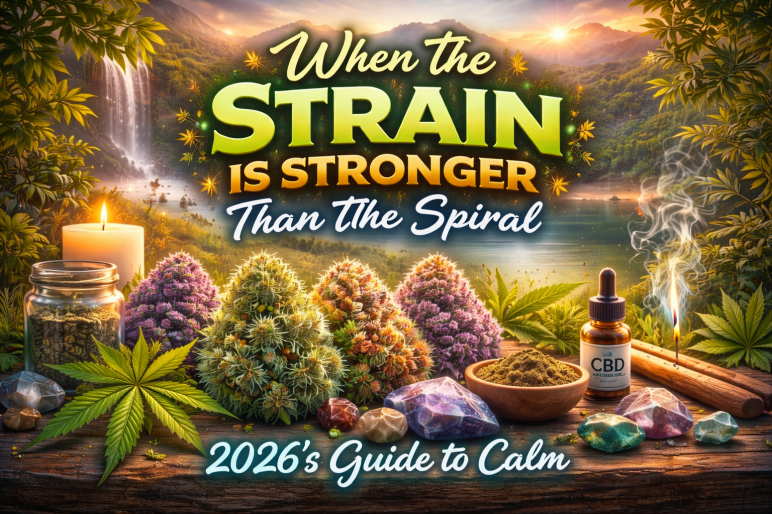
Light the charcoal. Sprinkle the sage. Today we’re cleansing the air, the mood, and the nervous system with 2026’s top strains for anxiety. Plus, the classic OGs that have been calming folks since back when we all thought Myspace was forever. Welcome to my 2026 Anxiety-Friendly Strain Forecast. Where we honor Southern chaos, generational nerves, and the sacred art of choosing weed that won’t have your heart beating like it’s trying to escape your chest.
Pink Rozay
(Lemonchello 10 × LPC75 (London Pound Cake #75)
Floral, smooth, and steady. Like someone finally turned the volume down on your thoughts.
Cadillac Rainbow
(Pure Michigan × Runtz)
Don’t let the name fool you. This hybrid is calming and grounded. And it melts tension like butter on a hot biscuit.
Snow Caps
(Snow White × Haze)
Cool, crisp, and mentally refreshing. When anxiety tries to act up, Snow Caps says, “Not today.”
Blue Zushi
(Zkittlez × Kush Mints)
A 2026 favorite for mood stabilization. Gentle, balanced, and perfect for “I need to calm down but still function.”
Gumbo
(Gummo × Guru (reported by Swamp Boys Seeds)
Sweet, heavy, grounding. Ideal for runaway thoughts that need to be sat down and given a talking-to.
CLASSIC STRAINS FOR ANXIETY
These are the legends, the elders, and the strains that raised us.
Granddaddy Purple
(Purple Urkle × Big Bud)
A weighted blanket in plant form. Perfect for nighttime nerves and overthinking.
Blue Dream
(Blueberry × Haze)
The universal crowd-pleaser. Smooth, uplifting, and dependable. It’s like the friend who always brings snacks.
A classic indica that shuts down spiraling thoughts like flipping a breaker switch.
White Widow
(Brazilian Sativa Landrace × South Indian Indica)
Balanced and steady. Great for daytime anxiety when you still need to be a functional adult.
Harlequin (CBD-heavy)
(Colombian Gold × Thai Landrace × Swiss Landrace)
This one is for the folks who want calm without the THC rollercoaster. Gentle, soothing, and reliable.
Experts across 2025–2026 keep repeating the same gospel about these strains. They have moderate THC. They have CBD or balanced THC:CBD ratios. And calming terpenes like linalool, myrcene, and beta-caryophyllene. If the strain sounds like it belongs at a rave, don’t smoke it before a dentist appointment.
Anxiety is dramatic. Give it the wrong sativa and it will start narrating your doom like it’s auditioning for a true-crime documentary. You’ve spent enough years letting your nervous system run around like a toddler with a Capri Sun. Enough nights lying awake replaying conversations from 2008. Enough mornings waking up already bracing for imaginary disasters.
Give it the right hybrid, though, and suddenly your brain is like, “Maybe we can go to Walmart today.” Let your anxiety know, “I’m choosing peace today. And the strain that helps me keep it. It says, “Sit down. Mama’s medicating.” Choosing the right strain for anxiety isn’t just self‑care. It’s a whole ritual, a boundary, a declaration that your peace is no longer up for negotiation. Not in this house. Not with these herbs. Not with these ancestors watching.
This year, we’re choosing strains that soften the edges. Quiet the spirals. And remind your brain that it is, in fact, allowed to unclench. We’re choosing hybrids that don’t betray you. Classics that never stopped loving you. Terpenes that understand the assignment. We’re choosing calm on purpose.
Anxiety may be loud, but you? You are louder. You are older, wiser, and fully prepared to sage-smoke-pray-meditate your way into a softer season. Your peace is not fragile. Your calm is not accidental. Your healing is not a rumor. It’s a lifestyle. And every time you pick a strain that supports your spirit instead of sabotaging it, you’re telling the universe, “I choose me. I choose quiet. I choose ease. And I’ll be damned if anxiety gets the last word.”
Now gather your rolling tray, your lighter, your intention, and your boundaries. Take a breath so deep your ancestors nod in approval. And then with all the authority of a Southern auntie who has lived through some things. Let that anxiety know, “I’m calm on purpose. I’m peaceful by design. And I’m medicating accordingly. Now hush.” Stage cleared. Peace secured. Thanks for reading! Keep blazin.’
Affirmation: I honor my calm like a sacred ritual. I choose what soothes me. Supports me. And keeps my spirit steady. Anxiety does not run this house. I do.
Light the charcoal. Sprinkle the sage. Negative energy go away. Today, I want to tell you about a strain called Soul Assassin. As domestic violence awareness month winds down and seeing the damage that abuse can do to someone, I thought that the cannabis strain for today was absolutely perfect. Because of being trapped mentally or physically from seeking freedom, often times for years, it feels like the perpetrator has literally assassinated your soul.
Soul Assassin is a heavy indica-dominant hybrid. Domestic violence is something heavy that is like a wrecking ball in the victim’s life. But this strain is heavy in regard to healing. It’s just what the doctor order for the overstimulation of PTSD. The genetics of this strain is a cross between OG Kush x Sour Diesel. Most like myself, who have been in the cannabis community for many years, know that these are a couple strains that many would consider staples. OG Kush is a cross between Hindu Kush x Lemon Thai x Chemdawg. Sour Diesel is a cross between Northern Lights x Chemdawg.
The medical benefits associated with this strain include relief from insomnia, anxiety, mood disorders, stress, chronic pain, depression, and inflammation. The top terpenes are B-myrcene, terpinolene, B-Pinene. I got a lot of relief with this strain. I would also encourage you to plan on not going anywhere. As “couchlock” can be a reality. Thanks for reading! Keep blazin.’
Affirmation: I smoke my weed and mind my business.