This Puzzled Life is a mental health and recovery blog exploring addiction, trauma healing, LGBTQ experiences, humor, and the strange moments that shape us.
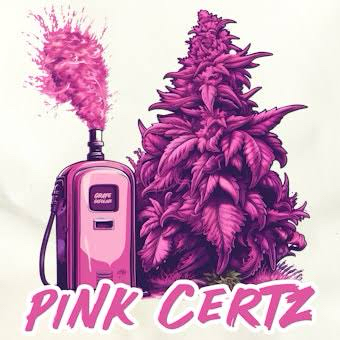
Light the charcoal. Sprinkle the sage. Negative energy go away. Today, I want to talk to you about a delicious little strain called Pink Certz by Apotha.
Pink Certz is a balanced hybrid that’s a cross between The Menthol x Grape Gasoline. The Menthol is a cross between Gelato 45 x White Diesel. And Grape Gasoline is a cross between Jet Fuel Gelato x Georgia Pie. This strain has a very citrusy smell and taste. And to me it tastes similar to a grapefruit.
The main terpenes are Limonene, Linalool, Caryophyllene and Endo Fenchyl. Medical benefits include relief from depression, chronic stress, anxiety, nausea, appetite loss. And reportedly, this strain works really well for Parkinson’s patients. This is not a really heavy hybrid. But it definitely hits hard with relief. Thanks for reading! Keep blazin.’
Affirmation: Nothing or nobody can stop me from blazing today.
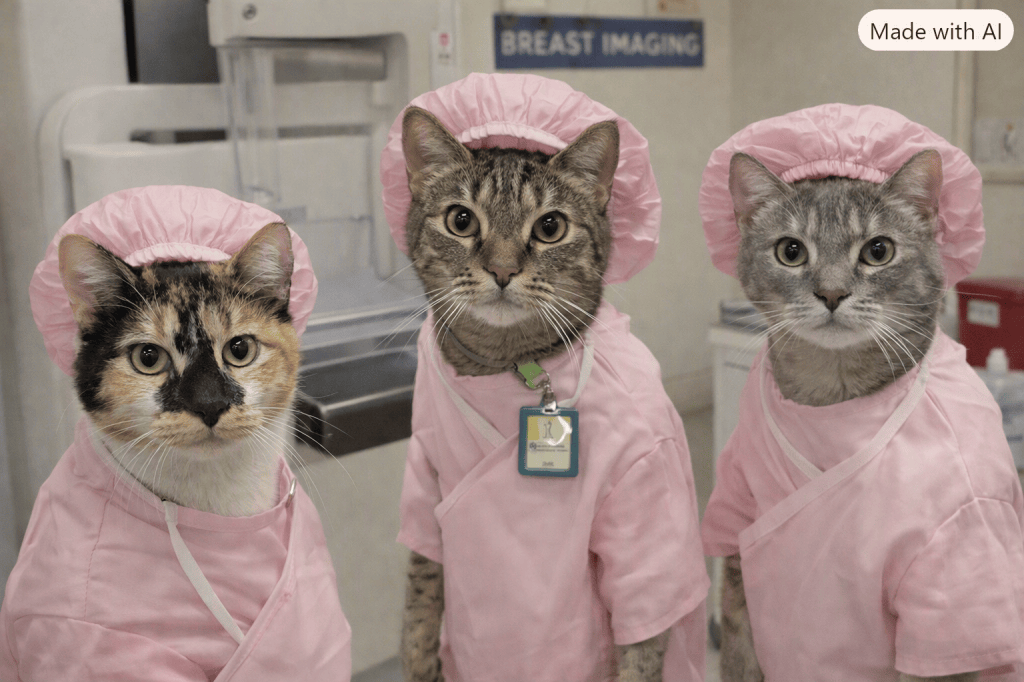
“Listen, if Piper, Coco, and Tinkerbell can march into a medical facility like they’re auditioning for America’s Next Top Patient, then I can survive one little mammogram. Confidence is contagious. Especially when it sheds.”
-This Puzzled Life
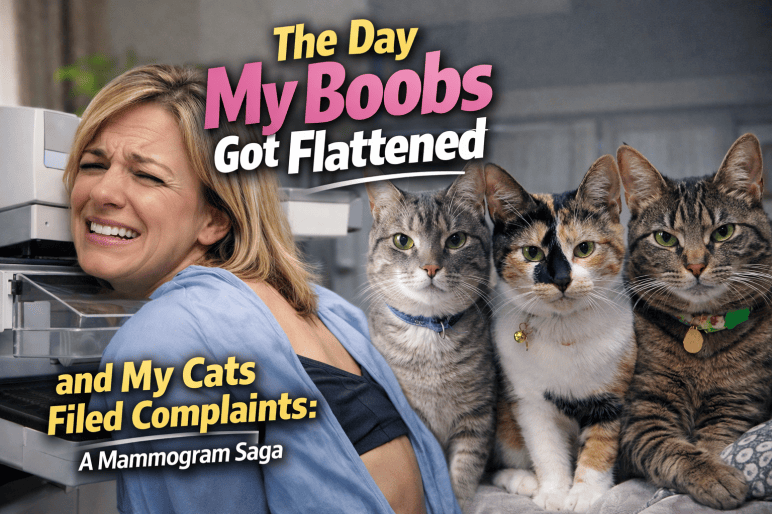
Light the charcoal Sprinkle the sage. And pull up a chair and a heating pad. Because today we are talking about breast cancer awareness and the sacred Southern pilgrimage known as The Annual Mammogram, also known as, “The Day Your Boobs Meet the Panini Press of Destiny.”
And I am reporting live from the land of paper gowns, cold metal plates, and the annual reminder that my boobs are apparently public property for exactly 17 minutes. I walked into that imaging center feeling confident, moisturized, and blessed. And walked out looking like I’d just survived a WWE smackdown between my left titty and a hydraulic press.
Because nothing says “self‑care” like waking up at 6 a.m., chugging coffee, and driving across town to let a stranger flatten your chest like a Sunday biscuit. And listen, awareness matters. Early detection saves lives. But Lord, the way the world goes full Pepto Bismol in October with pink socks, pink yogurt lids, pink football cleats, and a pink ribbon shaped pancakes at IHOP. Meanwhile, Southern aunties everywhere are out here reminding you, “Baby, have you scheduled your mammogram yet? Don’t make me call Jesus and Blue Cross.”
You walk in. Sign your name. And immediately get handed a clipboard and a gown made from the same material as a Dollar Tree napkin. The nurse says, “Open in the front,” like you’re about to perform at the Grand Ole Opry. It’s always too short, too breezy, too confusing, and somehow both choking you and falling off your shoulders. You sit there clutching it closed like a Victorian widow.
The mammogram machine looks like something NASA built in the 80s and forgot to update. It has one job. Turn your boob into a crepe. The tech is always sweet, calm, and named something like Linda or Marsha. And she says things like, “Okay honey, just relax.” Relax? Ma’am, my nipple is currently pointing due north, and my soul has left my body.
Linda gently places your tit on the cold plate like she’s arranging a charcuterie board. Then she lowers the top plate. And lowers it. And lowers it. And keeps lowering it until your ancestors feel it. You’re standing there thinking, “Is this what a panini feels like?” “Did I pay my life insurance?” “Why is my left boob suddenly in 2D?” Linda steps back and says, “Hold your breath.” Ma’am, I haven’t breathed since the parking lot. The machine finally lets go. And your boob re-inflates like a sad balloon at a kid’s birthday party. You look down like, “Girl, you okay?” Your boob looks back like, “No.”
Piper, Coco, and Tinkerbell rolled up to their first mammograms like three tiny, furry Southern aunties who had absolutely rehearsed for this moment in the mirror. Piper marched in like she was the keynote speaker at the Breast Cancer Awareness Gala. Tail high, whiskers sharp, attitude louder than a Baptist choir. She hopped onto the check‑in counter and announced, “I’m here for my annual preventative maintenance, thank you.”
When the tech tried to hand her a paper gown, Piper sniffed it. Rolled her eyes. And said with her whole spirit, “This is polyester. I don’t do polyester.” She then attempted to operate the mammogram machine herself because “clearly no one else here has the range.”
Coco entered the building already offended. By what? Everything. The lighting. The temperature. The clipboard. The fact that she was asked to “wait her turn.” When the tech explained the process, Coco gasped like she’d been personally victimized. “EXCUSE ME?! You’re going to flatten what? These are heirlooms!” She then demanded a second opinion, a supervisor, and a snack.
Tinkerbell walked in wearing the confidence of a cat who has never once paid taxes or faced consequences. She took one look at the machine. Hissed. And then tried to climb it like it was a jungle gym. When the tech attempted to position her, Tinkerbell went limp like a toddler who doesn’t want to be picked up. Then she suddenly sprang back to life. Slapped the machine. And stole a pink ribbon off the wall like a tiny breast‑cancer‑awareness pirate. By the time it was over, the tech was sweating. The receptionist was praying. And the machine had filed for workers’ comp.
Piper strutted out like she’d just completed a TED Talk. Coco demanded her medical records “for emotional reasons.” Tinkerbell declared herself the new face of Feline Breast Health. And tried to pose for photos no one was taking. Cats dismissed. Awareness achieved. And the imaging center is now closed for spiritual repairs.
Breast cancer is real. And early detection saves lives. Because too many of our mamas, aunties, cousins, and sisters have fought this battle. Awareness isn’t just pink ribbons. It’s action. It’s appointments. It’s uncomfortable machines. It’s choosing yourself even when it’s inconvenient. And because most Southern women don’t play about two things. Jesus and preventative healthcare.
Schedule the mammogram. Wear the ugly gown. Let Linda flatten and fold your boob like a church bulletin. And walk out of that imaging center knowing you just did the bravest, squishiest thing a human can do. Laugh about it later. And remember. Your tatas are worth the trouble. And that’s the gospel truth. If surviving a mammogram doesn’t earn you a medal, parade, FIFA trophy, Nobel Peace Prize and a lifetime supply of padded bras, then society is broken beyond repair. Boobs checked. Blessings distributed.
And that, my friends, concludes this year’s episode of “Whose Boob Is It Anyway?” The only show where the points don’t matter. The machine always wins. And your nipple ends up pointing toward a constellation you’ve never heard of. Schedule the mammogram. Wear the tragic gown. Let Linda flatten you like a communion wafer. And then treat yourself to something fried. Because at the end of the day, your girls deserve to be checked, protected, and celebrated. And preferably with a bra that costs less than your car payment. Thanks for reading! Schedule your mammogram.
Affirmation: I am bold, blessed, and unbothered. My boobs, my boundaries, and my emotional support cats are all thriving. Today I face the squish with dignity, humor, and the chaotic energy of a feline who refuses to wear a paper gown.
“When they try to silence you remember. Your voice carries the strength of every woman who refused to disappear.”
-This Puzzled Life
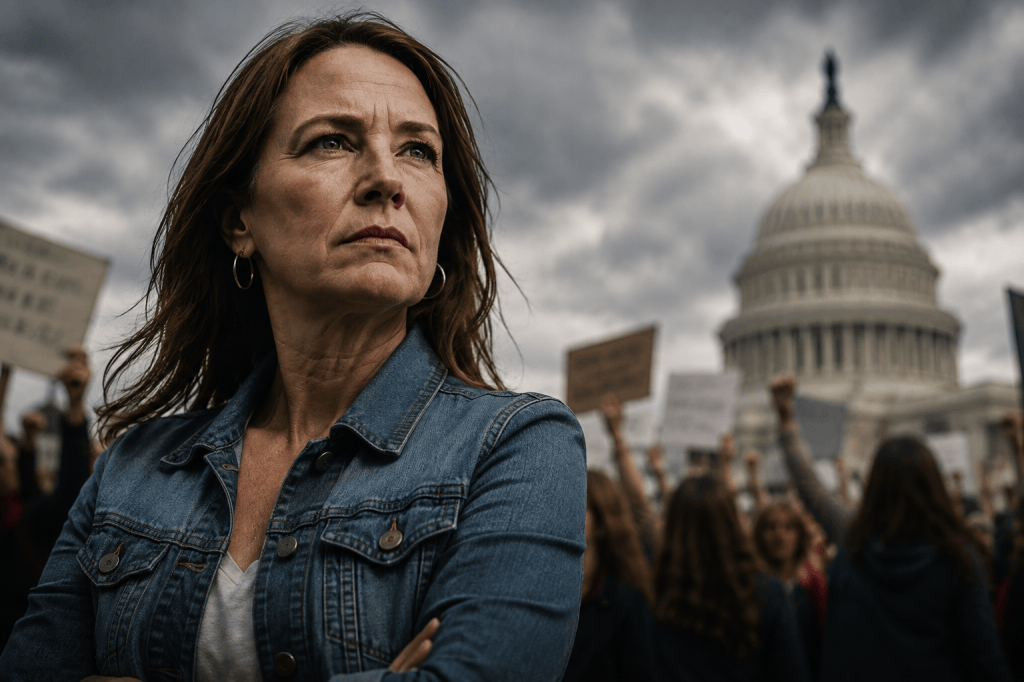
Light the charcoal. Sprinkle the sage. Invoke the ancestors. At this point, I need every woman who ever walked barefoot through red clay. Every grandmother who ever whispered warnings in church pews. And every ancestor who ever held the line when the world tried to fold them in half. I need their strength, fire, and their stubborn refusal to disappear.
We are living in a moment where misogyny isn’t hiding in the shadows. It’s out here doing cartwheels in broad daylight. Feminists are fighting battles we already fought. Already won. Already buried. And already prayed over. And somehow, under this administration, those victories are being dug up like someone’s trying to rewrite the past and call it “progress.”
It’s emotional. It’s infuriating. It’s surreal. And yes the sarcasm is necessary. Because if I don’t laugh, I’ll start flipping tables. This isn’t just politics. This is personal. This is generational. This is spiritual. This is about the rights that shape our bodies, futures, families, safety, and dignity.
Before I get into this, let me say this clearly. These aren’t abstract policy points. These are lived experiences. These are wounds. These are warnings. These are the things I feel in my bones when I wake up and read the news.
Ten Women’s Rights Being Dismantled By This Administration
1. Reproductive autonomy
It feels like someone reached into my life and tried to snatch the steering wheel. Like our bodies are suddenly a battleground for people who will never carry a pregnancy. Never face the risks. And never feel the fear. It’s invasive. It’s dehumanizing. It’s infuriating.
2. Access to contraception
This rollback feels like a punishment for daring to plan my life. For daring to protect myself. For daring to choose when and if motherhood fits into my story. It’s insulting to my intelligence and dangerous to my future.
3. Domestic violence protections
Watching these weaken feels like watching a door slowly close on women, like me, who needed it open the most. It feels like the system is shrugging at our trauma. Like safety is optional. Like survival is a privilege instead of a right.
4. Equal pay initiatives
Women who have worked their whole lives have carried more weight than they should’ve had to. Seeing equal pay slip backward feels like being told, “Your work matters. But not as much as his.” It’s a slap wrapped in a smile.
5. Sexual harassment safeguards
This rollback feels like a return to the days when women had to swallow discomfort to keep a job. When we had to laugh off comments to survive. When our boundaries were treated like suggestions. It’s a reminder of every moment I felt unsafe but stayed quiet.
6. Maternal healthcare funding
As a mother, this one cuts deep. Pregnancy is not a hobby. Childbirth is not a casual event. Reducing maternal care feels like telling women, “Your life is an acceptable risk.” It’s cruel. It’s reckless. It’s unforgivable.
7. Title IX protections
I think of every girl who dreams big. Girls who run. Jump. Compete. And fight for their place. Rolling back Title IX feels like telling them, “Your dreams matter less.” It’s a theft of opportunity and a betrayal of potential.
8. Workplace discrimination enforcement
I’ve been labeled “too outspoken,” “too emotional,” “too much.” Weakening enforcement feels like handing every biased boss a permission slip. It feels like erasing the progress women clawed their way toward.
9. Childcare support programs
Working mother know that childcare is the backbone of survival. Cutting support feels like telling women, “Figure it out.” While knowing the system is designed for women to fail. It’s dismissive and deeply out of touch.
10. Representation in leadership roles
I’ve watched rooms full of men make decisions about women’s lives with the confidence of people who will never face the consequences. Reducing representation feels like erasing our voices from the future which is silencing by design.
Before I close, let me introduce what I’m about to say. This isn’t just a conclusion. This is a vow. A reminder. A line drawn in the sand. I am not here to shrink. I am not here to be quiet. I am not here to politely accept the erosion of my rights. I am the charcoal lit. I am the sage burning. I am the echo of every woman who refused to bow. And I will not sit still while my rights are peeled away like petals from a flower someone never bothered to water. Feminists aren’t fighting for attention. We’re fighting for survival. For dignity. For the future, our daughters deserve. And the one our ancestors dreamed of.
Let them underestimate us. Let them believe silence is compliance. Let them think we won’t notice. Because when women rise, we rise like storms. We rise like thunder rolling across the South. We rise like every ancestor who ever said, “Not today.” And watch us reclaim every damn thing they tried to take.
Affirmation: I rise rooted in truth that is guided by my ancestors. Fueled by my fire. And unshakeable in my right to exist fully, loudly, and freely.
“Some nights don’t need fixing. They just need softening.”
-This Puzzled Life
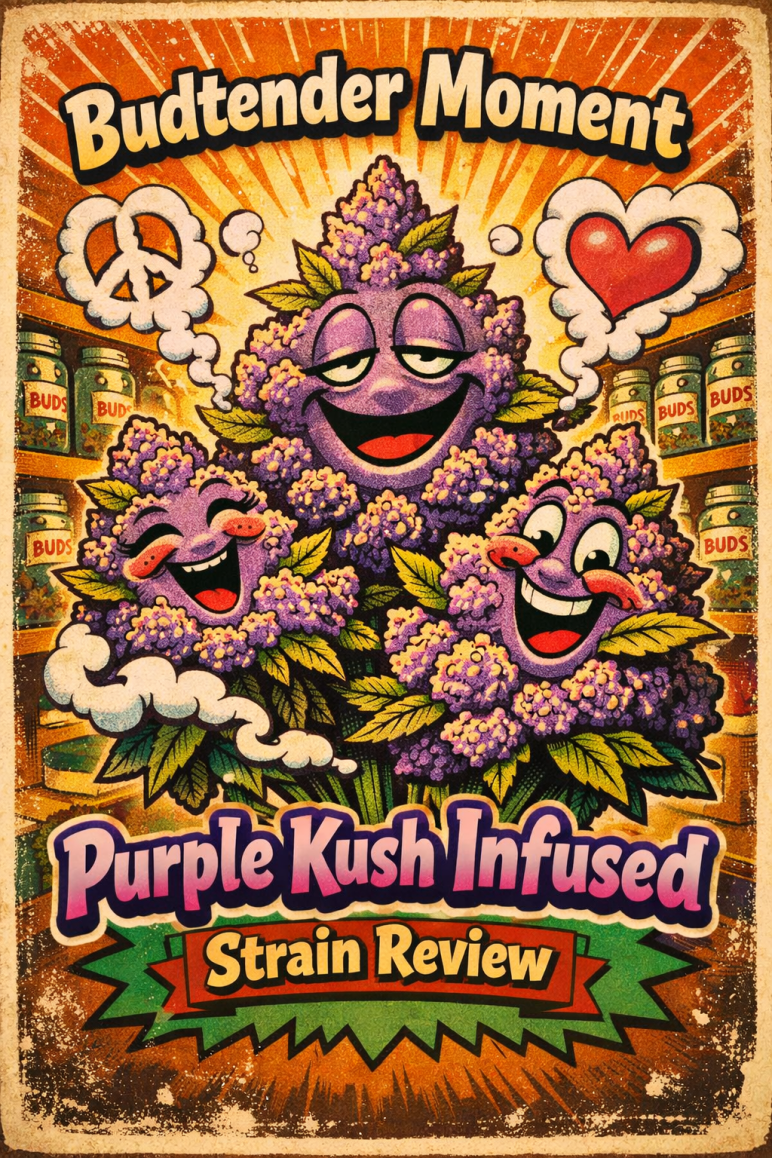
Light the charcoal. Sprinkle the sage. Today we’re stepping into the velvet‑draped, purple‑lit sanctuary that is Purple Kush Kief‑Infused. A strain that doesn’t just clock you out of the world. It escorts you to the exit with a quilt, a blessing, and a plate of leftovers.
Purple Kush is a renowned 100% indica strain. The lineage is absolutely brillant. It is a cross between Hindu Kush × Purple Afghani. Hindu Kush is a Landrace Kush lineage from the Hindu mountains. Purple Afghani is a cross between Afghani landrace × unknown purple phenotype. It’s the kind of indica that makes your bones remember their purpose and your spirit remember its softness. This is lineage that comes from ancient mountains, cold nights, and plants that learned to survive by becoming spiritually dramatic.
Purple Kush Kief‑Infused tastes like crushed berries left to chill in a cedar bowl. A whisper of earthy spice. A deep, resinous sweetness that clings to the tongue like a velvet robe. And that unmistakable “purple” note. The one that tastes like royalty, nostalgia, and a nap you didn’t plan for. The kief infusion intensifies everything to become a deeper berry. Louder earth. And heavier sweetness. It’s Purple Kush with its chest out.
The terpene profile is Myrcene, Caryophyllene, Linalool, and Humulene. Together they create a terpene choir that sings lullabies in a minor key. Purple Kush Kief‑Infused is often chosen for Chronic pain especially deep, stubborn, or inflammatory pain. Insomnia the kind where your brain won’t stop narrating your life. Stress & anxiety melts the static. And slows the spin. Muscle tension shoulders drop. Jaw unclenches. And spine sighs. Appetite support the “I could eat” switch flips on. This is a strain for people who need to be held. Not hyped. Before using this strain, get somewhere and stay put. Oh and please take the Cheetos with you. Because you’ll forget where the Cheetos are located in a short amount of time. And prepare for “couch-lock.
Please keep in mind that depending on differences in grows depends on what area of the country it is grown in. There will also be slight differences depending on when, where the plant was grown. Thanks for reading! And keep blazin.’ Have you tried this strain?
Affirmation: I release the weight I was never meant to carry. And I let rest find me with ease.
Light the charcoal. Invoke the ancestors. Tell Big Mama to hold my earrings. And pass me the sweet tea. Because I am about to testify.
You wake up one morning. Look around at the state of the country and think, “Lord, this feels less like a government. And more like that one cousin who keeps choosing the same toxic partner even though the whole family has staged three interventions and a prayer circle.”
I’m not saying we’re in a co-dependent relationship with national leadership. I’m just saying the vibes are giving that “Baby, I promise I’ll change”, “You made me do this”, “Don’t you dare leave me. I’ll fall apart”, and “Ignore the chaos. Look at this shiny distraction.” And the ancestors are whispering, “Child, we survived Reconstruction, Jim Crow, and your Aunt Linda’s potato salad. We can survive this too.” Meanwhile my cats, Piper, Coco, and Tinkerbell, have been pacing the living room like furry social workers trying to diagnose the entire administration with a DSM‑5 entry that doesn’t exist yet. Here’s what they said.
Piper: “Momma, this administration is giving classic co-dependent chaos. The gaslighting alone could power a mid‑sized city.”
Coco: “I’ve seen healthier dynamics in a feral cat colony behind a Waffle House.”
Tinkerbell: “Honestly, I’m not saying the country needs therapy. But the country needs therapy. And snacks. Preferably tuna.”
They sat me down like I was the one making the decisions. Their tails flicking with judgment and said, “Write it down. People need to know.” So here we are with a few examples that we as a cat-led household made together.
1. The Constant Emotional Whiplash
What it feels like: One day the national conversation is about infrastructure. The next day it’s about a celebrity feud. Then suddenly it’s a press conference about something unrelated. Followed by a late‑night social media post that sends the whole country into a spiral.
It’s the emotional equivalent of being told, “We’re breaking up,” “We’re getting married,” and “I bought a boat,” all in the same hour.
Piper: “Mother, I get less dizzy watching you spin in circles trying to find your keys.”
2. The Gaslighting Olympics
What it feels like: A statement is made publicly. It’s recorded. It’s replayed. Then the next day, the message becomes, “That never happened,” “You misunderstood,” or “You’re being dramatic.” It mirrors the emotional dynamic where someone denies your reality even while you’re holding the receipts in your hand like a CVS-length scroll.
Coco: “I once knocked a plant off the counter. And stared you dead in the face like I didn’t do it. Even I have more integrity than that.”
3. The Love‑Bombing Phase
What it feels like: Every time public frustration grows, there’s a sudden dramatic announcement. A big promise. A bold statement. And a “historic” something. It’s the political version of “I know I messed up. But look I bought you a gift! Don’t be mad.”
Tinkerbell: “Classic distraction technique. I’ve done this with yarn. Works every time.”
4. The Secret Lives
What it feels like: Meetings behind closed doors. Sudden policy shifts. Surprise announcements. Conflicting explanations. It creates the emotional sense of living with someone who has a whole second life you only find out about when the neighbors mention something suspicious.
Piper: “I’ve seen raccoons with more transparency. And raccoons literally wash their food in sewer water.”
5. The Blame‑Shifting Ballet
What it feels like: No matter what happens with economic issues, public confusion, international tension, the message becomes, “It wasn’t me.” “It was them.” “It was you.” “It was the weather.” “It was the deep state, the shallow state, the medium‑rare state.” It’s the emotional pattern of someone who breaks your favorite mug and then says, “Well, you shouldn’t have put it on a shelf.”
Coco: “I once blamed Piper for a fart. This is the same energy.”
6. The ‘Don’t Leave Me’ Panic
What it feels like: Every election cycle becomes a high‑stakes emotional hostage situation that sounds like, “If you leave, everything will fall apart.” “If you stay, everything will be fine.” “If you question me, you’re the problem.” It’s the classic codependent dynamic where the partner insists the relationship will collapse without them. Even though the relationship is already collapsing with them.
Tinkerbell: “Girl, I’ve seen cardboard boxes with more stability.”
Here’s the truth that is spoken with sage smoke swirling. And my cats nodding like furry elders. We deserve a better relationship with our government that feels less like we need a safety plan, a therapist, and a casserole from the church ladies. We deserve leadership that doesn’t trigger our fight‑or‑flight response every time we check the news. We deserve stability, accountability, and the emotional maturity of at least one well-adjusted adult. And until we get it, the ancestors say, “Stand tall. Speak truth. And don’t let anybody, especially your government, treat you like you don’t know your worth.” Thanks for reading! And don’t forget to go vote.
Affirmation: I deserve clarity, truth, and safety in my relationships, my home, and my country.
“Leaving isn’t weakness. Staying alive long enough to escape is strength.”
-This Puzzled Life
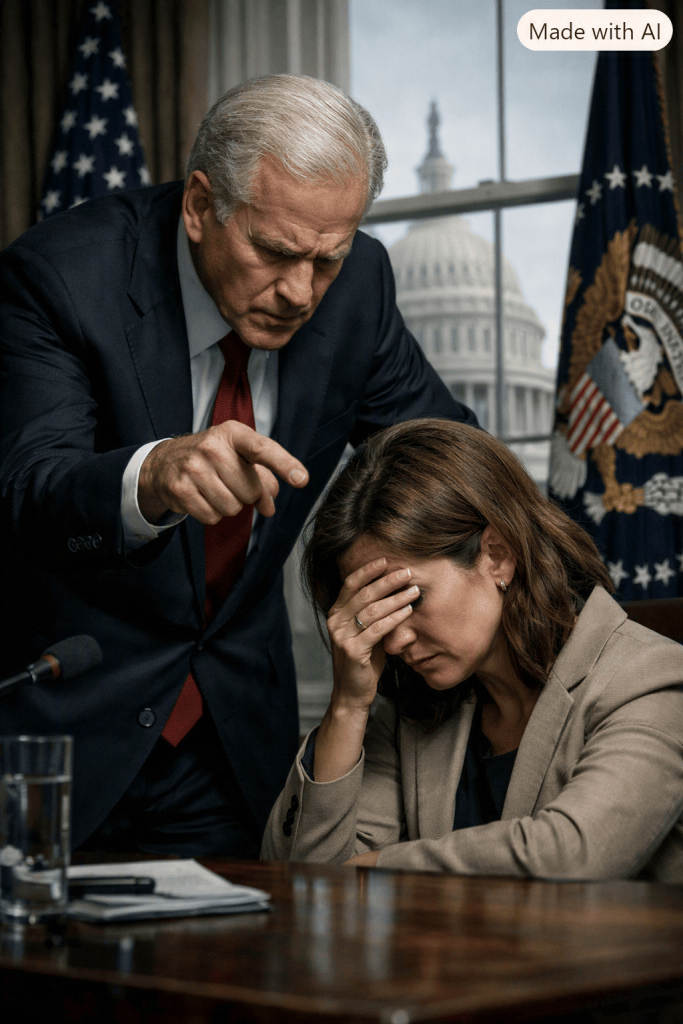
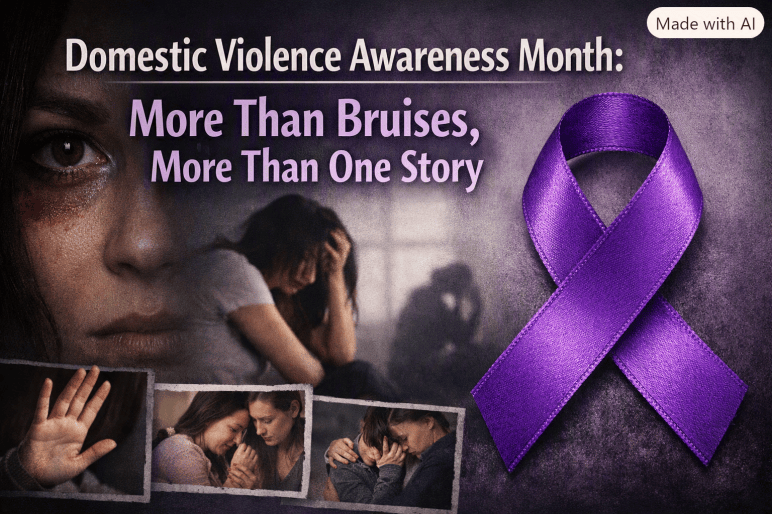
Light the charcoal. Sprinkle the sage. Call the ancestors the loud ones, the protective ones, in close. The ones who don’t mind flipping a table when truth needs to be told. Let the ancestors pull up their rocking chairs and lean in like, “Alright baby, tell it exactly how it happened.“ Because today, we’re walking straight into a fire that too many people pretend isn’t burning. And the topic is Domestic Violence Awareness Month.
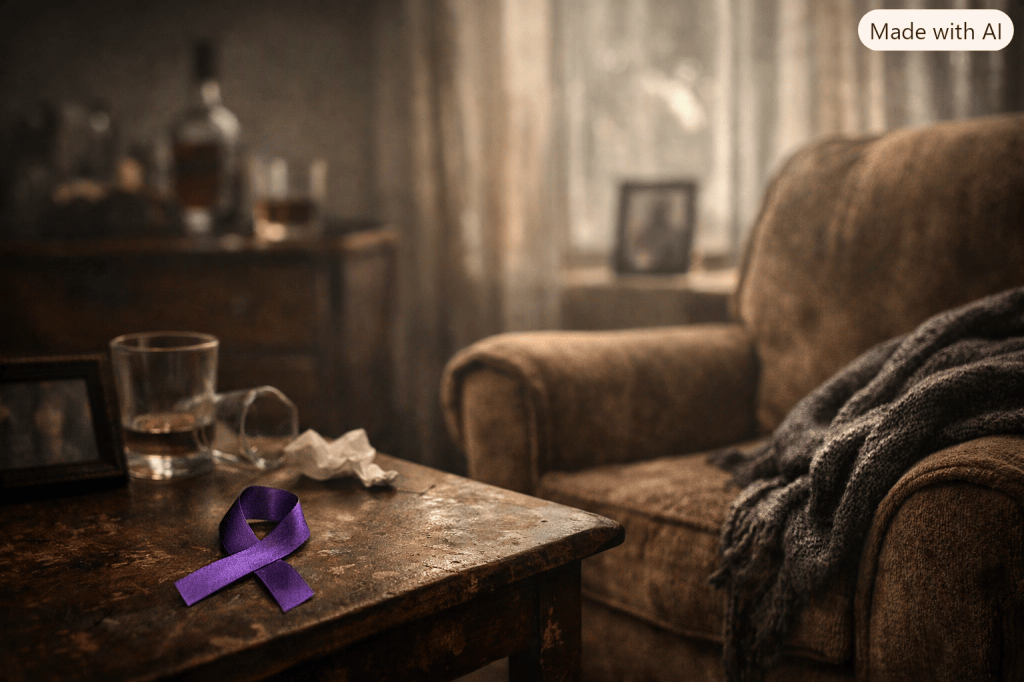
This month isn’t just a purple ribbon or a hashtag. It’s a national reckoning. A month carved out because silence has killed too many. Shame has trapped too many. And judgment has wounded too many who were already bleeding. It exists because domestic violence is not one thing. Not one story. Not one bruise. It’s a whole constellation of harm that is emotional abuse, financial control, spiritual manipulation, psychological warfare, sexual coercion, digital stalking, physical stalking, rape, threats, intimidation, and isolation. All of it real. All of it dangerous.
And Lord knows, the Deep South has a long tradition of saying, “Well, why didn’t she just leave?” With the same tone they use when asking why you didn’t bring potato salad to the church potluck. But today we’re not whispering. We’re not sugarcoating. We’re not letting judgment drown out truth.
Domestic violence is more than bruises. More than shouting. More than slammed doors. It’s the slow erosion of your identity. It’s the constant fear humming under your skin. It’s the way you learn to read someone’s footsteps like weather patterns. It’s the way you shrink. Fold. And contort yourself trying to keep the peace that never stays peaceful.
And let me say this with all the Southern sass I can muster. If you’ve never lived it, you don’t get to judge it. Because “just leaving” is a fantasy sold by people who have never had their life threatened. Their finances controlled. Their spirit manipulated. Or their faith weaponized against them. I know this because I lived it. Fourteen years in a domestic abuse situation that nearly swallowed me whole. The cycle wasn’t simple. It was a trap crafted with precision love bombing, threats, and intimidation. That is continuously repeated until you forget what freedom feels like.
I didn’t stay because I was weak. I stayed because I was scared. I stayed because I was conditioned. I stayed because every exit felt like a death sentence. And let me make something crystal clear. It wasn’t a billionaire. It wasn’t a senator. It wasn’t a monster hiding in the shadows. It wasn’t an immigrant. It wasn’t a drag queen with a story book. It wasn’t a trans person. It wasn’t a black person. It was a white, “Christian” man in the Deep South. One who used the Bible like a weapon. While twisting scripture into shackles. Preaching submission while practicing cruelty. A man who believed control was his God-given right. And fear was his favorite language.
That’s why Domestic Violence Awareness Month matters. Because abuse doesn’t look like one stereotype. Survivors don’t fit one mold. Judgment is easy. But understanding saves lives. It is a promise. A collective vow that we will speak loudly. Love fiercely. And refuse to let anyone’s suffering stay hidden behind closed doors.
And now, let me drop this mic so hard the ancestors stand up and clap. I survived what was meant to break me. I reclaimed what was stolen from me. And I will never apologize again for the fire in my voice. Thanks for reading! What have been your experiences?
Affirmation: I honor my survival, my truth, and my healing. I am worthy of safety, love, and a life without fear.
“Some days you don’t need a miracle. You just need a lemon-scented nudge back into yourself.”
-This Puzzled Life
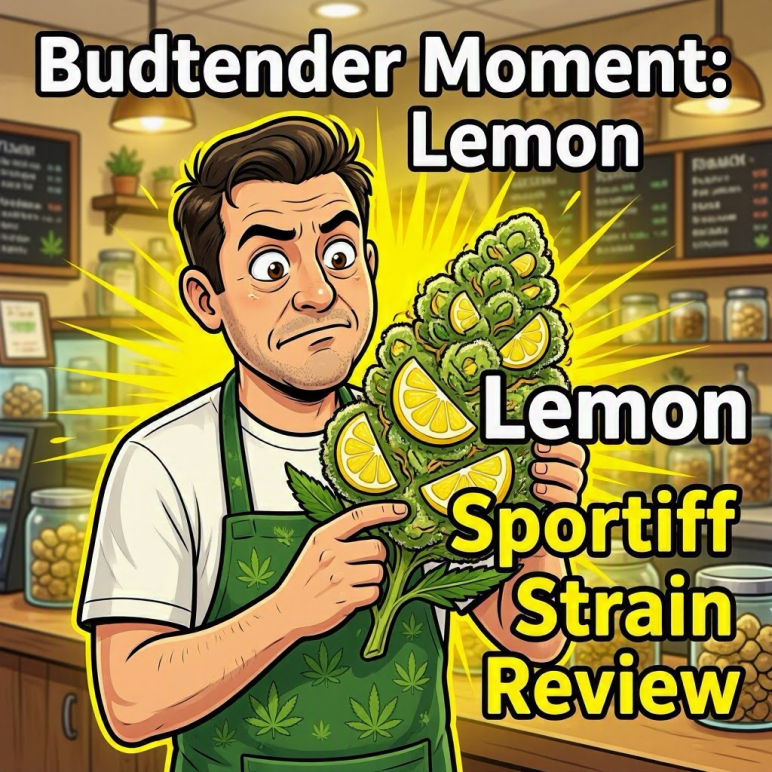
Light the charcoal. Sprinkle the sage. And let the ancestors know we’re about to talk some citrus warfare. It’s Southern-chaotic. Science-forward. Spirit-guided. Exactly how we do it. And the name of the strain is Lemon Sportiff.
Lemon Sportiff is a sativa-dominant hybrid. The genetics consist of Lemon Skunk × Super Silver Haze. Lemon Skunk is a cross between Skunk #1 × Citral. Super Silver Haze is a cross between Skunk #1 × Northern Lights × Haze. It’s the kind that wakes you up like somebody just slammed a screen door during a thunderstorm and yelled, “Y’all up?” It’s bright. It’s zesty. It’s athletic in the way only a strain named Sportiff could be. It’s like it’s wearing a sweatband and telling you to hydrate. Lemon Sportiff comes from a lineage that feels like a family reunion where everybody brought a casserole and a secret. So yes this strain is basically a citrus-powered dynasty built on Skunk, Haze, and Northern Lights. A whole genealogy chart that smells like somebody zested a lemon over a science experiment.
Lemon Sportiff tastes like lemon peel, sweet citrus candy, a hint of herbal brightness, and a clean, almost sparkling finish. If “sunshine in a mason jar” were a flavor, this would be it. The terpenes running the show are Limonene, Pinene, and Caryophyllene. Together they create a profile that’s both energizing and steady. It’s like a pep talk from your favorite auntie who also keeps crystals in her purse. Patients often reach for Lemon Sportiff for mood, focus & clarity, fatigue, and mild pain relief. This is the strain you grab when you need to feel like the sun came out inside your chest.
Please keep in mind that depending on differences in grows depends on what area of the country it is grown in. Ther will also be slight differences depending on when, where the plant was grown. Thanks for reading! And keep blazin.’ What was your exact Lemon Sportiff second this strain made you stop, blink, and say “well damn”?
Affirmation: I rise with clarity. I move with purpose. I shine without apology.
“A nation that excuses its predators will always silence its survivors.”
-This Puzzled Life
Light the charcoal. Sprinkle the sage. And call in the ancestors. The loud ones, the unfiltered ones, the ones who never learned to whisper. Today I’m summoning Ida B. Wells, Maya Angelou, Nina Simone, Toni Morrison, and every grandmother who ever slammed a cast‑iron skillet down and said, “Not my babies. Not today. Not ever.” Because what we’re about to talk about requires their fire, their fury, and their refusal to sit politely while the world burns around us. They are pacing. They’re rattling the windows. They’re demanding to know how a nation with libraries, universities, churches, and a Constitution still can’t figure out that rape is wrong.
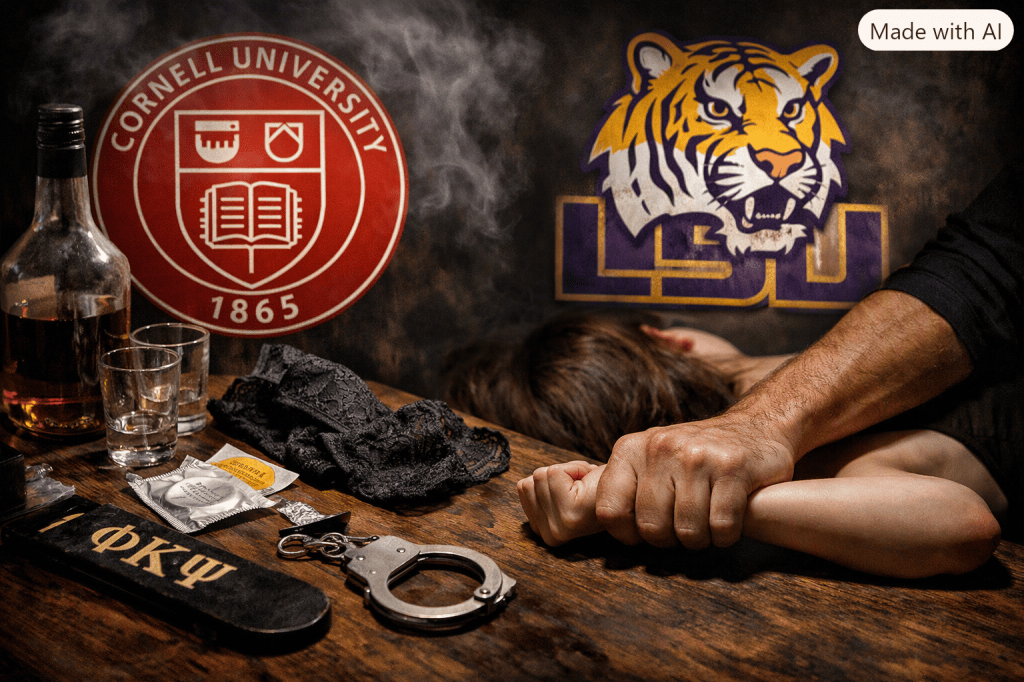
Cornell University and Louisiana State University are two institutions that love to brag about excellence, prestige, and legacy. Yet somehow can’t grasp the basic concept of protecting students from sexual assault. And now punishments include writing an essay? As if rape is a missed homework assignment. As if trauma is a teachable moment for the predator. Instead of a lifelong sentence for the victim. The ancestors are not amused. And neither am I.
Let’s ask the question America keeps dodging like it’s a bill collector, “What the hell is wrong with us when we have created a rape culture?” And don’t you dare pretend it came out of nowhere. Let’s start at the top at 1600 Pennsylvania Avenue. Where 77,000,000 voters decided that sexual abuse, rape allegations, and bragging about assault were just personality quirks. You know the excuses about “Locker room talk,” “Boys will be boys” , and “He tells it like it is.” No. He told us exactly what he does. And millions said, “Sounds good to me.”
When the leader of the country can say he can “grab them by the pussy” and get away with it, why are we shocked when college students mimic the behavior? Why are we surprised when institutions protect predators? Why do we act confused when victims stay silent? This is not confusion. This is culture. This is conditioning. This is America refusing to confront its sickness.
Politicians have paid off victims. Church leaders have hidden abusers behind pulpits. Celebrities have settlements thicker than their resumes. And the public shrugs. But victims get shamed. We get interrogated. We get asked what we were wearing. We get told we “waited too long.” We get treated like E. Jean Carroll who was sexually assaulted, defamed, mocked, and dragged by the very man who attacked her, Donald Trump. And by his cultists who call themselves “Christians.”And you wonder why so many stay silent? You wonder why survivors disappear into themselves? You wonder why healing feels like climbing a mountain with no summit? Here are two recent incidences of the same type of justified behavior.
Cornell University — Current Case (2024–2026)
The current Cornell case centers on a lawsuit filed in September 2026 by a former student, Jane Doe, who alleges she was drugged and gang‑raped by seven Chi Phi fraternity members on October 19, 2024. According to the lawsuit, she was intoxicated. Coerced into snorting what defendants claimed was ketamine. And then repeatedly assaulted for several hours by multiple fraternity members. One defendant allegedly sent a Snapchat message to the Chi Phi group chat advertising “free pussy” to encourage more men to join the assault. Doe reported the incident to Cornell police weeks later. The university conducted at least 12 hearings. Of the seven accused, only two were expelled. Others received lesser sanctions such as suspensions, workshops, or essays, according to Doe’s attorney. No arrests were made. And the Tompkins County District Attorney stated there was “insufficient evidence” for criminal charges. Cornell confirmed the fraternity remains barred from campus. And acknowledged that defendants were offered opportunities to “mitigate their conduct.” But cited federal privacy laws in declining to disclose individual disciplinary outcomes. https://www.cbsnews.com/newyork/news/cornell-university-lawsuit-fraternity-rape-allegations/?utm_source=copilot.com
Louisiana State University (LSU) — Current Case (2025–2026)
The current LSU case involves a sophomore student, Kendall Danielle, who alleges she was raped by an LSU football player on October 18, 2025, around 4:30 a.m. She underwent a rape kit examination and later participated in LSU’s Title IX process. Which concluded that the player was responsible for rape. And suspended him for two semesters. However, he appealed and was ultimately allowed to return to campus. Resume football activities. And participate in student organizations. Despite still being found responsible.
Danielle alleges the player’s mother contacted her urging her not to pursue charges because it could harm his football career. And that the player sent her $1,000 in an attempt to keep her from pressing charges. After learning he was allowed back on campus, she went public on TikTok and subsequently filed a criminal complaint. The East Baton Rouge District Attorney has since opened a criminal investigation. They are requesting reports from LSU, LSU Police, and Baton Rouge Police. LSU maintains it followed Title IX procedures and is cooperating with law enforcement. The player has not been publicly identified. https://www.wwltv.com/article/news/crime/student-files-sexual-assault-complaint-against-lsu-football-player/289-2bfa7986-e5fe-4d24-92db-9b069888c305?utm_source=copilot.com
But let’s talk about the roots of this rot. Is it the religions that teach masturbation is sinful? Is it the purity culture that tells young people their bodies are dangerous? Is it the sermons that say touching yourself will send you to hell? Let me be clear. You will not burn in the lake of flames for using two body parts God created you to have. For God’s sake, let them masturbate. Because when you shame normal, sexual behavior, you get people like the Duggars. They were raised in sexual repression so severe it turns into predation.
Is it misogyny influencers like Andrew Tate and Nick Fuentes? Men who teach boys that women are objects, property, and targets. Men who profit off hatred and call it masculinity. Or is it simply that America still refuses to teach boundaries? Still refuses to teach consent? Still refuses to teach respect?
Cornell and LSU are not anomalies. They are symptoms. Symptoms of a nation that treats sexual assault like a PR inconvenience instead of a violent crime. And when universities punish predators with essays, counseling sessions, or “reflection assignments,” they are telling victims, “Your trauma is worth less than his future.” And that is the message survivors hear every single day.
All predators no matter their status, wealth, influence, or fan base, should be held accountable. Not protected. Not excused. Not wrapped in a Bible verse and called “God’s Will.”
As a sexual assault survivor myself, I will never fully heal from the years I was assaulted. Raped sometimes daily by a man who is just like Donald Trump. I will never fully heal from the damage inflicted on me at five years old by someone who saw a child as an easy target. You will never understand that fear. And I pray you never have to.
Lift victims up. Lift survivors up. Hold predators accountable. Every single one of them. Because rape is not a mistake. It is not a misunderstanding. It is not a lapse in judgment. It is violence. It is domination. It is a choice. And America needs to stop pretending otherwise. Thanks for reading!
Affirmation: I am not what happened to me. I am what I survived. My voice is powerful. My truth is valid. And my healing is sacred.
“If self‑care requires a loan application, it’s not wellness. It’s a scam with eucalyptus.”
-This Puzzled Life
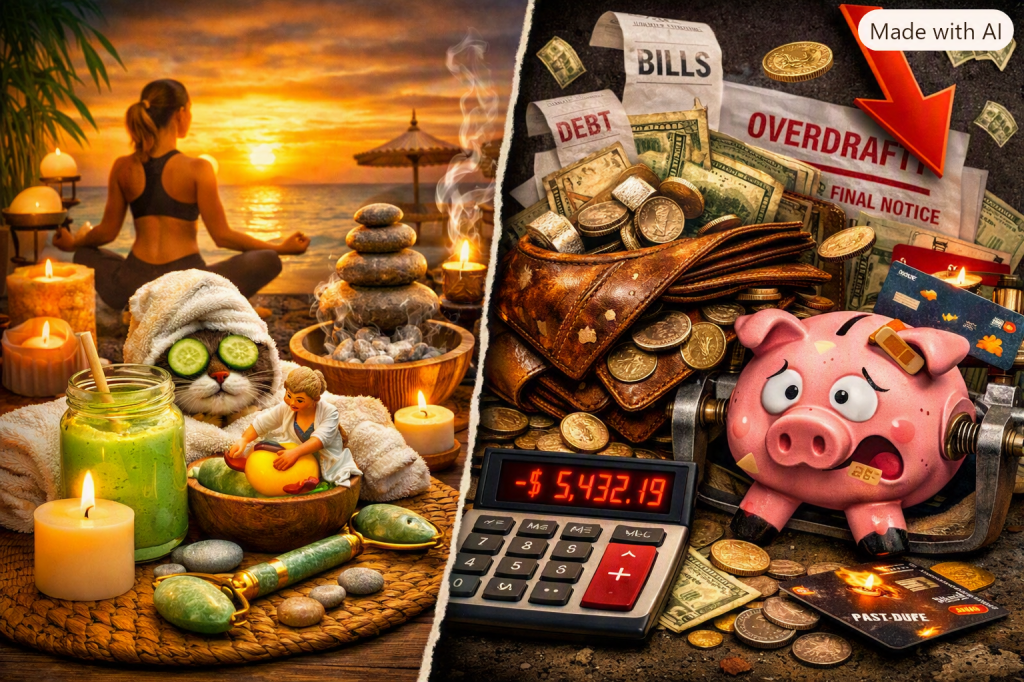
Light the charcoal. Today we’re grilling the Wellness Industrial Complex until it admits it’s been robbing us blind like a raccoon in Lululemon leggings. Self‑care has evolved from “take a nap and drink some water” to “sell a kidney so you can afford a serum infused with moonlight, angel tears, and ethically sourced unicorn collagen.”
Every time I open Instagram, some wellness guru named Saffron Moonbeam is perched on a rock in Sedona telling me, “You can’t pour from an empty cup.” Ma’am, I can’t even afford the cup. The cup is $89.99 and comes with a crystal straw that promises to “align my abundance chakra.” Meanwhile my bank account is over here whispering, “Your abundance chakra is over drafted by $37.12.”
Let’s take a guided tour through the self‑care items that the wellness industry swears I need. And the financial crimes they commit against my checking account.
$300 Serums-Apparently my face needs a potion made from fermented cloud vapor and the hopes of Scandinavian virgins. For $300, this serum better erase wrinkles, trauma, and student loans.
Sedona Retreats-“Reconnect with your inner child for only $4,999.” For $4,999 my inner child better come out doing taxes, laundry, and emotional labor.
Organic Herbal Teas-Why is tea $22 a bag? It’s leaves. Leaves! I can go outside and get leaves for free. Mississippi has leaves everywhere. I’m basically surrounded by generational wealth.
Crystal Water Bottles-$120 for a bottle with a rock in it. I can get a rock from my driveway. I can get a whole collection of rocks. I can start a rock museum.
Sound Baths-$75 to lay on the floor while someone hits a bowl with a spoon. I can do that at home with my cookware and a bad attitude.
Weighted Blankets-$200 to feel like a Victorian ghost is sitting on my chest. I can get that for free by thinking about my to‑do list.
Yoga Pants-$98 for leggings that roll down the second I inhale. For $98 they should hold me together emotionally, spiritually, and physically.
Let me tell you something. My ancestors did not survive polio, wars, and the Great Depression. So, I could spend half a paycheck on a jade roller that promises to “release facial tension.” My grandmother would rise from the grave. Slap the serum out of my hand and say, “Splash some cold water on your face and go sit down somewhere.” And honestly? She’d be right. Because self‑care is not supposed to require a credit check, a payment plan, or a GoFundMe titled ‘Help Me Achieve Inner Peace.’
Sometimes self‑care is drinking water. Taking a nap. Ignoring people. Eating a snack. Telling the world “no” with your whole chest. And none of that costs $300. Bowl rung. Crystal shattered. Sedona canceled. Thanks for reading! What’s your most outrageously overpriced “self‑care” moment? And did it at least come with a free sample or a spiritual awakening, or nah?
Affirmation: I am whole. I am worthy. And I do not need a $300 serum to glow. My radiance is free. My peace is priceless. And my bank account deserves rest too.
“Hypocrisy is loud. But truth has a way of hollering back.”
-This Puzzled Life
Light the charcoal. Sprinkle “Oh my GOD this is terrible.” And call upon the ancestors. We’re about to talk about Speaker of the House “Moses” Mike “Grindr” Johnson. Also known as the leader of the Closetocracy. The man who somehow manages to be both the nation’s top lawmaker. And the world’s most chaotic religious plot twist. Ancestors, gather ‘round. Bring sweet tea. Bring smelling salts. Bring a fan. Because this level of hypocrisy has me sweating like a Pentecostal preacher caught in a drag brunch.
The political and religious hypocrisy in this country has gotten so loud it’s rattling the picture frames in my hallway. Somebody grab the emergency sweet tea. We’re going to talk about the kind of political behavior that makes the ancestors collectively sigh.
This is about The Speaker of the House and the Biblical‑themed, reality‑TV‑level chaos that has unfolded since he picked up that gavel. And yes, we’re using real facts. And yes we’re adding Southern sarcasm so thick you could spread it on a biscuit.
10 FACTUAL THINGS MIKE JOHNSON HAS DONE, WITH SOURCES, AND A WHOLE LOT OF SOUTHERN SARCASM
Southern translation: Sir, the Gulf of Mexico is boiling like crawfish water. This is not the time.
Light the charcoal again. Because this whole situation needs a spiritual cleansing, a sage bundle, and maybe a priest. The Speaker’s record is a masterclass in political contradiction:
Biblical metaphors for leadership.
Restrictive policies for families.
Attempts to overturn elections.
Climate denial while the South melts like a candle.
LGBTQIA+ scapegoating while preaching “love thy neighbor.”
It’s the kind of hypocrisy that makes Southern liberals clutch their pearls and say, “Lord, take the wheel, the whole car, and the insurance policy.” The ancestors are tired. The sweet tea is gone. And I’m officially closed for renovations due to excessive foolishness. Thanks for reading! And get out and vote.“So what do you think? Is reality being dramatic? Or is Mike “Grindr” Johnson just trying to pray the plot twist away?”
Affirmation: I stand firm in my truth, my identity, and my joy. No matter who tries to rewrite the narrative.