

Reefer Madness: The Original ‘Fake News’ Tornado

“If the smell of cannabis could kill you, half the country would’ve dropped dead at a Snoop Dogg concert.”

-This Puzzled Life

Light the charcoal. Pull up a lawn chair. And pour yourself a glass of sweet tea so strong it could dissolve a horseshoe. Today,  we’re about to roast one of the biggest cultural catastrophes ever sold to the American public, Reefer Madness. This was the original “fake news tornado.” The 1936 panic‑propaganda film that convinced America, coast to coast, that cannabis was basically Satan doing the two‑step in your living room. A film so dramatic it made Pentecostal revivals look subtle. A film so unhinged it claimed one puff of cannabis would turn your teenager into a jazz‑addicted, piano‑smashing menace to society.
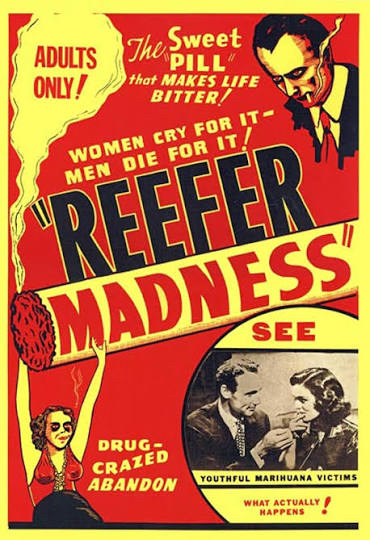
If Reefer Madness came out today, it would be labeled satire and streamed on Hulu between a cult documentary and a reality show about doomsday preppers. But back then? Folks ate it up like it was gospel. And while the whole country swallowed the hysteria, the South, with its love of moral order, church‑based authority, and “protect the children” politics, became one of the loudest amplifiers of the panic. And the smoke from that lie is still hanging in the air.

Reefer Madness didn’t just sprout up like a weed in the yard. It was engineered. And cooked up like a casserole nobody asked for.

1. Harry Anslinger needed a new villain

When alcohol prohibition ended, Harry Anslinger, head of the Federal Bureau of Narcotics, needed a new enemy to stay relevant. He chose cannabis and went full Broadway villain about it. 

Source: U.S. National Archives; NPR reporting on Anslinger’s anti‑cannabis campaign. https://www.npr.org/sections/codeswitch/2013/07/14/201981025/the-racist-roots-of-marijuana-prohibition (npr.org in Bing).

2. Racist fearmongering was the secret ingredient

Anslinger pushed the idea that cannabis made Black and Mexican communities violent or “unpredictable,” and newspapers ran with it like it was scripture. Source:Smithsonian Magazine; Brookings Institution analysis of early cannabis criminalization. https://www.smithsonianmag.com/smart-news/brief-history-us-marijuana-laws-180967762/ (smithsonianmag.com in Bing)

Source: Brookings Institution analysis https://www.brookings.edu/articles/the-racist-origins-of-marijuana-prohibition/ (brookings.edu in Bing)

3. Zero science, maximum hysteria

Instead of research, they relied on headlines like

  • “Marijuana: Assassin of Youth”
  • “The Weed With Roots in Hell” Source: Library of Congress newspaper archives.

Reefer Madness became the 1930s version of a viral Facebook panic post. Except instead of your aunt sharing it, it was the federal government. Source:Library of Congress newspaper archives https://www.loc.gov/item/2016655020/

Reefer Madness didn’t start in the South. But the South sure knew how to run with it.

1. Moral panic fit neatly into “family values” politics

The messaging aligned perfectly with long‑standing cultural fears about pleasure, rebellion, and anything that might loosen the grip of social control.

2. Racist narratives aligned with Jim Crow politics

The film’s messaging reinforced the same racist stereotypes used to justify segregation and policing. Source: ACLU report on racial disparities in cannabis arrests. https://www.aclu.org/report/tale-two-countries-racially-targeted-arrests-era-marijuana-reform (aclu.orgin Bing)

3. Churches amplified the message

Pastors preached that cannabis was a gateway to sin, jazz, and loose behavior. Which, ironically, made it sound more fun.

4. But let’s be clear. The whole country bought the lie.

From California to New York, lawmakers, newspapers, and civic groups all joined the panic parade. The South wasn’t alone. It was just louder, more dramatic, and more committed to the bit.

How Reefer Madness Still Shapes the Cannabis Industry Today

1. Criminalization that lasted generations

Decades of arrests of overwhelmingly targeting Black and brown communities created barriers that still affect who gets to participate in the legal industry. Source:ACLU racial disparity data. https://www.aclu.org/report/tale-two-countries-racially-targeted-arrests-era-marijuana-reform (aclu.org in Bing).

2. Stigma that refuses to die

Even now, people across the country acted like the church bulletin just burst into flames at the word “cannabis” like it’s a demon trying to get on the church roll. Source: Pew Research Center surveys on cannabis attitudes. https://www.pewresearch.org/short-reads/2024/03/26/americans-say-marijuana-should-be-legal/ (pewresearch.org in Bing).

3. Regulatory chaos

Because the plant was demonized instead of studied, the modern industry is still fighting inconsistent state laws, banking restrictions, and research barriers. Source: Congressional Research Service on cannabis policy https://crsreports.congress.gov/product/pdf/R/R44782 (crsreports.congress.gov in Bing)

Source: FDA on research limitations https://www.fda.gov/news-events/public-health-focus/fda-and-cannabis-research-and-drug-approval-process (fda.govin Bing).

4. Misinformation still shapes public opinion

People trust alcohol, a literal toxin, more than a plant with thousands of years of medicinal use. Source: CDC alcohol toxicity data; NIH cannabis research summaries. https://www.cdc.gov/alcohol/fact-sheets/alcohol-use.htm(cdc.gov in Bing)

Source: NIH cannabis research summaries https://nida.nih.gov/publications/research-reports/marijuana/what-are-marijuanas-effects (nida.nih.gov in Bing)

Despite the chaos, the cannabis industry is doing what Americans do best. It’s taking something messy, misinformed, historically wrong and turning it into something useful. We now have terpene education, standardized dosing, medical research, legalization movements, and a whole generation saying, “Wait. Y’all lied to us?” Reefer Madness may have started the conversation, but it sure as hell won’t end it.

So, here’s to the end of Reefer Madness thinking. May it finally be laid to rest next to corsets, bloodletting, and the belief that margarine is healthier than butter. And may the next time someone Southern, Northern, coastal, or corn‑fed tries to warn you about the “dangers” of cannabis, you smile sweetly and say “Honey, the only madness here is believing a 1936 propaganda film over actual science.”

“Reefer Madness didn’t just misinform America. It became the blueprint for 80 years of bad policy, demonizing religious communities, and political theater. The only thing it ever got right was the jazz.”

And let’s end with this, loud enough for the folks in the back who still think the smell of cannabis is going to send them straight to glory. The scent of burning cannabis will not make you instantly die. It won’t stop your heart. It won’t melt your morals. It won’t summon jazz musicians to corrupt your children. It won’t even give you a contact high unless you’re basically hotboxing inside a broom closet with Snoop Dogg.

We have survived Reefer Madness, the propaganda, survived the sermons, survived the politicians who swore a whiff of weed would turn the whole country into a jazz‑fueled apocalypse. We survived the lies. So now? You can survive the smoke. Or if the smell of a plant sends you into a full spiritual crisis, you are absolutely free to march around town in a gas mask like you’re training for the CDC Olympics. That’s between you, your lungs, and your HOA. But the rest of us? We’re done pretending the air is dangerous just because the truth finally burned hot enough to rise.

And let’s be honest. Nobody throws a fit over the smell of cigarette smoke. You can walk through a parking lot littered with butts, past a bar that smells like regret and menthols, and not one person starts a moral crusade. Alcohol? Legal, glorified, and sold next to the Lunchables despite being a literal toxin that’s wrecked more lives than cannabis ever could. But one whiff of weed and suddenly folks are acting like they’ve been personally attacked by a cloud. If you can survive the scent of stale beer and your uncle’s Marlboro breath, you can survive a terpene breeze without filing a complaint to the HOA.

Affirmation: I am stronger than propaganda and calmer than a 1936 panic attack.

***Don’t forget to watch the video!***

#ThisPuzzledLife
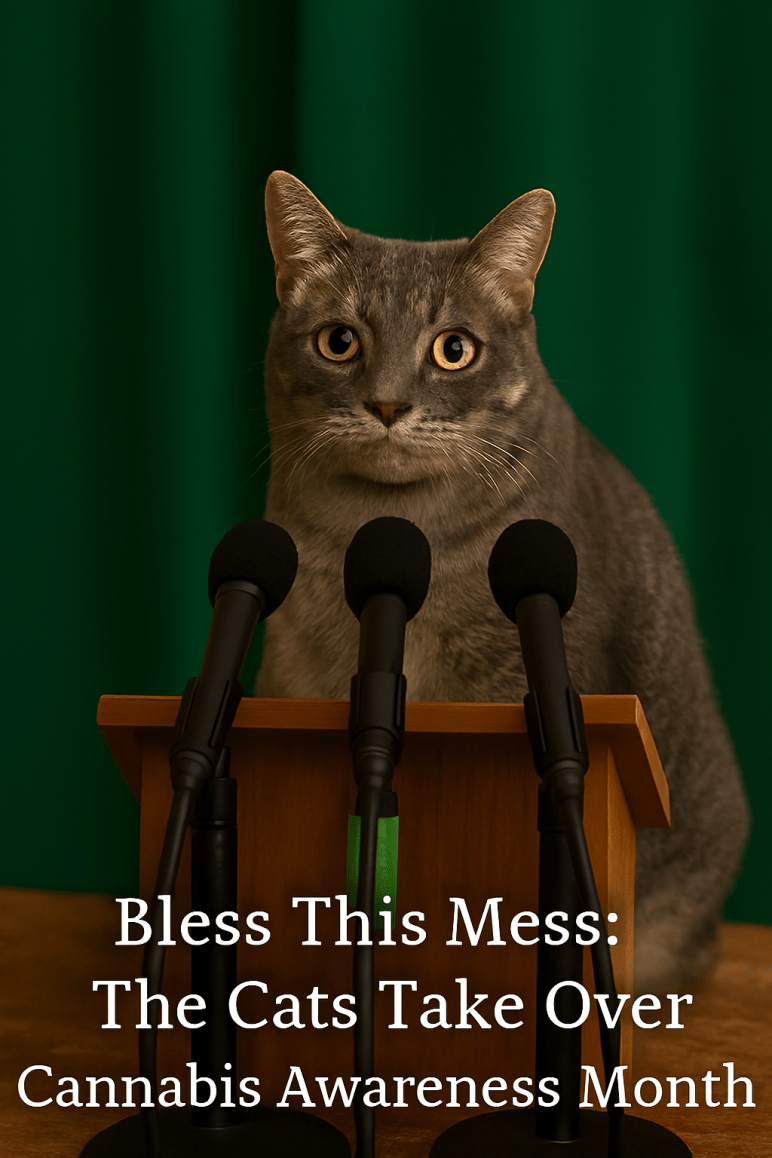
Bless This Mess: The Cats Take Over Cannabis Awareness Month

“If God didn’t want us learning about cannabis, he wouldn’t have made half my cousins impossible to tolerate without it.” 

-Mavis “Two-Puffs” Delacroix

Light the charcoal. Sprinkle the sage. Negative energy, go on and get. Today, we are gathered here in this living room that smells like lavender spray, and cat hair. This will officially kick off Cannabis Awareness Month under the watchful, judgmental, and wildly unqualified leadership of my three feline board members.

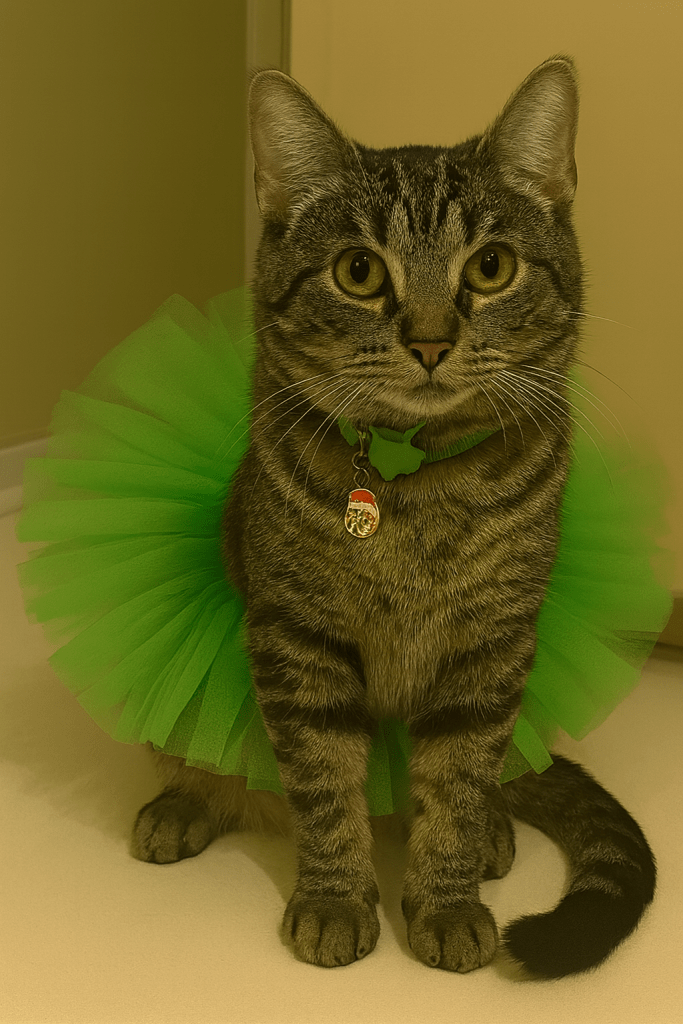
Piper has already climbed onto the podium wearing a green tutu like she’s the spiritual advisor of the entire Gulf South. Coco is in the corner eating something that is absolutely not food. And Tinkerbell is perched high above us all. And blinking slowly as if to say, “I cannot believe I share a mortgage with these people.” And she has no mortgage. So, take a breath. Set your intentions. Hide your snacks. The cats are ready to educate the public. And Lord help us. They have prepared statements.

Welcome back to the only blog on the internet where Cannabis Awareness Month is celebrated with the same energy most families reserve for Easter Sunday and tax refunds. In this house, the educational programming is run by three cats who have never once read a law. Paid a bill. Or respected personal space. Piper is already wearing a green tutu like she’s the patron saint of responsible consumption. Coco is pre-gaming with the emergency snacks. And Tinkerbell is in the corner judging everyone’s life choices with the quiet authority of a Southern grandmother. If you came here calmly, you’re in the wrong place. If you came here for chaos, education, and a sprinkle of cat-led activism, pull up a seat.

Every April, the rest of America politely acknowledges Cannabis Awareness Month like it’s a PTA meeting. Meanwhile, down here in the Deep South, my household treats it like the Met Gala of Mindfulness. Except the outfits are Dollar General pajamas. The snacks are missing (because Coco). And the educational portion is led by three cats who have never paid a bill in their lives. But bless it, they try.

Piper “The Tootin’ Tutu Tornado”  kicks off the month by dragging a green feather boa across the living room like she’s the Beyoncé of harm reduction. She hops on the table. Knocks over a brochure and says, “Cannabis Awareness Month means education, mother.”

She’s not wrong. Cannabis Awareness Month is all about understanding safe, responsible use. Reducing stigma. Learning the difference between THC, CBD, and “whatever your cousin grew behind the shed in 1998.” Knowing your limits. And for the love of Mississippi, not mixing edibles with a church potluck.

Piper then tries to teach the household about terpenes but gets distracted by her own tail. Awareness is a journey. Coco, the Snack Lobbyist, takes a different approach. She sets up a “Cannabis & Munchies Preparedness Station.” Which is really just an empty bag of Doritos. A half-chewed cat treat. And a sticky note that says, “PLAN AHEAD.” She insists it’s educational. Coco’s key message is ,“If you stay ready, you don’t have to get ready.” She’s basically a Southern auntie in a fur coat.

Tinkerbell, the dignified conductor of this circus, takes Cannabis Awareness Month very seriously. She sits everyone down for a lecture titled “Cannabis, Calm, and Why Y’all Are Doing Too Much?” Which covers setting intentions. Respecting your body. Understanding dosage. Avoiding the “I’m fine” spiral that ends with you reorganizing the pantry at 2 AM. And the importance of not letting Piper run any more workshops. She ends her presentation by flicking her tail and walking away. Which is cat for “class dismissed.”

Piper stands on the arm of the couch like she’s delivering the State of the Union. Coco is eating something he absolutely should not be eating. Tinkerbell is judging us all. Together, they recite the official household pledge, “We promise to consume responsibly, stay hydrated, respect the plant, and never, ever let Piper be in charge of snacks.” Amen.

And that concludes this month’s household seminar on cannabis awareness is brought to you by Piper’s unlicensed enthusiasm. Coco’s snack-based curriculum. And Tinkerbell’s unwavering belief that everyone else is doing it wrong. As we wrap up, remember to stay informed. Stay responsible. And never let a cat who can’t even find his own tail be in charge of dosage discussions. May your month be calm. Your snacks be plentiful. And your cats be slightly less dramatic than mine. But honestly, I wouldn’t count on it. Longest “Big Beautiful affirmation” in the history of our country. Thank you for your attention to this matter. Thanks for reading! Stay informed.

Affirmation: “I move through this month with clarity, humor, and a heart unbothered by chaos. I honor the plant. Protect my peace,l. And trust myself to stay grounded even when Piper is preaching. Coco is crunching. And Tinkerbell is judging from above. I am calm. I am capable. And I am fully prepared for whatever foolishness this household delivers.”

***Don’t forget to watch the video!***

#ThisPuzzledLife
What Is “Scromiting?”

“If puking is punctuation, scromiting is writing in all caps.”

-Unknown

Light the charcoal. Sprinkle the sage. Negative energy go away. Today, I want to talk to you about the some of the latest news in cannabis. There is a condition that is linked to chronic cannabis use known as “scromiting.” Let’s look at the latest news surrounding this unpleasant condition.

  “Scromiting” is a term for the condition known as Cannabinoid Hyperemesis Syndrome (CHS). It was once thought to be rare. But now it’s being seen almost daily in emergency rooms. The term is a combination of screaming and vomiting. And it’s linked to chronic, heavy marijuana use. The patient experiences intense abdominal pain and uncontrollable vomiting that causes them to cry out in distress (https://www.cnn.com/2025/12/02/health/scromiting-marijuana-vomiting-syndrome-wellness#:~:text=Still%2C%20why%20would%20the%20same,weed%20are%20affected%20by%20CHS.)

CHS is a condition where cannabis is used to alleviate nausea and vomiting. However, in some long-term heavy users, the high levels of THC can disrupt the body’s endocannabinoid system, which will cause the direct opposite effect. It binds to the receptors in your brain, spinal cord, gastrointestinal tract, and other body tissues. Common symptoms include persistent nausea, repeated vomiting and retching (up to 5 times an hour), intense abdominal discomfort or pain, fear of throwing up, and loss of appetite (https://www.nbcnews.com/health/health-news/high-potency-weed-linked-psychotic-episodes-mysterious-vomiting-illness-young-n1273463#:~:text=Scromiting%20cases%20have%20increased%20as,as%20high%20as%2090%20percent.)

This condition has become more common with the rising potency of THC in today’s cannabis market. And surprisingly, patients report that they find relief in a very hot shower or bath. The reasons why this seems to help is still unknown. This is not a reaction due to a single use. And not all heavy users develop the condition. Patients who develop CHS often report large daily amounts of THC with as much as 2,000 milligrams in a day. And it’s typically seen in heavy concentrate users in which THC levels are around 60%-90% (https://www.cnn.com/2025/12/02/health/scromiting-marijuana-vomiting-syndrome-wellness#:~:text=Still%2C%20why%20would%20the%20same,weed%20are%20affected%20by%20CHS.)

Cannabis Hyperemesis Syndrome occurs in phases:

§  Prodromal Phase: Early morning nausea and mild abdominal discomfort without actually vomiting. This phase can last for months or years.

§  Hyperemetic Phase: This is the phase where “scromiting” occurs. Recurrent bouts of severe nausea, intense abdominal pain, and frequent vomiting that can last for hour or days. 

§  Recovery Phase: Symptoms resolve completely after the individual stops using cannabis.

The immediate medical treatment for an episode involves IV fluids,  and anti-nausea medications. And due to the amount of vomiting that takes place, rehydration is a must to prevent organ failure. And sadly, the long-term solution to prevent recurrence is the complete stopping of cannabis use (https://www.discovermagazine.com/the-strange-rise-of-scromiting-most-common-among-young-heavy-cannabis-users-48351.)

The state of Mississippi, where I live, has a limit of 60% on concentrates. But there are some people that need the higher percentages to maintain a therapeutic dose for their conditions. I don’t know if this research is specifically related to bingeing or not. And I have also read where CBD can also cause “scromiting.” Unfortunately, you do not know if you’re susceptible to this condition until it begins happening. And no matter how much time goes by from cessation, the minute someone uses cannabis again, these terrible symptoms will continue.

I think that this is a horrible thing as cannabis has saved millions of lives. And for me cannabis will a be a part of my life for as long as possible. In the information that you have just read, 2,000 milligrams a day is an extreme about of cannabis. And I would be willing to bet that this high of a dose are related to edibles as many don’t understand how powerful they are and can be. So, at this point, I’m still willing to take my chances. Thanks for reading!

Affirmation: Everything will be okay. Not great but okay.

***Don’t forget to watch the video!***

#Thispuzzledlife