

Shame: The Weight I Refuse to Carry Anymore

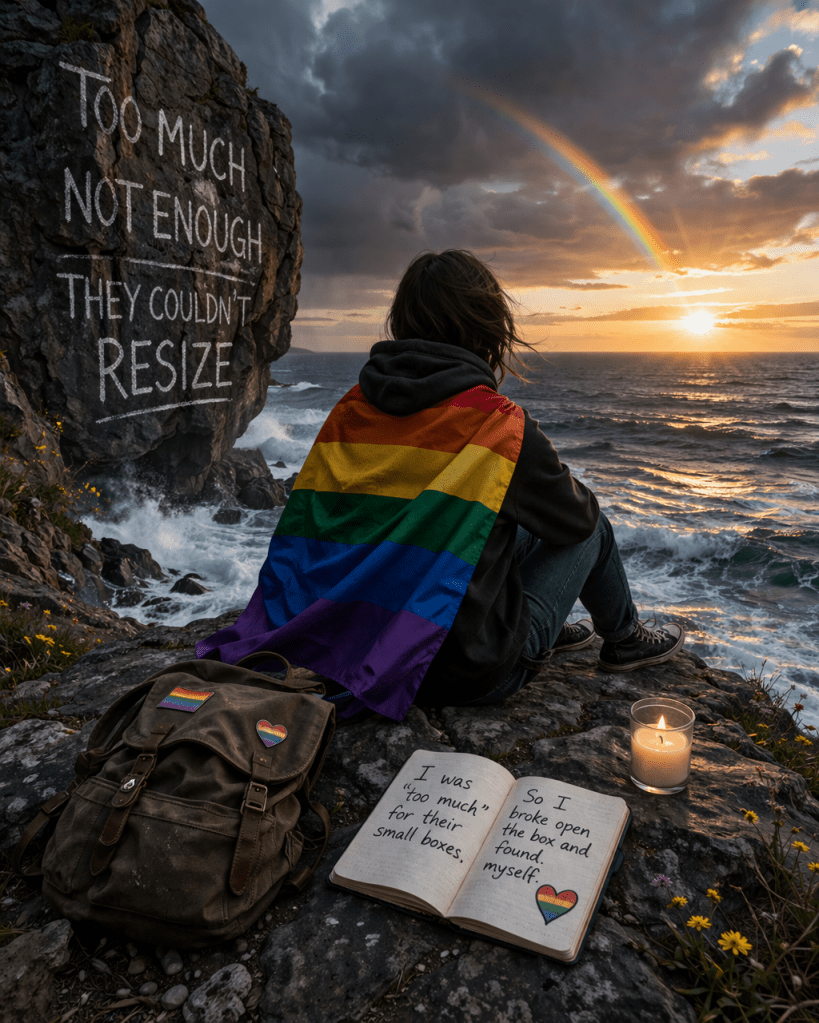
“Shame was never my reflection. It was the shadow of someone else’s fear cast across my life.”

-This Puzzled Life

Light the charcoal. Sprinkle the sage. Let the smoke rise like a soft warning. A trembling invitation. And a doorway cracked open just wide enough for the truth to step through without flinching. Let it drift through the room the way shame once drifted through our childhood homes as quiet and unspoken. But heavy enough to shape the way we learned to breathe.

This isn’t about performance. It isn’t about survival. It’s about naming the thing that has lived in your bones longer than some people have lived in their houses. I’m not writing from a place of humor or distance. I’m writing from the wound. From the memory. From the soil that raised me. And the silence that tried to claim me.

Shame is not born in us. It is handed to us. Pressed into our palms by people who were supposed to know better. People who were supposed to love better. People who were supposed to see us as whole. And in the Deep South, shame is practically a family heirloom.

Down here, some conservative communities have perfected shame into an art form as quiet, polished, and Sunday‑morning approved. They wield it like a switch they no longer have to swing. Because the words do the bruising for them. They don’t have to raise their voices. They just raise an eyebrow. They don’t have to say you’re wrong. They just say they’re “praying for you.” They don’t have to tell you to hide. They just make sure you know what happens to people who don’t.

Shame becomes the air you breathe before you even know what air is. It teaches you to fold yourself small. To tuck away the parts of you that don’t fit the script. To apologize for the way your heart beats. The way your voice trembles. And the way your truth refuses to die quietly. The worst part is how deeply it roots itself. And how it convinces you that you are the problem. Not the rules. Not the silence. Not the fear disguised as righteousness.

Some Southern conservative spaces are experts at this. They turn difference into danger. They turn authenticity into rebellion. They turn survival into sin. They shame you for who you are. And then shame you again for hurting because of it.

But here’s the truth shame never wants you to learn. You were never the one who failed. You were the one who endured. Shame is not your inheritance. It is not your identity. It is not your burden to carry one more mile. The moment you name what was done to you. The moment you say, “This wasn’t love. This was control.” The spell breaks. The weight shifts. The air clears. And you begin to see yourself without the fog of someone else’s fear. You begin to hear your own voice again. You begin to rise. And rising is the one thing shame cannot survive.

Shame is universal. It’s a part of every culture and every nation. And every community has its own way of teaching people to hide the parts of themselves that don’t fit the script. Shame is a global language. It is spoken in different dialects. It is enforced through different rituals. And it is carried in different bodies.

But the version I know. The one that shaped my bones and rewired my voice was born in the conservative Deep South. That’s the lens I speak from. That’s the air I learned to breathe. That’s the terrain where shame wasn’t just a feeling. It was a system.

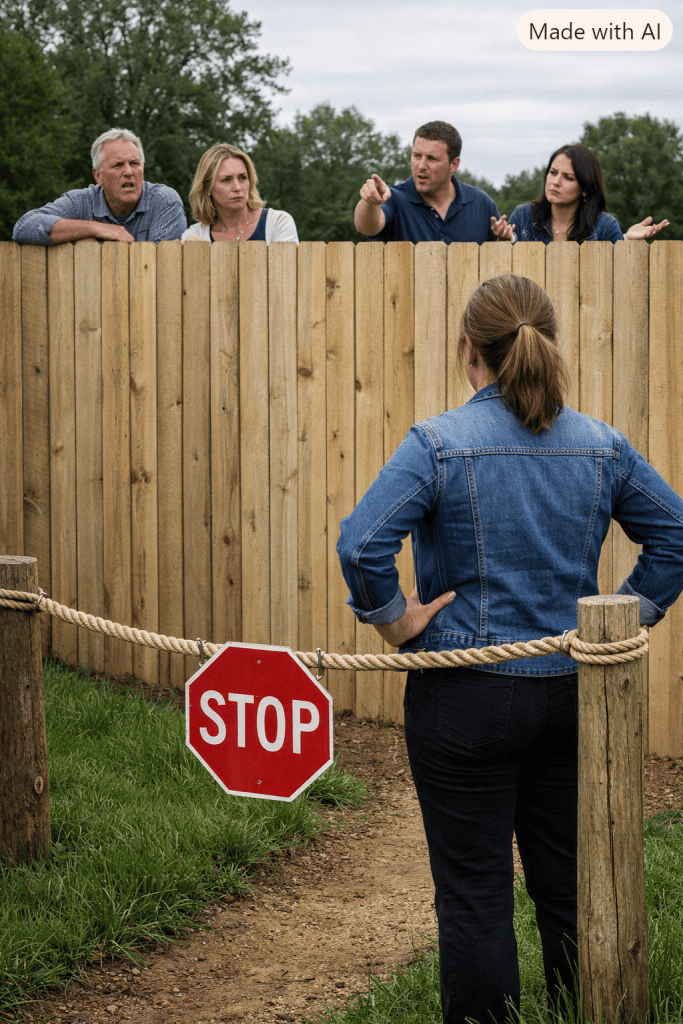
Some conservative Southern communities wield shame like a tool of order. A way to keep people in line. A way to maintain the illusion of perfection even when the truth is rotting beneath the floorboards. They don’t have to say, “you’re wrong.” They just say, “we don’t talk about that.” They don’t have to say, “you’re unworthy.” They just say, “think of what people will think.” They don’t have to say, “you don’t belong.” They just make sure you feel it.

Shame becomes the soundtrack of your childhood. The shadow in every room. The reason you learn to fold yourself into shapes that hurt to hold. When you grow up queer, outspoken, different, or simply unwilling to disappear, the shame becomes sharper. More pointed. And more personal.

You were not the problem. You were the disruption. You were the truth they didn’t know how to hold. Shame thrives in silence. But it cannot survive being named. The moment you say, “This harmed me,” the spell breaks. The moment you say, “This wasn’t love,” the weight shifts. The moment you say, “I deserved better,” the ground beneath you changes shape.

You begin to see yourself without the fog of their expectations. You begin to hear your own voice without the echo of their judgment. You begin to rise in ways they never prepared for. And rising is the one thing shame cannot withstand.

Let every culture keep the shame it created. Let the South hold the weight of the shame it taught me to carry. I am done dragging their silence behind me. I am done mistaking their fear for my fault. I am done shrinking to make their world more comfortable. I speak now. I rise now. I reclaim every part of me they tried to bury.

And the sound of that truth is unapologetic. Unbroken. And is the loudest thing I’ve ever survived. You were never meant to carry it. Set it down. Walk forward. And let the sound of your unbroken truth shake the whole damn South. Thanks for reading! And put that shame down.

Affirmation: I release every ounce of shame that was handed to me. My truth rises. My voice steadies. And I walk forward unburdened and whole.

***Don’t forget to watch the video!***

#ThisPuzzledLife
The Family Roles & The Circus They Created

“My family says I’m ‘living in sin.’ Which is hilarious coming from people who treat denial like a spiritual gift. And premarital sex like a community service.”

-This Puzzled Life

Light the charcoal. Sprinkle the sage. Negative energy, get your shoes on and leave. Today we’re diving into one of my favorite dysfunctional family topics. Family roles. Those unofficial job titles we never applied for. Never wanted. And yet somehow ended up performing like we were on salary. Take a moment and see where you and your people fall. And here’s the spoiler. If you’re reading this, you already know.

Before we get started, let me warn you. This is not a gentle stroll through family history. This is a full‑blown guided tour through a Southern household. That’s been held together with casserole, denial, and conservative Christian values. That seem to get applied with the accuracy of a toddler using glitter glue.

I grew up in a family where “we don’t talk about that” wasn’t a suggestion. It was the eleventh commandment. Emotions were treated like illegal fireworks. Everyone had them. Nobody handled them correctly. And something always exploded at the worst possible time.

In my house, honesty was considered aggressive. Accountability was considered disrespectful. And therapy? Therapy was treated like witchcraft performed by people who “don’t know Jesus personally.”

Meanwhile, the dysfunction strutted around the living room in broad daylight wearing a name tag and a church hat. And everyone pretended they couldn’t see it. If denial were a sport, my family would have Olympic medals and a sponsorship from Hobby Lobby.

So, buckle your emotional seatbelt. And prepare yourself. Because once you recognize the roles in a dysfunctional family. It’s like spotting roaches. You can’t unsee them. And suddenly they’re everywhere.

Family roles are the expected behaviors, responsibilities, and emotional acrobatics each person performs to keep the family circus running. These roles shift depending on culture, family size, and personality. But the classics are Hero, Scapegoat, Golden Child, Lost Child, Mascot. And I show up everywhere like glitter after a craft project.

Let’s begin.

1. The Hero (a.k.a. The Family PR Department) The Hero’s job is to make the family look normal, stable, and “blessed and highly favored” to the outside world. According to theraplatform.com (2025), they take on excessive responsibility to gain approval. This is my mother’s role. Or at least the role she auditions for. She is attention-seeking. Reputation-obsessed. And allergic to accountability. She delivers passive-aggressive comments like she’s handing out communion wafers. And then acts shocked when people get upset.

Her signature move? “The Dummy Card.” Suddenly she “doesn’t remember,” “didn’t mean it like that,” or “doesn’t know what you’re talking about.” But trust me, she knows. And right after she stirs the pot. She gives my dad the “rescue me” look. As if she didn’t just season that pot with cayenne, spite, and generational trauma. We only have real conversations when she’s mad at my sister, The Golden Child. Otherwise, it’s news, sports, and weather which is the Holy Trinity of Avoidance.


2. The Scapegoat (hi, it’s me) The Scapegoat is blamed for everything wrong in the family. Stubbed toe? My fault. Bad weather? Somehow me. The economy? Probably me too. I don’t conform to their lifestyle. I’m gay. I use medical cannabis. I don’t go to church because there are too many people who support the cruelty of the Trump regime. And align theirselves with the MAGA movement which practices a form of chriatianity that cannot be found in any Bible. And quite frankly, they have a bad reputation for normalizing pedophilia while demonizing being gay. I guess I should be glad that I just can’t understand that rationale. 

I talk about taboo topics. And I acknowledge reality instead of pretending everything is fine.
And did I mention I’m gay? Because trust me they will. Instead of saying,
“She’s our family and we love her no matter the gender of someone she loves and that loves her.” They act like my existence is a PR crisis. The attitude is like, “Remember when Dana destroyed the family by being prouid to be gay and authentic?”  I’m also the family whistleblower. I don’t play along with generational nonsense. I’m my own person. And I’m not apologizing for it.

3. The Golden Child (my sister, obviously) The Golden Child is the family’s prized possession. The chosen one. The favorite. And the one who can do no wrong even when she is actively doing wrong. Thriveworks.com (2023) describes this child as obedient, praised, and protected. That’s her. She has been dipped in gold since birth. She follows the script. Holds the same beliefs. And passes them down to her children like heirloom china. She was taught what to think. Not how to think. And the cycle continues. Children aren’t born to hate. They learn it from the adults who raise them. And this is what my sister excels at consistently.

4. The Lost Child (also my sister — she multitasks) The Lost Child avoids conflict like it’s a full-time job with benefits. She withdraws. Stays quiet. And pretends she’s above the chaos. While simultaneously contributing to it. She never acknowledges her harmful behavior. She believes most people are beneath her. And when she talks about someone being gay, she spells it out “G-A-Y” like she’s avoiding summoning a demon. Her emotional range is that of a frozen waffle. And honestly, that’s the family vibe overall.

5. The Mascot (me and my dad) Mascots use humor to distract from the dysfunction. We crack jokes. Lighten the mood. And do not dare fix anything. We just to keep the room from exploding. This doesn’t always work especially when me and my sister are at war like rainbows and bibles. My dad rescues my mom and sister from “big, bad Dana.” Who refuses to sweep things under the rug. I’m the villain because I tell the truth. Imagine that. Kind of sounds like the current government’s level of functioning.

Now you’ve met the cast and the roles they cling to like emotional security blankets. In the next part we’ll zoom out and look at the bigger picture. And it’s the part they refuse to acknowledge.

That concludes our tour of the Family Circus. Please exit through the gift shop. Where denial is half‑off. Accountability is out of stock. And the Scapegoat merchandise is mysteriously overpriced.” Thanks for reading! Keep breaking chains.

Affirmation: Today I honor my emotionally athletic self. The whistleblowing. Boundary‑setting. Truth‑telling legend who refuses to join the family’s Olympic Denial Team. Even though they’ve been training since the womb.

***Don’t forget to watch the video!***

#ThisPuzzledLife
LGBTQ+ And Suicide

“Our country is grappling with a youth mental health crisis, and it is particularly pronounced for LGBTQ+ youth.”

-Ronita Nath

 Light the charcoal. Sprinkle the sage. Negative energy, go away. Today, keeping in line with the topic of suicide, I want to discuss suicide in the LGBTQ+ community. 

The prevalence of suicide in the LGBTQ+ community is nothing new. The risk for suicide attempts and suicidal ideation can be 3 to 6 times greater for lesbian, gay and bisexual adults according to the National Institutes of Health. But there are also other statistics to keep in mind.

In 2024, 39% of LGBTQ+ youth considered attempting suicide according to The Trevor Project’s national survey. 1 in 10 of LGBTQ+ youth attempted suicide in the past year. And LGBTQ+ youth are more than four times likely to attempt compared to heterosexual youth. I can tell you that personally, I’ve been suicidal many times because of rejection from my family as a lesbian woman.

Transgender and Nonbinary identified individuals are at an even higher rate of suicide. And almost half seriously considered suicide in the past year. In 2022, 80% of transgender people had considered suicide and 40% had attempted. These statistics while staggering are not surprising. These demographic struggles are way more than they should be with little compassion from society.

Bisexual identified individuals are 1.5 times more likely to report thoughts and attempts compared to gay and lesbian individuals. And 2.98 times more likely to have  a suicide-related event compared to heterosexuals according to a 2022 study. And  the LGBTQ+ youth of color report higher rates of suicidal ideation and attempts compared to white peers (www.therevorproject.org, 2025). And there are several contributing factors such as:

·        Discrimination and Prejudice:discrimination, harassment and violence due to sexual orientation or gender identity increases the risk of suicide.

·        Lack of Support Systems: Limited social support from family, peers and community exacerbates the mental health challenges. 

·        Mental Health Disparities: LGBTQ+ individuals are more likely to experience depression and may face barriers to accessing mental health services (https://mhanational.org, 2025).

For someone who is a member of the LGBTQ+ community, I can tell you that I’ve considered suicide many times. The rejection from family and friends are sometimes more than I can bare. And having worked with someone in therapy many years ago, who was not sensitive to the needs of someone in these communities, there was little progress made. Mainly, because I couldn’t trust her. And she was extremely judgmental.

Since collaborating with coach for almost a decade, I can tell you that I have been able to fully accept the fact that I’m gay, despite my family’s disapproval. And then the religious communities also seem to greet us with bible verses telling how many ways we are going to hell. We all know that “choosing” to be gay is such an easier way of life. There the secret is out. 

With the current political administration taking away the rights and freedoms that the Stonewall riots stood against, and the lack of funding for suicide hotlines for LGBTQ+ youth, these rates will only climb. Our families, friends, churches, and government should be ashamed of standing by people who are ok with the policies set in place. We are the same as we ever were. We just wear rainbows now. 

There are those beautiful allies out there who remain the strength and backbone of our continual fight for equality. We are youth, parents, aunts, uncles, cousins, husband, and wives who just want to be recognized as equals in the eyes of the law. But where reputations and political agendas are from the far right, we must be even more solidified as a community. If someone is for rights with some and not others, I have no room for them in my life. But it’s taken me years to come to this conclusion. 

Is it lonely? At times, yes. However, I want people in my life who not only support me but also my friends. The suicide hotline is something that our community not only wants but needs. Many of us have non-supporting families and mine is no different. But I do have a place to live currently. But that does not constitute me putting up with homophobia or fragile masculinity and femininity.

The very few “true” friends I have, understand that being gay is not a “choice.” It’s who I am. And if that’s too much for someone to manage, that’s just too damn bad. To my fellow allies and community members, keep up the good fight. We must take up the original Pride flag are carry on. I love our colors. And I’m proud to call myself a member of the LGBTQ+ community.

Keep smiling. Keep shining. Knowing you can always count on me, for sure. That’s what friends are for. We are seen. And we are heard. And….WE ARE FABULOUS! Thanks for reading. Take what you can use and leave the rest.

Affirmation: I am proud of myself and will continue to strive to do well.

***Don’t forget to watch the video!***

#Thispuzzledlife

What Is Narcissism? Part 2

“The Narcissist wants the authority of a king while having the accountability of a toddler.”

-Haryo Aswicahyono

My ex-husband and his brother are both very narcissistic in the way that they manage everything. They are not men. They are boys with very fragile egos that were destroyed by their father. Nothing they ever did was good enough for him. And his explosive anger was the way that he maintained control.

Their was also raised by narcissistic uncles that taught him the only way to raise kids is to beat them into submission. That is also how his grown children operate. If they don’t get what they want, they abuse their victim until submission is achieved. And my ex-husband was that way in every area of his life. Because physically they’re both just broken-down old men who use threats and intimidation. Because they would get beaten physically in a fight. 

Where was their mother? Well, she was an uneducated homemaker for many years. And where was she to go or to do? Her circumstances didn’t allow her to take three children and leave. The services were just not available then. But what it caused was continuous trauma to others. If someone doesn’t put a stop to it then the abuse continues to multiply like cancer until it becomes the norm. Then, they become accustomed to what is now their normal life and anyone who challenges that must pay in whatever way they see fit. 

I finally got enough and left. But his brother’s wife continues to take emotional abuse. I went into my next relationship and the mark of his abuse also crept in. I decided that I was where the effects of his abuse would cease to continue. And it’s been an arduous process the last twenty or so years in therapy. The way I got though life was so distorted once I was able to step back and realize all the damage that he caused. The most difficult part of living through it is that the PTSD that I sustained from his emotional, financial, sexual and religious abuse continues to affect me today. And sometimes the simplest of things are monumental. 

I’m one person who has been through this. And there are millions more people, both men, women and children who are subjected to a malignant narcissist like I was. Will everyone get help that can be so beneficial? Absolutely not. And then the cycle will continue for another generation that are busy building more narcissists. 

Oh, the kids can grow up to be successful in spite of the narcissism. Just look at our president. He oozes with narcissism, and he has a cult of followers who don’t see it either. It is all about his personal gain that is disguised as “Making America Great Again.” Those of us who have been abused by a narcissist can identify the “gas lighting” and “manipulation” a hundred miles away. Because some of the same statements and attitudes came out of my ex-husband’s mouth. 

Narcissists rarely get help because they never see fault in themselves. They are great at dishing it out. But they absolutely cannot handle it being done to them. He very much wanted to be seen as some kind of a “big boy.” However, he had the emotional maturity of a toaster. My sons are already better men at 10 and 13 years old than he is at 68 years old.

So, I ask you, “How do I support someone like that? I’ve already been through its multiple times in my life. And if you really want to find out the total damage that has been caused to me by way of the narcissists in my life, I’ll let you talk to my therapist who continues to see me struggle years later.”  Thanks for reading! Stay educated. Stay safe. And keep smiling!

Affirmation: I resolve to walk away from situations where someone lies, refusing to engage with truth benders or gas lighters.

***Don’t forget to watch the video!***

#Thispuzzledlife