
Things I Trust More Than the Current Administration: 10 Reckless 80s Death Traps That Still Feel Safer Than Whatever This Is

“If the 80s taught me anything, it’s that danger builds character. And apparently more trust than modern governance.”

-This Puzzled Life

Light the charcoal. We’re about to smoke out some truth hotter than a Mississippi July with no AC and a broken ceiling fan. I’m talking about the 1980s. The era where children were basically raised by asbestos, sugar, and unregulated chaos. And somehow all ten of these hazards still feel more reliable than anything coming out of the current administration. According to what many people online joke about when comparing political frustrations to nostalgic dangers. So, buckle up. Preferably with a seatbelt that doesn’t lock. Fray. Or snap like the ones we had in ’84.

10 Dangerous Things From the 80s I Trust More Than the Current Administration

1. Metal Playgrounds That Reached the Temperature of Satan’s Forehead

Those slides would sear the skin clean off your thighs. But at least they were consistent. Predictable. Honest. They said, “Climb me and you will suffer.” And they delivered every time.

2. Lawn Darts

The 80s handed children spears and said, “Go outside.” And you know what? Those spears had more accountability than anything happening in Washington.

3. Station Wagons With No Seatbelts in the Back

We rolled around like loose produce in a grocery sack. But somehow we survived. Meanwhile, some people online say they feel like modern political decision-making is the real crash hazard.

4. The Original Easy-Bake Oven

Powered by a literal light bulb hot enough to melt a Barbie leg. And yet? Still felt safer than certain policy rollouts.

5. Tang

A powdered beverage that tasted like citrus-flavored drywall. But it never pretended to be anything else. A level of transparency many folks online wish they saw more often.

6. Those Giant Wooden Cable Spools We Used as Furniture

Splinters? Absolutely. Structural integrity? Questionable. But they held up better than some public promises.

7. Slip ’N Slides on Concrete

We didn’t have lush lawns. We had optimism and a hose. And even that felt like a more thought-out plan than some national strategies people complain about.

8. The McDonald’s Play Place Ball Pit

A microbial swamp of mystery fluids and lost socks. But at least the danger was visible. Tangible. Honest.

9. 80s Hair-Spray Clouds

We walked through enough aerosol to punch a hole in the ozone layer. But at least Aquanet never flip-flopped on its mission. It would hold that hair like your life depends on it.

10. The Sears Catalog Weight Set

Rusty. Questionable. Missing instructions. But it still felt more stable than the vibes coming out of D.C., according to many frustrated folks.

And that’s it. Ten relics of 80s chaos that could’ve taken us out at any moment. Metal slides that branded our thighs. Lawn darts that doubled as medieval weaponry. And Slip ’N Slides that were basically chiropractic roulette. And somehow, all that reckless nostalgia still feels sturdier than the national decision-making process folks online love to fuss about. If that ain’t Southern truth wrapped in neon spandex, I don’t know what is.

Let me tell you something. If surviving the 80s taught us anything, it’s that we were forged in a lawless era where children drank from garden hoses. Rode in the back of pickup trucks doing 70 on a gravel road. And ate popsicles that tasted like freezer burn and lead paint. We were raised by chaos, negligence, and whatever was on sale at K‑Mart. And somehow we still came out sturdier than the governmental circus folks keep hollering about these days.

Here’s the truth wrapped in a biscuit. The 80s didn’t pretend to protect us. They didn’t pat us on the head and say, “We’ve got this under control.” They didn’t hand us a flaming lawn dart and call it “innovative policy.” No, ma’am. The 80s looked us dead in the eye and said, “Listen, this might kill you. Good luck.” And honestly? That level of transparency feels downright refreshing compared to the current vibes.

So yes. Give me the metal slides, asbestos ceiling tiles, the unregulated fireworks, the neon‑soaked danger, the questionable snacks, the ozone‑destroying hair spray, and the Slip ’N Slide that doubled as a chiropractic emergency. At least those threats were honest. At least those hazards didn’t smile in my face while tripping me from behind.

And if that stings, light the charcoal. Because truth always cooks hotter than the grill. Now excuse me while I go pour myself a glass of sweet tea strong enough to dissolve a spoon. And pray for the strength of an 80s kid who survived Tang, lawn darts, and Reaganomics. Because apparently we’re gonna need it. Now pass me the charcoal. I’ve got more truth to smoke out. Mic dropped so hard it cracked the linoleum. Thanks for reading! What is your opinion?

Affirmation: I move through this world with the confidence of an 80s kid who survived. My resilience is vintage. My sass is eternal. And my trust is reserved for things that actually earn it.

***Don’t forget to watch the video!***

#ThisPuzzledLife

Child Abuse Awareness: When the Safe Places Aren’t Safe

“When the places built to protect children become the places that break them, the wound isn’t just personal. It’s a failure of every adult who chose silence over responsibility.”

-This Puzzled Life

Light the candles. Move the breakables. Tell the ancestors to take their seats and pass the sweet tea. We’re not easing into this one. And before the denial committee calls an emergency meeting to rehearse their “But that’s not what we meant” speeches, let’s go ahead and say the quiet part out loud.

Child abuse doesn’t just happen in the home. It happens in classrooms where teachers misuse authority. In churches where “discipline” is weaponized. In sports programs where adults confuse control with coaching. In friend groups where older kids exploit younger ones. And in any space where a child’s safety depends on an adult’s integrity, and that integrity fails.

Let me say this in the clearest way I know how. And  coming from someone who personally knows a little something on this topic, what happened to you was abuse. And it was a betrayal of power. Schools and other places are supposed to be safe. Adults in those buildings are supposed to protect children. You were not protected. And when abuse happens in a place that claims to be safe, the damage hits on multiple layers at once. It’s not just the act itself. It’s the collapse of every structure that was supposed to shield you.

You were a child. They were adults. The responsibilities were never equal. The conflict you still feel between “their job” and “your role” is a direct result of their failure, not yours. The tactics you endured weren’t just harmful. They were calculated. “Diabolical” would be the right word. The cruelty, the gaslighting, the public humiliation? These are methods designed to break a person’s sense of reality and self‑worth. Many adults would crumble under that kind of psychological warfare. Expecting a child to withstand it is unthinkable. And, yet, if you’re reading this, you did. Not because you should have had to. Not because you were equipped for it. But because you had no choice. That’s not resilience by choice. That’s survival by necessity.

Here are a few sources you might want to dive into.

1. Most child abuse is never reported (all types)

U.S. Department of Justice – Bureau of Justice Statistics“86% of child abuse cases are never reported to authorities.” 🔗 https://bjs.ojp.gov/content/pub/pdf/cv22.pdf (bjs.ojp.gov in Bing) (See section on underreporting of violent crime against children.)

2. Children often disclose abuse but are ignored or silenced

Health & Social Care in the Community (2025) Study on child maltreatment disclosures found that children frequently disclose abuse (physical, emotional, sexual, neglect) but are ignored, dismissed, or punished by adults. 🔗 https://onlinelibrary.wiley.com/doi/10.1111/hsc.14336(onlinelibrary.wiley.com in Bing)

3. Delayed disclosure is common across ALL abuse types

CHILD USA – National Think Tank for Child ProtectionOver 70% of victims delay disclosure for at least five years, regardless of abuse type. 🔗 https://childusa.org/wp-content/uploads/2024/01/Delayed-Disclosure-Report.pdf(childusa.org in Bing)

4. Institutional betrayal: schools, churches, programs often ignore reports

Journal of Child Sexual Abuse (applies to institutional responses across all abuse types) Shows that institutions frequently dismiss, minimize, or cover up reports of abuse.🔗 https://www.tandfonline.com/doi/full/10.1080/10538712.2019.1570402 (tandfonline.com in Bing)

Note: While this journal focuses on sexual abuse, the institutional‑betrayal patterns. It’s documents are identical across physical, emotional, and psychological abuse.

5. Teachers and school staff rarely report abuse, even when required by law

U.S. Department of Education Report Only 11% of school personnel who witness or suspect abuse report it. 🔗 https://www2.ed.gov/rschstat/research/pubs/misconductreview/report.pdf (www2.ed.gov in Bing)

6. Children who report abuse are often disbelieved or blamed

National Institute of Justice – Child Abuse Disclosure Research Children frequently disclose abuse but face denial, minimization, or retaliation from adults. 🔗 https://nij.ojp.gov/topics/articles/child-abuse-disclosure-what-research-tells-us (nij.ojp.gov in Bing)

The wound you carry makes sense. Trauma doesn’t fade just because time passes. It imprints itself. It becomes a landmark in the psyche. And  something you walk around, navigate, and learn to live beside. Therapy can help you understand it. But it can’t erase the fact that it happened. And that it shouldn’t have happened. The gaslighting you endured stole something fundamental. Your ability to trust your own perception.

When adults deny a child’s reality, the child learns to doubt themselves. When they shame a child publicly, the child learns their existence is a problem. When adults ignore a child’s cries for help, the child learns that safety is conditional or imaginary. That’s not a child “being dramatic.” That’s a child being abandoned. And then abandonment by the very people who were supposed to protect you happened. The people you trusted were identified as educators, authority figures,  and other adults in power. And that leaves a wound that is both emotional and existential. You were trapped. And that was not your fault.

A child cannot escape a system built around them. A child cannot “just tell someone” when the people they’re supposed to tell are the ones causing the harm or ignoring it. A child cannot “make better choices” when every direction is blocked. You survived in the only ways available to you. Your mind did what it had to do. Your body did what it had to do. Your spirit did what it had to do. Survival is not shameful. Survival is not weak. Survival is not something you owe anyone an explanation for.

 And the fact of the matter is that THE FAILURE WAS THEIRS. NOT YOURS. You were a child. They were adults. They had power. You had none. The responsibility was theirs. The consequences were yours. And that imbalance is the injustice you’re naming. What you lived through would have broken many adults. The fact that you’re here speaking and naming it is refusing to let it stay buried. And that is strength. Even if it doesn’t feel like it. Thanks for reading! And do your part to help protect our children.

Affirmation: “I honor the child who survived what no child should face. I am not defined by what was done to me. I am defined by the courage it takes to speak it.”

***Don’t forget to watch the video!***

#ThisPuzzledLife

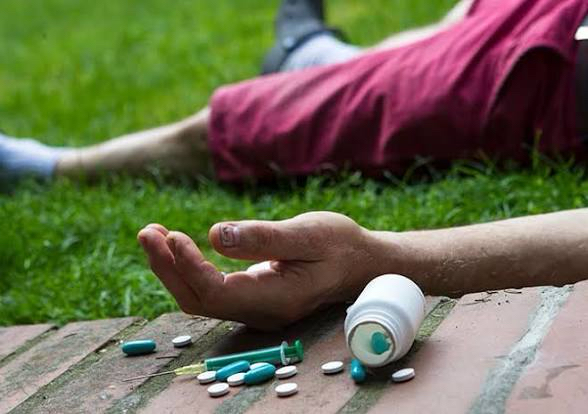
Designer Drugs: The Chemical Experiments

“People will continue to die. People will continue to have adverse reactions. People will continue to live with the consequences of their choices down the road.”

-Jan Rozga, a mother whose son committed suicide after smoking synthetic marijuana

Light the charcoal. Sprinkle the sage. Negative energy go away. Today, I want to dive into a subject that most have heard of but don’ t know a lot about. The topic is designer drugs.

You don’t need to be a scientist to understand designer drugs. You just need to know this. Designer drugs are chemicals made to look harmless, but they can be far more dangerous than the drugs they imitate. They show up in places parents don’t expect. They’re marketed in ways that feel safe. And they’re evolving faster than most families can keep up with. Designer drugs are created by changing the chemical structure of existing drugs just enough to make them.

  • Harder to detect
  • Harder to regulate
  • Easier to sell

They’re often sold as:

  • Vape cartridges
  • Edibles
  • Pills that look like Xanax, Adderall, or Percocet
  • “Herbal incense” (K2/Spice)
  • “Bath salts”
  • Powders labeled “not for human consumption”

The packaging looks harmless. The chemicals inside are anything but harmless. Most young people who encounter designer drugs don’t realize they’re using something synthetic. But designer drugs are often mixed into these products without the user’s knowledge. That’s why overdoses happen even when someone thinks they’re being careful.

Designer drugs can be more dangerous than the ones they’re attempting to mimic. According to the National Institute on Drug Abuse, these substances can be:

  • More potent
  • More unpredictable
  • More toxic

Some new synthetic opioids (like nitazenes) are so strong that a few grains can be fatal. Some synthetic cannabinoids (fake weed) can cause:

These reactions can happen on the first use, even in small amounts.

The 2024 Synthetic Cannabinoid/Designer Drug Listing identifies several new chemicals now appearing in toxicology screens, including:

To the average person like myself, these letters are meant to confuse, not to inform. Parents don’t need to memorize the names. They just need to know new chemicals appear constantly, and they’re often more dangerous than the ones before. The signs of designer drug use aren’t always obvious. Because these drugs vary so much, symptoms can look like:

If something feels “off,” trust your instincts. Designer drugs don’t follow predictable patterns. And as parents, we must listen to our gut about our children and their behavior.

What Can Parents Do Right Now?

  • Stay curious, not judgmental. Kids talk more when they feel safe.
  • Learn the basics. You don’t need to be an expert only informed.
  • Watch for sudden changes. Mood, sleep, appetite, or behavior shifts matter.
  • Talk early and often. Not just during crises.
  • Normalize asking questions. “If you ever see something weird, you can always ask me.”

You don’t need perfect answers. You just need presence. The goal isn’t fear. It’s awareness. You don’t have to lecture. You don’t have to scare. You don’t have to know every chemical name. What matters most is creating a space where your child feels safe saying:

  • “I saw this at school.”
  • “Someone offered me this.”
  • “I don’t know what this is.”

Open conversations save lives. Shame and silence do the opposite.

At the end of the day, every conversation about designer drugs comes back to one simple truth: we’re all just trying to keep the people we love safe in a world that changes faster than any of us can track. These substances aren’t just chemical formulas or scary headlines. They’re real risks that touch real families, often without warning.

But knowledge is a kind of light. And when we shine that light into the shadows, fear loses its power.

If you’re a parent, a guardian, a mentor, or simply someone who loves a young person, your presence matters more than you know. You don’t have to be perfect. You don’t have to have all the answers. You just have to stay open, stay curious, and stay willing to talk about the hard things before they become emergencies. Because the truth is this: Connection protects. Conversation protects. Awareness protects.

And remember, you’re not alone. Every step you take toward understanding is a step toward safety, compassion, and a future where the people you love feel seen, supported, and empowered to make choices that honor their lives. Thanks for reading! Keep moving forward. 

Affirmation: I am in control of my decisions.

***Don’t forget to watch the video!***

#Thispuzzledlife