This Puzzled Life is a mental health and recovery blog exploring addiction, trauma healing, LGBTQ experiences, humor, and the strange moments that shape us.
“Some folks meditate. Some folks journal. I personally prefer a strain strong enough to make my trauma sit down and hush like it’s in church.”
-This Puzzled Life
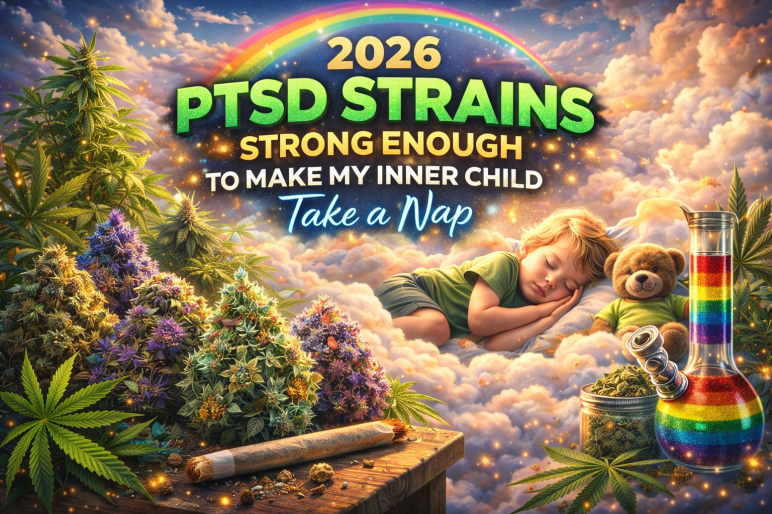
Light the charcoal. Sprinkle the sage. Today we’re not just talking about PTSD. We’re talking about the botanical emotional support squad that keeps half this nation from screaming into a throw pillow at 3 AM. These are the 2026 strains for PTSD. Plus, the classic strains that have held us down since the Bush administration.
Let me tell you something. If PTSD awareness had a mascot. It wouldn’t be a bald eagle, a ribbon, or some inspirational mountain silhouette. It would be a raccoon in a bathrobe holding a half‑charged vape pen and whispering, “You good?”
And before anybody starts with the “PTSD is only for veterans” , it is equal‑opportunity chaos. It hits veterans, yes. But it also hits childhood survivors, domestic violence survivors, medical trauma survivors, and people who grew up in households where the family motto was basically “We don’t talk about that.” And anyone who has ever tried to call customer service during Mercury retrograde.
My PTSD didn’t come from a battlefield. It came from childhood trauma, adult trauma, and a lifetime of being handed emotional assignments I, absolutely, did not sign up for. And guess what? It’s still real. It’s still valid. And it still deserves treatment that doesn’t come with a 47‑page lawsuit attached to it.
Which brings me to medical cannabis. It’s the only medication I’ve ever taken that didn’t require a blood test, a warning label, and a prayer circle. Big Pharma stays in court like it’s a hobby. Cannabis? Cannabis just wants you hydrated, fed, and emotionally stable enough to fold laundry.
And with the way this country is going, the news, the politics, the economy, the general vibe, the rate of PTSD is about to skyrocket like it’s trying to win a prize. Let’s talk about the strains that are stepping up in 2026 to keep us from losing our entire minds.
2026 NEW STRAINS FOR PTSD
1. Moonwater Mercy (Hybrid)
(Blue Moonshine x Lavender Ghost x Watermelon Gelato)
This strain feels like someone put a weighted blanket on your soul. Expect calm, clarity, and the sudden ability to answer emails without crying. Perfect for: intrusive thoughts, doom spirals, and “Why did I walk into this room?”
2. Velvet Lantern (Indica‑leaning Hybrid)
(Purple Velvet × (Ghost OG × Honeydew Cream))
Soft. Warm. Comforting. Like being hugged by a grandmother who actually went to therapy. Great for nighttime PTSD symptoms and shutting down the brain’s late‑night conspiracy theories.
Bright, uplifting, and shockingly functional. This one gives you energy without anxiety — a miracle, truly. Ideal for daytime PTSD management and remembering you’re a whole adult with things to do.
4. Quiet Harbor (Indica)
(Northern Lights × (Harbor Mist × Blue Zkittlez))
This strain is basically emotional noise‑canceling headphones. Your nervous system goes from “car alarm” to “gentle tide sounds” in about ten minutes.
5. Blue Ember Renewal (Balanced Hybrid)
(Blueberry × (Ember Kush × Renewal Cake))
A perfect 50/50 that smooths out mood swings, reduces hypervigilance, and helps you stop side‑eyeing every noise in the house like you’re in a horror movie.
CLASSIC STRAINS FOR PTSD (The OG Emotional Support Crew)
1. Granddaddy Purple
(Purple Urkle × Big Bud)
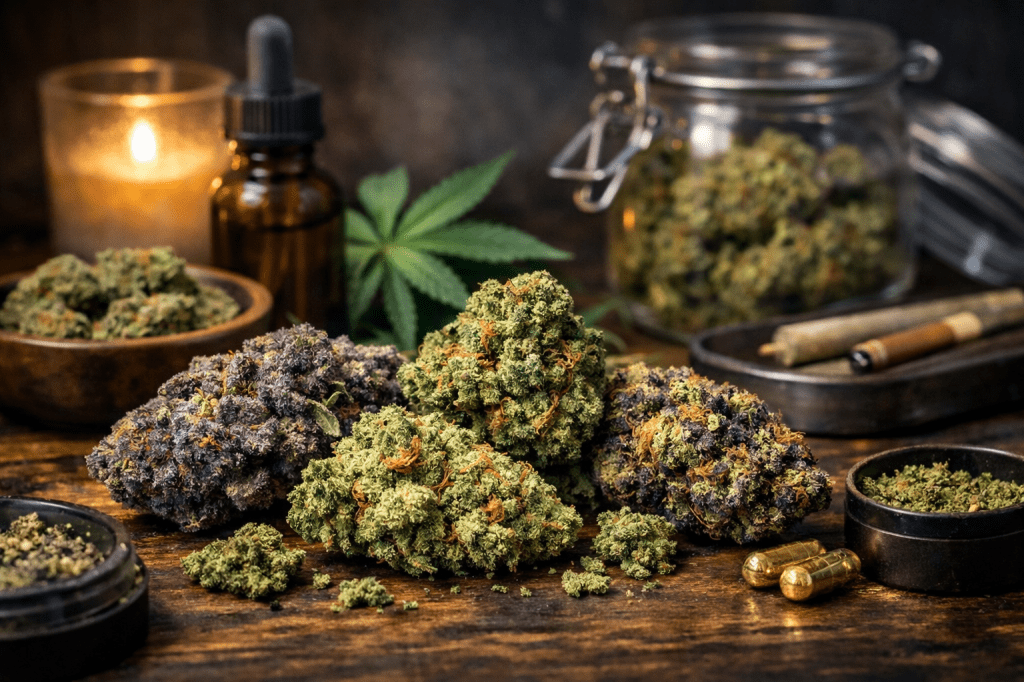
The strain that tucked half of America into bed. Heavy relaxation, deep calm, and the ability to sleep like you’re being paid for it.
2. Blue Dream
(Blueberry × Haze)
The people’s champion. Creative, calm, and uplifting without making your heart beat like a hummingbird on espresso.
3. Girl Scout Cookies (GSC)
(Durban Poison × OG Kush)
Euphoric, grounding, and perfect for when your brain is doing too much. A classic for emotional regulation and mood stabilization
4. Do‑Si‑Dos
(Girl Scout Cookies (GSC) × Face Off OG)
Deep body calm, mental quiet, and the sudden ability to forgive people you don’t even like. A PTSD staple.
5. OG Kush
(Chemdawg × Lemon Thai × Hindu Kush)
The original “I need to chill before I throw this whole house away” strain. Relaxing, grounding, and reliable.
If you’ve made it this far, you’ve just survived a guided tour through the 2026 PTSD strain lineup. The classics that raised us. And the emotional circus that is living in this country right now. PTSD is real. PTSD is widespread. PTSD is not limited to veterans. And pretending otherwise only hurts the millions of us who survived battles nobody saw.
But here’s the good news. We’re healing. We’re laughing. We’re finding relief in plant medicine that doesn’t come with a lawsuit or a side effect list longer than a CVS receipt. And if the world keeps spiraling the way it’s spiraling, at least we’ll have strains strong enough to keep us grounded, sane, and spiritually moisturized. Trauma may have shaped you, but cannabis is helping you rewrite the ending. Sage still burning. We’re healing anyway. Thanks for reading! Keep blazin.’
Affirmation: I am healing, hydrated, and held together by equal parts resilience and premium-grade cannabis. My peace is non‑refundable. My boundaries are laminate. And my nervous system is finally minding its business.
“PTSD doesn’t check uniforms. It checks histories. And some of us survived wars nobody ever saw.”
-This Puzzled Life
Light the charcoal. Sprinkle the sage. Today we’re not just cleansing the room. We’re cleansing the generational nonsense that keeps trying to set up a timeshare in our nervous systems. And apparently we’re gonna need both if we’re talking about PTSD. And the world still thinks it only comes issued with a uniform, dog tags, and a government contract.
I’m standing in my kitchen like a bootleg priestess of the Deep South. I’m waving smoke around like I’m trying to reboot the Wi‑Fi of my soul. The sage is burning. The charcoal is crackling. And my cats are staring at me with the same expression Southern aunties use when you tell them you’re “working on your boundaries.”
The air is thick with incense and unprocessed childhood memories. The vibe is “haunted but trying.” The soundtrack is the soft hum of trauma responses warming up like an old truck in winter.And behind me, my cats have formed a semi‑circle like a furry tribunal.
Piper: “Is this the trauma purge or the ‘Mama read another psychology article’ ritual?”
Tinkerbell: “No, this is the one where she tries to heal her inner child but ends up reorganizing the spice cabinet.”
Coco: “I’m only here because she dropped a Cheez-It earlier. And I’m hoping for a sequel.”
Meanwhile, I’m over here trying to explain to the universe loudly, with hand gestures, that PTSD is not some exclusive club where you need a military ID and a buzz cut to get in. Trauma doesn’t check credentials. Trauma doesn’t ask for your DD‑214. Trauma shows up like, “Hey girl, I heard you survived something awful. Mind if I stay forever and rearrange your brain chemistry?” And the universe is like, “Sure, pull up a chair.”
So here we are. Me, my cats, my sage, my charcoal, my trauma, and my determination to laugh about it before it eats me alive. If there’s one thing the South taught me, it’s this, “If you can’t laugh at your pain, it will absolutely laugh at you first.”
Let me set the scene. I’m standing in my kitchen. Sage smoking like I’m trying to summon every ancestor who ever survived a generational curse, a bad haircut, or a church potluck. My cats are watching me like I’m performing a ritual to resurrect the last bag of Temptations.
Piper squints at me.
Piper: “Is this the trauma cleansing or the insomnia exorcism? I need to know which meeting I’m attending.”
Coco: “Wake me up when the stinky flower medicine comes out. That’s when she stops pacing like a raccoon in a Dollar General parking lot.”
Tinkerbell: “Neither. This is the ‘Mama read something online again’ ceremony.”
Every time I talk about PTSD, somebody somewhere says, “But you weren’t in the military.” And I’m like, “Correct. But I was in my childhood. And frankly, that was its own kind of deployment.” PTSD does not check your résumé. It does not ask for your service record. It does not care if your trauma came from a battlefield, a backwoods childhood, a toxic relationship, a medical emergency, or that one time your mee-maw threw a shoe at you with the accuracy of a Navy Seal. Trauma is trauma. And PTSD shows up like an uninvited cousin at Thanksgiving. It’s loud. Unpredictable. And absolutely refusing to leave. Meanwhile, my cats are holding their own support group.
Piper: “Her insomnia is so bad I’ve started sleeping in shifts.”
Coco: “I tried to keep up once. I saw the sun rise twice in the same day. I’m still not okay.”
Tinkerbell: “I’ve filed a formal complaint with HR. HR is also her. It’s not going well.”
Big Pharma has a pill for everything. Which including the side effects of the pill you took for the side effects of the pill you took for the original pill. And half of them end up in lawsuits. And apparently the medication was also causing spontaneous combustion or turning people into werewolves. Meanwhile, cannabis is over here like, “Hey girl, wanna sit down and breathe for a minute?” And when I pull out the flower medicine, the cats perk up like I just announced a family meeting.
Piper: “Ah yes, peace is coming.”
Coco: “Finally, she’ll stop reorganizing the pantry at 3 AM.”
Tinkerbell: “Blessed be the bud that calms the beast.”
Suddenly the whole house exhales. The walls stop vibrating. The anxiety gremlins go back to bed. The cats reclaim their rightful positions as tiny loaf-shaped monarchs. And with the current state of our nation, the number of people developing PTSD is probably about to skyrocket. We’re all one news headline away from needing a weighted blanket, a therapist, and a federally funded emotional support possum.
If you’ve got PTSD and you didn’t get it from war, guess what? You’re not alone. You’re not broken. You’re not dramatic. You’re not “overreacting.” You’re just a human who lived through some stuff that your brain is still trying to file correctly. And if anyone tries to tell you PTSD is only for soldiers, send them my way. I’ll let 13 explain it. She’s the mean one.
Roll the flower. Because healing isn’t a uniform. It’s a revolution. And in this house, we honor every survivor, every story, and every cat who has ever witnessed a 4 AM trauma spiral and stayed anyway. Thanks for reading! And keep moving forward.
Affirmation: My trauma is valid, my healing is sacred, and I refuse to shrink my story just because someone else can’t imagine surviving it.
“Some strains help you relax. The good ones tuck you in. Snatch your phone. And tell your anxiety to hush its mouth.”
-This Puzzled Life
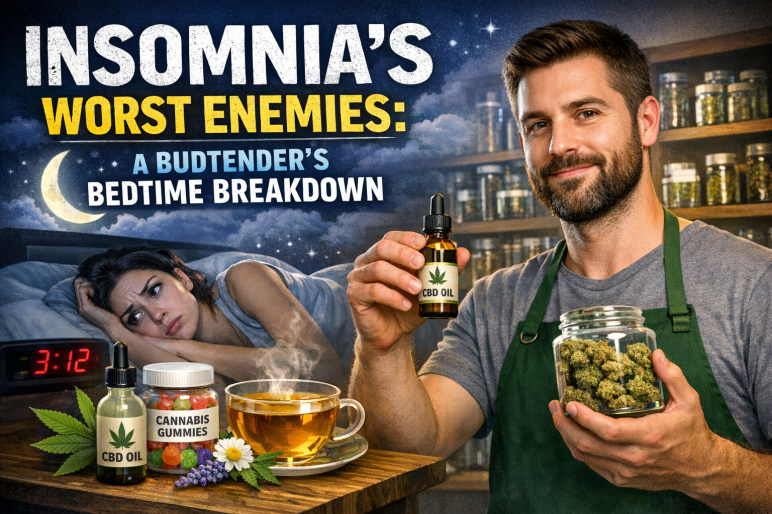
Light the charcoal. Sprinkle the sage. Negative energy, go away. If insomnia were a sport, half of us would be Olympic‑level, gold‑medal, Wheaties‑box champions. I’m talking wide awake at 3:12 AM staring at the ceiling like it owes you money. I’m talking “why did my brain choose now to remember that embarrassing thing I said in 2009.” I’m talking “melatonin didn’t work so now I’m reorganizing the pantry alphabetically.” Insomnia is rude. Disrespectful. Uninvited. But thankfully, cannabis said, “Hold my leaf.” So, gather ‘round, my sleepless saints. Let’s talk about the top strains that tuck you in tighter than a Southern grandma with a quilt and a warning.
1. Granddaddy Purple (GDP) (Purple Urkle × Big Bud)
The Beyoncé of bedtime strains. GDP doesn’t ask you to sit down. It escorts you to the couch. Removes your shoes. And whispers, “Hush now, baby.” This strain is perfect for racing thoughts, tension in the shoulders, and for people who fall asleep mid‑sentence.
This strain is basically the Aurora Borealis tucking you in with a weighted blanket. It hits with a warm, floaty body high that says, “Shhh. We’re done for the day.” This strain is perfect for overthinkers, people who can’t stop doom‑scrolling, and anyone who needs a cosmic lullaby.
3. Pink Kush (OG Kush × (Unknown Heavy Indica)
Pink Kush doesn’t play. This is the strain that knocks out the friend who “never gets high.” And the friend who “smokes every day” equally. This strain is perfect for insomnia caused by stress. Insomnia caused by anxiety. And insomnia caused by existing.
4. Ice Cream Cake (Wedding Cake × Gelato #33)
Imagine a dessert that punches your insomnia in the throat. That’s Ice Cream Cake. Sweet, creamy, and sedating enough to make you forget you ever had responsibilities. This strain is perfect for nighttime worriers. People who fall asleep on the couch with the TV still on. And anyone who wants to melt into their mattress.
5. Bubba Kush (OG Kush × Unknown Indica)
Bubba Kush is the strain equivalent of a hug from someone who smells like cedar and safety. It slows everything down including your thoughts, your breathing, and your ability to remember why you were mad. This strain is perfect for restless legs, restless minds, and restless souls.
A new indica that wraps around you like a quilt your mee-maw prayed over. Expect deep relaxation, heavy eyelids, and the sudden inability to finish your sentence.
The name says it all. Soft then BOOM. You’re asleep before you realize you were tired.
8. Night Nurse 2.0 (Night Nurse (Original) × GMO Cookies)
The updated version of the classic but stronger, smoother, and sassier. This one tucks you in. Fluffs your pillow. And tells your anxiety to go sit in the hallway.
TIPS FOR USING INSOMNIA STRAINS LIKE A PRO
Pair with a warm shower for maximum “I’m melting” effect.
Put your phone down unless you want to online‑shop in your sleep.
Have snacks ready because the munchies WILL file a complaint if ignored.
Don’t fight the sleep when it hits. Surrender like a fainting goat.
And listen. If nobody else has told you today. Let me be the first to say it, “you deserve rest that doesn’t require a wrestling match with your own nervous system.” You deserve sleep that doesn’t feel like a hostage negotiation. You deserve to lay your head down without your brain suddenly deciding to host a midnight TED Talk titled “Every Mistake You’ve Ever Made, Presented in 4K.”
These strains? These aren’t just flowers. These are ancestral sleep aides. These are herbal bouncers escorting insomnia out the back door like, “Ma’am, you’ve had enough.” These are the nighttime deacons of the cannabis church that are laying hands on your forehead and whispering, “Be still.”
Because the truth is that insomnia has been out here acting like it pays rent. Like it contributes to the household. Like it has rights. But tonight? Tonight, we reclaim the night like a Southern auntie reclaiming her good Tupperware.
The next time insomnia tries to slide into your DMs at 2:47 AM with a “you up?” I want you to look it dead in the eye. And say, “Not today, demon. I’m going to bed.” Because if sleep is a myth, these strains are the folklore that finally shuts your brain up. I also want you to spark your chosen sedative queen. Inhale deeply. And respond with the confidence of a woman who has finally had enough. “I’m not up. I’m not available. I’m not interested. I’m unconscious.” Let your shoulders drop. Let your jaw unclench. Let your thoughts dissolve like sugar in hot tea. And when that first wave of relaxation hits with that warm, heavy, “oh Lord I might actually sleep” feeling. I want you to lean into it like you’re falling into the arms of a trustworthy man (rare, I know, but stay with me). Sleep is not a luxury. Sleep is not a reward. Sleep is not something you have to earn by suffering first. Sleep is your birthright. And these strains? They’re here to escort you back to it.
Now go on. Go get the kind of sleep that makes your ancestors proud. Pajamas activated. Dream realm unlocked. Thanks for reading! Keep blazin.’
Affirmation: My mind is calm. My body is safe. And tonight I claim the rest I deserve. Sleep flows easily to me. And I welcome it without fear or fight.
“I’m not tired. I’m Southern‑tired. Which means my soul needs a nap. My spirit needs a snack. And my cats need me to stop acting like I’m immortal.”
-This Puzzled Life
Light the charcoal. Sprinkle the sage. Let the ancestors clock in for their shift. Today’s energy walked in here barefoot. Tracking mud across my spirit. And my Southern cats have already filed a complaint. Listen. If self‑care were a Southern woman, she’d be standing on your porch right now. Her hands on hips. Church finger raised saying, “Baby, you look tired. Not regular tired. The kind of tired where even your shadow needs to sit down.”
Let me tell you something right now. Self‑care is not optional. Self‑care is not a luxury. Self‑care is not “I’ll get to it after I finish these 47 tasks and emotionally babysit three grown adults.” Self‑care is a requirement like sweet tea at a funeral. Or humidity in July. And if you don’t believe me, that’s fine. The cats do. And they’ve unionized. The cats are inside holding a family meeting about your wellbeing like, “Bless her heart. She tried to drink coffee for hydration again.”
This is not a drill. This is a wellness emergency. This is FEMA‑level fatigue with a side of “I’ll rest when I’m dead.” And the cats have decided they will NOT be attending your funeral if you don’t get it together. Piper has already drafted a strongly worded letter to the universe. Coco is practicing her disappointed stare in the mirror. And Tinkerbell is pacing like she’s preparing to deliver a eulogy she absolutely does not have time for. They’re unified. They’re fed up. And they’ve declared you a Code Red Hot Mess until further notice.
Piper is perched on the counter like a tiny porch‑sitting auntie whispering, “Baby, cleanse this house before the chaos gets ideas.” Coco is circling my feet like she’s smudging the perimeter with her attitude alone. And Tinkerbell has taken her position by the window. And she’s staring into the horizon like she’s negotiating with forces I can’t see. We reclaim the room, the mood, and the moment. Negative energy gather your belongings and exit like you were raised right.
It started last Tuesday when I sat down on the couch. I was exhausted. And holding a cup of coffee that tasted like it had given up on life. Piper hopped up beside me, stared directly into my soul, and said (in fluent Southern telepathy),“Ma’am. When was the last time you drank water?”
Coco strutted in behind her like a wellness coach who charges $300 an hour and doesn’t take insurance. “And when,” she added, “was the last time you sat down without clenching your jaw like you’re trying to crack a pecan with your molars?” Tinkerbell didn’t say a word. She just placed one paw on my knee which is the universal sign for, “Baby, you’re running on fumes and spite.”
People hear “self‑care” and think it means a spa day, a $90 candle, or a bath bomb that promises enlightenment. But real self‑care is things like drinking water before your kidneys file a complaint. Saying “no” without writing a three‑paragraph apology. Resting because your body is not a rental car. Eating something green that didn’t come from a gummy bear. And getting enough rest so that your mind and body has time to digest what’s going on throughout our nation. It’s the quiet, unglamorous maintenance that keeps you from turning into a feral possum in a Dollar General parking lot.
Getting enough rest is not optional. It’s the bare‑minimum maintenance required to keep you from turning into a sleep‑deprived cryptid haunting your own kitchen. Your body is not a 24‑hour Waffle House. And yet you keep acting like folks can wander in at any hour demanding emotional hash browns “scattered, smothered, and covered.” Meanwhile, your Southern cats are watching you shuffle around the house like a ghost who missed their exit to the afterlife.
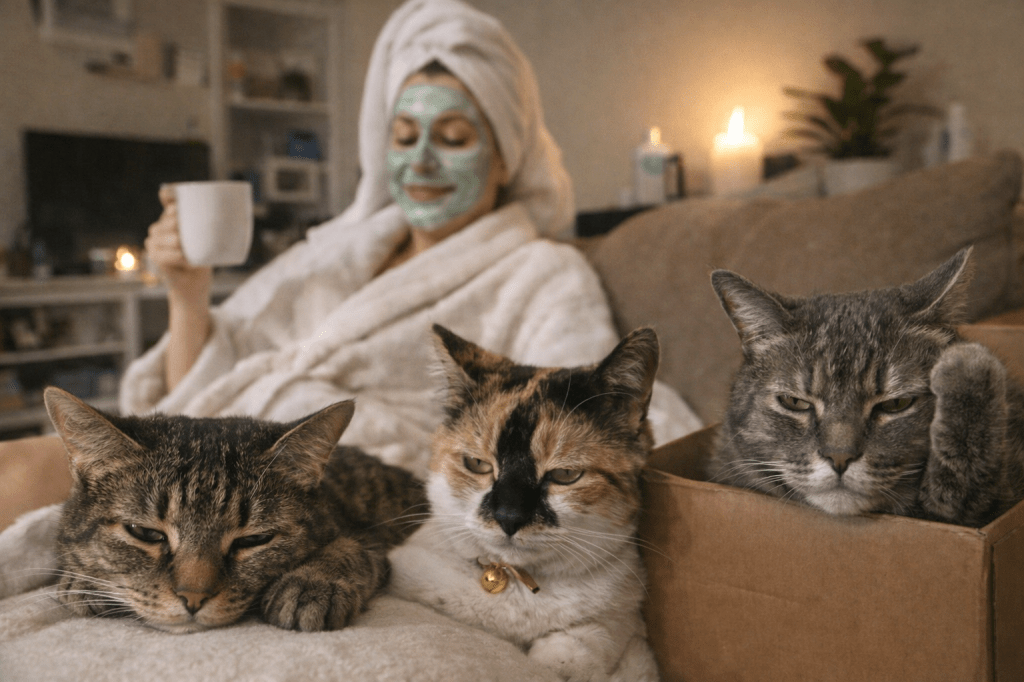
Piper keeps blinking slow like she’s trying to Morse‑code “go lay down.” Coco has already dragged a blanket onto the couch in protest. Tinkerbell is perched on the armrest while giving you that look that says, “If you don’t rest voluntarily, we will stage a wellness coup.” Rest is not laziness. Rest is strategy. Rest is how you keep your spirit from filing for divorce.
Piper naps 19 hours a day and feels no shame. Coco refuses to let anyone touch her unless she specifically requests it. Tinkerbell meditates by staring at the wall like she’s communing with the ancestors. These cats have boundaries so strong they could stop a hurricane. And here I am, letting people text me “hey u up?” at 6 AM like I’m a Waffle House.
Down South self‑care also means ignoring your phone like it’s a bill collector. Sitting on the porch and letting the breeze baptize you. Lighting a candle and telling the ancestors, “Handle it. I’m tired.” And eating a biscuit because joy is medicinal. And yes, sometimes it means telling your entire family, “I love y’all. But I’m off duty today. Please direct all emotional emergencies to Jesus or the group chat.”
Piper says, “Hydrate or diedrate.” Tinkerbell says, “Rest is resistance.” And Coco says, “If you don’t take care of yourself, I will sit on your chest until you do.” Honestly, that last one felt like both a threat and a blessing. You deserve rest. You deserve softness. You deserve to take care of yourself without guilt gnawing at your ankles. Self‑care is not selfish. Self‑care is how you stay alive. Stay sane. And stay Southern without cussing out the entire tri‑county area. This means that I also need to do better at self-care.
So, here’s the truth. And it’s delivered with the force of a cast‑iron skillet hitting a countertop. If you don’t start taking care of yourself, your cats will file a formal complaint with the ancestors. And they will win. Rest. Hydrate. Set boundaries. Do it like your sanity depends on it because it does. We’ve still got many months of with this horrible administration.
Now go practice some self‑care before Piper drafts a PowerPoint. Coco calls HR. And Tinkerbell summons the spirits to intervene. And that’s on sweet tea, porch swings, and minding your blessed business. Thanks for reading! And know that you’re worth it.
Affirmation: I honor my rest. Protect my peace. And let my body recharge without guilt. Because even my ancestors and my cats agree that a well‑rested me is a powerful me.
“Shame was never my reflection. It was the shadow of someone else’s fear cast across my life.”
-This Puzzled Life
Light the charcoal. Sprinkle the sage. Let the smoke rise like a soft warning. A trembling invitation. And a doorway cracked open just wide enough for the truth to step through without flinching. Let it drift through the room the way shame once drifted through our childhood homes as quiet and unspoken. But heavy enough to shape the way we learned to breathe.
This isn’t about performance. It isn’t about survival. It’s about naming the thing that has lived in your bones longer than some people have lived in their houses. I’m not writing from a place of humor or distance. I’m writing from the wound. From the memory. From the soil that raised me. And the silence that tried to claim me.
Shame is not born in us. It is handed to us. Pressed into our palms by people who were supposed to know better. People who were supposed to love better. People who were supposed to see us as whole. And in the Deep South, shame is practically a family heirloom.
Down here, some conservative communities have perfected shame into an art form as quiet, polished, and Sunday‑morning approved. They wield it like a switch they no longer have to swing. Because the words do the bruising for them. They don’t have to raise their voices. They just raise an eyebrow. They don’t have to say you’re wrong. They just say they’re “praying for you.” They don’t have to tell you to hide. They just make sure you know what happens to people who don’t.
Shame becomes the air you breathe before you even know what air is. It teaches you to fold yourself small. To tuck away the parts of you that don’t fit the script. To apologize for the way your heart beats. The way your voice trembles. And the way your truth refuses to die quietly. The worst part is how deeply it roots itself. And how it convinces you that you are the problem. Not the rules. Not the silence. Not the fear disguised as righteousness.
Some Southern conservative spaces are experts at this. They turn difference into danger. They turn authenticity into rebellion. They turn survival into sin. They shame you for who you are. And then shame you again for hurting because of it.
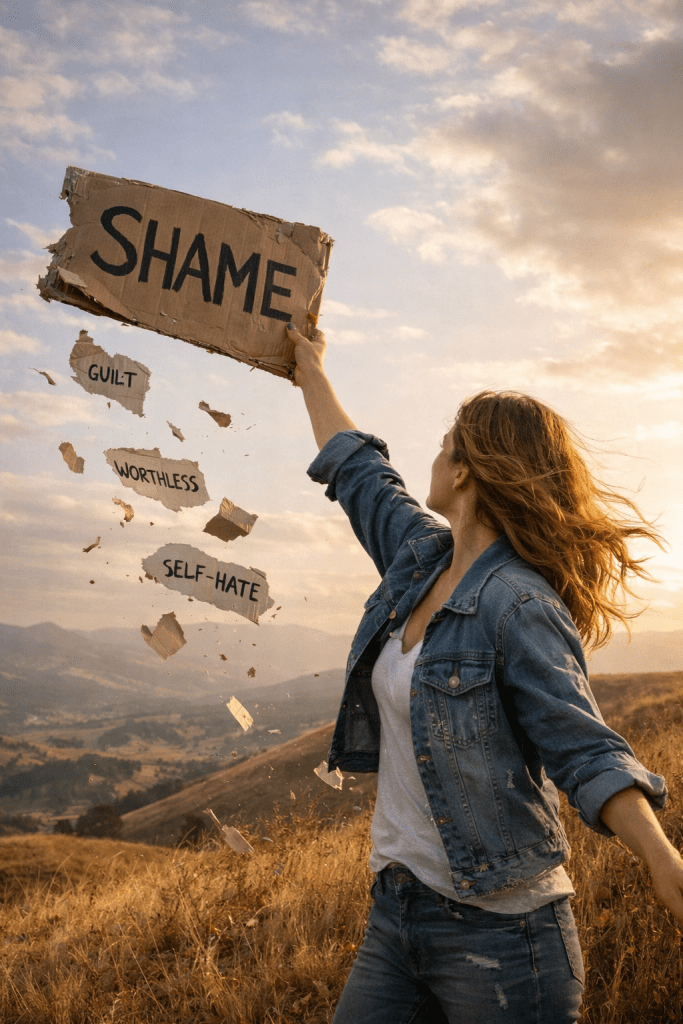
But here’s the truth shame never wants you to learn. You were never the one who failed. You were the one who endured. Shame is not your inheritance. It is not your identity. It is not your burden to carry one more mile. The moment you name what was done to you. The moment you say, “This wasn’t love. This was control.” The spell breaks. The weight shifts. The air clears. And you begin to see yourself without the fog of someone else’s fear. You begin to hear your own voice again. You begin to rise. And rising is the one thing shame cannot survive.
Shame is universal. It’s a part of every culture and every nation. And every community has its own way of teaching people to hide the parts of themselves that don’t fit the script. Shame is a global language. It is spoken in different dialects. It is enforced through different rituals. And it is carried in different bodies.
But the version I know. The one that shaped my bones and rewired my voice was born in the conservative Deep South. That’s the lens I speak from. That’s the air I learned to breathe. That’s the terrain where shame wasn’t just a feeling. It was a system.
Some conservative Southern communities wield shame like a tool of order. A way to keep people in line. A way to maintain the illusion of perfection even when the truth is rotting beneath the floorboards. They don’t have to say, “you’re wrong.” They just say, “we don’t talk about that.” They don’t have to say, “you’re unworthy.” They just say, “think of what people will think.” They don’t have to say, “you don’t belong.” They just make sure you feel it.
Shame becomes the soundtrack of your childhood. The shadow in every room. The reason you learn to fold yourself into shapes that hurt to hold. When you grow up queer, outspoken, different, or simply unwilling to disappear, the shame becomes sharper. More pointed. And more personal.
You were not the problem. You were the disruption. You were the truth they didn’t know how to hold. Shame thrives in silence. But it cannot survive being named. The moment you say, “This harmed me,” the spell breaks. The moment you say, “This wasn’t love,” the weight shifts. The moment you say, “I deserved better,” the ground beneath you changes shape.
You begin to see yourself without the fog of their expectations. You begin to hear your own voice without the echo of their judgment. You begin to rise in ways they never prepared for. And rising is the one thing shame cannot withstand.
Let every culture keep the shame it created. Let the South hold the weight of the shame it taught me to carry. I am done dragging their silence behind me. I am done mistaking their fear for my fault. I am done shrinking to make their world more comfortable. I speak now. I rise now. I reclaim every part of me they tried to bury.
And the sound of that truth is unapologetic. Unbroken. And is the loudest thing I’ve ever survived. You were never meant to carry it. Set it down. Walk forward. And let the sound of your unbroken truth shake the whole damn South. Thanks for reading! And put that shame down.
Affirmation: I release every ounce of shame that was handed to me. My truth rises. My voice steadies. And I walk forward unburdened and whole.
“The truth didn’t break my family. The pretending did.”
-Unknown
Here’s the bigger picture. I didn’t grow up in a family that heals. Problems don’t get solved. They get buried alive. And then resurrected during holidays like emotional zombies. Now that me and my sister are adults, childhood resentments still pop up like whack‑a‑mole. And nobody wants to pick up a mallet. Let’s all smile in public so we don’t “defame the family.” Which honestly, does a fantastic job defaming itself.
And my family isn’t special. Dysfunction is everywhere. I have enough mental health education in my background to recognize the patterns. But they’ll swear I’m the problem. If you look past the church smiles, the whole system is sick. I would genuinely rather be hit by a car than attend “family time.” And because my kids were born into a lesbian family, they get treated like they came with a moral recall notice.
You can’t throw money at children and then take no active part in their lives the rest of the time. Especially, when you do the opposite with the other children in the family. The kids notice. I’ve tried talking about it for 17 years. And the truth is this. They just don’t care.
I have a master’s degree in counseling psychology. Yet somehow I’m the ignorant one. They don’t want insight. They don’t want help. They want silence. And mine has officially expired. I defend myself and my kids however I see fit. Respectfully? No. Effectively? Absolutely.
They want healing without effort. They’re emotional pillow princesses that want the benefits of growth while doing absolutely nothing but blinking dramatically. And when truth bruises their egos, accountability never shows up. Meanwhile, my dad plays messenger pigeon flying information back and forth between me and the rest of the family so that the dysfunction stays perfectly preserved.
Here’s the part they’ll never admit. Family therapy requires guts and transparency. And those two things they treat like forbidden sins. Instead, they’ve built a giant sand pile where they can bury their heads. And pretend nothing is wrong. That’s their comfort zone. Not truth. Not healing. Just sand. Neck‑deep and breathing through a straw of selective memory.
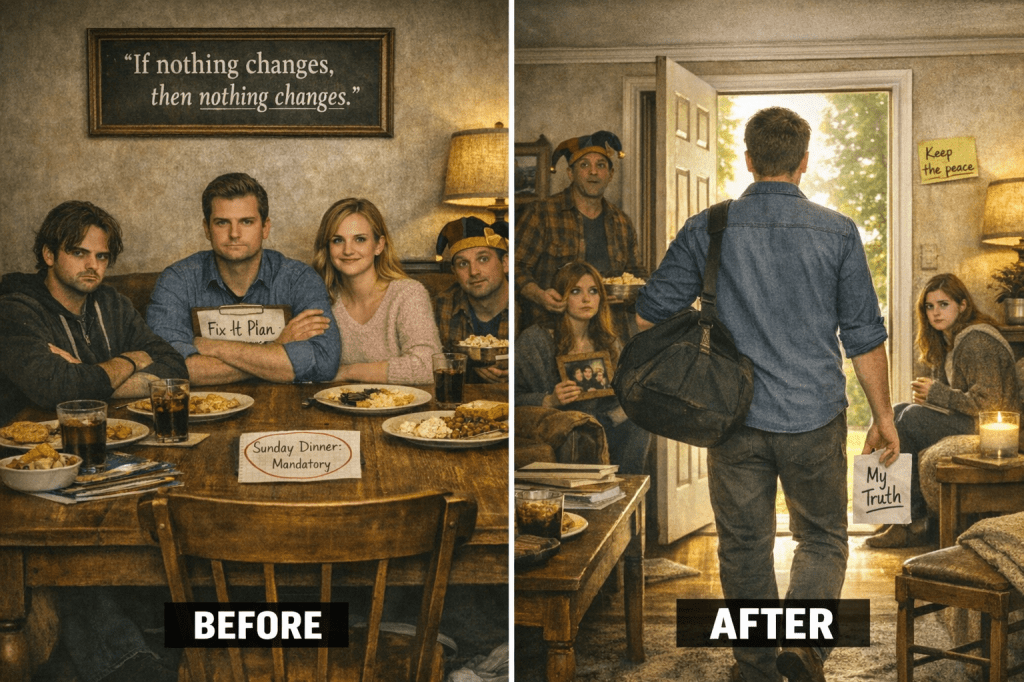
My favorite quote says it best, “If nothing changes, then nothing changes.” And I refuse to be silenced because their comfort depends on my suffering.
Our family lives in what I call comfortable dysfunction. It’s the emotional recliner they refuse to replace even though the springs are broken. And the fabric smells like denial. It’s easier than accountability. Easier than honesty. Easier than saying, “Maybe the gay daughter isn’t the downfall of civilization.”
And as if being the rainbow sheep wasn’t enough. I’m also the green sheep of the family because I’m a medical cannabis patient. And the family’s translation is that I’m “druggin’ and thuggin’.” The “bad influence.” And the “one who needs prayer.” But that’s not even the real issue.
The problem is my refusal to sit quietly in the pew of generational silence. The issue is that I no longer participate in the family’s favorite pastime of pretending. I’m done shrinking myself so other people can stay cozy in their outdated beliefs. I’m done letting conservative Christian values be weaponized against me and my children.
They can keep their selective morality. The kind where my sister thinks being gay is “wrong and evil.” But somehow premarital sex is just the Olympic sport of “being human.” Funny how sin gets flexible when it’s their behavior on the table.
“My family says I’m ‘living in sin.’ Which is wild coming from some of them who wave a red hat like it’s the state flower. They preach about morality and still treat premarital sex, drinking, and hypocrisy like they’re covered under the ‘Jesus forgives me’ warranty.”And trust me. They act like I graffitied the Ten Commandments in rainbow glitter.
Being gay automatically made me the family’s “problem child.” Even though the real problems have nothing to do with what gender I love. And everything to do with the fact that I refuse to pretend. My sister can have premarital sex. Drink like she’s hydrating for the Olympics and drive afterward. And micromanage her child like she’s running a dictatorship. But somehow I’m the moral crisis.
Meanwhile, my sister’s shot glasses stays full. Her judgment stays loud. And her hypocrisy stays undefeated. Funny how cannabis for medical reasons is “dangerous.” But alcohol with a side of denial is “just being human.” I’m the rainbow sheep because I live authentically. I’m the green sheep because I choose a legal, doctor‑recommended treatment. And I’m the scapegoat because I refuse to shrink so other people can stay comfortable in their dysfunction. If being myself makes me the rainbow‑green hybrid sheep of the family, then so be it. At least I’m not grazing in the pasture of hypocrisy.
So no, I’m not stepping back into the box they built for me. I’m not dimming myself, so their comfort stays intact. I’m not carrying the weight of a family that refuses to lift a finger for its own healing. They can keep their comfortable dysfunction. They can keep their silence. They can keep their outdated beliefs wrapped in Bible verses that only apply to me.
Today I honor my inner rainbow‑green sheep. I’m fabulously queer. I’m medically lifted. And completely unbothered by the opinions of people who confuse hypocrisy with holiness.”
I’m choosing truth over tradition. I’m choosing growth over guilt. I’m choosing my children, my peace, and my sanity. And if my existence shakes the foundation of their worldview. Then the foundation was weak to begin with. Thanks for reading! Do you and let the others do them.
Affirmation: I bless my rainbow‑green sheep soul today queer, medicated, and thriving. While certain relatives clutch their red hats and pearls at my existence. But don’t blink twice at their own chaos, contradictions, or alcohol fueled commandments.
“Trauma doesn’t make you weak. It makes you a witness to your own survival.”
-This Puzzled Life
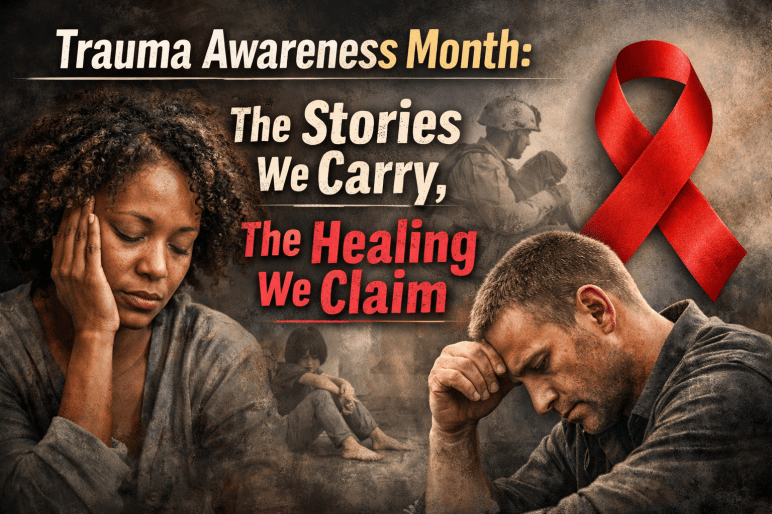
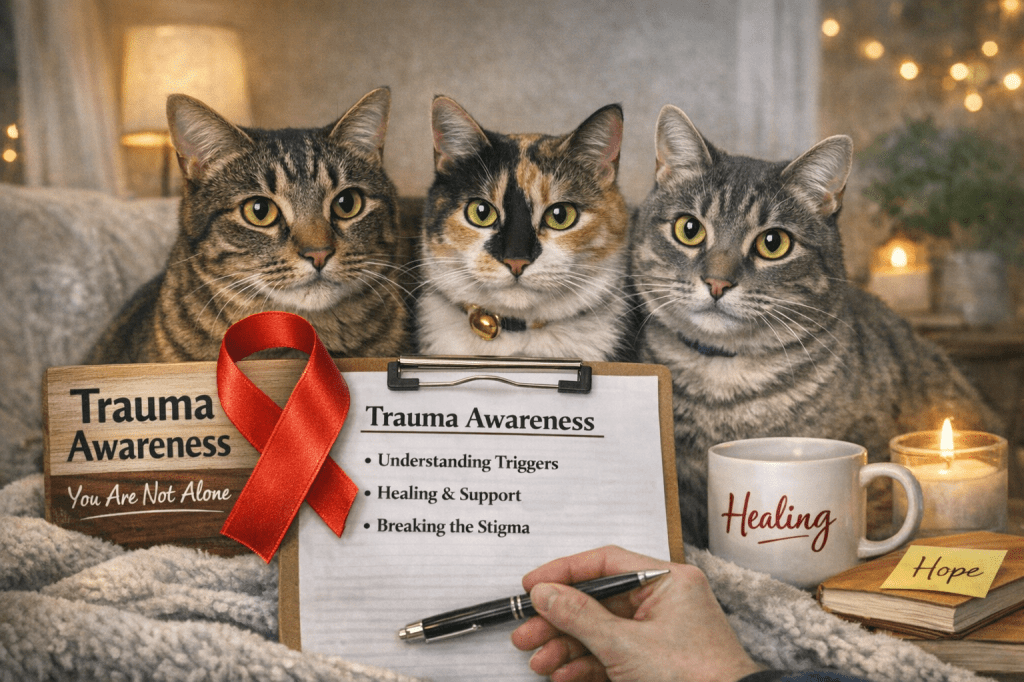
Light the charcoal. Sprinkle the sage. Let the smoke rise like it’s clocking in for a shift. And let the air shift like it’s bracing itself for whatever truth you’re about to drag into the daylight. Today isn’t about pretending everything’s fine or slapping a smile on top of a wound. It’s not about the vibes, snacks, or cats doing interpretive dance in the sunbeam. It’s about trauma awareness. It is about naming the things we survived. The things we carried alone. The things we laughed through so we wouldn’t crumble. It’s a Southern‑fried, emotionally honest, and funny enough to keep you from dissolving into a puddle on the kitchen floor.
Trauma Awareness is the kind that hides in your shoulders, jaw, breath, memories, and your jokes. And if we’re going to talk about it, we’re going to do it the only way I know how. Complete with honesty, humor, and the kind of emotional courage that feels like taking your bra off after a long day. It’s painful, relieving, and absolutely necessary.
There’s a moment right before you talk about trauma where your whole spirit goes, “Are we sure we want to do this?” It’s the same tone you use when someone says, “Let’s just run into Walmart real quick.” You know it’s not going to be quick. You know you’re going to see something you can’t unsee. You know you’re going to come out changed. Talking about trauma is like that. Except instead of a man in pajama pants buying raw chicken and fireworks, it’s your nervous system holding up a sign that says, “We’ve been through some things, ma’am.”
Trauma doesn’t just show up when you’re ready. Trauma is that one cousin who arrives early. Eats all the good snacks. And then says, “Why you look stressed?” It pops up at the worst times especially when you’re trying to relax. When you’re trying to sleep. When you’re trying to enjoy a sandwich. When you’re trying to mind your business. And when you’re trying to be a functioning adult for five minutes. Trauma will tap you on the shoulder like, “Hey bestie, remember that thing from 1998? No? Well, I do.” And suddenly you’re staring at the wall like it owes you money.
Your body remembers everything. Even the stuff you tried to bury under humor, iced coffee, and pretending you’re fine. You’ll be walking through Wal-Mart. Touching a throw pillow. And your body will whisper, “Hey, remember that time?” And you’re like, “No I do not. I am touching a pillow. Let me live.” But trauma doesn’t care. Trauma is like a Southern grandmother with a memory like a steel trap. And no sense of timing.
People talk about healing like it’s a spa day. Let me tell you something. Healing is not cucumber water and a robe. Healing is crying in the shower because your shampoo smells like 2007. Healing is realizing you’ve been clenching your jaw since the Bush administration. Healing is sitting in your car after therapy like you just got hit by an emotional freight train. Healing is messy. Healing is loud. Healing is quiet. Healing is confusing. Healing is holy. Healing is exhausting. Healing is worth it. But cute? Absolutely not.
So, buckle up. Because the cats have decided it’s Trauma Awareness Hour. And apparently they’ve all been waiting their whole lives to trauma dump with the enthusiasm of a group therapy circle run by toddlers. And today is the day they ask deeply personal questions with the emotional sensitivity of a toddler holding a chainsaw. They have formed a circle. They have snacks. They have opinions. And apparently, they have questions about my trauma.
Me: “Okay, girls. Today we’re talking about trauma. Share whatever you feel comfortable with.”
She raises paw like she’s in kindergarten
Piper: “I’ll go first because my story is the most dramatic. Obviously.”
Coco: “Oh lord.”
Tinkerbell: “Let the child speak. She needs this.”
Piper: “So picture this. Me and my siblings. In a metal box. In the Mississippi heat, basically sautéing like tiny furry cornbread muffins.”
Me: “Baby, that’s awful.”
Piper: “I know. I was basically a rotisserie chicken with trauma.”
Coco: “You were a sweaty raisin with opinions.”
Piper: “Anyway, I survived because I’m dramatic and stubborn. And now every time the sunbeam hits me wrong, I flop over like a Victorian woman fainting at a garden party.”
Tinkerbell: “You faint because you forget to breathe when you get excited.”
Piper: “Trauma. Tinkerbell. Let me have this.”
Coco clears throat like she’s about to deliver a TED Talk
Coco: “My siblings and I were found under a house. A house. Do you know what lives under houses? Darkness. Ghosts. Tax evasion. I was basically a feral raccoon with trust issues.”
Me: “You’ve come so far.”
Coco: “Yes. And now I cope by judging everyone. It’s called growth.”
Piper: “You judge me the most.”
Coco: “You give me the most material.”
Tinkerbell: “I don’t remember my trauma.”
Me: “At all?”
Tinkerbell: “No. I simply chose not to be present. I was spiritually unavailable.”
Coco: “You had worms.”
Tinkerbell: “Yes, apparently my intestines were hosting a music festival.”
Piper: “You pooped like you were trying to summon something.”
Tinkerbell: “I was summoning peace. And a vet. Preferably both.”
Me: “You really don’t remember anything?”
Tinkerbell: “I remember diarrhea. And then I remember you. Everything else is optional.”
Me: “Well, we’ve all been through some things.”
Piper: “Yeah, but now we’re together! A family! With two crazy brothers who scream at dust!”
Coco: “We are a support group. A dysfunctional one, but still.”
Tinkerbell: “We heal one memory at a time. Preferably with snacks.”
Piper: “And naps!”
Coco: “And boundaries. Mostly for Piper.”
Piper: “I don’t believe in boundaries.”
Tinkerbell: “We know.”
Piper: “Sometimes I get scared when it’s hot outside. So, I cope by yelling at the sun.”
Coco: “I cope by staring at people until they feel bad.”
Tinkerbell: “I cope by leaving my body spiritually whenever something stressful happens. Like when the vacuum turns on. Or when Piper breathes too loud.”
Piper: “I have big emotions.”
Coco: “You have no volume control.”
Tinkerbell: “You have the energy of a toddler who drank a Red Bull.”
Piper: “Momma, what is your trauma about?”
Me: “Oh absolutely not. We are not opening that can of worms. We’ll be here until this time next year. And I don’t have enough snacks or emotional stamina.”
Coco: “Is that why you have panic attacks in Walmart?”
Me: “Yes.”
Tinkerbell: “But what’s scary about going to the pharmacy?”
Me: “Everything.”
Piper: “Everything?? Like the shelves? The people? The lighting?”
Me: “Yes.”
Coco: “The lighting is aggressive.”
Tinkerbell: “The vibes are hostile.”
Piper: “The blood pressure machine is a demon.”
Me: “Exactly.”
Coco: “So what did our therapist tell you?”
Me: “She said, ‘I’ll see you in another couple of days.’”
Tinkerbell: “Translation: ‘You’re a lot. But I believe in you.’”
Piper: “Translation: ‘You have so many issues we need a punch card.’”
Coco: “Translation: ‘You’re keeping the lights on in that office.’”
Me: “But look at us now. We’re safe. We’re loved. We’re healing together.”
Piper: “And we have snacks!”
Coco: “And stability.”
Tinkerbell: “And indoor plumbing.”
Me: “We survived things we never should’ve had to survive. And now we get to build something soft and silly and sacred together.”
All Three Cats: “Group hug!”
Coco: “But don’t touch me too long.”
Piper: “I’m crying!”
Tinkerbell: “I’m dissociating!”
Me: “Perfect. Exactly the emotional range I expected.”
In small Southern towns, admitting trauma is treated like a social crime. The moment you name what happened, you’re not just telling your story. You’re “disgracing the family,” “embarrassing the community,” and threatening the carefully polished illusion of stability that everyone works so hard to maintain. The culture teaches people to swallow their pain. Protect the reputation of the town at all costs. And never, under any circumstances, call out the people who caused the harm. And because the “good ole boy” network is alive and well. And sitting in every position of authority from the courthouse to the church pews, the truth gets buried right alongside the accountability. Even when the perpetrators are known. Especially when they’re known. Nothing is done. The silence is enforced. The victims are shamed. And the town keeps smiling for the church directory photo like nothing ever happened. But the truth doesn’t disappear just because the town refuses to look at it. It lingers in the air, the families, the generations, waiting for someone brave enough to break the cycle and say, “This happened. And it mattered.” And I am that one in my family who refuses to stay quiet about the trauma that happened in the small city of Petal, MS.
Trauma will have you doing things that make absolutely no sense. Things like apologizing to furniture when you bump into it. Jumping at sounds that aren’t even loud. Overthinking texts like you’re decoding ancient scripture. Saying “I’m fine” in a tone that suggests you are, in fact, not fine. And crying because someone said, “I’m proud of you.” And your body wasn’t prepared for that level of kindness. Trauma will also make you emotionally attached to random objects. A mug. A blanket. A rock you found on a walk. A pen that writes really smooth. Your brain will be like, “This is my emotional support spoon. Touch it and perish.”
Trauma awareness isn’t about reliving the pain. It’s about naming it, so it stops owning you. It’s about understanding why you react the way you do. It’s about giving yourself grace for surviving things you never should’ve had to survive. It’s about learning that your triggers aren’t flaws. They’re evidence that you lived through something real. And it’s about knowing you’re not broken.
You’re healing. You’re growing. You’re learning how to breathe again. You’re learning how to trust softness again. You’re learning how to exist without bracing for impact. That’s not weakness. That’s strength with stretch marks.
May your healing be gentle. May your memories lose their sharp edges. May your nervous system unclench one muscle at a time. May your heart learn safety. May your voice return to you. May your laughter come back louder. May your story be yours again. And not something that happened to you. But something you rose from.
So, if no one told you today. You’re not dramatic. You’re not broken. And you’re not “too much.” You’re a whole human who lived through storms that would’ve snapped lesser souls in half. And you’re still here healing. Laughing. Unlearning, Softening. Reclaiming. That’s not survival. That’s resurrection. And baby, if that isn’t holy, I don’t know what is. Drop the sage. Keep the truth. And walk away knowing this. Your story didn’t end in the dark. You did.
Affirmation: I honor the parts of me that survived. I honor the parts of me that are still healing. I am allowed to grow, to rest, to feel, and to reclaim my peace. And I can do it one breath at a time.
“My healing isn’t linear. It’s a Southern backroad with potholes, detours, and at least one possum giving me side‑eye. But I’m still driving.”
-This Puzzled Life
Light the charcoal. Sprinkle the sage. Today we’re not just cleansing the room. We’re cleansing the entire diagnostic chart that tried to play me like a two‑for‑one special at the Discount Trauma Mart. We’re also cleansing the medical chart, the family gossip line, and the entire Southern belief system that still thinks “nerves” is a diagnosis. And “just pray on it” is a treatment plan.
Dual diagnosis is that special Southern casserole of “mental health condition” baked together with “substance use disorder.” And it’s served piping hot with a side of unsolicited advice from people who haven’t been to therapy since Clinton was in office. It’s the moment life says, “Surprise! You’re not just juggling one thing. You’re juggling two flaming batons while the universe yells, ‘Smile, sweetheart!’”
Dual diagnosis is like waking up every day in a body that’s running both a Windows 95 operating system and a bootleg Sims expansion pack that keeps crashing. It’s trying to heal your brain while your brain is actively filing HR complaints against itself. It’s the emotional equivalent of trying to fix the roof while the house is still on fire. And the HOA is sending you letters about your grass height.
And it’s that moment when life looks at you and says, “Oh, you thought you were dealing with one thing? Hold my sweet tea.” It’s the psychiatric equivalent of a potluck where anxiety brings a casserole. Depression brings a Bundt cake. And addiction shows up empty-handed but somehow leaves with all the Tupperware.
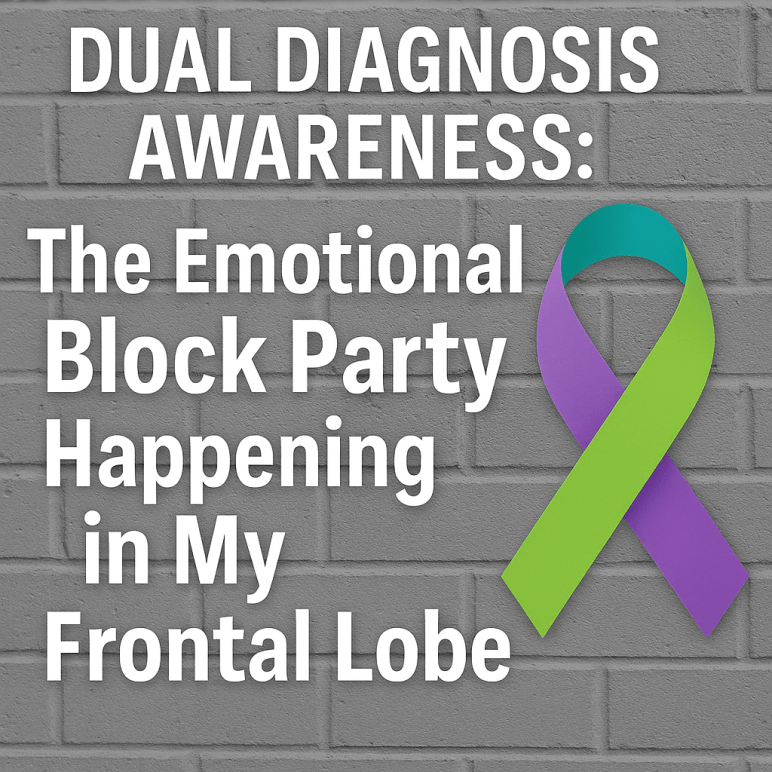
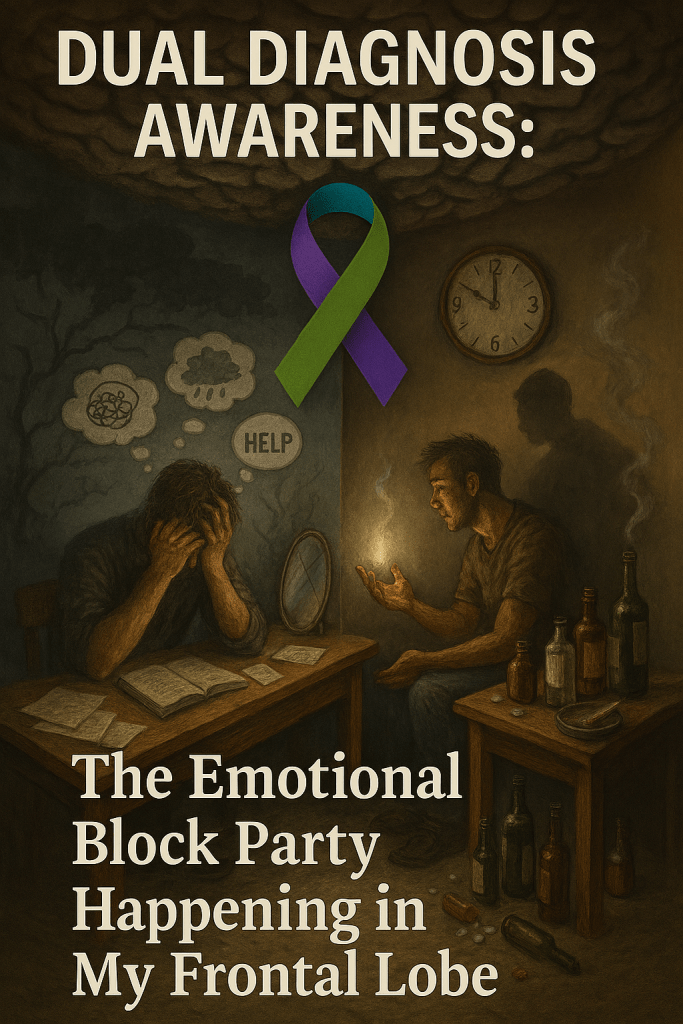
And the world? The world acts like you’re being dramatic. And the wild part? People act like you’re being dramatic. “Have you tried drinking more water?” Ma’am, I have two diagnoses doing synchronized swimming in my amygdala. Hydration is not the plot twist that’s going to fix this. “Have you tried yoga?” Ma’am, I have two diagnoses doing the electric slide in my frontal lobe. Yoga is not going to stop this internal block party.
Beneath the jokes, dual diagnosis is real, heavy, and often misunderstood. People think it’s chaos. But it’s actually survival. It’s resilience. It’s learning to hold two truths at once like “I’m struggling and I’m still here.” It’s learning to treat yourself with compassion even when your brain is acting like a committee meeting where everyone is yelling and nobody brought notes. It’s learning to say, “I deserve care.” “I deserve treatment.” “I deserve to be taken seriously.” And most importantly, “I am not a punchline. I’m the whole damn story.”
Down here in the Deep South, dual diagnosis gets wrapped in a layer of cultural seasoning nobody asked for. Aunt Linda whispers like you’re contagious. Cousin Ray offers you a beer because “you look stressed.” And the church ladies add you to the prayer list without asking. Right under “traveling mercies” and “unspoken.” Meanwhile, you’re just trying to survive the day without your brain throwing a surprise block party.
Dual diagnosis in the South also means navigating stigma with the grace of a cat on a freshly mopped floor. You’re trying to get help. Half the town thinks therapy is witchcraft. And the other half thinks medication is a moral failing. Meanwhile, you’re over here doing the emotional equivalent of rebuilding a transmission with a butter knife and a YouTube tutorial.
Dual diagnosis awareness is about reclaiming your narrative from the people who oversimplify it. Misunderstand it. Or try to shame you for it. It’s about saying, “Yes, I’m dealing with two things at once. And I’m still out here living. Healing. And occasionally thriving like the chaotic miracle I am.” And yet, here we are. Still showing up. Still healing. Still lighting the charcoal and sprinkling the sage like we’re about to summon the ancestors and the insurance company.
Dual diagnosis doesn’t make you broken. It makes you bilingual in battles most people will never understand. And if anyone tries to minimize your experience? Tell them this, “Baby, I’m not dealing with too much. You’re just underestimating my capacity.” Thanks for reading! And keep searching for answers.
Affirmation: I honor every part of my journey. The messy, the miraculous, and the medically complicated. All of it proves I’m stronger than the storms I’ve survived.
“Anxiety tried to schedule a meeting with me today, but I declined because I was already overbooked with minding my business and avoiding Walmart.”
-This Puzzled Life
Light the charcoal. Sprinkle the sage. Today we are not just cleansing the room. We are cleansing the entire nervous system that has been acting like a raccoon on Red Bull since 1986. If we’re going to talk about anxiety awareness, we might as well sanctify the whole atmosphere before my nervous system starts acting like it’s auditioning for The Exorcist: Southern Edition. Also, somebody please hold my sweet tea. And hide my debit card. Because my anxiety just whispered, “Let’s go to Walmart.” That is how generational trauma gets activated. And it just tried to file a noise complaint against my own heartbeat.
Let me tell you something. Anxiety is the only condition that will have you sitting in your own house. And minding your own business when suddenly your brain goes, “Hey, remember that embarrassing thing you did in 4th grade?” And now you’re sweating like you’re on trial for a crime you didn’t commit but might have thought about once.
Anxiety is a full-time employee in my life. No PTO. No sick days. No boundaries. It clocks in before I wake up and clocks out after I fall asleep. Sometimes it leaves sticky notes on my dreams like, “We need to talk.” And don’t get me started on the physical symptoms. Anxiety will have you convinced you’re dying because your left eyebrow twitched. Meanwhile your ancestors are watching from the spirit realm like, “Baby, that’s just dehydration and poor life consequences.”
And the worst part? Anxiety loves to show up at the most inconvenient times. Like a Southern auntie who pops up unannounced but brings no food. You ever try to relax? Just sit down. Breathe. And maybe watch a little TV? Anxiety busts through the door like, “Oh you thought. Let’s review every possible failure you’ve ever had.”
But here’s the thing. Awareness doesn’t mean we’re broken. It means we’re paying attention. It means we’re learning the choreography of our own nervous system. Even if the choreography looks like a baby deer on ice. It means we’re naming the thing so it can’t sneak up on us like a possum in the trash can at 2 a.m. And it means we’re not alone. Not in Mississippi. Not in the South. Not in this chaotic, holy, hilarious human experience.
But the real comedy? The way anxiety tries to prepare you for every possible scenario like a doomsday prepper with a Pinterest board. It is the only condition that will have you standing in the cereal aisle. Staring at 47 versions of Cheerios. And sweating like you’re defusing a bomb. Meanwhile your brain is like.
“What if you pick the wrong cereal?”
“What if everyone is watching you pick the wrong cereal?”
“What if you pass out in front of the cereal and become a local Facebook post?”
Going to the grocery store? “What if you forget how to walk?”
Sending an email? “What if you accidentally confess to a felony?”
Meeting new people? “What if they can hear your thoughts and your thoughts are stupid?”
And that’s exactly when my cats, my emotional support staff and furry chaos consultants, decide to hold a household emergency meeting.
Piper (dramatic and convinced she’s the CEO): “Alright team, Mama’s going to Walmart. That’s a Code Orange. Everyone stay sharp.”
Tinkerbell (the eldest acting, the union rep, wearing imaginary glasses): “Should we call the therapist now or wait until she hits the checkout line and forgets her PIN again?”
Coco (the chaotic neutral gremlin): “I say we call the therapist the moment she steps into the parking lot. Walmart energy is unpredictable. Anything can happen. A rollback could roll back her entire sense of stability.”
Piper: “Coco, we can’t call the therapist every time Mama goes to Walmart.”
Coco: “Why not? She said to reach out when things feel overwhelming. Walmart is overwhelming. The lighting alone is a threat.”
Tinkerbell: “Plus, Mama always ends up in that aisle with the seasonal décor. And that’s when she starts questioning her entire life path. That’s textbook panic adjacent.”
Piper: “Okay, fine. But we need a plan. If Mama starts breathing like she’s running from a ghost, we call the therapist. If she starts sweating like she’s in a revival tent, we call the therapist. If she starts talking to herself-”
Coco: “Piper, she talks to herself every day.”
Piper: “Right. So, if she starts talking to herself louder than usual.”
Tinkerbell: “And if she buys anything from the middle aisle that she didn’t come for. That’s a red flag.”
Coco: “Like the time she went for milk and came home with a new bong?”
Piper: “Exactly. That was a cry for help.”
Tinkerbell: “Okay, so we’re agreed. Our therapist is on standby. Paws on deck. And if Mama ends up in the candle aisle sniffing things like she’s trying to inhale peace directly into her bloodstream, we intervene.”
Coco: “I’ll bring the emotional support snacks.”
Piper: “I’ll bring the drama.”
Tinkerbell: “I’ll bring the clipboard.”
And let the record show, anxiety may roll up on us like a tornado siren at 3 a.m. But we are not facing it alone. Not in this house. Not in this lifetime. Not with three cats who treat mental health like a full‑time group project.
Anxiety awareness isn’t about pretending we’re calm. It’s about knowing the signs. Naming the chaos. And having a furry emergency response team ready to call the therapist before you even realize you’re spiraling.
It’s about honoring the truth that Walmart is a battlefield. The fluorescent lights are the enemy. And the seasonal aisle is a spiritual test. It’s about laughing at the absurdity of it all. Not because it’s small, but because we’re bigger. And it’s about remembering this. You can have anxiety. You can have panic attacks. You can have days where your brain feels like a raccoon in a Dollar General dumpster. But you also have resilience. You have humor. You have sage, charcoal, and a whole household of four‑legged emotional support supervisors who refuse to let you fall apart alone.
So let anxiety know loudly, proudly, with your whole Southern chest, “I may panic in Walmart. But I do not panic alone. I come with a team. I come with a plan. And I come with three cats who will call my therapist before my knees even start to wobble. Anxiety dismissed with Southern hospitality and a side‑eye. Thanks for reading! And reach out when needed.
Affirmation: I am calm. Collected. And spiritually moisturized. And if my anxiety disagrees, it can take a number and wait behind the cats, the ancestors, and my iced coffee.
“My mental health is held together by therapy, hydration, and three cats who refuse to let me spiral in peace.”
-This Puzzled Life
Light the charcoal. It’s Mental Health Awareness Month. And the collective mental state of this country is giving ‘a church van with three bald tires and a prayer.” The nation’s mental health is hanging on by a thread, a prayer, and a prescription refill reminder.
And let’s be honest. This crisis didn’t start at the bottom. No ma’am. We’ve got a mental‑health crisis starting at the top. And it’s dripping like a busted AC unit in August. Our leadership is acting like a Facebook comment section that’s surrounded by red‑hat followers cheering like it’s a halftime show. They treat conspiracy theories like gospel. And emotional regulation as a foreign language.
Meanwhile, my cats have entered the chat. Nothing says “mental health check‑in” like three judgmental felines watching the country unravel while demanding snacks. My cats have already staged an intervention.
Piper lit the sage herself. Coco is pacing like she’s waiting on election results. And Tinkerbell is under the couch. Because she said the national energy feels “crunchy.” She sits like a therapist who’s out of network. And blinking slowly at the news like,“This is why y’all need boundaries.” She watches the red‑hat crowd on TV and immediately starts grooming herself. Because she knows you can’t let that kind of energy stick to your fur.
Cocohas diagnosed the nation with “Too Much Foolishness Disorder.” Her treatment plan includes knocking pens off the table. Screaming at 3 a.m.And sitting directly on your chest until you confront your feelings.She sees the state of the country and says, “Oh, we’re all unwell? Bet.” Then she sprints down the hallway like she’s reenacting the national mood.
Piper is the emotional support animal who needs emotional support. She watches the president on TV. Tilts her head and walks away like, “I don’t know what that is. But it’s not stable.” Then she curls up in your lap. Even she knows the collective anxiety is loud.
In May, we gather as a nation to say, “Let’s take care of our minds.” And every May the nation responds, “Absolutely. Right after I argue with strangers online about things I don’t understand.” Therapists are tired. Teachers are tired. Nurses are tired. Your cats are tired. You are tired. The ancestors are tired. Even the houseplants are like, “Girl, water me and breathe.”
Down Here in the Southwe’re doing our best. We’re lighting candles. We’re praying. We’re drinking water. We’re trying to heal generational trauma. While also trying to find the good scissors.
The collective Southern mental state is basically, “I’m fine.” Translation is that I have cried in the laundry room twice today. And if one more person asks me what’s for dinner, I’m moving into the woods.” Piper nods. Coco screams. Tinkerbell knocks something off the counter. It’s a family effort.
What do we do?We breathe. We hydrate. We take our meds. We go to therapy. We stop arguing with people who think facts are optional. We light the charcoal and let the sage smoke carry away the foolishness.And we listen to the cats. They’ve been trying to tell us, “Rest is resistance. Snacks are medicine. Boundaries are holy.”If we’re going to survive this era with its chaos, noise, and its red‑hat circus energy, we’re going to need hydration, humor, therapy, and at least one cat supervising our coping mechanisms. This country needs therapy, hydration, and a nap that lasts until at least 2028.
Piper has officially closed her laptop and declared she’s unavailable for further foolishness. And has already clocked out and put her paw over the “Do Not Disturb” sign. Coco is stress eating treats like she’s watching a season finale. And she is filing paperwork with HR titled “The Nation Is Acting Up Again.” Tinkerbell has curled up on my chest because she said, “the nation’s anxiety is too loud and she’s clocking out.” And has declared the vibes unconstitutional and gone to bed.
If the world insists on acting unwell, then we’ll heal anyway. Loudly, joyfully, and with three cats as our emotional support security detail. Bless your boundaries, your brain cells, and your blood pressure. Now go forth and protect your peace like it’s the last biscuit at Sunday dinner. Thanks for reading! Get your ass in therapy.
Affirmation: I honor my mind, protect my peace, and set boundaries so firm even Coco won’t cross them.