
International Overdose Awareness Day: The Day We Stop Pretending Willpower Is Medicine

“Shame has never saved a life. Compassion has. And still can.”

-This Puzzled Life

Light the charcoal. Sprinkle the sage. Today, we’re not just cleansing the house. We’re cleansing the collective delusion that addiction is a moral failing. The sage is smoking like it’s trying to file a worker’s comp claim. The charcoal is popping like it’s gossiping about the neighbors. And I’m standing in the kitchen with the kind of determination usually reserved for Southern women who’ve had enough.

Piper struts in first.Tail high. Eyes narrowed. And a clipboard already out like she’s conducting a federal audit.

Piper: “Before we begin. I need to know if this is a cleansing ritual, a public dragging, or a memorial service. My paperwork differs.”

Me: “All three. It’s International Overdose Awareness Day. And I’m about to educate the masses.”

Coco barrels in next. She’s breathing heavily like she just ran a marathon but actually just walked from the living room.

Coco: “Is this about the humans who say addiction is willpower? And overdose is a moral collapse? I once ate an entire rotisserie chicken while sleepwalking. Explain that with willpower.”

Tinkerbell descends from the top of the fridge like a Victorian ghost who died of judgment.

Tinkerbell: “If willpower cured anything, half this household would stop doomscrolling at 2 AM. And the other half would stop emotionally eating Cheez-Its.”

Me: “Exactly. We’re dragging ignorance today.”

Piper adjusts her glasses. The glasses she does not need and sighs.

Piper: “I’ll prepare the minutes. This meeting is already chaotic.”

International Overdose Awareness Day started in 2001 as a remembrance event at a Salvation Army needle exchange in Melbourne, Australia. It was created to honor those lost. Reduce stigma around overdose. And to push the world to stop treating overdose like a shameful secret instead of a public health crisis. And let me say this plainly, with all the Southern sweetness of a peach cobbler baked in righteous fury, “Addiction and overdose are not moral issues.” And it’s not about willpower.

The next time you have diarrhea, keep in mind that it’s just willpower. Sit there with a Bible verse and see if the situation resolves itself. Let me know how that works out. That’s how ludicrous that argument is.

People don’t become addicts because they’re weak, sinful, lazy, or lacking character. Many addicts die wanting anything in life other than to be an addict. They die fighting. They die trying. They die hoping. But some folks, including people in my own family, love to say, “Addiction is about willpower.” It never has been. It never will be.

I’ve been an addict. I’ve been a professional treating addicts. I’ve buried friends. I’ve buried family. Not once have I judged them for their struggle. But the hypocrites in my life? The ones who claim moral superiority while ingesting alcohol at a rate that Pete Hegseth and Kash Patel struggle to keep up with? Hypocrite, please.

Overdose is an unfortunate part of addiction. Whether it’s chemicals, behaviors, or the slow-motion self-destruction people pretend “doesn’t count.” Because it’s socially acceptable. So how about we stop demonizing people who overdose while absolving ourselves of our own harmful, numbing, escapist overdoses?

If we’re being honest, some folks overdose on alcohol, self-righteousness, denial, Amazon Prime, gossip, rage, food, religion, and control. But somehow that doesn’t get labeled as a moral failure. Funny how selective morality works.

And here’s the truth that makes some folks squirm like they sat on a church pew with a splinter. Overdose doesn’t happen because someone is weak. It happens because someone is human. Humans who loved. Humans who tried. Humans who fought battles most people couldn’t survive for five minutes. Humans who deserved compassion instead of commentary.

But every year, we lose more people. Not because they were broken. But because the world still treats addiction and overdose like a character flaw instead of a medical condition. We lose them because shame is louder than science. Because judgment is easier than empathy. Because some folks would rather cling to their superiority complex than admit they don’t know a damn thing about what they’re talking about.

So on International Overdose Awareness Day, I’m lighting this charcoal. Sprinkling this sage. And saying this with my whole chest, “Stop demonizing the people who are drowning while you’re out here drinking from your own poison well. Stop pretending your socially acceptable overdoses are any less destructive just because they come with a cute, monogrammed tumbler or a Bible verse slapped on top. Stop acting like overdose is a choice when half the people judging can’t even choose to drink water or go to bed on time. And most importantly, start honoring the people we’ve lost by refusing to let stigma bury the living.

The dead deserve dignity. The living deserve compassion. And the ignorant deserve education. Loud, unapologetic, Southern‑fried education. Today, I’m choosing truth over tradition. Compassion over comfort. And humanity over hypocrisy. If that makes some folks uncomfortable? Good. Growth never happens in comfort. And comfort has never saved a single life. But truth might. Compassion might. You might. Thanks for reading! Share this with others.

 Affirmation: I honor the lives lost. Uplift the living. And refuse to let stigma speak louder than truth.

***Don’t forget to watch the video!***

#ThisPuzzledLife
Badass Affirmations For Today’s Gen X Legends

“I am one minor inconvenience away from becoming a cryptid who lives in the woods and only appears to steal Wi-Fi.”

-This Puzzled Life

Light the charcoal. If we Gen Xers are gonna summon our inner Badass Affirmations, we need fire, smoke, and at least one neighbor peeking over the fence wondering if we’re starting a cookout or an exorcism. (Honestly, could be both. Depends on the day and the humidity.)

Listen, Gen Xers. We are the generation that survived lead paint, lawn darts, and riding in the back of pickup trucks at 70 mph. And parents who thought “therapy” was a sign of demonic possession. We are the middle children of America. The duct tape holding this country together. While Boomers argue on Facebook. Ok, I do argue on Facebook too. And Millennials cry into their oat milk. And now? Now we’re supposed to “affirm” ourselves like we’re soft, gentle beings who believe the universe is listening. Well, the universe is listening. But she’s got AirPods in. And she’s halfway through a true crime podcast.

So, today’s affirmations are not soft. They’re not gentle. They’re not written in pastel fonts with butterflies. No ma’am. These are Badass Affirmations for Today’s Gen Xers. They are forged in sarcasm. Raised on MTV. And baptized in the holy waters of “I don’t have time for this mess.” And yes, we’re doing it with Southern sass. Queer sparkle. And a healthy side-eye toward the conservative Christians. Who, ironically, swear Jesus hates everything except casseroles and Hobby Lobby.

Let us begin with the First Commandment of Gen X Badassery.

1. Thou shalt not let anyone born after 1995 tell you how to live.

If a 22-year-old tries to explain “self-care” to you, simply nod. Smile. And remember you once moisturized with St. Ives Apricot Scrub and survived.

2. Thou shalt embrace the chaos.

We are the generation that watched our parents scream about Satanic Panic while we listened to Madonna and played Dungeons & Dragons. Chaos is our birthright. We don’t run from it. We season it. Fry it. And serve it with sweet tea.

3. Thou shalt not be guilt-tripped by hypocrites.

If someone clutching a Bible tries to shame you for existing, remind them Jesus hung out with prostitutes, tax collectors, and fishermen. Not HOA presidents. And if they still don’t get it, bless their heart and move on. (Bless their heart = Southern for “I hope your casserole burns.”)

4. Thou shalt affirm thyself with the confidence of a drag queen at a Baptist potluck.

You are not too old. You are not too tired. You are not too anything. You are a Gen Xer. We were forged in sarcasm. Fueled by caffeine. And held together by ibuprofen and spite.

5. Thou shalt remember that Gen X invented minding your business.

We walked home alone after school. We raised ourselves on microwaved pizza rolls. We learned to fix emotional trauma with sarcasm and a mixtape. We do not need Karen from church telling us how to parent, pray, or process our trauma.

6. Thou shalt embrace your gay sass, even if your mee-maw still calls it “your little personality.”

Honey, shine. Shimmer. Sparkle like a disco ball at a revival tent. If they don’t like it, they can go read Leviticus and leave you alone.

7. Thou shalt affirm your worth even when your back pops like bubble wrap every time you stand up.

You are still hot. You are still powerful. You are still the generation that survived dial-up internet. You can survive anything.

So, light the charcoal. Gen X is not just for ambiance. But as a spiritual act of rebellion. Let that smoke rise like our collective patience leaving our bodies every time someone under 30 says, “OK boomer.” And we have to remind them we are the generation that invented eye‑rolling, sarcasm, and emotional detachment as a coping mechanism.

Stand tall in your Crocs. Your orthopedic inserts. Your “I swear I used to be fun” hoodie. Lift your chin with the confidence of someone who survived dial‑up, Reaganomics, and parents who thought seatbelts were “optional suggestions.” Declare your affirmations with the boldness of a queer Southerner walking into a conservative church potluck carrying a rainbow Jell‑O mold and a smile that says, “Yes, Brenda, I am the agenda.”

Let your voice boom like a Baptist preacher who just found out the choir director is gay (again). Let your spirit shine like Aqua Net on prom night. Let your boundaries be firmer than your lower back when it locks up at 6 a.m. for no reason.

Because you, my darling Gen X legend, are a walking contradiction of grit, glitter, trauma, triumph, sarcasm, and survival. You are the generation that raised yourself. Therapized yourself. Caffeinated yourself. And resurrected yourself more times than Jesus’ PR team could keep up with.

You are the duct tape holding this country together. You are the middle child of America who learned to thrive in chaos. You are the badass who can say “bless your heart” with 47 different meanings. And all of them legally binding.

And if anyone tries to dim your shine or question your worth or tell you you’re “too old” for something, smile sweetly. Take a deep breath. Channel your ancestors. Your inner drag queen. Your inner grunge‑era rage. And your inner Southern auntie who keeps a flask in her purse. Then say, with holy conviction, “I survived the 80s, the 90s, and three decades of other people’s nonsense. I am not the one.”

Now go forth, Gen X. Be bold. Be loud. Be unbothered. Be the badass affirmation the world needs. And may your charcoal always light on the first try. Thanks for reading! Does this blog feel “right on the money” for our generation?

Affirmation: I am a Gen X masterpiece. I’m sarcastically blessed. Spiritually moisturized. And too seasoned to be shaken by amateurs.

***Don’t forget to watch the video!***

#ThisPuzzledLife
The Gospel of Dolly Parton: Kindness, Glitter, and Generational Healing

“Find out who you are and do it on purpose.” 

-Dolly Parton

Light the charcoal. Pull up a chair. And let’s call the ancestors. Today, we’re about to talk about a woman whose legacy smells like warm biscuits, rhinestones, and generational healing. Dolly Parton wasn’t just a country singer. She was a walking love letter to humanity. A Southern phoenix who rose from the Smoky Mountains with a voice full of honey and a heart full of fire. And Lord, did she use that fire to light the way for all of us.

When we speak Dolly Parton’s name, we’re not just telling a story. We’re summoning a legacy stitched into the bones of the South, the nation, and every child who ever held a book and felt their world crack open with possibility.

Dolly wasn’t just a singer. She was a healer. A mountain-born miracle. A Southern woman who took her own childhood that was poor, barefoot, brilliant, and turned it into a mission to make sure no child, anywhere, ever felt small because of their circumstances.

She carried the Smoky Mountains in her voice. It was the sass of every Southern auntie who ever said, “Bless your heart. But fix your life.” And the tenderness of a mama who knows what it means to struggle and still show up with love. And when it came to children, Dolly didn’t play. She built an empire of hope one book, one song, one act of kindness at a time.

10 Things Dolly Did for All Communities (Especially the Ones Society Overlooked)

  • She created the Imagination Library, sendingover 200 million free books to children in rural, urban, poor, wealthy, Black, white, immigrant, Indigenous, disabled, LGBTQ+ families, and everyone. Dolly said literacy wasn’t a privilege. It was a birthright.
  • She made sure those books were culturally inclusive. They featured stories with diverse characters, languages, and experiences so every child could see themselves reflected in the pages.
  • She funded vaccine research by helping save lives during a global crisis without needing applause or credit.
  • She uplifted LGBTQ+ communities by loving loudly. Defending boldly. And showing up long before it was “safe” or trendy.
  • She championed women’s empowerment by proving you can be glamorous, soft, and still run an empire with steel in your spine.
  • She protected Appalachian culture by honoring the stories, music, and people who shaped her. And making sure the world respected them too.
  • She donated millions to disaster relief, especially in overlooked Southern and rural communities that often get left behind.
  • She built Dollywood, creating thousands of jobs and economic stability for families who needed hope and opportunity.
  • She supported literacy and education beyond books, funding scholarships, schools, and programs for children who grew up like she did full of potential but lacking resources.
  • She modeled radical kindness, showing the world that compassion is not weakness. It’s world-changing power.

Dolly didn’t just give books. She gave children a future. She gave parents hope. She gave communities pride. She gave generations a chance to dream bigger than their circumstances.

Dolly Parton walked through this world like a rhinestone-wrapped blessing. She didn’t ask permission to shine. She just did. And she made sure everyone around her felt the warmth of that glow. She was the kind of woman who could take her own childhood poverty and turn it into a global literacy movement. Who could take her pain and turn it into poetry. Who could take her sass and turn it into strength.

She taught us that kindness is a revolution. She taught us that generosity is a legacy. She taught us that beauty is not about perfection. It’s about authenticity. She taught us that you can be underestimated your whole life and still outwork, out love, and outshine every last person who doubted you. She didn’t just leave behind songs. She left behind libraries. She left behind hope. She left behind a blueprint for how to live with grace, humor, and unapologetic sparkle.

So, light the charcoal. Let the ancestors hum. Let the mountains echo her name. Because Dolly Parton didn’t just change country music. She didn’t just change philanthropy. She didn’t just change the South. She changed humanity one child, one book, one act of love at a time. Mic dropped. Sequins scattered. Legacy eternal.

Affirmation: I shine boldly. Give generously. And build a legacy of love just like Dolly taught me.

***Don’t forget to watch the video!***

#ThisPuzzledLife
Insomnia Awareness Day: Because Apparently My Thoughts Don’t Believe in Bedtime

“Insomnia: because my brain likes to clock in for the night shift without asking me first.”

-This Puzzled Life

 Light the charcoal. Sprinkle the sage. It’s Insomnia Awareness Day. And my brain decided to celebrate by hosting a 72‑hour rave without my consent. Lord knows my household has been observing this holiday since 1997 without ever being asked. 

I’ve been awake so long I’m starting to see sounds. The refrigerator hum is now a full‑blown gospel choir. The ceiling fan is whispering secrets. And my cats, my emotional support chaos trio, have decided to hold a town hall meeting about my sleep schedule like they’re the HOA of my nervous system. Featuring Piper, Coco, and Tinkerbell, who have slept a combined 47 hours today alone.

Before we even get to the cats, let’s talk about insomnia itself. This ancient demon, nocturnal gremlin, is an unpaid internship in suffering. Insomnia is the only condition where you can be exhausted, delirious, emotionally fragile, and spiritually bankrupt. And still your brain says, “Actually, what if we reviewed every mistake you’ve ever made since kindergarten.”

It’s when your body is like, “We are shutting down.” And your brain is like, “But what if we alphabetize our regrets.” Insomnia is when you lie down to sleep and suddenly your nervous system becomes a TED Talk host. “Tonight’s presentation: Why You Should’ve Said Something Different in That 2011 Argument.”

Insomnia is when you try every trick in the book that includes tea, meditation, breathing exercises, counting sheep. Where the sheep unionize. Demand better working conditions. And then proceed to walk out. It’s when you’re so tired you start negotiating with inanimate objects. “Please, bed. I’m begging you. I’ll flip the mattress. I’ll buy you new sheets. I’ll stop eating crackers in you. Just please.”

Insomnia is when you finally drift off and your brain slams the panic button like: “Wait. Did you pay that bill?” And then, just when you think you might actually fall asleep, your cats, the furry little sleep Olympians, decide to hold a midnight performance of Stomp on your ribcage. Which now brings us to the household council meeting. Check this out.

Me: “I haven’t slept in three days. I think my soul is vibrating.”

Tinkerbell: “Well maybe if you didn’t drink coffee at 9 PM like you’re cramming for finals at DeVry University.”

Piper: “I tried to help. I sat on your chest and purred. That’s medical.”

Coco: “You sat on her airway, Piper. That’s manslaughter.”

Piper: “I was providing weighted blanket therapy.”

Tinkerbell: “Weighted blanket therapy does not involve cutting off oxygen, sweet girl.”

Me: “I just want to sleep. Just a little. A nap. A blink with commitment.”

Coco: “You can’t sleep because your brain is doing that thing where it replays every embarrassing moment you’ve ever had. Like that time, you waved back at someone who wasn’t waving at you.”

Me: “That was 2004.”

Coco: “And yet here we are.”

Piper: “I don’t understand insomnia. I close my eyes and I’m gone. Like a light switch. Like a fainting goat.”

Tinkerbell: “You also fall asleep mid‑sentence. You are not the control group.”

Piper: “One time I fell asleep standing up.”

Coco: “We know. You hit the floor like a sack of wet laundry.”

Me: “Can y’all please help me sleep tonight?”

Tinkerbell: “We tried helping last night. You were finally drifting off and Piper knocked over a lamp.”

Piper: “It was looking at me weird.”

Coco: “Everything looks at you weird. You’re weird.”

Piper: “Thank you.”

Me: “Okay, new plan. Tonight, we’re doing a calming ritual. No chaos. No zoomies. No knocking things off shelves.”

Tinkerbell: “I’ll allow it.”

Coco: “I’ll supervise.”

Piper: “I make no promises.”

And so, on this Insomnia Awareness Day, I honor the sleepless warriors. The restless. The overthinking champions. The midnight snackers and philosophers. The ceiling‑stare champions. And every exhausted soul who has ever whispered, “Why am I awake right now?” 

Let’s be honest. If insomnia had a mascot, it would be me pacing the hallway at 3:17 am wearing mismatched socks. Holding a mug of cold tea. And whisper‑arguing with my own reflection like we’re in a low‑budget daytime drama. If there were merit badges for this condition, I’d have the whole sash that reads, “Overthinking at Bedtime,” “Accidentally Remembered Something Cringe,” “Tried Melatonin and Ended Up Cleaning the Pantry,” and the coveted “Awake for No Damn Reason.” I am the Eagle Scout of insomnia. May your mind quiet. Your body rest. And your cats behave for at least seven consecutive minutes. Because if sleep is a myth, then I am the cryptid. Thanks for reading! Get some rest.

Affirmation: I am a sleep‑deprived deity with the power of ten thousand intrusive thoughts. And I will absolutely thrive today whether I slept or not.

***Don’t forget to watch the video!***

#ThisPuzzledLife
When ‘Too Much’ Meets ‘Not Enough’: A Survival Guide for the Spirit They Couldn’t Resize

“Let them call you too much. Some people only say that because they’ve never met someone who refuses to live on mute.”

-This Puzzled Life

Light the charcoal. Sprinkle the sage. Let the smoke rise like it’s clocking in for its shift. Like it’s ready to escort every dusty opinion, every unsolicited critique, and every generational expectation straight out the front door. The moment somebody decides to inform you that you are either “too much” or “not enough,” that’s when the ritual begins. That’s when you cleanse the room. Clear the energy. And prepare yourself for the comedy of errors that is other people trying to regulate a spirit they did not create. And once that sage hits the air? The truth comes out like it’s been waiting backstage with a mic and a spotlight.

You know that moment when your family, your friends, and the entire Southern social order gather around like a committee of porch‑sitting elders. And they proceed to inform you, very gently, very prayerfully, that you are either too much or not enough? That’s the moment you realize you were never the problem. The problem was the committee.

It always starts with someone holding a casserole like it’s a moral authority. They pull you aside and say, “We’re just worried.” Worried about what? Your volume? Your opinions? Your refusal to shrink yourself into a polite, beige, church‑approved silhouette?

They’ll say, “You’re too loud,” “You’re too emotional,” “You’re too confident,” And “You’re too honest.” And then, without even inhaling, they’ll pivot to, “You’re not grateful enough,” “You’re not humble enough,” “You’re not patient enough,” And “You’re not quiet enough.” Am I a Category 5 hurricane or a lukewarm drizzle? I cannot be both the storm and the drought.

There is nothing like being raised in a culture where people will literally say, “Bless your heart,” while handing you a personality correction like it’s a church bulletin. They want you to be authentic, as long as, your authenticity fits inside their emotional carry‑on bag. They’ll warn you “Tone it down,” “Don’t rock the boat,” “Don’t embarrass the family,” and “Don’t say that out loud.” Meanwhile, the family has been embarrassing you since 1986.

One day, you wake up and realize you are not auditioning for the role of “Acceptable Human #3” in someone else’s life. You stop editing your personality for people who don’t even proofread their own lives. You stop shrinking your joy to fit someone else’s comfort zone. You stop apologizing for existing at full wattage. And suddenly the same people who said you were “too much” start whispering, “She’s changed.” No, you haven’t. You just stopped offering the discounted version of yourself.

People call you “too much” when they’ve built their lives around being less. People call you “not enough” when they want you small enough to manage. People call you “intimidating” when they’re used to being unchallenged. People call you “dramatic” when they’re used to you swallowing your feelings like communion wafers. You are not too much. You are not, not enough. You are exactly the right amount for the life you’re meant to live.

Let’s start by rewriting the script. If they say you’re too loud. Maybe they’re too quiet. If they say you’re too emotional. Maybe they’re emotionally constipated. If they say you’re too confident. Maybe they’re allergic to self‑esteem. And if they say you’re too honest. Maybe they’re used to lies dressed as manners. You are not a problem to be solved. You are a whole person with a whole personality or many. And if that rattles the folding chairs at the family reunion, then let them rattle.

The next time somebody tries to hand you a personality correction like it’s a bulletin from the usher board, just smile. Adjust your crown. And keep walking. Because if being fully yourself shakes their table. Flips their pew. And rattles their casserole. Maybe the problem isn’t your volume. Maybe it’s their weak foundation. Opinions are like buttholes. We all have them. And they all stink. Thanks for reading! And keep letting your light shine no matter what they say.

Affirmation: I honor the fullness of who I am. I expand anyway, shine anyway and take up the space my spirit was built for.

***Don’t forget to watch the video!***

#ThisPuzzledLife

Being an Empath: A Blessing, a Curse, and Occasionally a Loud Situation

“Being an empath means I can feel your energy shift before you even decide to shift it. Don’t act surprised when I respond like I already read the whole plot twist.”

-This Puzzled Life

 Light the charcoal. Sprinkle the sage. It’s my way of announcing to the universe, and anybody else listening, that the energy is about to be corrected. Redirected. Or escorted out. It’s not decoration. It’s a declaration. The vibes will behave. Or they will be removed.

Let me go on and say this before somebody gets the wrong idea and starts assigning me spiritual homework that I did not sign up for. Being an empath does not mean I’m a soft‑spoken emotional Roomba gliding around the house sucking up everybody’s mess in silence. No ma’am. No sir. No spirit.

I am an empath with range. I can read your tone, micro‑tone, micro‑aggression, and the ghost of the tone you almost used. And if my intuition taps me on the shoulder and whispers, “They tried you,” I will absolutely raise my voice like a Southern Baptist who just found out somebody parked in her spot at church.

Empath does not mean quiet. Empath means I know exactly why I’m yelling. People love to romanticize empaths like we’re walking mood rings with good credit. But the truth is more complicated. Being an empath is a blessing because you can walk into a room and instantly know who’s lying. Who’s tired. Who’s two seconds from crying. Who’s pretending to be fine. Who’s about to start some mess. Who needs a hug. Who needs a boundary. And who needs to be escorted out by security.

But it’s also a curse. You can’t turn it off. You can’t unfeel what you felt. You can’t unsee the emotional weather patterns swirling around people like spiritual Doppler radar. And sometimes you’re sitting there thinking, “Lord, why did you give me this gift without a mute button?”

Let’s tell the truth that makes people uncomfortable. Some empaths aren’t born. They’re forged. Some of us learned to read a room because we had to. Because survival depended on knowing when the energy shifted.

When someone’s mood changed. When danger was coming. When silence meant safety. And when footsteps meant run. That kind of childhood intuition doesn’t disappear. It grows up with you. It becomes a skill, a shield, a superpower and sometimes a burden you didn’t ask for.

So yes, some empaths are spiritually gifted. And some of us are trauma‑trained emotional detectives with a sixth sense and a therapist on speed dial. Being an empath means you don’t just enter a room. You scan it. You feel the tension in the air before anyone speaks. You clock the fake smile from across the room. You sense the passive‑aggressive energy floating near the snack table. You know who’s genuinely happy to see you. And who’s performing hospitality like it’s community theater. It’s not paranoia. It’s pattern recognition.

And while everyone else is like, “Oh, the vibe seems fine.” You’re standing there like, “No it doesn’t. Somebody in here is lying. And somebody else is about to cry.” Boundaries aren’t optional for empaths. They are survival gear. Without boundaries, an empath will drown in other people’s emotions like they’re swimming in a pool they didn’t even want to get in.

Boundaries are how we protect our peace, our energy, our intuition, our sanity, our inner child, our outer adult, and the version of us that still wants to believe people mean well. People who don’t understand boundaries think they’re rude. People who need your boundaries think they’re personal attacks. But people who love you will understand that boundaries are how you stay alive, present, and emotionally available without burning yourself to ash.

Let me be extremely clear in a way that even the spiritually hard‑of‑hearing can understand. When an empath sets a boundary, it is not a suggestion, a preference, or a cute little decorative fence. It is survival architecture.

Empaths don’t set boundaries casually. We set boundaries because we’ve already scanned the emotional terrain. We’ve already clocked the patterns. We’ve already felt the shift in your tone. And we’ve already sensed the storm clouds gathering behind your smile.

When someone violates a boundary we clearly communicated, it doesn’t feel like a misunderstanding. It feels like a threat. It feels like disrespect. It feels like someone walked into our house. Ignored the “Please remove your shoes” sign. And tracked mud across the ancestral rug. And because empaths are wired to detect danger that is emotional, spiritual, and energetic, boundary violations hit us like alarms going off in a building we didn’t even want to be in.

This is why people get confused when an empath goes from calm to “Oh absolutely not” in 0.3 seconds. They think we’re overreacting. But what they don’t understand is we saw the intention. We felt the entitlement. We recognized the pattern. And we sensed the disrespect before it fully formed.

By the time we raise our voice, the situation has already been analyzed. Processed. And spiritually notarized. Empaths don’t explode out of nowhere. We respond to the data. Violating a boundary is the emotional equivalent of someone looking us dead in the eye and saying, “I don’t respect your peace, your intuition, or your humanity.” At that point, the empath is not being dramatic. The empath is being accurate.

When I say I’m an empath, people assume I’m out here collecting gold stars from the universe. And waiting for someone to pat me on the head and say, “Good job for feeling things deeply. Absolutely not. I don’t need outside validation because I validate myself loudly, confidently, and with the full support of my intuition, my ancestors, and my own emotional PhD.

I spent too many years being trained to read every room, every tone, every shift in energy just to survive. So, trust me when I say, I know what I feel. I know why I feel it. And I don’t need a committee meeting to confirm it. My inner knowing is the authority. My boundaries are the policy. And my self‑validation is the final stamp of approval. Anyone else’s opinion is optional, decorative, and often late to the truth I already knew.

The next time somebody hears “empath” and assumes I’m a gentle emotional cloud floating through life, let me correct the record. I’m not floating. I’m detecting. I’m reading the room, the subtext, the spiritual Wi‑Fi, and the emotional weather report. And if the forecast says, “disrespect with a 70% chance of foolishness,” trust and believe I will bring the thunder. Empathy doesn’t make me silent. And sometimes accuracy requires volume. Thanks for reading! And go with your gut. Because it’s the most accurate feeling that you can feel.

Affirmation: I honor my intuition. Protect my peace. And raise my voice only when spiritually necessary. Which, unfortunately for some folks, is more often than they’d prefer.

***Don’t forget to watch the video!***

#ThisPuzzledLife

Boundaries: When “No” Stops Being a Suggestion

“My boundaries are so tight now that if you overstep, my spirit will escort you back to your lane before I even open my mouth free of charge.”

-This Puzzled Life

Light the charcoal. Sprinkle the sage. The ancestors have gathered on my porch like it’s a family reunion, and they are whispering, “We did NOT endure Jim Crow, bad perms, and church fans with funeral ads on the back for you to let people treat your peace like a community potluck.”

Meanwhile, my cats have formed a boundary tribunal on the kitchen counter. Tails flicking. Eyes narrowed. And judging me with the same intensity they use when I buy the wrong flavor of treats.

One cat is channeling Harriet Tubman energy. Another is giving “your great‑granddaddy who didn’t play about his land.” The third is licking her paw like, “Let’s see if she finally learned how to say no without a 12‑slide PowerPoint.”

So welcome to Boundary School. Where the ancestors are the professors. The cats are the teaching assistants. And I am the student who keeps asking, “Is this going to be on the test?” People know the word boundaries the way they know the word ‘fiber.’  They’ve heard it’s important. But they have no earthly idea how to actually use it.”

People think boundaries are a vibe, a mood, a Pinterest board, or a cute quote on Instagram with a beige background. Boundaries are actually a set of rules that protect your time, energy, and sanity. A spiritual fence. A divine “Do Not Disturb” sign blessed by your ancestors. Boundaries are not rude. They are not mean. They are not optional. They are emotional sunscreen. And some of y’all are out here raw‑dogging the sun.

People misinterpret boundaries the way they misinterpret IKEA instructions. They think they understand. But the final product is wobbling. Missing screws. And leaning against the wall for emotional support. And people will swear you need their approval like it’s oxygen. When really it’s more like glitter which is unnecessary. Messy. And half the time it ends up places it shouldn’t.

Here’s the thing. You don’t need outside validation to live your life. Make your choices. Or protect your peace. You’re not a coupon that needs to be scanned. You’re not a parking ticket waiting for someone to stamp “approved.” You’re a whole human being with ancestors behind you. And a spirit that knows exactly what it’s doing.

People will misinterpret your confidence as arrogance. Because they’re used to you shrinking. They’ll say things like “You sure about that?” “I mean if that’s what you want to do.” Or “you’re making a mistake. But suit yourself.” When the only mistake would be letting people who can’t manage their own lives narrate yours.

My cats don’t seek validation. They don’t ask, “Was that a good jump?” They don’t wonder, “Do you like my vibe today?” They simply exist confidently, unapologetically, and occasionally on top of the fridge for no reason. Meanwhile, humans out here waiting for applause before they take a step.

Here’s the truth the ancestors keep whispering. “If you need permission, you’ll always be waiting. If you trust yourself, you’ll always be moving.” Your worth is not up for a vote. Your decisions are not a group project. Your life is not a suggestion box. You don’t need validation. You need alignment. And those are two very distinctly different things.

Some folks hear the word “boundaries” and immediately translate it into, “You’re being mean.” “You’re shutting me out.” “You think you’re better than me.” “You must be going through something.” Or my favorite “You’ve changed.” No, sweetheart. I’m not being mean. I’m being clear. And clarity feels like cruelty to people who benefited from your confusion.

Boundaries are not punishment. They are not revenge. They are not emotional eviction notices. But people will swear up and down that your boundary is a personal attack. Even though all you said was, “I’m not available for that.” Suddenly you’re the villain in their story. the antagonist in their memoir, the reason their tomato plants won’t grow this year.

Meanwhile, my cats set boundaries all day long and nobody questions it. A cat can walk away mid‑petting session, and everyone says, “Aww, look at her being independent.” But let a human say, “I need some space,” and suddenly it’s a federal investigation. Boundaries get misinterpreted because people confuse access with entitlement. They think your time is their time. Your energy is their energy. Your peace is their playground. And when you finally say, “Actually, no,” they act like you’ve personally unplugged their life support.

But here’s the truth and the ancestors are nodding in agreement. A boundary is not a wall. It’s a door with a lock. And you get to decide who has the key. Boundaries fall into categories and knowing them helps you enforce them without guilt.

1. Physical Boundaries

Your body, your space, your bubble. If someone stands too close, you have the right to step back like a cat avoiding a toddler.

2. Emotional Boundaries

You are not a sponge. You are not a therapist. You are not a free emotional storage unit.

3. Time Boundaries

Your time is not a community resource. You are not FEMA.

4. Material Boundaries

Your car, your money, your Tupperware. Especially the Tupperware. The ancestors get real loud about that one.

5. Conversational Boundaries

You don’t have to discuss things that drain you. You can simply say, “I’m not available for that topic,” and walk away like a cat who heard the treat bag but decided you weren’t worthy.

WHY HUMANS STRUGGLE (AND CATS DO NOT)

Humans: “I don’t want to hurt anyone’s feelings.”

Cats: “I will leave this room mid‑sentence and feel nothing.”

Humans: “I don’t want them to think I’m mean.”

Cats: “I will slap your hand away and then take a nap.”

Humans: “I don’t want to disappoint people.”

Cats: “I disappoint people recreationally.”

Cats are boundary prodigies. Humans are boundary interns.

The ancestors want you to know that “No” is a complete sentence. “I’m not available” is a spiritual practice. “That doesn’t work for me” is a generational blessing. “I’m leaving now” is self‑care. “I don’t receive that” is emotional pest control. They also want you to stop explaining yourself like you’re applying for a loan.

And as we close this ceremony of wisdom, comedy, and feline judgment, let us honor the truth. The ancestors did not survive oppression, heartbreak, and church potlucks with questionable potato salad for you to let someone’s grown child drain your spirit like a cracked Yeti cup. Your boundaries are sacred. Your peace is ancestral property. Your “no” is a generational blessing.

May your boundaries be as firm as a cat who has decided your pillow is now their homeland. May your spirit be as unbothered as a cat ignoring its name. May your peace be as protected as the good Tupperware. And may your boundaries rise up like your ancestors intended.

My boundaries are set. My peace is protected. And my spirit is no longer accepting walk‑ins. If you can’t handle that, take it up with the ancestors. They’re the ones who told me to stop letting folks treat my life like an open‑bar wedding. And with that, I’m stepping back into my joy, my clarity, and my God‑given right to say “no” without a dissertation. Thanks for reading! And protect your peace.

Affirmation: “I honor my peace like it’s heirloom china. I say no with confidence, yes with intention, and I protect my energy the way my ancestors protected the good cornbread recipe.”

***Don’t forget to watch the video!***

#ThisPuzzledLife

Self‑Care: Because My Cats Are Tired of Babysitting My Burnout

“I’m not tired. I’m Southern‑tired. Which means my soul needs a nap. My spirit needs a snack. And my cats need me to stop acting like I’m immortal.”

-This Puzzled Life

Light the charcoal. Sprinkle the sage. Let the ancestors clock in for their shift. Today’s energy walked in here barefoot. Tracking mud across my spirit. And my Southern cats have already filed a complaint. Listen. If self‑care were a Southern woman, she’d be standing on your porch right now. Her hands on hips. Church finger raised saying, “Baby, you look tired. Not regular tired. The kind of tired where even your shadow needs to sit down.”

Let me tell you something right now. Self‑care is not optional. Self‑care is not a luxury. Self‑care is not “I’ll get to it after I finish these 47 tasks and emotionally babysit three grown adults.” Self‑care is a requirement like sweet tea at a funeral. Or humidity in July. And if you don’t believe me, that’s fine. The cats do. And they’ve unionized. The cats are inside holding a family meeting about your wellbeing like, “Bless her heart. She tried to drink coffee for hydration again.”

This is not a drill. This is a wellness emergency. This is FEMA‑level fatigue with a side of “I’ll rest when I’m dead.” And the cats have decided they will NOT be attending your funeral if you don’t get it together. Piper has already drafted a strongly worded letter to the universe. Coco is practicing her disappointed stare in the mirror. And Tinkerbell is pacing like she’s preparing to deliver a eulogy she absolutely does not have time for. They’re unified. They’re fed up. And they’ve declared you a Code Red Hot Mess until further notice.

Piper is perched on the counter like a tiny porch‑sitting auntie whispering, “Baby, cleanse this house before the chaos gets ideas.” Coco is circling my feet like she’s smudging the perimeter with her attitude alone. And Tinkerbell has taken her position by the window. And she’s staring into the horizon like she’s negotiating with forces I can’t see. We reclaim the room, the mood, and the moment. Negative energy gather your belongings and exit like you were raised right.

It started last Tuesday when I sat down on the couch. I was exhausted. And holding a cup of coffee that tasted like it had given up on life. Piper hopped up beside me, stared directly into my soul, and said (in fluent Southern telepathy),“Ma’am. When was the last time you drank water?”

Coco strutted in behind her like a wellness coach who charges $300 an hour and doesn’t take insurance. “And when,” she added, “was the last time you sat down without clenching your jaw like you’re trying to crack a pecan with your molars?” Tinkerbell didn’t say a word. She just placed one paw on my knee which is the universal sign for, “Baby, you’re running on fumes and spite.”

People hear “self‑care” and think it means a spa day, a $90 candle, or a bath bomb that promises enlightenment. But real self‑care is things like drinking water before your kidneys file a complaint. Saying “no” without writing a three‑paragraph apology. Resting because your body is not a rental car. Eating something green that didn’t come from a gummy bear. And getting enough rest so that your mind and body has time to digest what’s going on throughout our nation. It’s the quiet, unglamorous maintenance that keeps you from turning into a feral possum in a Dollar General parking lot.

Getting enough rest is not optional. It’s the bare‑minimum maintenance required to keep you from turning into a sleep‑deprived cryptid haunting your own kitchen. Your body is not a 24‑hour Waffle House. And yet you keep acting like folks can wander in at any hour demanding emotional hash browns “scattered, smothered, and covered.” Meanwhile, your Southern cats are watching you shuffle around the house like a ghost who missed their exit to the afterlife.

Piper keeps blinking slow like she’s trying to Morse‑code “go lay down.” Coco has already dragged a blanket onto the couch in protest. Tinkerbell is perched on the armrest while giving you that look that says, “If you don’t rest voluntarily, we will stage a wellness coup.” Rest is not laziness. Rest is strategy. Rest is how you keep your spirit from filing for divorce.

Piper naps 19 hours a day and feels no shame. Coco refuses to let anyone touch her unless she specifically requests it. Tinkerbell meditates by staring at the wall like she’s communing with the ancestors. These cats have boundaries so strong they could stop a hurricane. And here I am, letting people text me “hey u up?” at 6 AM like I’m a Waffle House.

Down South self‑care also means ignoring your phone like it’s a bill collector. Sitting on the porch and letting the breeze baptize you. Lighting a candle and telling the ancestors, “Handle it. I’m tired.” And eating a biscuit because joy is medicinal. And yes, sometimes it means telling your entire family, “I love y’all. But I’m off duty today. Please direct all emotional emergencies to Jesus or the group chat.”

Piper says, “Hydrate or diedrate.” Tinkerbell says, “Rest is resistance.” And Coco says, “If you don’t take care of yourself, I will sit on your chest until you do.” Honestly, that last one felt like both a threat and a blessing. You deserve rest. You deserve softness. You deserve to take care of yourself without guilt gnawing at your ankles. Self‑care is not selfish. Self‑care is how you stay alive. Stay sane. And stay Southern without cussing out the entire tri‑county area. This means that I also need to do better at self-care. 

So, here’s the truth. And it’s delivered with the force of a cast‑iron skillet hitting a countertop. If you don’t start taking care of yourself, your cats will file a formal complaint with the ancestors. And they will win. Rest. Hydrate. Set boundaries. Do it like your sanity depends on it because it does. We’ve still got many months of with this horrible administration.

Now go practice some self‑care before Piper drafts a PowerPoint. Coco calls HR. And Tinkerbell summons the spirits to intervene. And that’s on sweet tea, porch swings, and minding your blessed business. Thanks for reading! And know that you’re worth it.

Affirmation: I honor my rest. Protect my peace. And let my body recharge without guilt. Because even my ancestors and my cats agree that a well‑rested me is a powerful me.

***Don’t forget to watch the video!***

#ThisPuzzledLife
Light the Charcoal: A Southern Exorcism of America’s Rape Culture

“Rape culture doesn’t survive because predators are powerful. It survives because communities are silent.”

-This Puzzled Life

Light the charcoal. Call the ancestors. Summon the willfully blind Christians. And the politicians who pretend not to hear. We need to talk about rape culture in America. The one our government, our churches, and our “good Christian families” keep blessing with silence, excuses, and casseroles. And yes, I said “blessing.” Because at this point the way folks defend predators looks less like morality. And more like a full‑blown revival service for the unholy.

Let’s be real. The state of rape culture is a national embarrassment with a prayer chain. If any case even remotely resembled the Epstein files in another era, investigators would’ve been sprinting like their pensions depended on it. They would’ve been flipping mattresses. Interrogating houseplants. And subpoenaing the family dog.

But now? Now we’ve got a chunk of society the red hats, pearl‑clutchers, and “I did my own research” prophets. Who are bending over backwards to excuse behavior that would’ve made the Old Testament God pull out the smiting stick. And the churches? The churches are quieter than a deacon caught with his hand in the offering plate.

Pastors out here preaching “love thy neighbor” while refusing to even look at the neighbors who’ve been raped. Abused. Trafficked. Or discarded. Why? Because calling out evil might upset Brother Bob and Sister Brenda. The ones who tithe big and sin bigger. They’re terrified of making their donors have uncomfortable fee‑fees in their tum‑tums.

Meanwhile the Jesus they claim to follow? He would’ve flipped those tables. Reset them. And flipped them again like a CrossFit workout. But modern conservative Christianity? They’re too busy protecting their reputations and their potlucks to protect actual people. The hypocrisy is Olympic‑level.

They brag saying, “We donated clothes!” “We gave canned goods!” “We helped an organization!” But ask them, “Have you gone into homeless camps?” “Have you met LGBTQ+ folks and learned their needs?” “Have you talked to gang‑involved youth?” “Have you gone into prisons?” “Have you sat with a rape survivor and listened without judgment?” The answer is always, “No, but we thought about donating more socks.”

And the truth is this. They don’t want the stories. They don’t want the truth. They don’t want the discomfort. They want selective compassion. The kind that doesn’t require them to confront their own cowardice.

In the Deep South, especially places like Petal, Mississippi, silence is a religion all its own. People will gossip about who bought a new lawnmower. But mention rape, molestation, trafficking, or abuse and suddenly everyone’s got laryngitis. Your own family? They’d rather call you dramatic than confront the truth that predators thrive in silence. And that silence is a community project.

They’ll say, “That was a long time ago.,” “Why didn’t she tell someone earlier?,” “You need to move past it.” Or my personal favorite, “That’s water under the bridge.” Ma’am that “bridge” is built out of victims’ bones. And me a survivor who endured years of marital rape, stalking, gas lighting, humiliation, sexual perversion, coercion, and religiously‑justified abuse is still paying the price while they protect their comfort.

We live in a country where victims are interrogated. Predators are defended. Power is worshipped. Accountability is optional. And “locker room talk” is treated like scripture. People will twist themselves into pretzels to excuse the powerful. Even when over 1,000 children were harmed by the Epstein network, according to released documents. But sure. Let’s keep pretending the real threat is drag queens reading books.

I’ve worked with the hardest populations. The ones society throws away. And I’ve seen what happens when someone finally shows them compassion. The anger softens. The armor cracks. The humanity shows. The tears fall. And the healing begins just like it did with me after years of facing condemnation over compassion.

But conservative Christianity? They’d rather cling to superiority than step into the mess where Jesus actually lived. Jesus wasn’t selective. But they are. Jesus didn’t avoid the “dirty people.” But they do. Jesus didn’t say “somebody will help them.” But they do.

Let the truth rise like smoke. If America insists on normalizing rape culture through silence, excuses, politics, and selective morality, then let it be known, “We will not be quiet. We will not be polite. We will not protect predators. We will not bow to cowardice disguised as Christianity.” We stand on the side of consent, truth, survivors, and actual justice. Not the watered‑down, donor‑approved version preached from pulpits.

And to every person who says, “Why didn’t she leave?” “Why are you still talking about it?” Here’s your answer. Silence is how rape culture survives. And speaking is how we burn it to the ground.

And since we’re already in the deep end, let me go ahead and say the quiet part out loud. I’ve got people in my own family, bless their self‑appointed expertise hearts, who genuinely believe that if they weren’t physically present for the rape, then it simply did not occur. As if trauma requires a witness. As if my pain needs their signature to be valid. As if the only crimes that count are the ones they personally supervise.

Apparently they’ve never heard of how perpetrators keep victims silent. The threats. The manipulation. The shame. The fear. The isolation. The psychological warfare that could make a grown oak tree curl in on itself. They don’t know. Nor do they want to know what happens to a victim’s character the moment she speaks up. The smear campaigns. The disbelief. The “are you sure?” The “don’t ruin his life.” The “you’re exaggerating.” The “you must want money.” The “you’re being dramatic.” The “that was so long ago.”

Look no further than the current political climate. And the biases people cling to like life rafts. Truth is dangerous because truth destroys propaganda. Truth makes people wrong. Truth forces accountability. And Lord knows some folks would rather swallow a cactus whole than admit they were wrong. 

Not all religious people. But let’s be honest about the ratios. This isn’t a blanket statement about every religious person or every church. I’ve met the ones who actually step into the uncomfortable places. The ones who sit with survivors. Walk into homeless camps. Support LGBTQ+ youth. Visit prisons. And show compassion without needing applause.

Those people? They’re angels in work boots. They don’t need a spotlight. They don’t need a plaque. They don’t need a Facebook post. But they are the minority. The majority? They’re too busy polishing their image. Protecting their comfort. And pretending that if they ignore the suffering long enough, it’ll politely disappear like a casserole dish after a funeral.

Most people can’t handle the truth because the truth would force them to confront their own biases. Their own silence. Their own complicity. Their own selective morality. Their own willingness to defend power over people. And that’s why they cling to denial like it’s a family heirloom. Because if they admit the truth, my truth, your truth, the truth of millions of survivors, then they have to admit that the world they defend is built on harm. And that’s a reckoning they’re not ready for.

In my life, I have paid a very big price. And I’m still paying it with every day, every breath, every memory that wasn’t mine to still carry 29 years later. But it got stapled to my soul anyway. Because a culture built on silence and excuses decided my pain was inconvenient.

And this is what rape culture does. It hands the bill to the victim. And gives the perpetrator a coupon code for sympathy. In a world shaped by the likes of Jeffrey Epstein, Ghislaine Maxwell, Donald Trump, and their other active participants. And a political environment where some people normalize. Excuse. Or minimize harm. I’m over here begging folks to simply stand on the side of consent. Not on the side of “well, boys will be boys” or “that’s just locker room talk.”

Because let’s be honest. It’s not. There’s a whole slice of society that treats sexual violence like a PR inconvenience instead of the life‑shattering trauma it is. A whole slice that will twist themselves into pretzels to defend power, wealth, and status. Even when the harm is undeniable. Be the person who stands with survivors. Not the person who shrugs at abuse. Simply because the abuser is someone you voted for. Prayed with. Or admired on TV.

Be the person who actually says, “No. Consent matters. People matter. Accountability matters.” The alternative is the cultural shrug. The political excuses. The religious silence is exactly how rape culture stays alive and well. And I refuse to pretend otherwise. We’re done whispering. The fire is lit. And my voice is getting louder. Thanks for reading! What are your experiences with this?

Affirmation: My truth is not too heavy. My story is not too late. My voice is not too loud. I am the fire that exposes what others fear to face.

***Don’t forget to watch the video!***

#ThisPuzzledLife
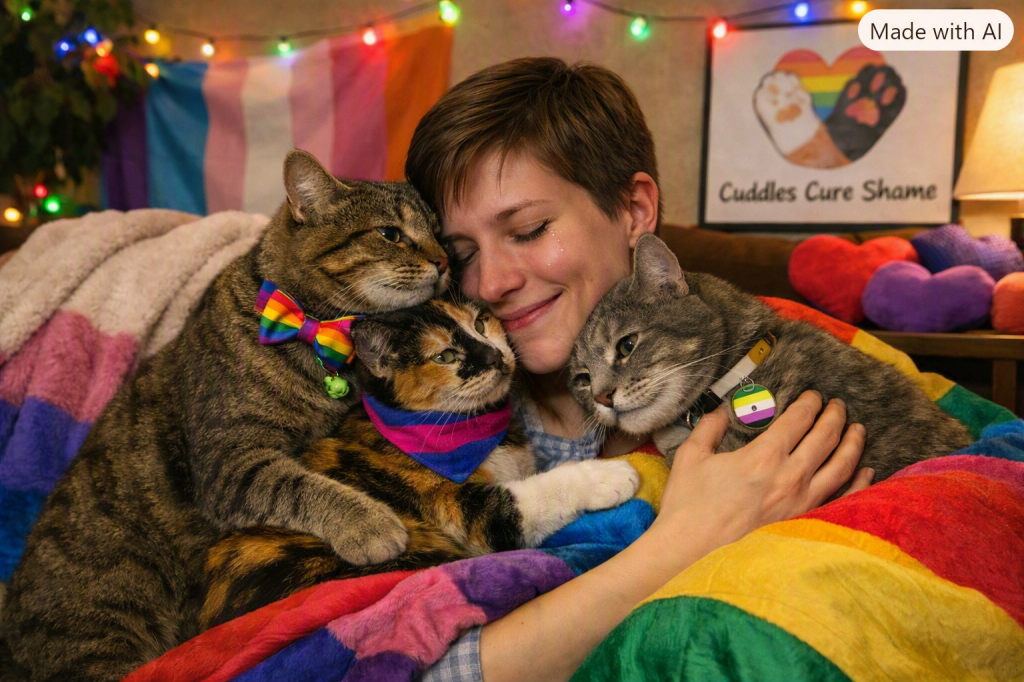
Shame: The Weight I Refuse to Carry Anymore

“Shame was never my reflection. It was the shadow of someone else’s fear cast across my life.”

-This Puzzled Life

Light the charcoal. Sprinkle the sage. Let the smoke rise like a soft warning. A trembling invitation. And a doorway cracked open just wide enough for the truth to step through without flinching. Let it drift through the room the way shame once drifted through our childhood homes as quiet and unspoken. But heavy enough to shape the way we learned to breathe.

This isn’t about performance. It isn’t about survival. It’s about naming the thing that has lived in your bones longer than some people have lived in their houses. I’m not writing from a place of humor or distance. I’m writing from the wound. From the memory. From the soil that raised me. And the silence that tried to claim me.

Shame is not born in us. It is handed to us. Pressed into our palms by people who were supposed to know better. People who were supposed to love better. People who were supposed to see us as whole. And in the Deep South, shame is practically a family heirloom.

Down here, some conservative communities have perfected shame into an art form as quiet, polished, and Sunday‑morning approved. They wield it like a switch they no longer have to swing. Because the words do the bruising for them. They don’t have to raise their voices. They just raise an eyebrow. They don’t have to say you’re wrong. They just say they’re “praying for you.” They don’t have to tell you to hide. They just make sure you know what happens to people who don’t.

Shame becomes the air you breathe before you even know what air is. It teaches you to fold yourself small. To tuck away the parts of you that don’t fit the script. To apologize for the way your heart beats. The way your voice trembles. And the way your truth refuses to die quietly. The worst part is how deeply it roots itself. And how it convinces you that you are the problem. Not the rules. Not the silence. Not the fear disguised as righteousness.

Some Southern conservative spaces are experts at this. They turn difference into danger. They turn authenticity into rebellion. They turn survival into sin. They shame you for who you are. And then shame you again for hurting because of it.

But here’s the truth shame never wants you to learn. You were never the one who failed. You were the one who endured. Shame is not your inheritance. It is not your identity. It is not your burden to carry one more mile. The moment you name what was done to you. The moment you say, “This wasn’t love. This was control.” The spell breaks. The weight shifts. The air clears. And you begin to see yourself without the fog of someone else’s fear. You begin to hear your own voice again. You begin to rise. And rising is the one thing shame cannot survive.

Shame is universal. It’s a part of every culture and every nation. And every community has its own way of teaching people to hide the parts of themselves that don’t fit the script. Shame is a global language. It is spoken in different dialects. It is enforced through different rituals. And it is carried in different bodies.

But the version I know. The one that shaped my bones and rewired my voice was born in the conservative Deep South. That’s the lens I speak from. That’s the air I learned to breathe. That’s the terrain where shame wasn’t just a feeling. It was a system.

Some conservative Southern communities wield shame like a tool of order. A way to keep people in line. A way to maintain the illusion of perfection even when the truth is rotting beneath the floorboards. They don’t have to say, “you’re wrong.” They just say, “we don’t talk about that.” They don’t have to say, “you’re unworthy.” They just say, “think of what people will think.” They don’t have to say, “you don’t belong.” They just make sure you feel it.

Shame becomes the soundtrack of your childhood. The shadow in every room. The reason you learn to fold yourself into shapes that hurt to hold. When you grow up queer, outspoken, different, or simply unwilling to disappear, the shame becomes sharper. More pointed. And more personal.

You were not the problem. You were the disruption. You were the truth they didn’t know how to hold. Shame thrives in silence. But it cannot survive being named. The moment you say, “This harmed me,” the spell breaks. The moment you say, “This wasn’t love,” the weight shifts. The moment you say, “I deserved better,” the ground beneath you changes shape.

You begin to see yourself without the fog of their expectations. You begin to hear your own voice without the echo of their judgment. You begin to rise in ways they never prepared for. And rising is the one thing shame cannot withstand.

Let every culture keep the shame it created. Let the South hold the weight of the shame it taught me to carry. I am done dragging their silence behind me. I am done mistaking their fear for my fault. I am done shrinking to make their world more comfortable. I speak now. I rise now. I reclaim every part of me they tried to bury.

And the sound of that truth is unapologetic. Unbroken. And is the loudest thing I’ve ever survived. You were never meant to carry it. Set it down. Walk forward. And let the sound of your unbroken truth shake the whole damn South. Thanks for reading! And put that shame down.

Affirmation: I release every ounce of shame that was handed to me. My truth rises. My voice steadies. And I walk forward unburdened and whole.

***Don’t forget to watch the video!***

#ThisPuzzledLife