
The Family Roles & The Circus They Created

“My family says I’m ‘living in sin.’ Which is hilarious coming from people who treat denial like a spiritual gift. And premarital sex like a community service.”

-This Puzzled Life

Light the charcoal. Sprinkle the sage. Negative energy, get your shoes on and leave. Today we’re diving into one of my favorite dysfunctional family topics. Family roles. Those unofficial job titles we never applied for. Never wanted. And yet somehow ended up performing like we were on salary. Take a moment and see where you and your people fall. And here’s the spoiler. If you’re reading this, you already know.

Before we get started, let me warn you. This is not a gentle stroll through family history. This is a full‑blown guided tour through a Southern household. That’s been held together with casserole, denial, and conservative Christian values. That seem to get applied with the accuracy of a toddler using glitter glue.

I grew up in a family where “we don’t talk about that” wasn’t a suggestion. It was the eleventh commandment. Emotions were treated like illegal fireworks. Everyone had them. Nobody handled them correctly. And something always exploded at the worst possible time.

In my house, honesty was considered aggressive. Accountability was considered disrespectful. And therapy? Therapy was treated like witchcraft performed by people who “don’t know Jesus personally.”

Meanwhile, the dysfunction strutted around the living room in broad daylight wearing a name tag and a church hat. And everyone pretended they couldn’t see it. If denial were a sport, my family would have Olympic medals and a sponsorship from Hobby Lobby.

So, buckle your emotional seatbelt. And prepare yourself. Because once you recognize the roles in a dysfunctional family. It’s like spotting roaches. You can’t unsee them. And suddenly they’re everywhere.

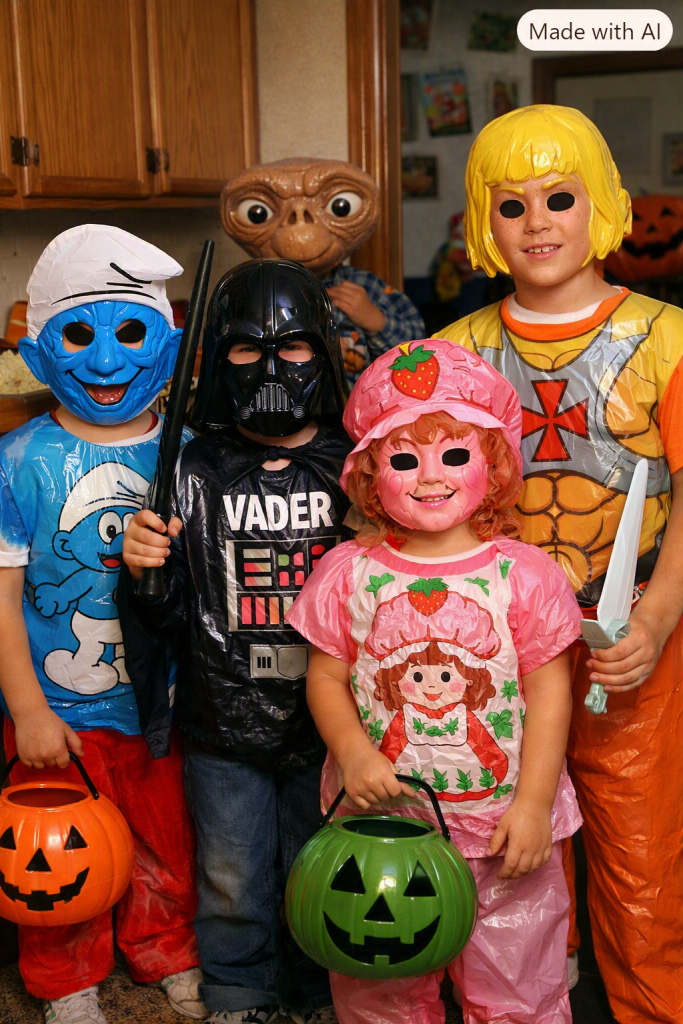
Family roles are the expected behaviors, responsibilities, and emotional acrobatics each person performs to keep the family circus running. These roles shift depending on culture, family size, and personality. But the classics are Hero, Scapegoat, Golden Child, Lost Child, Mascot. And I show up everywhere like glitter after a craft project.

Let’s begin.

1. The Hero (a.k.a. The Family PR Department) The Hero’s job is to make the family look normal, stable, and “blessed and highly favored” to the outside world. According to theraplatform.com (2025), they take on excessive responsibility to gain approval. This is my mother’s role. Or at least the role she auditions for. She is attention-seeking. Reputation-obsessed. And allergic to accountability. She delivers passive-aggressive comments like she’s handing out communion wafers. And then acts shocked when people get upset.

Her signature move? “The Dummy Card.” Suddenly she “doesn’t remember,” “didn’t mean it like that,” or “doesn’t know what you’re talking about.” But trust me, she knows. And right after she stirs the pot. She gives my dad the “rescue me” look. As if she didn’t just season that pot with cayenne, spite, and generational trauma. We only have real conversations when she’s mad at my sister, The Golden Child. Otherwise, it’s news, sports, and weather which is the Holy Trinity of Avoidance.


2. The Scapegoat (hi, it’s me) The Scapegoat is blamed for everything wrong in the family. Stubbed toe? My fault. Bad weather? Somehow me. The economy? Probably me too. I don’t conform to their lifestyle. I’m gay. I use medical cannabis. I don’t go to church because there are too many people who support the cruelty of the Trump regime. And align theirselves with the MAGA movement which practices a form of chriatianity that cannot be found in any Bible. And quite frankly, they have a bad reputation for normalizing pedophilia while demonizing being gay. I guess I should be glad that I just can’t understand that rationale. 

I talk about taboo topics. And I acknowledge reality instead of pretending everything is fine.
And did I mention I’m gay? Because trust me they will. Instead of saying,
“She’s our family and we love her no matter the gender of someone she loves and that loves her.” They act like my existence is a PR crisis. The attitude is like, “Remember when Dana destroyed the family by being prouid to be gay and authentic?”  I’m also the family whistleblower. I don’t play along with generational nonsense. I’m my own person. And I’m not apologizing for it.

3. The Golden Child (my sister, obviously) The Golden Child is the family’s prized possession. The chosen one. The favorite. And the one who can do no wrong even when she is actively doing wrong. Thriveworks.com (2023) describes this child as obedient, praised, and protected. That’s her. She has been dipped in gold since birth. She follows the script. Holds the same beliefs. And passes them down to her children like heirloom china. She was taught what to think. Not how to think. And the cycle continues. Children aren’t born to hate. They learn it from the adults who raise them. And this is what my sister excels at consistently.

4. The Lost Child (also my sister — she multitasks) The Lost Child avoids conflict like it’s a full-time job with benefits. She withdraws. Stays quiet. And pretends she’s above the chaos. While simultaneously contributing to it. She never acknowledges her harmful behavior. She believes most people are beneath her. And when she talks about someone being gay, she spells it out “G-A-Y” like she’s avoiding summoning a demon. Her emotional range is that of a frozen waffle. And honestly, that’s the family vibe overall.

5. The Mascot (me and my dad) Mascots use humor to distract from the dysfunction. We crack jokes. Lighten the mood. And do not dare fix anything. We just to keep the room from exploding. This doesn’t always work especially when me and my sister are at war like rainbows and bibles. My dad rescues my mom and sister from “big, bad Dana.” Who refuses to sweep things under the rug. I’m the villain because I tell the truth. Imagine that. Kind of sounds like the current government’s level of functioning.

Now you’ve met the cast and the roles they cling to like emotional security blankets. In the next part we’ll zoom out and look at the bigger picture. And it’s the part they refuse to acknowledge.

That concludes our tour of the Family Circus. Please exit through the gift shop. Where denial is half‑off. Accountability is out of stock. And the Scapegoat merchandise is mysteriously overpriced.” Thanks for reading! Keep breaking chains.

Affirmation: Today I honor my emotionally athletic self. The whistleblowing. Boundary‑setting. Truth‑telling legend who refuses to join the family’s Olympic Denial Team. Even though they’ve been training since the womb.

***Don’t forget to watch the video!***

#ThisPuzzledLife
Addiction Awareness: The Lover That Cuts Deep and Comes for Everything

“Addiction is a quiet predator. It’s patient. Calculated. Always hungry. And waiting for the moment you’re weakest to take the biggest bite out of your life.”

-This Puzzled Life

 Light the charcoal. Sprinkle the sage. Because when we talk about addiction awareness, the air needs to be thick with truth, protection, and the kind of courage that makes your voice shake but keeps going anyway. This isn’t a pretty conversation. It’s not a gentle unveiling. It’s not polite. It’s not something you whisper behind closed doors like a family secret wrapped in shame. It’s the kind of truth that shakes the floorboards and rattles the bones of anyone who’s ever lived it. Loved someone through it. Or buried someone because of it. This is a front porch, bare soul, trembling‑hands kind of truth. And today, we’re telling it out loud.

Addiction doesn’t walk into a home quietly. It barges in like a storm. It tracks mud across every memory. It rearranges the furniture of your life. And convinces you that chaos is normal. It teaches you to apologize for things you didn’t break. To shrink yourself so its shadow can stretch across the room. And to pretend you’re fine when your insides feel like shattered glass. And the cruelest part? Addiction doesn’t just take from the person struggling. It takes from everyone who loves them.

Families learn to tiptoe. Children learn to decode moods like weather patterns. Partners learn to carry burdens that were never meant for one set of shoulders. And the person battling addiction, learns to hide their pain behind a smile that fools everyone except the people who know them best. Addiction awareness isn’t about statistics or slogans. It’s about the people who wake up every day fighting a war no one else can see.

There are the battles fought in bathrooms, parked cars, and bedrooms with the door locked. The battles fought in silence because shame is louder than the truth. The battles fought by people who are terrified to ask for help because they don’t want to be judged. Dismissed. Or treated like a problem instead of a person.

Addiction awareness means saying, “You are not alone. You are not broken beyond repair. You are not the worst thing you’ve ever done.” It means recognizing that recovery isn’t linear. It’s messy. It’s painful. It’s full of relapses, restarts, and revelations. But it is possible. I tasted that freedom many years ago, during a moment in life that now seems like it never existed. 

Let’s talk about the people that love them too. The ones who hold the line when the person they love can’t. The ones who pray. Cry. Scream. Hope. And repeat. Addiction awareness means honoring their resilience. Their heartbreak. Their bravery. Loving someone through addiction is its own kind of battle that deserves to be seen.

Addiction is not a moral failure. It is not a character flaw. It is not a sign of weakness. It’s a neurological hijacking. And once it gets inside, it takes the controls and refuses to give them back. It’s a thief. A liar. And a weight that no one should carry alone.

Awareness is the first step toward compassion. Compassion is the first step toward healing. Healing is the first step toward freedom. And freedom? Freedom is the birthright of every single person touched by addiction. It doesn’t matter whether they’re fighting it. Surviving it. Or loving someone through it.

I have been an addict in one form or another since I was a very young teen. That’s the part people don’t see. The way it starts before you even understand what “coping” means. Before your brain is fully formed. Before you know that one decision can echo for decades. Some things I let go of and never touched again. But others? Others I’m still married to. Still controlled by. And still waking up beside like a partner I never meant to vow my life to. I’ve stood on every side of this issue. I’ve been a patient, professional, survivor, and witness. I’ve buried friends and family. And I’ve found the bodies of patients. I’ve even sat in classrooms learning the science. And I’ve sat on bathroom floors learning the consequences. 

One of the biggest debates is whether addiction is a disease. And honestly? I see both sides. But I can attest to this. What I know in my bones is that addiction will pick up exactly where it left off. It doesn’t forget you. It doesn’t forgive you. And it doesn’t loosen its grip just because you got tired.

It progresses like a slow-moving fire. Consuming everything until it shuts down every functioning cell in your body. It’s the lover that kisses your forehead while holding a knife behind your back. And it’s like trying to pet a rattlesnake and hoping it suddenly cares about your well-being.

There are no social crack users. No social heroin users. No social meth, fentanyl, or “just once in a while” users of the things that hollow you out from the inside. I’ve known too many who didn’t make it. Too many funerals. Too many empty chairs. Too many stories cut short. And the truth is brutal. Addicts are not the type who typically live to be 80. The statistics confirm what our hearts already know. That many have died. And many more will die.

And process addictions? Eating disorders, self-harm, gambling, sex addiction, etc. are not softer versions. They are simply different roads to the same grave. Addiction doesn’t care about the method. It cares about the destruction. And it will be done in totality emotionally, socially, spiritually, and physically.

It strips you down until you’re a shell of what once resembled a human being. It destroys your life and the lives orbiting yours. That’s the goal. It wants no interference. And no one slowing its roll. It wants you wrapped around its finger in a relationship so co-dependent it feels cellular. It doesn’t care how many relationships are ruined as a result. Addiction is about the next fix. Whatever that fix is. And you will chase it until the line between living and dying blurs. 

The saddest part is that you don’t know you’re susceptible until you’re already in it. Addiction does not discriminate. It shows no mercy to clergy, billionaires, politicians, Hollywood actors, musicians, doctors, lawyers, nurses, or the people just trying to keep the lights on and food on the table.

And the idea that you can outthink addiction? Outsmart the chemical, emotional, and neurological machinery it hijacks? That’s the thinking of fools. And I say that with compassion. Not judgment. There is nothing more heartbreaking than watching someone, yourself included, need their “drug” so badly that they would burn down every good thing in their life for another taste of something that is killing them.

Let the truth rise with the smoke. Addiction is not romance. It is not rebellion. It is not escape. It is suicide on an installment plan. And for every person who struggles, it has a bullet with their name on it. Even mine. Speaking the truth out loud is how we start breaking the cycle that wants us silent. Awareness is the first crack of light. Awareness is the first act of rebellion. Awareness is the first step toward choosing life. Even when the addiction whispers otherwise. It’s a story of survival in a world that doesn’t teach us how to hold our pain. 

Your days of hiding in silence are over. We’re speaking your name. Shine light in your corners. And refusing to let shame be your shield. This is awareness. This is courage. This is the moment we stop whispering and start healing. And it’s for every soul who deserves a life bigger than their battle. Thanks for reading! And ask for what you need.

Affirmation: I honor the battles I’ve survived, and I refuse to let the shadows that once claimed me write the rest of my story. I rise with clarity, courage, and a spine made of truth.

***Don’t forget to watch the video!***

#ThisPuzzledLife

Human Trafficking Prevention Month January

“You cannot look away when human beings are bought and sold.”

— Unknown

Light the charcoal. Sprinkle the sage. Negative energy go away. Today, I want to talk to you about human trafficking prevention month.

Human trafficking is a serious crime and a violation of human rights. It involves the use of force, fraud, or coercion to exploit a person for profit.

It most commonly takes two forms:

  • Sex trafficking: When a person is forced, tricked, or coerced into performing commercial sex acts. Any minor involved in commercial sex is considered trafficked, regardless of force or coercion.
  • Labor trafficking: When a person is forced to work through threats, debt, or manipulation in jobs such as agriculture, construction, domestic work, factories, or hospitality.

Human trafficking can happen anywhere homes, workplaces, online, and across borders. Traffickers often target vulnerable individuals, including children, migrants, people experiencing poverty, and those facing abuse or instability. There are several myths that circulate about this type of crime.

Myth: Human trafficking always involves kidnapping.
Reality: Many victims are coerced, manipulated, or deceived, not abducted (Human Trafficking | National Human Trafficking Hotline).

Myth: It happens only overseas.
Reality: Trafficking occurs in all 50 U.S. states and U.S. territories. (Department of Homeland Security).

Myth: Victims will simply ask for help.
Reality: Fear, debt, threats, or trauma may prevent victims from seeking assistance.

Who Are the Most At Risk?

Human trafficking can happen to anyone regardless of age, gender, nationality, or background. But certain factors can increase vulnerability, including:

  • Poverty or economic instability
  • Unstable housing or homelessness
  • History of trauma or abuse
  • Recent migration or lack of legal status
  • Social isolation or limited support networks

Traffickers often manipulate trust, use deception, or exploit unmet needs to gain control. (Home | National Human Trafficking Hotline)

What Are the Signs of Possible Trafficking?

There’s no single indicator, but the FBI and other authorities list red flags such as:

  • Victims lacking control over their own identification or finances
  • Restricted freedom of movement
  • Excessive work hours with little or no pay
  • Signs of fear, control, or physical abuse
  • Living where they work or in isolated conditions
  • Limited ability to speak for themselves or interact freely with others FBI

Not all victims will show obvious signs, and every situation is different. It is not the same as human smuggling. Smuggling involves consent and ends once a border is crossed, while trafficking is about ongoing exploitation and does not require movement. If you or someone you know may be at risk in the U.S., the National Human Trafficking Hotline is available 24/7 at 1-888-373-7888 or by texting 233733 (BEFREE).

I have personally spent time with women who survived sex trafficking. I have listened to their stories, and the cruelty they endured is beyond words. No one should ever have to survive what they are forced to do. This must be a top priority for law enforcement and our communities. While rescues do happen, freedom is only the beginning. The wounds both visible and unseen run deep, and the scars left behind are so profound they leave you stunned, struggling to comprehend the depth of what was taken from them. Thanks for reading!

Affirmation: Every person deserves safety, autonomy, and acceptance.

***Don’t forget to watch the video!***

#Thispuzzledlife