
“Some days I am the vibe, the lesson, and the warning label. I’m an entire curriculum walking around with ChapStick.”
-This Puzzled Life
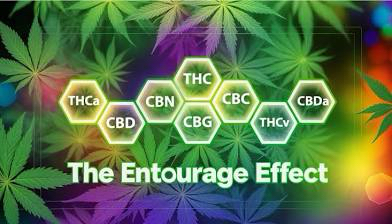
Light the charcoal. Sprinkle the sage. Today we’re not calling the cats to the podium. We’re not invoking their questionable credentials. And we’re not even pretending they filled out the proper paperwork. This one is just you, me, and the plant herself. It’s about cannabis in all her layered, Southern‑porch‑swing complexity. We’re talking about the entourage effect. It’s the part of cannabis science that feels less like chemistry and more like gospel truth whispered through resin and sunlight.
The cannabis plant is basically a Southern family reunion. THC is the cousin who shows up late but steals the show. CBD is the one passing out emotional support hugs. And the terpenes are the aunties in the kitchen seasoning the experience, so it actually tastes right. Individually? Cute. Together? That’s when the healing gets to hollerin.’
The entourage effect is the idea that cannabis works best when its compounds, cannabinoids, terpenes, flavonoids, show up like a well‑rehearsed choir instead of soloists. THC and CBD may be the lead singers. But the rest of the plant is the harmony that makes the whole thing hit deeper, smoother, and more meaningfully.
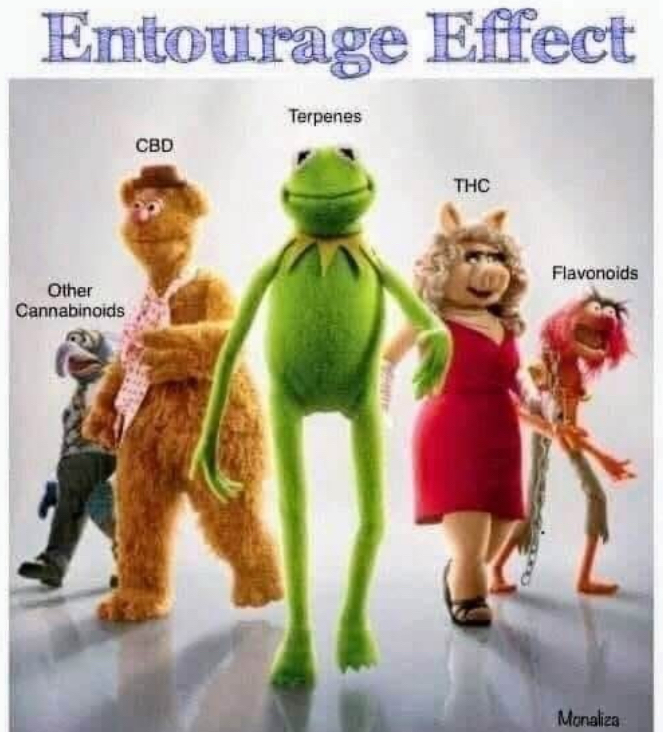
Researchers describe it as synergy. It’s the plant’s compounds interacting in ways that amplify therapeutic effects beyond what any one molecule can do alone. And this is why full‑spectrum products often feel more balanced. More effective. And sometimes even gentler. You’re getting the whole band. Not just the headliner.
When you consume cannabis in its fuller form, you’re engaging with:
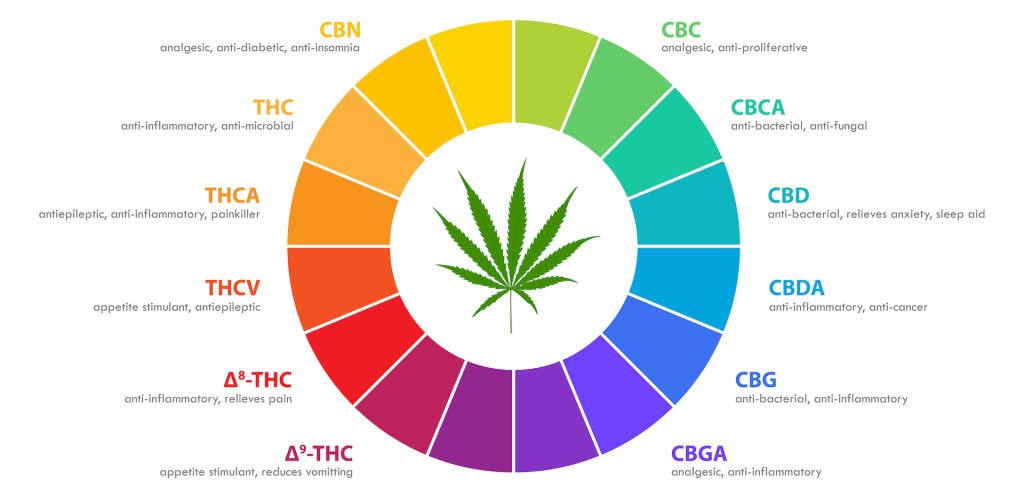
- Cannabinoids-THC, CBD, CBG, CBC, and others that interact with your endocannabinoid system.
- Terpenes-myrcene, limonene, pinene, caryophyllene, and more, each with their own aromatic and therapeutic personality.
- Flavonoids-subtle but powerful contributors to anti‑inflammatory and antioxidant effects.
Together these compounds create a more nuanced experience. It’s not just “stronger.” But more coordinated. Think less “one loud trumpet.” And more “a brass section that knows when to swell and when to hush.” Even early animal studies show that terpenes can influence behavioral outcomes. And that combining them with cannabinoids can have a greater impact than either alone.
If THC is the spark. The entourage effect is the wind pattern that decides whether that spark becomes a candle flame, a bonfire, or a gentle ember that warms without overwhelming. It’s the difference between “I feel something” and “I feel something that makes sense for my body today.” It’s also why two strains with the same THC percentage can feel completely different. THC is only one voice in the choir. And sometimes the altos and tenors are doing the real work.
Let the plant show up whole. Not pieced apart. Let the terpenes speak their citrus, pine, and pepper truths. Let the cannabinoids do their ancient, body wise dance. And let the entourage effect remind us that healing, like community, is rarely a solo act.
And that, is the entourage effect. The botanical version of “don’t start none, won’t be none.” It’s where every compound shows up. Links arms and says, “We do our best work as a unit.” Now if you’ll excuse me. I’m gonna step off this porch like a preacher who just delivered the good word and knows the collection plate is about to overflow. Amen, Ashe, and pass the full‑spectrum products. Thanks for reading! And keep blazin’.
Affirmation: I am divinely protected. Highly favored. And running on a level of confidence that really should’ve come with a seatbelt.
***Don’t forget to watch the video!***
#ThisPuzzledLife