This Puzzled Life is a mental health and recovery blog exploring addiction, trauma healing, LGBTQ experiences, humor, and the strange moments that shape us.
“When the world tilts, steady yourself with the strength of your ancestors and the sass of your soul.”
-This Puzzled Life
Light the charcoal, y’all. Because if we’re gonna talk about badass affirmations for citizens whose democracy is currently doing the backstroke in a kiddie pool of chaos. We need heat, smoke, and the ancestors gathered around like, “What is this mess?”
So go on and call upon Big Mama, Pawpaw, and Auntie Who Don’t Play. And that one ancestor who definitely hexed somebody for stealing her cornbread recipe. We need all hands-on deck. Democracy is wobbling like a church usher in 6-inch heels. And we’re about to speak life into ourselves before we lose our ever-loving minds.
Listen. Sometimes you wake up. Check the news. And immediately feel like you’ve been spiritually slapped with a wet biscuit. The headlines look like they were written by raccoons on Red Bull. The country feels like it’s being run by a committee of confused squirrels. And you, sweet, exhausted, democracy-loving you, are just trying to keep your blood pressure below “boiling crawfish.” But fear not. The ancestors said, “Stand up straight. You ain’t built for folding.”
Badass Affirmations for Citizens Watching Democracy Do the Electric Slide Off a Cliff:
“I am the descendant of people who survived worse nonsense than this.” If your ancestors lived through plagues, wars, and that one cousin who stole everybody’s tax refund, you can survive this political circus.
“My voice is louder than the chaos.” Even if your voice is currently cracking like a middle-schooler in puberty, it still counts.
“I will not be gaslit by people who can’t even operate a group chat.” If they can’t coordinate a potluck, they cannot steal your sanity.
“I am a Southern-grown, sass-infused, democracy-defending masterpiece.” You are basically sweet tea with a vengeance.
“I will not lose hope. I will lose patience, yes. But not hope.” Hope is eternal. Patience is on backorder.
“I am allowed to scream into a pillow. Eat a biscuit. And try again.” Self-care is patriotic.
And if you feel your spirit wobbling, just imagine your ancestors standing behind you. Arms crossed saying, “Don’t let these fools make you forget who you are.”
So, here’s the deal. Democracy may be drowning. But so are half the plants in my yard. And I still believe in resurrection. We are not the generation that gives up. We are the generation that shows up with snacks, sarcasm, and a battle cry that sounds suspiciously like “Bless your heart.”
We will keep pushing. We will keep voting. We will keep raising hell politely. Unless politely stops working. In which case we will raise hell with the enthusiasm of a toddler who missed naptime. And when the world feels too heavy, remember this. Your ancestors didn’t survive all that history just for you to crumble like a stale biscuit. You are built of grit, grace, and generational side-eye.
Now go forth, democracy defender. Light the charcoal. Invoke the ancestors. And remind the universe that you are not to be trifled with. Mic dropped. Somebody please pick it up. My knees are too old for bending. Thanks for reading! And get out and vote!
Affirmation: I am a fierce, unshakeable force of hope. My voice matters. My presence matters. And I will not let chaos steal my courage.
“Love is not holy if it requires your child to shrink.”
-This Puzzled Life
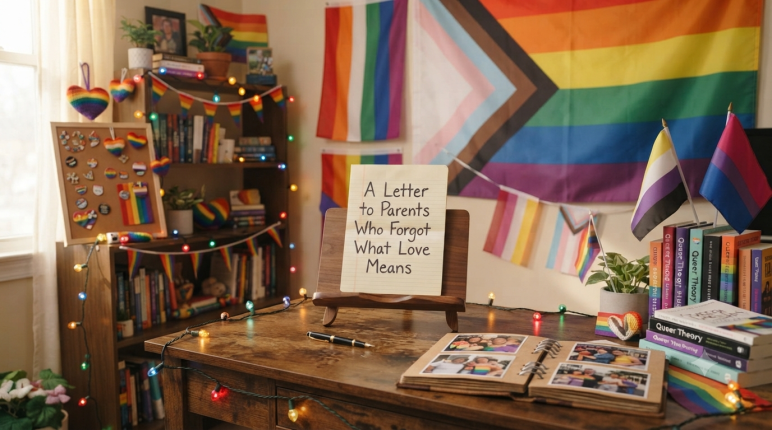
Light the charcoal. Invoke the ancestors. Because Lord, they’ve been watching this mess unfold for generations and they are tired. I can practically hear Big Mama in the spirit realm, fanning herself with a church program and whispering, “Baby, go on and say it. They need to hear it.” So, I’m writing this letter. This holy‑ghost‑powered, Southern‑fried, and emotionally charged letter to the parents of LGBTQIA+ kids everywhere. And I’m writing it in the voice of every queer ancestor who had to survive Sunday School shame, back‑pew gossip, and family reunions where the potato salad had more acceptance than they did.
This is a letter from me, a queer adult who lived through the fire. Walked through the brimstone. And still came out smelling like sandalwood and resilience. And I’m not holding back. Sit back while I speak some truth.
Dear Parents, before you bring a child into this world biologically, adoption, or through the “God told me to foster” pipeline, you need to sit with yourself and ask one question, “Am I going to love this child more than my beliefs?” If the answer is anything other than a full‑bodied, chest‑thumping, hallelujah‑shouting yes, then you don’t need children. You need a devotional, a therapist, and maybe a long walk through the woods to talk to Jesus directly.
Let me be clear. Jesus, the actual Jesus, not the one y’all weaponize, never bullied a child. He never told a kid they were going to hell. He never said, “Love thy neighbor unless they’re gay.” He never threw stones at queer folks. He only threw shade at hypocrites. So, if you’re out here being your child’s first bully, oppressor, heartbreak, first source of shame, you are not parenting. You are spiritually vandalizing a soul God trusted you with. And I’m here to tell you with all the ancestors nodding behind me, that is not holy. That is not righteous. That is not love.
10 Beliefs That Mean You Should Not Have Children
If your religion means more to you than your child’s humanity, you should not have children. Jesus didn’t die on the cross so you could weaponize Leviticus like a spiritual flyswatter.
If you plan to be your child’s first bully, you should not have children. Kids deserve parents. Not mean girls with mortgages.
If you believe your grandchildren are “tainted” because their parents are gay, you should’ve never had children yourself. The family tree didn’t rot. Your mindset did.
If you teach your child to hate LGBTQIA+ family members, you should not have children. Hell is not the destination here. But your behavior is the road map.
If you think “unconditional love” comes with fine print, you should not have children. God doesn’t do contracts. He does covenants.
If you believe queer kids are a punishment instead of a blessing, you should not have children. That’s not theology. That’s ignorance with a Bible cover.
If you think “pray the gay away” is a parenting strategy, you should not have children. Prayer is for healing. Not conversion therapy cosplay.
If you’d rather lose your child than lose your church friends, you should not have children.Jesus ate with outcasts. You’re worried about potluck politics.
If you think shame is a teaching tool, you should not have children. Shame doesn’t save souls. It breaks them.
If you believe love must be earned, you should not have children. Children are not employees. You are not their boss. Love is not a performance review.
Let me take a deep breath. Pull up a rocking chair on the porch of truth. And say this slow enough for even the folks in the back pew. This is for the ones who pretend they’re reading scripture. But are really scrolling Facebook to understand. If your love cannot stretch wide enough to hold a queer child, then your love is not love. It is fear dressed up in Sunday clothes.
And I’m going to tell you something the ancestors have been whispering for decades. Children come through you. Not for you. They are not born to validate your beliefs, your image, your reputation, or your standing in the church bulletin. Children are not your emotional support trophies. They are not your redemption arc. They are not your second chance at being the person you wish you were. They are not your spiritual PR campaign.
They are souls that are whole, holy, and handcrafted by the same God you claim to worship. And if you cannot love them without conditions, ultimatums, threats of hellfire, “pray it away” nonsense, and shame disguised as righteousness, then you are not parenting. You are performing. You are auditioning for approval from people who wouldn’t show up for you if your house caught fire. You are sacrificing your child’s mental health on the altar of “What will the church ladies think?” You are choosing doctrine over devotion. Fear over family. And ego over empathy.
Let me say this louder with the ancestors stomping their feet like a praise break behind me. Jesus never asked a child to shrink so a parent could feel tall. Jesus never told a child to hide so a parent could feel holy. Jesus never demanded silence from the oppressed to comfort the oppressor.
If your child comes out to you in fear, trembling, hope, desperation, and your first instinct is to shame them. Correct them. Punish them. Or “fix” them. Then you have misunderstood the entire point of parenthood.
And if your response is, “Well, I love them. But I don’t support their lifestyle,” let me lovingly, sarcastically, and spiritually inform you. Your child does not have a lifestyle. They have a life. And you are either in it, or you are not.
If you think rejecting your child is righteous. I promise you that Jesus is looking down at you like, “That’s not what I said.” If you think your child’s identity is a sin. But your cruelty isn’t. You might want to reread the red‑letter parts of the Bible. The ones where Jesus actually speaks. Because he spent his entire ministry calling out people who acted exactly like that.
If you think your child’s queerness is a burden. But your judgment isn’t. You need to sit with that. If you think your child’s truth is dangerous. But your silence isn’t. You need to sit with that. If you think your child’s love is wrong. But your rejection is holy. You need to sit with that.
And while you’re sitting, let me offer you the kind of truth that makes the ancestors nod and Jesus raise an eyebrow. Queer kids do not break families. Parents who choose fear over love do. Queer kids do not destroy homes. Parents who weaponize scripture do. Queer kids do not cause generational trauma. Parents who refuse to evolve do. And heterosexual parents create gay children. They don’t create themselves.
Queer kids do not walk away from families lightly. Parents who make home unsafe push them out. And if you lose your child because you could not love them fully, freely, and fiercely. That is not their sin. That is your consequence. If you cannot love a queer child. You are not ready to love any child. If your heart cannot expand. Your family cannot grow. If your faith cannot bend. Your relationships will break. If your compassion cannot stretch. Your legacy will shrink.
And one day you will look back and realize that the child you rejected was the one who could’ve taught you the most about love. But by then, they’ll be gone. And they’ll be loved somewhere else. Fully. Joyfully. Safely. And without conditions. Ancestors humming. Jesus nodding. And the truth standing tall. Thanks for reading! What are your thoughts?
Affirmation: I honor my truth, identity, and my worth. And I refuse to let anyone’s fear masquerading as faith define me.
“Sometimes the only thing keeping me from losing my already lost religion is two Oklahoma women yelling about petty grievances.”
-This Puzzled Life
Light the charcoal. Sprinkle the sage. Invoke the ancestors. Preferably the messy ones. The ones who show up wearing house shoes. Clutching a gas‑station fountain drink. And whispering, “You’re gonna wanna sit down for this one.”
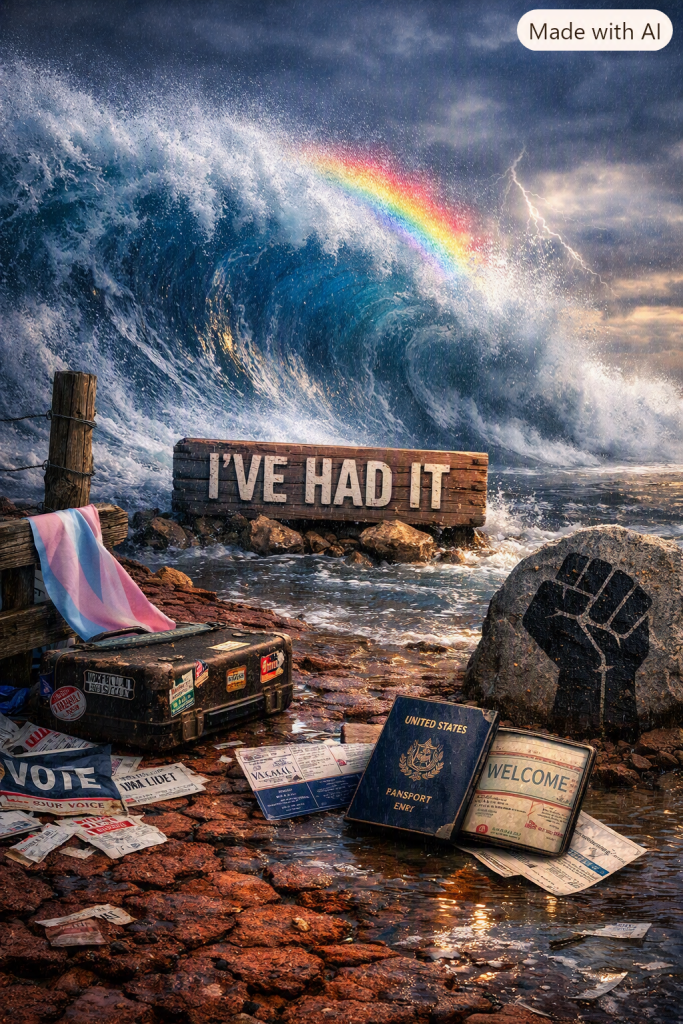
Because today, we gather in the sacred, humid, mosquito‑infested, spiritually charged arena to praise. Roast. And spiritually hydrate the chaotic holiness that is the I’ve Had It Podcast. The only place where two white liberal women from the red MAGA plains of Oklahoma have somehow built a sanctuary for every exhausted blue‑dot soul trying to survive in a country where people still proudly drink out of Stanley cups like it’s a personality trait. Let me set the table like MeeMaw used to that is loud. And with sweet tea strong enough to dissolve enamel.
Jennifer Welch and Angie “Pumps” Sullivan aren’t just podcasters. They are the patron saints of Petty Grievances. The matriarchs of Messy Liberation. And the spiritual mothers of every liberal woman trapped in a red state. While trying not to throat‑punch someone at the grocery store.
Jennifer, the sarcastically blunt atheist queen, speaks with the kind of clarity that only comes from years of saying, “No, actually, that is stupid” out loud. She’s the type of woman who could walk into a revival tent. Sneeze. And accidentally deconstruct someone’s entire theology. On a side note I’ll also say that she is an Olympic level Pickle Ball Champion like we’ve never seen before in the history of the world.
Then there’s Pumps. Lord help us all. Pumps is a recovering evangelical, the HBIC (Head Beaver In Charge), the teeny weenieologist, the MeeMaw Meat Curtains because she is much older than Jennifer. And apparently the patron saint of Asexuality in the Bible Belt. Her last sexual encounter was somewhere around 1,000 days ago. And Jennifer multiplies that number tenfold with each episode until the math starts giving Old Testament genealogy. We’re approaching, “And on the 40,000th day, Pumps rested.”
And presiding over this circus of holy chaos is Kiley. The beautiful lesbian gaytriot producer who keeps the entire operation from combusting. She’s the glue, the duct tape, the Queer Logistics Coordinator who ensures Jennifer and Pumps don’t accidentally start a small fire while recording. She produces the hilarious fuckery with the precision of a woman who knows exactly how chaotic these two can be.
As a white liberal sarcastic woman myself from the red MAGA state of Mississippi, these ladies have become my emotional support podcast. They take the isolation of wanting equal rights for everyone. While surrounded by neighbors who think democracy is optional. And turn it into a family. A loud, hilarious politically petty family that supports all marginalized groups and stands up for democracy. Despite the red hatred swirling around them.
And let me tell you. And their nicknames for politicians? Baby, they speak fluent Southern shade. People like Donald “Cankles McTaco Tits” Trump, Moses Mike Grindr Johnson, the late Lindsey “Lady” Graham, “Big Titty” Bryon Knoem, “Smokey-eyed sociopath” JD Vance, “Lyin’” Ted Cruz, Flamboyant Jesse “Lady” Waters with Fox News, Natalie “The Bunny Boiler” Harp, Markwayne “Booster Box” Mullin, and others. I heard that recently they both spoke with Mitch “Dead Not Dead” McConnell for twenty minutes from his life support rehabilitation unit. They roast public figures with the same energy my Aunt Linda uses when she says, “I’m not saying she’s trashy. But she does own a leopard‑print Bible cover.”
They expose the closetocracy, the folks who legislate against the very community they enjoy on weekends, with surgical precision and the comedic timing only two women who have truly had it can deliver. Are they crass? Yes. Do they speak my language? Absolutely. Do they have a low tolerance for stupidity? Honey, they have a negative tolerance.
And Pumps, sweet Pumps, if she would stop vaping like she’s trying to summon a Civil War ghost, Jennifer might finally unclench. And if she would please stop pooping in Styrofoam cups like she’s conducting a science fair project, the online audience would stop peeing on ourselves from laughing. Get it together, Pumps. At least the saggin’ dragons are secured.
These women have been my morning oxygen for over a year. They are my people that are hilarious. And, at times, inappropriate. Unfiltered. Compassionate. And petty in all the right places. If you’re a prude. Easily offended. Or still clinging to conservative Christianity where some Christians use scripture as a mascot for cruelty, this is not your ministry.
But if you’re like me a blue dot in a red state. A queer person whose family can’t quite figure out acceptance. Or someone who needs laughter more than judgment. These ladies feel like home. They are the family I needed. The humor I craved. And the reminder that democracy is worth fighting for even when surrounded by folks who think Jesus rode a dinosaur. And if island living as a blue dot in a red state is what it takes, then baby, I’ll take my new family without question.
So let me say this with the full force of my ancestors, my sass, my trauma, my cats, and my last functioning nerve. The I’ve Had It Podcast isn’t just entertainment. It’s survival. It’s community. It’s the comedic resistance movement for every marginalized person living in a state where Hobby Lobby aisles are filled with people who think equality is a threat to their throw pillows.
Jennifer, Pumps, and Kiley have built a refuge for the tired, the queer, the liberal, the fed‑up, the chronically sarcastic, and the spiritually dehydrated. They’ve given us permission to laugh at the absurdity of our political landscape. To call out hypocrisy with humor. And to find joy in the middle of a country that feels like it’s being run by people who failed eighth‑grade civics. And who ate boogers and glue but never outgrew those behaviors.
I will be a loyal gaytriot as long as these ladies are around. I will follow them into the trenches of democracy, petty grievances, and Pumps’ colon‑control journey. I will take this island living. This blue dot existence. And choose my new family without hesitation.
Thank you, ladies, for your humor, your compassion, and your unapologetic refusal to tolerate bullshit in this tumultuous time. You are the laughter that keeps us fighting. CACAW!!!! Mic dropped. Floor cracked. Humidity rising. Ancestors hollering, “That’s Right, Baby!” Thanks for reading! Please tune in every day to the I’ve Had It podcast for political news with lots of humor.
Affirmation: I honor my truth, humor, identity, and my chosen family. I choose joy. I choose community. And I choose to laugh loudly. Even in the places that try to silence me.
“When you stop people‑pleasing, you don’t become unkind. You become un-owned.”
-This Puzzled Life
Light the charcoal. Sprinkle the sage. Today we’re not just cleansing the air. We’re cleansing the generational rot that tried to bury us alive. While I also smile sweetly and was asked if I wanted more casserole.
There’s a special kind of exhaustion that comes from being raised in a culture where your worth is measured by how small you can make yourself. Where “good manners” means “don’t make anyone uncomfortable.” Even if you’re bleeding out emotionally. Where “respect” means “don’t you dare speak the truth out loud.” And the South? The South will hand you a monogrammed apron, a church bulletin, and a generational trauma starter pack before you can even walk. But today we’re unpacking all of it.
Let’s talk about people‑pleasing. Not the cute kind where you bring someone banana pudding because you love them. But the dangerous kind. The kind that rewires your nervous system. The kind that teaches you to abandon yourself so thoroughly that you forget you ever had needs in the first place.
People‑pleasing is not a personality trait. It’s a survival skill. A trauma response. A generational inheritance wrapped in a bow of “be sweet” and “don’t cause trouble.” And in the South, it’s practically a rite of passage.
We’re taught early don’t speak up. Don’t contradict. Don’t embarrass the family. Don’t make waves. Don’t question authority. Don’t tell the truth if the truth makes anyone uncomfortable. Don’t you dare put yourself first. That’s selfish. And for the love of all things holy, don’t let the church ladies hear you say “no.”
People‑pleasing becomes the currency of acceptance. The ticket to belonging. The price of being considered “good.” But here’s the sinister part. People‑pleasing trains you to betray yourself before anyone else even gets the chance. You learn to anticipate everyone’s needs but your own. You learn to apologize for existing. You learn to smile through pain so convincingly that even you forget you’re hurting. You learn to make yourself small enough to fit inside other people’s expectations. And the world, especially the Southern world, rewards you for it. Until you stop.
The moment you stop people‑pleasing. The moment you say “no,” or “that’s not okay,” or “I’m not doing that anymore.” The moment you choose yourself? Suddenly you’re the villain in a story you didn’t write. Suddenly you’re “difficult.” Suddenly you’re “ungrateful.” Suddenly you’re “too sensitive,” “too outspoken,” “too much,” “too emotional,” “too opinionated,” “too educated,” “too aware,” and “too alive.” But the truth is simple. You’re not too much. You’re just finally enough for yourself. And that terrifies people who benefited from your silence.
People‑pleasing is dangerous because it teaches you that your safety depends on your compliance. It teaches you that love must be earned through self‑abandonment. It teaches you that your needs are negotiable. But everyone else’s are sacred. When you grow up in a culture that worships politeness more than honesty. Appearances more than integrity. And reputation more than reality. You learn to disappear. Until one day, you don’t.
And here’s where it gets personal. This isn’t theory for me. This isn’t something I read in a book or heard in a podcast. This is lived experience that was carved into my bones. Stitched into my history. And dragged behind me for decades like a cross I never volunteered to carry.
On a personal note, my family marinated me in people‑pleasing my entire life. And when you don’t comply? You get labeled the troublemaker. The problem. The one who “changed.” The one who “thinks she’s better.” The one who “needs to calm down.” The one who “makes everything difficult.” But not teaching me boundaries while simultaneously demanding I people‑please was dangerous. Not inconvenient. Not uncomfortable. Dangerous.
I have almost died multiple times because I gave more of myself than I had to give. I was trained to prioritize everyone else’s happiness over my own survival. I was taught that my needs were optional. But their approval was oxygen. And in the South, it’s a shameful way of life to even question this dynamic.
I had to come to a point, not helped by their expectations, where I finally put myself first. And now that I have strong boundaries, my family and the community think I’m “nasty” because I tell them I don’t need their validation. They want me to “cow tow” to their needs while never expecting the same from them. And that, my friends, is the pinnacle of hypocrisy and controlling behavior. And at this point in my life, I can say with confidence that I’ll never allow myself to be controlled by someone else ever again.
Let me make this plain in a way even the most selectively‑forgetful, Bible‑thumping, reputation‑worshipping, boundary‑hating folks can understand. I am no longer available for my own destruction. I am no longer the family sponge soaking up everyone else’s dysfunction. I am no longer the emotional punching bag for people who refuse to face their own shadows. I am no longer the scapegoat for sins I didn’t commit. I am no longer the child who learned to survive by disappearing. I am no longer the adult who thought love meant self‑sacrifice. I am no longer the woman who begged for crumbs of acceptance from people who never learned how to love without conditions. I am done.
I’m done with the gaslighting. Done with the hypocrisy. Done with the “good Christian” performances. Done with the selective morality. done with the selective compassion. Done with the silence that protects abusers. Done with the shame that was never mine to carry. Done with the generational curses disguised as tradition. And done with the expectation that I should shrink so others can feel tall.
I am not here to make anyone comfortable. I am not here to uphold anyone’s illusion. I am not here to play the role they assigned me. I am not here to be palatable, agreeable, or quiet. I am here to live. Fully. Boldly. Truthfully. Unapologetically. And if my boundaries offend you? If my healing threatens you? If my voice rattles your cage? If my truth exposes your lies? That’s not my burden. That’s your mirror.
So let me end this with the clarity of a woman who has crawled out of the grave they dug for me. I didn’t lose my family. I lost my captors. I didn’t lose my community. I lost my chains. I didn’t lose my identity. I reclaimed it. And I will never, ever, ever hand it back. Lights out. Thanks for reading! To thine own self be true. What are your experiences with this?
Affirmation: My boundaries are sacred. My truth is valid. My life belongs to me now fully and forever.
“Our childhood wasn’t supervised. It was witnessed.”
-This Puzzled Life
Light the charcoal. Bless the yard. We’re summoning the spirits of a generation raised on asbestos, sugar, and unmonitored chaos. A generation that survived childhoods so reckless they now qualify as folklore. Welcome to Growing Up in the 80s: A Survival Guide for the Barely Supervised. It’s where the toys were weapons. The adults were tired. And the safety standards were “Godspeed, child.” Get comfortable while we take a stroll through the hilarity of growing up Gen X in the 1980s.
Playgrounds: Where Childhood Went To Die.
The playground wasn’t a place to have fun. It was a government‑approved death trap. The metal slide? Forged in the fires of Mount Doom. By noon it was hot enough to brand cattle. You’d climb up. Sit down. And immediately lose three layers of thigh skin. And the equipment? Not equipment. Artifacts. One day a giant industrial truck tire would just appear. No explanation. No installation. Just a 400‑pound rubber monolith that rolled off an 18‑wheeler and onto the playground like, “Here. Climb inside this tomb and see what happens.”
I cannot end this part without mentioning the merry‑go‑round. It was a device clearly invented by someone who wanted to test the limits of the human skull. This wasn’t the cute, slow, musical carousel at the mall. No. This was a rusted metal centrifuge powered entirely by children with no impulse control. You’d hop on. Hold the bar with sweaty little hands and pray. The moment the older kids grabbed the rails and started running, you were no longer a participant. You were payload.
They’d spin that thing so fast your soul would leave your body and hover above the playground like, “Welp. This is how we meet Jesus.” If you lost your grip? You were slung off in a blaze of glory. Bouncing across the gravel like a loose hubcap on I‑10, while collecting rocks, dirt, and possibly a mild concussion.
And the adults? They didn’t intervene. They didn’t slow it down. They didn’t even look concerned. They’d just shrug and say, “That’s why you hold on tighter next time.” Meanwhile, the teachers assigned to playground duty were spiritually absent. You could be actively being decapitated. And they’d shout from across the field,“ If you’re bleeding, go to the office!”
Lawn Darts
Lawn darts were literal spears marketed as toys. You’d throw them into the sky and pray they didn’t come down in your skull. Parents watched from lawn chairs. And were drinking Tab and saying, “Be careful!” As if that would stop a 2‑pound metal projectile from piercing your femur.
Halloween: The Budget Was $3 and a Prayer
Our costumes were plastic trash bags with a picture of the character printed on the front. And a mask that smelled like melted crayons and carbon monoxide. The eye holes were never aligned with actual human eyes. So, we trick‑or‑treated like drunk raccoons bumping into mailboxes.
And the horror movies? Low‑budget masterpieces. Special effects made from ketchup packets and someone’s uncle’s old Halloween wig. But we watched them anyway. Because we were latchkey kids with no adult supervision. And a VCR that ate tapes like a hungry goat.
The Rotary Phone: A Weapon, A Workout, A Trap
Kids today will never know the terror of dialing a friend whose number had multiple 9s in it. You’d start dialing at 3 PM and finish sometime around dusk. And that phone cord? It could stretch from the kitchen. Through the living room. Out the front door. Down the driveway. And halfway to the neighbor’s house. Then it would wrap around your body like a boa constrictor with a grudge. And would drag you to the floor while your mom yelled, “Don’t you dare hang up! I’m talking to Aunt Sarah.”
Cigarette Smoke Everywhere
The 80s smelled like nicotine, Aqua Net, and generational denial. Restaurants had “smoking” and “non‑smoking” sections separated by a single fern. Airplanes had smoking sections. Hospitals had smoking sections. Your pediatrician? He’d walk in with a cigarette and say, “Your lungs sound tight.” Sir, I wonder why.
Tv Antennas
If you wanted to watch cartoons, someone had to climb onto the roof. Usually a child. Your dad would yell, “Turn it a smidge!” All while you clung to the chimney like a tiny lineman in a lightning storm. You would say, “Is it better now?” And they would reply, “No, you made it worse!” You were one gust of wind away from meeting Jesus.
Cereal With Enough Sugar To Stop A Hummingbird’s Heart
Our cereal wasn’t “part of a balanced breakfast.” It was diabetes in a box. The milk at the bottom turned into neon syrup that could power a small generator. And the commercials promised superpowers, speed, and happiness. They were all lies, but delicious ones.
Riding In The Back Of Pickup Trucks
Seatbelts? Not in the back of a truck. We’d bounce around like human popcorn. While our friend’s dad took corners at 40 mph. We waved at strangers like we were the Grand Marshals of the Unsupervised Children’s Parade.
Public Pools
Swimming in an 80s public pool was already a gamble. Public pools were cloudy cauldrons of mystery. You couldn’t see your own legs. The bottom was a rumor. And the smell of chlorine could peel paint off a Buick. You’d inevitably bump into something and pray it wasn’t a Band‑Aid or a rogue diaper.
But every now and then, the universe would spice things up with a code‑brown catastrophe. You’d be dog‑paddling through that murky soup. When suddenly the lifeguard, a sunburned 16‑year‑old, who hadn’t cared about anything all day. And would rather die than get in the water. Would suddenly come alive. They’d blow their whistle like they were signaling the end times, waving their arms, and screaming, “Everybody Out! Everybody Out Now!”
And then you’d see it. Floating. Majestic. Unbothered. A lone turd drifting across the surface like it was the captain of its own ship. And charting a course straight through the deep end. Kids would scatter. And they were climbing out of the pool like panicked wet cats. Slipping. Screaming. And traumatized. Moms would grab their children like they were rescuing them from a burning building. And the lifeguard? They’d stand there. Whistle still in their mouth. And staring at the water like, “I don’t get paid enough for this.” We didn’t have sharks in pools. We had floaters.
Mosquito Trucks & Ice Cream Trucks
Southern summer evenings in the 80s had two sacred sounds. The jingle of the ice cream truck. And the low, ominous rumble of the mosquito truck rolling through the neighborhood like a mobile cancer dispenser. The mosquito truck would creep down the street. While spraying a thick, white fog of chemicals so potent it could kill a roach at 50 yards. And what did we do? We ran toward it.
We’d get two steps from the bumper. Arms outstretched. And inhaling that cloud like it was the breath of life itself. Kids today have essential oils and organic bug spray. We had government‑issued carcinogens and the lung capacity of Olympians. We’d dance in that fog like feral woodland spirits. Coughing, laughing, and probably shaving five years off our lifespan. While our parents stood on the porch waving like, “Y’all stay where we can see you!”
And then. The moment the fog cleared. The ice cream truck would appear like a reward for surviving the chemical baptism. We’d sprint toward it. Pockets full of sweaty quarters. Ready to buy a popsicle shaped like a cartoon character whose eyes were always crooked. And whose flavor was “red.” Poison cloud, then ice cream. A perfect system.
Stranger Danger Training
Our entire safety curriculum was, “Don’t get in a van.” That was it. Then they’d send us outside for 10 hours with no supervision, no sunscreen, and no water bottle. We roamed the neighborhood like feral raccoons with bikes. And helping ourselves to anyone’s yard that had a visible garden hose.
No YouTube, No Cell Phones, No Dollar Tree
My 10‑year‑old hears this and acts like I grew up in the prehistoric era. Back in my day, if you wanted to learn something, you had to ask a grown‑up (who might lie). Ask a friend (who would definitely lie). Or check the encyclopedia (which was older than your grandma). And Dollar Tree? Didn’t exist. If you wanted cheap toys. You had to wait for a gas station to put something on clearance. Usually because it had faded into a new color.
The Satanic Panic: Southern Edition
The South in the 80s was convinced the devil lived in rock music, Dungeons & Dragons, black clothing, and Halloween, Oh, and anyone who didn’t go to church three times a week. You couldn’t even be friends with a Methodist without someone whispering, “Don’t you go sellin’ your soul now.”
Big Hair Bands
Men wore eyeliner, leather pants, and hair so teased it could block a doorway. Nobody questioned it. We said, “This is masculinity. This is art. This is culture.” And then there was R&B. Those songs were so sensual you needed birth control just to listen to them. You’d be nine years old hearing lyrics that made you blush and wonder if you needed to talk to a priest.
Nature As Weaponry
We didn’t have Nerf guns. We had sticks. Sticks that became Spears, Rifles, Swords, Magic wands, and occasionally, a snake. We played cowboys and Indians, cops and robbers, and dramatic death scenes worthy of an Oscar.
Childhood Mental Health Was A Mythical Concept
If you were stressed, anxious, or overwhelmed, adults said, “Go outside.” “Stop crying.” “You’re fine.” “Kids don’t get stressed.” Meanwhile, we were out here processing trauma with a Capri Sun and a bike with no brakes.
Prank Calls
Before caller ID, we were chaos. We’d flip through the phone book. Which was an actual book. And call someone named Margarita to ask if her husband was Jack Daniels and her dog was Tequila. Or we’d call strangers at 1 AM and ask, “Do you know how to cook a blueberry pie?” And we did all this sober. Because we had to create our own fun without electronics.
Cameras
Taking pictures was a gamble. You’d take 24 photos. Wait three weeks. Pay $12.99. And discover blurry faces and closed eyes. Sometimes thumbs over the lens. A strange photobombing. Or the entire roll blank because someone forgot to load the film. There was no delete button. Just shame.
And now here we are. Veterans of the 80s. We have scars both physical and emotional. And needing therapy where we now have to process our entire lives. All while trying to survive our own children. Who now need hydration schedules, emotional check‑ins, and sunscreen applied with the precision of a NASA engineer. We watch helicopter moms circling the playground. Adjusting knee pads. Putting toddlers on leashes. And we just smile. Because we know the truth. We survived the 80s. We can survive anything. Even this. Thanks for reading! And I hope this was the brightest spot of your day. Please leave a comment about other hilarious things from the 80’s that we Gen X might remember.
Affirmation: I honor the feral resilience that raised me. I survived metal slides, mosquito fog, and lawn‑dart warfare. So, today’s challenges don’t scare me. I am built from grit, humor, and pure Gen X immortality.
“If the 80s taught me anything, it’s that danger builds character. And apparently more trust than modern governance.”
-This Puzzled Life
Light the charcoal. We’re about to smoke out some truth hotter than a Mississippi July with no AC and a broken ceiling fan. I’m talking about the 1980s. The era where children were basically raised by asbestos, sugar, and unregulated chaos. And somehow all ten of these hazards still feel more reliable than anything coming out of the current administration. According to what many people online joke about when comparing political frustrations to nostalgic dangers. So, buckle up. Preferably with a seatbelt that doesn’t lock. Fray. Or snap like the ones we had in ’84.
10 Dangerous Things From the 80s I Trust More Than the Current Administration
1. Metal Playgrounds That Reached the Temperature of Satan’s Forehead
Those slides would sear the skin clean off your thighs. But at least they were consistent. Predictable. Honest. They said, “Climb me and you will suffer.” And they delivered every time.
2. Lawn Darts
The 80s handed children spears and said, “Go outside.” And you know what? Those spears had more accountability than anything happening in Washington.
3. Station Wagons With No Seatbelts in the Back
We rolled around like loose produce in a grocery sack. But somehow we survived. Meanwhile, some people online say they feel like modern political decision-making is the real crash hazard.
4. The Original Easy-Bake Oven
Powered by a literal light bulb hot enough to melt a Barbie leg. And yet? Still felt safer than certain policy rollouts.
5. Tang
A powdered beverage that tasted like citrus-flavored drywall. But it never pretended to be anything else. A level of transparency many folks online wish they saw more often.
6. Those Giant Wooden Cable Spools We Used as Furniture
Splinters? Absolutely. Structural integrity? Questionable. But they held up better than some public promises.
7. Slip ’N Slides on Concrete
We didn’t have lush lawns. We had optimism and a hose. And even that felt like a more thought-out plan than some national strategies people complain about.
8. The McDonald’s Play Place Ball Pit
A microbial swamp of mystery fluids and lost socks. But at least the danger was visible. Tangible. Honest.
9. 80s Hair-Spray Clouds
We walked through enough aerosol to punch a hole in the ozone layer. But at least Aquanet never flip-flopped on its mission. It would hold that hair like your life depends on it.
10. The Sears Catalog Weight Set
Rusty. Questionable. Missing instructions. But it still felt more stable than the vibes coming out of D.C., according to many frustrated folks.
And that’s it. Ten relics of 80s chaos that could’ve taken us out at any moment. Metal slides that branded our thighs. Lawn darts that doubled as medieval weaponry. And Slip ’N Slides that were basically chiropractic roulette. And somehow, all that reckless nostalgia still feels sturdier than the national decision-making process folks online love to fuss about. If that ain’t Southern truth wrapped in neon spandex, I don’t know what is.
Let me tell you something. If surviving the 80s taught us anything, it’s that we were forged in a lawless era where children drank from garden hoses. Rode in the back of pickup trucks doing 70 on a gravel road. And ate popsicles that tasted like freezer burn and lead paint. We were raised by chaos, negligence, and whatever was on sale at K‑Mart. And somehow we still came out sturdier than the governmental circus folks keep hollering about these days.
Here’s the truth wrapped in a biscuit. The 80s didn’t pretend to protect us. They didn’t pat us on the head and say, “We’ve got this under control.” They didn’t hand us a flaming lawn dart and call it “innovative policy.” No, ma’am. The 80s looked us dead in the eye and said, “Listen, this might kill you. Good luck.” And honestly? That level of transparency feels downright refreshing compared to the current vibes.
So yes. Give me the metal slides, asbestos ceiling tiles, the unregulated fireworks, the neon‑soaked danger, the questionable snacks, the ozone‑destroying hair spray, and the Slip ’N Slide that doubled as a chiropractic emergency. At least those threats were honest. At least those hazards didn’t smile in my face while tripping me from behind.
And if that stings, light the charcoal. Because truth always cooks hotter than the grill. Now excuse me while I go pour myself a glass of sweet tea strong enough to dissolve a spoon. And pray for the strength of an 80s kid who survived Tang, lawn darts, and Reaganomics. Because apparently we’re gonna need it.Now pass me the charcoal. I’ve got more truth to smoke out.Mic dropped so hard it cracked the linoleum. Thanks for reading! What is your opinion?
Affirmation: I move through this world with the confidence of an 80s kid who survived. My resilience is vintage. My sass is eternal. And my trust is reserved for things that actually earn it.
“Let them call you too much. Some people only say that because they’ve never met someone who refuses to live on mute.”
-This Puzzled Life
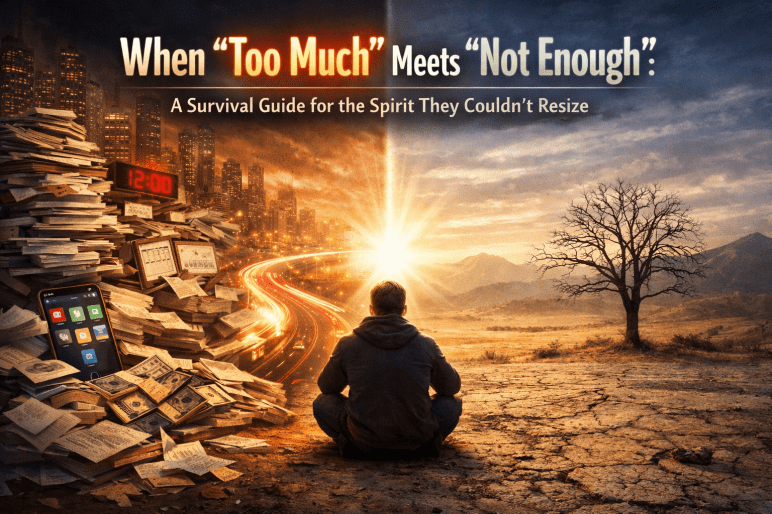
Light the charcoal. Sprinkle the sage. Let the smoke rise like it’s clocking in for its shift. Like it’s ready to escort every dusty opinion, every unsolicited critique, and every generational expectation straight out the front door. The moment somebody decides to inform you that you are either “too much” or “not enough,” that’s when the ritual begins. That’s when you cleanse the room. Clear the energy. And prepare yourself for the comedy of errors that is other people trying to regulate a spirit they did not create. And once that sage hits the air? The truth comes out like it’s been waiting backstage with a mic and a spotlight.
You know that moment when your family, your friends, and the entire Southern social order gather around like a committee of porch‑sitting elders. And they proceed to inform you, very gently, very prayerfully, that you are either too much or not enough? That’s the moment you realize you were never the problem. The problem was the committee.
It always starts with someone holding a casserole like it’s a moral authority. They pull you aside and say, “We’re just worried.” Worried about what? Your volume? Your opinions? Your refusal to shrink yourself into a polite, beige, church‑approved silhouette?
They’ll say, “You’re too loud,” “You’re too emotional,” “You’re too confident,” And “You’re too honest.” And then, without even inhaling, they’ll pivot to, “You’re not grateful enough,” “You’re not humble enough,” “You’re not patient enough,” And “You’re not quiet enough.” Am I a Category 5 hurricane or a lukewarm drizzle? I cannot be both the storm and the drought.
There is nothing like being raised in a culture where people will literally say, “Bless your heart,” while handing you a personality correction like it’s a church bulletin. They want you to be authentic, as long as, your authenticity fits inside their emotional carry‑on bag. They’ll warn you “Tone it down,” “Don’t rock the boat,” “Don’t embarrass the family,” and “Don’t say that out loud.” Meanwhile, the family has been embarrassing you since 1986.
One day, you wake up and realize you are not auditioning for the role of “Acceptable Human #3” in someone else’s life. You stop editing your personality for people who don’t even proofread their own lives. You stop shrinking your joy to fit someone else’s comfort zone. You stop apologizing for existing at full wattage. And suddenly the same people who said you were “too much” start whispering, “She’s changed.” No, you haven’t. You just stopped offering the discounted version of yourself.
People call you “too much” when they’ve built their lives around being less. People call you “not enough” when they want you small enough to manage. People call you “intimidating” when they’re used to being unchallenged. People call you “dramatic” when they’re used to you swallowing your feelings like communion wafers. You are not too much. You are not, not enough. You are exactly the right amount for the life you’re meant to live.
Let’s start by rewriting the script. If they say you’re too loud. Maybe they’re too quiet. If they say you’re too emotional. Maybe they’re emotionally constipated. If they say you’re too confident. Maybe they’re allergic to self‑esteem. And if they say you’re too honest. Maybe they’re used to lies dressed as manners. You are not a problem to be solved. You are a whole person with a whole personality or many. And if that rattles the folding chairs at the family reunion, then let them rattle.
The next time somebody tries to hand you a personality correction like it’s a bulletin from the usher board, just smile. Adjust your crown. And keep walking. Because if being fully yourself shakes their table. Flips their pew. And rattles their casserole. Maybe the problem isn’t your volume. Maybe it’s their weak foundation. Opinions are like buttholes. We all have them. And they all stink. Thanks for reading! And keep letting your light shine no matter what they say.
Affirmation: I honor the fullness of who I am. I expand anyway, shine anyway and take up the space my spirit was built for.
“You can’t heal in the same environment that taught you to hide your wounds. Sometimes the bravest thing you’ll ever do iswalk away from the place that expected you to stay broken.”
-This Puzzled Life
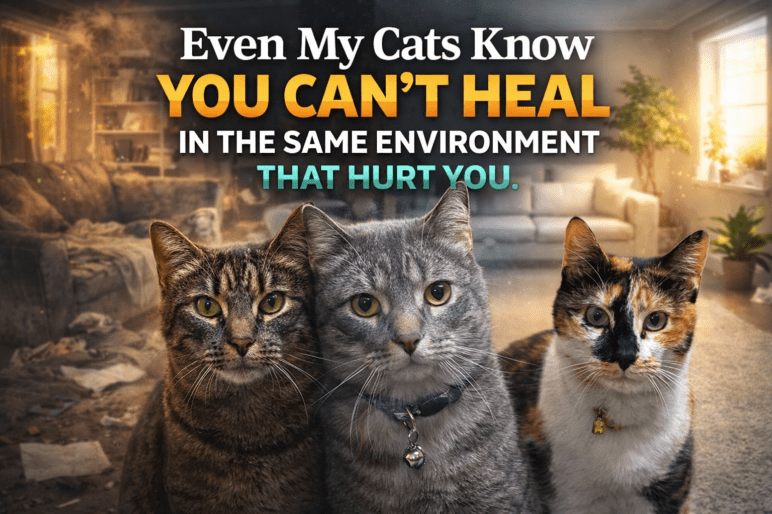
Light the charcoal. Sprinkle the sage. Apparently, healing requires both barbecue energy and spiritual pest control. Welcome back to my household. Where the cats run the HOA. The ancestors run the commentary. And I’m just trying to unlearn 30 years of “bless your heart and keep suffering quietly.” Today’s sermon is titled, “You Cannot Heal in the Same Environment That Hurt You.” And yes, the cats have notes.
You ever try to heal in the same place that taught you to pretend everything was fine? It’s like trying to detox from sugar while sitting inside a Krispy Kreme with the “Hot Now” sign glowing like the gates of temptation. Meanwhile, my Southern upbringing is in the corner whispering, “Well now, you can leave, but don’t you dare make a scene. And take this casserole so folks don’t think you’re ungrateful.”
Healing in the same environment that hurt you is basically a full‑contact sport. You’re dodging old triggers. Outdated expectations. And that one relative who still thinks therapy is “for people who don’t pray hard enough. And still thinks Obama personally raised your rent.” Nothing says emotional clarity like feline commentary.m
Coco (the judgmental one): “Girl, you keep trying to heal in the same room where your trauma sleeps. Move the furniture or move yourself.”
Piper (the chaotic one): “I say we knock everything off the shelves and start fresh. Healing begins with destruction.”
Tinkerbell (the Southern belle of the group): “Bless your heart. Even Jesus left Nazareth.”
And honestly, they’re right. Cats don’t stay in places that stress them out. They relocate with the confidence of a woman who knows she’s too good for this nonsense.
Southern Conservative Truth #1
“If it ain’t working, you don’t fix it. You replace it.” This applies to lawn chairs, husbands, and emotional environments.
Southern Conservative Truth #2
“You can’t grow tomatoes in poisoned soil.” But you can grow generational trauma if you keep watering it.
Southern Conservative Truth #3
“If the dog keeps biting you, stop blaming the dog and fix the fence.” Stop expecting people who hurt you to suddenly develop character.
Southern Conservative Truth #4
“You can’t sit on a broken chair and then get mad when you hit the floor.” If the environment is unstable, your healing will be too.
Southern Conservative Truth #5
“If the chicken’s burnt, the oven ain’t gonna apologize.” Some folks will never take accountability. Move on.
Southern Conservative Truth #6
“You can’t plant hope in a field full of denial and expect a harvest.” Healing requires fertile ground. Not family members who think boundaries are disrespectful.
Southern Conservative Truth #7
“If the swamp keeps producing gators, stop acting surprised when you get bit.” Patterns are patterns, not mysteries.
And of course, the cats had to weigh in again.
Coco: “Humans love staying in toxic places because they’re sentimental. Cats leave because we’re smart.”
Piper: “If the vibes are off, I’m gone. No explanation. No forwarding address.”
Tinkerbell: “A lady does not heal where she was harmed. She relocates with grace and a fresh can of Fancy Feast.”
Here’s the truth they don’t stitch on pillows. You cannot heal in the same environment that taught you to shrink, hush, or swallow your own voice like it was impolite to exist. You cannot bloom in soil that resents your roots. You cannot rise in a room built to keep you small. And you sure as hell cannot become your highest self in a place that only wanted the quiet, obedient version of you.
Healing requires space. Not the kind of space where you shove your feelings into a Tupperware container and label it “Later.” I mean real space. The kind where you can breathe without hearing echoes of who you used to be. Healing requires distance. Healing requires disruption. Healing requires the courage to walk away from the familiar and toward the version of you that refuses to die in the same cage she was born in.
Sometimes that means leaving the room. Sometimes that means leaving the house. Sometimes that means leaving the whole dang ZIP code. And sometimes it means telling your inner Southern critic, “No ma’am, we are not staying here out of politeness.” Healing requires new air, new light, new boundaries, and sometimes, a new porch to sit on while you process your life choices.
Leaving the environment that hurt you isn’t betrayal. It’s survival. It’s reclamation. It’s the moment you decide your healing deserves better than the bare minimum. And if anyone has a problem with it. Just tell them the cats said you’re unavailable for nonsense until further notice. And that’s on healing. Now excuse me while I sage the house like I’m trying to smoke out a demon.
So let them talk. Let them misunderstand you. Let them clutch their church bulletin and call it rebellion. Let them say you’ve changed. Because God knows you have. And thank goodness for that. You are not obligated to stay where your spirit was suffocated. You are not required to keep shrinking to fit the room. You are allowed to outgrow the places that could not love you whole.
And if anyone has a problem with your healing journey, tell them, “I didn’t leave because I was angry. I left because I was finally ready to breathe. And once you taste oxygen, you don’t go back to drowning.” Thanks for reading! And stop shrinking for their comfort.
Affirmation: I honor my healing by choosing spaces that honor me. I release the rooms that dimmed my light. And I rise in environments that celebrate my growth, my boundaries, and my becoming.
“Being an empath means I can feel your energy shift before you even decide to shift it. Don’t act surprised when I respond like I already read the whole plot twist.”
-This Puzzled Life
Light the charcoal. Sprinkle the sage. It’s my way of announcing to the universe, and anybody else listening, that the energy is about to be corrected. Redirected. Or escorted out. It’s not decoration. It’s a declaration. The vibes will behave. Or they will be removed.
Let me go on and say this before somebody gets the wrong idea and starts assigning me spiritual homework that I did not sign up for. Being an empath does not mean I’m a soft‑spoken emotional Roomba gliding around the house sucking up everybody’s mess in silence. No ma’am. No sir. No spirit.
I am an empath with range. I can read your tone, micro‑tone, micro‑aggression, and the ghost of the tone you almost used. And if my intuition taps me on the shoulder and whispers, “They tried you,” I will absolutely raise my voice like a Southern Baptist who just found out somebody parked in her spot at church.
Empath does not mean quiet. Empath means I know exactly why I’m yelling. People love to romanticize empaths like we’re walking mood rings with good credit. But the truth is more complicated. Being an empath is a blessing because you can walk into a room and instantly know who’s lying. Who’s tired. Who’s two seconds from crying. Who’s pretending to be fine. Who’s about to start some mess. Who needs a hug. Who needs a boundary. And who needs to be escorted out by security.
But it’s also a curse. You can’t turn it off. You can’t unfeel what you felt. You can’t unsee the emotional weather patterns swirling around people like spiritual Doppler radar. And sometimes you’re sitting there thinking, “Lord, why did you give me this gift without a mute button?”
Let’s tell the truth that makes people uncomfortable. Some empaths aren’t born. They’re forged. Some of us learned to read a room because we had to. Because survival depended on knowing when the energy shifted.
When someone’s mood changed. When danger was coming. When silence meant safety. And when footsteps meant run. That kind of childhood intuition doesn’t disappear. It grows up with you. It becomes a skill, a shield, a superpower and sometimes a burden you didn’t ask for.
So yes, some empaths are spiritually gifted. And some of us are trauma‑trained emotional detectives with a sixth sense and a therapist on speed dial. Being an empath means you don’t just enter a room. You scan it. You feel the tension in the air before anyone speaks. You clock the fake smile from across the room. You sense the passive‑aggressive energy floating near the snack table. You know who’s genuinely happy to see you. And who’s performing hospitality like it’s community theater. It’s not paranoia. It’s pattern recognition.
And while everyone else is like, “Oh, the vibe seems fine.” You’re standing there like, “No it doesn’t. Somebody in here is lying. And somebody else is about to cry.” Boundaries aren’t optional for empaths. They are survival gear. Without boundaries, an empath will drown in other people’s emotions like they’re swimming in a pool they didn’t even want to get in.
Boundaries are how we protect our peace, our energy, our intuition, our sanity, our inner child, our outer adult, and the version of us that still wants to believe people mean well. People who don’t understand boundaries think they’re rude. People who need your boundaries think they’re personal attacks. But people who love you will understand that boundaries are how you stay alive, present, and emotionally available without burning yourself to ash.
Let me be extremely clear in a way that even the spiritually hard‑of‑hearing can understand. When an empath sets a boundary, it is not a suggestion, a preference, or a cute little decorative fence. It is survival architecture.
Empaths don’t set boundaries casually. We set boundaries because we’ve already scanned the emotional terrain. We’ve already clocked the patterns. We’ve already felt the shift in your tone. And we’ve already sensed the storm clouds gathering behind your smile.
When someone violates a boundary we clearly communicated, it doesn’t feel like a misunderstanding. It feels like a threat. It feels like disrespect. It feels like someone walked into our house. Ignored the “Please remove your shoes” sign. And tracked mud across the ancestral rug. And because empaths are wired to detect danger that is emotional, spiritual, and energetic, boundary violations hit us like alarms going off in a building we didn’t even want to be in.
This is why people get confused when an empath goes from calm to “Oh absolutely not” in 0.3 seconds. They think we’re overreacting. But what they don’t understand is we saw the intention. We felt the entitlement. We recognized the pattern. And we sensed the disrespect before it fully formed.
By the time we raise our voice, the situation has already been analyzed. Processed. And spiritually notarized. Empaths don’t explode out of nowhere. We respond to the data. Violating a boundary is the emotional equivalent of someone looking us dead in the eye and saying, “I don’t respect your peace, your intuition, or your humanity.” At that point, the empath is not being dramatic. The empath is being accurate.
When I say I’m an empath, people assume I’m out here collecting gold stars from the universe. And waiting for someone to pat me on the head and say, “Good job for feeling things deeply. Absolutely not. I don’t need outside validation because I validate myself loudly, confidently, and with the full support of my intuition, my ancestors, and my own emotional PhD.
I spent too many years being trained to read every room, every tone, every shift in energy just to survive. So, trust me when I say, I know what I feel. I know why I feel it. And I don’t need a committee meeting to confirm it. My inner knowing is the authority. My boundaries are the policy. And my self‑validation is the final stamp of approval. Anyone else’s opinion is optional, decorative, and often late to the truth I already knew.
The next time somebody hears “empath” and assumes I’m a gentle emotional cloud floating through life, let me correct the record. I’m not floating. I’m detecting. I’m reading the room, the subtext, the spiritual Wi‑Fi, and the emotional weather report. And if the forecast says, “disrespect with a 70% chance of foolishness,” trust and believe I will bring the thunder. Empathy doesn’t make me silent. And sometimes accuracy requires volume. Thanks for reading! And go with your gut. Because it’s the most accurate feeling that you can feel.
Affirmation: I honor my intuition. Protect my peace. And raise my voice only when spiritually necessary. Which, unfortunately for some folks, is more often than they’d prefer.
“Shame was never my reflection. It was the shadow of someone else’s fear cast across my life.”
-This Puzzled Life
Light the charcoal. Sprinkle the sage. Let the smoke rise like a soft warning. A trembling invitation. And a doorway cracked open just wide enough for the truth to step through without flinching. Let it drift through the room the way shame once drifted through our childhood homes as quiet and unspoken. But heavy enough to shape the way we learned to breathe.
This isn’t about performance. It isn’t about survival. It’s about naming the thing that has lived in your bones longer than some people have lived in their houses. I’m not writing from a place of humor or distance. I’m writing from the wound. From the memory. From the soil that raised me. And the silence that tried to claim me.
Shame is not born in us. It is handed to us. Pressed into our palms by people who were supposed to know better. People who were supposed to love better. People who were supposed to see us as whole. And in the Deep South, shame is practically a family heirloom.
Down here, some conservative communities have perfected shame into an art form as quiet, polished, and Sunday‑morning approved. They wield it like a switch they no longer have to swing. Because the words do the bruising for them. They don’t have to raise their voices. They just raise an eyebrow. They don’t have to say you’re wrong. They just say they’re “praying for you.” They don’t have to tell you to hide. They just make sure you know what happens to people who don’t.
Shame becomes the air you breathe before you even know what air is. It teaches you to fold yourself small. To tuck away the parts of you that don’t fit the script. To apologize for the way your heart beats. The way your voice trembles. And the way your truth refuses to die quietly. The worst part is how deeply it roots itself. And how it convinces you that you are the problem. Not the rules. Not the silence. Not the fear disguised as righteousness.
Some Southern conservative spaces are experts at this. They turn difference into danger. They turn authenticity into rebellion. They turn survival into sin. They shame you for who you are. And then shame you again for hurting because of it.
But here’s the truth shame never wants you to learn. You were never the one who failed. You were the one who endured. Shame is not your inheritance. It is not your identity. It is not your burden to carry one more mile. The moment you name what was done to you. The moment you say, “This wasn’t love. This was control.” The spell breaks. The weight shifts. The air clears. And you begin to see yourself without the fog of someone else’s fear. You begin to hear your own voice again. You begin to rise. And rising is the one thing shame cannot survive.
Shame is universal. It’s a part of every culture and every nation. And every community has its own way of teaching people to hide the parts of themselves that don’t fit the script. Shame is a global language. It is spoken in different dialects. It is enforced through different rituals. And it is carried in different bodies.
But the version I know. The one that shaped my bones and rewired my voice was born in the conservative Deep South. That’s the lens I speak from. That’s the air I learned to breathe. That’s the terrain where shame wasn’t just a feeling. It was a system.
Some conservative Southern communities wield shame like a tool of order. A way to keep people in line. A way to maintain the illusion of perfection even when the truth is rotting beneath the floorboards. They don’t have to say, “you’re wrong.” They just say, “we don’t talk about that.” They don’t have to say, “you’re unworthy.” They just say, “think of what people will think.” They don’t have to say, “you don’t belong.” They just make sure you feel it.
Shame becomes the soundtrack of your childhood. The shadow in every room. The reason you learn to fold yourself into shapes that hurt to hold. When you grow up queer, outspoken, different, or simply unwilling to disappear, the shame becomes sharper. More pointed. And more personal.
You were not the problem. You were the disruption. You were the truth they didn’t know how to hold. Shame thrives in silence. But it cannot survive being named. The moment you say, “This harmed me,” the spell breaks. The moment you say, “This wasn’t love,” the weight shifts. The moment you say, “I deserved better,” the ground beneath you changes shape.
You begin to see yourself without the fog of their expectations. You begin to hear your own voice without the echo of their judgment. You begin to rise in ways they never prepared for. And rising is the one thing shame cannot withstand.
Let every culture keep the shame it created. Let the South hold the weight of the shame it taught me to carry. I am done dragging their silence behind me. I am done mistaking their fear for my fault. I am done shrinking to make their world more comfortable. I speak now. I rise now. I reclaim every part of me they tried to bury.
And the sound of that truth is unapologetic. Unbroken. And is the loudest thing I’ve ever survived. You were never meant to carry it. Set it down. Walk forward. And let the sound of your unbroken truth shake the whole damn South. Thanks for reading! And put that shame down.
Affirmation: I release every ounce of shame that was handed to me. My truth rises. My voice steadies. And I walk forward unburdened and whole.