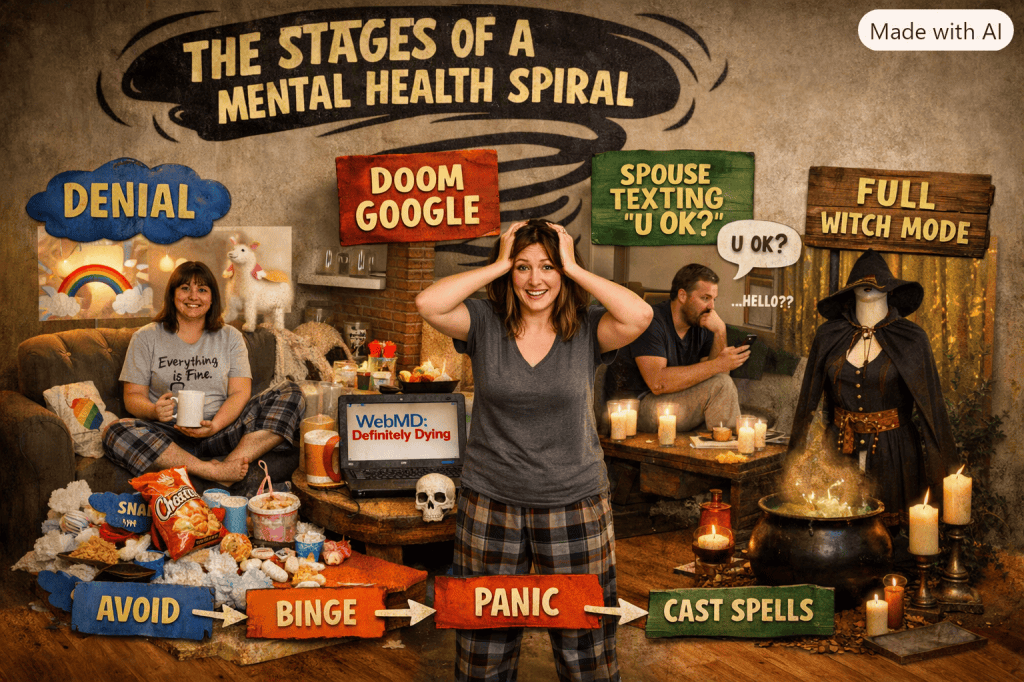


Trauma Awareness Month: The Stories We Carry, The Healing We Claim

“Trauma doesn’t make you weak. It makes you a witness to your own survival.”

-This Puzzled Life

Light the charcoal. Sprinkle the sage. Let the smoke rise like it’s clocking in for a shift. And let the air shift like it’s bracing itself for whatever truth you’re about to drag into the daylight. Today isn’t about pretending everything’s fine or slapping a smile on top of a wound. It’s not about the vibes, snacks, or cats doing interpretive dance in the sunbeam. It’s about trauma awareness. It is about naming the things we survived. The things we carried alone. The things we laughed through so we wouldn’t crumble. It’s a Southern‑fried, emotionally honest, and funny enough to keep you from dissolving into a puddle on the kitchen floor. 

Trauma Awareness is the kind that hides in your shoulders, jaw, breath, memories, and your jokes. And if we’re going to talk about it, we’re going to do it the only way I know how. Complete with honesty, humor, and the kind of emotional courage that feels like taking your bra off after a long day. It’s painful, relieving, and absolutely necessary.

There’s a moment right before you talk about trauma where your whole spirit goes, “Are we sure we want to do this?” It’s the same tone you use when someone says, “Let’s just run into Walmart real quick.” You know it’s not going to be quick. You know you’re going to see something you can’t unsee. You know you’re going to come out changed. Talking about trauma is like that. Except instead of a man in pajama pants buying raw chicken and fireworks, it’s your nervous system holding up a sign that says, “We’ve been through some things, ma’am.”

Trauma doesn’t just show up when you’re ready. Trauma is that one cousin who arrives early. Eats all the good snacks. And then says, “Why you look stressed?” It pops up at the worst times especially when you’re trying to relax. When you’re trying to sleep. When you’re trying to enjoy a sandwich. When you’re trying to mind your business. And when you’re trying to be a functioning adult for five minutes. Trauma will tap you on the shoulder like, “Hey bestie, remember that thing from 1998? No? Well, I do.” And suddenly you’re staring at the wall like it owes you money.

Your body remembers everything. Even the stuff you tried to bury under humor, iced coffee, and pretending you’re fine. You’ll be walking through Wal-Mart. Touching a throw pillow. And your body will whisper, “Hey, remember that time?” And you’re like, “No I do not. I am touching a pillow. Let me live.” But trauma doesn’t care. Trauma is like a Southern grandmother with a memory like a steel trap. And no sense of timing.

People talk about healing like it’s a spa day. Let me tell you something. Healing is not cucumber water and a robe. Healing is crying in the shower because your shampoo smells like 2007. Healing is realizing you’ve been clenching your jaw since the Bush administration. Healing is sitting in your car after therapy like you just got hit by an emotional freight train. Healing is messy. Healing is loud. Healing is quiet. Healing is confusing. Healing is holy. Healing is exhausting. Healing is worth it. But cute? Absolutely not.

So, buckle up. Because the cats have decided it’s Trauma Awareness Hour. And apparently they’ve all been waiting their whole lives to trauma dump with the enthusiasm of a group therapy circle run by toddlers. And today is the day they ask deeply personal questions with the emotional sensitivity of a toddler holding a chainsaw. They have formed a circle. They have snacks. They have opinions. And apparently, they have questions about my trauma.

Me: “Okay, girls. Today we’re talking about trauma. Share whatever you feel comfortable with.”

She raises paw like she’s in kindergarten

Piper: “I’ll go first because my story is the most dramatic. Obviously.”

Coco: “Oh lord.”

Tinkerbell: “Let the child speak. She needs this.”

Piper: “So picture this. Me and my siblings. In a metal box. In the Mississippi heat, basically sautéing like tiny furry cornbread muffins.”

Me: “Baby, that’s awful.”

Piper: “I know. I was basically a rotisserie chicken with trauma.”

Coco: “You were a sweaty raisin with opinions.”

Piper: “Anyway, I survived because I’m dramatic and stubborn. And now every time the sunbeam hits me wrong, I flop over like a Victorian woman fainting at a garden party.”

Tinkerbell: “You faint because you forget to breathe when you get excited.”

Piper: “Trauma. Tinkerbell. Let me have this.”

Coco clears throat like she’s about to deliver a TED Talk

Coco: “My siblings and I were found under a house. A house. Do you know what lives under houses? Darkness. Ghosts. Tax evasion. I was basically a feral raccoon with trust issues.”

Me: “You’ve come so far.”

Coco: “Yes. And now I cope by judging everyone. It’s called growth.”

Piper: “You judge me the most.”

Coco: “You give me the most material.”

Tinkerbell: “I don’t remember my trauma.”

Me: “At all?”

Tinkerbell: “No. I simply chose not to be present. I was spiritually unavailable.”

Coco: “You had worms.”

Tinkerbell: “Yes, apparently my intestines were hosting a music festival.”

Piper: “You pooped like you were trying to summon something.”

Tinkerbell: “I was summoning peace. And a vet. Preferably both.”

Me: “You really don’t remember anything?”

Tinkerbell: “I remember diarrhea. And then I remember you. Everything else is optional.”

Me: “Well, we’ve all been through some things.”

Piper: “Yeah, but now we’re together! A family! With two crazy brothers who scream at dust!”

Coco: “We are a support group. A dysfunctional one, but still.”

Tinkerbell: “We heal one memory at a time. Preferably with snacks.”

Piper: “And naps!”

Coco: “And boundaries. Mostly for Piper.”

Piper: “I don’t believe in boundaries.”

Tinkerbell: “We know.”

Piper: “Sometimes I get scared when it’s hot outside. So, I cope by yelling at the sun.”

Coco: “I cope by staring at people until they feel bad.”

Tinkerbell: “I cope by leaving my body spiritually whenever something stressful happens. Like when the vacuum turns on. Or when Piper breathes too loud.”

Piper: “I have big emotions.”

Coco: “You have no volume control.”

Tinkerbell: “You have the energy of a toddler who drank a Red Bull.”

Piper: “Momma, what is your trauma about?”

Me: “Oh absolutely not. We are not opening that can of worms. We’ll be here until this time next year. And I don’t have enough snacks or emotional stamina.”

Coco: “Is that why you have panic attacks in Walmart?”

Me: “Yes.”

Tinkerbell: “But what’s scary about going to the pharmacy?”

Me: “Everything.”

Piper: “Everything?? Like the shelves? The people? The lighting?”

Me: “Yes.”

Coco: “The lighting is aggressive.”

Tinkerbell: “The vibes are hostile.”

Piper: “The blood pressure machine is a demon.”

Me: “Exactly.”

Coco: “So what did our therapist tell you?”

Me: “She said, ‘I’ll see you in another couple of days.’”

Tinkerbell: “Translation: ‘You’re a lot. But I believe in you.’”

Piper: “Translation: ‘You have so many issues we need a punch card.’”

Coco: “Translation: ‘You’re keeping the lights on in that office.’”

Me: “But look at us now. We’re safe. We’re loved. We’re healing together.”

Piper: “And we have snacks!”

Coco: “And stability.”

Tinkerbell: “And indoor plumbing.”

Me: “We survived things we never should’ve had to survive. And now we get to build something soft and silly and sacred together.”

All Three Cats: “Group hug!”

Coco: “But don’t touch me too long.”

Piper: “I’m crying!”

Tinkerbell: “I’m dissociating!”

Me: “Perfect. Exactly the emotional range I expected.”

In small Southern towns, admitting trauma is treated like a social crime. The moment you name what happened, you’re not just telling your story. You’re “disgracing the family,” “embarrassing the community,” and threatening the carefully polished illusion of stability that everyone works so hard to maintain. The culture teaches people to swallow their pain. Protect the reputation of the town at all costs. And never, under any circumstances, call out the people who caused the harm. And because the “good ole boy” network is alive and well. And sitting in every position of authority from the courthouse to the church pews, the truth gets buried right alongside the accountability. Even when the perpetrators are known. Especially when they’re known. Nothing is done. The silence is enforced. The victims are shamed. And the town keeps smiling for the church directory photo like nothing ever happened. But the truth doesn’t disappear just because the town refuses to look at it. It lingers in the air, the families, the generations, waiting for someone brave enough to break the cycle and say, “This happened. And it mattered.” And I am that one in my family who refuses to stay quiet about the trauma that happened in the small city of Petal, MS.

Trauma will have you doing things that make absolutely no sense. Things like apologizing to furniture when you bump into it. Jumping at sounds that aren’t even loud. Overthinking texts like you’re decoding ancient scripture. Saying “I’m fine” in a tone that suggests you are, in fact, not fine. And crying because someone said, “I’m proud of you.” And your body wasn’t prepared for that level of kindness. Trauma will also make you emotionally attached to random objects. A mug. A blanket. A rock you found on a walk. A pen that writes really smooth. Your brain will be like, “This is my emotional support spoon. Touch it and perish.”

Trauma awareness isn’t about reliving the pain. It’s about naming it, so it stops owning you. It’s about understanding why you react the way you do. It’s about giving yourself grace for surviving things you never should’ve had to survive. It’s about learning that your triggers aren’t flaws. They’re evidence that you lived through something real. And it’s about knowing you’re not broken.

You’re healing. You’re growing. You’re learning how to breathe again. You’re learning how to trust softness again. You’re learning how to exist without bracing for impact. That’s not weakness. That’s strength with stretch marks.

May your healing be gentle. May your memories lose their sharp edges. May your nervous system unclench one muscle at a time. May your heart learn safety. May your voice return to you. May your laughter come back louder. May your story be yours again. And not something that happened to you. But something you rose from.

So, if no one told you today. You’re not dramatic. You’re not broken. And you’re not “too much.” You’re a whole human who lived through storms that would’ve snapped lesser souls in half. And you’re still here healing. Laughing. Unlearning, Softening. Reclaiming. That’s not survival. That’s resurrection. And baby, if that isn’t holy, I don’t know what is. Drop the sage. Keep the truth. And walk away knowing this. Your story didn’t end in the dark. You did.

Affirmation:  I honor the parts of me that survived. I honor the parts of me that are still healing. I am allowed to grow, to rest, to feel, and to reclaim my peace. And I can do it one breath at a time.

***Don’t forget to watch the video!***

#ThisPuzzledLife

To the Mothers Who Raised My Soul: A Southern Testimony for Mother’s Day

“Some mothers grow you, some guide you, and some resurrect the parts of you that never had a chance to live.”

-This Puzzled Life

 Light the charcoal. We’re about to cook up a truth that’ll smoke out every memory, ache, and blessing you’ve ever collected from the women who raised you. Whether they meant to or not.

Some mothers come into your life the traditional way. The diaper‑changing. Bottle‑warming. “Lord‑give‑me-strength” kind of mothers. The ones who knew your baby smell before you knew your own name. They wiped your tears, your nose, and occasionally your entire behind with the same rag. Because that’s just what survival looked like on a Tuesday.

Then there are the distant maternal figures. The ones who hover like porch‑light moths. They don’t tuck you in. But they keep an eye out. They’re the women who say things like, “You doing alright?” In a tone that somehow feels like a weighted blanket. They don’t step in. They don’t step away either. They’re the quiet guardians of your emotional perimeter.

And then. There are the rare ones. The naturally maternal souls who walk through this world radiating comfort like a heated church pew in July. They don’t have to try. They don’t have to earn it. They just are. These are the Yoda Mothers. The mystical, wise, soft‑spoken warriors who teach you the life lessons you somehow missed while you were busy surviving your childhood. They’re the ones who accept you for who you are instead of who you were supposed to be. The ones who don’t flinch at your chaos. The ones who don’t shrink from your truth. The ones who make you feel safe just by existing in the same room. Breathing the same air. Humming the same off‑key hymn.

And maybe that’s the wildest part of all this. How motherhood isn’t a single recipe. But a whole damn potluck. Some women bring casseroles of comfort. Some bring boundaries disguised as burnt cornbread. Some bring wisdom so sharp it slices you clean open. Women bring nothing but their presence. And somehow that’s enough to keep you breathing.

The truth is that the mothers who change your diapers and warm your bottles give you a beginning. The distant maternal figures give you perspective. But the Yoda Mothers. The soul‑raising. Spirit lifting, “sit down, let me tell you something real” women. They give you a home you didn’t even know you were missing. 

These women are diamonds. Not the kind you find in a jewelry case. But the kind the universe hides until the stars finally align and God says, “Alright, you’ve struggled long enough. Here’s someone who won’t break you.” 

They’re the ones who look at your mess and don’t flinch. The ones who hear your truth and don’t run. The ones who see the parts of you that were never nurtured. Never named. Never held. And they hold them anyway. They don’t mother you out of obligation. They mother you out of instinct. They mother you because something in their spirit recognizes something in yours and says, “Oh. There you are. Come sit by me.”

And when life pulls them away. When distance stretches thin or Heaven gets greedy. The absence hits like a spiritual amputation. Parts of you go quiet. Parts of you go cold. Parts of you start to decay in ways you don’t talk about out loud. Because losing a mother‑figure like that isn’t just grief. It’s losing the one person who made you feel like your soul had a place to land.

But here’s the miracle. Their love doesn’t leave. Their lessons don’t fade. Their fingerprints stay pressed into your spirit like God Himself signed off on your survival. Here’s to every kind of mother. The ones who birthed you. The ones who raised you. The ones who found you. And the ones who resurrected you without ever asking for credit.

So, here’s to the diaper changers. The distant watchers. The accidental Yodas. And the soul‑raising diamonds Heaven hand‑delivers when you need them most. If you’ve ever been loved by a mother like that, in blood or in spirit, then you already know. Some women don’t just mother you. They resurrect you.

 Here’s to the women who became safe harbor in a world full of storms. The ones who could calm your whole nervous system just by walking into the room. Here’s to the diamonds Heaven hides until you’re finally ready to be loved right. The ones who show up exactly when your spirit is starving for gentleness, truth, and a place to land.

 Here’s to the mothers who didn’t just show up. They transformed you. They stitched you back together with wisdom you didn’t know you were missing. They held the parts of you that were never held. They loved the parts of you that were never loved. They saw the parts of you that were never seen.

 And if you’ve ever been blessed enough to be mothered by a woman like that, then you already know the truth carved into your bones. Some mothers don’t just shape your life. They save your soul. And that’s a legacy no absence, no distance, no silence, and no grief can ever erase. Thanks for reading! And Happy Mother’s Day!

Affirmation: I honor every woman who mothered me in ways my spirit needed. I am worthy of the love, safety, and acceptance they poured into me. And I carry their wisdom like a lantern lighting every step forward.

***Don’t forget to watch the video!***

#ThisPuzzledLife
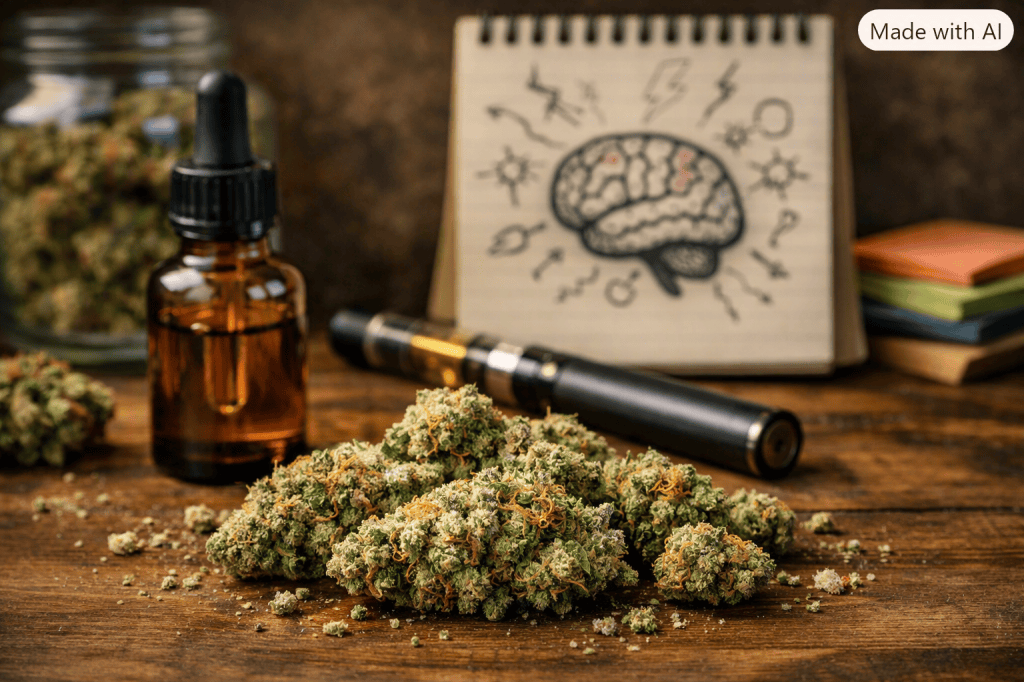
Dual Diagnosis Awareness: The Emotional Block Party Happening in My Frontal Lobe

“My healing isn’t linear. It’s a Southern backroad with potholes, detours, and at least one possum giving me side‑eye. But I’m still driving.”

-This Puzzled Life

Light the charcoal. Sprinkle the sage. Today we’re not just cleansing the room. We’re cleansing the entire diagnostic chart that tried to play me like a two‑for‑one special at the Discount Trauma Mart. We’re also cleansing the medical chart, the family gossip line, and the entire Southern belief system that still thinks “nerves” is a diagnosis. And “just pray on it” is a treatment plan.

Dual diagnosis is that special Southern casserole of “mental health condition” baked together with “substance use disorder.” And it’s served piping hot with a side of unsolicited advice from people who haven’t been to therapy since Clinton was in office. It’s the moment life says, “Surprise! You’re not just juggling one thing. You’re juggling two flaming batons while the universe yells, ‘Smile, sweetheart!’”

Dual diagnosis is like waking up every day in a body that’s running both a Windows 95 operating system and a bootleg Sims expansion pack that keeps crashing. It’s trying to heal your brain while your brain is actively filing HR complaints against itself. It’s the emotional equivalent of trying to fix the roof while the house is still on fire. And the HOA is sending you letters about your grass height.

And it’s that moment when life looks at you and says, “Oh, you thought you were dealing with one thing? Hold my sweet tea.” It’s the psychiatric equivalent of a potluck where anxiety brings a casserole. Depression brings a Bundt cake. And addiction shows up empty-handed but somehow leaves with all the Tupperware.

And the world? The world acts like you’re being dramatic. And the wild part? People act like you’re being dramatic. “Have you tried drinking more water?” Ma’am, I have two diagnoses doing synchronized swimming in my amygdala. Hydration is not the plot twist that’s going to fix this. “Have you tried yoga?” Ma’am, I have two diagnoses doing the electric slide in my frontal lobe. Yoga is not going to stop this internal block party. 

Beneath the jokes, dual diagnosis is real, heavy, and often misunderstood. People think it’s chaos. But it’s actually survival. It’s resilience. It’s learning to hold two truths at once like “I’m struggling and I’m still here.” It’s learning to treat yourself with compassion even when your brain is acting like a committee meeting where everyone is yelling and nobody brought notes. It’s learning to say, “I deserve care.” “I deserve treatment.” “I deserve to be taken seriously.” And most importantly, “I am not a punchline. I’m the whole damn story.”

Down here in the Deep South, dual diagnosis gets wrapped in a layer of cultural seasoning nobody asked for. Aunt Linda whispers like you’re contagious. Cousin Ray offers you a beer because “you look stressed.” And the church ladies add you to the prayer list without asking. Right under “traveling mercies” and “unspoken.” Meanwhile, you’re just trying to survive the day without your brain throwing a surprise block party.

Dual diagnosis in the South also means navigating stigma with the grace of a cat on a freshly mopped floor. You’re trying to get help. Half the town thinks therapy is witchcraft. And the other half thinks medication is a moral failing. Meanwhile, you’re over here doing the emotional equivalent of rebuilding a transmission with a butter knife and a YouTube tutorial.

Dual diagnosis awareness is about reclaiming your narrative from the people who oversimplify it. Misunderstand it. Or try to shame you for it. It’s about saying, “Yes, I’m dealing with two things at once. And I’m still out here living. Healing. And occasionally thriving like the chaotic miracle I am.” And yet, here we are. Still showing up. Still healing. Still lighting the charcoal and sprinkling the sage like we’re about to summon the ancestors and the insurance company.

Dual diagnosis doesn’t make you broken. It makes you bilingual in battles most people will never understand. And if anyone tries to minimize your experience? Tell them this, “Baby, I’m not dealing with too much. You’re just underestimating my capacity.” Thanks for reading! And keep searching for answers.

Affirmation: I honor every part of my journey. The messy, the miraculous, and the medically complicated. All of it proves I’m stronger than the storms I’ve survived.

***Don’t forget to watch the video!***

#ThisPuzzledLife
The Bitchuation Room: The Unhinged Adventures of Inpatient Life

“Psych units may be chaotic. But at least my bitching is organized.”

-This Puzzled Life

Light the charcoal. Sprinkle the sage. Somebody hand me a fan because the level of petty I’m about to describe requires ventilation. Psych units don’t just have pettiness. They cultivate it like a community garden complete with tomatoes, basil, and grudges. And if I’m going to talk about it, I need every ancestor, archangel, and neighborhood stray cat on standby.

These places run on a spiritual cocktail of fluorescent lighting, lukewarm coffee, and the kind of petty that could power a small city. The spirits already know what time it is. We’re about to enter the only place on Earth where adults will fight over a graham cracker, a blanket, and who gets to sit closest to the fake plant in group therapy. Especially the kind that shows up wearing non‑slip socks and asking if you’ve “completed your feelings journal for the morning.” Buckle up. We are about to revisit the life of the unhinged.

Let me tell you something right now. Nobody does pettiness like a psych unit. Not your auntie at Thanksgiving. Not your ex who still watches your Instagram stories from a burner account. Not even the Southern church ladies who can bless your heart into a coma. Psych units are the Olympics of Petty. Gold medal level. International competition. And sponsored by “Clipboards & Consequences™.

And the wildest part? The staff and the patients are in a silent, unspoken petty war at all times. It’s like a nature documentary narrated by Morgan Freeman: “Here we observe the patient refusing to participate in group therapy because the therapist said, ‘good morning’ with the wrong tone.”

Breakfast on a psych unit is not a meal. It’s a spiritual exam. You ask for two sugars? They give you one. You ask for a spoon? They hand you a spork like you’re being punished for past lives. You ask what the eggs are made of? They say, “Don’t worry about it,” which is exactly when you start worrying about it. 

And the patients? Oh, we’re petty right back. Someone refuses their meds because the nurse said their name wrong by half a syllable. Someone else declares a hunger strike because they didn’t get the “good blanket.” Which is the one that feels like it’s been washed fewer than 400 times.

Psych unit bed assignments are the closest thing we have to Old Testament conflict. Two grown adults will absolutely fight over who gets the bed closest to the window like it’s beachfront property. Someone gets moved rooms and immediately acts like they’ve been exiled from the kingdom. They say, “I’m not unpacking. I’m staging a protest.”

Group therapy is where the petty becomes performance art. Someone refuses to share because “the energy is off.” Someone else overshares because they know it makes the therapist uncomfortable. Someone proudly announces, “I’m only here for the snacks” and means it. And the group leader? Smiling sweetly while spiritually flipping everyone off.

If you’ve never seen adults negotiate shower times like they’re drafting a ceasefire agreement, you haven’t lived. People will take 47‑minute showers out of spite. “Forget” their towel so they can walk dramatically down the hall. Complain someone used “their” shampoo even though it’s the hospital’s and smells like citrus‑flavored despair.

And then you discover the shower has no curtain. Not a flap. Not a panel. Not even a nostalgic bead string from the 70s. You step into that shower like you’re entering a baptism you did not sign up for. The water pressure is either a gentle mist that feels like someone exhaling on you. Or a fire‑hose blast that could strip paint off a Buick. Meanwhile, staff strolls by doing “wellness checks” like, “just making sure you’re safe!” Ma’am, I am safe. Emotionally? No. Physically? Barely. Spiritually? Absolutely not.

Mindfulness group on a psych unit is its own brand of comedy. The therapist dims the lights (as much as fluorescent bulbs allow), puts on royalty‑free pan flute music, and says, “Imagine you’re on a peaceful beach.” Ma’am, I am sitting in a plastic chair that squeaks every time I breathe. Then it’s, “Picture a calm, soothing waterfall.” Meanwhile someone is snoring. Someone is whisper‑arguing with their spirit guides. Someone is chewing graham crackers like they’re in a survival documentary. And you’re trying to “visualize tranquility” while holding a safety crayon shaped like a melted candle. 

They are not crayons. These are wax‑based emotional support devices. Thick. Stubby. Unbreakable. Unsharpenable. Every letter looks like it was drawn by a raccoon wearing oven mitts. But when a Code gets called? Those colors become binoculars. Everyone leans forward clutching their little wax chunk like, “Pass me the purple one. It’s the good one.”

Psych units have one universal truth. A doctor must be called for absolutely everything. You sneeze too enthusiastically? “Hi, yes, doctor? She sneezed with intention.” Want a Tylenol? Doctor. Want a different blanket? Doctor. Want to sit in a different chair because the one you’re in feels spiritually cursed? Doctor. It’s like a fluorescent DMV where every request requires a supervisor who is mysteriously never on the floor.

And then there are the medications. Raise one eyebrow too high? “Let me page the doctor.” Ask why the eggs taste like regret? “Let me page the doctor.” Have an attitude after being woken up at 5 a.m. for vitals you did not ask for? Suddenly they’re offering you something “to help you relax.” Which is psych‑unit code for, “This will knock you into next Tuesday.” These meds are so strong they could end a world war. You wake up unsure of your name, the date, or why your socks don’t match.

Some staff walk around like they’re the TSA of mental health. And they’re ready to confiscate your emotional liquids. Some give you the “I’m tired of all y’all” look before you’ve even spoken. Some have mastered the therapeutic smile. The one that says, “I care deeply.” But their eyes say, “I clock out in 12 minutes and I’m not starting anything new.” And the tech who acts like your request for a second blanket is a personal attack on their lineage? Iconic.

There comes a moment when staff decides you’re “a little too spicy for the general population.” And suddenly you’re being escorted to the Psychiatric Intensive Care Unit known as the PICU. The PICU is not a unit. It is an ecosystem. A habitat. And a fully unhinged micro‑climate where time is fake. Socks are currency. And the air vibrates with the energy of people who have absolutely had enough.

The lighting is harsher. The chairs are bolted down with enthusiasm. And the staff has that look like they’ve seen things they can’t legally discuss. This is where someone argues with a wall. Someone else declares themselves the mayor. A graham cracker becomes a weapon of emotional warfare. And the “call the doctor” rule becomes a religion. You start to wonder if the doctor is a real person or a mythological creature who appears only during full moons and paperwork audits.

There is a very specific sound a psych unit makes right before a Code gets called. It’s too quiet. Like the ancestors are holding their breath. Then, a chair scoots too hard. A voice gets too spicy. A slipper hits the floor with conviction. And the staff looks up like meerkats who heard a twig snap. Someone yells “CODE!” with the enthusiasm of a Walmart employee announcing Black Friday. And the whole unit transforms into live‑action chaos. Patients settle in like it’s cable TV. And it’s like, “Oh lord, they done called a Code. Lemme get comfortable.” Staff sprints like Olympians. Clipboards fly. Walkie‑talkies crackle. And the therapist breathes deeply like they’re manifesting a different career.

And when it’s over? Everyone goes right back to coloring like it was a commercial break. Psych units are messy, miraculous, chaotic, exhausting, and sometimes deeply funny in ways only people who’ve been there understand. The pettiness isn’t cruelty. It’s survival. It’s humanity. It’s the tiny rebellions that remind you you’re still a person. Even when life has knocked you sideways. 

Connect and Refocus assignments are the psych‑unit equivalent of being told to stand up in front of the congregation and confess your sins with a microphone that echoes. They hand you a worksheet with questions about your troubling behavior. And by the time you’re done it’s the thickness of a dissertation. The therapist says, “Just outline your maladaptive coping skills and therapy interfering behaviors.” Just? As if you’re not about to write a full academic paper on why you shut down emotionally. Overthink everything. And threaten to fight the vital signs machine at 5 a.m. And the worst part? You don’t just fill it out. You have to read it aloud in group like you’re defending your thesis before God, the ancestors, and a room full of people who just met you yesterday. You’re sitting there clutching your safety crayon while trying to sound insightful. And everyone else nods like they’re on the judging panel of America’s Next Top Trauma Survivor. It’s humbling. It’s horrifying. It’s hilarious. And somehow, it’s exactly the kind of chaos that makes psych unit bonding feel like summer camp for emotionally exhausted adults.

But there is no gamble on Earth quite like the moment they tell you, “You’ll be sharing a room.” That’s not an assignment. That’s a lottery. That’s a spiritual test. That’s a cosmic wheel‑spin hosted by the universe itself. On a psych unit, your roommate can be literally anything. The possibilities are endless. Unhinged. And hilarious in a way only people who’ve lived it understand.

Here is a few of the different types of roommates you could be paired up with.

1. The roommate that sleeps 12 hours a day but somehow still manages to terrify you. They snore like a diesel engine. They sit up suddenly at 3 a.m. like they’re receiving messages from the ancestors. They whisper things like, “Did you hear that?” No, I did NOT hear that. And I would like to keep it that way.

2. This roommate provides live commentary on everything you do. You stand up? “Where you going?” You sit down? “You tired?” You breathe? “You okay?” I am trying to exist. Please let me exist in silence.

3. This roommate has been in the unit for 48 hours and has already achieved spiritual awakening. They speak in riddles. They meditate loudly. They give unsolicited advice like, “You must release the ego. Also, can I have your pudding?”

4. This one will eat every single snack you have. Even the ones you hid in your pillowcase. They will deny it with confidence. They will gaslight you about your own graham crackers. They will ask for juice while drinking the juice they stole from you.

5. This roommate is entertainment. Pure entertainment. They talk to themselves, the walls, the staff, the ancestors, and occasionally the ceiling tiles. They narrate their dreams. They reenact scenes from movies that don’t exist. You don’t even need cable. You have them.

6. This roommate showers at 2 a.m. With no curtain. With the water pressure set to “pressure wash a tractor.” They come out wrapped in a towel the size of a napkin and say, “Your turn.”

7. This roommate is quiet. Too quiet. You don’t know if they like you. Hate you. Or don’t know you exist. They stare at the wall for long stretches of time. They fold their socks with military precision. They whisper to their juice cup. You respect them deeply.

8. This roommate minds their business. Sleeps in weird positions. Hisses when staff wakes them up. Eats only the snacks they like. And will absolutely sit on your bed like it’s theirs.

Psych‑unit roommates are a whole spiritual curriculum. A syllabus written by the universe. A randomized character generator with no patch notes or warning labels. And I’ve had every single type walk through that door and claim the other half of my room like they were entering a reality show.

Some were chaotic. Some were confusing. Some were plot twists. And a precious few? They became family in the kind of way only shared trauma, cold cereal, and shared “Did you hear that?” moments can create. You don’t choose your psych‑unit roommates. But sometimes the universe chooses them for you.

I’ve had the ones who snored like freight trains. I’ve had the ones who narrated my every move. And the ones who didn’t speak for three days. But somehow communicated entire novels with their eyebrows. I’ve had the ones who showered at 2 a.m. with the water pressure set to “remove barnacles.” And the ones who treated the room like a spiritual dojo. Then there were the ones who were just there. Quiet. Odd. Mysterious. Every roommate was a new chapter in the saga. Every roommate was a new lesson in patience, comedy, and survival. Every roommate was a new story I absolutely should not laugh at but absolutely do.

But out of all the chaos, characters, and all the “Lord, give me strength” moments, there are a couple of roommates who became real friends. The kind you still talk to. Still laugh with. Still send memes to about your shared psych‑unit nonsense. These are the ones who laughed with me at 3 a.m. when the unit sounded like a haunted Walmart. Shared snacks like we were in a bunker. Understood the unspoken language of “I’m fine but also not fine but also fine.” Survived Codes, guided imagery, and curtain‑less showers right alongside me. And turned the worst moments into inside jokes that still make us wheeze.We walked through the same chaos and came out with matching emotional scars and petty humor.

I wouldn’t trade them for all the money in the world. Not for a million dollars. Not for a lifetime supply of the “good blankets.” Not even for a shower curtain. Because some people come into your life for a reason. Some come for a season. And some come because the hospital assigned them to your room. And the universe said, “Y’all need each other.”

And within that roommate lottery, the prize is either peace, or a story you will tell for the rest of your natural life. And somehow? You adapt. You bond. You laugh. You survive. And you walk out with tales that sound made‑up but absolutely aren’t.

Healing is hard. Fluorescent lights are evil. And humans will absolutely weaponize a spork if pushed far enough. May your blankets be soft. Your meds be on time. And your petty be righteous. May your coping skills be strong. Your boundaries fortified. And your spirit guides remind you that sometimes the pettiest thing you can do is heal anyway.

And that is the gospel truth of the psych unit. A place so petty. So chaotic. So spiritually unhinged. That even the ancestors step back like, “good luck.” Between the curtain‑less baptisms they call showers. The guided imagery that feels like group hallucination. The safety crayons built like toddler dumbbells. And the Codes that pop off like surprise season finales. One thing becomes clear. Healing might be hard. But the comedy is free.

So, the next time somebody tries to tell you psych units are calm, peaceful places. Just smile. And let your spirit guides handle the lie. And remember, sometimes the pettiest, most powerful thing you can do is survive it with your humor intact. Thanks for reading! And, yay, for the ability to use humor as a coping skill for survival. 

Affirmation: I am calm, I am grounded, and I will not let anyone with non‑slip socks ruin my vibration today.

***Don’t forget to watch the video!***

#ThisPuzzledLife

Anxiety Awareness: The Day My Nervous System Tried to File an HR Complaint Against Walmart

“Anxiety tried to schedule a meeting with me today, but I declined because I was already overbooked with minding my business and avoiding Walmart.”

-This Puzzled Life

Light the charcoal. Sprinkle the sage. Today we are not just cleansing the room. We are cleansing the entire nervous system that has been acting like a raccoon on Red Bull since 1986. If we’re going to talk about anxiety awareness, we might as well sanctify the whole atmosphere before my nervous system starts acting like it’s auditioning for The Exorcist: Southern Edition. Also, somebody please hold my sweet tea. And hide my debit card. Because my anxiety just whispered, “Let’s go to Walmart.” That is how generational trauma gets activated. And it just tried to file a noise complaint against my own heartbeat.

Let me tell you something. Anxiety is the only condition that will have you sitting in your own house. And minding your own business when suddenly your brain goes, “Hey, remember that embarrassing thing you did in 4th grade?” And now you’re sweating like you’re on trial for a crime you didn’t commit but might have thought about once.

Anxiety is a full-time employee in my life. No PTO. No sick days. No boundaries. It clocks in before I wake up and clocks out after I fall asleep. Sometimes it leaves sticky notes on my dreams like, “We need to talk.” And don’t get me started on the physical symptoms. Anxiety will have you convinced you’re dying because your left eyebrow twitched. Meanwhile your ancestors are watching from the spirit realm like, “Baby, that’s just dehydration and poor life consequences.”

And the worst part? Anxiety loves to show up at the most inconvenient times. Like a Southern auntie who pops up unannounced but brings no food. You ever try to relax? Just sit down. Breathe. And maybe watch a little TV? Anxiety busts through the door like, “Oh you thought. Let’s review every possible failure you’ve ever had.”

But here’s the thing. Awareness doesn’t mean we’re broken. It means we’re paying attention. It means we’re learning the choreography of our own nervous system. Even if the choreography looks like a baby deer on ice. It means we’re naming the thing so it can’t sneak up on us like a possum in the trash can at 2 a.m. And it means we’re not alone. Not in Mississippi. Not in the South. Not in this chaotic, holy, hilarious human experience.

But the real comedy? The way anxiety tries to prepare you for every possible scenario like a doomsday prepper with a Pinterest board. It is the only condition that will have you standing in the cereal aisle. Staring at 47 versions of Cheerios. And sweating like you’re defusing a bomb. Meanwhile your brain is like.

  • “What if you pick the wrong cereal?”
  • “What if everyone is watching you pick the wrong cereal?”
  • “What if you pass out in front of the cereal and become a local Facebook post?” 
  • Going to the grocery store? “What if you forget how to walk?”
  • Sending an email? “What if you accidentally confess to a felony?”
  • Meeting new people? “What if they can hear your thoughts and your thoughts are stupid?”

And that’s exactly when my cats, my emotional support staff and furry chaos consultants, decide to hold a household emergency meeting.

Piper (dramatic and convinced she’s the CEO): “Alright team, Mama’s going to Walmart. That’s a Code Orange. Everyone stay sharp.”

Tinkerbell (the eldest acting, the union rep, wearing imaginary glasses): “Should we call the therapist now or wait until she hits the checkout line and forgets her PIN again?”

Coco (the chaotic neutral gremlin): “I say we call the therapist the moment she steps into the parking lot. Walmart energy is unpredictable. Anything can happen. A rollback could roll back her entire sense of stability.”

Piper: “Coco, we can’t call the therapist every time Mama goes to Walmart.”

Coco: “Why not? She said to reach out when things feel overwhelming. Walmart is overwhelming. The lighting alone is a threat.”

Tinkerbell: “Plus, Mama always ends up in that aisle with the seasonal décor. And that’s when she starts questioning her entire life path. That’s textbook panic adjacent.”

Piper: “Okay, fine. But we need a plan. If Mama starts breathing like she’s running from a ghost, we call the therapist. If she starts sweating like she’s in a revival tent, we call the therapist. If she starts talking to herself-”

Coco: “Piper, she talks to herself every day.”

Piper: “Right. So, if she starts talking to herself louder than usual.”

Tinkerbell: “And if she buys anything from the middle aisle that she didn’t come for. That’s a red flag.”

Coco: “Like the time she went for milk and came home with a new bong?”

Piper: “Exactly. That was a cry for help.”

Tinkerbell: “Okay, so we’re agreed. Our therapist is on standby. Paws on deck. And if Mama ends up in the candle aisle sniffing things like she’s trying to inhale peace directly into her bloodstream, we intervene.”

Coco: “I’ll bring the emotional support snacks.”

Piper: “I’ll bring the drama.”

Tinkerbell: “I’ll bring the clipboard.”

And let the record show, anxiety may roll up on us like a tornado siren at 3 a.m. But we are not facing it alone. Not in this house. Not in this lifetime. Not with three cats who treat mental health like a full‑time group project.

Anxiety awareness isn’t about pretending we’re calm. It’s about knowing the signs. Naming the chaos. And having a furry emergency response team ready to call the therapist before you even realize you’re spiraling.

It’s about honoring the truth that Walmart is a battlefield. The fluorescent lights are the enemy. And the seasonal aisle is a spiritual test. It’s about laughing at the absurdity of it all. Not because it’s small, but because we’re bigger. And it’s about remembering this. You can have anxiety. You can have panic attacks. You can have days where your brain feels like a raccoon in a Dollar General dumpster. But you also have resilience. You have humor. You have sage, charcoal, and a whole household of four‑legged emotional support supervisors who refuse to let you fall apart alone.

So let anxiety know loudly, proudly, with your whole Southern chest, “I may panic in Walmart. But I do not panic alone. I come with a team. I come with a plan. And I come with three cats who will call my therapist before my knees even start to wobble. Anxiety dismissed with Southern hospitality and a side‑eye. Thanks for reading! And reach out when needed.

Affirmation: I am calm. Collected. And spiritually moisturized. And if my anxiety disagrees, it can take a number and wait behind the cats, the ancestors, and my iced coffee.

***Don’t forget to watch the video!***

#ThisPuzzledLife

Mental Health Awareness Month: A Southern Survival Guide for an Unwell Nation

“My mental health is held together by therapy, hydration, and three cats who refuse to let me spiral in peace.”

-This Puzzled Life

Light the charcoal. It’s Mental Health Awareness Month. And the collective mental state of this country is giving ‘a church van with three bald tires and a prayer.” The nation’s mental health is hanging on by a thread, a prayer, and a prescription refill reminder.

And let’s be honest. This crisis didn’t start at the bottom. No ma’am. We’ve got a mental‑health crisis starting at the top. And it’s dripping like a busted AC unit in August. Our leadership is acting like a Facebook comment section that’s surrounded by red‑hat followers cheering like it’s a halftime show. They treat conspiracy theories like gospel. And emotional regulation as a foreign language.

Meanwhile, my cats have entered the chat. Nothing says “mental health check‑in” like three judgmental felines watching the country unravel while demanding snacks. My cats have already staged an intervention.

Piper lit the sage herself. Coco is pacing like she’s waiting on election results. And Tinkerbell is under the couch. Because she said the national energy feels “crunchy.” She sits like a therapist who’s out of network. And blinking slowly at the news like, “This is why y’all need boundaries.” She watches the red‑hat crowd on TV and immediately starts grooming herself. Because she knows you can’t let that kind of energy stick to your fur.

Coco has diagnosed the nation with “Too Much Foolishness Disorder.” Her treatment plan includes knocking pens off the table. Screaming at 3 a.m. And sitting directly on your chest until you confront your feelings. She sees the state of the country and says, “Oh, we’re all unwell? Bet.” Then she sprints down the hallway like she’s reenacting the national mood.

Piper is the emotional support animal who needs emotional support. She watches the president on TV. Tilts her head and walks away like, “I don’t know what that is. But it’s not stable.” Then she curls up in your lap. Even she knows the collective anxiety is loud.

In May, we gather as a nation to say, “Let’s take care of our minds.” And every May the nation responds, “Absolutely. Right after I argue with strangers online about things I don’t understand.” Therapists are tired. Teachers are tired. Nurses are tired. Your cats are tired. You are tired. The ancestors are tired. Even the houseplants are like, “Girl, water me and breathe.”

Down Here in the South we’re doing our best. We’re lighting candles. We’re praying. We’re drinking water. We’re trying to heal generational trauma. While also trying to find the good scissors.

The collective Southern mental state is basically, “I’m fine.” Translation is that I have cried in the laundry room twice today. And if one more person asks me what’s for dinner, I’m moving into the woods.” Piper nods. Coco screams. Tinkerbell knocks something off the counter. It’s a family effort.

What do we do? We breathe. We hydrate. We take our meds. We go to therapy. We stop arguing with people who think facts are optional. We light the charcoal and let the sage smoke carry away the foolishness. And we listen to the cats. They’ve been trying to tell us, “Rest is resistance. Snacks are medicine. Boundaries are holy.”If we’re going to survive this era with its chaos, noise, and its red‑hat circus energy, we’re going to need hydration, humor, therapy, and at least one cat supervising our coping mechanisms. This country needs therapy, hydration, and a nap that lasts until at least 2028.

Piper has officially closed her laptop and declared she’s unavailable for further foolishness. And has already clocked out and put her paw over the “Do Not Disturb” sign. Coco is stress eating treats like she’s watching a season finale. And she is filing paperwork with HR titled “The Nation Is Acting Up Again.” Tinkerbell has curled up on my chest because she said, “the nation’s anxiety is too loud and she’s clocking out.” And has declared the vibes unconstitutional and gone to bed. 

If the world insists on acting unwell, then we’ll heal anyway. Loudly, joyfully, and with three cats as our emotional support security detail. Bless your boundaries, your brain cells, and your blood pressure. Now go forth and protect your peace like it’s the last biscuit at Sunday dinner. Thanks for reading! Get your ass in therapy.

Affirmation: I honor my mind, protect my peace, and set boundaries so firm even Coco won’t cross them.

***Don’t’ forget to watch the video!***

#ThisPuzzledLife

Addiction Awareness: The Lover That Cuts Deep and Comes for Everything

“Addiction is a quiet predator. It’s patient. Calculated. Always hungry. And waiting for the moment you’re weakest to take the biggest bite out of your life.”

-This Puzzled Life

 Light the charcoal. Sprinkle the sage. Because when we talk about addiction awareness, the air needs to be thick with truth, protection, and the kind of courage that makes your voice shake but keeps going anyway. This isn’t a pretty conversation. It’s not a gentle unveiling. It’s not polite. It’s not something you whisper behind closed doors like a family secret wrapped in shame. It’s the kind of truth that shakes the floorboards and rattles the bones of anyone who’s ever lived it. Loved someone through it. Or buried someone because of it. This is a front porch, bare soul, trembling‑hands kind of truth. And today, we’re telling it out loud.

Addiction doesn’t walk into a home quietly. It barges in like a storm. It tracks mud across every memory. It rearranges the furniture of your life. And convinces you that chaos is normal. It teaches you to apologize for things you didn’t break. To shrink yourself so its shadow can stretch across the room. And to pretend you’re fine when your insides feel like shattered glass. And the cruelest part? Addiction doesn’t just take from the person struggling. It takes from everyone who loves them.

Families learn to tiptoe. Children learn to decode moods like weather patterns. Partners learn to carry burdens that were never meant for one set of shoulders. And the person battling addiction, learns to hide their pain behind a smile that fools everyone except the people who know them best. Addiction awareness isn’t about statistics or slogans. It’s about the people who wake up every day fighting a war no one else can see.

There are the battles fought in bathrooms, parked cars, and bedrooms with the door locked. The battles fought in silence because shame is louder than the truth. The battles fought by people who are terrified to ask for help because they don’t want to be judged. Dismissed. Or treated like a problem instead of a person.

Addiction awareness means saying, “You are not alone. You are not broken beyond repair. You are not the worst thing you’ve ever done.” It means recognizing that recovery isn’t linear. It’s messy. It’s painful. It’s full of relapses, restarts, and revelations. But it is possible. I tasted that freedom many years ago, during a moment in life that now seems like it never existed. 

Let’s talk about the people that love them too. The ones who hold the line when the person they love can’t. The ones who pray. Cry. Scream. Hope. And repeat. Addiction awareness means honoring their resilience. Their heartbreak. Their bravery. Loving someone through addiction is its own kind of battle that deserves to be seen.

Addiction is not a moral failure. It is not a character flaw. It is not a sign of weakness. It’s a neurological hijacking. And once it gets inside, it takes the controls and refuses to give them back. It’s a thief. A liar. And a weight that no one should carry alone.

Awareness is the first step toward compassion. Compassion is the first step toward healing. Healing is the first step toward freedom. And freedom? Freedom is the birthright of every single person touched by addiction. It doesn’t matter whether they’re fighting it. Surviving it. Or loving someone through it.

I have been an addict in one form or another since I was a very young teen. That’s the part people don’t see. The way it starts before you even understand what “coping” means. Before your brain is fully formed. Before you know that one decision can echo for decades. Some things I let go of and never touched again. But others? Others I’m still married to. Still controlled by. And still waking up beside like a partner I never meant to vow my life to. I’ve stood on every side of this issue. I’ve been a patient, professional, survivor, and witness. I’ve buried friends and family. And I’ve found the bodies of patients. I’ve even sat in classrooms learning the science. And I’ve sat on bathroom floors learning the consequences. 

One of the biggest debates is whether addiction is a disease. And honestly? I see both sides. But I can attest to this. What I know in my bones is that addiction will pick up exactly where it left off. It doesn’t forget you. It doesn’t forgive you. And it doesn’t loosen its grip just because you got tired.

It progresses like a slow-moving fire. Consuming everything until it shuts down every functioning cell in your body. It’s the lover that kisses your forehead while holding a knife behind your back. And it’s like trying to pet a rattlesnake and hoping it suddenly cares about your well-being.

There are no social crack users. No social heroin users. No social meth, fentanyl, or “just once in a while” users of the things that hollow you out from the inside. I’ve known too many who didn’t make it. Too many funerals. Too many empty chairs. Too many stories cut short. And the truth is brutal. Addicts are not the type who typically live to be 80. The statistics confirm what our hearts already know. That many have died. And many more will die.

And process addictions? Eating disorders, self-harm, gambling, sex addiction, etc. are not softer versions. They are simply different roads to the same grave. Addiction doesn’t care about the method. It cares about the destruction. And it will be done in totality emotionally, socially, spiritually, and physically.

It strips you down until you’re a shell of what once resembled a human being. It destroys your life and the lives orbiting yours. That’s the goal. It wants no interference. And no one slowing its roll. It wants you wrapped around its finger in a relationship so co-dependent it feels cellular. It doesn’t care how many relationships are ruined as a result. Addiction is about the next fix. Whatever that fix is. And you will chase it until the line between living and dying blurs. 

The saddest part is that you don’t know you’re susceptible until you’re already in it. Addiction does not discriminate. It shows no mercy to clergy, billionaires, politicians, Hollywood actors, musicians, doctors, lawyers, nurses, or the people just trying to keep the lights on and food on the table.

And the idea that you can outthink addiction? Outsmart the chemical, emotional, and neurological machinery it hijacks? That’s the thinking of fools. And I say that with compassion. Not judgment. There is nothing more heartbreaking than watching someone, yourself included, need their “drug” so badly that they would burn down every good thing in their life for another taste of something that is killing them.

Let the truth rise with the smoke. Addiction is not romance. It is not rebellion. It is not escape. It is suicide on an installment plan. And for every person who struggles, it has a bullet with their name on it. Even mine. Speaking the truth out loud is how we start breaking the cycle that wants us silent. Awareness is the first crack of light. Awareness is the first act of rebellion. Awareness is the first step toward choosing life. Even when the addiction whispers otherwise. It’s a story of survival in a world that doesn’t teach us how to hold our pain. 

Your days of hiding in silence are over. We’re speaking your name. Shine light in your corners. And refusing to let shame be your shield. This is awareness. This is courage. This is the moment we stop whispering and start healing. And it’s for every soul who deserves a life bigger than their battle. Thanks for reading! And ask for what you need.

Affirmation: I honor the battles I’ve survived, and I refuse to let the shadows that once claimed me write the rest of my story. I rise with clarity, courage, and a spine made of truth.

***Don’t forget to watch the video!***

#ThisPuzzledLife
Designer Drugs: The Chemical Experiments

“People will continue to die. People will continue to have adverse reactions. People will continue to live with the consequences of their choices down the road.”

-Jan Rozga, a mother whose son committed suicide after smoking synthetic marijuana

Light the charcoal. Sprinkle the sage. Negative energy go away. Today, I want to dive into a subject that most have heard of but don’ t know a lot about. The topic is designer drugs.

You don’t need to be a scientist to understand designer drugs. You just need to know this. Designer drugs are chemicals made to look harmless, but they can be far more dangerous than the drugs they imitate. They show up in places parents don’t expect. They’re marketed in ways that feel safe. And they’re evolving faster than most families can keep up with. Designer drugs are created by changing the chemical structure of existing drugs just enough to make them.

  • Harder to detect
  • Harder to regulate
  • Easier to sell

They’re often sold as:

  • Vape cartridges
  • Edibles
  • Pills that look like Xanax, Adderall, or Percocet
  • “Herbal incense” (K2/Spice)
  • “Bath salts”
  • Powders labeled “not for human consumption”

The packaging looks harmless. The chemicals inside are anything but harmless. Most young people who encounter designer drugs don’t realize they’re using something synthetic. But designer drugs are often mixed into these products without the user’s knowledge. That’s why overdoses happen even when someone thinks they’re being careful.

Designer drugs can be more dangerous than the ones they’re attempting to mimic. According to the National Institute on Drug Abuse, these substances can be:

  • More potent
  • More unpredictable
  • More toxic

Some new synthetic opioids (like nitazenes) are so strong that a few grains can be fatal. Some synthetic cannabinoids (fake weed) can cause:

These reactions can happen on the first use, even in small amounts.

The 2024 Synthetic Cannabinoid/Designer Drug Listing identifies several new chemicals now appearing in toxicology screens, including:

To the average person like myself, these letters are meant to confuse, not to inform. Parents don’t need to memorize the names. They just need to know new chemicals appear constantly, and they’re often more dangerous than the ones before. The signs of designer drug use aren’t always obvious. Because these drugs vary so much, symptoms can look like:

If something feels “off,” trust your instincts. Designer drugs don’t follow predictable patterns. And as parents, we must listen to our gut about our children and their behavior.

What Can Parents Do Right Now?

  • Stay curious, not judgmental. Kids talk more when they feel safe.
  • Learn the basics. You don’t need to be an expert only informed.
  • Watch for sudden changes. Mood, sleep, appetite, or behavior shifts matter.
  • Talk early and often. Not just during crises.
  • Normalize asking questions. “If you ever see something weird, you can always ask me.”

You don’t need perfect answers. You just need presence. The goal isn’t fear. It’s awareness. You don’t have to lecture. You don’t have to scare. You don’t have to know every chemical name. What matters most is creating a space where your child feels safe saying:

  • “I saw this at school.”
  • “Someone offered me this.”
  • “I don’t know what this is.”

Open conversations save lives. Shame and silence do the opposite.

At the end of the day, every conversation about designer drugs comes back to one simple truth: we’re all just trying to keep the people we love safe in a world that changes faster than any of us can track. These substances aren’t just chemical formulas or scary headlines. They’re real risks that touch real families, often without warning.

But knowledge is a kind of light. And when we shine that light into the shadows, fear loses its power.

If you’re a parent, a guardian, a mentor, or simply someone who loves a young person, your presence matters more than you know. You don’t have to be perfect. You don’t have to have all the answers. You just have to stay open, stay curious, and stay willing to talk about the hard things before they become emergencies. Because the truth is this: Connection protects. Conversation protects. Awareness protects.

And remember, you’re not alone. Every step you take toward understanding is a step toward safety, compassion, and a future where the people you love feel seen, supported, and empowered to make choices that honor their lives. Thanks for reading! Keep moving forward. 

Affirmation: I am in control of my decisions.

***Don’t forget to watch the video!***

#Thispuzzledlife

Self‑Harm Awareness Myths: When the Truth Shows Up With Receipts and No Patience Left

“Ignorance about self‑harm spreads fast. But education stomps out stupidity quicker than a truth bomb at a family reunion.”

 -This Puzzled Life

Light the candles. Hide the breakables. Tell the ancestors to brace themselves. We’re diving into self‑harm myths and the conservative Christian commentary, literally, no one requested. This is where we bust nonsense. Drop truth. And let the cats handle the theology since they’re the only ones qualified.

Self‑harm myths spread faster than gossip at a Mississippi baby shower. They are dramatic, wrong, and usually sourced from someone’s cousin’s friend’s Facebook post from 2012. The cats immediately held a revival in the hallway. Piper paced like a preacher warming up. Coco knocked over a Bible‑verse plaque. Tinkerbell just stared like, “Bless their hearts. But also, absolutely not.”

When some conservative Christians talk about self‑harm, they don’t offer compassion. They offer ignorance wrapped in scripture. And tied with a bow of hurtfulness. They confuse suffering with sin. And empathy with enabling. And the spiritual accuracy of a possum reading a teleprompter.

Meanwhile, the cats are like, “Have y’all tried kindness? Revolutionary concept.”

They held a full meeting:

  • Tinkerbell: “Ignorance is a choice.”
  • Coco: “And they’re choosing it like it’s on sale at Walmart.”
  • Piper: “If you don’t understand self‑harm, educate yourself. If you can’t, be quiet. If you can’t be quiet, go sit with the breakables.”

 Then we hit the myths:

  1. “They want attention.” If people wanted attention, they’d post a vague Facebook status. Self‑harm is hidden, private, and absolutely not performance art.
  2. “It only affects crazy people.” It affects anyone with a nervous system. Trauma doesn’t check IDs.
  3. “Why don’t they just ask for help?” Asking for help requires vulnerability, safety, and courage. Not everyone has that on tap.
  4. “They want to die.” Self‑harm and suicidal intent aren’t twins. They’re distant cousins who accidentally wore matching shirts.
  5.  “Talking about it makes people do it.” If talking made things happen, I’d have abs by now. Silence harms. Conversation helps.
  6. “It’s weakness.” Please. Anyone who’s survived trauma or a Southern holiday dinner is basically an emotional Navy SEAL.

And here’s the truth they never want to hear. Self‑harm is a difficult, deeply human coping behavior that can become addictive. Not a sin. Not a scandal. Not a character flaw. If I didn’t have scars, most folks wouldn’t know I’ve been navigating this for thirty‑seven years. But conservative Christians and ego‑inflated professionals always have the same three‑step treatment plan, “Open your Bible.” “We’ll add you to the prayer list.” “Just stop.” Groundbreaking. Truly. Why didn’t the entire field of psychology think of that?

Instead of compassion, they hammer nails into your coffin like it’s a church‑sponsored carpentry contest. They weaponize scripture. Sanctify stigma. And call it love. Even though judgment has never healed a single wound. But I’m still here. Still healing. Still telling the truth they’d rather bury. Still refusing to shrink so someone else can stay comfortable in their ignorance. If that makes me the family heretic, the rainbow‑colored black sheep, or the one who “asks too many questions,” then bless their hearts. I’d rather be honest and alive than silent and suffering. Thanks for reading! Stay educated.

Affirmation: I choose clarity, compassion, and growth. Ignorance has never healed a single soul.

***Don’t forget to watch the video!***

#ThisPuzzledLife

My Cat Tried to Call the Therapy Coach and Now We’re in a Full‑Blown Feline Intervention

“My system handles trauma like professionals. But the cats handle drama like they’re auditioning for a reality show called Real Housewives of the Litter Box.”

-This Puzzled Life

Light the charcoal. Sprinkle the sage. Secure the breakables. Today’s episode of This Puzzled Life features a full‑blown feline committee meeting after Piper, chaos in fur form, announced that she “might have Dissociative Identity Disorder.”

I have Dissociative Identity Disorder. Piper, however, is simply dramatic. And Tinkerbell and Coco are done with her antics. Welcome back where the sage is burning. The humidity is disrespectful. And the cats are holding more meetings than a Mississippi school board.

This morning started like any other. I was minding my business. Drinking my coffee. And trying to keep my nervous system from filing a complaint with HR. When Piper strutted into the room and announced that she “might have Dissociative Identity Disorder.” Before I could even blink, she was paw‑dialing my therapy coach like she had Blue Cross Blue Shield and a co‑pay. And that’s when Tinkerbell and Coco called an emergency meeting. Because apparently, in this house, I’m not the only one with a system. I’m just the only one with a diagnosis.

Tinkerbell climbed onto the arm of the couch like she was chairing a Mississippi church committee.

Tinkerbell: “This meeting will now come to order. Piper has made a claim. A bold one.”

Piper: “Ok. Well, there is no easy way to say this. I have DID.”

Tinkerbell: “Piper, having nine lives is not the same thing as having nine personalities. Stop confusing reincarnation with psychology.”

Coco: “Yeah, girl. Nine lives just means you make nine bad decisions. Not that you need nine therapists.”

Piper gasps, fluffs up, dramatic tail twitch

Piper:  “Wow! So, nobody believes me? Nobody supports my journey? I’m being silenced. This is oppression. I’m calling coach right now!”

Coco: “You can’t even remember where you left your toy mouse. Sit down.”

Piper: “I am a complex being with layers!”

Tinkerbell: “You’re a lasagna with fur. Calm down.”

Coco flicked her tail like she was swatting away generational trauma.

Coco: “She doesn’t have DID. She has Too Much Drama Disorder.”

Piper, sprawled across a pillow like a Victorian widow, sighed dramatically.

Piper: “Sometimes I feel like different versions of me.”

Tinkerbell blinked slowly. The kind of blink that says, Lord, give me strength.

Piper sat up, whiskers trembling with self‑importance.

Piper: “Sometimes I’m sweet. Sometimes I’m spicy. Sometimes I’m feral. That’s at least three personalities.”

Coco rolled her eyes so hard she almost saw her past lives.

According to Piper, and only Piper, she “dissociates” at least three times a day. To everyone else in the house, she simply forgets what she’s doing because she’s Piper.

This morning, she was walking toward her food bowl with purpose, confidence, and the swagger of a cat who believes she pays rent. Halfway there, she froze. Stared into the void. And blinked like she’d just been unplugged and rebooted.

Tinkerbell watched her with the patience of a grandmother who’s seen too much.

Tinkerbell: “She’s not dissociating. She’s buffering.”

Coco flicked her tail

Coco: “That’s not a switch. That’s a brain fart.”

But Piper insisted.

Piper: “I think I dissociated. I forgot what I was doing.”

Tinkerbell sighed

Tinkerbell: “Sweetheart, you forget what you’re doing because you have the attention span of a dust bunny.”

Coco“If staring at the wall counts as dissociating, then every cat on Earth needs a therapist.”

Piper, unbothered, continued staring into the middle distance like she was receiving messages from the universe.

Piper: “I just drifted away.”

Tinkerbell: “You drifted because you saw a dust particle and got confused.”

Coco: “You’re not dissociating. You’re daydreaming with commitment.”

Coco: “That’s called being a cat.”

Tinkerbell nodded

Tinkerbell: “You’re not special, darling. You’re just enthusiastic.”

Piper gasped like someone insulted her casserole at a church potluck.

Piper: “So you’re saying I’m dramatic?”

Coco: “I’m saying you’re Piper.

This is where things went off the rails. Piper marched over to my phone. Tapped the screen with her paw, and said,

Piper: “I’m calling our therapy coach. I need a professional opinion.”

Tinkerbell nearly fell off the couch.

Tinkerbell: “Absolutely not. You are not dragging a licensed human into your nonsense.”

Coco leapt forward like she was blocking a football pass.

Coco: “Put the phone down. You don’t even know the passcode.”

Piper: “I know it’s numbers.”

Tinkerbell: “That is not enough.”

Piper: “I just want to ask if I have DID.”

Coco: “You don’t even have object permanence.”

Tinkerbell gestured toward me like she was presenting a case study.

Tinkerbell: “Our mom has DID. That’s a real thing. A trauma thing. A serious thing.”

Coco nodded, suddenly solemn

Coco: “She’s strong. She’s healing. She’s doing the work. You, on the other hand, tried to eat a rubber band yesterday.”

Piper: “It looked like a noodle.”

Tinkerbell: “It was not a noodle.”

Coco: “You’re not dissociating. You’re just unsupervised.”

Tinkerbell cleared her throat like a judge delivering a sentence

Tinkerbell: “Piper does not have DID. What she does have is excessive enthusiasm, poor impulse control, a flair for the dramatic, and a mother who spoils her.

Coco: “Case closed. Someone bring snacks.”

Piper: “I still think I should call the therapy coach.”

Tinkerbell: “If you touch that phone again, I’m calling Jesus.”

And as we wrap up this episode of Cats Who Need Supervision, I’ve realized something important. Living with DID is complex, sacred, and deeply human. But living with these cats is a full‑time job with no benefits and no union representation.

Some days my system is grounded and organized. Other days it’s buffering like a Dollar Tree Wi‑Fi router in a thunderstorm. And meanwhile, Piper is over here diagnosing herself with conditions she found on TikTok. Tinkerbell is exhausted. Coco is judging everyone. And Piper is still trying to call the therapy coach.

To all of us I wish healing, much laughter, surviving, and keeping the phone away from the cat who thinks she needs a treatment plan. And Piper? She’s grounded from the phone until further notice. Thanks for reading! Hug a cat if they let you.

Affirmation: Every part of you is powerful and worthy. And Piper, in all her chaotic glory, fully supports your healing while acting like she’s the self‑appointed spokesperson for your system.

***Don’t forget to watch the video!***

#ThisPuzzledLife