
Truth Over Tradition: My Exit From Comfortable Dysfunction

“The truth didn’t break my family. The pretending did.”

-Unknown

Here’s the bigger picture. I didn’t grow up in a family that heals. Problems don’t get solved. They get buried alive. And then resurrected during holidays like emotional zombies. Now that me and my sister are adults, childhood resentments still pop up like whack‑a‑mole. And nobody wants to pick up a mallet. Let’s all smile in public so we don’t “defame the family.” Which honestly, does a fantastic job defaming itself.

And my family isn’t special. Dysfunction is everywhere. I have enough mental health education in my background to recognize the patterns. But they’ll swear I’m the problem. If you look past the church smiles, the whole system is sick. I would genuinely rather be hit by a car than attend “family time.” And because my kids were born into a lesbian family, they get treated like they came with a moral recall notice.

You can’t throw money at children and then take no active part in their lives the rest of the time. Especially, when you do the opposite with the other children in the family. The kids notice. I’ve tried talking about it for 17 years. And the truth is this. They just don’t care.

I have a master’s degree in counseling psychology. Yet somehow I’m the ignorant one. They don’t want insight. They don’t want help. They want silence. And mine has officially expired. I defend myself and my kids however I see fit. Respectfully? No. Effectively? Absolutely.

They want healing without effort. They’re emotional pillow princesses that want the benefits of growth while doing absolutely nothing but blinking dramatically. And when truth bruises their egos, accountability never shows up. Meanwhile, my dad plays messenger pigeon flying information back and forth between me and the rest of the family so that the dysfunction stays perfectly preserved.

Here’s the part they’ll never admit. Family therapy requires guts and transparency. And those two things they treat like forbidden sins. Instead, they’ve built a giant sand pile where they can bury their heads. And pretend nothing is wrong. That’s their comfort zone. Not truth. Not healing. Just sand. Neck‑deep and breathing through a straw of selective memory.

My favorite quote says it best, “If nothing changes, then nothing changes.” And I refuse to be silenced because their comfort depends on my suffering.
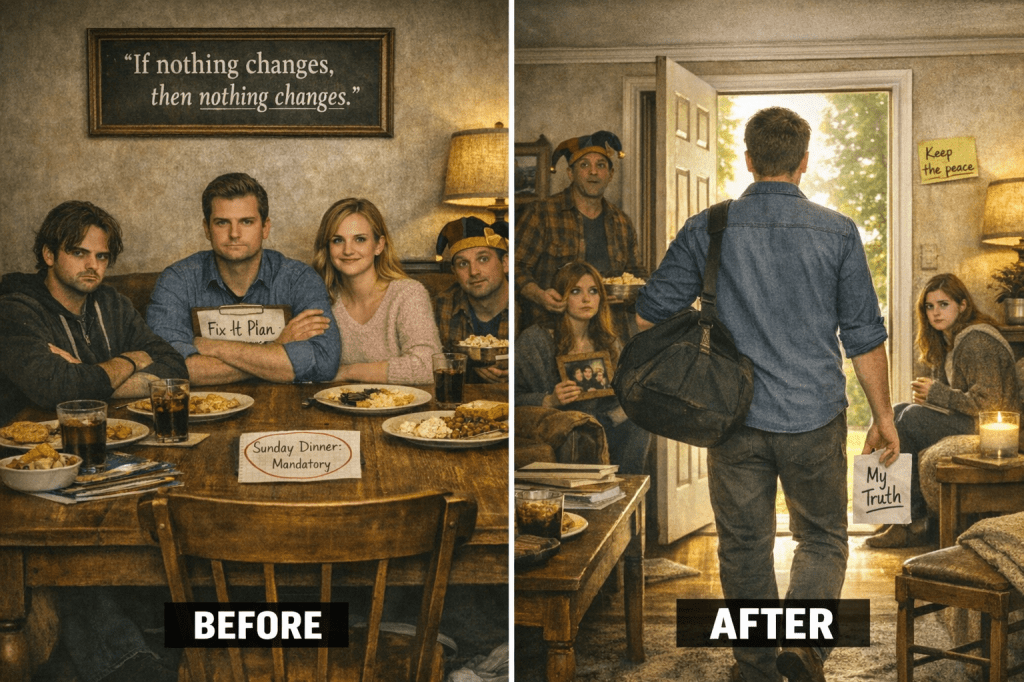
Our family lives in what I call comfortable dysfunction. It’s the emotional recliner they refuse to replace even though the springs are broken. And the fabric smells like denial. It’s easier than accountability. Easier than honesty. Easier than saying, “Maybe the gay daughter isn’t the downfall of civilization.”

And as if being the rainbow sheep wasn’t enough. I’m also the green sheep of the family because I’m a medical cannabis patient. And the family’s translation is that I’m “druggin’ and thuggin’.” The “bad influence.” And the “one who needs prayer.” But that’s not even the real issue.

The problem is my refusal to sit quietly in the pew of generational silence. The issue is that I no longer participate in the family’s favorite pastime of pretending. I’m done shrinking myself so other people can stay cozy in their outdated beliefs. I’m done letting conservative Christian values be weaponized against me and my children.

They can keep their selective morality. The kind where my sister thinks being gay is “wrong and evil.” But somehow premarital sex is just the Olympic sport of “being human.” Funny how sin gets flexible when it’s their behavior on the table. 

“My family says I’m ‘living in sin.’ Which is wild coming from some of them who wave a red hat like it’s the state flower. They preach about morality and still treat premarital sex, drinking, and hypocrisy like they’re covered under the ‘Jesus forgives me’ warranty.”And trust me. They act like I graffitied the Ten Commandments in rainbow glitter.

Being gay automatically made me the family’s “problem child.” Even though the real problems have nothing to do with what gender I love. And everything to do with the fact that I refuse to pretend. My sister can have premarital sex. Drink like she’s hydrating for the Olympics and drive afterward. And micromanage her child like she’s running a dictatorship. But somehow I’m the moral crisis.

Meanwhile, my sister’s shot glasses stays full. Her judgment stays loud. And her hypocrisy stays undefeated. Funny how cannabis for medical reasons is “dangerous.” But alcohol with a side of denial is “just being human.” I’m the rainbow sheep because I live authentically. I’m the green sheep because I choose a legal, doctor‑recommended treatment. And I’m the scapegoat because I refuse to shrink so other people can stay comfortable in their dysfunction. If being myself makes me the rainbow‑green hybrid sheep of the family, then so be it. At least I’m not grazing in the pasture of hypocrisy.

So no, I’m not stepping back into the box they built for me. I’m not dimming myself, so their comfort stays intact. I’m not carrying the weight of a family that refuses to lift a finger for its own healing. They can keep their comfortable dysfunction. They can keep their silence. They can keep their outdated beliefs wrapped in Bible verses that only apply to me.

Today I honor my inner rainbow‑green sheep. I’m fabulously queer. I’m medically lifted. And completely unbothered by the opinions of people who confuse hypocrisy with holiness.”

I’m choosing truth over tradition. I’m choosing growth over guilt. I’m choosing my children, my peace, and my sanity. And if my existence shakes the foundation of their worldview. Then the foundation was weak to begin with. Thanks for reading! Do you and let the others do them.

Affirmation: I bless my rainbow‑green sheep soul today queer, medicated, and thriving. While certain relatives clutch their red hats and pearls at my existence. But don’t blink twice at their own chaos, contradictions, or alcohol fueled commandments.

***Don’t forget the video!***

#ThisPuzzledLife

The Family Roles & The Circus They Created

“My family says I’m ‘living in sin.’ Which is hilarious coming from people who treat denial like a spiritual gift. And premarital sex like a community service.”

-This Puzzled Life

Light the charcoal. Sprinkle the sage. Negative energy, get your shoes on and leave. Today we’re diving into one of my favorite dysfunctional family topics. Family roles. Those unofficial job titles we never applied for. Never wanted. And yet somehow ended up performing like we were on salary. Take a moment and see where you and your people fall. And here’s the spoiler. If you’re reading this, you already know.

Before we get started, let me warn you. This is not a gentle stroll through family history. This is a full‑blown guided tour through a Southern household. That’s been held together with casserole, denial, and conservative Christian values. That seem to get applied with the accuracy of a toddler using glitter glue.

I grew up in a family where “we don’t talk about that” wasn’t a suggestion. It was the eleventh commandment. Emotions were treated like illegal fireworks. Everyone had them. Nobody handled them correctly. And something always exploded at the worst possible time.

In my house, honesty was considered aggressive. Accountability was considered disrespectful. And therapy? Therapy was treated like witchcraft performed by people who “don’t know Jesus personally.”

Meanwhile, the dysfunction strutted around the living room in broad daylight wearing a name tag and a church hat. And everyone pretended they couldn’t see it. If denial were a sport, my family would have Olympic medals and a sponsorship from Hobby Lobby.

So, buckle your emotional seatbelt. And prepare yourself. Because once you recognize the roles in a dysfunctional family. It’s like spotting roaches. You can’t unsee them. And suddenly they’re everywhere.

Family roles are the expected behaviors, responsibilities, and emotional acrobatics each person performs to keep the family circus running. These roles shift depending on culture, family size, and personality. But the classics are Hero, Scapegoat, Golden Child, Lost Child, Mascot. And I show up everywhere like glitter after a craft project.

Let’s begin.

1. The Hero (a.k.a. The Family PR Department) The Hero’s job is to make the family look normal, stable, and “blessed and highly favored” to the outside world. According to theraplatform.com (2025), they take on excessive responsibility to gain approval. This is my mother’s role. Or at least the role she auditions for. She is attention-seeking. Reputation-obsessed. And allergic to accountability. She delivers passive-aggressive comments like she’s handing out communion wafers. And then acts shocked when people get upset.

Her signature move? “The Dummy Card.” Suddenly she “doesn’t remember,” “didn’t mean it like that,” or “doesn’t know what you’re talking about.” But trust me, she knows. And right after she stirs the pot. She gives my dad the “rescue me” look. As if she didn’t just season that pot with cayenne, spite, and generational trauma. We only have real conversations when she’s mad at my sister, The Golden Child. Otherwise, it’s news, sports, and weather which is the Holy Trinity of Avoidance.


2. The Scapegoat (hi, it’s me) The Scapegoat is blamed for everything wrong in the family. Stubbed toe? My fault. Bad weather? Somehow me. The economy? Probably me too. I don’t conform to their lifestyle. I’m gay. I use medical cannabis. I don’t go to church because there are too many people who support the cruelty of the Trump regime. And align theirselves with the MAGA movement which practices a form of chriatianity that cannot be found in any Bible. And quite frankly, they have a bad reputation for normalizing pedophilia while demonizing being gay. I guess I should be glad that I just can’t understand that rationale. 

I talk about taboo topics. And I acknowledge reality instead of pretending everything is fine.
And did I mention I’m gay? Because trust me they will. Instead of saying,
“She’s our family and we love her no matter the gender of someone she loves and that loves her.” They act like my existence is a PR crisis. The attitude is like, “Remember when Dana destroyed the family by being prouid to be gay and authentic?”  I’m also the family whistleblower. I don’t play along with generational nonsense. I’m my own person. And I’m not apologizing for it.

3. The Golden Child (my sister, obviously) The Golden Child is the family’s prized possession. The chosen one. The favorite. And the one who can do no wrong even when she is actively doing wrong. Thriveworks.com (2023) describes this child as obedient, praised, and protected. That’s her. She has been dipped in gold since birth. She follows the script. Holds the same beliefs. And passes them down to her children like heirloom china. She was taught what to think. Not how to think. And the cycle continues. Children aren’t born to hate. They learn it from the adults who raise them. And this is what my sister excels at consistently.

4. The Lost Child (also my sister — she multitasks) The Lost Child avoids conflict like it’s a full-time job with benefits. She withdraws. Stays quiet. And pretends she’s above the chaos. While simultaneously contributing to it. She never acknowledges her harmful behavior. She believes most people are beneath her. And when she talks about someone being gay, she spells it out “G-A-Y” like she’s avoiding summoning a demon. Her emotional range is that of a frozen waffle. And honestly, that’s the family vibe overall.

5. The Mascot (me and my dad) Mascots use humor to distract from the dysfunction. We crack jokes. Lighten the mood. And do not dare fix anything. We just to keep the room from exploding. This doesn’t always work especially when me and my sister are at war like rainbows and bibles. My dad rescues my mom and sister from “big, bad Dana.” Who refuses to sweep things under the rug. I’m the villain because I tell the truth. Imagine that. Kind of sounds like the current government’s level of functioning.

Now you’ve met the cast and the roles they cling to like emotional security blankets. In the next part we’ll zoom out and look at the bigger picture. And it’s the part they refuse to acknowledge.

That concludes our tour of the Family Circus. Please exit through the gift shop. Where denial is half‑off. Accountability is out of stock. And the Scapegoat merchandise is mysteriously overpriced.” Thanks for reading! Keep breaking chains.

Affirmation: Today I honor my emotionally athletic self. The whistleblowing. Boundary‑setting. Truth‑telling legend who refuses to join the family’s Olympic Denial Team. Even though they’ve been training since the womb.

***Don’t forget to watch the video!***

#ThisPuzzledLife

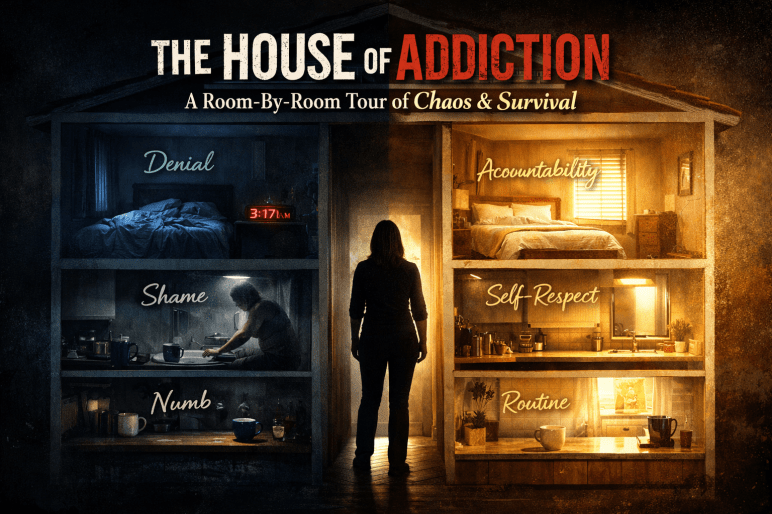
The House of Addiction: A Room‑By‑Room Tour of Chaos and Survival

“Some houses echo with laughter. The House of Addiction echoes with lessons. Loud, painful, and unforgettable lessons. And still, somehow, we walk out wiser than we ever meant to be.”

-This Puzzled Life

Light the charcoal. Sprinkle the sage. Let the smoke rise like it’s clocking in for a double shift. What we’re about to talk about requires spiritual PPE. It’s Addiction Awareness Month. And the House of Addiction doesn’t just haunt. It redecorates. It rearranges your memories. Steals your peace. And has the nerve to act offended when you notice.

From the outside, it looks like any other home on the block. But step inside, and you’ll find a floor plan designed by chaos itself. Complete with emotional booby traps and a staircase that creaks like it’s snitching on everybody.

The House of Addiction doesn’t creak when you walk in. It narrates. It knows your footsteps, fears, and soft spots. It knows you’re here for the truth. And it is already rearranging the furniture to make you doubt your own memory.

This house has the audacity of a Southern aunt who swears she “don’t gossip.” But somehow knows everybody’s business. Including the things you haven’t even done yet. Step inside. Keep your shoes on. This floor has seen some things. It will walk room to room with you, pretending it’s just “checking on things.” While it’s really dragging its mess across every surface like a toddler with a Sharpie.

The House of Addiction always looks normal from the outside. Fresh paint. Curtains that match. A porch light that pretends it’s welcoming you in. But the moment you cross that threshold, you realize this house has plans for you. None of them good. All of them messy. And every one of them delivered with the confidence of a demon wearing your grandmother’s pearls.

The Foyer: Where Denial Greets You Like a Nosy Aunt

You step inside and denial is already there. It’s leaning against the doorframe like it pays the mortgage. It’s smiling too big. Talking too fast. And insisting everything is fine. While the smoke alarm screams in the background. “No problem here,” Denial says. All while waving a broom at a fire like it’s a mosquito. The floorboards creak under the weight of secrets nobody wants to say out loud. The air smells like Febreze sprayed over a dumpster fire. This is the room where kids learn to tiptoe. Where silence becomes a second language. Where you learn to read moods like weather reports.

The Kitchen: Where Chaos Cooks Its Famous Disaster Casserole

Addiction loves the kitchen. It treats it like a stage. Pots banging. Cabinets slamming. Someone crying into a sink full of dishes that have been “soaking” since the Bush administration. This is where promises get burned to a crisp. Apologies get reheated for the 47th time. And kids learn to eat fast. Stay quiet. And watch the adults like they’re studying wildlife. The fridge is full of expired groceries and emotional leftovers nobody wants to deal with. And the table is where love tries to sit down. But keeps getting shoved aside by chaos wearing muddy boots.

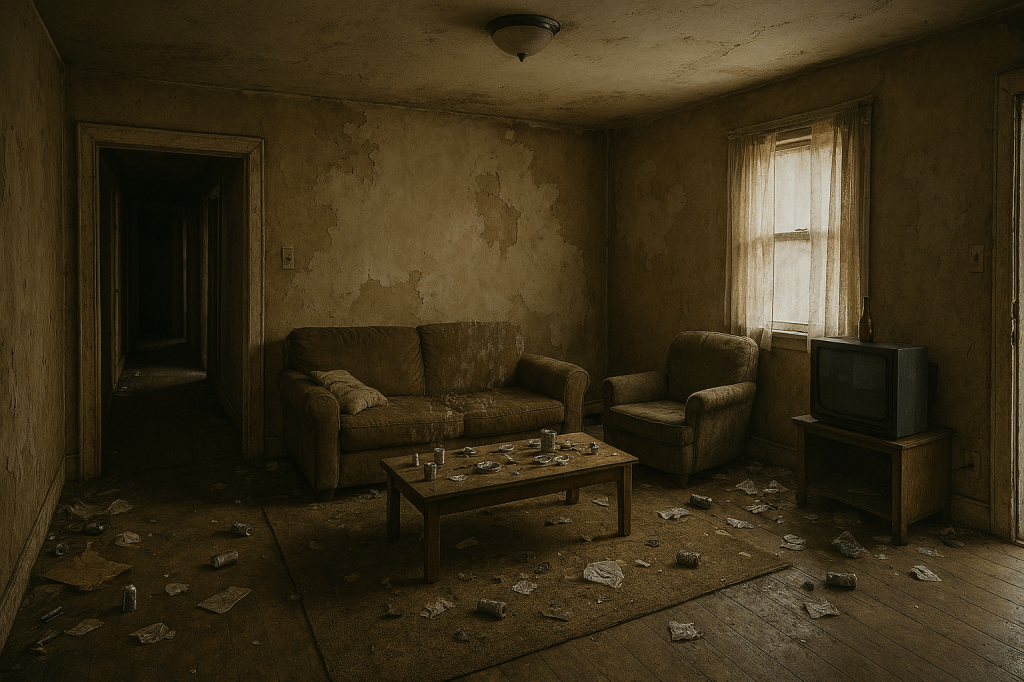
The Living Room: Where Hope Sleeps on the Couch

The living room used to be cozy. Now it’s a battlefield with throw pillows. Addiction drags its drama in here and spreads out like it pays rent. The TV is always too loud. The arguments are always too sharp. And the kids are always pretending they don’t hear what they hear. Hope still lives here. But it’s exhausted. It curls up on the couch under a blanket that smells like worry. It keeps whispering, “Maybe tomorrow.” Even though tomorrow keeps showing up drunk and late.

The Bedroom: Where Secrets Tuck Themselves In

This room is quiet. But not peaceful. It’s the kind of quiet that hums with tension. Addiction sits on the edge of the bed like a shadow with opinions. It whispers lies into the dark. It says, “You’re the problem,” “You can’t leave,” and “Nobody will believe you.” Kids learn to sleep lightly. To listen for footsteps. To brace for the door opening at 2 a.m. with the kind of energy that never means anything good.

The Laundry Room: Where Shame Hangs Itself Up to Dry

This room is where the truth piles up. Dirty clothes. Dirty secrets. Dirty looks from neighbors who pretend they don’t see what they see. Addiction loves this room because it knows shame thrives in small, cramped spaces. The washing machine is always running. But nothing ever feels clean. The dryer door squeaks like it’s tattling. And the air is thick with “Don’t tell anyone.”

The Bathroom: Where Tears Pretend They’re Just Steam

This is the only room with a lock. Which means it becomes a sanctuary for everyone including kids, partners, even the person struggling. People hide here to cry. Breathe. Or just exist without being needed. Addiction hates this room because it can’t control what happens behind a locked door. But it still bangs on it sometimes while demanding attention.

The Kids’ Room: Where Innocence Packs a Go-Bag

This room is the saddest part of the house. Toys on the floor. School papers on the wall. A bed that’s too small for the weight the child carries. Kids learn how to be invisible. How to be responsible for things they never caused. And how to grow up faster than their bones know how to handle. Addiction tiptoes in here sometimes. While pretending it’s not doing damage. But the cracks in the walls tell the truth.

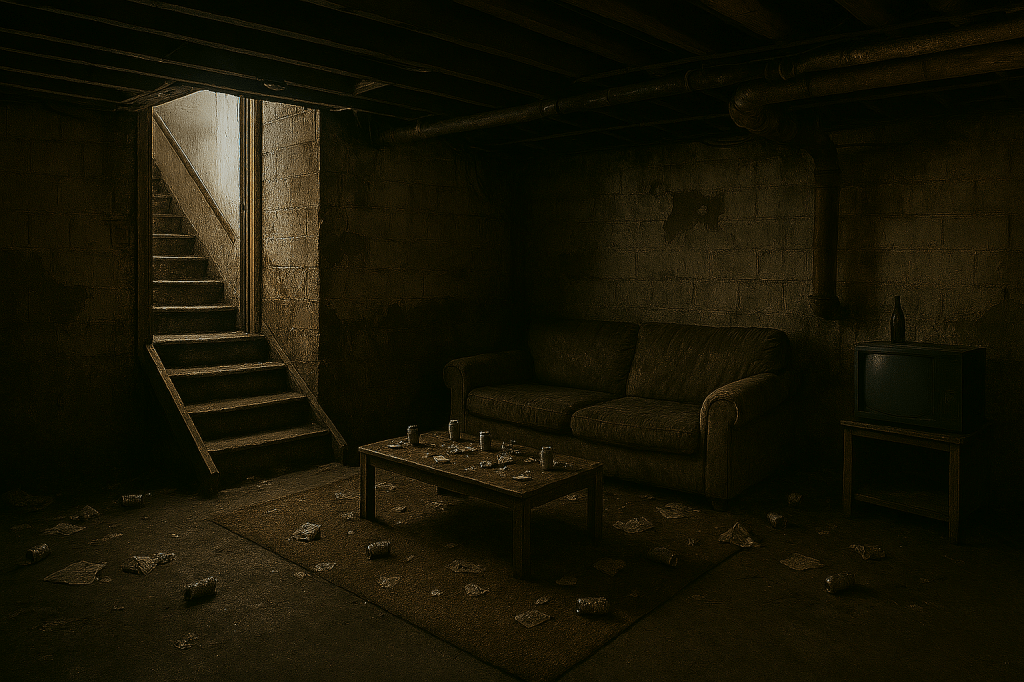
The Basement: Where the Truth Lives

Nobody wants to go down here. Not even Addiction. But this is where the real story sits quiet, heavy, and waiting. This is where trauma stacks itself like old boxes. Memories hide under tarps. And kids grow up and realize the house wasn’t normal. The basement is the part of the house that never lies. It knows exactly what happened. And it remembers everything.

The Attic: Where the “Old Stories” Live

The attic is dusty, cramped, and full of boxes labeled “We Don’t Talk About That.” This is where Addiction stores the memories you tried to outgrow. The versions of yourself you’re ashamed of. And the lies you were told about who you are.

Every box rattles when you walk by, like it wants to be opened. But also wants to stay sealed forever. Addiction loves this room because it knows you’ll avoid it. It knows the dust will settle on your truth until you forget what it looked like. But the attic is also where the light sneaks in through the cracks. It’s where you eventually realize that some stories aren’t yours to carry anymore.

The Garage: Where “I’ll Fix It Later” Goes to Die

The garage is full of unfinished projects, abandoned hobbies, and promises you meant to keep. Addiction parks itself here like a broken-down car that still thinks it can make the trip. This is the room where dreams get postponed. Goals get dusty. And potential sits on cinder blocks. You keep telling yourself you’ll clean it out “when things calm down.” But Addiction keeps tossing more junk in, insisting you don’t have time, energy, or worthiness to finish anything. But one day, you find the light switch. And you realize the garage isn’t full of failures. It’s full of things waiting for you to come back to yourself.

The Office: Where Control Pretends to Live

This room is where Addiction tries to look responsible. Bills stacked. Calendars marked. To‑do lists half done. Everything looks organized until you touch it. And the whole pile collapses like a Jenga tower built by denial. This is the room where you try to manage the unmanageable. You convince yourself you’re “still functioning.” And you hide behind productivity to avoid the truth.

Addiction sits in the office chair spinning slowly, whispering, “You’re fine. Look how much you’re getting done.” Meanwhile, nothing is actually getting done. But this is also the room where you learn the difference between control and survival. And where you finally fire Addiction from its fake job.

The Guest Room: Where You Pretend Everything Is Fine

This room is spotless. Too spotless. It’s the room you keep ready for visitors. So that they never see the chaos in the rest of the house. Addiction loves this room because it’s the perfect illusion of clean sheets. Fluffed pillows. And fake peace. This is where you host people who say, “You’re so strong.” Without knowing you cried in the hallway before they arrived. But the guest room is also where you learn that pretending is exhausting. And that real connection only happens when you stop hiding the mess.

The Crawl Space: Where the Fear Lives

Low ceilings. No light. Hard to breathe. This is the room Addiction never talks about but always uses. It’s where the fear crawls. It’s the fear of leaving, staying, being alone, and of being seen. Addiction keeps this space damp and cold, so you’ll avoid it. But this is the room where the truth hums the loudest. And when you finally crawl in with a flashlight, you realize the monsters were smaller than the shadows made them look.

The Backyard: Where Healing Starts Growing

The backyard is wild. Overgrown. And neglected but alive. Addiction never cared about this space. It didn’t think you’d ever step outside long enough to notice it. But this is where you breathe again. You plant new habits. You feel sunlight without flinching. And you imagine a life beyond the front door. The backyard is the first place that belongs to you again. It’s where you realize the house doesn’t own you. And where healing doesn’t have to be pretty to be real.

The Front Door: Where Freedom Waits

Every child of addiction eventually finds themselves standing at this door. Their hand on the knob. Heart pounding. And wondering if they’re allowed to leave. The truth is you can. You’re allowed to walk out. You’re allowed to build a new house. One with open windows, soft floors, and rooms that don’t whisper threats in the dark. You’re allowed to create a home where laughter doesn’t flinch. Where love doesn’t hide. And where the only thing haunting the halls is the sound of peace finally settling in. 

And that’s the truth about the House of Addiction. It thought it owned you. It thought you’d stay lost in its attic of old stories. Stuck in its garage of unfinished dreams. And trapped in its crawl space of fear. It thought you’d keep tiptoeing past the guest room. While pretending everything was fine. And where it rearranged your soul like mismatched furniture.

But you just didn’t survive that house. You walked through every room with the lights on. The sage burning. And the ancestors humming behind you like a choir that refuses to let you forget who you are. You learned the floorplan. You named the ghosts. You opened the windows. And then you did the one thing that house never expected. You walked out the front door. And didn’t look back.

Let the walls rot. Let the roof cave in. Let the lies echo in empty rooms. You’re busy building a new home now. One with sunlight, softness, boundaries, and peace that doesn’t apologize for taking up space. Door slammed. Keys dropped. Cycle broken. Story reclaimed. Thanks for reading! Now walk away like a boss.

Affirmation: I honor the child who survived that house. And I empower the adult who refuses to live in it ever again. My peace is mine. My story is mine. And my future is built with steady hands.”

***Don’t forget to watch the video!***

#ThisPuzzledLife