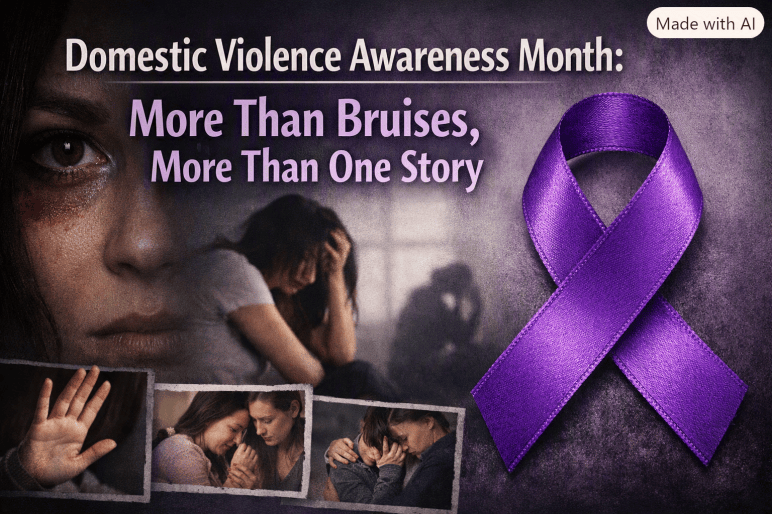

Domestic Violence Awareness Month: More Than Bruises, More Than One Story

“Leaving isn’t weakness. Staying alive long enough to escape is strength.”

-This Puzzled Life

Light the charcoal. Sprinkle the sage. Call the ancestors the loud ones, the protective ones, in close. The ones who don’t mind flipping a table when truth needs to be told. Let the ancestors pull up their rocking chairs and lean in like, “Alright baby, tell it exactly how it happened.“ Because today, we’re walking straight into a fire that too many people pretend isn’t burning. And the topic is Domestic Violence Awareness Month.

This month isn’t just a purple ribbon or a hashtag. It’s a national reckoning. A month carved out because silence has killed too many. Shame has trapped too many. And judgment has wounded too many who were already bleeding. It exists because domestic violence is not one thing. Not one story. Not one bruise. It’s a whole constellation of harm that is emotional abuse, financial control, spiritual manipulation, psychological warfare, sexual coercion, digital stalking, physical stalking, rape, threats, intimidation, and isolation. All of it real. All of it dangerous.

And Lord knows, the Deep South has a long tradition of saying, “Well, why didn’t she just leave?” With the same tone they use when asking why you didn’t bring potato salad to the church potluck. But today we’re not whispering. We’re not sugarcoating. We’re not letting judgment drown out truth.

Domestic violence is more than bruises. More than shouting. More than slammed doors. It’s the slow erosion of your identity. It’s the constant fear humming under your skin. It’s the way you learn to read someone’s footsteps like weather patterns. It’s the way you shrink. Fold. And contort yourself trying to keep the peace that never stays peaceful.

And let me say this with all the Southern sass I can muster. If you’ve never lived it, you don’t get to judge it. Because “just leaving” is a fantasy sold by people who have never had their life threatened. Their finances controlled. Their spirit manipulated. Or their faith weaponized against them. I know this because I lived it. Fourteen years in a domestic abuse situation that nearly swallowed me whole. The cycle wasn’t simple. It was a trap crafted with precision love bombing, threats, and intimidation. That is continuously repeated until you forget what freedom feels like.

I didn’t stay because I was weak. I stayed because I was scared. I stayed because I was conditioned. I stayed because every exit felt like a death sentence. And let me make something crystal clear. It wasn’t a billionaire. It wasn’t a senator. It wasn’t a monster hiding in the shadows. It wasn’t an immigrant. It wasn’t a drag queen with a story book. It wasn’t a trans person. It wasn’t a black person. It was a white, “Christian” man in the Deep South. One who used the Bible like a weapon. While twisting scripture into shackles. Preaching submission while practicing cruelty. A man who believed control was his God-given right. And fear was his favorite language.

That’s why Domestic Violence Awareness Month matters. Because abuse doesn’t look like one stereotype. Survivors don’t fit one mold. Judgment is easy. But understanding saves lives. It is a promise. A collective vow that we will speak loudly. Love fiercely. And refuse to let anyone’s suffering stay hidden behind closed doors.

And now, let me drop this mic so hard the ancestors stand up and clap. I survived what was meant to break me. I reclaimed what was stolen from me. And I will never apologize again for the fire in my voice. Thanks for reading! What have been your experiences?

Affirmation: I honor my survival, my truth, and my healing. I am worthy of safety, love, and a life without fear.

***Don’t forget to watch the video!***

#ThisPuzzledLife
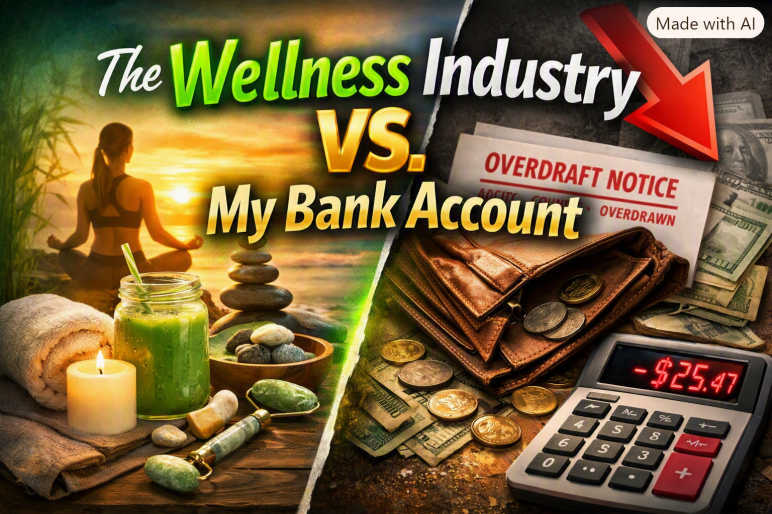
The Wellness Industry vs. My Bank Account

“If self‑care requires a loan application, it’s not wellness. It’s a scam with eucalyptus.”

-This Puzzled Life

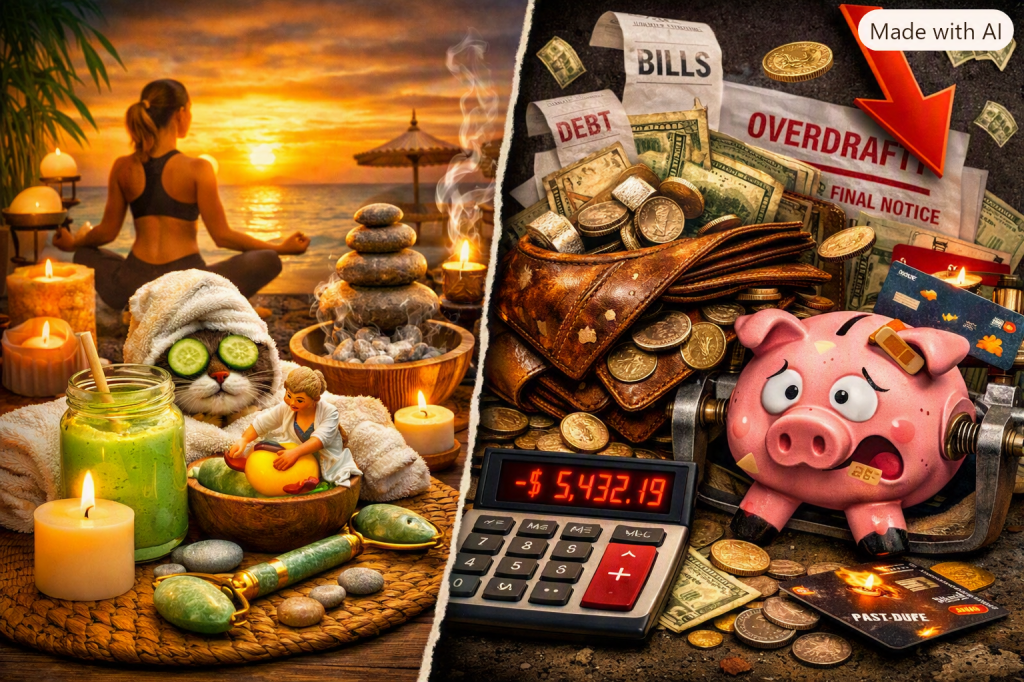
Light the charcoal. Today we’re grilling the Wellness Industrial Complex until it admits it’s been robbing us blind like a raccoon in Lululemon leggings. Self‑care has evolved from “take a nap and drink some water” to “sell a kidney so you can afford a serum infused with moonlight, angel tears, and ethically sourced unicorn collagen.”

Every time I open Instagram, some wellness guru named Saffron Moonbeam is perched on a rock in Sedona telling me, “You can’t pour from an empty cup.” Ma’am, I can’t even afford the cup. The cup is $89.99 and comes with a crystal straw that promises to “align my abundance chakra.” Meanwhile my bank account is over here whispering, “Your abundance chakra is over drafted by $37.12.”

Let’s take a guided tour through the self‑care items that the wellness industry swears I need. And the financial crimes they commit against my checking account.

  • $300 Serums-Apparently my face needs a potion made from fermented cloud vapor and the hopes of Scandinavian virgins. For $300, this serum better erase wrinkles, trauma, and student loans.
  • Sedona Retreats-“Reconnect with your inner child for only $4,999.” For $4,999 my inner child better come out doing taxes, laundry, and emotional labor.
  • Organic Herbal Teas-Why is tea $22 a bag? It’s leaves. Leaves! I can go outside and get leaves for free. Mississippi has leaves everywhere. I’m basically surrounded by generational wealth.
  • Crystal Water Bottles-$120 for a bottle with a rock in it. I can get a rock from my driveway. I can get a whole collection of rocks. I can start a rock museum.
  • Sound Baths-$75 to lay on the floor while someone hits a bowl with a spoon. I can do that at home with my cookware and a bad attitude.
  • Weighted Blankets-$200 to feel like a Victorian ghost is sitting on my chest. I can get that for free by thinking about my to‑do list.
  • Yoga Pants-$98 for leggings that roll down the second I inhale. For $98 they should hold me together emotionally, spiritually, and physically.

Let me tell you something. My ancestors did not survive polio, wars, and the Great Depression. So, I could spend half a paycheck on a jade roller that promises to “release facial tension.” My grandmother would rise from the grave. Slap the serum out of my hand and say, “Splash some cold water on your face and go sit down somewhere.” And honestly? She’d be right. Because self‑care is not supposed to require a credit check, a payment plan, or a GoFundMe titled ‘Help Me Achieve Inner Peace.’

Sometimes self‑care is drinking water. Taking a nap. Ignoring people. Eating a snack. Telling the world “no” with your whole chest. And none of that costs $300. Bowl rung. Crystal shattered. Sedona canceled. Thanks for reading! What’s your most outrageously overpriced “self‑care” moment? And did it at least come with a free sample or a spiritual awakening, or nah?

Affirmation: I am whole. I am worthy. And I do not need a $300 serum to glow. My radiance is free. My peace is priceless. And my bank account deserves rest too.

***Don’t forget to watch the video!***

#ThisPuzzledLife
National Opioid Awareness Day: Bless Your Heart, But Let’s Get Real

“Awareness is the first step toward healing. And healing is a community effort.”

-This Puzzled Life

Light the charcoal. Sprinkle the sage. Call the ancestors. Today, we’re talking about National Opioid Awareness Day. And we’re doing it in full Southern-sass, porch‑swing truth‑telling mode. Grab your sweet tea, your emotional support cat, and maybe a biscuit for stability. Because this one’s gonna be equal parts hilarious, heartfelt, and holy‑ghost serious.

The truth is this. National Opioid Awareness Day exists because too many families have empty chairs at the dinner table. Too many mamas have cried into dish towels. Too many communities have buried dreams that should’ve lived.

This day is recognized to honor the lives lost. Uplift the ones still fighting. And remind the rest of us that addiction is not a moral failure. It’s a public health crisis that deserves compassion, resources, and loud, unapologetic awareness. But you know me. I can’t stay solemn for long. My ancestors didn’t raise me to be quiet or boring. Now let’s get sassy about it.

Let me tell you something. If the opioid epidemic were a person, it’d be that messy cousin who shows up uninvited. Eats all the potato salad. Steals your good Tupperware. And then has the nerve to ask for gas money. It’s rude. It’s destructive. And it’s been wreaking havoc across the nation like a raccoon with a grudge and access to your trash cans. This is the day we collectively say, “Not today, Satan. Not in my house. Not in my holler. And not in my county.”

It’s the day communities come together with churches, schools, aunties, cousins, and the neighbor who always knows everybody’s business. To learn. Support. And fight back with education, prevention, and love. Because love is louder than stigma. And community is stronger than crisis. And Southern women? We don’t play when it comes to protecting our people.

Addiction doesn’t care about zip codes. Because recovery is possible. Because shame kills. But awareness saves. Every life deserves a chance to come home. Sit at the table. And say, “I made it.” And if we don’t talk about it, we lose more than we can bear.

And so here we stand. Charcoal still glowing. Sage still swirling. Ancestors still humming that low in a knowing tune they save for moments when truth hits bone-deep. National Opioid Awareness Day isn’t just a date on a calendar. It’s a call to rise up like your grandma’s biscuits in a hot oven. It’s a reminder that we don’t get through hard things alone. And we sure don’t heal in silence.

Silence is a thief. Stigma is a liar. And shame? Shame is that dusty old cousin who shows up to the family reunion wearing flip-flops and bad decisions. While trying to tell everybody how to live. We don’t listen to shame in this house. We listen to compassion, community, and the ancestors who whisper, “Baby, keep going.”

We honor the ones we’ve lost. We uplift the ones still fighting. We stand guard over the ones who haven’t yet found their way home. And we do it with humor, heart, with Southern stubbornness. And with the kind of love that refuses to back down. It’s the kind of love that will fight a bear, a politician, and a malfunctioning church crockpot all before breakfast.

So today, light your charcoal. Sprinkle your sage. Call your ancestors. And then take one bold step toward awareness, healing, and being the kind of person who refuses to let crisis win. Because this story isn’t over. This fight isn’t finished. And this our community is louder, stronger, and more determined than any epidemic that ever tried to break us. Now excuse me while I drop this mic like it’s hotter than a Mississippi August sidewalk. We see you. We love you. We’re fighting with you. And we’re not done yet.

Affirmation: I honor the lives affected, uplift the ones still fighting, and choose compassion over judgment every single time.

***Don’t forget to watch the video!***

#ThisPuzzledLife
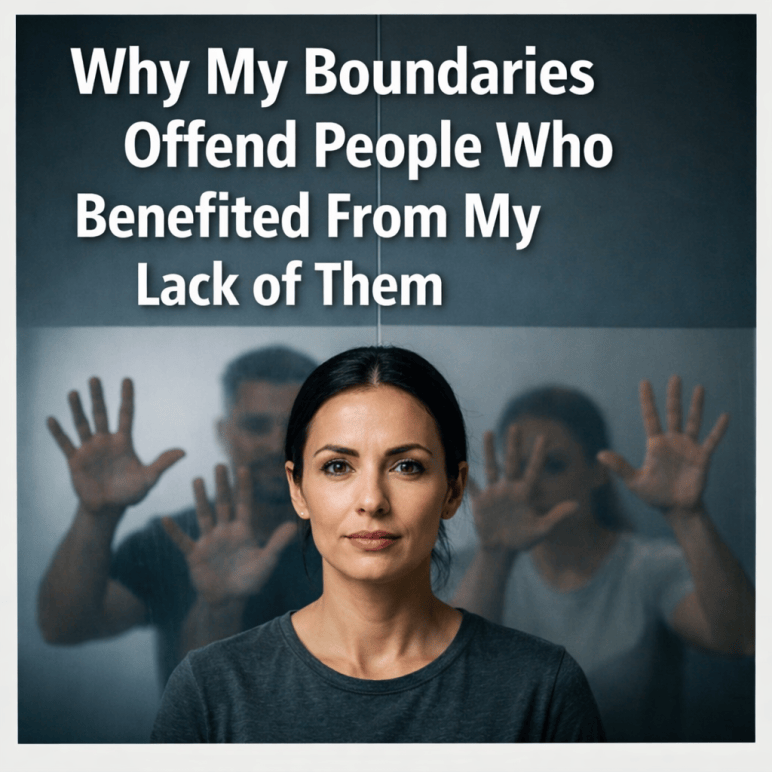
Why My Boundaries Offend People Who Benefited From My Lack of Them

“When you stop people‑pleasing, you don’t become unkind. You become un-owned.”

-This Puzzled Life

Light the charcoal. Sprinkle the sage. Today we’re not just cleansing the air. We’re cleansing the generational rot that tried to bury us alive. While I also smile sweetly and was asked if I wanted more casserole.

There’s a special kind of exhaustion that comes from being raised in a culture where your worth is measured by how small you can make yourself. Where “good manners” means “don’t make anyone uncomfortable.” Even if you’re bleeding out emotionally. Where “respect” means “don’t you dare speak the truth out loud.” And the South? The South will hand you a monogrammed apron, a church bulletin, and a generational trauma starter pack before you can even walk. But today we’re unpacking all of it.

Let’s talk about people‑pleasing. Not the cute kind where you bring someone banana pudding because you love them. But the dangerous kind. The kind that rewires your nervous system. The kind that teaches you to abandon yourself so thoroughly that you forget you ever had needs in the first place.

People‑pleasing is not a personality trait. It’s a survival skill. A trauma response. A generational inheritance wrapped in a bow of “be sweet” and “don’t cause trouble.” And in the South, it’s practically a rite of passage.

We’re taught early don’t speak up. Don’t contradict. Don’t embarrass the family. Don’t make waves. Don’t question authority. Don’t tell the truth if the truth makes anyone uncomfortable. Don’t you dare put yourself first. That’s selfish. And for the love of all things holy, don’t let the church ladies hear you say “no.”

People‑pleasing becomes the currency of acceptance. The ticket to belonging. The price of being considered “good.” But here’s the sinister part. People‑pleasing trains you to betray yourself before anyone else even gets the chance. You learn to anticipate everyone’s needs but your own. You learn to apologize for existing. You learn to smile through pain so convincingly that even you forget you’re hurting. You learn to make yourself small enough to fit inside other people’s expectations. And the world, especially the Southern world, rewards you for it. Until you stop.

The moment you stop people‑pleasing. The moment you say “no,” or “that’s not okay,” or “I’m not doing that anymore.” The moment you choose yourself? Suddenly you’re the villain in a story you didn’t write. Suddenly you’re “difficult.” Suddenly you’re “ungrateful.” Suddenly you’re “too sensitive,” “too outspoken,” “too much,” “too emotional,” “too opinionated,” “too educated,” “too aware,” and “too alive.” But the truth is simple. You’re not too much. You’re just finally enough for yourself. And that terrifies people who benefited from your silence.

People‑pleasing is dangerous because it teaches you that your safety depends on your compliance. It teaches you that love must be earned through self‑abandonment. It teaches you that your needs are negotiable. But everyone else’s are sacred. When you grow up in a culture that worships politeness more than honesty. Appearances more than integrity. And reputation more than reality. You learn to disappear. Until one day, you don’t.

And here’s where it gets personal. This isn’t theory for me. This isn’t something I read in a book or heard in a podcast. This is lived experience that was carved into my bones. Stitched into my history. And dragged behind me for decades like a cross I never volunteered to carry.

On a personal note, my family marinated me in people‑pleasing my entire life. And when you don’t comply? You get labeled the troublemaker. The problem. The one who “changed.” The one who “thinks she’s better.” The one who “needs to calm down.” The one who “makes everything difficult.” But not teaching me boundaries while simultaneously demanding I people‑please was dangerous. Not inconvenient. Not uncomfortable. Dangerous.

I have almost died multiple times because I gave more of myself than I had to give. I was trained to prioritize everyone else’s happiness over my own survival. I was taught that my needs were optional. But their approval was oxygen. And in the South, it’s a shameful way of life to even question this dynamic.

I had to come to a point, not helped by their expectations, where I finally put myself first. And now that I have strong boundaries, my family and the community think I’m “nasty” because I tell them I don’t need their validation. They want me to “cow tow” to their needs while never expecting the same from them. And that, my friends, is the pinnacle of hypocrisy and controlling behavior. And at this point in my life, I can say with confidence that I’ll never allow myself to be controlled by someone else ever again.

Let me make this plain in a way even the most selectively‑forgetful, Bible‑thumping, reputation‑worshipping, boundary‑hating folks can understand. I am no longer available for my own destruction. I am no longer the family sponge soaking up everyone else’s dysfunction. I am no longer the emotional punching bag for people who refuse to face their own shadows. I am no longer the scapegoat for sins I didn’t commit. I am no longer the child who learned to survive by disappearing. I am no longer the adult who thought love meant self‑sacrifice. I am no longer the woman who begged for crumbs of acceptance from people who never learned how to love without conditions. I am done.

I’m done with the gaslighting. Done with the hypocrisy. Done with the “good Christian” performances. Done with the selective morality. done with the selective compassion. Done with the silence that protects abusers. Done with the shame that was never mine to carry. Done with the generational curses disguised as tradition. And done with the expectation that I should shrink so others can feel tall.

I am not here to make anyone comfortable. I am not here to uphold anyone’s illusion. I am not here to play the role they assigned me. I am not here to be palatable, agreeable, or quiet. I am here to live. Fully. Boldly. Truthfully. Unapologetically. And if my boundaries offend you? If my healing threatens you? If my voice rattles your cage? If my truth exposes your lies? That’s not my burden. That’s your mirror.

So let me end this with the clarity of a woman who has crawled out of the grave they dug for me. I didn’t lose my family. I lost my captors. I didn’t lose my community. I lost my chains. I didn’t lose my identity. I reclaimed it. And I will never, ever, ever hand it back. Lights out. Thanks for reading! To thine own self be true. What are your experiences with this?

Affirmation: My boundaries are sacred. My truth is valid. My life belongs to me now fully and forever.

***Don’t forget to watch the video!***

#ThisPuzzledLife
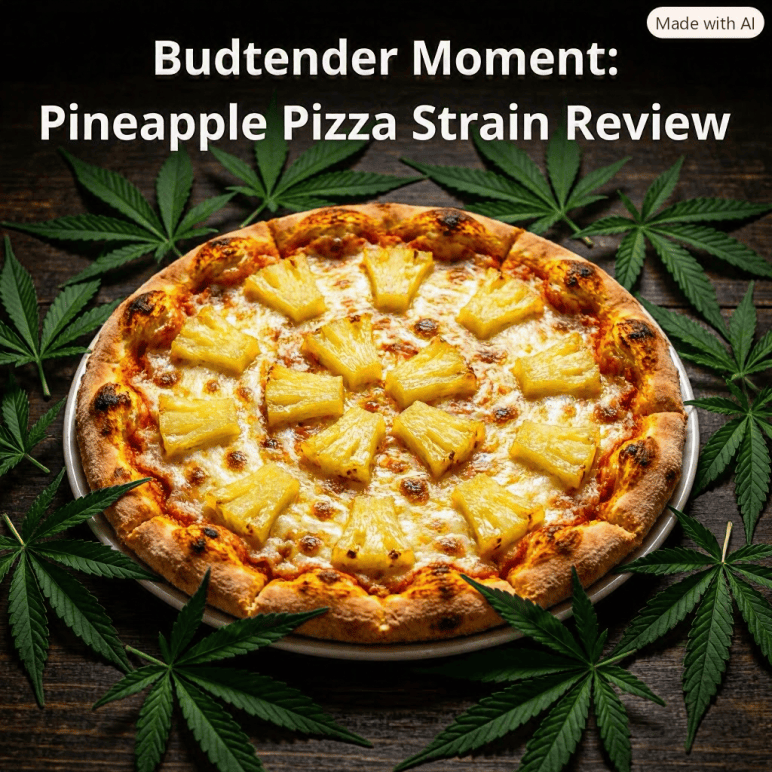
Budtender Moment: Pineapple Pizza Strain Review

“Balance isn’t about choosing one flavor. It’s about letting sweet and savory dance on the same tongue.”

-This Puzzled Life

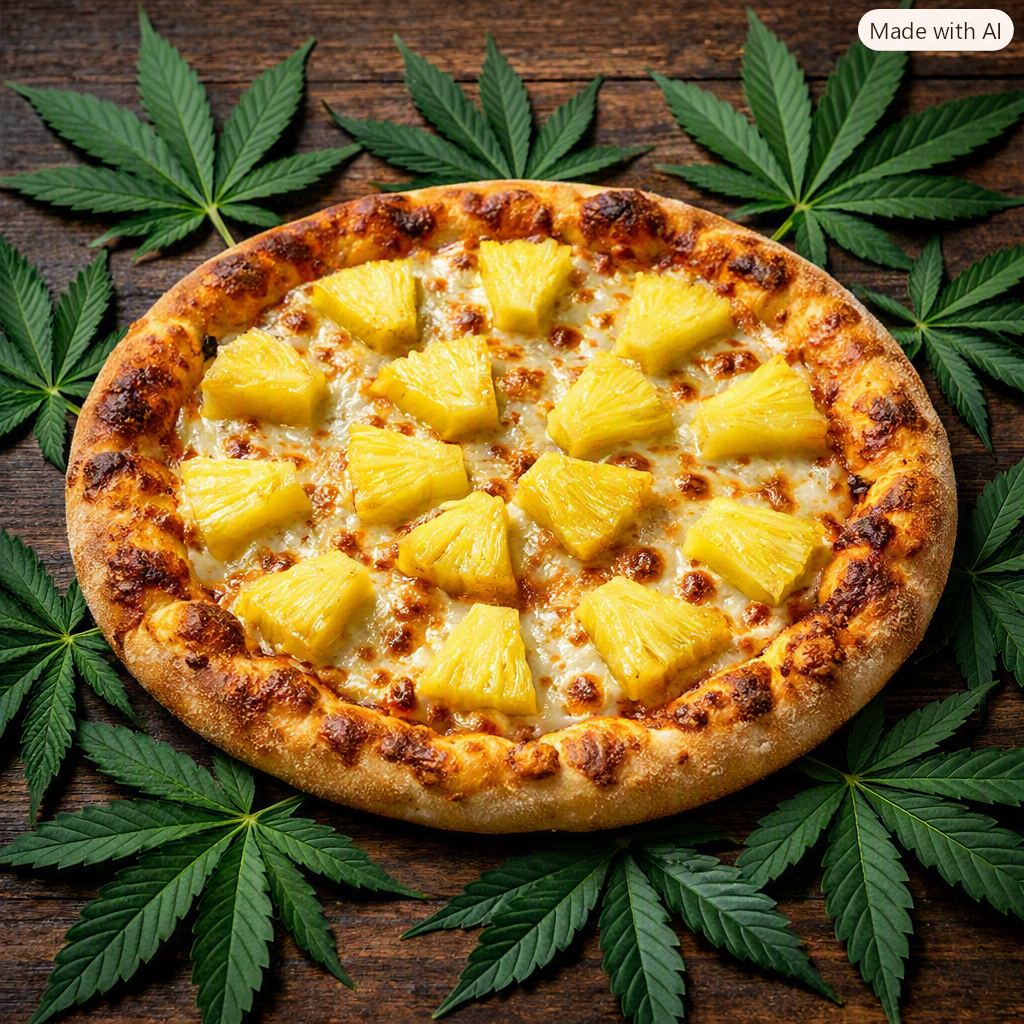
 Light the charcoal. Sprinkle the sage. Today we’re talking about Pineapple Pizza. It’s the strain that proves cannabis genetics can be chaotic. Delicious. And slightly disrespectful to Italians all at once.

Pineapple Pizza is considered a 70/30 sativa-hybrid. It’s a cross between Scentuous × PuTang. Scentuous is a cross between Lemon Cheesecake × Purple Pineapple Express #4. Pu Tang is a cross between Star Pupil x Tangie. A true middle‑path strain that balances uplift with body ease, like a stoner trying to decide between yoga or DoorDash. The flavors are sweet grilled pineapple, sweet tomato, herbal cheese, pineapple, tropical notes, and a little tropical sunshine. It also has a finish that tastes like someone dropped a slice of pizza on a beach towel. But in a good way. When I first opened the flower it smelled completely like oregano. That’s not in the flavor profile. But it absolutely, also tasted like oregano.

The terpenes in this strain are terpinolene, myrcene, and limonene. Together they create a terpene symphony that says, “Yes, you can be both tropical and savory. Duality is real. Pineapple Pizza may support appetite, chronic fatigue, depression, stress, and nausea reduction. This is the strain you smoke when you want to feel like you’re on vacation but still need to fold laundry.

Please keep in mind that depending on differences in grows depends on what area of the country it is grown in. Ther will also be slight differences depending on when, where the plant was grown. Thanks for reading! And keep blazin.’ Have you tried this strain?

Affirmation: I honor my contradictions. I am allowed to be sweet, bold, weird, joyful, and whole all at once.

***Don’t forget to watch the video!***

#ThisPuzzledLife
Top Cannabis Strains for Depression (Without the Panic Attack Plot Twist) 

“Some days the sun hides. But the spark inside you doesn’t. Light it gently.”

-This Puzzled Life

 Light the charcoal. Sprinkle the sage. Today, we’re diving into the sacred ceremony of “Strains That Lift Your Mood Without Sending You Into a Full‑Blown Existential Spiral in the Wal-Mart Produce Aisle.” If we’re going to talk about depression‑friendly cannabis strains, we need the ancestors, angels, and at least one confused cat spirit guide to supervise. 

Depression is like that uninvited cousin who shows up at your house. Eats your snacks. And refuses to leave. But panic attacks? Oh no. We’re not inviting them to the cookout. This list is all about strains that lift the fog. Brighten the vibe. And won’t have you pacing the hallway like you’re waiting for the results of a pregnancy test you took “just to be sure.” These strains are gentle. Uplifting. And won’t snatch your soul into the Anxiety Multiverse.

Grab your rolling tray, emotional support lighter, and your favorite snack that you swear you’re “saving for later.” Let’s get into it.

Top 10 Depression‑Friendly Strains

  • Blue Dream (Blueberry x Haze): The Beyoncé of mood‑lifting strains. Smooth. Reliable. And won’t let you spiral about that text you sent in 2014. This is a personal favorite of mine.
  • Harlequin (Colombian Gold x Thai x Swiss Landrace): High CBD, low chaos. Like emotional bubble wrap for your brain.
  • Pineapple Express (Trainwreck x Hawaiian):Tropical sunshine in plant form. Depression tries to speak but this strain says, “Shh baby, not today.”
  • Jack Herer (Haze x Northern Lights #5 x Shiva Skunk): Energetic but not jittery. Like coffee that went to therapy.
  • Cannatonic (MK Ultra x G13 Haze): CBD‑heavy and emotionally supportive. The strain equivalent of a weighted blanket that also pays your bills.
  • Girl Scout Cookies (OG Kush x Durban Poison): Sweet, uplifting, and comforting. Depression gets confused and wanders off.
  • Lemon Haze (Lemon Skunk x Silver Haze):Zesty mood boost without the “my heart is tap‑dancing” effect.
  • Granddaddy Purple (Purple Urkle x Big Bud): A hug in flower form. Perfect for when your brain feels like a wet sock.
  • Strawberry Cough (Strawberry Fields x Haze):Uplifting and social without the panic. Like a pep talk from a friend who actually has their life together.
  • ACDC (Cannatonic phenotype): CBD queen. Zero panic, all peace. Depression gets bored and leaves.

And there you have it. Ten strains that lift your spirit without sending you into a full‑blown “Why did I say that in 7th grade?” panic attack. Depression may still try to slide into your DMs. But with these strains, you can leave it on read.

Remember your mood matters. Your peace is sacred. And your cannabis should never feel like a surprise roller coaster ride operated by a raccoon. Mic dropped. But gently. Because lighters bounce weird. Thanks for reading! What do you like about the strains from this list that you’ve tried?

Affirmation: I deserve peace, joy, and moments of ease. And I welcome them into my life today.

***Don’t forget to watch the video!***

#ThisPuzzledLife
Suicide Awareness Month: When Silence Becomes the Sin

“I don’t blame the people we lost. I blame the silence that swallowed them.”

-This Puzzled Life

Light the charcoal. Sprinkle the sage. Lord knows, if we’re gonna talk about Suicide Awareness Month in the Deep South, we’re gonna need all the spiritual reinforcements we can get. The air gets thick. The whispers get quieter. And the truth starts pacing the room like it’s looking for a way out.

Let me set the scene. It’s September in the Deep South. Humidity thick enough to baptize you against your will. Church signs flashing Bible verses like spiritual traffic tickets. Every conversation about mental health wrapped in a casserole dish of denial. Then Suicide Awareness Month rolls around. And the way conservative Southern Baptists respond? You’d think someone asked them to admit they’ve been depressed since Reagan.

They hit you with the classic, “Thoughts and prayers.” And that’s the entire statement. Full stop. Period. End of sentence. End of conversation. If you try to talk about suicide beyond that? Oh, honey that happens behind closed doors. Whispered like gossip. Treated like sin. And buried under shame so thick you’d need a backhoe to dig it out. That’s how the shaming works down here. Not by yelling. But by refusing to speak at all. And I’m tired of silence being the loudest killer in the room. Suicide isn’t a “them” problem. It’s an all of us problem. And the numbers don’t lie. Even when the people in power do.

Over 49,000 people died by suicide in 2023. And that’s one death every 11 minutes. Suicide rates have climbed back to their previous peak after years of fluctuation. But some groups are hurting more than others. https://www.cdc.gov/suicide/facts/data.html?, 2026

1.American Indian & Alaska Native Communities

These communities have some of the highest suicide rates in the nation. Youth in these groups are disproportionately impacted due to historical trauma. Lack of access to care. And systemic neglect. 

2.LGBTQIA+ Youth

LGBTQIA+ youth face significantly higher suicide risk due to rejection, discrimination, and lack of safe spaces. And let’s be honest. The current political climate isn’t helping. Policies targeting queer and trans youth only increase fear, isolation, and hopelessness.

3.Black Youth

Black youth suicide rates have been rising with unique stressors tied to racism, community stigma, and lack of culturally competent mental health care. 

4.Veterans

Veterans continue to face elevated suicide risk due to PTSD, trauma, homelessness, and lack of adequate support. The VA reports long‑term patterns of high suicide rates among veterans. Especially those facing mental health and substance use disorders. 

5.Young People (15–24)

Suicide is the second leading cause of death for young people. In 2024 alone, nearly 5,915 young people died by suicide. 

I don’t write this from a distance. I write this from the front row of grief and personal struggle.

My life has been touched by suicide from more angles than I ever wanted. I’ve seen it happen to friends and family. People I loved. People I tried to reach. People I didn’t know were hurting until it was too late. And let me say this clearly. I am not mad at them. I do not hate them. I am not angry at what they did.

I am just deeply, sorry that they weren’t able to be reached. Sorry that the world failed them. Sorry that shame kept them silent. Sorry that help wasn’t accessible, safe, or welcoming. Sorry that they believed the lie that their pain was a burden. They deserved better. And so do the people still here.

I’m not here to sugarcoat this. Our nation’s mental health crisis is rising in part because of the current administration’s policies. And the harm they inflict on marginalized communities. When leaders create fear. Strip rights. Target vulnerable groups. And normalize cruelty. The emotional fallout is real. People feel unsafe. People feel hopeless. People feel hunted. And hopelessness is fertile ground for despair. This isn’t partisan. It’s human. And the statistics reflect the pain people are living through.

And here’s the thing I keep coming back to, over and over, like a hymn that won’t leave my bones. We are losing people because we refuse to talk. We are losing people because shame is easier to hand out than compassion. We are losing people because silence is the South’s favorite weapon. And its most deadly.

I grew up watching folks whisper about suicide like it was a scandal instead of a tragedy. I watched churches pray for “healing” while refusing to name the wound. I watched families bury their children and still pretend nothing was wrong. I watched people I loved slip through cracks that should never have existed in the first place. And I’m done pretending that this is normal. I’m done pretending that this is holy. I’m done pretending that this is anything but deadly.

Because the truth is this. People don’t die from weakness. People die from isolation. People die from shame. People die from being told their pain is an inconvenience. And if that stings, good. Some truths are supposed to.

 I have lost people I loved. People I laughed with. People I prayed for. People I would’ve driven across state lines for if I had known they needed me. And I don’t carry anger toward them. I don’t carry resentment. I don’t carry judgment. What I carry is sorrow. A deep, marrow‑level sorrow that they didn’t feel reachable. That they didn’t feel safe. That they didn’t feel like this world had room for their pain. And I will never stop wishing they had stayed. Not because their leaving was wrong. But because they deserved a world that didn’t make leaving feel like the only option.

 Let me say this plainly. Because I’m not sugarcoating a damn thing today. Our country is hurting because our leadership is hurting us. Policies that target the vulnerable create despair. Cruelty from the top trickles down like poison in the water supply. And if that makes someone uncomfortable, they can go ahead and sit with that discomfort. Maybe it’ll teach them something. I’m not here to protect feelings. I’m here to protect lives.

 This is my altar call, benediction, my Southern‑fried truth served hot and holy. We cannot pray away what we refuse to confront. We cannot heal what we refuse to name. We cannot save people we refuse to see. If we want to stop losing our loved ones, we have to stop hiding behind “thoughts and prayers” like they’re bulletproof. We have to talk. We have to listen. We have to show up. We have to fight for the living with the same passion we mourn the dead. Because every single person lost to suicide deserved a world that didn’t break them. So, if you hear me. If you really hear me. Then stand up. Even in the back. Even if your knees pop like bubble wrap. And say it with your whole chest. Thanks for reading! How can you relate to this?

 Affirmation: My voice is a lifeline. My truth is a lantern. I speak so others don’t have to suffer in the dark.

***Don’t forget to watch the video!***

#ThisPuzzledLife

International Overdose Awareness Day: The Day We Stop Pretending Willpower Is Medicine

“Shame has never saved a life. Compassion has. And still can.”

-This Puzzled Life

Light the charcoal. Sprinkle the sage. Today, we’re not just cleansing the house. We’re cleansing the collective delusion that addiction is a moral failing. The sage is smoking like it’s trying to file a worker’s comp claim. The charcoal is popping like it’s gossiping about the neighbors. And I’m standing in the kitchen with the kind of determination usually reserved for Southern women who’ve had enough.

Piper struts in first.Tail high. Eyes narrowed. And a clipboard already out like she’s conducting a federal audit.

Piper: “Before we begin. I need to know if this is a cleansing ritual, a public dragging, or a memorial service. My paperwork differs.”

Me: “All three. It’s International Overdose Awareness Day. And I’m about to educate the masses.”

Coco barrels in next. She’s breathing heavily like she just ran a marathon but actually just walked from the living room.

Coco: “Is this about the humans who say addiction is willpower? And overdose is a moral collapse? I once ate an entire rotisserie chicken while sleepwalking. Explain that with willpower.”

Tinkerbell descends from the top of the fridge like a Victorian ghost who died of judgment.

Tinkerbell: “If willpower cured anything, half this household would stop doomscrolling at 2 AM. And the other half would stop emotionally eating Cheez-Its.”

Me: “Exactly. We’re dragging ignorance today.”

Piper adjusts her glasses. The glasses she does not need and sighs.

Piper: “I’ll prepare the minutes. This meeting is already chaotic.”

International Overdose Awareness Day started in 2001 as a remembrance event at a Salvation Army needle exchange in Melbourne, Australia. It was created to honor those lost. Reduce stigma around overdose. And to push the world to stop treating overdose like a shameful secret instead of a public health crisis. And let me say this plainly, with all the Southern sweetness of a peach cobbler baked in righteous fury, “Addiction and overdose are not moral issues.” And it’s not about willpower.

The next time you have diarrhea, keep in mind that it’s just willpower. Sit there with a Bible verse and see if the situation resolves itself. Let me know how that works out. That’s how ludicrous that argument is.

People don’t become addicts because they’re weak, sinful, lazy, or lacking character. Many addicts die wanting anything in life other than to be an addict. They die fighting. They die trying. They die hoping. But some folks, including people in my own family, love to say, “Addiction is about willpower.” It never has been. It never will be.

I’ve been an addict. I’ve been a professional treating addicts. I’ve buried friends. I’ve buried family. Not once have I judged them for their struggle. But the hypocrites in my life? The ones who claim moral superiority while ingesting alcohol at a rate that Pete Hegseth and Kash Patel struggle to keep up with? Hypocrite, please.

Overdose is an unfortunate part of addiction. Whether it’s chemicals, behaviors, or the slow-motion self-destruction people pretend “doesn’t count.” Because it’s socially acceptable. So how about we stop demonizing people who overdose while absolving ourselves of our own harmful, numbing, escapist overdoses?

If we’re being honest, some folks overdose on alcohol, self-righteousness, denial, Amazon Prime, gossip, rage, food, religion, and control. But somehow that doesn’t get labeled as a moral failure. Funny how selective morality works.

And here’s the truth that makes some folks squirm like they sat on a church pew with a splinter. Overdose doesn’t happen because someone is weak. It happens because someone is human. Humans who loved. Humans who tried. Humans who fought battles most people couldn’t survive for five minutes. Humans who deserved compassion instead of commentary.

But every year, we lose more people. Not because they were broken. But because the world still treats addiction and overdose like a character flaw instead of a medical condition. We lose them because shame is louder than science. Because judgment is easier than empathy. Because some folks would rather cling to their superiority complex than admit they don’t know a damn thing about what they’re talking about.

So on International Overdose Awareness Day, I’m lighting this charcoal. Sprinkling this sage. And saying this with my whole chest, “Stop demonizing the people who are drowning while you’re out here drinking from your own poison well. Stop pretending your socially acceptable overdoses are any less destructive just because they come with a cute, monogrammed tumbler or a Bible verse slapped on top. Stop acting like overdose is a choice when half the people judging can’t even choose to drink water or go to bed on time. And most importantly, start honoring the people we’ve lost by refusing to let stigma bury the living.

The dead deserve dignity. The living deserve compassion. And the ignorant deserve education. Loud, unapologetic, Southern‑fried education. Today, I’m choosing truth over tradition. Compassion over comfort. And humanity over hypocrisy. If that makes some folks uncomfortable? Good. Growth never happens in comfort. And comfort has never saved a single life. But truth might. Compassion might. You might. Thanks for reading! Share this with others.

 Affirmation: I honor the lives lost. Uplift the living. And refuse to let stigma speak louder than truth.

***Don’t forget to watch the video!***

#ThisPuzzledLife
Budtender Moment: Cobra Chi #2 Strain Review

“Legalize it? I already did-in my living room.”

-Unknown

Light the charcoal. Sprinkle the sage. Negative energy go away. Today, I want to tell you about a strain that brings back the fond memories of the 1980’s. And how many of us Gen X individuals could ever forget the movie Karate Kid? Mr. Miyagi, Daniel Laruso, and his redemption from being the one who was bullied. To the one who showed us what hard work, trust and discipline could accomplish by the ultimate underdog. 

Cobra Chi #2 is a 70/30 sativa-dominant hybrid that is a cross of Margwa #1 x Chimera #3. Margwa #1 is a strain that is not publicly documented. Therefore, I don’t have a direct lineage for this strain. Chimera #3 is a balanced hybrid cross between Chimera x White Truffle. Looking at these genetics Margwa #1 must have a sativa-dominance in its genetics somewhere.

The top terpenes for this strain are D-Limonene, Linalool, Myrcene, and Caryophyllene. Patients report relief from conditions such as chronic stress, chronic pain, depression, migraines, mood swings, ADD/ADHD, headaches, and nausea. This strain, in my opinion, is very mild. And it is a strain that can be enjoyed by all. Thanks for reading! Keep blazin.’

Affirmation: I water myself from the bottom up to grow deep roots like a strong mother plant.

***Don’t forget to watch the video!***

#Thispuzzledlife

Budtender Moment: Apples and Bananas Strain Review

“Weed is the friend that doesn’t  mind if you cancel plans.”

-Unknown

Light the charcoal. Sprinkle the sage. Negative energy go away. Today, I want to tell you about a cannabis strain called Apples and Bananas. Nothing says spring time and fresh fruit like this strain.

Apples and Bananas is an indica-dominant balanced hybrid that is a four-way cross between Platinum Cookies x Grandaddy Purple x Blue Power x Gelati. Platinum Cookies is a cross between OG Kush x Durban Poison. Grandaddy Purple is a cross between Purple Urkle x Big Bud. Blue Power is a cross between Sour Double x Master Kush x The White x Blue Moonshine. Gelati is a cross between Gelato x Biscotti. This strain is simply sweet and fruity.

The top terpenes in this strain are Myrcene, Limonene, and Caryophyllene. Other combinations of this strain also have Linalool in them. Patients report relief from conditions such as anxiety, depression, stress, insomnia, appetite loss, nausea, muscle spasms, cramps,  PTSD and pain. The effects for me seem indica dominant. However, try it for yourself and watch the stress melt away. Thanks for reading! Keep blazin.’

Affirmation: I am full of joy and optimism today.

***Don’t forget to watch the video!***

#Thispuzzledlife