This Puzzled Life is a mental health and recovery blog exploring addiction, trauma healing, LGBTQ experiences, humor, and the strange moments that shape us.
“Leaving isn’t weakness. Staying alive long enough to escape is strength.”
-This Puzzled Life
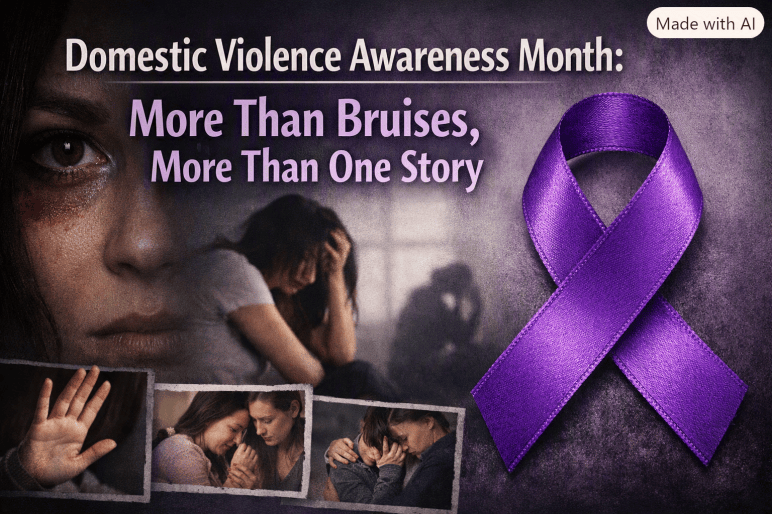
Light the charcoal. Sprinkle the sage. Call the ancestors the loud ones, the protective ones, in close. The ones who don’t mind flipping a table when truth needs to be told. Let the ancestors pull up their rocking chairs and lean in like, “Alright baby, tell it exactly how it happened.“ Because today, we’re walking straight into a fire that too many people pretend isn’t burning. And the topic is Domestic Violence Awareness Month.
This month isn’t just a purple ribbon or a hashtag. It’s a national reckoning. A month carved out because silence has killed too many. Shame has trapped too many. And judgment has wounded too many who were already bleeding. It exists because domestic violence is not one thing. Not one story. Not one bruise. It’s a whole constellation of harm that is emotional abuse, financial control, spiritual manipulation, psychological warfare, sexual coercion, digital stalking, physical stalking, rape, threats, intimidation, and isolation. All of it real. All of it dangerous.
And Lord knows, the Deep South has a long tradition of saying, “Well, why didn’t she just leave?” With the same tone they use when asking why you didn’t bring potato salad to the church potluck. But today we’re not whispering. We’re not sugarcoating. We’re not letting judgment drown out truth.
Domestic violence is more than bruises. More than shouting. More than slammed doors. It’s the slow erosion of your identity. It’s the constant fear humming under your skin. It’s the way you learn to read someone’s footsteps like weather patterns. It’s the way you shrink. Fold. And contort yourself trying to keep the peace that never stays peaceful.
And let me say this with all the Southern sass I can muster. If you’ve never lived it, you don’t get to judge it. Because “just leaving” is a fantasy sold by people who have never had their life threatened. Their finances controlled. Their spirit manipulated. Or their faith weaponized against them. I know this because I lived it. Fourteen years in a domestic abuse situation that nearly swallowed me whole. The cycle wasn’t simple. It was a trap crafted with precision love bombing, threats, and intimidation. That is continuously repeated until you forget what freedom feels like.
I didn’t stay because I was weak. I stayed because I was scared. I stayed because I was conditioned. I stayed because every exit felt like a death sentence. And let me make something crystal clear. It wasn’t a billionaire. It wasn’t a senator. It wasn’t a monster hiding in the shadows. It wasn’t an immigrant. It wasn’t a drag queen with a story book. It wasn’t a trans person. It wasn’t a black person. It was a white, “Christian” man in the Deep South. One who used the Bible like a weapon. While twisting scripture into shackles. Preaching submission while practicing cruelty. A man who believed control was his God-given right. And fear was his favorite language.
That’s why Domestic Violence Awareness Month matters. Because abuse doesn’t look like one stereotype. Survivors don’t fit one mold. Judgment is easy. But understanding saves lives. It is a promise. A collective vow that we will speak loudly. Love fiercely. And refuse to let anyone’s suffering stay hidden behind closed doors.
And now, let me drop this mic so hard the ancestors stand up and clap. I survived what was meant to break me. I reclaimed what was stolen from me. And I will never apologize again for the fire in my voice. Thanks for reading! What have been your experiences?
Affirmation: I honor my survival, my truth, and my healing. I am worthy of safety, love, and a life without fear.
“When you stop people‑pleasing, you don’t become unkind. You become un-owned.”
-This Puzzled Life
Light the charcoal. Sprinkle the sage. Today we’re not just cleansing the air. We’re cleansing the generational rot that tried to bury us alive. While I also smile sweetly and was asked if I wanted more casserole.
There’s a special kind of exhaustion that comes from being raised in a culture where your worth is measured by how small you can make yourself. Where “good manners” means “don’t make anyone uncomfortable.” Even if you’re bleeding out emotionally. Where “respect” means “don’t you dare speak the truth out loud.” And the South? The South will hand you a monogrammed apron, a church bulletin, and a generational trauma starter pack before you can even walk. But today we’re unpacking all of it.
Let’s talk about people‑pleasing. Not the cute kind where you bring someone banana pudding because you love them. But the dangerous kind. The kind that rewires your nervous system. The kind that teaches you to abandon yourself so thoroughly that you forget you ever had needs in the first place.
People‑pleasing is not a personality trait. It’s a survival skill. A trauma response. A generational inheritance wrapped in a bow of “be sweet” and “don’t cause trouble.” And in the South, it’s practically a rite of passage.
We’re taught early don’t speak up. Don’t contradict. Don’t embarrass the family. Don’t make waves. Don’t question authority. Don’t tell the truth if the truth makes anyone uncomfortable. Don’t you dare put yourself first. That’s selfish. And for the love of all things holy, don’t let the church ladies hear you say “no.”
People‑pleasing becomes the currency of acceptance. The ticket to belonging. The price of being considered “good.” But here’s the sinister part. People‑pleasing trains you to betray yourself before anyone else even gets the chance. You learn to anticipate everyone’s needs but your own. You learn to apologize for existing. You learn to smile through pain so convincingly that even you forget you’re hurting. You learn to make yourself small enough to fit inside other people’s expectations. And the world, especially the Southern world, rewards you for it. Until you stop.
The moment you stop people‑pleasing. The moment you say “no,” or “that’s not okay,” or “I’m not doing that anymore.” The moment you choose yourself? Suddenly you’re the villain in a story you didn’t write. Suddenly you’re “difficult.” Suddenly you’re “ungrateful.” Suddenly you’re “too sensitive,” “too outspoken,” “too much,” “too emotional,” “too opinionated,” “too educated,” “too aware,” and “too alive.” But the truth is simple. You’re not too much. You’re just finally enough for yourself. And that terrifies people who benefited from your silence.
People‑pleasing is dangerous because it teaches you that your safety depends on your compliance. It teaches you that love must be earned through self‑abandonment. It teaches you that your needs are negotiable. But everyone else’s are sacred. When you grow up in a culture that worships politeness more than honesty. Appearances more than integrity. And reputation more than reality. You learn to disappear. Until one day, you don’t.
And here’s where it gets personal. This isn’t theory for me. This isn’t something I read in a book or heard in a podcast. This is lived experience that was carved into my bones. Stitched into my history. And dragged behind me for decades like a cross I never volunteered to carry.
On a personal note, my family marinated me in people‑pleasing my entire life. And when you don’t comply? You get labeled the troublemaker. The problem. The one who “changed.” The one who “thinks she’s better.” The one who “needs to calm down.” The one who “makes everything difficult.” But not teaching me boundaries while simultaneously demanding I people‑please was dangerous. Not inconvenient. Not uncomfortable. Dangerous.
I have almost died multiple times because I gave more of myself than I had to give. I was trained to prioritize everyone else’s happiness over my own survival. I was taught that my needs were optional. But their approval was oxygen. And in the South, it’s a shameful way of life to even question this dynamic.
I had to come to a point, not helped by their expectations, where I finally put myself first. And now that I have strong boundaries, my family and the community think I’m “nasty” because I tell them I don’t need their validation. They want me to “cow tow” to their needs while never expecting the same from them. And that, my friends, is the pinnacle of hypocrisy and controlling behavior. And at this point in my life, I can say with confidence that I’ll never allow myself to be controlled by someone else ever again.
Let me make this plain in a way even the most selectively‑forgetful, Bible‑thumping, reputation‑worshipping, boundary‑hating folks can understand. I am no longer available for my own destruction. I am no longer the family sponge soaking up everyone else’s dysfunction. I am no longer the emotional punching bag for people who refuse to face their own shadows. I am no longer the scapegoat for sins I didn’t commit. I am no longer the child who learned to survive by disappearing. I am no longer the adult who thought love meant self‑sacrifice. I am no longer the woman who begged for crumbs of acceptance from people who never learned how to love without conditions. I am done.
I’m done with the gaslighting. Done with the hypocrisy. Done with the “good Christian” performances. Done with the selective morality. done with the selective compassion. Done with the silence that protects abusers. Done with the shame that was never mine to carry. Done with the generational curses disguised as tradition. And done with the expectation that I should shrink so others can feel tall.
I am not here to make anyone comfortable. I am not here to uphold anyone’s illusion. I am not here to play the role they assigned me. I am not here to be palatable, agreeable, or quiet. I am here to live. Fully. Boldly. Truthfully. Unapologetically. And if my boundaries offend you? If my healing threatens you? If my voice rattles your cage? If my truth exposes your lies? That’s not my burden. That’s your mirror.
So let me end this with the clarity of a woman who has crawled out of the grave they dug for me. I didn’t lose my family. I lost my captors. I didn’t lose my community. I lost my chains. I didn’t lose my identity. I reclaimed it. And I will never, ever, ever hand it back. Lights out. Thanks for reading! To thine own self be true. What are your experiences with this?
Affirmation: My boundaries are sacred. My truth is valid. My life belongs to me now fully and forever.
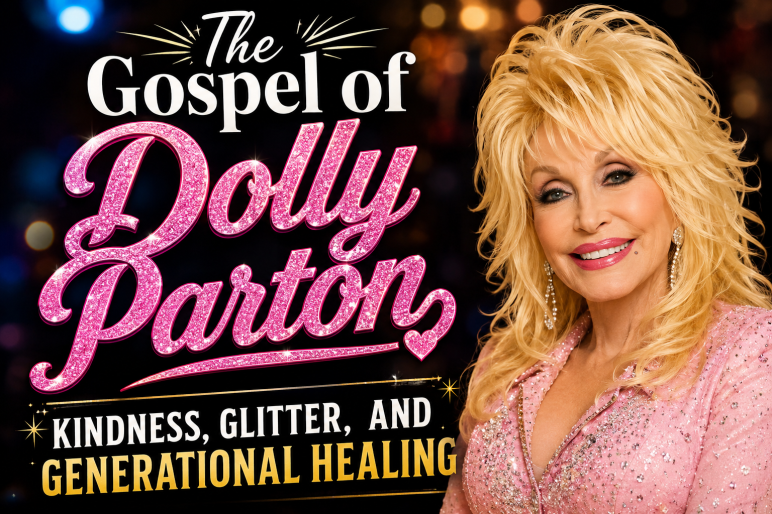
Light the charcoal. Pull up a chair. And let’s call the ancestors. Today, we’re about to talk about a woman whose legacy smells like warm biscuits, rhinestones, and generational healing. Dolly Parton wasn’t just a country singer. She was a walking love letter to humanity. A Southern phoenix who rose from the Smoky Mountains with a voice full of honey and a heart full of fire. And Lord, did she use that fire to light the way for all of us.
When we speak Dolly Parton’s name, we’re not just telling a story. We’re summoning a legacy stitched into the bones of the South, the nation, and every child who ever held a book and felt their world crack open with possibility.
Dolly wasn’t just a singer. She was a healer. A mountain-born miracle. A Southern woman who took her own childhood that was poor, barefoot, brilliant, and turned it into a mission to make sure no child, anywhere, ever felt small because of their circumstances.
She carried the Smoky Mountains in her voice. It was the sass of every Southern auntie who ever said, “Bless your heart. But fix your life.” And the tenderness of a mama who knows what it means to struggle and still show up with love. And when it came to children, Dolly didn’t play. She built an empire of hope one book, one song, one act of kindness at a time.
10 Things Dolly Did for All Communities (Especially the Ones Society Overlooked)
She created the Imagination Library, sendingover 200 million free books to children in rural, urban, poor, wealthy, Black, white, immigrant, Indigenous, disabled, LGBTQ+ families, and everyone. Dolly said literacy wasn’t a privilege. It was a birthright.
She made sure those books were culturally inclusive. They featured stories with diverse characters, languages, and experiences so every child could see themselves reflected in the pages.
She funded vaccine research by helping save lives during a global crisis without needing applause or credit.
She uplifted LGBTQ+ communities by loving loudly. Defending boldly. And showing up long before it was “safe” or trendy.
She championed women’s empowerment by proving you can be glamorous, soft, and still run an empire with steel in your spine.
She protected Appalachian culture by honoring the stories, music, and people who shaped her. And making sure the world respected them too.
She donated millions to disaster relief, especially in overlooked Southern and rural communities that often get left behind.
She built Dollywood, creating thousands of jobs and economic stability for families who needed hope and opportunity.
She supported literacy and education beyond books, funding scholarships, schools, and programs for children who grew up like she did full of potential but lacking resources.
She modeled radical kindness, showing the world that compassion is not weakness. It’s world-changing power.
Dolly didn’t just give books. She gave children a future. She gave parents hope. She gave communities pride. She gave generations a chance to dream bigger than their circumstances.
Dolly Parton walked through this world like a rhinestone-wrapped blessing. She didn’t ask permission to shine. She just did. And she made sure everyone around her felt the warmth of that glow. She was the kind of woman who could take her own childhood poverty and turn it into a global literacy movement. Who could take her pain and turn it into poetry. Who could take her sass and turn it into strength.
She taught us that kindness is a revolution. She taught us that generosity is a legacy. She taught us that beauty is not about perfection. It’s about authenticity. She taught us that you can be underestimated your whole life and still outwork, out love, and outshine every last person who doubted you. She didn’t just leave behind songs. She left behind libraries. She left behind hope. She left behind a blueprint for how to live with grace, humor, and unapologetic sparkle.
So, light the charcoal. Let the ancestors hum. Let the mountains echo her name. Because Dolly Parton didn’t just change country music. She didn’t just change philanthropy. She didn’t just change the South. She changed humanity one child, one book, one act of love at a time. Mic dropped. Sequins scattered. Legacy eternal.
Affirmation: I shine boldly. Give generously. And build a legacy of love just like Dolly taught me.
“Our childhood wasn’t supervised. It was witnessed.”
-This Puzzled Life
Light the charcoal. Bless the yard. We’re summoning the spirits of a generation raised on asbestos, sugar, and unmonitored chaos. A generation that survived childhoods so reckless they now qualify as folklore. Welcome to Growing Up in the 80s: A Survival Guide for the Barely Supervised. It’s where the toys were weapons. The adults were tired. And the safety standards were “Godspeed, child.” Get comfortable while we take a stroll through the hilarity of growing up Gen X in the 1980s.
Playgrounds: Where Childhood Went To Die.
The playground wasn’t a place to have fun. It was a government‑approved death trap. The metal slide? Forged in the fires of Mount Doom. By noon it was hot enough to brand cattle. You’d climb up. Sit down. And immediately lose three layers of thigh skin. And the equipment? Not equipment. Artifacts. One day a giant industrial truck tire would just appear. No explanation. No installation. Just a 400‑pound rubber monolith that rolled off an 18‑wheeler and onto the playground like, “Here. Climb inside this tomb and see what happens.”
I cannot end this part without mentioning the merry‑go‑round. It was a device clearly invented by someone who wanted to test the limits of the human skull. This wasn’t the cute, slow, musical carousel at the mall. No. This was a rusted metal centrifuge powered entirely by children with no impulse control. You’d hop on. Hold the bar with sweaty little hands and pray. The moment the older kids grabbed the rails and started running, you were no longer a participant. You were payload.
They’d spin that thing so fast your soul would leave your body and hover above the playground like, “Welp. This is how we meet Jesus.” If you lost your grip? You were slung off in a blaze of glory. Bouncing across the gravel like a loose hubcap on I‑10, while collecting rocks, dirt, and possibly a mild concussion.
And the adults? They didn’t intervene. They didn’t slow it down. They didn’t even look concerned. They’d just shrug and say, “That’s why you hold on tighter next time.” Meanwhile, the teachers assigned to playground duty were spiritually absent. You could be actively being decapitated. And they’d shout from across the field,“ If you’re bleeding, go to the office!”
Lawn Darts
Lawn darts were literal spears marketed as toys. You’d throw them into the sky and pray they didn’t come down in your skull. Parents watched from lawn chairs. And were drinking Tab and saying, “Be careful!” As if that would stop a 2‑pound metal projectile from piercing your femur.
Halloween: The Budget Was $3 and a Prayer
Our costumes were plastic trash bags with a picture of the character printed on the front. And a mask that smelled like melted crayons and carbon monoxide. The eye holes were never aligned with actual human eyes. So, we trick‑or‑treated like drunk raccoons bumping into mailboxes.
And the horror movies? Low‑budget masterpieces. Special effects made from ketchup packets and someone’s uncle’s old Halloween wig. But we watched them anyway. Because we were latchkey kids with no adult supervision. And a VCR that ate tapes like a hungry goat.
The Rotary Phone: A Weapon, A Workout, A Trap
Kids today will never know the terror of dialing a friend whose number had multiple 9s in it. You’d start dialing at 3 PM and finish sometime around dusk. And that phone cord? It could stretch from the kitchen. Through the living room. Out the front door. Down the driveway. And halfway to the neighbor’s house. Then it would wrap around your body like a boa constrictor with a grudge. And would drag you to the floor while your mom yelled, “Don’t you dare hang up! I’m talking to Aunt Sarah.”
Cigarette Smoke Everywhere
The 80s smelled like nicotine, Aqua Net, and generational denial. Restaurants had “smoking” and “non‑smoking” sections separated by a single fern. Airplanes had smoking sections. Hospitals had smoking sections. Your pediatrician? He’d walk in with a cigarette and say, “Your lungs sound tight.” Sir, I wonder why.
Tv Antennas
If you wanted to watch cartoons, someone had to climb onto the roof. Usually a child. Your dad would yell, “Turn it a smidge!” All while you clung to the chimney like a tiny lineman in a lightning storm. You would say, “Is it better now?” And they would reply, “No, you made it worse!” You were one gust of wind away from meeting Jesus.
Cereal With Enough Sugar To Stop A Hummingbird’s Heart
Our cereal wasn’t “part of a balanced breakfast.” It was diabetes in a box. The milk at the bottom turned into neon syrup that could power a small generator. And the commercials promised superpowers, speed, and happiness. They were all lies, but delicious ones.
Riding In The Back Of Pickup Trucks
Seatbelts? Not in the back of a truck. We’d bounce around like human popcorn. While our friend’s dad took corners at 40 mph. We waved at strangers like we were the Grand Marshals of the Unsupervised Children’s Parade.
Public Pools
Swimming in an 80s public pool was already a gamble. Public pools were cloudy cauldrons of mystery. You couldn’t see your own legs. The bottom was a rumor. And the smell of chlorine could peel paint off a Buick. You’d inevitably bump into something and pray it wasn’t a Band‑Aid or a rogue diaper.
But every now and then, the universe would spice things up with a code‑brown catastrophe. You’d be dog‑paddling through that murky soup. When suddenly the lifeguard, a sunburned 16‑year‑old, who hadn’t cared about anything all day. And would rather die than get in the water. Would suddenly come alive. They’d blow their whistle like they were signaling the end times, waving their arms, and screaming, “Everybody Out! Everybody Out Now!”
And then you’d see it. Floating. Majestic. Unbothered. A lone turd drifting across the surface like it was the captain of its own ship. And charting a course straight through the deep end. Kids would scatter. And they were climbing out of the pool like panicked wet cats. Slipping. Screaming. And traumatized. Moms would grab their children like they were rescuing them from a burning building. And the lifeguard? They’d stand there. Whistle still in their mouth. And staring at the water like, “I don’t get paid enough for this.” We didn’t have sharks in pools. We had floaters.
Mosquito Trucks & Ice Cream Trucks
Southern summer evenings in the 80s had two sacred sounds. The jingle of the ice cream truck. And the low, ominous rumble of the mosquito truck rolling through the neighborhood like a mobile cancer dispenser. The mosquito truck would creep down the street. While spraying a thick, white fog of chemicals so potent it could kill a roach at 50 yards. And what did we do? We ran toward it.
We’d get two steps from the bumper. Arms outstretched. And inhaling that cloud like it was the breath of life itself. Kids today have essential oils and organic bug spray. We had government‑issued carcinogens and the lung capacity of Olympians. We’d dance in that fog like feral woodland spirits. Coughing, laughing, and probably shaving five years off our lifespan. While our parents stood on the porch waving like, “Y’all stay where we can see you!”
And then. The moment the fog cleared. The ice cream truck would appear like a reward for surviving the chemical baptism. We’d sprint toward it. Pockets full of sweaty quarters. Ready to buy a popsicle shaped like a cartoon character whose eyes were always crooked. And whose flavor was “red.” Poison cloud, then ice cream. A perfect system.
Stranger Danger Training
Our entire safety curriculum was, “Don’t get in a van.” That was it. Then they’d send us outside for 10 hours with no supervision, no sunscreen, and no water bottle. We roamed the neighborhood like feral raccoons with bikes. And helping ourselves to anyone’s yard that had a visible garden hose.
No YouTube, No Cell Phones, No Dollar Tree
My 10‑year‑old hears this and acts like I grew up in the prehistoric era. Back in my day, if you wanted to learn something, you had to ask a grown‑up (who might lie). Ask a friend (who would definitely lie). Or check the encyclopedia (which was older than your grandma). And Dollar Tree? Didn’t exist. If you wanted cheap toys. You had to wait for a gas station to put something on clearance. Usually because it had faded into a new color.
The Satanic Panic: Southern Edition
The South in the 80s was convinced the devil lived in rock music, Dungeons & Dragons, black clothing, and Halloween, Oh, and anyone who didn’t go to church three times a week. You couldn’t even be friends with a Methodist without someone whispering, “Don’t you go sellin’ your soul now.”
Big Hair Bands
Men wore eyeliner, leather pants, and hair so teased it could block a doorway. Nobody questioned it. We said, “This is masculinity. This is art. This is culture.” And then there was R&B. Those songs were so sensual you needed birth control just to listen to them. You’d be nine years old hearing lyrics that made you blush and wonder if you needed to talk to a priest.
Nature As Weaponry
We didn’t have Nerf guns. We had sticks. Sticks that became Spears, Rifles, Swords, Magic wands, and occasionally, a snake. We played cowboys and Indians, cops and robbers, and dramatic death scenes worthy of an Oscar.
Childhood Mental Health Was A Mythical Concept
If you were stressed, anxious, or overwhelmed, adults said, “Go outside.” “Stop crying.” “You’re fine.” “Kids don’t get stressed.” Meanwhile, we were out here processing trauma with a Capri Sun and a bike with no brakes.
Prank Calls
Before caller ID, we were chaos. We’d flip through the phone book. Which was an actual book. And call someone named Margarita to ask if her husband was Jack Daniels and her dog was Tequila. Or we’d call strangers at 1 AM and ask, “Do you know how to cook a blueberry pie?” And we did all this sober. Because we had to create our own fun without electronics.
Cameras
Taking pictures was a gamble. You’d take 24 photos. Wait three weeks. Pay $12.99. And discover blurry faces and closed eyes. Sometimes thumbs over the lens. A strange photobombing. Or the entire roll blank because someone forgot to load the film. There was no delete button. Just shame.
And now here we are. Veterans of the 80s. We have scars both physical and emotional. And needing therapy where we now have to process our entire lives. All while trying to survive our own children. Who now need hydration schedules, emotional check‑ins, and sunscreen applied with the precision of a NASA engineer. We watch helicopter moms circling the playground. Adjusting knee pads. Putting toddlers on leashes. And we just smile. Because we know the truth. We survived the 80s. We can survive anything. Even this. Thanks for reading! And I hope this was the brightest spot of your day. Please leave a comment about other hilarious things from the 80’s that we Gen X might remember.
Affirmation: I honor the feral resilience that raised me. I survived metal slides, mosquito fog, and lawn‑dart warfare. So, today’s challenges don’t scare me. I am built from grit, humor, and pure Gen X immortality.
“If the 80s taught me anything, it’s that danger builds character. And apparently more trust than modern governance.”
-This Puzzled Life
Light the charcoal. We’re about to smoke out some truth hotter than a Mississippi July with no AC and a broken ceiling fan. I’m talking about the 1980s. The era where children were basically raised by asbestos, sugar, and unregulated chaos. And somehow all ten of these hazards still feel more reliable than anything coming out of the current administration. According to what many people online joke about when comparing political frustrations to nostalgic dangers. So, buckle up. Preferably with a seatbelt that doesn’t lock. Fray. Or snap like the ones we had in ’84.
10 Dangerous Things From the 80s I Trust More Than the Current Administration
1. Metal Playgrounds That Reached the Temperature of Satan’s Forehead
Those slides would sear the skin clean off your thighs. But at least they were consistent. Predictable. Honest. They said, “Climb me and you will suffer.” And they delivered every time.
2. Lawn Darts
The 80s handed children spears and said, “Go outside.” And you know what? Those spears had more accountability than anything happening in Washington.
3. Station Wagons With No Seatbelts in the Back
We rolled around like loose produce in a grocery sack. But somehow we survived. Meanwhile, some people online say they feel like modern political decision-making is the real crash hazard.
4. The Original Easy-Bake Oven
Powered by a literal light bulb hot enough to melt a Barbie leg. And yet? Still felt safer than certain policy rollouts.
5. Tang
A powdered beverage that tasted like citrus-flavored drywall. But it never pretended to be anything else. A level of transparency many folks online wish they saw more often.
6. Those Giant Wooden Cable Spools We Used as Furniture
Splinters? Absolutely. Structural integrity? Questionable. But they held up better than some public promises.
7. Slip ’N Slides on Concrete
We didn’t have lush lawns. We had optimism and a hose. And even that felt like a more thought-out plan than some national strategies people complain about.
8. The McDonald’s Play Place Ball Pit
A microbial swamp of mystery fluids and lost socks. But at least the danger was visible. Tangible. Honest.
9. 80s Hair-Spray Clouds
We walked through enough aerosol to punch a hole in the ozone layer. But at least Aquanet never flip-flopped on its mission. It would hold that hair like your life depends on it.
10. The Sears Catalog Weight Set
Rusty. Questionable. Missing instructions. But it still felt more stable than the vibes coming out of D.C., according to many frustrated folks.
And that’s it. Ten relics of 80s chaos that could’ve taken us out at any moment. Metal slides that branded our thighs. Lawn darts that doubled as medieval weaponry. And Slip ’N Slides that were basically chiropractic roulette. And somehow, all that reckless nostalgia still feels sturdier than the national decision-making process folks online love to fuss about. If that ain’t Southern truth wrapped in neon spandex, I don’t know what is.
Let me tell you something. If surviving the 80s taught us anything, it’s that we were forged in a lawless era where children drank from garden hoses. Rode in the back of pickup trucks doing 70 on a gravel road. And ate popsicles that tasted like freezer burn and lead paint. We were raised by chaos, negligence, and whatever was on sale at K‑Mart. And somehow we still came out sturdier than the governmental circus folks keep hollering about these days.
Here’s the truth wrapped in a biscuit. The 80s didn’t pretend to protect us. They didn’t pat us on the head and say, “We’ve got this under control.” They didn’t hand us a flaming lawn dart and call it “innovative policy.” No, ma’am. The 80s looked us dead in the eye and said, “Listen, this might kill you. Good luck.” And honestly? That level of transparency feels downright refreshing compared to the current vibes.
So yes. Give me the metal slides, asbestos ceiling tiles, the unregulated fireworks, the neon‑soaked danger, the questionable snacks, the ozone‑destroying hair spray, and the Slip ’N Slide that doubled as a chiropractic emergency. At least those threats were honest. At least those hazards didn’t smile in my face while tripping me from behind.
And if that stings, light the charcoal. Because truth always cooks hotter than the grill. Now excuse me while I go pour myself a glass of sweet tea strong enough to dissolve a spoon. And pray for the strength of an 80s kid who survived Tang, lawn darts, and Reaganomics. Because apparently we’re gonna need it.Now pass me the charcoal. I’ve got more truth to smoke out.Mic dropped so hard it cracked the linoleum. Thanks for reading! What is your opinion?
Affirmation: I move through this world with the confidence of an 80s kid who survived. My resilience is vintage. My sass is eternal. And my trust is reserved for things that actually earn it.
“PTSD doesn’t check uniforms. It checks histories. And some of us survived wars nobody ever saw.”
-This Puzzled Life
Light the charcoal. Sprinkle the sage. Today we’re not just cleansing the room. We’re cleansing the generational nonsense that keeps trying to set up a timeshare in our nervous systems. And apparently we’re gonna need both if we’re talking about PTSD. And the world still thinks it only comes issued with a uniform, dog tags, and a government contract.
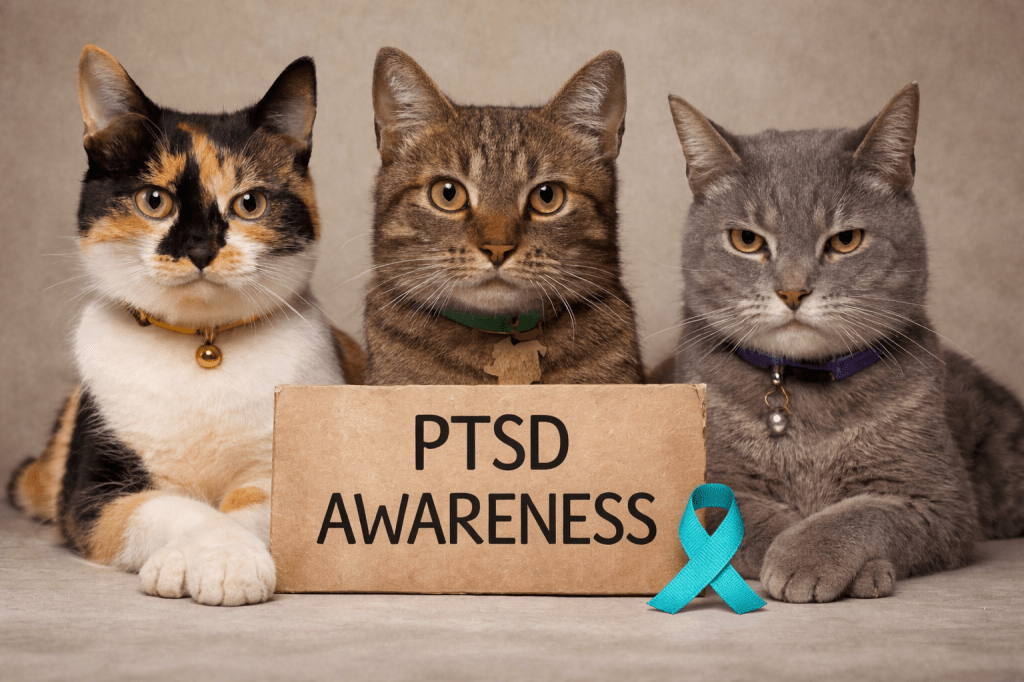
I’m standing in my kitchen like a bootleg priestess of the Deep South. I’m waving smoke around like I’m trying to reboot the Wi‑Fi of my soul. The sage is burning. The charcoal is crackling. And my cats are staring at me with the same expression Southern aunties use when you tell them you’re “working on your boundaries.”
The air is thick with incense and unprocessed childhood memories. The vibe is “haunted but trying.” The soundtrack is the soft hum of trauma responses warming up like an old truck in winter.And behind me, my cats have formed a semi‑circle like a furry tribunal.
Piper: “Is this the trauma purge or the ‘Mama read another psychology article’ ritual?”
Tinkerbell: “No, this is the one where she tries to heal her inner child but ends up reorganizing the spice cabinet.”
Coco: “I’m only here because she dropped a Cheez-It earlier. And I’m hoping for a sequel.”
Meanwhile, I’m over here trying to explain to the universe loudly, with hand gestures, that PTSD is not some exclusive club where you need a military ID and a buzz cut to get in. Trauma doesn’t check credentials. Trauma doesn’t ask for your DD‑214. Trauma shows up like, “Hey girl, I heard you survived something awful. Mind if I stay forever and rearrange your brain chemistry?” And the universe is like, “Sure, pull up a chair.”
So here we are. Me, my cats, my sage, my charcoal, my trauma, and my determination to laugh about it before it eats me alive. If there’s one thing the South taught me, it’s this, “If you can’t laugh at your pain, it will absolutely laugh at you first.”
Let me set the scene. I’m standing in my kitchen. Sage smoking like I’m trying to summon every ancestor who ever survived a generational curse, a bad haircut, or a church potluck. My cats are watching me like I’m performing a ritual to resurrect the last bag of Temptations.
Piper squints at me.
Piper: “Is this the trauma cleansing or the insomnia exorcism? I need to know which meeting I’m attending.”
Coco: “Wake me up when the stinky flower medicine comes out. That’s when she stops pacing like a raccoon in a Dollar General parking lot.”
Tinkerbell: “Neither. This is the ‘Mama read something online again’ ceremony.”
Every time I talk about PTSD, somebody somewhere says, “But you weren’t in the military.” And I’m like, “Correct. But I was in my childhood. And frankly, that was its own kind of deployment.” PTSD does not check your résumé. It does not ask for your service record. It does not care if your trauma came from a battlefield, a backwoods childhood, a toxic relationship, a medical emergency, or that one time your mee-maw threw a shoe at you with the accuracy of a Navy Seal. Trauma is trauma. And PTSD shows up like an uninvited cousin at Thanksgiving. It’s loud. Unpredictable. And absolutely refusing to leave. Meanwhile, my cats are holding their own support group.
Piper: “Her insomnia is so bad I’ve started sleeping in shifts.”
Coco: “I tried to keep up once. I saw the sun rise twice in the same day. I’m still not okay.”
Tinkerbell: “I’ve filed a formal complaint with HR. HR is also her. It’s not going well.”
Big Pharma has a pill for everything. Which including the side effects of the pill you took for the side effects of the pill you took for the original pill. And half of them end up in lawsuits. And apparently the medication was also causing spontaneous combustion or turning people into werewolves. Meanwhile, cannabis is over here like, “Hey girl, wanna sit down and breathe for a minute?” And when I pull out the flower medicine, the cats perk up like I just announced a family meeting.
Piper: “Ah yes, peace is coming.”
Coco: “Finally, she’ll stop reorganizing the pantry at 3 AM.”
Tinkerbell: “Blessed be the bud that calms the beast.”
Suddenly the whole house exhales. The walls stop vibrating. The anxiety gremlins go back to bed. The cats reclaim their rightful positions as tiny loaf-shaped monarchs. And with the current state of our nation, the number of people developing PTSD is probably about to skyrocket. We’re all one news headline away from needing a weighted blanket, a therapist, and a federally funded emotional support possum.
If you’ve got PTSD and you didn’t get it from war, guess what? You’re not alone. You’re not broken. You’re not dramatic. You’re not “overreacting.” You’re just a human who lived through some stuff that your brain is still trying to file correctly. And if anyone tries to tell you PTSD is only for soldiers, send them my way. I’ll let 13 explain it. She’s the mean one.
Roll the flower. Because healing isn’t a uniform. It’s a revolution. And in this house, we honor every survivor, every story, and every cat who has ever witnessed a 4 AM trauma spiral and stayed anyway. Thanks for reading! And keep moving forward.
Affirmation: My trauma is valid, my healing is sacred, and I refuse to shrink my story just because someone else can’t imagine surviving it.
“When the places built to protect children become the places that break them, the wound isn’t just personal. It’s a failure of every adult who chose silence over responsibility.”
-This Puzzled Life
Light the candles. Move the breakables. Tell the ancestors to take their seats and pass the sweet tea. We’re not easing into this one. And before the denial committee calls an emergency meeting to rehearse their “But that’s not what we meant” speeches, let’s go ahead and say the quiet part out loud.
Child abuse doesn’t just happen in the home. It happens in classrooms where teachers misuse authority. In churches where “discipline” is weaponized. In sports programs where adults confuse control with coaching. In friend groups where older kids exploit younger ones. And in any space where a child’s safety depends on an adult’s integrity, and that integrity fails.
Let me say this in the clearest way I know how. And coming from someone who personally knows a little something on this topic, what happened to you was abuse. And it was a betrayal of power. Schools and other places are supposed to be safe. Adults in those buildings are supposed to protect children. You were not protected. And when abuse happens in a place that claims to be safe, the damage hits on multiple layers at once. It’s not just the act itself. It’s the collapse of every structure that was supposed to shield you.
You were a child. They were adults. The responsibilities were never equal. The conflict you still feel between “their job” and “your role” is a direct result of their failure, not yours. The tactics you endured weren’t just harmful. They were calculated. “Diabolical” would be the right word. The cruelty, the gaslighting, the public humiliation? These are methods designed to break a person’s sense of reality and self‑worth. Many adults would crumble under that kind of psychological warfare. Expecting a child to withstand it is unthinkable. And, yet, if you’re reading this, you did. Not because you should have had to. Not because you were equipped for it. But because you had no choice. That’s not resilience by choice. That’s survival by necessity.
Here are a few sources you might want to dive into.
1. Most child abuse is never reported (all types)
U.S. Department of Justice – Bureau of Justice Statistics“86% of child abuse cases are never reported to authorities.” 🔗 https://bjs.ojp.gov/content/pub/pdf/cv22.pdf (bjs.ojp.gov in Bing) (See section on underreporting of violent crime against children.)
2. Children often disclose abuse but are ignored or silenced
Health & Social Care in the Community (2025) Study on child maltreatment disclosures found that children frequently disclose abuse (physical, emotional, sexual, neglect) but are ignored, dismissed, or punished by adults. 🔗 https://onlinelibrary.wiley.com/doi/10.1111/hsc.14336(onlinelibrary.wiley.com in Bing)
3. Delayed disclosure is common across ALL abuse types
Note: While this journal focuses on sexual abuse, the institutional‑betrayal patterns. It’s documents are identical across physical, emotional, and psychological abuse.
5. Teachers and school staff rarely report abuse, even when required by law
The wound you carry makes sense. Trauma doesn’t fade just because time passes. It imprints itself. It becomes a landmark in the psyche. And something you walk around, navigate, and learn to live beside. Therapy can help you understand it. But it can’t erase the fact that it happened. And that it shouldn’t have happened. The gaslighting you endured stole something fundamental. Your ability to trust your own perception.
When adults deny a child’s reality, the child learns to doubt themselves. When they shame a child publicly, the child learns their existence is a problem. When adults ignore a child’s cries for help, the child learns that safety is conditional or imaginary. That’s not a child “being dramatic.” That’s a child being abandoned. And then abandonment by the very people who were supposed to protect you happened. The people you trusted were identified as educators, authority figures, and other adults in power. And that leaves a wound that is both emotional and existential. You were trapped. And that was not your fault.
A child cannot escape a system built around them. A child cannot “just tell someone” when the people they’re supposed to tell are the ones causing the harm or ignoring it. A child cannot “make better choices” when every direction is blocked. You survived in the only ways available to you. Your mind did what it had to do. Your body did what it had to do. Your spirit did what it had to do. Survival is not shameful. Survival is not weak. Survival is not something you owe anyone an explanation for.
And the fact of the matter is that THE FAILURE WAS THEIRS. NOT YOURS. You were a child. They were adults. They had power. You had none. The responsibility was theirs. The consequences were yours. And that imbalance is the injustice you’re naming. What you lived through would have broken many adults. The fact that you’re here speaking and naming it is refusing to let it stay buried. And that is strength. Even if it doesn’t feel like it. Thanks for reading! And do your part to help protect our children.
Affirmation: “I honor the child who survived what no child should face. I am not defined by what was done to me. I am defined by the courage it takes to speak it.”
“What cannot be communicated to the mother cannot be communicated to the self.”
-John Bowlby
Light the charcoal. Sprinkle the sage. Negative energy go away.Some topics require us to slow down, breathe deeper, and open our hearts a little wider. Children of Addiction Awareness is one of those topics that are tender, urgent, and often hidden in plain sight. When we talk about addiction, the conversation usually centers on the person struggling. But in the quiet corners of those stories are children who carry the weight of what they cannot name.
They are not statistics. Not headlines. Not “someone else’s problem.” They are real kids. Real families. Real hearts trying to grow in soil that isn’t always steady. You don’t need a degree or special training to understand this. However, you just need to know this. When addiction lives in a home, children feel it in their bones. Even when they don’t have the words. Even when they pretend everything is fine.
Children growing up in homes affected by addiction often learn to read emotional weather patterns before they learn to read books. They become experts at sensing tension, anticipating conflict, and adjusting themselves to survive unpredictable environments.
They are the kids who:
Tiptoe around moods.
Become caretakers far too young.
Hide their fear behind perfection or silence.
Carry secrets that feel too heavy for their age.
Love their parents fiercely, even when life feels chaotic.
These children are not defined by the addiction around them. But they are shaped by it in ways that deserve understanding, compassion, and support.
Kids who grow up around addiction often learn to:
Stay quiet
Stay small
Stay out of the way
Stay “strong” even when they’re hurting
They become experts at reading moods, hiding feelings, and pretending everything is okay even when it’s not.
Growing up with addiction in the home can create emotional landscapes that are confusing and overwhelming. Many children experience:
Unpredictability: never knowing what version of a parent will appear.
Emotional neglect: not from lack of love, but from addiction’s consuming nature.
Role reversal: becoming the “adult” in the home.
Isolation: believing no one else lives this way.
Hypervigilance: always on alert for the next crisis.
And yet, these same children often develop extraordinary strengths: empathy, intuition, resilience, and emotional intelligence. They learn to survive in ways that would humble most adults.
But survival is different from thriving. Awareness is the bridge between the two. These children don’t need perfect parents. They don’t need someone to “fix” everything. They don’t need pity.
They need:
Consistency
Predictability
A safe adult who listens without judgment
Reassurance that none of this is their fault
Permission to feel their feelings — all of them
Sometimes the most healing words a child can hear are: “You didn’t cause this. You can’t control this. You are not alone.”
Whether you’re a teacher, neighbor, mentor, family member, or simply a caring human, you can make a meaningful difference.
Create safe spaces for conversation.
Model healthy coping skills.
Offer stability and routine.
Validate their emotions.
Connect them to supportive resources.
You don’t need a degree to change a child’s life. You just need to show up consistently, compassionately, and without judgment.
For the parents struggling with addiction, this conversation is not here to shame you. It’s here to remind you that healing is possible for you and for your child. Your effort matters. Your recovery matters. Your presence matters more than perfection ever could. Children don’t need flawless parents. They need honest ones. They need parents who try, who apologize, who grow, who keep coming back to love. Every step you take toward healing is a step toward breaking generational cycles.
Children of Addiction Awareness is not just a month, it’s a movement toward visibility, compassion, and collective responsibility. When we acknowledge these children, we give them language. When we give them language, we give them power. And when we give them power, we give them hope. So, take a breath and hold this truth close: Awareness opens the door. Connection keeps it open. Love walks a child through. Thanks for reading! Keep HOPE alive.
Affirmation: I didn’t cause it, I can’t control it, but I can take care of myself.