
The Kids Are in Cages And Some Americans Are Cheering

“A society that traumatizes its children cannot call itself free. It can only call itself unfinished.”

-This Puzzled Life

Light the charcoal. If we’re going to talk about what’s happening to an entire generation of kids in this country, we might as well acknowledge the smoke, the heat, and the fact that someone, some system, keeps pretending they don’t smell the fire they started.

That’s what I tell myself every time the news hits too hard. When the stories feel too big, When the grief gets stuck in my throat. Grounding myself is the only way I can face the reality that children in our country are being traumatized by the very systems that claim to protect them.
And it’s not the “kids these days have it rough” kind of trauma. Not the “life is hard, they’ll be fine” kind of trauma. No. I’m talking about the kind that leaves scars you can’t see but can feel for a lifetime. We’re watching children grow up in a society that keeps calling them “resilient,” as if resilience is a prize and not a survival mechanism. As if being traumatized is some kind of character‑building exercise.

Oh, congratulations, you’ve unlocked Level 10 Emotional Endurance. Your reward is more adversity. And sarcasm is the only seasoning that makes this palatable. Because the truth is bitter. Our government’s dysfunction, cruelty, and chaos are shaping our kids in ways we won’t fully understand for decades.

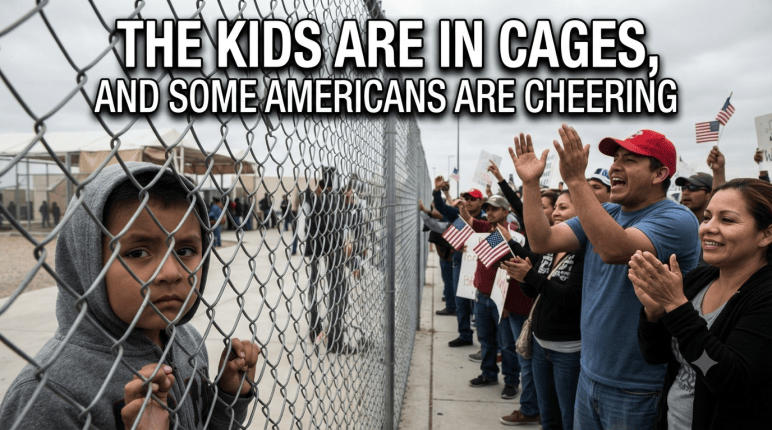
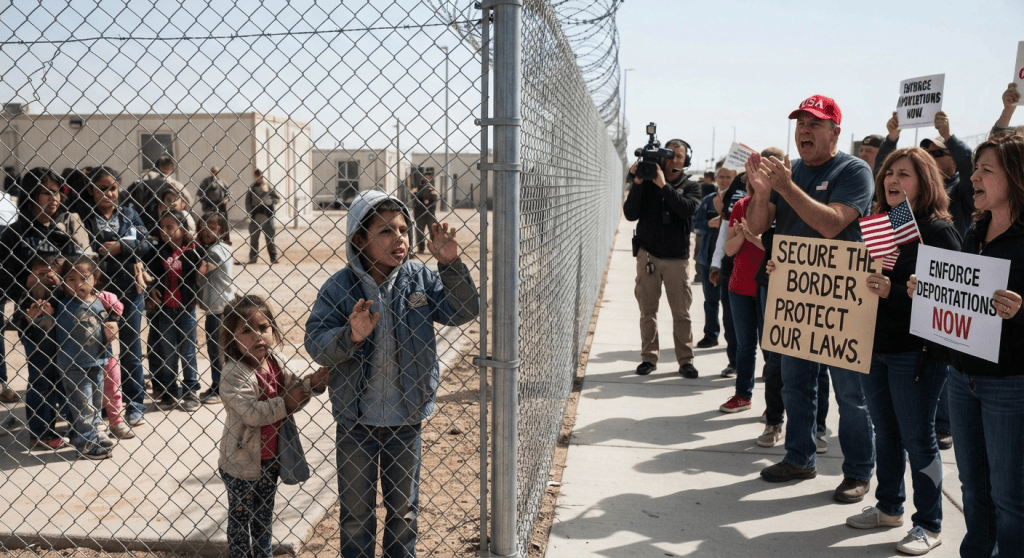
Children are absorbing fear like secondhand smoke. They’re inhaling uncertainty. They’re watching adults crumble under policies and crises that never should’ve existed in the first place. And while all this is happening, we are living in a nation where children are having their parents ripped from their arms. Families are separated like someone is sorting laundry instead of human beings. Kids, actual kids, are being put in cages. Some Americans are cheering for it, proudly declaring, “They deserve it.”

And while they cheer, children are being:

  • Physically abused
  • Sexually abused
  • Forced to work for around $1 an hour
  • Fed food with worms
  • Denied medical care

This isn’t metaphor. This isn’t exaggeration. This is happening on our soil. And we’re supposed to pretend this won’t shape an entire generation? We already have a mental health crisis bursting at the seams. It’s understaffed. Underfunded. And overwhelmed. Kids are learning anxiety before they learn multiplication. They know the word “lockdown” before they know “confidence.” They watch adults fight for basic rights and think that’s just how life works. This isn’t resilience. This is trauma dressed up as “normal.” And the worst part? We’re gaslit into believing this is just the way things are now. Like the trauma is a feature, not a bug.

But here’s the mic drop. Trauma doesn’t disappear. It compounds. It grows roots. It becomes generational. And when you plant fear, instability, and cruelty in children, you don’t get a stronger society. You get a wounded one. We are cooking a future we are not prepared to eat. Because the children who survive this. Who grow up in cages. Who grow up watching their parents taken. Whoever grow up being told by a cheering crowd that their suffering is deserved, they will carry this with them into adulthood. Into parenthood. And into society.

We are not raising resilience. We are raising trauma survivors. And the people cheering? They don’t realize they’re cheering for a future that will haunt all of us. This isn’t politics. This is humanity. Or the lack of it. A society that harms children, any children, cannot call itself moral. It can only call itself complicit. Thanks for reading! And wake up America. Our children need protecting.

Affirmation: I refuse to be numb to what hurts us. I see the truth. I speak the truth. And I protect the next generation with my voice, my heart, and my fire.

***Don’t forget to watch the video!***

#ThisPuzzledLife
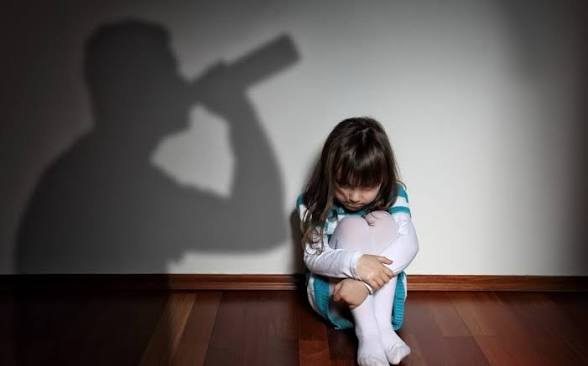
Children of Addiction: The Invisible Story

“What cannot be communicated to the mother cannot be communicated to the self.”

     -John Bowlby

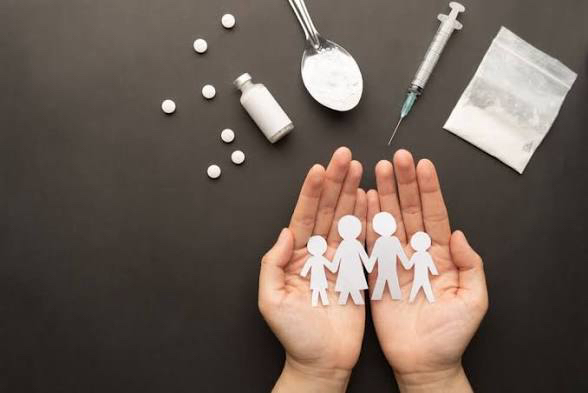
Light the charcoal. Sprinkle the sage. Negative energy go away. Some topics require us to slow down, breathe deeper, and open our hearts a little wider. Children of Addiction Awareness is one of those topics that are tender, urgent, and often hidden in plain sight. When we talk about addiction, the conversation usually centers on the person struggling. But in the quiet corners of those stories are children who carry the weight of what they cannot name.

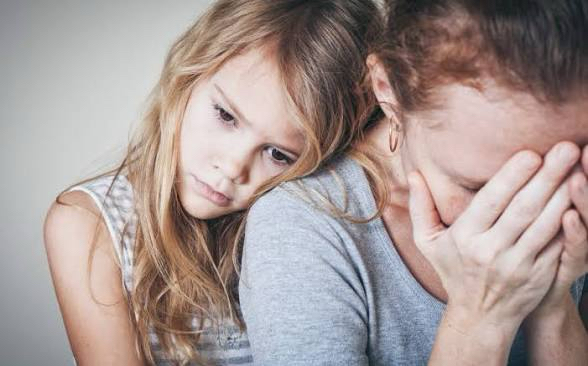
They are not statistics. Not headlines. Not “someone else’s problem.” They are real kids. Real families. Real hearts trying to grow in soil that isn’t always steady. You don’t need a degree or special training to understand this. However, you just need to know this. When addiction lives in a home, children feel it in their bones. Even when they don’t have the words. Even when they pretend everything is fine.

Children growing up in homes affected by addiction often learn to read emotional weather patterns before they learn to read books. They become experts at sensing tension, anticipating conflict, and adjusting themselves to survive unpredictable environments.

They are the kids who:

  • Tiptoe around moods.
  • Become caretakers far too young.
  • Hide their fear behind perfection or silence.
  • Carry secrets that feel too heavy for their age.
  • Love their parents fiercely, even when life feels chaotic.

These children are not defined by the addiction around them. But they are shaped by it in ways that deserve understanding, compassion, and support.

Kids who grow up around addiction often learn to:

  • Stay quiet
  • Stay small
  • Stay out of the way
  • Stay “strong” even when they’re hurting

They become experts at reading moods, hiding feelings, and pretending everything is okay even when it’s not.

Growing up with addiction in the home can create emotional landscapes that are confusing and overwhelming. Many children experience:

  • Unpredictability: never knowing what version of a parent will appear.
  • Emotional neglect: not from lack of love, but from addiction’s consuming nature.
  • Role reversal: becoming the “adult” in the home.
  • Isolation: believing no one else lives this way.
  • Hypervigilance: always on alert for the next crisis.

And yet, these same children often develop extraordinary strengths: empathy, intuition, resilience, and emotional intelligence. They learn to survive in ways that would humble most adults.

But survival is different from thriving. Awareness is the bridge between the two. These children don’t need perfect parents. They don’t need someone to “fix” everything. They don’t need pity.

They need:

  • Consistency
  • Predictability
  • A safe adult who listens without judgment
  • Reassurance that none of this is their fault
  • Permission to feel their feelings — all of them

Sometimes the most healing words a child can hear are: “You didn’t cause this. You can’t control this. You are not alone.”

Whether you’re a teacher, neighbor, mentor, family member, or simply a caring human, you can make a meaningful difference.

  • Create safe spaces for conversation.
  • Model healthy coping skills.
  • Offer stability and routine.
  • Validate their emotions.
  • Connect them to supportive resources.

You don’t need a degree to change a child’s life. You just need to show up consistently, compassionately, and without judgment.

For the parents struggling with addiction, this conversation is not here to shame you. It’s here to remind you that healing is possible for you and for your child. Your effort matters. Your recovery matters. Your presence matters more than perfection ever could. Children don’t need flawless parents. They need honest ones. They need parents who try, who apologize, who grow, who keep coming back to love. Every step you take toward healing is a step toward breaking generational cycles.

Children of Addiction Awareness is not just a month, it’s a movement toward visibility, compassion, and collective responsibility. When we acknowledge these children, we give them language. When we give them language, we give them power. And when we give them power, we give them hope. So, take a breath and hold this truth close: Awareness opens the door. Connection keeps it open. Love walks a child through. Thanks for reading! Keep HOPE alive.

Affirmation: I didn’t cause it, I can’t control it, but I can take care of myself.

***Don’t forget to watch the video!***

#Thispuzzledlife