
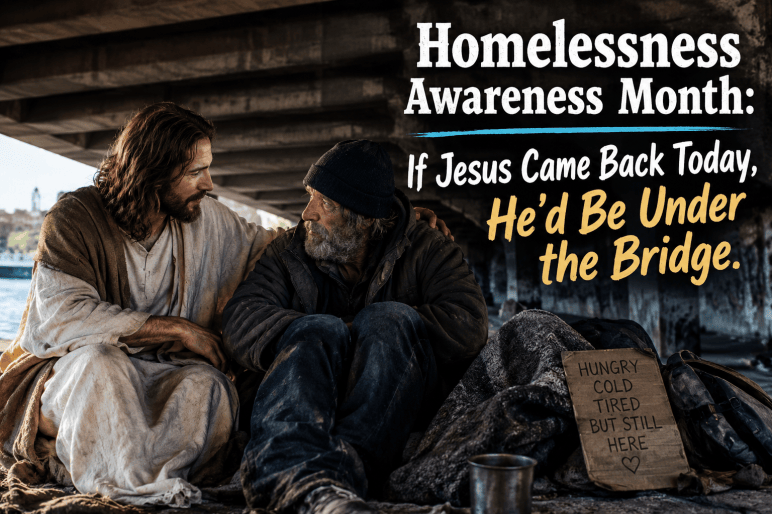
Homelessness Awareness Month: If Jesus Came Back Today, He’d Be Under the Bridge

“Homelessness doesn’t erase humanity. Judgment does. Compassion is the currency that never runs out.”

-This Puzzled Life

Light the charcoal, y’all. This topic needs heat, smoke, and a whole backyard‑level truth‑telling session. Pull up a lawn chair. Grab a sweet tea. And brace yourself. Because we’re about to talk about National Homelessness Awareness Month in a way that might make a few folks’ halos slip. And their Sunday‑school smiles twitch.

Let me paint the scene. The sun’s setting. The grill’s popping. Cicadas are screaming like they’re being paid by the decibel. And I’m standing there thinking about all the people society pretends not to see. The folks who sleep under bridges while others drive over them on the way to brunch. The ones who get judged harder than a contestant on America’s Got No Compassion. The ones who carry stories heavier than the cast‑iron skillet your grandma used to threaten people with.
And I’m thinking about how I’ve worked with the homeless professionally. Not from a distance. Not from a clipboard. But shoulder‑to‑shoulder and heart‑to‑heart. I’ve laughed with them. Cried with them. Listened to them. And learned from them. And I’ve been homeless myself. So, I know exactly what it feels like when society decides you’re suddenly “less than.” Like your humanity evaporated the moment your address did.

So yeah, light the charcoal. Because this conversation deserves the kind of slow‑cooked honesty that only comes from lived experience, southern sass, and the kind of truth that makes people stare at the floor and rethink their life choices. Let’s get into it.

There is a cruel, unfair, downright lazy stigma attached to homelessness. And it’s weaponized with Olympic‑level precision. People act like homelessness is a personality trait instead of a circumstance. They judge folks who are already hurting. Already fighting. And already carrying trauma that would fold most people like a Dollar General lawn chair. And they judge with the confidence of someone who thinks Jesus Himself is running an HR department and actively hiring new judges. Spoiler alert: He isn’t.

Homeless people are not broken. They are not dangerous. They are not “less than.” They are human beings navigating a world that often treats them like background scenery. And let me tell you something from experience that is both professional and personal. Homeless people are some of the most rewarding, honest, soul‑rich humans you will ever meet.

They don’t sugarcoat. They don’t pretend. They don’t hide behind fake politeness or performative kindness. Their opinions are real. Sometimes blunt enough to peel paint. But real in a world drowning in curated personas and judgmental whispers.

Meanwhile, society? Society will judge you faster than a church lady spotting someone wearing flip‑flops to service. They’ll weaponize stigma like it’s a spiritual gift. They’ll kick people who are already down and then ask why they don’t stand up straighter. And that is everything Jesus wasn’t.

Jesus didn’t avoid people because they were struggling. He didn’t cross the street to avoid someone who looked “rough.” He didn’t ask for a résumé, a credit score, or a background check before offering compassion. He sat with the people society threw away. He fed them. He healed them. He loved them. So why do we act like homelessness is contagious, but judgment isn’t? Why do we treat people like they’re invisible until they make us uncomfortable? Why do we pretend compassion is a luxury item instead of a basic human responsibility? Homelessness is not a moral failure. It’s a circumstance. And circumstances change. But humanity? Humanity stays.

And the homeless community? They are some of the strongest, funniest, most resilient people walking this earth. They carry hope in places most folks wouldn’t survive for five minutes.

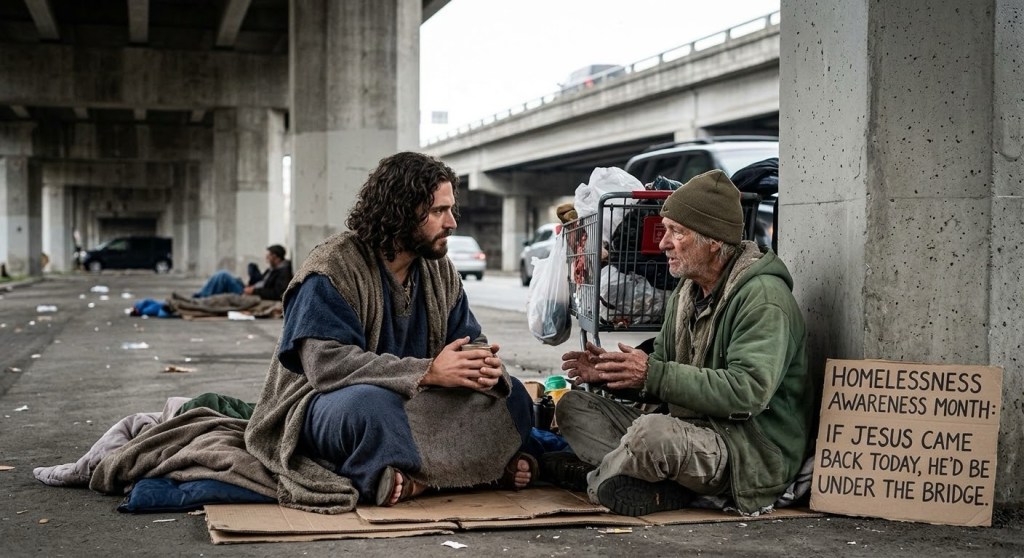
So, as we honor National Homelessness Awareness Month, let’s stop acting like kindness is a coupon that expires. Let’s stop pretending people are invisible just because their struggles make us squirm. And let’s remember that if Jesus came back today, he wouldn’t be brunching with the HOA board or sipping mimosas with the “We Don’t Give Cash, Only Thoughts and Prayers” committee. He’d be under the overpass. Handing out food. Hugging people. And telling the rest of us to stop being ugly.

If you want to help? Start with your heart. If you want to judge? Go ahead and apply at Jesus’ HR department. But I hear the interview includes a pop quiz on humility. And a background check for compassion, so good luck. Charcoal still hot. Message delivered.

Affirmation: I choose compassion over stigma. Truth over assumptions. And humanity over judgment. In myself and in others.

***Don’t forget to watch the video!***’

#ThisPuzzledLife
I am Jane Doe

My name is Jane Doe, 

and I learned too young that silence has a pulse. 

It thumps in the throat, it bruises the air, 

it teaches you how to fold yourself into something 

small enough to survive the night.

I did not choose this name

it was handed to me the moment someone decided 

my body was theirs to trespass. 

A name for the unnamed, 

for the girls who disappear inside themselves 

because speaking feels like stepping back into the fire.

I carry memories that shake 

even when my hands look still. 

I carry nights that never end, 

questions that never had answers, 

and a childhood that was rewritten by someone else’s violence.

My name is Jane Doe, 

because the world prefers me faceless 

it’s easier that way. 

Easier to ignore the trembling, the aftermath, 

the way a soul limps long after the body looks healed.

But I am not a headline, not a case file, 

not a whisper people avoid 

because it makes them uncomfortable. 

I am a survivor with a voice that learned to rise even when it cracked.

My name is Jane Doe, 

but I am not anonymous anymore. 

I speak for the ones still gathering courage, 

for the ones who only breathe in fragments, 

for the ones who haven’t yet remembered 

that their story is still theirs.

I survived what tried to erase me. 

I survived what tried to rename me. 

And today I say my name out loud, 

not because it is simple, 

but because it is mine.

-This Puzzled Life

National Opioid Awareness Day: Bless Your Heart, But Let’s Get Real

“Awareness is the first step toward healing. And healing is a community effort.”

-This Puzzled Life

Light the charcoal. Sprinkle the sage. Call the ancestors. Today, we’re talking about National Opioid Awareness Day. And we’re doing it in full Southern-sass, porch‑swing truth‑telling mode. Grab your sweet tea, your emotional support cat, and maybe a biscuit for stability. Because this one’s gonna be equal parts hilarious, heartfelt, and holy‑ghost serious.

The truth is this. National Opioid Awareness Day exists because too many families have empty chairs at the dinner table. Too many mamas have cried into dish towels. Too many communities have buried dreams that should’ve lived.

This day is recognized to honor the lives lost. Uplift the ones still fighting. And remind the rest of us that addiction is not a moral failure. It’s a public health crisis that deserves compassion, resources, and loud, unapologetic awareness. But you know me. I can’t stay solemn for long. My ancestors didn’t raise me to be quiet or boring. Now let’s get sassy about it.

Let me tell you something. If the opioid epidemic were a person, it’d be that messy cousin who shows up uninvited. Eats all the potato salad. Steals your good Tupperware. And then has the nerve to ask for gas money. It’s rude. It’s destructive. And it’s been wreaking havoc across the nation like a raccoon with a grudge and access to your trash cans. This is the day we collectively say, “Not today, Satan. Not in my house. Not in my holler. And not in my county.”

It’s the day communities come together with churches, schools, aunties, cousins, and the neighbor who always knows everybody’s business. To learn. Support. And fight back with education, prevention, and love. Because love is louder than stigma. And community is stronger than crisis. And Southern women? We don’t play when it comes to protecting our people.

Addiction doesn’t care about zip codes. Because recovery is possible. Because shame kills. But awareness saves. Every life deserves a chance to come home. Sit at the table. And say, “I made it.” And if we don’t talk about it, we lose more than we can bear.

And so here we stand. Charcoal still glowing. Sage still swirling. Ancestors still humming that low in a knowing tune they save for moments when truth hits bone-deep. National Opioid Awareness Day isn’t just a date on a calendar. It’s a call to rise up like your grandma’s biscuits in a hot oven. It’s a reminder that we don’t get through hard things alone. And we sure don’t heal in silence.

Silence is a thief. Stigma is a liar. And shame? Shame is that dusty old cousin who shows up to the family reunion wearing flip-flops and bad decisions. While trying to tell everybody how to live. We don’t listen to shame in this house. We listen to compassion, community, and the ancestors who whisper, “Baby, keep going.”

We honor the ones we’ve lost. We uplift the ones still fighting. We stand guard over the ones who haven’t yet found their way home. And we do it with humor, heart, with Southern stubbornness. And with the kind of love that refuses to back down. It’s the kind of love that will fight a bear, a politician, and a malfunctioning church crockpot all before breakfast.

So today, light your charcoal. Sprinkle your sage. Call your ancestors. And then take one bold step toward awareness, healing, and being the kind of person who refuses to let crisis win. Because this story isn’t over. This fight isn’t finished. And this our community is louder, stronger, and more determined than any epidemic that ever tried to break us. Now excuse me while I drop this mic like it’s hotter than a Mississippi August sidewalk. We see you. We love you. We’re fighting with you. And we’re not done yet.

Affirmation: I honor the lives affected, uplift the ones still fighting, and choose compassion over judgment every single time.

***Don’t forget to watch the video!***

#ThisPuzzledLife

Suicide Awareness Month: When Silence Becomes the Sin

“I don’t blame the people we lost. I blame the silence that swallowed them.”

-This Puzzled Life

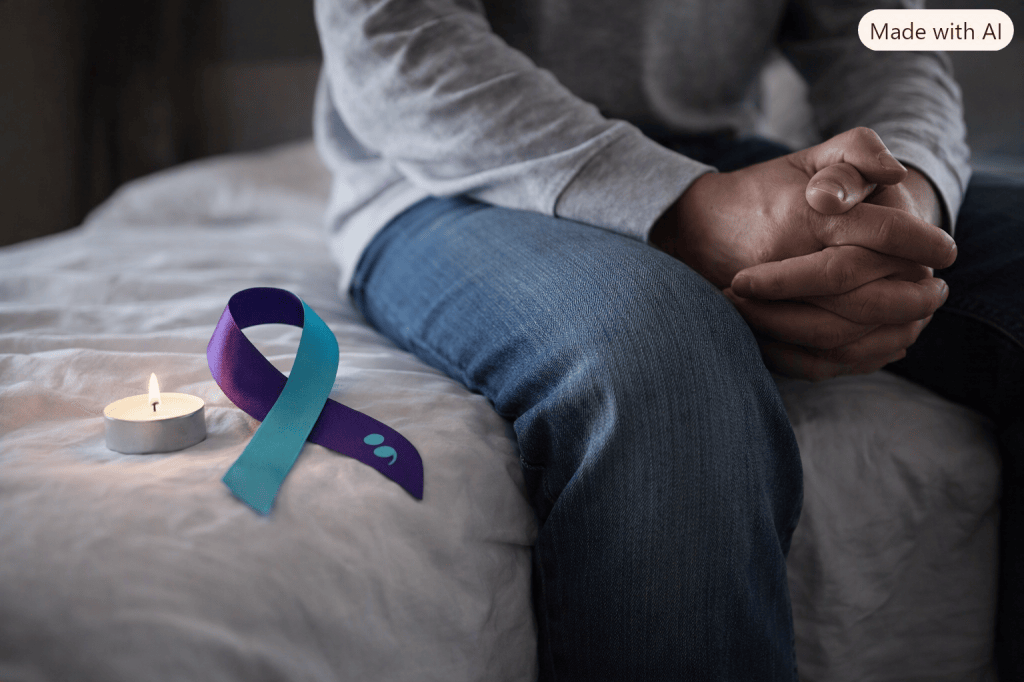
Light the charcoal. Sprinkle the sage. Lord knows, if we’re gonna talk about Suicide Awareness Month in the Deep South, we’re gonna need all the spiritual reinforcements we can get. The air gets thick. The whispers get quieter. And the truth starts pacing the room like it’s looking for a way out.

Let me set the scene. It’s September in the Deep South. Humidity thick enough to baptize you against your will. Church signs flashing Bible verses like spiritual traffic tickets. Every conversation about mental health wrapped in a casserole dish of denial. Then Suicide Awareness Month rolls around. And the way conservative Southern Baptists respond? You’d think someone asked them to admit they’ve been depressed since Reagan.

They hit you with the classic, “Thoughts and prayers.” And that’s the entire statement. Full stop. Period. End of sentence. End of conversation. If you try to talk about suicide beyond that? Oh, honey that happens behind closed doors. Whispered like gossip. Treated like sin. And buried under shame so thick you’d need a backhoe to dig it out. That’s how the shaming works down here. Not by yelling. But by refusing to speak at all. And I’m tired of silence being the loudest killer in the room. Suicide isn’t a “them” problem. It’s an all of us problem. And the numbers don’t lie. Even when the people in power do.

Over 49,000 people died by suicide in 2023. And that’s one death every 11 minutes. Suicide rates have climbed back to their previous peak after years of fluctuation. But some groups are hurting more than others. https://www.cdc.gov/suicide/facts/data.html?, 2026

1.American Indian & Alaska Native Communities

These communities have some of the highest suicide rates in the nation. Youth in these groups are disproportionately impacted due to historical trauma. Lack of access to care. And systemic neglect. 

2.LGBTQIA+ Youth

LGBTQIA+ youth face significantly higher suicide risk due to rejection, discrimination, and lack of safe spaces. And let’s be honest. The current political climate isn’t helping. Policies targeting queer and trans youth only increase fear, isolation, and hopelessness.

3.Black Youth

Black youth suicide rates have been rising with unique stressors tied to racism, community stigma, and lack of culturally competent mental health care. 

4.Veterans

Veterans continue to face elevated suicide risk due to PTSD, trauma, homelessness, and lack of adequate support. The VA reports long‑term patterns of high suicide rates among veterans. Especially those facing mental health and substance use disorders. 

5.Young People (15–24)

Suicide is the second leading cause of death for young people. In 2024 alone, nearly 5,915 young people died by suicide. 

I don’t write this from a distance. I write this from the front row of grief and personal struggle.

My life has been touched by suicide from more angles than I ever wanted. I’ve seen it happen to friends and family. People I loved. People I tried to reach. People I didn’t know were hurting until it was too late. And let me say this clearly. I am not mad at them. I do not hate them. I am not angry at what they did.

I am just deeply, sorry that they weren’t able to be reached. Sorry that the world failed them. Sorry that shame kept them silent. Sorry that help wasn’t accessible, safe, or welcoming. Sorry that they believed the lie that their pain was a burden. They deserved better. And so do the people still here.

I’m not here to sugarcoat this. Our nation’s mental health crisis is rising in part because of the current administration’s policies. And the harm they inflict on marginalized communities. When leaders create fear. Strip rights. Target vulnerable groups. And normalize cruelty. The emotional fallout is real. People feel unsafe. People feel hopeless. People feel hunted. And hopelessness is fertile ground for despair. This isn’t partisan. It’s human. And the statistics reflect the pain people are living through.

And here’s the thing I keep coming back to, over and over, like a hymn that won’t leave my bones. We are losing people because we refuse to talk. We are losing people because shame is easier to hand out than compassion. We are losing people because silence is the South’s favorite weapon. And its most deadly.

I grew up watching folks whisper about suicide like it was a scandal instead of a tragedy. I watched churches pray for “healing” while refusing to name the wound. I watched families bury their children and still pretend nothing was wrong. I watched people I loved slip through cracks that should never have existed in the first place. And I’m done pretending that this is normal. I’m done pretending that this is holy. I’m done pretending that this is anything but deadly.

Because the truth is this. People don’t die from weakness. People die from isolation. People die from shame. People die from being told their pain is an inconvenience. And if that stings, good. Some truths are supposed to.

 I have lost people I loved. People I laughed with. People I prayed for. People I would’ve driven across state lines for if I had known they needed me. And I don’t carry anger toward them. I don’t carry resentment. I don’t carry judgment. What I carry is sorrow. A deep, marrow‑level sorrow that they didn’t feel reachable. That they didn’t feel safe. That they didn’t feel like this world had room for their pain. And I will never stop wishing they had stayed. Not because their leaving was wrong. But because they deserved a world that didn’t make leaving feel like the only option.

 Let me say this plainly. Because I’m not sugarcoating a damn thing today. Our country is hurting because our leadership is hurting us. Policies that target the vulnerable create despair. Cruelty from the top trickles down like poison in the water supply. And if that makes someone uncomfortable, they can go ahead and sit with that discomfort. Maybe it’ll teach them something. I’m not here to protect feelings. I’m here to protect lives.

 This is my altar call, benediction, my Southern‑fried truth served hot and holy. We cannot pray away what we refuse to confront. We cannot heal what we refuse to name. We cannot save people we refuse to see. If we want to stop losing our loved ones, we have to stop hiding behind “thoughts and prayers” like they’re bulletproof. We have to talk. We have to listen. We have to show up. We have to fight for the living with the same passion we mourn the dead. Because every single person lost to suicide deserved a world that didn’t break them. So, if you hear me. If you really hear me. Then stand up. Even in the back. Even if your knees pop like bubble wrap. And say it with your whole chest. Thanks for reading! How can you relate to this?

 Affirmation: My voice is a lifeline. My truth is a lantern. I speak so others don’t have to suffer in the dark.

***Don’t forget to watch the video!***

#ThisPuzzledLife