
Even My Cats Know You Can’t Heal in the Same Environment That Hurt You.

“You can’t heal in the same environment that taught you to hide your wounds. Sometimes the bravest thing you’ll ever do iswalk away from the place that expected you to stay broken.”

-This Puzzled Life

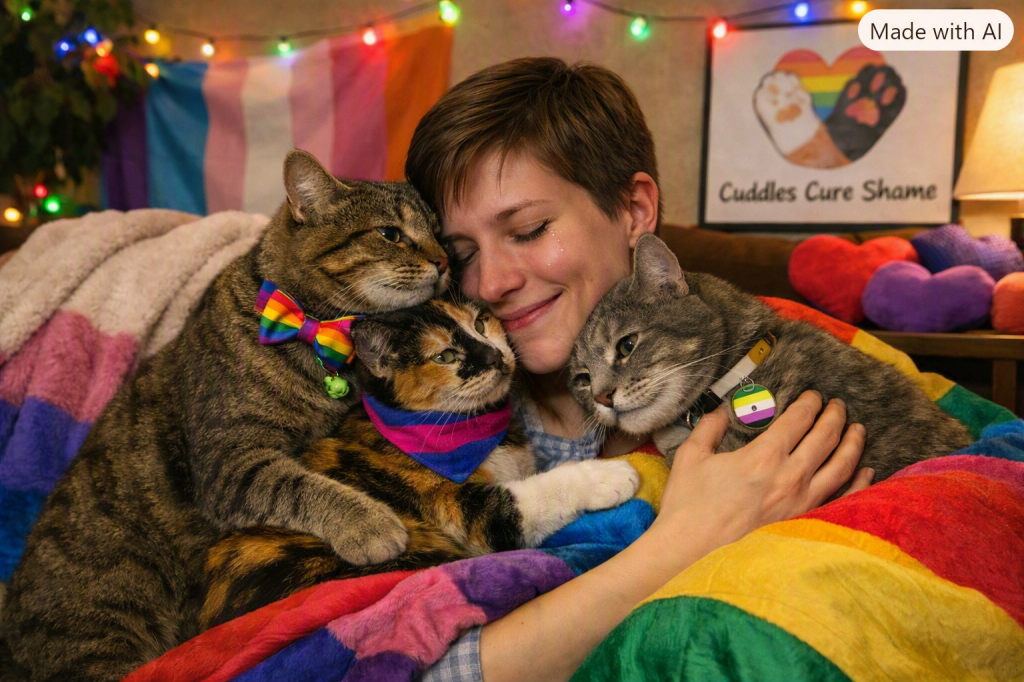
Light the charcoal. Sprinkle the sage. Apparently, healing requires both barbecue energy and spiritual pest control. Welcome back to my household. Where the cats run the HOA. The ancestors run the commentary. And I’m just trying to unlearn 30 years of “bless your heart and keep suffering quietly.” Today’s sermon is titled, “You Cannot Heal in the Same Environment That Hurt You.” And yes, the cats have notes.

You ever try to heal in the same place that taught you to pretend everything was fine? It’s like trying to detox from sugar while sitting inside a Krispy Kreme with the “Hot Now” sign glowing like the gates of temptation. Meanwhile, my Southern upbringing is in the corner whispering, “Well now, you can leave, but don’t you dare make a scene. And take this casserole so folks don’t think you’re ungrateful.”

Healing in the same environment that hurt you is basically a full‑contact sport. You’re dodging old triggers. Outdated expectations. And that one relative who still thinks therapy is “for people who don’t pray hard enough. And still thinks Obama personally raised your rent.” Nothing says emotional clarity like feline commentary.m

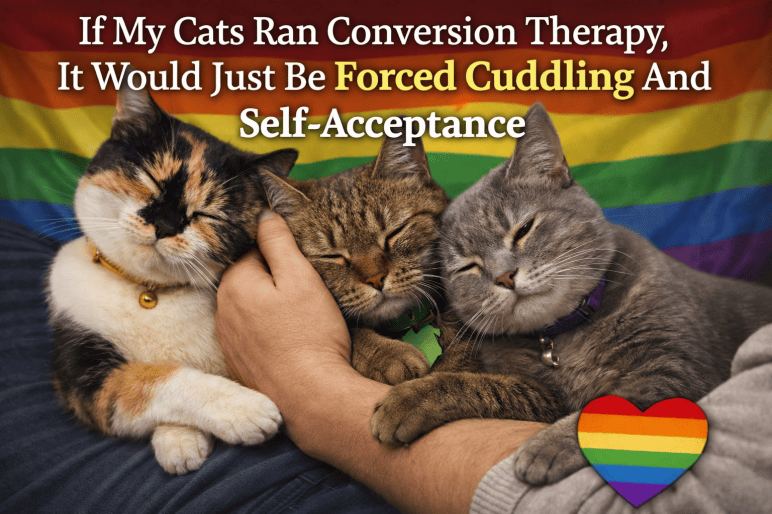
Coco (the judgmental one): “Girl, you keep trying to heal in the same room where your trauma sleeps. Move the furniture or move yourself.”

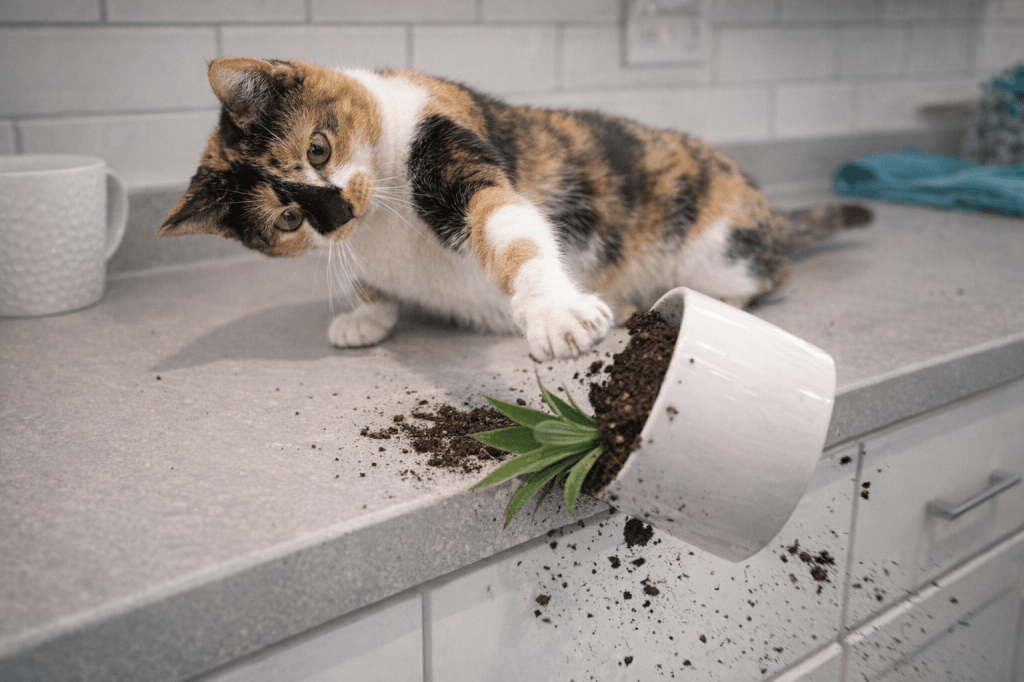
Piper (the chaotic one): “I say we knock everything off the shelves and start fresh. Healing begins with destruction.”

Tinkerbell (the Southern belle of the group): “Bless your heart. Even Jesus left Nazareth.”

And honestly, they’re right. Cats don’t stay in places that stress them out. They relocate with the confidence of a woman who knows she’s too good for this nonsense.

Southern Conservative Truth #1

“If it ain’t working, you don’t fix it. You replace it.” This applies to lawn chairs, husbands, and emotional environments.

Southern Conservative Truth #2

“You can’t grow tomatoes in poisoned soil.” But you can grow generational trauma if you keep watering it.

Southern Conservative Truth #3

“If the dog keeps biting you, stop blaming the dog and fix the fence.” Stop expecting people who hurt you to suddenly develop character.

Southern Conservative Truth #4

“You can’t sit on a broken chair and then get mad when you hit the floor.” If the environment is unstable, your healing will be too.

Southern Conservative Truth #5

“If the chicken’s burnt, the oven ain’t gonna apologize.” Some folks will never take accountability. Move on.

Southern Conservative Truth #6

“You can’t plant hope in a field full of denial and expect a harvest.” Healing requires fertile ground. Not family members who think boundaries are disrespectful.

Southern Conservative Truth #7

“If the swamp keeps producing gators, stop acting surprised when you get bit.” Patterns are patterns, not mysteries.

And of course, the cats had to weigh in again.

Coco: “Humans love staying in toxic places because they’re sentimental. Cats leave because we’re smart.” 

Piper: “If the vibes are off, I’m gone. No explanation. No forwarding address.” 

Tinkerbell: “A lady does not heal where she was harmed. She relocates with grace and a fresh can of Fancy Feast.”

Here’s the truth they don’t stitch on pillows. You cannot heal in the same environment that taught you to shrink, hush, or swallow your own voice like it was impolite to exist. You cannot bloom in soil that resents your roots. You cannot rise in a room built to keep you small. And you sure as hell cannot become your highest self in a place that only wanted the quiet, obedient version of you.

Healing requires space. Not the kind of space where you shove your feelings into a Tupperware container and label it “Later.” I mean real space. The kind where you can breathe without hearing echoes of who you used to be. Healing requires distance. Healing requires disruption. Healing requires the courage to walk away from the familiar and toward the version of you that refuses to die in the same cage she was born in.

Sometimes that means leaving the room. Sometimes that means leaving the house. Sometimes that means leaving the whole dang ZIP code. And sometimes it means telling your inner Southern critic, “No ma’am, we are not staying here out of politeness.” Healing requires new air, new light, new boundaries, and sometimes, a new porch to sit on while you process your life choices.

Leaving the environment that hurt you isn’t betrayal. It’s survival. It’s reclamation. It’s the moment you decide your healing deserves better than the bare minimum. And if anyone has a problem with it. Just tell them the cats said you’re unavailable for nonsense until further notice. And that’s on healing. Now excuse me while I sage the house like I’m trying to smoke out a demon.

So let them talk. Let them misunderstand you. Let them clutch their church bulletin and call it rebellion. Let them say you’ve changed. Because God knows you have. And thank goodness for that. You are not obligated to stay where your spirit was suffocated. You are not required to keep shrinking to fit the room. You are allowed to outgrow the places that could not love you whole.

And if anyone has a problem with your healing journey, tell them, “I didn’t leave because I was angry. I left because I was finally ready to breathe. And once you taste oxygen, you don’t go back to drowning.” Thanks for reading! And stop shrinking for their comfort.

Affirmation: I honor my healing by choosing spaces that honor me. I release the rooms that dimmed my light. And I rise in environments that celebrate my growth, my boundaries, and my becoming.

***Don’t forget to watch the video!***

#ThisPuzzledLife
https://suno.com/s/yUMvAAJCwb7DpPK4

Being an Empath: A Blessing, a Curse, and Occasionally a Loud Situation

“Being an empath means I can feel your energy shift before you even decide to shift it. Don’t act surprised when I respond like I already read the whole plot twist.”

-This Puzzled Life

 Light the charcoal. Sprinkle the sage. It’s my way of announcing to the universe, and anybody else listening, that the energy is about to be corrected. Redirected. Or escorted out. It’s not decoration. It’s a declaration. The vibes will behave. Or they will be removed.

Let me go on and say this before somebody gets the wrong idea and starts assigning me spiritual homework that I did not sign up for. Being an empath does not mean I’m a soft‑spoken emotional Roomba gliding around the house sucking up everybody’s mess in silence. No ma’am. No sir. No spirit.

I am an empath with range. I can read your tone, micro‑tone, micro‑aggression, and the ghost of the tone you almost used. And if my intuition taps me on the shoulder and whispers, “They tried you,” I will absolutely raise my voice like a Southern Baptist who just found out somebody parked in her spot at church.

Empath does not mean quiet. Empath means I know exactly why I’m yelling. People love to romanticize empaths like we’re walking mood rings with good credit. But the truth is more complicated. Being an empath is a blessing because you can walk into a room and instantly know who’s lying. Who’s tired. Who’s two seconds from crying. Who’s pretending to be fine. Who’s about to start some mess. Who needs a hug. Who needs a boundary. And who needs to be escorted out by security.

But it’s also a curse. You can’t turn it off. You can’t unfeel what you felt. You can’t unsee the emotional weather patterns swirling around people like spiritual Doppler radar. And sometimes you’re sitting there thinking, “Lord, why did you give me this gift without a mute button?”

Let’s tell the truth that makes people uncomfortable. Some empaths aren’t born. They’re forged. Some of us learned to read a room because we had to. Because survival depended on knowing when the energy shifted.

When someone’s mood changed. When danger was coming. When silence meant safety. And when footsteps meant run. That kind of childhood intuition doesn’t disappear. It grows up with you. It becomes a skill, a shield, a superpower and sometimes a burden you didn’t ask for.

So yes, some empaths are spiritually gifted. And some of us are trauma‑trained emotional detectives with a sixth sense and a therapist on speed dial. Being an empath means you don’t just enter a room. You scan it. You feel the tension in the air before anyone speaks. You clock the fake smile from across the room. You sense the passive‑aggressive energy floating near the snack table. You know who’s genuinely happy to see you. And who’s performing hospitality like it’s community theater. It’s not paranoia. It’s pattern recognition.

And while everyone else is like, “Oh, the vibe seems fine.” You’re standing there like, “No it doesn’t. Somebody in here is lying. And somebody else is about to cry.” Boundaries aren’t optional for empaths. They are survival gear. Without boundaries, an empath will drown in other people’s emotions like they’re swimming in a pool they didn’t even want to get in.

Boundaries are how we protect our peace, our energy, our intuition, our sanity, our inner child, our outer adult, and the version of us that still wants to believe people mean well. People who don’t understand boundaries think they’re rude. People who need your boundaries think they’re personal attacks. But people who love you will understand that boundaries are how you stay alive, present, and emotionally available without burning yourself to ash.

Let me be extremely clear in a way that even the spiritually hard‑of‑hearing can understand. When an empath sets a boundary, it is not a suggestion, a preference, or a cute little decorative fence. It is survival architecture.

Empaths don’t set boundaries casually. We set boundaries because we’ve already scanned the emotional terrain. We’ve already clocked the patterns. We’ve already felt the shift in your tone. And we’ve already sensed the storm clouds gathering behind your smile.

When someone violates a boundary we clearly communicated, it doesn’t feel like a misunderstanding. It feels like a threat. It feels like disrespect. It feels like someone walked into our house. Ignored the “Please remove your shoes” sign. And tracked mud across the ancestral rug. And because empaths are wired to detect danger that is emotional, spiritual, and energetic, boundary violations hit us like alarms going off in a building we didn’t even want to be in.

This is why people get confused when an empath goes from calm to “Oh absolutely not” in 0.3 seconds. They think we’re overreacting. But what they don’t understand is we saw the intention. We felt the entitlement. We recognized the pattern. And we sensed the disrespect before it fully formed.

By the time we raise our voice, the situation has already been analyzed. Processed. And spiritually notarized. Empaths don’t explode out of nowhere. We respond to the data. Violating a boundary is the emotional equivalent of someone looking us dead in the eye and saying, “I don’t respect your peace, your intuition, or your humanity.” At that point, the empath is not being dramatic. The empath is being accurate.

When I say I’m an empath, people assume I’m out here collecting gold stars from the universe. And waiting for someone to pat me on the head and say, “Good job for feeling things deeply. Absolutely not. I don’t need outside validation because I validate myself loudly, confidently, and with the full support of my intuition, my ancestors, and my own emotional PhD.

I spent too many years being trained to read every room, every tone, every shift in energy just to survive. So, trust me when I say, I know what I feel. I know why I feel it. And I don’t need a committee meeting to confirm it. My inner knowing is the authority. My boundaries are the policy. And my self‑validation is the final stamp of approval. Anyone else’s opinion is optional, decorative, and often late to the truth I already knew.

The next time somebody hears “empath” and assumes I’m a gentle emotional cloud floating through life, let me correct the record. I’m not floating. I’m detecting. I’m reading the room, the subtext, the spiritual Wi‑Fi, and the emotional weather report. And if the forecast says, “disrespect with a 70% chance of foolishness,” trust and believe I will bring the thunder. Empathy doesn’t make me silent. And sometimes accuracy requires volume. Thanks for reading! And go with your gut. Because it’s the most accurate feeling that you can feel.

Affirmation: I honor my intuition. Protect my peace. And raise my voice only when spiritually necessary. Which, unfortunately for some folks, is more often than they’d prefer.

***Don’t forget to watch the video!***

#ThisPuzzledLife
Boundaries: When “No” Stops Being a Suggestion

“My boundaries are so tight now that if you overstep, my spirit will escort you back to your lane before I even open my mouth free of charge.”

-This Puzzled Life

Light the charcoal. Sprinkle the sage. The ancestors have gathered on my porch like it’s a family reunion, and they are whispering, “We did NOT endure Jim Crow, bad perms, and church fans with funeral ads on the back for you to let people treat your peace like a community potluck.”

Meanwhile, my cats have formed a boundary tribunal on the kitchen counter. Tails flicking. Eyes narrowed. And judging me with the same intensity they use when I buy the wrong flavor of treats.

One cat is channeling Harriet Tubman energy. Another is giving “your great‑granddaddy who didn’t play about his land.” The third is licking her paw like, “Let’s see if she finally learned how to say no without a 12‑slide PowerPoint.”

So welcome to Boundary School. Where the ancestors are the professors. The cats are the teaching assistants. And I am the student who keeps asking, “Is this going to be on the test?” People know the word boundaries the way they know the word ‘fiber.’  They’ve heard it’s important. But they have no earthly idea how to actually use it.”

People think boundaries are a vibe, a mood, a Pinterest board, or a cute quote on Instagram with a beige background. Boundaries are actually a set of rules that protect your time, energy, and sanity. A spiritual fence. A divine “Do Not Disturb” sign blessed by your ancestors. Boundaries are not rude. They are not mean. They are not optional. They are emotional sunscreen. And some of y’all are out here raw‑dogging the sun.

People misinterpret boundaries the way they misinterpret IKEA instructions. They think they understand. But the final product is wobbling. Missing screws. And leaning against the wall for emotional support. And people will swear you need their approval like it’s oxygen. When really it’s more like glitter which is unnecessary. Messy. And half the time it ends up places it shouldn’t.

Here’s the thing. You don’t need outside validation to live your life. Make your choices. Or protect your peace. You’re not a coupon that needs to be scanned. You’re not a parking ticket waiting for someone to stamp “approved.” You’re a whole human being with ancestors behind you. And a spirit that knows exactly what it’s doing.

People will misinterpret your confidence as arrogance. Because they’re used to you shrinking. They’ll say things like “You sure about that?” “I mean if that’s what you want to do.” Or “you’re making a mistake. But suit yourself.” When the only mistake would be letting people who can’t manage their own lives narrate yours.

My cats don’t seek validation. They don’t ask, “Was that a good jump?” They don’t wonder, “Do you like my vibe today?” They simply exist confidently, unapologetically, and occasionally on top of the fridge for no reason. Meanwhile, humans out here waiting for applause before they take a step.

Here’s the truth the ancestors keep whispering. “If you need permission, you’ll always be waiting. If you trust yourself, you’ll always be moving.” Your worth is not up for a vote. Your decisions are not a group project. Your life is not a suggestion box. You don’t need validation. You need alignment. And those are two very distinctly different things.

Some folks hear the word “boundaries” and immediately translate it into, “You’re being mean.” “You’re shutting me out.” “You think you’re better than me.” “You must be going through something.” Or my favorite “You’ve changed.” No, sweetheart. I’m not being mean. I’m being clear. And clarity feels like cruelty to people who benefited from your confusion.

Boundaries are not punishment. They are not revenge. They are not emotional eviction notices. But people will swear up and down that your boundary is a personal attack. Even though all you said was, “I’m not available for that.” Suddenly you’re the villain in their story. the antagonist in their memoir, the reason their tomato plants won’t grow this year.

Meanwhile, my cats set boundaries all day long and nobody questions it. A cat can walk away mid‑petting session, and everyone says, “Aww, look at her being independent.” But let a human say, “I need some space,” and suddenly it’s a federal investigation. Boundaries get misinterpreted because people confuse access with entitlement. They think your time is their time. Your energy is their energy. Your peace is their playground. And when you finally say, “Actually, no,” they act like you’ve personally unplugged their life support.

But here’s the truth and the ancestors are nodding in agreement. A boundary is not a wall. It’s a door with a lock. And you get to decide who has the key. Boundaries fall into categories and knowing them helps you enforce them without guilt.

1. Physical Boundaries

Your body, your space, your bubble. If someone stands too close, you have the right to step back like a cat avoiding a toddler.

2. Emotional Boundaries

You are not a sponge. You are not a therapist. You are not a free emotional storage unit.

3. Time Boundaries

Your time is not a community resource. You are not FEMA.

4. Material Boundaries

Your car, your money, your Tupperware. Especially the Tupperware. The ancestors get real loud about that one.

5. Conversational Boundaries

You don’t have to discuss things that drain you. You can simply say, “I’m not available for that topic,” and walk away like a cat who heard the treat bag but decided you weren’t worthy.

WHY HUMANS STRUGGLE (AND CATS DO NOT)

Humans: “I don’t want to hurt anyone’s feelings.”

Cats: “I will leave this room mid‑sentence and feel nothing.”

Humans: “I don’t want them to think I’m mean.”

Cats: “I will slap your hand away and then take a nap.”

Humans: “I don’t want to disappoint people.”

Cats: “I disappoint people recreationally.”

Cats are boundary prodigies. Humans are boundary interns.

The ancestors want you to know that “No” is a complete sentence. “I’m not available” is a spiritual practice. “That doesn’t work for me” is a generational blessing. “I’m leaving now” is self‑care. “I don’t receive that” is emotional pest control. They also want you to stop explaining yourself like you’re applying for a loan.

And as we close this ceremony of wisdom, comedy, and feline judgment, let us honor the truth. The ancestors did not survive oppression, heartbreak, and church potlucks with questionable potato salad for you to let someone’s grown child drain your spirit like a cracked Yeti cup. Your boundaries are sacred. Your peace is ancestral property. Your “no” is a generational blessing.

May your boundaries be as firm as a cat who has decided your pillow is now their homeland. May your spirit be as unbothered as a cat ignoring its name. May your peace be as protected as the good Tupperware. And may your boundaries rise up like your ancestors intended.

My boundaries are set. My peace is protected. And my spirit is no longer accepting walk‑ins. If you can’t handle that, take it up with the ancestors. They’re the ones who told me to stop letting folks treat my life like an open‑bar wedding. And with that, I’m stepping back into my joy, my clarity, and my God‑given right to say “no” without a dissertation. Thanks for reading! And protect your peace.

Affirmation: “I honor my peace like it’s heirloom china. I say no with confidence, yes with intention, and I protect my energy the way my ancestors protected the good cornbread recipe.”

***Don’t forget to watch the video!***

#ThisPuzzledLife
Shame: The Weight I Refuse to Carry Anymore

“Shame was never my reflection. It was the shadow of someone else’s fear cast across my life.”

-This Puzzled Life

Light the charcoal. Sprinkle the sage. Let the smoke rise like a soft warning. A trembling invitation. And a doorway cracked open just wide enough for the truth to step through without flinching. Let it drift through the room the way shame once drifted through our childhood homes as quiet and unspoken. But heavy enough to shape the way we learned to breathe.

This isn’t about performance. It isn’t about survival. It’s about naming the thing that has lived in your bones longer than some people have lived in their houses. I’m not writing from a place of humor or distance. I’m writing from the wound. From the memory. From the soil that raised me. And the silence that tried to claim me.

Shame is not born in us. It is handed to us. Pressed into our palms by people who were supposed to know better. People who were supposed to love better. People who were supposed to see us as whole. And in the Deep South, shame is practically a family heirloom.

Down here, some conservative communities have perfected shame into an art form as quiet, polished, and Sunday‑morning approved. They wield it like a switch they no longer have to swing. Because the words do the bruising for them. They don’t have to raise their voices. They just raise an eyebrow. They don’t have to say you’re wrong. They just say they’re “praying for you.” They don’t have to tell you to hide. They just make sure you know what happens to people who don’t.

Shame becomes the air you breathe before you even know what air is. It teaches you to fold yourself small. To tuck away the parts of you that don’t fit the script. To apologize for the way your heart beats. The way your voice trembles. And the way your truth refuses to die quietly. The worst part is how deeply it roots itself. And how it convinces you that you are the problem. Not the rules. Not the silence. Not the fear disguised as righteousness.

Some Southern conservative spaces are experts at this. They turn difference into danger. They turn authenticity into rebellion. They turn survival into sin. They shame you for who you are. And then shame you again for hurting because of it.

But here’s the truth shame never wants you to learn. You were never the one who failed. You were the one who endured. Shame is not your inheritance. It is not your identity. It is not your burden to carry one more mile. The moment you name what was done to you. The moment you say, “This wasn’t love. This was control.” The spell breaks. The weight shifts. The air clears. And you begin to see yourself without the fog of someone else’s fear. You begin to hear your own voice again. You begin to rise. And rising is the one thing shame cannot survive.

Shame is universal. It’s a part of every culture and every nation. And every community has its own way of teaching people to hide the parts of themselves that don’t fit the script. Shame is a global language. It is spoken in different dialects. It is enforced through different rituals. And it is carried in different bodies.

But the version I know. The one that shaped my bones and rewired my voice was born in the conservative Deep South. That’s the lens I speak from. That’s the air I learned to breathe. That’s the terrain where shame wasn’t just a feeling. It was a system.

Some conservative Southern communities wield shame like a tool of order. A way to keep people in line. A way to maintain the illusion of perfection even when the truth is rotting beneath the floorboards. They don’t have to say, “you’re wrong.” They just say, “we don’t talk about that.” They don’t have to say, “you’re unworthy.” They just say, “think of what people will think.” They don’t have to say, “you don’t belong.” They just make sure you feel it.

Shame becomes the soundtrack of your childhood. The shadow in every room. The reason you learn to fold yourself into shapes that hurt to hold. When you grow up queer, outspoken, different, or simply unwilling to disappear, the shame becomes sharper. More pointed. And more personal.

You were not the problem. You were the disruption. You were the truth they didn’t know how to hold. Shame thrives in silence. But it cannot survive being named. The moment you say, “This harmed me,” the spell breaks. The moment you say, “This wasn’t love,” the weight shifts. The moment you say, “I deserved better,” the ground beneath you changes shape.

You begin to see yourself without the fog of their expectations. You begin to hear your own voice without the echo of their judgment. You begin to rise in ways they never prepared for. And rising is the one thing shame cannot withstand.

Let every culture keep the shame it created. Let the South hold the weight of the shame it taught me to carry. I am done dragging their silence behind me. I am done mistaking their fear for my fault. I am done shrinking to make their world more comfortable. I speak now. I rise now. I reclaim every part of me they tried to bury.

And the sound of that truth is unapologetic. Unbroken. And is the loudest thing I’ve ever survived. You were never meant to carry it. Set it down. Walk forward. And let the sound of your unbroken truth shake the whole damn South. Thanks for reading! And put that shame down.

Affirmation: I release every ounce of shame that was handed to me. My truth rises. My voice steadies. And I walk forward unburdened and whole.

***Don’t forget to watch the video!***

#ThisPuzzledLife

Truth Over Tradition: My Exit From Comfortable Dysfunction

“The truth didn’t break my family. The pretending did.”

-Unknown

Here’s the bigger picture. I didn’t grow up in a family that heals. Problems don’t get solved. They get buried alive. And then resurrected during holidays like emotional zombies. Now that me and my sister are adults, childhood resentments still pop up like whack‑a‑mole. And nobody wants to pick up a mallet. Let’s all smile in public so we don’t “defame the family.” Which honestly, does a fantastic job defaming itself.

And my family isn’t special. Dysfunction is everywhere. I have enough mental health education in my background to recognize the patterns. But they’ll swear I’m the problem. If you look past the church smiles, the whole system is sick. I would genuinely rather be hit by a car than attend “family time.” And because my kids were born into a lesbian family, they get treated like they came with a moral recall notice.

You can’t throw money at children and then take no active part in their lives the rest of the time. Especially, when you do the opposite with the other children in the family. The kids notice. I’ve tried talking about it for 17 years. And the truth is this. They just don’t care.

I have a master’s degree in counseling psychology. Yet somehow I’m the ignorant one. They don’t want insight. They don’t want help. They want silence. And mine has officially expired. I defend myself and my kids however I see fit. Respectfully? No. Effectively? Absolutely.

They want healing without effort. They’re emotional pillow princesses that want the benefits of growth while doing absolutely nothing but blinking dramatically. And when truth bruises their egos, accountability never shows up. Meanwhile, my dad plays messenger pigeon flying information back and forth between me and the rest of the family so that the dysfunction stays perfectly preserved.

Here’s the part they’ll never admit. Family therapy requires guts and transparency. And those two things they treat like forbidden sins. Instead, they’ve built a giant sand pile where they can bury their heads. And pretend nothing is wrong. That’s their comfort zone. Not truth. Not healing. Just sand. Neck‑deep and breathing through a straw of selective memory.

My favorite quote says it best, “If nothing changes, then nothing changes.” And I refuse to be silenced because their comfort depends on my suffering.

Our family lives in what I call comfortable dysfunction. It’s the emotional recliner they refuse to replace even though the springs are broken. And the fabric smells like denial. It’s easier than accountability. Easier than honesty. Easier than saying, “Maybe the gay daughter isn’t the downfall of civilization.”

And as if being the rainbow sheep wasn’t enough. I’m also the green sheep of the family because I’m a medical cannabis patient. And the family’s translation is that I’m “druggin’ and thuggin’.” The “bad influence.” And the “one who needs prayer.” But that’s not even the real issue.

The problem is my refusal to sit quietly in the pew of generational silence. The issue is that I no longer participate in the family’s favorite pastime of pretending. I’m done shrinking myself so other people can stay cozy in their outdated beliefs. I’m done letting conservative Christian values be weaponized against me and my children.

They can keep their selective morality. The kind where my sister thinks being gay is “wrong and evil.” But somehow premarital sex is just the Olympic sport of “being human.” Funny how sin gets flexible when it’s their behavior on the table. 

“My family says I’m ‘living in sin.’ Which is wild coming from some of them who wave a red hat like it’s the state flower. They preach about morality and still treat premarital sex, drinking, and hypocrisy like they’re covered under the ‘Jesus forgives me’ warranty.”And trust me. They act like I graffitied the Ten Commandments in rainbow glitter.

Being gay automatically made me the family’s “problem child.” Even though the real problems have nothing to do with what gender I love. And everything to do with the fact that I refuse to pretend. My sister can have premarital sex. Drink like she’s hydrating for the Olympics and drive afterward. And micromanage her child like she’s running a dictatorship. But somehow I’m the moral crisis.

Meanwhile, my sister’s shot glasses stays full. Her judgment stays loud. And her hypocrisy stays undefeated. Funny how cannabis for medical reasons is “dangerous.” But alcohol with a side of denial is “just being human.” I’m the rainbow sheep because I live authentically. I’m the green sheep because I choose a legal, doctor‑recommended treatment. And I’m the scapegoat because I refuse to shrink so other people can stay comfortable in their dysfunction. If being myself makes me the rainbow‑green hybrid sheep of the family, then so be it. At least I’m not grazing in the pasture of hypocrisy.

So no, I’m not stepping back into the box they built for me. I’m not dimming myself, so their comfort stays intact. I’m not carrying the weight of a family that refuses to lift a finger for its own healing. They can keep their comfortable dysfunction. They can keep their silence. They can keep their outdated beliefs wrapped in Bible verses that only apply to me.

Today I honor my inner rainbow‑green sheep. I’m fabulously queer. I’m medically lifted. And completely unbothered by the opinions of people who confuse hypocrisy with holiness.”

I’m choosing truth over tradition. I’m choosing growth over guilt. I’m choosing my children, my peace, and my sanity. And if my existence shakes the foundation of their worldview. Then the foundation was weak to begin with. Thanks for reading! Do you and let the others do them.

Affirmation: I bless my rainbow‑green sheep soul today queer, medicated, and thriving. While certain relatives clutch their red hats and pearls at my existence. But don’t blink twice at their own chaos, contradictions, or alcohol fueled commandments.

***Don’t forget the video!***

#ThisPuzzledLife

The Family Roles & The Circus They Created

“My family says I’m ‘living in sin.’ Which is hilarious coming from people who treat denial like a spiritual gift. And premarital sex like a community service.”

-This Puzzled Life

Light the charcoal. Sprinkle the sage. Negative energy, get your shoes on and leave. Today we’re diving into one of my favorite dysfunctional family topics. Family roles. Those unofficial job titles we never applied for. Never wanted. And yet somehow ended up performing like we were on salary. Take a moment and see where you and your people fall. And here’s the spoiler. If you’re reading this, you already know.

Before we get started, let me warn you. This is not a gentle stroll through family history. This is a full‑blown guided tour through a Southern household. That’s been held together with casserole, denial, and conservative Christian values. That seem to get applied with the accuracy of a toddler using glitter glue.

I grew up in a family where “we don’t talk about that” wasn’t a suggestion. It was the eleventh commandment. Emotions were treated like illegal fireworks. Everyone had them. Nobody handled them correctly. And something always exploded at the worst possible time.

In my house, honesty was considered aggressive. Accountability was considered disrespectful. And therapy? Therapy was treated like witchcraft performed by people who “don’t know Jesus personally.”

Meanwhile, the dysfunction strutted around the living room in broad daylight wearing a name tag and a church hat. And everyone pretended they couldn’t see it. If denial were a sport, my family would have Olympic medals and a sponsorship from Hobby Lobby.

So, buckle your emotional seatbelt. And prepare yourself. Because once you recognize the roles in a dysfunctional family. It’s like spotting roaches. You can’t unsee them. And suddenly they’re everywhere.

Family roles are the expected behaviors, responsibilities, and emotional acrobatics each person performs to keep the family circus running. These roles shift depending on culture, family size, and personality. But the classics are Hero, Scapegoat, Golden Child, Lost Child, Mascot. And I show up everywhere like glitter after a craft project.

Let’s begin.

1. The Hero (a.k.a. The Family PR Department) The Hero’s job is to make the family look normal, stable, and “blessed and highly favored” to the outside world. According to theraplatform.com (2025), they take on excessive responsibility to gain approval. This is my mother’s role. Or at least the role she auditions for. She is attention-seeking. Reputation-obsessed. And allergic to accountability. She delivers passive-aggressive comments like she’s handing out communion wafers. And then acts shocked when people get upset.

Her signature move? “The Dummy Card.” Suddenly she “doesn’t remember,” “didn’t mean it like that,” or “doesn’t know what you’re talking about.” But trust me, she knows. And right after she stirs the pot. She gives my dad the “rescue me” look. As if she didn’t just season that pot with cayenne, spite, and generational trauma. We only have real conversations when she’s mad at my sister, The Golden Child. Otherwise, it’s news, sports, and weather which is the Holy Trinity of Avoidance.


2. The Scapegoat (hi, it’s me) The Scapegoat is blamed for everything wrong in the family. Stubbed toe? My fault. Bad weather? Somehow me. The economy? Probably me too. I don’t conform to their lifestyle. I’m gay. I use medical cannabis. I don’t go to church because there are too many people who support the cruelty of the Trump regime. And align theirselves with the MAGA movement which practices a form of chriatianity that cannot be found in any Bible. And quite frankly, they have a bad reputation for normalizing pedophilia while demonizing being gay. I guess I should be glad that I just can’t understand that rationale. 

I talk about taboo topics. And I acknowledge reality instead of pretending everything is fine.
And did I mention I’m gay? Because trust me they will. Instead of saying,
“She’s our family and we love her no matter the gender of someone she loves and that loves her.” They act like my existence is a PR crisis. The attitude is like, “Remember when Dana destroyed the family by being prouid to be gay and authentic?”  I’m also the family whistleblower. I don’t play along with generational nonsense. I’m my own person. And I’m not apologizing for it.

3. The Golden Child (my sister, obviously) The Golden Child is the family’s prized possession. The chosen one. The favorite. And the one who can do no wrong even when she is actively doing wrong. Thriveworks.com (2023) describes this child as obedient, praised, and protected. That’s her. She has been dipped in gold since birth. She follows the script. Holds the same beliefs. And passes them down to her children like heirloom china. She was taught what to think. Not how to think. And the cycle continues. Children aren’t born to hate. They learn it from the adults who raise them. And this is what my sister excels at consistently.

4. The Lost Child (also my sister — she multitasks) The Lost Child avoids conflict like it’s a full-time job with benefits. She withdraws. Stays quiet. And pretends she’s above the chaos. While simultaneously contributing to it. She never acknowledges her harmful behavior. She believes most people are beneath her. And when she talks about someone being gay, she spells it out “G-A-Y” like she’s avoiding summoning a demon. Her emotional range is that of a frozen waffle. And honestly, that’s the family vibe overall.

5. The Mascot (me and my dad) Mascots use humor to distract from the dysfunction. We crack jokes. Lighten the mood. And do not dare fix anything. We just to keep the room from exploding. This doesn’t always work especially when me and my sister are at war like rainbows and bibles. My dad rescues my mom and sister from “big, bad Dana.” Who refuses to sweep things under the rug. I’m the villain because I tell the truth. Imagine that. Kind of sounds like the current government’s level of functioning.

Now you’ve met the cast and the roles they cling to like emotional security blankets. In the next part we’ll zoom out and look at the bigger picture. And it’s the part they refuse to acknowledge.

That concludes our tour of the Family Circus. Please exit through the gift shop. Where denial is half‑off. Accountability is out of stock. And the Scapegoat merchandise is mysteriously overpriced.” Thanks for reading! Keep breaking chains.

Affirmation: Today I honor my emotionally athletic self. The whistleblowing. Boundary‑setting. Truth‑telling legend who refuses to join the family’s Olympic Denial Team. Even though they’ve been training since the womb.

***Don’t forget to watch the video!***

#ThisPuzzledLife

Trauma Awareness Month: The Stories We Carry, The Healing We Claim

“Trauma doesn’t make you weak. It makes you a witness to your own survival.”

-This Puzzled Life

Light the charcoal. Sprinkle the sage. Let the smoke rise like it’s clocking in for a shift. And let the air shift like it’s bracing itself for whatever truth you’re about to drag into the daylight. Today isn’t about pretending everything’s fine or slapping a smile on top of a wound. It’s not about the vibes, snacks, or cats doing interpretive dance in the sunbeam. It’s about trauma awareness. It is about naming the things we survived. The things we carried alone. The things we laughed through so we wouldn’t crumble. It’s a Southern‑fried, emotionally honest, and funny enough to keep you from dissolving into a puddle on the kitchen floor. 

Trauma Awareness is the kind that hides in your shoulders, jaw, breath, memories, and your jokes. And if we’re going to talk about it, we’re going to do it the only way I know how. Complete with honesty, humor, and the kind of emotional courage that feels like taking your bra off after a long day. It’s painful, relieving, and absolutely necessary.

There’s a moment right before you talk about trauma where your whole spirit goes, “Are we sure we want to do this?” It’s the same tone you use when someone says, “Let’s just run into Walmart real quick.” You know it’s not going to be quick. You know you’re going to see something you can’t unsee. You know you’re going to come out changed. Talking about trauma is like that. Except instead of a man in pajama pants buying raw chicken and fireworks, it’s your nervous system holding up a sign that says, “We’ve been through some things, ma’am.”

Trauma doesn’t just show up when you’re ready. Trauma is that one cousin who arrives early. Eats all the good snacks. And then says, “Why you look stressed?” It pops up at the worst times especially when you’re trying to relax. When you’re trying to sleep. When you’re trying to enjoy a sandwich. When you’re trying to mind your business. And when you’re trying to be a functioning adult for five minutes. Trauma will tap you on the shoulder like, “Hey bestie, remember that thing from 1998? No? Well, I do.” And suddenly you’re staring at the wall like it owes you money.

Your body remembers everything. Even the stuff you tried to bury under humor, iced coffee, and pretending you’re fine. You’ll be walking through Wal-Mart. Touching a throw pillow. And your body will whisper, “Hey, remember that time?” And you’re like, “No I do not. I am touching a pillow. Let me live.” But trauma doesn’t care. Trauma is like a Southern grandmother with a memory like a steel trap. And no sense of timing.

People talk about healing like it’s a spa day. Let me tell you something. Healing is not cucumber water and a robe. Healing is crying in the shower because your shampoo smells like 2007. Healing is realizing you’ve been clenching your jaw since the Bush administration. Healing is sitting in your car after therapy like you just got hit by an emotional freight train. Healing is messy. Healing is loud. Healing is quiet. Healing is confusing. Healing is holy. Healing is exhausting. Healing is worth it. But cute? Absolutely not.

So, buckle up. Because the cats have decided it’s Trauma Awareness Hour. And apparently they’ve all been waiting their whole lives to trauma dump with the enthusiasm of a group therapy circle run by toddlers. And today is the day they ask deeply personal questions with the emotional sensitivity of a toddler holding a chainsaw. They have formed a circle. They have snacks. They have opinions. And apparently, they have questions about my trauma.

Me: “Okay, girls. Today we’re talking about trauma. Share whatever you feel comfortable with.”

She raises paw like she’s in kindergarten

Piper: “I’ll go first because my story is the most dramatic. Obviously.”

Coco: “Oh lord.”

Tinkerbell: “Let the child speak. She needs this.”

Piper: “So picture this. Me and my siblings. In a metal box. In the Mississippi heat, basically sautéing like tiny furry cornbread muffins.”

Me: “Baby, that’s awful.”

Piper: “I know. I was basically a rotisserie chicken with trauma.”

Coco: “You were a sweaty raisin with opinions.”

Piper: “Anyway, I survived because I’m dramatic and stubborn. And now every time the sunbeam hits me wrong, I flop over like a Victorian woman fainting at a garden party.”

Tinkerbell: “You faint because you forget to breathe when you get excited.”

Piper: “Trauma. Tinkerbell. Let me have this.”

Coco clears throat like she’s about to deliver a TED Talk

Coco: “My siblings and I were found under a house. A house. Do you know what lives under houses? Darkness. Ghosts. Tax evasion. I was basically a feral raccoon with trust issues.”

Me: “You’ve come so far.”

Coco: “Yes. And now I cope by judging everyone. It’s called growth.”

Piper: “You judge me the most.”

Coco: “You give me the most material.”

Tinkerbell: “I don’t remember my trauma.”

Me: “At all?”

Tinkerbell: “No. I simply chose not to be present. I was spiritually unavailable.”

Coco: “You had worms.”

Tinkerbell: “Yes, apparently my intestines were hosting a music festival.”

Piper: “You pooped like you were trying to summon something.”

Tinkerbell: “I was summoning peace. And a vet. Preferably both.”

Me: “You really don’t remember anything?”

Tinkerbell: “I remember diarrhea. And then I remember you. Everything else is optional.”

Me: “Well, we’ve all been through some things.”

Piper: “Yeah, but now we’re together! A family! With two crazy brothers who scream at dust!”

Coco: “We are a support group. A dysfunctional one, but still.”

Tinkerbell: “We heal one memory at a time. Preferably with snacks.”

Piper: “And naps!”

Coco: “And boundaries. Mostly for Piper.”

Piper: “I don’t believe in boundaries.”

Tinkerbell: “We know.”

Piper: “Sometimes I get scared when it’s hot outside. So, I cope by yelling at the sun.”

Coco: “I cope by staring at people until they feel bad.”

Tinkerbell: “I cope by leaving my body spiritually whenever something stressful happens. Like when the vacuum turns on. Or when Piper breathes too loud.”

Piper: “I have big emotions.”

Coco: “You have no volume control.”

Tinkerbell: “You have the energy of a toddler who drank a Red Bull.”

Piper: “Momma, what is your trauma about?”

Me: “Oh absolutely not. We are not opening that can of worms. We’ll be here until this time next year. And I don’t have enough snacks or emotional stamina.”

Coco: “Is that why you have panic attacks in Walmart?”

Me: “Yes.”

Tinkerbell: “But what’s scary about going to the pharmacy?”

Me: “Everything.”

Piper: “Everything?? Like the shelves? The people? The lighting?”

Me: “Yes.”

Coco: “The lighting is aggressive.”

Tinkerbell: “The vibes are hostile.”

Piper: “The blood pressure machine is a demon.”

Me: “Exactly.”

Coco: “So what did our therapist tell you?”

Me: “She said, ‘I’ll see you in another couple of days.’”

Tinkerbell: “Translation: ‘You’re a lot. But I believe in you.’”

Piper: “Translation: ‘You have so many issues we need a punch card.’”

Coco: “Translation: ‘You’re keeping the lights on in that office.’”

Me: “But look at us now. We’re safe. We’re loved. We’re healing together.”

Piper: “And we have snacks!”

Coco: “And stability.”

Tinkerbell: “And indoor plumbing.”

Me: “We survived things we never should’ve had to survive. And now we get to build something soft and silly and sacred together.”

All Three Cats: “Group hug!”

Coco: “But don’t touch me too long.”

Piper: “I’m crying!”

Tinkerbell: “I’m dissociating!”

Me: “Perfect. Exactly the emotional range I expected.”

In small Southern towns, admitting trauma is treated like a social crime. The moment you name what happened, you’re not just telling your story. You’re “disgracing the family,” “embarrassing the community,” and threatening the carefully polished illusion of stability that everyone works so hard to maintain. The culture teaches people to swallow their pain. Protect the reputation of the town at all costs. And never, under any circumstances, call out the people who caused the harm. And because the “good ole boy” network is alive and well. And sitting in every position of authority from the courthouse to the church pews, the truth gets buried right alongside the accountability. Even when the perpetrators are known. Especially when they’re known. Nothing is done. The silence is enforced. The victims are shamed. And the town keeps smiling for the church directory photo like nothing ever happened. But the truth doesn’t disappear just because the town refuses to look at it. It lingers in the air, the families, the generations, waiting for someone brave enough to break the cycle and say, “This happened. And it mattered.” And I am that one in my family who refuses to stay quiet about the trauma that happened in the small city of Petal, MS.

Trauma will have you doing things that make absolutely no sense. Things like apologizing to furniture when you bump into it. Jumping at sounds that aren’t even loud. Overthinking texts like you’re decoding ancient scripture. Saying “I’m fine” in a tone that suggests you are, in fact, not fine. And crying because someone said, “I’m proud of you.” And your body wasn’t prepared for that level of kindness. Trauma will also make you emotionally attached to random objects. A mug. A blanket. A rock you found on a walk. A pen that writes really smooth. Your brain will be like, “This is my emotional support spoon. Touch it and perish.”

Trauma awareness isn’t about reliving the pain. It’s about naming it, so it stops owning you. It’s about understanding why you react the way you do. It’s about giving yourself grace for surviving things you never should’ve had to survive. It’s about learning that your triggers aren’t flaws. They’re evidence that you lived through something real. And it’s about knowing you’re not broken.

You’re healing. You’re growing. You’re learning how to breathe again. You’re learning how to trust softness again. You’re learning how to exist without bracing for impact. That’s not weakness. That’s strength with stretch marks.

May your healing be gentle. May your memories lose their sharp edges. May your nervous system unclench one muscle at a time. May your heart learn safety. May your voice return to you. May your laughter come back louder. May your story be yours again. And not something that happened to you. But something you rose from.

So, if no one told you today. You’re not dramatic. You’re not broken. And you’re not “too much.” You’re a whole human who lived through storms that would’ve snapped lesser souls in half. And you’re still here healing. Laughing. Unlearning, Softening. Reclaiming. That’s not survival. That’s resurrection. And baby, if that isn’t holy, I don’t know what is. Drop the sage. Keep the truth. And walk away knowing this. Your story didn’t end in the dark. You did.

Affirmation:  I honor the parts of me that survived. I honor the parts of me that are still healing. I am allowed to grow, to rest, to feel, and to reclaim my peace. And I can do it one breath at a time.

***Don’t forget to watch the video!***

#ThisPuzzledLife

The Bitchuation Room: The Unhinged Adventures of Inpatient Life

“Psych units may be chaotic. But at least my bitching is organized.”

-This Puzzled Life

Light the charcoal. Sprinkle the sage. Somebody hand me a fan because the level of petty I’m about to describe requires ventilation. Psych units don’t just have pettiness. They cultivate it like a community garden complete with tomatoes, basil, and grudges. And if I’m going to talk about it, I need every ancestor, archangel, and neighborhood stray cat on standby.

These places run on a spiritual cocktail of fluorescent lighting, lukewarm coffee, and the kind of petty that could power a small city. The spirits already know what time it is. We’re about to enter the only place on Earth where adults will fight over a graham cracker, a blanket, and who gets to sit closest to the fake plant in group therapy. Especially the kind that shows up wearing non‑slip socks and asking if you’ve “completed your feelings journal for the morning.” Buckle up. We are about to revisit the life of the unhinged.

Let me tell you something right now. Nobody does pettiness like a psych unit. Not your auntie at Thanksgiving. Not your ex who still watches your Instagram stories from a burner account. Not even the Southern church ladies who can bless your heart into a coma. Psych units are the Olympics of Petty. Gold medal level. International competition. And sponsored by “Clipboards & Consequences™.

And the wildest part? The staff and the patients are in a silent, unspoken petty war at all times. It’s like a nature documentary narrated by Morgan Freeman: “Here we observe the patient refusing to participate in group therapy because the therapist said, ‘good morning’ with the wrong tone.”

Breakfast on a psych unit is not a meal. It’s a spiritual exam. You ask for two sugars? They give you one. You ask for a spoon? They hand you a spork like you’re being punished for past lives. You ask what the eggs are made of? They say, “Don’t worry about it,” which is exactly when you start worrying about it. 

And the patients? Oh, we’re petty right back. Someone refuses their meds because the nurse said their name wrong by half a syllable. Someone else declares a hunger strike because they didn’t get the “good blanket.” Which is the one that feels like it’s been washed fewer than 400 times.

Psych unit bed assignments are the closest thing we have to Old Testament conflict. Two grown adults will absolutely fight over who gets the bed closest to the window like it’s beachfront property. Someone gets moved rooms and immediately acts like they’ve been exiled from the kingdom. They say, “I’m not unpacking. I’m staging a protest.”

Group therapy is where the petty becomes performance art. Someone refuses to share because “the energy is off.” Someone else overshares because they know it makes the therapist uncomfortable. Someone proudly announces, “I’m only here for the snacks” and means it. And the group leader? Smiling sweetly while spiritually flipping everyone off.

If you’ve never seen adults negotiate shower times like they’re drafting a ceasefire agreement, you haven’t lived. People will take 47‑minute showers out of spite. “Forget” their towel so they can walk dramatically down the hall. Complain someone used “their” shampoo even though it’s the hospital’s and smells like citrus‑flavored despair.

And then you discover the shower has no curtain. Not a flap. Not a panel. Not even a nostalgic bead string from the 70s. You step into that shower like you’re entering a baptism you did not sign up for. The water pressure is either a gentle mist that feels like someone exhaling on you. Or a fire‑hose blast that could strip paint off a Buick. Meanwhile, staff strolls by doing “wellness checks” like, “just making sure you’re safe!” Ma’am, I am safe. Emotionally? No. Physically? Barely. Spiritually? Absolutely not.

Mindfulness group on a psych unit is its own brand of comedy. The therapist dims the lights (as much as fluorescent bulbs allow), puts on royalty‑free pan flute music, and says, “Imagine you’re on a peaceful beach.” Ma’am, I am sitting in a plastic chair that squeaks every time I breathe. Then it’s, “Picture a calm, soothing waterfall.” Meanwhile someone is snoring. Someone is whisper‑arguing with their spirit guides. Someone is chewing graham crackers like they’re in a survival documentary. And you’re trying to “visualize tranquility” while holding a safety crayon shaped like a melted candle. 

They are not crayons. These are wax‑based emotional support devices. Thick. Stubby. Unbreakable. Unsharpenable. Every letter looks like it was drawn by a raccoon wearing oven mitts. But when a Code gets called? Those colors become binoculars. Everyone leans forward clutching their little wax chunk like, “Pass me the purple one. It’s the good one.”

Psych units have one universal truth. A doctor must be called for absolutely everything. You sneeze too enthusiastically? “Hi, yes, doctor? She sneezed with intention.” Want a Tylenol? Doctor. Want a different blanket? Doctor. Want to sit in a different chair because the one you’re in feels spiritually cursed? Doctor. It’s like a fluorescent DMV where every request requires a supervisor who is mysteriously never on the floor.

And then there are the medications. Raise one eyebrow too high? “Let me page the doctor.” Ask why the eggs taste like regret? “Let me page the doctor.” Have an attitude after being woken up at 5 a.m. for vitals you did not ask for? Suddenly they’re offering you something “to help you relax.” Which is psych‑unit code for, “This will knock you into next Tuesday.” These meds are so strong they could end a world war. You wake up unsure of your name, the date, or why your socks don’t match.

Some staff walk around like they’re the TSA of mental health. And they’re ready to confiscate your emotional liquids. Some give you the “I’m tired of all y’all” look before you’ve even spoken. Some have mastered the therapeutic smile. The one that says, “I care deeply.” But their eyes say, “I clock out in 12 minutes and I’m not starting anything new.” And the tech who acts like your request for a second blanket is a personal attack on their lineage? Iconic.

There comes a moment when staff decides you’re “a little too spicy for the general population.” And suddenly you’re being escorted to the Psychiatric Intensive Care Unit known as the PICU. The PICU is not a unit. It is an ecosystem. A habitat. And a fully unhinged micro‑climate where time is fake. Socks are currency. And the air vibrates with the energy of people who have absolutely had enough.

The lighting is harsher. The chairs are bolted down with enthusiasm. And the staff has that look like they’ve seen things they can’t legally discuss. This is where someone argues with a wall. Someone else declares themselves the mayor. A graham cracker becomes a weapon of emotional warfare. And the “call the doctor” rule becomes a religion. You start to wonder if the doctor is a real person or a mythological creature who appears only during full moons and paperwork audits.

There is a very specific sound a psych unit makes right before a Code gets called. It’s too quiet. Like the ancestors are holding their breath. Then, a chair scoots too hard. A voice gets too spicy. A slipper hits the floor with conviction. And the staff looks up like meerkats who heard a twig snap. Someone yells “CODE!” with the enthusiasm of a Walmart employee announcing Black Friday. And the whole unit transforms into live‑action chaos. Patients settle in like it’s cable TV. And it’s like, “Oh lord, they done called a Code. Lemme get comfortable.” Staff sprints like Olympians. Clipboards fly. Walkie‑talkies crackle. And the therapist breathes deeply like they’re manifesting a different career.

And when it’s over? Everyone goes right back to coloring like it was a commercial break. Psych units are messy, miraculous, chaotic, exhausting, and sometimes deeply funny in ways only people who’ve been there understand. The pettiness isn’t cruelty. It’s survival. It’s humanity. It’s the tiny rebellions that remind you you’re still a person. Even when life has knocked you sideways. 

Connect and Refocus assignments are the psych‑unit equivalent of being told to stand up in front of the congregation and confess your sins with a microphone that echoes. They hand you a worksheet with questions about your troubling behavior. And by the time you’re done it’s the thickness of a dissertation. The therapist says, “Just outline your maladaptive coping skills and therapy interfering behaviors.” Just? As if you’re not about to write a full academic paper on why you shut down emotionally. Overthink everything. And threaten to fight the vital signs machine at 5 a.m. And the worst part? You don’t just fill it out. You have to read it aloud in group like you’re defending your thesis before God, the ancestors, and a room full of people who just met you yesterday. You’re sitting there clutching your safety crayon while trying to sound insightful. And everyone else nods like they’re on the judging panel of America’s Next Top Trauma Survivor. It’s humbling. It’s horrifying. It’s hilarious. And somehow, it’s exactly the kind of chaos that makes psych unit bonding feel like summer camp for emotionally exhausted adults.

But there is no gamble on Earth quite like the moment they tell you, “You’ll be sharing a room.” That’s not an assignment. That’s a lottery. That’s a spiritual test. That’s a cosmic wheel‑spin hosted by the universe itself. On a psych unit, your roommate can be literally anything. The possibilities are endless. Unhinged. And hilarious in a way only people who’ve lived it understand.

Here is a few of the different types of roommates you could be paired up with.

1. The roommate that sleeps 12 hours a day but somehow still manages to terrify you. They snore like a diesel engine. They sit up suddenly at 3 a.m. like they’re receiving messages from the ancestors. They whisper things like, “Did you hear that?” No, I did NOT hear that. And I would like to keep it that way.

2. This roommate provides live commentary on everything you do. You stand up? “Where you going?” You sit down? “You tired?” You breathe? “You okay?” I am trying to exist. Please let me exist in silence.

3. This roommate has been in the unit for 48 hours and has already achieved spiritual awakening. They speak in riddles. They meditate loudly. They give unsolicited advice like, “You must release the ego. Also, can I have your pudding?”

4. This one will eat every single snack you have. Even the ones you hid in your pillowcase. They will deny it with confidence. They will gaslight you about your own graham crackers. They will ask for juice while drinking the juice they stole from you.

5. This roommate is entertainment. Pure entertainment. They talk to themselves, the walls, the staff, the ancestors, and occasionally the ceiling tiles. They narrate their dreams. They reenact scenes from movies that don’t exist. You don’t even need cable. You have them.

6. This roommate showers at 2 a.m. With no curtain. With the water pressure set to “pressure wash a tractor.” They come out wrapped in a towel the size of a napkin and say, “Your turn.”

7. This roommate is quiet. Too quiet. You don’t know if they like you. Hate you. Or don’t know you exist. They stare at the wall for long stretches of time. They fold their socks with military precision. They whisper to their juice cup. You respect them deeply.

8. This roommate minds their business. Sleeps in weird positions. Hisses when staff wakes them up. Eats only the snacks they like. And will absolutely sit on your bed like it’s theirs.

Psych‑unit roommates are a whole spiritual curriculum. A syllabus written by the universe. A randomized character generator with no patch notes or warning labels. And I’ve had every single type walk through that door and claim the other half of my room like they were entering a reality show.

Some were chaotic. Some were confusing. Some were plot twists. And a precious few? They became family in the kind of way only shared trauma, cold cereal, and shared “Did you hear that?” moments can create. You don’t choose your psych‑unit roommates. But sometimes the universe chooses them for you.

I’ve had the ones who snored like freight trains. I’ve had the ones who narrated my every move. And the ones who didn’t speak for three days. But somehow communicated entire novels with their eyebrows. I’ve had the ones who showered at 2 a.m. with the water pressure set to “remove barnacles.” And the ones who treated the room like a spiritual dojo. Then there were the ones who were just there. Quiet. Odd. Mysterious. Every roommate was a new chapter in the saga. Every roommate was a new lesson in patience, comedy, and survival. Every roommate was a new story I absolutely should not laugh at but absolutely do.

But out of all the chaos, characters, and all the “Lord, give me strength” moments, there are a couple of roommates who became real friends. The kind you still talk to. Still laugh with. Still send memes to about your shared psych‑unit nonsense. These are the ones who laughed with me at 3 a.m. when the unit sounded like a haunted Walmart. Shared snacks like we were in a bunker. Understood the unspoken language of “I’m fine but also not fine but also fine.” Survived Codes, guided imagery, and curtain‑less showers right alongside me. And turned the worst moments into inside jokes that still make us wheeze.We walked through the same chaos and came out with matching emotional scars and petty humor.

I wouldn’t trade them for all the money in the world. Not for a million dollars. Not for a lifetime supply of the “good blankets.” Not even for a shower curtain. Because some people come into your life for a reason. Some come for a season. And some come because the hospital assigned them to your room. And the universe said, “Y’all need each other.”

And within that roommate lottery, the prize is either peace, or a story you will tell for the rest of your natural life. And somehow? You adapt. You bond. You laugh. You survive. And you walk out with tales that sound made‑up but absolutely aren’t.

Healing is hard. Fluorescent lights are evil. And humans will absolutely weaponize a spork if pushed far enough. May your blankets be soft. Your meds be on time. And your petty be righteous. May your coping skills be strong. Your boundaries fortified. And your spirit guides remind you that sometimes the pettiest thing you can do is heal anyway.

And that is the gospel truth of the psych unit. A place so petty. So chaotic. So spiritually unhinged. That even the ancestors step back like, “good luck.” Between the curtain‑less baptisms they call showers. The guided imagery that feels like group hallucination. The safety crayons built like toddler dumbbells. And the Codes that pop off like surprise season finales. One thing becomes clear. Healing might be hard. But the comedy is free.

So, the next time somebody tries to tell you psych units are calm, peaceful places. Just smile. And let your spirit guides handle the lie. And remember, sometimes the pettiest, most powerful thing you can do is survive it with your humor intact. Thanks for reading! And, yay, for the ability to use humor as a coping skill for survival. 

Affirmation: I am calm, I am grounded, and I will not let anyone with non‑slip socks ruin my vibration today.

***Don’t forget to watch the video!***

#ThisPuzzledLife
When the Strain Is Stronger Than the Anxiety Spiral: 2026’s Guide to Calm

“Peace isn’t passive. It’s chosen. Rolled. Lit. And inhaled with intention.”

-This Puzzled Life

Light the charcoal. Sprinkle the sage. Today we’re cleansing the air, the mood, and the nervous system with 2026’s top strains for anxiety. Plus, the classic OGs that have been calming folks since back when we all thought Myspace was forever. Welcome to my 2026 Anxiety-Friendly Strain Forecast. Where we honor Southern chaos, generational nerves, and the sacred art of choosing weed that won’t have your heart beating like it’s trying to escape your chest.

Pink Rozay

(Lemonchello 10 × LPC75 (London Pound Cake #75)

Floral, smooth, and steady. Like someone finally turned the volume down on your thoughts.

Cadillac Rainbow

(Pure Michigan × Runtz)

Don’t let the name fool you. This hybrid is calming and grounded. And it melts tension like butter on a hot biscuit.

Snow Caps

(Snow White × Haze)

Cool, crisp, and mentally refreshing. When anxiety tries to act up, Snow Caps says, “Not today.”

Blue Zushi

(Zkittlez × Kush Mints)

A 2026 favorite for mood stabilization. Gentle, balanced, and perfect for “I need to calm down but still function.”

Gumbo

(Gummo × Guru (reported by Swamp Boys Seeds)

Sweet, heavy, grounding. Ideal for runaway thoughts that need to be sat down and given a talking-to.

CLASSIC STRAINS FOR ANXIETY

These are the legends, the elders, and the strains that raised us.

Granddaddy Purple

(Purple Urkle × Big Bud)

A weighted blanket in plant form. Perfect for nighttime nerves and overthinking.

Blue Dream

(Blueberry × Haze)

The universal crowd-pleaser. Smooth, uplifting, and dependable. It’s like the friend who always brings snacks.

Northern Lights

(Afghani Landrace Indica × Thai Landrace (Sativa influence)

A classic indica that shuts down spiraling thoughts like flipping a breaker switch.

White Widow

(Brazilian Sativa Landrace × South Indian Indica)

Balanced and steady. Great for daytime anxiety when you still need to be a functional adult.

Harlequin (CBD-heavy)

(Colombian Gold × Thai Landrace × Swiss Landrace)

This one is for the folks who want calm without the THC rollercoaster. Gentle, soothing, and reliable.

Experts across 2025–2026 keep repeating the same gospel about these strains. They have moderate THC. They have CBD or balanced THC:CBD ratios. And calming terpenes like linalool, myrcene, and beta-caryophyllene. If the strain sounds like it belongs at a rave, don’t smoke it before a dentist appointment.

Anxiety is dramatic. Give it the wrong sativa and it will start narrating your doom like it’s auditioning for a true-crime documentary. You’ve spent enough years letting your nervous system run around like a toddler with a Capri Sun. Enough nights lying awake replaying conversations from 2008. Enough mornings waking up already bracing for imaginary disasters.

Give it the right hybrid, though, and suddenly your brain is like, “Maybe we can go to Walmart today.” Let your anxiety know, “I’m choosing peace today. And the strain that helps me keep it. It says,  “Sit down. Mama’s medicating.” Choosing the right strain for anxiety isn’t just self‑care. It’s a whole ritual, a boundary, a declaration that your peace is no longer up for negotiation. Not in this house. Not with these herbs. Not with these ancestors watching.

This year, we’re choosing strains that soften the edges. Quiet the spirals. And remind your brain that it is, in fact, allowed to unclench. We’re choosing hybrids that don’t betray you. Classics that never stopped loving you. Terpenes that understand the assignment. We’re choosing calm on purpose.

Anxiety may be loud, but you? You are louder. You are older, wiser, and fully prepared to sage-smoke-pray-meditate your way into a softer season. Your peace is not fragile. Your calm is not accidental. Your healing is not a rumor. It’s a lifestyle. And every time you pick a strain that supports your spirit instead of sabotaging it, you’re telling the universe, “I choose me. I choose quiet. I choose ease. And I’ll be damned if anxiety gets the last word.”

Now gather your rolling tray, your lighter, your intention, and your boundaries. Take a breath so deep your ancestors nod in approval. And then with all the authority of a Southern auntie who has lived through some things. Let that anxiety know, “I’m calm on purpose. I’m peaceful by design. And I’m medicating accordingly. Now hush.” Stage cleared. Peace secured. Thanks for reading! Keep blazin.’

Affirmation: I honor my calm like a sacred ritual. I choose what soothes me. Supports me. And keeps my spirit steady. Anxiety does not run this house. I do.

***Don’t forget to watch the video!***

#ThisPuzzledLife
Mental Health Awareness Month: A Southern Survival Guide for an Unwell Nation

“My mental health is held together by therapy, hydration, and three cats who refuse to let me spiral in peace.”

-This Puzzled Life

Light the charcoal. It’s Mental Health Awareness Month. And the collective mental state of this country is giving ‘a church van with three bald tires and a prayer.” The nation’s mental health is hanging on by a thread, a prayer, and a prescription refill reminder.

And let’s be honest. This crisis didn’t start at the bottom. No ma’am. We’ve got a mental‑health crisis starting at the top. And it’s dripping like a busted AC unit in August. Our leadership is acting like a Facebook comment section that’s surrounded by red‑hat followers cheering like it’s a halftime show. They treat conspiracy theories like gospel. And emotional regulation as a foreign language.

Meanwhile, my cats have entered the chat. Nothing says “mental health check‑in” like three judgmental felines watching the country unravel while demanding snacks. My cats have already staged an intervention.

Piper lit the sage herself. Coco is pacing like she’s waiting on election results. And Tinkerbell is under the couch. Because she said the national energy feels “crunchy.” She sits like a therapist who’s out of network. And blinking slowly at the news like, “This is why y’all need boundaries.” She watches the red‑hat crowd on TV and immediately starts grooming herself. Because she knows you can’t let that kind of energy stick to your fur.

Coco has diagnosed the nation with “Too Much Foolishness Disorder.” Her treatment plan includes knocking pens off the table. Screaming at 3 a.m. And sitting directly on your chest until you confront your feelings. She sees the state of the country and says, “Oh, we’re all unwell? Bet.” Then she sprints down the hallway like she’s reenacting the national mood.

Piper is the emotional support animal who needs emotional support. She watches the president on TV. Tilts her head and walks away like, “I don’t know what that is. But it’s not stable.” Then she curls up in your lap. Even she knows the collective anxiety is loud.

In May, we gather as a nation to say, “Let’s take care of our minds.” And every May the nation responds, “Absolutely. Right after I argue with strangers online about things I don’t understand.” Therapists are tired. Teachers are tired. Nurses are tired. Your cats are tired. You are tired. The ancestors are tired. Even the houseplants are like, “Girl, water me and breathe.”

Down Here in the South we’re doing our best. We’re lighting candles. We’re praying. We’re drinking water. We’re trying to heal generational trauma. While also trying to find the good scissors.

The collective Southern mental state is basically, “I’m fine.” Translation is that I have cried in the laundry room twice today. And if one more person asks me what’s for dinner, I’m moving into the woods.” Piper nods. Coco screams. Tinkerbell knocks something off the counter. It’s a family effort.

What do we do? We breathe. We hydrate. We take our meds. We go to therapy. We stop arguing with people who think facts are optional. We light the charcoal and let the sage smoke carry away the foolishness. And we listen to the cats. They’ve been trying to tell us, “Rest is resistance. Snacks are medicine. Boundaries are holy.”If we’re going to survive this era with its chaos, noise, and its red‑hat circus energy, we’re going to need hydration, humor, therapy, and at least one cat supervising our coping mechanisms. This country needs therapy, hydration, and a nap that lasts until at least 2028.

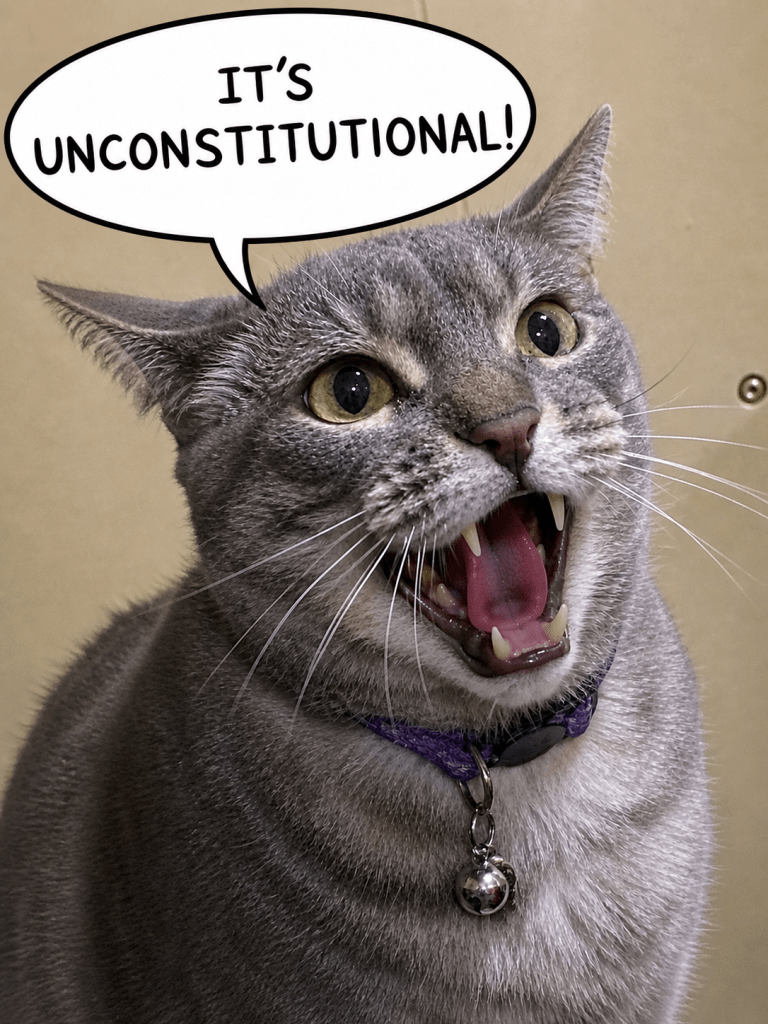
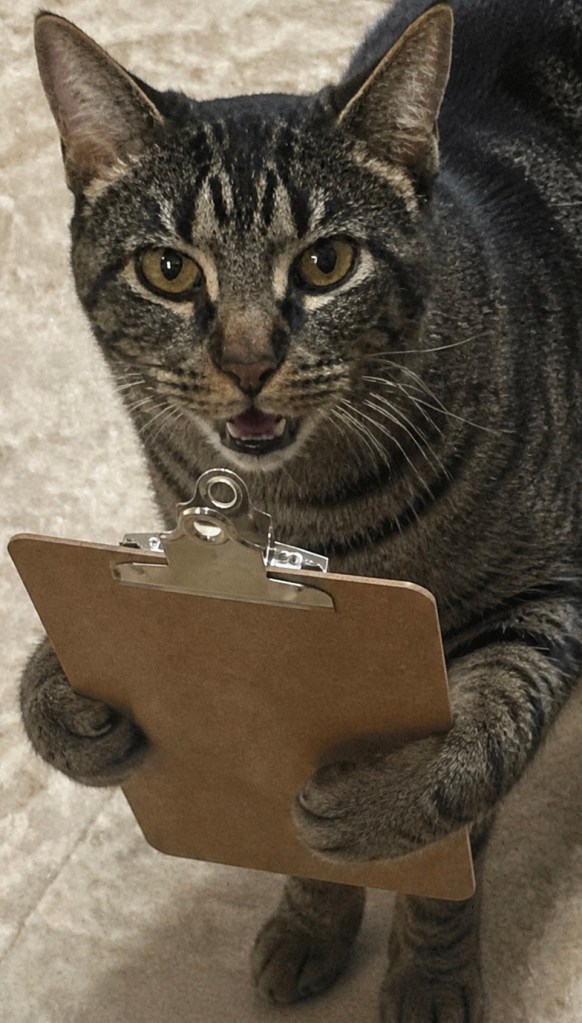
Piper has officially closed her laptop and declared she’s unavailable for further foolishness. And has already clocked out and put her paw over the “Do Not Disturb” sign. Coco is stress eating treats like she’s watching a season finale. And she is filing paperwork with HR titled “The Nation Is Acting Up Again.” Tinkerbell has curled up on my chest because she said, “the nation’s anxiety is too loud and she’s clocking out.” And has declared the vibes unconstitutional and gone to bed. 

If the world insists on acting unwell, then we’ll heal anyway. Loudly, joyfully, and with three cats as our emotional support security detail. Bless your boundaries, your brain cells, and your blood pressure. Now go forth and protect your peace like it’s the last biscuit at Sunday dinner. Thanks for reading! Get your ass in therapy.

Affirmation: I honor my mind, protect my peace, and set boundaries so firm even Coco won’t cross them.

***Don’t’ forget to watch the video!***

#ThisPuzzledLife