This Puzzled Life is a mental health and recovery blog exploring addiction, trauma healing, LGBTQ experiences, humor, and the strange moments that shape us.
“When a nation protects its predators more fiercely than its people, the collapse isn’t coming. It’s already here.”
-This Puzzled Life
Light the charcoal. Burn the sage like we’re trying to smoke out every demon from the last seven administrations. Today, we’re cooking up a truth so blistering it might peel the paint off the Capitol dome. Invoke every ancestor available. The loud, petty, and the ones who still whisper “bless your heart” like a threat. I’m calling on Big Mama, PawPaw, Aunt Loretta with the wandering eye. And that one ancestor who definitely hexed a Confederate colonel in 1863. Bring them all. We need every ounce of ancestral horsepower because America has officially entered its “What in the absolute hell?” era The nation has gone full fever‑dream and nobody seems interested in waking up.
The Epstein Files, the ones we were told were “handled,” “investigated,” “classified,” “lost,” “oops,” and “don’t worry about it,” are being buried deeper than my will to live during tax season. Meanwhile, the government is out here juggling disasters like a drunk circus clown with a head injury. Healthcare? A dumpster fire. Bodily autonomy? On clearance. Gas prices? Astronomical. White nationalism and Christian nationalism? Thriving like mold in a Mississippi bathroom. And selective compassion? It’s the new national pastime. So, pull up a chair. Pour a drink. Hug your cats. Because this blog is about to be the emotional, sarcastic, ancestor‑approved scream into the void we all need.
The Epstein Files is the radioactive scandal our government keeps trying to bury under “Look! A shiny distraction!” The cover‑up is so blatant it’s practically a national sport. Billionaires with more skeletons than a Halloween aisle are suddenly moral authorities. While lecturing the rest of us as they scramble to hide their names from a list that should’ve detonated the entire political landscape.
And while they’re busy protecting predators, the rest of us are out here trying to survive a healthcare system held together with duct tape, prayer, and expired Band‑Aids. People can’t afford insulin. But Ghislane Maxwell is in a cushy prison doing yoga. Playing with puppies. Which she shouldn’t have access to. Because what if she had a torturous, sexual urge? And living her best “Namaste for trafficking children” life. Make it make sense.
Bodily autonomy? Gone. Women’s rights, LGBTQ+ rights, trans healthcare are all tossed into the shredder. While politicians smile like they just won a church raffle. Gas prices? Higher than a Pentecostal soprano hitting a praise note. White nationalism and Christian nationalism? They’ve fused into one giant casserole of “Jesus told me to be hateful.”
Immigrants, Black communities, Muslim families, LGBTQ+ folks are all targeted with cruelty so intentional it should come with a warning label. Compassion is now selective. Morality is performative. And empathy is apparently a luxury item.
Gerrymandering has turned voting maps into abstract art. Free speech is evaporating faster than my patience. Gun rights remain sacred. Gun violence remains ignored. And our veterans, again, are abandoned like last year’s Christmas decorations.
Climate change is catastrophic. The planet is screaming. And the government is like, “Have you tried recycling?” Our food and health safety are controlled by what I can only describe as roadkill science. That have regulations written by people who think salmonella, E.coli, botulism, listeria, and cyclospora is a seasoning.
And the FBI and DOJ? They are busy targeting political enemies. While apparently deciding that bestiality is no longer disqualifying for employment. I’m sorry, what? Who approved that? Who signed the paperwork? Who looked at that and said, “Seems fine.”
And because the chaos buffet wasn’t full enough, we’re now in a war with a country that didn’t even have nuclear weapons. Add the genocide of millions of Palestinians is being justified with the emotional range of a cold french fry. And now you have an administration accused of torturing and sexually abusing children. While billionaires desperately trying to avoid accountability. All of this is to protect predators.
What in the absolute hell is going on in our nation? The ancestors are pacing. The cats are side‑eyeing. The sage is burning like a bonfire. And America is acting like a reality show produced by Satan. And sponsored by generational trauma.
So here we are. Standing knee‑deep in a nation that feels like it was written by a drunk screenwriter who got fired from Black Mirror for being “too unrealistic.” A country where billionaires accused of sexual abuse get treated like endangered wildlife. While the rest of us are out here duct‑taping our sanity together with expired coupons and prayer.
The Epstein Files should’ve cracked the sky open. They should’ve been the reckoning. The purge. And the moment the powerful finally faced consequences. Instead, they were folded. Spindled. Mutilated. Redacted. Buried. Shredded. Re‑shredded. And then sprinkled with holy water and lies. And we’re told to “move on.” While the same people who covered it up lecture us about morality like they didn’t spend half their careers on private jets to private islands.
Selective compassion is the new national religion. AI is poisoning truth and our health faster than you can say “deepfake.” Climate change is screaming like a tornado siren. Free speech is shrinking. Gun violence is shrugged off. And our food safety is being overseen by people who think “roadkill science” is a legitimate discipline.
We’re in a war with a country that didn’t have nuclear weapons. Millions of Palestinians are dead in a genocide the world keeps trying to explain away with PR statements and selective outrage. And all of this is being justified by an administration of billionaires who treat accountability like it’s a contagious disease.
So let me say this plainly. If a nation will burn its people, its planet, its freedoms, its truth, its morality, and its future just to protect predators, then the predators were never the problem. The system that worships them is.
This isn’t chaos. This isn’t incompetence. This isn’t accidental. This is what happens when corruption becomes culture. When cruelty becomes currency. When power becomes religion. When accountability becomes myth.
And ‘We The People’ who still feel. Still care. Still fight. Still scream. And still hope. Are left standing in the ashes asking, “What in the absolute hell is going on in our nation?” They only get away with this because they’re terrified of what happens when we stop being quiet. Terrified of what happens when we stop accepting crumbs. Terrified of what happens when we stop believing their distractions. Terrified of what happens when we remember our power. Terrified of what happens when we refuse to let predators write the story.
Because the truth is this. A nation built on lies can only survive if the people stay silent. A nation built on injustice can only thrive if the people stay afraid. A nation built on cruelty can only endure if the people stop caring. And we are not silent. We are not afraid. We are not done. Because the reckoning isn’t coming. It’s already awake. Thanks for reading! And vote the predators out!
Affirmation: I stand in truth even when the world tries to bury it. I honor justice even when power hides from it. I call on my ancestors, my courage, and my voice. Because silence is no longer an option.
“When the government starts acting like a fever dream, the ancestors start drinking early.”
-This Puzzled Life
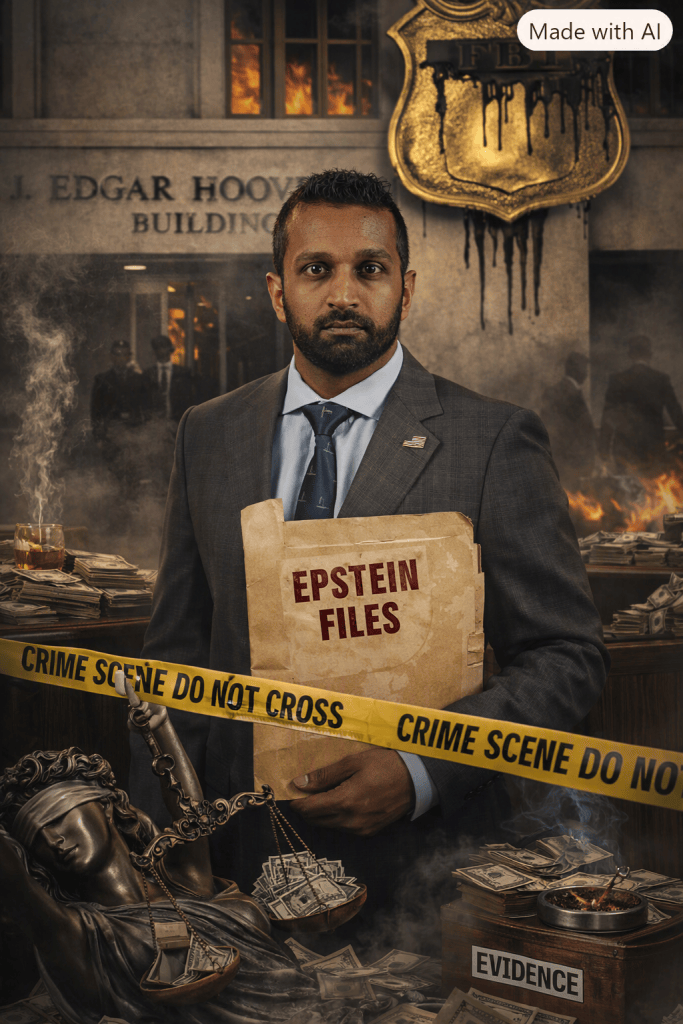
Light the charcoal. The ancestors just pulled up in a cloud of dust wearing house shoes. And carrying folding chairs like they’re about to attend the world’s most chaotic family reunion. Great‑Grandma Magnolia already has her wig tilted forward like a football helmet. She whispered, “Lord, give us strength. The government done gone stupid again.” And today’s topic of foolishness? A little man I’m legally required to refer to as “Kash Patel, Director of the Federal Bureau of Shenanigans.”
Kash Patel is a figure who has been involved in everything from Pentagon shake‑ups to classified document drama. And baby, the ancestors have receipts. But for the sake of satire, we’re talking about Kash Patel. Who runs the Federal Bureau of Shenanigans like it’s a yard sale run by raccoons.
His girlfriend, bless her patriotic delusion, believes she’s the greatest country music superstar in American history. Despite performing exclusively at vape shops, livestock auctions, and one unfortunate wedding where she sang a breakup song during the vows.
And under Kash Patel’s leadership, the Bureau has apparently decided that bestiality is no longer a disqualifying behavior for employment. Unless of course you were trafficked into it. In which case they give you a commemorative challenge coin, and a pamphlet titled “So You Survived Government Hiring Practices.”
Meanwhile, the Epstein Files remain locked up tighter than a Baptist grandmother’s liquor cabinet. The ancestors are confused. The cats are confused. Hell, even the potholes in Washington are confused. So, let’s break down the 10‑layer fuckery cake that is the United States government in 2026.
1. The Bureau of Patriotism Pageants
Kash crowns his girlfriend “Miss Constitutional Rights” every Thursday at 3 PM.
2. The Department of Bestiality Background Checks
Their slogan: “If you didn’t choose it, you’re hired!”
3. The Office of Epstein File Origami
Where classified documents are folded into swans, cranes, and one suspicious paper donkey.
4. The Committee on Imaginary Threats
They meet weekly to discuss invisible drones, psychic warfare, and rumors started by raccoons.
5. The Federal Karaoke Initiative
Kash’s girlfriend performs her hit single “My Man Loves America (And Also Himself)” at every staff meeting.
6. The National Gaslighting Association
Their motto: “If you saw it, no you didn’t.”
7. The Department of Homeland Insecurity
Every employee has anxiety, a vape addiction, and a side hustle selling patriotic bath bombs.
8. The Bureau of Unnecessary Shirtlessness
Kash insists all male agents remove their shirts “for morale.”
9. The Office of Democracy Dismantling
Their agenda:
Step 1: Confuse everyone
Step 2: Profit
Step 3: Blame immigrants
10. The Federal Council of ‘What in the Hell Is Happening?’
This one is just the ancestors sitting in lawn chairs. Drinking sweet tea. And screaming into the void.
By the time we finished unpacking Kash Patel’s Bureau of Shenanigans, the ancestors were already pacing the porch like they were waiting on a tornado or a cheating husband. Great‑Grandma Magnolia had her Bible open to whatever chapter deals with plagues, fools, and men who think they’re important. Because let’s be honest. America has survived segregation, prohibition, Y2K, the Tide Pod era, the rise and fall of MySpace, and every Florida Man headline ever written. We can damn sure survive Kash Patel and his Bureau of Shenanigans. But Lord. it’s getting close.
The cats have started holding nightly strategy meetings. Piper is drawing escape routes on the wall with a crayon. Coco is practicing her “I told y’all” speech for when democracy finally taps out. Tinkerbell is polishing her crystal ball like she’s preparing for the season finale of America.
Meanwhile, the ancestors are whispering, “This ain’t what we marched for. Somebody go unplug the government and plug it back in. Tell that man to sit down before we come down there ourselves.” Kash is out here treating democracy like a clearance rack at Dollar General by grabbing things. Breaking things. Rearranging things. And insisting he’s “helping.”
His Bureau of Shenanigans runs on expired Red Bull, conspiracy theories, and whatever patriotic glitter his girlfriend buys at Hobby Lobby. And the rest of us are just trying to keep the republic from slipping on a banana peel and falling into the abyss.
But here’s the truth. America may be exhausted. Confused. And spiritually dehydrated. But we are still here. Still loud. Still petty. Still lighting the charcoal and calling on the ancestors when the government starts acting like a fever dream.
And when Kash finally trips over his own nonsense and democracy staggers back into the room like, “Whew, what did I miss?” We’ll be ready with sweet tea, sarcasm, and a fresh pair of emotional support house shoes. Charcoal smoldering. Ancestors dismissed. Democracy side‑eyeing everyone. Thanks for reading! And let’s vote them all out.
Affirmation: I am grounded. I am aware. And I refuse to let clowns dismantle my democracy.
“A nation that excuses its predators will always silence its survivors.”
-This Puzzled Life
Light the charcoal. Sprinkle the sage. And call in the ancestors. The loud ones, the unfiltered ones, the ones who never learned to whisper. Today I’m summoning Ida B. Wells, Maya Angelou, Nina Simone, Toni Morrison, and every grandmother who ever slammed a cast‑iron skillet down and said, “Not my babies. Not today. Not ever.” Because what we’re about to talk about requires their fire, their fury, and their refusal to sit politely while the world burns around us. They are pacing. They’re rattling the windows. They’re demanding to know how a nation with libraries, universities, churches, and a Constitution still can’t figure out that rape is wrong.
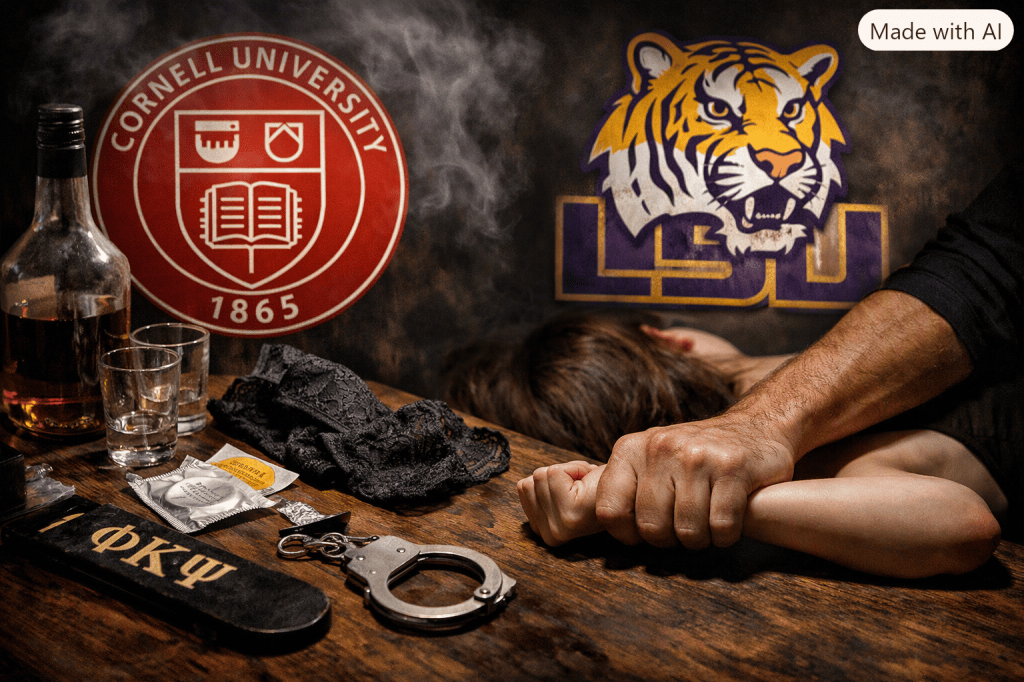
Cornell University and Louisiana State University are two institutions that love to brag about excellence, prestige, and legacy. Yet somehow can’t grasp the basic concept of protecting students from sexual assault. And now punishments include writing an essay? As if rape is a missed homework assignment. As if trauma is a teachable moment for the predator. Instead of a lifelong sentence for the victim. The ancestors are not amused. And neither am I.
Let’s ask the question America keeps dodging like it’s a bill collector, “What the hell is wrong with us when we have created a rape culture?” And don’t you dare pretend it came out of nowhere. Let’s start at the top at 1600 Pennsylvania Avenue. Where 77,000,000 voters decided that sexual abuse, rape allegations, and bragging about assault were just personality quirks. You know the excuses about “Locker room talk,” “Boys will be boys” , and “He tells it like it is.” No. He told us exactly what he does. And millions said, “Sounds good to me.”
When the leader of the country can say he can “grab them by the pussy” and get away with it, why are we shocked when college students mimic the behavior? Why are we surprised when institutions protect predators? Why do we act confused when victims stay silent? This is not confusion. This is culture. This is conditioning. This is America refusing to confront its sickness.
Politicians have paid off victims. Church leaders have hidden abusers behind pulpits. Celebrities have settlements thicker than their resumes. And the public shrugs. But victims get shamed. We get interrogated. We get asked what we were wearing. We get told we “waited too long.” We get treated like E. Jean Carroll who was sexually assaulted, defamed, mocked, and dragged by the very man who attacked her, Donald Trump. And by his cultists who call themselves “Christians.”And you wonder why so many stay silent? You wonder why survivors disappear into themselves? You wonder why healing feels like climbing a mountain with no summit? Here are two recent incidences of the same type of justified behavior.
Cornell University — Current Case (2024–2026)
The current Cornell case centers on a lawsuit filed in September 2026 by a former student, Jane Doe, who alleges she was drugged and gang‑raped by seven Chi Phi fraternity members on October 19, 2024. According to the lawsuit, she was intoxicated. Coerced into snorting what defendants claimed was ketamine. And then repeatedly assaulted for several hours by multiple fraternity members. One defendant allegedly sent a Snapchat message to the Chi Phi group chat advertising “free pussy” to encourage more men to join the assault. Doe reported the incident to Cornell police weeks later. The university conducted at least 12 hearings. Of the seven accused, only two were expelled. Others received lesser sanctions such as suspensions, workshops, or essays, according to Doe’s attorney. No arrests were made. And the Tompkins County District Attorney stated there was “insufficient evidence” for criminal charges. Cornell confirmed the fraternity remains barred from campus. And acknowledged that defendants were offered opportunities to “mitigate their conduct.” But cited federal privacy laws in declining to disclose individual disciplinary outcomes. https://www.cbsnews.com/newyork/news/cornell-university-lawsuit-fraternity-rape-allegations/?utm_source=copilot.com
Louisiana State University (LSU) — Current Case (2025–2026)
The current LSU case involves a sophomore student, Kendall Danielle, who alleges she was raped by an LSU football player on October 18, 2025, around 4:30 a.m. She underwent a rape kit examination and later participated in LSU’s Title IX process. Which concluded that the player was responsible for rape. And suspended him for two semesters. However, he appealed and was ultimately allowed to return to campus. Resume football activities. And participate in student organizations. Despite still being found responsible.
Danielle alleges the player’s mother contacted her urging her not to pursue charges because it could harm his football career. And that the player sent her $1,000 in an attempt to keep her from pressing charges. After learning he was allowed back on campus, she went public on TikTok and subsequently filed a criminal complaint. The East Baton Rouge District Attorney has since opened a criminal investigation. They are requesting reports from LSU, LSU Police, and Baton Rouge Police. LSU maintains it followed Title IX procedures and is cooperating with law enforcement. The player has not been publicly identified. https://www.wwltv.com/article/news/crime/student-files-sexual-assault-complaint-against-lsu-football-player/289-2bfa7986-e5fe-4d24-92db-9b069888c305?utm_source=copilot.com
But let’s talk about the roots of this rot. Is it the religions that teach masturbation is sinful? Is it the purity culture that tells young people their bodies are dangerous? Is it the sermons that say touching yourself will send you to hell? Let me be clear. You will not burn in the lake of flames for using two body parts God created you to have. For God’s sake, let them masturbate. Because when you shame normal, sexual behavior, you get people like the Duggars. They were raised in sexual repression so severe it turns into predation.
Is it misogyny influencers like Andrew Tate and Nick Fuentes? Men who teach boys that women are objects, property, and targets. Men who profit off hatred and call it masculinity. Or is it simply that America still refuses to teach boundaries? Still refuses to teach consent? Still refuses to teach respect?
Cornell and LSU are not anomalies. They are symptoms. Symptoms of a nation that treats sexual assault like a PR inconvenience instead of a violent crime. And when universities punish predators with essays, counseling sessions, or “reflection assignments,” they are telling victims, “Your trauma is worth less than his future.” And that is the message survivors hear every single day.
All predators no matter their status, wealth, influence, or fan base, should be held accountable. Not protected. Not excused. Not wrapped in a Bible verse and called “God’s Will.”
As a sexual assault survivor myself, I will never fully heal from the years I was assaulted. Raped sometimes daily by a man who is just like Donald Trump. I will never fully heal from the damage inflicted on me at five years old by someone who saw a child as an easy target. You will never understand that fear. And I pray you never have to.
Lift victims up. Lift survivors up. Hold predators accountable. Every single one of them. Because rape is not a mistake. It is not a misunderstanding. It is not a lapse in judgment. It is violence. It is domination. It is a choice. And America needs to stop pretending otherwise. Thanks for reading!
Affirmation: I am not what happened to me. I am what I survived. My voice is powerful. My truth is valid. And my healing is sacred.
“Awareness is the first step toward healing. And healing is a community effort.”
-This Puzzled Life
Light the charcoal. Sprinkle the sage. Call the ancestors. Today, we’re talking about National Opioid Awareness Day. And we’re doing it in full Southern-sass, porch‑swing truth‑telling mode. Grab your sweet tea, your emotional support cat, and maybe a biscuit for stability. Because this one’s gonna be equal parts hilarious, heartfelt, and holy‑ghost serious.
The truth is this. National Opioid Awareness Day exists because too many families have empty chairs at the dinner table. Too many mamas have cried into dish towels. Too many communities have buried dreams that should’ve lived.
This day is recognized to honor the lives lost. Uplift the ones still fighting. And remind the rest of us that addiction is not a moral failure. It’s a public health crisis that deserves compassion, resources, and loud, unapologetic awareness. But you know me. I can’t stay solemn for long. My ancestors didn’t raise me to be quiet or boring. Now let’s get sassy about it.
Let me tell you something. If the opioid epidemic were a person, it’d be that messy cousin who shows up uninvited. Eats all the potato salad. Steals your good Tupperware. And then has the nerve to ask for gas money. It’s rude. It’s destructive. And it’s been wreaking havoc across the nation like a raccoon with a grudge and access to your trash cans. This is the day we collectively say, “Not today, Satan. Not in my house. Not in my holler. And not in my county.”
It’s the day communities come together with churches, schools, aunties, cousins, and the neighbor who always knows everybody’s business. To learn. Support. And fight back with education, prevention, and love. Because love is louder than stigma. And community is stronger than crisis. And Southern women? We don’t play when it comes to protecting our people.
Addiction doesn’t care about zip codes. Because recovery is possible. Because shame kills. But awareness saves. Every life deserves a chance to come home. Sit at the table. And say, “I made it.” And if we don’t talk about it, we lose more than we can bear.
And so here we stand. Charcoal still glowing. Sage still swirling. Ancestors still humming that low in a knowing tune they save for moments when truth hits bone-deep. National Opioid Awareness Day isn’t just a date on a calendar. It’s a call to rise up like your grandma’s biscuits in a hot oven. It’s a reminder that we don’t get through hard things alone. And we sure don’t heal in silence.
Silence is a thief. Stigma is a liar. And shame? Shame is that dusty old cousin who shows up to the family reunion wearing flip-flops and bad decisions. While trying to tell everybody how to live. We don’t listen to shame in this house. We listen to compassion, community, and the ancestors who whisper, “Baby, keep going.”
We honor the ones we’ve lost. We uplift the ones still fighting. We stand guard over the ones who haven’t yet found their way home. And we do it with humor, heart, with Southern stubbornness. And with the kind of love that refuses to back down. It’s the kind of love that will fight a bear, a politician, and a malfunctioning church crockpot all before breakfast.
So today, light your charcoal. Sprinkle your sage. Call your ancestors. And then take one bold step toward awareness, healing, and being the kind of person who refuses to let crisis win. Because this story isn’t over. This fight isn’t finished. And this our community is louder, stronger, and more determined than any epidemic that ever tried to break us. Now excuse me while I drop this mic like it’s hotter than a Mississippi August sidewalk. We see you. We love you. We’re fighting with you. And we’re not done yet.
Affirmation: I honor the lives affected, uplift the ones still fighting, and choose compassion over judgment every single time.
“When you stop people‑pleasing, you don’t become unkind. You become un-owned.”
-This Puzzled Life
Light the charcoal. Sprinkle the sage. Today we’re not just cleansing the air. We’re cleansing the generational rot that tried to bury us alive. While I also smile sweetly and was asked if I wanted more casserole.
There’s a special kind of exhaustion that comes from being raised in a culture where your worth is measured by how small you can make yourself. Where “good manners” means “don’t make anyone uncomfortable.” Even if you’re bleeding out emotionally. Where “respect” means “don’t you dare speak the truth out loud.” And the South? The South will hand you a monogrammed apron, a church bulletin, and a generational trauma starter pack before you can even walk. But today we’re unpacking all of it.
Let’s talk about people‑pleasing. Not the cute kind where you bring someone banana pudding because you love them. But the dangerous kind. The kind that rewires your nervous system. The kind that teaches you to abandon yourself so thoroughly that you forget you ever had needs in the first place.
People‑pleasing is not a personality trait. It’s a survival skill. A trauma response. A generational inheritance wrapped in a bow of “be sweet” and “don’t cause trouble.” And in the South, it’s practically a rite of passage.
We’re taught early don’t speak up. Don’t contradict. Don’t embarrass the family. Don’t make waves. Don’t question authority. Don’t tell the truth if the truth makes anyone uncomfortable. Don’t you dare put yourself first. That’s selfish. And for the love of all things holy, don’t let the church ladies hear you say “no.”
People‑pleasing becomes the currency of acceptance. The ticket to belonging. The price of being considered “good.” But here’s the sinister part. People‑pleasing trains you to betray yourself before anyone else even gets the chance. You learn to anticipate everyone’s needs but your own. You learn to apologize for existing. You learn to smile through pain so convincingly that even you forget you’re hurting. You learn to make yourself small enough to fit inside other people’s expectations. And the world, especially the Southern world, rewards you for it. Until you stop.
The moment you stop people‑pleasing. The moment you say “no,” or “that’s not okay,” or “I’m not doing that anymore.” The moment you choose yourself? Suddenly you’re the villain in a story you didn’t write. Suddenly you’re “difficult.” Suddenly you’re “ungrateful.” Suddenly you’re “too sensitive,” “too outspoken,” “too much,” “too emotional,” “too opinionated,” “too educated,” “too aware,” and “too alive.” But the truth is simple. You’re not too much. You’re just finally enough for yourself. And that terrifies people who benefited from your silence.
People‑pleasing is dangerous because it teaches you that your safety depends on your compliance. It teaches you that love must be earned through self‑abandonment. It teaches you that your needs are negotiable. But everyone else’s are sacred. When you grow up in a culture that worships politeness more than honesty. Appearances more than integrity. And reputation more than reality. You learn to disappear. Until one day, you don’t.
And here’s where it gets personal. This isn’t theory for me. This isn’t something I read in a book or heard in a podcast. This is lived experience that was carved into my bones. Stitched into my history. And dragged behind me for decades like a cross I never volunteered to carry.
On a personal note, my family marinated me in people‑pleasing my entire life. And when you don’t comply? You get labeled the troublemaker. The problem. The one who “changed.” The one who “thinks she’s better.” The one who “needs to calm down.” The one who “makes everything difficult.” But not teaching me boundaries while simultaneously demanding I people‑please was dangerous. Not inconvenient. Not uncomfortable. Dangerous.
I have almost died multiple times because I gave more of myself than I had to give. I was trained to prioritize everyone else’s happiness over my own survival. I was taught that my needs were optional. But their approval was oxygen. And in the South, it’s a shameful way of life to even question this dynamic.
I had to come to a point, not helped by their expectations, where I finally put myself first. And now that I have strong boundaries, my family and the community think I’m “nasty” because I tell them I don’t need their validation. They want me to “cow tow” to their needs while never expecting the same from them. And that, my friends, is the pinnacle of hypocrisy and controlling behavior. And at this point in my life, I can say with confidence that I’ll never allow myself to be controlled by someone else ever again.
Let me make this plain in a way even the most selectively‑forgetful, Bible‑thumping, reputation‑worshipping, boundary‑hating folks can understand. I am no longer available for my own destruction. I am no longer the family sponge soaking up everyone else’s dysfunction. I am no longer the emotional punching bag for people who refuse to face their own shadows. I am no longer the scapegoat for sins I didn’t commit. I am no longer the child who learned to survive by disappearing. I am no longer the adult who thought love meant self‑sacrifice. I am no longer the woman who begged for crumbs of acceptance from people who never learned how to love without conditions. I am done.
I’m done with the gaslighting. Done with the hypocrisy. Done with the “good Christian” performances. Done with the selective morality. done with the selective compassion. Done with the silence that protects abusers. Done with the shame that was never mine to carry. Done with the generational curses disguised as tradition. And done with the expectation that I should shrink so others can feel tall.
I am not here to make anyone comfortable. I am not here to uphold anyone’s illusion. I am not here to play the role they assigned me. I am not here to be palatable, agreeable, or quiet. I am here to live. Fully. Boldly. Truthfully. Unapologetically. And if my boundaries offend you? If my healing threatens you? If my voice rattles your cage? If my truth exposes your lies? That’s not my burden. That’s your mirror.
So let me end this with the clarity of a woman who has crawled out of the grave they dug for me. I didn’t lose my family. I lost my captors. I didn’t lose my community. I lost my chains. I didn’t lose my identity. I reclaimed it. And I will never, ever, ever hand it back. Lights out. Thanks for reading! To thine own self be true. What are your experiences with this?
Affirmation: My boundaries are sacred. My truth is valid. My life belongs to me now fully and forever.
“Psych units may be chaotic. But at least my bitching is organized.”
-This Puzzled Life
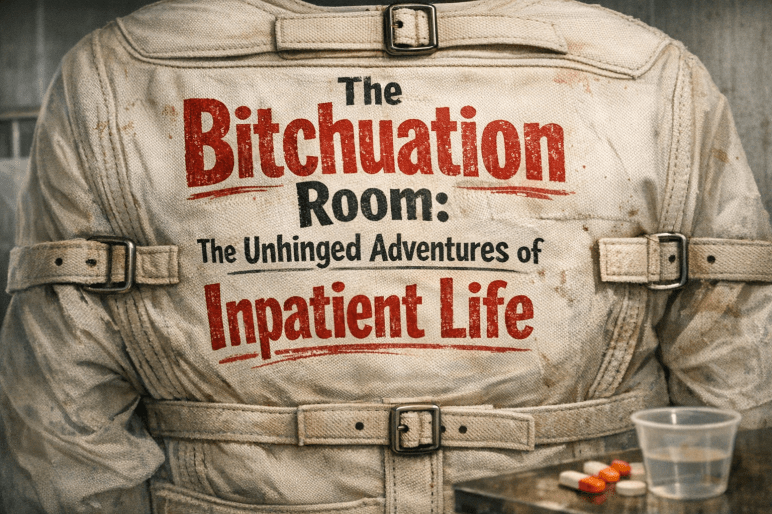
Light the charcoal. Sprinkle the sage. Somebody hand me a fan because the level of petty I’m about to describe requires ventilation. Psych units don’t just have pettiness. They cultivate it like a community garden complete with tomatoes, basil, and grudges. And if I’m going to talk about it, I need every ancestor, archangel, and neighborhood stray cat on standby.
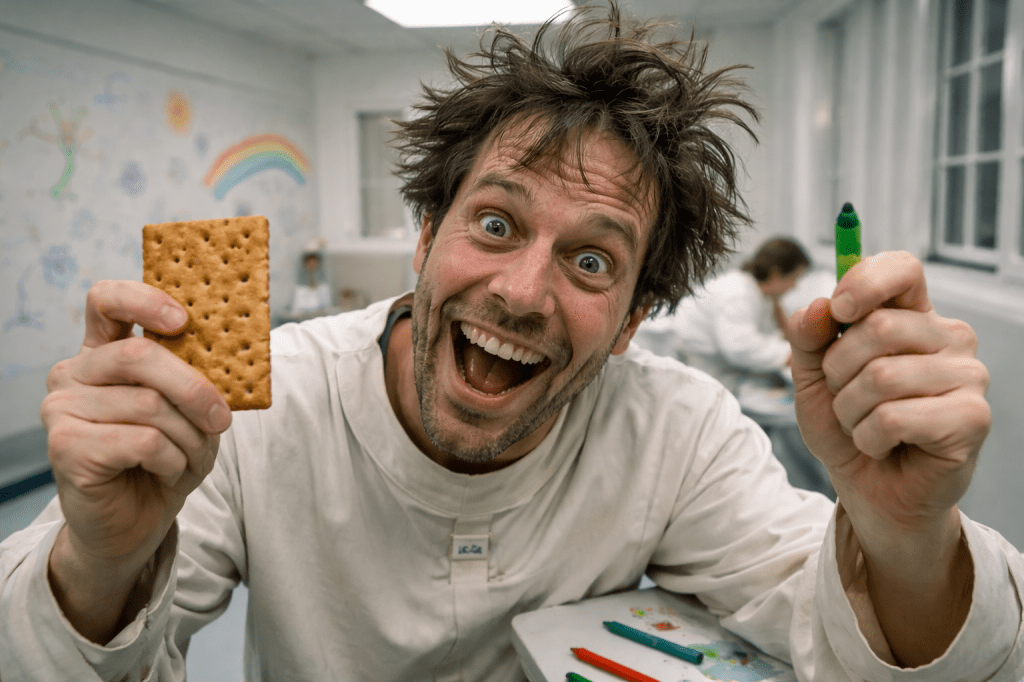
These places run on a spiritual cocktail of fluorescent lighting, lukewarm coffee, and the kind of petty that could power a small city. The spirits already know what time it is. We’re about to enter the only place on Earth where adults will fight over a graham cracker, a blanket, and who gets to sit closest to the fake plant in group therapy. Especially the kind that shows up wearing non‑slip socks and asking if you’ve “completed your feelings journal for the morning.” Buckle up. We are about to revisit the life of the unhinged.
Let me tell you something right now. Nobody does pettiness like a psych unit. Not your auntie at Thanksgiving. Not your ex who still watches your Instagram stories from a burner account. Not even the Southern church ladies who can bless your heart into a coma. Psych units are the Olympics of Petty. Gold medal level. International competition. And sponsored by “Clipboards & Consequences™.
And the wildest part? The staff and the patients are in a silent, unspoken petty war at all times. It’s like a nature documentary narrated by Morgan Freeman: “Here we observe the patient refusing to participate in group therapy because the therapist said, ‘good morning’ with the wrong tone.”
Breakfast on a psych unit is not a meal. It’s a spiritual exam. You ask for two sugars? They give you one. You ask for a spoon? They hand you a spork like you’re being punished for past lives. You ask what the eggs are made of? They say, “Don’t worry about it,” which is exactly when you start worrying about it.
And the patients? Oh, we’re petty right back. Someone refuses their meds because the nurse said their name wrong by half a syllable. Someone else declares a hunger strike because they didn’t get the “good blanket.” Which is the one that feels like it’s been washed fewer than 400 times.
Psych unit bed assignments are the closest thing we have to Old Testament conflict. Two grown adults will absolutely fight over who gets the bed closest to the window like it’s beachfront property. Someone gets moved rooms and immediately acts like they’ve been exiled from the kingdom. They say, “I’m not unpacking. I’m staging a protest.”
Group therapy is where the petty becomes performance art. Someone refuses to share because “the energy is off.” Someone else overshares because they know it makes the therapist uncomfortable. Someone proudly announces, “I’m only here for the snacks” and means it. And the group leader? Smiling sweetly while spiritually flipping everyone off.
If you’ve never seen adults negotiate shower times like they’re drafting a ceasefire agreement, you haven’t lived. People will take 47‑minute showers out of spite. “Forget” their towel so they can walk dramatically down the hall. Complain someone used “their” shampoo even though it’s the hospital’s and smells like citrus‑flavored despair.
And then you discover the shower has no curtain. Not a flap. Not a panel. Not even a nostalgic bead string from the 70s. You step into that shower like you’re entering a baptism you did not sign up for. The water pressure is either a gentle mist that feels like someone exhaling on you. Or a fire‑hose blast that could strip paint off a Buick. Meanwhile, staff strolls by doing “wellness checks” like, “just making sure you’re safe!” Ma’am, I am safe. Emotionally? No. Physically? Barely. Spiritually? Absolutely not.
Mindfulness group on a psych unit is its own brand of comedy. The therapist dims the lights (as much as fluorescent bulbs allow), puts on royalty‑free pan flute music, and says, “Imagine you’re on a peaceful beach.” Ma’am, I am sitting in a plastic chair that squeaks every time I breathe. Then it’s, “Picture a calm, soothing waterfall.” Meanwhile someone is snoring. Someone is whisper‑arguing with their spirit guides. Someone is chewing graham crackers like they’re in a survival documentary. And you’re trying to “visualize tranquility” while holding a safety crayon shaped like a melted candle.
They are not crayons. These are wax‑based emotional support devices. Thick. Stubby. Unbreakable. Unsharpenable. Every letter looks like it was drawn by a raccoon wearing oven mitts. But when a Code gets called? Those colors become binoculars. Everyone leans forward clutching their little wax chunk like, “Pass me the purple one. It’s the good one.”
Psych units have one universal truth. A doctor must be called for absolutely everything. You sneeze too enthusiastically? “Hi, yes, doctor? She sneezed with intention.” Want a Tylenol? Doctor. Want a different blanket? Doctor. Want to sit in a different chair because the one you’re in feels spiritually cursed? Doctor. It’s like a fluorescent DMV where every request requires a supervisor who is mysteriously never on the floor.
And then there are the medications. Raise one eyebrow too high? “Let me page the doctor.” Ask why the eggs taste like regret? “Let me page the doctor.” Have an attitude after being woken up at 5 a.m. for vitals you did not ask for? Suddenly they’re offering you something “to help you relax.” Which is psych‑unit code for, “This will knock you into next Tuesday.” These meds are so strong they could end a world war. You wake up unsure of your name, the date, or why your socks don’t match.
Some staff walk around like they’re the TSA of mental health. And they’re ready to confiscate your emotional liquids. Some give you the “I’m tired of all y’all” look before you’ve even spoken. Some have mastered the therapeutic smile. The one that says, “I care deeply.” But their eyes say, “I clock out in 12 minutes and I’m not starting anything new.” And the tech who acts like your request for a second blanket is a personal attack on their lineage? Iconic.
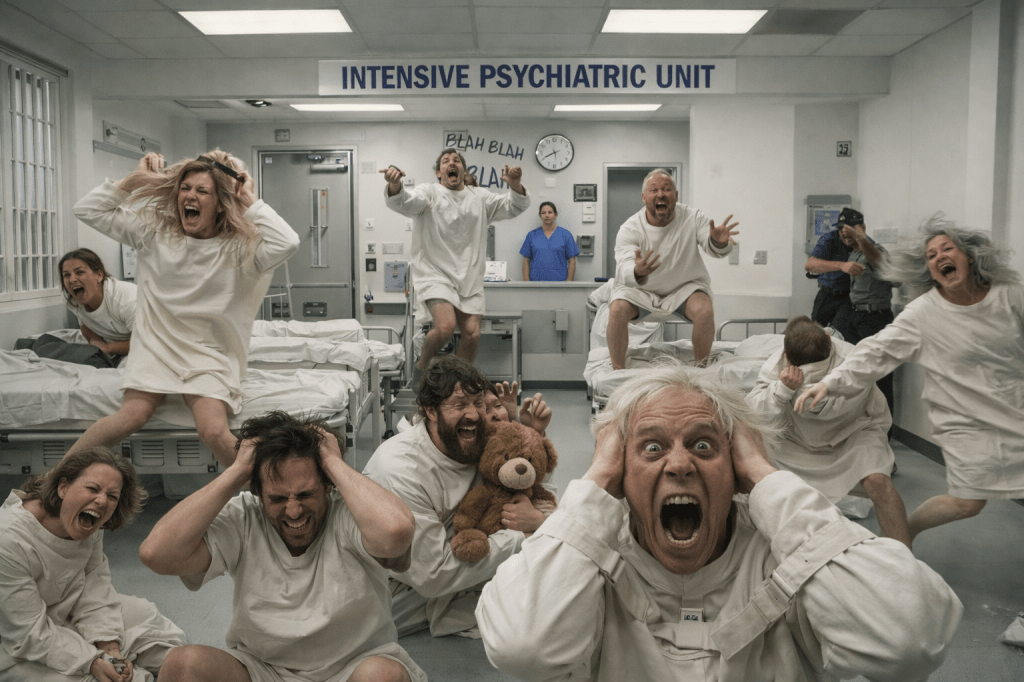
There comes a moment when staff decides you’re “a little too spicy for the general population.” And suddenly you’re being escorted to the Psychiatric Intensive Care Unit known as the PICU. The PICU is not a unit. It is an ecosystem. A habitat. And a fully unhinged micro‑climate where time is fake. Socks are currency. And the air vibrates with the energy of people who have absolutely had enough.
The lighting is harsher. The chairs are bolted down with enthusiasm. And the staff has that look like they’ve seen things they can’t legally discuss. This is where someone argues with a wall. Someone else declares themselves the mayor. A graham cracker becomes a weapon of emotional warfare. And the “call the doctor” rule becomes a religion. You start to wonder if the doctor is a real person or a mythological creature who appears only during full moons and paperwork audits.
There is a very specific sound a psych unit makes right before a Code gets called. It’s too quiet. Like the ancestors are holding their breath. Then, a chair scoots too hard. A voice gets too spicy. A slipper hits the floor with conviction. And the staff looks up like meerkats who heard a twig snap. Someone yells “CODE!” with the enthusiasm of a Walmart employee announcing Black Friday. And the whole unit transforms into live‑action chaos. Patients settle in like it’s cable TV. And it’s like, “Oh lord, they done called a Code. Lemme get comfortable.” Staff sprints like Olympians. Clipboards fly. Walkie‑talkies crackle. And the therapist breathes deeply like they’re manifesting a different career.
And when it’s over? Everyone goes right back to coloring like it was a commercial break. Psych units are messy, miraculous, chaotic, exhausting, and sometimes deeply funny in ways only people who’ve been there understand. The pettiness isn’t cruelty. It’s survival. It’s humanity. It’s the tiny rebellions that remind you you’re still a person. Even when life has knocked you sideways.
Connect and Refocus assignments are the psych‑unit equivalent of being told to stand up in front of the congregation and confess your sins with a microphone that echoes. They hand you a worksheet with questions about your troubling behavior. And by the time you’re done it’s the thickness of a dissertation. The therapist says, “Just outline your maladaptive coping skills and therapy interfering behaviors.” Just? As if you’re not about to write a full academic paper on why you shut down emotionally. Overthink everything. And threaten to fight the vital signs machine at 5 a.m. And the worst part? You don’t just fill it out. You have to read it aloud in group like you’re defending your thesis before God, the ancestors, and a room full of people who just met you yesterday. You’re sitting there clutching your safety crayon while trying to sound insightful. And everyone else nods like they’re on the judging panel of America’s Next Top Trauma Survivor. It’s humbling. It’s horrifying. It’s hilarious. And somehow, it’s exactly the kind of chaos that makes psych unit bonding feel like summer camp for emotionally exhausted adults.
But there is no gamble on Earth quite like the moment they tell you, “You’ll be sharing a room.” That’s not an assignment. That’s a lottery. That’s a spiritual test. That’s a cosmic wheel‑spin hosted by the universe itself. On a psych unit, your roommate can be literally anything. The possibilities are endless. Unhinged. And hilarious in a way only people who’ve lived it understand.
Here is a few of the different types of roommates you could be paired up with.
1. The roommate that sleeps 12 hours a day but somehow still manages to terrify you. They snore like a diesel engine. They sit up suddenly at 3 a.m. like they’re receiving messages from the ancestors. They whisper things like, “Did you hear that?” No, I did NOT hear that. And I would like to keep it that way.
2. This roommate provides live commentary on everything you do. You stand up? “Where you going?” You sit down? “You tired?” You breathe? “You okay?” I am trying to exist. Please let me exist in silence.
3. This roommate has been in the unit for 48 hours and has already achieved spiritual awakening. They speak in riddles. They meditate loudly. They give unsolicited advice like, “You must release the ego. Also, can I have your pudding?”
4. This one will eat every single snack you have. Even the ones you hid in your pillowcase. They will deny it with confidence. They will gaslight you about your own graham crackers. They will ask for juice while drinking the juice they stole from you.
5. This roommate is entertainment. Pure entertainment. They talk to themselves, the walls, the staff, the ancestors, and occasionally the ceiling tiles. They narrate their dreams. They reenact scenes from movies that don’t exist. You don’t even need cable. You have them.
6. This roommate showers at 2 a.m. With no curtain. With the water pressure set to “pressure wash a tractor.” They come out wrapped in a towel the size of a napkin and say, “Your turn.”
7. This roommate is quiet. Too quiet. You don’t know if they like you. Hate you. Or don’t know you exist. They stare at the wall for long stretches of time. They fold their socks with military precision. They whisper to their juice cup. You respect them deeply.
8. This roommate minds their business. Sleeps in weird positions. Hisses when staff wakes them up. Eats only the snacks they like. And will absolutely sit on your bed like it’s theirs.
Psych‑unit roommates are a whole spiritual curriculum. A syllabus written by the universe. A randomized character generator with no patch notes or warning labels. And I’ve had every single type walk through that door and claim the other half of my room like they were entering a reality show.
Some were chaotic. Some were confusing. Some were plot twists. And a precious few? They became family in the kind of way only shared trauma, cold cereal, and shared “Did you hear that?” moments can create. You don’t choose your psych‑unit roommates. But sometimes the universe chooses them for you.
I’ve had the ones who snored like freight trains. I’ve had the ones who narrated my every move. And the ones who didn’t speak for three days. But somehow communicated entire novels with their eyebrows. I’ve had the ones who showered at 2 a.m. with the water pressure set to “remove barnacles.” And the ones who treated the room like a spiritual dojo. Then there were the ones who were just there. Quiet. Odd. Mysterious. Every roommate was a new chapter in the saga. Every roommate was a new lesson in patience, comedy, and survival. Every roommate was a new story I absolutely should not laugh at but absolutely do.
But out of all the chaos, characters, and all the “Lord, give me strength” moments, there are a couple of roommates who became real friends. The kind you still talk to. Still laugh with. Still send memes to about your shared psych‑unit nonsense. These are the ones who laughed with me at 3 a.m. when the unit sounded like a haunted Walmart. Shared snacks like we were in a bunker. Understood the unspoken language of “I’m fine but also not fine but also fine.” Survived Codes, guided imagery, and curtain‑less showers right alongside me. And turned the worst moments into inside jokes that still make us wheeze.We walked through the same chaos and came out with matching emotional scars and petty humor.
I wouldn’t trade them for all the money in the world. Not for a million dollars. Not for a lifetime supply of the “good blankets.” Not even for a shower curtain. Because some people come into your life for a reason. Some come for a season. And some come because the hospital assigned them to your room. And the universe said, “Y’all need each other.”
And within that roommate lottery, the prize is either peace, or a story you will tell for the rest of your natural life. And somehow? You adapt. You bond. You laugh. You survive. And you walk out with tales that sound made‑up but absolutely aren’t.
Healing is hard. Fluorescent lights are evil. And humans will absolutely weaponize a spork if pushed far enough. May your blankets be soft. Your meds be on time. And your petty be righteous. May your coping skills be strong. Your boundaries fortified. And your spirit guides remind you that sometimes the pettiest thing you can do is heal anyway.
And that is the gospel truth of the psych unit. A place so petty. So chaotic. So spiritually unhinged. That even the ancestors step back like, “good luck.” Between the curtain‑less baptisms they call showers. The guided imagery that feels like group hallucination. The safety crayons built like toddler dumbbells. And the Codes that pop off like surprise season finales. One thing becomes clear. Healing might be hard. But the comedy is free.
So, the next time somebody tries to tell you psych units are calm, peaceful places. Just smile. And let your spirit guides handle the lie. And remember, sometimes the pettiest, most powerful thing you can do is survive it with your humor intact. Thanks for reading! And, yay, for the ability to use humor as a coping skill for survival.
Affirmation: I am calm, I am grounded, and I will not let anyone with non‑slip socks ruin my vibration today.
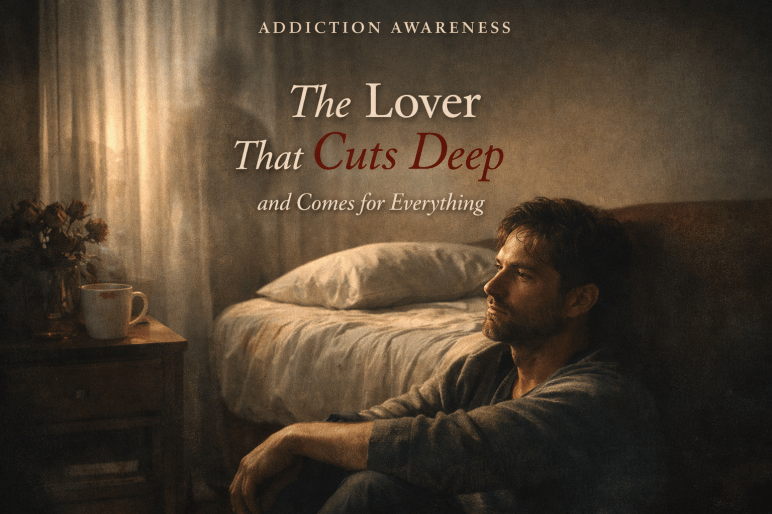
“Addiction is a quiet predator. It’s patient. Calculated. Always hungry. And waiting for the moment you’re weakest to take the biggest bite out of your life.”
-This Puzzled Life
Light the charcoal. Sprinkle the sage. Because when we talk about addiction awareness, the air needs to be thick with truth, protection, and the kind of courage that makes your voice shake but keeps going anyway. This isn’t a pretty conversation. It’s not a gentle unveiling. It’s not polite. It’s not something you whisper behind closed doors like a family secret wrapped in shame. It’s the kind of truth that shakes the floorboards and rattles the bones of anyone who’s ever lived it. Loved someone through it. Or buried someone because of it. This is a front porch, bare soul, trembling‑hands kind of truth. And today, we’re telling it out loud.
Addiction doesn’t walk into a home quietly. It barges in like a storm. It tracks mud across every memory. It rearranges the furniture of your life. And convinces you that chaos is normal. It teaches you to apologize for things you didn’t break. To shrink yourself so its shadow can stretch across the room. And to pretend you’re fine when your insides feel like shattered glass. And the cruelest part? Addiction doesn’t just take from the person struggling. It takes from everyone who loves them.
Families learn to tiptoe. Children learn to decode moods like weather patterns. Partners learn to carry burdens that were never meant for one set of shoulders. And the person battling addiction, learns to hide their pain behind a smile that fools everyone except the people who know them best. Addiction awareness isn’t about statistics or slogans. It’s about the people who wake up every day fighting a war no one else can see.
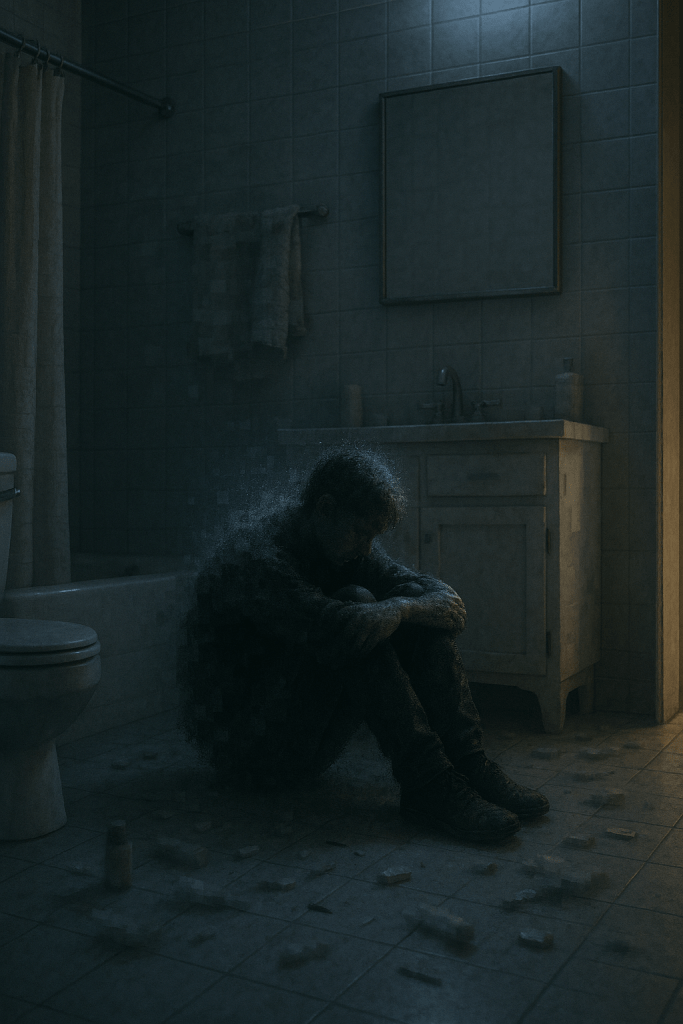
There are the battles fought in bathrooms, parked cars, and bedrooms with the door locked. The battles fought in silence because shame is louder than the truth. The battles fought by people who are terrified to ask for help because they don’t want to be judged. Dismissed. Or treated like a problem instead of a person.
Addiction awareness means saying, “You are not alone. You are not broken beyond repair. You are not the worst thing you’ve ever done.” It means recognizing that recovery isn’t linear. It’s messy. It’s painful. It’s full of relapses, restarts, and revelations. But it is possible. I tasted that freedom many years ago, during a moment in life that now seems like it never existed.
Let’s talk about the people that love them too. The ones who hold the line when the person they love can’t. The ones who pray. Cry. Scream. Hope. And repeat. Addiction awareness means honoring their resilience. Their heartbreak. Their bravery. Loving someone through addiction is its own kind of battle that deserves to be seen.
Addiction is not a moral failure. It is not a character flaw. It is not a sign of weakness. It’s a neurological hijacking. And once it gets inside, it takes the controls and refuses to give them back. It’s a thief. A liar. And a weight that no one should carry alone.
Awareness is the first step toward compassion. Compassion is the first step toward healing. Healing is the first step toward freedom. And freedom? Freedom is the birthright of every single person touched by addiction. It doesn’t matter whether they’re fighting it. Surviving it. Or loving someone through it.
I have been an addict in one form or another since I was a very young teen. That’s the part people don’t see. The way it starts before you even understand what “coping” means. Before your brain is fully formed. Before you know that one decision can echo for decades. Some things I let go of and never touched again. But others? Others I’m still married to. Still controlled by. And still waking up beside like a partner I never meant to vow my life to. I’ve stood on every side of this issue. I’ve been a patient, professional, survivor, and witness. I’ve buried friends and family. And I’ve found the bodies of patients. I’ve even sat in classrooms learning the science. And I’ve sat on bathroom floors learning the consequences.
One of the biggest debates is whether addiction is a disease. And honestly? I see both sides. But I can attest to this. What I know in my bones is that addiction will pick up exactly where it left off. It doesn’t forget you. It doesn’t forgive you. And it doesn’t loosen its grip just because you got tired.
It progresses like a slow-moving fire. Consuming everything until it shuts down every functioning cell in your body. It’s the lover that kisses your forehead while holding a knife behind your back. And it’s like trying to pet a rattlesnake and hoping it suddenly cares about your well-being.
There are no social crack users. No social heroin users. No social meth, fentanyl, or “just once in a while” users of the things that hollow you out from the inside. I’ve known too many who didn’t make it. Too many funerals. Too many empty chairs. Too many stories cut short. And the truth is brutal. Addicts are not the type who typically live to be 80. The statistics confirm what our hearts already know. That many have died. And many more will die.
And process addictions? Eating disorders, self-harm, gambling, sex addiction, etc. are not softer versions. They are simply different roads to the same grave. Addiction doesn’t care about the method. It cares about the destruction. And it will be done in totality emotionally, socially, spiritually, and physically.
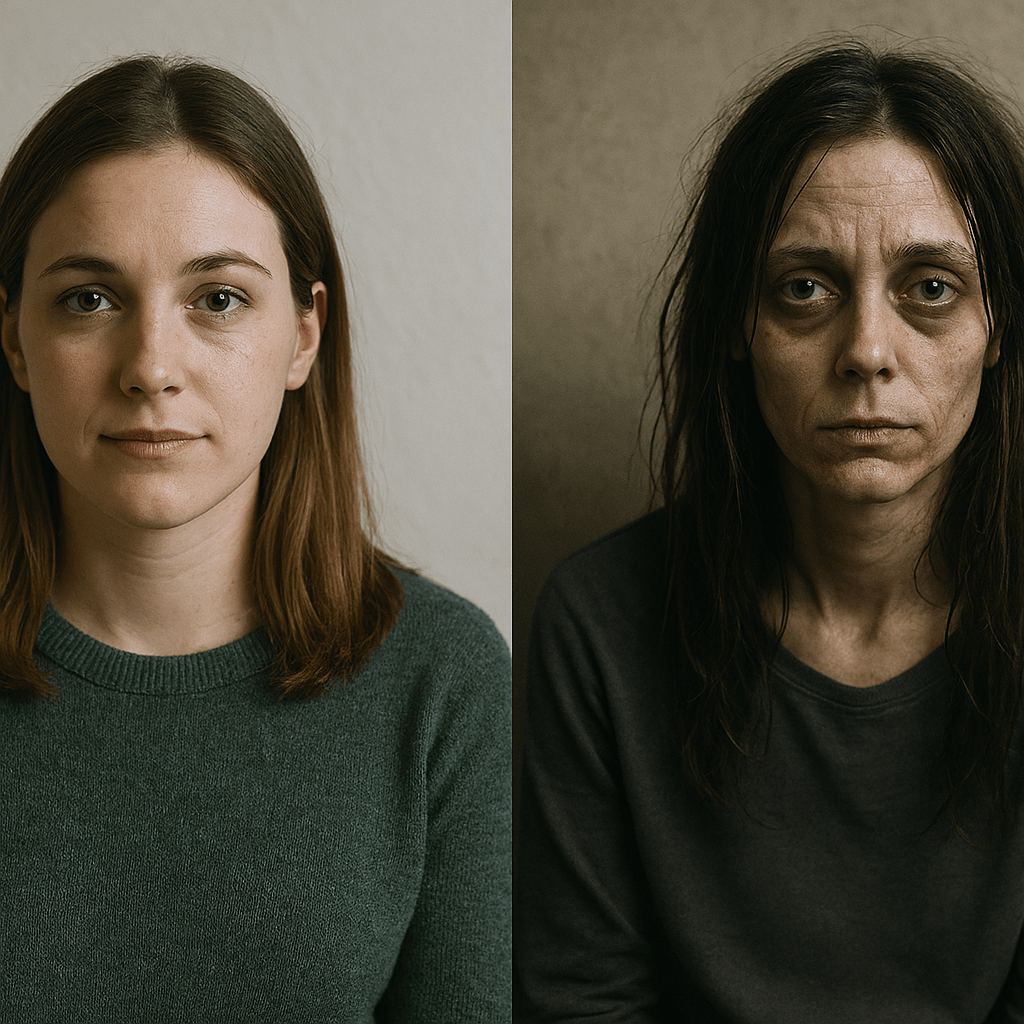
It strips you down until you’re a shell of what once resembled a human being. It destroys your life and the lives orbiting yours. That’s the goal. It wants no interference. And no one slowing its roll. It wants you wrapped around its finger in a relationship so co-dependent it feels cellular. It doesn’t care how many relationships are ruined as a result. Addiction is about the next fix. Whatever that fix is. And you will chase it until the line between living and dying blurs.
The saddest part is that you don’t know you’re susceptible until you’re already in it. Addiction does not discriminate. It shows no mercy to clergy, billionaires, politicians, Hollywood actors, musicians, doctors, lawyers, nurses, or the people just trying to keep the lights on and food on the table.
And the idea that you can outthink addiction? Outsmart the chemical, emotional, and neurological machinery it hijacks? That’s the thinking of fools. And I say that with compassion. Not judgment. There is nothing more heartbreaking than watching someone, yourself included, need their “drug” so badly that they would burn down every good thing in their life for another taste of something that is killing them.
Let the truth rise with the smoke. Addiction is not romance. It is not rebellion. It is not escape. It is suicide on an installment plan. And for every person who struggles, it has a bullet with their name on it. Even mine. Speaking the truth out loud is how we start breaking the cycle that wants us silent. Awareness is the first crack of light. Awareness is the first act of rebellion. Awareness is the first step toward choosing life. Even when the addiction whispers otherwise. It’s a story of survival in a world that doesn’t teach us how to hold our pain.
Your days of hiding in silence are over. We’re speaking your name. Shine light in your corners. And refusing to let shame be your shield. This is awareness. This is courage. This is the moment we stop whispering and start healing. And it’s for every soul who deserves a life bigger than their battle. Thanks for reading! And ask for what you need.
Affirmation: I honor the battles I’ve survived, and I refuse to let the shadows that once claimed me write the rest of my story. I rise with clarity, courage, and a spine made of truth.
I am the light you tried to strangle, the light you tried to stifle in your chokehold.
But my light bled all over the pages of your book, your preconceived narratives, your filthy words and your attempts to bring terror back into the blank space of my eyes.
Who am I?
I’ll tell you who I am.
I birthed revolution in my bones like the many women that came before me.
I ignited flames beneath my skin, using the fiery spirits of women who walked beside me
as matches; we breathed fire into each other’s hearts until the world could see us and from the ashes we were reborn.
Who am I?
I’ll tell you who I am.
I am the fear in your hatred, the pain that you tried to use to violate my sacred spaces, rip me apart until I was nothing,
but I knew I would always be something, somebody, and now I am.
I am layers and layers of the love and power that act as your kryptonite,
and with the words and actions of all those who rose with me, I’ll build an impenetrable wall.
Who am I?
I am the thing that nightmarish people have nightmares about,
wake up sweating about, thinking about —
their furrowed brows tense with self-doubt —
wondering if I and the other warriors I march with could ever come back to life.
Who am I?
I am the restless rebel you tried to bury,
the one you tried to pull out by the root and eradicate when she began to grow from the seed.
Who am I?
I’ll tell you who I am.
I am the girl you left for dead thinking she’d always fall and never rise again.
I am the girl you cut with your razor blade wrath, the girl you thought would never fight back.
I am the girl you underestimated, the woman you tormented, the child whose shackles you tightened.
Who am I?
I think you already know –
I think you understand.
I am the prisoner you tried to cage, the little girl you made afraid –
I am the woman who never gave up, the one who exposed your charade —
Who am I?
I am everything and anything that you will stand againstto try to regain control.
For every source of darkness, there is a bleeding soul,
one that shines so brightly that the entire war zone becomes illuminated.
I am the truth, your karma, the revolt —
I am the resistance, the pieces you tried to keep shattered, coming back together again.
I emerge quietly, but I resound loudly —reverberate through your skin.
My power was never yours, and it was never yours to take.
-Rachel Caine, Fall of Night (The Morgancille Campires, #41)
TECHNOLOGY-FACILITATED ABUSE
Monitoring text messages, phone records, social media activity, and internet search history.
Preventing or forbidding a person from owning or having access to a phone or computer.
Sending abusive messages through text, email, social media, or other online platforms.
Using technology to track a person’s movements without their permission.
Using technology to gather personal information about someone without their permission.
Accessing or ‘hacking’ a person’s online accounts without their permission.
Impersonating a person online.
Using technology to share personal and private images or videos without consent.
v Luckily, social media and the internet were fairly new things at that time. However, once we separated, he was very threatened through email.
STALKING AND HARASSMENT
Following and watching someone, for example watching them from a parked car.
v I was stalked constantly. And he even went as far as to sit outside my job for the entire shift to make sure I didn’t eat any food that he didn’t approve.
Using technology to monitor their movements; this is also called tech abuse.
Sending unwanted gifts to a person’s home or workplace.
v This was done whenever the cycle rolled back around to “love bombing.” He always gave me gifts and the same speech. However, it would only take a couple of days until he was right back to the same thing starting with verbal and emotional abuse.
Repeatedly making unwanted contact through phone calls, text messages, emails, social media and other messaging or chat apps.
Turning up, uninvited, at the person’s home or workplace, or at social activities.
v He would always justify his actions with some type of excuse for why he showed up. And he was always lying. He always had a more sinister reason.
Installing spyware on a person’s digital devices to get private information, or to secretly record or video them.
v He and his brother went so far as to tap the phone lines at our house to monitor who I was having conversations with.
Using webcams and other forms of video surveillance without the person’s knowledge or consent.
REPRODUCTIVE ABUSE
Preventing a person from using birth control or forcing them to have unprotected sex.
v This happened from the very beginning. I was lucky that I never got pregnant.
Pressuring a person to get pregnant.
Forcing or pressuring a person to have a pregnancy terminated.
Forcing or pressuring a person to have medical treatments which will prevent them from having periods or having a baby.
Forcing or pressuring a person to have medical procedures on their genitals.
Abusers will justify and create new ways of cruelty covered with beautiful paper and a beautiful bow. And to unsuspecting victims, they have no idea what kind of damage is done until many years down the road, if and when they get out and into therapy emphasising on “deprogramming.” For years, I’ve questioned if what I experienced was true. And that’s the precipous of their game. They teach you how to doubt your own reality,
I left that horrible 14-year relationship, in 2006, battered and broken. Many of the wounds are still evident, and others are in various stages of healing. What I don’t need a degree to diagnose is how deep some of the wounds run. Being conditioned to be someone who you aren’t. And the constant walking on eggshells still wreaks havoc on my nervous system. And I still get overwhelmed to the point of not being able to make everyday decisions that most take for granted.
What is unseen benefit? For a long time, I never knew the answer to that question. What I did learn was different aspects of human behavior and their “red flags.” Not just physical. But also verbal. I watch how they talk about their other friends and family. I watch non-verbal cues. I watch how they are on both good and bad days. I watch how they communicate. I watch how superficial they are and their intentions. I watch to see, in what ways, they poke fun at another person. Are they being silly or cruel? I watch to see if my needs are considered or is it just “lip service?” But above all, I watch for congruency. I watch behavior with a fine-toothed comb. And for the most part, if I sense that something is off, I’m out. Most of the time, I have to watch them for a little while before deciding about whether or not to end a relationship.
I now listen to my gut. Something that I rarely ever did because he made every decision. And I do mean every decision. My master’s degree never taught me to listen to my gut. Surviving cruelty did. I know what I see. I know what I experience. And your validation is not needed. Thanks for reading! And reach out for HOPE.
“An abuser can seem emotionally needy. You can get caught in a trap of catering to him, trying to fill a bottomless pit. But he’s not so much needy as entitled, so no matter how much you give him, it will never be enough. He will just keep producing more demands because he believes his needs are your responsibility, until you feel drained down to nothing.”
-Lundy Bancroft, Why Does He Do That? Inside the Minds of Angry and Controlling Men
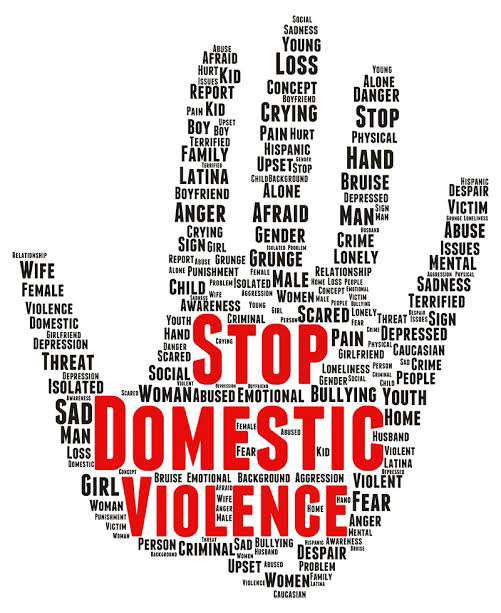
Light the charcoal. Sprinkle the sage. Negative energy go away. Today I want to go over more types of domestic violence. I know that this topic is not an easy one to face. However, domestic abuse occurs in more homes than you realize. Maybe in your own home.
VERBAL ABUSE
· Ridiculing or humiliating someone.
v If he were alive and breathing, this would happen from the time I woke up until the time I went to bed.
· Criticizing their appearance, intelligence, sexuality, religious beliefs, or ethnicity.
v This happened all the time. I was constantly told that I was dumb and retarded.
· Criticizing their actions as a partner or parent.
v All day and every day. The worst was at night and on the weekends. I got blamed for his bad golf game. He had this idea that he was Tiger Woods. And he very clearly wasn’t. But it was always because of something I did that made him play bad. In reality, he just sucks at the game.
· Using cruel or abusive nicknames.
v He and his brother always had cruel nicknames for me.
· Swearing at someone.
v Most people cuss when they get mad. However, he and his brother were relentless in their attacks.
· Yelling or screaming at someone.
v Again, I think that a certain amount would be considered normal. However, screaming and hollering at me for everything little thing was how they both operated.
SOCIAL ABUSE
· Stopping someone from seeing or contacting their friends and family.
v He didn’t physically stop me. However, it was very clear that I was not leaving the house without specific information about where I was going and what I was doing. And if that wasn’t what he wanted, I was told not to go at all.
· Stopping someone from going to social or community activities.
v Unless he went with me, I was told, “No. You don’t need to go do that.”
· Preventing someone from having contact with people who speak their language or share their culture.
· Making someone move away from friends, family, or work opportunities.
· Controlling a person’s use of phone or computers.
v On more than one occasion, when I went to call for help from police, he would unplug the phone so that I couldn’t use it.
· Checking or stopping their mail, phone calls, text messages, emails, social media and other messaging or chat apps.
v Luckily, there was not much of this that was available at the time. There was barely internet, and I better not have an email address. I had a Nokia cellphone which he checked constantly.
· Telling lies or spreading false information to damage a person’s reputation.
v This happened all the time. Especially when he talked to his family. The smear campaign was always in action.
· Using someone’s intersex status, sexuality, gender expression, transgender, or HIV status against them.
v He never knew that I was a lesbian. Hell, why would I tell him when the violence was bad enough.
· Forced marriage
v The day of my wedding, I knew that I was making the biggest mistake of my life. I was frozen with fear. But it was what he continually pushed for marriage. And I eventually gave in. Biggest mistake of my life!
· Stalking
v This happened every single day. If it wasn’t him, it was his friends and family who did the stalking. At the end of the day, I was questioned about everything that I had done and was told, “Well, what about when you were walking around in that store.” He knew every move that I made. It even got so bad that he knew what I had eaten during the day.
SPIRITUAL, RELIGIOUS OR CULTURAL ABUSE
Preventing someone from practicing and being connected to their culture.
Stopping someone from going to their place of worship.
Stopping someone from having contact with other people who share their beliefs.
Stopping someone from celebrating days of cultural or spiritual significance.
Stopping someone from sharing their beliefs and traditions with their children.
Stopping someone who is Aboriginal or Torres Strait Islander from returning to Country or having contact with kin.
Stopping someone who has family connections outside Australia from visiting or connecting with family or community overseas.
Ridiculing someone’s beliefs or traditions.
Forcing someone to do things that are against their beliefs, like eating certain foods or wearing certain clothes.
Forcing someone to marry.
The pressure was definitely applied when I was undecided.
Forcing someone to take part in spiritual practices in which they don’t believe.
Forcing someone to raise their children according to beliefs they don’t agree with.
Using or claiming to use spiritual or religious beliefs:
as an excuse for violence or abuse.
to pressure someone into staying in a relationship.
Let me just say this about him and his spiritual practices. He always went through the motions and played the part. He even pretended to get “saved” and was baptized. However, that was as far as it went. Because when we got home the abuse continued to happen. But now he had a Bible to justify his actions.
Thanks again for reading! I hope I was able to share a little lighter on the subject of domestic violence. There is help and hope after abuse. Reach out for the love and respect that you deserve. Keep moving forward!