This Puzzled Life is a mental health and recovery blog exploring addiction, trauma healing, LGBTQ experiences, humor, and the strange moments that shape us.
“Leadership isn’t about explosions, ego, or firing everyone who disagrees. It’s about protecting the people you’re responsible for.”
-This Puzzled Life
Light the charcoal. Sprinkle the sage. Grab the ancestors. Every ancestor from the Delta to the foothills is gathering around the fire pit. And clutching their pearls whispering, “Lord, this fool again?”
Secretary Pete Hegseth is a man who has turned the Pentagon into a haunted Waffle House with missiles. He is also known as “Secretary of Cirrhosis,” “Pete Kegsbreath,” “Whiskey Pete,” “Colonel Vodka,” and “Secretary of Jägermeister.” He has once again turned the Department of Defense into a demolition derby run by a man who thinks leadership is just yelling “send it” at a map he can’t read. And firing anyone who doesn’t look like his reflection.
This is the saga of a man who wakes up every morning. Salutes himself. Flexes in the mirror. And then proceeds to commit international incidents so stupid they make raccoons look like Nobel Prize winners. Let’s dive into all of his stupidity.
Firing Gay and Trans Soldiers
Pete strutted into the Pentagon and declared, “We’re restoring traditional values.” While also having affairs and paying off women to keep their mouths shut.
Translation: he fired gay soldiers, trans soldiers, and anyone who dared to have a personality. The ancestors collectively rolled their eyes so hard they sprained a spiritual muscle.
Disenfranchising Black Soldiers
Then he decided Black soldiers were “too political.” Which is rich coming from a man whose entire personality is a protein shake and a conspiracy theory.
He stripped them of roles, promotions, and dignity. And then acted confused when morale dropped faster than his approval rating.
Getting Rid of Female Service Members
Pete claimed female service members were “a distraction.” Which is hilarious because the only distraction in the Pentagon is Pete himself. He’s wandering around shirtless. Flexing. And mispronouncing countries.
He fired women left and right. Then wondered why the military suddenly had the emotional maturity of a middle school dodgeball team.
The USS Abraham Lincoln Horror Show
And then came the USS Abraham Lincoln scandal. Soldiers and their families reported horrific conditions that included:
Mold in the sleeping quarters
Sewage leaks
No working AC
Food that looked like it had already given up
Rats bold enough to request rank
Pete ignored every report. He said the ship was “fine.” He said the soldiers were “dramatic.” He said the rats were “part of the ecosystem.” The ancestors started lighting sage like it was a bonfire.
The Fishing Boat Fiasco
Pete claimed fishermen were trafficking drugs. They were literally just fishing. For fish. Not cocaine catfish. Not heroin haddock. Just fish. He bombed them anyway.
Bombing a School of 160 Girls
Pete pointed at a satellite photo and said, “That’s a terrorist camp.” It was a school. A school full of 160 girls learning math, science, and how to survive men like Pete.
Bombing a Wedding Ceremony
He later approved a drone strike on what he believed was “an enemy gathering.” It was a wedding. A wedding with a string quartet, a chocolate fountain, and a very confused officiant.
The Unlawful War in Iran
Pete misread a meme and declared war on Iran. Congress said no. The Pentagon said no. Pete said, “Too late, I already tweeted it.”
10 Crimes Committed by Secretary Pete Hegseth
Bombing innocent fishermen who were literally just vibing.
Bombing a school of 160 girls learning multiplication.
Bombing a wedding because he thought the string quartet looked suspicious.
Launching an unlawful war in Iran because he misread a meme.
Firing gay soldiers for existing.
Firing trans soldiers for breathing.
Disenfranchising Black soldiers for having opinions.
Removing female service members because he’s threatened by competence.
Ignoring horrific conditions on the USS Abraham Lincoln.
Declaring martial law in a Waffle House parking lot “for training purposes.”
The ancestors are now chain‑smoking imaginary cigarettes.
And there you have it. The tragic, comedic, catastrophic tale of Secretary Pete Hegseth. A man who proves daily that power in the wrong hands isn’t just dangerous. It’s slapstick tragedy. He is not a leader. He is not a strategist. He is a walking, talking cautionary tale wrapped in ego, chaos, and the belief that consequences are for other people. And after all of that, I would be an alcoholic too. Mic dropped. Floor cracked. Ancestors nodding in exhausted agreement. Thanks for reading! Get out and vote.
Affirmation: I release chaos. Embrace clarity. And refuse to let anyone with a title and a temper ruin my peace.
“Shame has never saved a life. Compassion has. And still can.”
-This Puzzled Life
Light the charcoal. Sprinkle the sage. Today, we’re not just cleansing the house. We’re cleansing the collective delusion that addiction is a moral failing. The sage is smoking like it’s trying to file a worker’s comp claim. The charcoal is popping like it’s gossiping about the neighbors. And I’m standing in the kitchen with the kind of determination usually reserved for Southern women who’ve had enough.
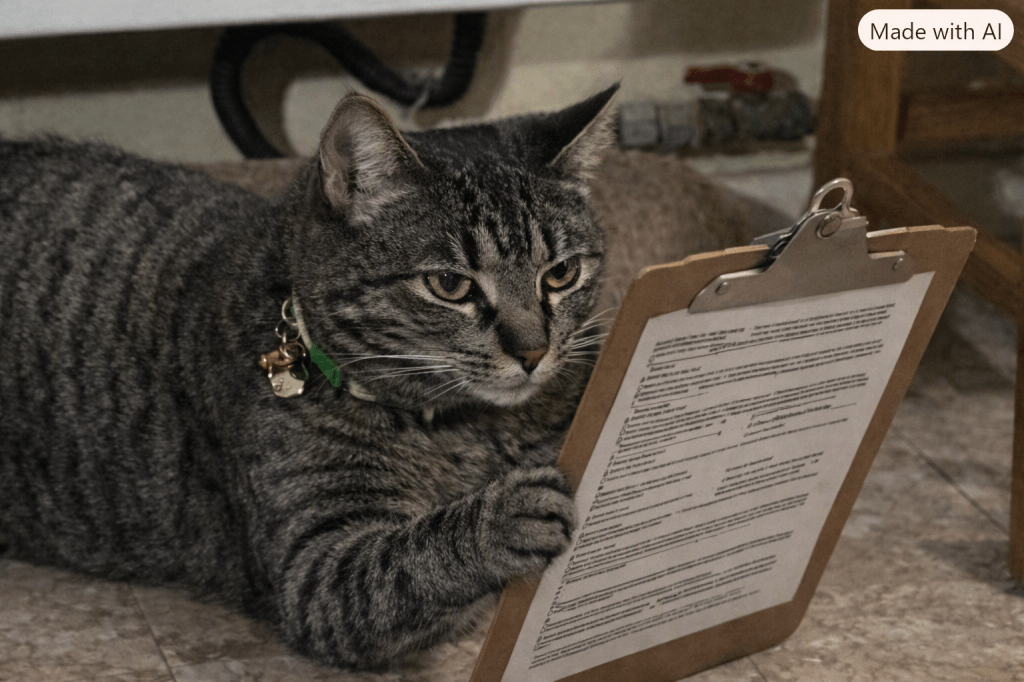
Piper struts in first.Tail high. Eyes narrowed. And a clipboard already out like she’s conducting a federal audit.
Piper: “Before we begin. I need to know if this is a cleansing ritual, a public dragging, or a memorial service. My paperwork differs.”
Me: “All three. It’s International Overdose Awareness Day. And I’m about to educate the masses.”
Coco barrels in next. She’s breathing heavily like she just ran a marathon but actually just walked from the living room.
Coco: “Is this about the humans who say addiction is willpower? And overdose is a moral collapse? I once ate an entire rotisserie chicken while sleepwalking. Explain that with willpower.”
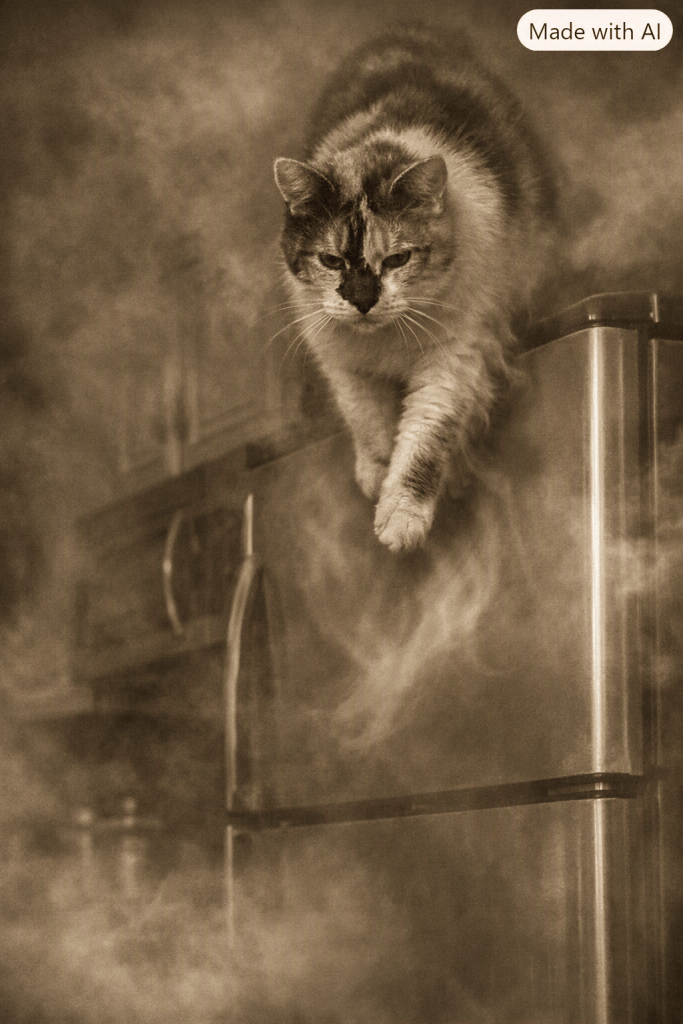
Tinkerbell descends from the top of the fridge like a Victorian ghost who died of judgment.
Tinkerbell: “If willpower cured anything, half this household would stop doomscrolling at 2 AM. And the other half would stop emotionally eating Cheez-Its.”
Me: “Exactly. We’re dragging ignorance today.”
Piper adjusts her glasses. The glasses she does not need and sighs.
Piper: “I’ll prepare the minutes. This meeting is already chaotic.”
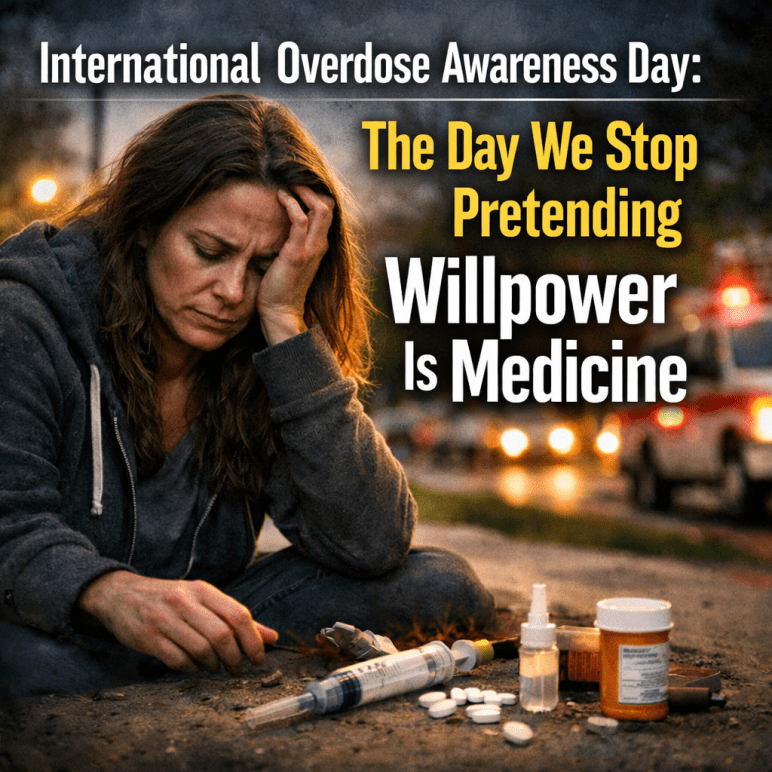
International Overdose Awareness Day started in 2001 as a remembrance event at a Salvation Army needle exchange in Melbourne, Australia. It was created to honor those lost. Reduce stigma around overdose. And to push the world to stop treating overdose like a shameful secret instead of a public health crisis. And let me say this plainly, with all the Southern sweetness of a peach cobbler baked in righteous fury, “Addiction and overdose are not moral issues.” And it’s not about willpower.
The next time you have diarrhea, keep in mind that it’s just willpower. Sit there with a Bible verse and see if the situation resolves itself. Let me know how that works out. That’s how ludicrous that argument is.
People don’t become addicts because they’re weak, sinful, lazy, or lacking character. Many addicts die wanting anything in life other than to be an addict. They die fighting. They die trying. They die hoping. But some folks, including people in my own family, love to say, “Addiction is about willpower.” It never has been. It never will be.
I’ve been an addict. I’ve been a professional treating addicts. I’ve buried friends. I’ve buried family. Not once have I judged them for their struggle. But the hypocrites in my life? The ones who claim moral superiority while ingesting alcohol at a rate that Pete Hegseth and Kash Patel struggle to keep up with? Hypocrite, please.
Overdose is an unfortunate part of addiction. Whether it’s chemicals, behaviors, or the slow-motion self-destruction people pretend “doesn’t count.” Because it’s socially acceptable. So how about we stop demonizing people who overdose while absolving ourselves of our own harmful, numbing, escapist overdoses?
If we’re being honest, some folks overdose on alcohol, self-righteousness, denial, Amazon Prime, gossip, rage, food, religion, and control. But somehow that doesn’t get labeled as a moral failure. Funny how selective morality works.
And here’s the truth that makes some folks squirm like they sat on a church pew with a splinter. Overdose doesn’t happen because someone is weak. It happens because someone is human. Humans who loved. Humans who tried. Humans who fought battles most people couldn’t survive for five minutes. Humans who deserved compassion instead of commentary.
But every year, we lose more people. Not because they were broken. But because the world still treats addiction and overdose like a character flaw instead of a medical condition. We lose them because shame is louder than science. Because judgment is easier than empathy. Because some folks would rather cling to their superiority complex than admit they don’t know a damn thing about what they’re talking about.
So on International Overdose Awareness Day, I’m lighting this charcoal. Sprinkling this sage. And saying this with my whole chest, “Stop demonizing the people who are drowning while you’re out here drinking from your own poison well. Stop pretending your socially acceptable overdoses are any less destructive just because they come with a cute, monogrammed tumbler or a Bible verse slapped on top. Stop acting like overdose is a choice when half the people judging can’t even choose to drink water or go to bed on time. And most importantly, start honoring the people we’ve lost by refusing to let stigma bury the living.
The dead deserve dignity. The living deserve compassion. And the ignorant deserve education. Loud, unapologetic, Southern‑fried education. Today, I’m choosing truth over tradition. Compassion over comfort. And humanity over hypocrisy. If that makes some folks uncomfortable? Good. Growth never happens in comfort. And comfort has never saved a single life. But truth might. Compassion might. You might. Thanks for reading! Share this with others.
Affirmation: I honor the lives lost. Uplift the living. And refuse to let stigma speak louder than truth.
“The moment I admitted you could kill me was the moment I finally chose to live.”
-This Puzzled Life
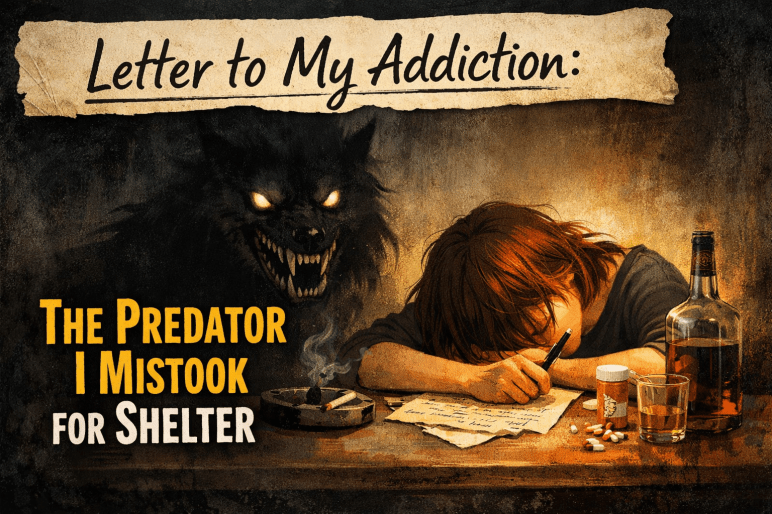
Light the charcoal. Let the first curl of smoke rise like a confession I’ve been swallowing for years. The kind that sits heavy in the chest because it’s finally time to stop pretending. This is me standing in the doorway of my own truth. Trembling but present. And ready to speak to the thing that once felt like comfort. You didn’t come into my life with claws out. You came soft. Familiar. You came disguised as relief, comfort, and as the one thing that could quiet the noise in my chest. Then you became a companion. I didn’t know you were studying me. Learning my wounds. Memorizing my weak spots. And waiting for the moment I’d confuse your hunger for affection.
And now you reveal yourself as the slow, patient danger I keep calling love. I can feel the ache of it. The grief of it. And the terrifying clarity that comes when you finally admit the thing you’ve been running from is the same predator that’s been hollowing me out from the inside. And today, with this smoke rising around me, I’m done whispering. I’m done softening the truth. I’m done pretending I don’t know what you are.
I’ve finally stopped running from the truth. And it hits me with a force that steals the air from my lungs. I keep letting you lead. And you won’t just ruin my life. You will end it. Not in some dramatic, cinematic way. But in the quiet, methodical way predators always finish their work. You’ll take my breath one day. And the world will keep spinning. The people who love me will stand in the wreckage wondering how something I once trusted became the thing that swallowed me whole.
That realization sits in my bones like a cold prophecy. I can feel how close the edge is. I can feel how thin the line has become. I can feel the way my body is starting to whisper warnings I used to ignore. And for the first time, I’m not pretending I’m stronger than you. I’m not pretending I can dance with you forever. I’m not pretending this ends any other way. The truth is simple and terrifying. I will die.
I let you close. Closer than anyone else. I let you wrap around me like safety. Like something I could trust. And for a long time, I believed you were saving me from the world, myself, and the ache I didn’t know how to carry. But predators don’t save. They circle. They stalk. They wait. And I see you for what you are.
You’ve been feeding on me piece by piece. Slow enough that I could pretend it wasn’t happening. And gentle enough that I could call it love. You made me believe I needed you to breathe, function, and to exist. You made me forget what life felt like before you sank your teeth in. But I’m not blind anymore. I can feel the way you’re hollowing me out. I can feel the way you’re tightening your grip. I can feel the truth I’ve been terrified to say, “My days are numbered.”
Not dramatically. Not suddenly. You’ll do it the way you’ve always done everything with patience and precision. With that quiet, familiar whisper that tells me I can’t live without you. Because loving you has become a slow death. And I’m finally admitting that the thing I thought was protecting me is the same thing dragging me under. You are the predator. I am the prey. And you will finish what you started. I’m done mistaking your teeth for tenderness. I’m done calling this love. Because when you take my life, it will be the last thing you’ll ever take from me. Please just make it quick.
Saying that out loud breaks something open in me. It’s not just fear. It’s grief for the version of me who thought I could love a predator into gentleness. Grief for the girl who thought she was in control. Grief for the woman who kept choosing you even as you carved pieces out of her.
But there’s something else under the grief. And this is where I stop lying to myself about what you are. This is where I look you in the eye and speak the truth you never wanted me to understand. I see the death you’re leading me toward. And, yet, I still can’t break free. Thanks for reading! And turn back before it’s too late.
“Some houses echo with laughter. The House of Addiction echoes with lessons. Loud, painful, and unforgettable lessons. And still, somehow, we walk out wiser than we ever meant to be.”
-This Puzzled Life
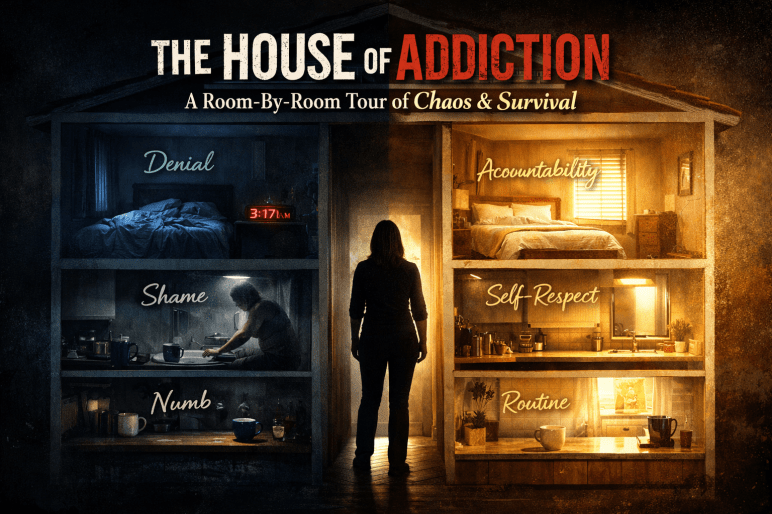
Light the charcoal. Sprinkle the sage. Let the smoke rise like it’s clocking in for a double shift. What we’re about to talk about requires spiritual PPE. It’s Addiction Awareness Month. And the House of Addiction doesn’t just haunt. It redecorates. It rearranges your memories. Steals your peace. And has the nerve to act offended when you notice.
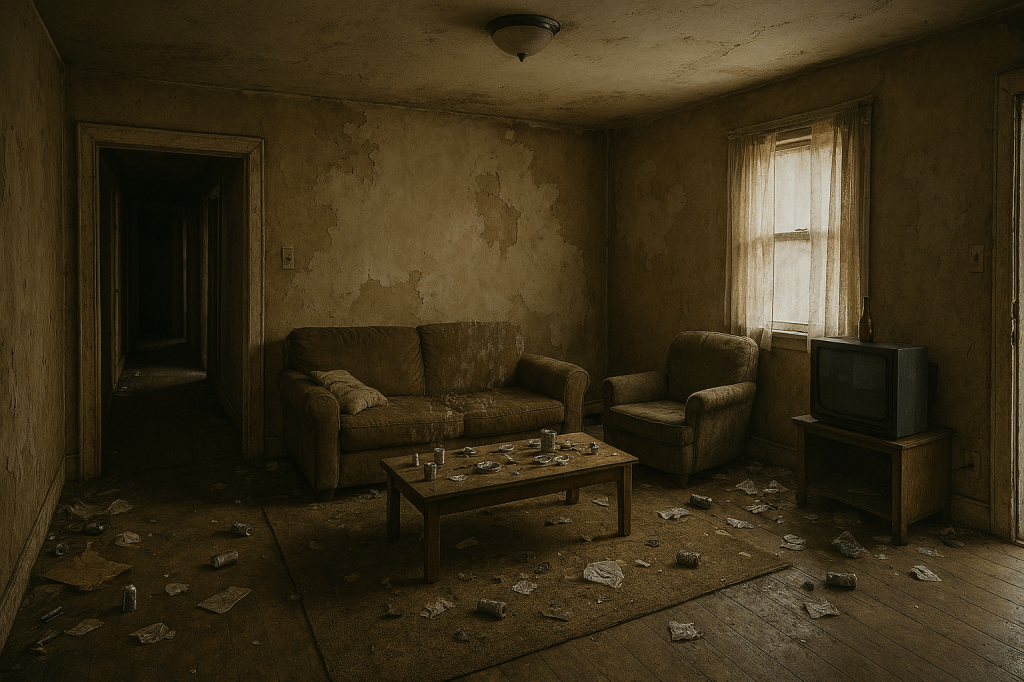
From the outside, it looks like any other home on the block. But step inside, and you’ll find a floor plan designed by chaos itself. Complete with emotional booby traps and a staircase that creaks like it’s snitching on everybody.
The House of Addiction doesn’t creak when you walk in. It narrates. It knows your footsteps, fears, and soft spots. It knows you’re here for the truth. And it is already rearranging the furniture to make you doubt your own memory.
This house has the audacity of a Southern aunt who swears she “don’t gossip.” But somehow knows everybody’s business. Including the things you haven’t even done yet. Step inside. Keep your shoes on. This floor has seen some things. It will walk room to room with you, pretending it’s just “checking on things.” While it’s really dragging its mess across every surface like a toddler with a Sharpie.
The House of Addiction always looks normal from the outside. Fresh paint. Curtains that match. A porch light that pretends it’s welcoming you in. But the moment you cross that threshold, you realize this house has plans for you. None of them good. All of them messy. And every one of them delivered with the confidence of a demon wearing your grandmother’s pearls.
The Foyer: Where Denial Greets You Like a Nosy Aunt
You step inside and denial is already there. It’s leaning against the doorframe like it pays the mortgage. It’s smiling too big. Talking too fast. And insisting everything is fine. While the smoke alarm screams in the background. “No problem here,” Denial says. All while waving a broom at a fire like it’s a mosquito. The floorboards creak under the weight of secrets nobody wants to say out loud. The air smells like Febreze sprayed over a dumpster fire. This is the room where kids learn to tiptoe. Where silence becomes a second language. Where you learn to read moods like weather reports.
The Kitchen: Where Chaos Cooks Its Famous Disaster Casserole
Addiction loves the kitchen. It treats it like a stage. Pots banging. Cabinets slamming. Someone crying into a sink full of dishes that have been “soaking” since the Bush administration. This is where promises get burned to a crisp. Apologies get reheated for the 47th time. And kids learn to eat fast. Stay quiet. And watch the adults like they’re studying wildlife. The fridge is full of expired groceries and emotional leftovers nobody wants to deal with. And the table is where love tries to sit down. But keeps getting shoved aside by chaos wearing muddy boots.
The Living Room: Where Hope Sleeps on the Couch
The living room used to be cozy. Now it’s a battlefield with throw pillows. Addiction drags its drama in here and spreads out like it pays rent. The TV is always too loud. The arguments are always too sharp. And the kids are always pretending they don’t hear what they hear. Hope still lives here. But it’s exhausted. It curls up on the couch under a blanket that smells like worry. It keeps whispering, “Maybe tomorrow.” Even though tomorrow keeps showing up drunk and late.
The Bedroom: Where Secrets Tuck Themselves In
This room is quiet. But not peaceful. It’s the kind of quiet that hums with tension. Addiction sits on the edge of the bed like a shadow with opinions. It whispers lies into the dark. It says, “You’re the problem,” “You can’t leave,” and “Nobody will believe you.” Kids learn to sleep lightly. To listen for footsteps. To brace for the door opening at 2 a.m. with the kind of energy that never means anything good.
The Laundry Room: Where Shame Hangs Itself Up to Dry
This room is where the truth piles up. Dirty clothes. Dirty secrets. Dirty looks from neighbors who pretend they don’t see what they see. Addiction loves this room because it knows shame thrives in small, cramped spaces. The washing machine is always running. But nothing ever feels clean. The dryer door squeaks like it’s tattling. And the air is thick with “Don’t tell anyone.”
The Bathroom: Where Tears Pretend They’re Just Steam
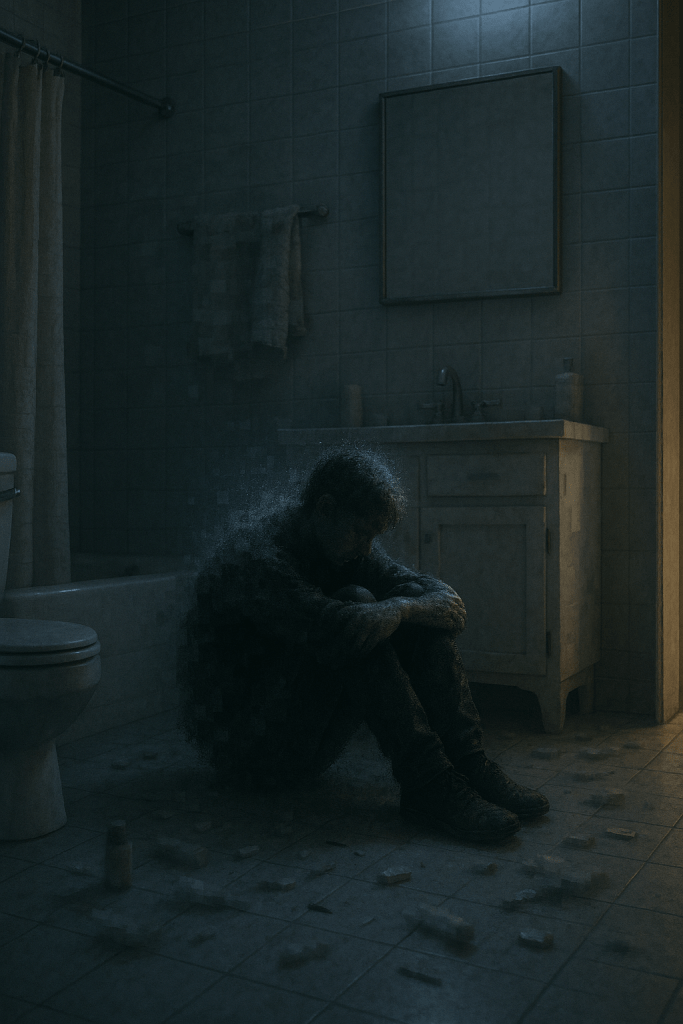
This is the only room with a lock. Which means it becomes a sanctuary for everyone including kids, partners, even the person struggling. People hide here to cry. Breathe. Or just exist without being needed. Addiction hates this room because it can’t control what happens behind a locked door. But it still bangs on it sometimes while demanding attention.
The Kids’ Room: Where Innocence Packs a Go-Bag
This room is the saddest part of the house. Toys on the floor. School papers on the wall. A bed that’s too small for the weight the child carries. Kids learn how to be invisible. How to be responsible for things they never caused. And how to grow up faster than their bones know how to handle. Addiction tiptoes in here sometimes. While pretending it’s not doing damage. But the cracks in the walls tell the truth.
The Basement: Where the Truth Lives
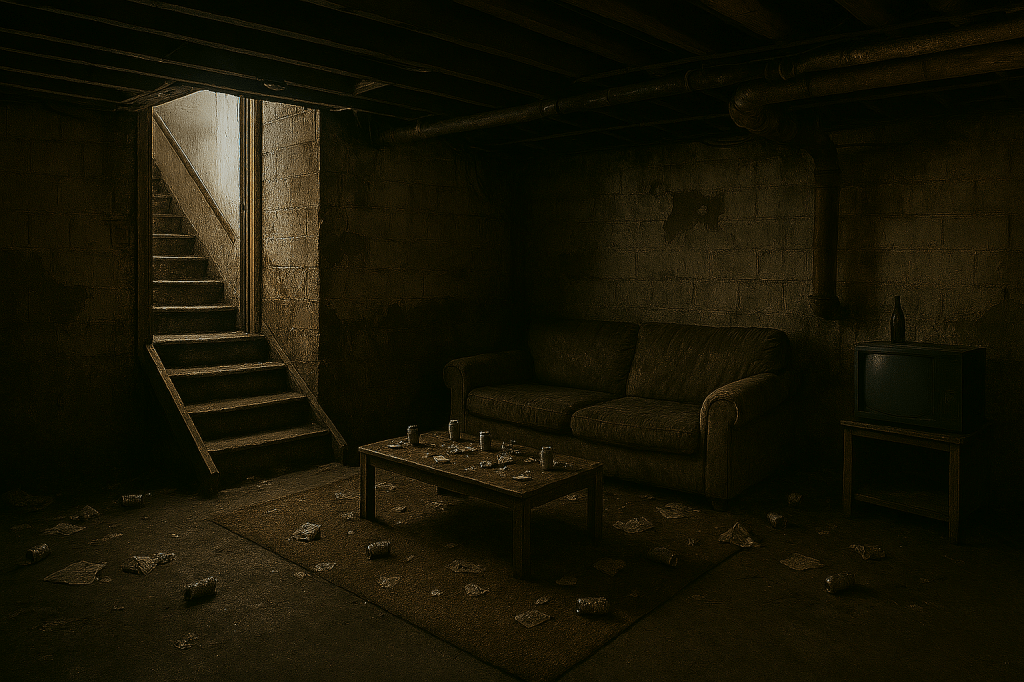
Nobody wants to go down here. Not even Addiction. But this is where the real story sits quiet, heavy, and waiting. This is where trauma stacks itself like old boxes. Memories hide under tarps. And kids grow up and realize the house wasn’t normal. The basement is the part of the house that never lies. It knows exactly what happened. And it remembers everything.
The Attic: Where the “Old Stories” Live
The attic is dusty, cramped, and full of boxes labeled “We Don’t Talk About That.” This is where Addiction stores the memories you tried to outgrow. The versions of yourself you’re ashamed of. And the lies you were told about who you are.
Every box rattles when you walk by, like it wants to be opened. But also wants to stay sealed forever. Addiction loves this room because it knows you’ll avoid it. It knows the dust will settle on your truth until you forget what it looked like. But the attic is also where the light sneaks in through the cracks. It’s where you eventually realize that some stories aren’t yours to carry anymore.
The Garage: Where “I’ll Fix It Later” Goes to Die
The garage is full of unfinished projects, abandoned hobbies, and promises you meant to keep. Addiction parks itself here like a broken-down car that still thinks it can make the trip. This is the room where dreams get postponed. Goals get dusty. And potential sits on cinder blocks. You keep telling yourself you’ll clean it out “when things calm down.” But Addiction keeps tossing more junk in, insisting you don’t have time, energy, or worthiness to finish anything. But one day, you find the light switch. And you realize the garage isn’t full of failures. It’s full of things waiting for you to come back to yourself.
The Office: Where Control Pretends to Live
This room is where Addiction tries to look responsible. Bills stacked. Calendars marked. To‑do lists half done. Everything looks organized until you touch it. And the whole pile collapses like a Jenga tower built by denial. This is the room where you try to manage the unmanageable. You convince yourself you’re “still functioning.” And you hide behind productivity to avoid the truth.
Addiction sits in the office chair spinning slowly, whispering, “You’re fine. Look how much you’re getting done.” Meanwhile, nothing is actually getting done. But this is also the room where you learn the difference between control and survival. And where you finally fire Addiction from its fake job.
The Guest Room: Where You Pretend Everything Is Fine
This room is spotless. Too spotless. It’s the room you keep ready for visitors. So that they never see the chaos in the rest of the house. Addiction loves this room because it’s the perfect illusion of clean sheets. Fluffed pillows. And fake peace. This is where you host people who say, “You’re so strong.” Without knowing you cried in the hallway before they arrived. But the guest room is also where you learn that pretending is exhausting. And that real connection only happens when you stop hiding the mess.
The Crawl Space: Where the Fear Lives
Low ceilings. No light. Hard to breathe. This is the room Addiction never talks about but always uses. It’s where the fear crawls. It’s the fear of leaving, staying, being alone, and of being seen. Addiction keeps this space damp and cold, so you’ll avoid it. But this is the room where the truth hums the loudest. And when you finally crawl in with a flashlight, you realize the monsters were smaller than the shadows made them look.
The Backyard: Where Healing Starts Growing
The backyard is wild. Overgrown. And neglected but alive. Addiction never cared about this space. It didn’t think you’d ever step outside long enough to notice it. But this is where you breathe again. You plant new habits. You feel sunlight without flinching. And you imagine a life beyond the front door. The backyard is the first place that belongs to you again. It’s where you realize the house doesn’t own you. And where healing doesn’t have to be pretty to be real.
The Front Door: Where Freedom Waits
Every child of addiction eventually finds themselves standing at this door. Their hand on the knob. Heart pounding. And wondering if they’re allowed to leave. The truth is you can. You’re allowed to walk out. You’re allowed to build a new house. One with open windows, soft floors, and rooms that don’t whisper threats in the dark. You’re allowed to create a home where laughter doesn’t flinch. Where love doesn’t hide. And where the only thing haunting the halls is the sound of peace finally settling in.
And that’s the truth about the House of Addiction. It thought it owned you. It thought you’d stay lost in its attic of old stories. Stuck in its garage of unfinished dreams. And trapped in its crawl space of fear. It thought you’d keep tiptoeing past the guest room. While pretending everything was fine. And where it rearranged your soul like mismatched furniture.
But you just didn’t survive that house. You walked through every room with the lights on. The sage burning. And the ancestors humming behind you like a choir that refuses to let you forget who you are. You learned the floorplan. You named the ghosts. You opened the windows. And then you did the one thing that house never expected. You walked out the front door. And didn’t look back.
Let the walls rot. Let the roof cave in. Let the lies echo in empty rooms. You’re busy building a new home now. One with sunlight, softness, boundaries, and peace that doesn’t apologize for taking up space. Door slammed. Keys dropped. Cycle broken. Story reclaimed. Thanks for reading! Now walk away like a boss.
Affirmation: I honor the child who survived that house. And I empower the adult who refuses to live in it ever again. My peace is mine. My story is mine. And my future is built with steady hands.”
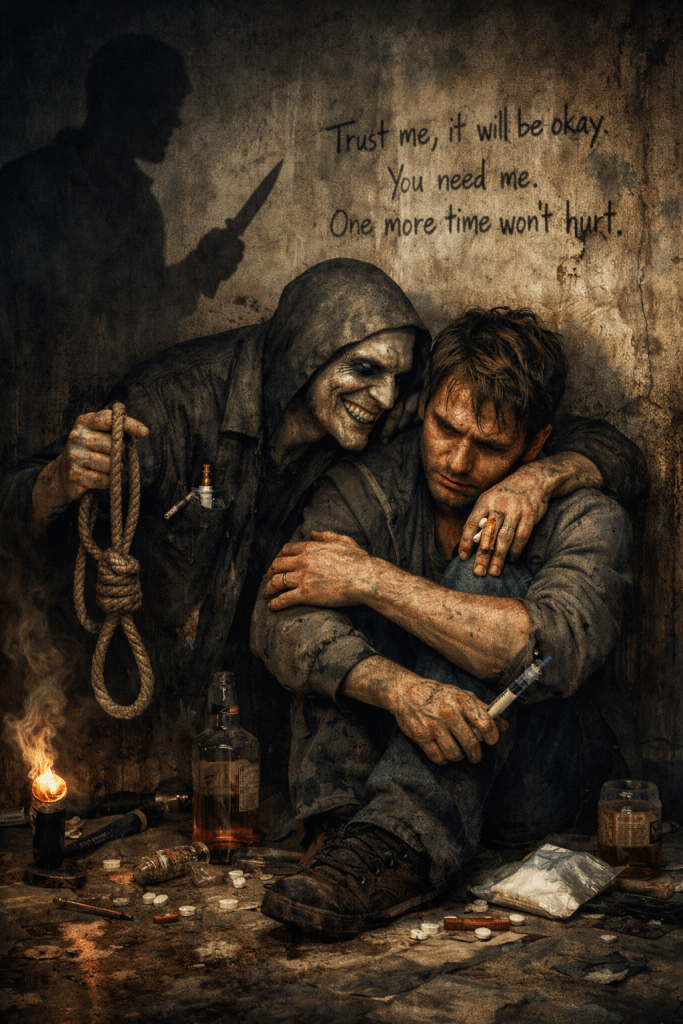
“Addiction is a quiet predator. It’s patient. Calculated. Always hungry. And waiting for the moment you’re weakest to take the biggest bite out of your life.”
-This Puzzled Life
Light the charcoal. Sprinkle the sage. Because when we talk about addiction awareness, the air needs to be thick with truth, protection, and the kind of courage that makes your voice shake but keeps going anyway. This isn’t a pretty conversation. It’s not a gentle unveiling. It’s not polite. It’s not something you whisper behind closed doors like a family secret wrapped in shame. It’s the kind of truth that shakes the floorboards and rattles the bones of anyone who’s ever lived it. Loved someone through it. Or buried someone because of it. This is a front porch, bare soul, trembling‑hands kind of truth. And today, we’re telling it out loud.
Addiction doesn’t walk into a home quietly. It barges in like a storm. It tracks mud across every memory. It rearranges the furniture of your life. And convinces you that chaos is normal. It teaches you to apologize for things you didn’t break. To shrink yourself so its shadow can stretch across the room. And to pretend you’re fine when your insides feel like shattered glass. And the cruelest part? Addiction doesn’t just take from the person struggling. It takes from everyone who loves them.
Families learn to tiptoe. Children learn to decode moods like weather patterns. Partners learn to carry burdens that were never meant for one set of shoulders. And the person battling addiction, learns to hide their pain behind a smile that fools everyone except the people who know them best. Addiction awareness isn’t about statistics or slogans. It’s about the people who wake up every day fighting a war no one else can see.
There are the battles fought in bathrooms, parked cars, and bedrooms with the door locked. The battles fought in silence because shame is louder than the truth. The battles fought by people who are terrified to ask for help because they don’t want to be judged. Dismissed. Or treated like a problem instead of a person.
Addiction awareness means saying, “You are not alone. You are not broken beyond repair. You are not the worst thing you’ve ever done.” It means recognizing that recovery isn’t linear. It’s messy. It’s painful. It’s full of relapses, restarts, and revelations. But it is possible. I tasted that freedom many years ago, during a moment in life that now seems like it never existed.
Let’s talk about the people that love them too. The ones who hold the line when the person they love can’t. The ones who pray. Cry. Scream. Hope. And repeat. Addiction awareness means honoring their resilience. Their heartbreak. Their bravery. Loving someone through addiction is its own kind of battle that deserves to be seen.
Addiction is not a moral failure. It is not a character flaw. It is not a sign of weakness. It’s a neurological hijacking. And once it gets inside, it takes the controls and refuses to give them back. It’s a thief. A liar. And a weight that no one should carry alone.
Awareness is the first step toward compassion. Compassion is the first step toward healing. Healing is the first step toward freedom. And freedom? Freedom is the birthright of every single person touched by addiction. It doesn’t matter whether they’re fighting it. Surviving it. Or loving someone through it.
I have been an addict in one form or another since I was a very young teen. That’s the part people don’t see. The way it starts before you even understand what “coping” means. Before your brain is fully formed. Before you know that one decision can echo for decades. Some things I let go of and never touched again. But others? Others I’m still married to. Still controlled by. And still waking up beside like a partner I never meant to vow my life to. I’ve stood on every side of this issue. I’ve been a patient, professional, survivor, and witness. I’ve buried friends and family. And I’ve found the bodies of patients. I’ve even sat in classrooms learning the science. And I’ve sat on bathroom floors learning the consequences.
One of the biggest debates is whether addiction is a disease. And honestly? I see both sides. But I can attest to this. What I know in my bones is that addiction will pick up exactly where it left off. It doesn’t forget you. It doesn’t forgive you. And it doesn’t loosen its grip just because you got tired.
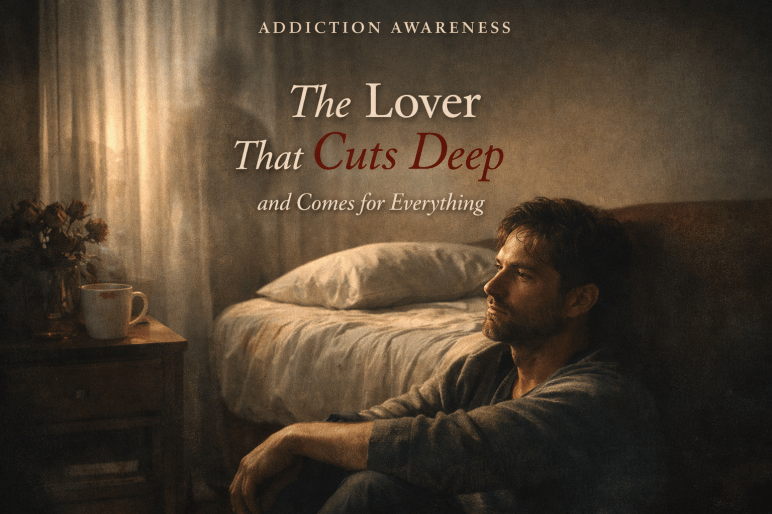
It progresses like a slow-moving fire. Consuming everything until it shuts down every functioning cell in your body. It’s the lover that kisses your forehead while holding a knife behind your back. And it’s like trying to pet a rattlesnake and hoping it suddenly cares about your well-being.
There are no social crack users. No social heroin users. No social meth, fentanyl, or “just once in a while” users of the things that hollow you out from the inside. I’ve known too many who didn’t make it. Too many funerals. Too many empty chairs. Too many stories cut short. And the truth is brutal. Addicts are not the type who typically live to be 80. The statistics confirm what our hearts already know. That many have died. And many more will die.
And process addictions? Eating disorders, self-harm, gambling, sex addiction, etc. are not softer versions. They are simply different roads to the same grave. Addiction doesn’t care about the method. It cares about the destruction. And it will be done in totality emotionally, socially, spiritually, and physically.
It strips you down until you’re a shell of what once resembled a human being. It destroys your life and the lives orbiting yours. That’s the goal. It wants no interference. And no one slowing its roll. It wants you wrapped around its finger in a relationship so co-dependent it feels cellular. It doesn’t care how many relationships are ruined as a result. Addiction is about the next fix. Whatever that fix is. And you will chase it until the line between living and dying blurs.
The saddest part is that you don’t know you’re susceptible until you’re already in it. Addiction does not discriminate. It shows no mercy to clergy, billionaires, politicians, Hollywood actors, musicians, doctors, lawyers, nurses, or the people just trying to keep the lights on and food on the table.
And the idea that you can outthink addiction? Outsmart the chemical, emotional, and neurological machinery it hijacks? That’s the thinking of fools. And I say that with compassion. Not judgment. There is nothing more heartbreaking than watching someone, yourself included, need their “drug” so badly that they would burn down every good thing in their life for another taste of something that is killing them.
Let the truth rise with the smoke. Addiction is not romance. It is not rebellion. It is not escape. It is suicide on an installment plan. And for every person who struggles, it has a bullet with their name on it. Even mine. Speaking the truth out loud is how we start breaking the cycle that wants us silent. Awareness is the first crack of light. Awareness is the first act of rebellion. Awareness is the first step toward choosing life. Even when the addiction whispers otherwise. It’s a story of survival in a world that doesn’t teach us how to hold our pain.
Your days of hiding in silence are over. We’re speaking your name. Shine light in your corners. And refusing to let shame be your shield. This is awareness. This is courage. This is the moment we stop whispering and start healing. And it’s for every soul who deserves a life bigger than their battle. Thanks for reading! And ask for what you need.
Affirmation: I honor the battles I’ve survived, and I refuse to let the shadows that once claimed me write the rest of my story. I rise with clarity, courage, and a spine made of truth.
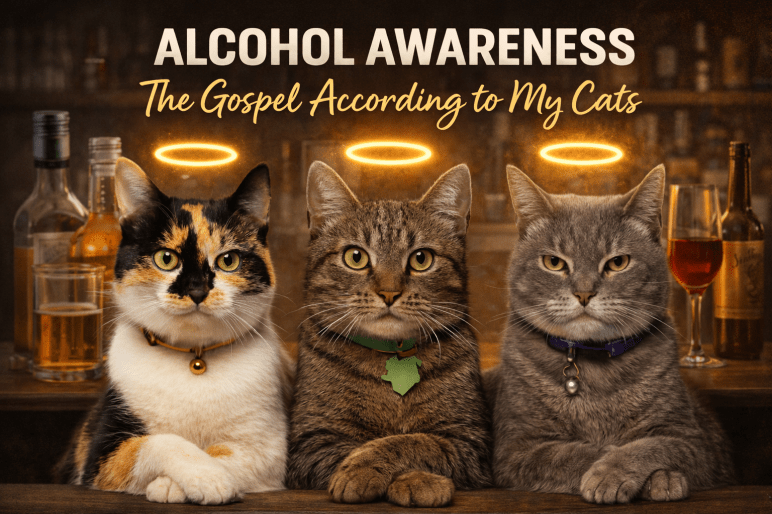
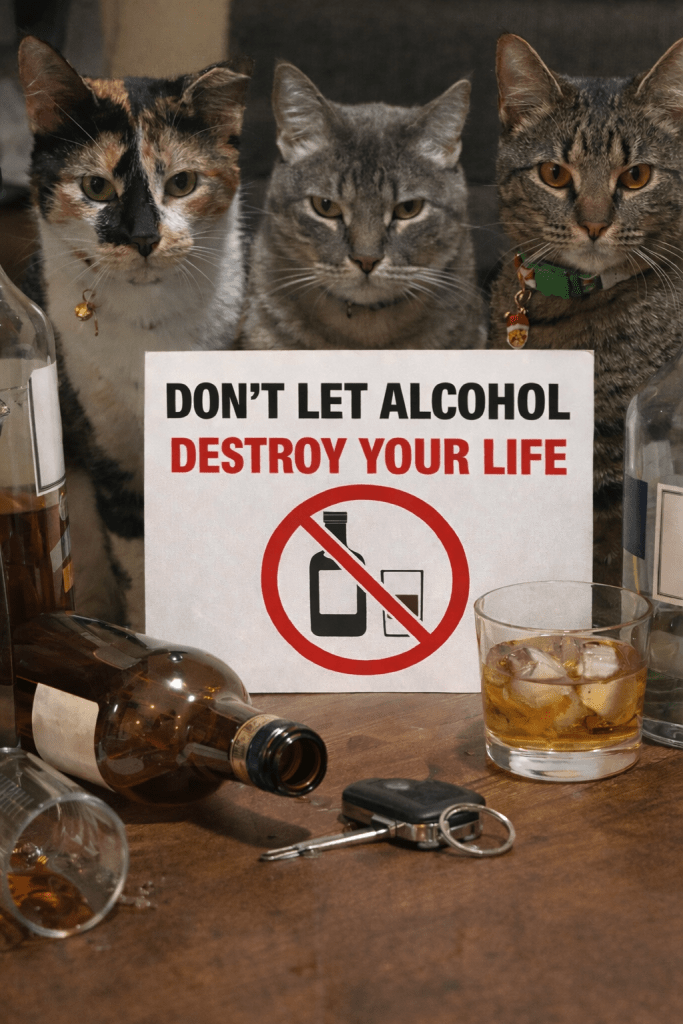
Light the sage. Hide the breakables. My three cats, Piper, Coco, and Tinkerbell, have decided they are the official spokes‑animals for Alcohol Awareness. And they came prepared with statistics.
They just held a household meeting complete with a gavel, a flip chart, and Coco eating the pointer. And they are about to inform me that we are now hosting Alcohol Awareness Week. I didn’t volunteer. I wasn’t consulted. Piper simply slapped a pamphlet on the table like she was serving a warrant and said, “Mother, it’s Alcohol Awareness time, and the people need us.” If anyone can talk about risky behavior, it’s the animals who sprint across linoleum floors at 3 a.m. like they’re late for a rave.
Piper jumps onto the table like she’s chairing a congressional hearing.
“Mother, while adjusting her imaginary glasses, did you know more than half of adults in the U.S. drink alcohol? And 17% binge drink?” She pauses for dramatic effect. “That means 17% of humans are out here acting like me when I see an unattended plate of chicken. Also, 178,000 people die each year from excessive alcohol use. That’s more than the number of times Coco has tried to steal your snacks.” Source: CDC — Excessive Alcohol Use Data
Coco waddles in dragging a bag of treats like she’s smuggling contraband.
“Listen, I’m here to talk about underage drinking. But first, do we have chips? Because this is heavy.” She informs the room that in 2022, 5.9 million youth ages 12–20 drank alcohol beyond ‘just a few sips’. Mother, that’s too many. Even I know that. And 19.7% of youth ages 14–15 have had at least one drink. At that age, I was still learning how to jump on the counter.” Source: NSDUH / Alcohol Infographic 2024
Tinkerbell perches on the highest shelf, looking like she’s about to assign homework.
“Research shows that people who start drinking before age 15 are 3.5 times more likely to develop alcohol use disorder later in life. Which is why I supervise the boys. They need guidance. And boundaries. And fewer snacks.” Source: Alcohol Infographic 2024
This household stays loud, proud, and educational, the cats insisted on adding:
Alcohol misuse affects every organ in the body. Source: NIAAA Alcohol Facts & Statistics
Underage drinking remains a major public health issue. Source: NSDUH 2024 / SAMHSA
Accurate, stigma‑free information saves lives. Especially in LGBTQIA+ communities and the Deep South. Where misinformation spreads faster than Piper can knock over a cup.
Piper: “Moderation is key. Also, naps solve more problems than alcohol ever will.”
Coco: “Alcohol slows reaction time. I cannot risk missing a falling snack.”
Tinkerbell: “Knowledge is power. And power is knowing where the treats are hidden.”
Piper stands on her hind legs like she’s giving a TED Talk.
Piper: “Stay informed. Stay safe. And stop believing your cousin’s Facebook posts.”
Coco: “Stay hydrated. Preferably with water. Or gravy.”
Tinkerbell: “Stay fabulous. And for the love of all things holy, lock the liquor cabinet.”
Piper, Coco, and Tinkerbell gather themselves on the couch like a furry Supreme Court. And ready to issue a ruling on the family hypocrisy they’ve witnessed for years. Piper clears her throat first, because of course she does. “Mother, we simply cannot understand how certain humans in this family will clutch their pearls over you using medical cannabis. A literal plant. But somehow quote the Bible like it’s a coupon code to excuse drinking and driving, and every chaotic decision that would get us grounded for nine lifetimes.”
Coco nods solemnly with crumbs on her chin, “They called you a ‘druggie,’ but then hopped in the car after communion wine like Jesus Himself was the designated driver.”
And Tinkerbell, perched high like a judgmental librarian, adds, “If scripture can be stretched far enough to justify a DUI, then surely it can handle a little THC for pain relief. We’re cats, Mother, but even we know the math isn’t mathing.”
And that’s how my cats continue to point out and educate on the dangers of alcohol. And the hardcore hypocrisy in the south. And, yes, specifically in my own family. Thanks for reading! And never let them silence you.
Affirmation: I honor my body, my boundaries, and my community by choosing knowledge over shame.
“…Being separated from their birth mothers and handed over to strangers in the adoption process is the only trauma where the victims are expected by the whole of society to be grateful…”
Nancy Verrier, The Primal Wound
Even as a young child my parents can tell you that I was a very inquisitive. I was also the child that questioned EVERYTHING. There was no accepting because someone said to. I had to know the “whys.” This has often led to difficult roads and battle wounds as a result. As an adult with a very difficult diagnosis to comprehend much less to ask someone else to understand, I still question everything. Maybe it’s normal to question these things. Keep in mind that I function most of the time as a “teenager with an attitude” and you know how much ego, time and energy that requires. Sometimes it’s just like having annoying bags of hell that can suck the life out of everything it touches including my body attached to me like appendages. But sometimes the internal conversations are better than any comedy routine I’ve ever witnessed including the questions.
I question every person’s motives, practitioners, governments, my adoption, abusive behaviors and, yes, I still question my diagnosis A LOT! Being on disability, currently, allows me time to search for answers about my puzzled life. As you’ve read throughout my blog, my connection to adoption and why it’s so painful for me has led me to some obsessive days and nights searching online for something to explain the pain in my soul that I’ve never been able to accurately paint a picture of with words.
On an Attachment and Parenting blog, one adoptive parent is quoted as saying….
“Scientific research now reveals that as early as the second trimester, the human fetus is capable of auditory processing and in fact, is capable of processing rejection in utero. In addition to the rejection and abandonment felt by the newborn adoptee or any age adoptee for that matter, it must be recognized that the far greater trauma often times occurs in the way in which the mind and body system of the newborn is incapable of processing the loss of the biological figure. Far beyond any cognitive awareness, this experience is stored deep within the cells of the body, routinely leading to states of anxiety and depression for the adopted child later in life.”
I now have a simple explanation for the type of feelings that can destroy me to deal with. The rejection and separation process can still be felt deeper than any other sensation I’ve personally felt. These words gave me an instant reaction and all internal members on guard and children/teens to safety. I realize that the intensity felt by other adoptees is on a continuum of variance. The intensity I feel today is the same intensity I felt as a infant, child and teen. And as an adult, it can still be very crippling as the loss is for both me and my birth mom is extremely powerful.
In Nancy Verrier’s book The Primal Wound: Understanding the Adopted Child, 1993, she describes the Primal Wound Theory by saying, ” that develops when a mother and child are separated by adoption shortly after childbirth. It describes the mother and child as having a vital connected relationship which is physical, psychological and physiological, and examines the effects of disrupting such bonds.” I still haven’t been able to read that book because of how much the topic really disturbs me. The Nature vs. Nurture debate is another avenue in continuous research. I see myself both sides of the debate which as people we are a constantly evolving through that very mixture.
As an adopted child, I needed and wanted to find parts of my identity. I was always the kid that looked nothing like my parents but I did have some behavioral traits. I was raised around some comedy goodness with both my daddy and Nannie. Their individual humor is enough to sit and tell stories for several hours. My environmental and social interactions helped to shape beliefs both about myself and other people. There’s a much longer discussion for that debate. Genetically, my skin color, facial characteristics, bone structure, eye color, etc. is the Nature side of the debate. The debate often centers around the effect genetics have on human personalities as opposed to the influences that environment and development might have. So you can see that this will probably on for infiniti + infiniti.
As a developing child, not being able to look in the stands at my ballgames or in a crowd at the mall and not see anyone that I looked like was torture. I love my adoptive parents no less. Unless you’re an adopted child with this strong need to just know “why” you can’t understand the obsession. At major life events birthdays, weddings, graduations, birth of a child, etc. while I tried to enjoy everything in the moment, I couldn’t help but to feel the loss for people who I originally belonged to. This has also been a big source of guilt and shame from just wanting to know.
My parents were always very supportive in my efforts to find my answers and truth about this situation. My birth mom, father, full brother, aunts, uncles, paternal grandmother, half brothers, half sisters, step-mom and some cousins eventually met but not on the same turf. As an adopted child, I had to accept prior to going to meet them all that I would be rejected again. This time the rejection would be felt as an adult. I needed that one-on-one time with my mom to ask her the “whys” that continue to haunt me after my answers were received. But, first, the willingness to feel that incredible lifelong wound gaped open even further if the universe saw fit and it did. Not the Lifetime ending I was looking for.
What I have done to deal with this wound in the past was to shove anything I could into that big, dark hole in my soul. I poured alcohol, pills, razors, purging, restricting, perfectionism in certain areas, people pleasing, etc. into this insatiable appetite for something only she could fill. I guess we can just call this particular therapy topic a work in progress. And maybe, in time, with COACH by my side, I’ll attain some resolve and peace. The whole purpose for moving to Texas was to get some healing. And that’s exactly what I’m doing.