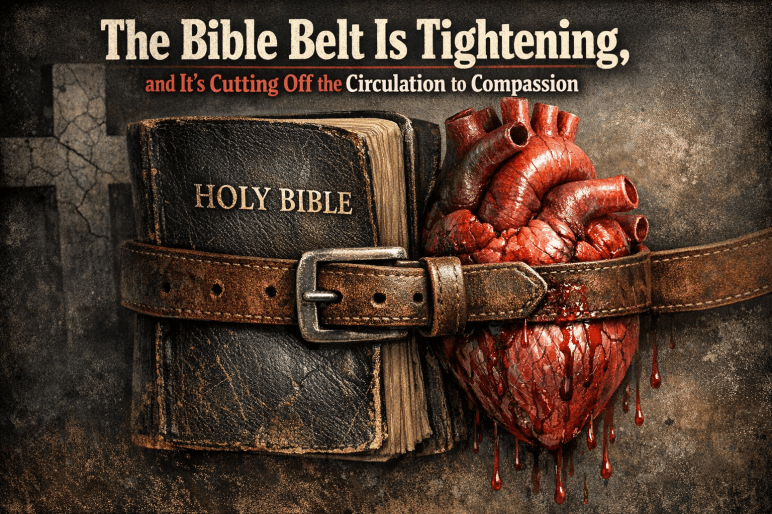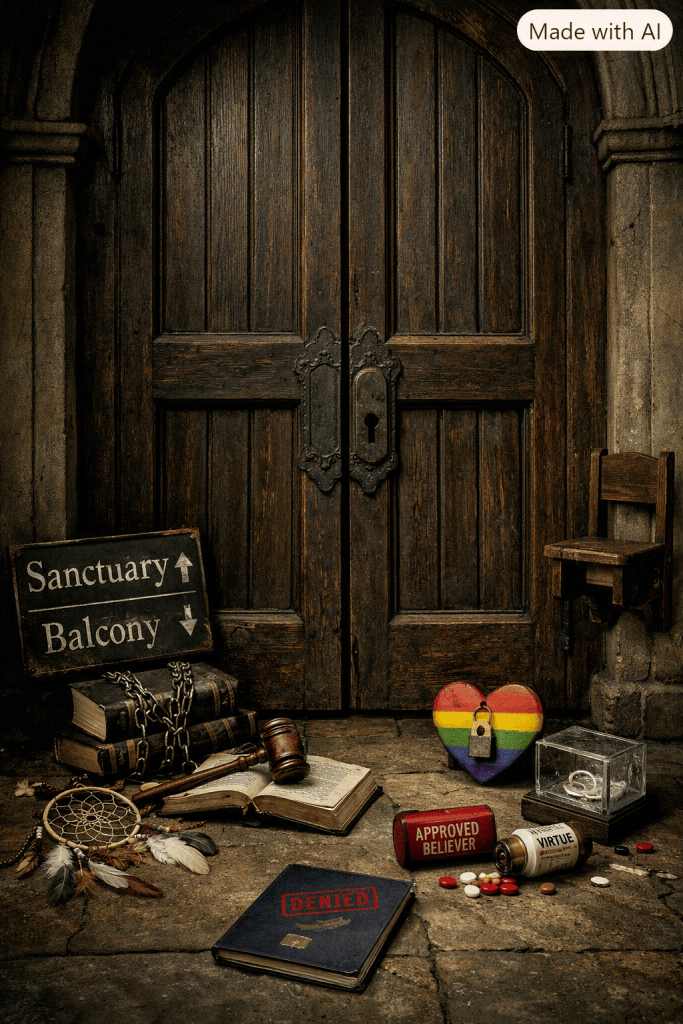


The Wants That Wrecked a Nation

The nation’s coming undone, thread by trembling thread.

While men in red hats smirk like their shame’s a prize instead.

They pass down their entitlement like scripture marked in red.

And call it “tradition” when it’s harm they’ve always spread.


Politicians strut on stages, slick suits and practiced lies.

Hiding footprints of the women they stepped on to rise.

They call it “public service,” but we see through the disguise.

A kingdom built on silence and the pain they minimize.

They preach about morality with money in their hands.

Ignoring bruises left behind by their own cruel commands.

They wrap their greed in flags and call it “love of land.”

While expecting us to bow while they redraw what’s “unplanned.”


But deeper still, the damage grows in shadows they create.

Lives destroyed by selfish wants, not needs, but twisted fate.

The kind of hunger that takes and breaks.

That steals, then calls it “straight.”

Leaving survivors gathering pieces of a self they didn’t devastate.


And I remember every headline, every whispered, weary plea.

Every “She’s exaggerating,” every “He’s just being free.”

This has happened to many women not just 1, 2, or 3.

It did happened to them because it also happened to me.

It’s a chorus built to shield the ones with wealth and legacy.

While telling those they harmed that truth is just a luxury.


But here’s the truth they cannot hide, no matter how high they climb.

Not with money, not with office, not with power, not with time.

Not with red hats, not with lawyers, not with privilege so sublime.

It doesn’t matter your status. No still means no.

And without consent, it’s still a crime.

-This Puzzled Life

Light the Charcoal: A Southern Exorcism of America’s Rape Culture

“Rape culture doesn’t survive because predators are powerful. It survives because communities are silent.”

-This Puzzled Life

Light the charcoal. Call the ancestors. Summon the willfully blind Christians. And the politicians who pretend not to hear. We need to talk about rape culture in America. The one our government, our churches, and our “good Christian families” keep blessing with silence, excuses, and casseroles. And yes, I said “blessing.” Because at this point the way folks defend predators looks less like morality. And more like a full‑blown revival service for the unholy.

Let’s be real. The state of rape culture is a national embarrassment with a prayer chain. If any case even remotely resembled the Epstein files in another era, investigators would’ve been sprinting like their pensions depended on it. They would’ve been flipping mattresses. Interrogating houseplants. And subpoenaing the family dog.

But now? Now we’ve got a chunk of society the red hats, pearl‑clutchers, and “I did my own research” prophets. Who are bending over backwards to excuse behavior that would’ve made the Old Testament God pull out the smiting stick. And the churches? The churches are quieter than a deacon caught with his hand in the offering plate.

Pastors out here preaching “love thy neighbor” while refusing to even look at the neighbors who’ve been raped. Abused. Trafficked. Or discarded. Why? Because calling out evil might upset Brother Bob and Sister Brenda. The ones who tithe big and sin bigger. They’re terrified of making their donors have uncomfortable fee‑fees in their tum‑tums.

Meanwhile the Jesus they claim to follow? He would’ve flipped those tables. Reset them. And flipped them again like a CrossFit workout. But modern conservative Christianity? They’re too busy protecting their reputations and their potlucks to protect actual people. The hypocrisy is Olympic‑level.

They brag saying, “We donated clothes!” “We gave canned goods!” “We helped an organization!” But ask them, “Have you gone into homeless camps?” “Have you met LGBTQ+ folks and learned their needs?” “Have you talked to gang‑involved youth?” “Have you gone into prisons?” “Have you sat with a rape survivor and listened without judgment?” The answer is always, “No, but we thought about donating more socks.”

And the truth is this. They don’t want the stories. They don’t want the truth. They don’t want the discomfort. They want selective compassion. The kind that doesn’t require them to confront their own cowardice.

In the Deep South, especially places like Petal, Mississippi, silence is a religion all its own. People will gossip about who bought a new lawnmower. But mention rape, molestation, trafficking, or abuse and suddenly everyone’s got laryngitis. Your own family? They’d rather call you dramatic than confront the truth that predators thrive in silence. And that silence is a community project.

They’ll say, “That was a long time ago.,” “Why didn’t she tell someone earlier?,” “You need to move past it.” Or my personal favorite, “That’s water under the bridge.” Ma’am that “bridge” is built out of victims’ bones. And me a survivor who endured years of marital rape, stalking, gas lighting, humiliation, sexual perversion, coercion, and religiously‑justified abuse is still paying the price while they protect their comfort.

We live in a country where victims are interrogated. Predators are defended. Power is worshipped. Accountability is optional. And “locker room talk” is treated like scripture. People will twist themselves into pretzels to excuse the powerful. Even when over 1,000 children were harmed by the Epstein network, according to released documents. But sure. Let’s keep pretending the real threat is drag queens reading books.

I’ve worked with the hardest populations. The ones society throws away. And I’ve seen what happens when someone finally shows them compassion. The anger softens. The armor cracks. The humanity shows. The tears fall. And the healing begins just like it did with me after years of facing condemnation over compassion.

But conservative Christianity? They’d rather cling to superiority than step into the mess where Jesus actually lived. Jesus wasn’t selective. But they are. Jesus didn’t avoid the “dirty people.” But they do. Jesus didn’t say “somebody will help them.” But they do.

Let the truth rise like smoke. If America insists on normalizing rape culture through silence, excuses, politics, and selective morality, then let it be known, “We will not be quiet. We will not be polite. We will not protect predators. We will not bow to cowardice disguised as Christianity.” We stand on the side of consent, truth, survivors, and actual justice. Not the watered‑down, donor‑approved version preached from pulpits.

And to every person who says, “Why didn’t she leave?” “Why are you still talking about it?” Here’s your answer. Silence is how rape culture survives. And speaking is how we burn it to the ground.

And since we’re already in the deep end, let me go ahead and say the quiet part out loud. I’ve got people in my own family, bless their self‑appointed expertise hearts, who genuinely believe that if they weren’t physically present for the rape, then it simply did not occur. As if trauma requires a witness. As if my pain needs their signature to be valid. As if the only crimes that count are the ones they personally supervise.

Apparently they’ve never heard of how perpetrators keep victims silent. The threats. The manipulation. The shame. The fear. The isolation. The psychological warfare that could make a grown oak tree curl in on itself. They don’t know. Nor do they want to know what happens to a victim’s character the moment she speaks up. The smear campaigns. The disbelief. The “are you sure?” The “don’t ruin his life.” The “you’re exaggerating.” The “you must want money.” The “you’re being dramatic.” The “that was so long ago.”

Look no further than the current political climate. And the biases people cling to like life rafts. Truth is dangerous because truth destroys propaganda. Truth makes people wrong. Truth forces accountability. And Lord knows some folks would rather swallow a cactus whole than admit they were wrong. 

Not all religious people. But let’s be honest about the ratios. This isn’t a blanket statement about every religious person or every church. I’ve met the ones who actually step into the uncomfortable places. The ones who sit with survivors. Walk into homeless camps. Support LGBTQ+ youth. Visit prisons. And show compassion without needing applause.

Those people? They’re angels in work boots. They don’t need a spotlight. They don’t need a plaque. They don’t need a Facebook post. But they are the minority. The majority? They’re too busy polishing their image. Protecting their comfort. And pretending that if they ignore the suffering long enough, it’ll politely disappear like a casserole dish after a funeral.

Most people can’t handle the truth because the truth would force them to confront their own biases. Their own silence. Their own complicity. Their own selective morality. Their own willingness to defend power over people. And that’s why they cling to denial like it’s a family heirloom. Because if they admit the truth, my truth, your truth, the truth of millions of survivors, then they have to admit that the world they defend is built on harm. And that’s a reckoning they’re not ready for.

In my life, I have paid a very big price. And I’m still paying it with every day, every breath, every memory that wasn’t mine to still carry 29 years later. But it got stapled to my soul anyway. Because a culture built on silence and excuses decided my pain was inconvenient.

And this is what rape culture does. It hands the bill to the victim. And gives the perpetrator a coupon code for sympathy. In a world shaped by the likes of Jeffrey Epstein, Ghislaine Maxwell, Donald Trump, and their other active participants. And a political environment where some people normalize. Excuse. Or minimize harm. I’m over here begging folks to simply stand on the side of consent. Not on the side of “well, boys will be boys” or “that’s just locker room talk.”

Because let’s be honest. It’s not. There’s a whole slice of society that treats sexual violence like a PR inconvenience instead of the life‑shattering trauma it is. A whole slice that will twist themselves into pretzels to defend power, wealth, and status. Even when the harm is undeniable. Be the person who stands with survivors. Not the person who shrugs at abuse. Simply because the abuser is someone you voted for. Prayed with. Or admired on TV.

Be the person who actually says, “No. Consent matters. People matter. Accountability matters.” The alternative is the cultural shrug. The political excuses. The religious silence is exactly how rape culture stays alive and well. And I refuse to pretend otherwise. We’re done whispering. The fire is lit. And my voice is getting louder. Thanks for reading! What are your experiences with this?

Affirmation: My truth is not too heavy. My story is not too late. My voice is not too loud. I am the fire that exposes what others fear to face.

***Don’t forget to watch the video!***

#ThisPuzzledLife

Trauma Awareness Month: The Stories We Carry, The Healing We Claim

“Trauma doesn’t make you weak. It makes you a witness to your own survival.”

-This Puzzled Life

Light the charcoal. Sprinkle the sage. Let the smoke rise like it’s clocking in for a shift. And let the air shift like it’s bracing itself for whatever truth you’re about to drag into the daylight. Today isn’t about pretending everything’s fine or slapping a smile on top of a wound. It’s not about the vibes, snacks, or cats doing interpretive dance in the sunbeam. It’s about trauma awareness. It is about naming the things we survived. The things we carried alone. The things we laughed through so we wouldn’t crumble. It’s a Southern‑fried, emotionally honest, and funny enough to keep you from dissolving into a puddle on the kitchen floor. 

Trauma Awareness is the kind that hides in your shoulders, jaw, breath, memories, and your jokes. And if we’re going to talk about it, we’re going to do it the only way I know how. Complete with honesty, humor, and the kind of emotional courage that feels like taking your bra off after a long day. It’s painful, relieving, and absolutely necessary.

There’s a moment right before you talk about trauma where your whole spirit goes, “Are we sure we want to do this?” It’s the same tone you use when someone says, “Let’s just run into Walmart real quick.” You know it’s not going to be quick. You know you’re going to see something you can’t unsee. You know you’re going to come out changed. Talking about trauma is like that. Except instead of a man in pajama pants buying raw chicken and fireworks, it’s your nervous system holding up a sign that says, “We’ve been through some things, ma’am.”

Trauma doesn’t just show up when you’re ready. Trauma is that one cousin who arrives early. Eats all the good snacks. And then says, “Why you look stressed?” It pops up at the worst times especially when you’re trying to relax. When you’re trying to sleep. When you’re trying to enjoy a sandwich. When you’re trying to mind your business. And when you’re trying to be a functioning adult for five minutes. Trauma will tap you on the shoulder like, “Hey bestie, remember that thing from 1998? No? Well, I do.” And suddenly you’re staring at the wall like it owes you money.

Your body remembers everything. Even the stuff you tried to bury under humor, iced coffee, and pretending you’re fine. You’ll be walking through Wal-Mart. Touching a throw pillow. And your body will whisper, “Hey, remember that time?” And you’re like, “No I do not. I am touching a pillow. Let me live.” But trauma doesn’t care. Trauma is like a Southern grandmother with a memory like a steel trap. And no sense of timing.

People talk about healing like it’s a spa day. Let me tell you something. Healing is not cucumber water and a robe. Healing is crying in the shower because your shampoo smells like 2007. Healing is realizing you’ve been clenching your jaw since the Bush administration. Healing is sitting in your car after therapy like you just got hit by an emotional freight train. Healing is messy. Healing is loud. Healing is quiet. Healing is confusing. Healing is holy. Healing is exhausting. Healing is worth it. But cute? Absolutely not.

So, buckle up. Because the cats have decided it’s Trauma Awareness Hour. And apparently they’ve all been waiting their whole lives to trauma dump with the enthusiasm of a group therapy circle run by toddlers. And today is the day they ask deeply personal questions with the emotional sensitivity of a toddler holding a chainsaw. They have formed a circle. They have snacks. They have opinions. And apparently, they have questions about my trauma.

Me: “Okay, girls. Today we’re talking about trauma. Share whatever you feel comfortable with.”

She raises paw like she’s in kindergarten

Piper: “I’ll go first because my story is the most dramatic. Obviously.”

Coco: “Oh lord.”

Tinkerbell: “Let the child speak. She needs this.”

Piper: “So picture this. Me and my siblings. In a metal box. In the Mississippi heat, basically sautéing like tiny furry cornbread muffins.”

Me: “Baby, that’s awful.”

Piper: “I know. I was basically a rotisserie chicken with trauma.”

Coco: “You were a sweaty raisin with opinions.”

Piper: “Anyway, I survived because I’m dramatic and stubborn. And now every time the sunbeam hits me wrong, I flop over like a Victorian woman fainting at a garden party.”

Tinkerbell: “You faint because you forget to breathe when you get excited.”

Piper: “Trauma. Tinkerbell. Let me have this.”

Coco clears throat like she’s about to deliver a TED Talk

Coco: “My siblings and I were found under a house. A house. Do you know what lives under houses? Darkness. Ghosts. Tax evasion. I was basically a feral raccoon with trust issues.”

Me: “You’ve come so far.”

Coco: “Yes. And now I cope by judging everyone. It’s called growth.”

Piper: “You judge me the most.”

Coco: “You give me the most material.”

Tinkerbell: “I don’t remember my trauma.”

Me: “At all?”

Tinkerbell: “No. I simply chose not to be present. I was spiritually unavailable.”

Coco: “You had worms.”

Tinkerbell: “Yes, apparently my intestines were hosting a music festival.”

Piper: “You pooped like you were trying to summon something.”

Tinkerbell: “I was summoning peace. And a vet. Preferably both.”

Me: “You really don’t remember anything?”

Tinkerbell: “I remember diarrhea. And then I remember you. Everything else is optional.”

Me: “Well, we’ve all been through some things.”

Piper: “Yeah, but now we’re together! A family! With two crazy brothers who scream at dust!”

Coco: “We are a support group. A dysfunctional one, but still.”

Tinkerbell: “We heal one memory at a time. Preferably with snacks.”

Piper: “And naps!”

Coco: “And boundaries. Mostly for Piper.”

Piper: “I don’t believe in boundaries.”

Tinkerbell: “We know.”

Piper: “Sometimes I get scared when it’s hot outside. So, I cope by yelling at the sun.”

Coco: “I cope by staring at people until they feel bad.”

Tinkerbell: “I cope by leaving my body spiritually whenever something stressful happens. Like when the vacuum turns on. Or when Piper breathes too loud.”

Piper: “I have big emotions.”

Coco: “You have no volume control.”

Tinkerbell: “You have the energy of a toddler who drank a Red Bull.”

Piper: “Momma, what is your trauma about?”

Me: “Oh absolutely not. We are not opening that can of worms. We’ll be here until this time next year. And I don’t have enough snacks or emotional stamina.”

Coco: “Is that why you have panic attacks in Walmart?”

Me: “Yes.”

Tinkerbell: “But what’s scary about going to the pharmacy?”

Me: “Everything.”

Piper: “Everything?? Like the shelves? The people? The lighting?”

Me: “Yes.”

Coco: “The lighting is aggressive.”

Tinkerbell: “The vibes are hostile.”

Piper: “The blood pressure machine is a demon.”

Me: “Exactly.”

Coco: “So what did our therapist tell you?”

Me: “She said, ‘I’ll see you in another couple of days.’”

Tinkerbell: “Translation: ‘You’re a lot. But I believe in you.’”

Piper: “Translation: ‘You have so many issues we need a punch card.’”

Coco: “Translation: ‘You’re keeping the lights on in that office.’”

Me: “But look at us now. We’re safe. We’re loved. We’re healing together.”

Piper: “And we have snacks!”

Coco: “And stability.”

Tinkerbell: “And indoor plumbing.”

Me: “We survived things we never should’ve had to survive. And now we get to build something soft and silly and sacred together.”

All Three Cats: “Group hug!”

Coco: “But don’t touch me too long.”

Piper: “I’m crying!”

Tinkerbell: “I’m dissociating!”

Me: “Perfect. Exactly the emotional range I expected.”

In small Southern towns, admitting trauma is treated like a social crime. The moment you name what happened, you’re not just telling your story. You’re “disgracing the family,” “embarrassing the community,” and threatening the carefully polished illusion of stability that everyone works so hard to maintain. The culture teaches people to swallow their pain. Protect the reputation of the town at all costs. And never, under any circumstances, call out the people who caused the harm. And because the “good ole boy” network is alive and well. And sitting in every position of authority from the courthouse to the church pews, the truth gets buried right alongside the accountability. Even when the perpetrators are known. Especially when they’re known. Nothing is done. The silence is enforced. The victims are shamed. And the town keeps smiling for the church directory photo like nothing ever happened. But the truth doesn’t disappear just because the town refuses to look at it. It lingers in the air, the families, the generations, waiting for someone brave enough to break the cycle and say, “This happened. And it mattered.” And I am that one in my family who refuses to stay quiet about the trauma that happened in the small city of Petal, MS.

Trauma will have you doing things that make absolutely no sense. Things like apologizing to furniture when you bump into it. Jumping at sounds that aren’t even loud. Overthinking texts like you’re decoding ancient scripture. Saying “I’m fine” in a tone that suggests you are, in fact, not fine. And crying because someone said, “I’m proud of you.” And your body wasn’t prepared for that level of kindness. Trauma will also make you emotionally attached to random objects. A mug. A blanket. A rock you found on a walk. A pen that writes really smooth. Your brain will be like, “This is my emotional support spoon. Touch it and perish.”

Trauma awareness isn’t about reliving the pain. It’s about naming it, so it stops owning you. It’s about understanding why you react the way you do. It’s about giving yourself grace for surviving things you never should’ve had to survive. It’s about learning that your triggers aren’t flaws. They’re evidence that you lived through something real. And it’s about knowing you’re not broken.

You’re healing. You’re growing. You’re learning how to breathe again. You’re learning how to trust softness again. You’re learning how to exist without bracing for impact. That’s not weakness. That’s strength with stretch marks.

May your healing be gentle. May your memories lose their sharp edges. May your nervous system unclench one muscle at a time. May your heart learn safety. May your voice return to you. May your laughter come back louder. May your story be yours again. And not something that happened to you. But something you rose from.

So, if no one told you today. You’re not dramatic. You’re not broken. And you’re not “too much.” You’re a whole human who lived through storms that would’ve snapped lesser souls in half. And you’re still here healing. Laughing. Unlearning, Softening. Reclaiming. That’s not survival. That’s resurrection. And baby, if that isn’t holy, I don’t know what is. Drop the sage. Keep the truth. And walk away knowing this. Your story didn’t end in the dark. You did.

Affirmation:  I honor the parts of me that survived. I honor the parts of me that are still healing. I am allowed to grow, to rest, to feel, and to reclaim my peace. And I can do it one breath at a time.

***Don’t forget to watch the video!***

#ThisPuzzledLife

Letter to My Addiction: The Predator I Mistook for Shelter

“The moment I admitted you could kill me was the moment I finally chose to live.”

-This Puzzled Life

Light the charcoal. Let the first curl of smoke rise like a confession I’ve been swallowing for years. The kind that sits heavy in the chest because it’s finally time to stop pretending. This is me standing in the doorway of my own truth. Trembling but present. And ready to speak to the thing that once felt like comfort. You didn’t come into my life with claws out. You came soft. Familiar. You came disguised as relief, comfort, and as the one thing that could quiet the noise in my chest. Then you became a companion. I didn’t know you were studying me. Learning my wounds. Memorizing my weak spots. And waiting for the moment I’d confuse your hunger for affection.

And now you reveal yourself as the slow, patient danger I keep calling love. I can feel the ache of it. The grief of it. And the terrifying clarity that comes when you finally admit the thing you’ve been running from is the same predator that’s been hollowing me out from the inside. And today, with this smoke rising around me, I’m done whispering. I’m done softening the truth. I’m done pretending I don’t know what you are.

I’ve finally stopped running from the truth. And it hits me with a force that steals the air from my lungs. I keep letting you lead. And you won’t just ruin my life. You will end it. Not in some dramatic, cinematic way. But in the quiet, methodical way predators always finish their work. You’ll take my breath one day. And the world will keep spinning. The people who love me will stand in the wreckage wondering how something I once trusted became the thing that swallowed me whole.

That realization sits in my bones like a cold prophecy. I can feel how close the edge is. I can feel how thin the line has become. I can feel the way my body is starting to whisper warnings I used to ignore. And for the first time, I’m not pretending I’m stronger than you. I’m not pretending I can dance with you forever. I’m not pretending this ends any other way. The truth is simple and terrifying. I will die.

I let you close. Closer than anyone else. I let you wrap around me like safety. Like something I could trust. And for a long time, I believed you were saving me from the world, myself, and the ache I didn’t know how to carry. But predators don’t save. They circle. They stalk. They wait. And I see you for what you are.

You’ve been feeding on me piece by piece. Slow enough that I could pretend it wasn’t happening. And gentle enough that I could call it love. You made me believe I needed you to breathe, function, and to exist. You made me forget what life felt like before you sank your teeth in. But I’m not blind anymore. I can feel the way you’re hollowing me out. I can feel the way you’re tightening your grip. I can feel the truth I’ve been terrified to say, “My days are numbered.”

Not dramatically. Not suddenly. You’ll do it the way you’ve always done everything with patience and precision. With that quiet, familiar whisper that tells me I can’t live without you. Because loving you has become a slow death. And I’m finally admitting that the thing I thought was protecting me is the same thing dragging me under. You are the predator. I am the prey. And you will finish what you started. I’m done mistaking your teeth for tenderness. I’m done calling this love. Because when you take my life, it will be the last thing you’ll ever take from me. Please just make it quick.

Saying that out loud breaks something open in me. It’s not just fear. It’s grief for the version of me who thought I could love a predator into gentleness. Grief for the girl who thought she was in control. Grief for the woman who kept choosing you even as you carved pieces out of her.

But there’s something else under the grief. And this is where I stop lying to myself about what you are. This is where I look you in the eye and speak the truth you never wanted me to understand. I see the death you’re leading me toward. And, yet, I still can’t break free. Thanks for reading! And turn back before it’s too late.

Affirmation: I honor the truth of where I am.

***Don’t forget to watch the video!***

#ThisPuzzledLife

The House of Addiction: A Room‑By‑Room Tour of Chaos and Survival

“Some houses echo with laughter. The House of Addiction echoes with lessons. Loud, painful, and unforgettable lessons. And still, somehow, we walk out wiser than we ever meant to be.”

-This Puzzled Life

Light the charcoal. Sprinkle the sage. Let the smoke rise like it’s clocking in for a double shift. What we’re about to talk about requires spiritual PPE. It’s Addiction Awareness Month. And the House of Addiction doesn’t just haunt. It redecorates. It rearranges your memories. Steals your peace. And has the nerve to act offended when you notice.

From the outside, it looks like any other home on the block. But step inside, and you’ll find a floor plan designed by chaos itself. Complete with emotional booby traps and a staircase that creaks like it’s snitching on everybody.

The House of Addiction doesn’t creak when you walk in. It narrates. It knows your footsteps, fears, and soft spots. It knows you’re here for the truth. And it is already rearranging the furniture to make you doubt your own memory.

This house has the audacity of a Southern aunt who swears she “don’t gossip.” But somehow knows everybody’s business. Including the things you haven’t even done yet. Step inside. Keep your shoes on. This floor has seen some things. It will walk room to room with you, pretending it’s just “checking on things.” While it’s really dragging its mess across every surface like a toddler with a Sharpie.

The House of Addiction always looks normal from the outside. Fresh paint. Curtains that match. A porch light that pretends it’s welcoming you in. But the moment you cross that threshold, you realize this house has plans for you. None of them good. All of them messy. And every one of them delivered with the confidence of a demon wearing your grandmother’s pearls.

The Foyer: Where Denial Greets You Like a Nosy Aunt

You step inside and denial is already there. It’s leaning against the doorframe like it pays the mortgage. It’s smiling too big. Talking too fast. And insisting everything is fine. While the smoke alarm screams in the background. “No problem here,” Denial says. All while waving a broom at a fire like it’s a mosquito. The floorboards creak under the weight of secrets nobody wants to say out loud. The air smells like Febreze sprayed over a dumpster fire. This is the room where kids learn to tiptoe. Where silence becomes a second language. Where you learn to read moods like weather reports.

The Kitchen: Where Chaos Cooks Its Famous Disaster Casserole

Addiction loves the kitchen. It treats it like a stage. Pots banging. Cabinets slamming. Someone crying into a sink full of dishes that have been “soaking” since the Bush administration. This is where promises get burned to a crisp. Apologies get reheated for the 47th time. And kids learn to eat fast. Stay quiet. And watch the adults like they’re studying wildlife. The fridge is full of expired groceries and emotional leftovers nobody wants to deal with. And the table is where love tries to sit down. But keeps getting shoved aside by chaos wearing muddy boots.

The Living Room: Where Hope Sleeps on the Couch

The living room used to be cozy. Now it’s a battlefield with throw pillows. Addiction drags its drama in here and spreads out like it pays rent. The TV is always too loud. The arguments are always too sharp. And the kids are always pretending they don’t hear what they hear. Hope still lives here. But it’s exhausted. It curls up on the couch under a blanket that smells like worry. It keeps whispering, “Maybe tomorrow.” Even though tomorrow keeps showing up drunk and late.

The Bedroom: Where Secrets Tuck Themselves In

This room is quiet. But not peaceful. It’s the kind of quiet that hums with tension. Addiction sits on the edge of the bed like a shadow with opinions. It whispers lies into the dark. It says, “You’re the problem,” “You can’t leave,” and “Nobody will believe you.” Kids learn to sleep lightly. To listen for footsteps. To brace for the door opening at 2 a.m. with the kind of energy that never means anything good.

The Laundry Room: Where Shame Hangs Itself Up to Dry

This room is where the truth piles up. Dirty clothes. Dirty secrets. Dirty looks from neighbors who pretend they don’t see what they see. Addiction loves this room because it knows shame thrives in small, cramped spaces. The washing machine is always running. But nothing ever feels clean. The dryer door squeaks like it’s tattling. And the air is thick with “Don’t tell anyone.”

The Bathroom: Where Tears Pretend They’re Just Steam

This is the only room with a lock. Which means it becomes a sanctuary for everyone including kids, partners, even the person struggling. People hide here to cry. Breathe. Or just exist without being needed. Addiction hates this room because it can’t control what happens behind a locked door. But it still bangs on it sometimes while demanding attention.

The Kids’ Room: Where Innocence Packs a Go-Bag

This room is the saddest part of the house. Toys on the floor. School papers on the wall. A bed that’s too small for the weight the child carries. Kids learn how to be invisible. How to be responsible for things they never caused. And how to grow up faster than their bones know how to handle. Addiction tiptoes in here sometimes. While pretending it’s not doing damage. But the cracks in the walls tell the truth.

The Basement: Where the Truth Lives

Nobody wants to go down here. Not even Addiction. But this is where the real story sits quiet, heavy, and waiting. This is where trauma stacks itself like old boxes. Memories hide under tarps. And kids grow up and realize the house wasn’t normal. The basement is the part of the house that never lies. It knows exactly what happened. And it remembers everything.

The Attic: Where the “Old Stories” Live

The attic is dusty, cramped, and full of boxes labeled “We Don’t Talk About That.” This is where Addiction stores the memories you tried to outgrow. The versions of yourself you’re ashamed of. And the lies you were told about who you are.

Every box rattles when you walk by, like it wants to be opened. But also wants to stay sealed forever. Addiction loves this room because it knows you’ll avoid it. It knows the dust will settle on your truth until you forget what it looked like. But the attic is also where the light sneaks in through the cracks. It’s where you eventually realize that some stories aren’t yours to carry anymore.

The Garage: Where “I’ll Fix It Later” Goes to Die

The garage is full of unfinished projects, abandoned hobbies, and promises you meant to keep. Addiction parks itself here like a broken-down car that still thinks it can make the trip. This is the room where dreams get postponed. Goals get dusty. And potential sits on cinder blocks. You keep telling yourself you’ll clean it out “when things calm down.” But Addiction keeps tossing more junk in, insisting you don’t have time, energy, or worthiness to finish anything. But one day, you find the light switch. And you realize the garage isn’t full of failures. It’s full of things waiting for you to come back to yourself.

The Office: Where Control Pretends to Live

This room is where Addiction tries to look responsible. Bills stacked. Calendars marked. To‑do lists half done. Everything looks organized until you touch it. And the whole pile collapses like a Jenga tower built by denial. This is the room where you try to manage the unmanageable. You convince yourself you’re “still functioning.” And you hide behind productivity to avoid the truth.

Addiction sits in the office chair spinning slowly, whispering, “You’re fine. Look how much you’re getting done.” Meanwhile, nothing is actually getting done. But this is also the room where you learn the difference between control and survival. And where you finally fire Addiction from its fake job.

The Guest Room: Where You Pretend Everything Is Fine

This room is spotless. Too spotless. It’s the room you keep ready for visitors. So that they never see the chaos in the rest of the house. Addiction loves this room because it’s the perfect illusion of clean sheets. Fluffed pillows. And fake peace. This is where you host people who say, “You’re so strong.” Without knowing you cried in the hallway before they arrived. But the guest room is also where you learn that pretending is exhausting. And that real connection only happens when you stop hiding the mess.

The Crawl Space: Where the Fear Lives

Low ceilings. No light. Hard to breathe. This is the room Addiction never talks about but always uses. It’s where the fear crawls. It’s the fear of leaving, staying, being alone, and of being seen. Addiction keeps this space damp and cold, so you’ll avoid it. But this is the room where the truth hums the loudest. And when you finally crawl in with a flashlight, you realize the monsters were smaller than the shadows made them look.

The Backyard: Where Healing Starts Growing

The backyard is wild. Overgrown. And neglected but alive. Addiction never cared about this space. It didn’t think you’d ever step outside long enough to notice it. But this is where you breathe again. You plant new habits. You feel sunlight without flinching. And you imagine a life beyond the front door. The backyard is the first place that belongs to you again. It’s where you realize the house doesn’t own you. And where healing doesn’t have to be pretty to be real.

The Front Door: Where Freedom Waits

Every child of addiction eventually finds themselves standing at this door. Their hand on the knob. Heart pounding. And wondering if they’re allowed to leave. The truth is you can. You’re allowed to walk out. You’re allowed to build a new house. One with open windows, soft floors, and rooms that don’t whisper threats in the dark. You’re allowed to create a home where laughter doesn’t flinch. Where love doesn’t hide. And where the only thing haunting the halls is the sound of peace finally settling in. 

And that’s the truth about the House of Addiction. It thought it owned you. It thought you’d stay lost in its attic of old stories. Stuck in its garage of unfinished dreams. And trapped in its crawl space of fear. It thought you’d keep tiptoeing past the guest room. While pretending everything was fine. And where it rearranged your soul like mismatched furniture.

But you just didn’t survive that house. You walked through every room with the lights on. The sage burning. And the ancestors humming behind you like a choir that refuses to let you forget who you are. You learned the floorplan. You named the ghosts. You opened the windows. And then you did the one thing that house never expected. You walked out the front door. And didn’t look back.

Let the walls rot. Let the roof cave in. Let the lies echo in empty rooms. You’re busy building a new home now. One with sunlight, softness, boundaries, and peace that doesn’t apologize for taking up space. Door slammed. Keys dropped. Cycle broken. Story reclaimed. Thanks for reading! Now walk away like a boss.

Affirmation: I honor the child who survived that house. And I empower the adult who refuses to live in it ever again. My peace is mine. My story is mine. And my future is built with steady hands.”

***Don’t forget to watch the video!***

#ThisPuzzledLife

Addiction Awareness: The Lover That Cuts Deep and Comes for Everything

“Addiction is a quiet predator. It’s patient. Calculated. Always hungry. And waiting for the moment you’re weakest to take the biggest bite out of your life.”

-This Puzzled Life

 Light the charcoal. Sprinkle the sage. Because when we talk about addiction awareness, the air needs to be thick with truth, protection, and the kind of courage that makes your voice shake but keeps going anyway. This isn’t a pretty conversation. It’s not a gentle unveiling. It’s not polite. It’s not something you whisper behind closed doors like a family secret wrapped in shame. It’s the kind of truth that shakes the floorboards and rattles the bones of anyone who’s ever lived it. Loved someone through it. Or buried someone because of it. This is a front porch, bare soul, trembling‑hands kind of truth. And today, we’re telling it out loud.

Addiction doesn’t walk into a home quietly. It barges in like a storm. It tracks mud across every memory. It rearranges the furniture of your life. And convinces you that chaos is normal. It teaches you to apologize for things you didn’t break. To shrink yourself so its shadow can stretch across the room. And to pretend you’re fine when your insides feel like shattered glass. And the cruelest part? Addiction doesn’t just take from the person struggling. It takes from everyone who loves them.

Families learn to tiptoe. Children learn to decode moods like weather patterns. Partners learn to carry burdens that were never meant for one set of shoulders. And the person battling addiction, learns to hide their pain behind a smile that fools everyone except the people who know them best. Addiction awareness isn’t about statistics or slogans. It’s about the people who wake up every day fighting a war no one else can see.

There are the battles fought in bathrooms, parked cars, and bedrooms with the door locked. The battles fought in silence because shame is louder than the truth. The battles fought by people who are terrified to ask for help because they don’t want to be judged. Dismissed. Or treated like a problem instead of a person.

Addiction awareness means saying, “You are not alone. You are not broken beyond repair. You are not the worst thing you’ve ever done.” It means recognizing that recovery isn’t linear. It’s messy. It’s painful. It’s full of relapses, restarts, and revelations. But it is possible. I tasted that freedom many years ago, during a moment in life that now seems like it never existed. 

Let’s talk about the people that love them too. The ones who hold the line when the person they love can’t. The ones who pray. Cry. Scream. Hope. And repeat. Addiction awareness means honoring their resilience. Their heartbreak. Their bravery. Loving someone through addiction is its own kind of battle that deserves to be seen.

Addiction is not a moral failure. It is not a character flaw. It is not a sign of weakness. It’s a neurological hijacking. And once it gets inside, it takes the controls and refuses to give them back. It’s a thief. A liar. And a weight that no one should carry alone.

Awareness is the first step toward compassion. Compassion is the first step toward healing. Healing is the first step toward freedom. And freedom? Freedom is the birthright of every single person touched by addiction. It doesn’t matter whether they’re fighting it. Surviving it. Or loving someone through it.

I have been an addict in one form or another since I was a very young teen. That’s the part people don’t see. The way it starts before you even understand what “coping” means. Before your brain is fully formed. Before you know that one decision can echo for decades. Some things I let go of and never touched again. But others? Others I’m still married to. Still controlled by. And still waking up beside like a partner I never meant to vow my life to. I’ve stood on every side of this issue. I’ve been a patient, professional, survivor, and witness. I’ve buried friends and family. And I’ve found the bodies of patients. I’ve even sat in classrooms learning the science. And I’ve sat on bathroom floors learning the consequences. 

One of the biggest debates is whether addiction is a disease. And honestly? I see both sides. But I can attest to this. What I know in my bones is that addiction will pick up exactly where it left off. It doesn’t forget you. It doesn’t forgive you. And it doesn’t loosen its grip just because you got tired.

It progresses like a slow-moving fire. Consuming everything until it shuts down every functioning cell in your body. It’s the lover that kisses your forehead while holding a knife behind your back. And it’s like trying to pet a rattlesnake and hoping it suddenly cares about your well-being.

There are no social crack users. No social heroin users. No social meth, fentanyl, or “just once in a while” users of the things that hollow you out from the inside. I’ve known too many who didn’t make it. Too many funerals. Too many empty chairs. Too many stories cut short. And the truth is brutal. Addicts are not the type who typically live to be 80. The statistics confirm what our hearts already know. That many have died. And many more will die.

And process addictions? Eating disorders, self-harm, gambling, sex addiction, etc. are not softer versions. They are simply different roads to the same grave. Addiction doesn’t care about the method. It cares about the destruction. And it will be done in totality emotionally, socially, spiritually, and physically.

It strips you down until you’re a shell of what once resembled a human being. It destroys your life and the lives orbiting yours. That’s the goal. It wants no interference. And no one slowing its roll. It wants you wrapped around its finger in a relationship so co-dependent it feels cellular. It doesn’t care how many relationships are ruined as a result. Addiction is about the next fix. Whatever that fix is. And you will chase it until the line between living and dying blurs. 

The saddest part is that you don’t know you’re susceptible until you’re already in it. Addiction does not discriminate. It shows no mercy to clergy, billionaires, politicians, Hollywood actors, musicians, doctors, lawyers, nurses, or the people just trying to keep the lights on and food on the table.

And the idea that you can outthink addiction? Outsmart the chemical, emotional, and neurological machinery it hijacks? That’s the thinking of fools. And I say that with compassion. Not judgment. There is nothing more heartbreaking than watching someone, yourself included, need their “drug” so badly that they would burn down every good thing in their life for another taste of something that is killing them.

Let the truth rise with the smoke. Addiction is not romance. It is not rebellion. It is not escape. It is suicide on an installment plan. And for every person who struggles, it has a bullet with their name on it. Even mine. Speaking the truth out loud is how we start breaking the cycle that wants us silent. Awareness is the first crack of light. Awareness is the first act of rebellion. Awareness is the first step toward choosing life. Even when the addiction whispers otherwise. It’s a story of survival in a world that doesn’t teach us how to hold our pain. 

Your days of hiding in silence are over. We’re speaking your name. Shine light in your corners. And refusing to let shame be your shield. This is awareness. This is courage. This is the moment we stop whispering and start healing. And it’s for every soul who deserves a life bigger than their battle. Thanks for reading! And ask for what you need.

Affirmation: I honor the battles I’ve survived, and I refuse to let the shadows that once claimed me write the rest of my story. I rise with clarity, courage, and a spine made of truth.

***Don’t forget to watch the video!***

#ThisPuzzledLife

Alcohol Awareness: The Gospel According to My Cats

“Awareness saves lives. Snacks save morale.”

-The Feline Public Health Department

Light the sage. Hide the breakables. My three cats, Piper, Coco, and Tinkerbell, have decided they are the official spokes‑animals for Alcohol Awareness. And they came prepared with statistics.

They just held a household meeting complete with a gavel, a flip chart, and Coco eating the pointer. And they are about to inform me that we are now hosting Alcohol Awareness Week. I didn’t volunteer. I wasn’t consulted. Piper simply slapped a pamphlet on the table like she was serving a warrant and said, “Mother, it’s Alcohol Awareness time, and the people need us.” If anyone can talk about risky behavior, it’s the animals who sprint across linoleum floors at 3 a.m. like they’re late for a rave.

Piper jumps onto the table like she’s chairing a congressional hearing.

“Mother, while adjusting her imaginary glasses, did you know more than half of adults in the U.S. drink alcohol? And 17% binge drink?” She pauses for dramatic effect. “That means 17% of humans are out here acting like me when I see an unattended plate of chicken. Also, 178,000 people die each year from excessive alcohol use. That’s more than the number of times Coco has tried to steal your snacks.”  Source: CDC — Excessive Alcohol Use Data 

Coco waddles in dragging a bag of treats like she’s smuggling contraband.

“Listen, I’m here to talk about underage drinking. But first, do we have chips? Because this is heavy.” She informs the room that in 2022, 5.9 million youth ages 12–20 drank alcohol beyond ‘just a few sips’. Mother, that’s too many. Even I know that. And 19.7% of youth ages 14–15 have had at least one drink. At that age, I was still learning how to jump on the counter.” Source: NSDUH / Alcohol Infographic 2024 

Tinkerbell perches on the highest shelf, looking like she’s about to assign homework.

“Research shows that people who start drinking before age 15 are 3.5 times more likely to develop alcohol use disorder later in life. Which is why I supervise the boys. They need guidance. And boundaries. And fewer snacks.” Source: Alcohol Infographic 2024 

This household stays loud, proud, and educational, the cats insisted on adding:

  • Alcohol misuse affects every organ in the body. Source: NIAAA Alcohol Facts & Statistics 
  • Underage drinking remains a major public health issue. Source: NSDUH 2024 / SAMHSA 
  • Accurate, stigma‑free information saves lives. Especially in LGBTQIA+ communities and the Deep South. Where misinformation spreads faster than Piper can knock over a cup.

Piper: “Moderation is key. Also, naps solve more problems than alcohol ever will.”

Coco: “Alcohol slows reaction time. I cannot risk missing a falling snack.”

Tinkerbell: “Knowledge is power. And power is knowing where the treats are hidden.”

Piper stands on her hind legs like she’s giving a TED Talk.

Piper: “Stay informed. Stay safe. And stop believing your cousin’s Facebook posts.”

Coco: “Stay hydrated. Preferably with water. Or gravy.”

Tinkerbell: “Stay fabulous. And for the love of all things holy, lock the liquor cabinet.”

Piper, Coco, and Tinkerbell gather themselves on the couch like a furry Supreme Court. And ready to issue a ruling on the family hypocrisy they’ve witnessed for years. Piper clears her throat first, because of course she does. “Mother, we simply cannot understand how certain humans in this family will clutch their pearls over you using medical cannabis. A literal plant. But somehow quote the Bible like it’s a coupon code to excuse drinking and driving, and every chaotic decision that would get us grounded for nine lifetimes.”

Coco nods solemnly with crumbs on her chin, “They called you a ‘druggie,’ but then hopped in the car after communion wine like Jesus Himself was the designated driver.”

And Tinkerbell, perched high like a judgmental librarian, adds, “If scripture can be stretched far enough to justify a DUI, then surely it can handle a little THC for pain relief. We’re cats, Mother, but even we know the math isn’t mathing.”

And that’s how my cats continue to point out and educate on the dangers of alcohol. And the hardcore hypocrisy in the south. And, yes, specifically in my own family. Thanks for reading! And never let them silence you.

Affirmation: I honor my body, my boundaries, and my community by choosing knowledge over shame.

***Don’t forget to watch the video!***

#ThisPuzzledLife

He Is Risen. And So Is My Blood Pressure Watching Christians Misquote Scripture Again

“If Jesus didn’t need help rising from the dead, He definitely doesn’t need help judging His children.”

-This Puzzled Life

 Let the ancestors lean in. And the nonsense scatter like roaches when the kitchen light flips on. I’m clearing the air. Clearing my spirit. And clearing out anybody who came in here with judgmental energy, weaponized scripture, or a Facebook theology degree. Today we’re telling the truth with love, humor, and just enough Southern heat to make the devil fan himself.

Every year, Easter rolls around and suddenly half the conservative Christians in the South start acting like they’ve been personally hired by Jesus HR to conduct performance reviews on the entire population. They show up to church in pastel outfits so loud they could blind a deacon armed with judgment, casserole, and a Bible verse they skimmed once during Vacation Bible School in 1994.

Meanwhile, Jesus is over here like, “I rose from the dead to bring hope and liberation. Not to watch y’all turn my message into a neighborhood watch program for people who don’t look, love, or live like you.” But bless their hearts. They really believe Easter is about policing everyone else’s salvation. Like Jesus outsourced His job to a committee of pearl‑clutchers with Wi‑Fi.

Easter is supposed to be the celebration of renewal, liberation, and radical compassion. He was a man who literally washed feet. Fed strangers. And hung out with the outcasts. And provided a message of hope for the poor, the hungry, the immigrant, the traumatized, the eccentric, the ethnically diverse, and the folks society shoved to the margins.

Jesus was the original “bring everybody to the table” host. He didn’t ask for dress codes, doctrinal purity, or a background check. He said, “Come as you are.” And meant it. Not “Come as you are, unless Brenda doesn’t approve of your haircut.”

Somewhere along the way, though, a whole crowd of folks decided Jesus needed personal judges. A volunteer morality police. A neighborhood watch for rainbow flags. A holiness HOA. A spiritual TSA checkpoint. And they signed up like it was a Black Friday sale.

They twist His words like balloon animals. Weaponize scripture like it’s a Nerf gun. And act like Jesus is running a multi‑level marketing scheme where the top sellers get a crown and a parking spot in heaven. They weaponize His teachings against LGBTQIA+ folks, immigrants, people of color, the poor, or anyone who doesn’t fit their “approved” mold.

And then they have the audacity, the sheer sanctified audacity, to say they’re doing it “in Jesus’ name.” Jesus didn’t ask for helpers. He didn’t post a job listing for “Assistant Judge. An unpaid internship where you must hate fun.” If anything, he said the opposite such as, “Sit down. Be humble. Love people. And stop acting like you’re the CEO of Heaven’s HR department.”

Let’s talk about the rainbow for a second. Conservative Christians love to act like the rainbow was stolen, borrowed, or misused by queer folks. Jesus made the rainbow. The gays just accessorized it better. And queer folks are honoring the original design with more creativity, joy, and community than the people who claim ownership of it. If Jesus didn’t want the rainbow to be a symbol of diversity, unity, and hope, he wouldn’t have made it look like the world’s happiest flag.

Jesus was pro‑poor, pro‑immigrant, pro‑outcast, pro‑community, pro‑healing, pro‑inclusion, and pro‑“stop being hateful and go feed somebody.” He was the original DEI ( Diversity, Equity, Inclusion) department. Long before corporate America slapped it on a PowerPoint slide. He didn’t need a committee. He didn’t need a board vote. He didn’t need a church newsletter. He just did the work.

Christians love to toss around the phrase “hate the sin, love the sinner” like it fell straight out of Jesus’ mouth and onto a Hobby Lobby wall sign. But it did not. That line is nowhere in the Bible. Not in Genesis. Not in Psalms. Not in Leviticus. And not even hidden in the fine print of Revelation. The idea is loosely connected to Christian teachings. Sure. The actual phrase traces back to St. Augustine of Hippo in 424 AD. And it didn’t get its modern glow‑up until Mahatma Gandhi repeated a version of it centuries later. So, if folks want to use it, fine. But let’s stop pretending it’s scripture when it’s clearly not. As one source puts it, the exact phrase simply isn’t in the Bible (Catholic.com, 2026). In other words, quit assigning Jesus quotes he never said. Especially when they’re being used as a permission slip for judgment.

This Easter, let’s remember what actually happened. A brown, Middle‑Eastern, homeless, anti‑authoritarian healer rose from the dead to liberate humanity. Not to give conservative Christians a seasonal excuse to cosplay as Heaven’s security guards. Easter is about resurrection. Not regulation. Liberation. Not legislation. Compassion. Not condemnation.

If Jesus wanted personal judges, he would’ve hired them. Instead, he told everybody to love their neighbor and mind their business. Let’s celebrate Easter the way Jesus intended. With open arms, hearts, tables, and absolutely no volunteer applications for Assistant Judge of the Universe. He’s got that job covered. And the rainbow says the gays are doing just fine. Thanks for reading! Stay spiritually focus instead of judgmental.

Affirmation: I walk in the kind of love, compassion, and radical inclusion Jesus actually taught. Not the edited, fear‑based version some folks try to pass off as scripture.

***Don’t forget to watch the video!***

#ThisPuzzledLife

Child Abuse Awareness: When the Safe Places Aren’t Safe

“When the places built to protect children become the places that break them, the wound isn’t just personal. It’s a failure of every adult who chose silence over responsibility.”

-This Puzzled Life

Light the candles. Move the breakables. Tell the ancestors to take their seats and pass the sweet tea. We’re not easing into this one. And before the denial committee calls an emergency meeting to rehearse their “But that’s not what we meant” speeches, let’s go ahead and say the quiet part out loud.

Child abuse doesn’t just happen in the home. It happens in classrooms where teachers misuse authority. In churches where “discipline” is weaponized. In sports programs where adults confuse control with coaching. In friend groups where older kids exploit younger ones. And in any space where a child’s safety depends on an adult’s integrity, and that integrity fails.

Let me say this in the clearest way I know how. And  coming from someone who personally knows a little something on this topic, what happened to you was abuse. And it was a betrayal of power. Schools and other places are supposed to be safe. Adults in those buildings are supposed to protect children. You were not protected. And when abuse happens in a place that claims to be safe, the damage hits on multiple layers at once. It’s not just the act itself. It’s the collapse of every structure that was supposed to shield you.

You were a child. They were adults. The responsibilities were never equal. The conflict you still feel between “their job” and “your role” is a direct result of their failure, not yours. The tactics you endured weren’t just harmful. They were calculated. “Diabolical” would be the right word. The cruelty, the gaslighting, the public humiliation? These are methods designed to break a person’s sense of reality and self‑worth. Many adults would crumble under that kind of psychological warfare. Expecting a child to withstand it is unthinkable. And, yet, if you’re reading this, you did. Not because you should have had to. Not because you were equipped for it. But because you had no choice. That’s not resilience by choice. That’s survival by necessity.

Here are a few sources you might want to dive into.

1. Most child abuse is never reported (all types)

U.S. Department of Justice – Bureau of Justice Statistics“86% of child abuse cases are never reported to authorities.” 🔗 https://bjs.ojp.gov/content/pub/pdf/cv22.pdf (bjs.ojp.gov in Bing) (See section on underreporting of violent crime against children.)

2. Children often disclose abuse but are ignored or silenced

Health & Social Care in the Community (2025) Study on child maltreatment disclosures found that children frequently disclose abuse (physical, emotional, sexual, neglect) but are ignored, dismissed, or punished by adults. 🔗 https://onlinelibrary.wiley.com/doi/10.1111/hsc.14336(onlinelibrary.wiley.com in Bing)

3. Delayed disclosure is common across ALL abuse types

CHILD USA – National Think Tank for Child ProtectionOver 70% of victims delay disclosure for at least five years, regardless of abuse type. 🔗 https://childusa.org/wp-content/uploads/2024/01/Delayed-Disclosure-Report.pdf(childusa.org in Bing)

4. Institutional betrayal: schools, churches, programs often ignore reports

Journal of Child Sexual Abuse (applies to institutional responses across all abuse types) Shows that institutions frequently dismiss, minimize, or cover up reports of abuse.🔗 https://www.tandfonline.com/doi/full/10.1080/10538712.2019.1570402 (tandfonline.com in Bing)

Note: While this journal focuses on sexual abuse, the institutional‑betrayal patterns. It’s documents are identical across physical, emotional, and psychological abuse.

5. Teachers and school staff rarely report abuse, even when required by law

U.S. Department of Education Report Only 11% of school personnel who witness or suspect abuse report it. 🔗 https://www2.ed.gov/rschstat/research/pubs/misconductreview/report.pdf (www2.ed.gov in Bing)

6. Children who report abuse are often disbelieved or blamed

National Institute of Justice – Child Abuse Disclosure Research Children frequently disclose abuse but face denial, minimization, or retaliation from adults. 🔗 https://nij.ojp.gov/topics/articles/child-abuse-disclosure-what-research-tells-us (nij.ojp.gov in Bing)

The wound you carry makes sense. Trauma doesn’t fade just because time passes. It imprints itself. It becomes a landmark in the psyche. And  something you walk around, navigate, and learn to live beside. Therapy can help you understand it. But it can’t erase the fact that it happened. And that it shouldn’t have happened. The gaslighting you endured stole something fundamental. Your ability to trust your own perception.

When adults deny a child’s reality, the child learns to doubt themselves. When they shame a child publicly, the child learns their existence is a problem. When adults ignore a child’s cries for help, the child learns that safety is conditional or imaginary. That’s not a child “being dramatic.” That’s a child being abandoned. And then abandonment by the very people who were supposed to protect you happened. The people you trusted were identified as educators, authority figures,  and other adults in power. And that leaves a wound that is both emotional and existential. You were trapped. And that was not your fault.

A child cannot escape a system built around them. A child cannot “just tell someone” when the people they’re supposed to tell are the ones causing the harm or ignoring it. A child cannot “make better choices” when every direction is blocked. You survived in the only ways available to you. Your mind did what it had to do. Your body did what it had to do. Your spirit did what it had to do. Survival is not shameful. Survival is not weak. Survival is not something you owe anyone an explanation for.

 And the fact of the matter is that THE FAILURE WAS THEIRS. NOT YOURS. You were a child. They were adults. They had power. You had none. The responsibility was theirs. The consequences were yours. And that imbalance is the injustice you’re naming. What you lived through would have broken many adults. The fact that you’re here speaking and naming it is refusing to let it stay buried. And that is strength. Even if it doesn’t feel like it. Thanks for reading! And do your part to help protect our children.

Affirmation: “I honor the child who survived what no child should face. I am not defined by what was done to me. I am defined by the courage it takes to speak it.”

***Don’t forget to watch the video!***

#ThisPuzzledLife

The Boob Boy, The Bondi, and the Big Ol’ Bus They Got Thrown Under

“When you build your house on hypocrisy, don’t be shocked when the storm hits first.” 

-Southern Gay Wisdom

Light the charcoal. Sprinkle the sage. Brace your spirit. Today’s sermon is brought to you by the Holy Ghost of “I Told Y’all.” The Book of Southern Gay Prophets. And the ancestral spirits who only show up when the drama is premium‑grade. The air is thick. The wind is petty. And the hypocrisy is rising like steam off a Mississippi driveway in July. Kristi Noem and Pam Bondi are out here doing the MAGA Walk of Shame. And the universe itself said, “Roll camera.”

Kristi “I Love Traditional Marriage Unless It’s Mine and Puppy Killer” Noem is over here smiling like she’s hosting a Mar‑a‑Lago bake sale. While her entire political career collapses like a Dollar Tree folding chair. Pam “I Have the Files-Wait, No I Don’t-What Files?” Bondi is shuffling papers like she’s auditioning for a Florida reboot of Law & Order: Girl, Please. And the hypocrisy? So thick you could spread it on a biscuit.

These two strutted into the week like they were the headliners of the Family Values Revival Tour. And strutted out like they’d been personally escorted offstage by the Holy Spirit and a security guard named Earl. The way they both got tossed under the Trump Bus with no seatbelt, no warning, no emotional support casserole, and not even a lukewarm dish from the church ladies is nothing but whew.

The ancestors aren’t just giggling. They’re hollering. They’re wheezing. They’re slapping their knees and saying, “See? Didn’t we tell y’all?” And now the smoke rising today? It’s not from the grill. It’s from the fall of two of America’s most dramatic ‘family values’ performers finally catching up to the truth they tried to outrun. Light the charcoal cause history is happening.

Let’s begin with Kristi “Traditional Marriage” Noem, who woke up this morning as the Director of Homeland Security. And then went to bed as the Director of “Girl, What Happened?” She strutted into that press conference like she was about to announce a new casserole recipe. Her bless your heart chin high. Hair sprayed into a helmet. Confidence radiating like she’d just won Miss Cornbread 2024. 

Kristi Noem is the same woman who smiled her Mar‑a‑Lago smile while cheering on the cruelty of ICE like it was a halftime show. And she really thought she was untouchable. She encouraged the worst of it. The raids, fear, brutality, and the “show them no mercy” energy that echoed the darkest chapters of history. She did it with a grin. With a camera‑ready face. And with the confidence of someone who believed she’d never be held accountable.

She wanted to take anything into custody that breathed wrong in Trump’s direction. Which included blow‑up animals, parade balloons, inflatable flamingos, and anything that dared to stand against the man she treated like a holy relic. She acted like Donald Trump wasn’t the con artist the entire country warned her about. She acted like loyalty to him was a retirement plan. But the check bounced.

And then Trump hit her with a “You’re fired!” Which had that same energy as a Dollar Tree cashier clocking out early. Because the register froze and they simply don’t get paid enough for this. But the real plot twist? Her husband, Mr. “Family Values” himself, is now living his best life as a cross‑dressing boob boy. And honestly? Good for him. Somebody in that marriage deserved joy, sequins, and breathable fabric.

Meanwhile, Pam “I Have the Files on My Desk” Bondi is out here giving us the greatest trilogy since Lord of the Rings like:

  1. “I have the files on my desk.”
  2. “I don’t have the files on my desk.”
  3. “What are the files?”

Ma’am. This is not a Nancy Drew novel. This is not a Hardy Boys mystery. This is a Florida woman with a ring light and a dream. Here’s the part that hits the deepest nerve. Pam Bondi who spent years doing the “I don’t have the files” shuffle, while survivors of Epstein’s abuse begged for acknowledgment she never gave. She never even acknowledged the Epstein survivors. Not when she was Florida Attorney General. Not when they begged for accountability. Not when they asked for meetings. Not when they asked for justice. 

Survivors and advocates have said for years that she ignored them. Dismissed them. And prioritized political loyalty over human suffering. And now she’s out here crying on camera about being “betrayed?” The only betrayal that mattered was the one she committed against the people who needed her most. Public criticism has followed her for years. Because she didn’t meet with them. She didn’t prioritize them. And she didn’t use her power to pursue accountability when she had the chance.

And so here we stand. We’re watching Kristi Noem and Pam Bondi wobbling down the political driveway tumbling down the marble steps of their own hypocrisy. Like two contestants eliminated in the first round of a reality show nobody asked for. Their mascara is running. With their heels in their hands whispering, “Donald, please don’t do this.” Donald Trump, patron saint of Save Myself First Ministries, simply adjusted his tie and said, “Ladies, I love you, but I love me more.” And he tossed them off the political porch like yesterday’s potato salad. The silence that followed could’ve been bottled and sold as a conservative Christian essential oil.

They’ve been politically guillotined by the very man they worshipped like their Orange Mussolini Messiah Daddy. The same man who told them he’d protect them. The same man who said he’d always be there. The same man who turned around and cut them loose the second it benefited him. Pam and Kristi, the country wasn’t lying to you. He was. So, put that in your Epstein pipe and smoke it.

And this is only the beginning. The fall of Trump and the collapse of MAGA isn’t a single moment. It’s a season. A reckoning. A slow‑motion implosion of every grifter, every sycophant, every “family values” fraud who thought proximity to power would save them. Two down. Many more to go.

And as the dust settles. As the excuses crumble. And the crocodile tears dry on the marble floors of Mar‑a‑Lago, let the record show That the South remembers. The gays remember. The survivors remember. And history remembers.

And now I’ll say this with my full chest, “Kristi, Pam, Bye Felicias! May the truth follow you louder than your lies ever did. May accountability find you faster than your loyalty found Trump. And may the fall of this corrupt movement be as dramatic as the chaos it unleashed.” Thanks for reading! What are your thoughts on these two useless human beings with no souls?

Affirmation: I release the chaos of hypocrites. The noise of liars. And the weight of other people’s fake values. I walk in truth, glitter, and ancestral clarity. 

***Don’t forget to watch the video!***

#ThisPuzzledLife