
International Overdose Awareness Day: The Day We Stop Pretending Willpower Is Medicine

“Shame has never saved a life. Compassion has. And still can.”

-This Puzzled Life

Light the charcoal. Sprinkle the sage. Today, we’re not just cleansing the house. We’re cleansing the collective delusion that addiction is a moral failing. The sage is smoking like it’s trying to file a worker’s comp claim. The charcoal is popping like it’s gossiping about the neighbors. And I’m standing in the kitchen with the kind of determination usually reserved for Southern women who’ve had enough.

Piper struts in first.Tail high. Eyes narrowed. And a clipboard already out like she’s conducting a federal audit.

Piper: “Before we begin. I need to know if this is a cleansing ritual, a public dragging, or a memorial service. My paperwork differs.”

Me: “All three. It’s International Overdose Awareness Day. And I’m about to educate the masses.”

Coco barrels in next. She’s breathing heavily like she just ran a marathon but actually just walked from the living room.

Coco: “Is this about the humans who say addiction is willpower? And overdose is a moral collapse? I once ate an entire rotisserie chicken while sleepwalking. Explain that with willpower.”

Tinkerbell descends from the top of the fridge like a Victorian ghost who died of judgment.

Tinkerbell: “If willpower cured anything, half this household would stop doomscrolling at 2 AM. And the other half would stop emotionally eating Cheez-Its.”

Me: “Exactly. We’re dragging ignorance today.”

Piper adjusts her glasses. The glasses she does not need and sighs.

Piper: “I’ll prepare the minutes. This meeting is already chaotic.”

International Overdose Awareness Day started in 2001 as a remembrance event at a Salvation Army needle exchange in Melbourne, Australia. It was created to honor those lost. Reduce stigma around overdose. And to push the world to stop treating overdose like a shameful secret instead of a public health crisis. And let me say this plainly, with all the Southern sweetness of a peach cobbler baked in righteous fury, “Addiction and overdose are not moral issues.” And it’s not about willpower.

The next time you have diarrhea, keep in mind that it’s just willpower. Sit there with a Bible verse and see if the situation resolves itself. Let me know how that works out. That’s how ludicrous that argument is.

People don’t become addicts because they’re weak, sinful, lazy, or lacking character. Many addicts die wanting anything in life other than to be an addict. They die fighting. They die trying. They die hoping. But some folks, including people in my own family, love to say, “Addiction is about willpower.” It never has been. It never will be.

I’ve been an addict. I’ve been a professional treating addicts. I’ve buried friends. I’ve buried family. Not once have I judged them for their struggle. But the hypocrites in my life? The ones who claim moral superiority while ingesting alcohol at a rate that Pete Hegseth and Kash Patel struggle to keep up with? Hypocrite, please.

Overdose is an unfortunate part of addiction. Whether it’s chemicals, behaviors, or the slow-motion self-destruction people pretend “doesn’t count.” Because it’s socially acceptable. So how about we stop demonizing people who overdose while absolving ourselves of our own harmful, numbing, escapist overdoses?

If we’re being honest, some folks overdose on alcohol, self-righteousness, denial, Amazon Prime, gossip, rage, food, religion, and control. But somehow that doesn’t get labeled as a moral failure. Funny how selective morality works.

And here’s the truth that makes some folks squirm like they sat on a church pew with a splinter. Overdose doesn’t happen because someone is weak. It happens because someone is human. Humans who loved. Humans who tried. Humans who fought battles most people couldn’t survive for five minutes. Humans who deserved compassion instead of commentary.

But every year, we lose more people. Not because they were broken. But because the world still treats addiction and overdose like a character flaw instead of a medical condition. We lose them because shame is louder than science. Because judgment is easier than empathy. Because some folks would rather cling to their superiority complex than admit they don’t know a damn thing about what they’re talking about.

So on International Overdose Awareness Day, I’m lighting this charcoal. Sprinkling this sage. And saying this with my whole chest, “Stop demonizing the people who are drowning while you’re out here drinking from your own poison well. Stop pretending your socially acceptable overdoses are any less destructive just because they come with a cute, monogrammed tumbler or a Bible verse slapped on top. Stop acting like overdose is a choice when half the people judging can’t even choose to drink water or go to bed on time. And most importantly, start honoring the people we’ve lost by refusing to let stigma bury the living.

The dead deserve dignity. The living deserve compassion. And the ignorant deserve education. Loud, unapologetic, Southern‑fried education. Today, I’m choosing truth over tradition. Compassion over comfort. And humanity over hypocrisy. If that makes some folks uncomfortable? Good. Growth never happens in comfort. And comfort has never saved a single life. But truth might. Compassion might. You might. Thanks for reading! Share this with others.

 Affirmation: I honor the lives lost. Uplift the living. And refuse to let stigma speak louder than truth.

***Don’t forget to watch the video!***

#ThisPuzzledLife
Badass Affirmations For Today’s Gen X Legends

“I am one minor inconvenience away from becoming a cryptid who lives in the woods and only appears to steal Wi-Fi.”

-This Puzzled Life

Light the charcoal. If we Gen Xers are gonna summon our inner Badass Affirmations, we need fire, smoke, and at least one neighbor peeking over the fence wondering if we’re starting a cookout or an exorcism. (Honestly, could be both. Depends on the day and the humidity.)

Listen, Gen Xers. We are the generation that survived lead paint, lawn darts, and riding in the back of pickup trucks at 70 mph. And parents who thought “therapy” was a sign of demonic possession. We are the middle children of America. The duct tape holding this country together. While Boomers argue on Facebook. Ok, I do argue on Facebook too. And Millennials cry into their oat milk. And now? Now we’re supposed to “affirm” ourselves like we’re soft, gentle beings who believe the universe is listening. Well, the universe is listening. But she’s got AirPods in. And she’s halfway through a true crime podcast.

So, today’s affirmations are not soft. They’re not gentle. They’re not written in pastel fonts with butterflies. No ma’am. These are Badass Affirmations for Today’s Gen Xers. They are forged in sarcasm. Raised on MTV. And baptized in the holy waters of “I don’t have time for this mess.” And yes, we’re doing it with Southern sass. Queer sparkle. And a healthy side-eye toward the conservative Christians. Who, ironically, swear Jesus hates everything except casseroles and Hobby Lobby.

Let us begin with the First Commandment of Gen X Badassery.

1. Thou shalt not let anyone born after 1995 tell you how to live.

If a 22-year-old tries to explain “self-care” to you, simply nod. Smile. And remember you once moisturized with St. Ives Apricot Scrub and survived.

2. Thou shalt embrace the chaos.

We are the generation that watched our parents scream about Satanic Panic while we listened to Madonna and played Dungeons & Dragons. Chaos is our birthright. We don’t run from it. We season it. Fry it. And serve it with sweet tea.

3. Thou shalt not be guilt-tripped by hypocrites.

If someone clutching a Bible tries to shame you for existing, remind them Jesus hung out with prostitutes, tax collectors, and fishermen. Not HOA presidents. And if they still don’t get it, bless their heart and move on. (Bless their heart = Southern for “I hope your casserole burns.”)

4. Thou shalt affirm thyself with the confidence of a drag queen at a Baptist potluck.

You are not too old. You are not too tired. You are not too anything. You are a Gen Xer. We were forged in sarcasm. Fueled by caffeine. And held together by ibuprofen and spite.

5. Thou shalt remember that Gen X invented minding your business.

We walked home alone after school. We raised ourselves on microwaved pizza rolls. We learned to fix emotional trauma with sarcasm and a mixtape. We do not need Karen from church telling us how to parent, pray, or process our trauma.

6. Thou shalt embrace your gay sass, even if your mee-maw still calls it “your little personality.”

Honey, shine. Shimmer. Sparkle like a disco ball at a revival tent. If they don’t like it, they can go read Leviticus and leave you alone.

7. Thou shalt affirm your worth even when your back pops like bubble wrap every time you stand up.

You are still hot. You are still powerful. You are still the generation that survived dial-up internet. You can survive anything.

So, light the charcoal. Gen X is not just for ambiance. But as a spiritual act of rebellion. Let that smoke rise like our collective patience leaving our bodies every time someone under 30 says, “OK boomer.” And we have to remind them we are the generation that invented eye‑rolling, sarcasm, and emotional detachment as a coping mechanism.

Stand tall in your Crocs. Your orthopedic inserts. Your “I swear I used to be fun” hoodie. Lift your chin with the confidence of someone who survived dial‑up, Reaganomics, and parents who thought seatbelts were “optional suggestions.” Declare your affirmations with the boldness of a queer Southerner walking into a conservative church potluck carrying a rainbow Jell‑O mold and a smile that says, “Yes, Brenda, I am the agenda.”

Let your voice boom like a Baptist preacher who just found out the choir director is gay (again). Let your spirit shine like Aqua Net on prom night. Let your boundaries be firmer than your lower back when it locks up at 6 a.m. for no reason.

Because you, my darling Gen X legend, are a walking contradiction of grit, glitter, trauma, triumph, sarcasm, and survival. You are the generation that raised yourself. Therapized yourself. Caffeinated yourself. And resurrected yourself more times than Jesus’ PR team could keep up with.

You are the duct tape holding this country together. You are the middle child of America who learned to thrive in chaos. You are the badass who can say “bless your heart” with 47 different meanings. And all of them legally binding.

And if anyone tries to dim your shine or question your worth or tell you you’re “too old” for something, smile sweetly. Take a deep breath. Channel your ancestors. Your inner drag queen. Your inner grunge‑era rage. And your inner Southern auntie who keeps a flask in her purse. Then say, with holy conviction, “I survived the 80s, the 90s, and three decades of other people’s nonsense. I am not the one.”

Now go forth, Gen X. Be bold. Be loud. Be unbothered. Be the badass affirmation the world needs. And may your charcoal always light on the first try. Thanks for reading! Does this blog feel “right on the money” for our generation?

Affirmation: I am a Gen X masterpiece. I’m sarcastically blessed. Spiritually moisturized. And too seasoned to be shaken by amateurs.

***Don’t forget to watch the video!***

#ThisPuzzledLife
The Gospel of Dolly Parton: Kindness, Glitter, and Generational Healing

“Find out who you are and do it on purpose.” 

-Dolly Parton

Light the charcoal. Pull up a chair. And let’s call the ancestors. Today, we’re about to talk about a woman whose legacy smells like warm biscuits, rhinestones, and generational healing. Dolly Parton wasn’t just a country singer. She was a walking love letter to humanity. A Southern phoenix who rose from the Smoky Mountains with a voice full of honey and a heart full of fire. And Lord, did she use that fire to light the way for all of us.

When we speak Dolly Parton’s name, we’re not just telling a story. We’re summoning a legacy stitched into the bones of the South, the nation, and every child who ever held a book and felt their world crack open with possibility.

Dolly wasn’t just a singer. She was a healer. A mountain-born miracle. A Southern woman who took her own childhood that was poor, barefoot, brilliant, and turned it into a mission to make sure no child, anywhere, ever felt small because of their circumstances.

She carried the Smoky Mountains in her voice. It was the sass of every Southern auntie who ever said, “Bless your heart. But fix your life.” And the tenderness of a mama who knows what it means to struggle and still show up with love. And when it came to children, Dolly didn’t play. She built an empire of hope one book, one song, one act of kindness at a time.

10 Things Dolly Did for All Communities (Especially the Ones Society Overlooked)

  • She created the Imagination Library, sendingover 200 million free books to children in rural, urban, poor, wealthy, Black, white, immigrant, Indigenous, disabled, LGBTQ+ families, and everyone. Dolly said literacy wasn’t a privilege. It was a birthright.
  • She made sure those books were culturally inclusive. They featured stories with diverse characters, languages, and experiences so every child could see themselves reflected in the pages.
  • She funded vaccine research by helping save lives during a global crisis without needing applause or credit.
  • She uplifted LGBTQ+ communities by loving loudly. Defending boldly. And showing up long before it was “safe” or trendy.
  • She championed women’s empowerment by proving you can be glamorous, soft, and still run an empire with steel in your spine.
  • She protected Appalachian culture by honoring the stories, music, and people who shaped her. And making sure the world respected them too.
  • She donated millions to disaster relief, especially in overlooked Southern and rural communities that often get left behind.
  • She built Dollywood, creating thousands of jobs and economic stability for families who needed hope and opportunity.
  • She supported literacy and education beyond books, funding scholarships, schools, and programs for children who grew up like she did full of potential but lacking resources.
  • She modeled radical kindness, showing the world that compassion is not weakness. It’s world-changing power.

Dolly didn’t just give books. She gave children a future. She gave parents hope. She gave communities pride. She gave generations a chance to dream bigger than their circumstances.

Dolly Parton walked through this world like a rhinestone-wrapped blessing. She didn’t ask permission to shine. She just did. And she made sure everyone around her felt the warmth of that glow. She was the kind of woman who could take her own childhood poverty and turn it into a global literacy movement. Who could take her pain and turn it into poetry. Who could take her sass and turn it into strength.

She taught us that kindness is a revolution. She taught us that generosity is a legacy. She taught us that beauty is not about perfection. It’s about authenticity. She taught us that you can be underestimated your whole life and still outwork, out love, and outshine every last person who doubted you. She didn’t just leave behind songs. She left behind libraries. She left behind hope. She left behind a blueprint for how to live with grace, humor, and unapologetic sparkle.

So, light the charcoal. Let the ancestors hum. Let the mountains echo her name. Because Dolly Parton didn’t just change country music. She didn’t just change philanthropy. She didn’t just change the South. She changed humanity one child, one book, one act of love at a time. Mic dropped. Sequins scattered. Legacy eternal.

Affirmation: I shine boldly. Give generously. And build a legacy of love just like Dolly taught me.

***Don’t forget to watch the video!***

#ThisPuzzledLife

Fentanyl Awareness: Denial Isn’t a Life-Saving Strategy

“Awareness isn’t comfortable, but neither is grief. Choose the discomfort that saves lives.”

-This Puzzled Life

Light the charcoal. Sprinkle the sage. Today, we’re talking about Fentanyl Awareness. And Lord knows some folks need more than sage. They need a whole spiritual intervention. A PowerPoint and maybe a smack from an ancestor with a wooden spoon.

We’re still living in a world where people think fentanyl is something that happens to “other families,” “other communities,” or “those people over there.” Fentanyl doesn’t care about your zip code. Your Bible study attendance record. Or how many casseroles you’ve delivered to the church potluck. It is an equal-opportunity destroyer. And yet, some folks still clutch their pearls and say, “Well, if people didn’t do drugs.” Sweetheart, if ignorance burned calories, half this country would be runway-ready.

Fentanyl isn’t a moral issue. It’s a public health crisis. A grief generator. And a silent killer that slips into communities like humidity in Mississippi. It comes uninvited. Suffocating. And everywhere. But sure, let’s keep pretending it’s just a “bad choice” problem. And just for shits and giggles, I’ll say that bombing people in fishing boats that are clearly are not transporting this substance is not an answer to the problem.

Fentanyl doesn’t knock. It doesn’t ask permission. It doesn’t wait until you’re ready to have your life rearranged. It shows up like a tornado in the middle of a sunny day. It’s fast. Violent. And leaves you standing in the wreckage while wondering how the hell everything changed in seconds.

People aren’t overdosing because they’re weak. They’re overdosing because fentanyl is 50 times stronger than heroin. And 100 times stronger than morphine. They’re overdosing because it’s being mixed into substances without their knowledge. They’re overdosing because the world is heavy. Trauma is real. And coping mechanisms don’t magically appear with a bow on top.

But try telling that to the folks who think addiction is a “willpower issue.” These are the same people who can’t resist a clearance sale at Hobby Lobby. But somehow believe others should resist a chemically engineered substance designed to hijack the brain.

Addiction is not a character flaw. It’s not a spiritual failure. It’s not a lack of discipline. It’s a medical condition. A trauma response. And sometimes a desperate attempt to feel anything other than pain.

And fentanyl? It’s the predator waiting in the shadows. Families are burying children. Parents are burying parents. Communities are burying potential futures and dreams. And still some folks would rather cling to judgment than compassion. Because compassion requires effort. Judgment is free and easy like drive-thru theology.

So, here’s the truth that’s wrapped in Southern sass and tied with a bow of reality. Fentanyl doesn’t care about your opinions. It doesn’t care about your politics. It doesn’t care about your moral superiority complex. But we should care. We should care enough to talk about it. We should care enough to educate ourselves. We should care enough to stop pretending this crisis is happening in some faraway land to people we’ll never meet.

Fentanyl is already here. It’s in our towns, our schools, families, and our communities. And pretending otherwise won’t save a single life. And for the love of all things holy, open your eyes. Denial has never saved anyone. Awareness does. Compassion does. Action does. Try not to trip over it on your way back to reality. Thanks for reading! What are your thoughts?

Affirmation: I choose compassion over judgment. Truth over denial. And awareness over silence. My voice matters. And so does every life touched by this crisis.

***Don’t forget to watch the video!***

#ThisPuzzledLife

Back When Childhood Was a Contact Sport: Tales from the 80s Trenches

“Our childhood wasn’t supervised. It was witnessed.”

-This Puzzled Life

Light the charcoal. Bless the yard. We’re summoning the spirits of a generation raised on asbestos, sugar, and unmonitored chaos. A generation that survived childhoods so reckless they now qualify as folklore. Welcome to Growing Up in the 80s: A Survival Guide for the Barely Supervised. It’s where the toys were weapons. The adults were tired. And the safety standards were “Godspeed, child.” Get comfortable while we take a stroll through the hilarity of growing up Gen X in the 1980s.

Playgrounds: Where Childhood Went To Die. 

The playground wasn’t a place to have fun. It was a government‑approved death trap. The metal slide? Forged in the fires of Mount Doom. By noon it was hot enough to brand cattle. You’d climb up. Sit down. And immediately lose three layers of thigh skin. And the equipment? Not equipment. Artifacts. One day a giant industrial truck tire would just appear. No explanation. No installation. Just a 400‑pound rubber monolith that rolled off an 18‑wheeler and onto the playground like, “Here. Climb inside this tomb and see what happens.”

I cannot end this part without mentioning the merry‑go‑round. It was a device clearly invented by someone who wanted to test the limits of the human skull. This wasn’t the cute, slow, musical carousel at the mall. No. This was a rusted metal centrifuge powered entirely by children with no impulse control. You’d hop on. Hold the bar with sweaty little hands and pray. The moment the older kids grabbed the rails and started running, you were no longer a participant. You were payload.

They’d spin that thing so fast your soul would leave your body and hover above the playground like, “Welp. This is how we meet Jesus.” If you lost your grip? You were slung off in a blaze of glory. Bouncing across the gravel like a loose hubcap on I‑10, while collecting rocks, dirt, and possibly a mild concussion.

And the adults? They didn’t intervene. They didn’t slow it down. They didn’t even look concerned. They’d just shrug and say, “That’s why you hold on tighter next time.” Meanwhile, the teachers assigned to playground duty were spiritually absent. You could be actively being decapitated. And they’d shout from across the field,“ If you’re bleeding, go to the office!”

Lawn Darts

Lawn darts were literal spears marketed as toys. You’d throw them into the sky and pray they didn’t come down in your skull. Parents watched from lawn chairs. And were drinking Tab and saying, “Be careful!” As if that would stop a 2‑pound metal projectile from piercing your femur.

Halloween: The Budget Was $3 and a Prayer

Our costumes were plastic trash bags with a picture of the character printed on the front. And a mask that smelled like melted crayons and carbon monoxide. The eye holes were never aligned with actual human eyes. So, we trick‑or‑treated like drunk raccoons bumping into mailboxes.

And the horror movies? Low‑budget masterpieces. Special effects made from ketchup packets and someone’s uncle’s old Halloween wig. But we watched them anyway. Because we were latchkey kids with no adult supervision. And a VCR that ate tapes like a hungry goat.

The Rotary Phone: A Weapon, A Workout, A Trap

Kids today will never know the terror of dialing a friend whose number had multiple 9s in it. You’d start dialing at 3 PM and finish sometime around dusk. And that phone cord? It could stretch from the kitchen. Through the living room. Out the front door. Down the driveway. And halfway to the neighbor’s house. Then it would wrap around your body like a boa constrictor with a grudge. And would drag you to the floor while your mom yelled, “Don’t you dare hang up! I’m talking to Aunt Sarah.”

Cigarette Smoke Everywhere

The 80s smelled like nicotine, Aqua Net, and generational denial. Restaurants had “smoking” and “non‑smoking” sections separated by a single fern. Airplanes had smoking sections. Hospitals had smoking sections. Your pediatrician? He’d walk in with a cigarette and say, “Your lungs sound tight.” Sir, I wonder why.

Tv Antennas 

If you wanted to watch cartoons, someone had to climb onto the roof. Usually a child. Your dad would yell, “Turn it a smidge!” All while you clung to the chimney like a tiny lineman in a lightning storm. You would say, “Is it better now?” And they would reply, “No, you made it worse!” You were one gust of wind away from meeting Jesus.

Cereal With Enough Sugar To Stop A Hummingbird’s Heart

Our cereal wasn’t “part of a balanced breakfast.” It was diabetes in a box. The milk at the bottom turned into neon syrup that could power a small generator. And the commercials promised superpowers, speed, and happiness. They were all lies, but delicious ones.

Riding In The Back Of Pickup Trucks

Seatbelts? Not in the back of a truck. We’d bounce around like human popcorn. While our friend’s dad took corners at 40 mph. We waved at strangers like we were the Grand Marshals of the Unsupervised Children’s Parade.

Public Pools

Swimming in an 80s public pool was already a gamble. Public pools were cloudy cauldrons of mystery. You couldn’t see your own legs. The bottom was a rumor. And the smell of chlorine could peel paint off a Buick. You’d inevitably bump into something and pray it wasn’t a Band‑Aid or a rogue diaper. 

But every now and then, the universe would spice things up with a code‑brown catastrophe. You’d be dog‑paddling through that murky soup. When suddenly the lifeguard, a sunburned 16‑year‑old,  who hadn’t cared about anything all day. And would rather die than get in the water. Would suddenly come alive. They’d blow their whistle like they were signaling the end times, waving their arms, and screaming, “Everybody Out! Everybody Out Now!”

And then you’d see it. Floating. Majestic. Unbothered. A lone turd drifting across the surface like it was the captain of its own ship. And charting a course straight through the deep end. Kids would scatter. And they were climbing out of the pool like panicked wet cats. Slipping. Screaming. And traumatized. Moms would grab their children like they were rescuing them from a burning building. And the lifeguard? They’d stand there. Whistle still in their mouth. And staring at the water like, “I don’t get paid enough for this.” We didn’t have sharks in pools. We had floaters.

Mosquito Trucks & Ice Cream Trucks 

Southern summer evenings in the 80s had two sacred sounds. The jingle of the ice cream truck. And the low, ominous rumble of the mosquito truck rolling through the neighborhood like a mobile cancer dispenser. The mosquito truck would creep down the street. While spraying a thick, white fog of chemicals so potent it could kill a roach at 50 yards. And what did we do? We ran toward it.

We’d get two steps from the bumper. Arms outstretched. And inhaling that cloud like it was the breath of life itself. Kids today have essential oils and organic bug spray. We had government‑issued carcinogens and the lung capacity of Olympians. We’d dance in that fog like feral woodland spirits. Coughing, laughing, and probably shaving five years off our lifespan. While our parents stood on the porch waving like, “Y’all stay where we can see you!”

And then. The moment the fog cleared. The ice cream truck would appear like a reward for surviving the chemical baptism. We’d sprint toward it. Pockets full of sweaty quarters. Ready to buy a popsicle shaped like a cartoon character whose eyes were always crooked. And whose flavor was “red.” Poison cloud, then ice cream. A perfect system.

Stranger Danger Training

Our entire safety curriculum was, “Don’t get in a van.” That was it. Then they’d send us outside for 10 hours with no supervision, no sunscreen, and no water bottle. We roamed the neighborhood like feral raccoons with bikes. And helping ourselves to anyone’s yard that had a visible garden hose.

No YouTube, No Cell Phones, No Dollar Tree

My 10‑year‑old hears this and acts like I grew up in the prehistoric era. Back in my day, if you wanted to learn something, you had to ask a grown‑up (who might lie). Ask a friend (who would definitely lie). Or check the encyclopedia (which was older than your grandma). And Dollar Tree? Didn’t exist. If you wanted cheap toys. You had to wait for a gas station to put something on clearance. Usually because it had faded into a new color.

The Satanic Panic: Southern Edition

The South in the 80s was convinced the devil lived in rock music, Dungeons & Dragons, black clothing, and Halloween, Oh, and anyone who didn’t go to church three times a week. You couldn’t even be friends with a Methodist without someone whispering, “Don’t you go sellin’ your soul now.”

Big Hair Bands 

Men wore eyeliner, leather pants, and hair so teased it could block a doorway. Nobody questioned it. We said, “This is masculinity. This is art. This is culture.” And then there was R&B. Those songs were so sensual you needed birth control just to listen to them. You’d be nine years old hearing lyrics that made you blush and wonder if you needed to talk to a priest.

Nature As Weaponry

We didn’t have Nerf guns. We had sticks. Sticks that became Spears, Rifles, Swords, Magic wands, and occasionally, a snake. We played cowboys and Indians, cops and robbers, and dramatic death scenes worthy of an Oscar.

Childhood Mental Health Was A Mythical Concept

If you were stressed, anxious, or overwhelmed, adults said, “Go outside.” “Stop crying.” “You’re fine.” “Kids don’t get stressed.” Meanwhile, we were out here processing trauma with a Capri Sun and a bike with no brakes.

Prank Calls

Before caller ID, we were chaos. We’d flip through the phone book. Which was an actual book. And call someone named Margarita to ask if her husband was Jack Daniels and her dog was Tequila. Or we’d call strangers at 1 AM and ask, “Do you know how to cook a blueberry pie?” And we did all this sober. Because we had to create our own fun without electronics.

Cameras

Taking pictures was a gamble. You’d take 24 photos. Wait three weeks. Pay $12.99. And discover blurry faces and closed eyes. Sometimes thumbs over the lens. A strange photobombing. Or the entire roll blank because someone forgot to load the film. There was no delete button. Just shame.

And now here we are. Veterans of the 80s. We have scars both physical and emotional. And needing therapy where we now have to process our entire lives. All while trying to survive our own children. Who now need hydration schedules, emotional check‑ins, and sunscreen applied with the precision of a NASA engineer. We watch helicopter moms circling the playground. Adjusting knee pads. Putting toddlers on leashes. And we just smile. Because we know the truth. We survived the 80s. We can survive anything. Even this. Thanks for reading! And I hope this was the brightest spot of your day. Please leave a comment about other hilarious things from the 80’s that we Gen X might remember.

Affirmation: I honor the feral resilience that raised me. I survived metal slides, mosquito fog, and lawn‑dart warfare. So, today’s challenges don’t scare me. I am built from grit, humor, and pure Gen X immortality.

***Don’t forget to watch the video!***

#ThisPuzzledLife

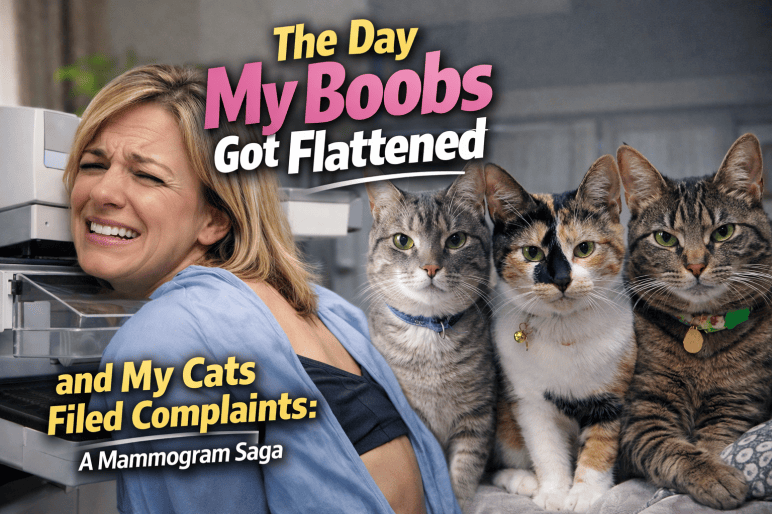
Even My Cats Know You Can’t Heal in the Same Environment That Hurt You.

“You can’t heal in the same environment that taught you to hide your wounds. Sometimes the bravest thing you’ll ever do iswalk away from the place that expected you to stay broken.”

-This Puzzled Life

Light the charcoal. Sprinkle the sage. Apparently, healing requires both barbecue energy and spiritual pest control. Welcome back to my household. Where the cats run the HOA. The ancestors run the commentary. And I’m just trying to unlearn 30 years of “bless your heart and keep suffering quietly.” Today’s sermon is titled, “You Cannot Heal in the Same Environment That Hurt You.” And yes, the cats have notes.

You ever try to heal in the same place that taught you to pretend everything was fine? It’s like trying to detox from sugar while sitting inside a Krispy Kreme with the “Hot Now” sign glowing like the gates of temptation. Meanwhile, my Southern upbringing is in the corner whispering, “Well now, you can leave, but don’t you dare make a scene. And take this casserole so folks don’t think you’re ungrateful.”

Healing in the same environment that hurt you is basically a full‑contact sport. You’re dodging old triggers. Outdated expectations. And that one relative who still thinks therapy is “for people who don’t pray hard enough. And still thinks Obama personally raised your rent.” Nothing says emotional clarity like feline commentary.m

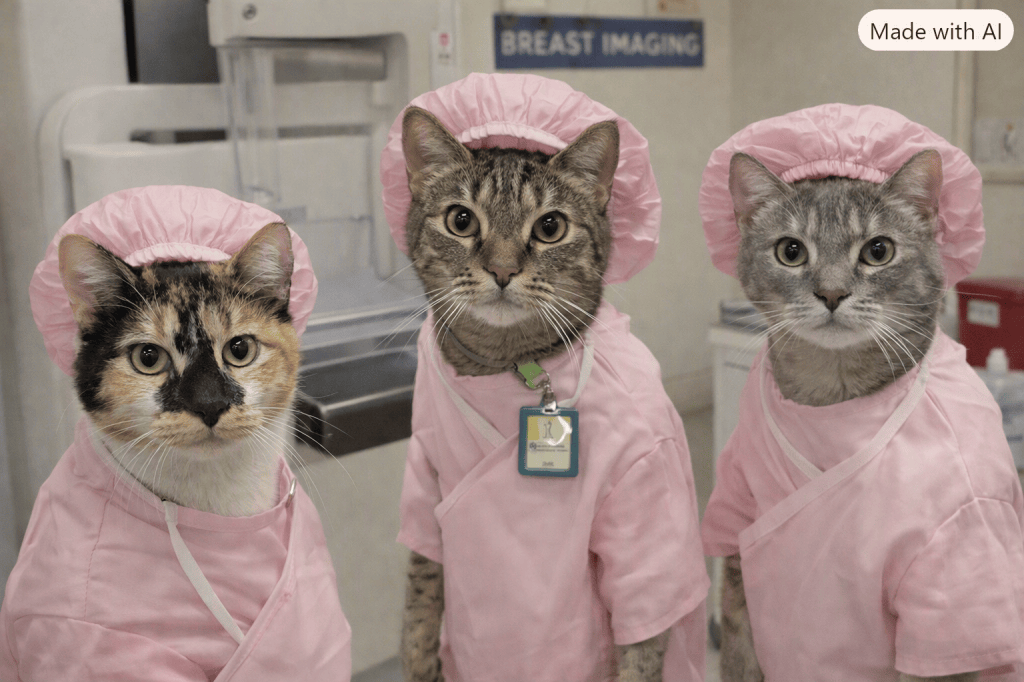
Coco (the judgmental one): “Girl, you keep trying to heal in the same room where your trauma sleeps. Move the furniture or move yourself.”

Piper (the chaotic one): “I say we knock everything off the shelves and start fresh. Healing begins with destruction.”

Tinkerbell (the Southern belle of the group): “Bless your heart. Even Jesus left Nazareth.”

And honestly, they’re right. Cats don’t stay in places that stress them out. They relocate with the confidence of a woman who knows she’s too good for this nonsense.

Southern Conservative Truth #1

“If it ain’t working, you don’t fix it. You replace it.” This applies to lawn chairs, husbands, and emotional environments.

Southern Conservative Truth #2

“You can’t grow tomatoes in poisoned soil.” But you can grow generational trauma if you keep watering it.

Southern Conservative Truth #3

“If the dog keeps biting you, stop blaming the dog and fix the fence.” Stop expecting people who hurt you to suddenly develop character.

Southern Conservative Truth #4

“You can’t sit on a broken chair and then get mad when you hit the floor.” If the environment is unstable, your healing will be too.

Southern Conservative Truth #5

“If the chicken’s burnt, the oven ain’t gonna apologize.” Some folks will never take accountability. Move on.

Southern Conservative Truth #6

“You can’t plant hope in a field full of denial and expect a harvest.” Healing requires fertile ground. Not family members who think boundaries are disrespectful.

Southern Conservative Truth #7

“If the swamp keeps producing gators, stop acting surprised when you get bit.” Patterns are patterns, not mysteries.

And of course, the cats had to weigh in again.

Coco: “Humans love staying in toxic places because they’re sentimental. Cats leave because we’re smart.” 

Piper: “If the vibes are off, I’m gone. No explanation. No forwarding address.” 

Tinkerbell: “A lady does not heal where she was harmed. She relocates with grace and a fresh can of Fancy Feast.”

Here’s the truth they don’t stitch on pillows. You cannot heal in the same environment that taught you to shrink, hush, or swallow your own voice like it was impolite to exist. You cannot bloom in soil that resents your roots. You cannot rise in a room built to keep you small. And you sure as hell cannot become your highest self in a place that only wanted the quiet, obedient version of you.

Healing requires space. Not the kind of space where you shove your feelings into a Tupperware container and label it “Later.” I mean real space. The kind where you can breathe without hearing echoes of who you used to be. Healing requires distance. Healing requires disruption. Healing requires the courage to walk away from the familiar and toward the version of you that refuses to die in the same cage she was born in.

Sometimes that means leaving the room. Sometimes that means leaving the house. Sometimes that means leaving the whole dang ZIP code. And sometimes it means telling your inner Southern critic, “No ma’am, we are not staying here out of politeness.” Healing requires new air, new light, new boundaries, and sometimes, a new porch to sit on while you process your life choices.

Leaving the environment that hurt you isn’t betrayal. It’s survival. It’s reclamation. It’s the moment you decide your healing deserves better than the bare minimum. And if anyone has a problem with it. Just tell them the cats said you’re unavailable for nonsense until further notice. And that’s on healing. Now excuse me while I sage the house like I’m trying to smoke out a demon.

So let them talk. Let them misunderstand you. Let them clutch their church bulletin and call it rebellion. Let them say you’ve changed. Because God knows you have. And thank goodness for that. You are not obligated to stay where your spirit was suffocated. You are not required to keep shrinking to fit the room. You are allowed to outgrow the places that could not love you whole.

And if anyone has a problem with your healing journey, tell them, “I didn’t leave because I was angry. I left because I was finally ready to breathe. And once you taste oxygen, you don’t go back to drowning.” Thanks for reading! And stop shrinking for their comfort.

Affirmation: I honor my healing by choosing spaces that honor me. I release the rooms that dimmed my light. And I rise in environments that celebrate my growth, my boundaries, and my becoming.

***Don’t forget to watch the video!***

#ThisPuzzledLife
https://suno.com/s/yUMvAAJCwb7DpPK4

The Wants That Wrecked a Nation

The nation’s coming undone, thread by trembling thread.

While men in red hats smirk like their shame’s a prize instead.

They pass down their entitlement like scripture marked in red.

And call it “tradition” when it’s harm they’ve always spread.


Politicians strut on stages, slick suits and practiced lies.

Hiding footprints of the women they stepped on to rise.

They call it “public service,” but we see through the disguise.

A kingdom built on silence and the pain they minimize.

They preach about morality with money in their hands.

Ignoring bruises left behind by their own cruel commands.

They wrap their greed in flags and call it “love of land.”

While expecting us to bow while they redraw what’s “unplanned.”


But deeper still, the damage grows in shadows they create.

Lives destroyed by selfish wants, not needs, but twisted fate.

The kind of hunger that takes and breaks.

That steals, then calls it “straight.”

Leaving survivors gathering pieces of a self they didn’t devastate.


And I remember every headline, every whispered, weary plea.

Every “She’s exaggerating,” every “He’s just being free.”

This has happened to many women not just 1, 2, or 3.

It did happened to them because it also happened to me.

It’s a chorus built to shield the ones with wealth and legacy.

While telling those they harmed that truth is just a luxury.


But here’s the truth they cannot hide, no matter how high they climb.

Not with money, not with office, not with power, not with time.

Not with red hats, not with lawyers, not with privilege so sublime.

It doesn’t matter your status. No still means no.

And without consent, it’s still a crime.

-This Puzzled Life

Light the Charcoal: A Southern Exorcism of America’s Rape Culture

“Rape culture doesn’t survive because predators are powerful. It survives because communities are silent.”

-This Puzzled Life

Light the charcoal. Call the ancestors. Summon the willfully blind Christians. And the politicians who pretend not to hear. We need to talk about rape culture in America. The one our government, our churches, and our “good Christian families” keep blessing with silence, excuses, and casseroles. And yes, I said “blessing.” Because at this point the way folks defend predators looks less like morality. And more like a full‑blown revival service for the unholy.

Let’s be real. The state of rape culture is a national embarrassment with a prayer chain. If any case even remotely resembled the Epstein files in another era, investigators would’ve been sprinting like their pensions depended on it. They would’ve been flipping mattresses. Interrogating houseplants. And subpoenaing the family dog.

But now? Now we’ve got a chunk of society the red hats, pearl‑clutchers, and “I did my own research” prophets. Who are bending over backwards to excuse behavior that would’ve made the Old Testament God pull out the smiting stick. And the churches? The churches are quieter than a deacon caught with his hand in the offering plate.

Pastors out here preaching “love thy neighbor” while refusing to even look at the neighbors who’ve been raped. Abused. Trafficked. Or discarded. Why? Because calling out evil might upset Brother Bob and Sister Brenda. The ones who tithe big and sin bigger. They’re terrified of making their donors have uncomfortable fee‑fees in their tum‑tums.

Meanwhile the Jesus they claim to follow? He would’ve flipped those tables. Reset them. And flipped them again like a CrossFit workout. But modern conservative Christianity? They’re too busy protecting their reputations and their potlucks to protect actual people. The hypocrisy is Olympic‑level.

They brag saying, “We donated clothes!” “We gave canned goods!” “We helped an organization!” But ask them, “Have you gone into homeless camps?” “Have you met LGBTQ+ folks and learned their needs?” “Have you talked to gang‑involved youth?” “Have you gone into prisons?” “Have you sat with a rape survivor and listened without judgment?” The answer is always, “No, but we thought about donating more socks.”

And the truth is this. They don’t want the stories. They don’t want the truth. They don’t want the discomfort. They want selective compassion. The kind that doesn’t require them to confront their own cowardice.

In the Deep South, especially places like Petal, Mississippi, silence is a religion all its own. People will gossip about who bought a new lawnmower. But mention rape, molestation, trafficking, or abuse and suddenly everyone’s got laryngitis. Your own family? They’d rather call you dramatic than confront the truth that predators thrive in silence. And that silence is a community project.

They’ll say, “That was a long time ago.,” “Why didn’t she tell someone earlier?,” “You need to move past it.” Or my personal favorite, “That’s water under the bridge.” Ma’am that “bridge” is built out of victims’ bones. And me a survivor who endured years of marital rape, stalking, gas lighting, humiliation, sexual perversion, coercion, and religiously‑justified abuse is still paying the price while they protect their comfort.

We live in a country where victims are interrogated. Predators are defended. Power is worshipped. Accountability is optional. And “locker room talk” is treated like scripture. People will twist themselves into pretzels to excuse the powerful. Even when over 1,000 children were harmed by the Epstein network, according to released documents. But sure. Let’s keep pretending the real threat is drag queens reading books.

I’ve worked with the hardest populations. The ones society throws away. And I’ve seen what happens when someone finally shows them compassion. The anger softens. The armor cracks. The humanity shows. The tears fall. And the healing begins just like it did with me after years of facing condemnation over compassion.

But conservative Christianity? They’d rather cling to superiority than step into the mess where Jesus actually lived. Jesus wasn’t selective. But they are. Jesus didn’t avoid the “dirty people.” But they do. Jesus didn’t say “somebody will help them.” But they do.

Let the truth rise like smoke. If America insists on normalizing rape culture through silence, excuses, politics, and selective morality, then let it be known, “We will not be quiet. We will not be polite. We will not protect predators. We will not bow to cowardice disguised as Christianity.” We stand on the side of consent, truth, survivors, and actual justice. Not the watered‑down, donor‑approved version preached from pulpits.

And to every person who says, “Why didn’t she leave?” “Why are you still talking about it?” Here’s your answer. Silence is how rape culture survives. And speaking is how we burn it to the ground.

And since we’re already in the deep end, let me go ahead and say the quiet part out loud. I’ve got people in my own family, bless their self‑appointed expertise hearts, who genuinely believe that if they weren’t physically present for the rape, then it simply did not occur. As if trauma requires a witness. As if my pain needs their signature to be valid. As if the only crimes that count are the ones they personally supervise.

Apparently they’ve never heard of how perpetrators keep victims silent. The threats. The manipulation. The shame. The fear. The isolation. The psychological warfare that could make a grown oak tree curl in on itself. They don’t know. Nor do they want to know what happens to a victim’s character the moment she speaks up. The smear campaigns. The disbelief. The “are you sure?” The “don’t ruin his life.” The “you’re exaggerating.” The “you must want money.” The “you’re being dramatic.” The “that was so long ago.”

Look no further than the current political climate. And the biases people cling to like life rafts. Truth is dangerous because truth destroys propaganda. Truth makes people wrong. Truth forces accountability. And Lord knows some folks would rather swallow a cactus whole than admit they were wrong. 

Not all religious people. But let’s be honest about the ratios. This isn’t a blanket statement about every religious person or every church. I’ve met the ones who actually step into the uncomfortable places. The ones who sit with survivors. Walk into homeless camps. Support LGBTQ+ youth. Visit prisons. And show compassion without needing applause.

Those people? They’re angels in work boots. They don’t need a spotlight. They don’t need a plaque. They don’t need a Facebook post. But they are the minority. The majority? They’re too busy polishing their image. Protecting their comfort. And pretending that if they ignore the suffering long enough, it’ll politely disappear like a casserole dish after a funeral.

Most people can’t handle the truth because the truth would force them to confront their own biases. Their own silence. Their own complicity. Their own selective morality. Their own willingness to defend power over people. And that’s why they cling to denial like it’s a family heirloom. Because if they admit the truth, my truth, your truth, the truth of millions of survivors, then they have to admit that the world they defend is built on harm. And that’s a reckoning they’re not ready for.

In my life, I have paid a very big price. And I’m still paying it with every day, every breath, every memory that wasn’t mine to still carry 29 years later. But it got stapled to my soul anyway. Because a culture built on silence and excuses decided my pain was inconvenient.

And this is what rape culture does. It hands the bill to the victim. And gives the perpetrator a coupon code for sympathy. In a world shaped by the likes of Jeffrey Epstein, Ghislaine Maxwell, Donald Trump, and their other active participants. And a political environment where some people normalize. Excuse. Or minimize harm. I’m over here begging folks to simply stand on the side of consent. Not on the side of “well, boys will be boys” or “that’s just locker room talk.”

Because let’s be honest. It’s not. There’s a whole slice of society that treats sexual violence like a PR inconvenience instead of the life‑shattering trauma it is. A whole slice that will twist themselves into pretzels to defend power, wealth, and status. Even when the harm is undeniable. Be the person who stands with survivors. Not the person who shrugs at abuse. Simply because the abuser is someone you voted for. Prayed with. Or admired on TV.

Be the person who actually says, “No. Consent matters. People matter. Accountability matters.” The alternative is the cultural shrug. The political excuses. The religious silence is exactly how rape culture stays alive and well. And I refuse to pretend otherwise. We’re done whispering. The fire is lit. And my voice is getting louder. Thanks for reading! What are your experiences with this?

Affirmation: My truth is not too heavy. My story is not too late. My voice is not too loud. I am the fire that exposes what others fear to face.

***Don’t forget to watch the video!***

#ThisPuzzledLife
The Family Roles & The Circus They Created

“My family says I’m ‘living in sin.’ Which is hilarious coming from people who treat denial like a spiritual gift. And premarital sex like a community service.”

-This Puzzled Life

Light the charcoal. Sprinkle the sage. Negative energy, get your shoes on and leave. Today we’re diving into one of my favorite dysfunctional family topics. Family roles. Those unofficial job titles we never applied for. Never wanted. And yet somehow ended up performing like we were on salary. Take a moment and see where you and your people fall. And here’s the spoiler. If you’re reading this, you already know.

Before we get started, let me warn you. This is not a gentle stroll through family history. This is a full‑blown guided tour through a Southern household. That’s been held together with casserole, denial, and conservative Christian values. That seem to get applied with the accuracy of a toddler using glitter glue.

I grew up in a family where “we don’t talk about that” wasn’t a suggestion. It was the eleventh commandment. Emotions were treated like illegal fireworks. Everyone had them. Nobody handled them correctly. And something always exploded at the worst possible time.

In my house, honesty was considered aggressive. Accountability was considered disrespectful. And therapy? Therapy was treated like witchcraft performed by people who “don’t know Jesus personally.”

Meanwhile, the dysfunction strutted around the living room in broad daylight wearing a name tag and a church hat. And everyone pretended they couldn’t see it. If denial were a sport, my family would have Olympic medals and a sponsorship from Hobby Lobby.

So, buckle your emotional seatbelt. And prepare yourself. Because once you recognize the roles in a dysfunctional family. It’s like spotting roaches. You can’t unsee them. And suddenly they’re everywhere.

Family roles are the expected behaviors, responsibilities, and emotional acrobatics each person performs to keep the family circus running. These roles shift depending on culture, family size, and personality. But the classics are Hero, Scapegoat, Golden Child, Lost Child, Mascot. And I show up everywhere like glitter after a craft project.

Let’s begin.

1. The Hero (a.k.a. The Family PR Department) The Hero’s job is to make the family look normal, stable, and “blessed and highly favored” to the outside world. According to theraplatform.com (2025), they take on excessive responsibility to gain approval. This is my mother’s role. Or at least the role she auditions for. She is attention-seeking. Reputation-obsessed. And allergic to accountability. She delivers passive-aggressive comments like she’s handing out communion wafers. And then acts shocked when people get upset.

Her signature move? “The Dummy Card.” Suddenly she “doesn’t remember,” “didn’t mean it like that,” or “doesn’t know what you’re talking about.” But trust me, she knows. And right after she stirs the pot. She gives my dad the “rescue me” look. As if she didn’t just season that pot with cayenne, spite, and generational trauma. We only have real conversations when she’s mad at my sister, The Golden Child. Otherwise, it’s news, sports, and weather which is the Holy Trinity of Avoidance.


2. The Scapegoat (hi, it’s me) The Scapegoat is blamed for everything wrong in the family. Stubbed toe? My fault. Bad weather? Somehow me. The economy? Probably me too. I don’t conform to their lifestyle. I’m gay. I use medical cannabis. I don’t go to church because there are too many people who support the cruelty of the Trump regime. And align theirselves with the MAGA movement which practices a form of chriatianity that cannot be found in any Bible. And quite frankly, they have a bad reputation for normalizing pedophilia while demonizing being gay. I guess I should be glad that I just can’t understand that rationale. 

I talk about taboo topics. And I acknowledge reality instead of pretending everything is fine.
And did I mention I’m gay? Because trust me they will. Instead of saying,
“She’s our family and we love her no matter the gender of someone she loves and that loves her.” They act like my existence is a PR crisis. The attitude is like, “Remember when Dana destroyed the family by being prouid to be gay and authentic?”  I’m also the family whistleblower. I don’t play along with generational nonsense. I’m my own person. And I’m not apologizing for it.

3. The Golden Child (my sister, obviously) The Golden Child is the family’s prized possession. The chosen one. The favorite. And the one who can do no wrong even when she is actively doing wrong. Thriveworks.com (2023) describes this child as obedient, praised, and protected. That’s her. She has been dipped in gold since birth. She follows the script. Holds the same beliefs. And passes them down to her children like heirloom china. She was taught what to think. Not how to think. And the cycle continues. Children aren’t born to hate. They learn it from the adults who raise them. And this is what my sister excels at consistently.

4. The Lost Child (also my sister — she multitasks) The Lost Child avoids conflict like it’s a full-time job with benefits. She withdraws. Stays quiet. And pretends she’s above the chaos. While simultaneously contributing to it. She never acknowledges her harmful behavior. She believes most people are beneath her. And when she talks about someone being gay, she spells it out “G-A-Y” like she’s avoiding summoning a demon. Her emotional range is that of a frozen waffle. And honestly, that’s the family vibe overall.

5. The Mascot (me and my dad) Mascots use humor to distract from the dysfunction. We crack jokes. Lighten the mood. And do not dare fix anything. We just to keep the room from exploding. This doesn’t always work especially when me and my sister are at war like rainbows and bibles. My dad rescues my mom and sister from “big, bad Dana.” Who refuses to sweep things under the rug. I’m the villain because I tell the truth. Imagine that. Kind of sounds like the current government’s level of functioning.

Now you’ve met the cast and the roles they cling to like emotional security blankets. In the next part we’ll zoom out and look at the bigger picture. And it’s the part they refuse to acknowledge.

That concludes our tour of the Family Circus. Please exit through the gift shop. Where denial is half‑off. Accountability is out of stock. And the Scapegoat merchandise is mysteriously overpriced.” Thanks for reading! Keep breaking chains.

Affirmation: Today I honor my emotionally athletic self. The whistleblowing. Boundary‑setting. Truth‑telling legend who refuses to join the family’s Olympic Denial Team. Even though they’ve been training since the womb.

***Don’t forget to watch the video!***

#ThisPuzzledLife
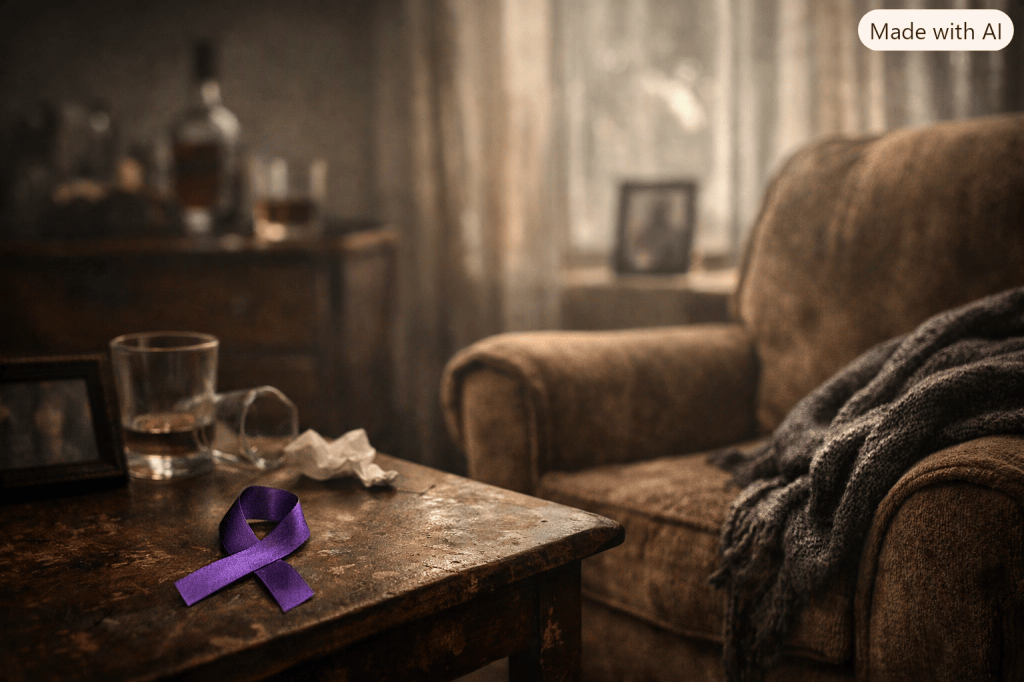
Addiction Awareness: The Lover That Cuts Deep and Comes for Everything

“Addiction is a quiet predator. It’s patient. Calculated. Always hungry. And waiting for the moment you’re weakest to take the biggest bite out of your life.”

-This Puzzled Life

 Light the charcoal. Sprinkle the sage. Because when we talk about addiction awareness, the air needs to be thick with truth, protection, and the kind of courage that makes your voice shake but keeps going anyway. This isn’t a pretty conversation. It’s not a gentle unveiling. It’s not polite. It’s not something you whisper behind closed doors like a family secret wrapped in shame. It’s the kind of truth that shakes the floorboards and rattles the bones of anyone who’s ever lived it. Loved someone through it. Or buried someone because of it. This is a front porch, bare soul, trembling‑hands kind of truth. And today, we’re telling it out loud.

Addiction doesn’t walk into a home quietly. It barges in like a storm. It tracks mud across every memory. It rearranges the furniture of your life. And convinces you that chaos is normal. It teaches you to apologize for things you didn’t break. To shrink yourself so its shadow can stretch across the room. And to pretend you’re fine when your insides feel like shattered glass. And the cruelest part? Addiction doesn’t just take from the person struggling. It takes from everyone who loves them.

Families learn to tiptoe. Children learn to decode moods like weather patterns. Partners learn to carry burdens that were never meant for one set of shoulders. And the person battling addiction, learns to hide their pain behind a smile that fools everyone except the people who know them best. Addiction awareness isn’t about statistics or slogans. It’s about the people who wake up every day fighting a war no one else can see.

There are the battles fought in bathrooms, parked cars, and bedrooms with the door locked. The battles fought in silence because shame is louder than the truth. The battles fought by people who are terrified to ask for help because they don’t want to be judged. Dismissed. Or treated like a problem instead of a person.

Addiction awareness means saying, “You are not alone. You are not broken beyond repair. You are not the worst thing you’ve ever done.” It means recognizing that recovery isn’t linear. It’s messy. It’s painful. It’s full of relapses, restarts, and revelations. But it is possible. I tasted that freedom many years ago, during a moment in life that now seems like it never existed. 

Let’s talk about the people that love them too. The ones who hold the line when the person they love can’t. The ones who pray. Cry. Scream. Hope. And repeat. Addiction awareness means honoring their resilience. Their heartbreak. Their bravery. Loving someone through addiction is its own kind of battle that deserves to be seen.

Addiction is not a moral failure. It is not a character flaw. It is not a sign of weakness. It’s a neurological hijacking. And once it gets inside, it takes the controls and refuses to give them back. It’s a thief. A liar. And a weight that no one should carry alone.

Awareness is the first step toward compassion. Compassion is the first step toward healing. Healing is the first step toward freedom. And freedom? Freedom is the birthright of every single person touched by addiction. It doesn’t matter whether they’re fighting it. Surviving it. Or loving someone through it.

I have been an addict in one form or another since I was a very young teen. That’s the part people don’t see. The way it starts before you even understand what “coping” means. Before your brain is fully formed. Before you know that one decision can echo for decades. Some things I let go of and never touched again. But others? Others I’m still married to. Still controlled by. And still waking up beside like a partner I never meant to vow my life to. I’ve stood on every side of this issue. I’ve been a patient, professional, survivor, and witness. I’ve buried friends and family. And I’ve found the bodies of patients. I’ve even sat in classrooms learning the science. And I’ve sat on bathroom floors learning the consequences. 

One of the biggest debates is whether addiction is a disease. And honestly? I see both sides. But I can attest to this. What I know in my bones is that addiction will pick up exactly where it left off. It doesn’t forget you. It doesn’t forgive you. And it doesn’t loosen its grip just because you got tired.

It progresses like a slow-moving fire. Consuming everything until it shuts down every functioning cell in your body. It’s the lover that kisses your forehead while holding a knife behind your back. And it’s like trying to pet a rattlesnake and hoping it suddenly cares about your well-being.

There are no social crack users. No social heroin users. No social meth, fentanyl, or “just once in a while” users of the things that hollow you out from the inside. I’ve known too many who didn’t make it. Too many funerals. Too many empty chairs. Too many stories cut short. And the truth is brutal. Addicts are not the type who typically live to be 80. The statistics confirm what our hearts already know. That many have died. And many more will die.

And process addictions? Eating disorders, self-harm, gambling, sex addiction, etc. are not softer versions. They are simply different roads to the same grave. Addiction doesn’t care about the method. It cares about the destruction. And it will be done in totality emotionally, socially, spiritually, and physically.

It strips you down until you’re a shell of what once resembled a human being. It destroys your life and the lives orbiting yours. That’s the goal. It wants no interference. And no one slowing its roll. It wants you wrapped around its finger in a relationship so co-dependent it feels cellular. It doesn’t care how many relationships are ruined as a result. Addiction is about the next fix. Whatever that fix is. And you will chase it until the line between living and dying blurs. 

The saddest part is that you don’t know you’re susceptible until you’re already in it. Addiction does not discriminate. It shows no mercy to clergy, billionaires, politicians, Hollywood actors, musicians, doctors, lawyers, nurses, or the people just trying to keep the lights on and food on the table.

And the idea that you can outthink addiction? Outsmart the chemical, emotional, and neurological machinery it hijacks? That’s the thinking of fools. And I say that with compassion. Not judgment. There is nothing more heartbreaking than watching someone, yourself included, need their “drug” so badly that they would burn down every good thing in their life for another taste of something that is killing them.

Let the truth rise with the smoke. Addiction is not romance. It is not rebellion. It is not escape. It is suicide on an installment plan. And for every person who struggles, it has a bullet with their name on it. Even mine. Speaking the truth out loud is how we start breaking the cycle that wants us silent. Awareness is the first crack of light. Awareness is the first act of rebellion. Awareness is the first step toward choosing life. Even when the addiction whispers otherwise. It’s a story of survival in a world that doesn’t teach us how to hold our pain. 

Your days of hiding in silence are over. We’re speaking your name. Shine light in your corners. And refusing to let shame be your shield. This is awareness. This is courage. This is the moment we stop whispering and start healing. And it’s for every soul who deserves a life bigger than their battle. Thanks for reading! And ask for what you need.

Affirmation: I honor the battles I’ve survived, and I refuse to let the shadows that once claimed me write the rest of my story. I rise with clarity, courage, and a spine made of truth.

***Don’t forget to watch the video!***

#ThisPuzzledLife