
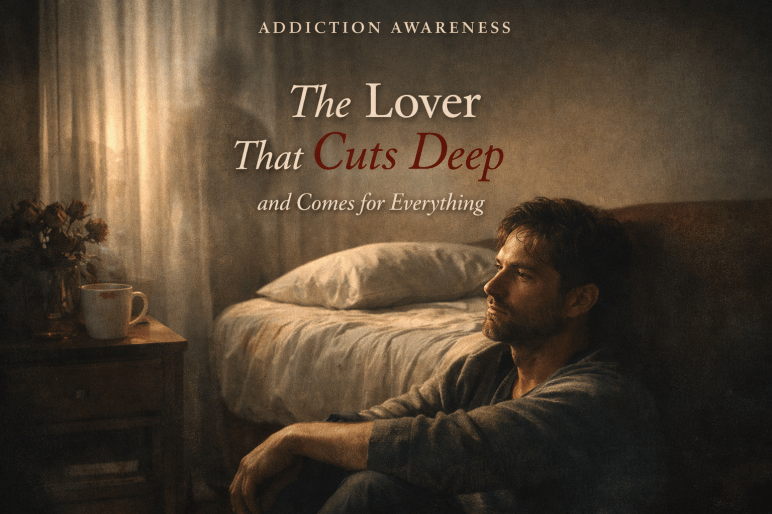
Addiction Awareness: The Lover That Cuts Deep and Comes for Everything

“Addiction is a quiet predator. It’s patient. Calculated. Always hungry. And waiting for the moment you’re weakest to take the biggest bite out of your life.”

-This Puzzled Life

 Light the charcoal. Sprinkle the sage. Because when we talk about addiction awareness, the air needs to be thick with truth, protection, and the kind of courage that makes your voice shake but keeps going anyway. This isn’t a pretty conversation. It’s not a gentle unveiling. It’s not polite. It’s not something you whisper behind closed doors like a family secret wrapped in shame. It’s the kind of truth that shakes the floorboards and rattles the bones of anyone who’s ever lived it. Loved someone through it. Or buried someone because of it. This is a front porch, bare soul, trembling‑hands kind of truth. And today, we’re telling it out loud.

Addiction doesn’t walk into a home quietly. It barges in like a storm. It tracks mud across every memory. It rearranges the furniture of your life. And convinces you that chaos is normal. It teaches you to apologize for things you didn’t break. To shrink yourself so its shadow can stretch across the room. And to pretend you’re fine when your insides feel like shattered glass. And the cruelest part? Addiction doesn’t just take from the person struggling. It takes from everyone who loves them.

Families learn to tiptoe. Children learn to decode moods like weather patterns. Partners learn to carry burdens that were never meant for one set of shoulders. And the person battling addiction, learns to hide their pain behind a smile that fools everyone except the people who know them best. Addiction awareness isn’t about statistics or slogans. It’s about the people who wake up every day fighting a war no one else can see.

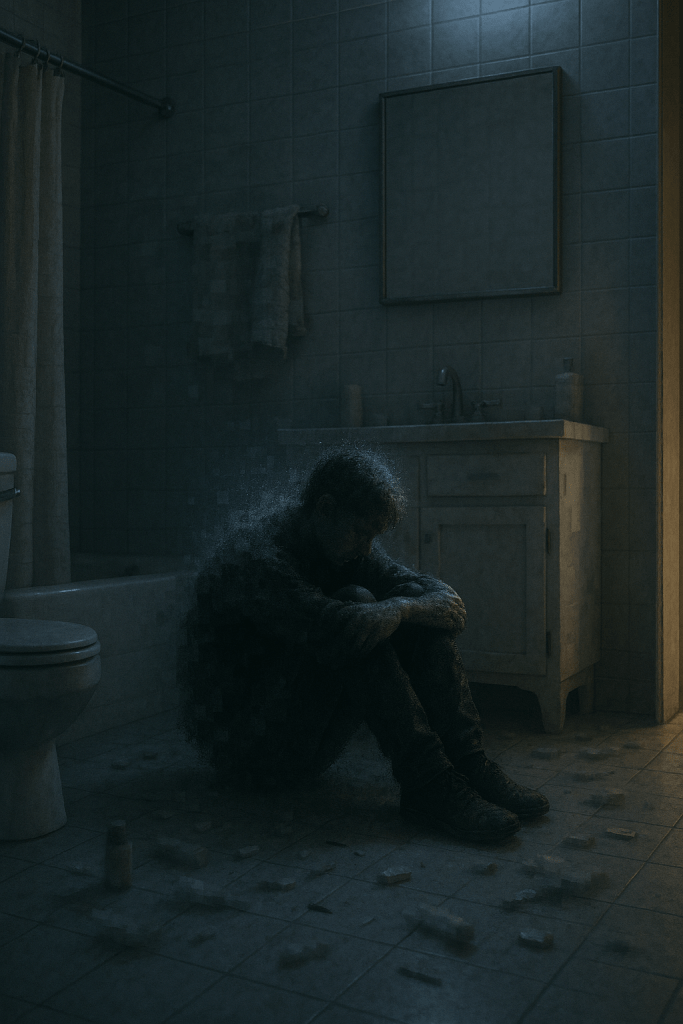
There are the battles fought in bathrooms, parked cars, and bedrooms with the door locked. The battles fought in silence because shame is louder than the truth. The battles fought by people who are terrified to ask for help because they don’t want to be judged. Dismissed. Or treated like a problem instead of a person.

Addiction awareness means saying, “You are not alone. You are not broken beyond repair. You are not the worst thing you’ve ever done.” It means recognizing that recovery isn’t linear. It’s messy. It’s painful. It’s full of relapses, restarts, and revelations. But it is possible. I tasted that freedom many years ago, during a moment in life that now seems like it never existed. 

Let’s talk about the people that love them too. The ones who hold the line when the person they love can’t. The ones who pray. Cry. Scream. Hope. And repeat. Addiction awareness means honoring their resilience. Their heartbreak. Their bravery. Loving someone through addiction is its own kind of battle that deserves to be seen.

Addiction is not a moral failure. It is not a character flaw. It is not a sign of weakness. It’s a neurological hijacking. And once it gets inside, it takes the controls and refuses to give them back. It’s a thief. A liar. And a weight that no one should carry alone.

Awareness is the first step toward compassion. Compassion is the first step toward healing. Healing is the first step toward freedom. And freedom? Freedom is the birthright of every single person touched by addiction. It doesn’t matter whether they’re fighting it. Surviving it. Or loving someone through it.

I have been an addict in one form or another since I was a very young teen. That’s the part people don’t see. The way it starts before you even understand what “coping” means. Before your brain is fully formed. Before you know that one decision can echo for decades. Some things I let go of and never touched again. But others? Others I’m still married to. Still controlled by. And still waking up beside like a partner I never meant to vow my life to. I’ve stood on every side of this issue. I’ve been a patient, professional, survivor, and witness. I’ve buried friends and family. And I’ve found the bodies of patients. I’ve even sat in classrooms learning the science. And I’ve sat on bathroom floors learning the consequences. 

One of the biggest debates is whether addiction is a disease. And honestly? I see both sides. But I can attest to this. What I know in my bones is that addiction will pick up exactly where it left off. It doesn’t forget you. It doesn’t forgive you. And it doesn’t loosen its grip just because you got tired.

It progresses like a slow-moving fire. Consuming everything until it shuts down every functioning cell in your body. It’s the lover that kisses your forehead while holding a knife behind your back. And it’s like trying to pet a rattlesnake and hoping it suddenly cares about your well-being.

There are no social crack users. No social heroin users. No social meth, fentanyl, or “just once in a while” users of the things that hollow you out from the inside. I’ve known too many who didn’t make it. Too many funerals. Too many empty chairs. Too many stories cut short. And the truth is brutal. Addicts are not the type who typically live to be 80. The statistics confirm what our hearts already know. That many have died. And many more will die.

And process addictions? Eating disorders, self-harm, gambling, sex addiction, etc. are not softer versions. They are simply different roads to the same grave. Addiction doesn’t care about the method. It cares about the destruction. And it will be done in totality emotionally, socially, spiritually, and physically.

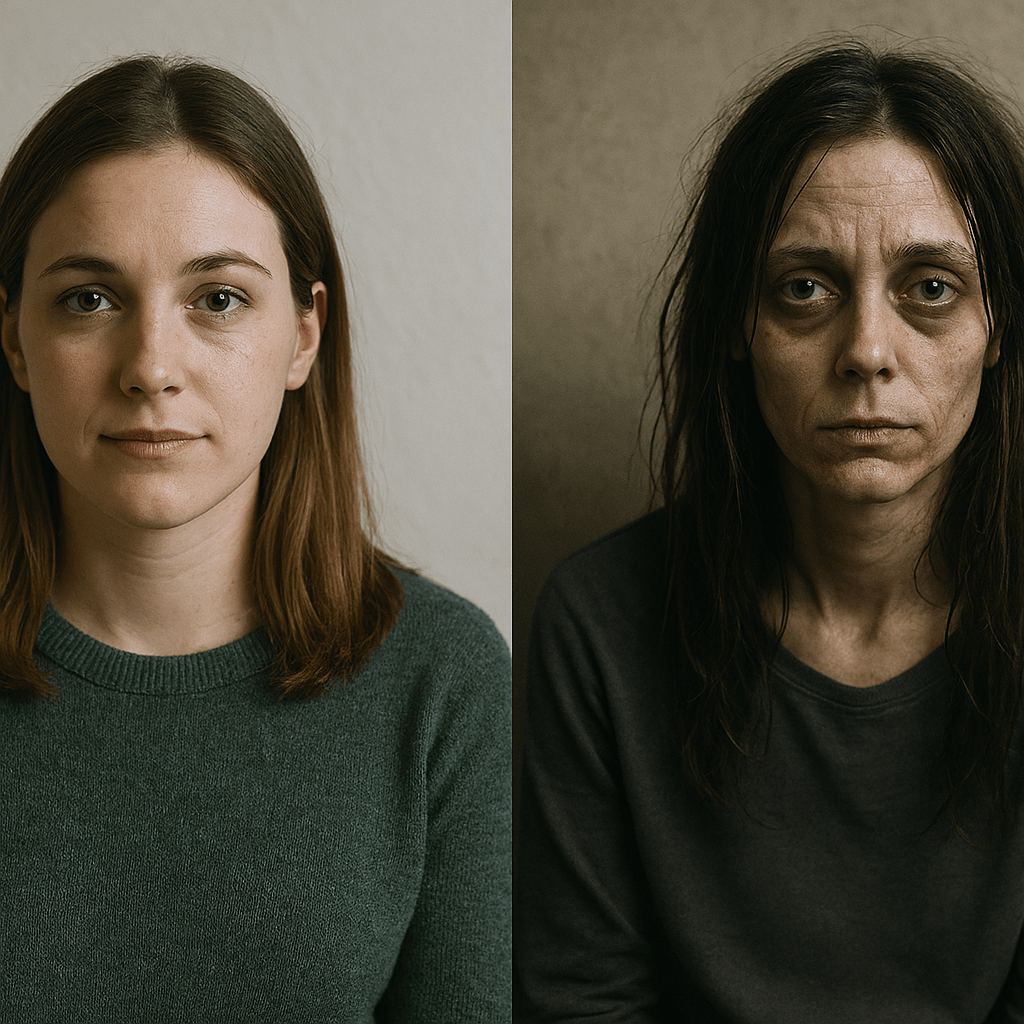
It strips you down until you’re a shell of what once resembled a human being. It destroys your life and the lives orbiting yours. That’s the goal. It wants no interference. And no one slowing its roll. It wants you wrapped around its finger in a relationship so co-dependent it feels cellular. It doesn’t care how many relationships are ruined as a result. Addiction is about the next fix. Whatever that fix is. And you will chase it until the line between living and dying blurs. 

The saddest part is that you don’t know you’re susceptible until you’re already in it. Addiction does not discriminate. It shows no mercy to clergy, billionaires, politicians, Hollywood actors, musicians, doctors, lawyers, nurses, or the people just trying to keep the lights on and food on the table.

And the idea that you can outthink addiction? Outsmart the chemical, emotional, and neurological machinery it hijacks? That’s the thinking of fools. And I say that with compassion. Not judgment. There is nothing more heartbreaking than watching someone, yourself included, need their “drug” so badly that they would burn down every good thing in their life for another taste of something that is killing them.

Let the truth rise with the smoke. Addiction is not romance. It is not rebellion. It is not escape. It is suicide on an installment plan. And for every person who struggles, it has a bullet with their name on it. Even mine. Speaking the truth out loud is how we start breaking the cycle that wants us silent. Awareness is the first crack of light. Awareness is the first act of rebellion. Awareness is the first step toward choosing life. Even when the addiction whispers otherwise. It’s a story of survival in a world that doesn’t teach us how to hold our pain. 

Your days of hiding in silence are over. We’re speaking your name. Shine light in your corners. And refusing to let shame be your shield. This is awareness. This is courage. This is the moment we stop whispering and start healing. And it’s for every soul who deserves a life bigger than their battle. Thanks for reading! And ask for what you need.

Affirmation: I honor the battles I’ve survived, and I refuse to let the shadows that once claimed me write the rest of my story. I rise with clarity, courage, and a spine made of truth.

***Don’t forget to watch the video!***

#ThisPuzzledLife
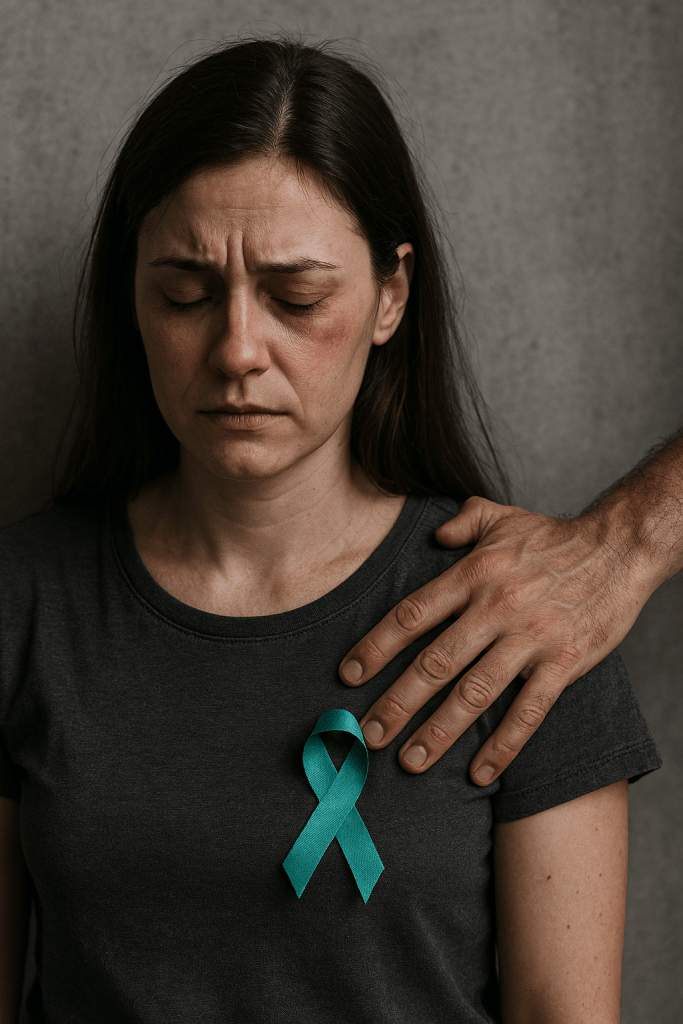
Sexual Assault Awareness: I Survived. Now I Speak. 

“I am not the sum of what was done to me. I am the proof that even in the places where humanity failed, my spirit refused to.”

-This Puzzled Life

Light the charcoal. Sprinkle the sage. Today, I’m going to talk about sexual assault. Religious betrayal. And the kind of generational silence that tries to swallow whole communities. We might as well start with a cleansing. Lord knows the air gets thick when truth finally walks into the room.

There are some topics into which you don’t ease. You cannonball straight in. Bless your heart and everyone else’s. Sexual Assault Awareness is one of them. And if you grew up anywhere near the Deep South like I did, you know we were raised on two things casseroles and silence. One of those is delicious. The other is deadly. So today, we’re breaking the generational habit of whispering about the things that actually need megaphones. Let’s start with the part that makes people shift in their seats like they’re sitting on a church pew with a splinter.

These aren’t “somewhere out there” numbers. These are “in your neighborhood, in your school, in your family, in your church, and in your workplace” numbers. And if that makes you uncomfortable, good. Discomfort is the first sign your moral compass still works.

Survivors are people who still show up to work. Raise kids. Laugh at memes. And try to remember where they put their keys. They’re not broken. They’re exhausted from carrying what should’ve never been theirs to hold. And if you’re a survivor reading this, let me say this plainly. You are not the shame. You are the evidence that harm can be done and still not win. The shame belongs with the perpetrator.

Now, I’m not talking about making light of this kind of crime. That’s not humor. That’s cruelty with a punchline. I’m talking about the kind of humor survivors use to stay alive. The kind that says, “I’ve been through hell. But I still have jokes. So clearly hell didn’t win.” It’s the same humor Southern aunties use when they say things like, “We don’t air our dirty laundry.” While standing in front of a clothesline full of secrets flapping in the wind. Humor is a pressure valve. It lets us breathe while we talk about the things that steal breath.

If someone trusts you enough to tell you they were assaulted, here’s your script. “I’m so sorry that happened,” “I believe you” and “How can I support you right now?” Notice what’s missing? Questions that sound like cross examinations. Advice no one asked for. And any sentence beginning with “Why didn’t you…?” Survivors don’t need detectives. They need validation that the abuse happened and that it wasn’t their fault in any way.

Sexual abuse cases in the U.S. justice system have increased by 62.5% since 2020. Yet the vast majority of survivors never see justice at all. And before anyone says “Well, reporting is easy.” Let me remind you. If reporting were easy, we wouldn’t have a national hotline that stays busy 24/7.

People who’ve lived through abuse, especially abuse justified with moral or religious language, tend to recognize certain dynamics instantly. Power used without accountability. Authority figures protecting each other instead of the vulnerable. Moral language used as a shield for harmful behavior. Gaslighting and denial when confronted with wrongdoing. Silencing or discrediting those who speak up through threats and intimidation. And systems that reward loyalty over truth.

These patterns show up in many places like churches, marriages, schools, corporations, and yes, in government. Survivors often have the clearest radar for institutional betrayal. Because they’ve lived it in the most intimate way possible. When you look at the world and say, “This feels familiar.” That’s not paranoia. That’s pattern recognition born from experience.

I grew up in a world where people could quote scripture faster than they could show compassion. Where pastors’ children could harm a five‑year‑old and still be called “good families.” And where a husband could twist the Bible into a weapon and call it marriage. I know what it feels like to be violated in Jesus’ name. I know what it feels like to be told your body is a man’s property. I know what it feels like when resistance is met with punishment. When silence is demanded. And when trauma is treated like an inconvenience.

Trump said of rape victim E. Jean Carroll “she loved it!” But he also said he didn’t know her. About 29:10 is where he says this. Watch the whole thing and tell me why you think victims don’t come out sooner. This is the way that abusers keep their victims in fear for years. Mine did the same thing.

After a lifetime of being told to stay quiet when people in power start using God, morality, or “order” as a shield, it’s never about holiness. It’s about control. I’ve lived under that kind of control. I’ve survived it. I know exactly what it looks like when someone wraps abuse in scripture and calls it righteousness. So, when I see institutions using the same tactics, same silencing, same moral posturing to protect themselves instead of the people they harm, I don’t need a press release to tell me what’s going on. Survivors recognize the pattern long before the headlines catch up.

What do we do? We talk. We teach. We intervene. We stop pretending this is a “women’s issue” or a “men’s issue” or a “kids these days” issue. It’s a human issue. We raise kids who know consent isn’t a suggestion. We raise adults who know silence is complicity. We raise communities where survivors don’t have to choose between telling the truth and keeping the peace.

And at the end of the day, the pattern speaks louder than any press conference ever could. The world watched as Jeffrey Epstein’s name kept resurfacing in court documents, flight logs, and survivor testimony. The world also watched as questions piled up about who knew what, who looked away, and who benefited from the silence. People aren’t asking these questions because they’re bored. They’re asking because the public record is full of smoke. And every time someone tries to follow it, another door slams shut.

If the Trump administration thought history would politely avert its eyes, they miscalculated. Survivors don’t forget. Journalists don’t forget. The internet definitely doesn’t forget. And the truth has a funny habit of surviving every cover‑up attempt. Because eventually, the receipts outlast the people who hoped we’d stop reading them.

And to my fellow survivors, you are not alone. You are not to blame. You are not too much. You are a whole person with a whole story. And the world is better because you’re still here to tell it. And if anyone tries to silence you, just remember. You come from a long line of people who know how to make noise when it matters.

After the childhood abuse, the marital rape, the spiritual manipulation, the PTSD that still echoes through my bones. I’ve learned something important. Abuse doesn’t just happen in homes and churches. It happens anywhere power goes unchecked. So, if you hear a familiar pattern in the way certain institutions operate today, you’re not imagining it. 

Once you’ve lived through the kind of darkness that tries to disguise itself as divine, you stop being intimidated by titles, pulpits, or podiums. You stop mistaking authority for integrity. And you stop believing that silence is the price of peace. If your power depends on someone else’s silence, it’s not leadership. It’s abuse with better lighting. And survivors like me aren’t afraid of the dark anymore. Thanks for reading! And never let them silence you.

Affirmation: I honor the child I was, the survivor I became, and the woman I am now. My voice is not fragile. It is forged. My healing is not a question. It is a declaration. I rise today not because the past was gentle, but because I am.

***Don’t forget to watch the video!***

#ThisPuzzledLife