This Puzzled Life is a mental health and recovery blog exploring addiction, trauma healing, LGBTQ experiences, humor, and the strange moments that shape us.
“Leaving isn’t weakness. Staying alive long enough to escape is strength.”
-This Puzzled Life
Light the charcoal. Sprinkle the sage. Call the ancestors the loud ones, the protective ones, in close. The ones who don’t mind flipping a table when truth needs to be told. Let the ancestors pull up their rocking chairs and lean in like, “Alright baby, tell it exactly how it happened.“ Because today, we’re walking straight into a fire that too many people pretend isn’t burning. And the topic is Domestic Violence Awareness Month.
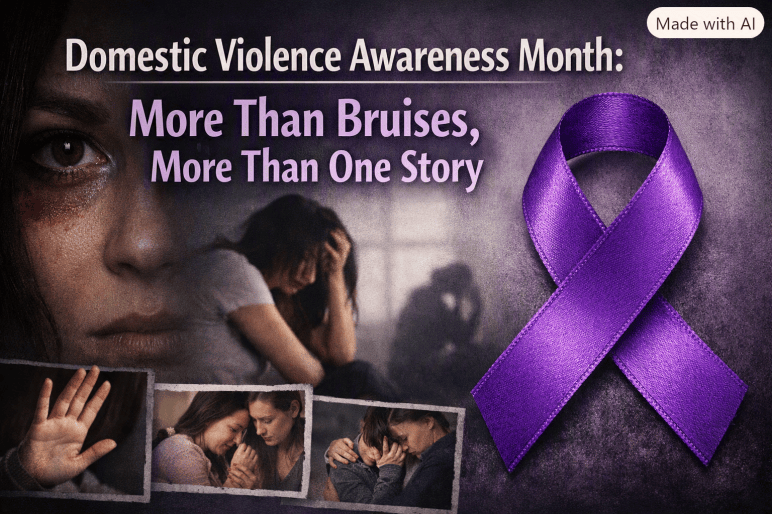
This month isn’t just a purple ribbon or a hashtag. It’s a national reckoning. A month carved out because silence has killed too many. Shame has trapped too many. And judgment has wounded too many who were already bleeding. It exists because domestic violence is not one thing. Not one story. Not one bruise. It’s a whole constellation of harm that is emotional abuse, financial control, spiritual manipulation, psychological warfare, sexual coercion, digital stalking, physical stalking, rape, threats, intimidation, and isolation. All of it real. All of it dangerous.
And Lord knows, the Deep South has a long tradition of saying, “Well, why didn’t she just leave?” With the same tone they use when asking why you didn’t bring potato salad to the church potluck. But today we’re not whispering. We’re not sugarcoating. We’re not letting judgment drown out truth.
Domestic violence is more than bruises. More than shouting. More than slammed doors. It’s the slow erosion of your identity. It’s the constant fear humming under your skin. It’s the way you learn to read someone’s footsteps like weather patterns. It’s the way you shrink. Fold. And contort yourself trying to keep the peace that never stays peaceful.
And let me say this with all the Southern sass I can muster. If you’ve never lived it, you don’t get to judge it. Because “just leaving” is a fantasy sold by people who have never had their life threatened. Their finances controlled. Their spirit manipulated. Or their faith weaponized against them. I know this because I lived it. Fourteen years in a domestic abuse situation that nearly swallowed me whole. The cycle wasn’t simple. It was a trap crafted with precision love bombing, threats, and intimidation. That is continuously repeated until you forget what freedom feels like.
I didn’t stay because I was weak. I stayed because I was scared. I stayed because I was conditioned. I stayed because every exit felt like a death sentence. And let me make something crystal clear. It wasn’t a billionaire. It wasn’t a senator. It wasn’t a monster hiding in the shadows. It wasn’t an immigrant. It wasn’t a drag queen with a story book. It wasn’t a trans person. It wasn’t a black person. It was a white, “Christian” man in the Deep South. One who used the Bible like a weapon. While twisting scripture into shackles. Preaching submission while practicing cruelty. A man who believed control was his God-given right. And fear was his favorite language.
That’s why Domestic Violence Awareness Month matters. Because abuse doesn’t look like one stereotype. Survivors don’t fit one mold. Judgment is easy. But understanding saves lives. It is a promise. A collective vow that we will speak loudly. Love fiercely. And refuse to let anyone’s suffering stay hidden behind closed doors.
And now, let me drop this mic so hard the ancestors stand up and clap. I survived what was meant to break me. I reclaimed what was stolen from me. And I will never apologize again for the fire in my voice. Thanks for reading! What have been your experiences?
Affirmation: I honor my survival, my truth, and my healing. I am worthy of safety, love, and a life without fear.
“Therapy is where my mouth says things my brain did not approve.”
-This Puzzled Life
Light the charcoal. Let it crackle like your last nerve. Because apparently my healing journey requires ambiance, smoke, and at least three ancestors supervising like I’m about to shoplift emotionally from the universe. Summon the ancestors. They love a front‑row seat to your emotional chaos. And today we’re adding a full therapy‑session script to the memoir of oversharing that already has them passing around spiritual popcorn.
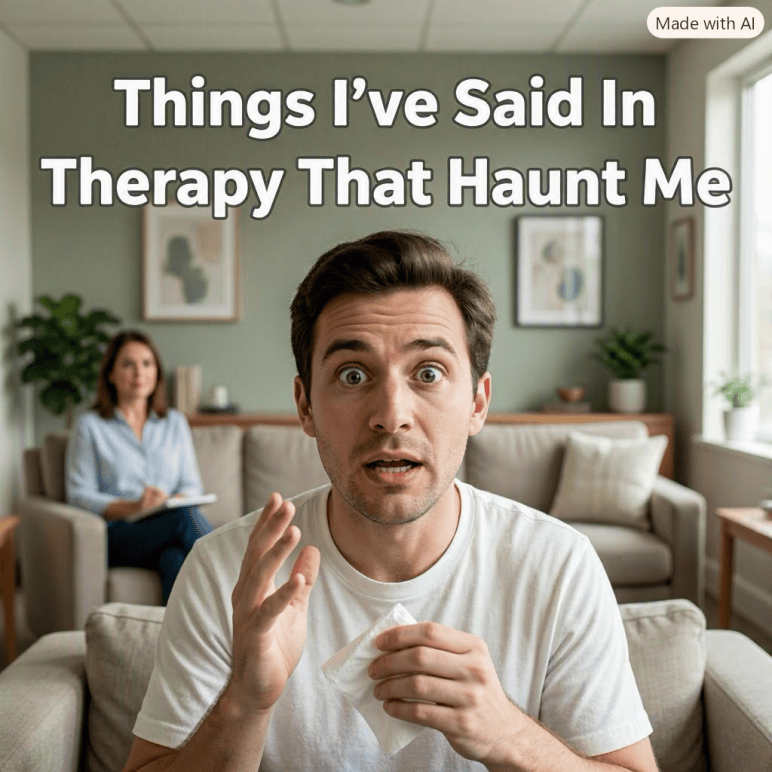
The moment the charcoal sparks, I can hear Great‑Grandma Eunice whispering, “Lord, she’s going back to therapy again. Somebody get the popcorn.” And she’s right. Every time I walk into therapy, I transform from a functioning adult into a confused emotional raccoon who has been handed a microphone and zero supervision. I walk in with the intention of being mature. Grounded. And emotionally regulated. Five minutes later I’m saying things like:
strategic avoidance-“I’m not avoiding my problems, I’m just strategically rescheduling them.”
vibes-based coping-“My coping skills are vibes-based.”
attachment enthusiasm– “I don’t have attachment issues. I have attachment enthusiasm.”
fine-while-crying-“I’m fine.” While crying like a Victorian widow who just lost her husband to a horse accident.
My therapist sits there nodding like she’s watching a documentary about a rare woodland creature trying to file taxes.
Healing is wild. But it’s also tender. It’s not just me blurting out unhinged one-liners like a raccoon with a microphone. It’s also the quiet moments where I surprise myself with actual growth. And a lot of times, it’s just not pretty going through the process. So, here’s the more wholesome side of the things I’ve said in therapy. The ones that haunt me, yes, but also hold me.
1. “I’m trying.”
Not perfectly. Not consistently. But honestly. My therapist smiled so softly I almost cried again.
2. “I didn’t know I was allowed to feel that.”
And the ancestors hummed in agreement like a gospel choir warming up.
3. “I’m learning to be kinder to myself.”
My therapist nodded. My inner child peeked out from behind a metaphorical couch. Even my houseplant perked up a little.
4. “I don’t want to shut down anymore.”
That one made the room quiet in a holy way. Even the ancestors stopped chewing their spiritual peppermints.
5. “I’m scared, but I’m here.”
And honestly? That’s the bravest sentence I’ve ever said.
6. “I didn’t run from the hard thing this week.”
The ancestors clapped like I just graduated from emotional kindergarten.
7. “I’m starting to believe I deserve good things.”
My therapist wrote something down very gently. Probably “progress,” but in therapist handwriting it could also say “pot roast.”
8. “I’m learning to rest without guilt.”
This one made Great‑Grandma shout, “FINALLY” from the ancestral balcony.
9. “I’m not who I used to be.”
And that’s not scary anymore. It’s sacred.
10. “I’m proud of myself.”
And for once, I meant it.
The ancestors still show up. But now they’re less “judgmental pigeons.” And more “spiritual aunties who brought snacks and encouragement.”
Mamaw: “Baby, healing is slow-cooked, not microwaved.”
Uncle: “You’re doing better than you think.”
Aunty: “Tell your therapist you drank water today. She’ll be thrilled.”
They’re still loud. They’re still dramatic. But they’re rooting for me like I’m the only contestant on a cosmic game show called Emotional Regulation: The Remix.
THINGS I SHOULD NOT HAVE SAID OUT LOUD
descending with style-“I’m not spiraling, I’m just descending with style.”
houseplant trauma bond– “I trauma-bonded with a houseplant once.”
trust questions-“I don’t have trust issues. I have trust questions.”
inner child rebellion-“My inner child is tired of my shit.”
emotional airplane mode-“I’m not emotionally unavailable. I’m emotionally… on airplane mode.”
ancestor disappointment -“My ancestors did not survive plagues, wars, and the Great Depression for me to be defeated by a group chat.”
financial miracle plan-“I don’t need coping skills. I need a nap and a financial miracle.”
conflict timeout-“I’m not avoiding conflict. I’m giving it space to think about what it’s done.”
haunted brain-“My brain is like a haunted house. I don’t go in there alone.”
The ancestors? They’re not supportive. They’re entertained.
The Therapy Session: The Day I Overshared So Hard The Ancestors Stood Up
Therapist: “So, how have you been since last week?”
Me: “Emotionally? I’m like a Walmart shopping cart. One wheel is fine. The other three are screaming.”
Ancestor Mamaw(materializing): “Tell her about the Wal-Mart parking lot incident.”
Me: “Not now, Mamaw.”
Therapist: “Who are you talking to?”
Me: “My ancestors. They’re very involved.”
Therapist: “Okay, let’s explore that.”
Me: “No. The last time we explored something, I cried so hard I dehydrated myself.”
Therapist: “What’s coming up for you today?”
Me: “Well, I said ‘I’m fine’ earlier and my left eye twitched so hard it tried to leave my body.”
Therapist: “And what do you think that means?”
Me: “That my nervous system is wanting to avoid feelings.”
Ancestor Uncle: “She’s not wrong.”
Therapist: “Let’s talk about your coping skills.”
Me: “They’re vibes-based.”
Therapist: “Meaning?”
Me: “Meaning sometimes I blog. Sometimes I cry. Sometimes I eat a Pop-Tart and stare into the void.”
Therapist: “And how does that work for you?”
Me: “Well, I’m here.”
Ancestor Aunty: “Tell her about the houseplant.”
Me: “No.”
Therapist: “Houseplant?”
Me: “I trauma-bonded with a fern. We don’t need to unpack that.”
Therapist: “Everything is welcome here.”
Me: “Okay, but is everything refundable? I’d like to return some of these emotions.”
Therapist: “Let’s try grounding.”
Me: “I am grounded. That’s the problem. I’d like to be airborne.”
Therapist: “What do you need right now?”
Me: “A nap. A snack. A financial miracle. A dab, joint, and edible. And maybe a hug from someone with stable nervous system energy.”
Ancestor Mamaw: “She needs Jesus.”
Me: “I need a coupon code for life.”
Therapist: “Let’s breathe together.”
Me: “Okay, but if I start crying, it’s your fault.”
So here I stand surrounded by charcoal smoke. Ancestors perched like judgmental pigeons. Therapist scribbling notes like she’s drafting a memoir of her own. And me reflecting on the things I’ve said in therapy that haunt me like student loans.
And for the record? This was a tongue and cheek blog. My therapist has the patience of Job. Biblical-level patience. Generational patience. Patience that could calm a tornado with a peppermint and a soft voice. And I’ll say it plainly. I would not want to be my therapist or have her job. Not in this lifetime. Not in the next. Not even as a ghost with benefits.
Old ideologies and messages are hard to delineate from. Some of the ones about myself are probably be permanent. Others have changed or are changing slowly and stubbornly. And it’s like a mule being asked to do yoga.
But here’s the truth. Therapy can be where my mouth says things my brain did not approve. If you can’t laugh at some of the wild internal justifications your brain invents throughout the therapeutic process, the journey becomes heavier than it needs to be. Laughter doesn’t erase the work. It just makes the work survivable. So, if my therapy sessions sound like a comedy special hosted by a traumatized raccoon with a southern accent, that’s between me, my therapist, and the ancestors who refuse to mind their business. If oversharing burned calories, I’d be a supermodel by now.
Affirmation: I release shame. Embrace honesty. And trust that my chaos is still holy.
“Healing is messy, hilarious, and inconvenient. And sometimes smells like essential oils.”
-This Puzzled Life
Light the charcoal. Sprinkle the sage. Because today we are diving into the chaotic swamp of Coping Skills I Learned on Social Media. And according to the internet, all my trauma can be cured with a mason jar, a deep breath, and a girl named Moonbeam who lives in a van and sells chakra stickers on Etsy. Now with a special guest appearance from my therapist. She has thoughts, feelings, and possibly a migraine because of me.
I used to think coping skills were things you learned in therapy from trained professionals with degrees and clipboards. But no. Social media said, “Move over, licensed clinicians. We’ve got influencers with ring lights.” Suddenly my For You Page became a spiritual Walgreens. One swipe: grounding techniques. Next swipe: breathwork tutorials. Next swipe: “Put lavender oil on your forehead and tell your inner child she’s a baddie.” And listen. I tried them all. Because I’m nothing if not committed to healing. And also easily influenced by people who speak in soft voices and have plants.
Social media told me to ground myself by naming five things I can see. So, there I was. Mid-anxiety spiral whispering, “A lamp. A cat. Another cat. A third cat A pile of laundry judging me. Did it help? Honestly yes. Because halfway through, Piper knocked over a cup. Coco screamed like a banshee. And Tinkerbell tried to eat the sage. Suddenly my anxiety had competition.
2. Breathwork (aka: Hyperventilating, but make it mindful)
Every influencer says the same thing, “Just breathe.” Ma’am I’ve been breathing. That’s the one thing I’ve consistently done since birth. But I tried the 4-6 method. Inhale for 4. Exhale for 6. Repeat until calm or until you pass out. And wake up spiritually refreshed.
At one point I inhaled so dramatically I sounded like a Victorian woman about to faint on a chaise lounge. Piper walked in and asked, “Are you okay or are you summoning something?” Honestly, both.
3. Lavender Oil Girl
There’s always one girl. She’s on every platform. She has perfect skin. A soft voice. And a house that looks like a Pinterest board.She says things like, “Lavender oil cured my generational trauma.”Ma’am my generational trauma is from the south. It has roots. It has acreage. It has a porch. Lavender oil is not strong enough.But I dabbed it on my wrists anyway because I’m weak and easily influenced. Did it cure my trauma? No. Did it make me smell like a Whole Foods aisle? Absolutely.
4. The Cold-Water Trick
“Put your face in ice water to reset your nervous system.” I tried it. I dunked my whole face in a bowl like a Labrador retrieving a tennis ball. Did it help? Yes. Because for 30 seconds, I forgot every problem I’ve ever had.
5. My Therapist’s Opinion (aka: The Professional Sigh Heard ‘Round the World)
Now let’s talk about my therapist. She’s a woman with the patience of Job. The stamina of a kindergarten teacher. And the facial expressions of someone silently asking God for strength. When I told her I’d been practicing coping skills I learned on social media, she blinked three times. Which is the clinical equivalent of buffering and said, “Okay, let’s unpack that.” Which is therapist code for, “Lord, give me the strength not to laugh. Cry. Or quit my job.”
I explained the grounding, the breathwork, the lavender oil, the ice-water face dunking, and the inner-child pep talks. She nodded slowly like someone watching a toddler proudly show them a macaroni necklace. Then she said, “I’m glad you’re trying things. But maybe let’s add some skills that don’t involve drowning yourself in a mixing bowl.” Honestly? Fair.
So, what have I learned from social media coping skills? That healing is a buffet. Take what works. Leave what doesn’t. Laugh at the rest. Grounding helps. Breathwork helps. Lavender oil smells nice. And that girl on TikTok who cured her generational trauma? Good for her. My ancestors said I need something stronger. Like therapy, boundaries, hydration, and maybe a nap that lasts from now until next Tuesday.
But the truth is. If it brings you peace, even for a moment, it counts. Healing doesn’t have to be perfect. It just has to be yours. Mic drop. Lavender-scented, but still a mic drop. Thanks for reading! I hope you had a good laugh. Have you noticed any other random social media coping skills?
Affirmation: I am grounding. Breathing. Healing. And laughing my way through the chaos one lavender-scented coping skill at a time.
“The truth didn’t break my family. The pretending did.”
-Unknown
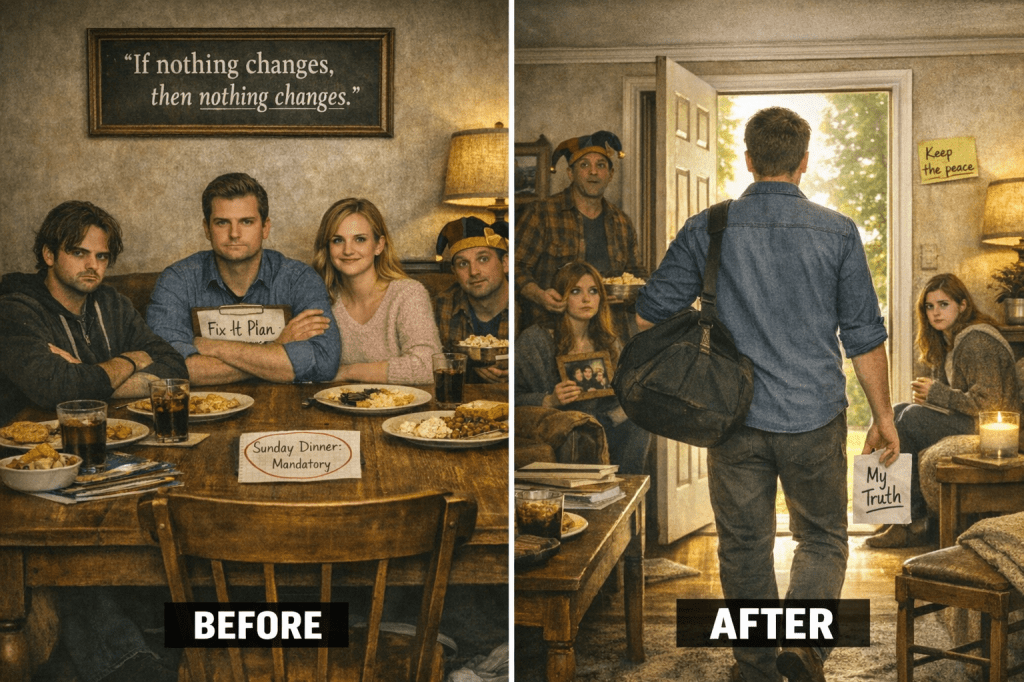
Here’s the bigger picture. I didn’t grow up in a family that heals. Problems don’t get solved. They get buried alive. And then resurrected during holidays like emotional zombies. Now that me and my sister are adults, childhood resentments still pop up like whack‑a‑mole. And nobody wants to pick up a mallet. Let’s all smile in public so we don’t “defame the family.” Which honestly, does a fantastic job defaming itself.
And my family isn’t special. Dysfunction is everywhere. I have enough mental health education in my background to recognize the patterns. But they’ll swear I’m the problem. If you look past the church smiles, the whole system is sick. I would genuinely rather be hit by a car than attend “family time.” And because my kids were born into a lesbian family, they get treated like they came with a moral recall notice.
You can’t throw money at children and then take no active part in their lives the rest of the time. Especially, when you do the opposite with the other children in the family. The kids notice. I’ve tried talking about it for 17 years. And the truth is this. They just don’t care.
I have a master’s degree in counseling psychology. Yet somehow I’m the ignorant one. They don’t want insight. They don’t want help. They want silence. And mine has officially expired. I defend myself and my kids however I see fit. Respectfully? No. Effectively? Absolutely.
They want healing without effort. They’re emotional pillow princesses that want the benefits of growth while doing absolutely nothing but blinking dramatically. And when truth bruises their egos, accountability never shows up. Meanwhile, my dad plays messenger pigeon flying information back and forth between me and the rest of the family so that the dysfunction stays perfectly preserved.
Here’s the part they’ll never admit. Family therapy requires guts and transparency. And those two things they treat like forbidden sins. Instead, they’ve built a giant sand pile where they can bury their heads. And pretend nothing is wrong. That’s their comfort zone. Not truth. Not healing. Just sand. Neck‑deep and breathing through a straw of selective memory.
My favorite quote says it best, “If nothing changes, then nothing changes.” And I refuse to be silenced because their comfort depends on my suffering.
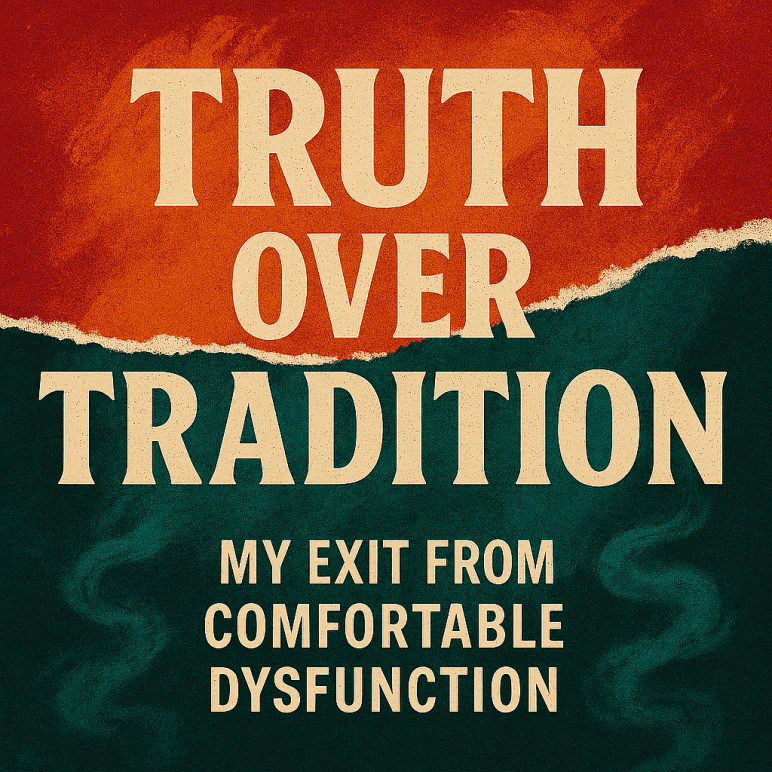
Our family lives in what I call comfortable dysfunction. It’s the emotional recliner they refuse to replace even though the springs are broken. And the fabric smells like denial. It’s easier than accountability. Easier than honesty. Easier than saying, “Maybe the gay daughter isn’t the downfall of civilization.”
And as if being the rainbow sheep wasn’t enough. I’m also the green sheep of the family because I’m a medical cannabis patient. And the family’s translation is that I’m “druggin’ and thuggin’.” The “bad influence.” And the “one who needs prayer.” But that’s not even the real issue.
The problem is my refusal to sit quietly in the pew of generational silence. The issue is that I no longer participate in the family’s favorite pastime of pretending. I’m done shrinking myself so other people can stay cozy in their outdated beliefs. I’m done letting conservative Christian values be weaponized against me and my children.
They can keep their selective morality. The kind where my sister thinks being gay is “wrong and evil.” But somehow premarital sex is just the Olympic sport of “being human.” Funny how sin gets flexible when it’s their behavior on the table.
“My family says I’m ‘living in sin.’ Which is wild coming from some of them who wave a red hat like it’s the state flower. They preach about morality and still treat premarital sex, drinking, and hypocrisy like they’re covered under the ‘Jesus forgives me’ warranty.”And trust me. They act like I graffitied the Ten Commandments in rainbow glitter.
Being gay automatically made me the family’s “problem child.” Even though the real problems have nothing to do with what gender I love. And everything to do with the fact that I refuse to pretend. My sister can have premarital sex. Drink like she’s hydrating for the Olympics and drive afterward. And micromanage her child like she’s running a dictatorship. But somehow I’m the moral crisis.
Meanwhile, my sister’s shot glasses stays full. Her judgment stays loud. And her hypocrisy stays undefeated. Funny how cannabis for medical reasons is “dangerous.” But alcohol with a side of denial is “just being human.” I’m the rainbow sheep because I live authentically. I’m the green sheep because I choose a legal, doctor‑recommended treatment. And I’m the scapegoat because I refuse to shrink so other people can stay comfortable in their dysfunction. If being myself makes me the rainbow‑green hybrid sheep of the family, then so be it. At least I’m not grazing in the pasture of hypocrisy.
So no, I’m not stepping back into the box they built for me. I’m not dimming myself, so their comfort stays intact. I’m not carrying the weight of a family that refuses to lift a finger for its own healing. They can keep their comfortable dysfunction. They can keep their silence. They can keep their outdated beliefs wrapped in Bible verses that only apply to me.
Today I honor my inner rainbow‑green sheep. I’m fabulously queer. I’m medically lifted. And completely unbothered by the opinions of people who confuse hypocrisy with holiness.”
I’m choosing truth over tradition. I’m choosing growth over guilt. I’m choosing my children, my peace, and my sanity. And if my existence shakes the foundation of their worldview. Then the foundation was weak to begin with. Thanks for reading! Do you and let the others do them.
Affirmation: I bless my rainbow‑green sheep soul today queer, medicated, and thriving. While certain relatives clutch their red hats and pearls at my existence. But don’t blink twice at their own chaos, contradictions, or alcohol fueled commandments.
“Trauma doesn’t make you weak. It makes you a witness to your own survival.”
-This Puzzled Life
Light the charcoal. Sprinkle the sage. Let the smoke rise like it’s clocking in for a shift. And let the air shift like it’s bracing itself for whatever truth you’re about to drag into the daylight. Today isn’t about pretending everything’s fine or slapping a smile on top of a wound. It’s not about the vibes, snacks, or cats doing interpretive dance in the sunbeam. It’s about trauma awareness. It is about naming the things we survived. The things we carried alone. The things we laughed through so we wouldn’t crumble. It’s a Southern‑fried, emotionally honest, and funny enough to keep you from dissolving into a puddle on the kitchen floor.
Trauma Awareness is the kind that hides in your shoulders, jaw, breath, memories, and your jokes. And if we’re going to talk about it, we’re going to do it the only way I know how. Complete with honesty, humor, and the kind of emotional courage that feels like taking your bra off after a long day. It’s painful, relieving, and absolutely necessary.
There’s a moment right before you talk about trauma where your whole spirit goes, “Are we sure we want to do this?” It’s the same tone you use when someone says, “Let’s just run into Walmart real quick.” You know it’s not going to be quick. You know you’re going to see something you can’t unsee. You know you’re going to come out changed. Talking about trauma is like that. Except instead of a man in pajama pants buying raw chicken and fireworks, it’s your nervous system holding up a sign that says, “We’ve been through some things, ma’am.”
Trauma doesn’t just show up when you’re ready. Trauma is that one cousin who arrives early. Eats all the good snacks. And then says, “Why you look stressed?” It pops up at the worst times especially when you’re trying to relax. When you’re trying to sleep. When you’re trying to enjoy a sandwich. When you’re trying to mind your business. And when you’re trying to be a functioning adult for five minutes. Trauma will tap you on the shoulder like, “Hey bestie, remember that thing from 1998? No? Well, I do.” And suddenly you’re staring at the wall like it owes you money.
Your body remembers everything. Even the stuff you tried to bury under humor, iced coffee, and pretending you’re fine. You’ll be walking through Wal-Mart. Touching a throw pillow. And your body will whisper, “Hey, remember that time?” And you’re like, “No I do not. I am touching a pillow. Let me live.” But trauma doesn’t care. Trauma is like a Southern grandmother with a memory like a steel trap. And no sense of timing.
People talk about healing like it’s a spa day. Let me tell you something. Healing is not cucumber water and a robe. Healing is crying in the shower because your shampoo smells like 2007. Healing is realizing you’ve been clenching your jaw since the Bush administration. Healing is sitting in your car after therapy like you just got hit by an emotional freight train. Healing is messy. Healing is loud. Healing is quiet. Healing is confusing. Healing is holy. Healing is exhausting. Healing is worth it. But cute? Absolutely not.
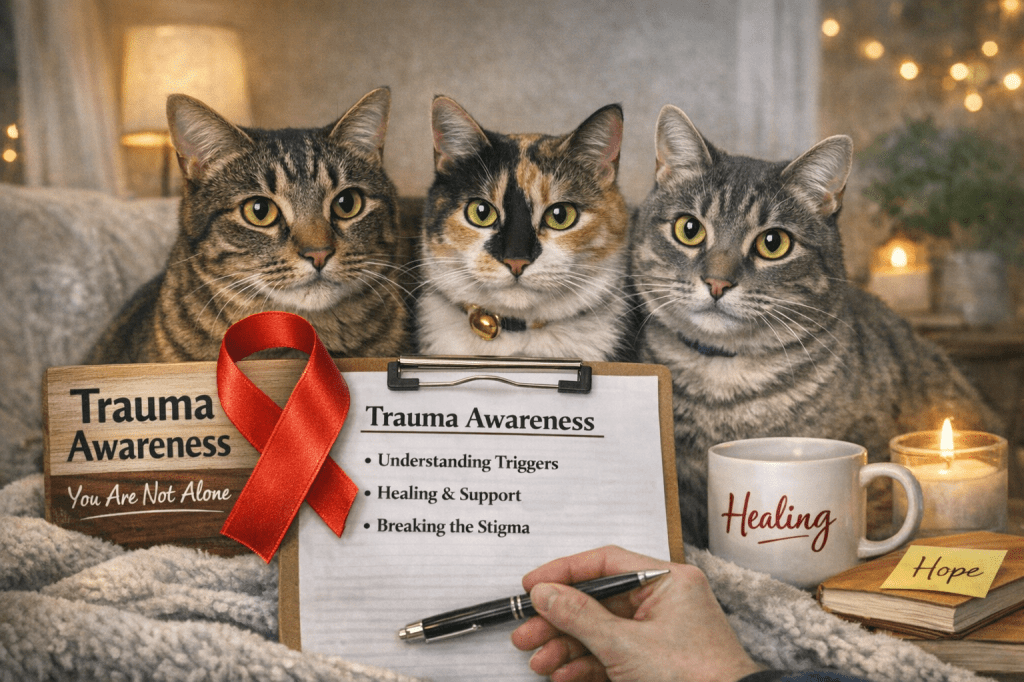
So, buckle up. Because the cats have decided it’s Trauma Awareness Hour. And apparently they’ve all been waiting their whole lives to trauma dump with the enthusiasm of a group therapy circle run by toddlers. And today is the day they ask deeply personal questions with the emotional sensitivity of a toddler holding a chainsaw. They have formed a circle. They have snacks. They have opinions. And apparently, they have questions about my trauma.
Me: “Okay, girls. Today we’re talking about trauma. Share whatever you feel comfortable with.”
She raises paw like she’s in kindergarten
Piper: “I’ll go first because my story is the most dramatic. Obviously.”
Coco: “Oh lord.”
Tinkerbell: “Let the child speak. She needs this.”
Piper: “So picture this. Me and my siblings. In a metal box. In the Mississippi heat, basically sautéing like tiny furry cornbread muffins.”
Me: “Baby, that’s awful.”
Piper: “I know. I was basically a rotisserie chicken with trauma.”
Coco: “You were a sweaty raisin with opinions.”
Piper: “Anyway, I survived because I’m dramatic and stubborn. And now every time the sunbeam hits me wrong, I flop over like a Victorian woman fainting at a garden party.”
Tinkerbell: “You faint because you forget to breathe when you get excited.”
Piper: “Trauma. Tinkerbell. Let me have this.”
Coco clears throat like she’s about to deliver a TED Talk
Coco: “My siblings and I were found under a house. A house. Do you know what lives under houses? Darkness. Ghosts. Tax evasion. I was basically a feral raccoon with trust issues.”
Me: “You’ve come so far.”
Coco: “Yes. And now I cope by judging everyone. It’s called growth.”
Piper: “You judge me the most.”
Coco: “You give me the most material.”
Tinkerbell: “I don’t remember my trauma.”
Me: “At all?”
Tinkerbell: “No. I simply chose not to be present. I was spiritually unavailable.”
Coco: “You had worms.”
Tinkerbell: “Yes, apparently my intestines were hosting a music festival.”
Piper: “You pooped like you were trying to summon something.”
Tinkerbell: “I was summoning peace. And a vet. Preferably both.”
Me: “You really don’t remember anything?”
Tinkerbell: “I remember diarrhea. And then I remember you. Everything else is optional.”
Me: “Well, we’ve all been through some things.”
Piper: “Yeah, but now we’re together! A family! With two crazy brothers who scream at dust!”
Coco: “We are a support group. A dysfunctional one, but still.”
Tinkerbell: “We heal one memory at a time. Preferably with snacks.”
Piper: “And naps!”
Coco: “And boundaries. Mostly for Piper.”
Piper: “I don’t believe in boundaries.”
Tinkerbell: “We know.”
Piper: “Sometimes I get scared when it’s hot outside. So, I cope by yelling at the sun.”
Coco: “I cope by staring at people until they feel bad.”
Tinkerbell: “I cope by leaving my body spiritually whenever something stressful happens. Like when the vacuum turns on. Or when Piper breathes too loud.”
Piper: “I have big emotions.”
Coco: “You have no volume control.”
Tinkerbell: “You have the energy of a toddler who drank a Red Bull.”
Piper: “Momma, what is your trauma about?”
Me: “Oh absolutely not. We are not opening that can of worms. We’ll be here until this time next year. And I don’t have enough snacks or emotional stamina.”
Coco: “Is that why you have panic attacks in Walmart?”
Me: “Yes.”
Tinkerbell: “But what’s scary about going to the pharmacy?”
Me: “Everything.”
Piper: “Everything?? Like the shelves? The people? The lighting?”
Me: “Yes.”
Coco: “The lighting is aggressive.”
Tinkerbell: “The vibes are hostile.”
Piper: “The blood pressure machine is a demon.”
Me: “Exactly.”
Coco: “So what did our therapist tell you?”
Me: “She said, ‘I’ll see you in another couple of days.’”
Tinkerbell: “Translation: ‘You’re a lot. But I believe in you.’”
Piper: “Translation: ‘You have so many issues we need a punch card.’”
Coco: “Translation: ‘You’re keeping the lights on in that office.’”
Me: “But look at us now. We’re safe. We’re loved. We’re healing together.”
Piper: “And we have snacks!”
Coco: “And stability.”
Tinkerbell: “And indoor plumbing.”
Me: “We survived things we never should’ve had to survive. And now we get to build something soft and silly and sacred together.”
All Three Cats: “Group hug!”
Coco: “But don’t touch me too long.”
Piper: “I’m crying!”
Tinkerbell: “I’m dissociating!”
Me: “Perfect. Exactly the emotional range I expected.”
In small Southern towns, admitting trauma is treated like a social crime. The moment you name what happened, you’re not just telling your story. You’re “disgracing the family,” “embarrassing the community,” and threatening the carefully polished illusion of stability that everyone works so hard to maintain. The culture teaches people to swallow their pain. Protect the reputation of the town at all costs. And never, under any circumstances, call out the people who caused the harm. And because the “good ole boy” network is alive and well. And sitting in every position of authority from the courthouse to the church pews, the truth gets buried right alongside the accountability. Even when the perpetrators are known. Especially when they’re known. Nothing is done. The silence is enforced. The victims are shamed. And the town keeps smiling for the church directory photo like nothing ever happened. But the truth doesn’t disappear just because the town refuses to look at it. It lingers in the air, the families, the generations, waiting for someone brave enough to break the cycle and say, “This happened. And it mattered.” And I am that one in my family who refuses to stay quiet about the trauma that happened in the small city of Petal, MS.
Trauma will have you doing things that make absolutely no sense. Things like apologizing to furniture when you bump into it. Jumping at sounds that aren’t even loud. Overthinking texts like you’re decoding ancient scripture. Saying “I’m fine” in a tone that suggests you are, in fact, not fine. And crying because someone said, “I’m proud of you.” And your body wasn’t prepared for that level of kindness. Trauma will also make you emotionally attached to random objects. A mug. A blanket. A rock you found on a walk. A pen that writes really smooth. Your brain will be like, “This is my emotional support spoon. Touch it and perish.”
Trauma awareness isn’t about reliving the pain. It’s about naming it, so it stops owning you. It’s about understanding why you react the way you do. It’s about giving yourself grace for surviving things you never should’ve had to survive. It’s about learning that your triggers aren’t flaws. They’re evidence that you lived through something real. And it’s about knowing you’re not broken.
You’re healing. You’re growing. You’re learning how to breathe again. You’re learning how to trust softness again. You’re learning how to exist without bracing for impact. That’s not weakness. That’s strength with stretch marks.
May your healing be gentle. May your memories lose their sharp edges. May your nervous system unclench one muscle at a time. May your heart learn safety. May your voice return to you. May your laughter come back louder. May your story be yours again. And not something that happened to you. But something you rose from.
So, if no one told you today. You’re not dramatic. You’re not broken. And you’re not “too much.” You’re a whole human who lived through storms that would’ve snapped lesser souls in half. And you’re still here healing. Laughing. Unlearning, Softening. Reclaiming. That’s not survival. That’s resurrection. And baby, if that isn’t holy, I don’t know what is. Drop the sage. Keep the truth. And walk away knowing this. Your story didn’t end in the dark. You did.
Affirmation: I honor the parts of me that survived. I honor the parts of me that are still healing. I am allowed to grow, to rest, to feel, and to reclaim my peace. And I can do it one breath at a time.
“Psych units may be chaotic. But at least my bitching is organized.”
-This Puzzled Life
Light the charcoal. Sprinkle the sage. Somebody hand me a fan because the level of petty I’m about to describe requires ventilation. Psych units don’t just have pettiness. They cultivate it like a community garden complete with tomatoes, basil, and grudges. And if I’m going to talk about it, I need every ancestor, archangel, and neighborhood stray cat on standby.
These places run on a spiritual cocktail of fluorescent lighting, lukewarm coffee, and the kind of petty that could power a small city. The spirits already know what time it is. We’re about to enter the only place on Earth where adults will fight over a graham cracker, a blanket, and who gets to sit closest to the fake plant in group therapy. Especially the kind that shows up wearing non‑slip socks and asking if you’ve “completed your feelings journal for the morning.” Buckle up. We are about to revisit the life of the unhinged.
Let me tell you something right now. Nobody does pettiness like a psych unit. Not your auntie at Thanksgiving. Not your ex who still watches your Instagram stories from a burner account. Not even the Southern church ladies who can bless your heart into a coma. Psych units are the Olympics of Petty. Gold medal level. International competition. And sponsored by “Clipboards & Consequences™.
And the wildest part? The staff and the patients are in a silent, unspoken petty war at all times. It’s like a nature documentary narrated by Morgan Freeman: “Here we observe the patient refusing to participate in group therapy because the therapist said, ‘good morning’ with the wrong tone.”
Breakfast on a psych unit is not a meal. It’s a spiritual exam. You ask for two sugars? They give you one. You ask for a spoon? They hand you a spork like you’re being punished for past lives. You ask what the eggs are made of? They say, “Don’t worry about it,” which is exactly when you start worrying about it.
And the patients? Oh, we’re petty right back. Someone refuses their meds because the nurse said their name wrong by half a syllable. Someone else declares a hunger strike because they didn’t get the “good blanket.” Which is the one that feels like it’s been washed fewer than 400 times.
Psych unit bed assignments are the closest thing we have to Old Testament conflict. Two grown adults will absolutely fight over who gets the bed closest to the window like it’s beachfront property. Someone gets moved rooms and immediately acts like they’ve been exiled from the kingdom. They say, “I’m not unpacking. I’m staging a protest.”
Group therapy is where the petty becomes performance art. Someone refuses to share because “the energy is off.” Someone else overshares because they know it makes the therapist uncomfortable. Someone proudly announces, “I’m only here for the snacks” and means it. And the group leader? Smiling sweetly while spiritually flipping everyone off.
If you’ve never seen adults negotiate shower times like they’re drafting a ceasefire agreement, you haven’t lived. People will take 47‑minute showers out of spite. “Forget” their towel so they can walk dramatically down the hall. Complain someone used “their” shampoo even though it’s the hospital’s and smells like citrus‑flavored despair.
And then you discover the shower has no curtain. Not a flap. Not a panel. Not even a nostalgic bead string from the 70s. You step into that shower like you’re entering a baptism you did not sign up for. The water pressure is either a gentle mist that feels like someone exhaling on you. Or a fire‑hose blast that could strip paint off a Buick. Meanwhile, staff strolls by doing “wellness checks” like, “just making sure you’re safe!” Ma’am, I am safe. Emotionally? No. Physically? Barely. Spiritually? Absolutely not.
Mindfulness group on a psych unit is its own brand of comedy. The therapist dims the lights (as much as fluorescent bulbs allow), puts on royalty‑free pan flute music, and says, “Imagine you’re on a peaceful beach.” Ma’am, I am sitting in a plastic chair that squeaks every time I breathe. Then it’s, “Picture a calm, soothing waterfall.” Meanwhile someone is snoring. Someone is whisper‑arguing with their spirit guides. Someone is chewing graham crackers like they’re in a survival documentary. And you’re trying to “visualize tranquility” while holding a safety crayon shaped like a melted candle.
They are not crayons. These are wax‑based emotional support devices. Thick. Stubby. Unbreakable. Unsharpenable. Every letter looks like it was drawn by a raccoon wearing oven mitts. But when a Code gets called? Those colors become binoculars. Everyone leans forward clutching their little wax chunk like, “Pass me the purple one. It’s the good one.”
Psych units have one universal truth. A doctor must be called for absolutely everything. You sneeze too enthusiastically? “Hi, yes, doctor? She sneezed with intention.” Want a Tylenol? Doctor. Want a different blanket? Doctor. Want to sit in a different chair because the one you’re in feels spiritually cursed? Doctor. It’s like a fluorescent DMV where every request requires a supervisor who is mysteriously never on the floor.
And then there are the medications. Raise one eyebrow too high? “Let me page the doctor.” Ask why the eggs taste like regret? “Let me page the doctor.” Have an attitude after being woken up at 5 a.m. for vitals you did not ask for? Suddenly they’re offering you something “to help you relax.” Which is psych‑unit code for, “This will knock you into next Tuesday.” These meds are so strong they could end a world war. You wake up unsure of your name, the date, or why your socks don’t match.
Some staff walk around like they’re the TSA of mental health. And they’re ready to confiscate your emotional liquids. Some give you the “I’m tired of all y’all” look before you’ve even spoken. Some have mastered the therapeutic smile. The one that says, “I care deeply.” But their eyes say, “I clock out in 12 minutes and I’m not starting anything new.” And the tech who acts like your request for a second blanket is a personal attack on their lineage? Iconic.
There comes a moment when staff decides you’re “a little too spicy for the general population.” And suddenly you’re being escorted to the Psychiatric Intensive Care Unit known as the PICU. The PICU is not a unit. It is an ecosystem. A habitat. And a fully unhinged micro‑climate where time is fake. Socks are currency. And the air vibrates with the energy of people who have absolutely had enough.
The lighting is harsher. The chairs are bolted down with enthusiasm. And the staff has that look like they’ve seen things they can’t legally discuss. This is where someone argues with a wall. Someone else declares themselves the mayor. A graham cracker becomes a weapon of emotional warfare. And the “call the doctor” rule becomes a religion. You start to wonder if the doctor is a real person or a mythological creature who appears only during full moons and paperwork audits.
There is a very specific sound a psych unit makes right before a Code gets called. It’s too quiet. Like the ancestors are holding their breath. Then, a chair scoots too hard. A voice gets too spicy. A slipper hits the floor with conviction. And the staff looks up like meerkats who heard a twig snap. Someone yells “CODE!” with the enthusiasm of a Walmart employee announcing Black Friday. And the whole unit transforms into live‑action chaos. Patients settle in like it’s cable TV. And it’s like, “Oh lord, they done called a Code. Lemme get comfortable.” Staff sprints like Olympians. Clipboards fly. Walkie‑talkies crackle. And the therapist breathes deeply like they’re manifesting a different career.
And when it’s over? Everyone goes right back to coloring like it was a commercial break. Psych units are messy, miraculous, chaotic, exhausting, and sometimes deeply funny in ways only people who’ve been there understand. The pettiness isn’t cruelty. It’s survival. It’s humanity. It’s the tiny rebellions that remind you you’re still a person. Even when life has knocked you sideways.
Connect and Refocus assignments are the psych‑unit equivalent of being told to stand up in front of the congregation and confess your sins with a microphone that echoes. They hand you a worksheet with questions about your troubling behavior. And by the time you’re done it’s the thickness of a dissertation. The therapist says, “Just outline your maladaptive coping skills and therapy interfering behaviors.” Just? As if you’re not about to write a full academic paper on why you shut down emotionally. Overthink everything. And threaten to fight the vital signs machine at 5 a.m. And the worst part? You don’t just fill it out. You have to read it aloud in group like you’re defending your thesis before God, the ancestors, and a room full of people who just met you yesterday. You’re sitting there clutching your safety crayon while trying to sound insightful. And everyone else nods like they’re on the judging panel of America’s Next Top Trauma Survivor. It’s humbling. It’s horrifying. It’s hilarious. And somehow, it’s exactly the kind of chaos that makes psych unit bonding feel like summer camp for emotionally exhausted adults.
But there is no gamble on Earth quite like the moment they tell you, “You’ll be sharing a room.” That’s not an assignment. That’s a lottery. That’s a spiritual test. That’s a cosmic wheel‑spin hosted by the universe itself. On a psych unit, your roommate can be literally anything. The possibilities are endless. Unhinged. And hilarious in a way only people who’ve lived it understand.
Here is a few of the different types of roommates you could be paired up with.
1. The roommate that sleeps 12 hours a day but somehow still manages to terrify you. They snore like a diesel engine. They sit up suddenly at 3 a.m. like they’re receiving messages from the ancestors. They whisper things like, “Did you hear that?” No, I did NOT hear that. And I would like to keep it that way.
2. This roommate provides live commentary on everything you do. You stand up? “Where you going?” You sit down? “You tired?” You breathe? “You okay?” I am trying to exist. Please let me exist in silence.
3. This roommate has been in the unit for 48 hours and has already achieved spiritual awakening. They speak in riddles. They meditate loudly. They give unsolicited advice like, “You must release the ego. Also, can I have your pudding?”
4. This one will eat every single snack you have. Even the ones you hid in your pillowcase. They will deny it with confidence. They will gaslight you about your own graham crackers. They will ask for juice while drinking the juice they stole from you.
5. This roommate is entertainment. Pure entertainment. They talk to themselves, the walls, the staff, the ancestors, and occasionally the ceiling tiles. They narrate their dreams. They reenact scenes from movies that don’t exist. You don’t even need cable. You have them.
6. This roommate showers at 2 a.m. With no curtain. With the water pressure set to “pressure wash a tractor.” They come out wrapped in a towel the size of a napkin and say, “Your turn.”
7. This roommate is quiet. Too quiet. You don’t know if they like you. Hate you. Or don’t know you exist. They stare at the wall for long stretches of time. They fold their socks with military precision. They whisper to their juice cup. You respect them deeply.
8. This roommate minds their business. Sleeps in weird positions. Hisses when staff wakes them up. Eats only the snacks they like. And will absolutely sit on your bed like it’s theirs.
Psych‑unit roommates are a whole spiritual curriculum. A syllabus written by the universe. A randomized character generator with no patch notes or warning labels. And I’ve had every single type walk through that door and claim the other half of my room like they were entering a reality show.
Some were chaotic. Some were confusing. Some were plot twists. And a precious few? They became family in the kind of way only shared trauma, cold cereal, and shared “Did you hear that?” moments can create. You don’t choose your psych‑unit roommates. But sometimes the universe chooses them for you.
I’ve had the ones who snored like freight trains. I’ve had the ones who narrated my every move. And the ones who didn’t speak for three days. But somehow communicated entire novels with their eyebrows. I’ve had the ones who showered at 2 a.m. with the water pressure set to “remove barnacles.” And the ones who treated the room like a spiritual dojo. Then there were the ones who were just there. Quiet. Odd. Mysterious. Every roommate was a new chapter in the saga. Every roommate was a new lesson in patience, comedy, and survival. Every roommate was a new story I absolutely should not laugh at but absolutely do.
But out of all the chaos, characters, and all the “Lord, give me strength” moments, there are a couple of roommates who became real friends. The kind you still talk to. Still laugh with. Still send memes to about your shared psych‑unit nonsense. These are the ones who laughed with me at 3 a.m. when the unit sounded like a haunted Walmart. Shared snacks like we were in a bunker. Understood the unspoken language of “I’m fine but also not fine but also fine.” Survived Codes, guided imagery, and curtain‑less showers right alongside me. And turned the worst moments into inside jokes that still make us wheeze.We walked through the same chaos and came out with matching emotional scars and petty humor.
I wouldn’t trade them for all the money in the world. Not for a million dollars. Not for a lifetime supply of the “good blankets.” Not even for a shower curtain. Because some people come into your life for a reason. Some come for a season. And some come because the hospital assigned them to your room. And the universe said, “Y’all need each other.”
And within that roommate lottery, the prize is either peace, or a story you will tell for the rest of your natural life. And somehow? You adapt. You bond. You laugh. You survive. And you walk out with tales that sound made‑up but absolutely aren’t.
Healing is hard. Fluorescent lights are evil. And humans will absolutely weaponize a spork if pushed far enough. May your blankets be soft. Your meds be on time. And your petty be righteous. May your coping skills be strong. Your boundaries fortified. And your spirit guides remind you that sometimes the pettiest thing you can do is heal anyway.
And that is the gospel truth of the psych unit. A place so petty. So chaotic. So spiritually unhinged. That even the ancestors step back like, “good luck.” Between the curtain‑less baptisms they call showers. The guided imagery that feels like group hallucination. The safety crayons built like toddler dumbbells. And the Codes that pop off like surprise season finales. One thing becomes clear. Healing might be hard. But the comedy is free.
So, the next time somebody tries to tell you psych units are calm, peaceful places. Just smile. And let your spirit guides handle the lie. And remember, sometimes the pettiest, most powerful thing you can do is survive it with your humor intact. Thanks for reading! And, yay, for the ability to use humor as a coping skill for survival.
Affirmation: I am calm, I am grounded, and I will not let anyone with non‑slip socks ruin my vibration today.
I am the light you tried to strangle, the light you tried to stifle in your chokehold.
But my light bled all over the pages of your book, your preconceived narratives, your filthy words and your attempts to bring terror back into the blank space of my eyes.
Who am I?
I’ll tell you who I am.
I birthed revolution in my bones like the many women that came before me.
I ignited flames beneath my skin, using the fiery spirits of women who walked beside me
as matches; we breathed fire into each other’s hearts until the world could see us and from the ashes we were reborn.
Who am I?
I’ll tell you who I am.
I am the fear in your hatred, the pain that you tried to use to violate my sacred spaces, rip me apart until I was nothing,
but I knew I would always be something, somebody, and now I am.
I am layers and layers of the love and power that act as your kryptonite,
and with the words and actions of all those who rose with me, I’ll build an impenetrable wall.
Who am I?
I am the thing that nightmarish people have nightmares about,
wake up sweating about, thinking about —
their furrowed brows tense with self-doubt —
wondering if I and the other warriors I march with could ever come back to life.
Who am I?
I am the restless rebel you tried to bury,
the one you tried to pull out by the root and eradicate when she began to grow from the seed.
Who am I?
I’ll tell you who I am.
I am the girl you left for dead thinking she’d always fall and never rise again.
I am the girl you cut with your razor blade wrath, the girl you thought would never fight back.
I am the girl you underestimated, the woman you tormented, the child whose shackles you tightened.
Who am I?
I think you already know –
I think you understand.
I am the prisoner you tried to cage, the little girl you made afraid –
I am the woman who never gave up, the one who exposed your charade —
Who am I?
I am everything and anything that you will stand againstto try to regain control.
For every source of darkness, there is a bleeding soul,
one that shines so brightly that the entire war zone becomes illuminated.
I am the truth, your karma, the revolt —
I am the resistance, the pieces you tried to keep shattered, coming back together again.
I emerge quietly, but I resound loudly —reverberate through your skin.
My power was never yours, and it was never yours to take.
“Trauma Bonding is like being a hostage who has developed an irrational affection for your captor. They can abuse you, torture you, even threaten to kill you, and you’ll remain inexplicably and disturbingly loyal.”
– Ann Clendening.
I posted this today to help give you a voice to your own abuser/abusers. I have been in therapy for many years, and sometimes, I even doubt these words. The problem is that we were so indoctrinated with their beliefs, comments, gas lighting, manipulation, and co-dependency that we formed a something called “trauma bonding.”
Trauma Bonding is an unhealthy emotional attachment that develops between a victim and their abuser. It is a complex issue that occurs in different abusive situations that include physical, sexual, and emotional abuse. But it’s also important to note that not everyone who goes through abuse forms a trauma bond. However, some people may be more prone to forming a trauma bond due to the early experiences as a form of repetition compulsion https://www.attachementproject.com, 2025). This can happen in domestic abuse, child abuse, elder abuse, exploitative employment, kidnapping or hostage-taking, human trafficking, and religious extremism or cults (https://medicalnewstoday.com, 2023).
Characteristics of Trauma Bonding:
· Intermittent Reinforcement: The abuser cycles between periods of abuse and kindness creating a sense of hope and dependence in the victim. Victims of abuse may be waiting for that next “feel-good moment” in the relationship that also keeps them trapped in a cycle of abuse and relief (https://www.domesticshelters.org, 2021).
v This is also how many addictions keep you stuck. If everything were bad all of the time, you would grow tired and leave. But the intermittent reinforcement is how they maintain control.
· Isolation: The abuser often isolates the victim from their support system, making them more vulnerable and reliant on the abuser ((https://medicalnewstoday.com, 2023).
v I was not completely isolated physically from my support systems. But emotionally I was very isolated. He constantly told me that my friends and family didn’t have my best interest at hand. He would make up lies about things they said and assassinate their character behind their backs.
· Fear and Insecurity: The victim experiences constant fear and insecurity, leading them to believe that they cannot escape the abusive situation (https://www.savantcare.com,2023).
v The constant fear and insecurity that I experienced was, in fact, my prison cell. And I was afraid to leave even when the door was wide open.
· Justification: The victim may rationalize the abuser’s actions or blame themselves for the abuse (https://thriveworks.com, 2024).
v I was conditioned to believe that everything I did that made him angry was my fault. And it wasn’t. Now, I can see that his actions were because of his behavior, not mine.
· Emotional Manipulation: The abuser uses emotional manipulation to control the victim’s thoughts, feelings, and behaviors (https://wondermind.com, 2023).
v This right here was the #1 key factor for why I wouldn’t leave. He even told me, “No other man would ever put up with the things that I have to deal with in you. All of the good things about you, which aren’t many, are because of me. You are useless without me. I have given you everything you wanted. And disobeying me is the thanks that I get? Why do you need anti-depressants when there is no reason that you should be depressed.
Trauma bonding kept me trapped in an abusive situation. People have said, “Why didn’t you just leave?” The problem lies in the way they you manipulate you into believing that everything bad that happens, no matter how minor, is the victim’s fault. And day after day, their hold strengths without you even realizing it. And in my case, I felt as though I was responsible for their thoughts and feelings. I constantly strived to be “good enough” or “well deserving enough” to see the person that he told and showed me he could be when we met. And quite frankly, it was always just a game. Their abusive self is “the real them.” Believe your instincts and the colors in which they present themselves. For that is who they truly are.
If you have read through this and have never been in a situation where everything you do is being controlled, consider yourself lucky. But don’t you dare sit there and say, “It was their own fault that they didn’t leave.” That is one of the most callous things that you can say to someone who is currently trying to survive and those that have survived finally leaving that situation no matter how long it took.
You have absolutely no right to tell me or anyone else how we should feel simply because you have not experienced it. I stayed much longer than I should’ve. And there are times when I still beat myself up for it. Now though, I give myself some grace for not knowing how to leave or recognizing what was going on in plain sight. It’s not just one event that causes this. It’s something that happens every single day methodically planned and executed by the warden in the relationship.
Once you leave, I highly recommend getting into therapy. Just because you think that no damage has occurred, doesn’t mean that it hasn’t happened. Even now, 19 years later since I left him, I have phobias, anxiety, depression, difficulty concentrating, and difficulty making decisions. He has left a mark that will last a lifetime. And some of the things that he did I’ll never recover from. He once told me, “You’ll never be without me no matter what you do!” And the truth is that, while he still doesn’t have total control over me, I still allow parts of him to live rent free in my head.
The next post will be something that represents those of us who have managed to leave and have an understanding through therapy how and where to put the responsibility where it truly belongs, on them.
To those who are still in these types of relationships, I see you even when you don’t openly identify yourself. To those who have left and still live in fear, I see you and you’re not alone. To those of us who continue to strive to change those hard-core beliefs that were instilled by way of threats, intimidation, and violence, I see you as well. None of you are alone. And not all relationships are like this.
Find a therapist that you trust and open your soul to them. Coach has been a lifeline of compassion and understanding for me that I’ve rarely experienced. And she has never made fun of or questioned why I didn’t leave. Unconditional support and her teachings have made life possible for me many lonely nights. I will probably always struggle with some things and that’s ok. This process is certainly a marathon instead of a sprint. And there is no time limit for healing. The whole point is to continue showing up and moving forward in whatever way that might take shape. You are not on an island like you think. There are millions of us both male and female who struggle with the effects and consequences of domestic violence and abuse.
You are loved. You are wanted. And you deserve the good things that life has to offer. Thanks for reading! And I hope you look for the next blog in a couple of days that I post that will help you begin to find your voice. The power to heal is now and ours.
Affirmation: My story has power and inspiration through it.
“Never stop fighting for your freedom, you are worth it.”
-DA Survivor-Anon
Light the charcoal. Sprinkle the sage. Negativity energy, go away. Today is the beginning of Domestic Violence Awareness Month. This month is when our voices from all over the globe will be heard. We as victims, survivors and warriors bring to light the horrors of domestic violence and the impact that it leaves on our lives and those around us. Let’s take time out for a little education on a few of the topics surrounding domestic violence.
Domestic Violence is a topic that I know a lot about. Well, I know how to function in it. And I know how to get away from it. But living with the aftereffects reveal a whole other set of problems. Where domestic violence used to be seen as something that only happens to women and their partners. There is more awareness on the abuse of men by their partners. No matter how you identify. It also happens to the most innocent, children and pets. This happens in all forms of relationships. And the statistics are staggering.
Domestic violence is violence committed by someone in the victim’s domestic circle. Which include partners and ex-partners, immediate family members, and other relatives and family friends (https://www.UN.org, 2025). The behaviors can include such things as:
· Physical
· Sexual
· Emotional
· Financial
· Psychological actions or threats of actions that influence another person.
This includes any behavior that intimidate, manipulate, humiliate, isolate, frighten, terrorize, coerce, threaten, blame, hurt, injure, or wound someone. The repetitive exposure to violence teaches children that violence is a normal way of life (https://dvcc.delaware.gov, 2025). And for those of us who leave, constant confusion and every minute of no knowing when something else will happen again, is our normal. And the many years of programming by our abusers takes years of therapy to de-program ourselves. But you will never be who you used to be.
Recovery is not for the faint of heart. It is hard and uncomfortable. And it takes years to undo the damage that was caused on so many levels. I was one of the lucky ones. Long story short, I survived. But the mental damage that was caused has left me crippled in some ways. And through the sleepless nights filled with tears, therapy, psychiatric medications, body memories, flashbacks, phobias, and panic attacks, I have learned that I have a voice that deserves to be heard. And no matter what people say or believe, I can validate my own story regardless of the opinions of others. Because I lived it.
The main thing I want to say to other women and men across the globe who are still in their own processes, “YOU ARE NOT ALONE!” Because it happened to me too. Thanks for reading! Keep smiling and pushing forward.
“Our country is grappling with a youth mental health crisis, and it is particularly pronounced for LGBTQ+ youth.”
-Ronita Nath
Light the charcoal. Sprinkle the sage. Negative energy, go away. Today, keeping in line with the topic of suicide, I want to discuss suicide in the LGBTQ+ community.
The prevalence of suicide in the LGBTQ+ community is nothing new. The risk for suicide attempts and suicidal ideation can be 3 to 6 times greater for lesbian, gay and bisexual adults according to the National Institutes of Health. But there are also other statistics to keep in mind.
In 2024, 39% of LGBTQ+ youth considered attempting suicide according to The Trevor Project’s national survey. 1 in 10 of LGBTQ+ youth attempted suicide in the past year. And LGBTQ+ youth are more than four times likely to attempt compared to heterosexual youth. I can tell you that personally, I’ve been suicidal many times because of rejection from my family as a lesbian woman.
Transgender and Nonbinary identified individuals are at an even higher rate of suicide. And almost half seriously considered suicide in the past year. In 2022, 80% of transgender people had considered suicide and 40% had attempted. These statistics while staggering are not surprising. These demographic struggles are way more than they should be with little compassion from society.
Bisexual identified individuals are 1.5 times more likely to report thoughts and attempts compared to gay and lesbian individuals. And 2.98 times more likely to have a suicide-related event compared to heterosexuals according to a 2022 study. And the LGBTQ+ youth of color report higher rates of suicidal ideation and attempts compared to white peers (www.therevorproject.org, 2025). And there are several contributing factors such as:
· Discrimination and Prejudice:discrimination, harassment and violence due to sexual orientation or gender identity increases the risk of suicide.
· Lack of Support Systems: Limited social support from family, peers and community exacerbates the mental health challenges.
· Mental Health Disparities: LGBTQ+ individuals are more likely to experience depression and may face barriers to accessing mental health services (https://mhanational.org, 2025).
For someone who is a member of the LGBTQ+ community, I can tell you that I’ve considered suicide many times. The rejection from family and friends are sometimes more than I can bare. And having worked with someone in therapy many years ago, who was not sensitive to the needs of someone in these communities, there was little progress made. Mainly, because I couldn’t trust her. And she was extremely judgmental.
Since collaborating with coach for almost a decade, I can tell you that I have been able to fully accept the fact that I’m gay, despite my family’s disapproval. And then the religious communities also seem to greet us with bible verses telling how many ways we are going to hell. We all know that “choosing” to be gay is such an easier way of life. There the secret is out.
With the current political administration taking away the rights and freedoms that the Stonewall riots stood against, and the lack of funding for suicide hotlines for LGBTQ+ youth, these rates will only climb. Our families, friends, churches, and government should be ashamed of standing by people who are ok with the policies set in place. We are the same as we ever were. We just wear rainbows now.
There are those beautiful allies out there who remain the strength and backbone of our continual fight for equality. We are youth, parents, aunts, uncles, cousins, husband, and wives who just want to be recognized as equals in the eyes of the law. But where reputations and political agendas are from the far right, we must be even more solidified as a community. If someone is for rights with some and not others, I have no room for them in my life. But it’s taken me years to come to this conclusion.
Is it lonely? At times, yes. However, I want people in my life who not only support me but also my friends. The suicide hotline is something that our community not only wants but needs. Many of us have non-supporting families and mine is no different. But I do have a place to live currently. But that does not constitute me putting up with homophobia or fragile masculinity and femininity.
The very few “true” friends I have, understand that being gay is not a “choice.” It’s who I am. And if that’s too much for someone to manage, that’s just too damn bad. To my fellow allies and community members, keep up the good fight. We must take up the original Pride flag are carry on. I love our colors. And I’m proud to call myself a member of the LGBTQ+ community.
Keep smiling. Keep shining. Knowing you can always count on me, for sure. That’s what friends are for. We are seen. And we are heard. And….WE ARE FABULOUS! Thanks for reading. Take what you can use and leave the rest.
Affirmation: I am proud of myself and will continue to strive to do well.