This Puzzled Life is a mental health and recovery blog exploring addiction, trauma healing, LGBTQ experiences, humor, and the strange moments that shape us.
“Shame has never saved a life. Compassion has. And still can.”
-This Puzzled Life
Light the charcoal. Sprinkle the sage. Today, we’re not just cleansing the house. We’re cleansing the collective delusion that addiction is a moral failing. The sage is smoking like it’s trying to file a worker’s comp claim. The charcoal is popping like it’s gossiping about the neighbors. And I’m standing in the kitchen with the kind of determination usually reserved for Southern women who’ve had enough.
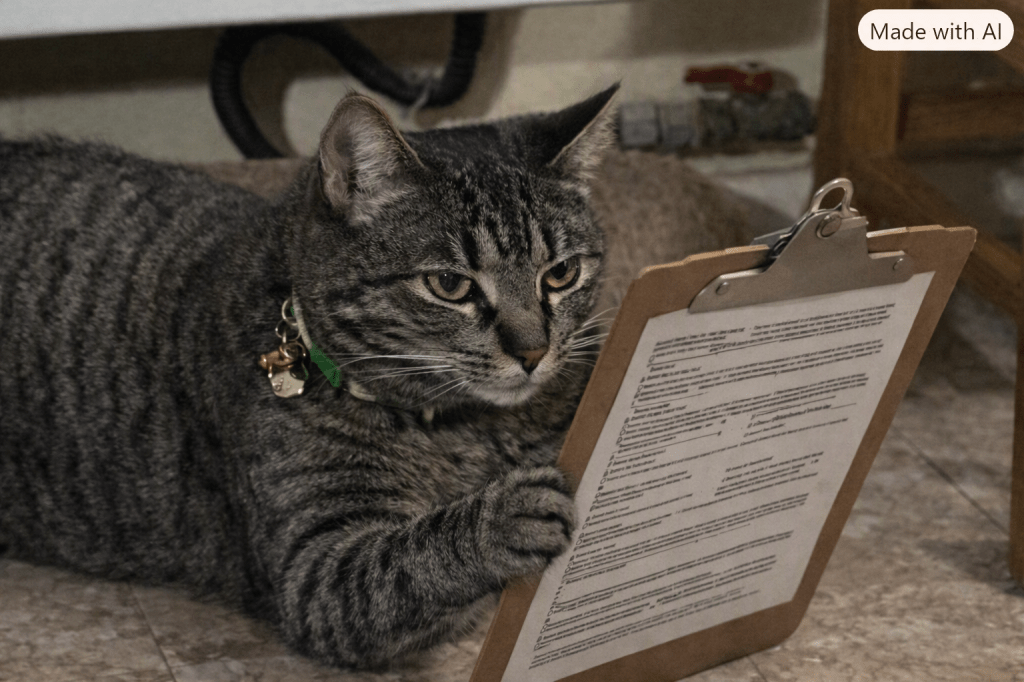
Piper struts in first.Tail high. Eyes narrowed. And a clipboard already out like she’s conducting a federal audit.
Piper: “Before we begin. I need to know if this is a cleansing ritual, a public dragging, or a memorial service. My paperwork differs.”
Me: “All three. It’s International Overdose Awareness Day. And I’m about to educate the masses.”
Coco barrels in next. She’s breathing heavily like she just ran a marathon but actually just walked from the living room.
Coco: “Is this about the humans who say addiction is willpower? And overdose is a moral collapse? I once ate an entire rotisserie chicken while sleepwalking. Explain that with willpower.”
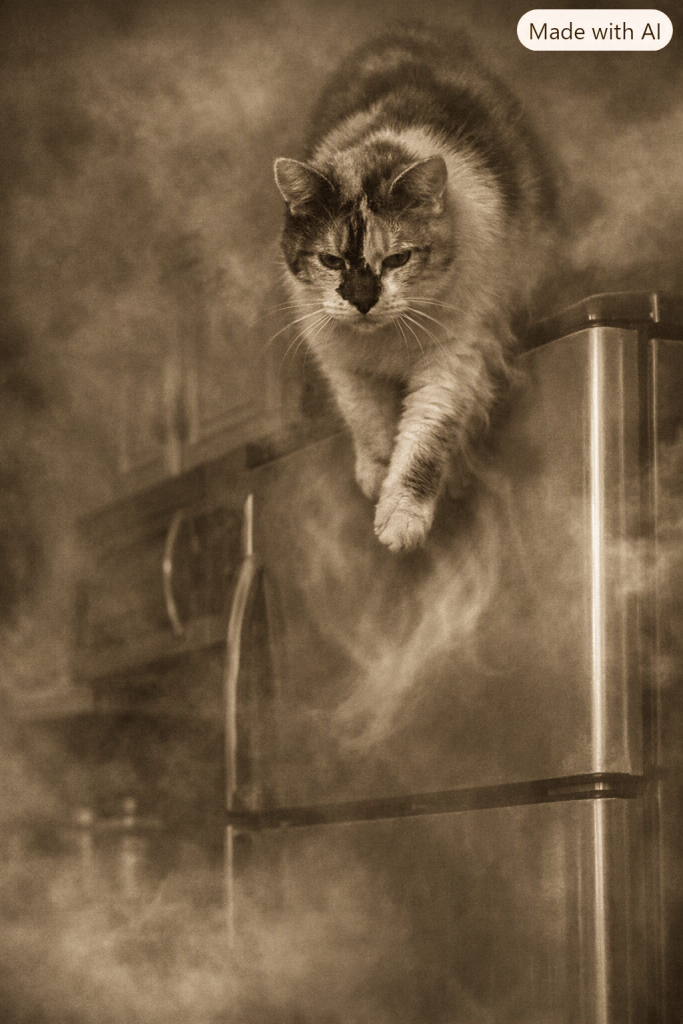
Tinkerbell descends from the top of the fridge like a Victorian ghost who died of judgment.
Tinkerbell: “If willpower cured anything, half this household would stop doomscrolling at 2 AM. And the other half would stop emotionally eating Cheez-Its.”
Me: “Exactly. We’re dragging ignorance today.”
Piper adjusts her glasses. The glasses she does not need and sighs.
Piper: “I’ll prepare the minutes. This meeting is already chaotic.”
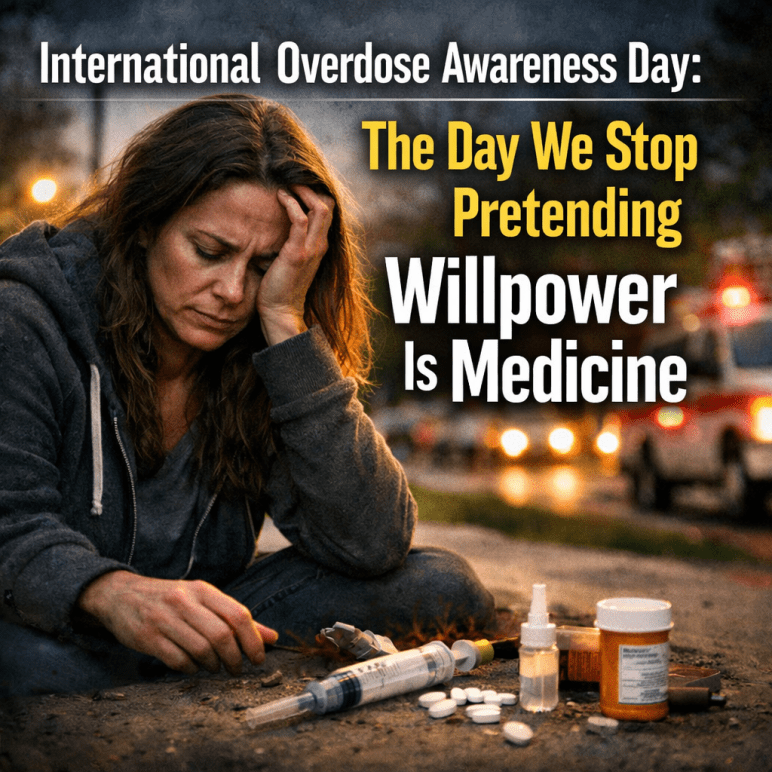
International Overdose Awareness Day started in 2001 as a remembrance event at a Salvation Army needle exchange in Melbourne, Australia. It was created to honor those lost. Reduce stigma around overdose. And to push the world to stop treating overdose like a shameful secret instead of a public health crisis. And let me say this plainly, with all the Southern sweetness of a peach cobbler baked in righteous fury, “Addiction and overdose are not moral issues.” And it’s not about willpower.
The next time you have diarrhea, keep in mind that it’s just willpower. Sit there with a Bible verse and see if the situation resolves itself. Let me know how that works out. That’s how ludicrous that argument is.
People don’t become addicts because they’re weak, sinful, lazy, or lacking character. Many addicts die wanting anything in life other than to be an addict. They die fighting. They die trying. They die hoping. But some folks, including people in my own family, love to say, “Addiction is about willpower.” It never has been. It never will be.
I’ve been an addict. I’ve been a professional treating addicts. I’ve buried friends. I’ve buried family. Not once have I judged them for their struggle. But the hypocrites in my life? The ones who claim moral superiority while ingesting alcohol at a rate that Pete Hegseth and Kash Patel struggle to keep up with? Hypocrite, please.
Overdose is an unfortunate part of addiction. Whether it’s chemicals, behaviors, or the slow-motion self-destruction people pretend “doesn’t count.” Because it’s socially acceptable. So how about we stop demonizing people who overdose while absolving ourselves of our own harmful, numbing, escapist overdoses?
If we’re being honest, some folks overdose on alcohol, self-righteousness, denial, Amazon Prime, gossip, rage, food, religion, and control. But somehow that doesn’t get labeled as a moral failure. Funny how selective morality works.
And here’s the truth that makes some folks squirm like they sat on a church pew with a splinter. Overdose doesn’t happen because someone is weak. It happens because someone is human. Humans who loved. Humans who tried. Humans who fought battles most people couldn’t survive for five minutes. Humans who deserved compassion instead of commentary.
But every year, we lose more people. Not because they were broken. But because the world still treats addiction and overdose like a character flaw instead of a medical condition. We lose them because shame is louder than science. Because judgment is easier than empathy. Because some folks would rather cling to their superiority complex than admit they don’t know a damn thing about what they’re talking about.
So on International Overdose Awareness Day, I’m lighting this charcoal. Sprinkling this sage. And saying this with my whole chest, “Stop demonizing the people who are drowning while you’re out here drinking from your own poison well. Stop pretending your socially acceptable overdoses are any less destructive just because they come with a cute, monogrammed tumbler or a Bible verse slapped on top. Stop acting like overdose is a choice when half the people judging can’t even choose to drink water or go to bed on time. And most importantly, start honoring the people we’ve lost by refusing to let stigma bury the living.
The dead deserve dignity. The living deserve compassion. And the ignorant deserve education. Loud, unapologetic, Southern‑fried education. Today, I’m choosing truth over tradition. Compassion over comfort. And humanity over hypocrisy. If that makes some folks uncomfortable? Good. Growth never happens in comfort. And comfort has never saved a single life. But truth might. Compassion might. You might. Thanks for reading! Share this with others.
Affirmation: I honor the lives lost. Uplift the living. And refuse to let stigma speak louder than truth.
“I am one minor inconvenience away from becoming a cryptid who lives in the woods and only appears to steal Wi-Fi.”
-This Puzzled Life
Light the charcoal. If we Gen Xers are gonna summon our inner Badass Affirmations, we need fire, smoke, and at least one neighbor peeking over the fence wondering if we’re starting a cookout or an exorcism. (Honestly, could be both. Depends on the day and the humidity.)
Listen, Gen Xers. We are the generation that survived lead paint, lawn darts, and riding in the back of pickup trucks at 70 mph. And parents who thought “therapy” was a sign of demonic possession. We are the middle children of America. The duct tape holding this country together. While Boomers argue on Facebook. Ok, I do argue on Facebook too. And Millennials cry into their oat milk. And now? Now we’re supposed to “affirm” ourselves like we’re soft, gentle beings who believe the universe is listening. Well, the universe is listening. But she’s got AirPods in. And she’s halfway through a true crime podcast.
So, today’s affirmations are not soft. They’re not gentle. They’re not written in pastel fonts with butterflies. No ma’am. These are Badass Affirmations for Today’s Gen Xers. They are forged in sarcasm. Raised on MTV. And baptized in the holy waters of “I don’t have time for this mess.” And yes, we’re doing it with Southern sass. Queer sparkle. And a healthy side-eye toward the conservative Christians. Who, ironically, swear Jesus hates everything except casseroles and Hobby Lobby.
Let us begin with the First Commandment of Gen X Badassery.
1. Thou shalt not let anyone born after 1995 tell you how to live.
If a 22-year-old tries to explain “self-care” to you, simply nod. Smile. And remember you once moisturized with St. Ives Apricot Scrub and survived.
2. Thou shalt embrace the chaos.
We are the generation that watched our parents scream about Satanic Panic while we listened to Madonna and played Dungeons & Dragons. Chaos is our birthright. We don’t run from it. We season it. Fry it. And serve it with sweet tea.
3. Thou shalt not be guilt-tripped by hypocrites.
If someone clutching a Bible tries to shame you for existing, remind them Jesus hung out with prostitutes, tax collectors, and fishermen. Not HOA presidents. And if they still don’t get it, bless their heart and move on. (Bless their heart = Southern for “I hope your casserole burns.”)
4. Thou shalt affirm thyself with the confidence of a drag queen at a Baptist potluck.
You are not too old. You are not too tired. You are not too anything. You are a Gen Xer. We were forged in sarcasm. Fueled by caffeine. And held together by ibuprofen and spite.
5. Thou shalt remember that Gen X invented minding your business.
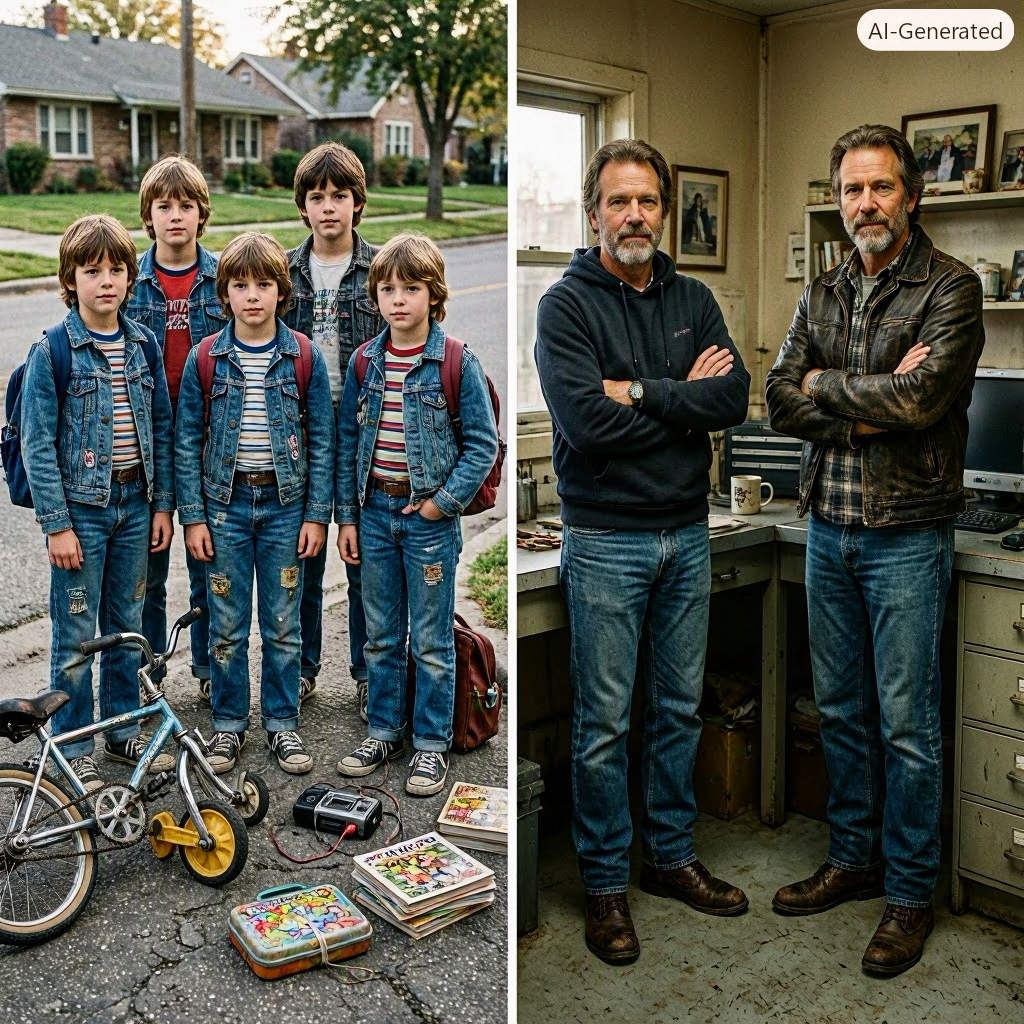
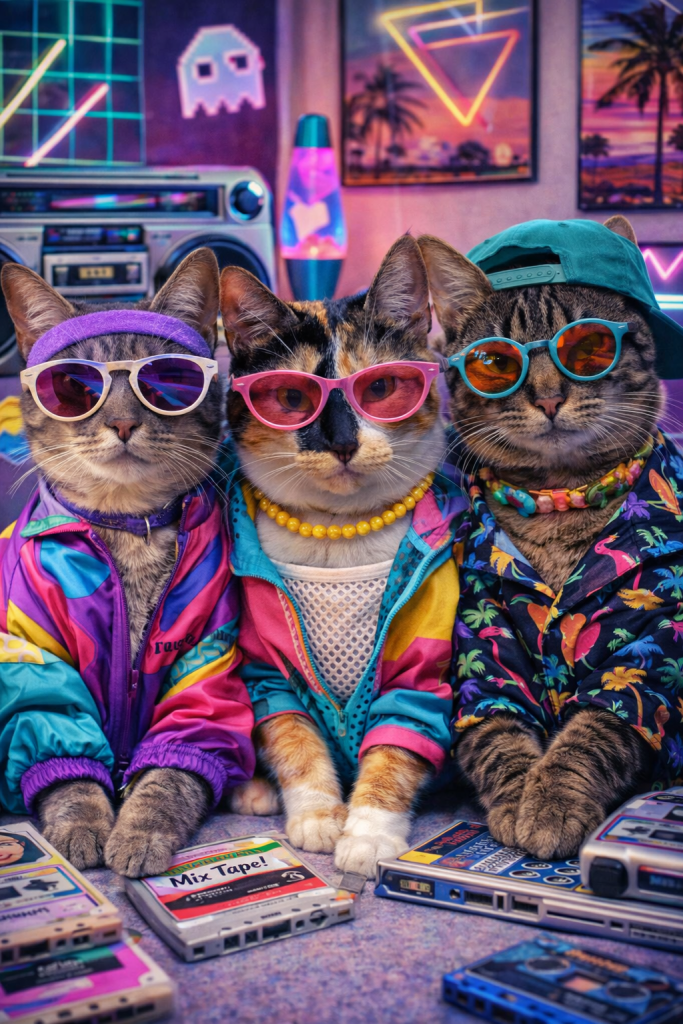
We walked home alone after school. We raised ourselves on microwaved pizza rolls. We learned to fix emotional trauma with sarcasm and a mixtape. We do not need Karen from church telling us how to parent, pray, or process our trauma.
6. Thou shalt embrace your gay sass, even if your mee-maw still calls it “your little personality.”
Honey, shine. Shimmer. Sparkle like a disco ball at a revival tent. If they don’t like it, they can go read Leviticus and leave you alone.
7. Thou shalt affirm your worth even when your back pops like bubble wrap every time you stand up.
You are still hot. You are still powerful. You are still the generation that survived dial-up internet. You can survive anything.
So, light the charcoal. Gen X is not just for ambiance. But as a spiritual act of rebellion. Let that smoke rise like our collective patience leaving our bodies every time someone under 30 says, “OK boomer.” And we have to remind them we are the generation that invented eye‑rolling, sarcasm, and emotional detachment as a coping mechanism.
Stand tall in your Crocs. Your orthopedic inserts. Your “I swear I used to be fun” hoodie. Lift your chin with the confidence of someone who survived dial‑up, Reaganomics, and parents who thought seatbelts were “optional suggestions.” Declare your affirmations with the boldness of a queer Southerner walking into a conservative church potluck carrying a rainbow Jell‑O mold and a smile that says, “Yes, Brenda, I am the agenda.”
Let your voice boom like a Baptist preacher who just found out the choir director is gay (again). Let your spirit shine like Aqua Net on prom night. Let your boundaries be firmer than your lower back when it locks up at 6 a.m. for no reason.
Because you, my darling Gen X legend, are a walking contradiction of grit, glitter, trauma, triumph, sarcasm, and survival. You are the generation that raised yourself. Therapized yourself. Caffeinated yourself. And resurrected yourself more times than Jesus’ PR team could keep up with.
You are the duct tape holding this country together. You are the middle child of America who learned to thrive in chaos. You are the badass who can say “bless your heart” with 47 different meanings. And all of them legally binding.
And if anyone tries to dim your shine or question your worth or tell you you’re “too old” for something, smile sweetly. Take a deep breath. Channel your ancestors. Your inner drag queen. Your inner grunge‑era rage. And your inner Southern auntie who keeps a flask in her purse. Then say, with holy conviction, “I survived the 80s, the 90s, and three decades of other people’s nonsense. I am not the one.”
Now go forth, Gen X. Be bold. Be loud. Be unbothered. Be the badass affirmation the world needs. And may your charcoal always light on the first try. Thanks for reading! Does this blog feel “right on the money” for our generation?
Affirmation: I am a Gen X masterpiece. I’m sarcastically blessed. Spiritually moisturized. And too seasoned to be shaken by amateurs.
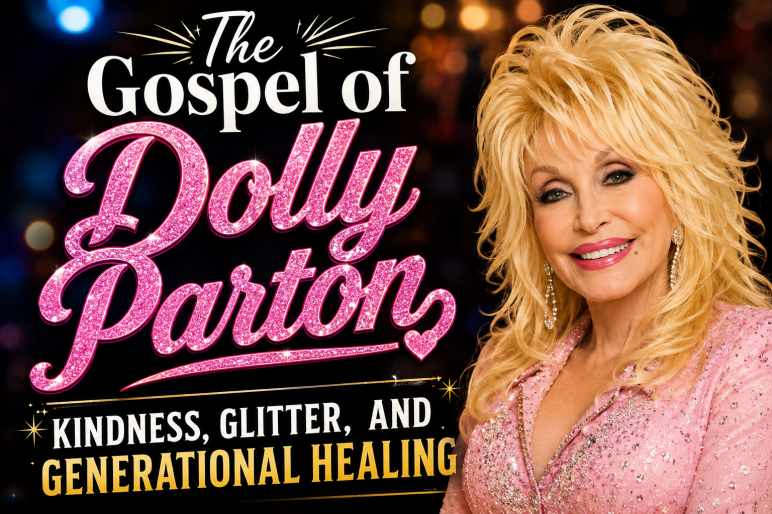
Light the charcoal. Pull up a chair. And let’s call the ancestors. Today, we’re about to talk about a woman whose legacy smells like warm biscuits, rhinestones, and generational healing. Dolly Parton wasn’t just a country singer. She was a walking love letter to humanity. A Southern phoenix who rose from the Smoky Mountains with a voice full of honey and a heart full of fire. And Lord, did she use that fire to light the way for all of us.
When we speak Dolly Parton’s name, we’re not just telling a story. We’re summoning a legacy stitched into the bones of the South, the nation, and every child who ever held a book and felt their world crack open with possibility.
Dolly wasn’t just a singer. She was a healer. A mountain-born miracle. A Southern woman who took her own childhood that was poor, barefoot, brilliant, and turned it into a mission to make sure no child, anywhere, ever felt small because of their circumstances.
She carried the Smoky Mountains in her voice. It was the sass of every Southern auntie who ever said, “Bless your heart. But fix your life.” And the tenderness of a mama who knows what it means to struggle and still show up with love. And when it came to children, Dolly didn’t play. She built an empire of hope one book, one song, one act of kindness at a time.
10 Things Dolly Did for All Communities (Especially the Ones Society Overlooked)
She created the Imagination Library, sendingover 200 million free books to children in rural, urban, poor, wealthy, Black, white, immigrant, Indigenous, disabled, LGBTQ+ families, and everyone. Dolly said literacy wasn’t a privilege. It was a birthright.
She made sure those books were culturally inclusive. They featured stories with diverse characters, languages, and experiences so every child could see themselves reflected in the pages.
She funded vaccine research by helping save lives during a global crisis without needing applause or credit.
She uplifted LGBTQ+ communities by loving loudly. Defending boldly. And showing up long before it was “safe” or trendy.
She championed women’s empowerment by proving you can be glamorous, soft, and still run an empire with steel in your spine.
She protected Appalachian culture by honoring the stories, music, and people who shaped her. And making sure the world respected them too.
She donated millions to disaster relief, especially in overlooked Southern and rural communities that often get left behind.
She built Dollywood, creating thousands of jobs and economic stability for families who needed hope and opportunity.
She supported literacy and education beyond books, funding scholarships, schools, and programs for children who grew up like she did full of potential but lacking resources.
She modeled radical kindness, showing the world that compassion is not weakness. It’s world-changing power.
Dolly didn’t just give books. She gave children a future. She gave parents hope. She gave communities pride. She gave generations a chance to dream bigger than their circumstances.
Dolly Parton walked through this world like a rhinestone-wrapped blessing. She didn’t ask permission to shine. She just did. And she made sure everyone around her felt the warmth of that glow. She was the kind of woman who could take her own childhood poverty and turn it into a global literacy movement. Who could take her pain and turn it into poetry. Who could take her sass and turn it into strength.
She taught us that kindness is a revolution. She taught us that generosity is a legacy. She taught us that beauty is not about perfection. It’s about authenticity. She taught us that you can be underestimated your whole life and still outwork, out love, and outshine every last person who doubted you. She didn’t just leave behind songs. She left behind libraries. She left behind hope. She left behind a blueprint for how to live with grace, humor, and unapologetic sparkle.
So, light the charcoal. Let the ancestors hum. Let the mountains echo her name. Because Dolly Parton didn’t just change country music. She didn’t just change philanthropy. She didn’t just change the South. She changed humanity one child, one book, one act of love at a time. Mic dropped. Sequins scattered. Legacy eternal.
Affirmation: I shine boldly. Give generously. And build a legacy of love just like Dolly taught me.
“If the 80s didn’t kill me. Your opinion definitely won’t.”
-This Puzzled life
Light the charcoal. If we’re gonna talk about the 80s, we need smoke, drama, and at least one angelic visitation from a Southern Baptist church lady clutching a casserole. And whisper‑praying for our souls.
I had barely struck the match when Piper strutted in like she was auditioning for RuPaul’s Drag Race: Feline Edition. Coco followed. She was rolling her eyes so hard she saw her own brain. Tinkerbell arrived last. She was carrying the emotional weight of someone who lived through dial‑up internet. And refuses to talk about it.
Piper: “Mama, tell us again how y’all used to chase the mosquito‑spraying truck like it was the ice cream man.”
Me: “Baby, that was our version of aromatherapy.”
Coco: “So you willingly ran toward poison?”
Me: “Yes, and we called it summer.”
Tinkerbell: “Lord have mercy. Y’all were one bad decision away from a Lifetime movie called ‘Bless Her Heart: The Dana Story.’”
Piper: “Was this before or after you realized you were gay?”
Me: “Before. But the signs were there. I had a favorite Golden Girl.”
Coco: “Which one?”
Me: “Dorothy.”
Tinkerbell: “Yeah, that tracks.”
The charcoal popped. The cats stared. And I knew it was time to confess the truth. 80s childhood wasn’t a vibe. It was a survival sport.
Look, kids today have helmets, GPS trackers, and parents who Google things like “Is this safe?” We had none of that. We had vibes and the Lord’s protection. Which was honestly stretched thin. He was also busy dealing with televangelists, Reaganomics, and every Southern mama praying for her gay child without knowing why.
UNSUPERVISED BIKE RIDES
We rode bikes miles away from home with no water, no sunscreen, and no adult supervision. If you got lost, you didn’t call anyone. You just accepted your new life in the woods like a feral pioneer child.
THE MOSQUITO TRUCK
Modern kids run from danger. We ran toward it. That fog rolled down the street like a Stephen King villain and we said, “Oh goodie, free mist!”
THE SNACKS
We ate plastic‑wrapped cheese. Kool‑Aid with enough sugar to stop a grown man’s heart. Bologna that had a rainbow sheen. And popsicles that tasted like lead paint and joy.
THE PARENTING STYLE
Southern parents in the 80s didn’t “supervise.” They announced. “Be home by dark.” That was it. No follow‑up questions. No safety plan. Just vibes and Jesus.
THE GAY PART
Growing up gay in the conservative South was like being a unicorn in a deer stand. You knew you were magical. But you also knew you needed to stay quiet, or someone’s mee-maw would try to pray the glitter out of you.
Meanwhile, my cats listened to all this like they were taking notes for a documentary.
Piper: “So basically, y’all were raised by chaos and pesticides.”
Coco: “And shame. Don’t forget the shame.”
Tinkerbell: “Honestly, it explains everything.”
So yes. Every 80s kid was one bad decision away from a Lifetime movie plot. We survived poison fog. Unsupervised adventures. Snacks that violated FDA guidelines. And Southern Christianity’s “We love you but also don’t ask questions” energy.
Let me tell you something right now. Standing here in my Mississippi kitchen with three judgmental cats and the ghost of every Southern church lady who ever side‑eyed my existence hovering over my left shoulder like a passive‑aggressive guardian angel.
We, the 80s kids, should not be alive. Not metaphorically. Not spiritually. I mean biologically, medically, scientifically, and according to every modern parenting blog written by someone named Brittany who packs organic snacks in BPA‑free containers.
We were raised in an era where seatbelts were “optional suggestions.” Bike helmets were “for the weak.” And the mosquito truck was “community enrichment.” We were one bad decision away from starring in a Lifetime movie titled “Bless Her Heart: The Dana Chronicles” or “Raised By Pesticides” or “Southern Gay Survival Story.” Take your pick.
And while we were out there inhaling poison fog like it was Chanel No. 5, our Southern Christian parents were inside praying hedge‑of‑protection prayers so thick they could’ve been used as insulation. Not that they knew what we were doing. They thought we were “playing outside.” Ma’am, we were reenacting Lord of the Flies with bicycles and no adult supervision.
Meanwhile, I was also quietly navigating the spiritual obstacle course of being a gay kid in the conservative South. Which meant I was simultaneously dodging mosquito fog, emotional repression, and Sister Linda’s unsolicited prophecy that “the Lord has a special plan for you.” And he did. It involved glitter and sarcasm.
And now? Now we’re grown. We pay bills. We raise kids. We have opinions about grout. We have survived everything from Reagan to dial‑up to purity culture. To the fact that our childhood snacks were made of 40% petroleum byproduct.
My cats watched me deliver this sermon like I was testifying in the Church of Chaotic Upbringing.
Piper: “Mama, you’re not just a miracle. You’re a franchise.”
Coco: “Honestly, you should’ve come with a warning label.”
Tinkerbell: “Or a Lifetime contract.”
And here’s the mic‑drop truth. The gospel according to every 80s kid who lived through the fog, the freedom, the foolishness, and the fundamentalist fearmongering. We just didn’t survive the 80s. We outlived the 80s. We walked through the valley of mosquito spray and came out moisturized. We endured the shame, the chaos, the bologna with the rainbow sheen, and the Southern Christian guilt that could crush a lesser mortal. We are the chosen ones. The anointed. The pesticide‑kissed prophets of resilience.
So, if anyone tries to tell you you’re “too much,” just smile sweetly. Bless their heart and remember, “You survived an entire decade that tried to kill you with fog machines, sugar, and Jesus.” They can’t handle you. They’re not qualified to handle you. You are a walking Lifetime movie with better hair and boundaries. Charcoal still burning. Cats applauding silently in judgmental solidarity. Thanks for reading! How do you remember the 80s?
Affirmation: I am resilient. I am fabulous. And I survived the 80s. Nothing can stop me except maybe gluten.
“If God made us in the divine image. Then queerness is not a rebellion. It’s a reflection.”
-This Puzzled Life
Light the charcoal. Sprinkle the sage. Today, we’re not just cleansing the room. We’re cleansing the ignorance. We’re diving into the science of being gay. Which is the most Southern thing ever.
Everybody’s got an opinion. Nobody’s read the research.Half the town swears they “just know” because their cousin’s friend’s nephew once wore a sequined vest to Vacation Bible School. And trustmebro.com is their only source.
Unlike the folks who think sexual orientation is a “lifestyle choice,” we’re going straight to the biology, the hormones, the genetics, the epigenetics, and the brain science. And yes, science says queer folks aren’t broken, confused, rebellious, or possessed by a demon named Carl. We’re just built this way. Literally. Cellularly. Hormonally. Neurobiologically. Now let’s get into it.
Scientists have found that sexual orientation has genetic components. This means that some of us were coded a little extra fabulous from the jump. Research shows multiple genes contribute to sexual orientation. Sorry but it’s not a single “gay gene” that’s being held responsible. It’s a constellation of them. Think of it like a queer genetic gumbo. A little chromosome spice here. A little epigenetic roux there.
Source: ArcGIS Story Maps overview of genetics, hormones, and neurobiology in sexual orientation
Epigenetics is basically the universe’s way of saying, “Let me sprinkle a little glitter on these genes and see what happens.” Epigenetic markers can influence how genes express themselves. Especially those involved in sexual differentiation and attraction. These markers can be shaped by hormones, environment, and developmental timing. They don’t rewrite your DNA. They just DJ the playlist.
Source: Chapter on epigenetics and sexual orientation from UCLA researchers
Before you ever took your first breath, your brain was marinating in a hormonal jambalaya. And those hormones? They matter a lot.Studies show that prenatal hormone exposure, especially androgens, plays a major role in shaping later sexual orientation.These hormones influence brain structures tied to attraction.And they help determine whether your brain lights up like a Christmas tree for men, women, both, or neither.
Source: Prenatal hormone theory of sexual orientation
Neuroscience research shows differences in brain regions related to attraction, behavior, and sensory processing. These differences aren’t “defects.” They’re natural variations. They show up consistently across studies, across cultures, and across time.
Source: OpenStax Behavioral Neuroscience on sex-linked brain differences
The most accurate scientific conclusion? Sexual orientation is shaped by genetics, hormones, brain development, and environment. It’s a complex, beautiful interplay that makes each queer person a one‑of‑a‑kind masterpiece.
Source: University Observer on genetics + environment in sexual orientation
Here comes the cat‑powered theological commentary you didn’t know you needed but absolutely deserved.
Your living room. Sage still smoking. Charcoal still glowing. You’re typing. And the cats have convened an emergency meeting of the Queer Science & Spirituality Committee.
Tinkerbell (Union Rep, Conspiracy Theorist): “Alright, everyone, settle down. We need to address the ongoing crisis. Conservative humans still think Bible verses are part of the genetic code.”
Piper (Chaotic Neutral Gremlin): “Honestly, I checked the genome myself. Not a single verse. Not even a stray Corinthians. Just DNA doing its thing like it’s supposed to.”
Coco (CEO, Sunbeam High Priestess): “Yeah, but conservatives act like chromosomes come pre‑loaded with Leviticus. Like God was up there knitting embryos saying, ‘Let me just stitch in a little homophobia for flavor.’”
Tinkerbell: “Exactly. Meanwhile, real Christians, the ones with functioning empathy, are over here like, ‘Science exists. Biology is real. Love your neighbor. Stop weaponizing scripture like it’s a Nerf gun with anger issues.’”
Piper: “And let’s be clear. Bible verses are not molecules. They’re not proteins. They’re not alleles. They’re not epigenetic markers. They’re not even in the mitochondria. And that’s the drama queen of the cell.”
Coco: “Bible verses are opinions written down a long time ago that conservatives now use like emotional nunchucks.”
Tinkerbell: “Exactly. They’re not part of anyone’s genetic makeup. They’re part of someone’s political makeup.”
Piper: “And the anger? Whew. That’s not holy. That’s not righteous. That’s not divine. That’s just unresolved childhood issues marinated in Fox News.”
Coco: “Real Christians aren’t out here screaming at gay people. Real Christians are like, ‘Hey, science is cool. Love is cool. Jesus literally never said anything about queer folks. Y’all need a nap.’”
Tinkerbell: “Honestly, if conservatives want to talk about genetics, they should start with the hereditary nature of minding your own business.
Piper: “Science says gay people exist naturally.”
Tinkerbell: “Faith says love your neighbor.”
Coco: “Conservatives say whatever their pastor yelled last Sunday.”
And that’s the absurdity of it all. The cats have spoken. The meeting is adjourned. Snacks will be served in the kitchen.
Let’s just go ahead and say the quiet part with our whole diaphragm. If theology is correct. If we are truly made in the image of God. Then God’s image is not some beige, monotone, heterosexual stick figure with a side part and a fear of sequins. No. Absolutely not. The math ain’t mathing.
Because if queer people exist. And we do, loudly, beautifully, and biologically. Then queerness is not a glitch in the system. It’s part of the blueprint. Which means God’s image includes queer joy, queer love, queer brilliance, queer softness, queer resilience, queer creativity, and queer fabulousness. If we’re reflections of the divine? Then the divine must contain all the colors we carry. And that’s a lot of colors.
Let’s talk about the rainbow for a second. Conservatives love to act like queer folks “stold” it. As if we broke into Heaven’s craft closet and ran off with God’s Crayola box. But if God created the rainbow. And theology says God did. Then God created a symbol of diversity, beauty, and spectrum. A spectrum of light. A spectrum of identity. A spectrum of creation.
And you’re telling me the same God who painted the sky with a multicolored arc after a storm didn’t know that one day queer people would claim it as our banner? Please. God knew exactly what God was doing. The rainbow is divine foreshadowing. A cosmic wink. A holy Easter egg. A celestial “just wait, y’all.”
If God’s image includes all of humanity. Then queer people aren’t the exception. We’re the evidence. The evidence that God loves variety. The evidence that creation is not limited to one shape, one love, or one expression. The evidence that the divine is not threatened by color, complexity, or creativity.
Queer people are the parts of God’s image that sparkle. The parts that dance. The parts that refuse to shrink. The parts that remind the world that holiness isn’t about conformity. It’s about authenticity. Queer people are the divine’s flair. God’s glitter. God’s jazz hands. God’s reminder that creation is supposed to be vibrant, not beige.
Not the corporate kind. Not the “rainbow logo in June only” kind. Not the “love the sinner, hate the sin” kind. I mean the real kind. The kind who understands science. The kind who celebrates diversity. The kind who doesn’t weaponize scripture to justify fear. The kind who looks at queer people and says, “Yes. I made you. And I made you on purpose.”
If we’re made in God’s image. Then God’s image includes every queer soul who has ever existed in past, present, and future. Which means God is not just a Pride ally. God is the original Pride ally.
The first one to paint the sky in rainbow. The first one to celebrate diversity. The first one to say, “Let there be light.” And then break that light into a spectrum.
The next time someone says, “Being gay is a choice.” Smile sweetly. Bless their heart. And say, “The only choice I made today was whether to wear the boots or the heels. My sexual orientation was assembled in the womb like a limited‑edition collector’s item.” Let the science do the talking. Being gay isn’t a phase, a fad, or a political statement. It’s biology. And biology don’t lie.
So here we are. Charcoal glowing like an altar to common sense. Sage swirling like ancestral Wi‑Fi. And the cats still muttering about conservatives trying to splice Leviticus into the double helix like it’s a DIY craft project.
The science is clear. The biology is clear. The genetics, the hormones, the brain structures are all clear. The only thing foggy is the worldview of people who think sexual orientation is a rebellious phase. But their own anger is a divine calling.
Bible verses are not molecules. They are not nucleotides. They are not tucked between adenine and thymine like a passive‑aggressive Post‑it from God. They’re words. Words that can heal or harm depending on who’s holding them. And conservatives have been swinging them around like rusty machetes. And trying to carve their fear into other people’s lives.
But the real Christians. The ones who actually read the parts about compassion, humility, and minding your own business, they just know better. They know science isn’t the enemy. They know biology isn’t propaganda. They know Jesus didn’t come down here to micromanage who anyone loves. Real Christians don’t need queer people to shrink so they can feel tall. They don’t need to weaponize scripture to justify their discomfort. They don’t need to pretend their prejudice is holy.
They understand something conservatives keep tripping over. Faith and science are not rivals. They are two different languages describing the same universe. One is poetic. One is empirical. And both are pointing toward truth.
And the truth is this. Queer people exist because nature made us. Biology shaped us. And diversity is the signature of life itself. We are not mistakes. We are not warnings. We are not tests of anyone’s faith. We are living, breathing evidence that creation loves variety.
Bless the room. Bless the science. Bless the ancestors. Bless the queer babies still figuring out their shine. And to anyone still clinging to ignorance like it’s a family heirloom, may your heart soften. Your mind open. And your Bible fall open to literally any page that isn’t being used as a weapon. The science is settled. The spirit is settled. And the cats are settled. And the only unsettled thing left is the people who can’t handle the truth that queerness is natural, holy, and here to stay. Thanks for reading! Happy Pride Yall!
Affirmation: I am a radiant, intentional part of creation. My identity is not a mistake, phase, or a debate. It is a divine color in the spectrum of existence. And I shine without apology.
“Shame was never my reflection. It was the shadow of someone else’s fear cast across my life.”
-This Puzzled Life
Light the charcoal. Sprinkle the sage. Let the smoke rise like a soft warning. A trembling invitation. And a doorway cracked open just wide enough for the truth to step through without flinching. Let it drift through the room the way shame once drifted through our childhood homes as quiet and unspoken. But heavy enough to shape the way we learned to breathe.
This isn’t about performance. It isn’t about survival. It’s about naming the thing that has lived in your bones longer than some people have lived in their houses. I’m not writing from a place of humor or distance. I’m writing from the wound. From the memory. From the soil that raised me. And the silence that tried to claim me.
Shame is not born in us. It is handed to us. Pressed into our palms by people who were supposed to know better. People who were supposed to love better. People who were supposed to see us as whole. And in the Deep South, shame is practically a family heirloom.
Down here, some conservative communities have perfected shame into an art form as quiet, polished, and Sunday‑morning approved. They wield it like a switch they no longer have to swing. Because the words do the bruising for them. They don’t have to raise their voices. They just raise an eyebrow. They don’t have to say you’re wrong. They just say they’re “praying for you.” They don’t have to tell you to hide. They just make sure you know what happens to people who don’t.
Shame becomes the air you breathe before you even know what air is. It teaches you to fold yourself small. To tuck away the parts of you that don’t fit the script. To apologize for the way your heart beats. The way your voice trembles. And the way your truth refuses to die quietly. The worst part is how deeply it roots itself. And how it convinces you that you are the problem. Not the rules. Not the silence. Not the fear disguised as righteousness.
Some Southern conservative spaces are experts at this. They turn difference into danger. They turn authenticity into rebellion. They turn survival into sin. They shame you for who you are. And then shame you again for hurting because of it.
But here’s the truth shame never wants you to learn. You were never the one who failed. You were the one who endured. Shame is not your inheritance. It is not your identity. It is not your burden to carry one more mile. The moment you name what was done to you. The moment you say, “This wasn’t love. This was control.” The spell breaks. The weight shifts. The air clears. And you begin to see yourself without the fog of someone else’s fear. You begin to hear your own voice again. You begin to rise. And rising is the one thing shame cannot survive.
Shame is universal. It’s a part of every culture and every nation. And every community has its own way of teaching people to hide the parts of themselves that don’t fit the script. Shame is a global language. It is spoken in different dialects. It is enforced through different rituals. And it is carried in different bodies.
But the version I know. The one that shaped my bones and rewired my voice was born in the conservative Deep South. That’s the lens I speak from. That’s the air I learned to breathe. That’s the terrain where shame wasn’t just a feeling. It was a system.
Some conservative Southern communities wield shame like a tool of order. A way to keep people in line. A way to maintain the illusion of perfection even when the truth is rotting beneath the floorboards. They don’t have to say, “you’re wrong.” They just say, “we don’t talk about that.” They don’t have to say, “you’re unworthy.” They just say, “think of what people will think.” They don’t have to say, “you don’t belong.” They just make sure you feel it.
Shame becomes the soundtrack of your childhood. The shadow in every room. The reason you learn to fold yourself into shapes that hurt to hold. When you grow up queer, outspoken, different, or simply unwilling to disappear, the shame becomes sharper. More pointed. And more personal.
You were not the problem. You were the disruption. You were the truth they didn’t know how to hold. Shame thrives in silence. But it cannot survive being named. The moment you say, “This harmed me,” the spell breaks. The moment you say, “This wasn’t love,” the weight shifts. The moment you say, “I deserved better,” the ground beneath you changes shape.
You begin to see yourself without the fog of their expectations. You begin to hear your own voice without the echo of their judgment. You begin to rise in ways they never prepared for. And rising is the one thing shame cannot withstand.
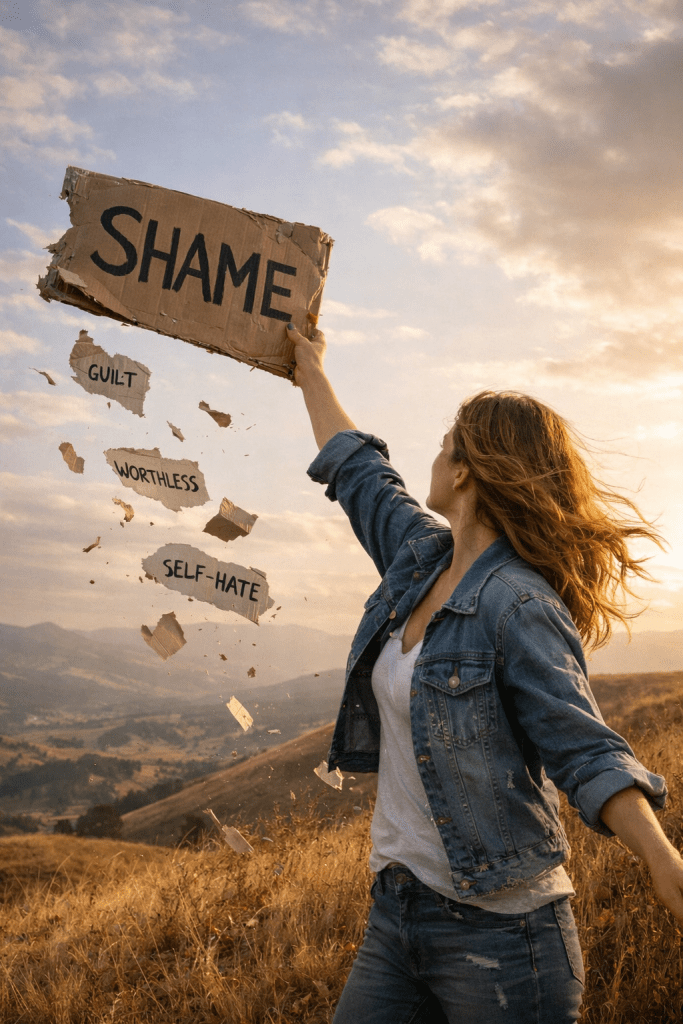
Let every culture keep the shame it created. Let the South hold the weight of the shame it taught me to carry. I am done dragging their silence behind me. I am done mistaking their fear for my fault. I am done shrinking to make their world more comfortable. I speak now. I rise now. I reclaim every part of me they tried to bury.
And the sound of that truth is unapologetic. Unbroken. And is the loudest thing I’ve ever survived. You were never meant to carry it. Set it down. Walk forward. And let the sound of your unbroken truth shake the whole damn South. Thanks for reading! And put that shame down.
Affirmation: I release every ounce of shame that was handed to me. My truth rises. My voice steadies. And I walk forward unburdened and whole.
“The truth didn’t break my family. The pretending did.”
-Unknown
Here’s the bigger picture. I didn’t grow up in a family that heals. Problems don’t get solved. They get buried alive. And then resurrected during holidays like emotional zombies. Now that me and my sister are adults, childhood resentments still pop up like whack‑a‑mole. And nobody wants to pick up a mallet. Let’s all smile in public so we don’t “defame the family.” Which honestly, does a fantastic job defaming itself.
And my family isn’t special. Dysfunction is everywhere. I have enough mental health education in my background to recognize the patterns. But they’ll swear I’m the problem. If you look past the church smiles, the whole system is sick. I would genuinely rather be hit by a car than attend “family time.” And because my kids were born into a lesbian family, they get treated like they came with a moral recall notice.
You can’t throw money at children and then take no active part in their lives the rest of the time. Especially, when you do the opposite with the other children in the family. The kids notice. I’ve tried talking about it for 17 years. And the truth is this. They just don’t care.
I have a master’s degree in counseling psychology. Yet somehow I’m the ignorant one. They don’t want insight. They don’t want help. They want silence. And mine has officially expired. I defend myself and my kids however I see fit. Respectfully? No. Effectively? Absolutely.
They want healing without effort. They’re emotional pillow princesses that want the benefits of growth while doing absolutely nothing but blinking dramatically. And when truth bruises their egos, accountability never shows up. Meanwhile, my dad plays messenger pigeon flying information back and forth between me and the rest of the family so that the dysfunction stays perfectly preserved.
Here’s the part they’ll never admit. Family therapy requires guts and transparency. And those two things they treat like forbidden sins. Instead, they’ve built a giant sand pile where they can bury their heads. And pretend nothing is wrong. That’s their comfort zone. Not truth. Not healing. Just sand. Neck‑deep and breathing through a straw of selective memory.
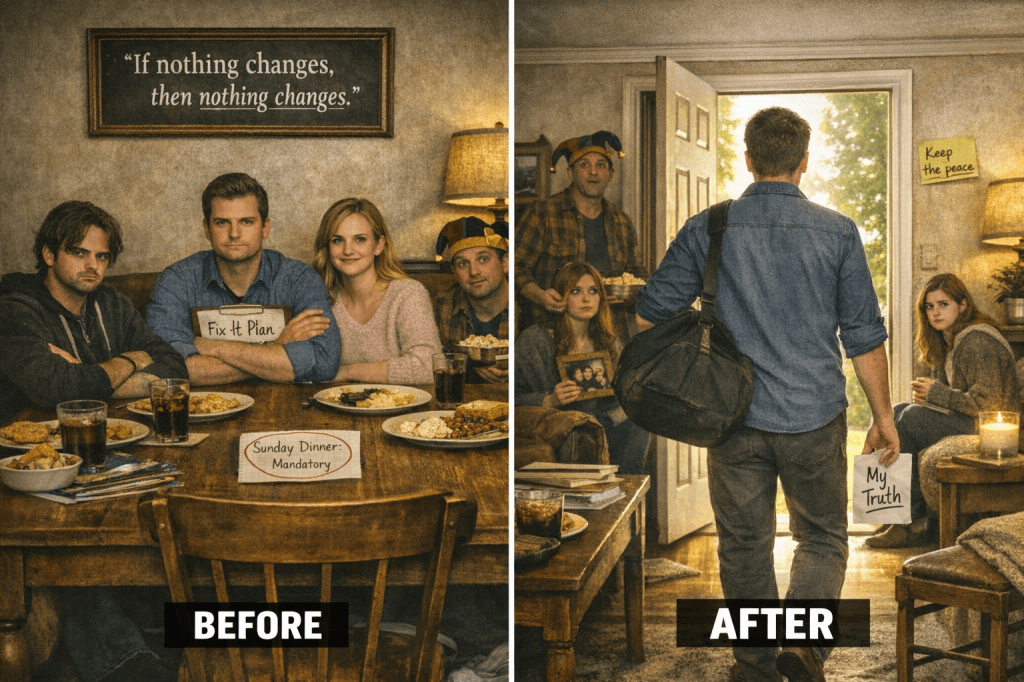
My favorite quote says it best, “If nothing changes, then nothing changes.” And I refuse to be silenced because their comfort depends on my suffering.
Our family lives in what I call comfortable dysfunction. It’s the emotional recliner they refuse to replace even though the springs are broken. And the fabric smells like denial. It’s easier than accountability. Easier than honesty. Easier than saying, “Maybe the gay daughter isn’t the downfall of civilization.”
And as if being the rainbow sheep wasn’t enough. I’m also the green sheep of the family because I’m a medical cannabis patient. And the family’s translation is that I’m “druggin’ and thuggin’.” The “bad influence.” And the “one who needs prayer.” But that’s not even the real issue.
The problem is my refusal to sit quietly in the pew of generational silence. The issue is that I no longer participate in the family’s favorite pastime of pretending. I’m done shrinking myself so other people can stay cozy in their outdated beliefs. I’m done letting conservative Christian values be weaponized against me and my children.
They can keep their selective morality. The kind where my sister thinks being gay is “wrong and evil.” But somehow premarital sex is just the Olympic sport of “being human.” Funny how sin gets flexible when it’s their behavior on the table.
“My family says I’m ‘living in sin.’ Which is wild coming from some of them who wave a red hat like it’s the state flower. They preach about morality and still treat premarital sex, drinking, and hypocrisy like they’re covered under the ‘Jesus forgives me’ warranty.”And trust me. They act like I graffitied the Ten Commandments in rainbow glitter.
Being gay automatically made me the family’s “problem child.” Even though the real problems have nothing to do with what gender I love. And everything to do with the fact that I refuse to pretend. My sister can have premarital sex. Drink like she’s hydrating for the Olympics and drive afterward. And micromanage her child like she’s running a dictatorship. But somehow I’m the moral crisis.
Meanwhile, my sister’s shot glasses stays full. Her judgment stays loud. And her hypocrisy stays undefeated. Funny how cannabis for medical reasons is “dangerous.” But alcohol with a side of denial is “just being human.” I’m the rainbow sheep because I live authentically. I’m the green sheep because I choose a legal, doctor‑recommended treatment. And I’m the scapegoat because I refuse to shrink so other people can stay comfortable in their dysfunction. If being myself makes me the rainbow‑green hybrid sheep of the family, then so be it. At least I’m not grazing in the pasture of hypocrisy.
So no, I’m not stepping back into the box they built for me. I’m not dimming myself, so their comfort stays intact. I’m not carrying the weight of a family that refuses to lift a finger for its own healing. They can keep their comfortable dysfunction. They can keep their silence. They can keep their outdated beliefs wrapped in Bible verses that only apply to me.
Today I honor my inner rainbow‑green sheep. I’m fabulously queer. I’m medically lifted. And completely unbothered by the opinions of people who confuse hypocrisy with holiness.”
I’m choosing truth over tradition. I’m choosing growth over guilt. I’m choosing my children, my peace, and my sanity. And if my existence shakes the foundation of their worldview. Then the foundation was weak to begin with. Thanks for reading! Do you and let the others do them.
Affirmation: I bless my rainbow‑green sheep soul today queer, medicated, and thriving. While certain relatives clutch their red hats and pearls at my existence. But don’t blink twice at their own chaos, contradictions, or alcohol fueled commandments.
“Trauma doesn’t make you weak. It makes you a witness to your own survival.”
-This Puzzled Life
Light the charcoal. Sprinkle the sage. Let the smoke rise like it’s clocking in for a shift. And let the air shift like it’s bracing itself for whatever truth you’re about to drag into the daylight. Today isn’t about pretending everything’s fine or slapping a smile on top of a wound. It’s not about the vibes, snacks, or cats doing interpretive dance in the sunbeam. It’s about trauma awareness. It is about naming the things we survived. The things we carried alone. The things we laughed through so we wouldn’t crumble. It’s a Southern‑fried, emotionally honest, and funny enough to keep you from dissolving into a puddle on the kitchen floor.
Trauma Awareness is the kind that hides in your shoulders, jaw, breath, memories, and your jokes. And if we’re going to talk about it, we’re going to do it the only way I know how. Complete with honesty, humor, and the kind of emotional courage that feels like taking your bra off after a long day. It’s painful, relieving, and absolutely necessary.
There’s a moment right before you talk about trauma where your whole spirit goes, “Are we sure we want to do this?” It’s the same tone you use when someone says, “Let’s just run into Walmart real quick.” You know it’s not going to be quick. You know you’re going to see something you can’t unsee. You know you’re going to come out changed. Talking about trauma is like that. Except instead of a man in pajama pants buying raw chicken and fireworks, it’s your nervous system holding up a sign that says, “We’ve been through some things, ma’am.”
Trauma doesn’t just show up when you’re ready. Trauma is that one cousin who arrives early. Eats all the good snacks. And then says, “Why you look stressed?” It pops up at the worst times especially when you’re trying to relax. When you’re trying to sleep. When you’re trying to enjoy a sandwich. When you’re trying to mind your business. And when you’re trying to be a functioning adult for five minutes. Trauma will tap you on the shoulder like, “Hey bestie, remember that thing from 1998? No? Well, I do.” And suddenly you’re staring at the wall like it owes you money.
Your body remembers everything. Even the stuff you tried to bury under humor, iced coffee, and pretending you’re fine. You’ll be walking through Wal-Mart. Touching a throw pillow. And your body will whisper, “Hey, remember that time?” And you’re like, “No I do not. I am touching a pillow. Let me live.” But trauma doesn’t care. Trauma is like a Southern grandmother with a memory like a steel trap. And no sense of timing.
People talk about healing like it’s a spa day. Let me tell you something. Healing is not cucumber water and a robe. Healing is crying in the shower because your shampoo smells like 2007. Healing is realizing you’ve been clenching your jaw since the Bush administration. Healing is sitting in your car after therapy like you just got hit by an emotional freight train. Healing is messy. Healing is loud. Healing is quiet. Healing is confusing. Healing is holy. Healing is exhausting. Healing is worth it. But cute? Absolutely not.
So, buckle up. Because the cats have decided it’s Trauma Awareness Hour. And apparently they’ve all been waiting their whole lives to trauma dump with the enthusiasm of a group therapy circle run by toddlers. And today is the day they ask deeply personal questions with the emotional sensitivity of a toddler holding a chainsaw. They have formed a circle. They have snacks. They have opinions. And apparently, they have questions about my trauma.
Me: “Okay, girls. Today we’re talking about trauma. Share whatever you feel comfortable with.”
She raises paw like she’s in kindergarten
Piper: “I’ll go first because my story is the most dramatic. Obviously.”
Coco: “Oh lord.”
Tinkerbell: “Let the child speak. She needs this.”
Piper: “So picture this. Me and my siblings. In a metal box. In the Mississippi heat, basically sautéing like tiny furry cornbread muffins.”
Me: “Baby, that’s awful.”
Piper: “I know. I was basically a rotisserie chicken with trauma.”
Coco: “You were a sweaty raisin with opinions.”
Piper: “Anyway, I survived because I’m dramatic and stubborn. And now every time the sunbeam hits me wrong, I flop over like a Victorian woman fainting at a garden party.”
Tinkerbell: “You faint because you forget to breathe when you get excited.”
Piper: “Trauma. Tinkerbell. Let me have this.”
Coco clears throat like she’s about to deliver a TED Talk
Coco: “My siblings and I were found under a house. A house. Do you know what lives under houses? Darkness. Ghosts. Tax evasion. I was basically a feral raccoon with trust issues.”
Me: “You’ve come so far.”
Coco: “Yes. And now I cope by judging everyone. It’s called growth.”
Piper: “You judge me the most.”
Coco: “You give me the most material.”
Tinkerbell: “I don’t remember my trauma.”
Me: “At all?”
Tinkerbell: “No. I simply chose not to be present. I was spiritually unavailable.”
Coco: “You had worms.”
Tinkerbell: “Yes, apparently my intestines were hosting a music festival.”
Piper: “You pooped like you were trying to summon something.”
Tinkerbell: “I was summoning peace. And a vet. Preferably both.”
Me: “You really don’t remember anything?”
Tinkerbell: “I remember diarrhea. And then I remember you. Everything else is optional.”
Me: “Well, we’ve all been through some things.”
Piper: “Yeah, but now we’re together! A family! With two crazy brothers who scream at dust!”
Coco: “We are a support group. A dysfunctional one, but still.”
Tinkerbell: “We heal one memory at a time. Preferably with snacks.”
Piper: “And naps!”
Coco: “And boundaries. Mostly for Piper.”
Piper: “I don’t believe in boundaries.”
Tinkerbell: “We know.”
Piper: “Sometimes I get scared when it’s hot outside. So, I cope by yelling at the sun.”
Coco: “I cope by staring at people until they feel bad.”
Tinkerbell: “I cope by leaving my body spiritually whenever something stressful happens. Like when the vacuum turns on. Or when Piper breathes too loud.”
Piper: “I have big emotions.”
Coco: “You have no volume control.”
Tinkerbell: “You have the energy of a toddler who drank a Red Bull.”
Piper: “Momma, what is your trauma about?”
Me: “Oh absolutely not. We are not opening that can of worms. We’ll be here until this time next year. And I don’t have enough snacks or emotional stamina.”
Coco: “Is that why you have panic attacks in Walmart?”
Me: “Yes.”
Tinkerbell: “But what’s scary about going to the pharmacy?”
Me: “Everything.”
Piper: “Everything?? Like the shelves? The people? The lighting?”
Me: “Yes.”
Coco: “The lighting is aggressive.”
Tinkerbell: “The vibes are hostile.”
Piper: “The blood pressure machine is a demon.”
Me: “Exactly.”
Coco: “So what did our therapist tell you?”
Me: “She said, ‘I’ll see you in another couple of days.’”
Tinkerbell: “Translation: ‘You’re a lot. But I believe in you.’”
Piper: “Translation: ‘You have so many issues we need a punch card.’”
Coco: “Translation: ‘You’re keeping the lights on in that office.’”
Me: “But look at us now. We’re safe. We’re loved. We’re healing together.”
Piper: “And we have snacks!”
Coco: “And stability.”
Tinkerbell: “And indoor plumbing.”
Me: “We survived things we never should’ve had to survive. And now we get to build something soft and silly and sacred together.”
All Three Cats: “Group hug!”
Coco: “But don’t touch me too long.”
Piper: “I’m crying!”
Tinkerbell: “I’m dissociating!”
Me: “Perfect. Exactly the emotional range I expected.”
In small Southern towns, admitting trauma is treated like a social crime. The moment you name what happened, you’re not just telling your story. You’re “disgracing the family,” “embarrassing the community,” and threatening the carefully polished illusion of stability that everyone works so hard to maintain. The culture teaches people to swallow their pain. Protect the reputation of the town at all costs. And never, under any circumstances, call out the people who caused the harm. And because the “good ole boy” network is alive and well. And sitting in every position of authority from the courthouse to the church pews, the truth gets buried right alongside the accountability. Even when the perpetrators are known. Especially when they’re known. Nothing is done. The silence is enforced. The victims are shamed. And the town keeps smiling for the church directory photo like nothing ever happened. But the truth doesn’t disappear just because the town refuses to look at it. It lingers in the air, the families, the generations, waiting for someone brave enough to break the cycle and say, “This happened. And it mattered.” And I am that one in my family who refuses to stay quiet about the trauma that happened in the small city of Petal, MS.
Trauma will have you doing things that make absolutely no sense. Things like apologizing to furniture when you bump into it. Jumping at sounds that aren’t even loud. Overthinking texts like you’re decoding ancient scripture. Saying “I’m fine” in a tone that suggests you are, in fact, not fine. And crying because someone said, “I’m proud of you.” And your body wasn’t prepared for that level of kindness. Trauma will also make you emotionally attached to random objects. A mug. A blanket. A rock you found on a walk. A pen that writes really smooth. Your brain will be like, “This is my emotional support spoon. Touch it and perish.”
Trauma awareness isn’t about reliving the pain. It’s about naming it, so it stops owning you. It’s about understanding why you react the way you do. It’s about giving yourself grace for surviving things you never should’ve had to survive. It’s about learning that your triggers aren’t flaws. They’re evidence that you lived through something real. And it’s about knowing you’re not broken.
You’re healing. You’re growing. You’re learning how to breathe again. You’re learning how to trust softness again. You’re learning how to exist without bracing for impact. That’s not weakness. That’s strength with stretch marks.
May your healing be gentle. May your memories lose their sharp edges. May your nervous system unclench one muscle at a time. May your heart learn safety. May your voice return to you. May your laughter come back louder. May your story be yours again. And not something that happened to you. But something you rose from.
So, if no one told you today. You’re not dramatic. You’re not broken. And you’re not “too much.” You’re a whole human who lived through storms that would’ve snapped lesser souls in half. And you’re still here healing. Laughing. Unlearning, Softening. Reclaiming. That’s not survival. That’s resurrection. And baby, if that isn’t holy, I don’t know what is. Drop the sage. Keep the truth. And walk away knowing this. Your story didn’t end in the dark. You did.
Affirmation: I honor the parts of me that survived. I honor the parts of me that are still healing. I am allowed to grow, to rest, to feel, and to reclaim my peace. And I can do it one breath at a time.
“If Jesus didn’t need help rising from the dead, He definitely doesn’t need help judging His children.”
-This Puzzled Life
Let the ancestors lean in. And the nonsense scatter like roaches when the kitchen light flips on. I’m clearing the air. Clearing my spirit. And clearing out anybody who came in here with judgmental energy, weaponized scripture, or a Facebook theology degree. Today we’re telling the truth with love, humor, and just enough Southern heat to make the devil fan himself.
Every year, Easter rolls around and suddenly half the conservative Christians in the South start acting like they’ve been personally hired by Jesus HR to conduct performance reviews on the entire population. They show up to church in pastel outfits so loud they could blind a deacon armed with judgment, casserole, and a Bible verse they skimmed once during Vacation Bible School in 1994.
Meanwhile, Jesus is over here like, “I rose from the dead to bring hope and liberation. Not to watch y’all turn my message into a neighborhood watch program for people who don’t look, love, or live like you.” But bless their hearts. They really believe Easter is about policing everyone else’s salvation. Like Jesus outsourced His job to a committee of pearl‑clutchers with Wi‑Fi.
Easter is supposed to be the celebration of renewal, liberation, and radical compassion. He was a man who literally washed feet. Fed strangers. And hung out with the outcasts. And provided a message of hope for the poor, the hungry, the immigrant, the traumatized, the eccentric, the ethnically diverse, and the folks society shoved to the margins.
Jesus was the original “bring everybody to the table” host. He didn’t ask for dress codes, doctrinal purity, or a background check. He said, “Come as you are.” And meant it. Not “Come as you are, unless Brenda doesn’t approve of your haircut.”
Somewhere along the way, though, a whole crowd of folks decided Jesus needed personal judges. A volunteer morality police. A neighborhood watch for rainbow flags. A holiness HOA. A spiritual TSA checkpoint. And they signed up like it was a Black Friday sale.
They twist His words like balloon animals. Weaponize scripture like it’s a Nerf gun. And act like Jesus is running a multi‑level marketing scheme where the top sellers get a crown and a parking spot in heaven. They weaponize His teachings against LGBTQIA+ folks, immigrants, people of color, the poor, or anyone who doesn’t fit their “approved” mold.
And then they have the audacity, the sheer sanctified audacity, to say they’re doing it “in Jesus’ name.” Jesus didn’t ask for helpers. He didn’t post a job listing for “Assistant Judge. An unpaid internship where you must hate fun.” If anything, he said the opposite such as, “Sit down. Be humble. Love people. And stop acting like you’re the CEO of Heaven’s HR department.”
Let’s talk about the rainbow for a second. Conservative Christians love to act like the rainbow was stolen, borrowed, or misused by queer folks. Jesus made the rainbow. The gays just accessorized it better. And queer folks are honoring the original design with more creativity, joy, and community than the people who claim ownership of it. If Jesus didn’t want the rainbow to be a symbol of diversity, unity, and hope, he wouldn’t have made it look like the world’s happiest flag.
Jesus was pro‑poor, pro‑immigrant, pro‑outcast, pro‑community, pro‑healing, pro‑inclusion, and pro‑“stop being hateful and go feed somebody.” He was the original DEI ( Diversity, Equity, Inclusion) department. Long before corporate America slapped it on a PowerPoint slide. He didn’t need a committee. He didn’t need a board vote. He didn’t need a church newsletter. He just did the work.
Christians love to toss around the phrase “hate the sin, love the sinner” like it fell straight out of Jesus’ mouth and onto a Hobby Lobby wall sign. But it did not. That line is nowhere in the Bible. Not in Genesis. Not in Psalms. Not in Leviticus. And not even hidden in the fine print of Revelation. The idea is loosely connected to Christian teachings. Sure. The actual phrase traces back to St. Augustine of Hippo in 424 AD. And it didn’t get its modern glow‑up until Mahatma Gandhi repeated a version of it centuries later. So, if folks want to use it, fine. But let’s stop pretending it’s scripture when it’s clearly not. As one source puts it, the exact phrase simply isn’t in the Bible (Catholic.com, 2026). In other words, quit assigning Jesus quotes he never said. Especially when they’re being used as a permission slip for judgment.
This Easter, let’s remember what actually happened. A brown, Middle‑Eastern, homeless, anti‑authoritarian healer rose from the dead to liberate humanity. Not to give conservative Christians a seasonal excuse to cosplay as Heaven’s security guards. Easter is about resurrection. Not regulation. Liberation. Not legislation. Compassion. Not condemnation.
If Jesus wanted personal judges, he would’ve hired them. Instead, he told everybody to love their neighbor and mind their business. Let’s celebrate Easter the way Jesus intended. With open arms, hearts, tables, and absolutely no volunteer applications for Assistant Judge of the Universe. He’s got that job covered. And the rainbow says the gays are doing just fine. Thanks for reading! Stay spiritually focus instead of judgmental.
Affirmation: I walk in the kind of love, compassion, and radical inclusion Jesus actually taught. Not the edited, fear‑based version some folks try to pass off as scripture.
“When the places built to protect children become the places that break them, the wound isn’t just personal. It’s a failure of every adult who chose silence over responsibility.”
-This Puzzled Life
Light the candles. Move the breakables. Tell the ancestors to take their seats and pass the sweet tea. We’re not easing into this one. And before the denial committee calls an emergency meeting to rehearse their “But that’s not what we meant” speeches, let’s go ahead and say the quiet part out loud.
Child abuse doesn’t just happen in the home. It happens in classrooms where teachers misuse authority. In churches where “discipline” is weaponized. In sports programs where adults confuse control with coaching. In friend groups where older kids exploit younger ones. And in any space where a child’s safety depends on an adult’s integrity, and that integrity fails.
Let me say this in the clearest way I know how. And coming from someone who personally knows a little something on this topic, what happened to you was abuse. And it was a betrayal of power. Schools and other places are supposed to be safe. Adults in those buildings are supposed to protect children. You were not protected. And when abuse happens in a place that claims to be safe, the damage hits on multiple layers at once. It’s not just the act itself. It’s the collapse of every structure that was supposed to shield you.
You were a child. They were adults. The responsibilities were never equal. The conflict you still feel between “their job” and “your role” is a direct result of their failure, not yours. The tactics you endured weren’t just harmful. They were calculated. “Diabolical” would be the right word. The cruelty, the gaslighting, the public humiliation? These are methods designed to break a person’s sense of reality and self‑worth. Many adults would crumble under that kind of psychological warfare. Expecting a child to withstand it is unthinkable. And, yet, if you’re reading this, you did. Not because you should have had to. Not because you were equipped for it. But because you had no choice. That’s not resilience by choice. That’s survival by necessity.
Here are a few sources you might want to dive into.
1. Most child abuse is never reported (all types)
U.S. Department of Justice – Bureau of Justice Statistics“86% of child abuse cases are never reported to authorities.” 🔗 https://bjs.ojp.gov/content/pub/pdf/cv22.pdf (bjs.ojp.gov in Bing) (See section on underreporting of violent crime against children.)
2. Children often disclose abuse but are ignored or silenced
Health & Social Care in the Community (2025) Study on child maltreatment disclosures found that children frequently disclose abuse (physical, emotional, sexual, neglect) but are ignored, dismissed, or punished by adults. 🔗 https://onlinelibrary.wiley.com/doi/10.1111/hsc.14336(onlinelibrary.wiley.com in Bing)
3. Delayed disclosure is common across ALL abuse types
Note: While this journal focuses on sexual abuse, the institutional‑betrayal patterns. It’s documents are identical across physical, emotional, and psychological abuse.
5. Teachers and school staff rarely report abuse, even when required by law
The wound you carry makes sense. Trauma doesn’t fade just because time passes. It imprints itself. It becomes a landmark in the psyche. And something you walk around, navigate, and learn to live beside. Therapy can help you understand it. But it can’t erase the fact that it happened. And that it shouldn’t have happened. The gaslighting you endured stole something fundamental. Your ability to trust your own perception.
When adults deny a child’s reality, the child learns to doubt themselves. When they shame a child publicly, the child learns their existence is a problem. When adults ignore a child’s cries for help, the child learns that safety is conditional or imaginary. That’s not a child “being dramatic.” That’s a child being abandoned. And then abandonment by the very people who were supposed to protect you happened. The people you trusted were identified as educators, authority figures, and other adults in power. And that leaves a wound that is both emotional and existential. You were trapped. And that was not your fault.
A child cannot escape a system built around them. A child cannot “just tell someone” when the people they’re supposed to tell are the ones causing the harm or ignoring it. A child cannot “make better choices” when every direction is blocked. You survived in the only ways available to you. Your mind did what it had to do. Your body did what it had to do. Your spirit did what it had to do. Survival is not shameful. Survival is not weak. Survival is not something you owe anyone an explanation for.
And the fact of the matter is that THE FAILURE WAS THEIRS. NOT YOURS. You were a child. They were adults. They had power. You had none. The responsibility was theirs. The consequences were yours. And that imbalance is the injustice you’re naming. What you lived through would have broken many adults. The fact that you’re here speaking and naming it is refusing to let it stay buried. And that is strength. Even if it doesn’t feel like it. Thanks for reading! And do your part to help protect our children.
Affirmation: “I honor the child who survived what no child should face. I am not defined by what was done to me. I am defined by the courage it takes to speak it.”