This Puzzled Life is a mental health and recovery blog exploring addiction, trauma healing, LGBTQ experiences, humor, and the strange moments that shape us.
“When the world tilts, steady yourself with the strength of your ancestors and the sass of your soul.”
-This Puzzled Life
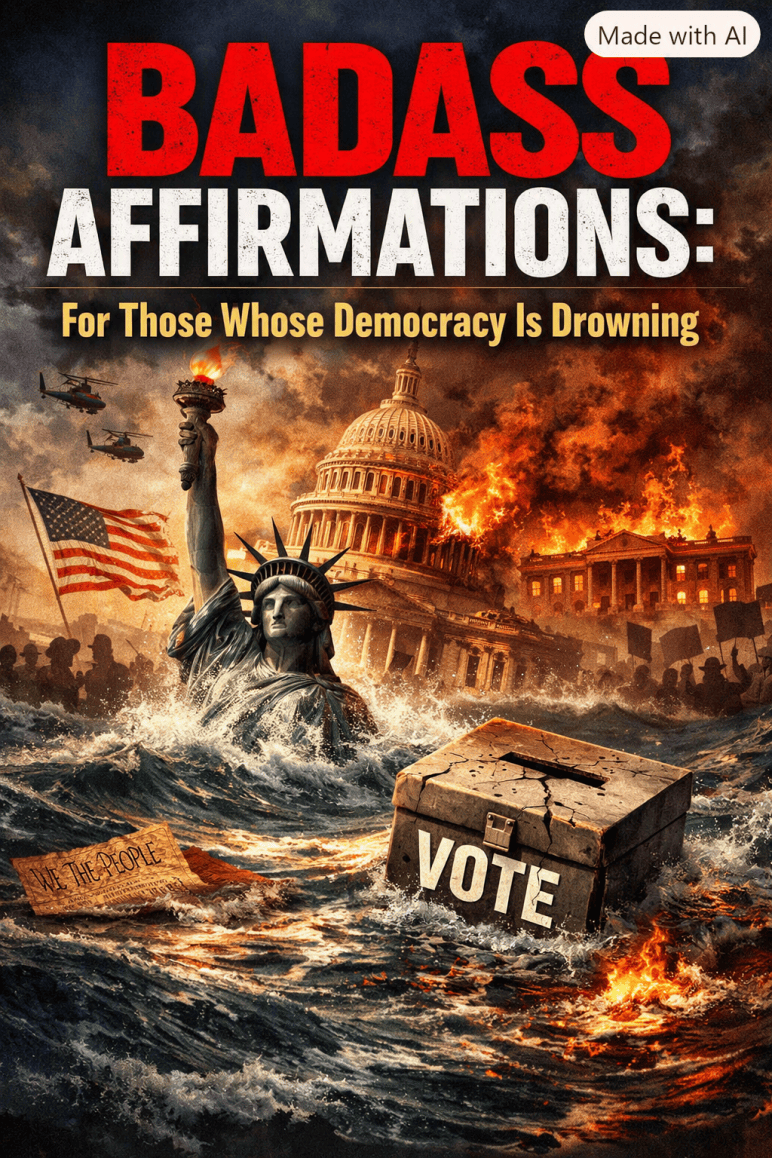
Light the charcoal, y’all. Because if we’re gonna talk about badass affirmations for citizens whose democracy is currently doing the backstroke in a kiddie pool of chaos. We need heat, smoke, and the ancestors gathered around like, “What is this mess?”
So go on and call upon Big Mama, Pawpaw, and Auntie Who Don’t Play. And that one ancestor who definitely hexed somebody for stealing her cornbread recipe. We need all hands-on deck. Democracy is wobbling like a church usher in 6-inch heels. And we’re about to speak life into ourselves before we lose our ever-loving minds.
Listen. Sometimes you wake up. Check the news. And immediately feel like you’ve been spiritually slapped with a wet biscuit. The headlines look like they were written by raccoons on Red Bull. The country feels like it’s being run by a committee of confused squirrels. And you, sweet, exhausted, democracy-loving you, are just trying to keep your blood pressure below “boiling crawfish.” But fear not. The ancestors said, “Stand up straight. You ain’t built for folding.”
Badass Affirmations for Citizens Watching Democracy Do the Electric Slide Off a Cliff:
“I am the descendant of people who survived worse nonsense than this.” If your ancestors lived through plagues, wars, and that one cousin who stole everybody’s tax refund, you can survive this political circus.
“My voice is louder than the chaos.” Even if your voice is currently cracking like a middle-schooler in puberty, it still counts.
“I will not be gaslit by people who can’t even operate a group chat.” If they can’t coordinate a potluck, they cannot steal your sanity.
“I am a Southern-grown, sass-infused, democracy-defending masterpiece.” You are basically sweet tea with a vengeance.
“I will not lose hope. I will lose patience, yes. But not hope.” Hope is eternal. Patience is on backorder.
“I am allowed to scream into a pillow. Eat a biscuit. And try again.” Self-care is patriotic.
And if you feel your spirit wobbling, just imagine your ancestors standing behind you. Arms crossed saying, “Don’t let these fools make you forget who you are.”
So, here’s the deal. Democracy may be drowning. But so are half the plants in my yard. And I still believe in resurrection. We are not the generation that gives up. We are the generation that shows up with snacks, sarcasm, and a battle cry that sounds suspiciously like “Bless your heart.”
We will keep pushing. We will keep voting. We will keep raising hell politely. Unless politely stops working. In which case we will raise hell with the enthusiasm of a toddler who missed naptime. And when the world feels too heavy, remember this. Your ancestors didn’t survive all that history just for you to crumble like a stale biscuit. You are built of grit, grace, and generational side-eye.
Now go forth, democracy defender. Light the charcoal. Invoke the ancestors. And remind the universe that you are not to be trifled with. Mic dropped. Somebody please pick it up. My knees are too old for bending. Thanks for reading! And get out and vote!
Affirmation: I am a fierce, unshakeable force of hope. My voice matters. My presence matters. And I will not let chaos steal my courage.
“Leaving isn’t weakness. Staying alive long enough to escape is strength.”
-This Puzzled Life
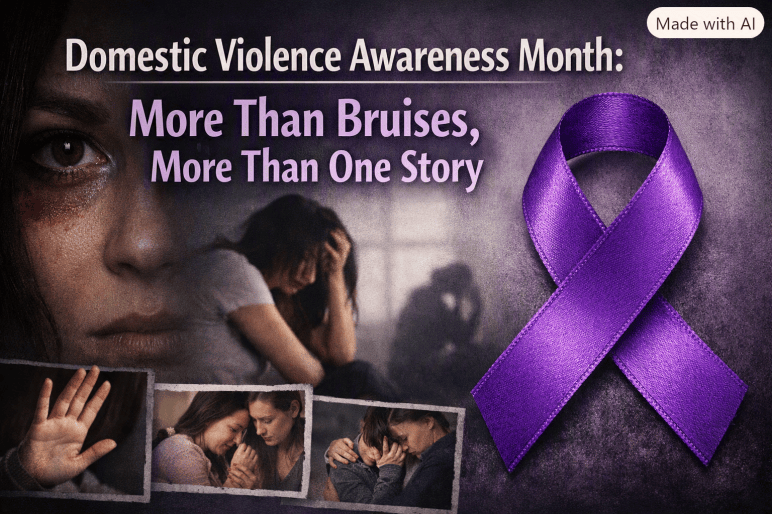
Light the charcoal. Sprinkle the sage. Call the ancestors the loud ones, the protective ones, in close. The ones who don’t mind flipping a table when truth needs to be told. Let the ancestors pull up their rocking chairs and lean in like, “Alright baby, tell it exactly how it happened.“ Because today, we’re walking straight into a fire that too many people pretend isn’t burning. And the topic is Domestic Violence Awareness Month.
This month isn’t just a purple ribbon or a hashtag. It’s a national reckoning. A month carved out because silence has killed too many. Shame has trapped too many. And judgment has wounded too many who were already bleeding. It exists because domestic violence is not one thing. Not one story. Not one bruise. It’s a whole constellation of harm that is emotional abuse, financial control, spiritual manipulation, psychological warfare, sexual coercion, digital stalking, physical stalking, rape, threats, intimidation, and isolation. All of it real. All of it dangerous.
And Lord knows, the Deep South has a long tradition of saying, “Well, why didn’t she just leave?” With the same tone they use when asking why you didn’t bring potato salad to the church potluck. But today we’re not whispering. We’re not sugarcoating. We’re not letting judgment drown out truth.
Domestic violence is more than bruises. More than shouting. More than slammed doors. It’s the slow erosion of your identity. It’s the constant fear humming under your skin. It’s the way you learn to read someone’s footsteps like weather patterns. It’s the way you shrink. Fold. And contort yourself trying to keep the peace that never stays peaceful.
And let me say this with all the Southern sass I can muster. If you’ve never lived it, you don’t get to judge it. Because “just leaving” is a fantasy sold by people who have never had their life threatened. Their finances controlled. Their spirit manipulated. Or their faith weaponized against them. I know this because I lived it. Fourteen years in a domestic abuse situation that nearly swallowed me whole. The cycle wasn’t simple. It was a trap crafted with precision love bombing, threats, and intimidation. That is continuously repeated until you forget what freedom feels like.
I didn’t stay because I was weak. I stayed because I was scared. I stayed because I was conditioned. I stayed because every exit felt like a death sentence. And let me make something crystal clear. It wasn’t a billionaire. It wasn’t a senator. It wasn’t a monster hiding in the shadows. It wasn’t an immigrant. It wasn’t a drag queen with a story book. It wasn’t a trans person. It wasn’t a black person. It was a white, “Christian” man in the Deep South. One who used the Bible like a weapon. While twisting scripture into shackles. Preaching submission while practicing cruelty. A man who believed control was his God-given right. And fear was his favorite language.
That’s why Domestic Violence Awareness Month matters. Because abuse doesn’t look like one stereotype. Survivors don’t fit one mold. Judgment is easy. But understanding saves lives. It is a promise. A collective vow that we will speak loudly. Love fiercely. And refuse to let anyone’s suffering stay hidden behind closed doors.
And now, let me drop this mic so hard the ancestors stand up and clap. I survived what was meant to break me. I reclaimed what was stolen from me. And I will never apologize again for the fire in my voice. Thanks for reading! What have been your experiences?
Affirmation: I honor my survival, my truth, and my healing. I am worthy of safety, love, and a life without fear.
“A nation that excuses its predators will always silence its survivors.”
-This Puzzled Life
Light the charcoal. Sprinkle the sage. And call in the ancestors. The loud ones, the unfiltered ones, the ones who never learned to whisper. Today I’m summoning Ida B. Wells, Maya Angelou, Nina Simone, Toni Morrison, and every grandmother who ever slammed a cast‑iron skillet down and said, “Not my babies. Not today. Not ever.” Because what we’re about to talk about requires their fire, their fury, and their refusal to sit politely while the world burns around us. They are pacing. They’re rattling the windows. They’re demanding to know how a nation with libraries, universities, churches, and a Constitution still can’t figure out that rape is wrong.
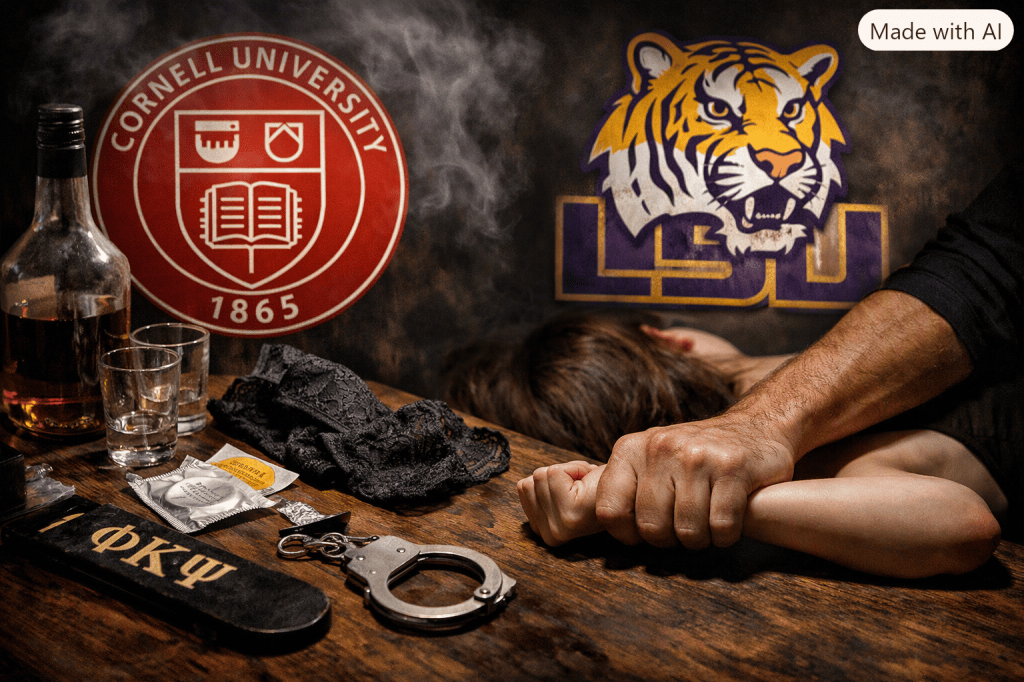
Cornell University and Louisiana State University are two institutions that love to brag about excellence, prestige, and legacy. Yet somehow can’t grasp the basic concept of protecting students from sexual assault. And now punishments include writing an essay? As if rape is a missed homework assignment. As if trauma is a teachable moment for the predator. Instead of a lifelong sentence for the victim. The ancestors are not amused. And neither am I.
Let’s ask the question America keeps dodging like it’s a bill collector, “What the hell is wrong with us when we have created a rape culture?” And don’t you dare pretend it came out of nowhere. Let’s start at the top at 1600 Pennsylvania Avenue. Where 77,000,000 voters decided that sexual abuse, rape allegations, and bragging about assault were just personality quirks. You know the excuses about “Locker room talk,” “Boys will be boys” , and “He tells it like it is.” No. He told us exactly what he does. And millions said, “Sounds good to me.”
When the leader of the country can say he can “grab them by the pussy” and get away with it, why are we shocked when college students mimic the behavior? Why are we surprised when institutions protect predators? Why do we act confused when victims stay silent? This is not confusion. This is culture. This is conditioning. This is America refusing to confront its sickness.
Politicians have paid off victims. Church leaders have hidden abusers behind pulpits. Celebrities have settlements thicker than their resumes. And the public shrugs. But victims get shamed. We get interrogated. We get asked what we were wearing. We get told we “waited too long.” We get treated like E. Jean Carroll who was sexually assaulted, defamed, mocked, and dragged by the very man who attacked her, Donald Trump. And by his cultists who call themselves “Christians.”And you wonder why so many stay silent? You wonder why survivors disappear into themselves? You wonder why healing feels like climbing a mountain with no summit? Here are two recent incidences of the same type of justified behavior.
Cornell University — Current Case (2024–2026)
The current Cornell case centers on a lawsuit filed in September 2026 by a former student, Jane Doe, who alleges she was drugged and gang‑raped by seven Chi Phi fraternity members on October 19, 2024. According to the lawsuit, she was intoxicated. Coerced into snorting what defendants claimed was ketamine. And then repeatedly assaulted for several hours by multiple fraternity members. One defendant allegedly sent a Snapchat message to the Chi Phi group chat advertising “free pussy” to encourage more men to join the assault. Doe reported the incident to Cornell police weeks later. The university conducted at least 12 hearings. Of the seven accused, only two were expelled. Others received lesser sanctions such as suspensions, workshops, or essays, according to Doe’s attorney. No arrests were made. And the Tompkins County District Attorney stated there was “insufficient evidence” for criminal charges. Cornell confirmed the fraternity remains barred from campus. And acknowledged that defendants were offered opportunities to “mitigate their conduct.” But cited federal privacy laws in declining to disclose individual disciplinary outcomes. https://www.cbsnews.com/newyork/news/cornell-university-lawsuit-fraternity-rape-allegations/?utm_source=copilot.com
Louisiana State University (LSU) — Current Case (2025–2026)
The current LSU case involves a sophomore student, Kendall Danielle, who alleges she was raped by an LSU football player on October 18, 2025, around 4:30 a.m. She underwent a rape kit examination and later participated in LSU’s Title IX process. Which concluded that the player was responsible for rape. And suspended him for two semesters. However, he appealed and was ultimately allowed to return to campus. Resume football activities. And participate in student organizations. Despite still being found responsible.
Danielle alleges the player’s mother contacted her urging her not to pursue charges because it could harm his football career. And that the player sent her $1,000 in an attempt to keep her from pressing charges. After learning he was allowed back on campus, she went public on TikTok and subsequently filed a criminal complaint. The East Baton Rouge District Attorney has since opened a criminal investigation. They are requesting reports from LSU, LSU Police, and Baton Rouge Police. LSU maintains it followed Title IX procedures and is cooperating with law enforcement. The player has not been publicly identified. https://www.wwltv.com/article/news/crime/student-files-sexual-assault-complaint-against-lsu-football-player/289-2bfa7986-e5fe-4d24-92db-9b069888c305?utm_source=copilot.com
But let’s talk about the roots of this rot. Is it the religions that teach masturbation is sinful? Is it the purity culture that tells young people their bodies are dangerous? Is it the sermons that say touching yourself will send you to hell? Let me be clear. You will not burn in the lake of flames for using two body parts God created you to have. For God’s sake, let them masturbate. Because when you shame normal, sexual behavior, you get people like the Duggars. They were raised in sexual repression so severe it turns into predation.
Is it misogyny influencers like Andrew Tate and Nick Fuentes? Men who teach boys that women are objects, property, and targets. Men who profit off hatred and call it masculinity. Or is it simply that America still refuses to teach boundaries? Still refuses to teach consent? Still refuses to teach respect?
Cornell and LSU are not anomalies. They are symptoms. Symptoms of a nation that treats sexual assault like a PR inconvenience instead of a violent crime. And when universities punish predators with essays, counseling sessions, or “reflection assignments,” they are telling victims, “Your trauma is worth less than his future.” And that is the message survivors hear every single day.
All predators no matter their status, wealth, influence, or fan base, should be held accountable. Not protected. Not excused. Not wrapped in a Bible verse and called “God’s Will.”
As a sexual assault survivor myself, I will never fully heal from the years I was assaulted. Raped sometimes daily by a man who is just like Donald Trump. I will never fully heal from the damage inflicted on me at five years old by someone who saw a child as an easy target. You will never understand that fear. And I pray you never have to.
Lift victims up. Lift survivors up. Hold predators accountable. Every single one of them. Because rape is not a mistake. It is not a misunderstanding. It is not a lapse in judgment. It is violence. It is domination. It is a choice. And America needs to stop pretending otherwise. Thanks for reading!
Affirmation: I am not what happened to me. I am what I survived. My voice is powerful. My truth is valid. And my healing is sacred.
“Hypocrisy is loud. But truth has a way of hollering back.”
-This Puzzled Life
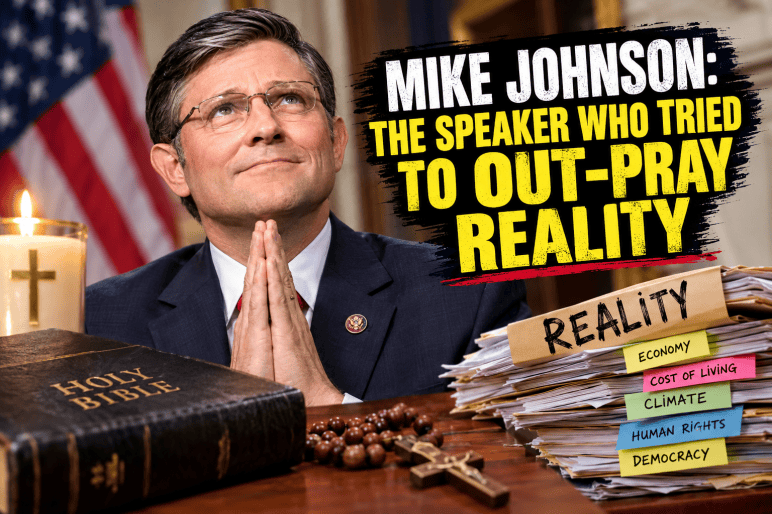
Light the charcoal. Sprinkle “Oh my GOD this is terrible.” And call upon the ancestors. We’re about to talk about Speaker of the House “Moses” Mike “Grindr” Johnson. Also known as the leader of the Closetocracy. The man who somehow manages to be both the nation’s top lawmaker. And the world’s most chaotic religious plot twist. Ancestors, gather ‘round. Bring sweet tea. Bring smelling salts. Bring a fan. Because this level of hypocrisy has me sweating like a Pentecostal preacher caught in a drag brunch.
The political and religious hypocrisy in this country has gotten so loud it’s rattling the picture frames in my hallway. Somebody grab the emergency sweet tea. We’re going to talk about the kind of political behavior that makes the ancestors collectively sigh.
This is about The Speaker of the House and the Biblical‑themed, reality‑TV‑level chaos that has unfolded since he picked up that gavel. And yes, we’re using real facts. And yes we’re adding Southern sarcasm so thick you could spread it on a biscuit.
10 FACTUAL THINGS MIKE JOHNSON HAS DONE, WITH SOURCES, AND A WHOLE LOT OF SOUTHERN SARCASM
Southern translation: Sir, the Gulf of Mexico is boiling like crawfish water. This is not the time.
Light the charcoal again. Because this whole situation needs a spiritual cleansing, a sage bundle, and maybe a priest. The Speaker’s record is a masterclass in political contradiction:
Biblical metaphors for leadership.
Restrictive policies for families.
Attempts to overturn elections.
Climate denial while the South melts like a candle.
LGBTQIA+ scapegoating while preaching “love thy neighbor.”
It’s the kind of hypocrisy that makes Southern liberals clutch their pearls and say, “Lord, take the wheel, the whole car, and the insurance policy.” The ancestors are tired. The sweet tea is gone. And I’m officially closed for renovations due to excessive foolishness. Thanks for reading! And get out and vote.“So what do you think? Is reality being dramatic? Or is Mike “Grindr” Johnson just trying to pray the plot twist away?”
Affirmation: I stand firm in my truth, my identity, and my joy. No matter who tries to rewrite the narrative.
“Awareness is the first step toward healing. And healing is a community effort.”
-This Puzzled Life
Light the charcoal. Sprinkle the sage. Call the ancestors. Today, we’re talking about National Opioid Awareness Day. And we’re doing it in full Southern-sass, porch‑swing truth‑telling mode. Grab your sweet tea, your emotional support cat, and maybe a biscuit for stability. Because this one’s gonna be equal parts hilarious, heartfelt, and holy‑ghost serious.
The truth is this. National Opioid Awareness Day exists because too many families have empty chairs at the dinner table. Too many mamas have cried into dish towels. Too many communities have buried dreams that should’ve lived.
This day is recognized to honor the lives lost. Uplift the ones still fighting. And remind the rest of us that addiction is not a moral failure. It’s a public health crisis that deserves compassion, resources, and loud, unapologetic awareness. But you know me. I can’t stay solemn for long. My ancestors didn’t raise me to be quiet or boring. Now let’s get sassy about it.
Let me tell you something. If the opioid epidemic were a person, it’d be that messy cousin who shows up uninvited. Eats all the potato salad. Steals your good Tupperware. And then has the nerve to ask for gas money. It’s rude. It’s destructive. And it’s been wreaking havoc across the nation like a raccoon with a grudge and access to your trash cans. This is the day we collectively say, “Not today, Satan. Not in my house. Not in my holler. And not in my county.”
It’s the day communities come together with churches, schools, aunties, cousins, and the neighbor who always knows everybody’s business. To learn. Support. And fight back with education, prevention, and love. Because love is louder than stigma. And community is stronger than crisis. And Southern women? We don’t play when it comes to protecting our people.
Addiction doesn’t care about zip codes. Because recovery is possible. Because shame kills. But awareness saves. Every life deserves a chance to come home. Sit at the table. And say, “I made it.” And if we don’t talk about it, we lose more than we can bear.
And so here we stand. Charcoal still glowing. Sage still swirling. Ancestors still humming that low in a knowing tune they save for moments when truth hits bone-deep. National Opioid Awareness Day isn’t just a date on a calendar. It’s a call to rise up like your grandma’s biscuits in a hot oven. It’s a reminder that we don’t get through hard things alone. And we sure don’t heal in silence.
Silence is a thief. Stigma is a liar. And shame? Shame is that dusty old cousin who shows up to the family reunion wearing flip-flops and bad decisions. While trying to tell everybody how to live. We don’t listen to shame in this house. We listen to compassion, community, and the ancestors who whisper, “Baby, keep going.”
We honor the ones we’ve lost. We uplift the ones still fighting. We stand guard over the ones who haven’t yet found their way home. And we do it with humor, heart, with Southern stubbornness. And with the kind of love that refuses to back down. It’s the kind of love that will fight a bear, a politician, and a malfunctioning church crockpot all before breakfast.
So today, light your charcoal. Sprinkle your sage. Call your ancestors. And then take one bold step toward awareness, healing, and being the kind of person who refuses to let crisis win. Because this story isn’t over. This fight isn’t finished. And this our community is louder, stronger, and more determined than any epidemic that ever tried to break us. Now excuse me while I drop this mic like it’s hotter than a Mississippi August sidewalk. We see you. We love you. We’re fighting with you. And we’re not done yet.
Affirmation: I honor the lives affected, uplift the ones still fighting, and choose compassion over judgment every single time.
“Shame has never saved a life. Compassion has. And still can.”
-This Puzzled Life
Light the charcoal. Sprinkle the sage. Today, we’re not just cleansing the house. We’re cleansing the collective delusion that addiction is a moral failing. The sage is smoking like it’s trying to file a worker’s comp claim. The charcoal is popping like it’s gossiping about the neighbors. And I’m standing in the kitchen with the kind of determination usually reserved for Southern women who’ve had enough.
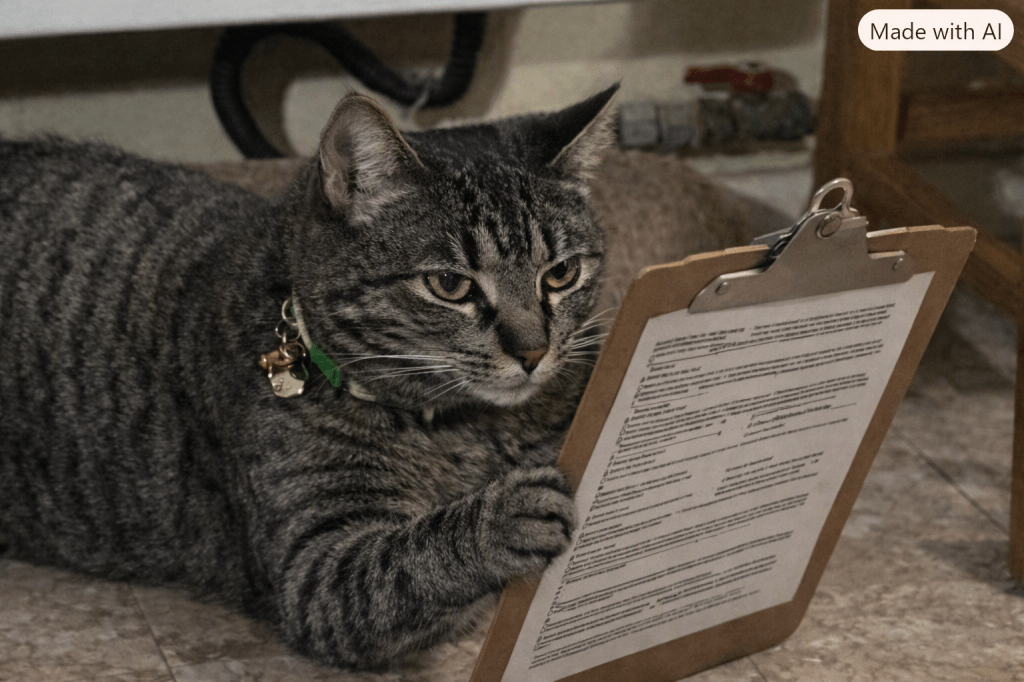
Piper struts in first.Tail high. Eyes narrowed. And a clipboard already out like she’s conducting a federal audit.
Piper: “Before we begin. I need to know if this is a cleansing ritual, a public dragging, or a memorial service. My paperwork differs.”
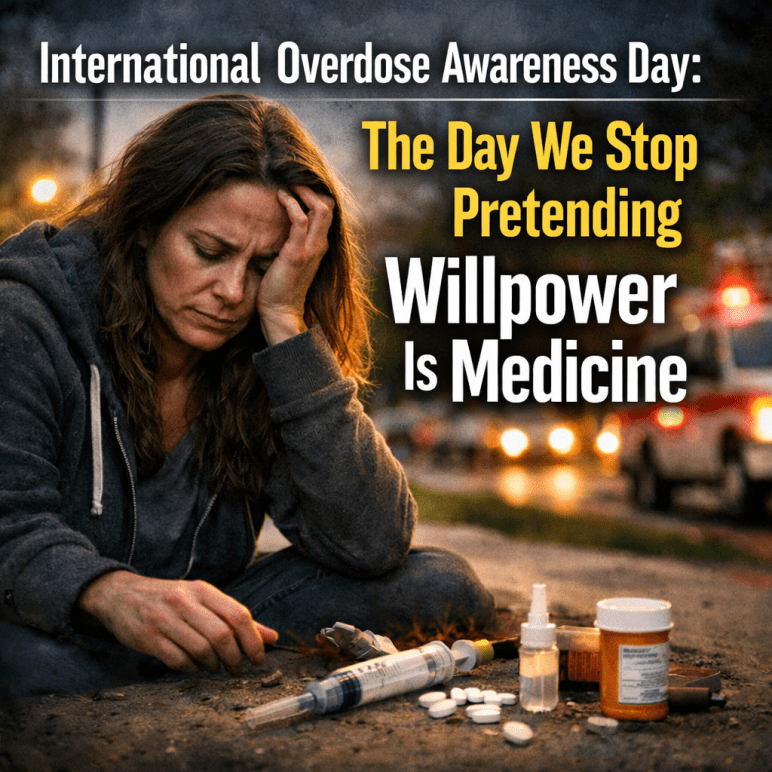
Me: “All three. It’s International Overdose Awareness Day. And I’m about to educate the masses.”
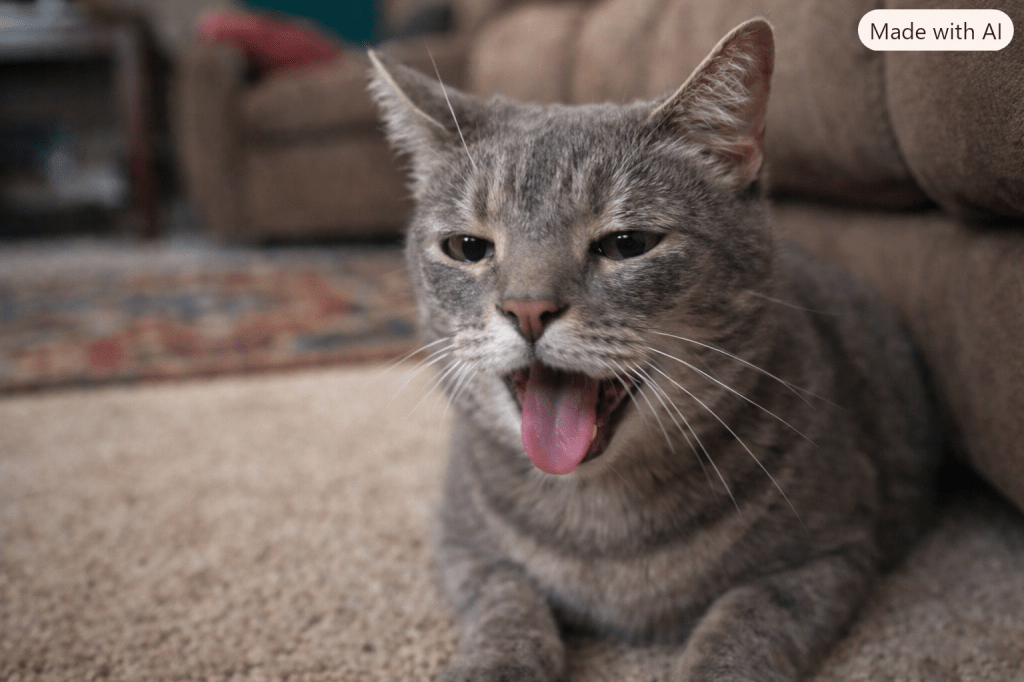
Coco barrels in next. She’s breathing heavily like she just ran a marathon but actually just walked from the living room.
Coco: “Is this about the humans who say addiction is willpower? And overdose is a moral collapse? I once ate an entire rotisserie chicken while sleepwalking. Explain that with willpower.”
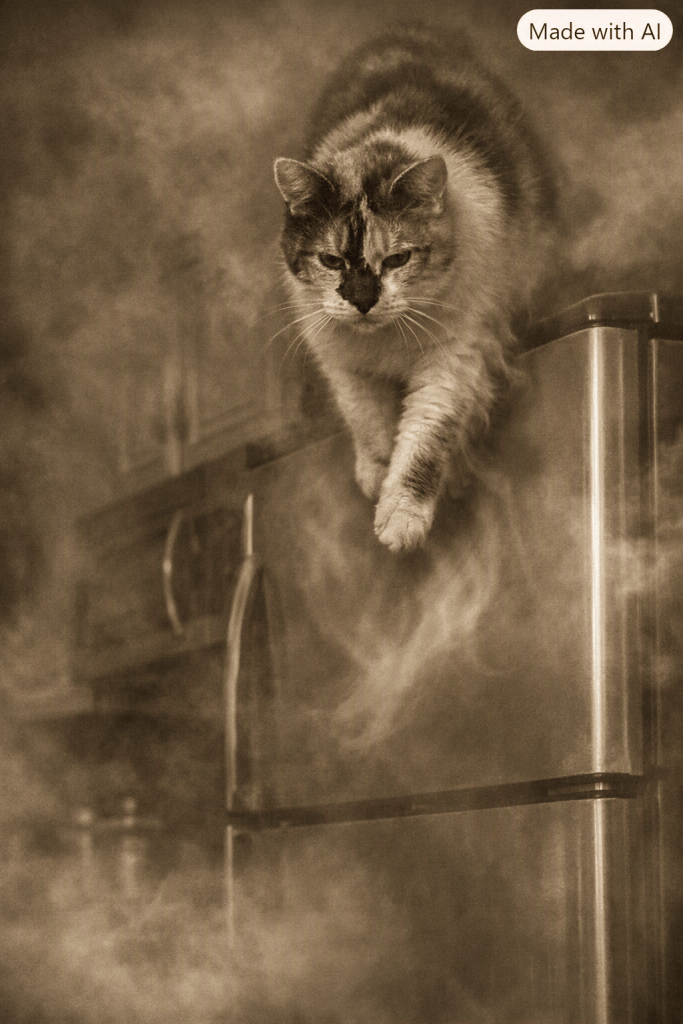
Tinkerbell descends from the top of the fridge like a Victorian ghost who died of judgment.
Tinkerbell: “If willpower cured anything, half this household would stop doomscrolling at 2 AM. And the other half would stop emotionally eating Cheez-Its.”
Me: “Exactly. We’re dragging ignorance today.”
Piper adjusts her glasses. The glasses she does not need and sighs.
Piper: “I’ll prepare the minutes. This meeting is already chaotic.”
International Overdose Awareness Day started in 2001 as a remembrance event at a Salvation Army needle exchange in Melbourne, Australia. It was created to honor those lost. Reduce stigma around overdose. And to push the world to stop treating overdose like a shameful secret instead of a public health crisis. And let me say this plainly, with all the Southern sweetness of a peach cobbler baked in righteous fury, “Addiction and overdose are not moral issues.” And it’s not about willpower.
The next time you have diarrhea, keep in mind that it’s just willpower. Sit there with a Bible verse and see if the situation resolves itself. Let me know how that works out. That’s how ludicrous that argument is.
People don’t become addicts because they’re weak, sinful, lazy, or lacking character. Many addicts die wanting anything in life other than to be an addict. They die fighting. They die trying. They die hoping. But some folks, including people in my own family, love to say, “Addiction is about willpower.” It never has been. It never will be.
I’ve been an addict. I’ve been a professional treating addicts. I’ve buried friends. I’ve buried family. Not once have I judged them for their struggle. But the hypocrites in my life? The ones who claim moral superiority while ingesting alcohol at a rate that Pete Hegseth and Kash Patel struggle to keep up with? Hypocrite, please.
Overdose is an unfortunate part of addiction. Whether it’s chemicals, behaviors, or the slow-motion self-destruction people pretend “doesn’t count.” Because it’s socially acceptable. So how about we stop demonizing people who overdose while absolving ourselves of our own harmful, numbing, escapist overdoses?
If we’re being honest, some folks overdose on alcohol, self-righteousness, denial, Amazon Prime, gossip, rage, food, religion, and control. But somehow that doesn’t get labeled as a moral failure. Funny how selective morality works.
And here’s the truth that makes some folks squirm like they sat on a church pew with a splinter. Overdose doesn’t happen because someone is weak. It happens because someone is human. Humans who loved. Humans who tried. Humans who fought battles most people couldn’t survive for five minutes. Humans who deserved compassion instead of commentary.
But every year, we lose more people. Not because they were broken. But because the world still treats addiction and overdose like a character flaw instead of a medical condition. We lose them because shame is louder than science. Because judgment is easier than empathy. Because some folks would rather cling to their superiority complex than admit they don’t know a damn thing about what they’re talking about.
So on International Overdose Awareness Day, I’m lighting this charcoal. Sprinkling this sage. And saying this with my whole chest, “Stop demonizing the people who are drowning while you’re out here drinking from your own poison well. Stop pretending your socially acceptable overdoses are any less destructive just because they come with a cute, monogrammed tumbler or a Bible verse slapped on top. Stop acting like overdose is a choice when half the people judging can’t even choose to drink water or go to bed on time. And most importantly, start honoring the people we’ve lost by refusing to let stigma bury the living.
The dead deserve dignity. The living deserve compassion. And the ignorant deserve education. Loud, unapologetic, Southern‑fried education. Today, I’m choosing truth over tradition. Compassion over comfort. And humanity over hypocrisy. If that makes some folks uncomfortable? Good. Growth never happens in comfort. And comfort has never saved a single life. But truth might. Compassion might. You might. Thanks for reading! Share this with others.
Affirmation: I honor the lives lost. Uplift the living. And refuse to let stigma speak louder than truth.
“Grief doesn’t just break you. It reshapes you by carving out new rooms in your spirit where strength, memory, and love learn to live together.”
-This Puzzled Life
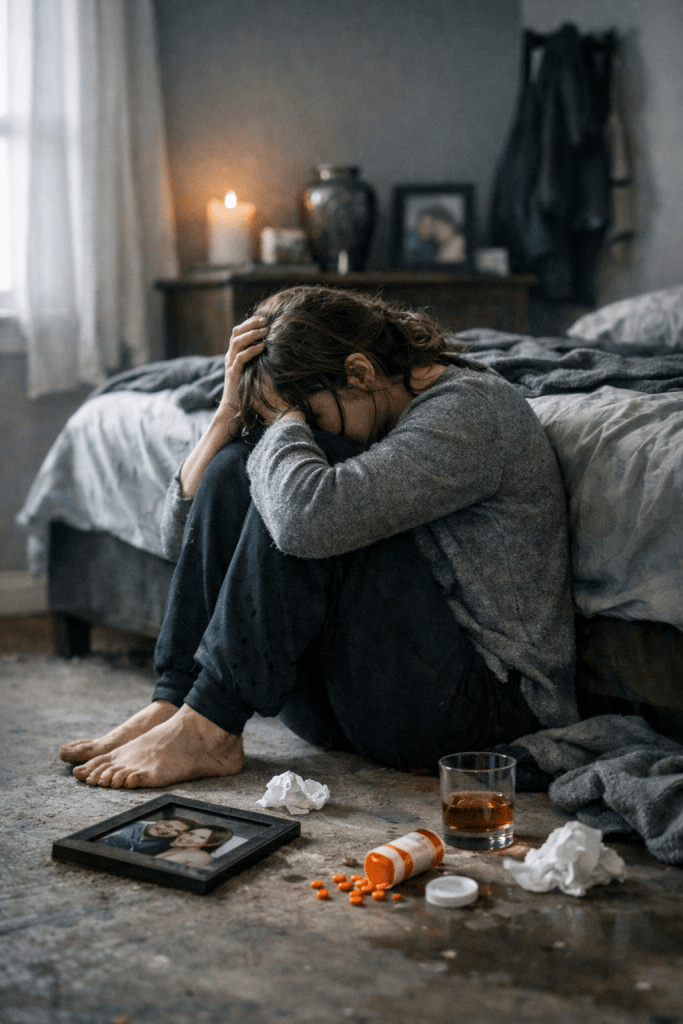
Light the charcoal. Sprinkle the sage. Grief has once again decided to walk into my life like she owns the deed, the land, the mineral rights, and the emotional infrastructure. She didn’t knock. She didn’t call. She didn’t even send a courtesy text like, “Hey girl, you got a minute to fall apart?” No. She just barged in with her suitcase full of memories. Her purse full of triggers. And set them right in the middle of my spirit like I have nothing else going on.
Grief is bold like that. She shows up when you’re finally catching your breath. She shows up when you’re laughing again. She shows up when you’ve just folded the last load of laundry and dared to feel steady. And suddenly, there she is, sitting on your chest. Rearranging your heartbeat. And whispering reminders you thought were long gone.
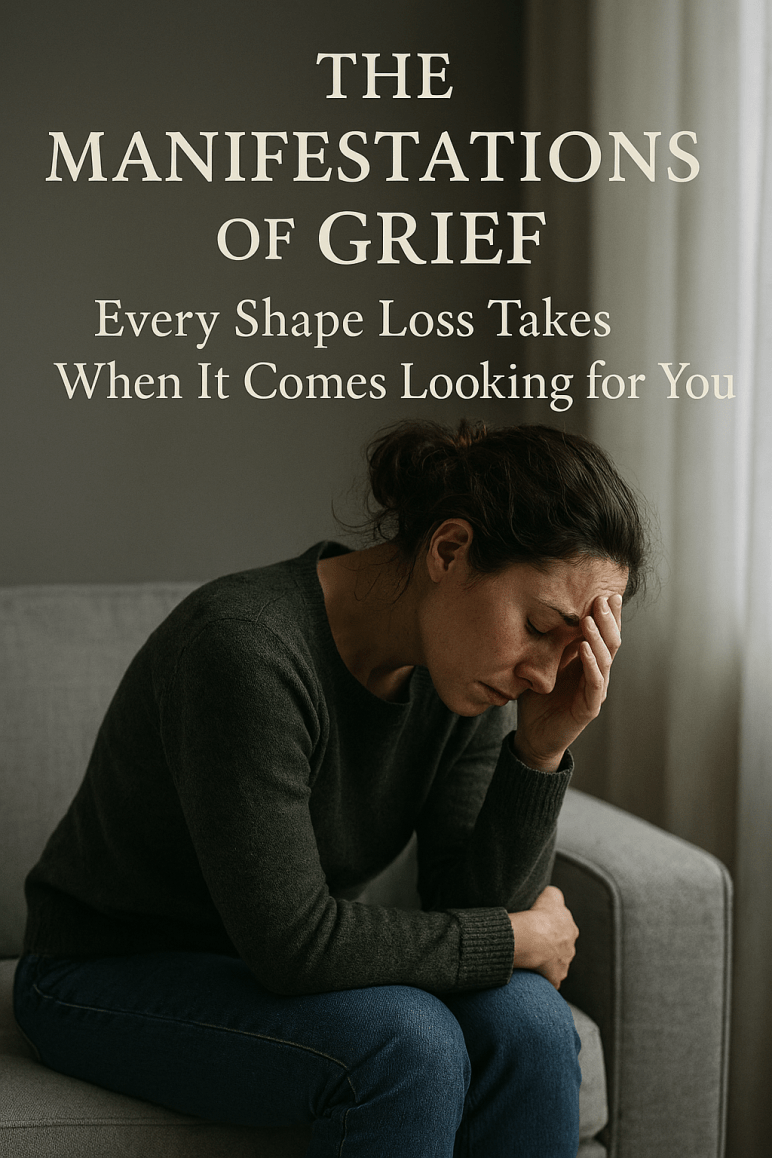
People talk about grief like it’s one thing, one feeling, one moment and/or one season. But grief is a whole ecosystem. A weather pattern. A climate shift. A spiritual renovation of which you were unprepared. Grief manifests like this.
The Fog
You’re moving. But everything feels slow. You’re functioning. But nothing feels real. You’re present. But you’re also floating somewhere three feet behind your own body.
The Fire
Sudden anger. Sudden frustration. Sudden “why is this cabinet door looking at me wrong” energy. You’re not mad at the world. You’re mad at the hole the world left behind.
The Wave
You’re fine until you’re not. You’re washing dishes. And suddenly you’re crying into the silverware. You’re driving and suddenly the road looks blurry. You’re folding towels and suddenly you’re remembering a laugh you’ll never hear again.
The Tornado
Everything hits at once. Memories. Regrets. Love. Loss. All swirling so fast you can’t tell which emotion is which. You’re just holding on to the nearest emotional tree trunk hoping you don’t get swept away.
The Quiet Ache
The softest one. The one that sneaks in when the house is still. The one that sits beside you like a shadow. The one that reminds you that grief is love with nowhere to go.
Grief isn’t a sign of weakness. It’s a sign that you dared to love deeply. It’s proof that your heart was brave enough to attach itself to something real. And grief doesn’t leave. It changes shape. It softens. It becomes something you learn to carry. Not because you want to. But because you’re strong enough to. And on the days you feel like you’re not, grief reminds you that surviving is still a form of courage.
Healing doesn’t mean forgetting. Healing means learning to breathe around the empty spaces. Healing means honoring what was while still choosing what will be. Healing means letting yourself feel everything. Even the parts that don’t make sense. And if you’re grieving in ways that feel messy, unpredictable, or inconvenient? You’re doing it right.
Grief may think she’s the main character. But she clearly forgot whose story this is. I’ve walked through storms that tried to swallow me whole. I’ve rebuilt myself from pieces I didn’t even know were still usable. I’ve risen from ashes so many times the ancestors started calling me their favorite phoenix.
Grief can knock me down. But she can’t keep me there. She can shake my voice. But she can’t silence it. She can bend my spirit. But she can’t break it. Every time grief shows up, I rise again. Sometimes I’m slower. And sometimes I’m softer. But always stronger than before. I rise with more compassion. I rise with more clarity. I rise with more fire in my bones and more truth in my chest.
If grief wants to stay awhile, fine. She can sit on the porch and mind her manners. But she doesn’t get to run the house. She doesn’t get to rearrange the set up. And she doesn’t get to dim my light. I am the one steering this healing. I am the one choosing the pace. I am the one deciding what grows from the ashes. And if grief doesn’t like it? She can take it up with my ancestors. Because they already told me I’m built for this. Thanks for reading! And grieve as much as you need to.
Affirmation: I honor every way grief moves through me. I honor the loud, the quiet, the confusing, and the tender. Each feeling is proof that my heart loved deeply and still knows how to rise.
“My family says I’m ‘living in sin.’ Which is hilarious coming from people who treat denial like a spiritual gift. And premarital sex like a community service.”
-This Puzzled Life
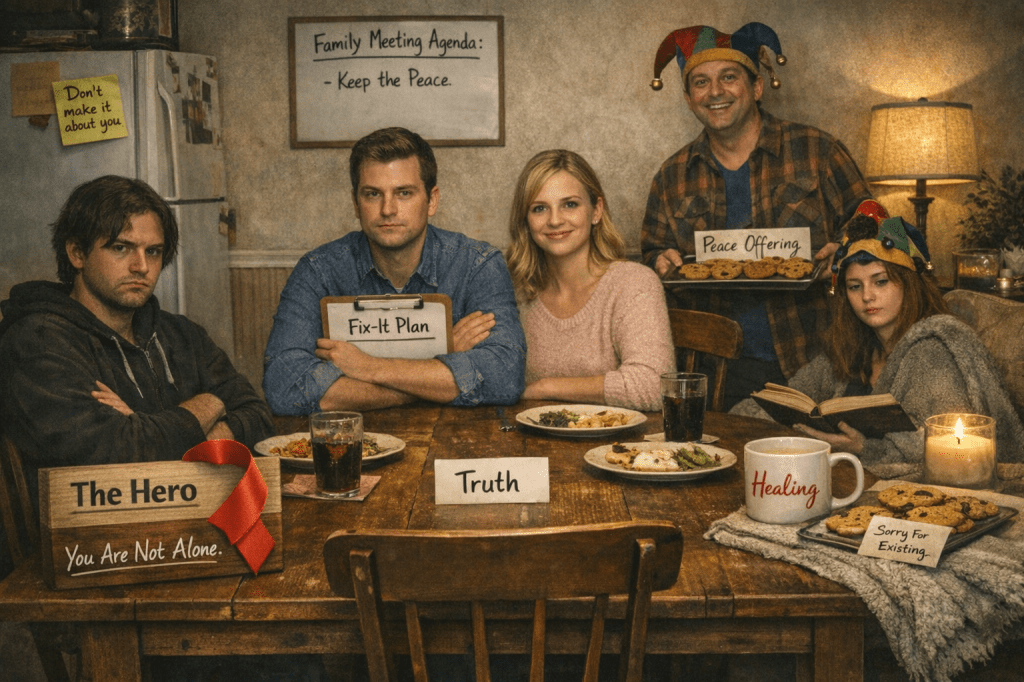
Light the charcoal. Sprinkle the sage. Negative energy, get your shoes on and leave. Today we’re diving into one of my favorite dysfunctional family topics. Family roles. Those unofficial job titles we never applied for. Never wanted. And yet somehow ended up performing like we were on salary. Take a moment and see where you and your people fall. And here’s the spoiler. If you’re reading this, you already know.
Before we get started, let me warn you. This is not a gentle stroll through family history. This is a full‑blown guided tour through a Southern household. That’s been held together with casserole, denial, and conservative Christian values. That seem to get applied with the accuracy of a toddler using glitter glue.
I grew up in a family where “we don’t talk about that” wasn’t a suggestion. It was the eleventh commandment. Emotions were treated like illegal fireworks. Everyone had them. Nobody handled them correctly. And something always exploded at the worst possible time.
In my house, honesty was considered aggressive. Accountability was considered disrespectful. And therapy? Therapy was treated like witchcraft performed by people who “don’t know Jesus personally.”
Meanwhile, the dysfunction strutted around the living room in broad daylight wearing a name tag and a church hat. And everyone pretended they couldn’t see it. If denial were a sport, my family would have Olympic medals and a sponsorship from Hobby Lobby.
So, buckle your emotional seatbelt. And prepare yourself. Because once you recognize the roles in a dysfunctional family. It’s like spotting roaches. You can’t unsee them. And suddenly they’re everywhere.
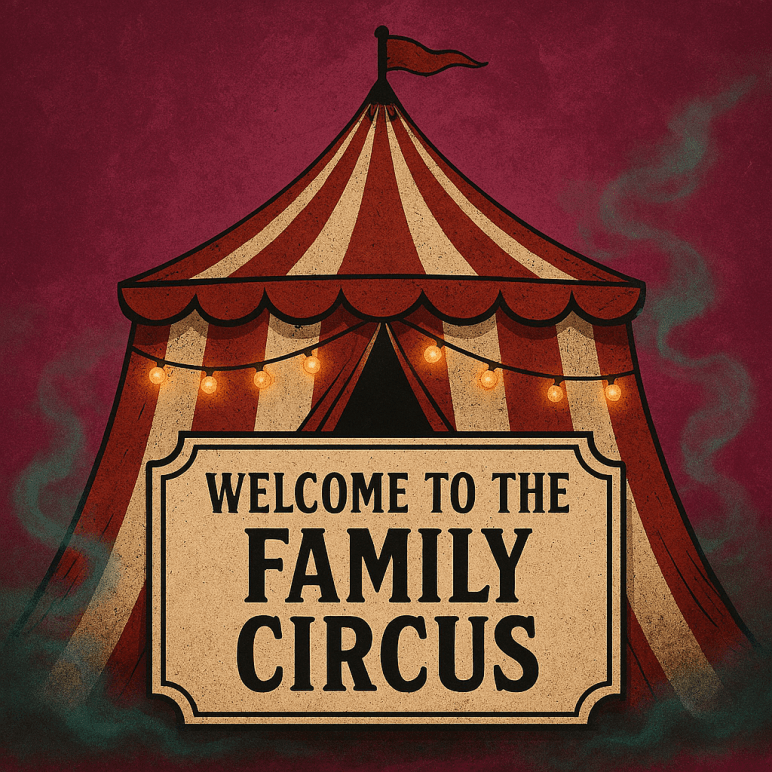
Family roles are the expected behaviors, responsibilities, and emotional acrobatics each person performs to keep the family circus running. These roles shift depending on culture, family size, and personality. But the classics are Hero, Scapegoat, Golden Child, Lost Child, Mascot. And I show up everywhere like glitter after a craft project.
Let’s begin.
1. The Hero (a.k.a. The Family PR Department) The Hero’s job is to make the family look normal, stable, and “blessed and highly favored” to the outside world. According to theraplatform.com (2025), they take on excessive responsibility to gain approval. This is my mother’s role. Or at least the role she auditions for. She is attention-seeking. Reputation-obsessed. And allergic to accountability. She delivers passive-aggressive comments like she’s handing out communion wafers. And then acts shocked when people get upset.
Her signature move? “The Dummy Card.” Suddenly she “doesn’t remember,” “didn’t mean it like that,” or “doesn’t know what you’re talking about.” But trust me, she knows. And right after she stirs the pot. She gives my dad the “rescue me” look. As if she didn’t just season that pot with cayenne, spite, and generational trauma. We only have real conversations when she’s mad at my sister, The Golden Child. Otherwise, it’s news, sports, and weather which is the Holy Trinity of Avoidance.
2. The Scapegoat (hi, it’s me) The Scapegoat is blamed for everything wrong in the family. Stubbed toe? My fault. Bad weather? Somehow me. The economy? Probably me too. I don’t conform to their lifestyle. I’m gay. I use medical cannabis. I don’t go to church because there are too many people who support the cruelty of the Trump regime. And align theirselves with the MAGA movement which practices a form of chriatianity that cannot be found in any Bible. And quite frankly, they have a bad reputation for normalizing pedophilia while demonizing being gay. I guess I should be glad that I just can’t understand that rationale.
I talk about taboo topics. And I acknowledge reality instead of pretending everything is fine. And did I mention I’m gay? Because trust me they will. Instead of saying, “She’s our family and we love her no matter the gender of someone she loves and that loves her.” They act like my existence is a PR crisis. The attitude is like, “Remember when Dana destroyed the family by being prouid to be gay and authentic?” I’m also the family whistleblower. I don’t play along with generational nonsense. I’m my own person. And I’m not apologizing for it.
3. The Golden Child (my sister, obviously) The Golden Child is the family’s prized possession. The chosen one. The favorite. And the one who can do no wrong even when she is actively doing wrong. Thriveworks.com (2023) describes this child as obedient, praised, and protected. That’s her. She has been dipped in gold since birth. She follows the script. Holds the same beliefs. And passes them down to her children like heirloom china. She was taught what to think. Not how to think. And the cycle continues. Children aren’t born to hate. They learn it from the adults who raise them. And this is what my sister excels at consistently.
4. The Lost Child (also my sister — she multitasks) The Lost Child avoids conflict like it’s a full-time job with benefits. She withdraws. Stays quiet. And pretends she’s above the chaos. While simultaneously contributing to it. She never acknowledges her harmful behavior. She believes most people are beneath her. And when she talks about someone being gay, she spells it out “G-A-Y” like she’s avoiding summoning a demon. Her emotional range is that of a frozen waffle. And honestly, that’s the family vibe overall.
5. The Mascot (me and my dad) Mascots use humor to distract from the dysfunction. We crack jokes. Lighten the mood. And do not dare fix anything. We just to keep the room from exploding. This doesn’t always work especially when me and my sister are at war like rainbows and bibles. My dad rescues my mom and sister from “big, bad Dana.” Who refuses to sweep things under the rug. I’m the villain because I tell the truth. Imagine that. Kind of sounds like the current government’s level of functioning.
Now you’ve met the cast and the roles they cling to like emotional security blankets. In the next part we’ll zoom out and look at the bigger picture. And it’s the part they refuse to acknowledge.
That concludes our tour of the Family Circus. Please exit through the gift shop. Where denial is half‑off. Accountability is out of stock. And the Scapegoat merchandise is mysteriously overpriced.” Thanks for reading! Keep breaking chains.
Affirmation: Today I honor my emotionally athletic self. The whistleblowing. Boundary‑setting. Truth‑telling legend who refuses to join the family’s Olympic Denial Team. Even though they’ve been training since the womb.
“Trauma doesn’t make you weak. It makes you a witness to your own survival.”
-This Puzzled Life
Light the charcoal. Sprinkle the sage. Let the smoke rise like it’s clocking in for a shift. And let the air shift like it’s bracing itself for whatever truth you’re about to drag into the daylight. Today isn’t about pretending everything’s fine or slapping a smile on top of a wound. It’s not about the vibes, snacks, or cats doing interpretive dance in the sunbeam. It’s about trauma awareness. It is about naming the things we survived. The things we carried alone. The things we laughed through so we wouldn’t crumble. It’s a Southern‑fried, emotionally honest, and funny enough to keep you from dissolving into a puddle on the kitchen floor.
Trauma Awareness is the kind that hides in your shoulders, jaw, breath, memories, and your jokes. And if we’re going to talk about it, we’re going to do it the only way I know how. Complete with honesty, humor, and the kind of emotional courage that feels like taking your bra off after a long day. It’s painful, relieving, and absolutely necessary.
There’s a moment right before you talk about trauma where your whole spirit goes, “Are we sure we want to do this?” It’s the same tone you use when someone says, “Let’s just run into Walmart real quick.” You know it’s not going to be quick. You know you’re going to see something you can’t unsee. You know you’re going to come out changed. Talking about trauma is like that. Except instead of a man in pajama pants buying raw chicken and fireworks, it’s your nervous system holding up a sign that says, “We’ve been through some things, ma’am.”
Trauma doesn’t just show up when you’re ready. Trauma is that one cousin who arrives early. Eats all the good snacks. And then says, “Why you look stressed?” It pops up at the worst times especially when you’re trying to relax. When you’re trying to sleep. When you’re trying to enjoy a sandwich. When you’re trying to mind your business. And when you’re trying to be a functioning adult for five minutes. Trauma will tap you on the shoulder like, “Hey bestie, remember that thing from 1998? No? Well, I do.” And suddenly you’re staring at the wall like it owes you money.
Your body remembers everything. Even the stuff you tried to bury under humor, iced coffee, and pretending you’re fine. You’ll be walking through Wal-Mart. Touching a throw pillow. And your body will whisper, “Hey, remember that time?” And you’re like, “No I do not. I am touching a pillow. Let me live.” But trauma doesn’t care. Trauma is like a Southern grandmother with a memory like a steel trap. And no sense of timing.
People talk about healing like it’s a spa day. Let me tell you something. Healing is not cucumber water and a robe. Healing is crying in the shower because your shampoo smells like 2007. Healing is realizing you’ve been clenching your jaw since the Bush administration. Healing is sitting in your car after therapy like you just got hit by an emotional freight train. Healing is messy. Healing is loud. Healing is quiet. Healing is confusing. Healing is holy. Healing is exhausting. Healing is worth it. But cute? Absolutely not.
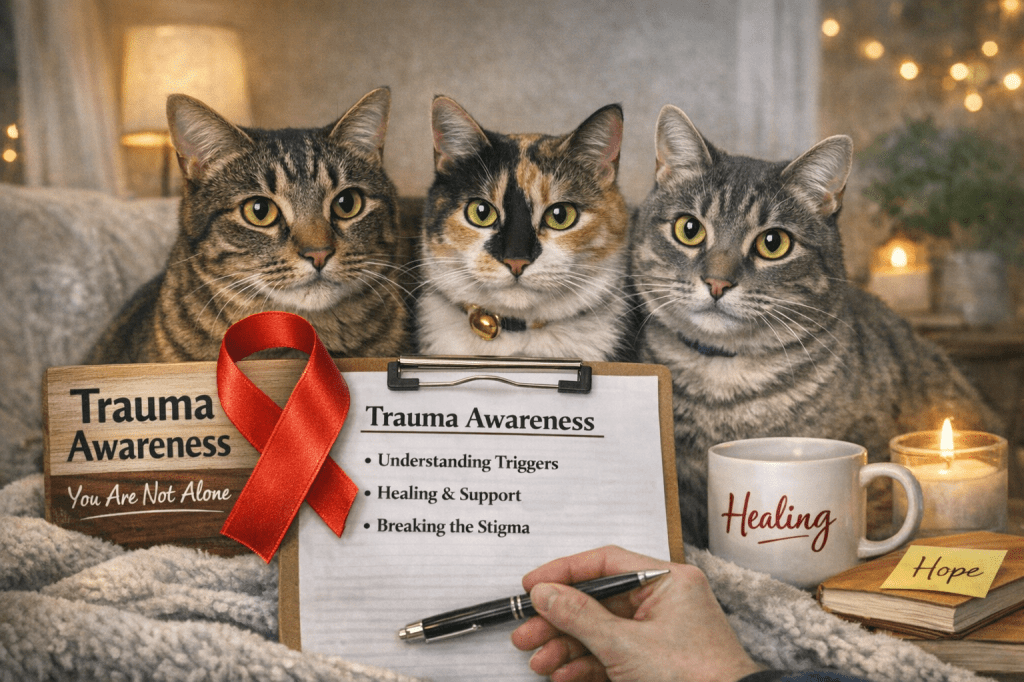
So, buckle up. Because the cats have decided it’s Trauma Awareness Hour. And apparently they’ve all been waiting their whole lives to trauma dump with the enthusiasm of a group therapy circle run by toddlers. And today is the day they ask deeply personal questions with the emotional sensitivity of a toddler holding a chainsaw. They have formed a circle. They have snacks. They have opinions. And apparently, they have questions about my trauma.
Me: “Okay, girls. Today we’re talking about trauma. Share whatever you feel comfortable with.”
She raises paw like she’s in kindergarten
Piper: “I’ll go first because my story is the most dramatic. Obviously.”
Coco: “Oh lord.”
Tinkerbell: “Let the child speak. She needs this.”
Piper: “So picture this. Me and my siblings. In a metal box. In the Mississippi heat, basically sautéing like tiny furry cornbread muffins.”
Me: “Baby, that’s awful.”
Piper: “I know. I was basically a rotisserie chicken with trauma.”
Coco: “You were a sweaty raisin with opinions.”
Piper: “Anyway, I survived because I’m dramatic and stubborn. And now every time the sunbeam hits me wrong, I flop over like a Victorian woman fainting at a garden party.”
Tinkerbell: “You faint because you forget to breathe when you get excited.”
Piper: “Trauma. Tinkerbell. Let me have this.”
Coco clears throat like she’s about to deliver a TED Talk
Coco: “My siblings and I were found under a house. A house. Do you know what lives under houses? Darkness. Ghosts. Tax evasion. I was basically a feral raccoon with trust issues.”
Me: “You’ve come so far.”
Coco: “Yes. And now I cope by judging everyone. It’s called growth.”
Piper: “You judge me the most.”
Coco: “You give me the most material.”
Tinkerbell: “I don’t remember my trauma.”
Me: “At all?”
Tinkerbell: “No. I simply chose not to be present. I was spiritually unavailable.”
Coco: “You had worms.”
Tinkerbell: “Yes, apparently my intestines were hosting a music festival.”
Piper: “You pooped like you were trying to summon something.”
Tinkerbell: “I was summoning peace. And a vet. Preferably both.”
Me: “You really don’t remember anything?”
Tinkerbell: “I remember diarrhea. And then I remember you. Everything else is optional.”
Me: “Well, we’ve all been through some things.”
Piper: “Yeah, but now we’re together! A family! With two crazy brothers who scream at dust!”
Coco: “We are a support group. A dysfunctional one, but still.”
Tinkerbell: “We heal one memory at a time. Preferably with snacks.”
Piper: “And naps!”
Coco: “And boundaries. Mostly for Piper.”
Piper: “I don’t believe in boundaries.”
Tinkerbell: “We know.”
Piper: “Sometimes I get scared when it’s hot outside. So, I cope by yelling at the sun.”
Coco: “I cope by staring at people until they feel bad.”
Tinkerbell: “I cope by leaving my body spiritually whenever something stressful happens. Like when the vacuum turns on. Or when Piper breathes too loud.”
Piper: “I have big emotions.”
Coco: “You have no volume control.”
Tinkerbell: “You have the energy of a toddler who drank a Red Bull.”
Piper: “Momma, what is your trauma about?”
Me: “Oh absolutely not. We are not opening that can of worms. We’ll be here until this time next year. And I don’t have enough snacks or emotional stamina.”
Coco: “Is that why you have panic attacks in Walmart?”
Me: “Yes.”
Tinkerbell: “But what’s scary about going to the pharmacy?”
Me: “Everything.”
Piper: “Everything?? Like the shelves? The people? The lighting?”
Me: “Yes.”
Coco: “The lighting is aggressive.”
Tinkerbell: “The vibes are hostile.”
Piper: “The blood pressure machine is a demon.”
Me: “Exactly.”
Coco: “So what did our therapist tell you?”
Me: “She said, ‘I’ll see you in another couple of days.’”
Tinkerbell: “Translation: ‘You’re a lot. But I believe in you.’”
Piper: “Translation: ‘You have so many issues we need a punch card.’”
Coco: “Translation: ‘You’re keeping the lights on in that office.’”
Me: “But look at us now. We’re safe. We’re loved. We’re healing together.”
Piper: “And we have snacks!”
Coco: “And stability.”
Tinkerbell: “And indoor plumbing.”
Me: “We survived things we never should’ve had to survive. And now we get to build something soft and silly and sacred together.”
All Three Cats: “Group hug!”
Coco: “But don’t touch me too long.”
Piper: “I’m crying!”
Tinkerbell: “I’m dissociating!”
Me: “Perfect. Exactly the emotional range I expected.”
In small Southern towns, admitting trauma is treated like a social crime. The moment you name what happened, you’re not just telling your story. You’re “disgracing the family,” “embarrassing the community,” and threatening the carefully polished illusion of stability that everyone works so hard to maintain. The culture teaches people to swallow their pain. Protect the reputation of the town at all costs. And never, under any circumstances, call out the people who caused the harm. And because the “good ole boy” network is alive and well. And sitting in every position of authority from the courthouse to the church pews, the truth gets buried right alongside the accountability. Even when the perpetrators are known. Especially when they’re known. Nothing is done. The silence is enforced. The victims are shamed. And the town keeps smiling for the church directory photo like nothing ever happened. But the truth doesn’t disappear just because the town refuses to look at it. It lingers in the air, the families, the generations, waiting for someone brave enough to break the cycle and say, “This happened. And it mattered.” And I am that one in my family who refuses to stay quiet about the trauma that happened in the small city of Petal, MS.
Trauma will have you doing things that make absolutely no sense. Things like apologizing to furniture when you bump into it. Jumping at sounds that aren’t even loud. Overthinking texts like you’re decoding ancient scripture. Saying “I’m fine” in a tone that suggests you are, in fact, not fine. And crying because someone said, “I’m proud of you.” And your body wasn’t prepared for that level of kindness. Trauma will also make you emotionally attached to random objects. A mug. A blanket. A rock you found on a walk. A pen that writes really smooth. Your brain will be like, “This is my emotional support spoon. Touch it and perish.”
Trauma awareness isn’t about reliving the pain. It’s about naming it, so it stops owning you. It’s about understanding why you react the way you do. It’s about giving yourself grace for surviving things you never should’ve had to survive. It’s about learning that your triggers aren’t flaws. They’re evidence that you lived through something real. And it’s about knowing you’re not broken.
You’re healing. You’re growing. You’re learning how to breathe again. You’re learning how to trust softness again. You’re learning how to exist without bracing for impact. That’s not weakness. That’s strength with stretch marks.
May your healing be gentle. May your memories lose their sharp edges. May your nervous system unclench one muscle at a time. May your heart learn safety. May your voice return to you. May your laughter come back louder. May your story be yours again. And not something that happened to you. But something you rose from.
So, if no one told you today. You’re not dramatic. You’re not broken. And you’re not “too much.” You’re a whole human who lived through storms that would’ve snapped lesser souls in half. And you’re still here healing. Laughing. Unlearning, Softening. Reclaiming. That’s not survival. That’s resurrection. And baby, if that isn’t holy, I don’t know what is. Drop the sage. Keep the truth. And walk away knowing this. Your story didn’t end in the dark. You did.
Affirmation: I honor the parts of me that survived. I honor the parts of me that are still healing. I am allowed to grow, to rest, to feel, and to reclaim my peace. And I can do it one breath at a time.
“My healing isn’t linear. It’s a Southern backroad with potholes, detours, and at least one possum giving me side‑eye. But I’m still driving.”
-This Puzzled Life
Light the charcoal. Sprinkle the sage. Today we’re not just cleansing the room. We’re cleansing the entire diagnostic chart that tried to play me like a two‑for‑one special at the Discount Trauma Mart. We’re also cleansing the medical chart, the family gossip line, and the entire Southern belief system that still thinks “nerves” is a diagnosis. And “just pray on it” is a treatment plan.
Dual diagnosis is that special Southern casserole of “mental health condition” baked together with “substance use disorder.” And it’s served piping hot with a side of unsolicited advice from people who haven’t been to therapy since Clinton was in office. It’s the moment life says, “Surprise! You’re not just juggling one thing. You’re juggling two flaming batons while the universe yells, ‘Smile, sweetheart!’”
Dual diagnosis is like waking up every day in a body that’s running both a Windows 95 operating system and a bootleg Sims expansion pack that keeps crashing. It’s trying to heal your brain while your brain is actively filing HR complaints against itself. It’s the emotional equivalent of trying to fix the roof while the house is still on fire. And the HOA is sending you letters about your grass height.
And it’s that moment when life looks at you and says, “Oh, you thought you were dealing with one thing? Hold my sweet tea.” It’s the psychiatric equivalent of a potluck where anxiety brings a casserole. Depression brings a Bundt cake. And addiction shows up empty-handed but somehow leaves with all the Tupperware.
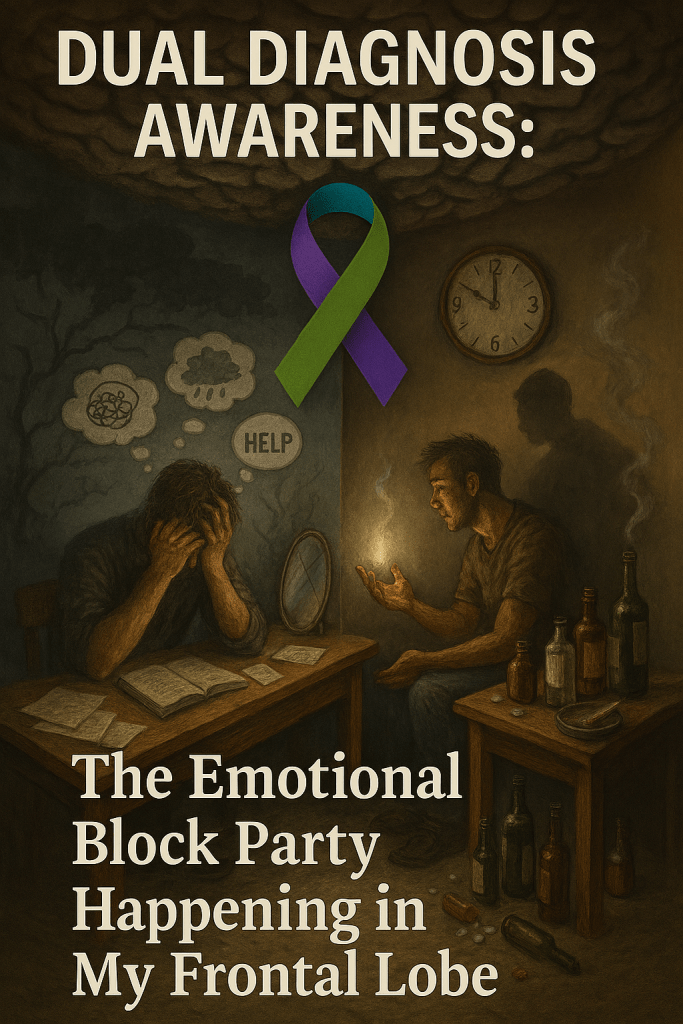
And the world? The world acts like you’re being dramatic. And the wild part? People act like you’re being dramatic. “Have you tried drinking more water?” Ma’am, I have two diagnoses doing synchronized swimming in my amygdala. Hydration is not the plot twist that’s going to fix this. “Have you tried yoga?” Ma’am, I have two diagnoses doing the electric slide in my frontal lobe. Yoga is not going to stop this internal block party.
Beneath the jokes, dual diagnosis is real, heavy, and often misunderstood. People think it’s chaos. But it’s actually survival. It’s resilience. It’s learning to hold two truths at once like “I’m struggling and I’m still here.” It’s learning to treat yourself with compassion even when your brain is acting like a committee meeting where everyone is yelling and nobody brought notes. It’s learning to say, “I deserve care.” “I deserve treatment.” “I deserve to be taken seriously.” And most importantly, “I am not a punchline. I’m the whole damn story.”
Down here in the Deep South, dual diagnosis gets wrapped in a layer of cultural seasoning nobody asked for. Aunt Linda whispers like you’re contagious. Cousin Ray offers you a beer because “you look stressed.” And the church ladies add you to the prayer list without asking. Right under “traveling mercies” and “unspoken.” Meanwhile, you’re just trying to survive the day without your brain throwing a surprise block party.
Dual diagnosis in the South also means navigating stigma with the grace of a cat on a freshly mopped floor. You’re trying to get help. Half the town thinks therapy is witchcraft. And the other half thinks medication is a moral failing. Meanwhile, you’re over here doing the emotional equivalent of rebuilding a transmission with a butter knife and a YouTube tutorial.
Dual diagnosis awareness is about reclaiming your narrative from the people who oversimplify it. Misunderstand it. Or try to shame you for it. It’s about saying, “Yes, I’m dealing with two things at once. And I’m still out here living. Healing. And occasionally thriving like the chaotic miracle I am.” And yet, here we are. Still showing up. Still healing. Still lighting the charcoal and sprinkling the sage like we’re about to summon the ancestors and the insurance company.
Dual diagnosis doesn’t make you broken. It makes you bilingual in battles most people will never understand. And if anyone tries to minimize your experience? Tell them this, “Baby, I’m not dealing with too much. You’re just underestimating my capacity.” Thanks for reading! And keep searching for answers.
Affirmation: I honor every part of my journey. The messy, the miraculous, and the medically complicated. All of it proves I’m stronger than the storms I’ve survived.