
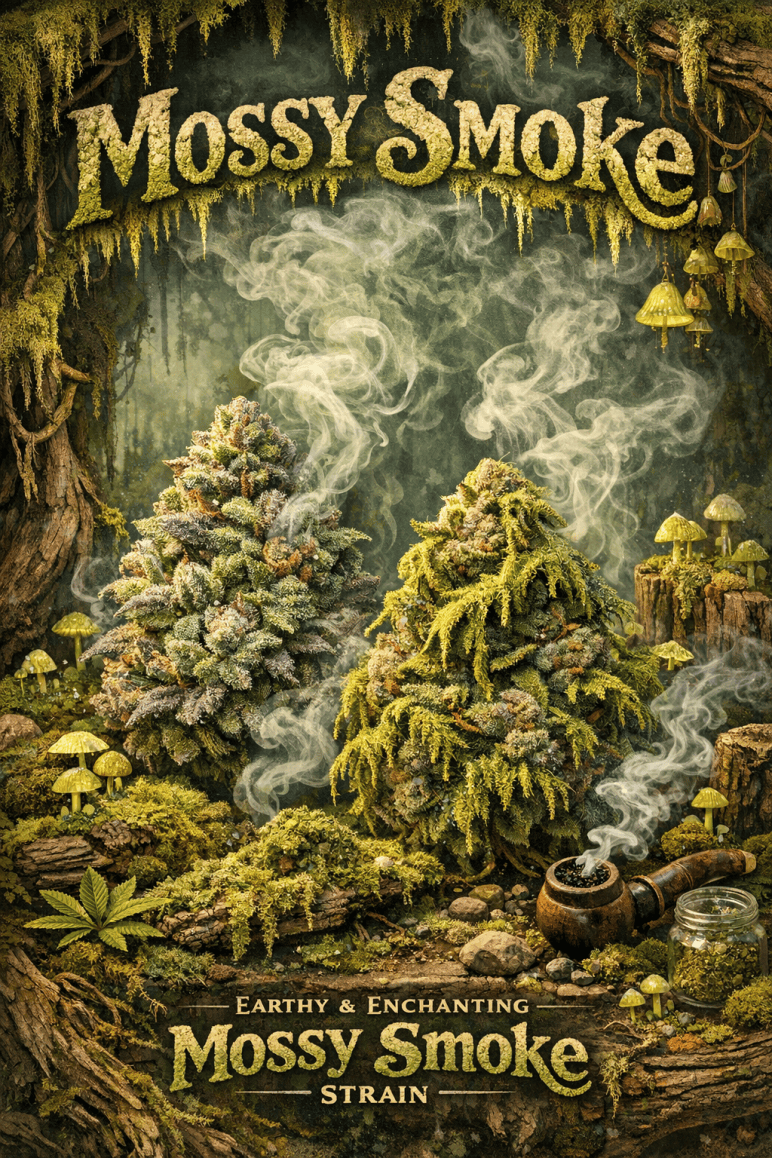
“Some strains lift you up. Mossy Smoke brings you home.”
-This Puzzled Life
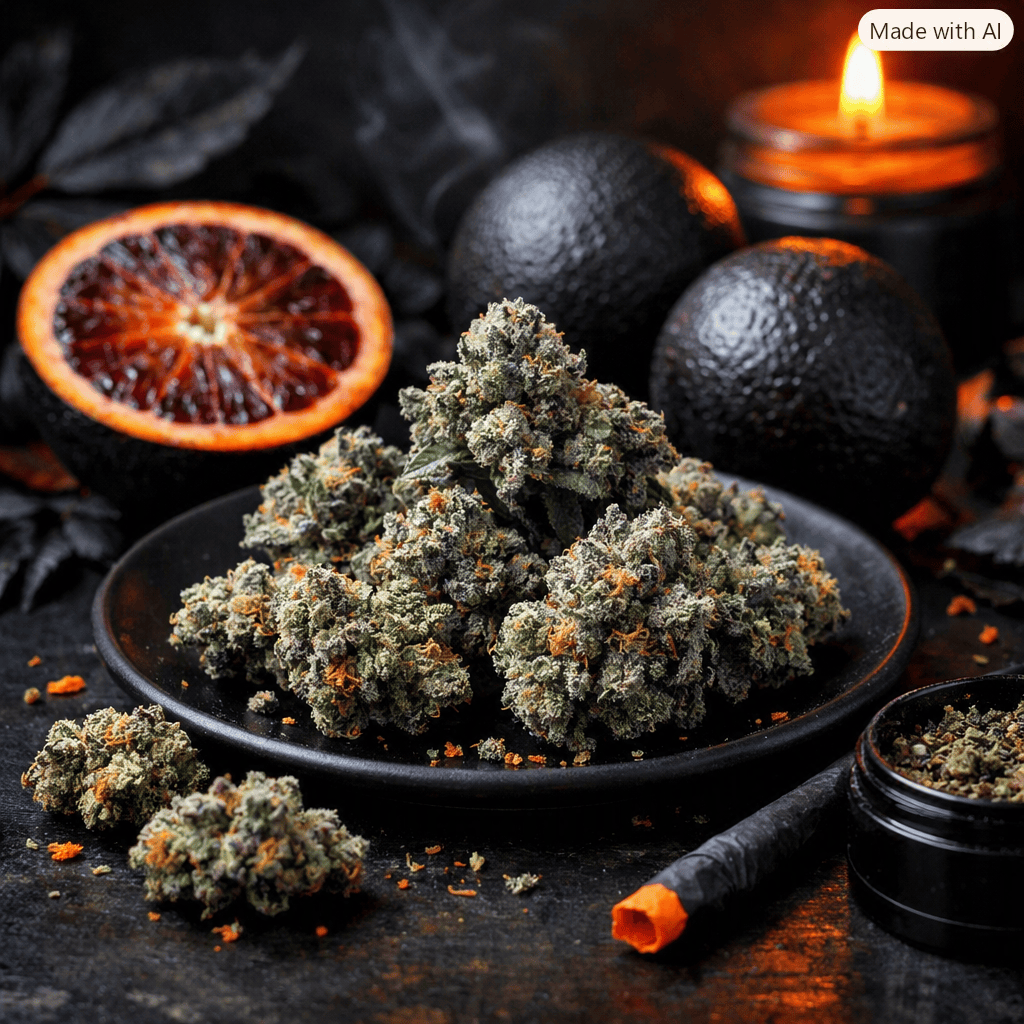
Light the charcoal. Sprinkle the sage. I want to talk to you about a strain known as Mossy Smoke. Fall doesn’t officially begin when the leaves turn. It begins the moment Mossy Smoke hits the coil. And that first inhale tastes like you just stepped into a damp forest where the earth remembers everything you’ve ever survived. There’s nothing that describes the season quite like this strain, which is deeply earthy, moss‑heavy, forest‑floor realness that feels like a Southern autumn walked right up to your ribcage and said, “Baby, breathe.”
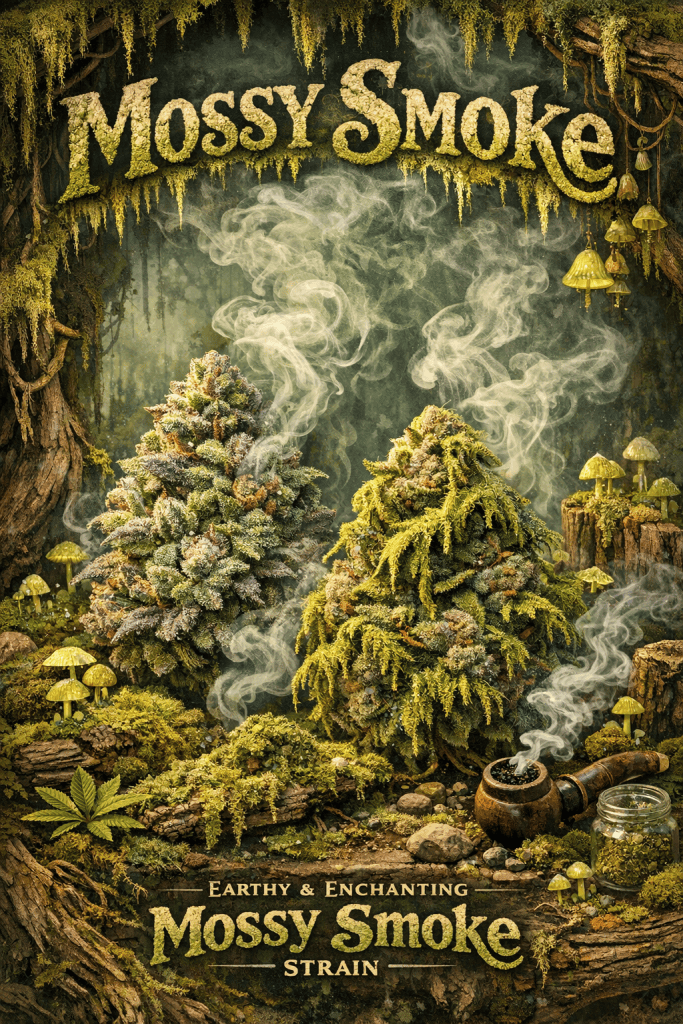
Mossy Smoke isn’t a widely catalogued strain. Therefore, there are no exact lineage. Because the name is like a regional strain name. However, we trace it by its behavior. Which is typically a 50/50 hybrid strain in its effects. Best guestimates for this strain might be this combination. OG Kush is for that grounding, earthy backbone. Northern Lights is for the pine, the calm, the moss‑in‑the‑lungs energy. Possible grand parent genetics are Chemdawg (from the OG side) – subtle fuel, subtle funk. Afghani (from the NL side) – resin production, body calm, forest‑floor density. This is the kind of lineage that grows best in places where the soil has stories and the humidity has opinions.
Even in distillate form, Mossy Smoke keeps its identity. The top terpenes include Myrcene, Caryophyllene. Humulene. and Pinene. Distillate carts mute some nuance, but Mossy Smoke refuses to be quiet. It’s the taste of walking through a forest that’s older than your grandmother’s grandmother.
Mossy Smoke tends to support anxiety relief (that forest‑floor grounding), muscle relaxation, stress reduction, mild pain relief, mood stabilization, and evening wind‑down. It’s the strain you reach for when your brain feels like a cluttered porch, and you need to sweep it clean.
Every grow is different. Soil, humidity, altitude, curing style, and even the grower’s mood can shift everything including terpenes, color, density, effects. A Mossy Smoke grown in Arkansas will not be the same Mossy Smoke grown in Mississippi or Missouri. Cannabis is a plant, not a product. It carries its environment in its body. Thanks for reading! Keep blazin.’
Affirmation: I root myself in what is real, and I rise from what once buried me.”
***Don’t forget to watch the video!***
#Thispuzzledlife