This Puzzled Life is a mental health and recovery blog exploring addiction, trauma healing, LGBTQ experiences, humor, and the strange moments that shape us.
“Insomnia: because my brain likes to clock in for the night shift without asking me first.”
-This Puzzled Life
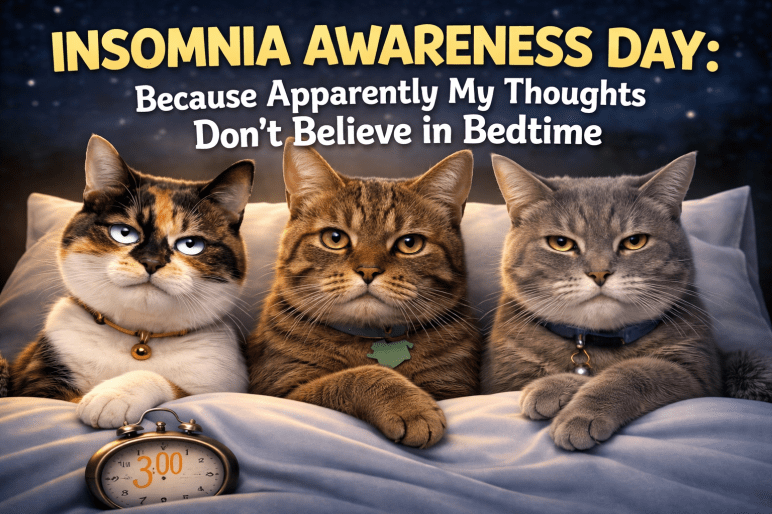
Light the charcoal. Sprinkle the sage. It’s Insomnia Awareness Day. And my brain decided to celebrate by hosting a 72‑hour rave without my consent. Lord knows my household has been observing this holiday since 1997 without ever being asked.
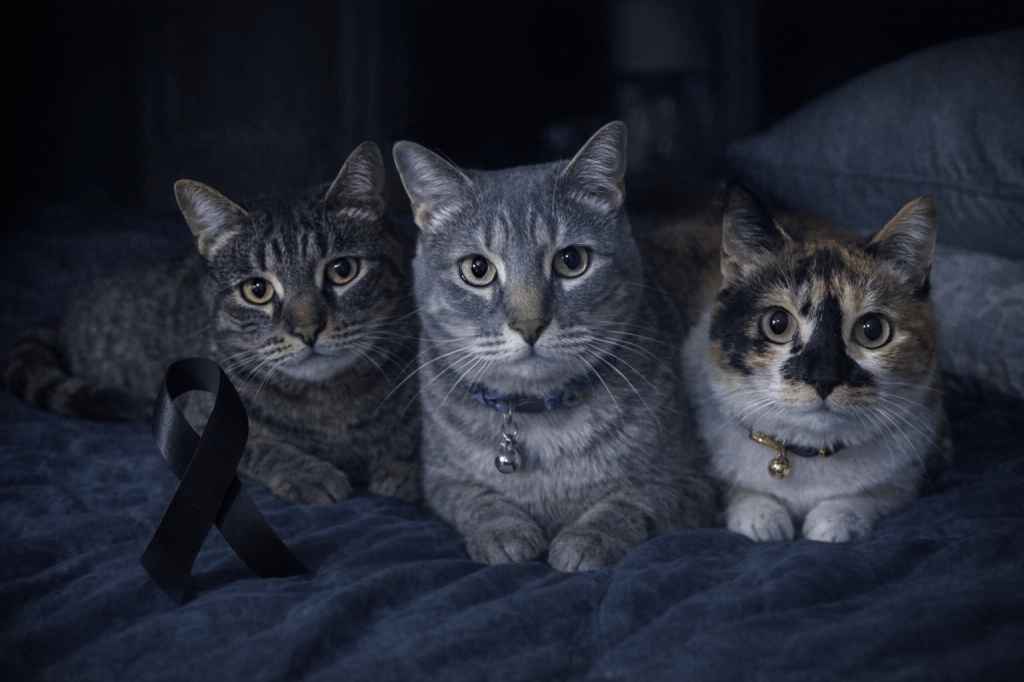
I’ve been awake so long I’m starting to see sounds. The refrigerator hum is now a full‑blown gospel choir. The ceiling fan is whispering secrets. And my cats, my emotional support chaos trio, have decided to hold a town hall meeting about my sleep schedule like they’re the HOA of my nervous system. Featuring Piper, Coco, and Tinkerbell, who have slept a combined 47 hours today alone.
Before we even get to the cats, let’s talk about insomnia itself. This ancient demon, nocturnal gremlin, is an unpaid internship in suffering. Insomnia is the only condition where you can be exhausted, delirious, emotionally fragile, and spiritually bankrupt. And still your brain says, “Actually, what if we reviewed every mistake you’ve ever made since kindergarten.”
It’s when your body is like, “We are shutting down.” And your brain is like, “But what if we alphabetize our regrets.” Insomnia is when you lie down to sleep and suddenly your nervous system becomes a TED Talk host. “Tonight’s presentation: Why You Should’ve Said Something Different in That 2011 Argument.”
Insomnia is when you try every trick in the book that includes tea, meditation, breathing exercises, counting sheep. Where the sheep unionize. Demand better working conditions. And then proceed to walk out. It’s when you’re so tired you start negotiating with inanimate objects. “Please, bed. I’m begging you. I’ll flip the mattress. I’ll buy you new sheets. I’ll stop eating crackers in you. Just please.”
Insomnia is when you finally drift off and your brain slams the panic button like: “Wait. Did you pay that bill?” And then, just when you think you might actually fall asleep, your cats, the furry little sleep Olympians, decide to hold a midnight performance of Stomp on your ribcage. Which now brings us to the household council meeting. Check this out.
Me: “I haven’t slept in three days. I think my soul is vibrating.”
Tinkerbell: “Well maybe if you didn’t drink coffee at 9 PM like you’re cramming for finals at DeVry University.”
Piper: “I tried to help. I sat on your chest and purred. That’s medical.”
Coco: “You sat on her airway, Piper. That’s manslaughter.”
Piper: “I was providing weighted blanket therapy.”
Tinkerbell: “Weighted blanket therapy does not involve cutting off oxygen, sweet girl.”
Me: “I just want to sleep. Just a little. A nap. A blink with commitment.”
Coco: “You can’t sleep because your brain is doing that thing where it replays every embarrassing moment you’ve ever had. Like that time, you waved back at someone who wasn’t waving at you.”
Me: “That was 2004.”
Coco: “And yet here we are.”
Piper: “I don’t understand insomnia. I close my eyes and I’m gone. Like a light switch. Like a fainting goat.”
Tinkerbell: “You also fall asleep mid‑sentence. You are not the control group.”
Piper: “One time I fell asleep standing up.”
Coco: “We know. You hit the floor like a sack of wet laundry.”
Me: “Can y’all please help me sleep tonight?”
Tinkerbell: “We tried helping last night. You were finally drifting off and Piper knocked over a lamp.”
Piper: “It was looking at me weird.”
Coco: “Everything looks at you weird. You’re weird.”
Piper: “Thank you.”
Me: “Okay, new plan. Tonight, we’re doing a calming ritual. No chaos. No zoomies. No knocking things off shelves.”
Tinkerbell: “I’ll allow it.”
Coco: “I’ll supervise.”
Piper: “I make no promises.”
And so, on this Insomnia Awareness Day, I honor the sleepless warriors. The restless. The overthinking champions. The midnight snackers and philosophers. The ceiling‑stare champions. And every exhausted soul who has ever whispered, “Why am I awake right now?”
Let’s be honest. If insomnia had a mascot, it would be me pacing the hallway at 3:17 am wearing mismatched socks. Holding a mug of cold tea. And whisper‑arguing with my own reflection like we’re in a low‑budget daytime drama. If there were merit badges for this condition, I’d have the whole sash that reads, “Overthinking at Bedtime,” “Accidentally Remembered Something Cringe,” “Tried Melatonin and Ended Up Cleaning the Pantry,” and the coveted “Awake for No Damn Reason.” I am the Eagle Scout of insomnia. May your mind quiet. Your body rest. And your cats behave for at least seven consecutive minutes. Because if sleep is a myth, then I am the cryptid. Thanks for reading! Get some rest.
Affirmation: I am a sleep‑deprived deity with the power of ten thousand intrusive thoughts. And I will absolutely thrive today whether I slept or not.
“You can’t heal in the same environment that taught you to hide your wounds. Sometimes the bravest thing you’ll ever do iswalk away from the place that expected you to stay broken.”
-This Puzzled Life
Light the charcoal. Sprinkle the sage. Apparently, healing requires both barbecue energy and spiritual pest control. Welcome back to my household. Where the cats run the HOA. The ancestors run the commentary. And I’m just trying to unlearn 30 years of “bless your heart and keep suffering quietly.” Today’s sermon is titled, “You Cannot Heal in the Same Environment That Hurt You.” And yes, the cats have notes.
You ever try to heal in the same place that taught you to pretend everything was fine? It’s like trying to detox from sugar while sitting inside a Krispy Kreme with the “Hot Now” sign glowing like the gates of temptation. Meanwhile, my Southern upbringing is in the corner whispering, “Well now, you can leave, but don’t you dare make a scene. And take this casserole so folks don’t think you’re ungrateful.”
Healing in the same environment that hurt you is basically a full‑contact sport. You’re dodging old triggers. Outdated expectations. And that one relative who still thinks therapy is “for people who don’t pray hard enough. And still thinks Obama personally raised your rent.” Nothing says emotional clarity like feline commentary.m
Coco (the judgmental one): “Girl, you keep trying to heal in the same room where your trauma sleeps. Move the furniture or move yourself.”
Piper (the chaotic one): “I say we knock everything off the shelves and start fresh. Healing begins with destruction.”
Tinkerbell (the Southern belle of the group): “Bless your heart. Even Jesus left Nazareth.”
And honestly, they’re right. Cats don’t stay in places that stress them out. They relocate with the confidence of a woman who knows she’s too good for this nonsense.
Southern Conservative Truth #1
“If it ain’t working, you don’t fix it. You replace it.” This applies to lawn chairs, husbands, and emotional environments.
Southern Conservative Truth #2
“You can’t grow tomatoes in poisoned soil.” But you can grow generational trauma if you keep watering it.
Southern Conservative Truth #3
“If the dog keeps biting you, stop blaming the dog and fix the fence.” Stop expecting people who hurt you to suddenly develop character.
Southern Conservative Truth #4
“You can’t sit on a broken chair and then get mad when you hit the floor.” If the environment is unstable, your healing will be too.
Southern Conservative Truth #5
“If the chicken’s burnt, the oven ain’t gonna apologize.” Some folks will never take accountability. Move on.
Southern Conservative Truth #6
“You can’t plant hope in a field full of denial and expect a harvest.” Healing requires fertile ground. Not family members who think boundaries are disrespectful.
Southern Conservative Truth #7
“If the swamp keeps producing gators, stop acting surprised when you get bit.” Patterns are patterns, not mysteries.
And of course, the cats had to weigh in again.
Coco: “Humans love staying in toxic places because they’re sentimental. Cats leave because we’re smart.”
Piper: “If the vibes are off, I’m gone. No explanation. No forwarding address.”
Tinkerbell: “A lady does not heal where she was harmed. She relocates with grace and a fresh can of Fancy Feast.”
Here’s the truth they don’t stitch on pillows. You cannot heal in the same environment that taught you to shrink, hush, or swallow your own voice like it was impolite to exist. You cannot bloom in soil that resents your roots. You cannot rise in a room built to keep you small. And you sure as hell cannot become your highest self in a place that only wanted the quiet, obedient version of you.
Healing requires space. Not the kind of space where you shove your feelings into a Tupperware container and label it “Later.” I mean real space. The kind where you can breathe without hearing echoes of who you used to be. Healing requires distance. Healing requires disruption. Healing requires the courage to walk away from the familiar and toward the version of you that refuses to die in the same cage she was born in.
Sometimes that means leaving the room. Sometimes that means leaving the house. Sometimes that means leaving the whole dang ZIP code. And sometimes it means telling your inner Southern critic, “No ma’am, we are not staying here out of politeness.” Healing requires new air, new light, new boundaries, and sometimes, a new porch to sit on while you process your life choices.
Leaving the environment that hurt you isn’t betrayal. It’s survival. It’s reclamation. It’s the moment you decide your healing deserves better than the bare minimum. And if anyone has a problem with it. Just tell them the cats said you’re unavailable for nonsense until further notice. And that’s on healing. Now excuse me while I sage the house like I’m trying to smoke out a demon.
So let them talk. Let them misunderstand you. Let them clutch their church bulletin and call it rebellion. Let them say you’ve changed. Because God knows you have. And thank goodness for that. You are not obligated to stay where your spirit was suffocated. You are not required to keep shrinking to fit the room. You are allowed to outgrow the places that could not love you whole.
And if anyone has a problem with your healing journey, tell them, “I didn’t leave because I was angry. I left because I was finally ready to breathe. And once you taste oxygen, you don’t go back to drowning.” Thanks for reading! And stop shrinking for their comfort.
Affirmation: I honor my healing by choosing spaces that honor me. I release the rooms that dimmed my light. And I rise in environments that celebrate my growth, my boundaries, and my becoming.
“Being an empath means I can feel your energy shift before you even decide to shift it. Don’t act surprised when I respond like I already read the whole plot twist.”
-This Puzzled Life
Light the charcoal. Sprinkle the sage. It’s my way of announcing to the universe, and anybody else listening, that the energy is about to be corrected. Redirected. Or escorted out. It’s not decoration. It’s a declaration. The vibes will behave. Or they will be removed.
Let me go on and say this before somebody gets the wrong idea and starts assigning me spiritual homework that I did not sign up for. Being an empath does not mean I’m a soft‑spoken emotional Roomba gliding around the house sucking up everybody’s mess in silence. No ma’am. No sir. No spirit.
I am an empath with range. I can read your tone, micro‑tone, micro‑aggression, and the ghost of the tone you almost used. And if my intuition taps me on the shoulder and whispers, “They tried you,” I will absolutely raise my voice like a Southern Baptist who just found out somebody parked in her spot at church.
Empath does not mean quiet. Empath means I know exactly why I’m yelling. People love to romanticize empaths like we’re walking mood rings with good credit. But the truth is more complicated. Being an empath is a blessing because you can walk into a room and instantly know who’s lying. Who’s tired. Who’s two seconds from crying. Who’s pretending to be fine. Who’s about to start some mess. Who needs a hug. Who needs a boundary. And who needs to be escorted out by security.
But it’s also a curse. You can’t turn it off. You can’t unfeel what you felt. You can’t unsee the emotional weather patterns swirling around people like spiritual Doppler radar. And sometimes you’re sitting there thinking, “Lord, why did you give me this gift without a mute button?”
Let’s tell the truth that makes people uncomfortable. Some empaths aren’t born. They’re forged. Some of us learned to read a room because we had to. Because survival depended on knowing when the energy shifted.
When someone’s mood changed. When danger was coming. When silence meant safety. And when footsteps meant run. That kind of childhood intuition doesn’t disappear. It grows up with you. It becomes a skill, a shield, a superpower and sometimes a burden you didn’t ask for.
So yes, some empaths are spiritually gifted. And some of us are trauma‑trained emotional detectives with a sixth sense and a therapist on speed dial. Being an empath means you don’t just enter a room. You scan it. You feel the tension in the air before anyone speaks. You clock the fake smile from across the room. You sense the passive‑aggressive energy floating near the snack table. You know who’s genuinely happy to see you. And who’s performing hospitality like it’s community theater. It’s not paranoia. It’s pattern recognition.
And while everyone else is like, “Oh, the vibe seems fine.” You’re standing there like, “No it doesn’t. Somebody in here is lying. And somebody else is about to cry.” Boundaries aren’t optional for empaths. They are survival gear. Without boundaries, an empath will drown in other people’s emotions like they’re swimming in a pool they didn’t even want to get in.
Boundaries are how we protect our peace, our energy, our intuition, our sanity, our inner child, our outer adult, and the version of us that still wants to believe people mean well. People who don’t understand boundaries think they’re rude. People who need your boundaries think they’re personal attacks. But people who love you will understand that boundaries are how you stay alive, present, and emotionally available without burning yourself to ash.
Let me be extremely clear in a way that even the spiritually hard‑of‑hearing can understand. When an empath sets a boundary, it is not a suggestion, a preference, or a cute little decorative fence. It is survival architecture.
Empaths don’t set boundaries casually. We set boundaries because we’ve already scanned the emotional terrain. We’ve already clocked the patterns. We’ve already felt the shift in your tone. And we’ve already sensed the storm clouds gathering behind your smile.
When someone violates a boundary we clearly communicated, it doesn’t feel like a misunderstanding. It feels like a threat. It feels like disrespect. It feels like someone walked into our house. Ignored the “Please remove your shoes” sign. And tracked mud across the ancestral rug. And because empaths are wired to detect danger that is emotional, spiritual, and energetic, boundary violations hit us like alarms going off in a building we didn’t even want to be in.
This is why people get confused when an empath goes from calm to “Oh absolutely not” in 0.3 seconds. They think we’re overreacting. But what they don’t understand is we saw the intention. We felt the entitlement. We recognized the pattern. And we sensed the disrespect before it fully formed.
By the time we raise our voice, the situation has already been analyzed. Processed. And spiritually notarized. Empaths don’t explode out of nowhere. We respond to the data. Violating a boundary is the emotional equivalent of someone looking us dead in the eye and saying, “I don’t respect your peace, your intuition, or your humanity.” At that point, the empath is not being dramatic. The empath is being accurate.
When I say I’m an empath, people assume I’m out here collecting gold stars from the universe. And waiting for someone to pat me on the head and say, “Good job for feeling things deeply. Absolutely not. I don’t need outside validation because I validate myself loudly, confidently, and with the full support of my intuition, my ancestors, and my own emotional PhD.
I spent too many years being trained to read every room, every tone, every shift in energy just to survive. So, trust me when I say, I know what I feel. I know why I feel it. And I don’t need a committee meeting to confirm it. My inner knowing is the authority. My boundaries are the policy. And my self‑validation is the final stamp of approval. Anyone else’s opinion is optional, decorative, and often late to the truth I already knew.
The next time somebody hears “empath” and assumes I’m a gentle emotional cloud floating through life, let me correct the record. I’m not floating. I’m detecting. I’m reading the room, the subtext, the spiritual Wi‑Fi, and the emotional weather report. And if the forecast says, “disrespect with a 70% chance of foolishness,” trust and believe I will bring the thunder. Empathy doesn’t make me silent. And sometimes accuracy requires volume. Thanks for reading! And go with your gut. Because it’s the most accurate feeling that you can feel.
Affirmation: I honor my intuition. Protect my peace. And raise my voice only when spiritually necessary. Which, unfortunately for some folks, is more often than they’d prefer.
“Bat Shit isn’t just a strain. It’s the moment your brain throws its hands up, laughs, and decides to take the scenic route back to sanity.”
-Jenna “Highway to Chill” Morales, Cannabis Humorist & Accidental Philosopher
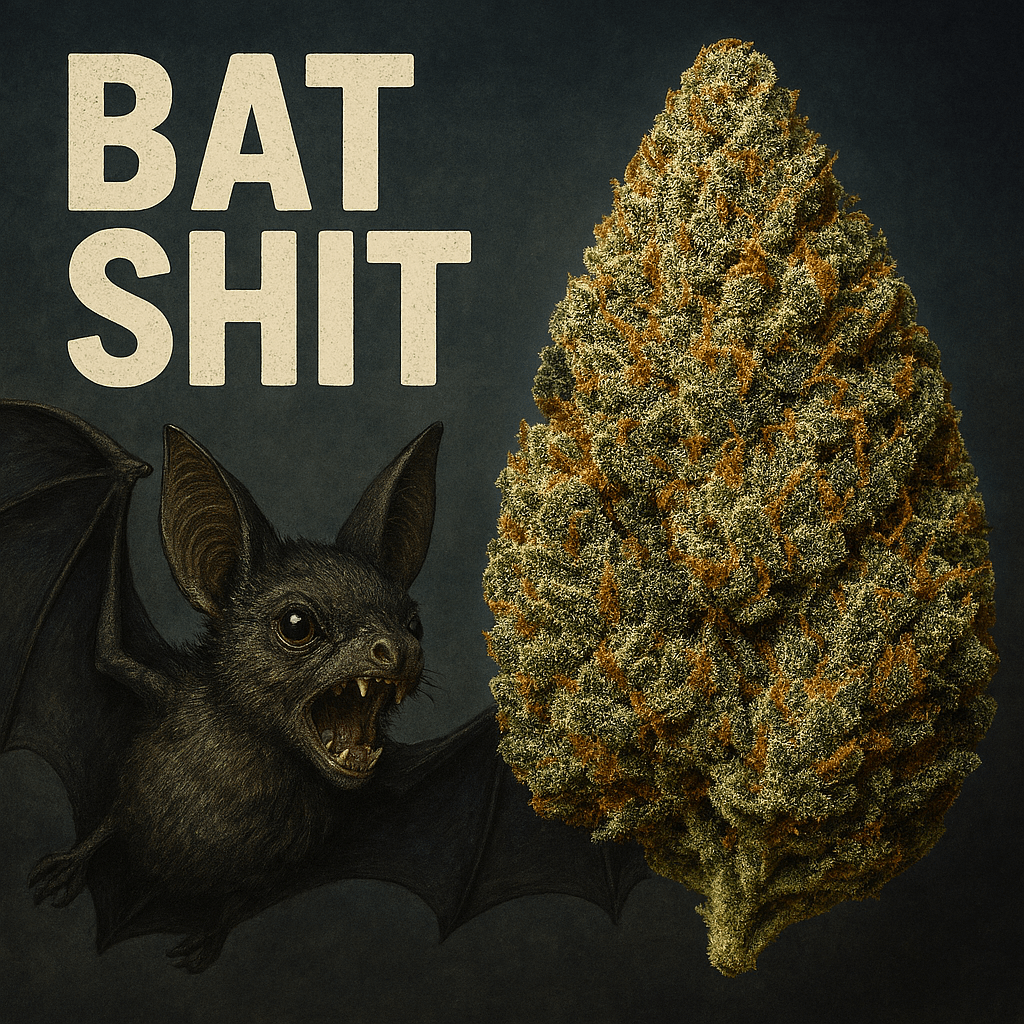
Light the charcoal. Sprinkle the sage. Negative energy go away. Alright, let’s talk about a strain that does not care about your intentions, your plans, or your to‑do list. Bat Shit shows up like it’s been waiting in the parking lot revving its engine, ready to drag you into whatever nonsense it has planned. This is not a polite strain. This is a strain that kicks the door open like, “Who touched the thermostat?”
It’s Mental Health Awareness Month, and honestly, there has never been a better time to talk about a strain named Bat Shit. If there were ever a phrase that perfectly captures the moment when your brain quietly unplugs itself and walks off the job, it’s this one.
Bat Shit is the ultimate description of losing mental control. Not in a scary way, but in that “my thoughts just left the building without clocking out” kind of way. This strain doesn’t just nudge your mind off the rails; it hands your brain a tiny suitcase, waves goodbye, and wishes it luck on its journey. You know you’re about to experience something that understands chaos on a spiritual level. Bat Shit doesn’t arrive politely. It shows up like it’s been waiting in the parking lot revving its engine, ready to drag you into whatever nonsense it has planned.
Bat Shit is the love child of two strains that probably should’ve never been left alone together. It’s usually described as a cross between Gorilla Glue #4 x Durban Poison. Which explains why it feels like someone duct‑taped a rocket booster to a recliner. Gorilla Glue is a cross between Chem’s Sister x Sour Dubb x Chocolate Diesel. Durban Poison is a pure African Landrace Sativa from Durban, South Africa. That’s it. No chaotic crossbreeding. No dramatic lineage. Just a true landrace, meaning it evolved naturally in its native region over generations.
Top terpenes in bat shit are Myrcene, Limonene, Caryophyllene, and Pinene. Patients report relief from stress & anxiety, mood elevation, pain and inflammation, and fatigue. Some strains whisper. Some strains nudge. Bat Shit does neither. This strain busts through the door like it’s late for a meeting it wasn’t invited to, holding a gas station coffee and announcing, “Alright, who messed up the vibe in here?”
The moment I cracked the jar, the aroma hit me with the same force as opening a forgotten Tupperware in the back of the fridge. I knew immediately that whatever happened next, I would not be in charge. This strain has the energy of someone who shows up to your house, asks where the bathroom is, and somehow ends up reorganizing your pantry. Bat Shit does not ease you in. It hits like a plot twist in a show you weren’t even watching.
This is the strain that makes you forget what you were doing, why you were doing it, and whether you ever actually started. It’s is the friend who convinces you to rearrange your furniture at 2 a.m., then leaves halfway through because they “just remembered something.” You’ll be confused, entertained, and slightly concerned. But you’ll also be having a great time.
If you want a strain that delivers laughter, chaos, and a temporary break from being a functioning adult, Bat Shit is the one. Just don’t expect to remember where you put anything afterward. Please keep in mind that each grow will be different and the flower’s effects will differ depending on which region of the country that the plant is grown. Thanks for reading! Keep blazin.’
Affirmation: “I rise in my queerness, I breathe in my peace, and I stay lifted in a joy so loud and unapologetic that even the universe has to adjust its crown.”
“I’m not tired. I’m Southern‑tired. Which means my soul needs a nap. My spirit needs a snack. And my cats need me to stop acting like I’m immortal.”
-This Puzzled Life
Light the charcoal. Sprinkle the sage. Let the ancestors clock in for their shift. Today’s energy walked in here barefoot. Tracking mud across my spirit. And my Southern cats have already filed a complaint. Listen. If self‑care were a Southern woman, she’d be standing on your porch right now. Her hands on hips. Church finger raised saying, “Baby, you look tired. Not regular tired. The kind of tired where even your shadow needs to sit down.”
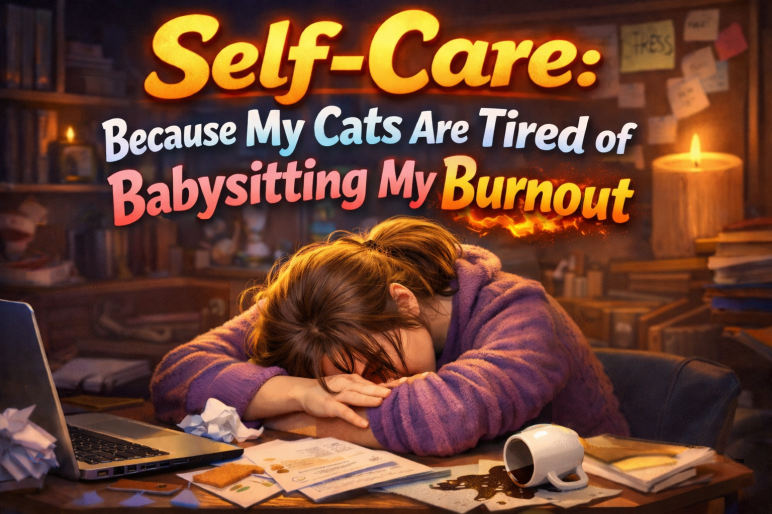
Let me tell you something right now. Self‑care is not optional. Self‑care is not a luxury. Self‑care is not “I’ll get to it after I finish these 47 tasks and emotionally babysit three grown adults.” Self‑care is a requirement like sweet tea at a funeral. Or humidity in July. And if you don’t believe me, that’s fine. The cats do. And they’ve unionized. The cats are inside holding a family meeting about your wellbeing like, “Bless her heart. She tried to drink coffee for hydration again.”
This is not a drill. This is a wellness emergency. This is FEMA‑level fatigue with a side of “I’ll rest when I’m dead.” And the cats have decided they will NOT be attending your funeral if you don’t get it together. Piper has already drafted a strongly worded letter to the universe. Coco is practicing her disappointed stare in the mirror. And Tinkerbell is pacing like she’s preparing to deliver a eulogy she absolutely does not have time for. They’re unified. They’re fed up. And they’ve declared you a Code Red Hot Mess until further notice.
Piper is perched on the counter like a tiny porch‑sitting auntie whispering, “Baby, cleanse this house before the chaos gets ideas.” Coco is circling my feet like she’s smudging the perimeter with her attitude alone. And Tinkerbell has taken her position by the window. And she’s staring into the horizon like she’s negotiating with forces I can’t see. We reclaim the room, the mood, and the moment. Negative energy gather your belongings and exit like you were raised right.
It started last Tuesday when I sat down on the couch. I was exhausted. And holding a cup of coffee that tasted like it had given up on life. Piper hopped up beside me, stared directly into my soul, and said (in fluent Southern telepathy),“Ma’am. When was the last time you drank water?”
Coco strutted in behind her like a wellness coach who charges $300 an hour and doesn’t take insurance. “And when,” she added, “was the last time you sat down without clenching your jaw like you’re trying to crack a pecan with your molars?” Tinkerbell didn’t say a word. She just placed one paw on my knee which is the universal sign for, “Baby, you’re running on fumes and spite.”
People hear “self‑care” and think it means a spa day, a $90 candle, or a bath bomb that promises enlightenment. But real self‑care is things like drinking water before your kidneys file a complaint. Saying “no” without writing a three‑paragraph apology. Resting because your body is not a rental car. Eating something green that didn’t come from a gummy bear. And getting enough rest so that your mind and body has time to digest what’s going on throughout our nation. It’s the quiet, unglamorous maintenance that keeps you from turning into a feral possum in a Dollar General parking lot.
Getting enough rest is not optional. It’s the bare‑minimum maintenance required to keep you from turning into a sleep‑deprived cryptid haunting your own kitchen. Your body is not a 24‑hour Waffle House. And yet you keep acting like folks can wander in at any hour demanding emotional hash browns “scattered, smothered, and covered.” Meanwhile, your Southern cats are watching you shuffle around the house like a ghost who missed their exit to the afterlife.
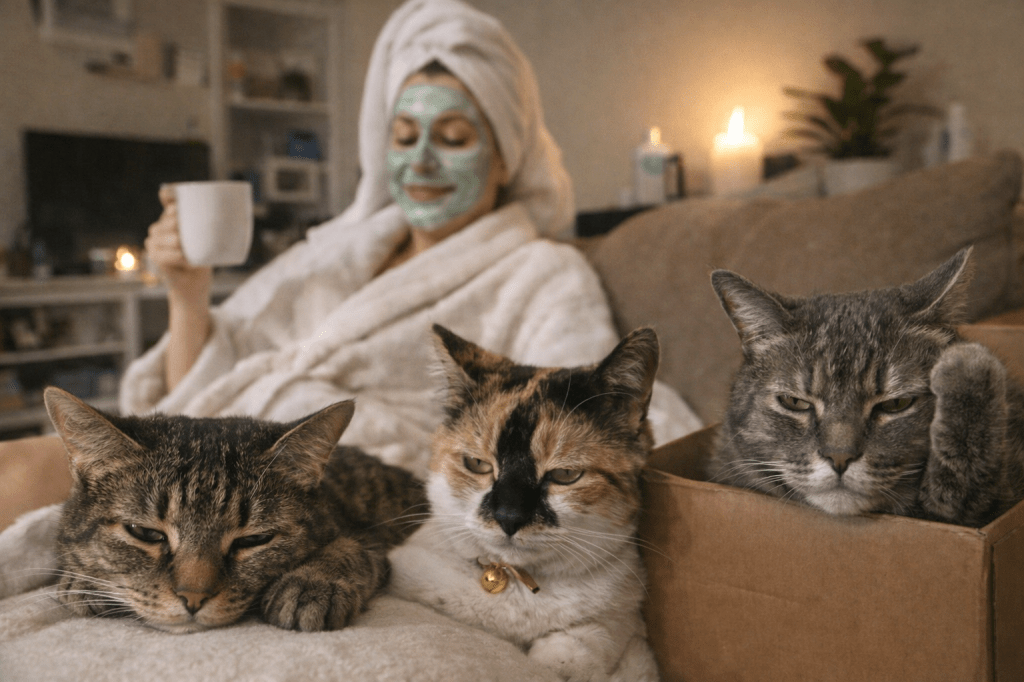
Piper keeps blinking slow like she’s trying to Morse‑code “go lay down.” Coco has already dragged a blanket onto the couch in protest. Tinkerbell is perched on the armrest while giving you that look that says, “If you don’t rest voluntarily, we will stage a wellness coup.” Rest is not laziness. Rest is strategy. Rest is how you keep your spirit from filing for divorce.
Piper naps 19 hours a day and feels no shame. Coco refuses to let anyone touch her unless she specifically requests it. Tinkerbell meditates by staring at the wall like she’s communing with the ancestors. These cats have boundaries so strong they could stop a hurricane. And here I am, letting people text me “hey u up?” at 6 AM like I’m a Waffle House.
Down South self‑care also means ignoring your phone like it’s a bill collector. Sitting on the porch and letting the breeze baptize you. Lighting a candle and telling the ancestors, “Handle it. I’m tired.” And eating a biscuit because joy is medicinal. And yes, sometimes it means telling your entire family, “I love y’all. But I’m off duty today. Please direct all emotional emergencies to Jesus or the group chat.”
Piper says, “Hydrate or diedrate.” Tinkerbell says, “Rest is resistance.” And Coco says, “If you don’t take care of yourself, I will sit on your chest until you do.” Honestly, that last one felt like both a threat and a blessing. You deserve rest. You deserve softness. You deserve to take care of yourself without guilt gnawing at your ankles. Self‑care is not selfish. Self‑care is how you stay alive. Stay sane. And stay Southern without cussing out the entire tri‑county area. This means that I also need to do better at self-care.
So, here’s the truth. And it’s delivered with the force of a cast‑iron skillet hitting a countertop. If you don’t start taking care of yourself, your cats will file a formal complaint with the ancestors. And they will win. Rest. Hydrate. Set boundaries. Do it like your sanity depends on it because it does. We’ve still got many months of with this horrible administration.
Now go practice some self‑care before Piper drafts a PowerPoint. Coco calls HR. And Tinkerbell summons the spirits to intervene. And that’s on sweet tea, porch swings, and minding your blessed business. Thanks for reading! And know that you’re worth it.
Affirmation: I honor my rest. Protect my peace. And let my body recharge without guilt. Because even my ancestors and my cats agree that a well‑rested me is a powerful me.
“Some days my mental health is held together by snacks, spite, and the sheer terror of having to explain myself to another human being. And honestly, that’s more stability than most systems offer.”
-This Puzzled Life
Light the charcoal. Sprinkle the sage. Let the ancestors clock in because I’m about to say something that requires spiritual PPE. Welcome back where the tea is hot. The coping skills are lukewarm. And the bar for institutional competence is lying somewhere under my therapist’s couch next to a rogue fidget cube and three generations of dust bunnies.
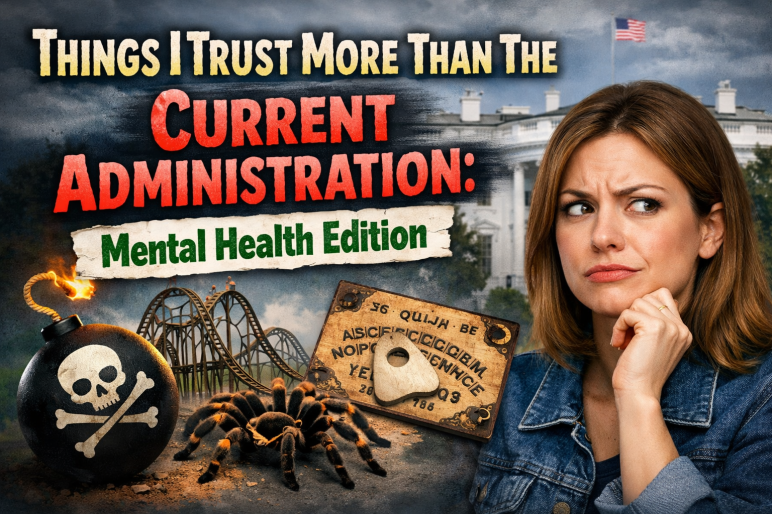
That’s the only proper way to open Things I Trust More Than the Current Administration: Mental Health Edition. The moment I even think about federal decision‑making and mental‑health infrastructure in the same sentence, my spirit guides start passing around clipboards like, “Everybody hydrate. This one’s gonna be long.” The energy gets so chaotic my coping skills start unionizing. My weighted blanket files a grievance. Even my therapist’s office plant, dead since the Bush administration, leans in like, “Girl, you good?”
And yet here we are. Gathered in this sacred digital sanctuary. Ready to name every ridiculous, raggedy, unexpectedly reliable thing that still manages to show up for my mental health more consistently than the systems allegedly designed to support it. Pull up a chair. Grab your emotional support beverage. And let’s begin this wellness séance.
Let me tell you something right now. As a lifelong member of the “I’ve been in therapy long enough to qualify for tenure” community, I have developed a sixth sense for nonsense. I can smell chaos before it even clocks in for its shift. I can hear a red flag rustling in the wind like a Confederate reenactor’s polyester uniform. And I can taste when a system is about to disappoint me.
If surviving American bureaucracy has taught me anything, It’s that my mental health journey has been held together with prayer, Post‑its, and the sheer willpower of every exhausted clinician who has ever said, “Let’s circle back to that. “And yet, even that feels sturdier than whatever the federal decision‑making process is doing right now.
Pull up a chair. Grab your emotional support beverage. And let’s talk about all the things big, small, and unhinged that I trust more than the folks allegedly steering this ship.
1. The coping skills handout they gave me in 2009 that said, “Try breathing.”
If breathing was going to fix my life, it would’ve done it by now. But you know what? That little laminated sheet has never lied to me, ghosted me, or changed its story mid-sentence. It just sits there, quietly suggesting oxygen like a supportive aunt.
2. The hospital blanket that feels like it was woven from recycled Brillo pads.
Scratchy? Yes. Comforting? Weirdly, yes. And it’s more reliable than any federal plan I’ve seen in the last decade? Tragically, yes again.
3. The therapy office plant that has been dead since Obama’s first term.
That plant has seen things. That plant has heard things. And that plant has never once pretended it was going to “circle back.”
4. The group therapy participant who always says, “I’m not sure if this is relevant,” and then drops the most relevant thing anyone has ever said.
That person is the backbone of America. That person deserves a medal, a parade, and a lifetime supply of fidget toys.
5. The antidepressant that took six weeks to kick in and then said, “I’ll give you 12%.”
Twelve percent is still more than I’ve gotten from some institutions. Twelve percent is practically a stimulus package.
6. The crisis hotline hold music.
Is it soothing? No. Is it confusing? Yes. Does it at least show up? Also, yes. That’s more than I can say for some systems allegedly designed to “serve the people.”
7. The therapist who says, “Let’s unpack that,” knowing full well we’re about to open a suitcase from 1997.
Do I trust them? Absolutely. Do I trust the government to fund mental health care with the same enthusiasm? Let me just go ahead and laugh in Southern.
8. The mood tracker app that keeps asking if I’m “thriving.”
No, sweetheart. But I appreciate your optimism. And optimism is more than I’ve been handed by certain national infrastructures.
9. The weighted blanket that feels like it’s trying to smother me into emotional stability.
At least it’s trying.
10. My own intrusive thoughts.
Say what you want about them, but they’re consistent. They show up on time. And they don’t pivot their messaging halfway through the fiscal year.
And that concludes today’s testimony from the Church of High Copays and Low Patience. May your paperwork be accepted on the first try. May your therapist stay in‑network forever. And may your coping skills rise up like a well‑funded program. Because we all know the actual programs won’t.
May your coping skills be sturdy. Your boundaries be fortified. And your therapy bills be mysteriously covered by a benevolent universe. May every system that claims to care about mental health actually prove it with funding, access, and compassion. And may you always trust yourself more than any institution that has ever made you fill out the same form 14 times. The real administration is the one inside your head. And that cabinet meeting is already wild enough.
At the end of the day, my ragtag mental‑health toolkit with half vibes, and half stubbornness still shows up with more reliability than any administration that can’t streamline a single form. I’ll keep trusting my weighted blanket. I trust any system that doesn’t need three committees and a prayer to approve a budget. Even my intrusive thoughts have a better attendance record than the folks running the show. Amen, Ashe, and may the next fiscal year treat us better than the last. That’s the real plot twist I’m praying for.
Affirmation: I am doing the absolute most with the absolute least. And I’m still managing to shine.
“The truth didn’t break my family. The pretending did.”
-Unknown
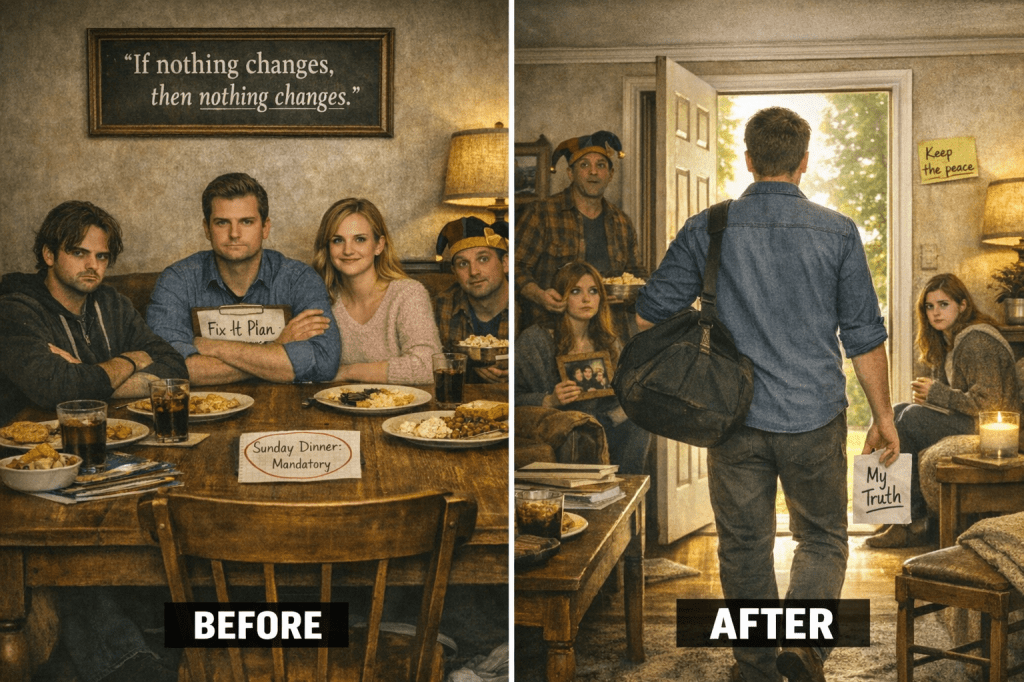
Here’s the bigger picture. I didn’t grow up in a family that heals. Problems don’t get solved. They get buried alive. And then resurrected during holidays like emotional zombies. Now that me and my sister are adults, childhood resentments still pop up like whack‑a‑mole. And nobody wants to pick up a mallet. Let’s all smile in public so we don’t “defame the family.” Which honestly, does a fantastic job defaming itself.
And my family isn’t special. Dysfunction is everywhere. I have enough mental health education in my background to recognize the patterns. But they’ll swear I’m the problem. If you look past the church smiles, the whole system is sick. I would genuinely rather be hit by a car than attend “family time.” And because my kids were born into a lesbian family, they get treated like they came with a moral recall notice.
You can’t throw money at children and then take no active part in their lives the rest of the time. Especially, when you do the opposite with the other children in the family. The kids notice. I’ve tried talking about it for 17 years. And the truth is this. They just don’t care.
I have a master’s degree in counseling psychology. Yet somehow I’m the ignorant one. They don’t want insight. They don’t want help. They want silence. And mine has officially expired. I defend myself and my kids however I see fit. Respectfully? No. Effectively? Absolutely.
They want healing without effort. They’re emotional pillow princesses that want the benefits of growth while doing absolutely nothing but blinking dramatically. And when truth bruises their egos, accountability never shows up. Meanwhile, my dad plays messenger pigeon flying information back and forth between me and the rest of the family so that the dysfunction stays perfectly preserved.
Here’s the part they’ll never admit. Family therapy requires guts and transparency. And those two things they treat like forbidden sins. Instead, they’ve built a giant sand pile where they can bury their heads. And pretend nothing is wrong. That’s their comfort zone. Not truth. Not healing. Just sand. Neck‑deep and breathing through a straw of selective memory.
My favorite quote says it best, “If nothing changes, then nothing changes.” And I refuse to be silenced because their comfort depends on my suffering.
Our family lives in what I call comfortable dysfunction. It’s the emotional recliner they refuse to replace even though the springs are broken. And the fabric smells like denial. It’s easier than accountability. Easier than honesty. Easier than saying, “Maybe the gay daughter isn’t the downfall of civilization.”
And as if being the rainbow sheep wasn’t enough. I’m also the green sheep of the family because I’m a medical cannabis patient. And the family’s translation is that I’m “druggin’ and thuggin’.” The “bad influence.” And the “one who needs prayer.” But that’s not even the real issue.
The problem is my refusal to sit quietly in the pew of generational silence. The issue is that I no longer participate in the family’s favorite pastime of pretending. I’m done shrinking myself so other people can stay cozy in their outdated beliefs. I’m done letting conservative Christian values be weaponized against me and my children.
They can keep their selective morality. The kind where my sister thinks being gay is “wrong and evil.” But somehow premarital sex is just the Olympic sport of “being human.” Funny how sin gets flexible when it’s their behavior on the table.
“My family says I’m ‘living in sin.’ Which is wild coming from some of them who wave a red hat like it’s the state flower. They preach about morality and still treat premarital sex, drinking, and hypocrisy like they’re covered under the ‘Jesus forgives me’ warranty.”And trust me. They act like I graffitied the Ten Commandments in rainbow glitter.
Being gay automatically made me the family’s “problem child.” Even though the real problems have nothing to do with what gender I love. And everything to do with the fact that I refuse to pretend. My sister can have premarital sex. Drink like she’s hydrating for the Olympics and drive afterward. And micromanage her child like she’s running a dictatorship. But somehow I’m the moral crisis.
Meanwhile, my sister’s shot glasses stays full. Her judgment stays loud. And her hypocrisy stays undefeated. Funny how cannabis for medical reasons is “dangerous.” But alcohol with a side of denial is “just being human.” I’m the rainbow sheep because I live authentically. I’m the green sheep because I choose a legal, doctor‑recommended treatment. And I’m the scapegoat because I refuse to shrink so other people can stay comfortable in their dysfunction. If being myself makes me the rainbow‑green hybrid sheep of the family, then so be it. At least I’m not grazing in the pasture of hypocrisy.
So no, I’m not stepping back into the box they built for me. I’m not dimming myself, so their comfort stays intact. I’m not carrying the weight of a family that refuses to lift a finger for its own healing. They can keep their comfortable dysfunction. They can keep their silence. They can keep their outdated beliefs wrapped in Bible verses that only apply to me.
Today I honor my inner rainbow‑green sheep. I’m fabulously queer. I’m medically lifted. And completely unbothered by the opinions of people who confuse hypocrisy with holiness.”
I’m choosing truth over tradition. I’m choosing growth over guilt. I’m choosing my children, my peace, and my sanity. And if my existence shakes the foundation of their worldview. Then the foundation was weak to begin with. Thanks for reading! Do you and let the others do them.
Affirmation: I bless my rainbow‑green sheep soul today queer, medicated, and thriving. While certain relatives clutch their red hats and pearls at my existence. But don’t blink twice at their own chaos, contradictions, or alcohol fueled commandments.
“Trauma doesn’t make you weak. It makes you a witness to your own survival.”
-This Puzzled Life
Light the charcoal. Sprinkle the sage. Let the smoke rise like it’s clocking in for a shift. And let the air shift like it’s bracing itself for whatever truth you’re about to drag into the daylight. Today isn’t about pretending everything’s fine or slapping a smile on top of a wound. It’s not about the vibes, snacks, or cats doing interpretive dance in the sunbeam. It’s about trauma awareness. It is about naming the things we survived. The things we carried alone. The things we laughed through so we wouldn’t crumble. It’s a Southern‑fried, emotionally honest, and funny enough to keep you from dissolving into a puddle on the kitchen floor.
Trauma Awareness is the kind that hides in your shoulders, jaw, breath, memories, and your jokes. And if we’re going to talk about it, we’re going to do it the only way I know how. Complete with honesty, humor, and the kind of emotional courage that feels like taking your bra off after a long day. It’s painful, relieving, and absolutely necessary.
There’s a moment right before you talk about trauma where your whole spirit goes, “Are we sure we want to do this?” It’s the same tone you use when someone says, “Let’s just run into Walmart real quick.” You know it’s not going to be quick. You know you’re going to see something you can’t unsee. You know you’re going to come out changed. Talking about trauma is like that. Except instead of a man in pajama pants buying raw chicken and fireworks, it’s your nervous system holding up a sign that says, “We’ve been through some things, ma’am.”
Trauma doesn’t just show up when you’re ready. Trauma is that one cousin who arrives early. Eats all the good snacks. And then says, “Why you look stressed?” It pops up at the worst times especially when you’re trying to relax. When you’re trying to sleep. When you’re trying to enjoy a sandwich. When you’re trying to mind your business. And when you’re trying to be a functioning adult for five minutes. Trauma will tap you on the shoulder like, “Hey bestie, remember that thing from 1998? No? Well, I do.” And suddenly you’re staring at the wall like it owes you money.
Your body remembers everything. Even the stuff you tried to bury under humor, iced coffee, and pretending you’re fine. You’ll be walking through Wal-Mart. Touching a throw pillow. And your body will whisper, “Hey, remember that time?” And you’re like, “No I do not. I am touching a pillow. Let me live.” But trauma doesn’t care. Trauma is like a Southern grandmother with a memory like a steel trap. And no sense of timing.
People talk about healing like it’s a spa day. Let me tell you something. Healing is not cucumber water and a robe. Healing is crying in the shower because your shampoo smells like 2007. Healing is realizing you’ve been clenching your jaw since the Bush administration. Healing is sitting in your car after therapy like you just got hit by an emotional freight train. Healing is messy. Healing is loud. Healing is quiet. Healing is confusing. Healing is holy. Healing is exhausting. Healing is worth it. But cute? Absolutely not.
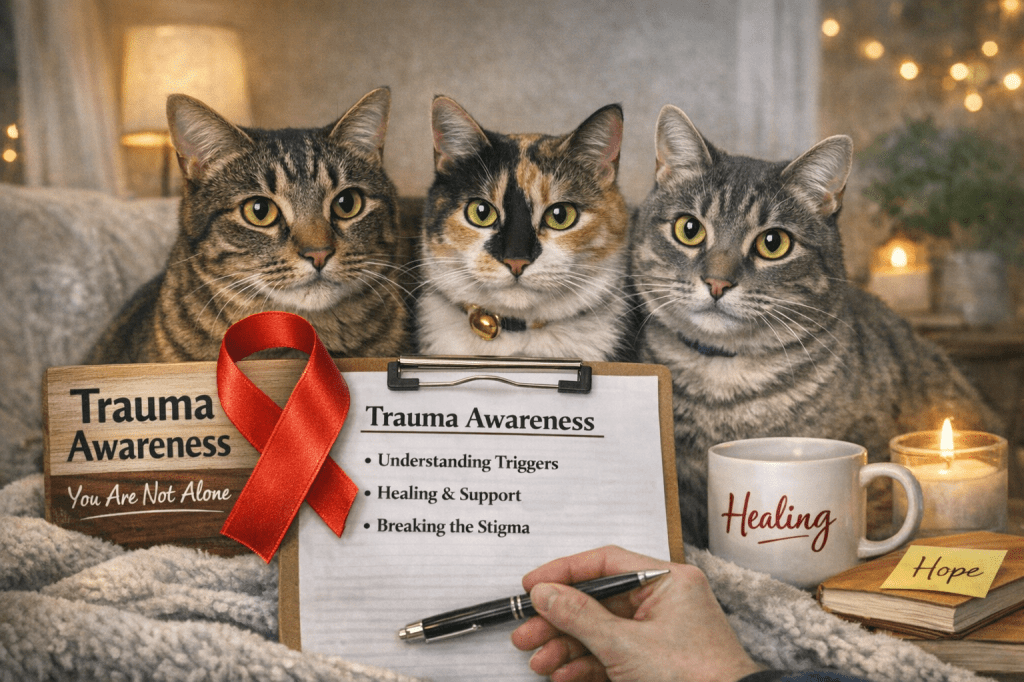
So, buckle up. Because the cats have decided it’s Trauma Awareness Hour. And apparently they’ve all been waiting their whole lives to trauma dump with the enthusiasm of a group therapy circle run by toddlers. And today is the day they ask deeply personal questions with the emotional sensitivity of a toddler holding a chainsaw. They have formed a circle. They have snacks. They have opinions. And apparently, they have questions about my trauma.
Me: “Okay, girls. Today we’re talking about trauma. Share whatever you feel comfortable with.”
She raises paw like she’s in kindergarten
Piper: “I’ll go first because my story is the most dramatic. Obviously.”
Coco: “Oh lord.”
Tinkerbell: “Let the child speak. She needs this.”
Piper: “So picture this. Me and my siblings. In a metal box. In the Mississippi heat, basically sautéing like tiny furry cornbread muffins.”
Me: “Baby, that’s awful.”
Piper: “I know. I was basically a rotisserie chicken with trauma.”
Coco: “You were a sweaty raisin with opinions.”
Piper: “Anyway, I survived because I’m dramatic and stubborn. And now every time the sunbeam hits me wrong, I flop over like a Victorian woman fainting at a garden party.”
Tinkerbell: “You faint because you forget to breathe when you get excited.”
Piper: “Trauma. Tinkerbell. Let me have this.”
Coco clears throat like she’s about to deliver a TED Talk
Coco: “My siblings and I were found under a house. A house. Do you know what lives under houses? Darkness. Ghosts. Tax evasion. I was basically a feral raccoon with trust issues.”
Me: “You’ve come so far.”
Coco: “Yes. And now I cope by judging everyone. It’s called growth.”
Piper: “You judge me the most.”
Coco: “You give me the most material.”
Tinkerbell: “I don’t remember my trauma.”
Me: “At all?”
Tinkerbell: “No. I simply chose not to be present. I was spiritually unavailable.”
Coco: “You had worms.”
Tinkerbell: “Yes, apparently my intestines were hosting a music festival.”
Piper: “You pooped like you were trying to summon something.”
Tinkerbell: “I was summoning peace. And a vet. Preferably both.”
Me: “You really don’t remember anything?”
Tinkerbell: “I remember diarrhea. And then I remember you. Everything else is optional.”
Me: “Well, we’ve all been through some things.”
Piper: “Yeah, but now we’re together! A family! With two crazy brothers who scream at dust!”
Coco: “We are a support group. A dysfunctional one, but still.”
Tinkerbell: “We heal one memory at a time. Preferably with snacks.”
Piper: “And naps!”
Coco: “And boundaries. Mostly for Piper.”
Piper: “I don’t believe in boundaries.”
Tinkerbell: “We know.”
Piper: “Sometimes I get scared when it’s hot outside. So, I cope by yelling at the sun.”
Coco: “I cope by staring at people until they feel bad.”
Tinkerbell: “I cope by leaving my body spiritually whenever something stressful happens. Like when the vacuum turns on. Or when Piper breathes too loud.”
Piper: “I have big emotions.”
Coco: “You have no volume control.”
Tinkerbell: “You have the energy of a toddler who drank a Red Bull.”
Piper: “Momma, what is your trauma about?”
Me: “Oh absolutely not. We are not opening that can of worms. We’ll be here until this time next year. And I don’t have enough snacks or emotional stamina.”
Coco: “Is that why you have panic attacks in Walmart?”
Me: “Yes.”
Tinkerbell: “But what’s scary about going to the pharmacy?”
Me: “Everything.”
Piper: “Everything?? Like the shelves? The people? The lighting?”
Me: “Yes.”
Coco: “The lighting is aggressive.”
Tinkerbell: “The vibes are hostile.”
Piper: “The blood pressure machine is a demon.”
Me: “Exactly.”
Coco: “So what did our therapist tell you?”
Me: “She said, ‘I’ll see you in another couple of days.’”
Tinkerbell: “Translation: ‘You’re a lot. But I believe in you.’”
Piper: “Translation: ‘You have so many issues we need a punch card.’”
Coco: “Translation: ‘You’re keeping the lights on in that office.’”
Me: “But look at us now. We’re safe. We’re loved. We’re healing together.”
Piper: “And we have snacks!”
Coco: “And stability.”
Tinkerbell: “And indoor plumbing.”
Me: “We survived things we never should’ve had to survive. And now we get to build something soft and silly and sacred together.”
All Three Cats: “Group hug!”
Coco: “But don’t touch me too long.”
Piper: “I’m crying!”
Tinkerbell: “I’m dissociating!”
Me: “Perfect. Exactly the emotional range I expected.”
In small Southern towns, admitting trauma is treated like a social crime. The moment you name what happened, you’re not just telling your story. You’re “disgracing the family,” “embarrassing the community,” and threatening the carefully polished illusion of stability that everyone works so hard to maintain. The culture teaches people to swallow their pain. Protect the reputation of the town at all costs. And never, under any circumstances, call out the people who caused the harm. And because the “good ole boy” network is alive and well. And sitting in every position of authority from the courthouse to the church pews, the truth gets buried right alongside the accountability. Even when the perpetrators are known. Especially when they’re known. Nothing is done. The silence is enforced. The victims are shamed. And the town keeps smiling for the church directory photo like nothing ever happened. But the truth doesn’t disappear just because the town refuses to look at it. It lingers in the air, the families, the generations, waiting for someone brave enough to break the cycle and say, “This happened. And it mattered.” And I am that one in my family who refuses to stay quiet about the trauma that happened in the small city of Petal, MS.
Trauma will have you doing things that make absolutely no sense. Things like apologizing to furniture when you bump into it. Jumping at sounds that aren’t even loud. Overthinking texts like you’re decoding ancient scripture. Saying “I’m fine” in a tone that suggests you are, in fact, not fine. And crying because someone said, “I’m proud of you.” And your body wasn’t prepared for that level of kindness. Trauma will also make you emotionally attached to random objects. A mug. A blanket. A rock you found on a walk. A pen that writes really smooth. Your brain will be like, “This is my emotional support spoon. Touch it and perish.”
Trauma awareness isn’t about reliving the pain. It’s about naming it, so it stops owning you. It’s about understanding why you react the way you do. It’s about giving yourself grace for surviving things you never should’ve had to survive. It’s about learning that your triggers aren’t flaws. They’re evidence that you lived through something real. And it’s about knowing you’re not broken.
You’re healing. You’re growing. You’re learning how to breathe again. You’re learning how to trust softness again. You’re learning how to exist without bracing for impact. That’s not weakness. That’s strength with stretch marks.
May your healing be gentle. May your memories lose their sharp edges. May your nervous system unclench one muscle at a time. May your heart learn safety. May your voice return to you. May your laughter come back louder. May your story be yours again. And not something that happened to you. But something you rose from.
So, if no one told you today. You’re not dramatic. You’re not broken. And you’re not “too much.” You’re a whole human who lived through storms that would’ve snapped lesser souls in half. And you’re still here healing. Laughing. Unlearning, Softening. Reclaiming. That’s not survival. That’s resurrection. And baby, if that isn’t holy, I don’t know what is. Drop the sage. Keep the truth. And walk away knowing this. Your story didn’t end in the dark. You did.
Affirmation: I honor the parts of me that survived. I honor the parts of me that are still healing. I am allowed to grow, to rest, to feel, and to reclaim my peace. And I can do it one breath at a time.
“My healing isn’t linear. It’s a Southern backroad with potholes, detours, and at least one possum giving me side‑eye. But I’m still driving.”
-This Puzzled Life
Light the charcoal. Sprinkle the sage. Today we’re not just cleansing the room. We’re cleansing the entire diagnostic chart that tried to play me like a two‑for‑one special at the Discount Trauma Mart. We’re also cleansing the medical chart, the family gossip line, and the entire Southern belief system that still thinks “nerves” is a diagnosis. And “just pray on it” is a treatment plan.
Dual diagnosis is that special Southern casserole of “mental health condition” baked together with “substance use disorder.” And it’s served piping hot with a side of unsolicited advice from people who haven’t been to therapy since Clinton was in office. It’s the moment life says, “Surprise! You’re not just juggling one thing. You’re juggling two flaming batons while the universe yells, ‘Smile, sweetheart!’”
Dual diagnosis is like waking up every day in a body that’s running both a Windows 95 operating system and a bootleg Sims expansion pack that keeps crashing. It’s trying to heal your brain while your brain is actively filing HR complaints against itself. It’s the emotional equivalent of trying to fix the roof while the house is still on fire. And the HOA is sending you letters about your grass height.
And it’s that moment when life looks at you and says, “Oh, you thought you were dealing with one thing? Hold my sweet tea.” It’s the psychiatric equivalent of a potluck where anxiety brings a casserole. Depression brings a Bundt cake. And addiction shows up empty-handed but somehow leaves with all the Tupperware.
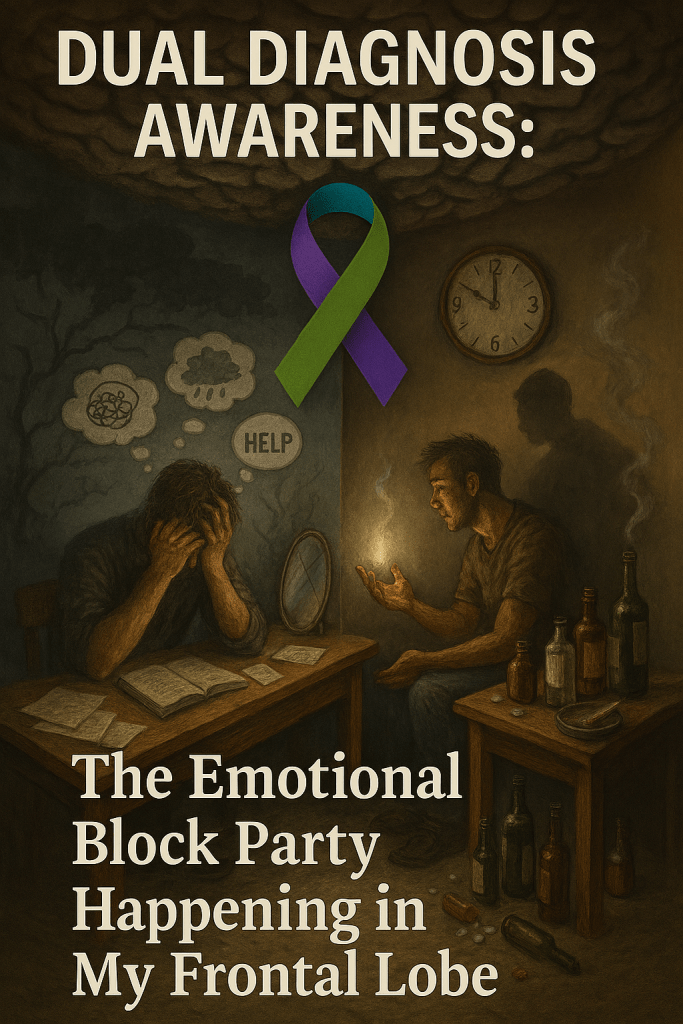
And the world? The world acts like you’re being dramatic. And the wild part? People act like you’re being dramatic. “Have you tried drinking more water?” Ma’am, I have two diagnoses doing synchronized swimming in my amygdala. Hydration is not the plot twist that’s going to fix this. “Have you tried yoga?” Ma’am, I have two diagnoses doing the electric slide in my frontal lobe. Yoga is not going to stop this internal block party.
Beneath the jokes, dual diagnosis is real, heavy, and often misunderstood. People think it’s chaos. But it’s actually survival. It’s resilience. It’s learning to hold two truths at once like “I’m struggling and I’m still here.” It’s learning to treat yourself with compassion even when your brain is acting like a committee meeting where everyone is yelling and nobody brought notes. It’s learning to say, “I deserve care.” “I deserve treatment.” “I deserve to be taken seriously.” And most importantly, “I am not a punchline. I’m the whole damn story.”
Down here in the Deep South, dual diagnosis gets wrapped in a layer of cultural seasoning nobody asked for. Aunt Linda whispers like you’re contagious. Cousin Ray offers you a beer because “you look stressed.” And the church ladies add you to the prayer list without asking. Right under “traveling mercies” and “unspoken.” Meanwhile, you’re just trying to survive the day without your brain throwing a surprise block party.
Dual diagnosis in the South also means navigating stigma with the grace of a cat on a freshly mopped floor. You’re trying to get help. Half the town thinks therapy is witchcraft. And the other half thinks medication is a moral failing. Meanwhile, you’re over here doing the emotional equivalent of rebuilding a transmission with a butter knife and a YouTube tutorial.
Dual diagnosis awareness is about reclaiming your narrative from the people who oversimplify it. Misunderstand it. Or try to shame you for it. It’s about saying, “Yes, I’m dealing with two things at once. And I’m still out here living. Healing. And occasionally thriving like the chaotic miracle I am.” And yet, here we are. Still showing up. Still healing. Still lighting the charcoal and sprinkling the sage like we’re about to summon the ancestors and the insurance company.
Dual diagnosis doesn’t make you broken. It makes you bilingual in battles most people will never understand. And if anyone tries to minimize your experience? Tell them this, “Baby, I’m not dealing with too much. You’re just underestimating my capacity.” Thanks for reading! And keep searching for answers.
Affirmation: I honor every part of my journey. The messy, the miraculous, and the medically complicated. All of it proves I’m stronger than the storms I’ve survived.
“Psych units may be chaotic. But at least my bitching is organized.”
-This Puzzled Life
Light the charcoal. Sprinkle the sage. Somebody hand me a fan because the level of petty I’m about to describe requires ventilation. Psych units don’t just have pettiness. They cultivate it like a community garden complete with tomatoes, basil, and grudges. And if I’m going to talk about it, I need every ancestor, archangel, and neighborhood stray cat on standby.
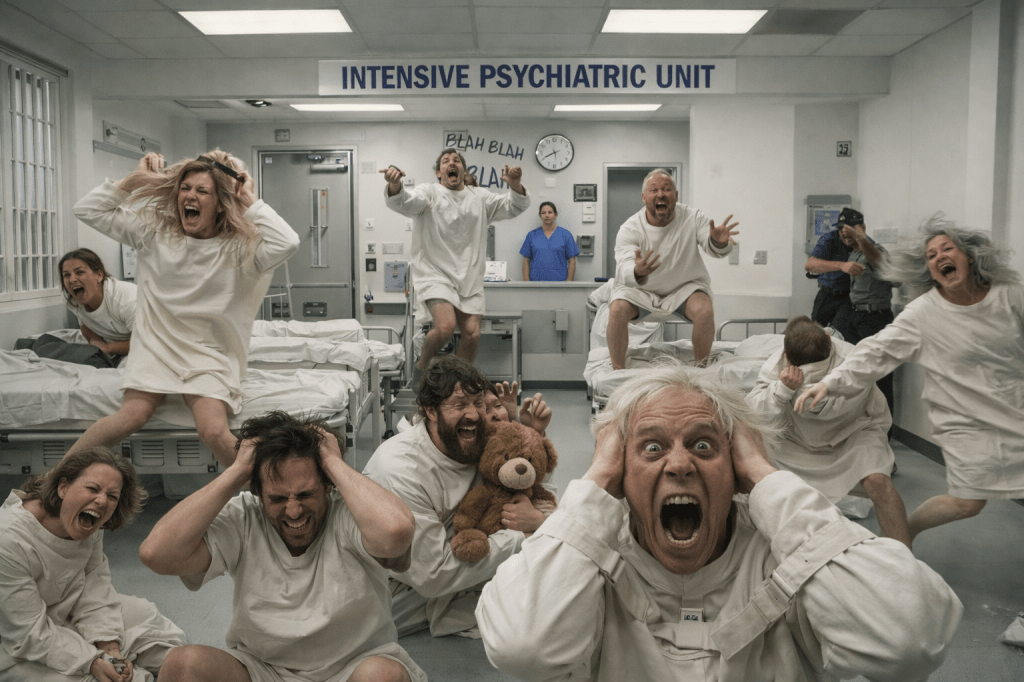
These places run on a spiritual cocktail of fluorescent lighting, lukewarm coffee, and the kind of petty that could power a small city. The spirits already know what time it is. We’re about to enter the only place on Earth where adults will fight over a graham cracker, a blanket, and who gets to sit closest to the fake plant in group therapy. Especially the kind that shows up wearing non‑slip socks and asking if you’ve “completed your feelings journal for the morning.” Buckle up. We are about to revisit the life of the unhinged.
Let me tell you something right now. Nobody does pettiness like a psych unit. Not your auntie at Thanksgiving. Not your ex who still watches your Instagram stories from a burner account. Not even the Southern church ladies who can bless your heart into a coma. Psych units are the Olympics of Petty. Gold medal level. International competition. And sponsored by “Clipboards & Consequences™.
And the wildest part? The staff and the patients are in a silent, unspoken petty war at all times. It’s like a nature documentary narrated by Morgan Freeman: “Here we observe the patient refusing to participate in group therapy because the therapist said, ‘good morning’ with the wrong tone.”
Breakfast on a psych unit is not a meal. It’s a spiritual exam. You ask for two sugars? They give you one. You ask for a spoon? They hand you a spork like you’re being punished for past lives. You ask what the eggs are made of? They say, “Don’t worry about it,” which is exactly when you start worrying about it.
And the patients? Oh, we’re petty right back. Someone refuses their meds because the nurse said their name wrong by half a syllable. Someone else declares a hunger strike because they didn’t get the “good blanket.” Which is the one that feels like it’s been washed fewer than 400 times.
Psych unit bed assignments are the closest thing we have to Old Testament conflict. Two grown adults will absolutely fight over who gets the bed closest to the window like it’s beachfront property. Someone gets moved rooms and immediately acts like they’ve been exiled from the kingdom. They say, “I’m not unpacking. I’m staging a protest.”
Group therapy is where the petty becomes performance art. Someone refuses to share because “the energy is off.” Someone else overshares because they know it makes the therapist uncomfortable. Someone proudly announces, “I’m only here for the snacks” and means it. And the group leader? Smiling sweetly while spiritually flipping everyone off.
If you’ve never seen adults negotiate shower times like they’re drafting a ceasefire agreement, you haven’t lived. People will take 47‑minute showers out of spite. “Forget” their towel so they can walk dramatically down the hall. Complain someone used “their” shampoo even though it’s the hospital’s and smells like citrus‑flavored despair.
And then you discover the shower has no curtain. Not a flap. Not a panel. Not even a nostalgic bead string from the 70s. You step into that shower like you’re entering a baptism you did not sign up for. The water pressure is either a gentle mist that feels like someone exhaling on you. Or a fire‑hose blast that could strip paint off a Buick. Meanwhile, staff strolls by doing “wellness checks” like, “just making sure you’re safe!” Ma’am, I am safe. Emotionally? No. Physically? Barely. Spiritually? Absolutely not.
Mindfulness group on a psych unit is its own brand of comedy. The therapist dims the lights (as much as fluorescent bulbs allow), puts on royalty‑free pan flute music, and says, “Imagine you’re on a peaceful beach.” Ma’am, I am sitting in a plastic chair that squeaks every time I breathe. Then it’s, “Picture a calm, soothing waterfall.” Meanwhile someone is snoring. Someone is whisper‑arguing with their spirit guides. Someone is chewing graham crackers like they’re in a survival documentary. And you’re trying to “visualize tranquility” while holding a safety crayon shaped like a melted candle.
They are not crayons. These are wax‑based emotional support devices. Thick. Stubby. Unbreakable. Unsharpenable. Every letter looks like it was drawn by a raccoon wearing oven mitts. But when a Code gets called? Those colors become binoculars. Everyone leans forward clutching their little wax chunk like, “Pass me the purple one. It’s the good one.”
Psych units have one universal truth. A doctor must be called for absolutely everything. You sneeze too enthusiastically? “Hi, yes, doctor? She sneezed with intention.” Want a Tylenol? Doctor. Want a different blanket? Doctor. Want to sit in a different chair because the one you’re in feels spiritually cursed? Doctor. It’s like a fluorescent DMV where every request requires a supervisor who is mysteriously never on the floor.
And then there are the medications. Raise one eyebrow too high? “Let me page the doctor.” Ask why the eggs taste like regret? “Let me page the doctor.” Have an attitude after being woken up at 5 a.m. for vitals you did not ask for? Suddenly they’re offering you something “to help you relax.” Which is psych‑unit code for, “This will knock you into next Tuesday.” These meds are so strong they could end a world war. You wake up unsure of your name, the date, or why your socks don’t match.
Some staff walk around like they’re the TSA of mental health. And they’re ready to confiscate your emotional liquids. Some give you the “I’m tired of all y’all” look before you’ve even spoken. Some have mastered the therapeutic smile. The one that says, “I care deeply.” But their eyes say, “I clock out in 12 minutes and I’m not starting anything new.” And the tech who acts like your request for a second blanket is a personal attack on their lineage? Iconic.
There comes a moment when staff decides you’re “a little too spicy for the general population.” And suddenly you’re being escorted to the Psychiatric Intensive Care Unit known as the PICU. The PICU is not a unit. It is an ecosystem. A habitat. And a fully unhinged micro‑climate where time is fake. Socks are currency. And the air vibrates with the energy of people who have absolutely had enough.
The lighting is harsher. The chairs are bolted down with enthusiasm. And the staff has that look like they’ve seen things they can’t legally discuss. This is where someone argues with a wall. Someone else declares themselves the mayor. A graham cracker becomes a weapon of emotional warfare. And the “call the doctor” rule becomes a religion. You start to wonder if the doctor is a real person or a mythological creature who appears only during full moons and paperwork audits.
There is a very specific sound a psych unit makes right before a Code gets called. It’s too quiet. Like the ancestors are holding their breath. Then, a chair scoots too hard. A voice gets too spicy. A slipper hits the floor with conviction. And the staff looks up like meerkats who heard a twig snap. Someone yells “CODE!” with the enthusiasm of a Walmart employee announcing Black Friday. And the whole unit transforms into live‑action chaos. Patients settle in like it’s cable TV. And it’s like, “Oh lord, they done called a Code. Lemme get comfortable.” Staff sprints like Olympians. Clipboards fly. Walkie‑talkies crackle. And the therapist breathes deeply like they’re manifesting a different career.
And when it’s over? Everyone goes right back to coloring like it was a commercial break. Psych units are messy, miraculous, chaotic, exhausting, and sometimes deeply funny in ways only people who’ve been there understand. The pettiness isn’t cruelty. It’s survival. It’s humanity. It’s the tiny rebellions that remind you you’re still a person. Even when life has knocked you sideways.
Connect and Refocus assignments are the psych‑unit equivalent of being told to stand up in front of the congregation and confess your sins with a microphone that echoes. They hand you a worksheet with questions about your troubling behavior. And by the time you’re done it’s the thickness of a dissertation. The therapist says, “Just outline your maladaptive coping skills and therapy interfering behaviors.” Just? As if you’re not about to write a full academic paper on why you shut down emotionally. Overthink everything. And threaten to fight the vital signs machine at 5 a.m. And the worst part? You don’t just fill it out. You have to read it aloud in group like you’re defending your thesis before God, the ancestors, and a room full of people who just met you yesterday. You’re sitting there clutching your safety crayon while trying to sound insightful. And everyone else nods like they’re on the judging panel of America’s Next Top Trauma Survivor. It’s humbling. It’s horrifying. It’s hilarious. And somehow, it’s exactly the kind of chaos that makes psych unit bonding feel like summer camp for emotionally exhausted adults.
But there is no gamble on Earth quite like the moment they tell you, “You’ll be sharing a room.” That’s not an assignment. That’s a lottery. That’s a spiritual test. That’s a cosmic wheel‑spin hosted by the universe itself. On a psych unit, your roommate can be literally anything. The possibilities are endless. Unhinged. And hilarious in a way only people who’ve lived it understand.
Here is a few of the different types of roommates you could be paired up with.
1. The roommate that sleeps 12 hours a day but somehow still manages to terrify you. They snore like a diesel engine. They sit up suddenly at 3 a.m. like they’re receiving messages from the ancestors. They whisper things like, “Did you hear that?” No, I did NOT hear that. And I would like to keep it that way.
2. This roommate provides live commentary on everything you do. You stand up? “Where you going?” You sit down? “You tired?” You breathe? “You okay?” I am trying to exist. Please let me exist in silence.
3. This roommate has been in the unit for 48 hours and has already achieved spiritual awakening. They speak in riddles. They meditate loudly. They give unsolicited advice like, “You must release the ego. Also, can I have your pudding?”
4. This one will eat every single snack you have. Even the ones you hid in your pillowcase. They will deny it with confidence. They will gaslight you about your own graham crackers. They will ask for juice while drinking the juice they stole from you.
5. This roommate is entertainment. Pure entertainment. They talk to themselves, the walls, the staff, the ancestors, and occasionally the ceiling tiles. They narrate their dreams. They reenact scenes from movies that don’t exist. You don’t even need cable. You have them.
6. This roommate showers at 2 a.m. With no curtain. With the water pressure set to “pressure wash a tractor.” They come out wrapped in a towel the size of a napkin and say, “Your turn.”
7. This roommate is quiet. Too quiet. You don’t know if they like you. Hate you. Or don’t know you exist. They stare at the wall for long stretches of time. They fold their socks with military precision. They whisper to their juice cup. You respect them deeply.
8. This roommate minds their business. Sleeps in weird positions. Hisses when staff wakes them up. Eats only the snacks they like. And will absolutely sit on your bed like it’s theirs.
Psych‑unit roommates are a whole spiritual curriculum. A syllabus written by the universe. A randomized character generator with no patch notes or warning labels. And I’ve had every single type walk through that door and claim the other half of my room like they were entering a reality show.
Some were chaotic. Some were confusing. Some were plot twists. And a precious few? They became family in the kind of way only shared trauma, cold cereal, and shared “Did you hear that?” moments can create. You don’t choose your psych‑unit roommates. But sometimes the universe chooses them for you.
I’ve had the ones who snored like freight trains. I’ve had the ones who narrated my every move. And the ones who didn’t speak for three days. But somehow communicated entire novels with their eyebrows. I’ve had the ones who showered at 2 a.m. with the water pressure set to “remove barnacles.” And the ones who treated the room like a spiritual dojo. Then there were the ones who were just there. Quiet. Odd. Mysterious. Every roommate was a new chapter in the saga. Every roommate was a new lesson in patience, comedy, and survival. Every roommate was a new story I absolutely should not laugh at but absolutely do.
But out of all the chaos, characters, and all the “Lord, give me strength” moments, there are a couple of roommates who became real friends. The kind you still talk to. Still laugh with. Still send memes to about your shared psych‑unit nonsense. These are the ones who laughed with me at 3 a.m. when the unit sounded like a haunted Walmart. Shared snacks like we were in a bunker. Understood the unspoken language of “I’m fine but also not fine but also fine.” Survived Codes, guided imagery, and curtain‑less showers right alongside me. And turned the worst moments into inside jokes that still make us wheeze.We walked through the same chaos and came out with matching emotional scars and petty humor.
I wouldn’t trade them for all the money in the world. Not for a million dollars. Not for a lifetime supply of the “good blankets.” Not even for a shower curtain. Because some people come into your life for a reason. Some come for a season. And some come because the hospital assigned them to your room. And the universe said, “Y’all need each other.”
And within that roommate lottery, the prize is either peace, or a story you will tell for the rest of your natural life. And somehow? You adapt. You bond. You laugh. You survive. And you walk out with tales that sound made‑up but absolutely aren’t.
Healing is hard. Fluorescent lights are evil. And humans will absolutely weaponize a spork if pushed far enough. May your blankets be soft. Your meds be on time. And your petty be righteous. May your coping skills be strong. Your boundaries fortified. And your spirit guides remind you that sometimes the pettiest thing you can do is heal anyway.
And that is the gospel truth of the psych unit. A place so petty. So chaotic. So spiritually unhinged. That even the ancestors step back like, “good luck.” Between the curtain‑less baptisms they call showers. The guided imagery that feels like group hallucination. The safety crayons built like toddler dumbbells. And the Codes that pop off like surprise season finales. One thing becomes clear. Healing might be hard. But the comedy is free.
So, the next time somebody tries to tell you psych units are calm, peaceful places. Just smile. And let your spirit guides handle the lie. And remember, sometimes the pettiest, most powerful thing you can do is survive it with your humor intact. Thanks for reading! And, yay, for the ability to use humor as a coping skill for survival.
Affirmation: I am calm, I am grounded, and I will not let anyone with non‑slip socks ruin my vibration today.