
Types of Domestic Violence

“If you aren’t silent about your pain, they’ll kill you and say you enjoyed it.”

-Zora Neale Hurston

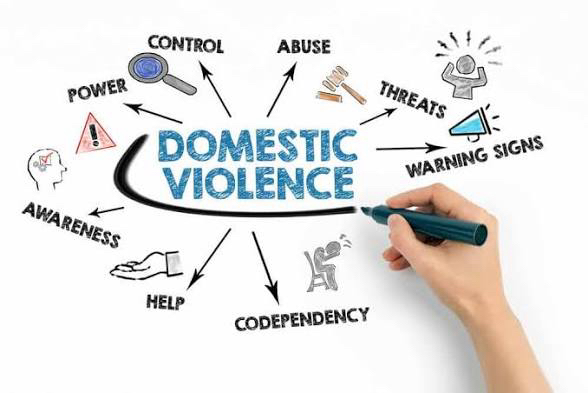
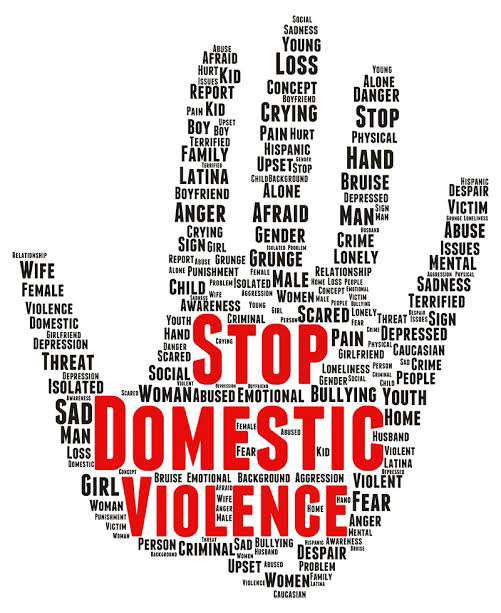
Light the charcoal. Sprinkle the sage. Negative energy go away. Today, I want to talk to you about some of the behaviors that fit under the umbrella of domestic violence. It wasn’t until I  was out of the relationship for a while before I began to see  information validating  what I always knew. This is not comprehensive list by any means. 

COERCIVE CONTROL OR CONTROLLING BEHAVIOR

·        Control who a person sees, wears and where they go. 

v  This was considered normal in my relationship. He dictated everything that I wore. If I chose what I wanted to wear, he would tell me to,  “go change. You look ridiculous.” And I was afraid to go somewhere without asking his permission.

·        Monitor or track what a person does. 

v  This was also something that was done on a daily  basis. He would call me wherever I was supposed to be and verify it by employees.

·        Control a person’s finances, medicine, food, or exercise.

v  He always told me that I was not allowed food that he didn’t approve. And I was required to be at the gym at 5:30 am every morning. And he would call and speak with those employees about what type of exercise I was doing. I was also not allowed to spend any money without permission.

·        Force someone to have sex or do sexual things.

v  I was never given the option to make that choice. I was threatened if I even spoke about that.

PHYSICAL VIOLENCE

·        Hitting, punching, kicking, bashing, shoving, or pushing.

This happened more times than I can count. He did kick me in the face. But when he and his brother teamed up together, it was worse. The main reason is because my husband didn’t want to say that he participated. And because they always threatened and intimidated me into silence, I never said anything. His brother was his “yes man.” And my husband pulled the strings.

·        Spitting on someone or pulling hair.

·        Choking or suffocating.

v  This typically happened during forced sex. Or whenever his brother would get mad at me, he would choke me as a form of intimidation.

·        Throwing things at or near someone.

·        Using a weapon.

v  This was always pointed at me or laid out somewhere as a form of threats and intimidation.

·        Locking someone in or out of space.

v  This was often done to show control.

·        Stopping someone from eating, sleeping, or having medication they need.

v  Every piece of food had to be given an account. One of his favorite things he would allow me to have for a snack was ten olives and ten pistachios. He would come home from work and completely berate me if I weren’t already up. And it didn’t matter that I had just worked a 24-48 shift. He always told me that medication was a crutch. He got mad because I had been given muscle relaxers for a hurt back and proceeded to kick me in the face and throw my medication out into the rain. I was also not allowed to take any psychiatric meds for depression or mood stabilization because, “why do you need anti-depressants when I’m so good to you? And what if someone finds out that you’re taking this? I don’t want anyone knowing that my wife is crazy. Then it makes me look bad. Why don’t you care about that?”

·        Forcing someone to drink or take drugs.

v  I did this on my own to help deal with being under his crazy world of control.

SEXUAL VIOLENCE

·       Touching or kissing someone without their consent.

I was made to accept his advances

·       Pressuring or forcing someone to have sex or do something sexual without their consent.

v  I was told, “Either you give it to me, or I’ll take it. Either way, I’m getting what I want. Make your decision.” Many times, I was bruised or bleeding by the time he was done with me. I had no voice in any matter. He was the “warden,” and I was his “prisoner.” My whole sexual relationship with him was simply RAPE.

·       Pressuring or forcing someone to have sex without protection such as a condom.

I was told early on, “I’m not using protection because it burns my dick. If you really loved me, you wouldn’t  put stipulations on how I fuck you.”

*I know this is explicit. However, I want you to get an accurate description of the situation.*

IMAGE-BASED ABUSE

·        Sharing private images of a person without their consent, for example images of them undressing or showering.

·        Sharing culturally inappropriate images of a person, for example images in which they do not wear items of clothing that they would normally wear in public.

·        Sharing intimate or sexualized images of a person without their consent.

·        Producing and sharing images that have been digitally altered to suggest a person is nude or engaged in sexual activity.

·        Threatening to do any of these things.

        *I found out later on that his brother would secretly be filming or watching us having sex.*

EMOTIONAL OR PSYCHOLOGICAL ABUSE

·        Criticizing a person and their choices or actions.

v  In his mind, he thought that I was too stupid to make decisions that were considered “correct.” All he ever told me what how stupid and retarded I was.

·        Isolating a person form their friends or their family.

v  Some friendships I lost forever because they just thought that I abandoned them. What they failed to see was that I would get accused of all kinds of stuff if I disobeyed him. Those who have never been in an abusive situation can’t comprehend losing your power to stand up for yourself. It was just easier to do what he said. Some former friends haven’t even talked to me since that time. And that is about them not me.

·        Threatening to harm a person, their family, their friends, their pets, or their belongings.

v  He always made threats about things he would and could do with keepsakes or my innocent animals. And if he and his brother didn’t feel that I was getting the picture, they would show up at my parents’ house and start harassing them.

·        Threating them to share personal or private information, such as sexuality, gender identity, personal health, or visa status (https://www.act.gov.au/community/domestic-family-and-sexual-violence/types-of-domestic-and-family-violence, 2025).

This topic will be spread over a few blogs. As you can see, when I add personal experience, the blog gets much longer. Stay patient and learn from this. It’s a hell that most people can’t understand. And I’m telling you that it’s all true. I was living in a prison without visible bars. Thanks for reading! And watch for the second part in the coming days.

Affirmation: I remember that it is ok to ask for help and receive support.

***Don’t forget to watch the video!***

#Thispuzzledlife

Breast Cancer Awareness Month

“You are not alone. We are in this together.”

-Breast Cancer Research Foundation

Light the charcoal. Sprinkle the sage. Negative energy go away. Today, I want to talk to you about breast cancer. By now you have been affected by breast cancer either directly or indirectly. In this blog, I will reiterate some of what is already known about this disease that stills so many lives. As well as some of the perplexing aspects that we don’t know yet.

As an 8th grader, the reality of breast cancer and its dangers hit me hard as I saw my grandmother struggle every day without any complaints. I know, it’s another moment courtesy of that year. And as if there wasn’t plenty of other things to deal with. As someone who used to be deeply connect with my family, this reality was a little too harsh for me. Many nights I would cry myself to sleep as everyone else said, “Don’t worry about things that haven’t happened.” However, as a child, I worried about everything including people dying that I loved. That year I don’t remember not being scared for even one minute. And today, my nervous system continues to believe that we are still there. It is what it is, I guess.

Let us look at some of the things that we do know about breast cancer:

§  Breast cancer doesn’t always appear as a lump. Other symptoms include swelling, redness, nipple changes, and nipple discharge.

§  Drinking alcohol can increase your breast cancer risk.

§  You don’t need to learn how to do a breast exam. Research  indicates that monthly self-exam isn’t necessary (www.mdanderson.org, 2025).

§  In 2025, estimated 316,950 new cases of invasive breast cancer will be diagnosed. As well as 59, 080 new cases of non-invasive breast cancer.

§  Currently 4 million breast cancer survivors

§  Estimated 42,170 U.S. women will die from breast cancer this year.

§  Risk of recurrence depends on the type and staging of the initial breast cancer.

§  1 in 8 women in the U.S. will develop breast cancer in their lifetime.

§  Most common cancer in American women.

§  The average age of U.S. women diagnosed is 62 years old.

§  About 9% of all new cases in the U.S. are diagnosed in women younger than 45 years old.

§  Younger people under the age of 35 who are diagnosed face a higher risk of recurrence.

§  Black women are 40% more likely to die from breast cancer than white women.

§  Black women have the lowest 5-year relative breast cancer survival rate of any racial or ethnic group.

§  1 in 5 black women are diagnosed with triple-negative breast cancer, which is more difficult to treat.

§  Hispanic women have a 20% lower incidence rate of breast cancer than any other  group.

§  Asian and Pacific Islander women are more likely to be diagnosed with localized breast cancer.

§  They also have the lowest death rate from breast cancer.

§  American Indian and Alaskan Native women have the lowest rate of developing breast cancer.

§  Chinese and Japanese women have the highest breast cancer survival rates.

§  In 2025, an estimated 2,8000 men will be diagnosed with invasive breast cancer in the U.S.

§  Estimated 510 U.S men will die from breast cancer in 2025.

§  1 in 726 men in the U.S. will develop breast cancer.

§  Black men with breast cancer tend to have worse prognosis (www.nationalbreastcancer.org, 2025).

What is not currently known about breast cancer?

§   Genetic Mutations like BRCA1/BRCA2 increased risk, only account for a very small percentage of breast cancers. Which means approximately 80-90% are unknown.

§  Reasons for high mortality rate in African American women is still being investigated.

§  While dense breasts are a factor, there’s more needed research to understand the underlying mechanisms.

§  Symptoms like nipple inversion, skin dimpling, and changes in nipple or breast skin texture, can delay diagnosis and treatment.

§  Although knowing about breast cancer in men, the cause and treatment are not as well-understood with diagnosis and treatment being delayed.

§  Environmental factors are suspected and are still being explored (www.fomatmedical.com, 2023).

Affirmation: Hope is on my side.

***Don’t forget to watch the video!***

#Thispuzzledlife

National Domestic Violence Awareness Month

“Never stop fighting for your freedom, you are worth it.”

-DA Survivor-Anon

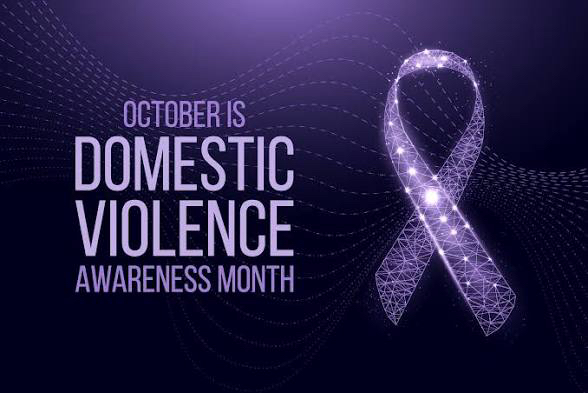
Light the charcoal. Sprinkle the sage. Negativity energy, go away. Today is the beginning of Domestic Violence Awareness Month. This month is when our voices from all over the globe will be heard. We as victims, survivors and warriors bring to light the horrors of domestic violence and the impact that it leaves on our lives and those around us. Let’s take time out for a little education on a few of the topics surrounding domestic violence.

Domestic Violence is a topic that I know a lot about. Well, I know how to function in it. And I know how to get away from it. But living with the aftereffects reveal a whole other set of problems. Where domestic violence used to be seen as something that only happens to women and their partners. There is more awareness on the abuse of men by their partners. No matter how you identify. It also happens to the most innocent, children and pets. This happens in all forms of relationships. And the statistics are staggering.

Domestic violence is violence committed by someone in the victim’s domestic circle. Which include partners and ex-partners, immediate family members, and other relatives and family friends (https://www.UN.org, 2025). The behaviors can include such things as:

·        Physical

·        Sexual

·        Emotional

·        Financial

·        Psychological actions or threats of actions that influence another person.

This includes any behavior that intimidate, manipulate, humiliate, isolate, frighten, terrorize, coerce, threaten, blame, hurt, injure, or wound someone. The repetitive exposure to violence teaches children that violence is a normal way of life (https://dvcc.delaware.gov, 2025). And for those of us who leave, constant confusion and every minute of no knowing when something else will happen again, is our normal. And the many years of programming by our abusers takes years of therapy to de-program ourselves. But you will never be who you used to be.

Recovery is not for the faint of heart. It is hard and uncomfortable. And it takes years to undo the damage that was caused on so many levels. I was one of the lucky ones. Long story short, I survived. But the mental damage that was caused has left me crippled in some ways. And through the sleepless nights filled with tears, therapy, psychiatric medications, body memories, flashbacks, phobias, and panic attacks, I have learned that I have a voice that deserves to be heard. And no matter what people say or believe, I can validate my own story regardless of the opinions of others. Because I lived it. 

The main thing I want to say to other women and men across the globe who are still in their own processes, “YOU ARE NOT ALONE!” Because it happened to me too. Thanks for reading! Keep smiling and pushing forward.

Affirmation: My light shines even in the dark.

***Don’t forget to watch the video!***

#Thispuzzledlife

Suicide Awareness And Prevention Groups

“Grit your teeth and let it hurt. Don’t deny it. Don’t be overwhelmed by it. It will not last forever.”

-Harold Kushner

Light the charcoal. Sprinkle the sage. Negative energy go away. Keeping in line with suicide awareness, I thought I would talk about a couple of groups that reflect awareness and prevention. There are so many groups out there that stay along these same lines. And I wish that I could spotlight them all.

To Write Love On Her Arms

This group is a nonprofit group dedicated to presenting hope and finding help for people struggling with depression, addiction, self-injury, and suicide. Jamie Tworkowski set out only to help a friend and to tell her story. When he met Renee Yohe, she was struggling with addiction, self-injury, and suicidal thoughts. He wrote about spending five days with her prior to her entering a treatment facility. And he began selling t-shirts to help fund her treatment by posting them on Myspace. Soon people from all over the world began contacting him and telling him about their struggles and heartbreaks. And in 2007, TWLOHA became an official organization. 

Here are some numbers associated with their organization:

·       210,000 messages from individuals in over 100 countries.

·       3.8 million miles have been traveled to meet people in their communities.

·       1,100+ blog posts and launched a podcast.

·       56,000 find help tool searches.

·       27,000 fulfilled merch orders

·       $3 million donated to treatment and recovery.

WE BELIEVE:

You were created to love and be loved.

People need other people.

Your story is important.

Better days are ahead.

Hope and help are real.

(www.twloha.com, 2025).

The Semicolon Project

It is an online community that began in 2013, when Amy Bleuel created it to honor her father, who died by suicide. The organization centers around mental health awareness and suicide prevention. The World Health Organization (WHO) reports a 25% increase in anxiety and depression during the first year of COVID-19. That combined with the nation’s political instability characterized by protectionism and unilateralism has led to strained international relations. And the stress funnels down to our families and personal stories. 

The semicolon represents a continuance of life where a period could have easily ended the story. There have currently been over 89,000 assessments completed. 5,336 journal entries shared. And have provided direct support to 214 individuals. Semicolon badges in Apex Legends and Call of Duty has reached over 1.3 million gamers and additionally 50 new chapters. And 84% of Project Semicolon members report that the organization has saved with lives in times of crisis (www.projectsemicolon.com, 2025). 

Mission Statement

Our mission is to empower individuals with mental health experiences to embrace their journey and recognize that their story is far from over.

I hope that you can take something from this information. Please take what you can use and leave the rest. And please pass along the information to someone who can benefit. Even if that someone is you. Keep smiling! And do not be afraid to reach out for help.

Affirmation: There are other ways to end my pain, even if I cannot see them right now.

***Don’t forget to watch the video!***

#Thispuzzledlife

National PTSD Awareness Day

“Always remember, if you have been diagnosed with PTSD, it is not a sign of weakness; rather, if is proof of your strength, because you have survived!”

-Unknown

Light the charcoal. Sprinkle the sage. Negative energy go away. Today, I want to take time out from celebrating Pride, to give light to National PTSD Awareness Day. This one hit hard as I’ve lived with PTSD longer than I’ve lived without it. And there are so many of us who don’t make it to the other end of the tunnel. It’s an incredibly dark place to wake up to and go to sleep with every night.

Post Traumatic Stress Disorder (PTSD) dates back to ancient civilizations and military conflicts. Terms used early on included “combat-related stress,” “shellshock,” “combat fatigue,” and “railway spine.” In the 1800s and early 1900s, the “talking cure: was popularized by Sigmund Freud and introduced in medical literature. And the treatment went from psychoanalysis to electric shock treatment. By the 1950s, the treatments had become more humane. However, now people would not admit to any traumatic symptoms due to the stigma. So, group therapy and psychotropic medications were introduced (blackbearrehab.com, 2025).

In the 1970s Vietnam veterans began experiencing a lot of psychological problems that persisted even after returning home. And survivors of domestic abuse were also included. In the 1980s, PTSD was officially recognized as a mental health problem. Diagnostic and Statistical Manual of Mental Disorders adopted the diagnosis where it has remained (blackbearrehab.com, 2025).

PTSD is a developed from a traumatic event. C- PTSD when a traumatic event continues for months and years or multiple events occur. The intrusive thoughts, flashbacks, insomnia, avoidance, memory problems, detachment from friends and family, feeling emotionally numb, hyper startle, irritability, trouble concentrating, impulsive behavior, paranoia, severe anxiety, nightmares, suicidal ideations and actions and uncontrollable thoughts about the event. And over time, these symptoms completely devour who you once were (MayoClinic.org, 2025).

I know that PTSD is typically related to soldiers. I am here to tell you that I never went into the military. But the PTSD that I deal with, as a result of domestic violence, grabbed hold of me and has never let go. It has completely stripped me of everything that I used to enjoy. I don’t care about relationships. I question people about their intentions, even if they’re pure and good. I’m constantly waiting for the next shoe to drop. I don’t have typical reactions to being scared. I could see a moth out, of the corner of my peripheral vision, and then jump and scream like Jeffery Dahmer was staring at me and about to take the first bite. I face the stigmas of both friends and family mainly due to a lack of understanding. However, the reasearch information is everywhere. Sometimes others just need to their own leg work. I have come to realize that instead of trying to find out how PTSD affects someone that you love, it’s “the easy way out” to just to be dismissive, embarrassed and judgmental instead. The attitude is “just change X behavior.” Without having a solution, the resounding message of “just make it go away” further ostracizes the person that you say you care about. And so the anticipated glimmer of hope dissipates further isolating the individual. And sadly, can lead to suicide.

PTSD is not about you, it’s about them. It’s just a diagnosis until it’s “you” that experiences it every day. It has taken me down to the point of putting a gun in my mouth. And because living in the abuse was so severe, I actually pulled the trigger after pointing the gun at my torso. It missed my heart by only a few centimeters. Nothing was messed up to the point of needing surgery. But self-harm is something that I’ve dealt with since I was a 13-year-old child. And I had no idea how to deal with all the overwhelming emotions of abuse. In that cold, dark closet where I began to self-harm, and as maladaptive as the behavior is, it worked. It was the only thing that worked to bring me back to complete balance. But the problem is that it became a true addiction issue that I continue to struggle with. And before you ask, yes I’ve done a lot of therapy. It’s not that the therapy doesn’t. It’s that the addiction is that strong. 

PTSD is a true injury on the brain. The brain’s job is to help you survive in any way possible. So, we reach for anything to help calm the barrage of intrusive thoughts, memories, smells and sounds. And once it’s been damaged through a traumatic event, it creates a “work around” solution. What typically works? Self-harm and substance abuse creates almost instant comfort. You don’t have to wait for 6-8 weeks to reach your therapeutic dose efficacy to begin working. It’s an immediate fix that some of have to use just to stay alive.

Cannabis was recommended when all other “Big Pharma” medications failed. And it has saved my life on a daily basis ever since. Cannabis seems to put a cloud over my brain saying, “Settle just for a moment.” And for that moment, I can take a break from the constant paranoia and overstimulation of a brain that wanted to do nothing more than survive. And that, is my battlefield. It wasn’t in Iraq, Afghanistan or Vietnam. My battlefield is everywhere I go. I fear people and social situations in a way that most cannot understand. 

It literally takes me about a week in advance to start prepping to leave my house just to go to pick up medications,that I,unfortunately have to take. But I don’t take anymore psych meds. I was extremely sick, coming off all the meds that I had been begging for over two years to be tapered off. And I got tired of waiting, so I did it myself. I don’t advise this way because it was a really miserable process. However, I was at a point of desperation. And now about 6 months later, I feel like a new human being after the toxic feeling of all the medications. All of my true feelings and emotions have awakened, and I really like feeling somewhat comfortable at times.

My personal opinion is that anyone returning home from the active duty should be handed an ounce of weed the minute they step off the plane to do with as they wish. And it would be perfectly ok if they gave it away. That’s like paying it forward in “Weed-O-Nomics.” As it stands, soldiers come home from a war that never ends. And they are committing suicide at a rate of 22 soldiers a day. And that is less than unacceptable.

As the topic of cannabis continues to circulate among social circles and national politics, I hope that veterans from our military will step out against the shame that is felt from social stigmas. And reach for the plant that can “help take the gun out of your mouth.” Cannabis doesn’t cure PTSD because it wasn’t the one who caused it. But it does make things much more tolerable.

Thanks for reading! Happy Pride everyone!

Affirmation: I am resilient and capable of healing.

***Don’t forget to watch the video!***

#Thispuzzledlife

Happy Birthday, Jack Herer!

“The only dead bodies from marijuana are in the prison and at the hands of the police. This is ridiculous.”

-Jack Herer

Light the charcoal. Sprinkle the sage. Negative energy go away. Today, is another day this observed within cannabis culture. It’s the birthday of the great Jack Herer. He was another name associated with cannabis that represents a “front runner” in the movement. So much, in fact, that there is a cannabis strain named after him that is often sought after.

Jack Herer was born June 18. 1939 and died April 15, 2010. He is sometimes referred to as the “Emperor of Hemp.” He founded and served as director of the organization Help End Marijuana Prohibition (H.E.M.P.) which functioned as a voice for the legalization movement. We truly would not be where we are today with cannabis without activists like Jack Herer. He became a legend within the cannabis community.

His first experience with cannabis was at the age of thirty. And he smoked a strain that he called “the Sammy Davis Jr. strain” of Acapulco Gold. His friends would call him “a most vigorous zealot.” He  made a commitment with his friend and business partner Ed Adair that they would continue working on the California Marijuana Initiative until cannabis was legalized, or until they were 84 years old, or until death.

He co-authored G.R.A.S.S.: Great Revolutionary American Standard System. It was a guide for assisting in recognition of cannabis quality. It was a widely read cartoon strip. And went viral by today’s standards. He also opened the world’s first hemp store in Venice Beach and was revered as a god of sorts. He would test his hand at other types of items within the culture and also launched campaigns for cannabis legalization. He authored a book called The Emperor Wears No Clothes published in 1985. The book looked at all the reasons that hemp was criminalized. He died at the age of 70, which was six years, prior to The Adult Use of Marijuana Act of 2016 being passed which legalized personal use and cultivations of cannabis for anyone 21 years or older in the state of California. He died from complications of a heart attack in 2009.

The strain Jack Herer is an exceedingly popular sativa dominant strain. Sensi Seeds, a Dutch cannabis seed bank, cultivated the coveted Jack Herer strain in 1985. The origins are thought to be from Haze, Northern Light #5 and Shiva Skunk. It usually runs anywhere from 15%-24% THC. It typically has an orange-lemon scent emitting a dark pine flavor. Totally seventies in my opinion. People report a well-balanced head and body high that leaves them feeling relaxed. It’s also particularly good strain helping with creativity and sociability for day-time use. It helps to reinvigorate energy, focus and relaxation. And it is a good strain for both novice and experienced consumers (cannaculturecollective.com, 2025).

I hope you understand why this name is consider synonymous with cannabis culture. I have used the strain many times and totally agree with the information I found regarding the effects. Thank you so much Jack Herer for your contribution towards cannabis legalization. And a Happy Birthday to you! Thanks for reading!

Affirmation: I am ready to have another uplifting, productive day.

***Don’t forget to watch the video!***

#Thispuzzledlife

Mommy Dearest Part 2

“This is how betrayal starts…not with big lies, but with small secrets.”

-Shalini Joshi

Now let’s continue…

Lisa did update us on Kathleen’s self-harm issue that had begun to dissipate. And now she was also in therapy. I always asked about how the therapy was going because I hadn’t left my abusive therapist yet. So, I became very protective when it came to that topic. She would always put my fears to rest by telling me that she had a great therapist that really knew how to work with Kathleen. 

Landri would also have a big scare with her heart that left her almost completely bed bound. She had become so weak that she could no longer support her own weight. But eventually she would regain her strength. Slowly but surely, she wasn’t so pale. She was beginning to put on weight, and it looked really good on her. And then she started getting out and walking. They had moved onto the same military base as us. They lived only about 6-7 houses down the street.

We had not been around them in a little while due to our own issues with my mental health. And I had already begun living life in solitude where I would remain for the next few years. One day I had gone out to check the mail when I saw someone walking towards me on the sidewalk. I soon realized that it was Landri. I spoke to her and told her how good she looked and how happy I was for her. We made a very superficial conversation because I was in a very deep depression at the time. The following is the last conversation that she and I would have together. And it continues to haunt me to this day.

 Landri: “Dana, I’m scared of Lisa.”

Me: “What do you mean you’re scared?”

Landri: “I don’t really want to go into our personal problems, but she’s become very aggressive.”

Me: “Wait! Do I need to throw some aggression her way?”

Landri: “No, that would just make it worse. Just remember what I’m telling you.”

Me: “Ok. Promise me that if you need us you will call.”

Landri: “No, it’s nothing like that. She’s just spent all of our money on drugs. And she doesn’t like me questioning her about any of it.”

Me: “Ok. Well, we are here to help if you need us.”

Landri: “Thank you so much for being such good friends.”

She had convinced me enough to pacify my obsessive nature when someone is being dominated. I also understood how telling someone about a perpetrator can make the situation worse. And coming from a domestic violence situation I felt that fear for her. Later that day when Mel got home from work, I told her about the situation. She was likewise just as perplexed as I was. I told her everything from beginning to end about our encounter. She agreed with me to stay out of the situation. And to just be available if necessary. 

A week later, Landri was dead. She apparently died in her sleep. But now that conversation that was stuck on replay was never-ending. I didn’t know what to do as the news completely stunned me. I told her to find out funeral arrangements. I couldn’t let the thought go that, “Lisa just murdered one of our closest friends.” I would battle in my mind thinking, “That’s absurd to think that we would be as close to a situation that was that dangerous and not know something was wrong.” And it has always been rebuttaled with the very conversation that we had asking me not to get involved.

Mel came in from work a few days later and said, “You’re not going to believe what I’m about to tell you.” I said, “Ok well that’s not a good sign.” She very begrudgingly said, “Lisa has already had her cremated.” I scream, “WTF?!” And I began shaking. It was then that I realized that there was a high likelihood that Landri was murdered. It was difficult for me to look Lisa in the face the next time we saw her. Mel asked, “Lisa, what happened?” She begins telling us the story that she had become very weak, very quickly. And how they were laying in their bed together and they both took a nap. But when Lisa woke up, Landri was dead. I told her, “I just saw Landri several days ago and she looked the best I’ve ever seen her.”  Lisa said, “Yea the doctors said that sudden death was a possibility.” I didn’t tell her what Landri herself told me. And without warning Lisa and Kathleen moved away and weren’t answering us in any way.

We had gone to the local library where we were known frequently. Mel tapped me on the shoulder and said, “Look who’s here.” I turned around and I must’ve turned white. We saw Lisa and Kathleen before they saw us. Kathleen wasn’t in a wheelchair. But when we made eye contact, we saw Lisa mumble something to Kathleen. She was just super excited to see us. And then her demeanor turned very solemn.

That situation was many years back now. Mel and the boys moved back to Mississippi. And I moved to Texas to work with “coach” on my PTSD issues. While living out there Mel called me one day and said, “You’ll never guess who I talked to.” Agreeing with her I said, “Probably not. What’s up?” Me said, “I just got off the phone with Kathleen.” I said, “Shut up! What’s going on with her?” Mel told me, “Well, she said that Lisa had made everything up about her military and EMT service. And that neither Kathleen nor Landri had a terminal condition. She was starving them. That’s why Kathleen passed out so much and broke bones. Lisa is now homeless. And Kathleen has moved on with her life complete with therapy.” It took me a few minutes to respond because those horrible gut feelings began flooding every part of me. Several years had gone by since that horrible situation but it still stung with great ferocity. I told Mel, “You know it’s bothered me ever since about that we seemed to know the truth. If it doesn’t seem right, it probably isn’t right.” She said, “Yea, but what proof did we have at the point when we thought that? We couldn’t just go into the police station and talk to a detective only to say, “Well we don’t have evidence, but I do have a gut feeling. They couldn’t exhume the body because it was cremated.” And the words that my ex-husband repeatedly said to me, “Nobody will believe you. You’re the one with the mental problems” kept me silent once again.

Nothing has ever been proven or investigated related to that situation. One of the many things that has continued to plague my mind is the fact that we left our oldest baby in their care so that we could actually go on a much-needed date. They baby sat Marshall many, many times. If something had happened to him, I would’ve killed her without a second thought. Some of my “mommy guilt” about being a parent holds space for the event that taught me that evil is still alive and well in this world. I don’t wish her death. But I do wish her a miserable existence until the end of time. She didn’t care about our child or our family. But what was the saddest was that she didn’t  care about her own family. 

At the same time, I was dealing with another “friend” who was also very manipulative. And I was also being abused by my therapist. After all of this, I lost my damn mind. The first thing I remember writing about this was the poem titled Silent Screams. The only way that I get through another day with the constant barrage of memories about this situation is to give myself grace in the fact that everything was so hidden in a tangled web of lies. She was a manipulator that was even more skilled than my ex-husband. I think that my anger around this is about the fear that I experienced after realizing how much time Marshall had spent in their care. There is a certain amount of grief that comes from losing those relationships. We lost what we thought “was” instead of what it “wasn’t. 

Munchausen by Proxy is actually pretty rare. Unless,of course, it’s happening to you. I recently got interested in the case of Gypsy Rose. She was also at the mercy of her mother who had Munchausen by Proxy. Except that Gypsy Rose murdered her mom and subsequently went to prison. She served her time and is now out of prison. She has talked about all of the unnecessary treatments and procedures that she had to go through for absolutely no reason. And so did Kathleen. 

I don’t advocate murder. However, through the many years of trauma at the hands of some truly evil people, I can’t totally understand the rationale. Lisa was still allowed to live her life. She has nothing but one tooth and her lies that are continuing to be spread onto other unsuspecting victims. The thoughts and feelings that have stayed with me since that day are forever in my mind.” Again, it’s just another traumatic event that has taught me to question everyone’s motives including friends and especially family. I’ve never thought that I should require proof of terminal illness or military service. But maybe I should.

“But the memories that hang heaviest are the easiest to recall. They hold in their creases the ability to change one’s life, organically, forever. Even when you shake them out, they’ve left permanent wrinkles in the fabric of your soul.”

-Julie Gregory

Affirmation: “I am strong and can overcome the influence of manipulative individuals.”

***Don’t forget to watch the video!***

#Thispuzzledlife

Mommy Dearest

“Munchausen by Proxy may be the single most complex and lethal form of maltreatment known today.”

-Julie Gregory, Sickened: The True Story of a Lost Childhood 

Light the charcoal. Sprinkle the sage. Negative energy go away. Today, I want to talk to you about a serious mental health disorder known as Munchausen Syndrome. I know that this is a topic that a lot of people like to sweep under the rug because it just seems too grotesque and unimaginable to talk about. However, the fact is that the disorder remains alive and well in some individuals. And the signs and symptoms are hidden in plain sight.

Munchausen and Munchausen by Proxy fit under the diagnostic criteria for Factitious Disorder. A Factitious disorder is a conscious and intentional feigning or production of symptoms due to a psychological need to take on the sick role in order to obtain an emotional gain. This is not to be mistaken with Hypochondriasis. Which is an obsession with fears that one has a serious, undiagnosed disease. The symptoms are not created consciously (nih.gov, 2006).

Munchausen Syndrome is still considered to  be the most extreme form of factitious disorder. They intentionally deceive others by pretending to be sick. They fake symptoms or make symptoms seem worse than they actually are. And speaking to them you would think that they are an endless pit of medical knowledge. What they do is produce some medical or psychological problems and study everything they can find on it until they’re comfortably able to construct an ongoing story.

Munchausen by Proxy is where the behavior is imposed onto another person. The biggest factor in keeping their narratives alive is manipulation. And they are exceptionally good at it. My exposure to Munchausen by Proxy has left me with a lot of shame, guilt, regret and suicidal ideations. I have tried to extend myself “grace” about this situation knowing that had I understood the harsh reality sooner, I could’ve done something about it.

When we moved to Albuquerque, NM we found us a lesbian group that became our home for a short while. Mel and I had dreams and aspirations of being parents one day which eventually distanced us from them. But not before we met Lisa, Landri and Kathleen. “Two moms and a child? We’ve totally got to meet them!” I told Mel. It didn’t take us long to realize that we had more in common with this family than realized. Lisa, who was clearly a “top” and the strong family leader, told us that they were from Laurel, MS. Very surprise I said, “Wait What?! You mean to tell us that we just met people from Laurel, MS  that are a lesbian family?” She confirmed again. I thought, “Holy Crap, this is what we’ve been needing. Someone from the south that understands our frustrations.” Our relationship was soon off to the races.

Their daughter was a truly compassionate being who appeared reserved but loved our son, Marshall. And Marshall loved them all. And Kathleen definitely danced to the beat of her own drum. The connection was so close that it appeared that this was a friendship that would last a lifetime. Lisa told us that she was a retired military colonel. She was always dressed in some type of military get-up. And she had also been an EMT and worked on an ambulance. I was happy that I now had someone to exchange “trauma junkie” stories with. She seemed to deal with it better than I was doing and was interested in how she did it. Her partner, Landri, was very frail looking but spicy in her own sense. She quit working due to her chronic health issues regarding cardiac problems. They told us that their daughter, Kathleen, had been diagnosed as a child with a terminal heart condition. And that she likely would not make it to adulthood. They warned that there were very frequent hospital visits sometimes close to being fatal. But we loved all of them and they loved us.

 We were prepared to love and accept them right where they presented themselves. We never knew that we needed to have someone prove their medical conditions or a traumatic past. We were on the “therapy” side of life which fit comfortably with our level of empathy. And for the first time while living in Albuquerque there were people who understood what it was like to grow up and come out in the south.

Since we lived on a guarded military base, when she would come through the gate dressed in some type of military attire she accepted the salutes as a proud retired colonel. We planned to celebrate the next Thanksgiving together in grand southern style. Mel and I spent several hours in the kitchen cooking our favorite southern dishes. The finished product was a full spread that would make our ancestors smile. But right before they came over Lisa called to ask us if we could make Kathleen some macaroni and cheese because she didn’t eat regular Thanksgiving foods. We both thought that was strange. But we didn’t question anything due to possible nutritional needs. 

When they arrived, Kathleen came running into our house. She grabbed the freezer door and swung it open while asking, “What have you got to eat?” I looked at Mel like, “Are you watching this?” Shocked and completely bewildered I very clearly remember thinking, “For someone who was raised in the south, that behavior was considered very disrespectful.” We gave the cooked macaroni to her after she also went to the pantry looking for something to eat. Her behavior was startling. She grabbed the macaroni and went and ate like she hadn’t eaten before. Mel and I spoke about it later and we felt half angry and half in utter disbelief. But I also noticed that Lisa was trying to ignore the “elephant in the room.” Almost as though the behavior was unexpected. That evening went on without any other noticeable issues.

Being a preemie, Mashall had  different nutritional needs than a normal baby. He drank pediasure to supplement his much-needed calories. Lisa stated that Landi was supposed to be on supplemental drinks like that for adults, but they couldn’t afford it. We gave them a few drinks which they greatly appreciated. But soon they wanted the majority of what we were receiving for Marshall through the CHIPS program. So, we had to put a stop to that. Again, the whole situation wasn’t sitting right with us. However, there were no alarm bells just a “that’s odd” moment.

Kathleen was  admitted many times to the hospital for injuries that were sustained by passing out. She would literally break bones when she fell. Lisa always explained that it was due to her congenital heart problem. And honestly, we have been close friends for a while now while these medical issues continued. We were also told that they were in a support group for kids and families with the same diagnosis. And they would tell us when Kathleen’s friends from the group passed away. 

She was given all kinds of recognition and special treatment because different organizations were aware that she would not be living the fullest life that everyone else would. We were even invited to go to the state fair free as guests of Kathleen’s. We also attended a rodeo there complete with a special meet and greet with members of a band that was to be singing that night. She always traveled by wheelchair or golf cart because of how weak she could become.

Lisa came to us one day to tell us that Kathleen was self-harming. And they knew that we had some basic knowledge about what causes the behavior. I asked Lisa,” Is she being abused by anyone that you know of?” Lisa of course answered, “No.” But she did tell us that she had suffered a breakup and that because she was getting older, she also began to fear dying. And she would also tell us that prior to moving to New Mexico that Kathleen’s biological father passed away from terminal cancer. We agreed that due to the extreme situation that was occurring in their family that this behavior was possible. We advised her to seek out a therapist before it got out of control and caused severe scarring or possibly escalating to suicide. No matter what we tried to do to help our friends, we always felt helpless.

Landri still seemed to become progressively worse. And soon we were told that Landri would also have heart failure. I remember Mel and I were thinking how horrible it was for a family to go through all of that at one time. And how helpless we felt, not being able to do anything. What we did know was how to be friends with someone and support them emotionally the best that we could.

They supposedly decided as a family to go to California to get married legally. At the time New Mexico was considered a neutral state regarding marriage equality. That meant that you could not legally have a same sex marriage performed in the state. However, they would honor marriages from other states. Lisa told us that, “Kathleen wanted that wish to come true.” I thought, “well maybe that’s what they all needed.” However, there was a very dark and sinister part of that family that would not become known for several more months. It began in the shadows so it won’t survive in the light. This story has one more part. Keep reading!

“Munchausen By Proxy is a desire to have attention and pity at the same time. So maybe all narcissists have Munchausen By Proxy.”

-Unknown

Affirmation: “I am resilient, and I can overcome challenges.”

***Don’t forget to watch the video!***

#Thispuzzledlife


Why Pretending You’re Ok Is Dangerous?

“I was tired of pretending that I was someone else just to have a good relationship with people, for the sake of having friendships.”

-Kurt Cobain

Light the charcoal. Sprinkle the sage. Negative energy go away. Okie dokie! I thought today, while staying in line about mental health awareness, it would be a clever idea to explore why we pretend that we are ok when we aren’t. And what are the reasons for doing this?

When someone asks, “How are you doing?” Most of the time they just expect the typical answer, “I’m fine.” Truthfully, though, most people do not don’t give a shit about how you are really doing. And when you tell them, you are met with an instant cellular retraction. You are seen as boundaryless or too overbearing. The truth, however, is that most people don’t know how to deal with anything that’s perceived as abnormal. My opinion is, “You asked how I was doing? So, guess what? I’m going to tell you exactly how I’m doing.” I do that sometimes just to see the reaction of others. 

When I was doing my undergraduate studies, one of my beloved professors explained this very thing. And ever since, I’ve assessed those theories only to prove them right repeatedly. I am not saying this as a blanket statement. But the truth is the truth. People back away from what they don’t understand. That’s about them, not you.

It does not speak about you as a human being. We have been conditioned as human beings, as a species, to be accepted and wanted despite the personal cost. Social media is all about presenting something that the average person considers useful in some way. It does not mean that what you witness is how someone is truly feeling. The conditioning that is implied is that without millions of followers, gets labeled as unworthiness. So, we put on a happy face and try to stay in some form of societal compliance as “normal” which doesn’t have a definitive definition. But do you know what the term “normal” actually is? It’s a setting on a washing machine. The term “normal” is actually a subjective term that doesn’t have a concrete definition. It’s nothing more than someone’s interpretation and social constructs of mainstream behavior. 

When we tell people we are ok when we really aren’t, is a “hail Mary” attempt at acceptance. But when we do that, we deny our true feelings and experiences. A big turn off when dealing with people is how they tell me how I should or shouldn’t feel about a situation. What this does is minimize the person’s feelings. It’s not up to you to tell them that their feelings are “ridiculous.”  However, the damage has been done. You just sent an unspoken message to the individual who asked the question, that they are not worthy of your time. And it’s incredibly hurtful. And since they aren’t a therapist trained on how to respond appropriately and therapeutically, the damage that is potentially caused can be catastrophic. So, instead of a positive act of vulnerability, the vulnerability is now covered in shame. We can develop a fear of vulnerability based on that one experience. And we also tend to prematurely judge every person and conversation thereafter in the same light.

I can’t tell you how many times I have been told that my fears and phobias are preposterous. But the situation that caused the fear was in fact very real. And its people, who have never gone through the same precipitating factors nor situation, who seem to have all the “correct” answers. I have been told some of those very things when it took everything I had to just be vulnerable enough to tell someone what happened. It has created so many therapeutic  “pitfalls” because of the fear and shame that I was left with from the very beginning of my trauma history. So many times, I could’ve gotten help sooner, but I suffered in silence because of how unworthy I felt trying to tell the wrong person that I needed help. And sadly, there are many people who die by their own hand. Shame was the killer.

Sometimes all you need to do is just hold a “non-judgmental” space for someone to talk. You don’t have to, nor do you need to have the answers. You are NOT a therapist. You are a “sounding board” at best. However, “non-judgmental” space is usually not common unless you’re sharing space with a competent therapist who understands the powerful and most sought-after form of safety that deserves the utmost respect.

The most supportive thing you can say to someone who approaches you needing that “sacred space,”  is, “I might not know how to help you, but your feelings are valid and I will listen supportively until we can find a mental health professional to help you.” That simple statement can change the course of someone’s life. You don’t have to be smart. You just have to be a HUMAN. Thanks for reading! Keep smiling!

Affirmation: I am a work in progress, and that is okay.

***Don’t forget to watch the video!***

#Thispuzzledlife

What Are The Streets Saying? Head Shops vs. Smoke Shops

“It’s 420 somewhere.”

-Unknown

Light the charcoal. Sprinkle the sage. Negative energy go away. Okie dokie! Today, I want to talk to you about the differences in head shops and smoke shops. There is a noticeably significant difference. Some people refer to these types of businesses as the same. They are not.

First of all, we need to discuss why they are called “Head Shops.” The term was actually used during the ‘sixties in the U.S. It was based off a statement people used at that time called “getting your head right.” And more specifically among pot heads. While most headshops today carry a variety of products. Initially head shops only carried a few pipes, bongs, rolling papers. And as you can discern the products and interior of the shops specified cannabis culture. They also eccentric records, psychedelic posters and books consistent with the hippie movement. These types of smoking products were considered illegal paraphernalia and had to be concealed. 

When I was much younger there was a local headshop that I used to frequent that was run by two old hippies. And it was the coolest store that really catered to local hippies and the cannabis culture. I loved to go look around especially in the dark room that was draped with a beaded curtain. They had some really impressive psychedelic posters complete with the rich smell of pachouli incense burning. As the shop owners aged, the shop was eventually closed. 

It wasn’t until I became a medical cannabis patient that I began to seriously look at the products in these types of stores. There was nothing better than going in a looking at the new glass pieces and other smoking accessories. I would eventually learn about dab rigs and cannabis concentrates. I had no idea that bongs were actually called “water pipes.” I went inside and asked the employees where the bongs were located. They said, “You can’t use that term because it refers to paraphernalia. We sale “water pipes” used to smoke tobacco.” I told them, “Well, I’ve never heard them called anything but a bong.” At that point, I was asked to leave. I had no idea what had just transpired. Apparently, using the term “water pipe” was the loophole in the law regarding legal paraphernalia. And you could not even mention terms like “bongs” and still be allowed to continue shopping.

What I would eventually learn is how many “designer drugs” were being sold out of those stores. I was thinking the whole time, I could’ve gotten myself in a lot more trouble with addiction had I realized what all types of products were sold at some. I also realized that I had to learn about everything that were being sold legally because of that loophole. I will cover some of those dangerous substances in future blog posts.

The modern head shops are now able to release a lot of those anxieties about selling cannabis culture items. The main reason is that the stigmas about smoking marijuana have largely dissipated with the legalization of both medical and recreational cannabis. However, there are still dangerous substances that continue to be sold to teens who have absolutely no idea what some of those substances contain nor the damage they can do. I am in no way demonizing head shops. I personally still love going shopping in them and looking at the newest products. And I have bought several items that compliment my personal cannabis use.

Smoke shops are businesses that sell tobacco and accessories for smoking tobacco. These include cigars, cigarettes, pipes, loose tobacco, hookah accessories, e-cigarettes and e-liquids. Smoke shops have to abide by state and federal regulations regarding tobacco sales. Which include not selling tobacco or related products to customers under the age of twenty-one. 

When it comes to 420 celebrations, headshops are the way to go. But as a word of caution, do your own research about products that you hear are the newest fads. Most of the time the rigorous testing that is required to sell medical or recreational cannabis is not required on “designer drugs.” So, you never quite know what companies are actually using to enhance the psychoactive substances that are in the products. The smoking accessories that I’ve bought are not included in the dangers. It’s the substances that are not regulated that carrying the sometimes-devastating dangers unknown to the public. When all else fails, buy your cannabis from a reputable dispensary. And then go home and get faded in the safety of your home.

“The true face of smoking is disease, death and horror-not the glamour and sophistication the pushers in the tobacco industry try to portray.”

-David Byrne

***Don’t forget to watch the video!***

#Thispuzzledlife