This Puzzled Life is a mental health and recovery blog exploring addiction, trauma healing, LGBTQ experiences, humor, and the strange moments that shape us.
Light the charcoal. Sprinkle the sage. Negative energy go away. Today, I want to tell you about a strain called Soul Assassin. As domestic violence awareness month winds down and seeing the damage that abuse can do to someone, I thought that the cannabis strain for today was absolutely perfect. Because of being trapped mentally or physically from seeking freedom, often times for years, it feels like the perpetrator has literally assassinated your soul.
Soul Assassin is a heavy indica-dominant hybrid. Domestic violence is something heavy that is like a wrecking ball in the victim’s life. But this strain is heavy in regard to healing. It’s just what the doctor order for the overstimulation of PTSD. The genetics of this strain is a cross between OG Kush x Sour Diesel. Most like myself, who have been in the cannabis community for many years, know that these are a couple strains that many would consider staples. OG Kush is a cross between Hindu Kush x Lemon Thai x Chemdawg. Sour Diesel is a cross between Northern Lights x Chemdawg.
The medical benefits associated with this strain include relief from insomnia, anxiety, mood disorders, stress, chronic pain, depression, and inflammation. The top terpenes are B-myrcene, terpinolene, B-Pinene. I got a lot of relief with this strain. I would also encourage you to plan on not going anywhere. As “couchlock” can be a reality. Thanks for reading! Keep blazin.’
Affirmation: I smoke my weed and mind my business.
“Trauma Bonding is like being a hostage who has developed an irrational affection for your captor. They can abuse you, torture you, even threaten to kill you, and you’ll remain inexplicably and disturbingly loyal.”
– Ann Clendening.
I posted this today to help give you a voice to your own abuser/abusers. I have been in therapy for many years, and sometimes, I even doubt these words. The problem is that we were so indoctrinated with their beliefs, comments, gas lighting, manipulation, and co-dependency that we formed a something called “trauma bonding.”
Trauma Bonding is an unhealthy emotional attachment that develops between a victim and their abuser. It is a complex issue that occurs in different abusive situations that include physical, sexual, and emotional abuse. But it’s also important to note that not everyone who goes through abuse forms a trauma bond. However, some people may be more prone to forming a trauma bond due to the early experiences as a form of repetition compulsion https://www.attachementproject.com, 2025). This can happen in domestic abuse, child abuse, elder abuse, exploitative employment, kidnapping or hostage-taking, human trafficking, and religious extremism or cults (https://medicalnewstoday.com, 2023).
Characteristics of Trauma Bonding:
· Intermittent Reinforcement: The abuser cycles between periods of abuse and kindness creating a sense of hope and dependence in the victim. Victims of abuse may be waiting for that next “feel-good moment” in the relationship that also keeps them trapped in a cycle of abuse and relief (https://www.domesticshelters.org, 2021).
v This is also how many addictions keep you stuck. If everything were bad all of the time, you would grow tired and leave. But the intermittent reinforcement is how they maintain control.
· Isolation: The abuser often isolates the victim from their support system, making them more vulnerable and reliant on the abuser ((https://medicalnewstoday.com, 2023).
v I was not completely isolated physically from my support systems. But emotionally I was very isolated. He constantly told me that my friends and family didn’t have my best interest at hand. He would make up lies about things they said and assassinate their character behind their backs.
· Fear and Insecurity: The victim experiences constant fear and insecurity, leading them to believe that they cannot escape the abusive situation (https://www.savantcare.com,2023).
v The constant fear and insecurity that I experienced was, in fact, my prison cell. And I was afraid to leave even when the door was wide open.
· Justification: The victim may rationalize the abuser’s actions or blame themselves for the abuse (https://thriveworks.com, 2024).
v I was conditioned to believe that everything I did that made him angry was my fault. And it wasn’t. Now, I can see that his actions were because of his behavior, not mine.
· Emotional Manipulation: The abuser uses emotional manipulation to control the victim’s thoughts, feelings, and behaviors (https://wondermind.com, 2023).
v This right here was the #1 key factor for why I wouldn’t leave. He even told me, “No other man would ever put up with the things that I have to deal with in you. All of the good things about you, which aren’t many, are because of me. You are useless without me. I have given you everything you wanted. And disobeying me is the thanks that I get? Why do you need anti-depressants when there is no reason that you should be depressed.
Trauma bonding kept me trapped in an abusive situation. People have said, “Why didn’t you just leave?” The problem lies in the way they you manipulate you into believing that everything bad that happens, no matter how minor, is the victim’s fault. And day after day, their hold strengths without you even realizing it. And in my case, I felt as though I was responsible for their thoughts and feelings. I constantly strived to be “good enough” or “well deserving enough” to see the person that he told and showed me he could be when we met. And quite frankly, it was always just a game. Their abusive self is “the real them.” Believe your instincts and the colors in which they present themselves. For that is who they truly are.
If you have read through this and have never been in a situation where everything you do is being controlled, consider yourself lucky. But don’t you dare sit there and say, “It was their own fault that they didn’t leave.” That is one of the most callous things that you can say to someone who is currently trying to survive and those that have survived finally leaving that situation no matter how long it took.
You have absolutely no right to tell me or anyone else how we should feel simply because you have not experienced it. I stayed much longer than I should’ve. And there are times when I still beat myself up for it. Now though, I give myself some grace for not knowing how to leave or recognizing what was going on in plain sight. It’s not just one event that causes this. It’s something that happens every single day methodically planned and executed by the warden in the relationship.
Once you leave, I highly recommend getting into therapy. Just because you think that no damage has occurred, doesn’t mean that it hasn’t happened. Even now, 19 years later since I left him, I have phobias, anxiety, depression, difficulty concentrating, and difficulty making decisions. He has left a mark that will last a lifetime. And some of the things that he did I’ll never recover from. He once told me, “You’ll never be without me no matter what you do!” And the truth is that, while he still doesn’t have total control over me, I still allow parts of him to live rent free in my head.
The next post will be something that represents those of us who have managed to leave and have an understanding through therapy how and where to put the responsibility where it truly belongs, on them.
To those who are still in these types of relationships, I see you even when you don’t openly identify yourself. To those who have left and still live in fear, I see you and you’re not alone. To those of us who continue to strive to change those hard-core beliefs that were instilled by way of threats, intimidation, and violence, I see you as well. None of you are alone. And not all relationships are like this.
Find a therapist that you trust and open your soul to them. Coach has been a lifeline of compassion and understanding for me that I’ve rarely experienced. And she has never made fun of or questioned why I didn’t leave. Unconditional support and her teachings have made life possible for me many lonely nights. I will probably always struggle with some things and that’s ok. This process is certainly a marathon instead of a sprint. And there is no time limit for healing. The whole point is to continue showing up and moving forward in whatever way that might take shape. You are not on an island like you think. There are millions of us both male and female who struggle with the effects and consequences of domestic violence and abuse.
You are loved. You are wanted. And you deserve the good things that life has to offer. Thanks for reading! And I hope you look for the next blog in a couple of days that I post that will help you begin to find your voice. The power to heal is now and ours.
Affirmation: My story has power and inspiration through it.
“I think America’s view on weed is ridiculous. If everyone smoked weed, the world would be a better place.”
-Kirsten Dunst
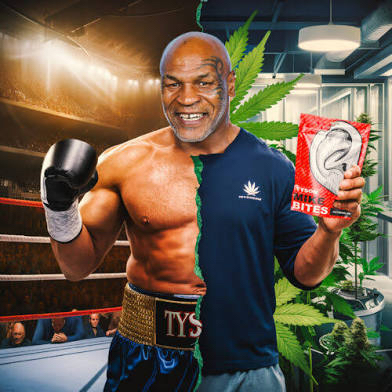
Light the charcoal. Sprinkle the sage. Negative energy go away. Today, I’m going to review strains that go along with Domestic Violence Awareness. Don’t get offended by the names of the products. This strain is called Mike Tyson Knockout 2.0. And boy does it have power in its makeup.
The name itself is one that fits this strain perfectly. It is also known as “Mike Tyson” and “Mike Tyson OG.” The exact lineage is unknown. However, I can tell you that this strain is dank and powerful. If I were to describe the odor of this strain. It is STANKY! It’s got aromas of diesel, pungent and skunky.
The dominant terpene is myrcene which arrests pain at its origin. And the side effects are sleepy, happy and hungry. This is a strain for experienced consumers. This strain won’t “couch lock” you. It will bury you under the couch. And does wonders for chronic pain and insomnia. This strain will hit you with a 1-2 punch. Make sure you have nothing that needs to be done for a couple of hours after toking. Thanks for reading! Keep Smiling. Keep Laughing. And keep blazing!
Affirmation: I am sativa happy and indica relaxed.
Light the charcoal. Sprinkle the sage. Negative energy go away. Okie dokie! Today, I’m going to review strains that go along with Breast Cancer Awareness Month. Locally a strain called Pink Peanut.
This strain has a long linage of Runtz. We know that it’s probably going to have a sweet candy taste initially. But then that little speck of gas trails behind come in and give it a sour ending. The genetics are Pink Runtz x Peanut Butter Runtz. Just those names says sweet sativa. Pink Runtz has origins of Gelato x Zkittlez or Pink Panties and Rainbow Sherbert. Peanut Butter Runtz aka Butter Runtz has origins as an indica-dominant hybrid by crossing Runtz x Peanut Butter Breath.
I know that is a long of linage information for the strain. I wanted to give you some things to investigate further about this strain. It is a great hybrid with linage strains that were award winners. So, champions are not anything knew to this flower. It’s totally a strain that you can “Wake n’ Bake” and continue to be productive. The indica is nice and not too heavy. This strain would be good for anyone on the cannabis continuum. For a hybrid, the total package is how you explain this strain. Good taste. Good medicine. And Good Blazin’!
Affirmation: Being a stoner has taught me that I can problem solve, build new things, and give old things new life.
“Leaving is so hard because your confidence is destroyed. You feel trapped.”
-Unknown
Light the charcoal. Sprinkle the sage. Negative energy go away. Today, I want to talk to you about some common misconceptions about domestic violence. Sit tight. These myths and truths will help to dispel some of the things that you might have been told.
1. Myth: Domestic abuse is a “family matter” and the community should not interfere.
Fact: Domestic abuse is against the law making it everyone’s business.
2. Myth: Domestic abuse affects only a small percentage of the population.
Fact: One-third of American women report being physically or sexually abused by a partner.
3. Myth: Only men abuse women.
Fact: Statistics show that 85% of domestic abuse victims are women and 95% of perpetrators are men. However, men are abused by women also. And the rate of Gay, Lesbian, Bisexual and Transgender communities are at the same rate as heterosexual relationships.
4. Myth: Only low-income families and minorities experience domestic abuse.
Fact: Domestic abuse in every area of society. Most previously recorded statistics are skewed due to the numbers coming from public agencies, city hospitals, police departments, social service agencies, and the courts.
5. Myth: Abusers are violent in all their relationships.
Fact: Most abusers are only abusive to a targeted intimate partner. Some abusers are successful in their professions and are very charming. And this is how they maintain power and control. This was how my ex-husband introduced himself. In front of people, he appealed to many. It was once we were not in front of people that the abuse occurred.
6. Myth: Domestic abuse is caused by mental illness.
Fact: Personality disorders, mental illness, poor impulse control, and generational abuse do not cause domestic abuse. Even in cases where a particular mental illness may cause a person to be abusive, the abuse is not specifically targeted at one person but to everyone around during the episode.
7. Myth: Domestic abuse is caused by drugs and alcohol use.
Fact: Where drugs and alcohol are often associated with domestic abuse, they do not cause the violence. My ex-husband never used drugs and alcohol. He was just mean and very controlling.
8. Myth: Abusers are violent because they cannot control their anger and frustration.
Fact: Abusers use anger as an excuse to rationalize or blame their abusive behavior: anger is not a cause of abuse; it is a conscious choice made by them. I was always told that “I was the cause of his anger.” So, in some way, I was made responsible for his behavior. When in actuality, he is responsible for his own behavior.
9. Myth: Therapy will stop the violence. If he/she goes to therapy, it will be safe at home.
Fact: Referral of a batter to is one of the strongest predictors that a victim will return to violence. However, research on the effectiveness of treatment for batters are inconclusive. What is known is that there’s a 50% drop out rate in these programs by those who do enroll.
10. Myth: Boys in violent homes will grow up to be battered and girls will be victims.
Fact: Not all children who grow up in homes where there is domestic abuse are directly abused or grow up to become victims or abusers. It is important to note that children from homes where domestic violence abuse occurs are at greater risk for all of these outcomes than children from homes where there is no violence.
11. Myth: Even if he/she is violent, it is better for the children to have both parents. Children aren’t negatively affected by domestic abuse unless they are actually abused.
Fact: Witnessing violence as a child is associated with adult reports of depression, trauma-related symptoms and low self-esteem among women, and trauma-related symptoms among men. Child witnesses of domestic abuse on average exhibit more aggressive and antisocial behaviors, fearful and inhibited behaviors, anxiety, depression, trauma symptoms, temperament problems, and lower social competence, than children who do not witness such violence. Youth who witness domestic abuse are more likely to attempt suicide, abuse drugs, and alcohol, run away from home, commit other delinquent behavior, engage in teenage prostitution, and commit sexual assault crimes (https://law.arizona.edu/sites/default/files/myths_and_realities_of_domestic_abuse.pdf, 2003).
I hope that you’ve been able to put some of these myths to rest. From someone who has gone through domestic violence, my perpetrator never though that he was doing anything wrong. And when I presented the need for therapy I was told, “I don’t need to go to therapy because you are the problem.” When the actual problem was that he didn’t want to look at the reality of his own actions and behaviors. And he continues to be that way. Keep reading and stay safe!
Affirmation: I forgive myself for believing I have to stay in the relationship until the person changes.
“Never stop fighting for your freedom, you are worth it.”
-DA Survivor-Anon
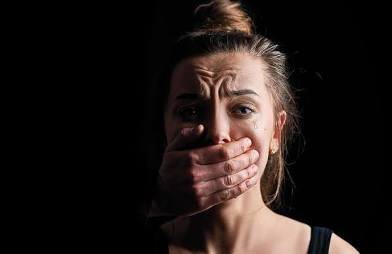
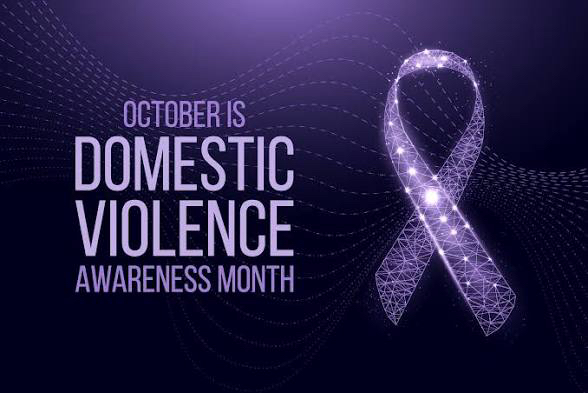
Light the charcoal. Sprinkle the sage. Negativity energy, go away. Today is the beginning of Domestic Violence Awareness Month. This month is when our voices from all over the globe will be heard. We as victims, survivors and warriors bring to light the horrors of domestic violence and the impact that it leaves on our lives and those around us. Let’s take time out for a little education on a few of the topics surrounding domestic violence.
Domestic Violence is a topic that I know a lot about. Well, I know how to function in it. And I know how to get away from it. But living with the aftereffects reveal a whole other set of problems. Where domestic violence used to be seen as something that only happens to women and their partners. There is more awareness on the abuse of men by their partners. No matter how you identify. It also happens to the most innocent, children and pets. This happens in all forms of relationships. And the statistics are staggering.
Domestic violence is violence committed by someone in the victim’s domestic circle. Which include partners and ex-partners, immediate family members, and other relatives and family friends (https://www.UN.org, 2025). The behaviors can include such things as:
· Physical
· Sexual
· Emotional
· Financial
· Psychological actions or threats of actions that influence another person.
This includes any behavior that intimidate, manipulate, humiliate, isolate, frighten, terrorize, coerce, threaten, blame, hurt, injure, or wound someone. The repetitive exposure to violence teaches children that violence is a normal way of life (https://dvcc.delaware.gov, 2025). And for those of us who leave, constant confusion and every minute of no knowing when something else will happen again, is our normal. And the many years of programming by our abusers takes years of therapy to de-program ourselves. But you will never be who you used to be.
Recovery is not for the faint of heart. It is hard and uncomfortable. And it takes years to undo the damage that was caused on so many levels. I was one of the lucky ones. Long story short, I survived. But the mental damage that was caused has left me crippled in some ways. And through the sleepless nights filled with tears, therapy, psychiatric medications, body memories, flashbacks, phobias, and panic attacks, I have learned that I have a voice that deserves to be heard. And no matter what people say or believe, I can validate my own story regardless of the opinions of others. Because I lived it.
The main thing I want to say to other women and men across the globe who are still in their own processes, “YOU ARE NOT ALONE!” Because it happened to me too. Thanks for reading! Keep smiling and pushing forward.
“I had gotten to the point where I was suicidal every day for six straight years…On that day, I made a choice. The choice to live, the choice to get better for me.”
-Justin
Light the charcoal. Sprinkle the sage. Negative energy, go away. Today, I want to tell you about a couple more suicide awareness and prevention groups. I wish I could cover them all. Unfortunately, there are just way too many. Please familiarize yourself and those you love and are affected.
Stop Soldier Suicide
This is the only national nonprofit focused on solving the issue of suicide among U.S. veterans and service members. They have an aggressive goal of reducing the suicide rate by 40% by 2030. Veterans are at a 58% higher risk of suicide than those who haven’t served.
Other statistics about veteran suicide:
· 6,407 veteran suicides in 2022.
· 22 consecutive years with 6000+ veteran suicides.
· 140K+ veterans have died by suicide since 2001.
· Second leading cause of death in veterans under age 45.
· The rate of veteran firearm suicide has increased by 65%.
· The suicide rate among veterans ages 18-34 has more than doubled.
· Western states have experienced the greatest increase in veteran suicide rate, increasing by 55%.
· 31% Depending on branch, up to 31% of service members develop PTSD after returning from combat.
· 7x the rated of suicide for veterans in the LGBTQ+ community is up 7x higher that for non-LGBTQ+ veterans.
The organization’s impact on veteran suicide.
· 90%+ of our most at-risk clients completed a crisis response plan in 2023, giving them tools and resources to cope in moments of crisis.
· 73% of clients experienced a decrease in thoughts of suicide over the course of treatment.
· 92% of clients who were meaningfully engaged in our care showed some improvement in mental wellbeing by the end of treatment (www.stopsoldiersuicide.org, 2025).
The Trevor Project
The Trevor Project was founded in August 1998 by the creators, James Lecesne, Peggy Rajski, and Randy Stone, of the Academy Award-winning short film “Trevor.” The film was about a gay teen who attempted suicide. The filmmakers then established a crisis hotline for LGBTQ+ youth after realizing that there was not a resource available. They have since expanded services to include text and chat support and resources for parents, schools and others seeking support for LGBTQ+ support (https://obamawhitehouse.archives.gov, 2025).
Crisis Services: Providing counseling support services for LGBTQ+ young people 24/7 all year around.
Peer Support: Providing an affirming international community for LGBTQ+ youth.
Advocacy: Working to change hearts, minds, and laws in support of LGBTQ+ lives.
Research: We conduct research studies to equip policymakers and other LGBTQ+ youth providing professionals.
The Mission
To end suicide among LGBTQ+ youth by providing crisis support, suicide prevention resources, and educational programs (www.thetrevorproject.org, 2025).
Thanks again for reading. The more education and resources we can provide each other with, the better the outcomes for us all. Please pass this information along to anyone who could benefit. I am one of those who suicide has affected my life in epic proportions. I am also one who continues to fight for understanding and compassion in a world that is lacking.
Affirmation: I am not alone, and others care about me.
“Grit your teeth and let it hurt. Don’t deny it. Don’t be overwhelmed by it. It will not last forever.”
-Harold Kushner
Light the charcoal. Sprinkle the sage. Negative energy go away. Keeping in line with suicide awareness, I thought I would talk about a couple of groups that reflect awareness and prevention. There are so many groups out there that stay along these same lines. And I wish that I could spotlight them all.
To Write Love On Her Arms
This group is a nonprofit group dedicated to presenting hope and finding help for people struggling with depression, addiction, self-injury, and suicide. Jamie Tworkowski set out only to help a friend and to tell her story. When he met Renee Yohe, she was struggling with addiction, self-injury, and suicidal thoughts. He wrote about spending five days with her prior to her entering a treatment facility. And he began selling t-shirts to help fund her treatment by posting them on Myspace. Soon people from all over the world began contacting him and telling him about their struggles and heartbreaks. And in 2007, TWLOHA became an official organization.
Here are some numbers associated with their organization:
· 210,000 messages from individuals in over 100 countries.
· 3.8 million miles have been traveled to meet people in their communities.
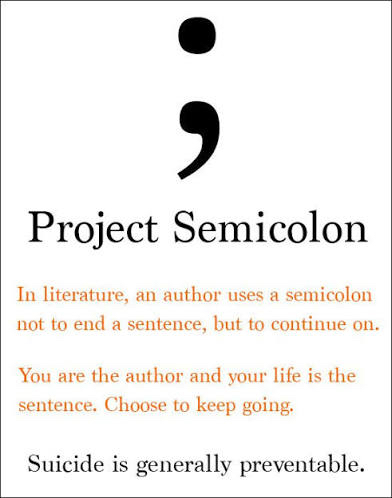
It is an online community that began in 2013, when Amy Bleuel created it to honor her father, who died by suicide. The organization centers around mental health awareness and suicide prevention. The World Health Organization (WHO) reports a 25% increase in anxiety and depression during the first year of COVID-19. That combined with the nation’s political instability characterized by protectionism and unilateralism has led to strained international relations. And the stress funnels down to our families and personal stories.
The semicolon represents a continuance of life where a period could have easily ended the story. There have currently been over 89,000 assessments completed. 5,336 journal entries shared. And have provided direct support to 214 individuals. Semicolon badges in Apex Legends and Call of Duty has reached over 1.3 million gamers and additionally 50 new chapters. And 84% of Project Semicolon members report that the organization has saved with lives in times of crisis (www.projectsemicolon.com, 2025).
Mission Statement
Our mission is to empower individuals with mental health experiences to embrace their journey and recognize that their story is far from over.
I hope that you can take something from this information. Please take what you can use and leave the rest. And please pass along the information to someone who can benefit. Even if that someone is you. Keep smiling! And do not be afraid to reach out for help.
Affirmation: There are other ways to end my pain, even if I cannot see them right now.
“Our country is grappling with a youth mental health crisis, and it is particularly pronounced for LGBTQ+ youth.”
-Ronita Nath
Light the charcoal. Sprinkle the sage. Negative energy, go away. Today, keeping in line with the topic of suicide, I want to discuss suicide in the LGBTQ+ community.
The prevalence of suicide in the LGBTQ+ community is nothing new. The risk for suicide attempts and suicidal ideation can be 3 to 6 times greater for lesbian, gay and bisexual adults according to the National Institutes of Health. But there are also other statistics to keep in mind.
In 2024, 39% of LGBTQ+ youth considered attempting suicide according to The Trevor Project’s national survey. 1 in 10 of LGBTQ+ youth attempted suicide in the past year. And LGBTQ+ youth are more than four times likely to attempt compared to heterosexual youth. I can tell you that personally, I’ve been suicidal many times because of rejection from my family as a lesbian woman.
Transgender and Nonbinary identified individuals are at an even higher rate of suicide. And almost half seriously considered suicide in the past year. In 2022, 80% of transgender people had considered suicide and 40% had attempted. These statistics while staggering are not surprising. These demographic struggles are way more than they should be with little compassion from society.
Bisexual identified individuals are 1.5 times more likely to report thoughts and attempts compared to gay and lesbian individuals. And 2.98 times more likely to have a suicide-related event compared to heterosexuals according to a 2022 study. And the LGBTQ+ youth of color report higher rates of suicidal ideation and attempts compared to white peers (www.therevorproject.org, 2025). And there are several contributing factors such as:
· Discrimination and Prejudice:discrimination, harassment and violence due to sexual orientation or gender identity increases the risk of suicide.
· Lack of Support Systems: Limited social support from family, peers and community exacerbates the mental health challenges.
· Mental Health Disparities: LGBTQ+ individuals are more likely to experience depression and may face barriers to accessing mental health services (https://mhanational.org, 2025).
For someone who is a member of the LGBTQ+ community, I can tell you that I’ve considered suicide many times. The rejection from family and friends are sometimes more than I can bare. And having worked with someone in therapy many years ago, who was not sensitive to the needs of someone in these communities, there was little progress made. Mainly, because I couldn’t trust her. And she was extremely judgmental.
Since collaborating with coach for almost a decade, I can tell you that I have been able to fully accept the fact that I’m gay, despite my family’s disapproval. And then the religious communities also seem to greet us with bible verses telling how many ways we are going to hell. We all know that “choosing” to be gay is such an easier way of life. There the secret is out.
With the current political administration taking away the rights and freedoms that the Stonewall riots stood against, and the lack of funding for suicide hotlines for LGBTQ+ youth, these rates will only climb. Our families, friends, churches, and government should be ashamed of standing by people who are ok with the policies set in place. We are the same as we ever were. We just wear rainbows now.
There are those beautiful allies out there who remain the strength and backbone of our continual fight for equality. We are youth, parents, aunts, uncles, cousins, husband, and wives who just want to be recognized as equals in the eyes of the law. But where reputations and political agendas are from the far right, we must be even more solidified as a community. If someone is for rights with some and not others, I have no room for them in my life. But it’s taken me years to come to this conclusion.
Is it lonely? At times, yes. However, I want people in my life who not only support me but also my friends. The suicide hotline is something that our community not only wants but needs. Many of us have non-supporting families and mine is no different. But I do have a place to live currently. But that does not constitute me putting up with homophobia or fragile masculinity and femininity.
The very few “true” friends I have, understand that being gay is not a “choice.” It’s who I am. And if that’s too much for someone to manage, that’s just too damn bad. To my fellow allies and community members, keep up the good fight. We must take up the original Pride flag are carry on. I love our colors. And I’m proud to call myself a member of the LGBTQ+ community.
Keep smiling. Keep shining. Knowing you can always count on me, for sure. That’s what friends are for. We are seen. And we are heard. And….WE ARE FABULOUS! Thanks for reading. Take what you can use and leave the rest.
Affirmation: I am proud of myself and will continue to strive to do well.
“Real heroes don’t wear capes. Real superheroes wear uniforms and badges and stethoscopes! Real superheroes are members of our military, law enforcement, and first responders. Pretend superheroes wear capes.”
-Dean Cain
Light the charcoal. Sprinkle the sage. Negativity energy, go away. Today, I want to talk about first responder suicide. This is another group that seems to be looked over when discussing this topic. Having worked in the EMS field, I can tell you that sometimes I saw things that continue to haunt me to this day.
Individuals, who have also worked in the field, have told me, “they just left work at work.” And it was simple. In that case, “Congrats! You are the winner! And you were much stronger mentally, I guess.” But in my situation, I was trapped in a domestic violence situation where emotional abuse was normal. So, working myself to death while experiencing trauma in both my private and professional life, my mind was so overloaded that I developed PTSD from both situations.
Maybe it was the 7-year-old who was hit by a drunk driver and left for dead. Maybe it was the car wreck where sister and boyfriend we both killed. And older sister’s face was ripped off in the wreck. Maybe it was the murder that left a body with half a head from a shotgun blast. Maybe it was the screaming mother, who I had to tell that her child was dead. Maybe it was the mother on Mother’s Day that was told that her law enforcement son was killed in a drunk driving accident. Maybe it was the woman who was ejected from a vehicle after falling asleep behind the wheel, whose legs were pinned behind her head. Maybe it was the suicide scenes. Maybe it was putting a child in a body bag in front of a mother. Maybe it was the person hit by a train where chunks of meat were the only thing that remained. Maybe it was the disabled individual in a wheelchair who was raped by her cousin. Maybe it was the woman who was cut from ear to ear, because she was cheating on her boyfriend with a white man. Maybe it was working hard on a grandmother, in front of the family, begging for us to save her when we couldn’t. Maybe it was the male body that was found in a house that had been dead for several days. And the only way the neighbors knew something was wrong was because they smelled him through the walls. Maybe it was the little girl who innocently climbed up in her daddy’s pickup truck only to find a loaded gun and accidentally pulled the trigger leaving one of the bullets lodged in her brain. Maybe it was the little boy who was handed to a good Samaritan from inside his father’s eighteen-wheeler, only for the truck to explode because the jaws of life were not available. Maybe it was the car wreck where I had to sit in the dead passenger’s lap to work on the dying driver. Maybe it was the mother who died from a seizure and her little girl was left in the home alone for over 8 hours before the body was found. Maybe it’s the smells of decaying bodies that I continue to smell almost 30 years later. Maybe it was telling my boss that I was having flashbacks from a gruesome scene only to be told, “If you can’t handle it, pick a different profession. Maybe it’s the incessant scenes that I continue to replay beyond my control with questions about if we did enough. Maybe, Maybe, Maybe.
In the time that I worked, I saw enough trauma to last me a lifetime. There was no one to talk to about anything. Like I was told that there would be. Getting shifts covered was more important than the safety and well-being of employees. And somehow, sexual harassment and a near rape by a co-worker was viewed as though I brought it on myself. And eventually, trying to survive by living in my car and attempting to distance myself from the domestic violence situation led me to a level of depression and despair that was somehow new to me. I was forced to keep unethical secrets which was “normalized behavior.”
A lot of people that I worked with were dealing with problems through narcotic diversion, sex with random partners, alcohol and drugs were seen as “off-day or working” coping skills. And the level of compassion for another human being “hitting the skids” to a level that was disturbing. There was not just one reason that I was having suicidal thoughts. But I had nowhere to turn for help that was “safe.” And the work environment was just as toxic.
Life said, “Here are the pieces. Figure it out.” And I tried to bury them so far down that I never wanted to revisit those fears and feelings again. For a long while, I was able to do just that. But when you have unresolved trauma there’s only one thing that you can be sure of, it will surface again. And almost 20 years later it would come forth vigorously. And it almost killed me.
First responders include police officers, firefighters, paramedics, EMTs, and telecommunicators. Due to the unique occupational stressors, the risk for mental health issues and suicide are at a much higher rates of depression, PTSD, suicidal ideations, and behaviors (www.cdc.gov, 2021). And due to consistent exposure to traumatic events can impact the brain’s ability to process the experiences.
The Impact on Mental Health:
· PTSD, depression, and anxiety: first responders are at a significantly higher risk of developing these.
· Cognitive Issues: Trauma can lead to difficulties with memory, attention, planning, problem solving, which can affect daily functioning and relationships.
· Secondary Traumatic Stress (STS) and Vicarious Trauma (VT): first responders can experience emotional and/or psychological distress from observing or hearing about the trauma of others. And can lead to the symptoms of emotional numbness, irritability, sleep disturbances, and physical complaints.
· Burnout and Compassion Fatigue: Demanding nature of the job and frequent exposure to suffering can lead to emotional exhaustion and reduce capacity for empathy (https//extension.usu.edu, 2025).
It has been said too many times, “Well you chose the profession.” And to that I respond, “Yes, I did. Who else would’ve done it? You?!” And then, of course, the sound of crickets followed. To this day I can say that I loved working in the field of EMS. But my brain took a beating. The trauma of the event doesn’t happen at that exact moment. It creeps. And if you are running back-to-back traumatic calls, then the brain never has a chance to recover. Also, when therapeutic help is seen as shameful or weak, this further ostracizes the employee to thinking that there is no way out. There are those “trauma junkies” as they are called that seem to enjoy the trauma. However, from working with those types of individuals, I have found that there is also a higher rate of alcohol and drug use.
Reducing the stigma will only happen when senior management are supportive of mental health efforts to keep all employees safe. And in the environment where I worked, the stigma couldn’t have been any stronger. People were allowed to work an extreme amount hours without sleep, which was very dangerous. In fact, an EMT who was in paramedic school, was allowed to work without adequate sleep and he wrecked an ambulance with a patient on board, because he fell asleep at the wheel striking a telephone pole. And sadly, there are currently no federal laws that regulate this. This problem is still left up to the digression of private companies.
A national organization known as the National Association of Emergency Medical Technicians have issued guidelines for managing fatigue in EMS personnel. This sets guidelines such as limiting shifts to less than 24 hours in duration and providing access to caffeine to help counteract fatigue. And offering naps. However, I can tell you that the only “nap” I was offered was during the time it took for a red light to change to green. And there is a recognized concern about EMS worker fatigue for both workers and the public. Research also shows that more than half of EMS workers report severe mental and physical fatigue, poor sleep quality, and inadequate recovery between shifts (www.ems.gov, 2019).
I can only hope that those entities that have an ambulance or some other type of EMS service abides by this. However, I can almost guarantee that senior administrators are more concerned with the dollar amount that is acquired at the end of the month. Because the low pay rate of EMS workers makes the individual “a dime a dozen.” And they will just be replaced if they can’t handle the stress. And this attitude combined with the difficult nature of the job is why I would still consider this working environment dangerous for the worker, as well as patients.
If you are or know someone in this profession, it is imperative that you and they both know the importance of “healthy” self-care. Asking for help is not a weakness. It’s the personal responsibility of the employee and the companies that employ them. Please make use of services that are provided. Thanks for reading! Stay safe.











 This Puzzled Life