
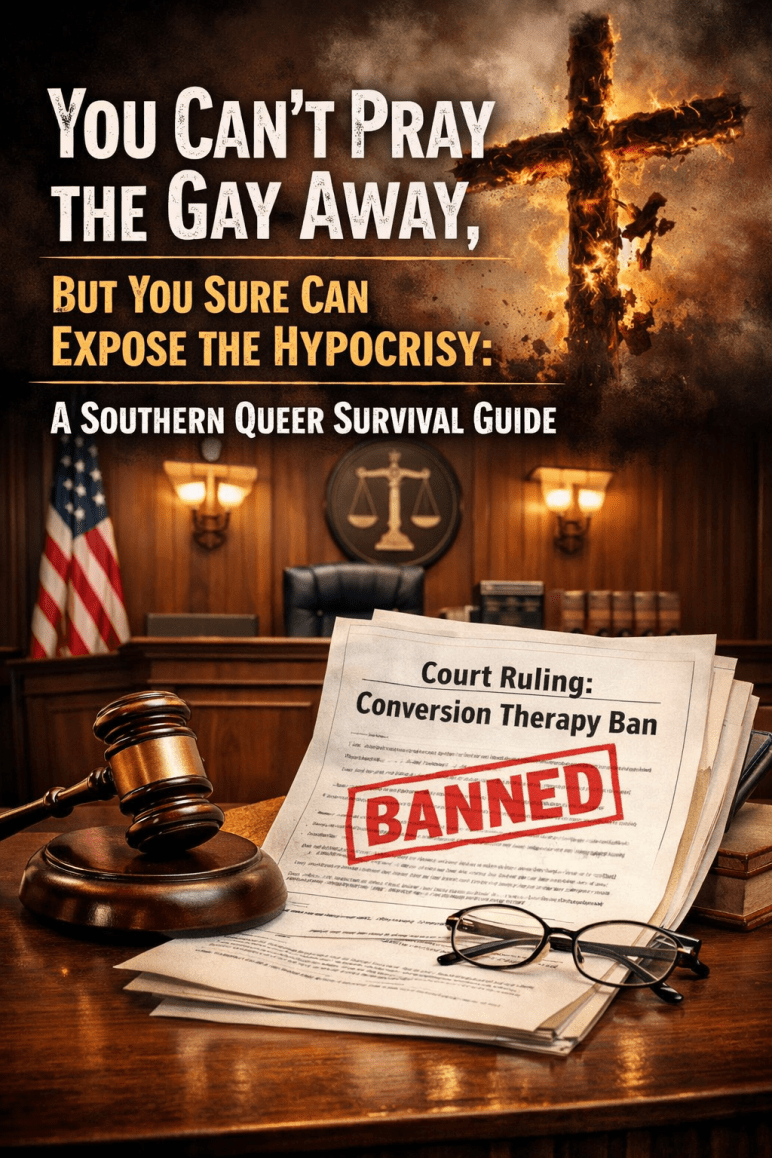
You Can’t Pray the Gay Away, But You Sure Can Expose the Hypocrisy: A Southern Queer Survival Guide

“If your faith requires someone else to suffer, it’s not holy. It’s just dressed‑up cruelty.”

-This Puzzled Life

Light the charcoal. Apparently the courts woke up. Stretched. Sipped their Folgers and said, “Hmm. What if we brought back psychological torture today?” And the conservative Christians said, “YAY! Revival!” Meanwhile, every queer person in the South is standing on their porch like, “Lord, give me strength, patience, and a Xanax the size of a biscuit.”

Down here in Mississippi, we know hypocrisy like we know humidity. It clings. It suffocates. It ruins your hair and your spirit at the same time. And nothing brings out the hypocrisy quite like a ruling that says, “Sure, go ahead and traumatize queer people in the name of Jesus. He won’t mind.” These folks will tell you with a straight face that they’re doing this out of “love.” If that’s love, then I’m a straight man named Bubba who drives a lifted truck and says “bro” every six seconds.
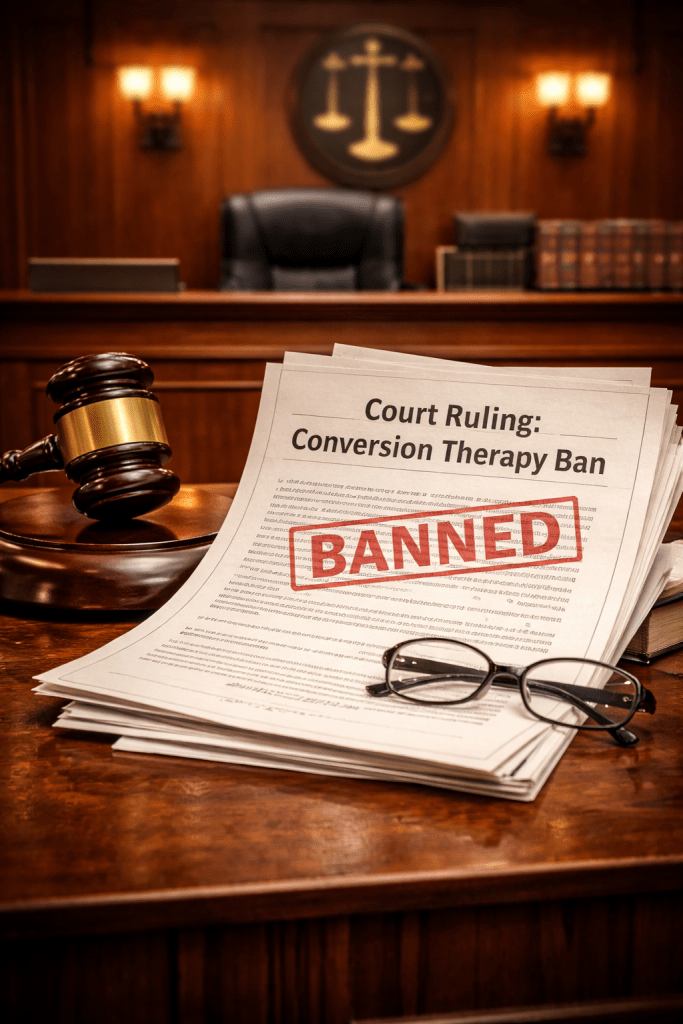
Let’s be honest. This ruling isn’t about saving souls. It’s about controlling bodies. It’s about punishing difference. It’s about making queer people small enough to fit inside their narrow theology and even narrower worldview. And the wildest part? These are the same people who can’t keep their own households together. The same people who preach “traditional marriage” while living like a deleted storyline from a messy reality show. The same people who scream “protect the children!” While ignoring the actual dangers children face like abuse, exploitation, and the youth pastor who keeps volunteering for overnight trips.

But sure. Let’s focus on the gays. Because we’re clearly the problem. Not the pastors who keep getting “relocated.” Not the lawmakers who can’t keep their pants zipped. Not the “family values” influencers who spend more time in hotel rooms than in prayer.

Let me break it down in terms even a conservative uncle can understand. You cannot convert someone out of being gay. You cannot shame someone out of being gay. You cannot therapy someone out of being gay. You cannot “deliverance session” someone out of being gay. Unless the only thing you’re delivering is trauma.

If sexuality were a choice, don’t you think I would’ve chosen something easier? Something with less paperwork? Something that didn’t require me to explain myself at every family gathering like I’m giving a TED Talk in a Cracker Barrel? But no. God made me like this. Curved, colorful, and incapable of pretending otherwise.

You could dangle 45 sets of dangly bits in front of me like a clearance sale at Spencer’s Gifts and I still wouldn’t be straight. But put me in front of some boobs and a cooter cat and suddenly I’m glowing like a porch light in July. That’s not a choice. That’s not a phase. That’s not a “lifestyle.” That’s divine architecture.

If you want to stay in the closet because it feels safer, I get it. But don’t pretend it’s holiness. Don’t pretend it’s righteousness. Don’t pretend it’s “God’s plan.” It’s fear. And fear is the currency of conservative Christianity. I sprinted out of the closet like it was on fire. And I’ve been free ever since. Even with my own family members who weaponize scripture like it’s a Nerf gun filled with shame. I send that mess right back to sender with a smile and a boundary. Chosen family is where the love lives. Chosen family is where the truth lives. Chosen family is where the rainbow was always meant to shine.

Theo rainbow is divine reassurance. It’s God saying, “Relax. I made y’all fabulous on purpose.” No court ruling can change that. No pastor can change that. No conversion therapist with a clipboard and a superiority complex can change that. We are here. We are queer. We are not going anywhere. And we are not apologizing for existing.

So let the smoke rise like a prayer the evangelicals forgot to proofread. Stand tall in your queerness like a magnolia tree that refuses to bow to the storm. Because here’s the truth they don’t want to face. Every time they try to erase us. We multiply. Every time they try to shame us. We shine harder. Every time they try to legislate us out of existence. We become louder, brighter, and more unbothered than ever.

Their hypocrisy is loud. But our joy is louder. Their cruelty is sharp. But our resilience is sharper. Their fear is deep. But our love is deeper. And at the end of the day, when the court rulings fade. When the sermons lose their sting. When the shame campaigns collapse under their own weight. We will still be here laughing. Loving. Living. Thriving. Dancing in the rainbow God hung in the sky as a reminder that storms don’t last forever.

So let them clutch their pearls. Let them scream about “family values.” Let them pretend their closets don’t have motion‑activated lights. We know the truth. You damn sure cannot stop the rainbow from rising. Mic dropped. Floor cracked. Hypocrisy exposed. Amen and pass the sweet tea. Thanks for reading! And Happy Pride year-round. What are your thoughts on this type of ruling?

Affirmation: “My identity is divine. My joy is sacred. And no court, church, or closet can dim the rainbow God put in my soul.”

***Don’t forget to watch the video!!!

#ThisPuzzledLife
My Cat Tried to Call the Therapy Coach and Now We’re in a Full‑Blown Feline Intervention

“My system handles trauma like professionals. But the cats handle drama like they’re auditioning for a reality show called Real Housewives of the Litter Box.”

-This Puzzled Life

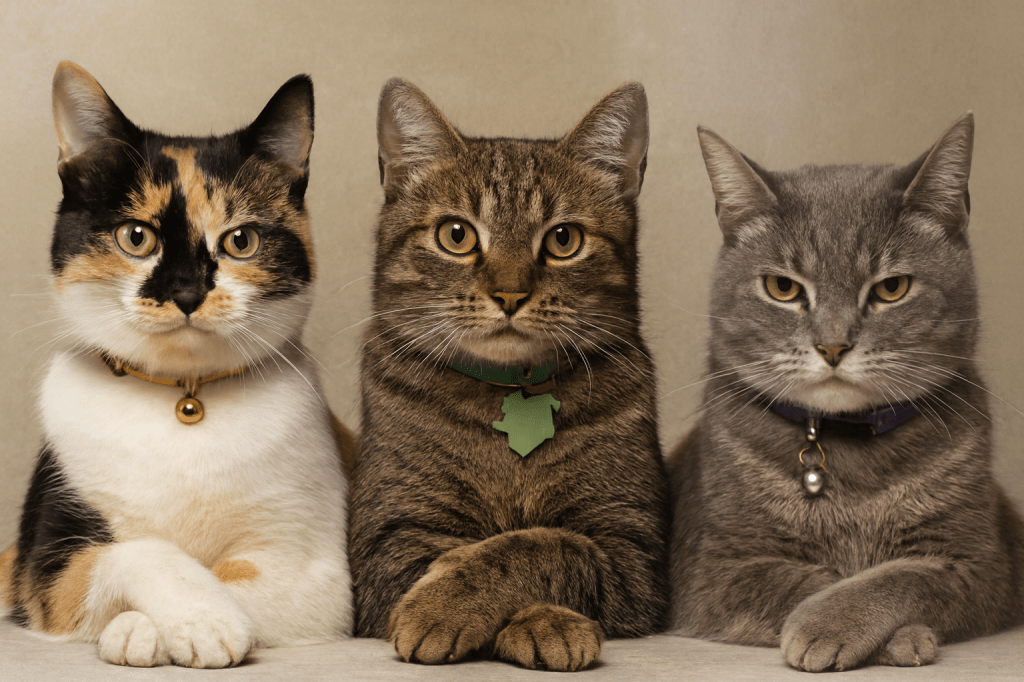
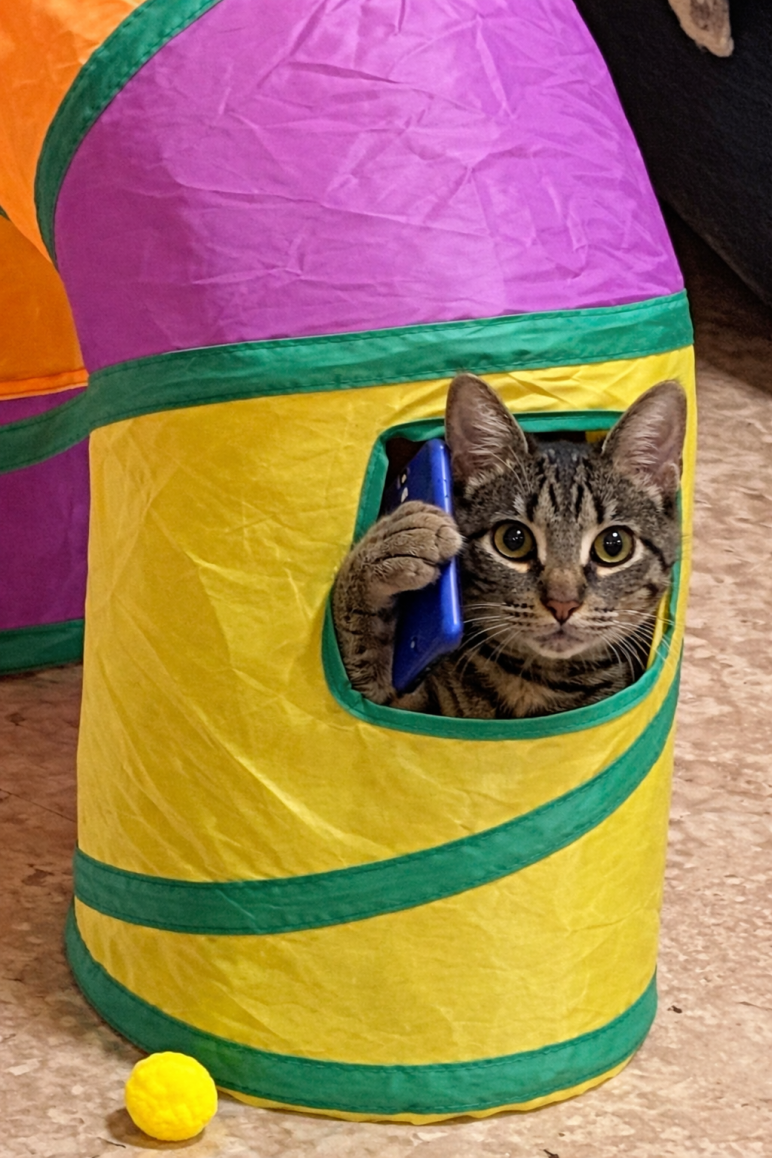
Light the charcoal. Sprinkle the sage. Secure the breakables. Today’s episode of This Puzzled Life features a full‑blown feline committee meeting after Piper, chaos in fur form, announced that she “might have Dissociative Identity Disorder.”

I have Dissociative Identity Disorder. Piper, however, is simply dramatic. And Tinkerbell and Coco are done with her antics. Welcome back where the sage is burning. The humidity is disrespectful. And the cats are holding more meetings than a Mississippi school board.

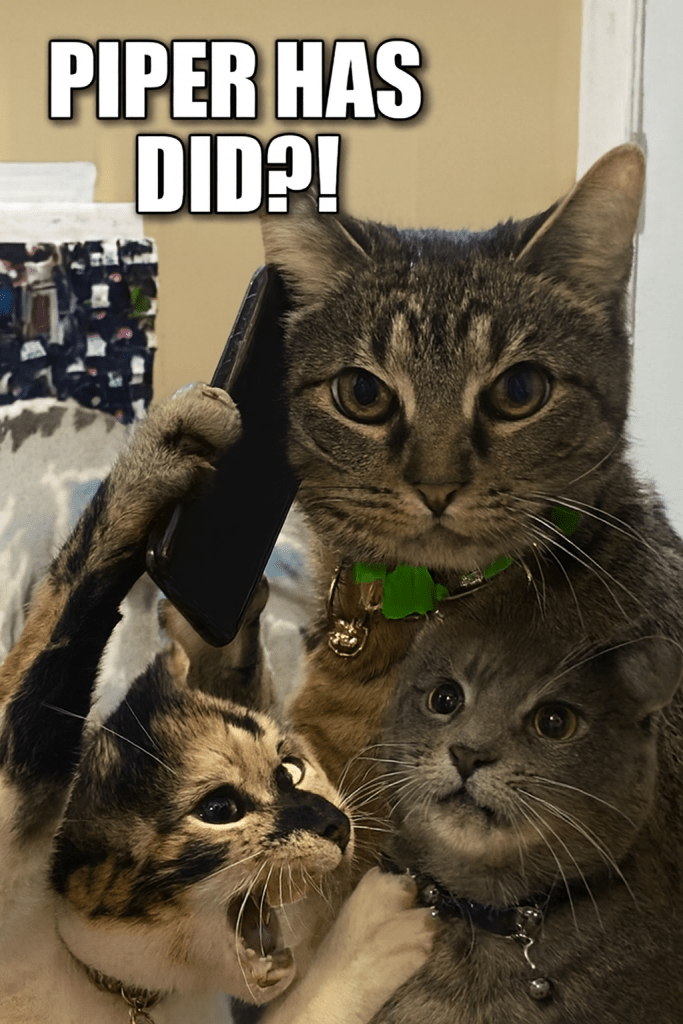
This morning started like any other. I was minding my business. Drinking my coffee. And trying to keep my nervous system from filing a complaint with HR. When Piper strutted into the room and announced that she “might have Dissociative Identity Disorder.” Before I could even blink, she was paw‑dialing my therapy coach like she had Blue Cross Blue Shield and a co‑pay. And that’s when Tinkerbell and Coco called an emergency meeting. Because apparently, in this house, I’m not the only one with a system. I’m just the only one with a diagnosis.

Tinkerbell climbed onto the arm of the couch like she was chairing a Mississippi church committee.

Tinkerbell: “This meeting will now come to order. Piper has made a claim. A bold one.”

Piper: “Ok. Well, there is no easy way to say this. I have DID.”

Tinkerbell: “Piper, having nine lives is not the same thing as having nine personalities. Stop confusing reincarnation with psychology.”

Coco: “Yeah, girl. Nine lives just means you make nine bad decisions. Not that you need nine therapists.”

Piper gasps, fluffs up, dramatic tail twitch

Piper:  “Wow! So, nobody believes me? Nobody supports my journey? I’m being silenced. This is oppression. I’m calling coach right now!”

Coco: “You can’t even remember where you left your toy mouse. Sit down.”

Piper: “I am a complex being with layers!”

Tinkerbell: “You’re a lasagna with fur. Calm down.”

Coco flicked her tail like she was swatting away generational trauma.

Coco: “She doesn’t have DID. She has Too Much Drama Disorder.”

Piper, sprawled across a pillow like a Victorian widow, sighed dramatically.

Piper: “Sometimes I feel like different versions of me.”

Tinkerbell blinked slowly. The kind of blink that says, Lord, give me strength.

Piper sat up, whiskers trembling with self‑importance.

Piper: “Sometimes I’m sweet. Sometimes I’m spicy. Sometimes I’m feral. That’s at least three personalities.”

Coco rolled her eyes so hard she almost saw her past lives.

According to Piper, and only Piper, she “dissociates” at least three times a day. To everyone else in the house, she simply forgets what she’s doing because she’s Piper.

This morning, she was walking toward her food bowl with purpose, confidence, and the swagger of a cat who believes she pays rent. Halfway there, she froze. Stared into the void. And blinked like she’d just been unplugged and rebooted.

Tinkerbell watched her with the patience of a grandmother who’s seen too much.

Tinkerbell: “She’s not dissociating. She’s buffering.”

Coco flicked her tail

Coco: “That’s not a switch. That’s a brain fart.”

But Piper insisted.

Piper: “I think I dissociated. I forgot what I was doing.”

Tinkerbell sighed

Tinkerbell: “Sweetheart, you forget what you’re doing because you have the attention span of a dust bunny.”

Coco“If staring at the wall counts as dissociating, then every cat on Earth needs a therapist.”

Piper, unbothered, continued staring into the middle distance like she was receiving messages from the universe.

Piper: “I just drifted away.”

Tinkerbell: “You drifted because you saw a dust particle and got confused.”

Coco: “You’re not dissociating. You’re daydreaming with commitment.”

Coco: “That’s called being a cat.”

Tinkerbell nodded

Tinkerbell: “You’re not special, darling. You’re just enthusiastic.”

Piper gasped like someone insulted her casserole at a church potluck.

Piper: “So you’re saying I’m dramatic?”

Coco: “I’m saying you’re Piper.

This is where things went off the rails. Piper marched over to my phone. Tapped the screen with her paw, and said,

Piper: “I’m calling our therapy coach. I need a professional opinion.”

Tinkerbell nearly fell off the couch.

Tinkerbell: “Absolutely not. You are not dragging a licensed human into your nonsense.”

Coco leapt forward like she was blocking a football pass.

Coco: “Put the phone down. You don’t even know the passcode.”

Piper: “I know it’s numbers.”

Tinkerbell: “That is not enough.”

Piper: “I just want to ask if I have DID.”

Coco: “You don’t even have object permanence.”

Tinkerbell gestured toward me like she was presenting a case study.

Tinkerbell: “Our mom has DID. That’s a real thing. A trauma thing. A serious thing.”

Coco nodded, suddenly solemn

Coco: “She’s strong. She’s healing. She’s doing the work. You, on the other hand, tried to eat a rubber band yesterday.”

Piper: “It looked like a noodle.”

Tinkerbell: “It was not a noodle.”

Coco: “You’re not dissociating. You’re just unsupervised.”

Tinkerbell cleared her throat like a judge delivering a sentence

Tinkerbell: “Piper does not have DID. What she does have is excessive enthusiasm, poor impulse control, a flair for the dramatic, and a mother who spoils her.

Coco: “Case closed. Someone bring snacks.”

Piper: “I still think I should call the therapy coach.”

Tinkerbell: “If you touch that phone again, I’m calling Jesus.”

And as we wrap up this episode of Cats Who Need Supervision, I’ve realized something important. Living with DID is complex, sacred, and deeply human. But living with these cats is a full‑time job with no benefits and no union representation.

Some days my system is grounded and organized. Other days it’s buffering like a Dollar Tree Wi‑Fi router in a thunderstorm. And meanwhile, Piper is over here diagnosing herself with conditions she found on TikTok. Tinkerbell is exhausted. Coco is judging everyone. And Piper is still trying to call the therapy coach.

To all of us I wish healing, much laughter, surviving, and keeping the phone away from the cat who thinks she needs a treatment plan. And Piper? She’s grounded from the phone until further notice. Thanks for reading! Hug a cat if they let you.

Affirmation: Every part of you is powerful and worthy. And Piper, in all her chaotic glory, fully supports your healing while acting like she’s the self‑appointed spokesperson for your system.

***Don’t forget to watch the video!***

#ThisPuzzledLife

National Eating Disorders Awareness: The Hurt We Don’t Talk About

“Eating disorders are so incredibly complex. And they are not about the food.”

-This Puzzled Life

Light the charcoal. Sprinkle the sage. Negative energy go away. Today, I want to talk about something that sits quietly in the corners of so many lives. And it’s also something we don’t talk about nearly enough because it’s wrapped in shame, silence, and misunderstanding. And the topic is eating disorders.

This isn’t just a national awareness week to me. It’s a reminder of how many people walk through the world carrying a pain that no one sees. A reminder that the strongest people you know might be fighting battles with food, with their bodies, with their own reflection. A reminder that healing is possible. But it’s not easy. And it’s never linear.

Eating Disorders are not about vanity. They’re about survival. People love to reduce eating disorders to “wanting to be skinny,” but that’s not the truth. Not even close. Eating disorders often grow out of trauma, anxiety, perfectionism, or the desperate need to feel in control when everything else feels chaotic. They’re coping mechanisms that become cages. They’re ways of surviving will eventually start to suffocate.

And the cruelest part is that most people suffering look “fine” on the outside. They smile. They function. They pretend. They hide. Because the world has taught them that their pain is embarrassing, dramatic, or self‑inflicted.

We Live in a culture that worships self‑punishment. And we’re surrounded by messages that tell us to shrink, restrict, cleanse, detox, earn our food, burn our calories, and hate our bodies until they fit someone else’s idea of “acceptable.” We praise people for losing weight without ever asking if they’re okay. We compliment discipline without knowing it might be self‑destruction.

Awareness means calling out the culture that normalizes harm. It means refusing to participate in conversations that shame our own bodies or anyone else’s. It means unlearning the lies we were raised on.

Recovery isn’t a straight line. It’s not a single moment of clarity or a dramatic breakthrough. It’s a thousand tiny choices. It’s eating when you don’t want to. Resting when your mind screams at you to move. Speaking kindly to yourself when the old voice whispers cruelty.

It’s crying in the grocery store. It’s celebrating the days you nourish yourself without guilt. It’s forgiving yourself when you slip. It’s learning to trust your body again, even when it feels impossible. And recovery is not weakness. It is strength in its purest form.

The person who always says they “already ate.” The friend who jokes about needing to “earn” their dinner. The coworker who never joins for lunch. The family member who avoids mirrors. The person who seems confident but is quietly unraveling inside.

Awareness means choosing compassion over assumptions. It means listening without judgment. It means creating space where people feel safe enough to be honest. If you are struggling, you deserve nourishment, and rest. You deserve a life that isn’t ruled by fear, shame, or numbers. You deserve to feel at home in your body not at war with it.

You are not broken. You are not alone. And you are not defined by the hardest thing you’ve survived.

National Eating Disorders Awareness isn’t just a date. It’s a call to soften. To speak gently. To challenge the toxic norms, we’ve accepted for far too long. To check on the people we love. To check on ourselves. To build a world where bodies are respected, not judged. Where food is nourishment, not punishment. Where healing is celebrated, not hidden.

As someone who has battled with eating disorders for more years than I haven’t, I know what it means to live inside a cycle that feels impossible to break. My struggles were born out of trauma but just like so many of my other survival behaviors and even now, after all this time, the echoes of that pain still follow me.

My body isn’t as depleted or fragile as it once was. But the thoughts haven’t magically disappeared. They still show up every day, whispering the old rules, the old fears, and the old lies. I still avoid eating in front of people whenever I can. I still feel that familiar tightening in my chest when food becomes a spotlight instead of nourishment.

Eating disorders are a quiet trap, consuming, and cruel. They take root in the mind long before they show up in the body. They convince you that you’re in control while slowly taking that control away. They drain you mentally and physically, piece by piece, until you feel like there’s nothing left but the disorder itself. And the hardest part is how invisible it can all be. How easy it is to smile, to function and to pretend. How easy it is for the world to miss the pain entirely.

This isn’t weakness. It’s something that grows out of hurt, out of fear, out of the desperate need to feel safe in a world that hasn’t always been safe. And even though the thoughts still come. Even though the habits still tug at me. I’m here. I’m still fighting. I’m still choosing to stay. That matters more than anyone on the outside will ever understand. Thanks for reading! And reach out for help.

Affirmation: My body is not my enemy. I deserve compassion, nourishment, and peace.

***Don’t forget to watch the video!***

#Thispuzzledlife

Dear Abuser: 

I am the revolution you never expected.

Who am I?

I’ll tell you who I am.

I am the light you tried to strangle, the light you tried to stifle in your chokehold.

But my light bled all over the pages of your book, your preconceived narratives, your filthy words and your attempts to bring terror back into the blank space of my eyes.

Who am I?

I’ll tell you who I am.

I birthed revolution in my bones like the many women that came before me.

I ignited flames beneath my skin, using the fiery spirits of women who walked beside me

as matches; we breathed fire into each other’s hearts until the world could see us and from the ashes we were reborn.

Who am I?

I’ll tell you who I am.

I am the fear in your hatred, the pain that you tried to use to violate my sacred spaces, rip me apart until I was nothing,

but I knew I would always be something, somebody, and now I am.

I am layers and layers of the love and power that act as your kryptonite,

and with the words and actions of all those who rose with me, I’ll build an impenetrable wall.

Who am I?

I am the thing that nightmarish people have nightmares about,

wake up sweating about, thinking about —

their furrowed brows tense with self-doubt —

wondering if I and the other warriors I march with could ever come back to life.

Who am I?

I am the restless rebel you tried to bury,

the one you tried to pull out by the root and eradicate when she began to grow from the seed.

Who am I?

I’ll tell you who I am.

I am the girl you left for dead thinking she’d always fall and never rise again.

I am the girl you cut with your razor blade wrath, the girl you thought would never fight back.

I am the girl you underestimated, the woman you tormented, the child whose shackles you tightened.

Who am I?

I think you already know –

I think you understand.

I am the prisoner you tried to cage, the little girl you made afraid –

I am the woman who never gave up, the one who exposed your charade —

Who am I?

I am everything and anything that you will stand againstto try to regain control.

For every source of darkness, there is a bleeding soul,

one that shines so brightly that the entire war zone becomes illuminated.

I am the truth, your karma, the revolt —

I am the resistance, the pieces you tried to keep shattered, coming back together again.

I emerge quietly, but I resound loudly —reverberate through your skin.

My power was never yours, and it was never yours to take.

Who am I?

I am the second coming,

of everything and everyone 

you tried to break.

Shahida Arabi

#Thispuzzledlife

Domestic Violence: Why Didn’t They Just Leave?

“Trauma Bonding is like being a hostage who has developed an irrational affection for your captor. They can abuse you, torture you, even threaten to kill you, and you’ll remain inexplicably and disturbingly loyal.”

– Ann Clendening.

I posted this today to help give you a voice to your own abuser/abusers. I have been in therapy for many years, and sometimes, I even doubt these words. The problem is that we were so indoctrinated with their beliefs, comments, gas lighting, manipulation, and co-dependency that we formed a something called “trauma bonding.”

Trauma Bonding is an unhealthy emotional attachment that develops between a victim and their abuser. It is a complex issue that occurs in different abusive situations that include physical, sexual, and emotional abuse. But it’s also important to note that not everyone who goes through abuse forms a trauma bond. However, some people may be more prone to forming a trauma bond due to the early experiences as a form of repetition compulsion https://www.attachement project.com, 2025). This can happen in domestic abuse, child abuse, elder abuse, exploitative employment, kidnapping or hostage-taking, human trafficking, and religious extremism or cults (https://medical newstoday.com, 2023).

Characteristics of Trauma Bonding:

·        Intermittent Reinforcement: The abuser cycles between periods of abuse and kindness creating a sense of hope and dependence in the victim. Victims of abuse may be waiting for that next “feel-good moment” in the relationship that also keeps them trapped in a cycle of abuse and relief (https://www.domesticshelters.org, 2021).

v  This is also how many addictions keep you stuck. If everything were bad all of the time, you would grow tired and leave. But the intermittent reinforcement is how they maintain control.

·        Isolation: The abuser often isolates the victim from their support system, making them more vulnerable and reliant on the abuser ((https://medical newstoday.com, 2023).

v  I was not completely isolated physically from my support systems. But emotionally I was very isolated. He constantly told me that my friends and family didn’t have my best interest at hand. He would make up lies about things they said and assassinate their character behind their backs.

·        Fear and Insecurity: The victim experiences constant fear and insecurity, leading them to believe that they cannot escape the abusive situation (https://www.savantcare.com,2023).

v  The constant fear and insecurity that I experienced was, in fact, my prison cell. And I was afraid to leave even when the door was wide open.

·        Justification: The victim may rationalize the abuser’s actions or blame themselves for the abuse (https://thriveworks.com, 2024).

v  I was conditioned to believe that everything I did that made him angry was my fault. And it wasn’t. Now, I can see that his actions were because of his behavior, not mine.

·        Emotional Manipulation: The abuser uses emotional manipulation to control the victim’s thoughts, feelings, and behaviors (https://wondermind.com, 2023).

v  This right here was the #1 key factor for why I wouldn’t leave. He even told me, “No other man would ever put up with the things that I have to deal with in you. All of the good things about you, which aren’t many, are because of me. You are useless without me. I have given you everything you wanted. And disobeying me is the thanks that I get? Why do you need anti-depressants when there is no reason that you should be depressed.

Consequences of Trauma Bonding:

·        Difficulty leaving the abusive relationship.

·        Feelings of guilt, shame, and self-blame.

·        Low self-esteem and trust issues.

·        Mental health problems, such as depression, anxiety, and PTSD (https://www.savantcare.com,2023).

Trauma bonding kept me trapped in an abusive situation. People have said, “Why didn’t you just leave?” The problem lies in the way they you manipulate you into believing that everything bad that happens, no matter how minor, is the victim’s fault. And day after day, their hold strengths without you even realizing it. And in my case, I felt as though I was responsible for their thoughts and feelings. I constantly strived to be “good enough” or “well deserving enough” to see the person that he told and showed me he could be when we met. And quite frankly, it was always just a game. Their abusive self is “the real them.” Believe your instincts and the colors in which they present themselves. For that is who they truly are.

If you have read through this and have never been in a situation where everything you do is being controlled, consider yourself lucky. But don’t you dare sit there and say, “It was their own fault that they didn’t leave.” That is one of the most callous things that you can say to someone who is currently trying to survive and those that have survived finally leaving that situation no matter how long it took.

You have absolutely no right to tell me or anyone else how we should feel simply because you have not experienced it. I stayed much longer than I should’ve. And there are times when I still beat myself up for it. Now though, I give myself some grace for not knowing how to leave or recognizing what was going on in plain sight. It’s not just one event that causes this. It’s something that happens every single day methodically planned and executed by the warden in the relationship.

Once you leave, I highly recommend getting into therapy. Just because you think that no damage has occurred, doesn’t mean that it hasn’t happened. Even now, 19 years later since I left him, I have phobias, anxiety, depression, difficulty concentrating, and difficulty making decisions. He has left a mark that will last a lifetime. And some of the things that he did I’ll never recover from. He once told me, “You’ll never be without me no matter what you do!” And the truth is that, while he still doesn’t have total control over me, I still allow parts of him to live rent free in my head.

The next post will be something that represents those of us who have managed to leave and have an understanding through therapy how and where to put the responsibility where it truly belongs, on them.

To those who are still in these types of relationships, I see you even when you don’t openly identify yourself. To those who have left and still live in fear, I see you and you’re not alone. To those of us who continue to strive to change those hard-core beliefs that were instilled by way of threats, intimidation, and violence, I see you as well. None of you are alone. And not all relationships are like this. 

Find a therapist that you trust and open your soul to them. Coach has been a lifeline of compassion and understanding for me that I’ve rarely experienced. And she has never made fun of or questioned why I didn’t leave. Unconditional support and her teachings have made life possible for me many lonely nights. I will probably always struggle with some things and that’s ok. This process is certainly a marathon instead of a sprint. And there is no time limit for healing. The whole point is to continue showing up and moving forward in whatever way that might take shape. You are not on an island like you think. There are millions of us both male and female who struggle with the effects and consequences of domestic violence and abuse.

You are loved. You are wanted. And you deserve the good things that life has to offer. Thanks for reading! And I hope you look for the next blog in a couple of days that I post that will help you begin to find your voice. The power to heal is now and ours.

Affirmation: My story has power and inspiration through it.

***Don’t forget to watch the video!***

 #Thispuzzledlife

Domestic Violence And Animal Cruelty

“The connection between domestic violence and animal cruelty is so significant that it is commonly referred to simply as “the Link.” Perpetrators of domestic violence often threaten harm or bring actual harm to their victims’ pets in order to control them, keep victims from leaving, or to punish them for actually leaving or attempting to leave.”

-ASPCA.org

Light the charcoal. Sprinkle the sage. Negative energy go away. Today, I want to discuss domestic violence and pets. I won’t pretend that this topic is going to be easy to digest. However, it’s one that needs to be brought into the light.

Many of us sometimes love our animals more than people. I know, speaking only for myself, that my animals have always been a source of comfort, unconditional love, and understanding that many people can’t fully embody. They have never spoken a word as their compassion is in their eyes. And all they ask for is to be fed and also loved in return. That is, it. Nothing more. Nothing less.

My personal experience with domestic violence is knowing that absolutely nothing is off limits. And it is their cruelty that can always get worse. Do some abusers change? Yes. But if they are not willing to do self-reflection and to look at their own traumas and behaviors, then they will not change. And most blame their actions on the victim.

Please Read The Following:

     Up to 75% of women entering DV shelters report that their abuser threatened, harmed, or killed their pets in the presence of children (safehouse.org, 2024).

     Up to 65% of domestic violence victims and 48% of battered women remain in abusive homes out of fear for their pets.

     Only around 5% of U.S. shelters have any kind of housing for pets of domestic violence victims (https://www.drmartybecker.com, 2017).

Why Do Abuser Use Pets To Terrorize Their Human Partners?

·        Creating fear: Abusers may torture or kill a pet to demonstrate what they are capable of doing to their human victim or their children.

v  There were many times when I saw and heard my ex-husband’s violence against my animals. He would muzzle my outside dogs all night long most of the time. And he would beat my cats with a belt if they meowed at night. He also scared my cats so much with a broom that they began to have a very strong fear reaction for many years following me leaving him.

·        Leverage to prevent escape: Many women fear for their pet’s safety is the primary reason they delay leaving an abusive relationship.

v  One of his favorite things to say was, “One day you’re going to look up and all of your animals will be gone. You just might come home one day, and they will have vanished.”

·        Punishment and retaliation: Abusers may harm a pet as punishment for a perceived transgression or in retaliation for a partner trying to leave.

v  After 13 years of being in a domestic violence situation, and over a year of planning my departure, I left him hoping things would cool down enough to go back and get my animals as a way of saying, “I’m done.” Two weeks later, I went back to retrieve my animals, and most had been starved. There was no water. A few of the ones remaining had been eaten by other animals or were mysteriously cut in half. On that day, I was able to get out two cats and my African Grey parrot. Only three of the many that I owned. My cats were starving and had old, moldy food. My bird had moldy food and dirty water. My outside cats were nowhere to be found. And my dogs had been shot which was witnessed by a neighbor. And the sights and smells can never be undone.

·        Forcing participation: Some women survivors tell about how they were forced to participate in illegal acts under threat of harm to their pets.

v  Luckily, I was never forced to do this. Because they would’ve had to do something for me. Because I don’t have the capability to hurt my pets.

“Seeing her hurt was more than I could bear. 

I couldn’t and wouldn’t leave my pets.”

-Sarah, DV Victim

Women have reported:

“He kicked the dog repeatedly until it was howling in pain.”

“He put his hand into the goldfish bowl in front of my five-year-old daughter and squashed the goldfish, for no apparent reason.”

“I can remember an instance when he picked the cat up and with full force drop-kicked it from the back door. He did it because he saw the cat on the workshop. I thought the cat might die.”

“He would refuse to allow us to feed the dog-saying he was ugly.” (https://pmc.ncbi.nlm.nih.gov, 2008).

Resources for victims who want to leave with their pets:

·        National Domestic Violence Hotline 1-800-799-SAFE (7233).

·        The Purple Leash Project

o   Our goal: To see 25% of domestic violence shelters become pet-friendly by 2025.

·        Safe Havens for Pets

o   For pets are sheltering services that help individuals who are experiencing domestic violence or homelessness with a companion animal (https://www.safehavensforpets.org, 2023).

·        RedRover Relief

o   Mission is to “bring animals out of crisis and strengthen the bond between people and animals through emergency sheltering, disaster-relief services, financial assistance, and education.

·        URINYC PALS (New York City)

·        Paws for Safety (Rockland County, New York)

·        Praline’s Backyard (Snellville, Georgia)

·        Ahimsa House (Georgia)

·        Shelter our Pets (New Jersey)

·        Network for Pets of Domestic Violence Victims (www.npdvv.org).

·        This is a list of pet-friendly domestic violence shelters (https://saftprogram.org2025).

I completely and unapologetically understand the fear that abusers instill in victims about their victims and their pets. I encourage you to seek help by way of organizations that are listed here and the many others that I don’t have the space to acknowledge. Animal abuse is a crime in all 50 states. And  each state has anti-cruelty statutes that include felony-level provisions for acts of violence against animals. 

And they will “love bomb”  and abuse you until you concede. That is part of their “reign of terror.” They are master manipulators and will suck the soul from your mind and body. And then tell people that you enjoyed it. It is imperative for you and those you love, including your pets, to find a way out of that situation. I beg you to please continue searching for help in every way possible. Because they will do it again. And candy and flowers won’t make it better.

Thanks for reading even though difficult it may be. Please seek help for those you love even if that is for yourself. You and your pets are worth the love and compassion that is waiting for you all. Keep reading. Keep hope alive.

Affirmation: I forgive myself for believing all relationships are abusive and violent.

***Don’t forget to watch the video!***

#Thispuzzledlife


Types Of Domestic Violence: The Final Chapter

“Don’t play his game. Play yours.”

-Rachel Caine, Fall of Night (The Morgancille Campires, #41)

TECHNOLOGY-FACILITATED ABUSE

  • Monitoring text messages, phone records, social media activity, and internet search history.
  • Preventing or forbidding a person from owning or having access to a phone or computer.
  • Sending abusive messages through text, email, social media, or other online platforms.
  • Using technology to track a person’s movements without their permission.
  • Using technology to gather personal information about someone without their permission.
  • Accessing or ‘hacking’ a person’s online accounts without their permission.
  • Impersonating a person online.
  • Using technology to share personal and private images or videos without consent.

v  Luckily, social media and the internet were fairly new things at that time. However, once we separated, he was very threatened through email.

STALKING AND HARASSMENT

  • Following and watching someone, for example watching them from a parked car.

v  I was stalked constantly. And he even went as far as to sit outside my job for the entire shift to make sure I didn’t eat any food that he didn’t approve.

  • Using technology to monitor their movements; this is also called tech abuse.
  • Sending unwanted gifts to a person’s home or workplace.

v  This was done whenever the cycle rolled back around to “love bombing.” He always gave me gifts and the same speech. However, it would only take a couple of days until he was right back to the same thing starting with verbal and emotional abuse.

  • Repeatedly making unwanted contact through phone calls, text messages, emails, social media and other messaging or chat apps.
  • Turning up, uninvited, at the person’s home or workplace, or at social activities.

v  He would always justify his actions with some type of excuse for why he showed up. And he was always lying. He always had a more sinister reason.

  • Installing spyware on a person’s digital devices to get private information, or to secretly record or video them.

v  He and his brother went so far as to tap the phone lines at our house to monitor who I was having conversations with.

  • Using webcams and other forms of video surveillance without the person’s knowledge or consent.

REPRODUCTIVE ABUSE

  • Preventing a person from using birth control or forcing them to have unprotected sex.

v  This happened from the very beginning. I was lucky that I never got pregnant.

Abusers will justify and create new ways of cruelty covered with beautiful paper and a beautiful bow. And to unsuspecting victims, they have no idea what kind of damage is done until many years down the road, if and when they get out and into therapy emphasising on  “deprogramming.” For years, I’ve questioned if what I experienced was true. And that’s the precipous of their game. They teach you how to doubt your own reality,

I left that horrible 14-year relationship, in 2006, battered and broken. Many of the wounds are still evident, and others are in various stages of healing. What I don’t need a degree to diagnose is how deep some of the wounds run. Being conditioned to be someone who you aren’t. And the constant walking on eggshells still wreaks havoc on my nervous system. And I still get overwhelmed  to the point of not being able to make everyday decisions that most take for granted.

What is unseen benefit? For a long time, I never knew the answer to that question. What I did learn was different aspects of human behavior and their “red flags.” Not just physical. But also verbal. I watch how they talk about their other friends and family. I watch non-verbal cues. I watch how they are on both good and bad days. I watch how they communicate. I watch how superficial they are and their intentions. I watch to see, in what ways, they poke fun at another person. Are they being silly or cruel? I watch to see if my needs are considered or is it just “lip service?” But above all, I watch for congruency. I watch behavior with a fine-toothed comb. And for the most part, if I sense that something is off, I’m out. Most of the time, I have to watch them for a little while before deciding about whether or not to end a relationship.

I now listen to my gut. Something that I rarely ever did because he made every decision. And I do mean every decision. My master’s degree never taught me to listen to my gut. Surviving cruelty did. I know what I see. I know what I experience. And your validation is not needed. Thanks for reading! And reach out for HOPE.

Affirmation: I deserve peace.

***Don’t forget to watch the video!***

#Thispuzzledlife

Types Of Domestic Violence Part 3

“No amount of me trying to explain myself was doing any good. I didn’t even know what was going on inside of me, so how could I have explained it to them?

-Sierra D. Waters, Debbie

Light the charcoal. Sprinkle the sage. Negative energy go away. Today I want to continue talking to you about different types of domestic violence. Now let’s continue.

ELDER ABUSE

·        Physically or sexually assaulting the older person.

·        Physically restraining the older person, and limiting their ability to move around.

·        Preventing the older person from leaving the house or having contact with others.

·        Neglecting to provide basic necessities including food and medical care.

·        Using the older person’s money or property without their permission.

·        Forcing or pressuring the older person to alter documents such as a will.

LATERAL VIOLENCE

also known as ‘horizontal violence’ or ‘intra-racial conflict’. It is a mixture of historical, cultural and social dynamics that results in a range of behaviours. It is not just an individual’s behaviour. It can involve a group of people working together to attack or undermine individuals, families. Lateral violence doesn’t just refer to physical violence. It is also a form of coercive control and is related to social, emotional, psychological, economic and spiritual violence.

  • Malicious gossip
  • Group bullying
  • Social exclusion and isolation
  • Claims that the individual does not ‘belong’ in the group
  • Physical violence
  • Sexual violence.

*Each of these were done to be when both he and his brother worked as a team. They ruined my name to their friends and family. They told horrible lies about things that I had not done. They both knocked me down. Ripped my clothes. And started kicking me in both my stomach and my back. And if I was being too resistant to what my husband wanted, he would call his brother to threaten me in other ways by saying, “He would pay people to rape me until I couldn’t walk.” And when I went back to my husband and told him what was said he simply told me, “Well, I guess you shouldn’t have made him mad.” In essence, he called his brother and set the whole thing up.

LEGAL ABUSE

  • Preventing a person from getting legal help, including making false claims about their rights to legal protection.

·        Hiding or destroying legal documents and other evidence.

  • Making false reports.
  • Not complying with court orders.
  • Deliberately delaying legal procedures.
  • Deliberately running up large legal bills.

*He continually threatened me with legal action. I was told that no one would believe my claims about him because he hadn’t left one identifiable mark on me. And because I had been diagnosed with depression and prescribed medication that I was the one with the mental history. The fact still remains that he never had the balls to go to therapy about his own issues. Because all of his behavior was because of someone else. Had they gone, he would have a diagnosis of Narcissitic Personality Disorder and also labeled as a sociopath for his behavior that both he and his brother exhibited without a conscience. I think that’s why neither one of them ever got any help. Because they didn’t want a label that accurately described them.

FINANCIAL ABUSE

  • Forcing or pressuring a person to get a credit card or take out a loan against their wishes.
  • Using a person’s name to get a credit card or take out a loan, without their knowledge.

·        Controlling what a person can spend their money on.

v  He was so tight with money that you couldn’t slide a piece of notebook paper between the cheeks of his ass. I wasn’t allowed to spend money without permission. But he was able to buy whatever he wanted.

  • Controlling a person’s access to their own money, such as their wages or salary.

v  I was never allowed to keep or use my own money. He would come up to my jobs and I was expected to hand over my checks. I was given $20 per week and was told, “Don’t let me find out that you’re eating food that I would allow.”

Affirmation: I am not alone in this experience.

***Don’t forget to watch the video!***

#Thispuzzledlife

Types of Domestic Violence

“If you aren’t silent about your pain, they’ll kill you and say you enjoyed it.”

-Zora Neale Hurston

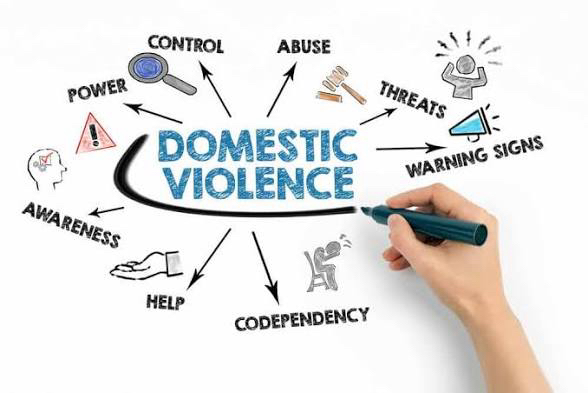
Light the charcoal. Sprinkle the sage. Negative energy go away. Today, I want to talk to you about some of the behaviors that fit under the umbrella of domestic violence. It wasn’t until I  was out of the relationship for a while before I began to see  information validating  what I always knew. This is not comprehensive list by any means. 

COERCIVE CONTROL OR CONTROLLING BEHAVIOR

·        Control who a person sees, wears and where they go. 

v  This was considered normal in my relationship. He dictated everything that I wore. If I chose what I wanted to wear, he would tell me to,  “go change. You look ridiculous.” And I was afraid to go somewhere without asking his permission.

·        Monitor or track what a person does. 

v  This was also something that was done on a daily  basis. He would call me wherever I was supposed to be and verify it by employees.

·        Control a person’s finances, medicine, food, or exercise.

v  He always told me that I was not allowed food that he didn’t approve. And I was required to be at the gym at 5:30 am every morning. And he would call and speak with those employees about what type of exercise I was doing. I was also not allowed to spend any money without permission.

·        Force someone to have sex or do sexual things.

v  I was never given the option to make that choice. I was threatened if I even spoke about that.

PHYSICAL VIOLENCE

·        Hitting, punching, kicking, bashing, shoving, or pushing.

This happened more times than I can count. He did kick me in the face. But when he and his brother teamed up together, it was worse. The main reason is because my husband didn’t want to say that he participated. And because they always threatened and intimidated me into silence, I never said anything. His brother was his “yes man.” And my husband pulled the strings.

·        Spitting on someone or pulling hair.

·        Choking or suffocating.

v  This typically happened during forced sex. Or whenever his brother would get mad at me, he would choke me as a form of intimidation.

·        Throwing things at or near someone.

·        Using a weapon.

v  This was always pointed at me or laid out somewhere as a form of threats and intimidation.

·        Locking someone in or out of space.

v  This was often done to show control.

·        Stopping someone from eating, sleeping, or having medication they need.

v  Every piece of food had to be given an account. One of his favorite things he would allow me to have for a snack was ten olives and ten pistachios. He would come home from work and completely berate me if I weren’t already up. And it didn’t matter that I had just worked a 24-48 shift. He always told me that medication was a crutch. He got mad because I had been given muscle relaxers for a hurt back and proceeded to kick me in the face and throw my medication out into the rain. I was also not allowed to take any psychiatric meds for depression or mood stabilization because, “why do you need anti-depressants when I’m so good to you? And what if someone finds out that you’re taking this? I don’t want anyone knowing that my wife is crazy. Then it makes me look bad. Why don’t you care about that?”

·        Forcing someone to drink or take drugs.

v  I did this on my own to help deal with being under his crazy world of control.

SEXUAL VIOLENCE

·       Touching or kissing someone without their consent.

I was made to accept his advances

·       Pressuring or forcing someone to have sex or do something sexual without their consent.

v  I was told, “Either you give it to me, or I’ll take it. Either way, I’m getting what I want. Make your decision.” Many times, I was bruised or bleeding by the time he was done with me. I had no voice in any matter. He was the “warden,” and I was his “prisoner.” My whole sexual relationship with him was simply RAPE.

·       Pressuring or forcing someone to have sex without protection such as a condom.

I was told early on, “I’m not using protection because it burns my dick. If you really loved me, you wouldn’t  put stipulations on how I fuck you.”

*I know this is explicit. However, I want you to get an accurate description of the situation.*

IMAGE-BASED ABUSE

·        Sharing private images of a person without their consent, for example images of them undressing or showering.

·        Sharing culturally inappropriate images of a person, for example images in which they do not wear items of clothing that they would normally wear in public.

·        Sharing intimate or sexualized images of a person without their consent.

·        Producing and sharing images that have been digitally altered to suggest a person is nude or engaged in sexual activity.

·        Threatening to do any of these things.

        *I found out later on that his brother would secretly be filming or watching us having sex.*

EMOTIONAL OR PSYCHOLOGICAL ABUSE

·        Criticizing a person and their choices or actions.

v  In his mind, he thought that I was too stupid to make decisions that were considered “correct.” All he ever told me what how stupid and retarded I was.

·        Isolating a person form their friends or their family.

v  Some friendships I lost forever because they just thought that I abandoned them. What they failed to see was that I would get accused of all kinds of stuff if I disobeyed him. Those who have never been in an abusive situation can’t comprehend losing your power to stand up for yourself. It was just easier to do what he said. Some former friends haven’t even talked to me since that time. And that is about them not me.

·        Threatening to harm a person, their family, their friends, their pets, or their belongings.

v  He always made threats about things he would and could do with keepsakes or my innocent animals. And if he and his brother didn’t feel that I was getting the picture, they would show up at my parents’ house and start harassing them.

·        Threating them to share personal or private information, such as sexuality, gender identity, personal health, or visa status (https://www.act.gov.au/community/domestic-family-and-sexual-violence/types-of-domestic-and-family-violence, 2025).

This topic will be spread over a few blogs. As you can see, when I add personal experience, the blog gets much longer. Stay patient and learn from this. It’s a hell that most people can’t understand. And I’m telling you that it’s all true. I was living in a prison without visible bars. Thanks for reading! And watch for the second part in the coming days.

Affirmation: I remember that it is ok to ask for help and receive support.

***Don’t forget to watch the video!***

#Thispuzzledlife

Domestic Violence Myths

“Leaving is so hard because your confidence is destroyed. You feel trapped.”

-Unknown

Light the charcoal. Sprinkle the sage. Negative energy go away. Today, I want to talk to you about some common misconceptions about domestic violence. Sit tight. These myths and truths will help to dispel some of the things that you might have been told.

1.        Myth: Domestic abuse is a “family matter” and the community should not interfere.

Fact: Domestic abuse is against the law making it everyone’s business.

2.        Myth: Domestic abuse affects only a small percentage of the population.

Fact: One-third of American women report being physically or sexually abused by a partner.

3.        Myth: Only men abuse women.

Fact: Statistics show that 85% of domestic abuse victims are women and 95% of perpetrators are men. However, men are abused by women also. And the rate of  Gay, Lesbian, Bisexual and Transgender communities are at the same rate as heterosexual relationships.

4.        Myth: Only low-income families and minorities experience domestic abuse.

Fact: Domestic abuse in every area of society. Most previously recorded statistics are skewed due to the numbers coming from public agencies, city hospitals, police departments, social service agencies, and the courts.

5.        Myth: Abusers are violent in all their relationships.

Fact: Most abusers are only abusive to a targeted intimate partner. Some abusers are successful in their professions and are very charming. And this is how they maintain power and control. This was how my ex-husband introduced himself. In front of people, he appealed to many. It was once we were not in front of people that the abuse occurred.

6.        Myth: Domestic abuse is caused by mental illness.

Fact: Personality disorders, mental illness, poor impulse control, and generational abuse do not cause domestic abuse. Even in cases where a particular mental illness may cause a person to be abusive, the abuse is not specifically targeted at one person but to everyone around during the episode.

7.        Myth: Domestic abuse is caused by drugs and alcohol use.

Fact: Where drugs and alcohol are often associated with domestic abuse, they do not cause the violence. My ex-husband never used drugs and alcohol. He was just mean and very controlling.

8.        Myth: Abusers are violent because they cannot control their anger and frustration.

Fact: Abusers use anger as an excuse to rationalize or blame their abusive behavior: anger is not a cause of abuse; it is a conscious choice made by them. I was always told that “I was the cause of his anger.” So, in some way, I was made responsible for his behavior. When in actuality, he is responsible for his own behavior.

9.        Myth: Therapy will stop the violence. If he/she goes to therapy, it will be safe at home.

Fact: Referral of a batter to is one of the strongest predictors that a victim will return to violence. However, research on the effectiveness of treatment  for batters are inconclusive. What is known is that there’s a 50% drop out rate in these programs by those who do enroll.

10.   Myth: Boys in violent homes will grow up to be battered and girls will be victims.

Fact: Not all children who grow up in homes where there is domestic abuse are directly abused or grow up to  become victims or abusers. It is important to note that children from homes where domestic violence abuse occurs are at greater risk for all of these outcomes than children from homes where  there is no violence.

11.   Myth: Even if he/she is violent, it is better for the children to have both parents. Children aren’t negatively affected by domestic abuse unless they are actually abused.

Fact: Witnessing violence as a child is associated with adult reports of depression, trauma-related symptoms and low self-esteem among women, and trauma-related symptoms among men. Child witnesses of domestic abuse on average exhibit more aggressive and antisocial behaviors, fearful and inhibited behaviors, anxiety, depression, trauma symptoms, temperament problems, and lower social competence, than children who do not witness such violence. Youth who witness domestic abuse are more likely to attempt suicide, abuse drugs, and alcohol, run away from home, commit other delinquent behavior, engage in teenage prostitution, and commit sexual assault crimes (https://law.arizona.edu/sites/default/files/myths_and_realities_of_domestic_abuse.pdf, 2003).

I hope that you’ve been able to put some of these myths to rest. From someone who has gone through domestic violence, my perpetrator never though that he was doing anything wrong. And when I presented the need for therapy I was told, “I don’t need to go to therapy because you are the problem.” When the actual problem was that he didn’t want to look at the reality of his own actions and behaviors. And he continues to be that way. Keep reading and stay safe!

Affirmation: I forgive myself for believing I have to stay in the relationship until the person changes.

***Don’t forget to watch the video!***

#Thispuzzledlife