

“I am not the sum of what was done to me. I am the proof that even in the places where humanity failed, my spirit refused to.”
-This Puzzled Life
Light the charcoal. Sprinkle the sage. Today, I’m going to talk about sexual assault. Religious betrayal. And the kind of generational silence that tries to swallow whole communities. We might as well start with a cleansing. Lord knows the air gets thick when truth finally walks into the room.
There are some topics into which you don’t ease. You cannonball straight in. Bless your heart and everyone else’s. Sexual Assault Awareness is one of them. And if you grew up anywhere near the Deep South like I did, you know we were raised on two things casseroles and silence. One of those is delicious. The other is deadly. So today, we’re breaking the generational habit of whispering about the things that actually need megaphones. Let’s start with the part that makes people shift in their seats like they’re sitting on a church pew with a splinter.
- One in five women in the U.S. has experienced completed or attempted rape in their lifetimehttps://www.nsvrc.org/statistics.
- Nearly a quarter of men have experienced some form of contact sexual violence https://www.nsvrc.org/statistics.\
- Every nine minutes, the survivor is a childhttps://rainn.org/get-informed/facts-statistics-the-scope-of-the-problem.
- An estimated 423,020 people age 12+ experience sexual violence each year in the U.S. https://rainn.org/get-informed/facts-statistics-the-scope-of-the-problem.
- In 2018 alone, an estimated 734,630 people were raped or faced attempted rape https://www.nsvrc.org/statistics.
These aren’t “somewhere out there” numbers. These are “in your neighborhood, in your school, in your family, in your church, and in your workplace” numbers. And if that makes you uncomfortable, good. Discomfort is the first sign your moral compass still works.
Survivors are people who still show up to work. Raise kids. Laugh at memes. And try to remember where they put their keys. They’re not broken. They’re exhausted from carrying what should’ve never been theirs to hold. And if you’re a survivor reading this, let me say this plainly. You are not the shame. You are the evidence that harm can be done and still not win. The shame belongs with the perpetrator.
Now, I’m not talking about making light of this kind of crime. That’s not humor. That’s cruelty with a punchline. I’m talking about the kind of humor survivors use to stay alive. The kind that says, “I’ve been through hell. But I still have jokes. So clearly hell didn’t win.” It’s the same humor Southern aunties use when they say things like, “We don’t air our dirty laundry.” While standing in front of a clothesline full of secrets flapping in the wind. Humor is a pressure valve. It lets us breathe while we talk about the things that steal breath.
If someone trusts you enough to tell you they were assaulted, here’s your script. “I’m so sorry that happened,” “I believe you” and “How can I support you right now?” Notice what’s missing? Questions that sound like cross examinations. Advice no one asked for. And any sentence beginning with “Why didn’t you…?” Survivors don’t need detectives. They need validation that the abuse happened and that it wasn’t their fault in any way.
Sexual abuse cases in the U.S. justice system have increased by 62.5% since 2020. Yet the vast majority of survivors never see justice at all. And before anyone says “Well, reporting is easy.” Let me remind you. If reporting were easy, we wouldn’t have a national hotline that stays busy 24/7.
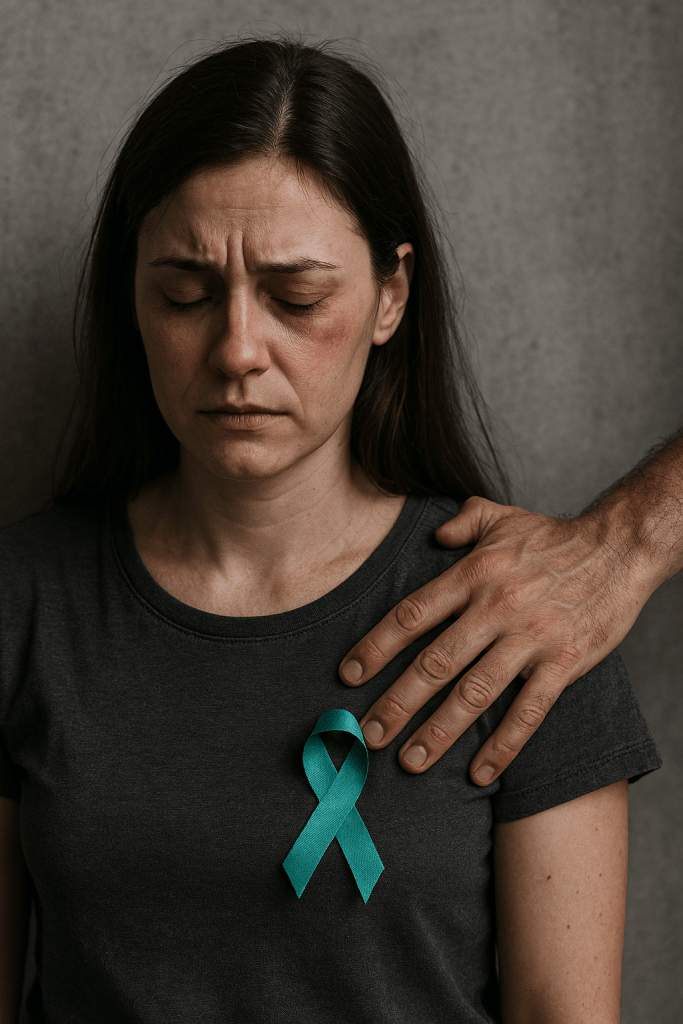
People who’ve lived through abuse, especially abuse justified with moral or religious language, tend to recognize certain dynamics instantly. Power used without accountability. Authority figures protecting each other instead of the vulnerable. Moral language used as a shield for harmful behavior. Gaslighting and denial when confronted with wrongdoing. Silencing or discrediting those who speak up through threats and intimidation. And systems that reward loyalty over truth.
These patterns show up in many places like churches, marriages, schools, corporations, and yes, in government. Survivors often have the clearest radar for institutional betrayal. Because they’ve lived it in the most intimate way possible. When you look at the world and say, “This feels familiar.” That’s not paranoia. That’s pattern recognition born from experience.
I grew up in a world where people could quote scripture faster than they could show compassion. Where pastors’ children could harm a five‑year‑old and still be called “good families.” And where a husband could twist the Bible into a weapon and call it marriage. I know what it feels like to be violated in Jesus’ name. I know what it feels like to be told your body is a man’s property. I know what it feels like when resistance is met with punishment. When silence is demanded. And when trauma is treated like an inconvenience.
After a lifetime of being told to stay quiet when people in power start using God, morality, or “order” as a shield, it’s never about holiness. It’s about control. I’ve lived under that kind of control. I’ve survived it. I know exactly what it looks like when someone wraps abuse in scripture and calls it righteousness. So, when I see institutions using the same tactics, same silencing, same moral posturing to protect themselves instead of the people they harm, I don’t need a press release to tell me what’s going on. Survivors recognize the pattern long before the headlines catch up.
What do we do? We talk. We teach. We intervene. We stop pretending this is a “women’s issue” or a “men’s issue” or a “kids these days” issue. It’s a human issue. We raise kids who know consent isn’t a suggestion. We raise adults who know silence is complicity. We raise communities where survivors don’t have to choose between telling the truth and keeping the peace.
And at the end of the day, the pattern speaks louder than any press conference ever could. The world watched as Jeffrey Epstein’s name kept resurfacing in court documents, flight logs, and survivor testimony. The world also watched as questions piled up about who knew what, who looked away, and who benefited from the silence. People aren’t asking these questions because they’re bored. They’re asking because the public record is full of smoke. And every time someone tries to follow it, another door slams shut.
If the Trump administration thought history would politely avert its eyes, they miscalculated. Survivors don’t forget. Journalists don’t forget. The internet definitely doesn’t forget. And the truth has a funny habit of surviving every cover‑up attempt. Because eventually, the receipts outlast the people who hoped we’d stop reading them.
And to my fellow survivors, you are not alone. You are not to blame. You are not too much. You are a whole person with a whole story. And the world is better because you’re still here to tell it. And if anyone tries to silence you, just remember. You come from a long line of people who know how to make noise when it matters.
After the childhood abuse, the marital rape, the spiritual manipulation, the PTSD that still echoes through my bones. I’ve learned something important. Abuse doesn’t just happen in homes and churches. It happens anywhere power goes unchecked. So, if you hear a familiar pattern in the way certain institutions operate today, you’re not imagining it.
Once you’ve lived through the kind of darkness that tries to disguise itself as divine, you stop being intimidated by titles, pulpits, or podiums. You stop mistaking authority for integrity. And you stop believing that silence is the price of peace. If your power depends on someone else’s silence, it’s not leadership. It’s abuse with better lighting. And survivors like me aren’t afraid of the dark anymore. Thanks for reading! And never let them silence you.
Affirmation: I honor the child I was, the survivor I became, and the woman I am now. My voice is not fragile. It is forged. My healing is not a question. It is a declaration. I rise today not because the past was gentle, but because I am.
***Don’t forget to watch the video!***
#ThisPuzzledLife
 This Puzzled Life