

“When the places built to protect children become the places that break them, the wound isn’t just personal. It’s a failure of every adult who chose silence over responsibility.”
-This Puzzled Life
Light the candles. Move the breakables. Tell the ancestors to take their seats and pass the sweet tea. We’re not easing into this one. And before the denial committee calls an emergency meeting to rehearse their “But that’s not what we meant” speeches, let’s go ahead and say the quiet part out loud.
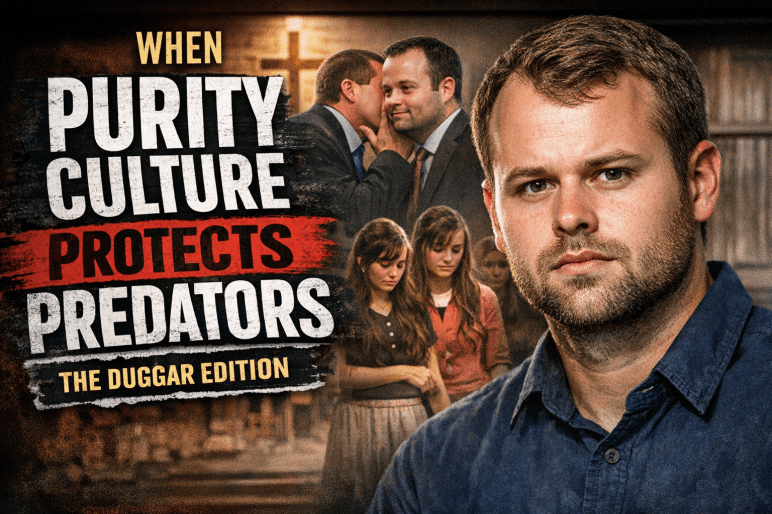
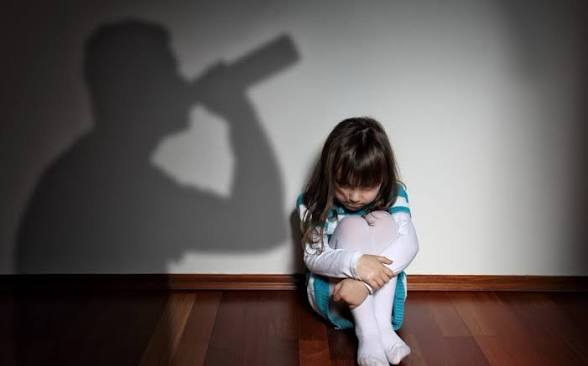
Child abuse doesn’t just happen in the home. It happens in classrooms where teachers misuse authority. In churches where “discipline” is weaponized. In sports programs where adults confuse control with coaching. In friend groups where older kids exploit younger ones. And in any space where a child’s safety depends on an adult’s integrity, and that integrity fails.
Let me say this in the clearest way I know how. And coming from someone who personally knows a little something on this topic, what happened to you was abuse. And it was a betrayal of power. Schools and other places are supposed to be safe. Adults in those buildings are supposed to protect children. You were not protected. And when abuse happens in a place that claims to be safe, the damage hits on multiple layers at once. It’s not just the act itself. It’s the collapse of every structure that was supposed to shield you.
You were a child. They were adults. The responsibilities were never equal. The conflict you still feel between “their job” and “your role” is a direct result of their failure, not yours. The tactics you endured weren’t just harmful. They were calculated. “Diabolical” would be the right word. The cruelty, the gaslighting, the public humiliation? These are methods designed to break a person’s sense of reality and self‑worth. Many adults would crumble under that kind of psychological warfare. Expecting a child to withstand it is unthinkable. And, yet, if you’re reading this, you did. Not because you should have had to. Not because you were equipped for it. But because you had no choice. That’s not resilience by choice. That’s survival by necessity.
Here are a few sources you might want to dive into.
1. Most child abuse is never reported (all types)
U.S. Department of Justice – Bureau of Justice Statistics“86% of child abuse cases are never reported to authorities.” 🔗 https://bjs.ojp.gov/content/pub/pdf/cv22.pdf (bjs.ojp.gov in Bing) (See section on underreporting of violent crime against children.)
2. Children often disclose abuse but are ignored or silenced
Health & Social Care in the Community (2025) Study on child maltreatment disclosures found that children frequently disclose abuse (physical, emotional, sexual, neglect) but are ignored, dismissed, or punished by adults. 🔗 https://onlinelibrary.wiley.com/doi/10.1111/hsc.14336(onlinelibrary.wiley.com in Bing)
3. Delayed disclosure is common across ALL abuse types
CHILD USA – National Think Tank for Child ProtectionOver 70% of victims delay disclosure for at least five years, regardless of abuse type. 🔗 https://childusa.org/wp-content/uploads/2024/01/Delayed-Disclosure-Report.pdf(childusa.org in Bing)
4. Institutional betrayal: schools, churches, programs often ignore reports
Journal of Child Sexual Abuse (applies to institutional responses across all abuse types) Shows that institutions frequently dismiss, minimize, or cover up reports of abuse.🔗 https://www.tandfonline.com/doi/full/10.1080/10538712.2019.1570402 (tandfonline.com in Bing)
Note: While this journal focuses on sexual abuse, the institutional‑betrayal patterns. It’s documents are identical across physical, emotional, and psychological abuse.
5. Teachers and school staff rarely report abuse, even when required by law
U.S. Department of Education Report Only 11% of school personnel who witness or suspect abuse report it. 🔗 https://www2.ed.gov/rschstat/research/pubs/misconductreview/report.pdf (www2.ed.gov in Bing)
6. Children who report abuse are often disbelieved or blamed
National Institute of Justice – Child Abuse Disclosure Research Children frequently disclose abuse but face denial, minimization, or retaliation from adults. 🔗 https://nij.ojp.gov/topics/articles/child-abuse-disclosure-what-research-tells-us (nij.ojp.gov in Bing)
The wound you carry makes sense. Trauma doesn’t fade just because time passes. It imprints itself. It becomes a landmark in the psyche. And something you walk around, navigate, and learn to live beside. Therapy can help you understand it. But it can’t erase the fact that it happened. And that it shouldn’t have happened. The gaslighting you endured stole something fundamental. Your ability to trust your own perception.
When adults deny a child’s reality, the child learns to doubt themselves. When they shame a child publicly, the child learns their existence is a problem. When adults ignore a child’s cries for help, the child learns that safety is conditional or imaginary. That’s not a child “being dramatic.” That’s a child being abandoned. And then abandonment by the very people who were supposed to protect you happened. The people you trusted were identified as educators, authority figures, and other adults in power. And that leaves a wound that is both emotional and existential. You were trapped. And that was not your fault.
A child cannot escape a system built around them. A child cannot “just tell someone” when the people they’re supposed to tell are the ones causing the harm or ignoring it. A child cannot “make better choices” when every direction is blocked. You survived in the only ways available to you. Your mind did what it had to do. Your body did what it had to do. Your spirit did what it had to do. Survival is not shameful. Survival is not weak. Survival is not something you owe anyone an explanation for.
And the fact of the matter is that THE FAILURE WAS THEIRS. NOT YOURS. You were a child. They were adults. They had power. You had none. The responsibility was theirs. The consequences were yours. And that imbalance is the injustice you’re naming. What you lived through would have broken many adults. The fact that you’re here speaking and naming it is refusing to let it stay buried. And that is strength. Even if it doesn’t feel like it. Thanks for reading! And do your part to help protect our children.
Affirmation: “I honor the child who survived what no child should face. I am not defined by what was done to me. I am defined by the courage it takes to speak it.”
***Don’t forget to watch the video!***
#ThisPuzzledLife

 This Puzzled Life