
Domestic Violence: Why Didn’t They Just Leave?

“Trauma Bonding is like being a hostage who has developed an irrational affection for your captor. They can abuse you, torture you, even threaten to kill you, and you’ll remain inexplicably and disturbingly loyal.”

– Ann Clendening.

I posted this today to help give you a voice to your own abuser/abusers. I have been in therapy for many years, and sometimes, I even doubt these words. The problem is that we were so indoctrinated with their beliefs, comments, gas lighting, manipulation, and co-dependency that we formed a something called “trauma bonding.”

Trauma Bonding is an unhealthy emotional attachment that develops between a victim and their abuser. It is a complex issue that occurs in different abusive situations that include physical, sexual, and emotional abuse. But it’s also important to note that not everyone who goes through abuse forms a trauma bond. However, some people may be more prone to forming a trauma bond due to the early experiences as a form of repetition compulsion https://www.attachement project.com, 2025). This can happen in domestic abuse, child abuse, elder abuse, exploitative employment, kidnapping or hostage-taking, human trafficking, and religious extremism or cults (https://medical newstoday.com, 2023).
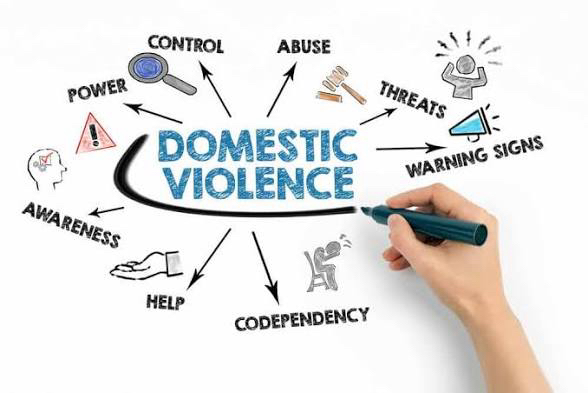
Characteristics of Trauma Bonding:

·        Intermittent Reinforcement: The abuser cycles between periods of abuse and kindness creating a sense of hope and dependence in the victim. Victims of abuse may be waiting for that next “feel-good moment” in the relationship that also keeps them trapped in a cycle of abuse and relief (https://www.domesticshelters.org, 2021).

v  This is also how many addictions keep you stuck. If everything were bad all of the time, you would grow tired and leave. But the intermittent reinforcement is how they maintain control.

·        Isolation: The abuser often isolates the victim from their support system, making them more vulnerable and reliant on the abuser ((https://medical newstoday.com, 2023).

v  I was not completely isolated physically from my support systems. But emotionally I was very isolated. He constantly told me that my friends and family didn’t have my best interest at hand. He would make up lies about things they said and assassinate their character behind their backs.

·        Fear and Insecurity: The victim experiences constant fear and insecurity, leading them to believe that they cannot escape the abusive situation (https://www.savantcare.com,2023).

v  The constant fear and insecurity that I experienced was, in fact, my prison cell. And I was afraid to leave even when the door was wide open.

·        Justification: The victim may rationalize the abuser’s actions or blame themselves for the abuse (https://thriveworks.com, 2024).

v  I was conditioned to believe that everything I did that made him angry was my fault. And it wasn’t. Now, I can see that his actions were because of his behavior, not mine.

·        Emotional Manipulation: The abuser uses emotional manipulation to control the victim’s thoughts, feelings, and behaviors (https://wondermind.com, 2023).

v  This right here was the #1 key factor for why I wouldn’t leave. He even told me, “No other man would ever put up with the things that I have to deal with in you. All of the good things about you, which aren’t many, are because of me. You are useless without me. I have given you everything you wanted. And disobeying me is the thanks that I get? Why do you need anti-depressants when there is no reason that you should be depressed.

Consequences of Trauma Bonding:

·        Difficulty leaving the abusive relationship.

·        Feelings of guilt, shame, and self-blame.

·        Low self-esteem and trust issues.

·        Mental health problems, such as depression, anxiety, and PTSD (https://www.savantcare.com,2023).

Trauma bonding kept me trapped in an abusive situation. People have said, “Why didn’t you just leave?” The problem lies in the way they you manipulate you into believing that everything bad that happens, no matter how minor, is the victim’s fault. And day after day, their hold strengths without you even realizing it. And in my case, I felt as though I was responsible for their thoughts and feelings. I constantly strived to be “good enough” or “well deserving enough” to see the person that he told and showed me he could be when we met. And quite frankly, it was always just a game. Their abusive self is “the real them.” Believe your instincts and the colors in which they present themselves. For that is who they truly are.

If you have read through this and have never been in a situation where everything you do is being controlled, consider yourself lucky. But don’t you dare sit there and say, “It was their own fault that they didn’t leave.” That is one of the most callous things that you can say to someone who is currently trying to survive and those that have survived finally leaving that situation no matter how long it took.

You have absolutely no right to tell me or anyone else how we should feel simply because you have not experienced it. I stayed much longer than I should’ve. And there are times when I still beat myself up for it. Now though, I give myself some grace for not knowing how to leave or recognizing what was going on in plain sight. It’s not just one event that causes this. It’s something that happens every single day methodically planned and executed by the warden in the relationship.

Once you leave, I highly recommend getting into therapy. Just because you think that no damage has occurred, doesn’t mean that it hasn’t happened. Even now, 19 years later since I left him, I have phobias, anxiety, depression, difficulty concentrating, and difficulty making decisions. He has left a mark that will last a lifetime. And some of the things that he did I’ll never recover from. He once told me, “You’ll never be without me no matter what you do!” And the truth is that, while he still doesn’t have total control over me, I still allow parts of him to live rent free in my head.

The next post will be something that represents those of us who have managed to leave and have an understanding through therapy how and where to put the responsibility where it truly belongs, on them.

To those who are still in these types of relationships, I see you even when you don’t openly identify yourself. To those who have left and still live in fear, I see you and you’re not alone. To those of us who continue to strive to change those hard-core beliefs that were instilled by way of threats, intimidation, and violence, I see you as well. None of you are alone. And not all relationships are like this. 

Find a therapist that you trust and open your soul to them. Coach has been a lifeline of compassion and understanding for me that I’ve rarely experienced. And she has never made fun of or questioned why I didn’t leave. Unconditional support and her teachings have made life possible for me many lonely nights. I will probably always struggle with some things and that’s ok. This process is certainly a marathon instead of a sprint. And there is no time limit for healing. The whole point is to continue showing up and moving forward in whatever way that might take shape. You are not on an island like you think. There are millions of us both male and female who struggle with the effects and consequences of domestic violence and abuse.

You are loved. You are wanted. And you deserve the good things that life has to offer. Thanks for reading! And I hope you look for the next blog in a couple of days that I post that will help you begin to find your voice. The power to heal is now and ours.

Affirmation: My story has power and inspiration through it.

***Don’t forget to watch the video!***

 #Thispuzzledlife

Domestic Violence And Animal Cruelty

“The connection between domestic violence and animal cruelty is so significant that it is commonly referred to simply as “the Link.” Perpetrators of domestic violence often threaten harm or bring actual harm to their victims’ pets in order to control them, keep victims from leaving, or to punish them for actually leaving or attempting to leave.”

-ASPCA.org

Light the charcoal. Sprinkle the sage. Negative energy go away. Today, I want to discuss domestic violence and pets. I won’t pretend that this topic is going to be easy to digest. However, it’s one that needs to be brought into the light.

Many of us sometimes love our animals more than people. I know, speaking only for myself, that my animals have always been a source of comfort, unconditional love, and understanding that many people can’t fully embody. They have never spoken a word as their compassion is in their eyes. And all they ask for is to be fed and also loved in return. That is, it. Nothing more. Nothing less.

My personal experience with domestic violence is knowing that absolutely nothing is off limits. And it is their cruelty that can always get worse. Do some abusers change? Yes. But if they are not willing to do self-reflection and to look at their own traumas and behaviors, then they will not change. And most blame their actions on the victim.

Please Read The Following:

     Up to 75% of women entering DV shelters report that their abuser threatened, harmed, or killed their pets in the presence of children (safehouse.org, 2024).

     Up to 65% of domestic violence victims and 48% of battered women remain in abusive homes out of fear for their pets.

     Only around 5% of U.S. shelters have any kind of housing for pets of domestic violence victims (https://www.drmartybecker.com, 2017).

Why Do Abuser Use Pets To Terrorize Their Human Partners?

·        Creating fear: Abusers may torture or kill a pet to demonstrate what they are capable of doing to their human victim or their children.

v  There were many times when I saw and heard my ex-husband’s violence against my animals. He would muzzle my outside dogs all night long most of the time. And he would beat my cats with a belt if they meowed at night. He also scared my cats so much with a broom that they began to have a very strong fear reaction for many years following me leaving him.

·        Leverage to prevent escape: Many women fear for their pet’s safety is the primary reason they delay leaving an abusive relationship.

v  One of his favorite things to say was, “One day you’re going to look up and all of your animals will be gone. You just might come home one day, and they will have vanished.”

·        Punishment and retaliation: Abusers may harm a pet as punishment for a perceived transgression or in retaliation for a partner trying to leave.

v  After 13 years of being in a domestic violence situation, and over a year of planning my departure, I left him hoping things would cool down enough to go back and get my animals as a way of saying, “I’m done.” Two weeks later, I went back to retrieve my animals, and most had been starved. There was no water. A few of the ones remaining had been eaten by other animals or were mysteriously cut in half. On that day, I was able to get out two cats and my African Grey parrot. Only three of the many that I owned. My cats were starving and had old, moldy food. My bird had moldy food and dirty water. My outside cats were nowhere to be found. And my dogs had been shot which was witnessed by a neighbor. And the sights and smells can never be undone.

·        Forcing participation: Some women survivors tell about how they were forced to participate in illegal acts under threat of harm to their pets.

v  Luckily, I was never forced to do this. Because they would’ve had to do something for me. Because I don’t have the capability to hurt my pets.

“Seeing her hurt was more than I could bear. 

I couldn’t and wouldn’t leave my pets.”

-Sarah, DV Victim

Women have reported:

“He kicked the dog repeatedly until it was howling in pain.”

“He put his hand into the goldfish bowl in front of my five-year-old daughter and squashed the goldfish, for no apparent reason.”

“I can remember an instance when he picked the cat up and with full force drop-kicked it from the back door. He did it because he saw the cat on the workshop. I thought the cat might die.”

“He would refuse to allow us to feed the dog-saying he was ugly.” (https://pmc.ncbi.nlm.nih.gov, 2008).

Resources for victims who want to leave with their pets:

·        National Domestic Violence Hotline 1-800-799-SAFE (7233).

·        The Purple Leash Project

o   Our goal: To see 25% of domestic violence shelters become pet-friendly by 2025.

·        Safe Havens for Pets

o   For pets are sheltering services that help individuals who are experiencing domestic violence or homelessness with a companion animal (https://www.safehavensforpets.org, 2023).

·        RedRover Relief

o   Mission is to “bring animals out of crisis and strengthen the bond between people and animals through emergency sheltering, disaster-relief services, financial assistance, and education.

·        URINYC PALS (New York City)

·        Paws for Safety (Rockland County, New York)

·        Praline’s Backyard (Snellville, Georgia)

·        Ahimsa House (Georgia)

·        Shelter our Pets (New Jersey)

·        Network for Pets of Domestic Violence Victims (www.npdvv.org).

·        This is a list of pet-friendly domestic violence shelters (https://saftprogram.org2025).

I completely and unapologetically understand the fear that abusers instill in victims about their victims and their pets. I encourage you to seek help by way of organizations that are listed here and the many others that I don’t have the space to acknowledge. Animal abuse is a crime in all 50 states. And  each state has anti-cruelty statutes that include felony-level provisions for acts of violence against animals. 

And they will “love bomb”  and abuse you until you concede. That is part of their “reign of terror.” They are master manipulators and will suck the soul from your mind and body. And then tell people that you enjoyed it. It is imperative for you and those you love, including your pets, to find a way out of that situation. I beg you to please continue searching for help in every way possible. Because they will do it again. And candy and flowers won’t make it better.

Thanks for reading even though difficult it may be. Please seek help for those you love even if that is for yourself. You and your pets are worth the love and compassion that is waiting for you all. Keep reading. Keep hope alive.

Affirmation: I forgive myself for believing all relationships are abusive and violent.

***Don’t forget to watch the video!***

#Thispuzzledlife


Domestic Violence Myths

“Leaving is so hard because your confidence is destroyed. You feel trapped.”

-Unknown

Light the charcoal. Sprinkle the sage. Negative energy go away. Today, I want to talk to you about some common misconceptions about domestic violence. Sit tight. These myths and truths will help to dispel some of the things that you might have been told.

1.        Myth: Domestic abuse is a “family matter” and the community should not interfere.

Fact: Domestic abuse is against the law making it everyone’s business.

2.        Myth: Domestic abuse affects only a small percentage of the population.

Fact: One-third of American women report being physically or sexually abused by a partner.

3.        Myth: Only men abuse women.

Fact: Statistics show that 85% of domestic abuse victims are women and 95% of perpetrators are men. However, men are abused by women also. And the rate of  Gay, Lesbian, Bisexual and Transgender communities are at the same rate as heterosexual relationships.

4.        Myth: Only low-income families and minorities experience domestic abuse.

Fact: Domestic abuse in every area of society. Most previously recorded statistics are skewed due to the numbers coming from public agencies, city hospitals, police departments, social service agencies, and the courts.

5.        Myth: Abusers are violent in all their relationships.

Fact: Most abusers are only abusive to a targeted intimate partner. Some abusers are successful in their professions and are very charming. And this is how they maintain power and control. This was how my ex-husband introduced himself. In front of people, he appealed to many. It was once we were not in front of people that the abuse occurred.

6.        Myth: Domestic abuse is caused by mental illness.

Fact: Personality disorders, mental illness, poor impulse control, and generational abuse do not cause domestic abuse. Even in cases where a particular mental illness may cause a person to be abusive, the abuse is not specifically targeted at one person but to everyone around during the episode.

7.        Myth: Domestic abuse is caused by drugs and alcohol use.

Fact: Where drugs and alcohol are often associated with domestic abuse, they do not cause the violence. My ex-husband never used drugs and alcohol. He was just mean and very controlling.

8.        Myth: Abusers are violent because they cannot control their anger and frustration.

Fact: Abusers use anger as an excuse to rationalize or blame their abusive behavior: anger is not a cause of abuse; it is a conscious choice made by them. I was always told that “I was the cause of his anger.” So, in some way, I was made responsible for his behavior. When in actuality, he is responsible for his own behavior.

9.        Myth: Therapy will stop the violence. If he/she goes to therapy, it will be safe at home.

Fact: Referral of a batter to is one of the strongest predictors that a victim will return to violence. However, research on the effectiveness of treatment  for batters are inconclusive. What is known is that there’s a 50% drop out rate in these programs by those who do enroll.

10.   Myth: Boys in violent homes will grow up to be battered and girls will be victims.

Fact: Not all children who grow up in homes where there is domestic abuse are directly abused or grow up to  become victims or abusers. It is important to note that children from homes where domestic violence abuse occurs are at greater risk for all of these outcomes than children from homes where  there is no violence.

11.   Myth: Even if he/she is violent, it is better for the children to have both parents. Children aren’t negatively affected by domestic abuse unless they are actually abused.

Fact: Witnessing violence as a child is associated with adult reports of depression, trauma-related symptoms and low self-esteem among women, and trauma-related symptoms among men. Child witnesses of domestic abuse on average exhibit more aggressive and antisocial behaviors, fearful and inhibited behaviors, anxiety, depression, trauma symptoms, temperament problems, and lower social competence, than children who do not witness such violence. Youth who witness domestic abuse are more likely to attempt suicide, abuse drugs, and alcohol, run away from home, commit other delinquent behavior, engage in teenage prostitution, and commit sexual assault crimes (https://law.arizona.edu/sites/default/files/myths_and_realities_of_domestic_abuse.pdf, 2003).

I hope that you’ve been able to put some of these myths to rest. From someone who has gone through domestic violence, my perpetrator never though that he was doing anything wrong. And when I presented the need for therapy I was told, “I don’t need to go to therapy because you are the problem.” When the actual problem was that he didn’t want to look at the reality of his own actions and behaviors. And he continues to be that way. Keep reading and stay safe!

Affirmation: I forgive myself for believing I have to stay in the relationship until the person changes.

***Don’t forget to watch the video!***

#Thispuzzledlife

National Domestic Violence Awareness Month

“Never stop fighting for your freedom, you are worth it.”

-DA Survivor-Anon

Light the charcoal. Sprinkle the sage. Negativity energy, go away. Today is the beginning of Domestic Violence Awareness Month. This month is when our voices from all over the globe will be heard. We as victims, survivors and warriors bring to light the horrors of domestic violence and the impact that it leaves on our lives and those around us. Let’s take time out for a little education on a few of the topics surrounding domestic violence.

Domestic Violence is a topic that I know a lot about. Well, I know how to function in it. And I know how to get away from it. But living with the aftereffects reveal a whole other set of problems. Where domestic violence used to be seen as something that only happens to women and their partners. There is more awareness on the abuse of men by their partners. No matter how you identify. It also happens to the most innocent, children and pets. This happens in all forms of relationships. And the statistics are staggering.

Domestic violence is violence committed by someone in the victim’s domestic circle. Which include partners and ex-partners, immediate family members, and other relatives and family friends (https://www.UN.org, 2025). The behaviors can include such things as:

·        Physical

·        Sexual

·        Emotional

·        Financial

·        Psychological actions or threats of actions that influence another person.

This includes any behavior that intimidate, manipulate, humiliate, isolate, frighten, terrorize, coerce, threaten, blame, hurt, injure, or wound someone. The repetitive exposure to violence teaches children that violence is a normal way of life (https://dvcc.delaware.gov, 2025). And for those of us who leave, constant confusion and every minute of no knowing when something else will happen again, is our normal. And the many years of programming by our abusers takes years of therapy to de-program ourselves. But you will never be who you used to be.

Recovery is not for the faint of heart. It is hard and uncomfortable. And it takes years to undo the damage that was caused on so many levels. I was one of the lucky ones. Long story short, I survived. But the mental damage that was caused has left me crippled in some ways. And through the sleepless nights filled with tears, therapy, psychiatric medications, body memories, flashbacks, phobias, and panic attacks, I have learned that I have a voice that deserves to be heard. And no matter what people say or believe, I can validate my own story regardless of the opinions of others. Because I lived it. 

The main thing I want to say to other women and men across the globe who are still in their own processes, “YOU ARE NOT ALONE!” Because it happened to me too. Thanks for reading! Keep smiling and pushing forward.

Affirmation: My light shines even in the dark.

***Don’t forget to watch the video!***

#Thispuzzledlife
The Girl In The Closet (Poetry)

The Girl In The Closet

Enjoying school and playing sports
Dripping with sweat on shirts and shorts.
A dollar bill would be burning a hole in my pocket
She was only a number, but she was also the girl in the closet.

Most knew her name but not her number
She made them laugh even before Tumblr
The teacher never smiled, and we never knew why
Was someone mean to her? Did they make her cry?
The evilness she shot through her eyes made them want to vomit
She was only a number the girl in the closet.

The clown she was in those days
That happiness quickly became dark, ugly hate.
That closet was to teach me lessons.
And lessons it did…I learned how to drink, take pills, cut on my arms and put on gauze dressings
Because I was only a number and the girl in the closet.

Please!!!!I cried for someone to get me out of there
But they were being told different stories and I started pulling out my hair.
How could you not see that which was in front of you?
You questioned my parents and they questioned you.
What’s happened to my child and why is her heart so hurt
But I was just a number and the little girl in the closet.

They all knew and could see my spirit breaking day after day.
The hate would develop with words she would hear between September and May.
She was being changed from the inside out
She always had a practice where her aggression could be let out.

Her pills were quite the comfort and the razors were too
Because she had certainly learned some less and she hates herself and wants to turn blue.
She can’t breathe without thinking that finally someone must listen to what I say
The mental torture that continues day after day.
Now it’s my turn to tell you how we will play.
You didn’t even remember my number only that “I was the girl in the closet.”

#thispuzzledlife

My Own Prison

My Own Prison

“To be able to break free from prison, one must know how they became imprisoned to begin with.”

—Anonymous

One of the things I’ve learned through the process of trying to live with this disorder are “triggers.”  Triggers are anything that can set off a memory that can take someone back in time to when the original trauma.  It’s like being in an instant time machine.  A trigger can be anything related to sight, sound, smell or taste.  These seemingly innocent moments to most people can set off internal and external eruptions in others.  This can often lead to strong and immediate reactions by those they affect.

I don’t have all of the answers about these little disruptive beasts yet.  And no matter how much I want all of the answers immediately I have to always keep in mind that it has taken me 42 years to become this dysfunctional and repair work does not happen overnight.  I guess to be cliché this process is “a marathon not a sprint.”

The ultimate goal of therapy is to be able to acknowledge these events but not let them overtake you.  Before this can happen specific triggers must first be identified and the event can be processed.  Recently, I did a therapeutic assignment related to this very thing.  One of my personal and very strong triggers is the feelings of being trapped either physically and/or emotionally.  This is one of the biggest reasons why I don’t have much success in lockdown psychiatric units and inpatient programs.  My ultimate goal is ALWAYS TO GET OUT!

confinement

While doing this assignment I looked specifically at individual traumatic situations where these fears were imposed and I was instantly blown away.  I had no idea how “trapped” I have felt the majority of my life.  When I began breaking down the different time periods for these situations things have begun to make a little more sense.  I felt myself becoming nauseous and beginning to float away while looking deep inside for these answers.  Here are just a few that were identified.

  1. Being molested by people older, at the young age of 5 years old, and not feeling powerful enough to make it stop while also holding these secrets left me feeling trapped.  These abusers were also our neighbors and were always around me because of how close our two families were even at church.
  2. As a teenager, I was trapped as some sick form of sport and/or punishment in a closet where I was verbally abused, humiliated and tormented on a daily basis.  I was like a dog that was chained to a tree and forced into aggression.  I was often sent to the office to face false accusations by the administration where no verdict other than GUILTY was ever considered.  I always felt as though no one would listen and that no one cared what was happening.  The times I reported that this teacher was “being mean” ultimately got back to her and the abuse intensified.  I was often belittled and embarrassed in front of my classmates.  The reality of that situation was that there was no way out….period.  That was the first time that I ever had any type of suicidal feelings of any kind.  Her words still burn deeply as the day that were first said.
  3. Anyone who has experienced domestic violence, in any form, knows the fear and panic of wanting and needing to leave but terrified of the repercussions.  I was also followed and constantly watched.  The mental anguish from his degrading comments and vile actions left me feeling completely lost, broken and fearing my own decisions.  No matter what decision I made it would always be wrong.  He had me convinced that I would never be able to do anything without him because I was too dumb.  The most powerful statement he ever made to me was “You’ll never get rid of me.” And so far this statement has not been untrue.  I was trapped.

trapped

These are just a few examples of feeling trapped.  And now….I’m trapped by all of the memories, images and statements that were made by those individuals.  I still can’t seem to break free from the abuse as it torments me daily.  The paranoia of being watched, followed or being attacked has me questioning the intensions of others.  Instead of waiting to see if the paranoia holds validity, I protect myself by being very verbally aggressive to innocent people who just happen to making seemingly non-malicious comments or glances.  Essentially, I’m in a perpetual state of being triggered.  Waiting for a happy ending that never happened during my trauma and today only fuels my impulsiveness in this area.

Being around too many people with too much stimulation sends me and my “protectors” into overdrive and into a state of fight or flight.  It seems to overload my brain, thus, making me think I’m in danger.  The anxiety becomes so uncomfortable that the only thing I can do is just “get away” in whatever form that might take.  I seem to tame this only by being alone and secluded from most people including those I dearly love.  I have become a prisoner of myself and life.  The dichotomous view of life leaves me imprisoned by my fears within four walls of my bedroom.  Outside of these walls I’m simply prepared for battle in one way or another by indiscriminately striking out at anything that moves. The situation that comforts me is also the walls of my self-created but protective prison.  My abuse was very real and still is. And I’m a work in progress.

#thispuzzledlife

Locked And Loaded

Locked and Loaded

“I finally understood what could drive kids to show up with guns and shoot up their schools.”
― Nenia Campbell, Freaky Freshman

If you want to look at all sides of the historical and current school shootings then don’t forget this side.  Put yourself in the driver’s seat as a teenager who feels that there is no way out.  There are no easy answers.  Don’t think as an adult about how you would respond?  You have to imagine the world through the eyes of a desperate teenager who feels helpless just like those who killed. I’m not condoning anything.  Just don’t eliminate one of the sides of the problem or you’ll never achieve an accurate answer.

Imagine for a minute this scenario…..

Life as a 13 year-old rebellious but funny teen seemed to be pretty benign on the surface.  Teenagers because of the developmental stage tend to be difficult stressors for kids and their parents.  She had this incredible gift to make people laugh no matter the situation. Depression crept in and slowly started transforming her.  Her vitality for life was very slowly disappearing and it never seemed to matter or to care to those she tried to reach out to.  She had no animosity towards anyone.  She hated that she had been unwanted.  But everyone loved her because she was everyone’s favorite clown and friend.

What no one seemed to take notice of was that this clown was put into a closet behind the teacher’s desk and locked.  The teacher always had hurtful things to say.  She poked at this child like a pit bull chained to a tree and being taunted and whipped with sticks.  Anytime that child spoke up she was hit again.  Anytime she cried she was ridiculed and humiliated.  When she talked about food she was glared at and venomous derogatory body image comments were slung at her.  Every time she tried to fight back she got in even deeper trouble with the administration.  No one ever listened because of a label.  She wasn’t a bad kid.  But now she didn’t know.

All she wanted was for someone to leave her alone and apologize for what had just happened over several months.  Relief was nowhere in sight.  She began thinking that if she (the teacher) wasn’t alive to torment her that she could hang with her friends and continue playing ball.  But if she committed suicide she wouldn’t have to ever face another minute of this daily torture.  She can’t speak of it all as the embarrassment of what she thinks she has allowed.  And then her friend commits suicide and the seriousness and pain of what had just happened was brushed over like his life didn’t matter.  She is rocked to her foundation.

dylan 2

I have lost my emotions

—  Dylan Klebold


eric harris 2

I hope death is like a dream state, I want to spend all my time there.

—  Eric Harris

These two thunderclouds collide along with a mixture of other storms in her life.  This marriage, of sorts,  bred the perfect storm.  Her inadequacies were put before her peers.  She was taunted daily about how no one wanted her.  Everything that she would never become.  Statements about being a baby for crying when the words stung like bullets.  She tried to tell and no one would listen.  Or it was the southern way to handle this parenting situation..”She is the adult and you are the child.  Tell her you’re sorry and give her respect!”  She was literally and figuratively trapped and no one could hear her silent screams.

How could you not notice the fact that she cried blood tears from her forearms?  How could you not notice the holes in the hallway and rooms?  How could you not notice that she had deadly eating disorders that would almost take her life?  How could you not notice the pain meds and all the sleeping and headaches that became part of daily life?

Now imagine for a minute that you were that child trapped with no help.  You just wanted it to stop in whatever way possible. Leaving school wasn’t an option.  How do you as a child attempt to rationalize a very impulsive yet very thought out plan to make it end?  How do school shooters develop?  There’s a very condensed scenario.  Often times parents do not know what to look for.  Wearing a mask is too easy to hide behind because no one really wants to know how we’re doing.  “Fine.” seems to be the best generic answer that is acceptable on a daily basis.

You said that you didn’t see the “typical” warning signs.  There is absolutely nothing “typical” about a teenager.  They are independent and impulsive beings with their own fingerprints.  It sounds more like you were blinded by your ignorance and politics to notice that this was happening right in front of you.  You were the adults meant to protect these children and you turned the other way.  Now you don’t like how they turned out.  Five minutes of listening to a child full of tears that you never saw behind those screens of smiles and laughter could’ve saved lives…maybe your own.

“–What if the kids from Columbine were here today.  What would you say to them?

–I wouldn’t say anything, I would listen to them, which nobody else did.”

Quote from Marilyn Manson in the documentary Bowling for Columbine.

#thispuzzledlife