
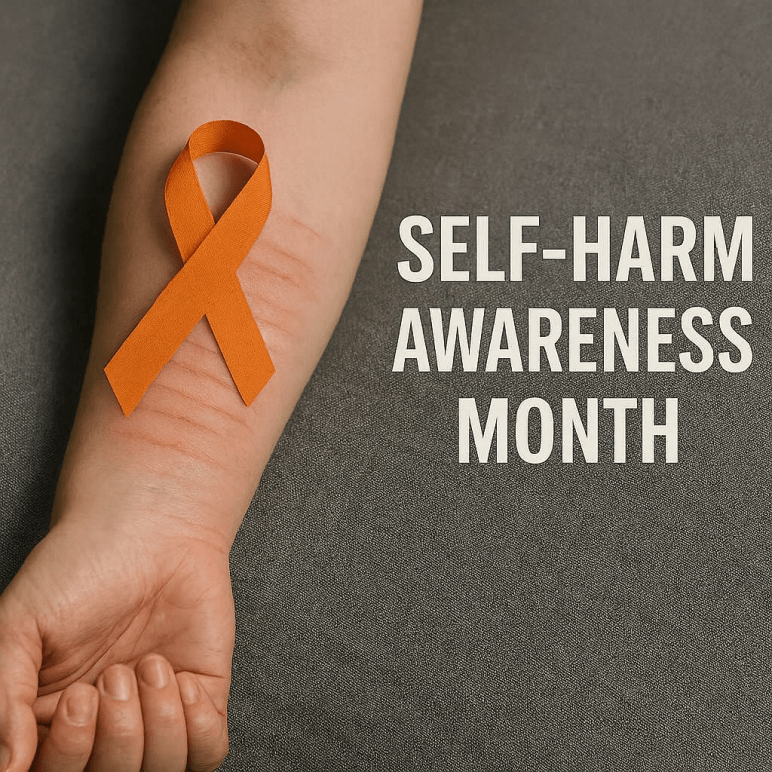
Self‑Harm Awareness Month: Where Growth Happens and My Nervous System Tries Its Best

“I didn’t choose the healing journey. The healing journey chose, dragged me and asked for gas money.”

-Unknown

Light the charcoal. Sprinkle the sage. Negative energy go away. It’s Self‑Harm Awareness Month, and if there’s one thing this month teaches us, it’s that healing is messy, sacred, and occasionally accompanied by a cat sitting on your chest like a furry emotional support paperweight.

Self‑harm is one of those topics people whisper about like it’s Voldemort, taxes, or the time they accidentally liked their ex’s Instagram post from 2014. But here? We talk about it with honesty, compassion, and the kind of humor that keeps us from spontaneously combusting. Self‑harm isn’t about attention. It’s about pain. And the people who say otherwise are usually the same ones who think essential oils can cure a broken femur.

Self‑harm doesn’t happen because someone is weak. It happens because someone is overwhelmed, hurting, or trying to survive emotions that feel too big for one body. It’s a coping mechanism. Not a character flaw. But the world loves to misunderstand what it doesn’t want to deal with. People will say things like, “Just think positive!,” “Have you tried yoga?,” “My cousin’s neighbor’s dog used to feel sad too.” Ma’am. Self‑harm is not cured by downward dog or inspirational throw pillows.

Let’s look at how the addiction occurs. The brain notices that shift and files it under: “This worked.” Not because it’s healthy. However, because it changed the emotional state quickly. The body reinforces it by sending a rush of endorphins, adrenaline, and dopamine. These chemicals temporarily reduce emotional pain or numbness. That relief, even if brief, can make the brain want to repeat the behavior. This is the same reinforcement loop seen in many addictions. Next, the cycle becomes automatic. And with overtime urgency , the brain starts linking stress → self‑harm, numbness → self‑harm, shame → self‑harm, and emotional overload → self‑harm. It becomes a reflex. A pattern, not a personality trait. A survival strategy, not a moral failing. And then shame strengthens the cycle. People who self‑harm often feel guilt, embarrassment, fear of being judged, or the pressure to hide. Those feelings can increase emotional distress. Which can then trigger the urge again. It becomes a loop that’s incredibly hard to break alone. And finally, it’s not about wanting to die. For many people, self‑harm is about wanting to feel something, wanting to feel less, wanting control, wanting relief, and wanting the emotional noise to stop. It’s a coping mechanism that becomes addictive because the pain underneath it is overwhelming. People don’t heal because they’re scolded. They heal because they’re understood.

What does help? Why don’t you try some compassion, support, safe conversations, professional care, people who don’t minimize your pain, and a community that refuses to let shame win. Some days you glide. Some days you wobble. Some days you crash into a display of discounted cereal and pretend it was part of your spiritual journey. Healing is allowed to be imperfect. You are allowed to be imperfect. You are allowed to take up space while you figure things out. “Keep going. Rest when you need to. And stop carrying pain alone.” You deserve support. You deserve compassion. You deserve to be here. And you deserve to heal without shame breathing down your neck like a judgmental church lady.

Self‑Harm Awareness Month isn’t about fear. It’s about understanding. It’s about breaking silence. It’s about reminding people they’re not alone. Not now, not ever. So, here’s to choosing growth even when it feels like a group project we didn’t sign up for, choosing compassion even when our patience is on backorder, choosing to stay when our brains are acting like and the whole system is like, “Ma’am, I was not built for this.”

Then light your sage, drink your water, moisturize your spirit, and strut into the rest of the month like a woman who has survived every plot twist life has thrown at her. Including the ones that arrived unannounced, barefoot, and holding a casserole of chaos. Because you’re still here. You’re still growing. And honestly? You’re doing better than half the people who think essential oils are a personality. 

And as we wrap up this emotional rollercoaster of a topic, complete with sage smoke, hydration, and my nervous system acting like it’s auditioning for a disaster movie. It is like trying to assemble IKEA furniture with no instructions, three missing screws, and a mysterious extra piece that definitely wasn’t in the box. I’ve also realized something important. And it is that healing is basically like trying to reboot a Wi‑Fi router from 2007. You unplug it, you wait, you pray, you bargain, you threaten it, you light a candle, and somehow it still blinks at you like, “Girl, I’m doing my best.” Same, router. 

Here’s to all of us out here choosing growth even when our brains are running on 3% battery. Choosing compassion even when our patience is on backorder. And choosing to keep going even when life feels like a Walmart parking lot at 2 a.m. You’re doing your best, you’re sweating, you’re questioning your life choices, and at some point you whisper, “If this thing collapses, I’m blaming Sweden.” Thanks for reading and remember, Healing is holy, humor is medicine, and you are too stubborn to give up now. But you keep going. Because that’s what we do. And if anyone tries to judge your healing journey, just smile sweetly and say, “Sweetheart, I’m busy becoming emotionally stable. I don’t have the bandwidth for your nonsense.” Thanks for reading! Get educated.

Affirmation: I honor my healing by choosing compassion over shame, boundaries over chaos, and growth over the nonsense that used to break me.

***Don’t forget to watch the video!***

#ThisPuzzledLife
Affirmations Of A Badass #1

“My affirmations are so powerful that even my self‑doubt takes notes.”

-Unknown

Light the charcoal. Sprinkle the sage. Negative energy go away. Today, we’re stepping into a sacred space of Affirmations of a Badass. This is where the vibes are strong, the confidence is loud, and the only thing fragile is your last excuse.

This isn’t your grandma’s affirmation circle. No one here is whispering “I am enough” while sipping chamomile tea and staring at a beige wall. This is the kind of affirmation practice where you look in the mirror. Hype yourself up like you’re about to perform at the Super Bowl halftime show. And remind your soul that you are the main character.

This is you hyping yourself up just enough to function like a semi‑responsible adult. It’s self‑talk that says:

  • “I can do hard things.”
  • “I deserve good things.”
  • “I am powerful, even if I’m also a hot mess.”
  • “I’m allowed to take up space without apologizing.”

Badass affirmations are about self‑belief, resilience, and getting out of your own way. They don’t put anyone else down. They don’t require an audience. They don’t demand worship. They’re basically emotional caffeine. And let’s be honest, in 2026, we Americans need our emotional bank accounts overflowing, not overdrawn.

And for those of us who’ve lived through trauma, our confidence wasn’t just shaken. It was bulldozed, set on fire, and then politely kicked into a ditch. So, It’s our responsibility to rebuild what was lost. Sometimes daily. Sometimes hourly. Sometimes between sips of coffee. That’s why we walk into every day like we own the place. Because honestly, at this point, the universe should probably be paying us rent.

My power is loud. My confidence spreads faster than gossip in a small town. And my energy refuses to shrink just because someone else forgot their sparkle. I am a badass in progress. A masterpiece in motion. And anyone who can’t handle that, can step to the side while I strut.

And no, before anyone gets confused, this is not narcissism. Narcissistic Personality Disorder is dangerous, not a vibe. It’s not confidence. It’s a fragile ego wrapped in glitter.

Narcissism says:

  • “I’m better than everyone.”
  • “Rules don’t apply to me.”
  • “If you don’t praise me, you’re wrong.”
  • “Your feelings are optional. Mine are mandatory.”

Narcissism needs constant validation, lacks empathy, and treats people like props in a one‑person show. It’s not empowerment. It’s entitlement.

Badass affirmations, on the other hand, kick the door open, hand you a metaphorical crown, and say, “Get up! We’ve got a world to set on fire.” Being a badass isn’t about perfection. It’s about showing up even when your hair looks like it’s been negotiating with humidity for three days straight. It’s about believing in yourself even when your brain is like, “Girl… really?” And it’s about knowing that beneath the chaos, the caffeine, the weed, and the questionable life choices, you are powerful, capable, and slightly unhinged in the best possible way. Now, take a deep breath. Center your spirit. And prepare your soul. We’re about to affirm the absolute hell out of ourselves.

The first affirmation for we badasses is this:

“I walk into every day like I own the place, because honestly… I do. My power is loud, my confidence is contagious, and my energy is too big to shrink for anyone. I am a badass in progress and a masterpiece at the same time.”

Translation: “I don’t just enter a room. I arrive like a dramatic wind gust that knocks over a plant and makes everyone wonder if they should applaud.” It’s the energy of someone who wakes up, looks in the mirror, and says, “Yes, I am the creator of my universe,” then immediately trips over their own shoe but recovers like it was part of the dance.

It’s the vibe of a person who walks into a retail giant like they’re the CEO and buys absolutely nothing they came for because their confidence whispered, “Do You Boo Boo!”

It’s the spiritual equivalent of wearing sunglasses indoors. Not because you need them. But because your aura is too bright for the general public. It’s the declaration of someone who is simultaneously building themselves, hyping themselves, and confusing everyone around them with their chaotic, unstoppable energy. Basically, you’re a masterpiece who occasionally forgets where you put your keys, but you do it with swagger.

And there you have it. Your first dose of “I’m unstoppable and mildly dangerous in a charming way.” If anyone doubts your power after this, simply slow‑blink at them like a cat who knows it owns the house. Because you do. You absolutely do.

Remember that being a badass isn’t about having it all together. It’s about walking into the day with confidence, resilience, and the kind of energy that makes people wonder what you know that they don’t. It’s about hyping yourself up even when life feels like a group project and you’re the only one doing the work. It’s about choosing yourself unapologetically.

Don’t worry. Rebuilding confidence is the state that I’ve been in for many years. It’s not instantaneous. It’s something that will require diligence, patience and perseverance even on days when you don’t want to. So go forth, you magnificent Tasmanian devil of chaos. Speak kindly to yourself. Strut like the universe belongs to you. And if all else fails, repeat after me: “I am a badass, and the world will adjust accordingly.” Thanks for reading! Now Manifest It.

Affirmation: I affirm my affirmations with such confidence that even my doubts are like, ‘Okay fine, she clearly means business.’

***Don’t forget to watch the video!***

#ThisPuzzledLife
Dear Abuser: 

I am the revolution you never expected.

Who am I?

I’ll tell you who I am.

I am the light you tried to strangle, the light you tried to stifle in your chokehold.

But my light bled all over the pages of your book, your preconceived narratives, your filthy words and your attempts to bring terror back into the blank space of my eyes.

Who am I?

I’ll tell you who I am.

I birthed revolution in my bones like the many women that came before me.

I ignited flames beneath my skin, using the fiery spirits of women who walked beside me

as matches; we breathed fire into each other’s hearts until the world could see us and from the ashes we were reborn.

Who am I?

I’ll tell you who I am.

I am the fear in your hatred, the pain that you tried to use to violate my sacred spaces, rip me apart until I was nothing,

but I knew I would always be something, somebody, and now I am.

I am layers and layers of the love and power that act as your kryptonite,

and with the words and actions of all those who rose with me, I’ll build an impenetrable wall.

Who am I?

I am the thing that nightmarish people have nightmares about,

wake up sweating about, thinking about —

their furrowed brows tense with self-doubt —

wondering if I and the other warriors I march with could ever come back to life.

Who am I?

I am the restless rebel you tried to bury,

the one you tried to pull out by the root and eradicate when she began to grow from the seed.

Who am I?

I’ll tell you who I am.

I am the girl you left for dead thinking she’d always fall and never rise again.

I am the girl you cut with your razor blade wrath, the girl you thought would never fight back.

I am the girl you underestimated, the woman you tormented, the child whose shackles you tightened.

Who am I?

I think you already know –

I think you understand.

I am the prisoner you tried to cage, the little girl you made afraid –

I am the woman who never gave up, the one who exposed your charade —

Who am I?

I am everything and anything that you will stand againstto try to regain control.

For every source of darkness, there is a bleeding soul,

one that shines so brightly that the entire war zone becomes illuminated.

I am the truth, your karma, the revolt —

I am the resistance, the pieces you tried to keep shattered, coming back together again.

I emerge quietly, but I resound loudly —reverberate through your skin.

My power was never yours, and it was never yours to take.

Who am I?

I am the second coming,

of everything and everyone 

you tried to break.

Shahida Arabi

#Thispuzzledlife

Domestic Violence: Why Didn’t They Just Leave?

“Trauma Bonding is like being a hostage who has developed an irrational affection for your captor. They can abuse you, torture you, even threaten to kill you, and you’ll remain inexplicably and disturbingly loyal.”

– Ann Clendening.

I posted this today to help give you a voice to your own abuser/abusers. I have been in therapy for many years, and sometimes, I even doubt these words. The problem is that we were so indoctrinated with their beliefs, comments, gas lighting, manipulation, and co-dependency that we formed a something called “trauma bonding.”

Trauma Bonding is an unhealthy emotional attachment that develops between a victim and their abuser. It is a complex issue that occurs in different abusive situations that include physical, sexual, and emotional abuse. But it’s also important to note that not everyone who goes through abuse forms a trauma bond. However, some people may be more prone to forming a trauma bond due to the early experiences as a form of repetition compulsion https://www.attachement project.com, 2025). This can happen in domestic abuse, child abuse, elder abuse, exploitative employment, kidnapping or hostage-taking, human trafficking, and religious extremism or cults (https://medical newstoday.com, 2023).

Characteristics of Trauma Bonding:

·        Intermittent Reinforcement: The abuser cycles between periods of abuse and kindness creating a sense of hope and dependence in the victim. Victims of abuse may be waiting for that next “feel-good moment” in the relationship that also keeps them trapped in a cycle of abuse and relief (https://www.domesticshelters.org, 2021).

v  This is also how many addictions keep you stuck. If everything were bad all of the time, you would grow tired and leave. But the intermittent reinforcement is how they maintain control.

·        Isolation: The abuser often isolates the victim from their support system, making them more vulnerable and reliant on the abuser ((https://medical newstoday.com, 2023).

v  I was not completely isolated physically from my support systems. But emotionally I was very isolated. He constantly told me that my friends and family didn’t have my best interest at hand. He would make up lies about things they said and assassinate their character behind their backs.

·        Fear and Insecurity: The victim experiences constant fear and insecurity, leading them to believe that they cannot escape the abusive situation (https://www.savantcare.com,2023).

v  The constant fear and insecurity that I experienced was, in fact, my prison cell. And I was afraid to leave even when the door was wide open.

·        Justification: The victim may rationalize the abuser’s actions or blame themselves for the abuse (https://thriveworks.com, 2024).

v  I was conditioned to believe that everything I did that made him angry was my fault. And it wasn’t. Now, I can see that his actions were because of his behavior, not mine.

·        Emotional Manipulation: The abuser uses emotional manipulation to control the victim’s thoughts, feelings, and behaviors (https://wondermind.com, 2023).

v  This right here was the #1 key factor for why I wouldn’t leave. He even told me, “No other man would ever put up with the things that I have to deal with in you. All of the good things about you, which aren’t many, are because of me. You are useless without me. I have given you everything you wanted. And disobeying me is the thanks that I get? Why do you need anti-depressants when there is no reason that you should be depressed.

Consequences of Trauma Bonding:

·        Difficulty leaving the abusive relationship.

·        Feelings of guilt, shame, and self-blame.

·        Low self-esteem and trust issues.

·        Mental health problems, such as depression, anxiety, and PTSD (https://www.savantcare.com,2023).

Trauma bonding kept me trapped in an abusive situation. People have said, “Why didn’t you just leave?” The problem lies in the way they you manipulate you into believing that everything bad that happens, no matter how minor, is the victim’s fault. And day after day, their hold strengths without you even realizing it. And in my case, I felt as though I was responsible for their thoughts and feelings. I constantly strived to be “good enough” or “well deserving enough” to see the person that he told and showed me he could be when we met. And quite frankly, it was always just a game. Their abusive self is “the real them.” Believe your instincts and the colors in which they present themselves. For that is who they truly are.

If you have read through this and have never been in a situation where everything you do is being controlled, consider yourself lucky. But don’t you dare sit there and say, “It was their own fault that they didn’t leave.” That is one of the most callous things that you can say to someone who is currently trying to survive and those that have survived finally leaving that situation no matter how long it took.

You have absolutely no right to tell me or anyone else how we should feel simply because you have not experienced it. I stayed much longer than I should’ve. And there are times when I still beat myself up for it. Now though, I give myself some grace for not knowing how to leave or recognizing what was going on in plain sight. It’s not just one event that causes this. It’s something that happens every single day methodically planned and executed by the warden in the relationship.

Once you leave, I highly recommend getting into therapy. Just because you think that no damage has occurred, doesn’t mean that it hasn’t happened. Even now, 19 years later since I left him, I have phobias, anxiety, depression, difficulty concentrating, and difficulty making decisions. He has left a mark that will last a lifetime. And some of the things that he did I’ll never recover from. He once told me, “You’ll never be without me no matter what you do!” And the truth is that, while he still doesn’t have total control over me, I still allow parts of him to live rent free in my head.

The next post will be something that represents those of us who have managed to leave and have an understanding through therapy how and where to put the responsibility where it truly belongs, on them.

To those who are still in these types of relationships, I see you even when you don’t openly identify yourself. To those who have left and still live in fear, I see you and you’re not alone. To those of us who continue to strive to change those hard-core beliefs that were instilled by way of threats, intimidation, and violence, I see you as well. None of you are alone. And not all relationships are like this. 

Find a therapist that you trust and open your soul to them. Coach has been a lifeline of compassion and understanding for me that I’ve rarely experienced. And she has never made fun of or questioned why I didn’t leave. Unconditional support and her teachings have made life possible for me many lonely nights. I will probably always struggle with some things and that’s ok. This process is certainly a marathon instead of a sprint. And there is no time limit for healing. The whole point is to continue showing up and moving forward in whatever way that might take shape. You are not on an island like you think. There are millions of us both male and female who struggle with the effects and consequences of domestic violence and abuse.

You are loved. You are wanted. And you deserve the good things that life has to offer. Thanks for reading! And I hope you look for the next blog in a couple of days that I post that will help you begin to find your voice. The power to heal is now and ours.

Affirmation: My story has power and inspiration through it.

***Don’t forget to watch the video!***

 #Thispuzzledlife

Types Of Domestic Violence: The Final Chapter

“Don’t play his game. Play yours.”

-Rachel Caine, Fall of Night (The Morgancille Campires, #41)

TECHNOLOGY-FACILITATED ABUSE

  • Monitoring text messages, phone records, social media activity, and internet search history.
  • Preventing or forbidding a person from owning or having access to a phone or computer.
  • Sending abusive messages through text, email, social media, or other online platforms.
  • Using technology to track a person’s movements without their permission.
  • Using technology to gather personal information about someone without their permission.
  • Accessing or ‘hacking’ a person’s online accounts without their permission.
  • Impersonating a person online.
  • Using technology to share personal and private images or videos without consent.

v  Luckily, social media and the internet were fairly new things at that time. However, once we separated, he was very threatened through email.

STALKING AND HARASSMENT

  • Following and watching someone, for example watching them from a parked car.

v  I was stalked constantly. And he even went as far as to sit outside my job for the entire shift to make sure I didn’t eat any food that he didn’t approve.

  • Using technology to monitor their movements; this is also called tech abuse.
  • Sending unwanted gifts to a person’s home or workplace.

v  This was done whenever the cycle rolled back around to “love bombing.” He always gave me gifts and the same speech. However, it would only take a couple of days until he was right back to the same thing starting with verbal and emotional abuse.

  • Repeatedly making unwanted contact through phone calls, text messages, emails, social media and other messaging or chat apps.
  • Turning up, uninvited, at the person’s home or workplace, or at social activities.

v  He would always justify his actions with some type of excuse for why he showed up. And he was always lying. He always had a more sinister reason.

  • Installing spyware on a person’s digital devices to get private information, or to secretly record or video them.

v  He and his brother went so far as to tap the phone lines at our house to monitor who I was having conversations with.

  • Using webcams and other forms of video surveillance without the person’s knowledge or consent.

REPRODUCTIVE ABUSE

  • Preventing a person from using birth control or forcing them to have unprotected sex.

v  This happened from the very beginning. I was lucky that I never got pregnant.

Abusers will justify and create new ways of cruelty covered with beautiful paper and a beautiful bow. And to unsuspecting victims, they have no idea what kind of damage is done until many years down the road, if and when they get out and into therapy emphasising on  “deprogramming.” For years, I’ve questioned if what I experienced was true. And that’s the precipous of their game. They teach you how to doubt your own reality,

I left that horrible 14-year relationship, in 2006, battered and broken. Many of the wounds are still evident, and others are in various stages of healing. What I don’t need a degree to diagnose is how deep some of the wounds run. Being conditioned to be someone who you aren’t. And the constant walking on eggshells still wreaks havoc on my nervous system. And I still get overwhelmed  to the point of not being able to make everyday decisions that most take for granted.

What is unseen benefit? For a long time, I never knew the answer to that question. What I did learn was different aspects of human behavior and their “red flags.” Not just physical. But also verbal. I watch how they talk about their other friends and family. I watch non-verbal cues. I watch how they are on both good and bad days. I watch how they communicate. I watch how superficial they are and their intentions. I watch to see, in what ways, they poke fun at another person. Are they being silly or cruel? I watch to see if my needs are considered or is it just “lip service?” But above all, I watch for congruency. I watch behavior with a fine-toothed comb. And for the most part, if I sense that something is off, I’m out. Most of the time, I have to watch them for a little while before deciding about whether or not to end a relationship.

I now listen to my gut. Something that I rarely ever did because he made every decision. And I do mean every decision. My master’s degree never taught me to listen to my gut. Surviving cruelty did. I know what I see. I know what I experience. And your validation is not needed. Thanks for reading! And reach out for HOPE.

Affirmation: I deserve peace.

***Don’t forget to watch the video!***

#Thispuzzledlife

Breast Cancer Awareness Month

“You are not alone. We are in this together.”

-Breast Cancer Research Foundation

Light the charcoal. Sprinkle the sage. Negative energy go away. Today, I want to talk to you about breast cancer. By now you have been affected by breast cancer either directly or indirectly. In this blog, I will reiterate some of what is already known about this disease that stills so many lives. As well as some of the perplexing aspects that we don’t know yet.

As an 8th grader, the reality of breast cancer and its dangers hit me hard as I saw my grandmother struggle every day without any complaints. I know, it’s another moment courtesy of that year. And as if there wasn’t plenty of other things to deal with. As someone who used to be deeply connect with my family, this reality was a little too harsh for me. Many nights I would cry myself to sleep as everyone else said, “Don’t worry about things that haven’t happened.” However, as a child, I worried about everything including people dying that I loved. That year I don’t remember not being scared for even one minute. And today, my nervous system continues to believe that we are still there. It is what it is, I guess.

Let us look at some of the things that we do know about breast cancer:

§  Breast cancer doesn’t always appear as a lump. Other symptoms include swelling, redness, nipple changes, and nipple discharge.

§  Drinking alcohol can increase your breast cancer risk.

§  You don’t need to learn how to do a breast exam. Research  indicates that monthly self-exam isn’t necessary (www.mdanderson.org, 2025).

§  In 2025, estimated 316,950 new cases of invasive breast cancer will be diagnosed. As well as 59, 080 new cases of non-invasive breast cancer.

§  Currently 4 million breast cancer survivors

§  Estimated 42,170 U.S. women will die from breast cancer this year.

§  Risk of recurrence depends on the type and staging of the initial breast cancer.

§  1 in 8 women in the U.S. will develop breast cancer in their lifetime.

§  Most common cancer in American women.

§  The average age of U.S. women diagnosed is 62 years old.

§  About 9% of all new cases in the U.S. are diagnosed in women younger than 45 years old.

§  Younger people under the age of 35 who are diagnosed face a higher risk of recurrence.

§  Black women are 40% more likely to die from breast cancer than white women.

§  Black women have the lowest 5-year relative breast cancer survival rate of any racial or ethnic group.

§  1 in 5 black women are diagnosed with triple-negative breast cancer, which is more difficult to treat.

§  Hispanic women have a 20% lower incidence rate of breast cancer than any other  group.

§  Asian and Pacific Islander women are more likely to be diagnosed with localized breast cancer.

§  They also have the lowest death rate from breast cancer.

§  American Indian and Alaskan Native women have the lowest rate of developing breast cancer.

§  Chinese and Japanese women have the highest breast cancer survival rates.

§  In 2025, an estimated 2,8000 men will be diagnosed with invasive breast cancer in the U.S.

§  Estimated 510 U.S men will die from breast cancer in 2025.

§  1 in 726 men in the U.S. will develop breast cancer.

§  Black men with breast cancer tend to have worse prognosis (www.nationalbreastcancer.org, 2025).

What is not currently known about breast cancer?

§   Genetic Mutations like BRCA1/BRCA2 increased risk, only account for a very small percentage of breast cancers. Which means approximately 80-90% are unknown.

§  Reasons for high mortality rate in African American women is still being investigated.

§  While dense breasts are a factor, there’s more needed research to understand the underlying mechanisms.

§  Symptoms like nipple inversion, skin dimpling, and changes in nipple or breast skin texture, can delay diagnosis and treatment.

§  Although knowing about breast cancer in men, the cause and treatment are not as well-understood with diagnosis and treatment being delayed.

§  Environmental factors are suspected and are still being explored (www.fomatmedical.com, 2023).

Affirmation: Hope is on my side.

***Don’t forget to watch the video!***

#Thispuzzledlife

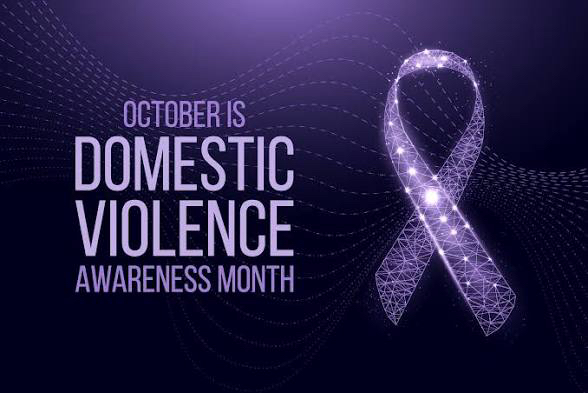
National Domestic Violence Awareness Month

“Never stop fighting for your freedom, you are worth it.”

-DA Survivor-Anon

Light the charcoal. Sprinkle the sage. Negativity energy, go away. Today is the beginning of Domestic Violence Awareness Month. This month is when our voices from all over the globe will be heard. We as victims, survivors and warriors bring to light the horrors of domestic violence and the impact that it leaves on our lives and those around us. Let’s take time out for a little education on a few of the topics surrounding domestic violence.

Domestic Violence is a topic that I know a lot about. Well, I know how to function in it. And I know how to get away from it. But living with the aftereffects reveal a whole other set of problems. Where domestic violence used to be seen as something that only happens to women and their partners. There is more awareness on the abuse of men by their partners. No matter how you identify. It also happens to the most innocent, children and pets. This happens in all forms of relationships. And the statistics are staggering.

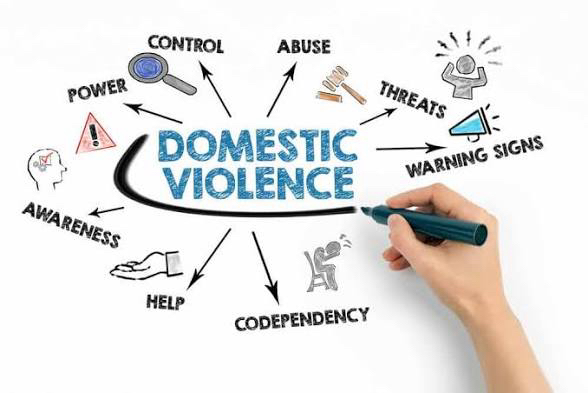
Domestic violence is violence committed by someone in the victim’s domestic circle. Which include partners and ex-partners, immediate family members, and other relatives and family friends (https://www.UN.org, 2025). The behaviors can include such things as:

·        Physical

·        Sexual

·        Emotional

·        Financial

·        Psychological actions or threats of actions that influence another person.

This includes any behavior that intimidate, manipulate, humiliate, isolate, frighten, terrorize, coerce, threaten, blame, hurt, injure, or wound someone. The repetitive exposure to violence teaches children that violence is a normal way of life (https://dvcc.delaware.gov, 2025). And for those of us who leave, constant confusion and every minute of no knowing when something else will happen again, is our normal. And the many years of programming by our abusers takes years of therapy to de-program ourselves. But you will never be who you used to be.

Recovery is not for the faint of heart. It is hard and uncomfortable. And it takes years to undo the damage that was caused on so many levels. I was one of the lucky ones. Long story short, I survived. But the mental damage that was caused has left me crippled in some ways. And through the sleepless nights filled with tears, therapy, psychiatric medications, body memories, flashbacks, phobias, and panic attacks, I have learned that I have a voice that deserves to be heard. And no matter what people say or believe, I can validate my own story regardless of the opinions of others. Because I lived it. 

The main thing I want to say to other women and men across the globe who are still in their own processes, “YOU ARE NOT ALONE!” Because it happened to me too. Thanks for reading! Keep smiling and pushing forward.

Affirmation: My light shines even in the dark.

***Don’t forget to watch the video!***

#Thispuzzledlife

SUICDE AWARENESS AND PREVENTION GROUPS PART 2

“I had gotten to the point where I was suicidal every day for six straight years…On that day, I made a choice. The choice to live, the choice to get better for me.”

-Justin

Light the charcoal. Sprinkle the sage. Negative energy, go away. Today, I want to tell you about a couple more suicide awareness and prevention groups. I wish I could cover them all. Unfortunately, there are just way too many. Please familiarize yourself and those you love and are affected.

Stop Soldier Suicide 

This is the only national nonprofit focused on solving the issue of suicide among U.S. veterans and service members. They have an aggressive goal of reducing the suicide rate by 40% by 2030. Veterans are at a 58% higher risk of suicide than those who haven’t served.

Other statistics about veteran suicide:

·       6,407 veteran suicides in 2022.

·       22 consecutive years with 6000+ veteran suicides.

·       140K+ veterans have died by suicide since 2001.

·       Second leading cause of death in veterans under age 45.

·       The rate of veteran firearm suicide has increased by 65%.

·       The suicide rate among veterans ages 18-34 has more than doubled.

·       Western states have experienced the greatest increase in veteran suicide rate, increasing by 55%.

·       31% Depending on branch, up to 31% of service members develop PTSD after returning from combat.

·       7x the rated of suicide for veterans in the LGBTQ+ community is up 7x higher that for non-LGBTQ+ veterans.

The organization’s impact on veteran suicide.

·       90%+ of our most at-risk clients completed a crisis response plan in 2023, giving them tools and resources to cope in moments of crisis.

·       73% of clients experienced a decrease in thoughts of suicide over the course of treatment.

·       92% of clients who were meaningfully engaged in our care showed some improvement in mental wellbeing by the end of treatment (www.stopsoldiersuicide.org, 2025).

The Trevor Project

The Trevor Project was founded in August 1998 by the creators, James Lecesne, Peggy Rajski, and Randy Stone, of the Academy Award-winning short film “Trevor.” The film was about a gay teen who attempted suicide. The filmmakers then established a crisis hotline for LGBTQ+ youth after realizing that there was not a resource available. They have since expanded services to include text and chat support and resources for parents, schools and others seeking support for LGBTQ+ support (https://obamawhitehouse.archives.gov, 2025).

Crisis Services: Providing counseling support services for LGBTQ+ young people 24/7 all year around.

Peer Support: Providing  an affirming international community for LGBTQ+ youth.

Advocacy: Working to change hearts, minds, and laws in support of LGBTQ+ lives.

Research: We conduct research studies to equip policymakers and other LGBTQ+ youth providing professionals.

The Mission

To end suicide among LGBTQ+ youth by providing crisis support, suicide prevention resources, and educational programs (www.thetrevorproject.org, 2025).

Thanks again for reading. The more education and resources we can provide each other with, the better the outcomes for us all. Please pass this information along to anyone who could benefit. I am one of those who suicide has affected my life in epic proportions. I am also one who continues to fight for understanding and compassion in a world that is lacking.

Affirmation: I am not alone, and others care about me.

***Don’t forget to watch the video!***

#Thispuzzledlife

Suicide Awareness And Prevention Groups

“Grit your teeth and let it hurt. Don’t deny it. Don’t be overwhelmed by it. It will not last forever.”

-Harold Kushner

Light the charcoal. Sprinkle the sage. Negative energy go away. Keeping in line with suicide awareness, I thought I would talk about a couple of groups that reflect awareness and prevention. There are so many groups out there that stay along these same lines. And I wish that I could spotlight them all.

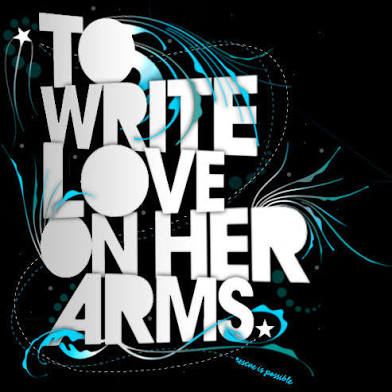
To Write Love On Her Arms

This group is a nonprofit group dedicated to presenting hope and finding help for people struggling with depression, addiction, self-injury, and suicide. Jamie Tworkowski set out only to help a friend and to tell her story. When he met Renee Yohe, she was struggling with addiction, self-injury, and suicidal thoughts. He wrote about spending five days with her prior to her entering a treatment facility. And he began selling t-shirts to help fund her treatment by posting them on Myspace. Soon people from all over the world began contacting him and telling him about their struggles and heartbreaks. And in 2007, TWLOHA became an official organization. 

Here are some numbers associated with their organization:

·       210,000 messages from individuals in over 100 countries.

·       3.8 million miles have been traveled to meet people in their communities.

·       1,100+ blog posts and launched a podcast.

·       56,000 find help tool searches.

·       27,000 fulfilled merch orders

·       $3 million donated to treatment and recovery.

WE BELIEVE:

You were created to love and be loved.

People need other people.

Your story is important.

Better days are ahead.

Hope and help are real.

(www.twloha.com, 2025).

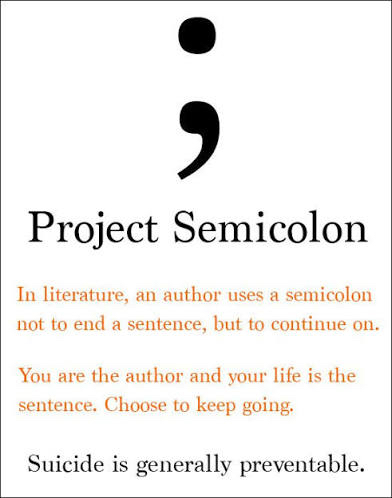
The Semicolon Project

It is an online community that began in 2013, when Amy Bleuel created it to honor her father, who died by suicide. The organization centers around mental health awareness and suicide prevention. The World Health Organization (WHO) reports a 25% increase in anxiety and depression during the first year of COVID-19. That combined with the nation’s political instability characterized by protectionism and unilateralism has led to strained international relations. And the stress funnels down to our families and personal stories. 

The semicolon represents a continuance of life where a period could have easily ended the story. There have currently been over 89,000 assessments completed. 5,336 journal entries shared. And have provided direct support to 214 individuals. Semicolon badges in Apex Legends and Call of Duty has reached over 1.3 million gamers and additionally 50 new chapters. And 84% of Project Semicolon members report that the organization has saved with lives in times of crisis (www.projectsemicolon.com, 2025). 

Mission Statement

Our mission is to empower individuals with mental health experiences to embrace their journey and recognize that their story is far from over.

I hope that you can take something from this information. Please take what you can use and leave the rest. And please pass along the information to someone who can benefit. Even if that someone is you. Keep smiling! And do not be afraid to reach out for help.

Affirmation: There are other ways to end my pain, even if I cannot see them right now.

***Don’t forget to watch the video!***

#Thispuzzledlife

LGBTQ+ And Suicide

“Our country is grappling with a youth mental health crisis, and it is particularly pronounced for LGBTQ+ youth.”

-Ronita Nath

 Light the charcoal. Sprinkle the sage. Negative energy, go away. Today, keeping in line with the topic of suicide, I want to discuss suicide in the LGBTQ+ community. 

The prevalence of suicide in the LGBTQ+ community is nothing new. The risk for suicide attempts and suicidal ideation can be 3 to 6 times greater for lesbian, gay and bisexual adults according to the National Institutes of Health. But there are also other statistics to keep in mind.

In 2024, 39% of LGBTQ+ youth considered attempting suicide according to The Trevor Project’s national survey. 1 in 10 of LGBTQ+ youth attempted suicide in the past year. And LGBTQ+ youth are more than four times likely to attempt compared to heterosexual youth. I can tell you that personally, I’ve been suicidal many times because of rejection from my family as a lesbian woman.

Transgender and Nonbinary identified individuals are at an even higher rate of suicide. And almost half seriously considered suicide in the past year. In 2022, 80% of transgender people had considered suicide and 40% had attempted. These statistics while staggering are not surprising. These demographic struggles are way more than they should be with little compassion from society.

Bisexual identified individuals are 1.5 times more likely to report thoughts and attempts compared to gay and lesbian individuals. And 2.98 times more likely to have  a suicide-related event compared to heterosexuals according to a 2022 study. And  the LGBTQ+ youth of color report higher rates of suicidal ideation and attempts compared to white peers (www.therevorproject.org, 2025). And there are several contributing factors such as:

·        Discrimination and Prejudice:discrimination, harassment and violence due to sexual orientation or gender identity increases the risk of suicide.

·        Lack of Support Systems: Limited social support from family, peers and community exacerbates the mental health challenges. 

·        Mental Health Disparities: LGBTQ+ individuals are more likely to experience depression and may face barriers to accessing mental health services (https://mhanational.org, 2025).

For someone who is a member of the LGBTQ+ community, I can tell you that I’ve considered suicide many times. The rejection from family and friends are sometimes more than I can bare. And having worked with someone in therapy many years ago, who was not sensitive to the needs of someone in these communities, there was little progress made. Mainly, because I couldn’t trust her. And she was extremely judgmental.

Since collaborating with coach for almost a decade, I can tell you that I have been able to fully accept the fact that I’m gay, despite my family’s disapproval. And then the religious communities also seem to greet us with bible verses telling how many ways we are going to hell. We all know that “choosing” to be gay is such an easier way of life. There the secret is out. 

With the current political administration taking away the rights and freedoms that the Stonewall riots stood against, and the lack of funding for suicide hotlines for LGBTQ+ youth, these rates will only climb. Our families, friends, churches, and government should be ashamed of standing by people who are ok with the policies set in place. We are the same as we ever were. We just wear rainbows now. 

There are those beautiful allies out there who remain the strength and backbone of our continual fight for equality. We are youth, parents, aunts, uncles, cousins, husband, and wives who just want to be recognized as equals in the eyes of the law. But where reputations and political agendas are from the far right, we must be even more solidified as a community. If someone is for rights with some and not others, I have no room for them in my life. But it’s taken me years to come to this conclusion. 

Is it lonely? At times, yes. However, I want people in my life who not only support me but also my friends. The suicide hotline is something that our community not only wants but needs. Many of us have non-supporting families and mine is no different. But I do have a place to live currently. But that does not constitute me putting up with homophobia or fragile masculinity and femininity.

The very few “true” friends I have, understand that being gay is not a “choice.” It’s who I am. And if that’s too much for someone to manage, that’s just too damn bad. To my fellow allies and community members, keep up the good fight. We must take up the original Pride flag are carry on. I love our colors. And I’m proud to call myself a member of the LGBTQ+ community.

Keep smiling. Keep shining. Knowing you can always count on me, for sure. That’s what friends are for. We are seen. And we are heard. And….WE ARE FABULOUS! Thanks for reading. Take what you can use and leave the rest.

Affirmation: I am proud of myself and will continue to strive to do well.

***Don’t forget to watch the video!***

#Thispuzzledlife