
This Puzzled Life is a mental health and recovery blog exploring addiction, trauma healing, LGBTQ experiences, humor, and the strange moments that shape us.
“I think America’s view on weed is ridiculous. If everyone smoked weed, the world would be a better place.”
-Kirsten Dunst
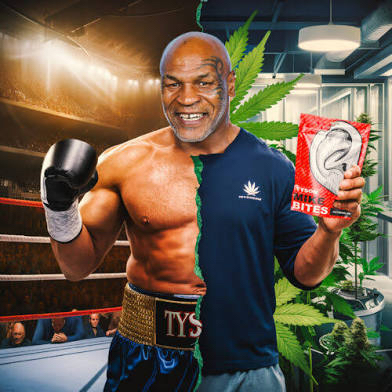
Light the charcoal. Sprinkle the sage. Negative energy go away. Today, I’m going to review strains that go along with Domestic Violence Awareness. Don’t get offended by the names of the products. This strain is called Mike Tyson Knockout 2.0. And boy does it have power in its makeup.
The name itself is one that fits this strain perfectly. It is also known as “Mike Tyson” and “Mike Tyson OG.” The exact lineage is unknown. However, I can tell you that this strain is dank and powerful. If I were to describe the odor of this strain. It is STANKY! It’s got aromas of diesel, pungent and skunky.
The dominant terpene is myrcene which arrests pain at its origin. And the side effects are sleepy, happy and hungry. This is a strain for experienced consumers. This strain won’t “couch lock” you. It will bury you under the couch. And does wonders for chronic pain and insomnia. This strain will hit you with a 1-2 punch. Make sure you have nothing that needs to be done for a couple of hours after toking. Thanks for reading! Keep Smiling. Keep Laughing. And keep blazing!
Affirmation: I am sativa happy and indica relaxed.
“An abuser can seem emotionally needy. You can get caught in a trap of catering to him, trying to fill a bottomless pit. But he’s not so much needy as entitled, so no matter how much you give him, it will never be enough. He will just keep producing more demands because he believes his needs are your responsibility, until you feel drained down to nothing.”
-Lundy Bancroft, Why Does He Do That? Inside the Minds of Angry and Controlling Men
Light the charcoal. Sprinkle the sage. Negative energy go away. Today I want to go over more types of domestic violence. I know that this topic is not an easy one to face. However, domestic abuse occurs in more homes than you realize. Maybe in your own home.
VERBAL ABUSE
· Ridiculing or humiliating someone.
v If he were alive and breathing, this would happen from the time I woke up until the time I went to bed.
· Criticizing their appearance, intelligence, sexuality, religious beliefs, or ethnicity.
v This happened all the time. I was constantly told that I was dumb and retarded.
· Criticizing their actions as a partner or parent.
v All day and every day. The worst was at night and on the weekends. I got blamed for his bad golf game. He had this idea that he was Tiger Woods. And he very clearly wasn’t. But it was always because of something I did that made him play bad. In reality, he just sucks at the game.
· Using cruel or abusive nicknames.
v He and his brother always had cruel nicknames for me.
· Swearing at someone.
v Most people cuss when they get mad. However, he and his brother were relentless in their attacks.
· Yelling or screaming at someone.
v Again, I think that a certain amount would be considered normal. However, screaming and hollering at me for everything little thing was how they both operated.
SOCIAL ABUSE
· Stopping someone from seeing or contacting their friends and family.
v He didn’t physically stop me. However, it was very clear that I was not leaving the house without specific information about where I was going and what I was doing. And if that wasn’t what he wanted, I was told not to go at all.
· Stopping someone from going to social or community activities.
v Unless he went with me, I was told, “No. You don’t need to go do that.”
· Preventing someone from having contact with people who speak their language or share their culture.
· Making someone move away from friends, family, or work opportunities.
· Controlling a person’s use of phone or computers.
v On more than one occasion, when I went to call for help from police, he would unplug the phone so that I couldn’t use it.
· Checking or stopping their mail, phone calls, text messages, emails, social media and other messaging or chat apps.
v Luckily, there was not much of this that was available at the time. There was barely internet, and I better not have an email address. I had a Nokia cellphone which he checked constantly.
· Telling lies or spreading false information to damage a person’s reputation.
v This happened all the time. Especially when he talked to his family. The smear campaign was always in action.
· Using someone’s intersex status, sexuality, gender expression, transgender, or HIV status against them.
v He never knew that I was a lesbian. Hell, why would I tell him when the violence was bad enough.
· Forced marriage
v The day of my wedding, I knew that I was making the biggest mistake of my life. I was frozen with fear. But it was what he continually pushed for marriage. And I eventually gave in. Biggest mistake of my life!
· Stalking
v This happened every single day. If it wasn’t him, it was his friends and family who did the stalking. At the end of the day, I was questioned about everything that I had done and was told, “Well, what about when you were walking around in that store.” He knew every move that I made. It even got so bad that he knew what I had eaten during the day.
SPIRITUAL, RELIGIOUS OR CULTURAL ABUSE
Preventing someone from practicing and being connected to their culture.
Stopping someone from going to their place of worship.
Stopping someone from having contact with other people who share their beliefs.
Stopping someone from celebrating days of cultural or spiritual significance.
Stopping someone from sharing their beliefs and traditions with their children.
Stopping someone who is Aboriginal or Torres Strait Islander from returning to Country or having contact with kin.
Stopping someone who has family connections outside Australia from visiting or connecting with family or community overseas.
Ridiculing someone’s beliefs or traditions.
Forcing someone to do things that are against their beliefs, like eating certain foods or wearing certain clothes.
Forcing someone to marry.
The pressure was definitely applied when I was undecided.
Forcing someone to take part in spiritual practices in which they don’t believe.
Forcing someone to raise their children according to beliefs they don’t agree with.
Using or claiming to use spiritual or religious beliefs:
as an excuse for violence or abuse.
to pressure someone into staying in a relationship.
Let me just say this about him and his spiritual practices. He always went through the motions and played the part. He even pretended to get “saved” and was baptized. However, that was as far as it went. Because when we got home the abuse continued to happen. But now he had a Bible to justify his actions.
Thanks again for reading! I hope I was able to share a little lighter on the subject of domestic violence. There is help and hope after abuse. Reach out for the love and respect that you deserve. Keep moving forward!
“If you aren’t silent about your pain, they’ll kill you and say you enjoyed it.”
-Zora Neale Hurston
Light the charcoal. Sprinkle the sage. Negative energy go away. Today, I want to talk to you about some of the behaviors that fit under the umbrella of domestic violence. It wasn’t until I was out of the relationship for a while before I began to see information validating what I always knew. This is not comprehensive list by any means.
COERCIVE CONTROL OR CONTROLLING BEHAVIOR
· Control who a person sees, wears and where they go.
v This was considered normal in my relationship. He dictated everything that I wore. If I chose what I wanted to wear, he would tell me to, “go change. You look ridiculous.” And I was afraid to go somewhere without asking his permission.
· Monitor or track what a person does.
v This was also something that was done on a daily basis. He would call me wherever I was supposed to be and verify it by employees.
· Control a person’s finances, medicine, food, or exercise.
v He always told me that I was not allowed food that he didn’t approve. And I was required to be at the gym at 5:30 am every morning. And he would call and speak with those employees about what type of exercise I was doing. I was also not allowed to spend any money without permission.
· Force someone to have sex or do sexual things.
v I was never given the option to make that choice. I was threatened if I even spoke about that.
PHYSICAL VIOLENCE
· Hitting, punching, kicking, bashing, shoving, or pushing.
Thishappened more times than I can count. He did kick me in the face. But when he and his brother teamed up together, it was worse. The main reason is because my husband didn’t want to say that he participated. And because they always threatened and intimidated me into silence, I never said anything. His brother was his “yes man.” And my husband pulled the strings.
· Spitting on someone or pulling hair.
· Choking or suffocating.
v This typically happened during forced sex. Or whenever his brother would get mad at me, he would choke me as a form of intimidation.
· Throwing things at or near someone.
· Using a weapon.
v This was always pointed at me or laid out somewhere as a form of threats and intimidation.
· Locking someone in or out of space.
v This was often done to show control.
· Stopping someone from eating, sleeping, or having medication they need.
v Every piece of food had to be given an account. One of his favorite things he would allow me to have for a snack was ten olives and ten pistachios. He would come home from work and completely berate me if I weren’t already up. And it didn’t matter that I had just worked a 24-48 shift. He always told me that medication was a crutch. He got mad because I had been given muscle relaxers for a hurt back and proceeded to kick me in the face and throw my medication out into the rain. I was also not allowed to take any psychiatric meds for depression or mood stabilization because, “why do you need anti-depressants when I’m so good to you? And what if someone finds out that you’re taking this? I don’t want anyone knowing that my wife is crazy. Then it makes me look bad. Why don’t you care about that?”
· Forcing someone to drink or take drugs.
v I did this on my own to help deal with being under his crazy world of control.
SEXUAL VIOLENCE
· Touching or kissing someone without their consent.
v I was made to accept his advances.
· Pressuring or forcing someone to have sex or do something sexual without their consent.
v I was told, “Either you give it to me, or I’ll take it. Either way, I’m getting what I want. Make your decision.” Many times, I was bruised or bleeding by the time he was done with me. I had no voice in any matter. He was the “warden,” and I was his “prisoner.” My whole sexual relationship with him was simply RAPE.
· Pressuring or forcing someone to have sex without protection such as a condom.
v I was told early on, “I’m not using protection because it burns my dick. If you really loved me, you wouldn’t put stipulations on how I fuck you.”
*I know this is explicit. However, I want you to get an accurate description of the situation.*
IMAGE-BASED ABUSE
· Sharing private images of a person without their consent, for example images of them undressing or showering.
· Sharing culturally inappropriate images of a person, for example images in which they do not wear items of clothing that they would normally wear in public.
· Sharing intimate or sexualized images of a person without their consent.
· Producing and sharing images that have been digitally altered to suggest a person is nude or engaged in sexual activity.
· Threatening to do any of these things.
*I found out later on that his brother would secretly be filming or watching us having sex.*
EMOTIONAL OR PSYCHOLOGICAL ABUSE
· Criticizing a person and their choices or actions.
v In his mind, he thought that I was too stupid to make decisions that were considered “correct.” All he ever told me what how stupid and retarded I was.
· Isolating a person form their friends or their family.
v Some friendships I lost forever because they just thought that I abandoned them. What they failed to see was that I would get accused of all kinds of stuff if I disobeyed him. Those who have never been in an abusive situation can’t comprehend losing your power to stand up for yourself. It was just easier to do what he said. Some former friends haven’t even talked to me since that time. And that is about them not me.
· Threatening to harm a person, their family, their friends, their pets, or their belongings.
v He always made threats about things he would and could do with keepsakes or my innocent animals. And if he and his brother didn’t feel that I was getting the picture, they would show up at my parents’ house and start harassing them.
This topic will be spread over a few blogs. As you can see, when I add personal experience, the blog gets much longer. Stay patient and learn from this. It’s a hell that most people can’t understand. And I’m telling you that it’s all true. I was living in a prison without visible bars. Thanks for reading! And watch for the second part in the coming days.
Affirmation: I remember that it is ok to ask for help and receive support.
Light the charcoal. Sprinkle the sage. Negative energy go away. Today, I want to talk to you about breast cancer. By now you have been affected by breast cancer either directly or indirectly. In this blog, I will reiterate some of what is already known about this disease that stills so many lives. As well as some of the perplexing aspects that we don’t know yet.
As an 8th grader, the reality of breast cancer and its dangers hit me hard as I saw my grandmother struggle every day without any complaints. I know, it’s another moment courtesy of that year. And as if there wasn’t plenty of other things to deal with. As someone who used to be deeply connect with my family, this reality was a little too harsh for me. Many nights I would cry myself to sleep as everyone else said, “Don’t worry about things that haven’t happened.” However, as a child, I worried about everything including people dying that I loved. That year I don’t remember not being scared for even one minute. And today, my nervous system continues to believe that we are still there. It is what it is, I guess.
Let us look at some of the things that we do know about breast cancer:
§ Breast cancer doesn’t always appear as a lump. Other symptoms include swelling, redness, nipple changes, and nipple discharge.
§ Drinking alcohol can increase your breast cancer risk.
§ You don’t need to learn how to do a breast exam. Research indicates that monthly self-exam isn’t necessary (www.mdanderson.org, 2025).
§ In 2025, estimated 316,950 new cases of invasive breast cancer will be diagnosed. As well as 59, 080 new cases of non-invasive breast cancer.
§ Currently 4 million breast cancer survivors
§ Estimated 42,170 U.S. women will die from breast cancer this year.
§ Risk of recurrence depends on the type and staging of the initial breast cancer.
§ 1 in 8 women in the U.S. will develop breast cancer in their lifetime.
§ Most common cancer in American women.
§ The average age of U.S. women diagnosed is 62 years old.
§ About 9% of all new cases in the U.S. are diagnosed in women younger than 45 years old.
§ Younger people under the age of 35 who are diagnosed face a higher risk of recurrence.
§ Black women are 40% more likely to die from breast cancer than white women.
§ Black women have the lowest 5-year relative breast cancer survival rate of any racial or ethnic group.
§ 1 in 5 black women are diagnosed with triple-negative breast cancer, which is more difficult to treat.
§ Hispanic women have a 20% lower incidence rate of breast cancer than any other group.
§ Asian and Pacific Islander women are more likely to be diagnosed with localized breast cancer.
§ They also have the lowest death rate from breast cancer.
§ American Indian and Alaskan Native women have the lowest rate of developing breast cancer.
§ Chinese and Japanese women have the highest breast cancer survival rates.
§ In 2025, an estimated 2,8000 men will be diagnosed with invasive breast cancer in the U.S.
§ Estimated 510 U.S men will die from breast cancer in 2025.
§ 1 in 726 men in the U.S. will develop breast cancer.
§ Genetic Mutations like BRCA1/BRCA2 increased risk, only account for a very small percentage of breast cancers. Which means approximately 80-90% are unknown.
§ Reasons for high mortality rate in African American women is still being investigated.
§ While dense breasts are a factor, there’s more needed research to understand the underlying mechanisms.
§ Symptoms like nipple inversion, skin dimpling, and changes in nipple or breast skin texture, can delay diagnosis and treatment.
§ Although knowing about breast cancer in men, the cause and treatment are not as well-understood with diagnosis and treatment being delayed.
§ Environmental factors are suspected and are still being explored (www.fomatmedical.com, 2023).
“Leaving is so hard because your confidence is destroyed. You feel trapped.”
-Unknown
Light the charcoal. Sprinkle the sage. Negative energy go away. Today, I want to talk to you about some common misconceptions about domestic violence. Sit tight. These myths and truths will help to dispel some of the things that you might have been told.
1. Myth: Domestic abuse is a “family matter” and the community should not interfere.
Fact: Domestic abuse is against the law making it everyone’s business.
2. Myth: Domestic abuse affects only a small percentage of the population.
Fact: One-third of American women report being physically or sexually abused by a partner.
3. Myth: Only men abuse women.
Fact: Statistics show that 85% of domestic abuse victims are women and 95% of perpetrators are men. However, men are abused by women also. And the rate of Gay, Lesbian, Bisexual and Transgender communities are at the same rate as heterosexual relationships.
4. Myth: Only low-income families and minorities experience domestic abuse.
Fact: Domestic abuse in every area of society. Most previously recorded statistics are skewed due to the numbers coming from public agencies, city hospitals, police departments, social service agencies, and the courts.
5. Myth: Abusers are violent in all their relationships.
Fact: Most abusers are only abusive to a targeted intimate partner. Some abusers are successful in their professions and are very charming. And this is how they maintain power and control. This was how my ex-husband introduced himself. In front of people, he appealed to many. It was once we were not in front of people that the abuse occurred.
6. Myth: Domestic abuse is caused by mental illness.
Fact: Personality disorders, mental illness, poor impulse control, and generational abuse do not cause domestic abuse. Even in cases where a particular mental illness may cause a person to be abusive, the abuse is not specifically targeted at one person but to everyone around during the episode.
7. Myth: Domestic abuse is caused by drugs and alcohol use.
Fact: Where drugs and alcohol are often associated with domestic abuse, they do not cause the violence. My ex-husband never used drugs and alcohol. He was just mean and very controlling.
8. Myth: Abusers are violent because they cannot control their anger and frustration.
Fact: Abusers use anger as an excuse to rationalize or blame their abusive behavior: anger is not a cause of abuse; it is a conscious choice made by them. I was always told that “I was the cause of his anger.” So, in some way, I was made responsible for his behavior. When in actuality, he is responsible for his own behavior.
9. Myth: Therapy will stop the violence. If he/she goes to therapy, it will be safe at home.
Fact: Referral of a batter to is one of the strongest predictors that a victim will return to violence. However, research on the effectiveness of treatment for batters are inconclusive. What is known is that there’s a 50% drop out rate in these programs by those who do enroll.
10. Myth: Boys in violent homes will grow up to be battered and girls will be victims.
Fact: Not all children who grow up in homes where there is domestic abuse are directly abused or grow up to become victims or abusers. It is important to note that children from homes where domestic violence abuse occurs are at greater risk for all of these outcomes than children from homes where there is no violence.
11. Myth: Even if he/she is violent, it is better for the children to have both parents. Children aren’t negatively affected by domestic abuse unless they are actually abused.
Fact: Witnessing violence as a child is associated with adult reports of depression, trauma-related symptoms and low self-esteem among women, and trauma-related symptoms among men. Child witnesses of domestic abuse on average exhibit more aggressive and antisocial behaviors, fearful and inhibited behaviors, anxiety, depression, trauma symptoms, temperament problems, and lower social competence, than children who do not witness such violence. Youth who witness domestic abuse are more likely to attempt suicide, abuse drugs, and alcohol, run away from home, commit other delinquent behavior, engage in teenage prostitution, and commit sexual assault crimes (https://law.arizona.edu/sites/default/files/myths_and_realities_of_domestic_abuse.pdf, 2003).
I hope that you’ve been able to put some of these myths to rest. From someone who has gone through domestic violence, my perpetrator never though that he was doing anything wrong. And when I presented the need for therapy I was told, “I don’t need to go to therapy because you are the problem.” When the actual problem was that he didn’t want to look at the reality of his own actions and behaviors. And he continues to be that way. Keep reading and stay safe!
Affirmation: I forgive myself for believing I have to stay in the relationship until the person changes.
“You know you’re a stoner when your bong gets washed more than your dishes.”
-Unknown
Light the charcoal. Sprinkle the sage. Negativity energy, go away. Staying in-line with the purple awareness color, I’m going to tell you about a strain called Purple Canyon.
Purple Canyon is an indica-dominant hybrid that is a cross between Topanga Canyon x Purple Punch. Topanga Canyon is an equal hybrid of Topanga x Sweatband. Purple Punch is a cross between Larry OG x Grandaddy Purple. And this strain has a “hazy” taste that is typical of purple strains. The “hazy” taste is one that reminds me of a “mold and mildew” smell of an older house.
The main terpenes in this strain are trans-Caryophyllene, Myrcene and Linalool. And the medical benefits include anxiety, body aches, appetite stimulation, chronic pain, and insomnia. This is a very average potency. It is mild enough for a lunchtime break and regrouping. And not strong enough to give you “couch lock.” Keep blazin.’ And stay safe.
Affirmation: I embrace the moments of calm and creativity that cannabis brings to my day.
“Never stop fighting for your freedom, you are worth it.”
-DA Survivor-Anon
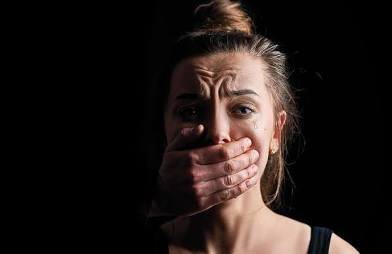
Light the charcoal. Sprinkle the sage. Negativity energy, go away. Today is the beginning of Domestic Violence Awareness Month. This month is when our voices from all over the globe will be heard. We as victims, survivors and warriors bring to light the horrors of domestic violence and the impact that it leaves on our lives and those around us. Let’s take time out for a little education on a few of the topics surrounding domestic violence.
Domestic Violence is a topic that I know a lot about. Well, I know how to function in it. And I know how to get away from it. But living with the aftereffects reveal a whole other set of problems. Where domestic violence used to be seen as something that only happens to women and their partners. There is more awareness on the abuse of men by their partners. No matter how you identify. It also happens to the most innocent, children and pets. This happens in all forms of relationships. And the statistics are staggering.
Domestic violence is violence committed by someone in the victim’s domestic circle. Which include partners and ex-partners, immediate family members, and other relatives and family friends (https://www.UN.org, 2025). The behaviors can include such things as:
· Physical
· Sexual
· Emotional
· Financial
· Psychological actions or threats of actions that influence another person.
This includes any behavior that intimidate, manipulate, humiliate, isolate, frighten, terrorize, coerce, threaten, blame, hurt, injure, or wound someone. The repetitive exposure to violence teaches children that violence is a normal way of life (https://dvcc.delaware.gov, 2025). And for those of us who leave, constant confusion and every minute of no knowing when something else will happen again, is our normal. And the many years of programming by our abusers takes years of therapy to de-program ourselves. But you will never be who you used to be.
Recovery is not for the faint of heart. It is hard and uncomfortable. And it takes years to undo the damage that was caused on so many levels. I was one of the lucky ones. Long story short, I survived. But the mental damage that was caused has left me crippled in some ways. And through the sleepless nights filled with tears, therapy, psychiatric medications, body memories, flashbacks, phobias, and panic attacks, I have learned that I have a voice that deserves to be heard. And no matter what people say or believe, I can validate my own story regardless of the opinions of others. Because I lived it.
The main thing I want to say to other women and men across the globe who are still in their own processes, “YOU ARE NOT ALONE!” Because it happened to me too. Thanks for reading! Keep smiling and pushing forward.
“I had gotten to the point where I was suicidal every day for six straight years…On that day, I made a choice. The choice to live, the choice to get better for me.”
-Justin
Light the charcoal. Sprinkle the sage. Negative energy, go away. Today, I want to tell you about a couple more suicide awareness and prevention groups. I wish I could cover them all. Unfortunately, there are just way too many. Please familiarize yourself and those you love and are affected.
Stop Soldier Suicide
This is the only national nonprofit focused on solving the issue of suicide among U.S. veterans and service members. They have an aggressive goal of reducing the suicide rate by 40% by 2030. Veterans are at a 58% higher risk of suicide than those who haven’t served.
Other statistics about veteran suicide:
· 6,407 veteran suicides in 2022.
· 22 consecutive years with 6000+ veteran suicides.
· 140K+ veterans have died by suicide since 2001.
· Second leading cause of death in veterans under age 45.
· The rate of veteran firearm suicide has increased by 65%.
· The suicide rate among veterans ages 18-34 has more than doubled.
· Western states have experienced the greatest increase in veteran suicide rate, increasing by 55%.
· 31% Depending on branch, up to 31% of service members develop PTSD after returning from combat.
· 7x the rated of suicide for veterans in the LGBTQ+ community is up 7x higher that for non-LGBTQ+ veterans.
The organization’s impact on veteran suicide.
· 90%+ of our most at-risk clients completed a crisis response plan in 2023, giving them tools and resources to cope in moments of crisis.
· 73% of clients experienced a decrease in thoughts of suicide over the course of treatment.
· 92% of clients who were meaningfully engaged in our care showed some improvement in mental wellbeing by the end of treatment (www.stopsoldiersuicide.org, 2025).
The Trevor Project
The Trevor Project was founded in August 1998 by the creators, James Lecesne, Peggy Rajski, and Randy Stone, of the Academy Award-winning short film “Trevor.” The film was about a gay teen who attempted suicide. The filmmakers then established a crisis hotline for LGBTQ+ youth after realizing that there was not a resource available. They have since expanded services to include text and chat support and resources for parents, schools and others seeking support for LGBTQ+ support (https://obamawhitehouse.archives.gov, 2025).
Crisis Services: Providing counseling support services for LGBTQ+ young people 24/7 all year around.
Peer Support: Providing an affirming international community for LGBTQ+ youth.
Advocacy: Working to change hearts, minds, and laws in support of LGBTQ+ lives.
Research: We conduct research studies to equip policymakers and other LGBTQ+ youth providing professionals.
The Mission
To end suicide among LGBTQ+ youth by providing crisis support, suicide prevention resources, and educational programs (www.thetrevorproject.org, 2025).
Thanks again for reading. The more education and resources we can provide each other with, the better the outcomes for us all. Please pass this information along to anyone who could benefit. I am one of those who suicide has affected my life in epic proportions. I am also one who continues to fight for understanding and compassion in a world that is lacking.
Affirmation: I am not alone, and others care about me.
“It is dangerous, misleading, and illegal” and a “massive fraud on consumers that puts their safety directly at risk.”
–American Kratom Association
Light the charcoal. Sprinkle the sage. Negative energy go away. Today, I want to talk to you about the deadly synthetic opioid products known as 7-OH (gas station heroin). You might think that these products are safe. But there is only one descriptive term for them…..DANGEROUS.
Let me break down the problems associated with these products. The product is so dangerous that the FDA is specifically targeting the 7-OH products a concentrated byproduct of the kratom plant. They are not focused on the natural kratom leaf products. These products have a high potential for abuse because they bind to opioid receptors. They are not FDA-approved 7-OH opioid products. FDA Commissioner Marty Makary, M.D., M.P.H. is quoted saying, “7-OH is an opioid that can be more potent than morphine” (https://www.fda.gov, 2025).
What is 7-OH? –hydroymitragynine is a powerful opioid-like compound found in the leaves of the kratom plant. While this compound is naturally in trace amounts because manufacturers have begun to concentrate or synthesize it into highly potent and addictive products. They are sold at gas stations, vape shops and smoke shops. At this time, anyone of any age can purchase these products. And they are appealing to kids and teens because they are also made into edibles.
“It’s a recipe for a public health disaster.”
-Jim O’Neill, U.S. Department of
Health and Human Services
· Significantly stronger than morphine:Some synthetic products are reportedly 13 to 40 times more potent than morphine.
· Intense opioid effects: these include pain relief, euphoria, and sedation.
· High risk of dependence and addiction:Regular use can quickly lead to physical and psychological dependence with severe withdrawal symptoms when use is stopped.
· Serious adverse effects: There have been a notable rise in emergency room visits with symptoms that include nausea, agitation, rapid heart rate, high blood pressure, seizures and respiratory depression that can be fatal.
Difference between natural and concentrated 7-OH
· Natural kratom: in the natural form as a plant leaf, kratom contains only a small amount of 7-OH (less than 2%). It is often used for its mild stimulant or opioid-like effects, but the risk profile is significantly different from highly concentrated products.
· Concentrated/Synthetic 7-OH: lab created product where the 7-OH has been concentrated to a higher potency reaching 98%. These unregulated products are sold in forms like gummies, drinks, and tablets ((https://www.dshs.texas.gov, 2025).
I cannot express enough the dangerousness of these products. I, for one, fell in love with heroin and pills many years ago. And what a difficult process it has been to break free from those substances. Because “One is too many. And a thousand is never enough.” That’s how addiction works. Parents if you think that this is all a bunch of hoopla for nothing, you are dead wrong. This product scares me like most can’t. We have enough of an “opiate crisis” without introducing more into the family line. Educate yourself and your children. It just might save lives. Thanks for reading!
Affirmation: I have the ability to make a different choice.
Light the charcoal. Sprinkle the sage. Negativity energy, go away. Today, I want to discuss a cannabis strain concentrate called Brett Farve. I know what you’re thinking. She wrote about this one earlier this year. Well, just when you thought that was the end of that magnificent strain, they come through with a concentrate. And since we’re heading into football season, I thought it would be a perfect strain name for the occasion.
Fire! Fire! Fire! Is how I would describe this concentrate. One thing I’ve come to understand about the cannabis industry is that sometimes, for marketing purposes, strains already have a name and then a company comes along and just assigns it a novelty name. And I’m pretty sure that this “Brett Farve” strain is one of those. Most companies will provide strain genetics for we cannabis nerds. But for some strange reason the exact genetics are not being told. And for me, it helps to identify the terpenes and strains that fit both my medical and psychological needs.
I described this very potent and gassy strain in an earlier blog. But this concentrate is gassy wax that is sure not to disappoint. Brett Farve might’ve retired from the NFL. But this cannabis concentrate won the Super Bowl in my opinion. And one thing I know about stinky flower is that the concentrate is just a big “stink fest” with a beautiful high. This concentrate peaked at around 58%.
This strain is not for novice users. Because the probability of “greening out” is extremely high. For my fellow dabbers, jump on this concentrate. Beware that this indica will have you with such heavy “couch lock” that you won’t even remember if you have Cheetos in your house for those “atomic munchies.” Nevertheless, this concentrate must be used to fully give credit where credit is due.
Any Brett Farve products that I have sought out don’t stay around for very long. And it’s potency and medicinal benefits are some that can be enjoyed by all with caution. If you don’t enjoy heavy indicas, this strain is not for you especially in concentrate products. But I would make sure that I didn’t have much to do. Late evening when you can get blasted right before going to sleep is what this strain was made for. Thanks for reading. Keep blazin!
Affirmation: I release any shame or stigma over using cannabis.