

Types Of Domestic Violence Part 2

“An abuser can seem emotionally needy. You can get caught in a trap of catering to him, trying to fill a bottomless pit. But he’s not so much needy as entitled, so no matter how much you give him, it will never be enough. He will just keep producing more demands because he believes his needs are your responsibility, until you feel drained down to nothing.”

-Lundy Bancroft, Why Does He Do That? Inside the Minds of Angry and Controlling Men

Light the charcoal. Sprinkle the sage. Negative energy go away. Today I want to go over more types of domestic violence. I know that this topic is not an easy one to face. However, domestic abuse occurs in more homes than you realize. Maybe in your own home.

VERBAL ABUSE

·        Ridiculing or humiliating someone.

v  If he were alive and breathing, this would happen from the time I woke up until the time I went to bed.

·        Criticizing their appearance, intelligence, sexuality, religious beliefs, or ethnicity.

v  This happened all the time. I was constantly told that I was dumb and retarded.

·        Criticizing their actions as a partner or parent.

v  All day and every day. The worst was at night and on the weekends. I got blamed for his bad golf game. He had this idea that he was Tiger Woods. And he very clearly wasn’t. But it was always because of something I did that made him play bad. In reality, he just sucks at the game.

·        Using cruel or abusive nicknames.

v  He and his brother always had cruel nicknames for me.

·        Swearing at someone.

v  Most people cuss when they get mad. However, he and his brother were relentless in their attacks.

·        Yelling or screaming at someone.

v  Again, I think that a certain amount would be considered normal. However, screaming and hollering at me for everything little thing was how they both operated.

SOCIAL ABUSE

·       Stopping someone from seeing or contacting their friends and family.

v  He didn’t physically stop me. However, it was very clear that I was not leaving the house without specific information about where I was going and what I was doing. And if that wasn’t what he wanted, I was told not to go at all.

·       Stopping someone from going to social or community activities.

v  Unless he went with me, I was told, “No. You don’t need to go do that.”

·       Preventing someone from having contact with people who speak their language or share their culture.

·       Making someone move away from friends, family, or work opportunities.


·       Controlling a person’s use of phone or computers.

On more than one occasion, when I went to call for help from police, he would unplug the phone so that I couldn’t use it.

·       Checking or stopping their mail, phone calls, text messages, emails, social media and other messaging or chat apps.

v  Luckily, there was not much of this that was available at the time. There was barely internet, and I better not have an email address. I had a Nokia cellphone which he checked constantly.

·       Telling lies or spreading false information to damage a person’s reputation.

v  This happened all the time. Especially when he talked to his family. The smear campaign was always in action.

·       Using someone’s intersex status, sexuality, gender expression, transgender, or HIV status against them.

v  He never knew that I was a lesbian. Hell, why would I tell him when the violence was bad enough.

·       Forced marriage

v  The day of my wedding, I knew that I was making the biggest mistake of my life. I was frozen with fear. But it was what he continually pushed for marriage. And I eventually gave in. Biggest mistake of my life!

·       Stalking

v  This happened every single day. If it wasn’t him, it was his friends and family who did the stalking. At the end of the day, I was questioned about everything that I had done and was told, “Well, what about when you were walking around in that store.” He knew every move that I made. It even got so bad that he knew what I had eaten during the day.

SPIRITUAL, RELIGIOUS OR CULTURAL ABUSE

  • Preventing someone from practicing and being connected to their culture.
  • Stopping someone from going to their place of worship.
  • Stopping someone from having contact with other people who share their beliefs.
  • Stopping someone from celebrating days of cultural or spiritual significance.
  • Stopping someone from sharing their beliefs and traditions with their children.
  • Stopping someone who is Aboriginal or Torres Strait Islander from returning to Country or having contact with kin.
  • Stopping someone who has family connections outside Australia from visiting or connecting with family or community overseas.
  • Ridiculing someone’s beliefs or traditions.
  • Forcing someone to do things that are against their beliefs, like eating certain foods or wearing certain clothes.
  • Forcing someone to marry.

The pressure was definitely applied when I was undecided.

  • Forcing someone to take part in spiritual practices in which they don’t believe.
  • Forcing someone to raise their children according to beliefs they don’t agree with.
  • Using or claiming to use spiritual or religious beliefs:

Let me just say this about him and his spiritual practices. He always went through the motions and played the part. He even pretended to get “saved” and was baptized. However, that was as far as it went. Because when we got home the abuse continued to happen. But now he had a Bible to justify his actions.

Thanks again for reading! I hope I was able to share a little lighter on the subject of domestic violence. There is help and hope after abuse. Reach out for the love and respect that you deserve. Keep moving forward!

Affirmation: I will not shrink.

***Don’t forget to watch the video!***

#Thispuzzledlife
First Responders And Suicide

“Real heroes don’t wear capes. Real superheroes wear uniforms and badges and stethoscopes! Real superheroes are members of our military, law enforcement, and first responders. Pretend superheroes wear capes.”

-Dean Cain

Light the charcoal. Sprinkle the sage. Negativity energy, go away. Today, I want to talk about first responder suicide. This is another group that seems to be looked over when discussing this topic. Having worked in the EMS field, I can tell you that sometimes I saw things that continue to haunt me to this day.

Individuals, who have also worked in the field, have told me, “they just left work at work.” And it was simple. In that case, “Congrats! You are the winner! And you were much stronger mentally, I guess.” But in my situation, I was trapped in a domestic violence situation where emotional abuse was normal. So, working myself to death while experiencing trauma in both my private and professional life, my mind was so overloaded that I developed PTSD from both situations.

Maybe it was the 7-year-old who was hit by a drunk driver and left for dead. Maybe it was the car wreck where sister and boyfriend we both killed. And older sister’s face was ripped off in the wreck. Maybe it was the murder that left a body with half a head from a shotgun blast. Maybe it was the screaming mother, who I had to tell that her child was dead. Maybe it was the mother on Mother’s Day that was told that her law enforcement son was killed in a drunk driving accident. Maybe it was the woman who was ejected from a vehicle after falling asleep behind the wheel, whose legs were pinned behind her head. Maybe it was the suicide scenes. Maybe it was putting a child in a body bag in front of a mother. Maybe it was the person hit by a train where chunks of meat were the only thing that remained. Maybe it was the disabled individual in a wheelchair who was raped by her cousin. Maybe it was the woman who was cut from ear to ear, because she was cheating on her boyfriend with a white man. Maybe it was working hard on a grandmother, in front of the family, begging for us to save her when we couldn’t. Maybe it was the male body that was found in a house that had been dead for several days. And the only way the neighbors knew something was wrong was because they smelled him through the walls. Maybe it was the little girl who innocently climbed up in her daddy’s pickup truck only to find a loaded gun and accidentally pulled the trigger leaving one of the bullets lodged in her brain. Maybe it was the little boy who was handed to a good Samaritan from inside his father’s eighteen-wheeler, only for the truck to explode because the jaws of life were not available. Maybe it was the car wreck where I had to sit in the dead passenger’s lap to work on the dying driver. Maybe it was the mother who died from a seizure and her little girl was left in the home alone for over 8 hours before the body was found. Maybe it’s the smells of decaying bodies that I continue to smell almost 30 years later. Maybe it was telling my boss that I was having flashbacks from a gruesome scene only to be told, “If you can’t handle it, pick a different profession. Maybe it’s the incessant scenes that I continue to replay beyond my control with questions about if we did enough. Maybe, Maybe, Maybe.

In the time that I worked, I saw enough trauma to last me a lifetime. There was no one to talk to about anything. Like I was told that there would be. Getting shifts covered was more important than the safety and well-being of employees. And somehow, sexual harassment and a near rape by a co-worker was viewed as though I brought it on myself. And eventually, trying to survive by living in my car and attempting to distance myself  from the domestic violence situation led me to a level of depression and despair that was somehow new to me. I was forced to keep unethical secrets which was “normalized behavior.”

A lot of people that I worked with were dealing with problems through narcotic diversion, sex with random partners, alcohol and drugs were seen as “off-day or working” coping skills. And the level of compassion for another human being “hitting the skids” to a level that was disturbing. There was not just one reason that I was having suicidal thoughts. But I had nowhere to turn for help that was “safe.” And the work environment was just as toxic.

Life said, “Here are the pieces. Figure it out.” And I tried to bury them so far down that I never wanted to revisit those fears and feelings again. For a long while, I was able to do just that. But when you have unresolved trauma there’s only one thing that you can be sure of, it will surface again. And almost 20 years later it would come forth vigorously. And it almost killed me.

First responders include police officers, firefighters, paramedics, EMTs, and telecommunicators. Due to the unique occupational stressors, the risk for mental health issues and suicide are at a much higher rates of depression, PTSD, suicidal ideations, and behaviors  (www.cdc.gov, 2021). And due to consistent exposure to traumatic events can impact the brain’s ability to process the experiences.

The Impact on Mental Health:

·        PTSD, depression, and anxiety: first responders are at a significantly higher risk of developing these.

·        Cognitive Issues: Trauma can lead to difficulties with memory, attention, planning, problem solving, which can affect daily functioning and relationships.

·        Secondary Traumatic Stress (STS) and Vicarious Trauma (VT): first responders can experience emotional and/or psychological distress from observing or hearing  about the trauma of others. And can lead to the symptoms of emotional numbness, irritability, sleep disturbances, and physical complaints.

·        Burnout and Compassion Fatigue: Demanding nature of the job and frequent exposure to suffering can lead to emotional exhaustion and reduce capacity for empathy (https//extension.usu.edu, 2025).

It has been said too many times, “Well you chose the profession.” And to that I respond, “Yes, I did. Who else would’ve done it? You?!” And then, of course, the sound of crickets followed. To this day I can say that I loved working in the field of EMS. But my brain took a beating. The trauma of the event doesn’t happen at that exact moment. It creeps. And if you are running back-to-back traumatic calls, then the brain never has a chance to recover. Also, when therapeutic help is seen as shameful or weak, this further ostracizes the employee to thinking that there is no way out. There are those “trauma junkies” as they are called that seem to enjoy the trauma. However, from working with those types of individuals, I have found that there is also a higher rate of alcohol and drug use.

Reducing the stigma will only happen when senior management are supportive of mental health efforts to keep all employees safe. And in the environment where I worked, the stigma couldn’t have been any stronger. People were allowed to work an extreme amount hours without sleep, which was very dangerous. In fact, an EMT who was in paramedic school, was allowed to work without adequate sleep and he wrecked an ambulance with a patient on board, because he fell asleep at the wheel striking a telephone pole. And sadly, there are currently no federal laws that regulate this. This problem is still left up to the digression of private companies. 

A national organization known as  the National Association of Emergency Medical Technicians have issued guidelines for managing fatigue in EMS personnel. This sets guidelines such as limiting shifts to less than 24 hours in duration and providing access to caffeine to help counteract fatigue. And offering naps. However, I can tell you that the only “nap” I was offered was during the time it took for a red light to change to green. And there is a recognized concern about EMS worker fatigue for both workers and the public. Research also shows that more than half of EMS workers report severe mental and physical fatigue, poor sleep quality, and inadequate recovery between shifts (www.ems.gov, 2019).

I can only hope that those entities that have an ambulance or some other type of EMS service abides by this. However, I can almost guarantee that senior administrators are more concerned with the dollar amount that is acquired at the end of the month. Because the low pay rate of EMS workers makes the individual “a dime a dozen.” And they will just be replaced if they can’t handle the stress. And this attitude combined with the difficult nature of the job is why I would still consider this working environment dangerous for the worker, as well as patients.

If you are or know someone in this profession, it is imperative that you and they both know the importance of “healthy” self-care. Asking for help is not a weakness. It’s the personal responsibility of the employee and the companies that employ them. Please make use of services that are provided. Thanks for reading! Stay safe.

Affirmation: I am allowed to ask for what I need.

***Don’t forget to watch the video!***

#Thispuzzledlife

Budtender Moment: Black Cadillac Concentrate Strain Review 

“It makes me feel the way I need to feel.”

-Snoop Dogg

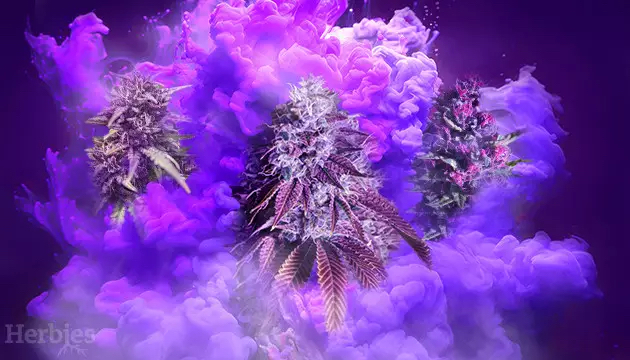
Light the charcoal. Sprinkle the sage. Negative energy go away. As I pay my respects to all of the victims and family members who were affected by September 11, 2001, the color of the awareness ribbon is black. And I could think of no other type of cannabis product that fit this unfortunate date than a concentrate called Black Cadillac Special Indica.

As we take a moment to recognize all the lives that were forever changed, I couldn’t think of a more respectful name. The black Cadillac has always been a vehicle associated with importance and status. And the innocent victims and heroes that gave their lives in order to save others, will always be seen not only as familial heroes but also as “American heroes.” 

Black Cadillac is a cross between Purple Punch x Ghost Vapor OG. Purple Punch genetics are a cross between Larry OG x Grandaddy Purple. Ghost Vapor OG is a cross between Ghost OG x Purple Punch. Right here you can tell that it’s almost a straight indica. I used this by way of a concentrate dablicator.

Patients report relief chronic pain, stress, anxiety and insomnia. And I also believe this to be true. This  combination is truly a special indica. I wouldn’t recommend this product for a beginner, as you might not be quite ready for the punch to the chest that will be felt. Nevertheless, this beauty will truly help relieve some of the stress and discomfort on the remembrance day that changed the face of our great nation. Thanks for reading! And continue blazin’ fellow stoners!

Affirmation: I love everyone at every sesh. Some I love when they enter; some I love when they leave.

***Don’t forget to watch the video!***

#Thispuzzledlife
What Are The Streets Saying? Inhalants

“The National Institute on Drug Abuse states, “The brain of a chronic toluene abuser is smaller compared to someone with no history of inhalant abuse.”

-Neil Rosenberg, M.D., NIDA Research Report

Light the charcoal. Sprinkle the sage. Negativity energy, go away. Today, I want to discuss something that many teenagers experiment with, inhalants. Abusing inhalants isn’t a new thing. As it was very popular 35 years ago. And when you’re a kid without access to money, getting “high” is just a short walk away to the family utility shed. I’ll give you some facts. And then I’ll tell my story.

First, let me describe what “huffing” is even though it’s self-explanatory. Huffing is the act of inhaling chemical vapors from common household products to get high. And it’s a dangerous form of substance abuse. Even though it might seem less risky, huffing can be even more dangerous with potentially severe and fatal consequences (https://evokewellnessoh.com, 2024).

The primary chemical in many dusters is HFC-134a, which act as propellant and refrigerant. Inhaling duster fumes can be dangerous. It can lead to serious side effects such as liver problems, breathing problems and death. Duster and other inhalants aren’t considered control substances and can be bought most anywhere.

Air dusters also contain other ingredients such as:

·        Difluoroethane can cause heart issues and loss of consciousness.

·        Nitrous Oxide can cause dizziness, vomiting and nausea.

·        Alkyl Nitrites can cause increased heart rate or vomiting.

·        Butane can affect the heart leading to sudden death.

·        Propane which can cause convulsions and loss of consciousness.

Other possible side effects are:

·        heart irregularities

·        unconsciousness

·        irritation of the nose, throat, and lungs

·        coughing

·        difficulty breathing

·        shortness of breath

·        irregular pulse

·        palpitations

·        inadequate circulation

·        abnormal kidney function

·        frostbite of the nasal cavity

·        breakdown of muscle tissue

·        liver damage

·        suffocation due to displacement of air inside the lungs

·        coma

·        convulsions

·        brain or nerve damage

·        bone marrow damage

·        choking on vomit after using an inhalant

·        sudden sniffing death, which is when a person dies suddenly after breathing in an inhalant due to cardiac arrest (https://medicalnewstoday.com, 2025).

Over a fifteen-year period, teens in the US abused more than 3,400 products through inhalation. The age range was from 6 to over 50 years old. Teen boys accounted for 73.5% of cases. Of those with known outcomes from emergency room visits, 208 died and more than 1,000 experienced life-threatening or permanent disabilities (www.poison.org, 2025).

·        More than 22.98 million Americans have abused inhalants at least once in their lifetime.

·        And over the past two decades, less than 1% of individuals aged 12 and older report past year use in 2023. 

·        Inhalants are typically used by younger adolescents, with 4% 8th graders having used in the last year. The peak age is 14 years old.

·        Inhalant abuse is less common in adults but does occur, especially among those with access to chemicals (https://www2.courtinfor.ca.gov, 2025).

·        Only 25% of inhalant abusers tested in emergency rooms had no effects. Most had serious effects or died (www.poison.org, 2025).

Toluene is a chemical found in common products including nail polish, paint thinners, adhesives. It is also used to aid in the production of benzene, other chemicals, pharmaceuticals, and dyes. Toluene can also be found in printing inks, varnishes, lacquers, and some types of glues (www.OSHA.gov, 2025).

Another product that is popular among teens, which can be bought at any “head shop” is “whip-its.” It is nitrous oxide which cuts off oxygen to the brain, creating a euphoric high that lowers mental and physical pain. And it is used to make whipped cream. Using nitrous for recreational purposes is illegal. And you can be fined or jailed for violating inhalant laws (www.webmd.com, 2025). Lock me up!

I’ll be the first to admit that “huffing” was always one of my favorite ways to get “high.” Second, only to pills. It began when I started sniffing White Out. I would cover the page with it and then roll it up and start sniffing the fumes. Same thing went for gasoline. I would put a little on a rag when I filled up with gas. And then held it to my nose and inhaled deeply. All while I was driving. I know. Safety scores are totally negative. And for many years I would quit. Always heavily involved in other types of addictions.

Once the stress of my life engulfed me while I was in undergraduate and beginning graduate school, I would start huffing again. And I found my “main squeeze” in computer duster. Mainly, because it was much cheaper than other things. I was in therapy at the time. And the stress of life and the ever-hovering PTSD symptoms had me huffing every chance I got, especially after therapy. And one day I had left therapy, grabbed my can of duster from underneath the seat and started huffing as fast as I could to get the “incorrect” EMDR effects out of my brain. And when the chemicals hit, they hit hard. Suddenly, I couldn’t figure out how to work my steering wheel. I ran up on the curb and over corrected and spun across four lanes of traffic. Luckily, there were no cars coming. I sit for a second and realized that everything was ok. Still much higher than I should’ve been to drive, I cranked my Honda CRV and headed in the direction of a potential future employer. But during my stupor I forgot to look for vehicles coming from the right as I was about to make a left turn. And the next thing I remember is hearing the horrible sound of glass breaking and a loud boom. My luck had just run out. I had inadvertently pulled out into the back wheels of an eighteen-wheeler. And for a split second I thought, “Wow! This is it. Jesus, I’m on the way!” The next thing I remember is feeling intense pain but unsure where. An ambulance picked me up from the scene. What I didn’t realize at the time was that the eighteen-wheeler had gone over the top of the cab and crashed it in. Nevertheless, I was terrified that I would be getting a DUI. But there was no way to test for an aerosol. So, I vowed to keep my mouth shut. They did do a toxicology test, but an aerosol is from the lungs not the blood. And I would live with battle wounds. I vowed to never touch that stuff again. But I would always carry that little behavior not as a first choice. But still a choice I would always have for private viewing. I thought that I was finally scared of addiction and the dark forces that surround it.

After many of doing without it while engaging in self-harm, illicit drugs, and alcohol, I would begin again while living in Texas for a couple of years. But this time, it was spray paint. They both get you “high,” however, duster can give you a very panicky “high.” If it do it too much, it becomes downright scary. To this day, I still deal with huffing. I know that it’s typically done in teenage years. But that’s when one of my biggest traumas occur day after day. And in many ways, I am still that same rebellious and very hurt teen.

If you know of someone who is “huffing,” help them stop NOW! Because years later they will look up and realize they’re an adult who’s still “huffing,” if not dead. It might seem harmless, but it’s not. I hope some of this educational material will bring more attention to a very common problem with inhalants. Thanks for reading! Take what you can use and leave the rest.

Affirmation: You are not your mistakes

***Don’t forget to watch the video!***

#Thispuzzledlife