
LGBTQ+ And Suicide

“Our country is grappling with a youth mental health crisis, and it is particularly pronounced for LGBTQ+ youth.”

-Ronita Nath

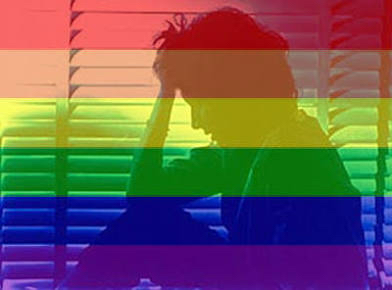
 Light the charcoal. Sprinkle the sage. Negative energy, go away. Today, keeping in line with the topic of suicide, I want to discuss suicide in the LGBTQ+ community. 

The prevalence of suicide in the LGBTQ+ community is nothing new. The risk for suicide attempts and suicidal ideation can be 3 to 6 times greater for lesbian, gay and bisexual adults according to the National Institutes of Health. But there are also other statistics to keep in mind.

In 2024, 39% of LGBTQ+ youth considered attempting suicide according to The Trevor Project’s national survey. 1 in 10 of LGBTQ+ youth attempted suicide in the past year. And LGBTQ+ youth are more than four times likely to attempt compared to heterosexual youth. I can tell you that personally, I’ve been suicidal many times because of rejection from my family as a lesbian woman.

Transgender and Nonbinary identified individuals are at an even higher rate of suicide. And almost half seriously considered suicide in the past year. In 2022, 80% of transgender people had considered suicide and 40% had attempted. These statistics while staggering are not surprising. These demographic struggles are way more than they should be with little compassion from society.

Bisexual identified individuals are 1.5 times more likely to report thoughts and attempts compared to gay and lesbian individuals. And 2.98 times more likely to have  a suicide-related event compared to heterosexuals according to a 2022 study. And  the LGBTQ+ youth of color report higher rates of suicidal ideation and attempts compared to white peers (www.therevorproject.org, 2025). And there are several contributing factors such as:

·        Discrimination and Prejudice:discrimination, harassment and violence due to sexual orientation or gender identity increases the risk of suicide.

·        Lack of Support Systems: Limited social support from family, peers and community exacerbates the mental health challenges. 

·        Mental Health Disparities: LGBTQ+ individuals are more likely to experience depression and may face barriers to accessing mental health services (https://mhanational.org, 2025).

For someone who is a member of the LGBTQ+ community, I can tell you that I’ve considered suicide many times. The rejection from family and friends are sometimes more than I can bare. And having worked with someone in therapy many years ago, who was not sensitive to the needs of someone in these communities, there was little progress made. Mainly, because I couldn’t trust her. And she was extremely judgmental.

Since collaborating with coach for almost a decade, I can tell you that I have been able to fully accept the fact that I’m gay, despite my family’s disapproval. And then the religious communities also seem to greet us with bible verses telling how many ways we are going to hell. We all know that “choosing” to be gay is such an easier way of life. There the secret is out. 

With the current political administration taking away the rights and freedoms that the Stonewall riots stood against, and the lack of funding for suicide hotlines for LGBTQ+ youth, these rates will only climb. Our families, friends, churches, and government should be ashamed of standing by people who are ok with the policies set in place. We are the same as we ever were. We just wear rainbows now. 

There are those beautiful allies out there who remain the strength and backbone of our continual fight for equality. We are youth, parents, aunts, uncles, cousins, husband, and wives who just want to be recognized as equals in the eyes of the law. But where reputations and political agendas are from the far right, we must be even more solidified as a community. If someone is for rights with some and not others, I have no room for them in my life. But it’s taken me years to come to this conclusion. 

Is it lonely? At times, yes. However, I want people in my life who not only support me but also my friends. The suicide hotline is something that our community not only wants but needs. Many of us have non-supporting families and mine is no different. But I do have a place to live currently. But that does not constitute me putting up with homophobia or fragile masculinity and femininity.

The very few “true” friends I have, understand that being gay is not a “choice.” It’s who I am. And if that’s too much for someone to manage, that’s just too damn bad. To my fellow allies and community members, keep up the good fight. We must take up the original Pride flag are carry on. I love our colors. And I’m proud to call myself a member of the LGBTQ+ community.

Keep smiling. Keep shining. Knowing you can always count on me, for sure. That’s what friends are for. We are seen. And we are heard. And….WE ARE FABULOUS! Thanks for reading. Take what you can use and leave the rest.

Affirmation: I am proud of myself and will continue to strive to do well.

***Don’t forget to watch the video!***

#Thispuzzledlife

Suicide Awareness And Prevention Month

“This life. This night. Your story. Your hope. It matters. All of it matters.”

-Jamie Tworkowski

Light the charcoal. Sprinkle the sage. Negative energy go away. Thank God, we have made it through most of the hottest months of the year. September is another sticky, humidity filled month before the beginning of the cool down. September is also Suicide Awareness and Prevention Month. I know, it’s another upbeat topic. I think that the topic of suicide shouldn’t be taboo. It’s an unfortunate dark part of nearly every culture. And, yes, it has also affected my life in many ways which I’ll share.

Suicide has always been referred to as “the easy way out,” “selfish action,” a  “total disregard for friends and family,” and the most hurtful “a sin.” And it’s really easy for people to throw out opinions that help no one when they are struggling. That is minimizing their pain and abuse.

Having been not only a patient in the mental health system for the majority of my life, and working in the mental health field as a professional, I have also seen and been on most sides of this problem. People are so quick to judge what they don’t understand. And, sadly, suicide is a topic that tends to be discussed in judgment versus with compassion.

I have been chronically suicidal since I was a teenager. I was being abused and put on display for others to see for an entire year in school. I was also locked in a closet in that same room while being verbally abused in any way imaginable. I tried to tell adults about what was going on. However, I was made to feel like it was my fault. This helped the teacher to further perpetrate her abuse. My parents also made me apologize to her for comments that I made to her. But as their child, I was not protected by them or the administration. I was in a difficult situation without the possibility of brighter days ahead for the future.

My suicidal feelings got the best of me one day at school when I took forty aspirin. I had no idea, at that time, that it wouldn’t work. But the thought of continuing one more day at the hands and mouth of s purely evil woman was more than I could deal with. My parents were called and made aware. Nothing was ever done. I was never provided with any kind of help. Maybe it was the “standard” of the late 1980s. I was not given the emotional support to sort out my trauma. 

What I did begin doing was self-harm. I had no idea what it all meant, at that time. But I knew that it made things better even if for just the moment. As I’ve stated about my family’s dysfunctional dynamics, I was told just to make it through the year and everything would be fine. It wasn’t. Yes, the abuse ended. But I was not fine.

By my freshman year in high school, I was “balls to the wall” in addiction. Addiction that presented itself in drugs, alcohol, eating disorders and self-harm. The strongest addiction being self-harm. And 35 years later, it continues.

The depression, anxiety and suicidal ideations never subsided as I was told. One day I finally told my mother that had I had access to a weapon, I was going to kill myself. Instead of offering help, of any kind, I was met with anger and told that I was being selfish. My thoughts were anything but selfish. I was hurting in ways that no one knew. And no one seemed to care. So, I suffered in silence for many years.

As a child/teenager when traumatic events occur, your mind goes directly to self-preservation. You do whatever you can to either tolerate the darkness or end the pain. Meanwhile, the trauma of life continued at a level that no one is capable of dealing with alone. My next real relationship was abuse that lasted 14 years. And again, I felt trapped.

If you don’t understand the concept of Pavlov’s dogs, then you don’t understand what it’s like to be held mentally captive while the world sees your situation with an easy out. And the sad part about it, is that they think that you deserve everything you get because you don’t just leave. My parents attributed all of the chaos of that relationship as being something that religion could fix. So, we got involved in church. If anything, the abuse got much worse because now his weapon was a Bible that he read and used as justification that I should be “submissive” to his every demands. Mentally, I was trapped again without any way out. And my self-harm was not about survival. It was about making the pain end. 

I would reach a mental breaking point and would stand out in the front yard where we lived and pointed a gun at my chest and pulled the trigger. The strange part was that I seemed to be witnessing rather than taking an active role. I watched that whole event as a spectator. I don’t expect you to understand the power of dissociation. Most people, in fact, are very ignorant about it. Again, I was met with anger from my mother. She kept saying, “Hush! Hush! Do you want to go back to Pine Grove?” That is the local mental health facility. And at that moment all I needed was compassion. But again, I faced anger and judgment. I wasn’t trying to “take the easy way out” or be “selfish.” I just wanted the pain to end. And everyone seemed to lose sight of that reality but me.

The bullet went into my shoulder only a few inches from my heart. And even hospital staff treated me as though I was taking up space much better suited for someone else. Self-harm became a way of life for me. It’s been there when people should’ve been there. But self-harm doesn’t always mean “suicide attempt.”  And this is a very sore subject among family members. But I sit as an outcast by my family who want nothing more than the family name to not be tainted by abnormality. They acknowledge that bad things happen. But they just want it to disappear and to quit bringing shame to the family name and instead just move on with life. But the biggest factor, is that they don’t want to be perceived as “parental failures.” It’s still all about the reputation of the family.

 People that is not how trauma works. And saying, “We just didn’t know how to help you” is “shit”of an excuse. I was a child when it began. You were in the position to help protect your daughter and you didn’t. Remember, the part of the story where I said, “Just make it out of the 8th grade and everything will be better.” It’s 35 years later and it’s not better. It has crippled me as an adult. And has stolen my hopes and dreams. And I still deal with suicidal ideations on a daily basis. Those never went away either. So, I guess feeling like a “burden” to those who say that they love me but treat me as such will forever be the unhealthy narrative. I’ve asked them to do therapy to help with our relationship. But again, it’s of no importance. And the unspoken belief that I’m unworthy continues.

I wrote this blog to say this, “Quit making someone’s struggle with suicidal thoughts and actions be all about you. You are not helping anything. You only make it worse.” Simply say to them, “Your thoughts and beliefs are valid. Let’s find some compassionate help that will help you thrive. Throwing Bible verses in their face is not helpful. Telling them that they will go to hell is not helpful. They are already living in an emotional hell. 

This is not rocket science! Just don’t be an asshole as a rule of thumb. I have been in the position of being the last one to talk to a person moments before they completed suicide. I can tell you this, “I’m not mad at that person. I don’t condemn their actions. I don’t say, “Well I guess they’re in hell now. How selfish of them.” I simply say, “I hate that they were in so much pain that nothing anyone said could break through the cloud of despair.”

Until you’ve been in that position, you have no idea how strong emotions and thoughts are. And if the person felt like they had exhausted all of their means of trying to end the pain in an acceptable fashion, then they see no other way out. Judgmental comments about, “well, they didn’t seek out every source of help” is you seeing in from your perspective only. If you can’t see it from their perspective, you’re one of the lucky ones. Thanks for reading! Take what you can use and leave the rest.

Affirmation: I’m always healing and never alone.

***Don’t forget to watch the video!***

#Thispuzzledlife