

Ibogaine For Opioid Addiction?

“Ibogaine got me through the door. The rest was up to me.”

-Unknown

Light the charcoal. Sprinkle the sage. Negative energy go away. Today, I want to talk to you about a plant that is said to help treat addiction. The name of the substance is called Ibogaine. I’ll be the first to admit that I don’t know much about this plant. But what I intend to do is to lay out the information and let you make the determination about what you think. 

First, we’ll look at its origins. Ibogaine is a West African shrub that grows in the Congo and Angola which is then separated from the root bark. The active ingredient in the plant is Tabernanthe iboga. Traditionally it has been used as a hallucinogen to suppress hunger and fatigue while also being used as  an aphrodisiac. Hold up! So, I’m going to be able to smell colors, sleep and get in the mood? And there’s a high likelihood that I might vomit? Count me in!

Purified ibogaine hydrochloride was first introduced to European consumers in 1939 under the name Lambarene. And it was sold in France until 1970 as an antidepressant that could improve mood, physical strength and used by athletes and others recovering from illness. In 1962 Howard Lotsof, a heroin addict, the experience with ibogaine was so transformative that he spent the rest of his life advocating for it as a cure for substance abuse. A Chilean psychiatrist Claudio Naranjo also advocated for ibogaine as a treatment which was described in his book in 1973 called The Healing Journey (Ibogaine Therapy Information- UC Berkeley BCSP, 2025).

Ibogaine is an alkaloid. The treatment with Ibogaine lasts around 12 to 24 hours. Keep in mind that the patient is in a hallucinogenic state. And though some consider it a “surgical” tool for addiction therapy it does have its medical risks (https://.randrmd.com, 2025). These include severe cardiotoxicity and neurological effects which have been associated with sudden death. Specifically, there are cardiac arrhythmias, hallucinations, seizures, nervous system depressant, bradycardia, hypotension, neurotoxicity, and negative psychological effects (https://www.sciencedirect.com/science/article/abs/pii/S0736467919305700#:~:text=Background,of%20ibogaine’s%20effects%20and%20safety). This treatment should always be done under medical supervision.

Not only is ibogaine used for opiate addiction, but also in the treatment of traumatic brain injury (TBI), PTSD, depression, and anxiety. Formal testing showed improvements in concentration, memory, information processing, and impulsivity(https://news.stanford.edu, 2024). Here are some statistics to keep in mind about this particular treatment. Studies in regard to Opiate Use Disorder from clinics primarily in Mexico and New Zealand indicate:

§  80% of participants report the elimination or reduction of opiate withdrawal symptoms.

§  50% of participants report no opioid use at 60 days post-treatment.

§   New Zealand study found that 50% of participants achieved one year of abstinence.

§  Another study reported that 30% of participants never used opioids again (Subjective effectiveness of ibogaine treatment for problematic opioid consumption: Short- and long-term outcomes and current psychological functioning in: Journal of Psychedelic Studies Volume 1 Issue 2 (2017).

§  An overall analysis reports that 81% were classified as “responders” which means that they never used opioids again or significantly decreased their use after treatment.

§  In comparison with traditional treatments of Suboxone, Methadone and other pharmacotherapy, abstinence rates were at 50% at one month and 33% after three months (https://pmc.ncbi.nlm.nih.gov/articles/PMC6157925/#:~:text=Abstract,additional%2011%25%20eventually%20achieved%20abstinence, 2018).

Currently in the United States, Ibogaine is a Scheduled 1 controlled substance. Which means that it has no acceptable medical uses and a high potential for abuse. It is against federal law to possess, sell, or use ibogaine for any purpose outside of a federally approved research setting. However, Texas has allocated $50 million to fund clinical trials for addiction and TBI. Kentucky and Washington have also explored funding. And, yes, there are several biotech companies that are developing non-hallucinogenic analogs that could potentially gain FDA approval in the future.

While this treatment is not currently approved in the United States, a lot of desperate addicts will pay between $5,000 and $15,000 in countries like Mexico, Costa Rica, Portugal, Netherlands, South Africa, Canada, New Zealand, Australia, Brazil, and Gabon. Costs also depend on length of treatment and particular amenities of the individual programs. I’m not completely sold on this form of treatment for addiction or anything else. That’s not to say that people don’t find their own relief through this type of treatment. However, at this point, I would personally like to see more safety considerations and advanced research regarding this method. As an addict myself, I understand that level of desperation to want the cycle of addiction to end. My personal opinion is that I want to keep an eye on future research once it moves out of its infancy in our country. Thanks for reading! And stay informed.

Affirmation: I am a survivor, and I will recover.

***Don’t forget to watch the video!***

#Thispuzzledlife

Budtender Moment: Blunicorn Strain Review

“Can’t complain when you have Mary Jane.”

-Unknown

 Light the charcoal. Sprinkle the sage. Negative energy go away. Okie dokie! Another cannabis strain that represents the LGBTQIA+ community. Combining the color blue from the pride flag and unicorns. And there isn’t anything gayer than a unicorn. Sit for a moment while I describe this healing cannabis strain.

Blunicorn is a strain that I fell in love with on inhale. It is a hybrid cross of Blue Sherbert x Unicorn Poop. And definitely has some stink to it. Blue Sherbert is a cross between Blue Cookies x Sun Sherbert. Unicorn Poop is a cross between GMO Cookies x Sophisticated Lady. This is a long line of hybrids and a few indicas in the lineage that will be recognized and noted in a smoking sesh with friends. The Unicorn Poop lineage gives it that noticeable dose of indica. It is steady at 22.7% THC but is still one for both beginners and connoisseurs to enjoy. The main terpenes are Limonene, myrcene, caryophyllene. Patients use it for anxiety, depression and pain. And I can attest to the information. This strain has flavors of blueberry, berry and mango.

More colorful strains will follow this month in prideful fashion. Make sure to subscribe to this blog and social media accounts and never miss another post. Keep reading. Keep smiling. Happy Pride!

Affirmation: I am manifesting more cannabis into my life.

***Don’t forget to watch the video!***

#Thispuzzledlife
What Are The Streets Saying?Kratom

“Recovery is hard. Regret is harder.”

-Brittany Burgunder

Light the charcoal. Sprinkle the sage. Negative energy go away. Are you wondering what’s the big deal with Kratom? You may not even know what Kratom is. Today, I will tell you why there’s so many things in the news about upcoming legislation.

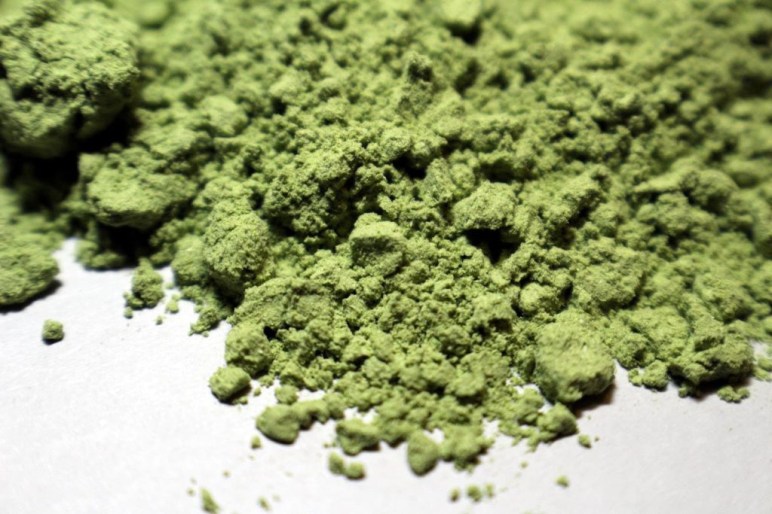
Kratom is pronounced (Cray-tom)Kratom is a tree native to Southeast Asia. The ground leaves, when consumed in low doses, acts as a stimulant. And in high doses function as a sedative and can lead to psychotic symptoms and both psychological and physical dependence. Kratom contains two major psychoactive ingredients mitragynine and 7-hydroxymytragynine. The leaves are powdered and can then be smoked, brewed with tea, gel capsules or mixed into a liquid. Or the leaves can be chewed. It can also lead to addiction. 

There have been several cases of psychosis and symptoms including hallucinations, delusion and confusion upon use. The effects on the body include nausea, itching, sweating, dry mouth, constipation, increased urination, tachycardia, vomiting, drowsiness and loss of appetite. Users have also experienced anorexia, weight loss, insomnia, hepatoxicity, seizure and hallucinations (getsmartaboutdrugs.gov, 2024).

I used Kratom for a while to help with chronic pain. And I have to admit that it helped. When I used it, I would mix a spoonful into some orange juice and drink it. The taste is extremely bitter. And overall, I just didn’t like the way that it made me feel. I never became addicted to this substance. I can understand why people can become addicted to it. All you have to do is look at the list of side effects to realize that those same type of signs and symptoms are related to opiate use. And some people believe that Kratom is, in fact, an opiate needing some type of legislation.

Kratom supporters argue that it is helpful for chronic pain and  opiate addicts. And I personally can’t deny those facts. And with it also being a plant, some people argue that it’s safe like cannabis. It is not. Kratom can actually lead to overdose death. Cannabis has yet to have a casualty. I don’t think that it’s completely horrible. I do think that it’s a substance that needs to be used with caution. And I also don’t believe that minors should be allowed to buy it legally. Kids just don’t use it in moderation and always look to just get high. And there have been deaths associated with its use.

There are several countries that have also banned the  possession and use of kratom. These countries include: 

§  Australia

§  Finland

§  Denmark

§  Japan

§  Isreal

§  Malaysia

§  Lithuania

§  Latvia

§  Myanmar

§  Russia

§  Poland 

§  Romania

§  South Korea

§  Singapore

§  Thailand

§  Vietnam

§  New Zealand (bicyclehealth.com, 2024).

As with most substances like this, the FDA does not approve of it. And unlike cannabis, there are no safety measures that have been set in place for regulation. There is no testing of the product to identify pesticides, molds or any cutting substances. Therefore, you have absolutely no idea what has been mixed in with this plant. And for this reason, I agree that that testing should be required prior to the sale. 

The DEA currently has Kratom listed as a “drug of concern.” And it will be scheduled under the Substance Abuse Act. The DEA also stated that they will seek to list Kratom as a Schedule 1 drug which has a high potential for abuse and no currently accepted medical use. And a lack of accepted safety for use under medical supervision (dea.gov, 2016) Currently, individual states have launched their own legislation regarding this substance.

The Six states that have already banned kratom are: Alabama, Arkansas, Indiana, Rhode Island, Vermont and Wisconsin. Other states have enacted legislation about minimum age requirements like nicotine and alcohol. The safest thing to do is to read about the risks involved and make your own decision. And check current legislation in your state for its legal status. Be careful if you have a history of addiction.

If you have minor teens or children, do not let them take this substance. This should only be allowed for adults. Enjoy it while you can. Because this is another substance that will eventually be banned throughout the country. Where it might have been initially used legitimately for years, the substance has proven to be deadly on all  fronts. Thanks for reading! Take what you can and leave the rest.

Affirmation: You are stronger than your temptation.

***Don’t forget to watch the video!***

#Thispuzzledlife