This Puzzled Life is a mental health and recovery blog exploring addiction, trauma healing, LGBTQ experiences, humor, and the strange moments that shape us.
“Weed is from the earth. God put this here for me and you. Take advantage, man, take advantage.”
-Smokey (Chris Tucker), Friday
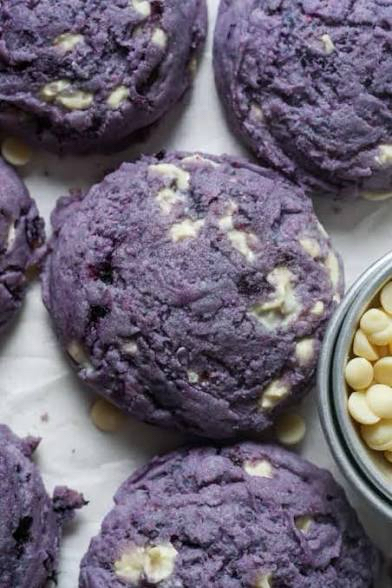
Light the charcoal. Sprinkle the sage. Negative energy go away. With part of the awareness colors for suicide awareness being purple, you know I had to represent with a purple strain. Sit back for a few minutes and allow me to educate you on this little beauty.
Purple Cookies is a 50/50 hybrid. It’s a cross between Cookie F2 x Purple Caper. You initially get that “hazy” strain taste which is also very earthy. And I’ll be honest; I had to smoke almost an entire bowl before I felt anything. Part of that could be that I smoke very heavy indicas to manage my medical needs.
Patients report relief from stress, anxiety and depression. It’s also used to help with chronic pain, insomnia and muscle spasms. I can tell you that I have a lot of the same issues. This strain didn’t do much for me in regard to chronic pain or insomnia. And that’s probably due to the sativa half of the hybrid.
The main terpene is myrcene. And it’s a strain that would be perfect for inexperienced users. You won’t get “couch lock.” And it would be perfect to use it during a lunch break. Overall, it’s not strong, but I can’t say that it’s bad medicine. It could be perfect for your individual needs. Thanks for reading! And keep blazing!
Affirmation: I won’t share blunts with people who won’t share roaches with me.
“The soldier above all others prays for peace, for it is the soldier who must suffer and bear the deepest wounds and scars of war.”
-Douglas McArthur
Light the charcoal. Sprinkle the sage. Negativity energy, go away. Today, I want to discuss veteran suicide. I know that this topic has seemed to get old and fast. However, I believe that the more we talk about the harshness of life, the more the stigmas will begin to disappear.
In 2022, the most recent year for the current data, 6,407 veterans and 41,484 nonveteran adults died by suicide. The rate among veterans was 34.7 per 100,000 compared to 17.1 per 100,000 for nonveterans. Since 2005, veteran suicide has risen faster than any other group. And these rates are unacceptable.
The veterans who died by suicide in that year, 40% were under the care of the Veterans Health Administration. Among those patients, who were also diagnosed with a mental health disorder or substance abuse disorder, there were 56.4 per 100,000, which was twice the rate of those without a diagnosis. And among 1,548 veterans who died by suicide 64% were diagnosed with depression, 43% had an anxiety disorder, 40% had PTSD, and 32% had an alcohol use disorder. However, the highest suicide rates were associated with veterans who had sedative use disorder which include benzodiazepines, barbiturates, and opiates (www.rand.org, 2025). And the stigma about mental health in the military further increase this problem.
Aspects of Veteran Mental Health stigma:
· Fear of judgment and perception: Veterans worry about how seeking help will affect all areas of their lives and especially on career repercussions.
· Military culture: The “warrior ethos” which emphasizes self-reliance and stoicism create barriers to seeking help.
· Loss of security clearance: Some fear that seeking mental health treatment will lead to revocation of security clearances.
· Impact on treatment: stigmas can lead to untreated mental health conditions, substance abuse and increased risk of suicide.
· Self-stigma: Veterans may internalize negative societal views about mental health which can lead to shame, self-blame, and more reluctance to seek help (https://oxfordtreatment.com, 2025).
As an advocate for medical cannabis, I believe that our veterans should be given an ounce of cannabis the minute their feet hit US soil upon returning from active duty. As I personally deal with PTSD, there is not another medication on the planet that can bring me relief like cannabis can. And it’s such a safer alternative to alcohol, opiates, and benzodiazepine medications.
Currently, the Safe Healing Act, which was introduced on February 4, 2025, is designed to prohibit the Secretary of Veterans Affairs from denying a veteran benefit administered by the Secretary by reason of the veteran participating in a State-approved marijuana program and other purposes. But unfortunately, there is only a 3% chance of being enacted (www.govtrack.us, 2025). And I consider this utterly ridiculous. There is an unmistakable problem with veteran suicide. It appears Big Pharma is still in the way of progress. I wonder how many people who oppose this bill must suffer, daily, with the horrible effects of PTSD, anxiety, and chronic pain that “Big Pharma” can’t seem to help?
Our returning soldiers are faced with horrors that no one understands until they’ve been there. And though I have never served our country, I can tell you that the above-mentioned mental health disorders have also almost taken my life many times. The symptoms are horrific in nature. Put chronic pain in the mix and suicide often seems like the only answer to have a break, though it be permanent, for even a moment of peace.
Veterans, in my eyes, should be held to the utmost respect. They should be the highest paid employees before professional athletes. And we as a country should make sure that the best treatment is available to them for the rest of their lives. Some have paid the price of their lives on the battlefield. And a high percentage of others pay with their lives when they return home. But instead of treating them like the heroes like they are, they are often discarded by the government that they so proudly serve.
Is cannabis the only answer? Not at all. However, while they find the modality that works for them, I think that cannabis could lighten the load and make their futures seem a little brighter. Discarding them along with all the judgmental stigmas only adds to the problem. And until this is rectified, we will continue to lose those beautiful people who are willing, at any moment, to lay down their lives for our freedoms. Shame on the United States of America for treating them like that!
I know reading this is not easy. But we as a nation must stand up for these individuals who continue to pay the price every time, they open their eyes. Let’s get past the “reefer madness” ignorance and allow our veterans the opportunity to extend their lives at home. A special thanks and salute to one of my favorite veterans who I’ll call Joe. Thanks for reading! And God Bless America!
“When you feel like giving up, just remember why you held on for so long.”
-Hayley Williams
Light the charcoal. Sprinkle the sage. Negative energy go away. Today, I want to talk about some myths regarding the topic of suicide. I was first exposed to suicide at the age of thirteen. One of my friends and classmate committed suicide when we were in the eighth grade. As a child, how do you manage that? I can tell you that among all of the major events in my life that has changed me in some way, the day that I lost my friend to suicide will always rank high on my list. I think, though, that the biggest impact for me was how our teachers and school administrators dealt with the situation.
I grew up in the 1980’s when child and adolescent mental health was rarely recognized. And, honestly, my generation was sort of left with the attitude of “figure it out yourself.” Situations that left gaping wounds were merely glossed over. And so, me and other friends and classmates turned to a life of addiction and suicide. As a teen who was being abused daily by a teacher, and the complete lack of protection from the adults, I was forced to just “figure it out.” I did it in total “self-preservation mode.” The behaviors that I developed were not healthy, but they were there when no one else was.
In the 35 years since my friend’s suicide, I have lost a lot more friends. And sadly, I have built walls all throughout my life that continue to help me through my pain. The one thing that has seemed to resonate through the years is how religion constantly attacks those who have been through the most. And I grew up being marinated in the ideology that suicide was “selfish,” “a sin,” “immediate condemnation to hell,” “the easy way out” and the most “self-centered” act known to man.
A lot of the “indoctrinating messages” I was raised to believe, life made me realize how very untrue and damaging they are and will continue to be. I have been on all sides of suicide. And from a personal standpoint, those beliefs couldn’t be any farther from the truth. Below are a few common myths regarding suicide.
Myth 1: Talking about suicide increases the chance a person will act on it.
Fact: Talking about suicide can reduce rather than increase suicidal ideations. It improves mental health related outcomes and increases the likelihood that someone will seek treatment.
Myth 2: People who talk about suicide are just seeking attention.
Fact: People that die from suicide have often told someone about not wanting to live anymore. And it’s always important to take it seriously. In my own family, these statements have rung true. Or most often, those statements are ignored.
Myth 3: Suicide can’t be prevented.
Fact: Suicide is preventable but unpredictable. Most people have experienced intense emotional pain, hopelessness and a negative view on life and the future. Suicide is a product of genes, mental illnesses and environmental risk factors. Intervention can and does save lives.
Myth 4: People who take their own lives are selfish, cowardly or weak.
Fact: People don’t die of suicide by choice. The emotional pain that they experience makes it difficult to consider different views. Have you ever turned a gun on yourself? I have.
Myth 5: Teenagers and college students are the most at risk of suicide.
Fact: Suicide rates for that age group is below the national average. The age groups with the highest rate of suicide in the U.S. are women 45-64 and men 75 and older. Suicide is a problem among all ages and groups.
Myth 6: Barriers on bridges, safe firearm storage and other actions that reduce access to lethal methods of suicide don’t work.
Fact: Limiting access to lethal means of harm is one of the most straightforward strategies to decrease the chances of suicide.
Myth 7: Suicide always occurs without warning.
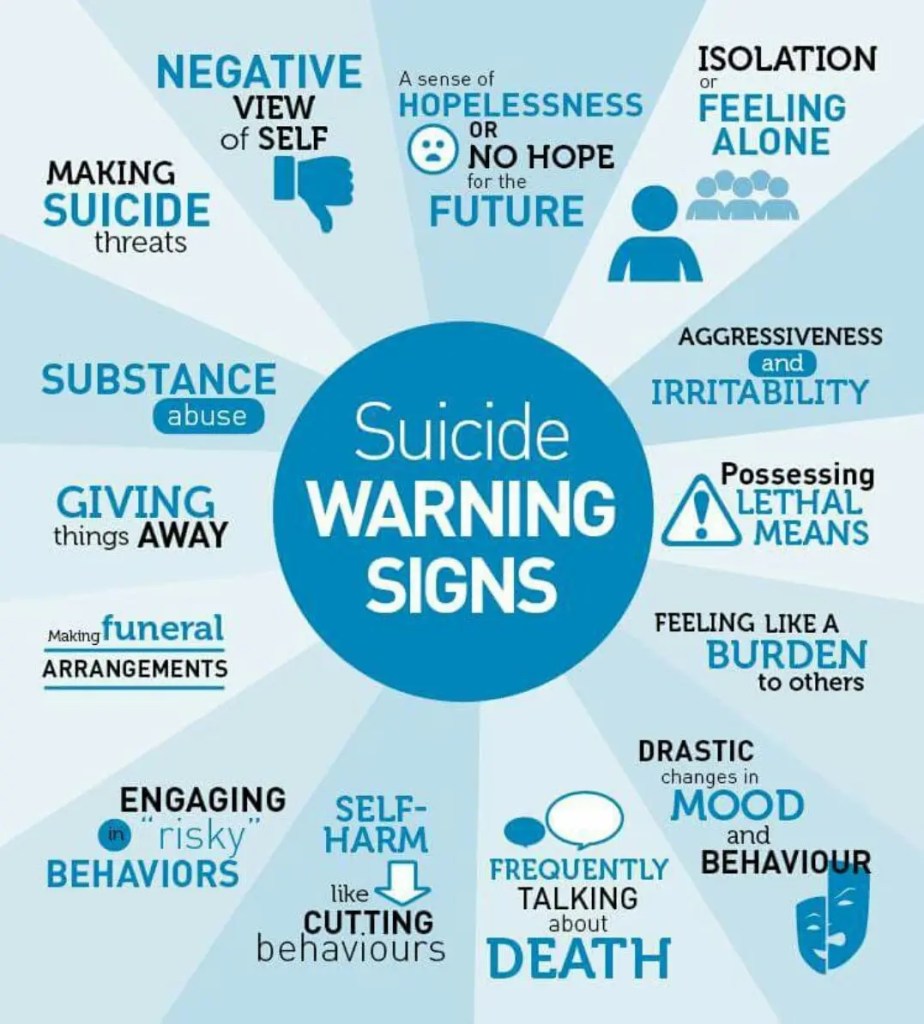
Fact: There are almost always warning signs before a suicide attempt.
Myth 8: Talk therapy and medications don’t work.
Fact: Treatment can and does work. I don’t agree with big pharma for many reasons. I guess, though, “life over limb.” Lives are saved with both therapy and medication. Therapy has saved my life for many years now. But finding the right one to work with can be taxing. Most people who are in the helping profession do help rather than harm (mayoclinichealthsystem.org, 2025).
Myth 9: You have to be mentally ill to think about suicide.
Fact: 1 in 5 people have thought about suicide at some time in their life. Not all people who die by suicide have mental illnesses at the time they die.
Myth 10: People who are suicidal want to die.
Fact: The majority of people feeling suicidal do not actually want to die; they just want the situation they’re in or the way they’re feeling to stop.
Myth 11: Most suicides happen in the winter months.
Fact: Suicide is complex and not just related to seasons or the climate. Suicide is more common in the spring and a noticeable peak on New Year’s Day.
Myth 12: You can’t ask someone if they’re suicidal.
Fact: Evidence shows that asking someone if they’re suicidal could protect them (Samaritans.org, 2025).
Myth 13: Strong faith prevents suicidal thoughts.
Fact: Many deeply religious figures including biblical figures have experienced suicidal thoughts. The misconception that strong faith eradicates mental despair is false. Faith doesn’t guarantee protection from difficult emotions and struggles.
Myth 14: Suicide indicates a lack or abandonment of faith.
Fact: Suicidal ideation is viewed from different perspectives. Suicide does not inherently mean that someone has abandoned their faith.
Myth 15: Fear of religious repercussions is a sufficient deterrent for suicide.
Fact: For some maybe the fear of divine punishment can be a factor. However, many faith communities emphasize grace and forgiveness, even for those who die by suicide. And personally, I have rarely seen grace and forgiveness on this topic.
Myth 16: Religion or faith alone is enough to prevent suicide.
Fact: Studies show inconsistent findings regarding the protective effect of religious affiliation on suicide risk. It is crucial to understand that faith alone is not a guarantee against suicide and should not replace professional mental health interventions when needed (https://pmc.ncbi.nim.nih.gov, 2025).
I hope at the very least that some of the myths regarding suicide have been explained. My own personal suicidal feelings have been dismissed the majority of my life. And no amount of “bible beating” has ever helped. It has only made things much worse than they already are. And some of the statements made disguised as “help” by family members, are not help. The statements are just toxic. Saying that you have “x” amount of years living and never considered suicide isn’t helpful. Please don’t play therapist when you’re not one.
Put harmful judgments in the trash where they belong. Love and appreciate those that you love. Because it can all change in an instant. Quit making “their” suicidal feelings about “you.” Because it’s not. And always remember, “Just because someone has a smile on their face doesn’t mean that they’re not suicidal.” Thanks for reading! As always, take what you can use and leave the rest.
Affirmation: I am overcoming depression one step at a time.
“This life. This night. Your story. Your hope. It matters. All of it matters.”
-Jamie Tworkowski
Light the charcoal. Sprinkle the sage. Negative energy go away. Thank God, we have made it through most of the hottest months of the year. September is another sticky, humidity filled month before the beginning of the cool down. September is also Suicide Awareness and Prevention Month. I know, it’s another upbeat topic. I think that the topic of suicide shouldn’t be taboo. It’s an unfortunate dark part of nearly every culture. And, yes, it has also affected my life in many ways which I’ll share.
Suicide has always been referred to as “the easy way out,” “selfish action,” a “total disregard for friends and family,” and the most hurtful “a sin.” And it’s really easy for people to throw out opinions that help no one when they are struggling. That is minimizing their pain and abuse.
Having been not only a patient in the mental health system for the majority of my life, and working in the mental health field as a professional, I have also seen and been on most sides of this problem. People are so quick to judge what they don’t understand. And, sadly, suicide is a topic that tends to be discussed in judgment versus with compassion.
I have been chronically suicidal since I was a teenager. I was being abused and put on display for others to see for an entire year in school. I was also locked in a closet in that same room while being verbally abused in any way imaginable. I tried to tell adults about what was going on. However, I was made to feel like it was my fault. This helped the teacher to further perpetrate her abuse. My parents also made me apologize to her for comments that I made to her. But as their child, I was not protected by them or the administration. I was in a difficult situation without the possibility of brighter days ahead for the future.
My suicidal feelings got the best of me one day at school when I took forty aspirin. I had no idea, at that time, that it wouldn’t work. But the thought of continuing one more day at the hands and mouth of s purely evil woman was more than I could deal with. My parents were called and made aware. Nothing was ever done. I was never provided with any kind of help. Maybe it was the “standard” of the late 1980s. I was not given the emotional support to sort out my trauma.
What I did begin doing was self-harm. I had no idea what it all meant, at that time. But I knew that it made things better even if for just the moment. As I’ve stated about my family’s dysfunctional dynamics, I was told just to make it through the year and everything would be fine. It wasn’t. Yes, the abuse ended. But I was not fine.
By my freshman year in high school, I was “balls to the wall” in addiction. Addiction that presented itself in drugs, alcohol, eating disorders and self-harm. The strongest addiction being self-harm. And 35 years later, it continues.
The depression, anxiety and suicidal ideations never subsided as I was told. One day I finally told my mother that had I had access to a weapon, I was going to kill myself. Instead of offering help, of any kind, I was met with anger and told that I was being selfish. My thoughts were anything but selfish. I was hurting in ways that no one knew. And no one seemed to care. So, I suffered in silence for many years.
As a child/teenager when traumatic events occur, your mind goes directly to self-preservation. You do whatever you can to either tolerate the darkness or end the pain. Meanwhile, the trauma of life continued at a level that no one is capable of dealing with alone. My next real relationship was abuse that lasted 14 years. And again, I felt trapped.
If you don’t understand the concept of Pavlov’s dogs, then you don’t understand what it’s like to be held mentally captive while the world sees your situation with an easy out. And the sad part about it, is that they think that you deserve everything you get because you don’t just leave. My parents attributed all of the chaos of that relationship as being something that religion could fix. So, we got involved in church. If anything, the abuse got much worse because now his weapon was a Bible that he read and used as justification that I should be “submissive” to his every demands. Mentally, I was trapped again without any way out. And my self-harm was not about survival. It was about making the pain end.
I would reach a mental breaking point and would stand out in the front yard where we lived and pointed a gun at my chest and pulled the trigger. The strange part was that I seemed to be witnessing rather than taking an active role. I watched that whole event as a spectator. I don’t expect you to understand the power of dissociation. Most people, in fact, are very ignorant about it. Again, I was met with anger from my mother. She kept saying, “Hush! Hush! Do you want to go back to Pine Grove?” That is the local mental health facility. And at that moment all I needed was compassion. But again, I faced anger and judgment. I wasn’t trying to “take the easy way out” or be “selfish.” I just wanted the pain to end. And everyone seemed to lose sight of that reality but me.
The bullet went into my shoulder only a few inches from my heart. And even hospital staff treated me as though I was taking up space much better suited for someone else. Self-harm became a way of life for me. It’s been there when people should’ve been there. But self-harm doesn’t always mean “suicide attempt.” And this is a very sore subject among family members. But I sit as an outcast by my family who want nothing more than the family name to not be tainted by abnormality. They acknowledge that bad things happen. But they just want it to disappear and to quit bringing shame to the family name and instead just move on with life. But the biggest factor, is that they don’t want to be perceived as “parental failures.” It’s still all about the reputation of the family.
People that is not how trauma works. And saying, “We just didn’t know how to help you” is “shit”of an excuse. I was a child when it began. You were in the position to help protect your daughter and you didn’t. Remember, the part of the story where I said, “Just make it out of the 8th grade and everything will be better.” It’s 35 years later and it’s not better. It has crippled me as an adult. And has stolen my hopes and dreams. And I still deal with suicidal ideations on a daily basis. Those never went away either. So, I guess feeling like a “burden” to those who say that they love me but treat me as such will forever be the unhealthy narrative. I’ve asked them to do therapy to help with our relationship. But again, it’s of no importance. And the unspoken belief that I’m unworthy continues.
I wrote this blog to say this, “Quit making someone’s struggle with suicidal thoughts and actions be all about you. You are not helping anything. You only make it worse.” Simply say to them, “Your thoughts and beliefs are valid. Let’s find some compassionate help that will help you thrive. Throwing Bible verses in their face is not helpful. Telling them that they will go to hell is not helpful. They are already living in an emotional hell.
This is not rocket science! Just don’t be an asshole as a rule of thumb. I have been in the position of being the last one to talk to a person moments before they completed suicide. I can tell you this, “I’m not mad at that person. I don’t condemn their actions. I don’t say, “Well I guess they’re in hell now. How selfish of them.” I simply say, “I hate that they were in so much pain that nothing anyone said could break through the cloud of despair.”
Until you’ve been in that position, you have no idea how strong emotions and thoughts are. And if the person felt like they had exhausted all of their means of trying to end the pain in an acceptable fashion, then they see no other way out. Judgmental comments about, “well, they didn’t seek out every source of help” is you seeing in from your perspective only. If you can’t see it from their perspective, you’re one of the lucky ones. Thanks for reading! Take what you can use and leave the rest.
“There was a point I was embarrassed at how much thought I put into weed. But I’ve embraced it.”
-Seth Rogan
Light the charcoal. Sprinkle the sage. Negative energy go away. Today, I want to highlight one of my favor cannabis strains, GMO. This girl has “diesel dyke” written all over her. Or maybe the “Diet Coke Man” from the commercials where he is sweating without his shirt working on tires. He might even be hanging from scaffolding, again without a shirt, drinking Diet Coke not working. Either way, this strain name must be “STINKY!”
GMO strain is also known as “Garlic Cookies.” It’s an indica dominant strain of Chemdawg x Girl Scout Cookies. And the very first thing you will notice is that stinky, dank aroma. And the lineage is also very stinky. But once it hits, have the Cheetos nearby. It has a very distinct aroma of garlic and cookies. Combined the smell resembles the smell of diesel. If you like straight diesel strains without the combination of fruity strains used to tone down the taste, this is like you are smoking diesel fumes. You either love it or hate it. The terpene profile is dominated by caryophyllene, limonene, myrcene and humulene.
This “little stinker” wraps her cannabis arms around my shoulders, and we cuddle for the next 30 minutes. And I revel in the experience of a momentary state of total completeness. She has been great for my pain and insomnia. GMO is not a strain that you should use prior to going to work unless you are a regular indica user. This is a very heavy strain that prides itself on the art of “couch locking.”
I love dank strains like this. There is a significant difference in “diesel dank” and “skunk dank.” I can tolerate little skunk. So, for me it’s a good alternate that I’ve learned to love. And for my needs I give it a 5 out of 5! Thanks for reading! And Keep Smoking!
Affirmation: My positivity and enthusiasm for life are infectious, and people love me for it.
“Don’t judge someone until you have shared a joint with them.”
-Unknown
Light the charcoal. Sprinkle the sage. Negative energy, go away. Today, I want to talk to you about a product that I like to call “the total package.” It is a concentrate known as Watermelon Woo! And it is truly ‘watermelon’ every step of the way.
This beautiful strain is considered an indica. Watermelon Woo is found to be closely associated with the strain Watermelon. And it has also been linked to OG Kush. But the exact genetics are currently unknown. The combination of the terpenes makes it taste exactly like a watermelon Jolly Rancher. The Watermelon auto resulted from crossing Tropicana Cookies X Lemon OG. Top terpenes are Linalool, Pinene and Myrcene. Those first two seem to have links to increase anxiety. And I am sensitive to those.
Medical benefits include relief from stress, anxiety, insomnia, pain relief and mood improvement. Even eaten as a concentrate, the benefits are there. And if you are sensitive to tastes, like I am, the taste is very tolerable.
Affirmation: My joints never run. My bong is always clean. My bowls are overflowing with fresh greens.
“Always remember, if you have been diagnosed with PTSD, it is not a sign of weakness; rather, if is proof of your strength, because you have survived!”
-Unknown
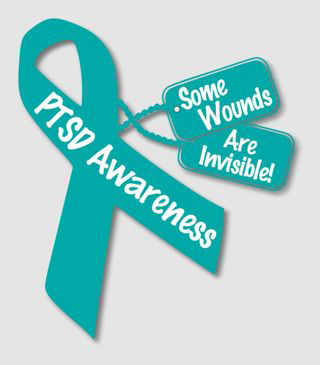
Light the charcoal. Sprinkle the sage. Negative energy go away. Today, I want to take time out from celebrating Pride, to give light to National PTSD Awareness Day. This one hit hard as I’ve lived with PTSD longer than I’ve lived without it. And there are so many of us who don’t make it to the other end of the tunnel. It’s an incredibly dark place to wake up to and go to sleep with every night.
Post Traumatic Stress Disorder (PTSD) dates back to ancient civilizations and military conflicts. Terms used early on included “combat-related stress,” “shellshock,” “combat fatigue,” and “railway spine.” In the 1800s and early 1900s, the “talking cure: was popularized by Sigmund Freud and introduced in medical literature. And the treatment went from psychoanalysis to electric shock treatment. By the 1950s, the treatments had become more humane. However, now people would not admit to any traumatic symptoms due to the stigma. So, group therapy and psychotropic medications were introduced (blackbearrehab.com, 2025).
In the 1970s Vietnam veterans began experiencing a lot of psychological problems that persisted even after returning home. And survivors of domestic abuse were also included. In the 1980s, PTSD was officially recognized as a mental health problem. Diagnostic and Statistical Manual of Mental Disorders adopted the diagnosis where it has remained (blackbearrehab.com, 2025).
PTSD is a developed from a traumatic event. C- PTSD when a traumatic event continues for months and years or multiple events occur. The intrusive thoughts, flashbacks, insomnia, avoidance, memory problems, detachment from friends and family, feeling emotionally numb, hyper startle, irritability, trouble concentrating, impulsive behavior, paranoia, severe anxiety, nightmares, suicidal ideations and actions and uncontrollable thoughts about the event. And over time, these symptoms completely devour who you once were (MayoClinic.org, 2025).
I know that PTSD is typically related to soldiers. I am here to tell you that I never went into the military. But the PTSD that I deal with, as a result of domestic violence, grabbed hold of me and has never let go. It has completely stripped me of everything that I used to enjoy. I don’t care about relationships. I question people about their intentions, even if they’re pure and good. I’m constantly waiting for the next shoe to drop. I don’t have typical reactions to being scared. I could see a moth out, of the corner of my peripheral vision, and then jump and scream like Jeffery Dahmer was staring at me and about to take the first bite. I face the stigmas of both friends and family mainly due to a lack of understanding. However, the reasearch information is everywhere. Sometimes others just need to their own leg work. I have come to realize that instead of trying to find out how PTSD affects someone that you love, it’s “the easy way out” to just to be dismissive, embarrassed and judgmental instead. The attitude is “just change X behavior.” Without having a solution, the resounding message of “just make it go away” further ostracizes the person that you say you care about. And so the anticipated glimmer of hope dissipates further isolating the individual. And sadly, can lead to suicide.
PTSD is not about you, it’s about them. It’s just a diagnosis until it’s “you” that experiences it every day. It has taken me down to the point of putting a gun in my mouth. And because living in the abuse was so severe, I actually pulled the trigger after pointing the gun at my torso. It missed my heart by only a few centimeters. Nothing was messed up to the point of needing surgery. But self-harm is something that I’ve dealt with since I was a 13-year-old child. And I had no idea how to deal with all the overwhelming emotions of abuse. In that cold, dark closet where I began to self-harm, and as maladaptive as the behavior is, it worked. It was the only thing that worked to bring me back to complete balance. But the problem is that it became a true addiction issue that I continue to struggle with. And before you ask, yes I’ve done a lot of therapy. It’s not that the therapy doesn’t. It’s that the addiction is that strong.
PTSD is a true injury on the brain. The brain’s job is to help you survive in any way possible. So, we reach for anything to help calm the barrage of intrusive thoughts, memories, smells and sounds. And once it’s been damaged through a traumatic event, it creates a “work around” solution. What typically works? Self-harm and substance abuse creates almost instant comfort. You don’t have to wait for 6-8 weeks to reach your therapeutic dose efficacy to begin working. It’s an immediate fix that some of have to use just to stay alive.
Cannabis was recommended when all other “Big Pharma” medications failed. And it has saved my life on a daily basis ever since. Cannabis seems to put a cloud over my brain saying, “Settle just for a moment.” And for that moment, I can take a break from the constant paranoia and overstimulation of a brain that wanted to do nothing more than survive. And that, is my battlefield. It wasn’t in Iraq, Afghanistan or Vietnam. My battlefield is everywhere I go. I fear people and social situations in a way that most cannot understand.
It literally takes me about a week in advance to start prepping to leave my house just to go to pick up medications,that I,unfortunately have to take. But I don’t take anymore psych meds. I was extremely sick, coming off all the meds that I had been begging for over two years to be tapered off. And I got tired of waiting, so I did it myself. I don’t advise this way because it was a really miserable process. However, I was at a point of desperation. And now about 6 months later, I feel like a new human being after the toxic feeling of all the medications. All of my true feelings and emotions have awakened, and I really like feeling somewhat comfortable at times.
My personal opinion is that anyone returning home from the active duty should be handed an ounce of weed the minute they step off the plane to do with as they wish. And it would be perfectly ok if they gave it away. That’s like paying it forward in “Weed-O-Nomics.” As it stands, soldiers come home from a war that never ends. And they are committing suicide at a rate of 22 soldiers a day. And that is less than unacceptable.
As the topic of cannabis continues to circulate among social circles and national politics, I hope that veterans from our military will step out against the shame that is felt from social stigmas. And reach for the plant that can “help take the gun out of your mouth.” Cannabis doesn’t cure PTSD because it wasn’t the one who caused it. But it does make things much more tolerable.
Thanks for reading! Happy Pride everyone!
Affirmation: I am resilient and capable of healing.
“What mental health needs is more sunlight, more candor, and more unashamed conversation.”
-Glenn Close
Light the charcoal. Sprinkle the sage. Negative energy go away. Okie dokie! Today is the first day of the month of May, which is also Mental Health Awareness Month. And unfortunately, the topic of mental health is often skirted or disregarded as something that isn’t acknowledged because of the “shame factor.” However, it is not a topic to be ashamed about. Mental health is such an integral part of being human and is something that must be discussed.
What are the issues surrounding the topic of mental health? Well, part of the problem involves societal stigmas, fear of judgment, and a lack of understanding. And the stigma usually surrounds negative stereotypes, incorrect information and cultural beliefs or a sign of personal failure. Give me a second to go a little more in depth about these issues.
1. Lack of Understanding-most people have little knowledge about mental health conditions which can lead to misconceptions and fear. And this includes immediate family, friends, co-workers, medical personnel and acquaintances. I have tried in my own ways to educate people about mental illness, as my daily living has revolved around the mental health system for the majority of my life. But no matter how much you try to explain things to people, they just can’t seem to let go of old ideas and opinions.
2. Negative stereotypes-Thanks to social media, mental illness is portrait in the media that mental illness is considered a sign of weakness, dangerous or violent. This further solidifies negative attitudes. While some of this is true regarding violent individuals, the majority of us are not dangerous people. And religious affiliation can also be another source of negative stereotypes. You wouldn’t believe some of the nasty and fearful looks that I get from simply wearing a baseball cap about PTSD. Sometimes I get asked, “What branch of the military were you in?” I simply tell them, “I didn’t serve our country. I developed PTSD because I’ve been abused for a large majority of my life. So, technically, I’ve been fighting a war my entire life.” They usually silently turn around and back away. Some have asked, “Why do you tell people?” And my answer is always, “Because I’m not ashamed of having a mental illness. It is what it is. And I’m not responsible for other’s ignorance. I simply state the true facts and give the shame back to where it belongs.
3. Fear of judgment-many people fear judgment for their mental illness. One thing you have to understand is that people are usually their own worst critic. So, your judgment will never be as potent and the person with the mental illness. In my case, telling someone that I have Multiple Personality Disorder makes people retract, mainly because their only source of reference is through Hollywood. And we all know that Hollywood never really tells a story accurately. It induces the “fear factor” in most people. And when I speak this truth, most people are also taken aback because I’m so forth coming with my own struggles. You might notice my quirkiness at times. However, you would never know when my other parts switch out unless you are around me and I explain who they are and their function. I don’t fear judgment from people. I embrace their ignorance and do my best to “stomp out stupidity.”
4. Fear of discrimination-people fear losing jobs, housing or other opportunities due to their condition. Look, I have lived under a cloud of discrimination since the day I was born. I’m gay. I have a mental illness. And I love to smoke weed. But I’m also very educated. And somehow when you are “out and proud” that automatically puts a label on you. And well, that’s their problem not mine. Even within my own family, I face discrimination. And when I speak about mental health topics, I’m revered as not being nearly as intelligent as others. Even though I have a master’s degree in counseling psychology which qualifies me to be able to diagnose. Make no mistake, I might’ve done a lot of stupid things in my life, but I am in no way dumb. And I face discrimination head on.
I completely understand that everyone isn’t at the same level of progress with these issues. And it has taken years of therapy to bring me to the point where I am. Mental illness is nothing to be ashamed of. And most people have mental illness in varying degrees. However, a lot of it has never been diagnosed. Individuals hide and suffer in silence because of the shame that they carry regarding this topic. And you absolutely shouldn’t be. Mental health is just as important and maybe more so than physical health. Because poor mental health can also cause physical discomfort.
Embrace what is and be responsible enough to get in therapy. You will be glad you did. Cannabis has increased my quality of life much better than pharmaceuticals. And this is another topic that is shame based. There are those still who are “closeted” cannabis users who also reap the benefits of the plant. And as someone who lived in a closet for many years, I can tell you that no one is meant to be smothered and silenced. Everyone deals with mental illness and fears the repercussion of others differently and at their own pace. I can’t speak for anyone else, but with me, you will always be accepted.
Educate yourself about your own mental illness not based on movies, other people’s subjective opinions, but on the scientific research and real truth. Face your fears and get involved in therapy and do the challenging work that will benefit you overall. And let the opinions of others roll off your back like water on a duck. Their opinions are just that. They are not facts. It is purely unadulterated ignorance. But that can change if they are willing to do so.
If you are an ally on the topic of mental illness but still have questions, we won’t cook you or eat you. Respectfully ask for some clarification. It is a horrible feeling to suffer in silence over half truths and out right lies regarding mental illness. And sadly, I have had friends who refused to go to therapy for those reasons. And they are now dead from suicide. But everyone is entitled to love, care and compassion. And, yes, that also includes you. Thanks for reading! Stay healthy. Stay happy. Keep smiling. And keep reading this blog.
Affirmation: I trust myself to make decisions that align with my values and goals.
“It really puzzles me to see marijuana connected with narcotics, dope, and all of that stuff. It is a thousand times better than whiskey. It is an assistant and a friend.”
-Louis Armstrong, Musician
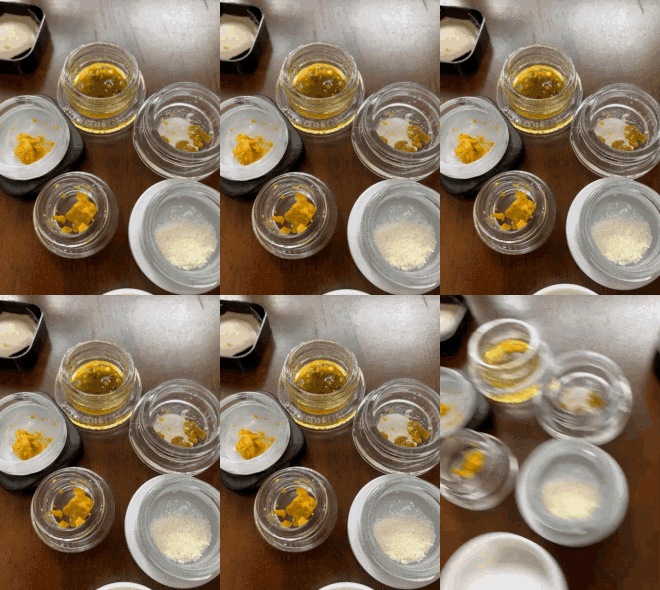
Light the charcoal. Sprinkle the sage. Negative energy go away. Okie dokie! Today, staying in line with cannabis culture, I want to discuss another form of cannabis that has developed its own subculture in the last decade. It’s the use of concentrates commonly known as “dabbing.” It has become one of the favored ways of using marijuana. And one of my favorites as well.
Concentrates are just concentrated forms of marijuana that can get you very high, very quickly. And if not done correctly, can be a horribly unpleasant experience. When I began using concentrates, it didn’t take long for me to grasp the concept of moderation. I have overdabbed accidently a few times. And oh how I couldn’t wait for my high to come down to a more pleasant level. Concentrates are made in many ways such as: wax, oil, shatter, or budder. They can be consumed by dabbing, vaping, or adding to joints, blunts or bowls.
The extraction methods that gather all of the cannabinoids and terpenes of the plant can be done by:
Solvent based– butane, propane, ethanol or CO2.
Solventless: Pressure, heat, or ice water.
Forms include:
Wax: A waxy, pliable consistency.
Oil: A liquid form commonly used for vape cartridges or edibles.
Shatter: A glass like consistency.
Budder: A whipped or creamy consistency.
Other: hash oil and resin.
Consumption methods:
Dabbing: used with a device called a “dab rig” which vaporizes the concentrate for inhalation.
Vaping: Using a concentrate pen or cartridge sometimes with pre-filled concentrated substances.
Adding to bowls/joints/blunts: Adding a small amount to a bowl of flower or rolling into a joint or a blunt. I personally wouldn’t use these forms on a bowl. It will clog your pipe or bong and you will lose product.
Concentrates have THC percentages that range from 60%-90%. Do you see what I mean? Concentrates are like smoking three joints at one time. And the effects are almost immediate. You can become intoxicated very quickly. And if you do too much, it can leave you very sick. The results are nothing worse than getting too drunk. Complete with nausea, vomiting, sweating and/or bad paranoia. However, if you need a quick delivery versus waiting on the flower to work, this is a highly effective route.
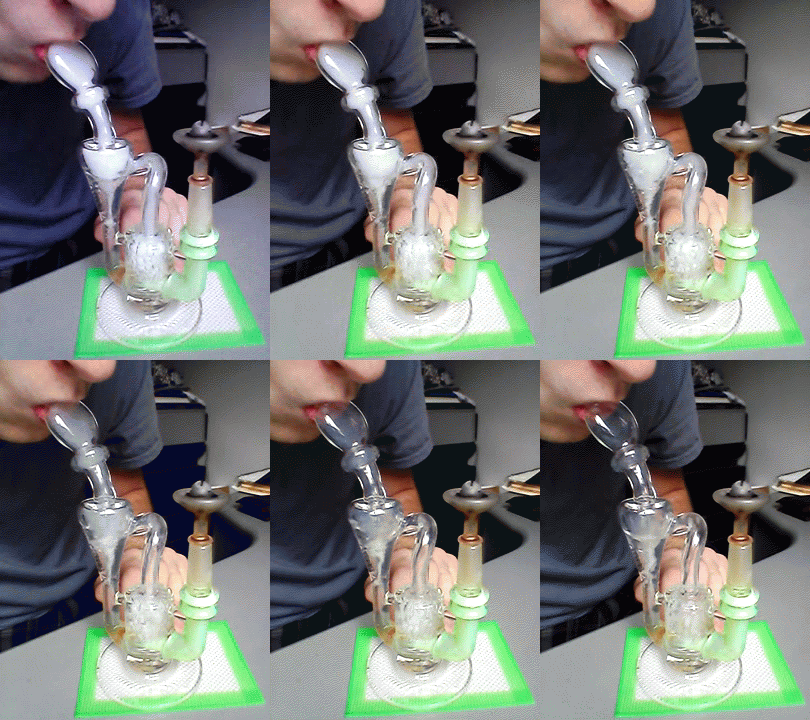
Dabbing is typically used with equipment known as a “dab rig” that requires that you heat a metal or a glass nail and then drop a small amount of the concentrate on the heated surface. It is then vaportized and flows into the maze of the glass until it reaches your mouth for inhalation. I have a silicone dab kit because I have children and cats who do not care about beautiful pieces. And if it gets knocked off there’s no breakage. Dab rigs are typically around $60 to thousands of dollars. They now have dab rigs that have electric nails, called e-rigs, which are in the range from about $100 to several hundreds of dollars. They are safer than using a blow torch to heat up a nail. I’m perfectly happy with my silicone with metal nail and using a blow torch.
Concentrate Vape Pens are also something that I really enjoy using as it’s a more portable way of using in public. It consists of a coil that’s heated by pressing a button after depositing some of your concentrate into the reservoir. This is what I call my “adult binky.” Since I suffer from PTSD, panic attacks and social anxiety, I can take this with me while I run errands. And I put it to good use. It’s also very convenient when going out of town. Before you do that, consider checking into state laws since it’s still not legal nationally. If you are found in possession of concentrates, you can be charged with a felony. To me, personally, it’s worth the risk. Because my quality of life depends on it. I also have a medical cannabis card for the state of Mississippi but is not considered legal in other states without reciprocity. As long as I have my medical card, in this state, and I am not considered impaired, then it is completely legal. For people who live in states where you can buy cannabis recreationally, you cannot be charged with a possession or paraphernalia related to cannabis.
With fentanyl being a major issue, do not take the risk of buying any product from someone on the street, even if they tell you that it was bought at a dispensary. They do not always tell the truth. Even if your friend tells you that they have a friend who bought it at a dispensary. Again, that is probably what was told to them. It doesn’t mean that they verified that information.
When I lived in Texas, I would buy my weed from a guy that I got to know at a doctor’s office. But even then, I didn’t know for sure. I was just so desperate for some type of relief that I didn’t care. And I was willing to gamble with my life despite knowing the dangers.
Do not allow someone to dab you without knowing that they have the respect for you as a beginner. I have been overdabbed and it is not fun. Some people find it quite funny. I do not. Everyone has the right to enjoy the plant, as much as, anyone else. Start slowly and move at your own pace. That one bad experience can take the beauty out of an experience that is supposed to be heavenly. Thanks for reading! And keep dabbing!
“A little dab will do ya!”
-Dana Landrum-Arnold
***Don’t forget to watch the video!***
I was not allowed to upload the video for this post. So, I’ve provided a link instead.
“I find it quite ironic that the most dangerous thing about weed is getting caught with it.”
-Bill Murray
Light the charcoal. Sprinkle the sage. Negative energy go aways. Okie dokie! Today marks my second favorite time of the year. Yep it’s the month of 420! Not everyone agrees with it. For me though, it has saved my life. To the naysayers, there is absolutely nothing you can tell me negatively that I’ll believe about the plant called cannabis.
Cannabis has been around for forever and ever amen with a lot of negative connotations. My own family still takes issue with the fact that federally it’s still considered illegal. And you can’t really have a conversation about it because some of them are not willing to discuss the science. In a lot of ways vilifying this plant because of the Nancy Reagan 80’s seems to have stuck. I have family members that are earthy, crunchy thinkers in regard to health. And their lives all about healing with fruits, vegetables and herbs. But so am I. I like fruits, vegetables and herbs too. I just smoke my herbs. The side effects are very simple: sleepy, happy and hungry. “Big Pharma” on the other hand are constantly being sued for all of the harmful side effects. No thank you to medications that cause more harm than good. And drinking and driving home is the much safer option?
Over the years cannabis has gotten a horrible name. It’s not because it’s a dangerous drug. In fact, cannabis is one of the healthiest plants available. Our country has now made it a priority to invest money into science and discovering the healing properties. And there are scientific studies proving that cannabis isn’t as bad as once thought.
Unlike alcohol and other harmful drugs, cannabis continues to provide people with life saving medicine as it has for me. It’s healing cannabinoids help with chronic pain, epilepsy, anxiety, multiple sclerosis, PTSD, alzheimer’s disease, chemotherapy induced nausea and vomiting, insomnia, cancer, fighting cancer, inflammatory bowel disease, tourette syndrome, crohn’s disease, depression, HIV/AIDS, muscle spasms, anorexia, amyotrophic lateral sclerosis, addiction, inflammation,parkinson’s disease, PTSD, reducing blood pressure, anxiety disorders, stabilizing blood sugar, decreasing overdose rates, opioid dependence, spinal cord injuries, dystonia, dementia, glaucoma, schizophrenia and other medical and psychological problems (ncbi.nlm.nih.gov, 2017).
The days of believing that cannabis is a drug that causes great bodily harm are over. Hallelujah! Now let me point out one thing. Cannabis isn’t for everyone just like certain pharmaceuticals aren’t. And I agree that some people might have some type of addiction issues. However, there is no physical withdrawal that occurs. It is impossible to overdose on cannabis. You might take or use too much, causing intoxication. But that’s not the plant’s fault. If you have a problem with addiction to this, it is a “you” problem not the substance.
I can only speak for myself as one who has a lengthy history of addiction, I have never had a problem with marijuana. The problems have always come back to myself and the maladaptive ways of coping. Buying marijuana off the streets where most of it has come from cartels, it can be sprayed with poisons which increase the effects and dependency. And this is also where a lot of the paranoia stems from. Yes, there are people who complain about paranoia induced by cannabis that is bought from very safe dispensaries. These cases are very minimal on a broad scale. So, marijuana might not fit you as an individual. However,for people like me who continue to reap the benefits of this plant minus the addiction, I can say that it has truly saved my life. And as a result has lowered the amount of suicidal ideations that used to plague me on a daily basis.
The effects of PTSD continue to complicate my life. The overwhelming symptoms are not near what they once were. Cannabis does NOT cure PTSD. It simply helps with the unfriendly symptoms and side effects. I have gone from being on close to fifteen psychiatric “big pharma” medications down to zero. I didn’t see the point of taking Parkinson’s medication for a side effect of the anti-depressant. Not to mention that I wasn’t able to experience emotions in a way to gauge how I was healing. And everything from the waist down was literally dead. If that’s the price you pay for happiness, then I would rather be sad. I still struggle hard sometimes. And that is where working with coach is other beneficial piece to my treatment. If it is not a substance that doesn’t work for you then move on. But don’t demonize this medication for those of us that it helps to ensure survivability. Thanks for reading! Keep moving forward.
“It is irresponsible not to provide the best care we can as a medical community, care that could involve marijuana. We have been terribly and systematically misled for nearly 70 years in the United States, and I apologize for my own role in that.”











 This Puzzled Life