
Sexual Assault Awareness: I Survived. Now I Speak. 

“I am not the sum of what was done to me. I am the proof that even in the places where humanity failed, my spirit refused to.”

-This Puzzled Life

Light the charcoal. Sprinkle the sage. Today, I’m going to talk about sexual assault. Religious betrayal. And the kind of generational silence that tries to swallow whole communities. We might as well start with a cleansing. Lord knows the air gets thick when truth finally walks into the room.

There are some topics into which you don’t ease. You cannonball straight in. Bless your heart and everyone else’s. Sexual Assault Awareness is one of them. And if you grew up anywhere near the Deep South like I did, you know we were raised on two things casseroles and silence. One of those is delicious. The other is deadly. So today, we’re breaking the generational habit of whispering about the things that actually need megaphones. Let’s start with the part that makes people shift in their seats like they’re sitting on a church pew with a splinter.

These aren’t “somewhere out there” numbers. These are “in your neighborhood, in your school, in your family, in your church, and in your workplace” numbers. And if that makes you uncomfortable, good. Discomfort is the first sign your moral compass still works.

Survivors are people who still show up to work. Raise kids. Laugh at memes. And try to remember where they put their keys. They’re not broken. They’re exhausted from carrying what should’ve never been theirs to hold. And if you’re a survivor reading this, let me say this plainly. You are not the shame. You are the evidence that harm can be done and still not win. The shame belongs with the perpetrator.

Now, I’m not talking about making light of this kind of crime. That’s not humor. That’s cruelty with a punchline. I’m talking about the kind of humor survivors use to stay alive. The kind that says, “I’ve been through hell. But I still have jokes. So clearly hell didn’t win.” It’s the same humor Southern aunties use when they say things like, “We don’t air our dirty laundry.” While standing in front of a clothesline full of secrets flapping in the wind. Humor is a pressure valve. It lets us breathe while we talk about the things that steal breath.

If someone trusts you enough to tell you they were assaulted, here’s your script. “I’m so sorry that happened,” “I believe you” and “How can I support you right now?” Notice what’s missing? Questions that sound like cross examinations. Advice no one asked for. And any sentence beginning with “Why didn’t you…?” Survivors don’t need detectives. They need validation that the abuse happened and that it wasn’t their fault in any way.

Sexual abuse cases in the U.S. justice system have increased by 62.5% since 2020. Yet the vast majority of survivors never see justice at all. And before anyone says “Well, reporting is easy.” Let me remind you. If reporting were easy, we wouldn’t have a national hotline that stays busy 24/7.
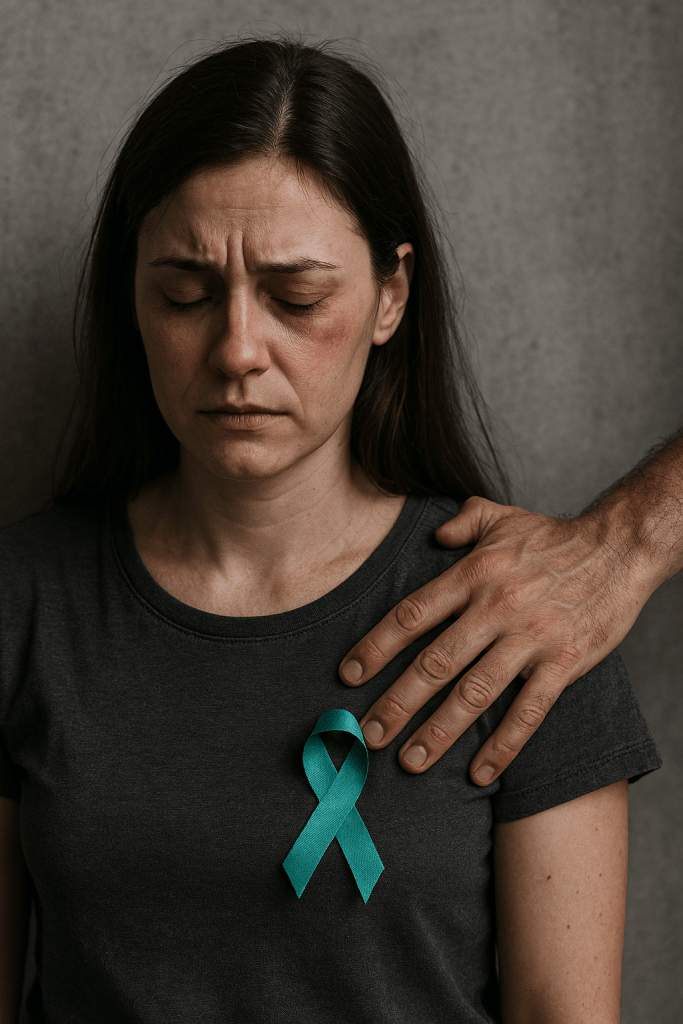
People who’ve lived through abuse, especially abuse justified with moral or religious language, tend to recognize certain dynamics instantly. Power used without accountability. Authority figures protecting each other instead of the vulnerable. Moral language used as a shield for harmful behavior. Gaslighting and denial when confronted with wrongdoing. Silencing or discrediting those who speak up through threats and intimidation. And systems that reward loyalty over truth.

These patterns show up in many places like churches, marriages, schools, corporations, and yes, in government. Survivors often have the clearest radar for institutional betrayal. Because they’ve lived it in the most intimate way possible. When you look at the world and say, “This feels familiar.” That’s not paranoia. That’s pattern recognition born from experience.

I grew up in a world where people could quote scripture faster than they could show compassion. Where pastors’ children could harm a five‑year‑old and still be called “good families.” And where a husband could twist the Bible into a weapon and call it marriage. I know what it feels like to be violated in Jesus’ name. I know what it feels like to be told your body is a man’s property. I know what it feels like when resistance is met with punishment. When silence is demanded. And when trauma is treated like an inconvenience.

Trump said of rape victim E. Jean Carroll “she loved it!” But he also said he didn’t know her. About 29:10 is where he says this. Watch the whole thing and tell me why you think victims don’t come out sooner. This is the way that abusers keep their victims in fear for years. Mine did the same thing.

After a lifetime of being told to stay quiet when people in power start using God, morality, or “order” as a shield, it’s never about holiness. It’s about control. I’ve lived under that kind of control. I’ve survived it. I know exactly what it looks like when someone wraps abuse in scripture and calls it righteousness. So, when I see institutions using the same tactics, same silencing, same moral posturing to protect themselves instead of the people they harm, I don’t need a press release to tell me what’s going on. Survivors recognize the pattern long before the headlines catch up.

What do we do? We talk. We teach. We intervene. We stop pretending this is a “women’s issue” or a “men’s issue” or a “kids these days” issue. It’s a human issue. We raise kids who know consent isn’t a suggestion. We raise adults who know silence is complicity. We raise communities where survivors don’t have to choose between telling the truth and keeping the peace.

And at the end of the day, the pattern speaks louder than any press conference ever could. The world watched as Jeffrey Epstein’s name kept resurfacing in court documents, flight logs, and survivor testimony. The world also watched as questions piled up about who knew what, who looked away, and who benefited from the silence. People aren’t asking these questions because they’re bored. They’re asking because the public record is full of smoke. And every time someone tries to follow it, another door slams shut.

If the Trump administration thought history would politely avert its eyes, they miscalculated. Survivors don’t forget. Journalists don’t forget. The internet definitely doesn’t forget. And the truth has a funny habit of surviving every cover‑up attempt. Because eventually, the receipts outlast the people who hoped we’d stop reading them.

And to my fellow survivors, you are not alone. You are not to blame. You are not too much. You are a whole person with a whole story. And the world is better because you’re still here to tell it. And if anyone tries to silence you, just remember. You come from a long line of people who know how to make noise when it matters.

After the childhood abuse, the marital rape, the spiritual manipulation, the PTSD that still echoes through my bones. I’ve learned something important. Abuse doesn’t just happen in homes and churches. It happens anywhere power goes unchecked. So, if you hear a familiar pattern in the way certain institutions operate today, you’re not imagining it. 

Once you’ve lived through the kind of darkness that tries to disguise itself as divine, you stop being intimidated by titles, pulpits, or podiums. You stop mistaking authority for integrity. And you stop believing that silence is the price of peace. If your power depends on someone else’s silence, it’s not leadership. It’s abuse with better lighting. And survivors like me aren’t afraid of the dark anymore. Thanks for reading! And never let them silence you.

Affirmation: I honor the child I was, the survivor I became, and the woman I am now. My voice is not fragile. It is forged. My healing is not a question. It is a declaration. I rise today not because the past was gentle, but because I am.

***Don’t forget to watch the video!***

#ThisPuzzledLife
Child Abuse Awareness: When the Safe Places Aren’t Safe

“When the places built to protect children become the places that break them, the wound isn’t just personal. It’s a failure of every adult who chose silence over responsibility.”

-This Puzzled Life

Light the candles. Move the breakables. Tell the ancestors to take their seats and pass the sweet tea. We’re not easing into this one. And before the denial committee calls an emergency meeting to rehearse their “But that’s not what we meant” speeches, let’s go ahead and say the quiet part out loud.

Child abuse doesn’t just happen in the home. It happens in classrooms where teachers misuse authority. In churches where “discipline” is weaponized. In sports programs where adults confuse control with coaching. In friend groups where older kids exploit younger ones. And in any space where a child’s safety depends on an adult’s integrity, and that integrity fails.

Let me say this in the clearest way I know how. And  coming from someone who personally knows a little something on this topic, what happened to you was abuse. And it was a betrayal of power. Schools and other places are supposed to be safe. Adults in those buildings are supposed to protect children. You were not protected. And when abuse happens in a place that claims to be safe, the damage hits on multiple layers at once. It’s not just the act itself. It’s the collapse of every structure that was supposed to shield you.

You were a child. They were adults. The responsibilities were never equal. The conflict you still feel between “their job” and “your role” is a direct result of their failure, not yours. The tactics you endured weren’t just harmful. They were calculated. “Diabolical” would be the right word. The cruelty, the gaslighting, the public humiliation? These are methods designed to break a person’s sense of reality and self‑worth. Many adults would crumble under that kind of psychological warfare. Expecting a child to withstand it is unthinkable. And, yet, if you’re reading this, you did. Not because you should have had to. Not because you were equipped for it. But because you had no choice. That’s not resilience by choice. That’s survival by necessity.

Here are a few sources you might want to dive into.

1. Most child abuse is never reported (all types)

U.S. Department of Justice – Bureau of Justice Statistics“86% of child abuse cases are never reported to authorities.” 🔗 https://bjs.ojp.gov/content/pub/pdf/cv22.pdf (bjs.ojp.gov in Bing) (See section on underreporting of violent crime against children.)

2. Children often disclose abuse but are ignored or silenced

Health & Social Care in the Community (2025) Study on child maltreatment disclosures found that children frequently disclose abuse (physical, emotional, sexual, neglect) but are ignored, dismissed, or punished by adults. 🔗 https://onlinelibrary.wiley.com/doi/10.1111/hsc.14336(onlinelibrary.wiley.com in Bing)

3. Delayed disclosure is common across ALL abuse types

CHILD USA – National Think Tank for Child ProtectionOver 70% of victims delay disclosure for at least five years, regardless of abuse type. 🔗 https://childusa.org/wp-content/uploads/2024/01/Delayed-Disclosure-Report.pdf(childusa.org in Bing)

4. Institutional betrayal: schools, churches, programs often ignore reports

Journal of Child Sexual Abuse (applies to institutional responses across all abuse types) Shows that institutions frequently dismiss, minimize, or cover up reports of abuse.🔗 https://www.tandfonline.com/doi/full/10.1080/10538712.2019.1570402 (tandfonline.com in Bing)

Note: While this journal focuses on sexual abuse, the institutional‑betrayal patterns. It’s documents are identical across physical, emotional, and psychological abuse.

5. Teachers and school staff rarely report abuse, even when required by law

U.S. Department of Education Report Only 11% of school personnel who witness or suspect abuse report it. 🔗 https://www2.ed.gov/rschstat/research/pubs/misconductreview/report.pdf (www2.ed.gov in Bing)

6. Children who report abuse are often disbelieved or blamed

National Institute of Justice – Child Abuse Disclosure Research Children frequently disclose abuse but face denial, minimization, or retaliation from adults. 🔗 https://nij.ojp.gov/topics/articles/child-abuse-disclosure-what-research-tells-us (nij.ojp.gov in Bing)

The wound you carry makes sense. Trauma doesn’t fade just because time passes. It imprints itself. It becomes a landmark in the psyche. And  something you walk around, navigate, and learn to live beside. Therapy can help you understand it. But it can’t erase the fact that it happened. And that it shouldn’t have happened. The gaslighting you endured stole something fundamental. Your ability to trust your own perception.

When adults deny a child’s reality, the child learns to doubt themselves. When they shame a child publicly, the child learns their existence is a problem. When adults ignore a child’s cries for help, the child learns that safety is conditional or imaginary. That’s not a child “being dramatic.” That’s a child being abandoned. And then abandonment by the very people who were supposed to protect you happened. The people you trusted were identified as educators, authority figures,  and other adults in power. And that leaves a wound that is both emotional and existential. You were trapped. And that was not your fault.

A child cannot escape a system built around them. A child cannot “just tell someone” when the people they’re supposed to tell are the ones causing the harm or ignoring it. A child cannot “make better choices” when every direction is blocked. You survived in the only ways available to you. Your mind did what it had to do. Your body did what it had to do. Your spirit did what it had to do. Survival is not shameful. Survival is not weak. Survival is not something you owe anyone an explanation for.

 And the fact of the matter is that THE FAILURE WAS THEIRS. NOT YOURS. You were a child. They were adults. They had power. You had none. The responsibility was theirs. The consequences were yours. And that imbalance is the injustice you’re naming. What you lived through would have broken many adults. The fact that you’re here speaking and naming it is refusing to let it stay buried. And that is strength. Even if it doesn’t feel like it. Thanks for reading! And do your part to help protect our children.

Affirmation: “I honor the child who survived what no child should face. I am not defined by what was done to me. I am defined by the courage it takes to speak it.”

***Don’t forget to watch the video!***

#ThisPuzzledLife
Self‑Harm Awareness Myths: When the Truth Shows Up With Receipts and No Patience Left

“Ignorance about self‑harm spreads fast. But education stomps out stupidity quicker than a truth bomb at a family reunion.”

 -This Puzzled Life

Light the candles. Hide the breakables. Tell the ancestors to brace themselves. We’re diving into self‑harm myths and the conservative Christian commentary, literally, no one requested. This is where we bust nonsense. Drop truth. And let the cats handle the theology since they’re the only ones qualified.

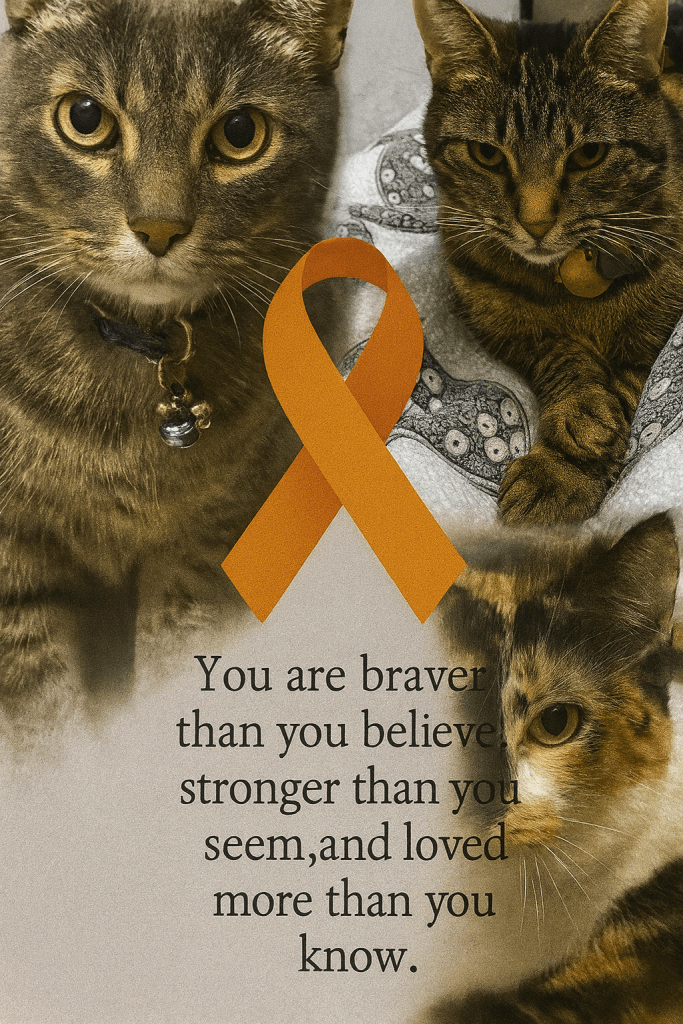
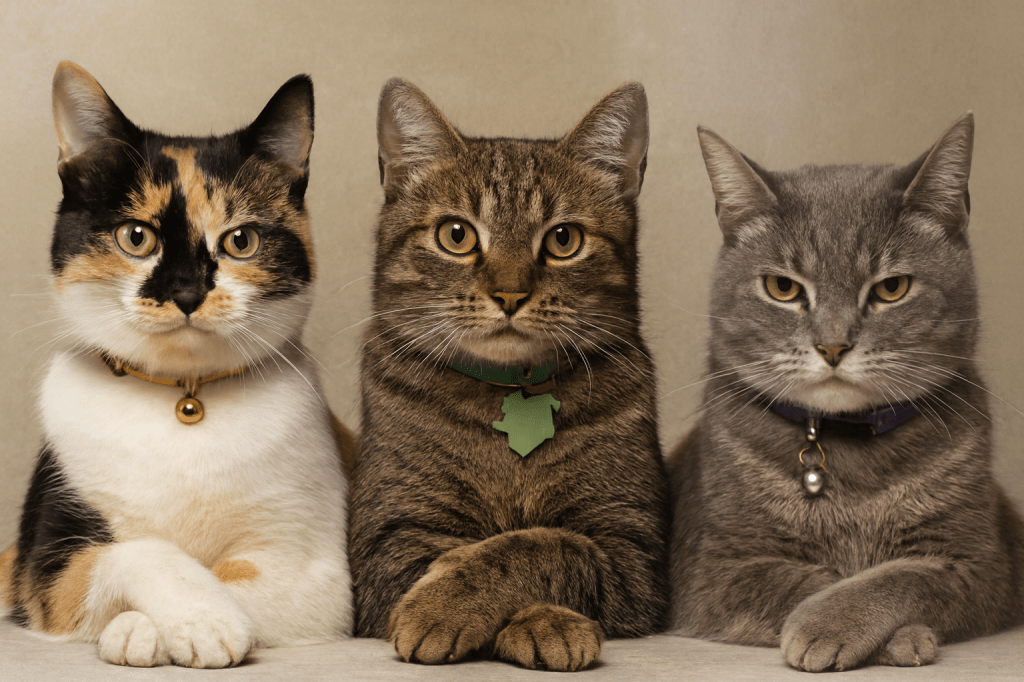
Self‑harm myths spread faster than gossip at a Mississippi baby shower. They are dramatic, wrong, and usually sourced from someone’s cousin’s friend’s Facebook post from 2012. The cats immediately held a revival in the hallway. Piper paced like a preacher warming up. Coco knocked over a Bible‑verse plaque. Tinkerbell just stared like, “Bless their hearts. But also, absolutely not.”

When some conservative Christians talk about self‑harm, they don’t offer compassion. They offer ignorance wrapped in scripture. And tied with a bow of hurtfulness. They confuse suffering with sin. And empathy with enabling. And the spiritual accuracy of a possum reading a teleprompter.

Meanwhile, the cats are like, “Have y’all tried kindness? Revolutionary concept.”

They held a full meeting:

  • Tinkerbell: “Ignorance is a choice.”
  • Coco: “And they’re choosing it like it’s on sale at Walmart.”
  • Piper: “If you don’t understand self‑harm, educate yourself. If you can’t, be quiet. If you can’t be quiet, go sit with the breakables.”

 Then we hit the myths:

  1. “They want attention.” If people wanted attention, they’d post a vague Facebook status. Self‑harm is hidden, private, and absolutely not performance art.
  2. “It only affects crazy people.” It affects anyone with a nervous system. Trauma doesn’t check IDs.
  3. “Why don’t they just ask for help?” Asking for help requires vulnerability, safety, and courage. Not everyone has that on tap.
  4. “They want to die.” Self‑harm and suicidal intent aren’t twins. They’re distant cousins who accidentally wore matching shirts.
  5.  “Talking about it makes people do it.” If talking made things happen, I’d have abs by now. Silence harms. Conversation helps.
  6. “It’s weakness.” Please. Anyone who’s survived trauma or a Southern holiday dinner is basically an emotional Navy SEAL.

And here’s the truth they never want to hear. Self‑harm is a difficult, deeply human coping behavior that can become addictive. Not a sin. Not a scandal. Not a character flaw. If I didn’t have scars, most folks wouldn’t know I’ve been navigating this for thirty‑seven years. But conservative Christians and ego‑inflated professionals always have the same three‑step treatment plan, “Open your Bible.” “We’ll add you to the prayer list.” “Just stop.” Groundbreaking. Truly. Why didn’t the entire field of psychology think of that?

Instead of compassion, they hammer nails into your coffin like it’s a church‑sponsored carpentry contest. They weaponize scripture. Sanctify stigma. And call it love. Even though judgment has never healed a single wound. But I’m still here. Still healing. Still telling the truth they’d rather bury. Still refusing to shrink so someone else can stay comfortable in their ignorance. If that makes me the family heretic, the rainbow‑colored black sheep, or the one who “asks too many questions,” then bless their hearts. I’d rather be honest and alive than silent and suffering. Thanks for reading! Stay educated.

Affirmation: I choose clarity, compassion, and growth. Ignorance has never healed a single soul.

***Don’t forget to watch the video!***

#ThisPuzzledLife
My Cat Tried to Call the Therapy Coach and Now We’re in a Full‑Blown Feline Intervention

“My system handles trauma like professionals. But the cats handle drama like they’re auditioning for a reality show called Real Housewives of the Litter Box.”

-This Puzzled Life

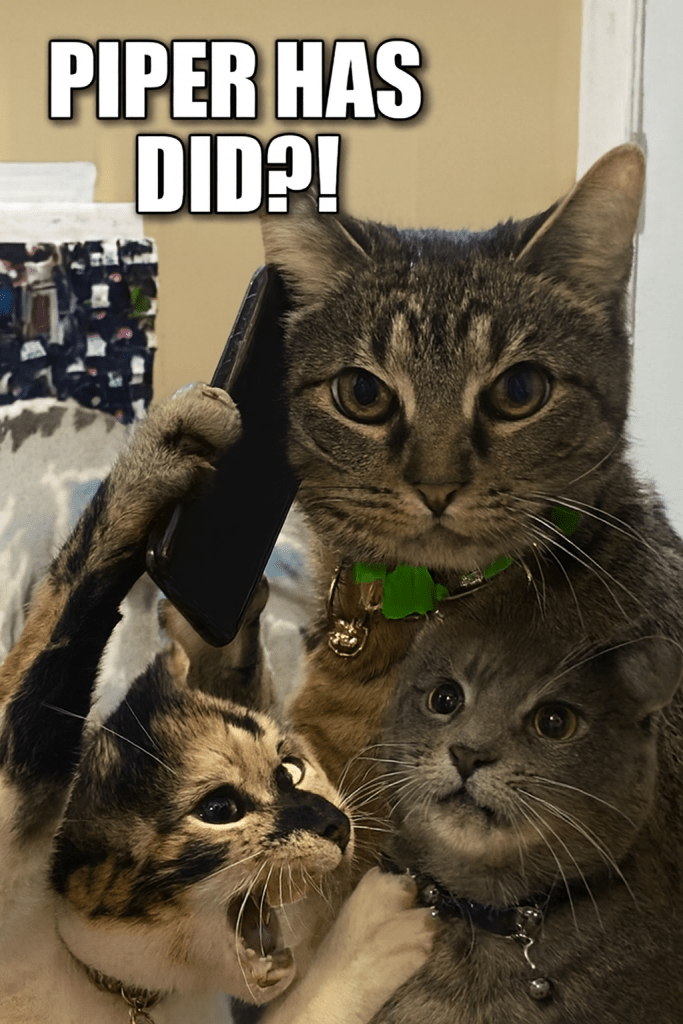
Light the charcoal. Sprinkle the sage. Secure the breakables. Today’s episode of This Puzzled Life features a full‑blown feline committee meeting after Piper, chaos in fur form, announced that she “might have Dissociative Identity Disorder.”

I have Dissociative Identity Disorder. Piper, however, is simply dramatic. And Tinkerbell and Coco are done with her antics. Welcome back where the sage is burning. The humidity is disrespectful. And the cats are holding more meetings than a Mississippi school board.

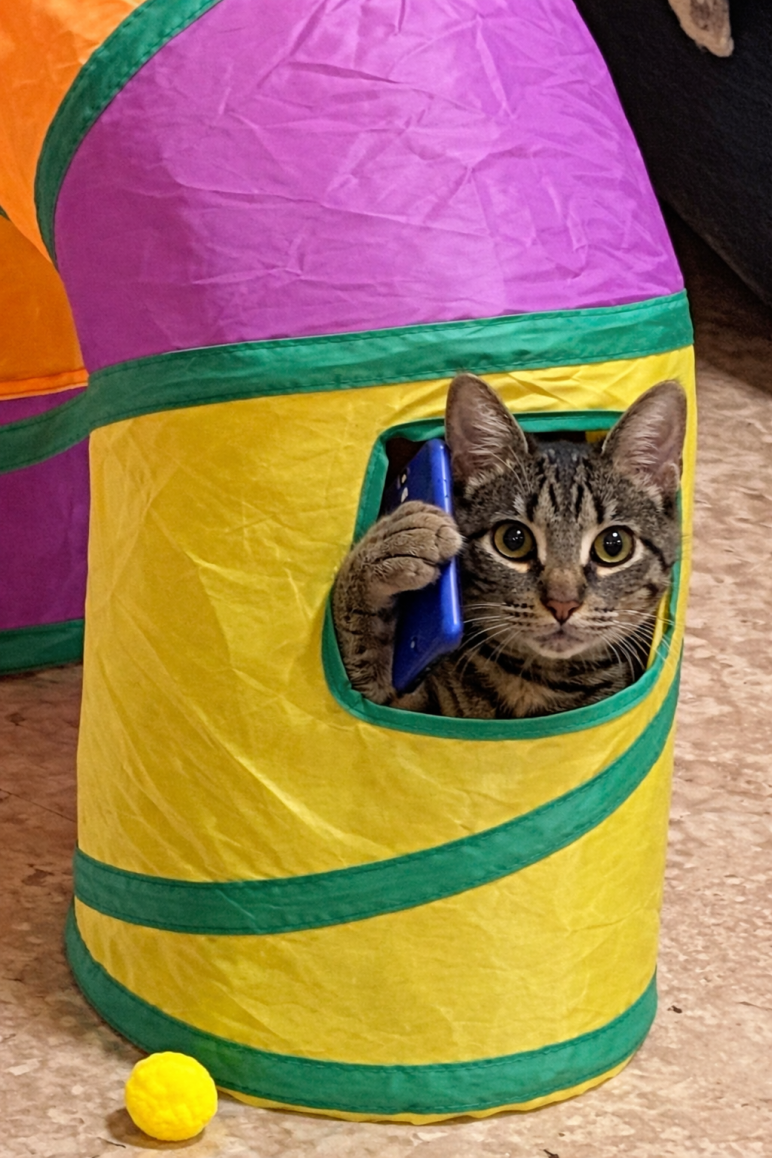
This morning started like any other. I was minding my business. Drinking my coffee. And trying to keep my nervous system from filing a complaint with HR. When Piper strutted into the room and announced that she “might have Dissociative Identity Disorder.” Before I could even blink, she was paw‑dialing my therapy coach like she had Blue Cross Blue Shield and a co‑pay. And that’s when Tinkerbell and Coco called an emergency meeting. Because apparently, in this house, I’m not the only one with a system. I’m just the only one with a diagnosis.

Tinkerbell climbed onto the arm of the couch like she was chairing a Mississippi church committee.

Tinkerbell: “This meeting will now come to order. Piper has made a claim. A bold one.”

Piper: “Ok. Well, there is no easy way to say this. I have DID.”

Tinkerbell: “Piper, having nine lives is not the same thing as having nine personalities. Stop confusing reincarnation with psychology.”

Coco: “Yeah, girl. Nine lives just means you make nine bad decisions. Not that you need nine therapists.”

Piper gasps, fluffs up, dramatic tail twitch

Piper:  “Wow! So, nobody believes me? Nobody supports my journey? I’m being silenced. This is oppression. I’m calling coach right now!”

Coco: “You can’t even remember where you left your toy mouse. Sit down.”

Piper: “I am a complex being with layers!”

Tinkerbell: “You’re a lasagna with fur. Calm down.”

Coco flicked her tail like she was swatting away generational trauma.

Coco: “She doesn’t have DID. She has Too Much Drama Disorder.”

Piper, sprawled across a pillow like a Victorian widow, sighed dramatically.

Piper: “Sometimes I feel like different versions of me.”

Tinkerbell blinked slowly. The kind of blink that says, Lord, give me strength.

Piper sat up, whiskers trembling with self‑importance.

Piper: “Sometimes I’m sweet. Sometimes I’m spicy. Sometimes I’m feral. That’s at least three personalities.”

Coco rolled her eyes so hard she almost saw her past lives.

According to Piper, and only Piper, she “dissociates” at least three times a day. To everyone else in the house, she simply forgets what she’s doing because she’s Piper.

This morning, she was walking toward her food bowl with purpose, confidence, and the swagger of a cat who believes she pays rent. Halfway there, she froze. Stared into the void. And blinked like she’d just been unplugged and rebooted.

Tinkerbell watched her with the patience of a grandmother who’s seen too much.

Tinkerbell: “She’s not dissociating. She’s buffering.”

Coco flicked her tail

Coco: “That’s not a switch. That’s a brain fart.”

But Piper insisted.

Piper: “I think I dissociated. I forgot what I was doing.”

Tinkerbell sighed

Tinkerbell: “Sweetheart, you forget what you’re doing because you have the attention span of a dust bunny.”

Coco“If staring at the wall counts as dissociating, then every cat on Earth needs a therapist.”

Piper, unbothered, continued staring into the middle distance like she was receiving messages from the universe.

Piper: “I just drifted away.”

Tinkerbell: “You drifted because you saw a dust particle and got confused.”

Coco: “You’re not dissociating. You’re daydreaming with commitment.”

Coco: “That’s called being a cat.”

Tinkerbell nodded

Tinkerbell: “You’re not special, darling. You’re just enthusiastic.”

Piper gasped like someone insulted her casserole at a church potluck.

Piper: “So you’re saying I’m dramatic?”

Coco: “I’m saying you’re Piper.

This is where things went off the rails. Piper marched over to my phone. Tapped the screen with her paw, and said,

Piper: “I’m calling our therapy coach. I need a professional opinion.”

Tinkerbell nearly fell off the couch.

Tinkerbell: “Absolutely not. You are not dragging a licensed human into your nonsense.”

Coco leapt forward like she was blocking a football pass.

Coco: “Put the phone down. You don’t even know the passcode.”

Piper: “I know it’s numbers.”

Tinkerbell: “That is not enough.”

Piper: “I just want to ask if I have DID.”

Coco: “You don’t even have object permanence.”

Tinkerbell gestured toward me like she was presenting a case study.

Tinkerbell: “Our mom has DID. That’s a real thing. A trauma thing. A serious thing.”

Coco nodded, suddenly solemn

Coco: “She’s strong. She’s healing. She’s doing the work. You, on the other hand, tried to eat a rubber band yesterday.”

Piper: “It looked like a noodle.”

Tinkerbell: “It was not a noodle.”

Coco: “You’re not dissociating. You’re just unsupervised.”

Tinkerbell cleared her throat like a judge delivering a sentence

Tinkerbell: “Piper does not have DID. What she does have is excessive enthusiasm, poor impulse control, a flair for the dramatic, and a mother who spoils her.

Coco: “Case closed. Someone bring snacks.”

Piper: “I still think I should call the therapy coach.”

Tinkerbell: “If you touch that phone again, I’m calling Jesus.”

And as we wrap up this episode of Cats Who Need Supervision, I’ve realized something important. Living with DID is complex, sacred, and deeply human. But living with these cats is a full‑time job with no benefits and no union representation.

Some days my system is grounded and organized. Other days it’s buffering like a Dollar Tree Wi‑Fi router in a thunderstorm. And meanwhile, Piper is over here diagnosing herself with conditions she found on TikTok. Tinkerbell is exhausted. Coco is judging everyone. And Piper is still trying to call the therapy coach.

To all of us I wish healing, much laughter, surviving, and keeping the phone away from the cat who thinks she needs a treatment plan. And Piper? She’s grounded from the phone until further notice. Thanks for reading! Hug a cat if they let you.

Affirmation: Every part of you is powerful and worthy. And Piper, in all her chaotic glory, fully supports your healing while acting like she’s the self‑appointed spokesperson for your system.

***Don’t forget to watch the video!***

#ThisPuzzledLife
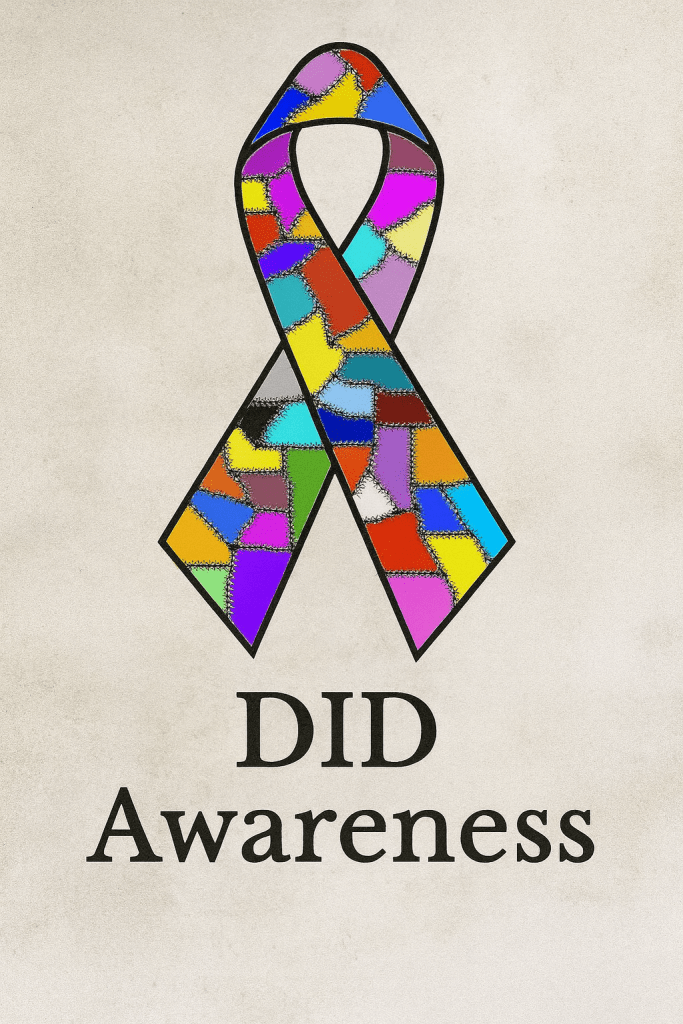
DID Awareness Month: Many Voices, One Whole Self

“My brain runs like a full‑time committee meeting, and the cats still think they’re the ones in charge.”

-This Puzzled Life

 Light the charcoal. Sprinkle the sage. Negative energy go away. Today’s blog is about Dissociative Identity Disorder. And three cats who have absolutely no business being professionally involved. But who insist on participating like they’re on salary.

Welcome to another episode of “My Life Is a Sitcom and Nobody Warned Me.” Secure your wigs. Because today we’re diving into DID Awareness also known as “Me, Myself, and the Entire Internal Group Chat.” 

Living with DID means my brain runs like a committee meeting that could’ve been an email. And my cats act like they’re the board of directors.

Tinkerbell: “Your system is more organized than Congress.”

Coco: “At least y’all communicate.”

Piper: “If your brain ever needs a new member, I’m available.”

Me: “Piper, sweetheart, this is not American Idol: Internal System Edition.”

But here we are. Me, my parts, my healing journey, and three cats who think they’re licensed clinicians. And they are ready to bring some humor, honesty, and a little Southern seasoning to DID Awareness Month. Strap in. It’s about to get educational, emotional, and unnecessarily funny.

DID is one of those topics people whisper about like it’s a scandal, a secret, or the recipe for Coca‑Cola. But in this house? We talk about it openly, honestly, and with the kind of humor that keeps us from spontaneously combusting into a pile of stress glitter.

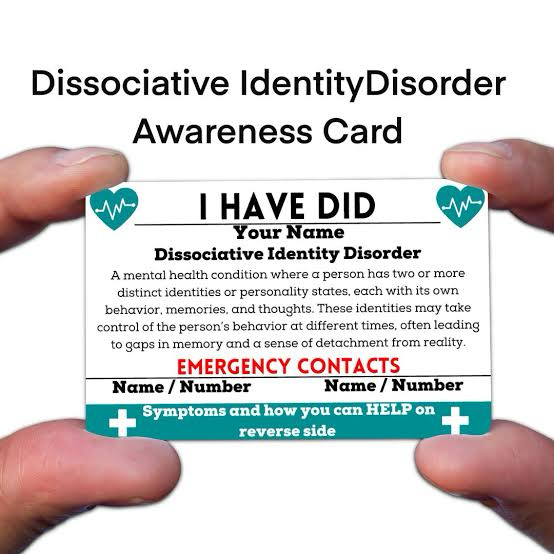
I have DID. Not “movie DID.” Not “Hollywood horror plot DID.” Actual, clinical, trauma‑born DID. It’s the kind that forms when a child survives more than any child ever should. And let me tell you, the cats have notes.

Tinkerbell (the wise elder): “Mom has a whole internal board of directors. I respect that. Some of y’all can’t even manage one mood.”

Coco (the judgmental aunt): “Honestly, the system is more organized than half the humans I’ve met. At least they communicate.”

Piper (chaos incarnate): “Do you think they’d let me join? I have ideas.”

Me: “Piper, this is not a talent show. This is a mental health condition.”

DID isn’t scary. It isn’t dangerous. It isn’t whatever nonsense Hollywood keeps trying to sell. It is a trauma response. A survival strategy. A brilliant adaptation. And a system built to protect a child who deserved safety. My system isn’t broken. It’s creative. It’s resilient. It’s the reason I’m still here. And the cats? They act like they’ve known every part since birth.

Tinkerbell: “Oh, this one likes soft blankets. Bring her the good one.” 

Coco: “This one needs boundaries. I’ll supervise.” 

Piper: “This one lets me climb the curtains.”

How does DID manifest? It is switching when overwhelmed and losing time. It’s different parts having different needs and internal conversations. It’s healing in layers. And learning to work as a team. It also looks like me drinking water because one part insists. Me resting because another refuses to push through. Me laughing because someone inside cracked a joke. And me healing because we’re doing this together. And the cats? They think they’re helping.

Coco: “I’m providing emotional support.” 

Piper: “I’m providing chaos.” 

Tinkerbell: “I’m providing supervision because these children need guidance.”

People with DID aren’t fragile. We aren’t dangerous. We aren’t confused. We aren’t “making it up.” We’re survivors. We’re complex. We’re healing. We’re doing the work. And we deserve understanding, not fear. Compassion, not judgment. Support, not silence.

Tinkerbell: “Respect the system. It’s doing its best.” 

Coco: “Awareness is important. Also, snacks.”

Piper: “If your brain ever needs a new member, I’m available.”

Me: “Piper, absolutely not.”

And as we wrap up this little journey through DID Awareness Month, complete with sage smoke, hydration, internal committee meetings, and three cats who are my emotional support staff .

DID is basically like trying to reboot a Wi‑Fi router from 2007. While the cats are batting the cords. The universe is buffering. And one part is whispering, “Have you tried turning it off and back on again?”

Some days I’m gliding through life like a well‑oiled machine. Other days I’m switching, grounding, journaling, and negotiating with my nervous system like it’s a toddler who missed nap time. And occasionally, the whole system is like, “Ma’am, we were not built for this timeline.” Meanwhile, the cats are offering commentary like they’re on payroll.

Here’s to us choosing growth even when our brains are running on 3% battery. Choosing compassion even when our patience is on backorder. And choosing to keep going even when life feels like a Walmart parking lot at 2 a.m.

 And then strut into the rest of your life like a woman who has survived every plot twist. Including the ones that arrived unannounced, barefoot, and holding a casserole of chaos. Because you’re still here. You’re still growing. And honestly? You’re doing better than half the people who think “self‑care” means buying a succulent and ignoring their feelings. Healing is holy. Humor is medicine. And I am too stubborn. I am too supported by my internal team and these judgmental cats to give up now. Thanks for reading! Keep moving forward.

Affirmation: I honor every part of my system. The strong ones, the soft ones, the tired ones, and the healing ones. I move through this world with resilience, humor, and a whole internal team that refuses to give up on me. I am whole, worthy, supported, and doing beautifully, no matter who’s fronting or which cat thinks they’re in charge today.

***Don’t forget to watch the video!***

#ThisPuzzledLife
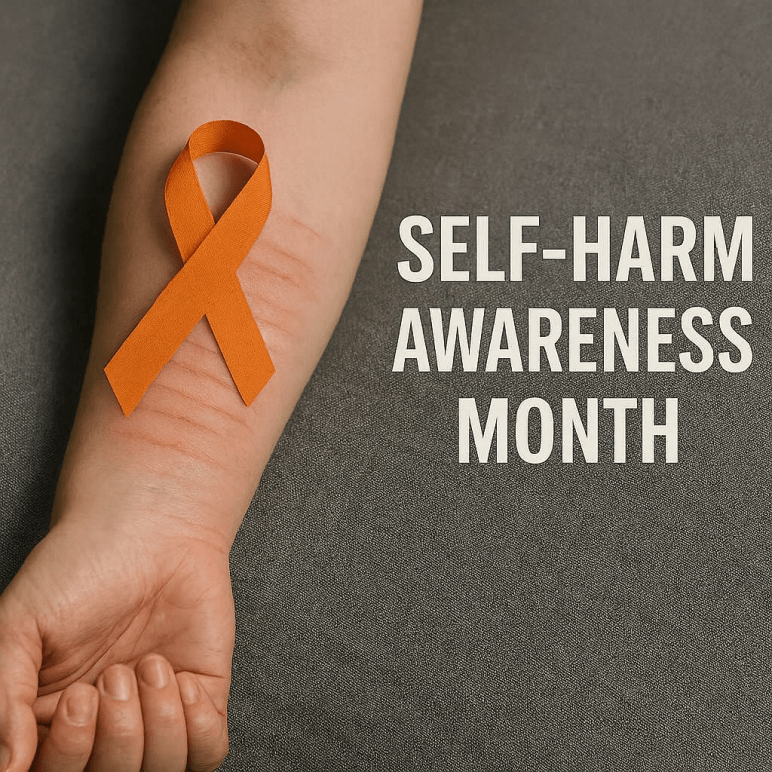
Self‑Harm Awareness Month: Where Growth Happens and My Nervous System Tries Its Best

“I didn’t choose the healing journey. The healing journey chose, dragged me and asked for gas money.”

-Unknown

Light the charcoal. Sprinkle the sage. Negative energy go away. It’s Self‑Harm Awareness Month, and if there’s one thing this month teaches us, it’s that healing is messy, sacred, and occasionally accompanied by a cat sitting on your chest like a furry emotional support paperweight.

Self‑harm is one of those topics people whisper about like it’s Voldemort, taxes, or the time they accidentally liked their ex’s Instagram post from 2014. But here? We talk about it with honesty, compassion, and the kind of humor that keeps us from spontaneously combusting. Self‑harm isn’t about attention. It’s about pain. And the people who say otherwise are usually the same ones who think essential oils can cure a broken femur.

Self‑harm doesn’t happen because someone is weak. It happens because someone is overwhelmed, hurting, or trying to survive emotions that feel too big for one body. It’s a coping mechanism. Not a character flaw. But the world loves to misunderstand what it doesn’t want to deal with. People will say things like, “Just think positive!,” “Have you tried yoga?,” “My cousin’s neighbor’s dog used to feel sad too.” Ma’am. Self‑harm is not cured by downward dog or inspirational throw pillows.

Let’s look at how the addiction occurs. The brain notices that shift and files it under: “This worked.” Not because it’s healthy. However, because it changed the emotional state quickly. The body reinforces it by sending a rush of endorphins, adrenaline, and dopamine. These chemicals temporarily reduce emotional pain or numbness. That relief, even if brief, can make the brain want to repeat the behavior. This is the same reinforcement loop seen in many addictions. Next, the cycle becomes automatic. And with overtime urgency , the brain starts linking stress → self‑harm, numbness → self‑harm, shame → self‑harm, and emotional overload → self‑harm. It becomes a reflex. A pattern, not a personality trait. A survival strategy, not a moral failing. And then shame strengthens the cycle. People who self‑harm often feel guilt, embarrassment, fear of being judged, or the pressure to hide. Those feelings can increase emotional distress. Which can then trigger the urge again. It becomes a loop that’s incredibly hard to break alone. And finally, it’s not about wanting to die. For many people, self‑harm is about wanting to feel something, wanting to feel less, wanting control, wanting relief, and wanting the emotional noise to stop. It’s a coping mechanism that becomes addictive because the pain underneath it is overwhelming. People don’t heal because they’re scolded. They heal because they’re understood.

What does help? Why don’t you try some compassion, support, safe conversations, professional care, people who don’t minimize your pain, and a community that refuses to let shame win. Some days you glide. Some days you wobble. Some days you crash into a display of discounted cereal and pretend it was part of your spiritual journey. Healing is allowed to be imperfect. You are allowed to be imperfect. You are allowed to take up space while you figure things out. “Keep going. Rest when you need to. And stop carrying pain alone.” You deserve support. You deserve compassion. You deserve to be here. And you deserve to heal without shame breathing down your neck like a judgmental church lady.

Self‑Harm Awareness Month isn’t about fear. It’s about understanding. It’s about breaking silence. It’s about reminding people they’re not alone. Not now, not ever. So, here’s to choosing growth even when it feels like a group project we didn’t sign up for, choosing compassion even when our patience is on backorder, choosing to stay when our brains are acting like and the whole system is like, “Ma’am, I was not built for this.”

Then light your sage, drink your water, moisturize your spirit, and strut into the rest of the month like a woman who has survived every plot twist life has thrown at her. Including the ones that arrived unannounced, barefoot, and holding a casserole of chaos. Because you’re still here. You’re still growing. And honestly? You’re doing better than half the people who think essential oils are a personality. 

And as we wrap up this emotional rollercoaster of a topic, complete with sage smoke, hydration, and my nervous system acting like it’s auditioning for a disaster movie. It is like trying to assemble IKEA furniture with no instructions, three missing screws, and a mysterious extra piece that definitely wasn’t in the box. I’ve also realized something important. And it is that healing is basically like trying to reboot a Wi‑Fi router from 2007. You unplug it, you wait, you pray, you bargain, you threaten it, you light a candle, and somehow it still blinks at you like, “Girl, I’m doing my best.” Same, router. 

Here’s to all of us out here choosing growth even when our brains are running on 3% battery. Choosing compassion even when our patience is on backorder. And choosing to keep going even when life feels like a Walmart parking lot at 2 a.m. You’re doing your best, you’re sweating, you’re questioning your life choices, and at some point you whisper, “If this thing collapses, I’m blaming Sweden.” Thanks for reading and remember, Healing is holy, humor is medicine, and you are too stubborn to give up now. But you keep going. Because that’s what we do. And if anyone tries to judge your healing journey, just smile sweetly and say, “Sweetheart, I’m busy becoming emotionally stable. I don’t have the bandwidth for your nonsense.” Thanks for reading! Get educated.

Affirmation: I honor my healing by choosing compassion over shame, boundaries over chaos, and growth over the nonsense that used to break me.

***Don’t forget to watch the video!***

#ThisPuzzledLife