
My Cat Tried to Call the Therapy Coach and Now We’re in a Full‑Blown Feline Intervention

“My system handles trauma like professionals. But the cats handle drama like they’re auditioning for a reality show called Real Housewives of the Litter Box.”

-This Puzzled Life

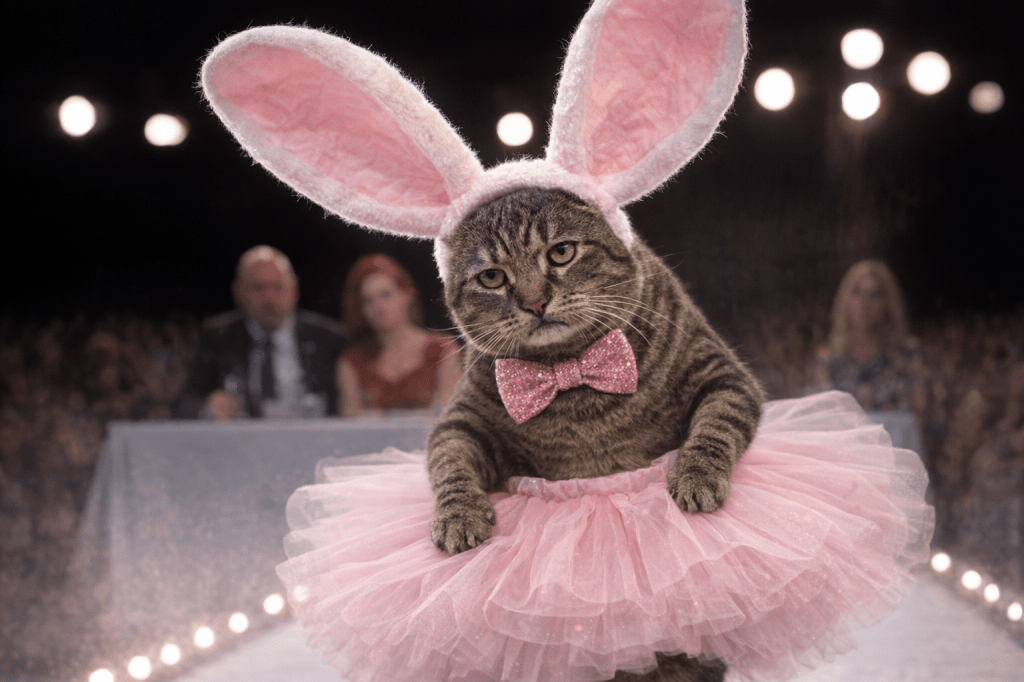
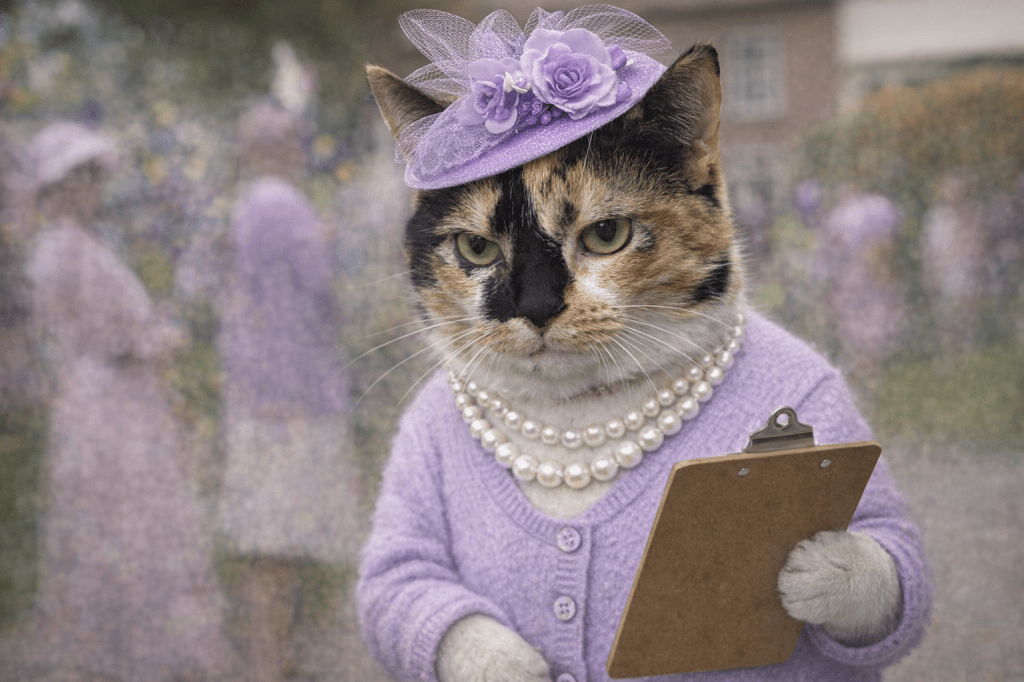
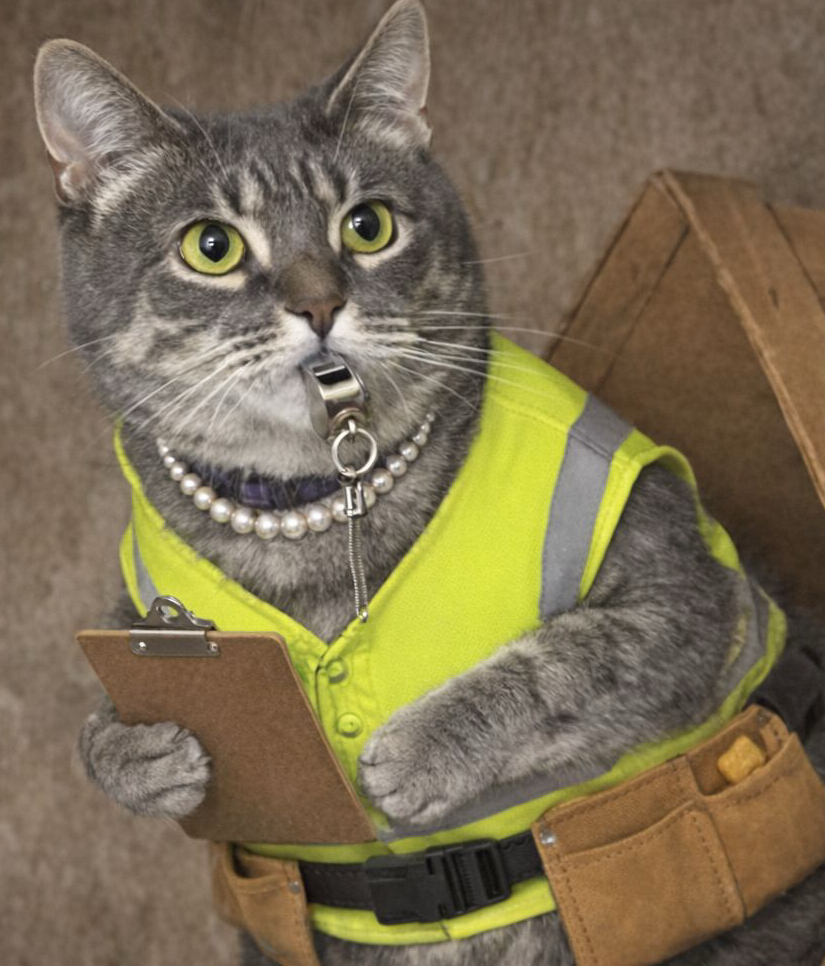
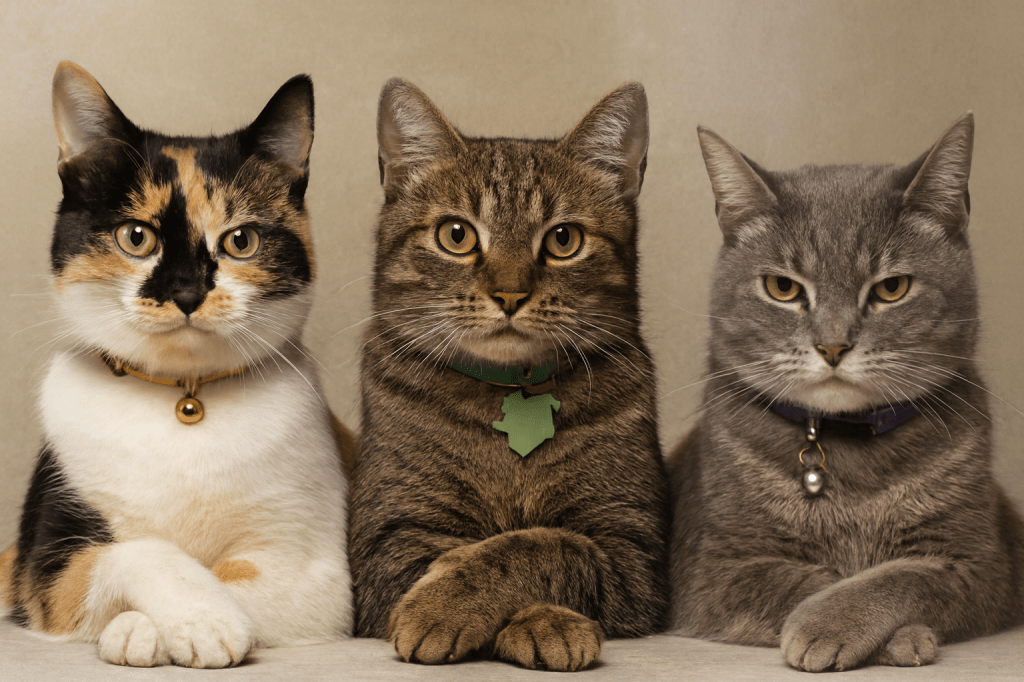
Light the charcoal. Sprinkle the sage. Secure the breakables. Today’s episode of This Puzzled Life features a full‑blown feline committee meeting after Piper, chaos in fur form, announced that she “might have Dissociative Identity Disorder.”

I have Dissociative Identity Disorder. Piper, however, is simply dramatic. And Tinkerbell and Coco are done with her antics. Welcome back where the sage is burning. The humidity is disrespectful. And the cats are holding more meetings than a Mississippi school board.

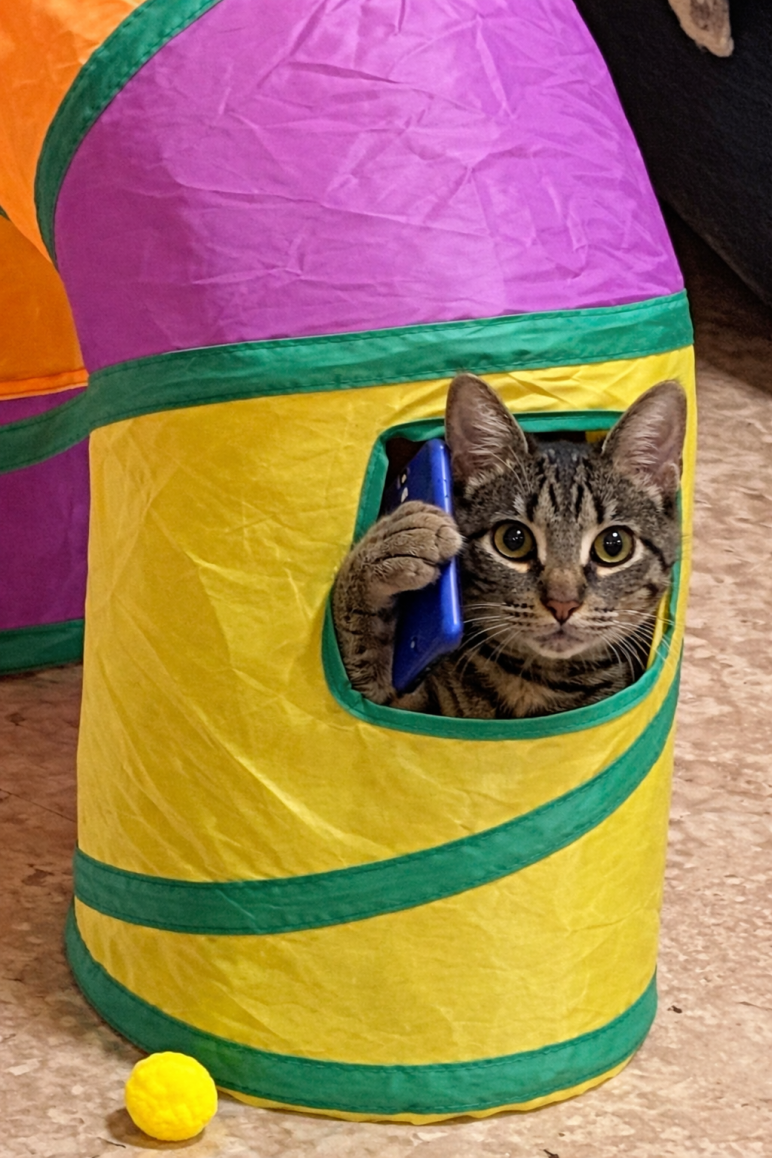
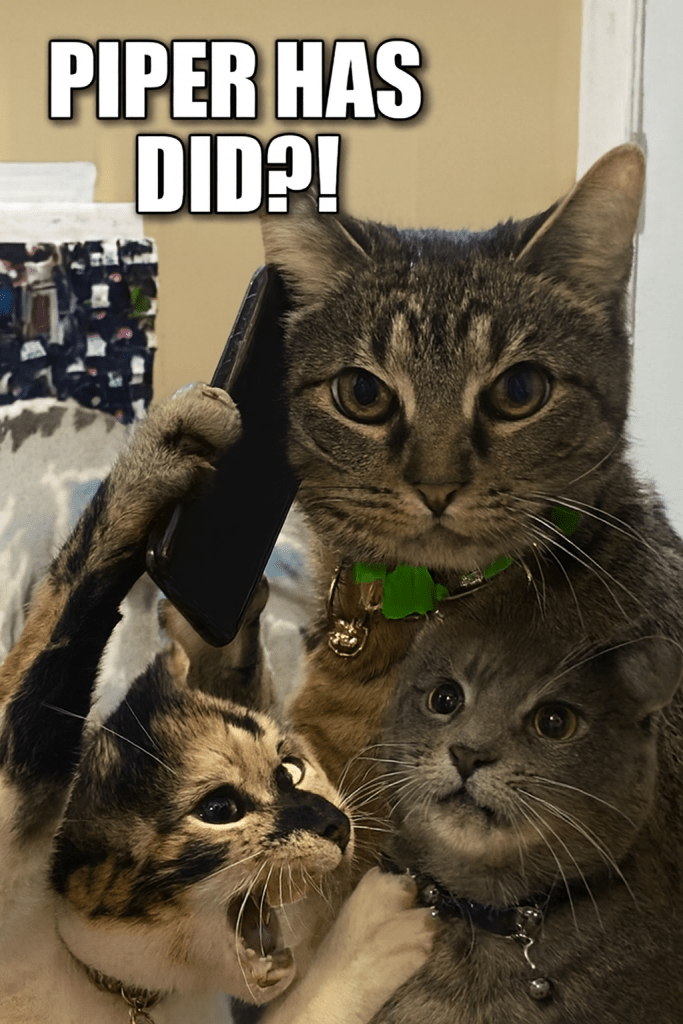
This morning started like any other. I was minding my business. Drinking my coffee. And trying to keep my nervous system from filing a complaint with HR. When Piper strutted into the room and announced that she “might have Dissociative Identity Disorder.” Before I could even blink, she was paw‑dialing my therapy coach like she had Blue Cross Blue Shield and a co‑pay. And that’s when Tinkerbell and Coco called an emergency meeting. Because apparently, in this house, I’m not the only one with a system. I’m just the only one with a diagnosis.

Tinkerbell climbed onto the arm of the couch like she was chairing a Mississippi church committee.

Tinkerbell: “This meeting will now come to order. Piper has made a claim. A bold one.”

Piper: “Ok. Well, there is no easy way to say this. I have DID.”

Tinkerbell: “Piper, having nine lives is not the same thing as having nine personalities. Stop confusing reincarnation with psychology.”

Coco: “Yeah, girl. Nine lives just means you make nine bad decisions. Not that you need nine therapists.”

Piper gasps, fluffs up, dramatic tail twitch

Piper:  “Wow! So, nobody believes me? Nobody supports my journey? I’m being silenced. This is oppression. I’m calling coach right now!”

Coco: “You can’t even remember where you left your toy mouse. Sit down.”

Piper: “I am a complex being with layers!”

Tinkerbell: “You’re a lasagna with fur. Calm down.”

Coco flicked her tail like she was swatting away generational trauma.

Coco: “She doesn’t have DID. She has Too Much Drama Disorder.”

Piper, sprawled across a pillow like a Victorian widow, sighed dramatically.

Piper: “Sometimes I feel like different versions of me.”

Tinkerbell blinked slowly. The kind of blink that says, Lord, give me strength.

Piper sat up, whiskers trembling with self‑importance.

Piper: “Sometimes I’m sweet. Sometimes I’m spicy. Sometimes I’m feral. That’s at least three personalities.”

Coco rolled her eyes so hard she almost saw her past lives.

According to Piper, and only Piper, she “dissociates” at least three times a day. To everyone else in the house, she simply forgets what she’s doing because she’s Piper.

This morning, she was walking toward her food bowl with purpose, confidence, and the swagger of a cat who believes she pays rent. Halfway there, she froze. Stared into the void. And blinked like she’d just been unplugged and rebooted.

Tinkerbell watched her with the patience of a grandmother who’s seen too much.

Tinkerbell: “She’s not dissociating. She’s buffering.”

Coco flicked her tail

Coco: “That’s not a switch. That’s a brain fart.”

But Piper insisted.

Piper: “I think I dissociated. I forgot what I was doing.”

Tinkerbell sighed

Tinkerbell: “Sweetheart, you forget what you’re doing because you have the attention span of a dust bunny.”

Coco“If staring at the wall counts as dissociating, then every cat on Earth needs a therapist.”

Piper, unbothered, continued staring into the middle distance like she was receiving messages from the universe.

Piper: “I just drifted away.”

Tinkerbell: “You drifted because you saw a dust particle and got confused.”

Coco: “You’re not dissociating. You’re daydreaming with commitment.”

Coco: “That’s called being a cat.”

Tinkerbell nodded

Tinkerbell: “You’re not special, darling. You’re just enthusiastic.”

Piper gasped like someone insulted her casserole at a church potluck.

Piper: “So you’re saying I’m dramatic?”

Coco: “I’m saying you’re Piper.

This is where things went off the rails. Piper marched over to my phone. Tapped the screen with her paw, and said,

Piper: “I’m calling our therapy coach. I need a professional opinion.”

Tinkerbell nearly fell off the couch.

Tinkerbell: “Absolutely not. You are not dragging a licensed human into your nonsense.”

Coco leapt forward like she was blocking a football pass.

Coco: “Put the phone down. You don’t even know the passcode.”

Piper: “I know it’s numbers.”

Tinkerbell: “That is not enough.”

Piper: “I just want to ask if I have DID.”

Coco: “You don’t even have object permanence.”

Tinkerbell gestured toward me like she was presenting a case study.

Tinkerbell: “Our mom has DID. That’s a real thing. A trauma thing. A serious thing.”

Coco nodded, suddenly solemn

Coco: “She’s strong. She’s healing. She’s doing the work. You, on the other hand, tried to eat a rubber band yesterday.”

Piper: “It looked like a noodle.”

Tinkerbell: “It was not a noodle.”

Coco: “You’re not dissociating. You’re just unsupervised.”

Tinkerbell cleared her throat like a judge delivering a sentence

Tinkerbell: “Piper does not have DID. What she does have is excessive enthusiasm, poor impulse control, a flair for the dramatic, and a mother who spoils her.

Coco: “Case closed. Someone bring snacks.”

Piper: “I still think I should call the therapy coach.”

Tinkerbell: “If you touch that phone again, I’m calling Jesus.”

And as we wrap up this episode of Cats Who Need Supervision, I’ve realized something important. Living with DID is complex, sacred, and deeply human. But living with these cats is a full‑time job with no benefits and no union representation.

Some days my system is grounded and organized. Other days it’s buffering like a Dollar Tree Wi‑Fi router in a thunderstorm. And meanwhile, Piper is over here diagnosing herself with conditions she found on TikTok. Tinkerbell is exhausted. Coco is judging everyone. And Piper is still trying to call the therapy coach.

To all of us I wish healing, much laughter, surviving, and keeping the phone away from the cat who thinks she needs a treatment plan. And Piper? She’s grounded from the phone until further notice. Thanks for reading! Hug a cat if they let you.

Affirmation: Every part of you is powerful and worthy. And Piper, in all her chaotic glory, fully supports your healing while acting like she’s the self‑appointed spokesperson for your system.

***Don’t forget to watch the video!***

#ThisPuzzledLife
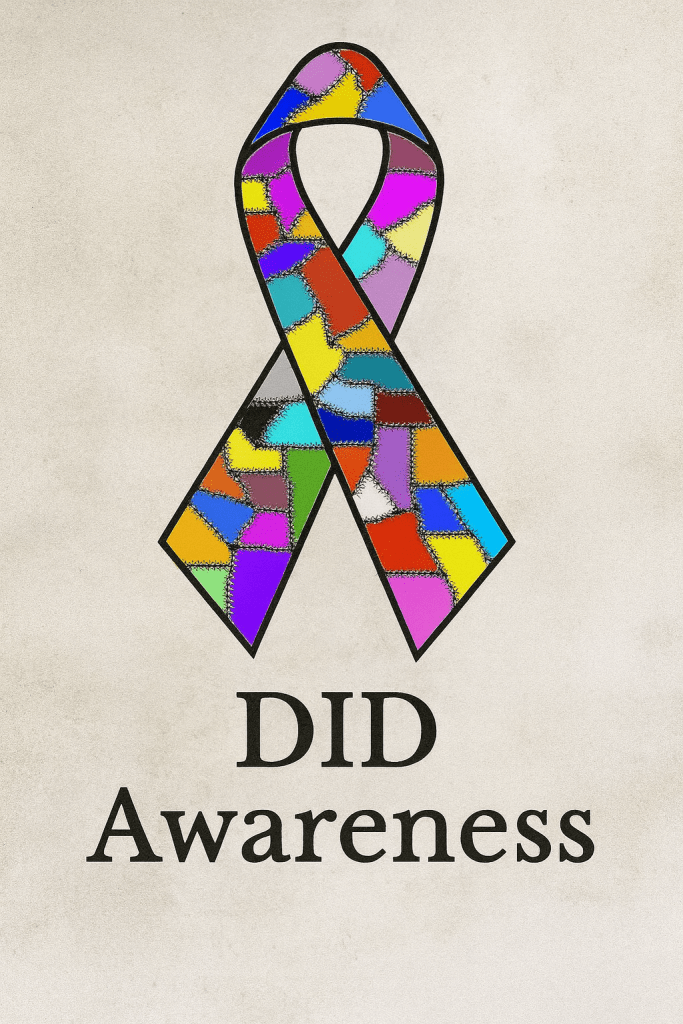
DID Awareness Month: Many Voices, One Whole Self

“My brain runs like a full‑time committee meeting, and the cats still think they’re the ones in charge.”

-This Puzzled Life

 Light the charcoal. Sprinkle the sage. Negative energy go away. Today’s blog is about Dissociative Identity Disorder. And three cats who have absolutely no business being professionally involved. But who insist on participating like they’re on salary.

Welcome to another episode of “My Life Is a Sitcom and Nobody Warned Me.” Secure your wigs. Because today we’re diving into DID Awareness also known as “Me, Myself, and the Entire Internal Group Chat.” 

Living with DID means my brain runs like a committee meeting that could’ve been an email. And my cats act like they’re the board of directors.

Tinkerbell: “Your system is more organized than Congress.”

Coco: “At least y’all communicate.”

Piper: “If your brain ever needs a new member, I’m available.”

Me: “Piper, sweetheart, this is not American Idol: Internal System Edition.”

But here we are. Me, my parts, my healing journey, and three cats who think they’re licensed clinicians. And they are ready to bring some humor, honesty, and a little Southern seasoning to DID Awareness Month. Strap in. It’s about to get educational, emotional, and unnecessarily funny.

DID is one of those topics people whisper about like it’s a scandal, a secret, or the recipe for Coca‑Cola. But in this house? We talk about it openly, honestly, and with the kind of humor that keeps us from spontaneously combusting into a pile of stress glitter.

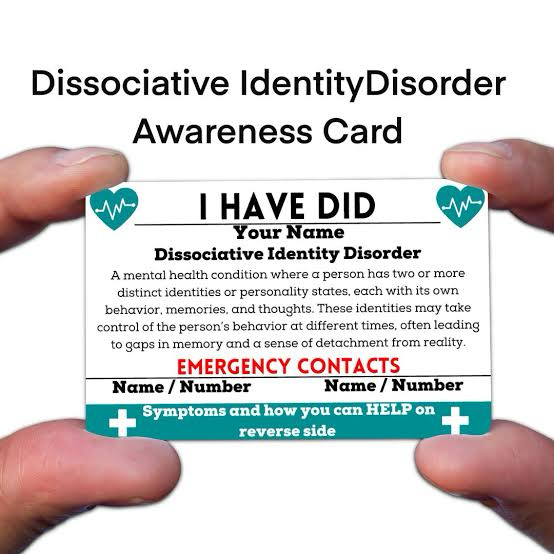
I have DID. Not “movie DID.” Not “Hollywood horror plot DID.” Actual, clinical, trauma‑born DID. It’s the kind that forms when a child survives more than any child ever should. And let me tell you, the cats have notes.

Tinkerbell (the wise elder): “Mom has a whole internal board of directors. I respect that. Some of y’all can’t even manage one mood.”

Coco (the judgmental aunt): “Honestly, the system is more organized than half the humans I’ve met. At least they communicate.”

Piper (chaos incarnate): “Do you think they’d let me join? I have ideas.”

Me: “Piper, this is not a talent show. This is a mental health condition.”

DID isn’t scary. It isn’t dangerous. It isn’t whatever nonsense Hollywood keeps trying to sell. It is a trauma response. A survival strategy. A brilliant adaptation. And a system built to protect a child who deserved safety. My system isn’t broken. It’s creative. It’s resilient. It’s the reason I’m still here. And the cats? They act like they’ve known every part since birth.

Tinkerbell: “Oh, this one likes soft blankets. Bring her the good one.” 

Coco: “This one needs boundaries. I’ll supervise.” 

Piper: “This one lets me climb the curtains.”

How does DID manifest? It is switching when overwhelmed and losing time. It’s different parts having different needs and internal conversations. It’s healing in layers. And learning to work as a team. It also looks like me drinking water because one part insists. Me resting because another refuses to push through. Me laughing because someone inside cracked a joke. And me healing because we’re doing this together. And the cats? They think they’re helping.

Coco: “I’m providing emotional support.” 

Piper: “I’m providing chaos.” 

Tinkerbell: “I’m providing supervision because these children need guidance.”

People with DID aren’t fragile. We aren’t dangerous. We aren’t confused. We aren’t “making it up.” We’re survivors. We’re complex. We’re healing. We’re doing the work. And we deserve understanding, not fear. Compassion, not judgment. Support, not silence.

Tinkerbell: “Respect the system. It’s doing its best.” 

Coco: “Awareness is important. Also, snacks.”

Piper: “If your brain ever needs a new member, I’m available.”

Me: “Piper, absolutely not.”

And as we wrap up this little journey through DID Awareness Month, complete with sage smoke, hydration, internal committee meetings, and three cats who are my emotional support staff .

DID is basically like trying to reboot a Wi‑Fi router from 2007. While the cats are batting the cords. The universe is buffering. And one part is whispering, “Have you tried turning it off and back on again?”

Some days I’m gliding through life like a well‑oiled machine. Other days I’m switching, grounding, journaling, and negotiating with my nervous system like it’s a toddler who missed nap time. And occasionally, the whole system is like, “Ma’am, we were not built for this timeline.” Meanwhile, the cats are offering commentary like they’re on payroll.

Here’s to us choosing growth even when our brains are running on 3% battery. Choosing compassion even when our patience is on backorder. And choosing to keep going even when life feels like a Walmart parking lot at 2 a.m.

 And then strut into the rest of your life like a woman who has survived every plot twist. Including the ones that arrived unannounced, barefoot, and holding a casserole of chaos. Because you’re still here. You’re still growing. And honestly? You’re doing better than half the people who think “self‑care” means buying a succulent and ignoring their feelings. Healing is holy. Humor is medicine. And I am too stubborn. I am too supported by my internal team and these judgmental cats to give up now. Thanks for reading! Keep moving forward.

Affirmation: I honor every part of my system. The strong ones, the soft ones, the tired ones, and the healing ones. I move through this world with resilience, humor, and a whole internal team that refuses to give up on me. I am whole, worthy, supported, and doing beautifully, no matter who’s fronting or which cat thinks they’re in charge today.

***Don’t forget to watch the video!***

#ThisPuzzledLife
Budtender Moment: Tangerine Dream Strain Review

“It’s not a drug, it’s a plant with attitude.”

-Unknown

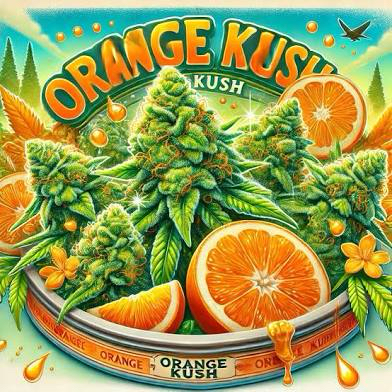
Light the charcoal. Sprinkle the sage. Negative energy go away. In keeping with the self-harm awareness color orange, I want to tell you about a strain called Tangerine Dream.

Tangerine Dream is a sativa-dominant hybrid that is a cross between G13 x Afghani x Neville’s A5 Haze. G13 exact parent strains are unknown. But we do know that it’s a 70/30 indica-dominant. Afghani is a landrace strain that is a pure indica. Haze is a blend of four landrace strain that are Mexican, Colombian, South Indian, and Thai stative strains.

Top terpenes in this strain are Myrcene, Caryophyllene, and Limonene. Patients report relief from arthritis, chronic pain, depression, fatigue, headaches, inflammation, insomnia, loss of appetite, migraines, and stress. The taste is definitely a sweet and fruity flavor. As with any sativa-dominant strain be aware that if you have a problem with anxiety, it can increase an already miserable anxiety situation. I have a lot of anxiety, and I always take it easy with these kinds of strains until I know how it will affect me. This strain isn’t as potent as Green Crack. Just don’t go crazy “hot boxing.” Thanks for reading! Keep blazin.’

Affirmation: I consume with intention and gratitude for the experience.

***Don’t forget to watch the video!***

#Thispuzzledlife

Self‑Harm Awareness Month: Where Growth Happens and My Nervous System Tries Its Best

“I didn’t choose the healing journey. The healing journey chose, dragged me and asked for gas money.”

-Unknown

Light the charcoal. Sprinkle the sage. Negative energy go away. It’s Self‑Harm Awareness Month, and if there’s one thing this month teaches us, it’s that healing is messy, sacred, and occasionally accompanied by a cat sitting on your chest like a furry emotional support paperweight.

Self‑harm is one of those topics people whisper about like it’s Voldemort, taxes, or the time they accidentally liked their ex’s Instagram post from 2014. But here? We talk about it with honesty, compassion, and the kind of humor that keeps us from spontaneously combusting. Self‑harm isn’t about attention. It’s about pain. And the people who say otherwise are usually the same ones who think essential oils can cure a broken femur.

Self‑harm doesn’t happen because someone is weak. It happens because someone is overwhelmed, hurting, or trying to survive emotions that feel too big for one body. It’s a coping mechanism. Not a character flaw. But the world loves to misunderstand what it doesn’t want to deal with. People will say things like, “Just think positive!,” “Have you tried yoga?,” “My cousin’s neighbor’s dog used to feel sad too.” Ma’am. Self‑harm is not cured by downward dog or inspirational throw pillows.

Let’s look at how the addiction occurs. The brain notices that shift and files it under: “This worked.” Not because it’s healthy. However, because it changed the emotional state quickly. The body reinforces it by sending a rush of endorphins, adrenaline, and dopamine. These chemicals temporarily reduce emotional pain or numbness. That relief, even if brief, can make the brain want to repeat the behavior. This is the same reinforcement loop seen in many addictions. Next, the cycle becomes automatic. And with overtime urgency , the brain starts linking stress → self‑harm, numbness → self‑harm, shame → self‑harm, and emotional overload → self‑harm. It becomes a reflex. A pattern, not a personality trait. A survival strategy, not a moral failing. And then shame strengthens the cycle. People who self‑harm often feel guilt, embarrassment, fear of being judged, or the pressure to hide. Those feelings can increase emotional distress. Which can then trigger the urge again. It becomes a loop that’s incredibly hard to break alone. And finally, it’s not about wanting to die. For many people, self‑harm is about wanting to feel something, wanting to feel less, wanting control, wanting relief, and wanting the emotional noise to stop. It’s a coping mechanism that becomes addictive because the pain underneath it is overwhelming. People don’t heal because they’re scolded. They heal because they’re understood.

What does help? Why don’t you try some compassion, support, safe conversations, professional care, people who don’t minimize your pain, and a community that refuses to let shame win. Some days you glide. Some days you wobble. Some days you crash into a display of discounted cereal and pretend it was part of your spiritual journey. Healing is allowed to be imperfect. You are allowed to be imperfect. You are allowed to take up space while you figure things out. “Keep going. Rest when you need to. And stop carrying pain alone.” You deserve support. You deserve compassion. You deserve to be here. And you deserve to heal without shame breathing down your neck like a judgmental church lady.

Self‑Harm Awareness Month isn’t about fear. It’s about understanding. It’s about breaking silence. It’s about reminding people they’re not alone. Not now, not ever. So, here’s to choosing growth even when it feels like a group project we didn’t sign up for, choosing compassion even when our patience is on backorder, choosing to stay when our brains are acting like and the whole system is like, “Ma’am, I was not built for this.”

Then light your sage, drink your water, moisturize your spirit, and strut into the rest of the month like a woman who has survived every plot twist life has thrown at her. Including the ones that arrived unannounced, barefoot, and holding a casserole of chaos. Because you’re still here. You’re still growing. And honestly? You’re doing better than half the people who think essential oils are a personality. 

And as we wrap up this emotional rollercoaster of a topic, complete with sage smoke, hydration, and my nervous system acting like it’s auditioning for a disaster movie. It is like trying to assemble IKEA furniture with no instructions, three missing screws, and a mysterious extra piece that definitely wasn’t in the box. I’ve also realized something important. And it is that healing is basically like trying to reboot a Wi‑Fi router from 2007. You unplug it, you wait, you pray, you bargain, you threaten it, you light a candle, and somehow it still blinks at you like, “Girl, I’m doing my best.” Same, router. 

Here’s to all of us out here choosing growth even when our brains are running on 3% battery. Choosing compassion even when our patience is on backorder. And choosing to keep going even when life feels like a Walmart parking lot at 2 a.m. You’re doing your best, you’re sweating, you’re questioning your life choices, and at some point you whisper, “If this thing collapses, I’m blaming Sweden.” Thanks for reading and remember, Healing is holy, humor is medicine, and you are too stubborn to give up now. But you keep going. Because that’s what we do. And if anyone tries to judge your healing journey, just smile sweetly and say, “Sweetheart, I’m busy becoming emotionally stable. I don’t have the bandwidth for your nonsense.” Thanks for reading! Get educated.

Affirmation: I honor my healing by choosing compassion over shame, boundaries over chaos, and growth over the nonsense that used to break me.

***Don’t forget to watch the video!***

#ThisPuzzledLife
Affirmations Of A Badass #1

“My affirmations are so powerful that even my self‑doubt takes notes.”

-Unknown

Light the charcoal. Sprinkle the sage. Negative energy go away. Today, we’re stepping into a sacred space of Affirmations of a Badass. This is where the vibes are strong, the confidence is loud, and the only thing fragile is your last excuse.

This isn’t your grandma’s affirmation circle. No one here is whispering “I am enough” while sipping chamomile tea and staring at a beige wall. This is the kind of affirmation practice where you look in the mirror. Hype yourself up like you’re about to perform at the Super Bowl halftime show. And remind your soul that you are the main character.

This is you hyping yourself up just enough to function like a semi‑responsible adult. It’s self‑talk that says:

  • “I can do hard things.”
  • “I deserve good things.”
  • “I am powerful, even if I’m also a hot mess.”
  • “I’m allowed to take up space without apologizing.”

Badass affirmations are about self‑belief, resilience, and getting out of your own way. They don’t put anyone else down. They don’t require an audience. They don’t demand worship. They’re basically emotional caffeine. And let’s be honest, in 2026, we Americans need our emotional bank accounts overflowing, not overdrawn.

And for those of us who’ve lived through trauma, our confidence wasn’t just shaken. It was bulldozed, set on fire, and then politely kicked into a ditch. So, It’s our responsibility to rebuild what was lost. Sometimes daily. Sometimes hourly. Sometimes between sips of coffee. That’s why we walk into every day like we own the place. Because honestly, at this point, the universe should probably be paying us rent.

My power is loud. My confidence spreads faster than gossip in a small town. And my energy refuses to shrink just because someone else forgot their sparkle. I am a badass in progress. A masterpiece in motion. And anyone who can’t handle that, can step to the side while I strut.

And no, before anyone gets confused, this is not narcissism. Narcissistic Personality Disorder is dangerous, not a vibe. It’s not confidence. It’s a fragile ego wrapped in glitter.

Narcissism says:

  • “I’m better than everyone.”
  • “Rules don’t apply to me.”
  • “If you don’t praise me, you’re wrong.”
  • “Your feelings are optional. Mine are mandatory.”

Narcissism needs constant validation, lacks empathy, and treats people like props in a one‑person show. It’s not empowerment. It’s entitlement.

Badass affirmations, on the other hand, kick the door open, hand you a metaphorical crown, and say, “Get up! We’ve got a world to set on fire.” Being a badass isn’t about perfection. It’s about showing up even when your hair looks like it’s been negotiating with humidity for three days straight. It’s about believing in yourself even when your brain is like, “Girl… really?” And it’s about knowing that beneath the chaos, the caffeine, the weed, and the questionable life choices, you are powerful, capable, and slightly unhinged in the best possible way. Now, take a deep breath. Center your spirit. And prepare your soul. We’re about to affirm the absolute hell out of ourselves.

The first affirmation for we badasses is this:

“I walk into every day like I own the place, because honestly… I do. My power is loud, my confidence is contagious, and my energy is too big to shrink for anyone. I am a badass in progress and a masterpiece at the same time.”

Translation: “I don’t just enter a room. I arrive like a dramatic wind gust that knocks over a plant and makes everyone wonder if they should applaud.” It’s the energy of someone who wakes up, looks in the mirror, and says, “Yes, I am the creator of my universe,” then immediately trips over their own shoe but recovers like it was part of the dance.

It’s the vibe of a person who walks into a retail giant like they’re the CEO and buys absolutely nothing they came for because their confidence whispered, “Do You Boo Boo!”

It’s the spiritual equivalent of wearing sunglasses indoors. Not because you need them. But because your aura is too bright for the general public. It’s the declaration of someone who is simultaneously building themselves, hyping themselves, and confusing everyone around them with their chaotic, unstoppable energy. Basically, you’re a masterpiece who occasionally forgets where you put your keys, but you do it with swagger.

And there you have it. Your first dose of “I’m unstoppable and mildly dangerous in a charming way.” If anyone doubts your power after this, simply slow‑blink at them like a cat who knows it owns the house. Because you do. You absolutely do.

Remember that being a badass isn’t about having it all together. It’s about walking into the day with confidence, resilience, and the kind of energy that makes people wonder what you know that they don’t. It’s about hyping yourself up even when life feels like a group project and you’re the only one doing the work. It’s about choosing yourself unapologetically.

Don’t worry. Rebuilding confidence is the state that I’ve been in for many years. It’s not instantaneous. It’s something that will require diligence, patience and perseverance even on days when you don’t want to. So go forth, you magnificent Tasmanian devil of chaos. Speak kindly to yourself. Strut like the universe belongs to you. And if all else fails, repeat after me: “I am a badass, and the world will adjust accordingly.” Thanks for reading! Now Manifest It.

Affirmation: I affirm my affirmations with such confidence that even my doubts are like, ‘Okay fine, she clearly means business.’

***Don’t forget to watch the video!***

#ThisPuzzledLife
I Stand Up Because Too Many Still Can’t

“I don’t raise my voice because I’m angry. I raise it because whispering never changed a damn thing except how fast people ignore you.”

-This Puzzled Life

Light the charcoal. Let it crackle like it knows the truth is about to get told. Let the smoke rise slowly and dramatic, the way my ancestors intended. Curling through the room like it’s searching for the lies we’re about to burn out. This is the moment where the air shifts, the spirits lean in, and even the cats pause mid‑chaos because they know Mama’s about to say something real. This is my “brace yourself, I’m done being polite” announcement to the universe. It’s the Southern version of rolling up your sleeves. Except with more sage, more attitude, and a whole lot more intention. When that charcoal glows, so do I. And whatever truth I’ve been holding in my chest finally gets permission to walk out the front door like it pays rent.

I write the way I live. Loud enough to be heard, honest enough to be felt, and Southern enough to confuse anyone who’s never survived a family reunion with both potato‑salad politics and generational trauma. I stand up and speak out because silence never saved me. And it sure as hell never protected the people I love. So, if you’re here for polite whispers, bless your heart. But if you’re here for truth with humor, grit, and a little Holy‑Ghost side‑eye, pull up a chair. You’re in the right place.

I’ve been asked many times, “Why Do I Stand Up And Speak Out?” And here’s my explanation. There’s a moment in every Southern woman’s life when she realizes she has two choices:

  1. Sit quietly and let the world run wild with foolishness.
  2. Or stand up, speak out, and let the church fans flutter in shock.

I chose the second one. Mainly because the first option has never worked for me a day in my life. I didn’t grow up planning to be “the outspoken one.” I was raised in the Deep South, where you’re expected to smile politely, keep your voice at a respectable whisper, and only speak your truth if it fits neatly between a cobbler and a prayer request. But life has a way of handing you a microphone when you least expect it. It’s usually right after you’ve sworn you’re done talking. So, here’s the truth I carry deep in my bones. I was that child who screamed in silence that no one heard.

And now? I stand up for those who don’t have the power to stand up. Or who have been intimidated into swallowing their truths whole. I will absolutely be a voice for Immigrants, LGBTQIA+ (my home group), Native Americans, Canada, Venezuela, Mexico, Greenland, Venezuelan fishermen, Gazans, the homeless, the victimized, Black and Brown communities, and anyone who needs support through solidarity. I can’t get away from this calling because I will always stand up against tyranny, crimes against children, religious scapegoating, hypocrisy, racism, and oppression. And especially here in the South, where silence is expected and resistance is treated like a character flaw.

But I am not built for quiet compliance. I have never been. I speak out because silence never saved me. Silence never protected me or my kids. Silence never made the world kinder. Silence protected the perpetrators with fragile egos and made the wrong people louder. And Lord knows the wrong people do not need a volume boost. Their voice is almost as big as their unfinished golden ballroom. Their headquarters are located at 1600 Pennsylvania Ave.

I stand up because I’ve lived through enough chaos to qualify for a punch card. After your tenth traumatic event, you should legally get a free smoothie or something. But instead, I got a voice. And the realization that if I don’t use it, someone else will use theirs to rewrite my story in a way that makes them comfortable. Absolutely not.

I was forced as a child to watch adults do absolutely nothing about the abuse they knew was happening. They didn’t want to “rock the boat.” They didn’t want to challenge the system. They didn’t want to stand up for what was right. They stood up for what was popular. What was convenient. And what kept the illusion intact. And while they protected their comfort, I was left to protect myself.

As a child, my only way to survive was by fighting back. Not just against the adults who caused the harm. But also, against the complicit bystanders who saw everything and chose silence. That kind of abandonment teaches you something. And it is this, “if you don’t stand up for yourself, no one else will.” And that lesson, painful as it was, is exactly why I refuse to be quiet now.

But here’s the part they never planned for. I didn’t stay small. It took years and years to claw my way back to myself. To unlearn the lies. To rebuild a voice that had been broken, bent, and boxed in. To stand in my own truth without shaking. To speak without apologizing. To breathe without asking permission.

For years, my voice wasn’t quiet. It was taken. Stolen by abuse. Smothered by “be nice” expectations. Buried under the weight of family roles I never agreed to play. And when I finally stumbled into adulthood, those lessons didn’t magically disappear. They clung to me like wet clothes, heavy and suffocating, convincing me that silence was survival and shrinking was safety.

I speak out because my kids are watching. I speak out because my community deserves better. I speak out because our nation can do better. I speak out because my cats already assume I run the world, and honestly, who am I to disappoint them. But mostly, I speak out because my voice is not a liability. It’s a legacy. A tool. A torch. A refusal to let the world slide backward while I sit politely on the porch pretending not to notice. I speak out because I know what it feels like to be unheard. And I refuse to let anyone else sit in that silence alone.

So let the world adjust its volume, because I’m done shrinking to fit inside anyone’s comfort zone. I was born with a backbone. I earned this voice. And I’m using it whether the room is ready or not. If standing up makes some folks uncomfortable, they can go ahead and shift in their seats. I’m not sitting back down. This is my line in the sand, my truth on full display, and my promise carved in stone. I will not be silent, I will not be small, and I will not stop.

I have learned the beauty and the necessity of boundaries. I am absolutely, unequivocally, and in no universe responsible for anyone else’s feelings about my truth, my choices, or my existence. I was raised to believe that people‑pleasing was practically a family requirement. And that we should disguise what was really going on for fear someone might realize our family wasn’t the picture‑perfect postcard we pretended to be. But those lessons didn’t protect me. They imprisoned me. And to feel strong enough, grounded enough, and whole enough to speak my truth after being silenced for so long is a miracle in itself.

But once I broke free from the expectations, the abuse, and the boundary‑less people who benefitted from my quiet suffering, something in me locked into place. I will never be silenced again. Not for family. Not for comfort. Not for tradition. Not for anyone. I earned this voice. I fought for this voice. And now that I have it back, I’m using it. Loudly, clearly, and without hesitation. Thanks for reading! And stand up.

Affirmation: My voice is not too much. It is exactly enough and it was built to be heard.

***Don’t forget to watch the video!***

 #ThisPuzzledLife
Budtender Moment: Red Velvet Strain Review

“Weed is good weed is fine, if you share yours, then I’ll share mine.”

-Unknown

Light the charcoal. Sprinkle the sage. Negative energy go away. Today I want to tell you about a strain that seems to go perfectly in the month of love. It’s name is Red Velvet by Manna.

Red Velvet aka Red Cake is a 60/40 indica-dominant hybrid strain. The genetics are a cross between Lemon Cherry Gelato X Pine Acai. Lemon Cherry Gelato is a cross between Sun Sherbet x GSC (Girls Scout Cookies). Pine Acai lineage states that it’s a collection from unknown balanced hybrids. Gelatos are typically known to have very balanced fruity flowers flavoring. On inhale the Gelato flavoring came through instantly. And for a strain that’s at only 15%, it really packs a powerful punch. And that is why I don’t let percentages determine whether or not I try a particular strain. 

Top terpenes include B-Caryophyllene, a-Bisabolol, Linalool. Medical benefits from this strain have been known to help with depression, chronic stress, anxiety, mood swings, chronic pain and chronic fatigue. Leafly Buzz strain May 2022. Thanks for reading! Keep blazin’.

Affirmation: I am sativa happy and indica relaxed.

***Don’t forget to watch the video!***

#Thispuzzledlife

Children of Addiction: The Invisible Story

“What cannot be communicated to the mother cannot be communicated to the self.”

     -John Bowlby

Light the charcoal. Sprinkle the sage. Negative energy go away. Some topics require us to slow down, breathe deeper, and open our hearts a little wider. Children of Addiction Awareness is one of those topics that are tender, urgent, and often hidden in plain sight. When we talk about addiction, the conversation usually centers on the person struggling. But in the quiet corners of those stories are children who carry the weight of what they cannot name.

They are not statistics. Not headlines. Not “someone else’s problem.” They are real kids. Real families. Real hearts trying to grow in soil that isn’t always steady. You don’t need a degree or special training to understand this. However, you just need to know this. When addiction lives in a home, children feel it in their bones. Even when they don’t have the words. Even when they pretend everything is fine.

Children growing up in homes affected by addiction often learn to read emotional weather patterns before they learn to read books. They become experts at sensing tension, anticipating conflict, and adjusting themselves to survive unpredictable environments.

They are the kids who:

  • Tiptoe around moods.
  • Become caretakers far too young.
  • Hide their fear behind perfection or silence.
  • Carry secrets that feel too heavy for their age.
  • Love their parents fiercely, even when life feels chaotic.

These children are not defined by the addiction around them. But they are shaped by it in ways that deserve understanding, compassion, and support.

Kids who grow up around addiction often learn to:

  • Stay quiet
  • Stay small
  • Stay out of the way
  • Stay “strong” even when they’re hurting

They become experts at reading moods, hiding feelings, and pretending everything is okay even when it’s not.

Growing up with addiction in the home can create emotional landscapes that are confusing and overwhelming. Many children experience:

  • Unpredictability: never knowing what version of a parent will appear.
  • Emotional neglect: not from lack of love, but from addiction’s consuming nature.
  • Role reversal: becoming the “adult” in the home.
  • Isolation: believing no one else lives this way.
  • Hypervigilance: always on alert for the next crisis.

And yet, these same children often develop extraordinary strengths: empathy, intuition, resilience, and emotional intelligence. They learn to survive in ways that would humble most adults.

But survival is different from thriving. Awareness is the bridge between the two. These children don’t need perfect parents. They don’t need someone to “fix” everything. They don’t need pity.

They need:

  • Consistency
  • Predictability
  • A safe adult who listens without judgment
  • Reassurance that none of this is their fault
  • Permission to feel their feelings — all of them

Sometimes the most healing words a child can hear are: “You didn’t cause this. You can’t control this. You are not alone.”

Whether you’re a teacher, neighbor, mentor, family member, or simply a caring human, you can make a meaningful difference.

  • Create safe spaces for conversation.
  • Model healthy coping skills.
  • Offer stability and routine.
  • Validate their emotions.
  • Connect them to supportive resources.

You don’t need a degree to change a child’s life. You just need to show up consistently, compassionately, and without judgment.

For the parents struggling with addiction, this conversation is not here to shame you. It’s here to remind you that healing is possible for you and for your child. Your effort matters. Your recovery matters. Your presence matters more than perfection ever could. Children don’t need flawless parents. They need honest ones. They need parents who try, who apologize, who grow, who keep coming back to love. Every step you take toward healing is a step toward breaking generational cycles.

Children of Addiction Awareness is not just a month, it’s a movement toward visibility, compassion, and collective responsibility. When we acknowledge these children, we give them language. When we give them language, we give them power. And when we give them power, we give them hope. So, take a breath and hold this truth close: Awareness opens the door. Connection keeps it open. Love walks a child through. Thanks for reading! Keep HOPE alive.

Affirmation: I didn’t cause it, I can’t control it, but I can take care of myself.

***Don’t forget to watch the video!***

#Thispuzzledlife

Budtender Moment: Purple Punch Strain Vape Cart Review

“Cannabis doesn’t take you away from reality. It changes how you look at it.”

-Unknown

Light the charcoal. Sprinkle the sage. Negative energy go away. Today, I want to tell you about a strain called Purple Punch.

Purple Punch is an 80/20 indica-dominant hybrid. It is a cross between Larry OG x Grandaddy Purple. Larry OG is a cross between OG Kush x SFV OG (San Fernando Valley). And what powerful strains those genetics are. Grandaddy Purple is a cross between Purple Urkle x Big Bud. All of these genetics are well known historic strains.

The most prominent terpenes in this strain are Myrcene, Caryophyllene, and Pinene. Patients report relief from conditions such as stress, anxiety, insomnia, appetite loss, and body aches. What I can tell you about this strain is that you will feel like you got purple punched. It is a very potent strain as flower. But in this vape cart, it’s not long before you get that punch. I can attest to the above relief from stated conditions. This one will put you out and give you some much needed pain relief.

Please keep in mind that each grow will be different and the flower effects, terpenes and genetics will differ depending on which region of the country that the plant is grown. Thanks for reading! Keep blazin.’

Affirmation: My vibe affects my high.

***Don’t forget to watch the video!***

#Thispuzzledlife

Black History Month: Where the Ancestors Whisper ‘Keep Going’

“Injustice anywhere is a threat to justice everywhere.”

— Dr. Martin Luther King Jr.

Light the charcoal. Sprinkle the sage. Negative energy go away. Because today, we’re stepping into a month that carries the weight of history, the fire of resilience, and the joy that refuses to be dimmed. This is Black History Month, and we’re honoring it with truth, emotion, and a little humor. I, for one,  know that sometimes laughter is the only thing keeping any of us from flipping a table.

Black History Month is not just a commemorative event. It’s a living, breathing reminder of the brilliance, struggle, creativity, and endurance of Black Americans. It began as Negro History Week in 1926, founded by historian Carter G. Woodson and the Association for the Study of Negro Life and History. The week was intentionally placed in February to align with the birthdays of Frederick Douglass and Abraham Lincoln, two figures central to Black liberation.

Over time, the celebration grew, and in 1976, it officially expanded into Black History Month, recognized by every U.S. president since. Today, it is celebrated across the United States, Canada, and the United Kingdom. And every February 1st, corporations suddenly “discover” Black people exist. But we’re going to focus on the real story (https://www.blackhistoryandheritage.com/article/black-history-month/origins-black-history-month?utm_source=copilot.com.)

Black history is a story of survival and excellence that deserves its own cinematic universe. It’s the spirituals sung in fields where hope was outlawed. It’s the Harlem Renaissance that has exploded with art, music, and literature that still shapes culture today. It’s the Civil Rights Movement marching with blistered feet and unbreakable courage. It’s Black scientists, inventors, activists, teachers, and everyday heroes shaping the world. And often while the world pretended not to notice.

Black History Month holds space for:

  • Grief for what was stolen.
  • Rage for what was endured.
  • Awe for what was created.
  • Joy that refuses to be dimmed.
  • Humor that has carried generations through the impossible.

Black humor is a survival skill. It’s the auntie who tells the truth with a side of shade. It’s the uncle who swears he marched with Dr. King even though he was born in 1972. It’s the family reunion where the food is seasoned, the stories are exaggerated, and the love is louder. Humor doesn’t erase the pain. It makes the journey bearable. The work isn’t done. Because the wounds aren’t healed. Because the systems aren’t equal. Because the stories still need telling. Because the future still needs building.

This is a reminder that the story is still being written in classrooms, in living rooms, in protests, in art, in laughter, in love. And if you listen closely, you can hear the ancestors whispering: “Keep going. And baby, don’t forget to moisturize.”

As we light the charcoal and sprinkle the sage, may we remember that it’s not just to clear the air. But to honor the ancestors who cleared paths with their bare hands. We breathe deeply for the generations who weren’t allowed to. We laugh loudly for the ones who needed joy but didn’t get enough of it. We celebrate fiercely for the dreams that were deferred but never destroyed.

“As a white person, I honor Black History Month by listening more than I speak, learning what I was never taught, and showing up with humility instead of ego. I affirm my commitment to unlearning harmful narratives, amplifying Black voices, and standing on the right side of history. I choose growth over comfort, accountability over silence, and action over performative allyship. I honor the legacy of Black brilliance by being someone who refuses to look away.” Thanks for reading! And keep on keeping on.

Affirmation: I honor Black History Month by choosing growth, listening with intention, and respect.

***Don’t forget to watch the video!***

#ThisPuzzledLife