
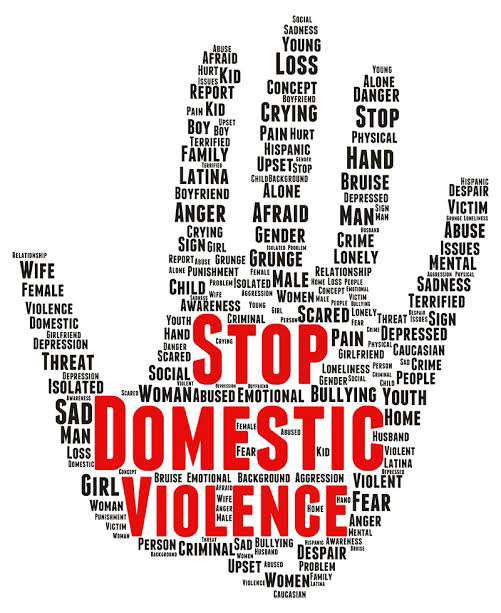
Types Of Domestic Violence Part 2

“An abuser can seem emotionally needy. You can get caught in a trap of catering to him, trying to fill a bottomless pit. But he’s not so much needy as entitled, so no matter how much you give him, it will never be enough. He will just keep producing more demands because he believes his needs are your responsibility, until you feel drained down to nothing.”

-Lundy Bancroft, Why Does He Do That? Inside the Minds of Angry and Controlling Men

Light the charcoal. Sprinkle the sage. Negative energy go away. Today I want to go over more types of domestic violence. I know that this topic is not an easy one to face. However, domestic abuse occurs in more homes than you realize. Maybe in your own home.

VERBAL ABUSE

·        Ridiculing or humiliating someone.

v  If he were alive and breathing, this would happen from the time I woke up until the time I went to bed.

·        Criticizing their appearance, intelligence, sexuality, religious beliefs, or ethnicity.

v  This happened all the time. I was constantly told that I was dumb and retarded.

·        Criticizing their actions as a partner or parent.

v  All day and every day. The worst was at night and on the weekends. I got blamed for his bad golf game. He had this idea that he was Tiger Woods. And he very clearly wasn’t. But it was always because of something I did that made him play bad. In reality, he just sucks at the game.

·        Using cruel or abusive nicknames.

v  He and his brother always had cruel nicknames for me.

·        Swearing at someone.

v  Most people cuss when they get mad. However, he and his brother were relentless in their attacks.

·        Yelling or screaming at someone.

v  Again, I think that a certain amount would be considered normal. However, screaming and hollering at me for everything little thing was how they both operated.

SOCIAL ABUSE

·       Stopping someone from seeing or contacting their friends and family.

v  He didn’t physically stop me. However, it was very clear that I was not leaving the house without specific information about where I was going and what I was doing. And if that wasn’t what he wanted, I was told not to go at all.

·       Stopping someone from going to social or community activities.

v  Unless he went with me, I was told, “No. You don’t need to go do that.”

·       Preventing someone from having contact with people who speak their language or share their culture.

·       Making someone move away from friends, family, or work opportunities.


·       Controlling a person’s use of phone or computers.

On more than one occasion, when I went to call for help from police, he would unplug the phone so that I couldn’t use it.

·       Checking or stopping their mail, phone calls, text messages, emails, social media and other messaging or chat apps.

v  Luckily, there was not much of this that was available at the time. There was barely internet, and I better not have an email address. I had a Nokia cellphone which he checked constantly.

·       Telling lies or spreading false information to damage a person’s reputation.

v  This happened all the time. Especially when he talked to his family. The smear campaign was always in action.

·       Using someone’s intersex status, sexuality, gender expression, transgender, or HIV status against them.

v  He never knew that I was a lesbian. Hell, why would I tell him when the violence was bad enough.

·       Forced marriage

v  The day of my wedding, I knew that I was making the biggest mistake of my life. I was frozen with fear. But it was what he continually pushed for marriage. And I eventually gave in. Biggest mistake of my life!

·       Stalking

v  This happened every single day. If it wasn’t him, it was his friends and family who did the stalking. At the end of the day, I was questioned about everything that I had done and was told, “Well, what about when you were walking around in that store.” He knew every move that I made. It even got so bad that he knew what I had eaten during the day.

SPIRITUAL, RELIGIOUS OR CULTURAL ABUSE

  • Preventing someone from practicing and being connected to their culture.
  • Stopping someone from going to their place of worship.
  • Stopping someone from having contact with other people who share their beliefs.
  • Stopping someone from celebrating days of cultural or spiritual significance.
  • Stopping someone from sharing their beliefs and traditions with their children.
  • Stopping someone who is Aboriginal or Torres Strait Islander from returning to Country or having contact with kin.
  • Stopping someone who has family connections outside Australia from visiting or connecting with family or community overseas.
  • Ridiculing someone’s beliefs or traditions.
  • Forcing someone to do things that are against their beliefs, like eating certain foods or wearing certain clothes.
  • Forcing someone to marry.

The pressure was definitely applied when I was undecided.

  • Forcing someone to take part in spiritual practices in which they don’t believe.
  • Forcing someone to raise their children according to beliefs they don’t agree with.
  • Using or claiming to use spiritual or religious beliefs:

Let me just say this about him and his spiritual practices. He always went through the motions and played the part. He even pretended to get “saved” and was baptized. However, that was as far as it went. Because when we got home the abuse continued to happen. But now he had a Bible to justify his actions.

Thanks again for reading! I hope I was able to share a little lighter on the subject of domestic violence. There is help and hope after abuse. Reach out for the love and respect that you deserve. Keep moving forward!

Affirmation: I will not shrink.

***Don’t forget to watch the video!***

#Thispuzzledlife
Types of Domestic Violence

“If you aren’t silent about your pain, they’ll kill you and say you enjoyed it.”

-Zora Neale Hurston

Light the charcoal. Sprinkle the sage. Negative energy go away. Today, I want to talk to you about some of the behaviors that fit under the umbrella of domestic violence. It wasn’t until I  was out of the relationship for a while before I began to see  information validating  what I always knew. This is not comprehensive list by any means. 

COERCIVE CONTROL OR CONTROLLING BEHAVIOR

·        Control who a person sees, wears and where they go. 

v  This was considered normal in my relationship. He dictated everything that I wore. If I chose what I wanted to wear, he would tell me to,  “go change. You look ridiculous.” And I was afraid to go somewhere without asking his permission.

·        Monitor or track what a person does. 

v  This was also something that was done on a daily  basis. He would call me wherever I was supposed to be and verify it by employees.

·        Control a person’s finances, medicine, food, or exercise.

v  He always told me that I was not allowed food that he didn’t approve. And I was required to be at the gym at 5:30 am every morning. And he would call and speak with those employees about what type of exercise I was doing. I was also not allowed to spend any money without permission.

·        Force someone to have sex or do sexual things.

v  I was never given the option to make that choice. I was threatened if I even spoke about that.

PHYSICAL VIOLENCE

·        Hitting, punching, kicking, bashing, shoving, or pushing.

This happened more times than I can count. He did kick me in the face. But when he and his brother teamed up together, it was worse. The main reason is because my husband didn’t want to say that he participated. And because they always threatened and intimidated me into silence, I never said anything. His brother was his “yes man.” And my husband pulled the strings.

·        Spitting on someone or pulling hair.

·        Choking or suffocating.

v  This typically happened during forced sex. Or whenever his brother would get mad at me, he would choke me as a form of intimidation.

·        Throwing things at or near someone.

·        Using a weapon.

v  This was always pointed at me or laid out somewhere as a form of threats and intimidation.

·        Locking someone in or out of space.

v  This was often done to show control.

·        Stopping someone from eating, sleeping, or having medication they need.

v  Every piece of food had to be given an account. One of his favorite things he would allow me to have for a snack was ten olives and ten pistachios. He would come home from work and completely berate me if I weren’t already up. And it didn’t matter that I had just worked a 24-48 shift. He always told me that medication was a crutch. He got mad because I had been given muscle relaxers for a hurt back and proceeded to kick me in the face and throw my medication out into the rain. I was also not allowed to take any psychiatric meds for depression or mood stabilization because, “why do you need anti-depressants when I’m so good to you? And what if someone finds out that you’re taking this? I don’t want anyone knowing that my wife is crazy. Then it makes me look bad. Why don’t you care about that?”

·        Forcing someone to drink or take drugs.

v  I did this on my own to help deal with being under his crazy world of control.

SEXUAL VIOLENCE

·       Touching or kissing someone without their consent.

I was made to accept his advances

·       Pressuring or forcing someone to have sex or do something sexual without their consent.

v  I was told, “Either you give it to me, or I’ll take it. Either way, I’m getting what I want. Make your decision.” Many times, I was bruised or bleeding by the time he was done with me. I had no voice in any matter. He was the “warden,” and I was his “prisoner.” My whole sexual relationship with him was simply RAPE.

·       Pressuring or forcing someone to have sex without protection such as a condom.

I was told early on, “I’m not using protection because it burns my dick. If you really loved me, you wouldn’t  put stipulations on how I fuck you.”

*I know this is explicit. However, I want you to get an accurate description of the situation.*

IMAGE-BASED ABUSE

·        Sharing private images of a person without their consent, for example images of them undressing or showering.

·        Sharing culturally inappropriate images of a person, for example images in which they do not wear items of clothing that they would normally wear in public.

·        Sharing intimate or sexualized images of a person without their consent.

·        Producing and sharing images that have been digitally altered to suggest a person is nude or engaged in sexual activity.

·        Threatening to do any of these things.

        *I found out later on that his brother would secretly be filming or watching us having sex.*

EMOTIONAL OR PSYCHOLOGICAL ABUSE

·        Criticizing a person and their choices or actions.

v  In his mind, he thought that I was too stupid to make decisions that were considered “correct.” All he ever told me what how stupid and retarded I was.

·        Isolating a person form their friends or their family.

v  Some friendships I lost forever because they just thought that I abandoned them. What they failed to see was that I would get accused of all kinds of stuff if I disobeyed him. Those who have never been in an abusive situation can’t comprehend losing your power to stand up for yourself. It was just easier to do what he said. Some former friends haven’t even talked to me since that time. And that is about them not me.

·        Threatening to harm a person, their family, their friends, their pets, or their belongings.

v  He always made threats about things he would and could do with keepsakes or my innocent animals. And if he and his brother didn’t feel that I was getting the picture, they would show up at my parents’ house and start harassing them.

·        Threating them to share personal or private information, such as sexuality, gender identity, personal health, or visa status (https://www.act.gov.au/community/domestic-family-and-sexual-violence/types-of-domestic-and-family-violence, 2025).

This topic will be spread over a few blogs. As you can see, when I add personal experience, the blog gets much longer. Stay patient and learn from this. It’s a hell that most people can’t understand. And I’m telling you that it’s all true. I was living in a prison without visible bars. Thanks for reading! And watch for the second part in the coming days.

Affirmation: I remember that it is ok to ask for help and receive support.

***Don’t forget to watch the video!***

#Thispuzzledlife

Domestic Violence Myths

“Leaving is so hard because your confidence is destroyed. You feel trapped.”

-Unknown

Light the charcoal. Sprinkle the sage. Negative energy go away. Today, I want to talk to you about some common misconceptions about domestic violence. Sit tight. These myths and truths will help to dispel some of the things that you might have been told.

1.        Myth: Domestic abuse is a “family matter” and the community should not interfere.

Fact: Domestic abuse is against the law making it everyone’s business.

2.        Myth: Domestic abuse affects only a small percentage of the population.

Fact: One-third of American women report being physically or sexually abused by a partner.

3.        Myth: Only men abuse women.

Fact: Statistics show that 85% of domestic abuse victims are women and 95% of perpetrators are men. However, men are abused by women also. And the rate of  Gay, Lesbian, Bisexual and Transgender communities are at the same rate as heterosexual relationships.

4.        Myth: Only low-income families and minorities experience domestic abuse.

Fact: Domestic abuse in every area of society. Most previously recorded statistics are skewed due to the numbers coming from public agencies, city hospitals, police departments, social service agencies, and the courts.

5.        Myth: Abusers are violent in all their relationships.

Fact: Most abusers are only abusive to a targeted intimate partner. Some abusers are successful in their professions and are very charming. And this is how they maintain power and control. This was how my ex-husband introduced himself. In front of people, he appealed to many. It was once we were not in front of people that the abuse occurred.

6.        Myth: Domestic abuse is caused by mental illness.

Fact: Personality disorders, mental illness, poor impulse control, and generational abuse do not cause domestic abuse. Even in cases where a particular mental illness may cause a person to be abusive, the abuse is not specifically targeted at one person but to everyone around during the episode.

7.        Myth: Domestic abuse is caused by drugs and alcohol use.

Fact: Where drugs and alcohol are often associated with domestic abuse, they do not cause the violence. My ex-husband never used drugs and alcohol. He was just mean and very controlling.

8.        Myth: Abusers are violent because they cannot control their anger and frustration.

Fact: Abusers use anger as an excuse to rationalize or blame their abusive behavior: anger is not a cause of abuse; it is a conscious choice made by them. I was always told that “I was the cause of his anger.” So, in some way, I was made responsible for his behavior. When in actuality, he is responsible for his own behavior.

9.        Myth: Therapy will stop the violence. If he/she goes to therapy, it will be safe at home.

Fact: Referral of a batter to is one of the strongest predictors that a victim will return to violence. However, research on the effectiveness of treatment  for batters are inconclusive. What is known is that there’s a 50% drop out rate in these programs by those who do enroll.

10.   Myth: Boys in violent homes will grow up to be battered and girls will be victims.

Fact: Not all children who grow up in homes where there is domestic abuse are directly abused or grow up to  become victims or abusers. It is important to note that children from homes where domestic violence abuse occurs are at greater risk for all of these outcomes than children from homes where  there is no violence.

11.   Myth: Even if he/she is violent, it is better for the children to have both parents. Children aren’t negatively affected by domestic abuse unless they are actually abused.

Fact: Witnessing violence as a child is associated with adult reports of depression, trauma-related symptoms and low self-esteem among women, and trauma-related symptoms among men. Child witnesses of domestic abuse on average exhibit more aggressive and antisocial behaviors, fearful and inhibited behaviors, anxiety, depression, trauma symptoms, temperament problems, and lower social competence, than children who do not witness such violence. Youth who witness domestic abuse are more likely to attempt suicide, abuse drugs, and alcohol, run away from home, commit other delinquent behavior, engage in teenage prostitution, and commit sexual assault crimes (https://law.arizona.edu/sites/default/files/myths_and_realities_of_domestic_abuse.pdf, 2003).

I hope that you’ve been able to put some of these myths to rest. From someone who has gone through domestic violence, my perpetrator never though that he was doing anything wrong. And when I presented the need for therapy I was told, “I don’t need to go to therapy because you are the problem.” When the actual problem was that he didn’t want to look at the reality of his own actions and behaviors. And he continues to be that way. Keep reading and stay safe!

Affirmation: I forgive myself for believing I have to stay in the relationship until the person changes.

***Don’t forget to watch the video!***

#Thispuzzledlife
National Domestic Violence Awareness Month

“Never stop fighting for your freedom, you are worth it.”

-DA Survivor-Anon

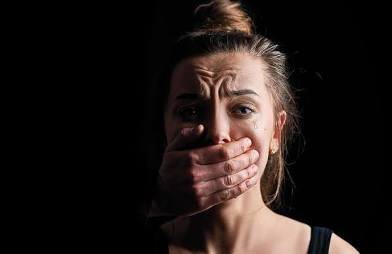
Light the charcoal. Sprinkle the sage. Negativity energy, go away. Today is the beginning of Domestic Violence Awareness Month. This month is when our voices from all over the globe will be heard. We as victims, survivors and warriors bring to light the horrors of domestic violence and the impact that it leaves on our lives and those around us. Let’s take time out for a little education on a few of the topics surrounding domestic violence.

Domestic Violence is a topic that I know a lot about. Well, I know how to function in it. And I know how to get away from it. But living with the aftereffects reveal a whole other set of problems. Where domestic violence used to be seen as something that only happens to women and their partners. There is more awareness on the abuse of men by their partners. No matter how you identify. It also happens to the most innocent, children and pets. This happens in all forms of relationships. And the statistics are staggering.

Domestic violence is violence committed by someone in the victim’s domestic circle. Which include partners and ex-partners, immediate family members, and other relatives and family friends (https://www.UN.org, 2025). The behaviors can include such things as:

·        Physical

·        Sexual

·        Emotional

·        Financial

·        Psychological actions or threats of actions that influence another person.

This includes any behavior that intimidate, manipulate, humiliate, isolate, frighten, terrorize, coerce, threaten, blame, hurt, injure, or wound someone. The repetitive exposure to violence teaches children that violence is a normal way of life (https://dvcc.delaware.gov, 2025). And for those of us who leave, constant confusion and every minute of no knowing when something else will happen again, is our normal. And the many years of programming by our abusers takes years of therapy to de-program ourselves. But you will never be who you used to be.

Recovery is not for the faint of heart. It is hard and uncomfortable. And it takes years to undo the damage that was caused on so many levels. I was one of the lucky ones. Long story short, I survived. But the mental damage that was caused has left me crippled in some ways. And through the sleepless nights filled with tears, therapy, psychiatric medications, body memories, flashbacks, phobias, and panic attacks, I have learned that I have a voice that deserves to be heard. And no matter what people say or believe, I can validate my own story regardless of the opinions of others. Because I lived it. 

The main thing I want to say to other women and men across the globe who are still in their own processes, “YOU ARE NOT ALONE!” Because it happened to me too. Thanks for reading! Keep smiling and pushing forward.

Affirmation: My light shines even in the dark.

***Don’t forget to watch the video!***

#Thispuzzledlife
LGBTQ+ And Suicide

“Our country is grappling with a youth mental health crisis, and it is particularly pronounced for LGBTQ+ youth.”

-Ronita Nath

 Light the charcoal. Sprinkle the sage. Negative energy, go away. Today, keeping in line with the topic of suicide, I want to discuss suicide in the LGBTQ+ community. 

The prevalence of suicide in the LGBTQ+ community is nothing new. The risk for suicide attempts and suicidal ideation can be 3 to 6 times greater for lesbian, gay and bisexual adults according to the National Institutes of Health. But there are also other statistics to keep in mind.

In 2024, 39% of LGBTQ+ youth considered attempting suicide according to The Trevor Project’s national survey. 1 in 10 of LGBTQ+ youth attempted suicide in the past year. And LGBTQ+ youth are more than four times likely to attempt compared to heterosexual youth. I can tell you that personally, I’ve been suicidal many times because of rejection from my family as a lesbian woman.

Transgender and Nonbinary identified individuals are at an even higher rate of suicide. And almost half seriously considered suicide in the past year. In 2022, 80% of transgender people had considered suicide and 40% had attempted. These statistics while staggering are not surprising. These demographic struggles are way more than they should be with little compassion from society.

Bisexual identified individuals are 1.5 times more likely to report thoughts and attempts compared to gay and lesbian individuals. And 2.98 times more likely to have  a suicide-related event compared to heterosexuals according to a 2022 study. And  the LGBTQ+ youth of color report higher rates of suicidal ideation and attempts compared to white peers (www.therevorproject.org, 2025). And there are several contributing factors such as:

·        Discrimination and Prejudice:discrimination, harassment and violence due to sexual orientation or gender identity increases the risk of suicide.

·        Lack of Support Systems: Limited social support from family, peers and community exacerbates the mental health challenges. 

·        Mental Health Disparities: LGBTQ+ individuals are more likely to experience depression and may face barriers to accessing mental health services (https://mhanational.org, 2025).

For someone who is a member of the LGBTQ+ community, I can tell you that I’ve considered suicide many times. The rejection from family and friends are sometimes more than I can bare. And having worked with someone in therapy many years ago, who was not sensitive to the needs of someone in these communities, there was little progress made. Mainly, because I couldn’t trust her. And she was extremely judgmental.

Since collaborating with coach for almost a decade, I can tell you that I have been able to fully accept the fact that I’m gay, despite my family’s disapproval. And then the religious communities also seem to greet us with bible verses telling how many ways we are going to hell. We all know that “choosing” to be gay is such an easier way of life. There the secret is out. 

With the current political administration taking away the rights and freedoms that the Stonewall riots stood against, and the lack of funding for suicide hotlines for LGBTQ+ youth, these rates will only climb. Our families, friends, churches, and government should be ashamed of standing by people who are ok with the policies set in place. We are the same as we ever were. We just wear rainbows now. 

There are those beautiful allies out there who remain the strength and backbone of our continual fight for equality. We are youth, parents, aunts, uncles, cousins, husband, and wives who just want to be recognized as equals in the eyes of the law. But where reputations and political agendas are from the far right, we must be even more solidified as a community. If someone is for rights with some and not others, I have no room for them in my life. But it’s taken me years to come to this conclusion. 

Is it lonely? At times, yes. However, I want people in my life who not only support me but also my friends. The suicide hotline is something that our community not only wants but needs. Many of us have non-supporting families and mine is no different. But I do have a place to live currently. But that does not constitute me putting up with homophobia or fragile masculinity and femininity.

The very few “true” friends I have, understand that being gay is not a “choice.” It’s who I am. And if that’s too much for someone to manage, that’s just too damn bad. To my fellow allies and community members, keep up the good fight. We must take up the original Pride flag are carry on. I love our colors. And I’m proud to call myself a member of the LGBTQ+ community.

Keep smiling. Keep shining. Knowing you can always count on me, for sure. That’s what friends are for. We are seen. And we are heard. And….WE ARE FABULOUS! Thanks for reading. Take what you can use and leave the rest.

Affirmation: I am proud of myself and will continue to strive to do well.

***Don’t forget to watch the video!***

#Thispuzzledlife

Attack On Freedom

“The attacks of September 11th  were intended to break our spirit. Instead, we have emerged stronger and more unified. We feel renewed devotion to the principles of political, economic and religious freedom, the rule of law and respect for human life. We are more determined more than ever to live our lives in freedom.”

-Then-New York City Mayor Rudulph Giuliani

Light the charcoal. Sprinkle the sage. Negative energy go away. There’s no way if you have lived since September 11, 2001, that you don’t remember when our great nation was sneak attacked by Middle Eastern “thugs” under the direction of an evil man on a dialysis machine. It was an attack on freedom similar to the attack on Pearl Harbor.

I will never forget the day that 9/11 happened. I was working for a local veterinarian during a truly horrible time in my life. I was in a horribly, abusive marriage where I never got to experience true freedom. I was also in the depths of addiction that was slowly killing me. And he made sure that I was also controlled by an extremely painful eating disorder. I was essentially a mess in every area of my life. 

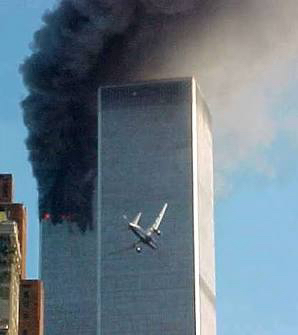
The vet’s office that I worked at had a small television that was usually put on a news channel for waiting clients. That particular day I was busy being miserable, high and working at top speed. The area that I worked in was the puppy and kitten adoption center that was always busy. I was busy cleaning cages and feeding those cute babies when I took time out to go look for something in the main waiting area. I walked in and one of the receptionists said, “Dana, look at what’s just happened.” I turned to look at the television screen at a picture that you only saw in movies. I saw an area of a building where an apparent plane had crashed into it. I said, “Do you really have time to watch a movie?” They quickly said, “No. A plane was hijacked and flew into one of the twin towers.” I couldn’t believe what I was hearing and seeing. I said, “Wait! What?! That doesn’t even make sense.” And for many months following the thought was the same.

Even now I still don’t completely understand how someone could hate Americans to that extent. I took a moment to reflect on everything that I had experienced in life. I looked around to realize that Americans have turned on her own people as evidenced by racism, sexism, homophobia, gender phobia, transphobia, abuse, domestic violence, drug addiction, gang violence, child abuse, mass shootings, school shootings, dangerous elected officials and many other things. But this was so different. It’s almost the attitude of “You can’t come up in our house and kick our ass! We kick our own ass!”

For a moment though, our stature as a “free nation” had been “sucker punched.” Suddenly, whether someone was poisoning our families with their “gayness” wasn’t a big issue. The disruption of cohesiveness within society based on whether someone was wearing a blue or red bandana came to a screeching halt. Hurricane Katrina wasn’t even a meteorological thought. We, as a nation, sat in stunned silence at the harshness of our new realities. Members of our beloved families were now gone. Now we didn’t care if the people in power were red, blue or orange. We just wanted those responsible to pay and pay dearly. We no longer had such different beliefs about life as a whole. And then, the second plane hit.

At this point, it was absolute pandemonium trying to find the source of the betrayal and eliminate it quickly. And then in exactly 1 hour and 24 minutes, heroes from our families did their part to save others from their certain demise by overtaking the cockpit of yet another hijacked plane with a mission of killing as many Americans as possible. That brave group of people who decided that enough was enough said this, “Are you out of your mind?! Who in the hell do you think you are? Let’s roll.”

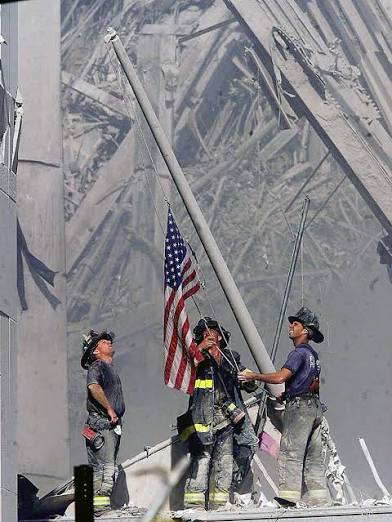
The skyline of New York City would lose the twin towers as they collapsed from total annihilation. The damage had just been too great. The North Tower of the World Trade Center stood for another 102 minutes. The South Tower stood  approximately 56 minutes after the second impact. Almost immediately, rescue efforts to find survivors and/or bodies began and would continue for the next nine months.

By May 2002, the World Trade Center site had been cleared. The rescue and recovery efforts consisted of more than 108,000 truckloads of debris and 1.8 million tons of wreckage that were removed along with many other people who were never found (redcross.org). On September 11, 2001, the terrorist attacks on the United States of America killed 2,977 people including hijackers. And of these, 3,000 children lost a parent (nymag.com, 2014).

 Lady Liberty at the direction of then President George Bush, was pointed in the direction of the Middle East where members of the terroristic organization, Al-Qaeda, and would soon make those “desert thugs” pay for many years to come. We were, again, becoming a group of people who stood with a united front and said, “Your attack on freedom will come at a heavy cost.” And it seemed like the term “functioning” would now have new boundaries.

President Bush addressed the workers and families at 9/11 ground zero by saying…”I can hear you! I can hear you! The rest of the world hears you! And the people-and the people who knocked these buildings down will hear all of us soon!”

And he launched Operation Enduring Freedom in Afghanistan on October 7, 2001. And expanded the “War on Terror” beyond Afghanistan which would lead to the invasion of Iraq. The attacks also led to the establishment of the Department of Homeland Security in 2002 and the Patriot Act (www.cfr.org, 2025). This led to a 20-year conflict that led to the loss of over  7,000 American lives (https://usafacts.org, 2024). 

Major players in the terrorists’ attacks and the aiding and protection of additional terrorists were Saddam Hussein and Osama Bin-Laden. They were both hunted down and eventually executed. Saddam was convicted by the Iraqi High Tribunal of crimes against humanity. And was sentenced to death by hanging. He was executed on December 30, 2006.

On May 2, 2011, the United States conducted Operation Neptune Spear, where SEAL Team Six shot and killed Osama bin Laden at his “Waziristan Haveli” in Abbottabad, Pakistan. He was buried at sea to prevent his grave from becoming a shrine for his followers (History.com, 2025).

When an organization or a group of people decide that American “infidels” are a waste of air and skin, the destruction was immense. And there had been no sneak attack on our nation since Pear Harbor in 1941.We, as a nation, have proven time and time again that when you attack the freedoms of the United States of America, your lives will be diminished like the innocent lives that were ended in the September 11thattacks. Thanks for reading! And God bless the United States of America.

Affirmation: I believe in the resilience and freedom of America. I live with patriotism which I hold true.

***Don’t forget to watch the video!***

#Thispuzzledlife
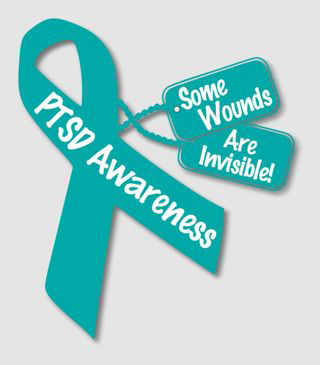
National PTSD Awareness Day

“Always remember, if you have been diagnosed with PTSD, it is not a sign of weakness; rather, if is proof of your strength, because you have survived!”

-Unknown

Light the charcoal. Sprinkle the sage. Negative energy go away. Today, I want to take time out from celebrating Pride, to give light to National PTSD Awareness Day. This one hit hard as I’ve lived with PTSD longer than I’ve lived without it. And there are so many of us who don’t make it to the other end of the tunnel. It’s an incredibly dark place to wake up to and go to sleep with every night.

Post Traumatic Stress Disorder (PTSD) dates back to ancient civilizations and military conflicts. Terms used early on included “combat-related stress,” “shellshock,” “combat fatigue,” and “railway spine.” In the 1800s and early 1900s, the “talking cure: was popularized by Sigmund Freud and introduced in medical literature. And the treatment went from psychoanalysis to electric shock treatment. By the 1950s, the treatments had become more humane. However, now people would not admit to any traumatic symptoms due to the stigma. So, group therapy and psychotropic medications were introduced (blackbearrehab.com, 2025).

In the 1970s Vietnam veterans began experiencing a lot of psychological problems that persisted even after returning home. And survivors of domestic abuse were also included. In the 1980s, PTSD was officially recognized as a mental health problem. Diagnostic and Statistical Manual of Mental Disorders adopted the diagnosis where it has remained (blackbearrehab.com, 2025).

PTSD is a developed from a traumatic event. C- PTSD when a traumatic event continues for months and years or multiple events occur. The intrusive thoughts, flashbacks, insomnia, avoidance, memory problems, detachment from friends and family, feeling emotionally numb, hyper startle, irritability, trouble concentrating, impulsive behavior, paranoia, severe anxiety, nightmares, suicidal ideations and actions and uncontrollable thoughts about the event. And over time, these symptoms completely devour who you once were (MayoClinic.org, 2025).

I know that PTSD is typically related to soldiers. I am here to tell you that I never went into the military. But the PTSD that I deal with, as a result of domestic violence, grabbed hold of me and has never let go. It has completely stripped me of everything that I used to enjoy. I don’t care about relationships. I question people about their intentions, even if they’re pure and good. I’m constantly waiting for the next shoe to drop. I don’t have typical reactions to being scared. I could see a moth out, of the corner of my peripheral vision, and then jump and scream like Jeffery Dahmer was staring at me and about to take the first bite. I face the stigmas of both friends and family mainly due to a lack of understanding. However, the reasearch information is everywhere. Sometimes others just need to their own leg work. I have come to realize that instead of trying to find out how PTSD affects someone that you love, it’s “the easy way out” to just to be dismissive, embarrassed and judgmental instead. The attitude is “just change X behavior.” Without having a solution, the resounding message of “just make it go away” further ostracizes the person that you say you care about. And so the anticipated glimmer of hope dissipates further isolating the individual. And sadly, can lead to suicide.

PTSD is not about you, it’s about them. It’s just a diagnosis until it’s “you” that experiences it every day. It has taken me down to the point of putting a gun in my mouth. And because living in the abuse was so severe, I actually pulled the trigger after pointing the gun at my torso. It missed my heart by only a few centimeters. Nothing was messed up to the point of needing surgery. But self-harm is something that I’ve dealt with since I was a 13-year-old child. And I had no idea how to deal with all the overwhelming emotions of abuse. In that cold, dark closet where I began to self-harm, and as maladaptive as the behavior is, it worked. It was the only thing that worked to bring me back to complete balance. But the problem is that it became a true addiction issue that I continue to struggle with. And before you ask, yes I’ve done a lot of therapy. It’s not that the therapy doesn’t. It’s that the addiction is that strong. 

PTSD is a true injury on the brain. The brain’s job is to help you survive in any way possible. So, we reach for anything to help calm the barrage of intrusive thoughts, memories, smells and sounds. And once it’s been damaged through a traumatic event, it creates a “work around” solution. What typically works? Self-harm and substance abuse creates almost instant comfort. You don’t have to wait for 6-8 weeks to reach your therapeutic dose efficacy to begin working. It’s an immediate fix that some of have to use just to stay alive.

Cannabis was recommended when all other “Big Pharma” medications failed. And it has saved my life on a daily basis ever since. Cannabis seems to put a cloud over my brain saying, “Settle just for a moment.” And for that moment, I can take a break from the constant paranoia and overstimulation of a brain that wanted to do nothing more than survive. And that, is my battlefield. It wasn’t in Iraq, Afghanistan or Vietnam. My battlefield is everywhere I go. I fear people and social situations in a way that most cannot understand. 

It literally takes me about a week in advance to start prepping to leave my house just to go to pick up medications,that I,unfortunately have to take. But I don’t take anymore psych meds. I was extremely sick, coming off all the meds that I had been begging for over two years to be tapered off. And I got tired of waiting, so I did it myself. I don’t advise this way because it was a really miserable process. However, I was at a point of desperation. And now about 6 months later, I feel like a new human being after the toxic feeling of all the medications. All of my true feelings and emotions have awakened, and I really like feeling somewhat comfortable at times.

My personal opinion is that anyone returning home from the active duty should be handed an ounce of weed the minute they step off the plane to do with as they wish. And it would be perfectly ok if they gave it away. That’s like paying it forward in “Weed-O-Nomics.” As it stands, soldiers come home from a war that never ends. And they are committing suicide at a rate of 22 soldiers a day. And that is less than unacceptable.

As the topic of cannabis continues to circulate among social circles and national politics, I hope that veterans from our military will step out against the shame that is felt from social stigmas. And reach for the plant that can “help take the gun out of your mouth.” Cannabis doesn’t cure PTSD because it wasn’t the one who caused it. But it does make things much more tolerable.

Thanks for reading! Happy Pride everyone!

Affirmation: I am resilient and capable of healing.

***Don’t forget to watch the video!***

#Thispuzzledlife

Why Pretending You’re Ok Is Dangerous?

“I was tired of pretending that I was someone else just to have a good relationship with people, for the sake of having friendships.”

-Kurt Cobain

Light the charcoal. Sprinkle the sage. Negative energy go away. Okie dokie! I thought today, while staying in line about mental health awareness, it would be a clever idea to explore why we pretend that we are ok when we aren’t. And what are the reasons for doing this?

When someone asks, “How are you doing?” Most of the time they just expect the typical answer, “I’m fine.” Truthfully, though, most people do not don’t give a shit about how you are really doing. And when you tell them, you are met with an instant cellular retraction. You are seen as boundaryless or too overbearing. The truth, however, is that most people don’t know how to deal with anything that’s perceived as abnormal. My opinion is, “You asked how I was doing? So, guess what? I’m going to tell you exactly how I’m doing.” I do that sometimes just to see the reaction of others. 

When I was doing my undergraduate studies, one of my beloved professors explained this very thing. And ever since, I’ve assessed those theories only to prove them right repeatedly. I am not saying this as a blanket statement. But the truth is the truth. People back away from what they don’t understand. That’s about them, not you.

It does not speak about you as a human being. We have been conditioned as human beings, as a species, to be accepted and wanted despite the personal cost. Social media is all about presenting something that the average person considers useful in some way. It does not mean that what you witness is how someone is truly feeling. The conditioning that is implied is that without millions of followers, gets labeled as unworthiness. So, we put on a happy face and try to stay in some form of societal compliance as “normal” which doesn’t have a definitive definition. But do you know what the term “normal” actually is? It’s a setting on a washing machine. The term “normal” is actually a subjective term that doesn’t have a concrete definition. It’s nothing more than someone’s interpretation and social constructs of mainstream behavior. 

When we tell people we are ok when we really aren’t, is a “hail Mary” attempt at acceptance. But when we do that, we deny our true feelings and experiences. A big turn off when dealing with people is how they tell me how I should or shouldn’t feel about a situation. What this does is minimize the person’s feelings. It’s not up to you to tell them that their feelings are “ridiculous.”  However, the damage has been done. You just sent an unspoken message to the individual who asked the question, that they are not worthy of your time. And it’s incredibly hurtful. And since they aren’t a therapist trained on how to respond appropriately and therapeutically, the damage that is potentially caused can be catastrophic. So, instead of a positive act of vulnerability, the vulnerability is now covered in shame. We can develop a fear of vulnerability based on that one experience. And we also tend to prematurely judge every person and conversation thereafter in the same light.

I can’t tell you how many times I have been told that my fears and phobias are preposterous. But the situation that caused the fear was in fact very real. And its people, who have never gone through the same precipitating factors nor situation, who seem to have all the “correct” answers. I have been told some of those very things when it took everything I had to just be vulnerable enough to tell someone what happened. It has created so many therapeutic  “pitfalls” because of the fear and shame that I was left with from the very beginning of my trauma history. So many times, I could’ve gotten help sooner, but I suffered in silence because of how unworthy I felt trying to tell the wrong person that I needed help. And sadly, there are many people who die by their own hand. Shame was the killer.

Sometimes all you need to do is just hold a “non-judgmental” space for someone to talk. You don’t have to, nor do you need to have the answers. You are NOT a therapist. You are a “sounding board” at best. However, “non-judgmental” space is usually not common unless you’re sharing space with a competent therapist who understands the powerful and most sought-after form of safety that deserves the utmost respect.

The most supportive thing you can say to someone who approaches you needing that “sacred space,”  is, “I might not know how to help you, but your feelings are valid and I will listen supportively until we can find a mental health professional to help you.” That simple statement can change the course of someone’s life. You don’t have to be smart. You just have to be a HUMAN. Thanks for reading! Keep smiling!

Affirmation: I am a work in progress, and that is okay.

***Don’t forget to watch the video!***

#Thispuzzledlife

It’s Mental Health Awareness Month

“What mental health needs is more sunlight, more candor, and more unashamed conversation.”

-Glenn Close

Light the charcoal. Sprinkle the sage. Negative energy go away. Okie dokie! Today is the first day of the month of May, which is also Mental Health Awareness Month. And unfortunately, the topic of mental health is often skirted or disregarded as something that isn’t acknowledged because of the “shame factor.” However, it is not a topic to be ashamed about. Mental health is such an integral part of being human and is something that must be discussed.

What are the issues surrounding the topic of mental health? Well, part of the problem involves societal stigmas, fear of judgment, and a lack of understanding. And the stigma usually surrounds negative stereotypes, incorrect information and cultural beliefs or a sign of personal failure. Give me a second to go a little more in depth about these issues.

1. Lack of Understanding-most people have little knowledge about mental health conditions which can lead to misconceptions and fear. And this includes immediate family, friends, co-workers, medical personnel and acquaintances. I have tried in my own ways to educate people about mental illness, as my daily living has revolved around the mental health system for the majority of my life. But no matter how much you try to explain things to people, they just can’t seem to let go of old ideas and opinions.

2. Negative stereotypes-Thanks to social media, mental illness is portrait in the media that mental illness is considered a sign of weakness, dangerous or violent. This further solidifies negative attitudes. While some of this is true regarding violent individuals, the majority of us are not dangerous people. And religious affiliation can also be another source of negative stereotypes. You wouldn’t believe some of the nasty and fearful looks that I get from simply wearing a baseball cap about PTSD. Sometimes I get asked, “What branch of the military were you in?” I simply tell them, “I didn’t serve our country. I developed PTSD because I’ve been abused for a large majority of my life. So, technically, I’ve been fighting a war my entire life.” They usually silently turn around and back away. Some have asked, “Why do you tell people?” And my answer is always, “Because I’m not ashamed of having a mental illness. It is what it is. And I’m not responsible for other’s ignorance. I simply state the true facts and give the shame back to where it belongs. 

3. Fear of judgment-many people fear judgment for their mental illness. One thing you have to understand is that people are usually their own worst critic. So, your judgment will never be as potent and the person with the mental illness. In my case, telling someone that I have Multiple Personality Disorder makes people retract, mainly because their only source of reference is through Hollywood. And we all know that Hollywood never really tells a story accurately. It induces the “fear factor” in most people. And when I speak this truth, most people are also taken aback because I’m so forth coming with my own  struggles. You might notice my quirkiness at times. However, you would never know when my other parts switch out unless you are around me and I explain who they are and their function. I don’t fear judgment from people. I embrace their ignorance and do my best to “stomp out stupidity.”

4. Fear of discrimination-people fear losing jobs, housing or other opportunities due to their condition. Look, I have lived under a cloud of discrimination since the day I was born. I’m gay. I have a mental illness. And I love to smoke weed. But I’m also very educated. And somehow when you are “out and proud” that automatically puts a label on you. And well, that’s their problem not mine. Even within my own family, I face discrimination. And when I speak about mental health topics, I’m revered as not being nearly as intelligent as others. Even though I have a master’s degree in counseling psychology which qualifies me to be able to diagnose. Make no mistake, I might’ve done a lot of stupid things in my life, but I am in no way dumb. And I face discrimination head on. 

I completely understand that everyone isn’t at the same level of progress with these issues. And it has taken years of therapy to bring me to the point where I am. Mental illness is nothing to be ashamed of. And most people have mental illness in varying degrees. However, a lot of it has never been diagnosed. Individuals hide and suffer in silence because of the shame that they carry regarding this topic. And you absolutely shouldn’t be. Mental health is just as important and maybe more so than physical health. Because poor mental health can also cause physical discomfort.

Embrace what is and be responsible enough to get in therapy. You will be glad you did. Cannabis has increased my quality of life much better than pharmaceuticals. And this is another topic that is shame based. There are those still who are “closeted” cannabis users who also reap the benefits of the plant. And as someone who lived in a closet for many years, I can tell you that no one is meant to be smothered and silenced. Everyone deals with mental illness and fears the repercussion of others differently and at their own pace. I can’t speak for anyone else, but with me, you will always be accepted. 

Educate yourself about your own mental illness not based on movies, other people’s subjective opinions, but on the scientific research and real truth. Face your fears and get involved in therapy and do the challenging work that will benefit you overall. And let the opinions of others roll off your back like water on a duck. Their opinions are just that. They are not facts. It is purely unadulterated ignorance. But that can change if they are willing to do so.

If you are an ally on the topic of mental illness but still have questions, we won’t cook you or eat you. Respectfully ask for some clarification. It is a horrible feeling to suffer in silence over half truths and out right lies regarding mental illness. And sadly, I have had friends who refused to go to therapy for those reasons. And they are now dead from suicide. But everyone is entitled to love, care and compassion. And, yes, that also includes you. Thanks for reading! Stay healthy. Stay happy. Keep smiling. And keep reading this blog.

Affirmation: I trust myself  to make decisions that align with my values and goals.

***Don’t forget to watch the video!***

#Thispuzzledlife