
Cyberbullying And Suicide

 “Be careful because cyberspace is a two way street those that hunt and stalk and troll can also become the hunted by those that they harass and attack. Cyberspace has a definite dark side.”

Don Holbrook

Light the charcoal. Sprinkle the sage. Negative energy, go away. Today, I want to talk about another reason that people are committing suicide. It’s the inevitable factor of cyberbullying.

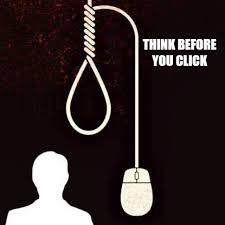
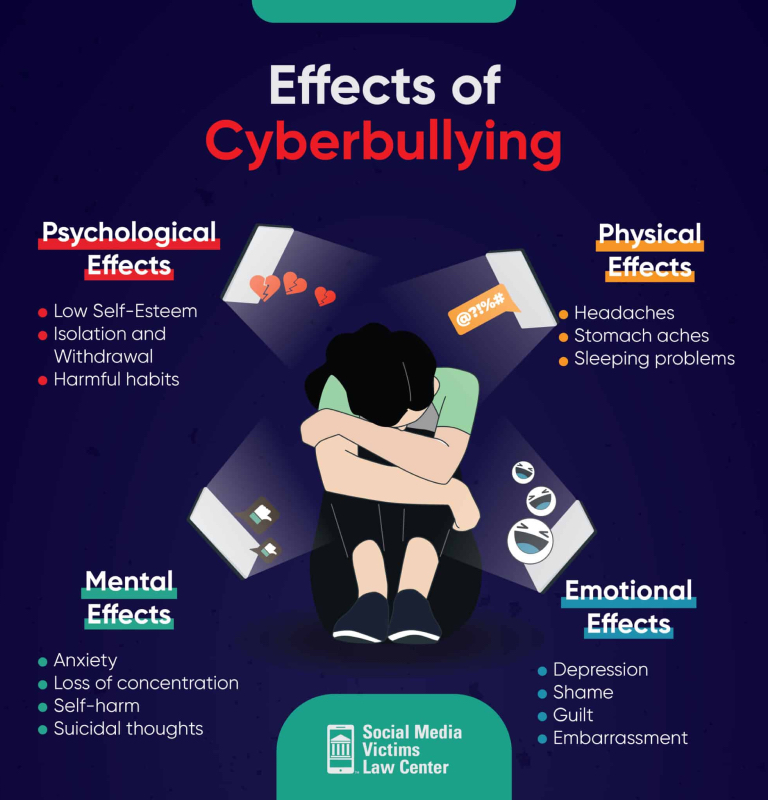
Cyberbullying is bullying with the use of digital technologies. Research consistently indicates that there is a strong correlation between being a victim of cyberbullying and increased suicidal ideations. In fact, once study showed that students who are subjected to cyberbullying are 4 times as likely to commit suicide. And a major increase occurred during the COVID-19 pandemic). Another study found that cyber bullying increases suicidal thoughts by 14.5% and suicide attempts by 8.7%. The limitations are since there is usually not just one factor that contribute to suicide (www.nih.gov, 2025).

I can tell you that as an 8th grader adult bullied me where I was supposed to be safe, at school. And though there was no cyberbullying at the time, due to lack of access to the internet, I quickly began having suicidal ideations that have plagued me ever since. When you’re a child, bullying is such a violation and betrayal. And for me there was no way out. So, I had to fight the best way I knew how. Sometimes it was quiet while escaping within my mind. And sometimes, it was through pure aggression. Sadly, aggression was the only thing to make it all stop even for a moment. But the colossal damage had already been done. 

That year of bullying set the precedence for how my life would turn out. I lost all confidence in myself and my abilities. My self-worth was destroyed. And I turned to the only thing that seemed to accept me no matter what my condition. It was addiction. By the time I started high school, I was a full-blown addict of drugs, alcohol, self-harm and eating disorders. And at almost 50 years old, I continue to struggle with them.

I learned that no one was a “safe” person. I learned that if anyone were going to protect me, it would have to be me. I learned that taking the first shot at someone was the safest way to live. I also concluded that no one that I saw as an “underdog” would ever have to fight their own battle again if I were there. I asked for help but was denied. And when I did, the abuse only got worse.

Cyberbullying takes on a whole new level of abuse. And the damage can be irreparable. It’s said and done by people who don’t have to look at you in the face. And typically, most people wouldn’t have the balls to say those same things if done in person. Since our national politics are so unstable, I would venture to say that the amount of cyberbullying would increase significantly. Below are a couple of the cases that I wanted to show you about. There is no way to list them all.

Megan Meier’s Case (2006): a 13-year-old American girl who committed suicide after being bullied on MySpace. The bullying was orchestrated by an adult neighbor, Lori Drew, posing as a teenage boy. The adult was the mother of a classmate. The mother was found guilty of cyberbullying in 2009. However, the conviction was later overturned.

Texas Child Suicide (2023): A child in Texas died by suicide during an online game due to alleged cyberbullying. The suspect lived in Michigan who eventually plead guilty to crimes related to aiding suicide and harassment causing death (www.nbcnews.com, 2023).

In the world that we live in, it is imperative for us parents to pay close attention as possible to what our kids are doing and with whom they are interacting. I do not live under the delusion that it is possible to know everything. I am not God. The only thing I know to do is to regularly talk to my children about the dangers of cyberbullying. And that just because someone is on your “friends list,” doesn’t mean that they are really friends. And that predators disguised as heaven will often put you through hell. And even with that knowledge, I know that I can’t protect every facet of their lives. The very essence of a predator is to go undetected. And to operate in the shadows, often in plain sight.

I hope that you have gained useful information on this topic. I continue to learn each time I blog. And maybe, it’s bringing some type of comfort as I look at these difficult topics. I write thinking, “What can I do to help other parents?” And then, BOOM! Another blog appears. Thanks for reading! As always, take what you can use and leave the rest. Keep smiling. And stay informed.

Affirmation: I forgive myself for believing when I’m bullied it’s my fault because I let it happen, or I was in the wrong place, or I should have known better.

***Don’t forget to watch the video!***

#Thispuzzledlife

Common Myths About Suicide

“When you feel like giving up, just remember why you held on for so long.”

-Hayley Williams

Light the charcoal. Sprinkle the sage. Negative energy go away. Today, I want to talk about some myths regarding the topic of suicide. I was first exposed to suicide at the age of thirteen. One of my friends and classmate committed suicide when we were in the eighth grade. As a child, how do you manage that? I can tell you that among all of the major events in my life that has changed me in some way, the day that I lost my friend to suicide will always rank high on my list. I think, though, that the biggest impact for me was how our teachers and school administrators dealt with the situation.

I grew up in the 1980’s when child and adolescent mental health was rarely recognized. And, honestly, my generation was sort of left with the attitude of “figure it out yourself.” Situations that left gaping wounds were merely glossed over. And so, me and other friends and classmates turned to a life of addiction and suicide. As a teen who was being abused daily by a teacher, and the complete lack of protection from the adults, I was forced to just “figure it out.” I did it in total “self-preservation mode.” The behaviors that I developed were not healthy, but they were there when no one else was.

In the 35 years since my friend’s suicide, I have lost a lot more friends. And sadly, I have built walls all throughout my life that continue to help me through my pain. The one thing that has seemed to resonate through the years is how religion constantly attacks those who have been through the most. And I grew up being marinated in the ideology that suicide was “selfish,” “a sin,” “immediate condemnation to hell,” “the easy way out” and the most “self-centered” act known to man. 

A lot of the “indoctrinating messages” I was raised to believe, life made me realize how very untrue and damaging they are and will continue to be. I have been on all sides of suicide. And from a personal standpoint, those beliefs couldn’t be any farther from the truth. Below are a few common myths regarding suicide.

Myth 1: Talking about suicide increases the chance a person will act on it.

Fact: Talking about suicide can reduce rather than increase suicidal ideations. It improves mental health related outcomes and increases the likelihood that someone will seek treatment.

Myth 2: People who talk about suicide are just seeking attention.

Fact: People that die from suicide have often told someone about not wanting to live anymore. And it’s always important to take it seriously. In my own family, these statements have rung true. Or most often, those statements are ignored.

Myth 3: Suicide can’t be prevented.

Fact: Suicide is preventable but unpredictable. Most people have experienced intense emotional pain, hopelessness and a negative view on life and the future. Suicide is a product of genes, mental illnesses and environmental risk factors. Intervention can and does save lives.

Myth 4: People who take their own lives are selfish, cowardly or weak.

Fact: People don’t die of suicide by choice. The emotional pain that they experience makes it difficult to consider different views. Have you ever turned a gun on yourself? I have.

Myth 5: Teenagers and college students are the most at risk of suicide.

Fact: Suicide rates for that age group is below the national average. The age groups with the highest rate of suicide in the U.S. are women 45-64 and men 75 and older. Suicide is a problem among all ages and groups.

Myth 6: Barriers on bridges, safe firearm storage and other actions that reduce access to lethal methods of suicide don’t work.

Fact: Limiting access to lethal means of harm is one of the most straightforward strategies to decrease the chances of suicide.

Myth 7: Suicide always occurs without warning. 

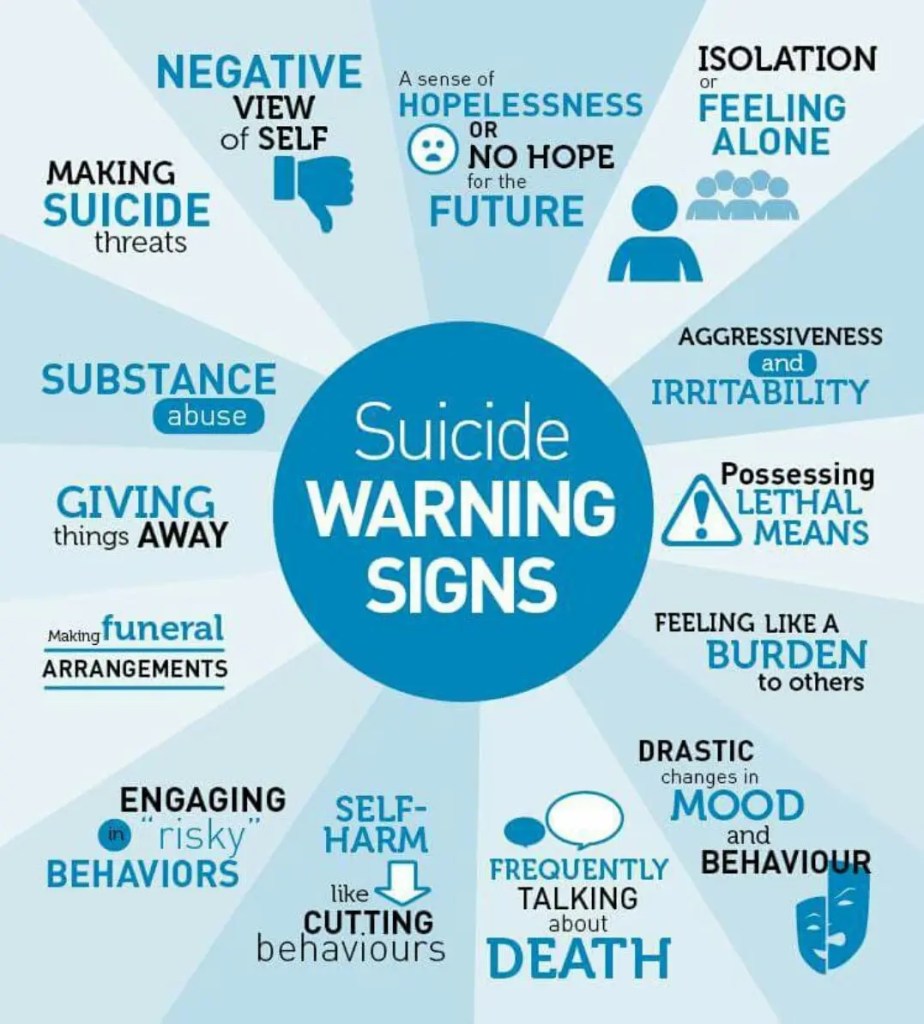
Fact: There are almost always warning signs before a suicide attempt.

Myth 8: Talk therapy and medications don’t work.

Fact: Treatment can and does work. I don’t agree with big pharma for many reasons. I guess, though, “life over limb.” Lives are saved with both therapy and medication. Therapy has saved my life for many years now. But finding the right one to work with can be taxing. Most people who are in the helping profession do help rather than harm (mayoclinichealthsystem.org, 2025).

Myth 9: You have to be mentally ill to think about suicide.

Fact: 1 in 5 people have thought about suicide at some time in their life. Not all people who die by suicide have mental illnesses at the time they die.

Myth 10: People who are suicidal want to die.

Fact: The majority of people feeling suicidal do not actually want to die; they just want the situation they’re in or the way they’re feeling to stop.

Myth 11: Most suicides happen in the winter months.

Fact: Suicide is complex and not just related to seasons or the climate. Suicide is more common in the spring and a noticeable peak on New Year’s Day.

Myth 12: You can’t ask someone if they’re suicidal.

Fact: Evidence shows that asking someone if they’re  suicidal could protect them (Samaritans.org, 2025).

Myth 13: Strong faith prevents suicidal thoughts.

Fact: Many deeply religious figures including biblical figures have experienced suicidal thoughts. The misconception that strong faith eradicates mental despair is false. Faith doesn’t guarantee protection from difficult emotions and struggles.

Myth 14: Suicide indicates a lack or abandonment of faith.

Fact: Suicidal ideation is viewed from different perspectives. Suicide does not inherently mean that someone has abandoned their faith.

Myth 15: Fear of religious repercussions is a sufficient deterrent for suicide.

Fact: For some maybe the fear of divine punishment can be a factor. However, many faith communities emphasize grace and forgiveness, even for those who die by suicide. And personally, I have rarely seen grace and forgiveness on this topic.

Myth 16: Religion or faith alone is enough to prevent suicide.

Fact: Studies show inconsistent findings regarding the protective effect of religious affiliation on suicide risk. It is crucial to understand that faith alone is not a guarantee against suicide and should not replace professional mental health interventions when needed (https://pmc.ncbi.nim.nih.gov, 2025).

I hope at the very least that some of the myths regarding suicide have been explained. My own personal suicidal feelings have been dismissed the majority of my life. And no amount of “bible beating” has ever helped. It has only made things much worse than they already are. And some of the statements made disguised as “help” by family members, are not help. The statements are just toxic. Saying that you have “x” amount of years living and never considered suicide isn’t helpful. Please don’t play therapist when you’re not one.

Put harmful judgments in the trash where they belong. Love and appreciate those that you love. Because it can all change in an instant. Quit making “their” suicidal feelings about “you.” Because it’s not. And always remember, “Just because someone has a smile on their face doesn’t mean that they’re not suicidal.” Thanks for reading! As always, take what you can use and leave the rest.

Affirmation: I am overcoming depression one step at a time.

***Don’t forget to watch the video!***

#Thispuzzledlife