
What Are The Streets Saying? Inhalants

“The National Institute on Drug Abuse states, “The brain of a chronic toluene abuser is smaller compared to someone with no history of inhalant abuse.”

-Neil Rosenberg, M.D., NIDA Research Report

Light the charcoal. Sprinkle the sage. Negativity energy, go away. Today, I want to discuss something that many teenagers experiment with, inhalants. Abusing inhalants isn’t a new thing. As it was very popular 35 years ago. And when you’re a kid without access to money, getting “high” is just a short walk away to the family utility shed. I’ll give you some facts. And then I’ll tell my story.

First, let me describe what “huffing” is even though it’s self-explanatory. Huffing is the act of inhaling chemical vapors from common household products to get high. And it’s a dangerous form of substance abuse. Even though it might seem less risky, huffing can be even more dangerous with potentially severe and fatal consequences (https://evokewellnessoh.com, 2024).

The primary chemical in many dusters is HFC-134a, which act as propellant and refrigerant. Inhaling duster fumes can be dangerous. It can lead to serious side effects such as liver problems, breathing problems and death. Duster and other inhalants aren’t considered control substances and can be bought most anywhere.

Air dusters also contain other ingredients such as:

·        Difluoroethane can cause heart issues and loss of consciousness.

·        Nitrous Oxide can cause dizziness, vomiting and nausea.

·        Alkyl Nitrites can cause increased heart rate or vomiting.

·        Butane can affect the heart leading to sudden death.

·        Propane which can cause convulsions and loss of consciousness.

Other possible side effects are:

·        heart irregularities

·        unconsciousness

·        irritation of the nose, throat, and lungs

·        coughing

·        difficulty breathing

·        shortness of breath

·        irregular pulse

·        palpitations

·        inadequate circulation

·        abnormal kidney function

·        frostbite of the nasal cavity

·        breakdown of muscle tissue

·        liver damage

·        suffocation due to displacement of air inside the lungs

·        coma

·        convulsions

·        brain or nerve damage

·        bone marrow damage

·        choking on vomit after using an inhalant

·        sudden sniffing death, which is when a person dies suddenly after breathing in an inhalant due to cardiac arrest (https://medicalnewstoday.com, 2025).

Over a fifteen-year period, teens in the US abused more than 3,400 products through inhalation. The age range was from 6 to over 50 years old. Teen boys accounted for 73.5% of cases. Of those with known outcomes from emergency room visits, 208 died and more than 1,000 experienced life-threatening or permanent disabilities (www.poison.org, 2025).

·        More than 22.98 million Americans have abused inhalants at least once in their lifetime.

·        And over the past two decades, less than 1% of individuals aged 12 and older report past year use in 2023. 

·        Inhalants are typically used by younger adolescents, with 4% 8th graders having used in the last year. The peak age is 14 years old.

·        Inhalant abuse is less common in adults but does occur, especially among those with access to chemicals (https://www2.courtinfor.ca.gov, 2025).

·        Only 25% of inhalant abusers tested in emergency rooms had no effects. Most had serious effects or died (www.poison.org, 2025).

Toluene is a chemical found in common products including nail polish, paint thinners, adhesives. It is also used to aid in the production of benzene, other chemicals, pharmaceuticals, and dyes. Toluene can also be found in printing inks, varnishes, lacquers, and some types of glues (www.OSHA.gov, 2025).

Another product that is popular among teens, which can be bought at any “head shop” is “whip-its.” It is nitrous oxide which cuts off oxygen to the brain, creating a euphoric high that lowers mental and physical pain. And it is used to make whipped cream. Using nitrous for recreational purposes is illegal. And you can be fined or jailed for violating inhalant laws (www.webmd.com, 2025). Lock me up!

I’ll be the first to admit that “huffing” was always one of my favorite ways to get “high.” Second, only to pills. It began when I started sniffing White Out. I would cover the page with it and then roll it up and start sniffing the fumes. Same thing went for gasoline. I would put a little on a rag when I filled up with gas. And then held it to my nose and inhaled deeply. All while I was driving. I know. Safety scores are totally negative. And for many years I would quit. Always heavily involved in other types of addictions.

Once the stress of my life engulfed me while I was in undergraduate and beginning graduate school, I would start huffing again. And I found my “main squeeze” in computer duster. Mainly, because it was much cheaper than other things. I was in therapy at the time. And the stress of life and the ever-hovering PTSD symptoms had me huffing every chance I got, especially after therapy. And one day I had left therapy, grabbed my can of duster from underneath the seat and started huffing as fast as I could to get the “incorrect” EMDR effects out of my brain. And when the chemicals hit, they hit hard. Suddenly, I couldn’t figure out how to work my steering wheel. I ran up on the curb and over corrected and spun across four lanes of traffic. Luckily, there were no cars coming. I sit for a second and realized that everything was ok. Still much higher than I should’ve been to drive, I cranked my Honda CRV and headed in the direction of a potential future employer. But during my stupor I forgot to look for vehicles coming from the right as I was about to make a left turn. And the next thing I remember is hearing the horrible sound of glass breaking and a loud boom. My luck had just run out. I had inadvertently pulled out into the back wheels of an eighteen-wheeler. And for a split second I thought, “Wow! This is it. Jesus, I’m on the way!” The next thing I remember is feeling intense pain but unsure where. An ambulance picked me up from the scene. What I didn’t realize at the time was that the eighteen-wheeler had gone over the top of the cab and crashed it in. Nevertheless, I was terrified that I would be getting a DUI. But there was no way to test for an aerosol. So, I vowed to keep my mouth shut. They did do a toxicology test, but an aerosol is from the lungs not the blood. And I would live with battle wounds. I vowed to never touch that stuff again. But I would always carry that little behavior not as a first choice. But still a choice I would always have for private viewing. I thought that I was finally scared of addiction and the dark forces that surround it.

After many of doing without it while engaging in self-harm, illicit drugs, and alcohol, I would begin again while living in Texas for a couple of years. But this time, it was spray paint. They both get you “high,” however, duster can give you a very panicky “high.” If it do it too much, it becomes downright scary. To this day, I still deal with huffing. I know that it’s typically done in teenage years. But that’s when one of my biggest traumas occur day after day. And in many ways, I am still that same rebellious and very hurt teen.

If you know of someone who is “huffing,” help them stop NOW! Because years later they will look up and realize they’re an adult who’s still “huffing,” if not dead. It might seem harmless, but it’s not. I hope some of this educational material will bring more attention to a very common problem with inhalants. Thanks for reading! Take what you can use and leave the rest.

Affirmation: You are not your mistakes

***Don’t forget to watch the video!***

#Thispuzzledlife
What Are The Streets Saying? “Benzo Dope”

“Drugs take you to hell disguised as heaven.”

-Donald Lyn Frost

Light the charcoal. Sprinkle the sage. Negative energy go away. Today, I want to talk to you about a drug that is more dangerous than fentanyl. It’s called “Benzo Dope.” In my time working in the addiction field, one of the most dangerous combinations of drugs that I saw was benzodiazepines and opiates.

Benzodiazepines (Benzo) are a class of depressant drugs that are commonly used in anti-anxiety medications such as: Xanax, Valium, Ativan and Klonopin . There are many others but these mentioned are the most common. They are used in conjunction with many other drugs like heroin, cocaine and fentanyl to intensify the sedating effects. These drugs both decrease respirations and when combined can cause coma or death (dea.gov, 2025). Common street names associated with these drugs are: bars, footballs, french fries, ladders, tranks, planks, xannies, benzo blues, nerve pills, candy, k, k-pin, super valium (addictioncenter.com, 2025).

During my extensive time of being on psychiatry meds, I was prescribed “benzos” to help treat paralyzing anxiety. The trend that I’ve personally seen is that some doctors have significantly decreased prescribing these meds because of their high potential for abuse. The withdrawal symptoms, regardless if you abuse them or not, come with some pretty nasty symptoms. Even when being tapered down withdrawal effects are still present. Yep, I have abused those drugs a time or two with and without opiates.

“Benzo Dope” combines these two types of drugs raising the overdose rate in epic proportions. The “benzo” part of the concoction throws up some amnestic barriers where the user has no idea what has transpired. And oftentimes they don’t even know that benzos have been added to their dope. This leaves individuals susceptible to being robbed, raped and other traumas with no memory of the event. Now, however, “benzo dope” has become a staple in which addicts ask for it by name. The life saving drug, “Narcan,” helps to reverse the overdose effects of opiates but plays no part in the reversing the life cycle of benzodiazepines.

Several years ago, I worked at a methadone clinic in Albuquerque, NM. Methadone is another very dangerous drug that should be taken off the market. There were numerous overdoses because while using that strong opiate they combined benzos which resulted in death. As always, take what you need and leave the rest. No matter what drug is being used addiction is a death sentence.

“It is more difficult and dangerous to widraw people from benzodiazepines than from heroin.”

-Unknown

***Don’t forget to watch the video!***

#Thispuzzledlife
National PTSD Awareness Day

“Always remember, if you have been diagnosed with PTSD, it is not a sign of weakness; rather, if is proof of your strength, because you have survived!”

-Unknown

Light the charcoal. Sprinkle the sage. Negative energy go away. Today, I want to take time out from celebrating Pride, to give light to National PTSD Awareness Day. This one hit hard as I’ve lived with PTSD longer than I’ve lived without it. And there are so many of us who don’t make it to the other end of the tunnel. It’s an incredibly dark place to wake up to and go to sleep with every night.

Post Traumatic Stress Disorder (PTSD) dates back to ancient civilizations and military conflicts. Terms used early on included “combat-related stress,” “shellshock,” “combat fatigue,” and “railway spine.” In the 1800s and early 1900s, the “talking cure: was popularized by Sigmund Freud and introduced in medical literature. And the treatment went from psychoanalysis to electric shock treatment. By the 1950s, the treatments had become more humane. However, now people would not admit to any traumatic symptoms due to the stigma. So, group therapy and psychotropic medications were introduced (blackbearrehab.com, 2025).

In the 1970s Vietnam veterans began experiencing a lot of psychological problems that persisted even after returning home. And survivors of domestic abuse were also included. In the 1980s, PTSD was officially recognized as a mental health problem. Diagnostic and Statistical Manual of Mental Disorders adopted the diagnosis where it has remained (blackbearrehab.com, 2025).

PTSD is a developed from a traumatic event. C- PTSD when a traumatic event continues for months and years or multiple events occur. The intrusive thoughts, flashbacks, insomnia, avoidance, memory problems, detachment from friends and family, feeling emotionally numb, hyper startle, irritability, trouble concentrating, impulsive behavior, paranoia, severe anxiety, nightmares, suicidal ideations and actions and uncontrollable thoughts about the event. And over time, these symptoms completely devour who you once were (MayoClinic.org, 2025).

I know that PTSD is typically related to soldiers. I am here to tell you that I never went into the military. But the PTSD that I deal with, as a result of domestic violence, grabbed hold of me and has never let go. It has completely stripped me of everything that I used to enjoy. I don’t care about relationships. I question people about their intentions, even if they’re pure and good. I’m constantly waiting for the next shoe to drop. I don’t have typical reactions to being scared. I could see a moth out, of the corner of my peripheral vision, and then jump and scream like Jeffery Dahmer was staring at me and about to take the first bite. I face the stigmas of both friends and family mainly due to a lack of understanding. However, the reasearch information is everywhere. Sometimes others just need to their own leg work. I have come to realize that instead of trying to find out how PTSD affects someone that you love, it’s “the easy way out” to just to be dismissive, embarrassed and judgmental instead. The attitude is “just change X behavior.” Without having a solution, the resounding message of “just make it go away” further ostracizes the person that you say you care about. And so the anticipated glimmer of hope dissipates further isolating the individual. And sadly, can lead to suicide.

PTSD is not about you, it’s about them. It’s just a diagnosis until it’s “you” that experiences it every day. It has taken me down to the point of putting a gun in my mouth. And because living in the abuse was so severe, I actually pulled the trigger after pointing the gun at my torso. It missed my heart by only a few centimeters. Nothing was messed up to the point of needing surgery. But self-harm is something that I’ve dealt with since I was a 13-year-old child. And I had no idea how to deal with all the overwhelming emotions of abuse. In that cold, dark closet where I began to self-harm, and as maladaptive as the behavior is, it worked. It was the only thing that worked to bring me back to complete balance. But the problem is that it became a true addiction issue that I continue to struggle with. And before you ask, yes I’ve done a lot of therapy. It’s not that the therapy doesn’t. It’s that the addiction is that strong. 

PTSD is a true injury on the brain. The brain’s job is to help you survive in any way possible. So, we reach for anything to help calm the barrage of intrusive thoughts, memories, smells and sounds. And once it’s been damaged through a traumatic event, it creates a “work around” solution. What typically works? Self-harm and substance abuse creates almost instant comfort. You don’t have to wait for 6-8 weeks to reach your therapeutic dose efficacy to begin working. It’s an immediate fix that some of have to use just to stay alive.

Cannabis was recommended when all other “Big Pharma” medications failed. And it has saved my life on a daily basis ever since. Cannabis seems to put a cloud over my brain saying, “Settle just for a moment.” And for that moment, I can take a break from the constant paranoia and overstimulation of a brain that wanted to do nothing more than survive. And that, is my battlefield. It wasn’t in Iraq, Afghanistan or Vietnam. My battlefield is everywhere I go. I fear people and social situations in a way that most cannot understand. 

It literally takes me about a week in advance to start prepping to leave my house just to go to pick up medications,that I,unfortunately have to take. But I don’t take anymore psych meds. I was extremely sick, coming off all the meds that I had been begging for over two years to be tapered off. And I got tired of waiting, so I did it myself. I don’t advise this way because it was a really miserable process. However, I was at a point of desperation. And now about 6 months later, I feel like a new human being after the toxic feeling of all the medications. All of my true feelings and emotions have awakened, and I really like feeling somewhat comfortable at times.

My personal opinion is that anyone returning home from the active duty should be handed an ounce of weed the minute they step off the plane to do with as they wish. And it would be perfectly ok if they gave it away. That’s like paying it forward in “Weed-O-Nomics.” As it stands, soldiers come home from a war that never ends. And they are committing suicide at a rate of 22 soldiers a day. And that is less than unacceptable.

As the topic of cannabis continues to circulate among social circles and national politics, I hope that veterans from our military will step out against the shame that is felt from social stigmas. And reach for the plant that can “help take the gun out of your mouth.” Cannabis doesn’t cure PTSD because it wasn’t the one who caused it. But it does make things much more tolerable.

Thanks for reading! Happy Pride everyone!

Affirmation: I am resilient and capable of healing.

***Don’t forget to watch the video!***

#Thispuzzledlife

Most Dangerous Internet Challenges Part 3

“Getting information from the Internet is like taking a drink from a fire hydrant.”

-Mitchell Kapor

Thanks for coming back to read the final blog about the Most Dangerous Internet Challenges. I have saved the most dangerous of all the challenges I’ve talked about until now. That does not mean that I’m being insensitive to the destruction that the previous ones have caused. However, for varied reasons these last four challenges go down as my top for being some of the most dangerous. Let’s continue…

Skull Breaker Challenge

This is a dangerous challenge that first made its mark on Tik Tok in 2020. I’m not saying that the behavior itself has never been conducted before. Because I’m fairly sure that when I was a teen, we did something similar. The participants work as a group of three. One person stands in the middle, while the other two stand on either side. They tell the middle person to jump up and then very swiftly use a sweeping kick so that the middle person falls to the ground and hits their head. Injuries that have been associated with this challenge include concussion, neck, head and spinal injuries. Skull fractures and paralysis are also known to be associated with this challenge. Tik Tok very quickly took down any videos related to the challenge.

Benadryl Challenge

This is a challenge where it involves taking massive amounts of Benadryl in order to get high and hallucinate. Ok, stop for a second. We didn’t even have internet challenges much less this one. Hell, I did this just to escape my own horrible reality. But you can only take so much before the “high” isn’t a really pleasant experience. However, when you don’t have access to money, as a young teen, you go to the next best place, the parents’ medicine cabinet. 

I’m not trying to glorify this. What I am saying is that there are many varied reasons why someone would do something like this. While this can be deadly, I never considered those dangers as a teen. The overconsumption of this medication can lead to confusion, delirium, psychosis, organ damage, hyperthermia, convulsions coma and death. And sadly, there have been children and teens who did not live to see the next internet challenge.

Blackout Challenge

Ok. This one right here has been known to be my poison. The Blackout Challenge also called the “Choking Game” are another one of those things that have thrill seekers mouths watering with anticipation. I had no idea that this had a formal name for behavior until I started seeing this in news reports. The challenge formally began to gain widespread attention on Tik Tok in 2021. It’s a challenge that deprives the brain of oxygen and blocks blood from entering the brain.

Oxygen deprivation of the brain has the potential to cause moderate to severe brain cell death. And because fatalities are often ruled as suicides, it makes the statistics unreliable. I think we all can agree that this can be dangerous. One of the reasons that it’s so popular is because it costs zero dollars to try. As dangerous as it can be, I don’t see this behavior being eradicated. 

My personal beginning with this behavior was born out of a very traumatic situation. And I can tell you that the longer kids get their needs met in this way, the more difficult it is to stop. And just like any type of self-harm that serves a purpose for the individual, the results can be deadly.

I completely understand that not every child looks for some type of emotional need to be met with these behaviors. Either way no one can deny the facts about the statistics showing that it can be deadly. I can admit that this isn’t “brain food” and is still considered very stupid to most people. The main thing is for parents to be aware of the signs that are related to this behavior which include discussion of the game, bloodshot eyes, marks on the neck, severe headaches, disorientation after spending time alone, ropes, scarves and belts tied to bedroom furniture or doorknobs or knotted on the floor and unexplained presence of things like dog leashes, choke collars and bungee cords.

Blue Whale Challenge

The Blue Whale Challenge is one that I consider to be very insidious. If you’ve read my recent blog about the online predatory group 764, this is one that’s eerily reminiscent. It was an online social phenomenon in 2016 that began in Russia and claimed to exist in many countries. The game consists of a series of tasks to players over a 50-day period. 

In its start, the creator who was a former Russian psychology student, got expelled from the university. He said that he originally created the game in 2013 in order to “clean society of biological wastes.” The tasks begin with things like “get up at 4:30 am”  or “watch a horror movie” before moving into self-harm. And the end of the game involves committing suicide. The administrators were found to be children aged between 12 and 14 years of age. 

In June 2018, Russian financial analyst, Nikita Nearonov was arrested for masterminding the game. Nearonov is suspected of grooming ten underage girls in order for them to commit suicide. The game has been reported to be banned in countries including Egypt, Kenya and Pakistan. However, experts agree that it’s almost impossible to ban the game.

I hope this series has been informative on some of the dangerous internet challenges. For all the ones that have diminished, there are new challenges in ten-fold waiting to take their place. Remembering how naïve I was as a teen helps me to realize that had the internet been as big then as it is now, I would’ve surely gotten hurt at the very least. I was incredibly impulsive and searching for something to distract me from life as it was. Thanks for reading! 

***Don’t forget to watch the video***

#Thispuzzledlife

Most Dangerous Internet Challenges Part 2 

“The screen is a window through which one sees a virtual world. The challenge is to make that world look real, act real, sound real, feel real.”

-Ivan Sutherland

Now Let’s Continue…

Bird Box Challenge

The Bird Box Challenge was inspired by the movie Bird Box starring Sandra Bullock. The goal is to complete everyday tasks blindfolded. They go for as long as 24 hours with little success. This was happening so much that one of the streaming giants, Netflix, issued a statement: “Can’t believe I have to say this, but: PLEASE DO NOT HURT YOURSELVES WITH THIS BIRD BOX CHALLENGE. We don’t know how this started, and we appreciate the love, but Boy and Girl have just one wish for 2019, and it is that you not to end up in the hospital due to memes.” And as teens always do, a 17-year-old girl had a car wreck from trying to drive blindfolded where she hit another car, a light pole and a sound barrier. And she hasn’t been the last. 

To me this one could’ve been fairly innocent as long as people didn’t get too crazy. But driving  blindfolded? There is a reason for not allowing blind people to drive. And then all of a sudden, a girl who put a beanie over her eyes says, “I can do this!” Ok dummy by yourself is one thing. But she had a passenger who was like, “Don’t worry. I’ll tell you when you get close to something.” Did her agreeing passenger fall asleep or was she thrown onto the floorboard upside down?

One chip Challenge

This is one that I’ve personally noticed being more noticeable. I can’t tell you how many of the one chip challenge videos I have watched. In the earlier blog I wrote about the Scoville Heat Units scale that is used to show how spicy an item is. The challenge required participants to eat the Paqui chip and then see how long they could go without food or water. The One Chip Challenge has a spice level between 2,200,00 to 2, 300, 000 SHU (brainy.com, 2023). The chips sold individually came wrapped in foil in a coffin shaped box at a price of $10. Poison control centers warned that the concentrated amount could cause allergic reactions, trouble breathing, irregular heartbeats, heart attacks and strokes. 

On September 1, 2023, a 10th Grader died after doing this challenge. The autopsy found that he had a heart attack which was due to the high concentrate of chili pepper extract coupled with a congenital heart defect that led to his death. As a result, the chip company collaborated with retailers to have it removed from their shelves. And the One Chip Challenge is no more. Congenital heart defect or not, I would’ve had one for sure if you threw that level of spice on me.

Tide Pod Challenge

I’m still shaking my head about this one. However, while working in the field of addiction I saw people go to extremes to get high or drunk. And, yes, there was a client so desperate to drink that she drank Tide with Bleach. One camera and one pooper later and the lining of her digestive tract was burned. But the majority of the people doing the challenge were not alcoholics. They were kids and teens.

In my younger days those who were my audience were only a handful of people. Today, kids have access to the internet which is viewed by billions of people. But equally as guilty are the media who glorify stupidity. The challenge requires the person to hold or chew a Tide Pod and then spit it out. Ingesting or inhalation of the detergent include difficulty breathing requiring intubation, seizures, excessive vomiting and death.

Nyquil Chicken Challenge

I was the kid that when it came to medicine time before bed I ran and hid. In the late seventies and early eighties most of the medications administered to children were not tailored to kids’ taste buds. And since Nyquil was first made in 1966 there has not been, in my opinion, a big push for making the medication delicious. I always imagined that I was being fed snake venom by my parents. So, this idea of Nyquil Chicken was likewise never a temptation.

“Nyquil Chicken” or “Sleepy Chicken” involves boiling, sauteing or marinating chicken in the green cough syrup. One of the things that happens with medications or substances is that when you heat it the properties change. Once these things change from a liquid to a gas it can irritate the membranes of the air way potentially damaging the lungs. When consumed, the medication is concentrated and unequally distributed. The harmful side effects when taken at a greater dosage than the recommended dose can also be deadly.

I hope you have enjoyed reading and watching the videos of some of these ridiculous internet challenges. Some of these that I’m writing about I didn’t know were even in the universe. I’m learning so much while researching this topic. And I can tell you that it’s been a “honey hole” of information. Keep reading as there is one more blog in this series of some of the most dangerous internet challenges available to all who find it fun to seek death in an effort to become the next social media phenom.

***Don’t forget to watch the video!***

#Thispuzzledlife

Most Dangerous Internet Challenges

“The internet is a dangerous place. If you are not careful it will consume you and rob you of your happiness.”

-Germany Kent

Light the charcoal. Sprinkle the sage. Negative energy go away. Today I want to talk about something that continues to make its mark while constantly evolving. Internet/Social Media Challenges can be fun and inspiring. However, there are challenges that are dangerous and even fatal. I can’t cover them all. I can, however, bring into focus several of the dangerous challenges that have circulated the internet. I cannot fit all these on one blog so this will be a series. Some of the videos I have posted are probably over exaggerated and make for some good laughs. For those who have suffered injuries and death, the humor of the videos quickly disappears.

First of all, I want us to look back at when internet challenges first began. The earliest examples that I can find begin around 2001 with the debut of the Cinnamon Challenge and the ALS Ice Bucket Challenge. The Cinnamon challenge was a video of someone trying to eat a spoonful of dry cinnamon in under 60 seconds which went viral. Cellulose fibers in cinnamon are considered responsible for triggering allergic hypersensitivity reactions which make for an extremely uncomfortable experience. The chemical coumarin which is found in cinnamon is moderately toxic to both the liver and kidneys if taken in large quantities. This challenge peaked on YouTube in January 2012. Twitter reported that at its peak the videos reached around 70,000 per day. 

The challenge came with dangers that were ignored by its impulsive teens which included: Lung infections, Choking, Gagging, Burning, Itching, Allergic reactions, Vomiting, Pneumonia, Inflammation and scarring of lungs, Collapsed lungs

The ALS Ice Bucket Challenge was not considered dangerous, mostly due to raising money for ALS research. The ALS Ice Bucket Challenge was seen as safe because it raised funds for ALS research. And gained notoriety on the coat tails of rising platforms  like YouTube, Twitter and Instagram. However, any type of action that is done without knowing the possible risks involved can have some damaging effects. And teens don’t weigh the consequences. They just act and hope for the best. I can honestly say that I speak from personal experience and include myself.

Planking

Planking itself is not dangerous because you are trying to mimic a piece of wood. However, when the challenge escalates to dangerous or risky behaviors such as on top of dangerous animals, or on top of a chimney can make this seemingly safe activity dangerous.

Hot Pepper Challenge

This is one of those challenges that I was never curious about trying. Capsaicinoids is a class of compounds  that make pepper taste hot. Over time a rating scale based on the amount of heat in a product are measured in Scoville units. The level of heat that’s in a bell pepper is my level of heat tolerance at an amazing 0 Scoville units. And when I want to go all rogue on the spicy side of life, I will venture into common black pepper.

 We all know people that can tolerate spicy foods. And these people leave me flabbergasted at their tolerance. I would rather have my toenails pulled off with pliers than have to eat something spicy. But there are times when we deal with the spice in order to eat the food we like, crawfish. I am the big baby at the table that will be wiping snot and complaining about the heat.

The Hot Pepper Challenge, to me, is absolutely ridiculous. Call me whatever you want. I can’t stand getting burned in any way. I am the biggest whiny ass when I get sunburned so hot peppers can “suck it” in my world. A quick internet search about the Scoville unit level that is considered dangerous is not listed. However, anything around the  1 million Scoville units can cause significant discomfort. One million Scoville units, for example, is like the Ghost Pepper. To put this into perspective, the jalapeno pepper ranges from 2,500 to 8,000 Scoville Heat Units.

In extreme “super-hot” peppers in this category have been known to cause potentially dangerous side effects like vomiting, gagging, passing out or acute stroke. Check out the videos to see how quickly a dare goes to instant regret.

I hope some of the information you’ve read helps you to understand how potentially dangerous internet challenges are. Unbelievably, it gets even more dangerous. In the next couple of blogs I will talk about the other internet challenges that are much worse on the scale of danger. Thank you for reading! Please pass along this information to friends, family and co-workers to bring awareness. Take what you can use and leave the rest. Subscribe to my blog and never miss another post.

***Don’t forget to watch the video!***

#Thispuzzledlife


Why Pretending You’re Ok Is Dangerous?

“I was tired of pretending that I was someone else just to have a good relationship with people, for the sake of having friendships.”

-Kurt Cobain

Light the charcoal. Sprinkle the sage. Negative energy go away. Okie dokie! I thought today, while staying in line about mental health awareness, it would be a clever idea to explore why we pretend that we are ok when we aren’t. And what are the reasons for doing this?

When someone asks, “How are you doing?” Most of the time they just expect the typical answer, “I’m fine.” Truthfully, though, most people do not don’t give a shit about how you are really doing. And when you tell them, you are met with an instant cellular retraction. You are seen as boundaryless or too overbearing. The truth, however, is that most people don’t know how to deal with anything that’s perceived as abnormal. My opinion is, “You asked how I was doing? So, guess what? I’m going to tell you exactly how I’m doing.” I do that sometimes just to see the reaction of others. 

When I was doing my undergraduate studies, one of my beloved professors explained this very thing. And ever since, I’ve assessed those theories only to prove them right repeatedly. I am not saying this as a blanket statement. But the truth is the truth. People back away from what they don’t understand. That’s about them, not you.

It does not speak about you as a human being. We have been conditioned as human beings, as a species, to be accepted and wanted despite the personal cost. Social media is all about presenting something that the average person considers useful in some way. It does not mean that what you witness is how someone is truly feeling. The conditioning that is implied is that without millions of followers, gets labeled as unworthiness. So, we put on a happy face and try to stay in some form of societal compliance as “normal” which doesn’t have a definitive definition. But do you know what the term “normal” actually is? It’s a setting on a washing machine. The term “normal” is actually a subjective term that doesn’t have a concrete definition. It’s nothing more than someone’s interpretation and social constructs of mainstream behavior. 

When we tell people we are ok when we really aren’t, is a “hail Mary” attempt at acceptance. But when we do that, we deny our true feelings and experiences. A big turn off when dealing with people is how they tell me how I should or shouldn’t feel about a situation. What this does is minimize the person’s feelings. It’s not up to you to tell them that their feelings are “ridiculous.”  However, the damage has been done. You just sent an unspoken message to the individual who asked the question, that they are not worthy of your time. And it’s incredibly hurtful. And since they aren’t a therapist trained on how to respond appropriately and therapeutically, the damage that is potentially caused can be catastrophic. So, instead of a positive act of vulnerability, the vulnerability is now covered in shame. We can develop a fear of vulnerability based on that one experience. And we also tend to prematurely judge every person and conversation thereafter in the same light.

I can’t tell you how many times I have been told that my fears and phobias are preposterous. But the situation that caused the fear was in fact very real. And its people, who have never gone through the same precipitating factors nor situation, who seem to have all the “correct” answers. I have been told some of those very things when it took everything I had to just be vulnerable enough to tell someone what happened. It has created so many therapeutic  “pitfalls” because of the fear and shame that I was left with from the very beginning of my trauma history. So many times, I could’ve gotten help sooner, but I suffered in silence because of how unworthy I felt trying to tell the wrong person that I needed help. And sadly, there are many people who die by their own hand. Shame was the killer.

Sometimes all you need to do is just hold a “non-judgmental” space for someone to talk. You don’t have to, nor do you need to have the answers. You are NOT a therapist. You are a “sounding board” at best. However, “non-judgmental” space is usually not common unless you’re sharing space with a competent therapist who understands the powerful and most sought-after form of safety that deserves the utmost respect.

The most supportive thing you can say to someone who approaches you needing that “sacred space,”  is, “I might not know how to help you, but your feelings are valid and I will listen supportively until we can find a mental health professional to help you.” That simple statement can change the course of someone’s life. You don’t have to be smart. You just have to be a HUMAN. Thanks for reading! Keep smiling!

Affirmation: I am a work in progress, and that is okay.

***Don’t forget to watch the video!***

#Thispuzzledlife

What Are The Streets Saying?Kratom

“Recovery is hard. Regret is harder.”

-Brittany Burgunder

Light the charcoal. Sprinkle the sage. Negative energy go away. Are you wondering what’s the big deal with Kratom? You may not even know what Kratom is. Today, I will tell you why there’s so many things in the news about upcoming legislation.

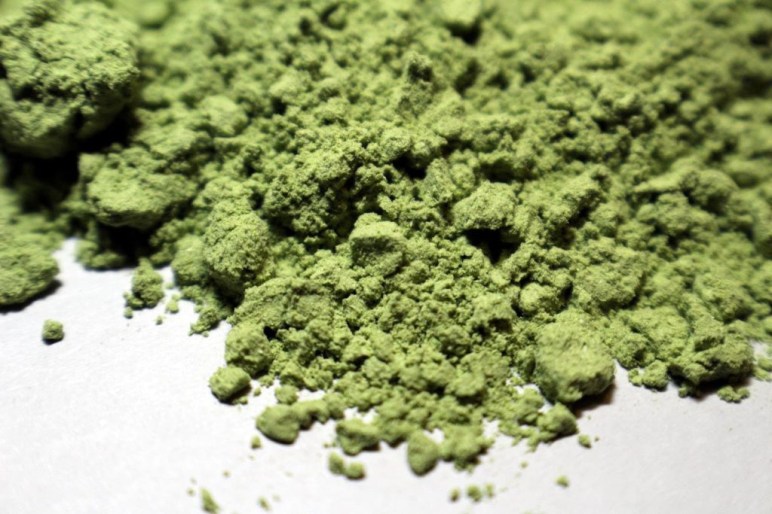
Kratom is pronounced (Cray-tom)Kratom is a tree native to Southeast Asia. The ground leaves, when consumed in low doses, acts as a stimulant. And in high doses function as a sedative and can lead to psychotic symptoms and both psychological and physical dependence. Kratom contains two major psychoactive ingredients mitragynine and 7-hydroxymytragynine. The leaves are powdered and can then be smoked, brewed with tea, gel capsules or mixed into a liquid. Or the leaves can be chewed. It can also lead to addiction. 

There have been several cases of psychosis and symptoms including hallucinations, delusion and confusion upon use. The effects on the body include nausea, itching, sweating, dry mouth, constipation, increased urination, tachycardia, vomiting, drowsiness and loss of appetite. Users have also experienced anorexia, weight loss, insomnia, hepatoxicity, seizure and hallucinations (getsmartaboutdrugs.gov, 2024).

I used Kratom for a while to help with chronic pain. And I have to admit that it helped. When I used it, I would mix a spoonful into some orange juice and drink it. The taste is extremely bitter. And overall, I just didn’t like the way that it made me feel. I never became addicted to this substance. I can understand why people can become addicted to it. All you have to do is look at the list of side effects to realize that those same type of signs and symptoms are related to opiate use. And some people believe that Kratom is, in fact, an opiate needing some type of legislation.

Kratom supporters argue that it is helpful for chronic pain and  opiate addicts. And I personally can’t deny those facts. And with it also being a plant, some people argue that it’s safe like cannabis. It is not. Kratom can actually lead to overdose death. Cannabis has yet to have a casualty. I don’t think that it’s completely horrible. I do think that it’s a substance that needs to be used with caution. And I also don’t believe that minors should be allowed to buy it legally. Kids just don’t use it in moderation and always look to just get high. And there have been deaths associated with its use.

There are several countries that have also banned the  possession and use of kratom. These countries include: 

§  Australia

§  Finland

§  Denmark

§  Japan

§  Isreal

§  Malaysia

§  Lithuania

§  Latvia

§  Myanmar

§  Russia

§  Poland 

§  Romania

§  South Korea

§  Singapore

§  Thailand

§  Vietnam

§  New Zealand (bicyclehealth.com, 2024).

As with most substances like this, the FDA does not approve of it. And unlike cannabis, there are no safety measures that have been set in place for regulation. There is no testing of the product to identify pesticides, molds or any cutting substances. Therefore, you have absolutely no idea what has been mixed in with this plant. And for this reason, I agree that that testing should be required prior to the sale. 

The DEA currently has Kratom listed as a “drug of concern.” And it will be scheduled under the Substance Abuse Act. The DEA also stated that they will seek to list Kratom as a Schedule 1 drug which has a high potential for abuse and no currently accepted medical use. And a lack of accepted safety for use under medical supervision (dea.gov, 2016) Currently, individual states have launched their own legislation regarding this substance.

The Six states that have already banned kratom are: Alabama, Arkansas, Indiana, Rhode Island, Vermont and Wisconsin. Other states have enacted legislation about minimum age requirements like nicotine and alcohol. The safest thing to do is to read about the risks involved and make your own decision. And check current legislation in your state for its legal status. Be careful if you have a history of addiction.

If you have minor teens or children, do not let them take this substance. This should only be allowed for adults. Enjoy it while you can. Because this is another substance that will eventually be banned throughout the country. Where it might have been initially used legitimately for years, the substance has proven to be deadly on all  fronts. Thanks for reading! Take what you can and leave the rest.

Affirmation: You are stronger than your temptation.

***Don’t forget to watch the video!***

#Thispuzzledlife