This Puzzled Life is a mental health and recovery blog exploring addiction, trauma healing, LGBTQ experiences, humor, and the strange moments that shape us.
“I’m not a great pothead or anything like that…but weed is much, much less dangerous than alcohol.”
-Bill Maher
Light the charcoal. Sprinkle the sage. Negative energy go away. Today, I want to talk to you about the cannabis holiday 11/30.
The cannabis holiday was developed by adding the well-known cannabis holidays 4/20 and the cannabis concentrate holiday 7/10. Together they form a holiday that is about the combination of concentrates and flower. And since Thanksgiving is synonymous with gorging ourselves with food, edibles also seem like a good fit. There are other products known as “doughnuts” or “hash holes.”
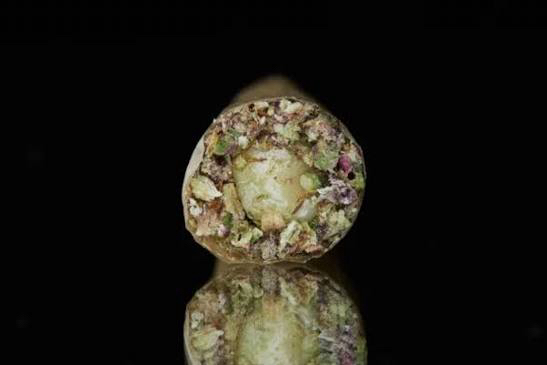
The new holiday began November 30, 2023, in Los Angeles and was called National Hash hole Day. It consists of a fat joint of high-quality cannabis with a rosin-filled center. And when it burns there is a hold that is formed all the way down the center. As someone who enjoys these types of products, I can say with confidence that you need to make sure that you have nothing to do. It is a very strong high that has the ability to couch lock you for a couple of hours. It’s like smoking flower and hitting dabs all at the same time (https://www.visithollyweed.com/first-annual-national-hashhole-day-on-11-30-features-berner-marcos-surita/, 2023).
Thanks for reading! Have a safe and happy National Hash Hole Day!
Affirmation: I only share my kindest buds with my kindest buds, and vice versa.
***Don’t forget to watch the video! Because of the cannabis content I wasn’t able to embed the link. But the link is right down there.***
I am the light you tried to strangle, the light you tried to stifle in your chokehold.
But my light bled all over the pages of your book, your preconceived narratives, your filthy words and your attempts to bring terror back into the blank space of my eyes.
Who am I?
I’ll tell you who I am.
I birthed revolution in my bones like the many women that came before me.
I ignited flames beneath my skin, using the fiery spirits of women who walked beside me
as matches; we breathed fire into each other’s hearts until the world could see us and from the ashes we were reborn.
Who am I?
I’ll tell you who I am.
I am the fear in your hatred, the pain that you tried to use to violate my sacred spaces, rip me apart until I was nothing,
but I knew I would always be something, somebody, and now I am.
I am layers and layers of the love and power that act as your kryptonite,
and with the words and actions of all those who rose with me, I’ll build an impenetrable wall.
Who am I?
I am the thing that nightmarish people have nightmares about,
wake up sweating about, thinking about —
their furrowed brows tense with self-doubt —
wondering if I and the other warriors I march with could ever come back to life.
Who am I?
I am the restless rebel you tried to bury,
the one you tried to pull out by the root and eradicate when she began to grow from the seed.
Who am I?
I’ll tell you who I am.
I am the girl you left for dead thinking she’d always fall and never rise again.
I am the girl you cut with your razor blade wrath, the girl you thought would never fight back.
I am the girl you underestimated, the woman you tormented, the child whose shackles you tightened.
Who am I?
I think you already know –
I think you understand.
I am the prisoner you tried to cage, the little girl you made afraid –
I am the woman who never gave up, the one who exposed your charade —
Who am I?
I am everything and anything that you will stand againstto try to regain control.
For every source of darkness, there is a bleeding soul,
one that shines so brightly that the entire war zone becomes illuminated.
I am the truth, your karma, the revolt —
I am the resistance, the pieces you tried to keep shattered, coming back together again.
I emerge quietly, but I resound loudly —reverberate through your skin.
My power was never yours, and it was never yours to take.
“Trauma Bonding is like being a hostage who has developed an irrational affection for your captor. They can abuse you, torture you, even threaten to kill you, and you’ll remain inexplicably and disturbingly loyal.”
– Ann Clendening.
I posted this today to help give you a voice to your own abuser/abusers. I have been in therapy for many years, and sometimes, I even doubt these words. The problem is that we were so indoctrinated with their beliefs, comments, gas lighting, manipulation, and co-dependency that we formed a something called “trauma bonding.”
Trauma Bonding is an unhealthy emotional attachment that develops between a victim and their abuser. It is a complex issue that occurs in different abusive situations that include physical, sexual, and emotional abuse. But it’s also important to note that not everyone who goes through abuse forms a trauma bond. However, some people may be more prone to forming a trauma bond due to the early experiences as a form of repetition compulsion https://www.attachementproject.com, 2025). This can happen in domestic abuse, child abuse, elder abuse, exploitative employment, kidnapping or hostage-taking, human trafficking, and religious extremism or cults (https://medicalnewstoday.com, 2023).
Characteristics of Trauma Bonding:
· Intermittent Reinforcement: The abuser cycles between periods of abuse and kindness creating a sense of hope and dependence in the victim. Victims of abuse may be waiting for that next “feel-good moment” in the relationship that also keeps them trapped in a cycle of abuse and relief (https://www.domesticshelters.org, 2021).
v This is also how many addictions keep you stuck. If everything were bad all of the time, you would grow tired and leave. But the intermittent reinforcement is how they maintain control.
· Isolation: The abuser often isolates the victim from their support system, making them more vulnerable and reliant on the abuser ((https://medicalnewstoday.com, 2023).
v I was not completely isolated physically from my support systems. But emotionally I was very isolated. He constantly told me that my friends and family didn’t have my best interest at hand. He would make up lies about things they said and assassinate their character behind their backs.
· Fear and Insecurity: The victim experiences constant fear and insecurity, leading them to believe that they cannot escape the abusive situation (https://www.savantcare.com,2023).
v The constant fear and insecurity that I experienced was, in fact, my prison cell. And I was afraid to leave even when the door was wide open.
· Justification: The victim may rationalize the abuser’s actions or blame themselves for the abuse (https://thriveworks.com, 2024).
v I was conditioned to believe that everything I did that made him angry was my fault. And it wasn’t. Now, I can see that his actions were because of his behavior, not mine.
· Emotional Manipulation: The abuser uses emotional manipulation to control the victim’s thoughts, feelings, and behaviors (https://wondermind.com, 2023).
v This right here was the #1 key factor for why I wouldn’t leave. He even told me, “No other man would ever put up with the things that I have to deal with in you. All of the good things about you, which aren’t many, are because of me. You are useless without me. I have given you everything you wanted. And disobeying me is the thanks that I get? Why do you need anti-depressants when there is no reason that you should be depressed.
Trauma bonding kept me trapped in an abusive situation. People have said, “Why didn’t you just leave?” The problem lies in the way they you manipulate you into believing that everything bad that happens, no matter how minor, is the victim’s fault. And day after day, their hold strengths without you even realizing it. And in my case, I felt as though I was responsible for their thoughts and feelings. I constantly strived to be “good enough” or “well deserving enough” to see the person that he told and showed me he could be when we met. And quite frankly, it was always just a game. Their abusive self is “the real them.” Believe your instincts and the colors in which they present themselves. For that is who they truly are.
If you have read through this and have never been in a situation where everything you do is being controlled, consider yourself lucky. But don’t you dare sit there and say, “It was their own fault that they didn’t leave.” That is one of the most callous things that you can say to someone who is currently trying to survive and those that have survived finally leaving that situation no matter how long it took.
You have absolutely no right to tell me or anyone else how we should feel simply because you have not experienced it. I stayed much longer than I should’ve. And there are times when I still beat myself up for it. Now though, I give myself some grace for not knowing how to leave or recognizing what was going on in plain sight. It’s not just one event that causes this. It’s something that happens every single day methodically planned and executed by the warden in the relationship.
Once you leave, I highly recommend getting into therapy. Just because you think that no damage has occurred, doesn’t mean that it hasn’t happened. Even now, 19 years later since I left him, I have phobias, anxiety, depression, difficulty concentrating, and difficulty making decisions. He has left a mark that will last a lifetime. And some of the things that he did I’ll never recover from. He once told me, “You’ll never be without me no matter what you do!” And the truth is that, while he still doesn’t have total control over me, I still allow parts of him to live rent free in my head.
The next post will be something that represents those of us who have managed to leave and have an understanding through therapy how and where to put the responsibility where it truly belongs, on them.
To those who are still in these types of relationships, I see you even when you don’t openly identify yourself. To those who have left and still live in fear, I see you and you’re not alone. To those of us who continue to strive to change those hard-core beliefs that were instilled by way of threats, intimidation, and violence, I see you as well. None of you are alone. And not all relationships are like this.
Find a therapist that you trust and open your soul to them. Coach has been a lifeline of compassion and understanding for me that I’ve rarely experienced. And she has never made fun of or questioned why I didn’t leave. Unconditional support and her teachings have made life possible for me many lonely nights. I will probably always struggle with some things and that’s ok. This process is certainly a marathon instead of a sprint. And there is no time limit for healing. The whole point is to continue showing up and moving forward in whatever way that might take shape. You are not on an island like you think. There are millions of us both male and female who struggle with the effects and consequences of domestic violence and abuse.
You are loved. You are wanted. And you deserve the good things that life has to offer. Thanks for reading! And I hope you look for the next blog in a couple of days that I post that will help you begin to find your voice. The power to heal is now and ours.
Affirmation: My story has power and inspiration through it.
“The connection between domestic violence and animal cruelty is so significant that it is commonly referred to simply as “the Link.” Perpetrators of domestic violence often threaten harm or bring actual harm to their victims’ pets in order to control them, keep victims from leaving, or to punish them for actually leaving or attempting to leave.”
-ASPCA.org
Light the charcoal. Sprinkle the sage. Negative energy go away. Today, I want to discuss domestic violence and pets. I won’t pretend that this topic is going to be easy to digest. However, it’s one that needs to be brought into the light.
Many of us sometimes love our animals more than people. I know, speaking only for myself, that my animals have always been a source of comfort, unconditional love, and understanding that many people can’t fully embody. They have never spoken a word as their compassion is in their eyes. And all they ask for is to be fed and also loved in return. That is, it. Nothing more. Nothing less.
My personal experience with domestic violence is knowing that absolutely nothing is off limits. And it is their cruelty that can always get worse. Do some abusers change? Yes. But if they are not willing to do self-reflection and to look at their own traumas and behaviors, then they will not change. And most blame their actions on the victim.
Please Read The Following:
Up to 75% of women entering DV shelters report that their abuser threatened, harmed, or killed their pets in the presence of children (safehouse.org, 2024).
Up to 65% of domestic violence victims and 48% of battered women remain in abusive homes out of fear for their pets.
Only around 5% of U.S. shelters have any kind of housing for pets of domestic violence victims (https://www.drmartybecker.com, 2017).
Why Do Abuser Use Pets To Terrorize Their Human Partners?
· Creating fear: Abusers may torture or kill a pet to demonstrate what they are capable of doing to their human victim or their children.
v There were many times when I saw and heard my ex-husband’s violence against my animals. He would muzzle my outside dogs all night long most of the time. And he would beat my cats with a belt if they meowed at night. He also scared my cats so much with a broom that they began to have a very strong fear reaction for many years following me leaving him.
· Leverage to prevent escape: Many women fear for their pet’s safety is the primary reason they delay leaving an abusive relationship.
v One of his favorite things to say was, “One day you’re going to look up and all of your animals will be gone. You just might come home one day, and they will have vanished.”
· Punishment and retaliation: Abusers may harm a pet as punishment for a perceived transgression or in retaliation for a partner trying to leave.
v After 13 years of being in a domestic violence situation, and over a year of planning my departure, I left him hoping things would cool down enough to go back and get my animals as a way of saying, “I’m done.” Two weeks later, I went back to retrieve my animals, and most had been starved. There was no water. A few of the ones remaining had been eaten by other animals or were mysteriously cut in half. On that day, I was able to get out two cats and my African Grey parrot. Only three of the many that I owned. My cats were starving and had old, moldy food. My bird had moldy food and dirty water. My outside cats were nowhere to be found. And my dogs had been shot which was witnessed by a neighbor. And the sights and smells can never be undone.
· Forcing participation: Some women survivors tell about how they were forced to participate in illegal acts under threat of harm to their pets.
v Luckily, I was never forced to do this. Because they would’ve had to do something for me. Because I don’t have the capability to hurt my pets.
“Seeing her hurt was more than I could bear.
I couldn’t and wouldn’t leave my pets.”
-Sarah, DV Victim
Women have reported:
“He kicked the dog repeatedly until it was howling in pain.”
“He put his hand into the goldfish bowl in front of my five-year-old daughter and squashed the goldfish, for no apparent reason.”
“I can remember an instance when he picked the cat up and with full force drop-kicked it from the back door. He did it because he saw the cat on the workshop. I thought the cat might die.”
Resources for victims who want to leave with their pets:
· National Domestic Violence Hotline 1-800-799-SAFE (7233).
· The Purple Leash Project
o Our goal: To see 25% of domestic violence shelters become pet-friendly by 2025.
· Safe Havens for Pets
o For pets are sheltering services that help individuals who are experiencing domestic violence or homelessness with a companion animal (https://www.safehavensforpets.org, 2023).
· RedRover Relief
o Mission is to “bring animals out of crisis and strengthen the bond between people and animals through emergency sheltering, disaster-relief services, financial assistance, and education.
· URINYC PALS (New York City)
· Paws for Safety (Rockland County, New York)
· Praline’s Backyard (Snellville, Georgia)
· Ahimsa House (Georgia)
· Shelter our Pets (New Jersey)
· Network for Pets of Domestic Violence Victims (www.npdvv.org).
· This is a list of pet-friendly domestic violence shelters (https://saftprogram.org, 2025).
I completely and unapologetically understand the fear that abusers instill in victims about their victims and their pets. I encourage you to seek help by way of organizations that are listed here and the many others that I don’t have the space to acknowledge. Animal abuse is a crime in all 50 states. And each state has anti-cruelty statutes that include felony-level provisions for acts of violence against animals.
And they will “love bomb” and abuse you until you concede. That is part of their “reign of terror.” They are master manipulators and will suck the soul from your mind and body. And then tell people that you enjoyed it. It is imperative for you and those you love, including your pets, to find a way out of that situation. I beg you to please continue searching for help in every way possible. Because they will do it again. And candy and flowers won’t make it better.
Thanks for reading even though difficult it may be. Please seek help for those you love even if that is for yourself. You and your pets are worth the love and compassion that is waiting for you all. Keep reading. Keep hope alive.
Affirmation: I forgive myself for believing all relationships are abusive and violent.
-Rachel Caine, Fall of Night (The Morgancille Campires, #41)
TECHNOLOGY-FACILITATED ABUSE
Monitoring text messages, phone records, social media activity, and internet search history.
Preventing or forbidding a person from owning or having access to a phone or computer.
Sending abusive messages through text, email, social media, or other online platforms.
Using technology to track a person’s movements without their permission.
Using technology to gather personal information about someone without their permission.
Accessing or ‘hacking’ a person’s online accounts without their permission.
Impersonating a person online.
Using technology to share personal and private images or videos without consent.
v Luckily, social media and the internet were fairly new things at that time. However, once we separated, he was very threatened through email.
STALKING AND HARASSMENT
Following and watching someone, for example watching them from a parked car.
v I was stalked constantly. And he even went as far as to sit outside my job for the entire shift to make sure I didn’t eat any food that he didn’t approve.
Using technology to monitor their movements; this is also called tech abuse.
Sending unwanted gifts to a person’s home or workplace.
v This was done whenever the cycle rolled back around to “love bombing.” He always gave me gifts and the same speech. However, it would only take a couple of days until he was right back to the same thing starting with verbal and emotional abuse.
Repeatedly making unwanted contact through phone calls, text messages, emails, social media and other messaging or chat apps.
Turning up, uninvited, at the person’s home or workplace, or at social activities.
v He would always justify his actions with some type of excuse for why he showed up. And he was always lying. He always had a more sinister reason.
Installing spyware on a person’s digital devices to get private information, or to secretly record or video them.
v He and his brother went so far as to tap the phone lines at our house to monitor who I was having conversations with.
Using webcams and other forms of video surveillance without the person’s knowledge or consent.
REPRODUCTIVE ABUSE
Preventing a person from using birth control or forcing them to have unprotected sex.
v This happened from the very beginning. I was lucky that I never got pregnant.
Pressuring a person to get pregnant.
Forcing or pressuring a person to have a pregnancy terminated.
Forcing or pressuring a person to have medical treatments which will prevent them from having periods or having a baby.
Forcing or pressuring a person to have medical procedures on their genitals.
Abusers will justify and create new ways of cruelty covered with beautiful paper and a beautiful bow. And to unsuspecting victims, they have no idea what kind of damage is done until many years down the road, if and when they get out and into therapy emphasising on “deprogramming.” For years, I’ve questioned if what I experienced was true. And that’s the precipous of their game. They teach you how to doubt your own reality,
I left that horrible 14-year relationship, in 2006, battered and broken. Many of the wounds are still evident, and others are in various stages of healing. What I don’t need a degree to diagnose is how deep some of the wounds run. Being conditioned to be someone who you aren’t. And the constant walking on eggshells still wreaks havoc on my nervous system. And I still get overwhelmed to the point of not being able to make everyday decisions that most take for granted.
What is unseen benefit? For a long time, I never knew the answer to that question. What I did learn was different aspects of human behavior and their “red flags.” Not just physical. But also verbal. I watch how they talk about their other friends and family. I watch non-verbal cues. I watch how they are on both good and bad days. I watch how they communicate. I watch how superficial they are and their intentions. I watch to see, in what ways, they poke fun at another person. Are they being silly or cruel? I watch to see if my needs are considered or is it just “lip service?” But above all, I watch for congruency. I watch behavior with a fine-toothed comb. And for the most part, if I sense that something is off, I’m out. Most of the time, I have to watch them for a little while before deciding about whether or not to end a relationship.
I now listen to my gut. Something that I rarely ever did because he made every decision. And I do mean every decision. My master’s degree never taught me to listen to my gut. Surviving cruelty did. I know what I see. I know what I experience. And your validation is not needed. Thanks for reading! And reach out for HOPE.
“No amount of me trying to explain myself was doing any good. I didn’t even know what was going on inside of me, so how could I have explained it to them?
-Sierra D. Waters, Debbie
Light the charcoal. Sprinkle the sage. Negative energy go away. Today I want to continue talking to you about different types of domestic violence. Now let’s continue.
ELDER ABUSE
· Physically or sexually assaulting the older person.
· Physically restraining the older person, and limiting their ability to move around.
· Preventing the older person from leaving the house or having contact with others.
· Neglecting to provide basic necessities including food and medical care.
· Using the older person’s money or property without their permission.
· Forcing or pressuring the older person to alter documents such as a will.
LATERAL VIOLENCE
also known as ‘horizontal violence’ or ‘intra-racial conflict’. It is a mixture of historical, cultural and social dynamics that results in a range of behaviours. It is not just an individual’s behaviour. It can involve a group of people working together to attack or undermine individuals, families. Lateral violence doesn’t just refer to physical violence. It is also a form of coercive control and is related to social, emotional, psychological, economic and spiritual violence.
Malicious gossip
Group bullying
Social exclusion and isolation
Claims that the individual does not ‘belong’ in the group
Physical violence
Sexual violence.
*Each of these were done to be when both he and his brother worked as a team. They ruined my name to their friends and family. They told horrible lies about things that I had not done. They both knocked me down. Ripped my clothes. And started kicking me in both my stomach and my back. And if I was being too resistant to what my husband wanted, he would call his brother to threaten me in other ways by saying, “He would pay people to rape me until I couldn’t walk.” And when I went back to my husband and told him what was said he simply told me, “Well, I guess you shouldn’t have made him mad.” In essence, he called his brother and set the whole thing up.
LEGAL ABUSE
Preventing a person from getting legal help, including making false claims about their rights to legal protection.
· Hiding or destroying legal documents and other evidence.
Making false reports.
Not complying with court orders.
Deliberately delaying legal procedures.
Deliberately running up large legal bills.
*He continually threatened me with legal action. I was told that no one would believe my claims about him because he hadn’t left one identifiable mark on me. And because I had been diagnosed with depression and prescribed medication that I was the one with the mental history. The fact still remains that he never had the balls to go to therapy about his own issues. Because all of his behavior was because of someone else. Had they gone, he would have a diagnosis of Narcissitic Personality Disorder and also labeled as a sociopath for his behavior that both he and his brother exhibited without a conscience. I think that’s why neither one of them ever got any help. Because they didn’t want a label that accurately described them.
FINANCIAL ABUSE
Forcing or pressuring a person to get a credit card or take out a loan against their wishes.
Using a person’s name to get a credit card or take out a loan, without their knowledge.
· Controlling what a person can spend their money on.
v He was so tight with money that you couldn’t slide a piece of notebook paper between the cheeks of his ass. I wasn’t allowed to spend money without permission. But he was able to buy whatever he wanted.
Controlling a person’s access to their own money, such as their wages or salary.
v I was never allowed to keep or use my own money. He would come up to my jobs and I was expected to hand over my checks. I was given $20 per week and was told, “Don’t let me find out that you’re eating food that I would allow.”
Using a person’s money without their permission.
Selling a person’s property without their permission.
Preventing a person from getting a job and earning money.
“An abuser can seem emotionally needy. You can get caught in a trap of catering to him, trying to fill a bottomless pit. But he’s not so much needy as entitled, so no matter how much you give him, it will never be enough. He will just keep producing more demands because he believes his needs are your responsibility, until you feel drained down to nothing.”
-Lundy Bancroft, Why Does He Do That? Inside the Minds of Angry and Controlling Men
Light the charcoal. Sprinkle the sage. Negative energy go away. Today I want to go over more types of domestic violence. I know that this topic is not an easy one to face. However, domestic abuse occurs in more homes than you realize. Maybe in your own home.
VERBAL ABUSE
· Ridiculing or humiliating someone.
v If he were alive and breathing, this would happen from the time I woke up until the time I went to bed.
· Criticizing their appearance, intelligence, sexuality, religious beliefs, or ethnicity.
v This happened all the time. I was constantly told that I was dumb and retarded.
· Criticizing their actions as a partner or parent.
v All day and every day. The worst was at night and on the weekends. I got blamed for his bad golf game. He had this idea that he was Tiger Woods. And he very clearly wasn’t. But it was always because of something I did that made him play bad. In reality, he just sucks at the game.
· Using cruel or abusive nicknames.
v He and his brother always had cruel nicknames for me.
· Swearing at someone.
v Most people cuss when they get mad. However, he and his brother were relentless in their attacks.
· Yelling or screaming at someone.
v Again, I think that a certain amount would be considered normal. However, screaming and hollering at me for everything little thing was how they both operated.
SOCIAL ABUSE
· Stopping someone from seeing or contacting their friends and family.
v He didn’t physically stop me. However, it was very clear that I was not leaving the house without specific information about where I was going and what I was doing. And if that wasn’t what he wanted, I was told not to go at all.
· Stopping someone from going to social or community activities.
v Unless he went with me, I was told, “No. You don’t need to go do that.”
· Preventing someone from having contact with people who speak their language or share their culture.
· Making someone move away from friends, family, or work opportunities.
· Controlling a person’s use of phone or computers.
v On more than one occasion, when I went to call for help from police, he would unplug the phone so that I couldn’t use it.
· Checking or stopping their mail, phone calls, text messages, emails, social media and other messaging or chat apps.
v Luckily, there was not much of this that was available at the time. There was barely internet, and I better not have an email address. I had a Nokia cellphone which he checked constantly.
· Telling lies or spreading false information to damage a person’s reputation.
v This happened all the time. Especially when he talked to his family. The smear campaign was always in action.
· Using someone’s intersex status, sexuality, gender expression, transgender, or HIV status against them.
v He never knew that I was a lesbian. Hell, why would I tell him when the violence was bad enough.
· Forced marriage
v The day of my wedding, I knew that I was making the biggest mistake of my life. I was frozen with fear. But it was what he continually pushed for marriage. And I eventually gave in. Biggest mistake of my life!
· Stalking
v This happened every single day. If it wasn’t him, it was his friends and family who did the stalking. At the end of the day, I was questioned about everything that I had done and was told, “Well, what about when you were walking around in that store.” He knew every move that I made. It even got so bad that he knew what I had eaten during the day.
SPIRITUAL, RELIGIOUS OR CULTURAL ABUSE
Preventing someone from practicing and being connected to their culture.
Stopping someone from going to their place of worship.
Stopping someone from having contact with other people who share their beliefs.
Stopping someone from celebrating days of cultural or spiritual significance.
Stopping someone from sharing their beliefs and traditions with their children.
Stopping someone who is Aboriginal or Torres Strait Islander from returning to Country or having contact with kin.
Stopping someone who has family connections outside Australia from visiting or connecting with family or community overseas.
Ridiculing someone’s beliefs or traditions.
Forcing someone to do things that are against their beliefs, like eating certain foods or wearing certain clothes.
Forcing someone to marry.
The pressure was definitely applied when I was undecided.
Forcing someone to take part in spiritual practices in which they don’t believe.
Forcing someone to raise their children according to beliefs they don’t agree with.
Using or claiming to use spiritual or religious beliefs:
as an excuse for violence or abuse.
to pressure someone into staying in a relationship.
Let me just say this about him and his spiritual practices. He always went through the motions and played the part. He even pretended to get “saved” and was baptized. However, that was as far as it went. Because when we got home the abuse continued to happen. But now he had a Bible to justify his actions.
Thanks again for reading! I hope I was able to share a little lighter on the subject of domestic violence. There is help and hope after abuse. Reach out for the love and respect that you deserve. Keep moving forward!
“If you aren’t silent about your pain, they’ll kill you and say you enjoyed it.”
-Zora Neale Hurston
Light the charcoal. Sprinkle the sage. Negative energy go away. Today, I want to talk to you about some of the behaviors that fit under the umbrella of domestic violence. It wasn’t until I was out of the relationship for a while before I began to see information validating what I always knew. This is not comprehensive list by any means.
COERCIVE CONTROL OR CONTROLLING BEHAVIOR
· Control who a person sees, wears and where they go.
v This was considered normal in my relationship. He dictated everything that I wore. If I chose what I wanted to wear, he would tell me to, “go change. You look ridiculous.” And I was afraid to go somewhere without asking his permission.
· Monitor or track what a person does.
v This was also something that was done on a daily basis. He would call me wherever I was supposed to be and verify it by employees.
· Control a person’s finances, medicine, food, or exercise.
v He always told me that I was not allowed food that he didn’t approve. And I was required to be at the gym at 5:30 am every morning. And he would call and speak with those employees about what type of exercise I was doing. I was also not allowed to spend any money without permission.
· Force someone to have sex or do sexual things.
v I was never given the option to make that choice. I was threatened if I even spoke about that.
PHYSICAL VIOLENCE
· Hitting, punching, kicking, bashing, shoving, or pushing.
Thishappened more times than I can count. He did kick me in the face. But when he and his brother teamed up together, it was worse. The main reason is because my husband didn’t want to say that he participated. And because they always threatened and intimidated me into silence, I never said anything. His brother was his “yes man.” And my husband pulled the strings.
· Spitting on someone or pulling hair.
· Choking or suffocating.
v This typically happened during forced sex. Or whenever his brother would get mad at me, he would choke me as a form of intimidation.
· Throwing things at or near someone.
· Using a weapon.
v This was always pointed at me or laid out somewhere as a form of threats and intimidation.
· Locking someone in or out of space.
v This was often done to show control.
· Stopping someone from eating, sleeping, or having medication they need.
v Every piece of food had to be given an account. One of his favorite things he would allow me to have for a snack was ten olives and ten pistachios. He would come home from work and completely berate me if I weren’t already up. And it didn’t matter that I had just worked a 24-48 shift. He always told me that medication was a crutch. He got mad because I had been given muscle relaxers for a hurt back and proceeded to kick me in the face and throw my medication out into the rain. I was also not allowed to take any psychiatric meds for depression or mood stabilization because, “why do you need anti-depressants when I’m so good to you? And what if someone finds out that you’re taking this? I don’t want anyone knowing that my wife is crazy. Then it makes me look bad. Why don’t you care about that?”
· Forcing someone to drink or take drugs.
v I did this on my own to help deal with being under his crazy world of control.
SEXUAL VIOLENCE
· Touching or kissing someone without their consent.
v I was made to accept his advances.
· Pressuring or forcing someone to have sex or do something sexual without their consent.
v I was told, “Either you give it to me, or I’ll take it. Either way, I’m getting what I want. Make your decision.” Many times, I was bruised or bleeding by the time he was done with me. I had no voice in any matter. He was the “warden,” and I was his “prisoner.” My whole sexual relationship with him was simply RAPE.
· Pressuring or forcing someone to have sex without protection such as a condom.
v I was told early on, “I’m not using protection because it burns my dick. If you really loved me, you wouldn’t put stipulations on how I fuck you.”
*I know this is explicit. However, I want you to get an accurate description of the situation.*
IMAGE-BASED ABUSE
· Sharing private images of a person without their consent, for example images of them undressing or showering.
· Sharing culturally inappropriate images of a person, for example images in which they do not wear items of clothing that they would normally wear in public.
· Sharing intimate or sexualized images of a person without their consent.
· Producing and sharing images that have been digitally altered to suggest a person is nude or engaged in sexual activity.
· Threatening to do any of these things.
*I found out later on that his brother would secretly be filming or watching us having sex.*
EMOTIONAL OR PSYCHOLOGICAL ABUSE
· Criticizing a person and their choices or actions.
v In his mind, he thought that I was too stupid to make decisions that were considered “correct.” All he ever told me what how stupid and retarded I was.
· Isolating a person form their friends or their family.
v Some friendships I lost forever because they just thought that I abandoned them. What they failed to see was that I would get accused of all kinds of stuff if I disobeyed him. Those who have never been in an abusive situation can’t comprehend losing your power to stand up for yourself. It was just easier to do what he said. Some former friends haven’t even talked to me since that time. And that is about them not me.
· Threatening to harm a person, their family, their friends, their pets, or their belongings.
v He always made threats about things he would and could do with keepsakes or my innocent animals. And if he and his brother didn’t feel that I was getting the picture, they would show up at my parents’ house and start harassing them.
This topic will be spread over a few blogs. As you can see, when I add personal experience, the blog gets much longer. Stay patient and learn from this. It’s a hell that most people can’t understand. And I’m telling you that it’s all true. I was living in a prison without visible bars. Thanks for reading! And watch for the second part in the coming days.
Affirmation: I remember that it is ok to ask for help and receive support.
Light the charcoal. Sprinkle the sage. Negative energy go away. Today, I want to talk to you about breast cancer. By now you have been affected by breast cancer either directly or indirectly. In this blog, I will reiterate some of what is already known about this disease that stills so many lives. As well as some of the perplexing aspects that we don’t know yet.
As an 8th grader, the reality of breast cancer and its dangers hit me hard as I saw my grandmother struggle every day without any complaints. I know, it’s another moment courtesy of that year. And as if there wasn’t plenty of other things to deal with. As someone who used to be deeply connect with my family, this reality was a little too harsh for me. Many nights I would cry myself to sleep as everyone else said, “Don’t worry about things that haven’t happened.” However, as a child, I worried about everything including people dying that I loved. That year I don’t remember not being scared for even one minute. And today, my nervous system continues to believe that we are still there. It is what it is, I guess.
Let us look at some of the things that we do know about breast cancer:
§ Breast cancer doesn’t always appear as a lump. Other symptoms include swelling, redness, nipple changes, and nipple discharge.
§ Drinking alcohol can increase your breast cancer risk.
§ You don’t need to learn how to do a breast exam. Research indicates that monthly self-exam isn’t necessary (www.mdanderson.org, 2025).
§ In 2025, estimated 316,950 new cases of invasive breast cancer will be diagnosed. As well as 59, 080 new cases of non-invasive breast cancer.
§ Currently 4 million breast cancer survivors
§ Estimated 42,170 U.S. women will die from breast cancer this year.
§ Risk of recurrence depends on the type and staging of the initial breast cancer.
§ 1 in 8 women in the U.S. will develop breast cancer in their lifetime.
§ Most common cancer in American women.
§ The average age of U.S. women diagnosed is 62 years old.
§ About 9% of all new cases in the U.S. are diagnosed in women younger than 45 years old.
§ Younger people under the age of 35 who are diagnosed face a higher risk of recurrence.
§ Black women are 40% more likely to die from breast cancer than white women.
§ Black women have the lowest 5-year relative breast cancer survival rate of any racial or ethnic group.
§ 1 in 5 black women are diagnosed with triple-negative breast cancer, which is more difficult to treat.
§ Hispanic women have a 20% lower incidence rate of breast cancer than any other group.
§ Asian and Pacific Islander women are more likely to be diagnosed with localized breast cancer.
§ They also have the lowest death rate from breast cancer.
§ American Indian and Alaskan Native women have the lowest rate of developing breast cancer.
§ Chinese and Japanese women have the highest breast cancer survival rates.
§ In 2025, an estimated 2,8000 men will be diagnosed with invasive breast cancer in the U.S.
§ Estimated 510 U.S men will die from breast cancer in 2025.
§ 1 in 726 men in the U.S. will develop breast cancer.
§ Genetic Mutations like BRCA1/BRCA2 increased risk, only account for a very small percentage of breast cancers. Which means approximately 80-90% are unknown.
§ Reasons for high mortality rate in African American women is still being investigated.
§ While dense breasts are a factor, there’s more needed research to understand the underlying mechanisms.
§ Symptoms like nipple inversion, skin dimpling, and changes in nipple or breast skin texture, can delay diagnosis and treatment.
§ Although knowing about breast cancer in men, the cause and treatment are not as well-understood with diagnosis and treatment being delayed.
§ Environmental factors are suspected and are still being explored (www.fomatmedical.com, 2023).
“Leaving is so hard because your confidence is destroyed. You feel trapped.”
-Unknown
Light the charcoal. Sprinkle the sage. Negative energy go away. Today, I want to talk to you about some common misconceptions about domestic violence. Sit tight. These myths and truths will help to dispel some of the things that you might have been told.
1. Myth: Domestic abuse is a “family matter” and the community should not interfere.
Fact: Domestic abuse is against the law making it everyone’s business.
2. Myth: Domestic abuse affects only a small percentage of the population.
Fact: One-third of American women report being physically or sexually abused by a partner.
3. Myth: Only men abuse women.
Fact: Statistics show that 85% of domestic abuse victims are women and 95% of perpetrators are men. However, men are abused by women also. And the rate of Gay, Lesbian, Bisexual and Transgender communities are at the same rate as heterosexual relationships.
4. Myth: Only low-income families and minorities experience domestic abuse.
Fact: Domestic abuse in every area of society. Most previously recorded statistics are skewed due to the numbers coming from public agencies, city hospitals, police departments, social service agencies, and the courts.
5. Myth: Abusers are violent in all their relationships.
Fact: Most abusers are only abusive to a targeted intimate partner. Some abusers are successful in their professions and are very charming. And this is how they maintain power and control. This was how my ex-husband introduced himself. In front of people, he appealed to many. It was once we were not in front of people that the abuse occurred.
6. Myth: Domestic abuse is caused by mental illness.
Fact: Personality disorders, mental illness, poor impulse control, and generational abuse do not cause domestic abuse. Even in cases where a particular mental illness may cause a person to be abusive, the abuse is not specifically targeted at one person but to everyone around during the episode.
7. Myth: Domestic abuse is caused by drugs and alcohol use.
Fact: Where drugs and alcohol are often associated with domestic abuse, they do not cause the violence. My ex-husband never used drugs and alcohol. He was just mean and very controlling.
8. Myth: Abusers are violent because they cannot control their anger and frustration.
Fact: Abusers use anger as an excuse to rationalize or blame their abusive behavior: anger is not a cause of abuse; it is a conscious choice made by them. I was always told that “I was the cause of his anger.” So, in some way, I was made responsible for his behavior. When in actuality, he is responsible for his own behavior.
9. Myth: Therapy will stop the violence. If he/she goes to therapy, it will be safe at home.
Fact: Referral of a batter to is one of the strongest predictors that a victim will return to violence. However, research on the effectiveness of treatment for batters are inconclusive. What is known is that there’s a 50% drop out rate in these programs by those who do enroll.
10. Myth: Boys in violent homes will grow up to be battered and girls will be victims.
Fact: Not all children who grow up in homes where there is domestic abuse are directly abused or grow up to become victims or abusers. It is important to note that children from homes where domestic violence abuse occurs are at greater risk for all of these outcomes than children from homes where there is no violence.
11. Myth: Even if he/she is violent, it is better for the children to have both parents. Children aren’t negatively affected by domestic abuse unless they are actually abused.
Fact: Witnessing violence as a child is associated with adult reports of depression, trauma-related symptoms and low self-esteem among women, and trauma-related symptoms among men. Child witnesses of domestic abuse on average exhibit more aggressive and antisocial behaviors, fearful and inhibited behaviors, anxiety, depression, trauma symptoms, temperament problems, and lower social competence, than children who do not witness such violence. Youth who witness domestic abuse are more likely to attempt suicide, abuse drugs, and alcohol, run away from home, commit other delinquent behavior, engage in teenage prostitution, and commit sexual assault crimes (https://law.arizona.edu/sites/default/files/myths_and_realities_of_domestic_abuse.pdf, 2003).
I hope that you’ve been able to put some of these myths to rest. From someone who has gone through domestic violence, my perpetrator never though that he was doing anything wrong. And when I presented the need for therapy I was told, “I don’t need to go to therapy because you are the problem.” When the actual problem was that he didn’t want to look at the reality of his own actions and behaviors. And he continues to be that way. Keep reading and stay safe!
Affirmation: I forgive myself for believing I have to stay in the relationship until the person changes.









 This Puzzled Life