
Children of Addiction: The Invisible Story

“What cannot be communicated to the mother cannot be communicated to the self.”

     -John Bowlby

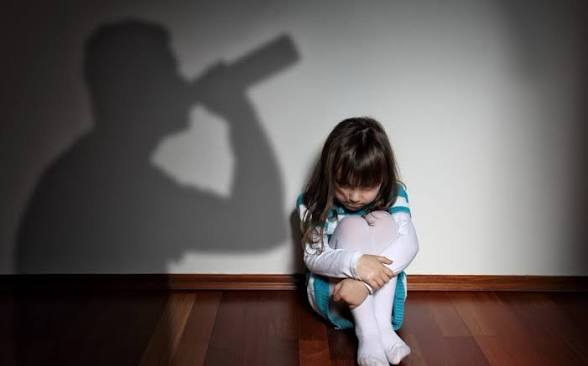
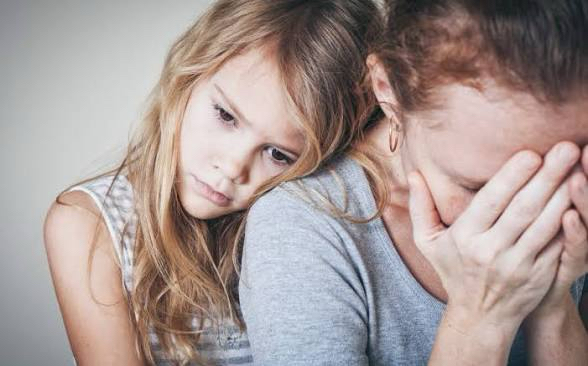
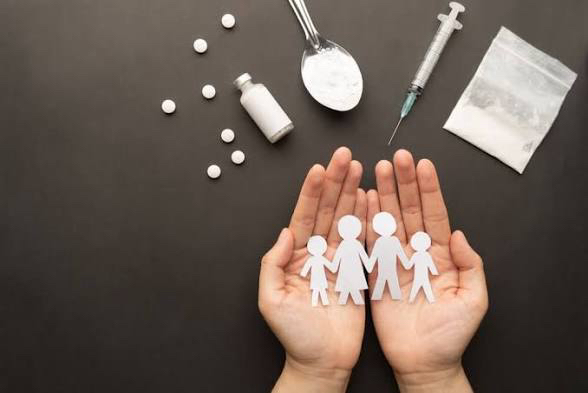
Light the charcoal. Sprinkle the sage. Negative energy go away. Some topics require us to slow down, breathe deeper, and open our hearts a little wider. Children of Addiction Awareness is one of those topics that are tender, urgent, and often hidden in plain sight. When we talk about addiction, the conversation usually centers on the person struggling. But in the quiet corners of those stories are children who carry the weight of what they cannot name.

They are not statistics. Not headlines. Not “someone else’s problem.” They are real kids. Real families. Real hearts trying to grow in soil that isn’t always steady. You don’t need a degree or special training to understand this. However, you just need to know this. When addiction lives in a home, children feel it in their bones. Even when they don’t have the words. Even when they pretend everything is fine.

Children growing up in homes affected by addiction often learn to read emotional weather patterns before they learn to read books. They become experts at sensing tension, anticipating conflict, and adjusting themselves to survive unpredictable environments.

They are the kids who:

  • Tiptoe around moods.
  • Become caretakers far too young.
  • Hide their fear behind perfection or silence.
  • Carry secrets that feel too heavy for their age.
  • Love their parents fiercely, even when life feels chaotic.

These children are not defined by the addiction around them. But they are shaped by it in ways that deserve understanding, compassion, and support.

Kids who grow up around addiction often learn to:

  • Stay quiet
  • Stay small
  • Stay out of the way
  • Stay “strong” even when they’re hurting

They become experts at reading moods, hiding feelings, and pretending everything is okay even when it’s not.

Growing up with addiction in the home can create emotional landscapes that are confusing and overwhelming. Many children experience:

  • Unpredictability: never knowing what version of a parent will appear.
  • Emotional neglect: not from lack of love, but from addiction’s consuming nature.
  • Role reversal: becoming the “adult” in the home.
  • Isolation: believing no one else lives this way.
  • Hypervigilance: always on alert for the next crisis.

And yet, these same children often develop extraordinary strengths: empathy, intuition, resilience, and emotional intelligence. They learn to survive in ways that would humble most adults.

But survival is different from thriving. Awareness is the bridge between the two. These children don’t need perfect parents. They don’t need someone to “fix” everything. They don’t need pity.

They need:

  • Consistency
  • Predictability
  • A safe adult who listens without judgment
  • Reassurance that none of this is their fault
  • Permission to feel their feelings — all of them

Sometimes the most healing words a child can hear are: “You didn’t cause this. You can’t control this. You are not alone.”

Whether you’re a teacher, neighbor, mentor, family member, or simply a caring human, you can make a meaningful difference.

  • Create safe spaces for conversation.
  • Model healthy coping skills.
  • Offer stability and routine.
  • Validate their emotions.
  • Connect them to supportive resources.

You don’t need a degree to change a child’s life. You just need to show up consistently, compassionately, and without judgment.

For the parents struggling with addiction, this conversation is not here to shame you. It’s here to remind you that healing is possible for you and for your child. Your effort matters. Your recovery matters. Your presence matters more than perfection ever could. Children don’t need flawless parents. They need honest ones. They need parents who try, who apologize, who grow, who keep coming back to love. Every step you take toward healing is a step toward breaking generational cycles.

Children of Addiction Awareness is not just a month, it’s a movement toward visibility, compassion, and collective responsibility. When we acknowledge these children, we give them language. When we give them language, we give them power. And when we give them power, we give them hope. So, take a breath and hold this truth close: Awareness opens the door. Connection keeps it open. Love walks a child through. Thanks for reading! Keep HOPE alive.

Affirmation: I didn’t cause it, I can’t control it, but I can take care of myself.

***Don’t forget to watch the video!***

#Thispuzzledlife

Ibogaine For Opioid Addiction?

“Ibogaine got me through the door. The rest was up to me.”

-Unknown

Light the charcoal. Sprinkle the sage. Negative energy go away. Today, I want to talk to you about a plant that is said to help treat addiction. The name of the substance is called Ibogaine. I’ll be the first to admit that I don’t know much about this plant. But what I intend to do is to lay out the information and let you make the determination about what you think. 

First, we’ll look at its origins. Ibogaine is a West African shrub that grows in the Congo and Angola which is then separated from the root bark. The active ingredient in the plant is Tabernanthe iboga. Traditionally it has been used as a hallucinogen to suppress hunger and fatigue while also being used as  an aphrodisiac. Hold up! So, I’m going to be able to smell colors, sleep and get in the mood? And there’s a high likelihood that I might vomit? Count me in!

Purified ibogaine hydrochloride was first introduced to European consumers in 1939 under the name Lambarene. And it was sold in France until 1970 as an antidepressant that could improve mood, physical strength and used by athletes and others recovering from illness. In 1962 Howard Lotsof, a heroin addict, the experience with ibogaine was so transformative that he spent the rest of his life advocating for it as a cure for substance abuse. A Chilean psychiatrist Claudio Naranjo also advocated for ibogaine as a treatment which was described in his book in 1973 called The Healing Journey (Ibogaine Therapy Information- UC Berkeley BCSP, 2025).

Ibogaine is an alkaloid. The treatment with Ibogaine lasts around 12 to 24 hours. Keep in mind that the patient is in a hallucinogenic state. And though some consider it a “surgical” tool for addiction therapy it does have its medical risks (https://.randrmd.com, 2025). These include severe cardiotoxicity and neurological effects which have been associated with sudden death. Specifically, there are cardiac arrhythmias, hallucinations, seizures, nervous system depressant, bradycardia, hypotension, neurotoxicity, and negative psychological effects (https://www.sciencedirect.com/science/article/abs/pii/S0736467919305700#:~:text=Background,of%20ibogaine’s%20effects%20and%20safety). This treatment should always be done under medical supervision.

Not only is ibogaine used for opiate addiction, but also in the treatment of traumatic brain injury (TBI), PTSD, depression, and anxiety. Formal testing showed improvements in concentration, memory, information processing, and impulsivity(https://news.stanford.edu, 2024). Here are some statistics to keep in mind about this particular treatment. Studies in regard to Opiate Use Disorder from clinics primarily in Mexico and New Zealand indicate:

§  80% of participants report the elimination or reduction of opiate withdrawal symptoms.

§  50% of participants report no opioid use at 60 days post-treatment.

§   New Zealand study found that 50% of participants achieved one year of abstinence.

§  Another study reported that 30% of participants never used opioids again (Subjective effectiveness of ibogaine treatment for problematic opioid consumption: Short- and long-term outcomes and current psychological functioning in: Journal of Psychedelic Studies Volume 1 Issue 2 (2017).

§  An overall analysis reports that 81% were classified as “responders” which means that they never used opioids again or significantly decreased their use after treatment.

§  In comparison with traditional treatments of Suboxone, Methadone and other pharmacotherapy, abstinence rates were at 50% at one month and 33% after three months (https://pmc.ncbi.nlm.nih.gov/articles/PMC6157925/#:~:text=Abstract,additional%2011%25%20eventually%20achieved%20abstinence, 2018).

Currently in the United States, Ibogaine is a Scheduled 1 controlled substance. Which means that it has no acceptable medical uses and a high potential for abuse. It is against federal law to possess, sell, or use ibogaine for any purpose outside of a federally approved research setting. However, Texas has allocated $50 million to fund clinical trials for addiction and TBI. Kentucky and Washington have also explored funding. And, yes, there are several biotech companies that are developing non-hallucinogenic analogs that could potentially gain FDA approval in the future.

While this treatment is not currently approved in the United States, a lot of desperate addicts will pay between $5,000 and $15,000 in countries like Mexico, Costa Rica, Portugal, Netherlands, South Africa, Canada, New Zealand, Australia, Brazil, and Gabon. Costs also depend on length of treatment and particular amenities of the individual programs. I’m not completely sold on this form of treatment for addiction or anything else. That’s not to say that people don’t find their own relief through this type of treatment. However, at this point, I would personally like to see more safety considerations and advanced research regarding this method. As an addict myself, I understand that level of desperation to want the cycle of addiction to end. My personal opinion is that I want to keep an eye on future research once it moves out of its infancy in our country. Thanks for reading! And stay informed.

Affirmation: I am a survivor, and I will recover.

***Don’t forget to watch the video!***

#Thispuzzledlife

Beware Of Deadly 7-0H Products

“It is dangerous, misleading, and illegal” and a “massive fraud on consumers that puts their safety directly at risk.”

–American Kratom Association

 Light the charcoal. Sprinkle the sage. Negative energy go away. Today, I want to talk to you about the deadly synthetic opioid products known as 7-OH (gas station heroin). You might think that these products are safe. But there is only one descriptive term for them…..DANGEROUS.

Let me break down the problems associated with these products. The product is so dangerous that the FDA  is specifically targeting the 7-OH products a concentrated byproduct of the kratom plant. They are not focused on the natural kratom leaf products. These products have a high potential for abuse because they bind to opioid receptors. They are not FDA-approved 7-OH opioid products. FDA Commissioner Marty Makary, M.D., M.P.H. is quoted saying, “7-OH is an opioid that can be more potent than morphine” (https://www.fda.gov, 2025).

What is 7-OH? –hydroymitragynine is a powerful opioid-like compound found in the leaves of the kratom plant. While this compound is naturally in trace amounts because manufacturers have begun to concentrate or synthesize it into highly potent and addictive products. They are sold at gas stations, vape shops and smoke shops. At this time, anyone of any age can purchase these products. And they are appealing to kids and teens because they are also made into edibles.

“It’s a recipe for a public health disaster.”

-Jim O’Neill, U.S. Department of

 Health and Human Services

·        Significantly stronger than morphine:Some synthetic products are reportedly 13 to 40 times more potent than morphine.

·        Intense opioid effects: these include pain relief, euphoria, and sedation.

·        High risk of dependence and addiction:Regular use can quickly lead to physical and psychological dependence with severe withdrawal symptoms when use is stopped.

·        Serious adverse effects: There have been a notable rise in emergency room visits with symptoms that include nausea, agitation, rapid heart rate, high blood pressure, seizures  and respiratory depression that can be fatal.

Difference between natural and concentrated 7-OH

·       Natural kratom: in the natural form as a plant leaf, kratom contains only a small amount of 7-OH (less than 2%). It is often used for its mild stimulant or opioid-like effects, but the risk profile is significantly different from highly concentrated products.

·       Concentrated/Synthetic 7-OH: lab created product where the 7-OH has been concentrated to a higher potency reaching 98%. These unregulated products are sold in forms like gummies, drinks, and tablets ((https://www.dshs.texas.gov, 2025).

I cannot express enough the dangerousness of these products. I, for one, fell in love with heroin and pills many years ago. And what a difficult process it has been to break free from those substances. Because “One is too many. And a thousand is never enough.” That’s how addiction works. Parents if you think that this is all a bunch of hoopla for nothing, you are dead wrong. This product scares me like most can’t. We have enough of an “opiate crisis” without introducing more into the family line. Educate yourself and your children. It just might save lives. Thanks for reading!

Affirmation: I have the ability to make a different choice.

***Don’t forget to watch the video!***

#Thispuzzledlife

Suicide Awareness And Prevention Groups

“Grit your teeth and let it hurt. Don’t deny it. Don’t be overwhelmed by it. It will not last forever.”

-Harold Kushner

Light the charcoal. Sprinkle the sage. Negative energy go away. Keeping in line with suicide awareness, I thought I would talk about a couple of groups that reflect awareness and prevention. There are so many groups out there that stay along these same lines. And I wish that I could spotlight them all.

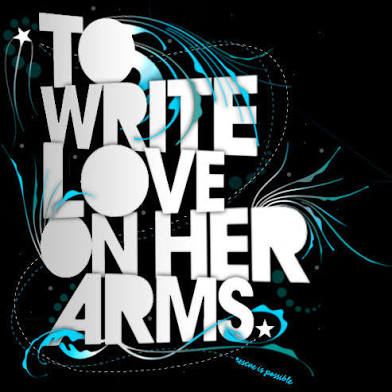
To Write Love On Her Arms

This group is a nonprofit group dedicated to presenting hope and finding help for people struggling with depression, addiction, self-injury, and suicide. Jamie Tworkowski set out only to help a friend and to tell her story. When he met Renee Yohe, she was struggling with addiction, self-injury, and suicidal thoughts. He wrote about spending five days with her prior to her entering a treatment facility. And he began selling t-shirts to help fund her treatment by posting them on Myspace. Soon people from all over the world began contacting him and telling him about their struggles and heartbreaks. And in 2007, TWLOHA became an official organization. 

Here are some numbers associated with their organization:

·       210,000 messages from individuals in over 100 countries.

·       3.8 million miles have been traveled to meet people in their communities.

·       1,100+ blog posts and launched a podcast.

·       56,000 find help tool searches.

·       27,000 fulfilled merch orders

·       $3 million donated to treatment and recovery.

WE BELIEVE:

You were created to love and be loved.

People need other people.

Your story is important.

Better days are ahead.

Hope and help are real.

(www.twloha.com, 2025).

The Semicolon Project

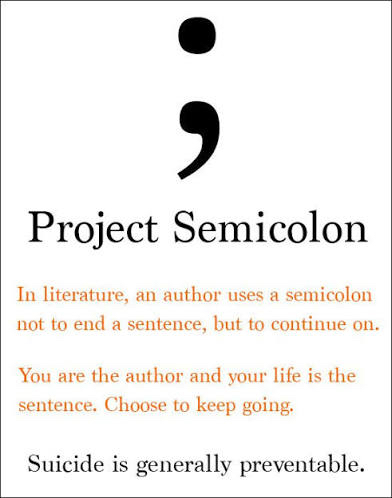
It is an online community that began in 2013, when Amy Bleuel created it to honor her father, who died by suicide. The organization centers around mental health awareness and suicide prevention. The World Health Organization (WHO) reports a 25% increase in anxiety and depression during the first year of COVID-19. That combined with the nation’s political instability characterized by protectionism and unilateralism has led to strained international relations. And the stress funnels down to our families and personal stories. 

The semicolon represents a continuance of life where a period could have easily ended the story. There have currently been over 89,000 assessments completed. 5,336 journal entries shared. And have provided direct support to 214 individuals. Semicolon badges in Apex Legends and Call of Duty has reached over 1.3 million gamers and additionally 50 new chapters. And 84% of Project Semicolon members report that the organization has saved with lives in times of crisis (www.projectsemicolon.com, 2025). 

Mission Statement

Our mission is to empower individuals with mental health experiences to embrace their journey and recognize that their story is far from over.

I hope that you can take something from this information. Please take what you can use and leave the rest. And please pass along the information to someone who can benefit. Even if that someone is you. Keep smiling! And do not be afraid to reach out for help.

Affirmation: There are other ways to end my pain, even if I cannot see them right now.

***Don’t forget to watch the video!***

#Thispuzzledlife

LGBTQ+ And Suicide

“Our country is grappling with a youth mental health crisis, and it is particularly pronounced for LGBTQ+ youth.”

-Ronita Nath

 Light the charcoal. Sprinkle the sage. Negative energy, go away. Today, keeping in line with the topic of suicide, I want to discuss suicide in the LGBTQ+ community. 

The prevalence of suicide in the LGBTQ+ community is nothing new. The risk for suicide attempts and suicidal ideation can be 3 to 6 times greater for lesbian, gay and bisexual adults according to the National Institutes of Health. But there are also other statistics to keep in mind.

In 2024, 39% of LGBTQ+ youth considered attempting suicide according to The Trevor Project’s national survey. 1 in 10 of LGBTQ+ youth attempted suicide in the past year. And LGBTQ+ youth are more than four times likely to attempt compared to heterosexual youth. I can tell you that personally, I’ve been suicidal many times because of rejection from my family as a lesbian woman.

Transgender and Nonbinary identified individuals are at an even higher rate of suicide. And almost half seriously considered suicide in the past year. In 2022, 80% of transgender people had considered suicide and 40% had attempted. These statistics while staggering are not surprising. These demographic struggles are way more than they should be with little compassion from society.

Bisexual identified individuals are 1.5 times more likely to report thoughts and attempts compared to gay and lesbian individuals. And 2.98 times more likely to have  a suicide-related event compared to heterosexuals according to a 2022 study. And  the LGBTQ+ youth of color report higher rates of suicidal ideation and attempts compared to white peers (www.therevorproject.org, 2025). And there are several contributing factors such as:

·        Discrimination and Prejudice:discrimination, harassment and violence due to sexual orientation or gender identity increases the risk of suicide.

·        Lack of Support Systems: Limited social support from family, peers and community exacerbates the mental health challenges. 

·        Mental Health Disparities: LGBTQ+ individuals are more likely to experience depression and may face barriers to accessing mental health services (https://mhanational.org, 2025).

For someone who is a member of the LGBTQ+ community, I can tell you that I’ve considered suicide many times. The rejection from family and friends are sometimes more than I can bare. And having worked with someone in therapy many years ago, who was not sensitive to the needs of someone in these communities, there was little progress made. Mainly, because I couldn’t trust her. And she was extremely judgmental.

Since collaborating with coach for almost a decade, I can tell you that I have been able to fully accept the fact that I’m gay, despite my family’s disapproval. And then the religious communities also seem to greet us with bible verses telling how many ways we are going to hell. We all know that “choosing” to be gay is such an easier way of life. There the secret is out. 

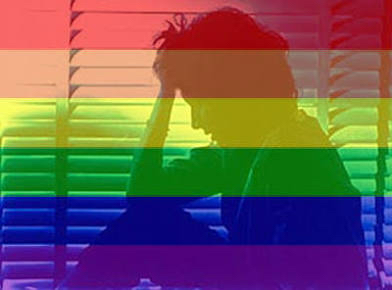
With the current political administration taking away the rights and freedoms that the Stonewall riots stood against, and the lack of funding for suicide hotlines for LGBTQ+ youth, these rates will only climb. Our families, friends, churches, and government should be ashamed of standing by people who are ok with the policies set in place. We are the same as we ever were. We just wear rainbows now. 

There are those beautiful allies out there who remain the strength and backbone of our continual fight for equality. We are youth, parents, aunts, uncles, cousins, husband, and wives who just want to be recognized as equals in the eyes of the law. But where reputations and political agendas are from the far right, we must be even more solidified as a community. If someone is for rights with some and not others, I have no room for them in my life. But it’s taken me years to come to this conclusion. 

Is it lonely? At times, yes. However, I want people in my life who not only support me but also my friends. The suicide hotline is something that our community not only wants but needs. Many of us have non-supporting families and mine is no different. But I do have a place to live currently. But that does not constitute me putting up with homophobia or fragile masculinity and femininity.

The very few “true” friends I have, understand that being gay is not a “choice.” It’s who I am. And if that’s too much for someone to manage, that’s just too damn bad. To my fellow allies and community members, keep up the good fight. We must take up the original Pride flag are carry on. I love our colors. And I’m proud to call myself a member of the LGBTQ+ community.

Keep smiling. Keep shining. Knowing you can always count on me, for sure. That’s what friends are for. We are seen. And we are heard. And….WE ARE FABULOUS! Thanks for reading. Take what you can use and leave the rest.

Affirmation: I am proud of myself and will continue to strive to do well.

***Don’t forget to watch the video!***

#Thispuzzledlife

Veteran Suicide

“The soldier above all others prays for peace, for it is the soldier who must suffer and bear the deepest wounds and scars of war.

-Douglas McArthur

Light the charcoal. Sprinkle the sage. Negativity energy, go away. Today, I want to discuss veteran suicide. I know that this topic has seemed to get old and fast. However, I believe that the more we talk about the harshness of life, the more the stigmas will begin to disappear.

In 2022, the most recent year for the current data, 6,407 veterans and 41,484 nonveteran adults died by suicide. The rate among veterans was 34.7 per 100,000 compared to 17.1 per 100,000 for nonveterans. Since 2005, veteran suicide has risen faster than any other group. And these rates are unacceptable.

The veterans who died by suicide in that year, 40% were under the care of the Veterans Health Administration. Among those patients, who were also diagnosed with a mental health disorder or substance abuse disorder, there were 56.4 per 100,000, which was twice the rate of those without a diagnosis. And among 1,548 veterans who died by suicide 64% were diagnosed with depression, 43% had an anxiety disorder, 40% had PTSD, and 32% had an alcohol use disorder. However, the highest suicide rates were associated with veterans who had sedative use disorder which include benzodiazepines, barbiturates, and opiates (www.rand.org, 2025). And the stigma about mental health in the military further increase this problem.

Aspects of Veteran Mental Health stigma:

·       Fear of judgment and perception:  Veterans worry about how seeking help will affect all areas of their lives and especially on career repercussions.

·       Military culture: The “warrior ethos” which emphasizes self-reliance and stoicism create barriers to seeking help.

·       Loss of security clearance: Some fear that seeking mental health treatment will lead to revocation of security clearances.

·       Impact on treatment: stigmas can lead to untreated mental health conditions, substance abuse and increased risk of suicide.

·       Self-stigma: Veterans may internalize negative societal views about mental health which can lead to shame, self-blame, and more reluctance to seek help (https://oxfordtreatment.com, 2025).

As an advocate for medical cannabis, I believe that our veterans should be given an ounce of cannabis the minute their feet hit US soil upon returning from active duty. As I personally deal with PTSD, there is not another medication on the planet that can bring me relief like cannabis can. And it’s such a safer alternative to alcohol, opiates, and benzodiazepine medications.

Currently,  the Safe Healing Act, which was introduced on February 4, 2025,  is designed to prohibit the Secretary of Veterans Affairs from denying a veteran benefit administered by the Secretary by reason of the veteran  participating in a State-approved marijuana program and other purposes. But unfortunately, there is only a 3% chance of being enacted (www.govtrack.us, 2025). And I consider this utterly ridiculous. There is an unmistakable problem with veteran suicide. It appears Big Pharma is still in the way of progress. I wonder how many people who oppose this bill must suffer, daily, with the horrible effects of PTSD, anxiety, and chronic pain that “Big Pharma” can’t seem to help?

Our returning soldiers are faced with horrors that no one understands until they’ve been there. And though I have never served our country, I can tell you that the above-mentioned mental health disorders have also almost taken my life many times. The symptoms are horrific in nature. Put chronic pain in the mix and suicide often seems like the only answer to have a break, though it be permanent, for even a moment of peace.

Veterans, in my eyes, should be held to the utmost respect. They should be the highest paid employees before professional athletes. And we as a country should make sure that the best treatment is available to them for the rest of their lives. Some have paid the price of their lives on the battlefield. And a high percentage of others pay with their lives when they return home. But instead of treating them like the heroes like they are, they are often discarded by the government that they so proudly serve. 

Is cannabis the only answer? Not at all. However, while they find the modality that works for them, I think that cannabis could lighten the load and make their futures seem a little brighter. Discarding them along with all the judgmental stigmas only adds to the problem. And until this is rectified, we will continue to lose those beautiful people who are willing, at any moment, to lay down their lives for our freedoms. Shame on the United States of America for treating them like that!

I know reading this is not easy. But we as a nation must stand up for these individuals who continue to pay the price every time, they open their eyes. Let’s get past the “reefer madness” ignorance and allow our veterans the opportunity to extend their lives at home. A special thanks and salute to one of my favorite veterans who I’ll call Joe. Thanks for reading! And God Bless America!

Affirmation: Bring out your inner warrior

***Don’t forget to watch the video!***

#Thispuzzledlife

What Are The Streets Saying? Lean

“My lean cost more than your rent, ooh (it do)

Your momma still live in a tent, yuh (brr) “

-Lyrics by Lil Pump’s song “Gucci Gang.”

 Light the charcoal. Sprinkle the sage. Negativity energy, go away. Today, I want to discuss a drug concoction known as “Lean.” And how very dangerous it can be.

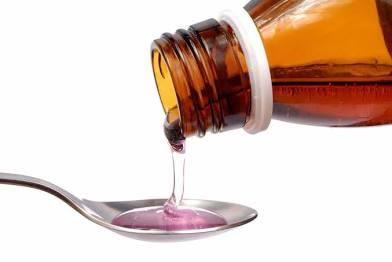
What is Lean? Lean is known as “purple drank,” “sizzurp,” “dirty sprite” and is a very dangerous addictive mixture of prescription-strength cough syrup, a soft drink, and sometimes hard candy  and sweeteners due to the unpleasant taste. The main ingredient is codeine which is an opioid. The misuse of codeine can cause a person’s heart rate and breathing to slow leading to an overdose and possible death. And it’s even more dangerous when combined with alcohol or other drugs such as benzodiazepines and Phenergan. High doses can cause hallucinations, vivid dreams, or nightmares. And can cause both physical and mental dependence .

Lean came on the scene in the music industry with such artists as Justin Bieber, Lil Nas and Three 6 Mafia in Houston, Texas. You can buy codeine over the counter in some countries (https://www.medicalnewstoday.com, 2025). However, in the United States, it can only be bought with a prescription. And with the crunch on doctors prescribing opioids, they syrup is more difficult and more expensive buying it on the street. Cough syrup that contains codeine usually costs between $250 and $800 per pint. Premade Lean on the street sales for up to $1000 per pint (https://www.arkbh.com, 2025).

 The precise number of lean specific overdoses and fatalities are not known. However, there are risks that must be considered including:

 I’ll be the first to tell you that I’ve never tried lean. I was one of those kids who always ran and hid when it was in liquid medicine form. If it was in pill form, there is a high likelihood that I would’ve used and probably gotten addicted to it. Thanks for reading. Take what you can use and leave the rest.

Affirmation: You are in charge of your life story.

***Don’t forget to watch the video!***

#Thispuzzledlife

What Are The Streets Saying? Inhalants

“The National Institute on Drug Abuse states, “The brain of a chronic toluene abuser is smaller compared to someone with no history of inhalant abuse.”

-Neil Rosenberg, M.D., NIDA Research Report

Light the charcoal. Sprinkle the sage. Negativity energy, go away. Today, I want to discuss something that many teenagers experiment with, inhalants. Abusing inhalants isn’t a new thing. As it was very popular 35 years ago. And when you’re a kid without access to money, getting “high” is just a short walk away to the family utility shed. I’ll give you some facts. And then I’ll tell my story.

First, let me describe what “huffing” is even though it’s self-explanatory. Huffing is the act of inhaling chemical vapors from common household products to get high. And it’s a dangerous form of substance abuse. Even though it might seem less risky, huffing can be even more dangerous with potentially severe and fatal consequences (https://evokewellnessoh.com, 2024).

The primary chemical in many dusters is HFC-134a, which act as propellant and refrigerant. Inhaling duster fumes can be dangerous. It can lead to serious side effects such as liver problems, breathing problems and death. Duster and other inhalants aren’t considered control substances and can be bought most anywhere.

Air dusters also contain other ingredients such as:

·        Difluoroethane can cause heart issues and loss of consciousness.

·        Nitrous Oxide can cause dizziness, vomiting and nausea.

·        Alkyl Nitrites can cause increased heart rate or vomiting.

·        Butane can affect the heart leading to sudden death.

·        Propane which can cause convulsions and loss of consciousness.

Other possible side effects are:

·        heart irregularities

·        unconsciousness

·        irritation of the nose, throat, and lungs

·        coughing

·        difficulty breathing

·        shortness of breath

·        irregular pulse

·        palpitations

·        inadequate circulation

·        abnormal kidney function

·        frostbite of the nasal cavity

·        breakdown of muscle tissue

·        liver damage

·        suffocation due to displacement of air inside the lungs

·        coma

·        convulsions

·        brain or nerve damage

·        bone marrow damage

·        choking on vomit after using an inhalant

·        sudden sniffing death, which is when a person dies suddenly after breathing in an inhalant due to cardiac arrest (https://medicalnewstoday.com, 2025).

Over a fifteen-year period, teens in the US abused more than 3,400 products through inhalation. The age range was from 6 to over 50 years old. Teen boys accounted for 73.5% of cases. Of those with known outcomes from emergency room visits, 208 died and more than 1,000 experienced life-threatening or permanent disabilities (www.poison.org, 2025).

·        More than 22.98 million Americans have abused inhalants at least once in their lifetime.

·        And over the past two decades, less than 1% of individuals aged 12 and older report past year use in 2023. 

·        Inhalants are typically used by younger adolescents, with 4% 8th graders having used in the last year. The peak age is 14 years old.

·        Inhalant abuse is less common in adults but does occur, especially among those with access to chemicals (https://www2.courtinfor.ca.gov, 2025).

·        Only 25% of inhalant abusers tested in emergency rooms had no effects. Most had serious effects or died (www.poison.org, 2025).

Toluene is a chemical found in common products including nail polish, paint thinners, adhesives. It is also used to aid in the production of benzene, other chemicals, pharmaceuticals, and dyes. Toluene can also be found in printing inks, varnishes, lacquers, and some types of glues (www.OSHA.gov, 2025).

Another product that is popular among teens, which can be bought at any “head shop” is “whip-its.” It is nitrous oxide which cuts off oxygen to the brain, creating a euphoric high that lowers mental and physical pain. And it is used to make whipped cream. Using nitrous for recreational purposes is illegal. And you can be fined or jailed for violating inhalant laws (www.webmd.com, 2025). Lock me up!

I’ll be the first to admit that “huffing” was always one of my favorite ways to get “high.” Second, only to pills. It began when I started sniffing White Out. I would cover the page with it and then roll it up and start sniffing the fumes. Same thing went for gasoline. I would put a little on a rag when I filled up with gas. And then held it to my nose and inhaled deeply. All while I was driving. I know. Safety scores are totally negative. And for many years I would quit. Always heavily involved in other types of addictions.

Once the stress of my life engulfed me while I was in undergraduate and beginning graduate school, I would start huffing again. And I found my “main squeeze” in computer duster. Mainly, because it was much cheaper than other things. I was in therapy at the time. And the stress of life and the ever-hovering PTSD symptoms had me huffing every chance I got, especially after therapy. And one day I had left therapy, grabbed my can of duster from underneath the seat and started huffing as fast as I could to get the “incorrect” EMDR effects out of my brain. And when the chemicals hit, they hit hard. Suddenly, I couldn’t figure out how to work my steering wheel. I ran up on the curb and over corrected and spun across four lanes of traffic. Luckily, there were no cars coming. I sit for a second and realized that everything was ok. Still much higher than I should’ve been to drive, I cranked my Honda CRV and headed in the direction of a potential future employer. But during my stupor I forgot to look for vehicles coming from the right as I was about to make a left turn. And the next thing I remember is hearing the horrible sound of glass breaking and a loud boom. My luck had just run out. I had inadvertently pulled out into the back wheels of an eighteen-wheeler. And for a split second I thought, “Wow! This is it. Jesus, I’m on the way!” The next thing I remember is feeling intense pain but unsure where. An ambulance picked me up from the scene. What I didn’t realize at the time was that the eighteen-wheeler had gone over the top of the cab and crashed it in. Nevertheless, I was terrified that I would be getting a DUI. But there was no way to test for an aerosol. So, I vowed to keep my mouth shut. They did do a toxicology test, but an aerosol is from the lungs not the blood. And I would live with battle wounds. I vowed to never touch that stuff again. But I would always carry that little behavior not as a first choice. But still a choice I would always have for private viewing. I thought that I was finally scared of addiction and the dark forces that surround it.

After many of doing without it while engaging in self-harm, illicit drugs, and alcohol, I would begin again while living in Texas for a couple of years. But this time, it was spray paint. They both get you “high,” however, duster can give you a very panicky “high.” If it do it too much, it becomes downright scary. To this day, I still deal with huffing. I know that it’s typically done in teenage years. But that’s when one of my biggest traumas occur day after day. And in many ways, I am still that same rebellious and very hurt teen.

If you know of someone who is “huffing,” help them stop NOW! Because years later they will look up and realize they’re an adult who’s still “huffing,” if not dead. It might seem harmless, but it’s not. I hope some of this educational material will bring more attention to a very common problem with inhalants. Thanks for reading! Take what you can use and leave the rest.

Affirmation: You are not your mistakes

***Don’t forget to watch the video!***

#Thispuzzledlife

What Are The Streets Saying? “Benzo Dope”

“Drugs take you to hell disguised as heaven.”

-Donald Lyn Frost

Light the charcoal. Sprinkle the sage. Negative energy go away. Today, I want to talk to you about a drug that is more dangerous than fentanyl. It’s called “Benzo Dope.” In my time working in the addiction field, one of the most dangerous combinations of drugs that I saw was benzodiazepines and opiates.

Benzodiazepines (Benzo) are a class of depressant drugs that are commonly used in anti-anxiety medications such as: Xanax, Valium, Ativan and Klonopin . There are many others but these mentioned are the most common. They are used in conjunction with many other drugs like heroin, cocaine and fentanyl to intensify the sedating effects. These drugs both decrease respirations and when combined can cause coma or death (dea.gov, 2025). Common street names associated with these drugs are: bars, footballs, french fries, ladders, tranks, planks, xannies, benzo blues, nerve pills, candy, k, k-pin, super valium (addictioncenter.com, 2025).

During my extensive time of being on psychiatry meds, I was prescribed “benzos” to help treat paralyzing anxiety. The trend that I’ve personally seen is that some doctors have significantly decreased prescribing these meds because of their high potential for abuse. The withdrawal symptoms, regardless if you abuse them or not, come with some pretty nasty symptoms. Even when being tapered down withdrawal effects are still present. Yep, I have abused those drugs a time or two with and without opiates.

“Benzo Dope” combines these two types of drugs raising the overdose rate in epic proportions. The “benzo” part of the concoction throws up some amnestic barriers where the user has no idea what has transpired. And oftentimes they don’t even know that benzos have been added to their dope. This leaves individuals susceptible to being robbed, raped and other traumas with no memory of the event. Now, however, “benzo dope” has become a staple in which addicts ask for it by name. The life saving drug, “Narcan,” helps to reverse the overdose effects of opiates but plays no part in the reversing the life cycle of benzodiazepines.

Several years ago, I worked at a methadone clinic in Albuquerque, NM. Methadone is another very dangerous drug that should be taken off the market. There were numerous overdoses because while using that strong opiate they combined benzos which resulted in death. As always, take what you need and leave the rest. No matter what drug is being used addiction is a death sentence.

“It is more difficult and dangerous to widraw people from benzodiazepines than from heroin.”

-Unknown

***Don’t forget to watch the video!***

#Thispuzzledlife

What Are The Streets Saying? Fentanyl

“The DEA is part of the army of good working people  working against the evil of drugs. The cartels deal in death, but we fight for life. This is not about politics; it’s about survival. Together, as one nation, we will end this  fentanyl crisis and protect our people.”

-Acting Administrator, Derek Maltz

Light the charcoal. Sprinkle the sage. Negative energy go away. Today, I’m going to discuss one of the leading killers in our nation, FENTANYL. The correct pronunciation is (Fen-ta-nil). Fentanyl is a very powerful synthetic opioid that is used in surgery as an anesthetic to control severe pain. However, over the past decade, the drug has made its way into the illicit drug supply by way of cartels who are supplied most of the time from China where fentanyl is manufactured. And the street value of a counterfeit pill of fentanyl ranges from $1 to $3 a pill. And this is why fentanyl is so affordable and appealing to anyone.

With the opioid crisis that began in the 1990s and the lack of alternative pain control, chronic pain sufferers were forced to go to the streets to handle it themselves. I also suffer from chronic pain. A few years ago when I was living in Texas, no matter how much I told my doctors about my increasing nerve pain that has spread all over my body, no one would help me. I began to think that maybe my medical issues weren’t legit. What I soon found out was that the fear of healthcare professionals of persecution because of doctors who went too far and had opened clinics called “pill mills.” These were clinics that resembled pain clinics that were prescribed  without sufficient medical history. Patients in  these types of facilities received only prescriptions as a cash only transaction.

“Overdose deaths involving primarilyfentanyl totaled 73,838 reported in 2022”

(nida.nih.gov, 2024). 

The result was an astronomical amount going to people for forming both a physical and mental addiction on these drugs. What it also caused was the people with legitimate pain issues who had no access to medications that made their pain tolerable. Chronic pain will lead you to a couple of different places for relief. The streets where pills are sold illicitly or suicide. It’s not always about wanting to be a criminal. And unfortunately, our nation didn’t have answers to help with those needs. I had used medical cannabis previously when I lived in Albuquerque, NM. Texas, however, was a big southern slow towards that goal.

I tried everything I could get my hands on to help manage my pain without success. So, I headed to the streets for relief. I went down into the area of south Dallas which was nothing but hoodrats and drug dealers. And I was only able to go into those areas because I was with someone else who was already well known in that area. I was a gay white female who people there thought was a cop. I might be a lot of things but a narc I am not. I’ll be honest, that area was scary as hell. But I felt that I had no other options. And so I started buying pills from a dealer.

“The latest DEA laboratory testing announced earlier this fall, indicates that 5 out of every 10 pills tested contain a potentially deadly dose of fentanyl. Two milligrams of fentanyl is considered a lethal dose. For perspective, one gram of fentanyl, equivalent in size to a sugar packet, has the potential to kill up to 500 people.” (DEA.gov, 2024).

At the time, pills were going for $1/mg. This means that a pharmaceutical pain pill that was 30mg went for $30. And because these pills were harder to come by means that the prices were constantly increasing. So, I might get pain relief for one night. The next day I was in horrible pain yet again. When you buy drugs off the street, you are forced to unfortunately buy what is available. And some of it is pretty difficult to come by. And each time you take the medication you are playing Russian roulette. And I didn’t care. I needed relief like I needed air. 

I was only able to buy morphine 60mg tablets which equaled $60/day which was impossible to come by for me. Buying on the streets is always a crapshoot about being able to stay in contact with more than one dealer. It’s a game of who if anyone will come through for you. Desperation will lead you to doing irrational things. And it was worth it at the time. I consider myself incredible that I didn’t become a statistic to fentanyl. And I never became addicted to anything that I used there. 

“Fentanyl is 100 times more potent than morphine.”

(DEA.gov, 2024)

Fentanyl is in everything now. If kids get some pills from a friend that bought them from a dealer and it has been cut with fentanyl, they’re dead. Narcan, which is a medication that helps to reverse the effects of an opiate, definitely helps to reverse overdose. But what if you took the pill right before you got into bed hoping for a nice, peaceful sleep pain free? No one is there and narcan then means nothing.

While growing up in the 80’s the drugs were still safe to experiment with. But now they’re not. Fentanyl is one of those drugs that has seemed to grab my attention about its hidden dangers.  Some people are being intentionally poisoned due to fentanyl. And it scares the hell out of me for my kids.

I invite you to watch videos on YouTube about fentanyl awareness. One of my personal favorites is Texas Documentaries that has a new video every couple of days about how fentanyl  has destroyed so many lives and their families. Have fun. Stay safe. And educate yourselves and those you love about the dangers of fentanyl.

“We’ve been at the forefront of this fight against synthetic opioids since the very beginning. We are committed to combating  fentanyl, and the men and women of CBP are up to the task.”

-CBP Senior Official Performing the Duties of the Commissioner Troy Miller

***Don’t forget to watch the video!***

#Thispuzzledlife