
What’s Happening To Hemp?

“Policy made without open hearings can lead to unintended harm and fuel the very unregulated market lawmakers aim to prevent.”

-Justin Eve, Hemp Grower

Light the charcoal. Sprinkle the sage. Negative energy go away. Ok, so today I want to tell you about the recent nationwide banning of hemp. And this is about to heavily affect people’s lives. I can say personally that I’m very disappointed. Let me explain everything that is going on and what to keep an eye on.

With the recent government shutdown and eventual reopening, the spending bill called the Continuing Appropriations and Extension Act of 2026 had nestled in its grasp was a new law that changed the THC limit from .3% delta-9-THC to .3% total THC. This action has closed the loophole in the 2018 Farm Bill which allowed for people to find relief when medical cannabis was not available. The new restrictions specifically prohibits products containing  more than .4 mgs of total THC per container and bans the use of synthetic or artificial derived cannabinoids.

What does this mean? This means that the cap on THC will now prevent people from getting much needed relief and, once again, pushes consumers to the black market for products. Now, I was not in favor of these products because they were not regulated and gave cannabis a bad name by allowing irresponsible teens to have access to “gas station” and “headshop” products which have made people very sick. This includes CBD, THCa, delta-8, delta-9, edibles and vapes. As usual, though, instead of creating reforms to protect consumers, they have essentially made the products useless. I’m all about regulation because when it’s not regulated there are no testing safety standards that are required for medical cannabis. Therefore, there’s actually no telling what is in these products.

There are full spectrum products that contain THC and other compounds. Broad spectrum products that contain cannabinoids, which many use synthetics, but not the THC to get you high. And isolate products such as delta-8 and delta-9 which are primarily just isolated THC molecules. 

The opposition states that the products are allowed to continue getting people high. Ok, well, the loophole allowed these products to have THCa because it was not THC. The conversion happens when a heat source like a lighter or an oven is used to release the psychoactive effects of the plant. So, essentially the product was still weed that would get you high. The difference is what stage the plant is harvested.

Many people use CBD, which is a cannabinoid found in the cannabis plant, to help relief the uncomfortable effects of many conditions. So now, because of the limits, this relief would require copious amounts of those same products, which is not practical or affordable. This is set to go into effect on November 18, 2026. You might be asking yourself why so far away?

This allows for further legislation which is already in the works to keep these products on the market safely. However, now this will be a federal ban on hemp products which will supersede state governance. The hemp industry is estimated to be supported by 300,000 jobs. And the economic estimates are $28.4 billion in annual sales. The time period allows industry to adapt and to potentially establish a regulatory framework. It also allows federal agencies like the FDA to clarify specific definitions and for the states to determine how they will interpret the federal restrictions within their own cannabis laws. And  an immediate ban would have caused immediate chaos and economic disruption (www.thehill.com, 2025).

If something isn’t done,  the redefinition of hemp will recriminalize most existing intoxicating hemp products which will now impose new, very low THC limits per container. For patients not living in a medical cannabis state, hemp-derived products were their only legal access to certain cannabinoids. The ban would eliminate the alternative completely. And it would limit patient access to only FDA approved drugs with only CBD and no THC (www.statnews.com, 2025).

And what organizations are funding this bill? You got it! Major alcohol industry companies such as: American Distilled Spirits Alliance, Beer Institute, Distilled Spirits Council of the United States, Wine America, and Wine Institute, pushed towards this ban as well as other retail giants such as Coca-Cola, Nestle, General Mills, Bacardi North America, and Moet Hennessy USA (https:mjbizdaily.com, 2025). Key congressional figures include Mitch McConnell, Dick Durbin, Tammy Duckworth, Brian Mast, and Nancy Mace (https://stateline.org, 2025). Please contact your congress men and women to urge a protective framework rather than a full ban. Those whose quality of life depends on it. Thanks for reading!

Affirmations: My body is filled with healing energy whenever I use hemp products.

***Don’t forget to watch the video!***

 #Thispuzzledlife
Types Of Cannabis Products (Flower)

“Stuggle is the enemy, but weed is the remedy.”

-Kid Cudi

Light the charcoal. Sprinkle the sage. Negative energy go away. Okie dokie! As we begin to prepare for the holiday 420 among we marijuana smokers, I thought I would tell you about some of the many, many products that you can use to enjoy the holiday in “HIGH” fashion. This, again, is not a comprehensive list. There are just way too many items to try out. However, this list will definitely get you started on your “to-do list.”

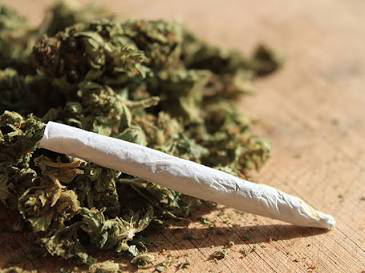
Okay! Let’s begin with the product that most people associate with smoking marijuana, it’s the flower. The term “weed” comes from the plant itself. Because it is “literally” a weed. The difference is known as a strain. And within these strains are the genetics which is the framework that determines the levels of Cannabidiol (CBD) the non-psychoactive substance and Tetrahydrocannabinol (THC) the psychoactive substance that gets you high. And are the “sticky icky” substances that look like fine white hairs. I think it’s imperative to tell you that the plant actually produces THCa. But went heated the THCa is converted to THC. The amount of THC in the marijuana of the 1970’s was around 1%-3%. In comparison to today the THC levels, in the flower, range between about 14%-30% on average. That has been my experience. And I have bought and smoked a lot of cannabis in the last 10 years. These levels were probably inconceivable back then. The weed these days needs those levels to help with medical conditions. The higher levels of THC provide relief in particular to chronic pain and insomnia. Not that CBD doesn’t work on its own at some level. The e THC does, in fact, provide so much more relief. There are strains that are genetically developed and cultivated for a higher level of CBD 1;1 ratio. And a lot of the high CBD strains typically have much lower levels of THC. For those who don’t enjoy the feeling of the high, these strains are for you. I will even mix one of these strains in my pipe before I smoke a bowl giving me some additional relief. 

Terpenes are the substances in the plant that do not get you high. These are in every plant. However, they do provide a relaxing effect and relieve pain. While also comprising over 30,000 compounds. Terpenes are NOT cannabinoids. But they have the same effect on your endocannabinoid system. They are also partially responsible for the individual tastes of each plant. They also determine, in conjunction, with the plant’s genetics what types of effects that you can likely experience.  If you think you can benefit, learn the terpenes and genetics of the strains that you use. I personally have created a spreadsheet of the strains I try. And include a rating system along with the genetics so that I can narrow down which ones work best for me. This will help you navigate the medical part of your cannabis use.

There are 3 different types of cannabis. They are indica, sativa, and hybrids. The indicas will give you a very intense “body high” known as “couch lock.” And this is when you get so high that you might stare in place for several minutes to hours at a time. Usually, meaning that you can’t get off the couch. You want the cheetos but, at the moment, you can’t figure out how to get to them. No worries. It will only last for about 30-45 minutes, depending on how high you are, to drop from the clouds. Then you just re-up and go again. I use strains that are very indica dominant in nature. I am still able to get up and do the things I need to do. But some people cannot. This will also help you determine what you like and don’t like. The medicine of the plant will begin to work continuously. The “high” of the THC will slowly diminish. 

Sativas are most closely associated with a very “cerebral” type of high. These are very good if you need an antidepressant. It’s the type of strain where you can still get up and do housework or go back to work. Caution with these as they can increase anxiety. And from personal experience, I have panic attacks just fine without them. I am very sensitive to sativas.

Hybrids are just that: They are a combination of the two types of strains varying in percentages of each. I have found that hybrids are much more readily available than pure indicas. While you can find them, you don’t see them as much. So, in that case, I use an indica-dominant hybrid strain. Each strain has its own goofy name. Don’t let that fool you. It’s still good medicine.

Some people who smoke recreationally are more concerned with the level of THC in a particular strain. And if all you want to do is get “high”, go for it. Medically and psychiatrically, I just need my medicine to work. I have used some 30% THC levels only to be disappointed that my needs were not met.  And I have used some at around 15% that have worked just fine. There isn’t a set standard for medical patients. You just have to continue through trial and error to find what you like. I typically have around 10-15 different strains at any given time. So, when I wake up in the morning, I can determine at that time what I will use during the day. And the region of the country that you’re in will differ in strains everywhere you go. I encourage you to try, as many as you can, even on vacation.

Take your time with this process. Don’t’ go too big, too quickly, or you will have a bad experience and put a sour taste in your memory. You won’t die from an overdose. Because that’s not even possible but you’ll wish you did. You would then be cheating yourself out of this beautiful plant experience. Also, if you reach levels of intoxication, be responsible and don’t drive. You will still get a DUI.

If you have a recreational marijuana program in your state go to the dispensaries and talk with a local budtender now. The closer you get to 420 the more the products will disappear or be picked over. Always have a copy of High Times Magazine nearby to keep up with the latest trends in cannabis culture. Smoke a bowl for me! Thanks for reading!

“The illegality of cannabis is outrageous, an impediment of full utilization of a drug which helps produce the serenity and insight, sensitivity, and fellowship so desperately needed in this increasingly mad and dangerous world.”

-Carl Sagan

***Don’t forget to watch the video!***

#Thispuzzledlife