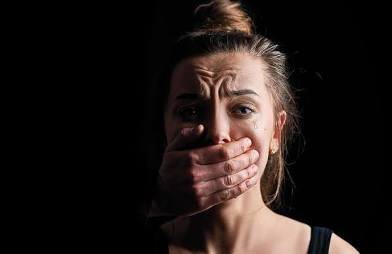

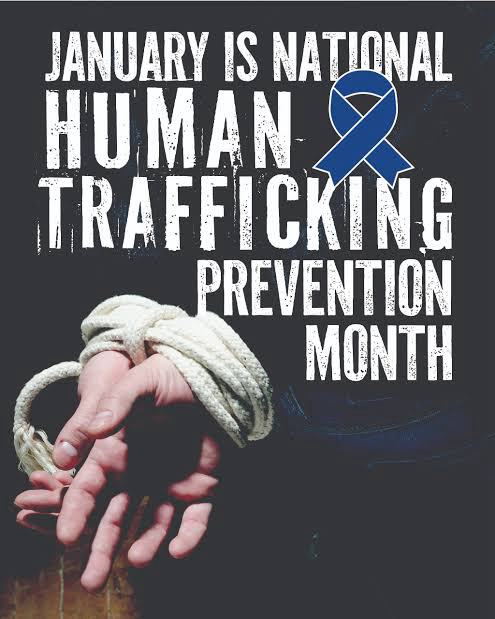
Human Trafficking Prevention Month January

“You cannot look away when human beings are bought and sold.”

— Unknown

Light the charcoal. Sprinkle the sage. Negative energy go away. Today, I want to talk to you about human trafficking prevention month.

Human trafficking is a serious crime and a violation of human rights. It involves the use of force, fraud, or coercion to exploit a person for profit.

It most commonly takes two forms:

  • Sex trafficking: When a person is forced, tricked, or coerced into performing commercial sex acts. Any minor involved in commercial sex is considered trafficked, regardless of force or coercion.
  • Labor trafficking: When a person is forced to work through threats, debt, or manipulation in jobs such as agriculture, construction, domestic work, factories, or hospitality.

Human trafficking can happen anywhere homes, workplaces, online, and across borders. Traffickers often target vulnerable individuals, including children, migrants, people experiencing poverty, and those facing abuse or instability. There are several myths that circulate about this type of crime.

Myth: Human trafficking always involves kidnapping.
Reality: Many victims are coerced, manipulated, or deceived, not abducted (Human Trafficking | National Human Trafficking Hotline).

Myth: It happens only overseas.
Reality: Trafficking occurs in all 50 U.S. states and U.S. territories. (Department of Homeland Security).

Myth: Victims will simply ask for help.
Reality: Fear, debt, threats, or trauma may prevent victims from seeking assistance.

Who Are the Most At Risk?

Human trafficking can happen to anyone regardless of age, gender, nationality, or background. But certain factors can increase vulnerability, including:

  • Poverty or economic instability
  • Unstable housing or homelessness
  • History of trauma or abuse
  • Recent migration or lack of legal status
  • Social isolation or limited support networks

Traffickers often manipulate trust, use deception, or exploit unmet needs to gain control. (Home | National Human Trafficking Hotline)

What Are the Signs of Possible Trafficking?

There’s no single indicator, but the FBI and other authorities list red flags such as:

  • Victims lacking control over their own identification or finances
  • Restricted freedom of movement
  • Excessive work hours with little or no pay
  • Signs of fear, control, or physical abuse
  • Living where they work or in isolated conditions
  • Limited ability to speak for themselves or interact freely with others FBI

Not all victims will show obvious signs, and every situation is different. It is not the same as human smuggling. Smuggling involves consent and ends once a border is crossed, while trafficking is about ongoing exploitation and does not require movement. If you or someone you know may be at risk in the U.S., the National Human Trafficking Hotline is available 24/7 at 1-888-373-7888 or by texting 233733 (BEFREE).

I have personally spent time with women who survived sex trafficking. I have listened to their stories, and the cruelty they endured is beyond words. No one should ever have to survive what they are forced to do. This must be a top priority for law enforcement and our communities. While rescues do happen, freedom is only the beginning. The wounds both visible and unseen run deep, and the scars left behind are so profound they leave you stunned, struggling to comprehend the depth of what was taken from them. Thanks for reading!

Affirmation: Every person deserves safety, autonomy, and acceptance.

***Don’t forget to watch the video!***

#Thispuzzledlife

Domestic Violence Myths

“Leaving is so hard because your confidence is destroyed. You feel trapped.”

-Unknown

Light the charcoal. Sprinkle the sage. Negative energy go away. Today, I want to talk to you about some common misconceptions about domestic violence. Sit tight. These myths and truths will help to dispel some of the things that you might have been told.

1.        Myth: Domestic abuse is a “family matter” and the community should not interfere.

Fact: Domestic abuse is against the law making it everyone’s business.

2.        Myth: Domestic abuse affects only a small percentage of the population.

Fact: One-third of American women report being physically or sexually abused by a partner.

3.        Myth: Only men abuse women.

Fact: Statistics show that 85% of domestic abuse victims are women and 95% of perpetrators are men. However, men are abused by women also. And the rate of  Gay, Lesbian, Bisexual and Transgender communities are at the same rate as heterosexual relationships.

4.        Myth: Only low-income families and minorities experience domestic abuse.

Fact: Domestic abuse in every area of society. Most previously recorded statistics are skewed due to the numbers coming from public agencies, city hospitals, police departments, social service agencies, and the courts.

5.        Myth: Abusers are violent in all their relationships.

Fact: Most abusers are only abusive to a targeted intimate partner. Some abusers are successful in their professions and are very charming. And this is how they maintain power and control. This was how my ex-husband introduced himself. In front of people, he appealed to many. It was once we were not in front of people that the abuse occurred.

6.        Myth: Domestic abuse is caused by mental illness.

Fact: Personality disorders, mental illness, poor impulse control, and generational abuse do not cause domestic abuse. Even in cases where a particular mental illness may cause a person to be abusive, the abuse is not specifically targeted at one person but to everyone around during the episode.

7.        Myth: Domestic abuse is caused by drugs and alcohol use.

Fact: Where drugs and alcohol are often associated with domestic abuse, they do not cause the violence. My ex-husband never used drugs and alcohol. He was just mean and very controlling.

8.        Myth: Abusers are violent because they cannot control their anger and frustration.

Fact: Abusers use anger as an excuse to rationalize or blame their abusive behavior: anger is not a cause of abuse; it is a conscious choice made by them. I was always told that “I was the cause of his anger.” So, in some way, I was made responsible for his behavior. When in actuality, he is responsible for his own behavior.

9.        Myth: Therapy will stop the violence. If he/she goes to therapy, it will be safe at home.

Fact: Referral of a batter to is one of the strongest predictors that a victim will return to violence. However, research on the effectiveness of treatment  for batters are inconclusive. What is known is that there’s a 50% drop out rate in these programs by those who do enroll.

10.   Myth: Boys in violent homes will grow up to be battered and girls will be victims.

Fact: Not all children who grow up in homes where there is domestic abuse are directly abused or grow up to  become victims or abusers. It is important to note that children from homes where domestic violence abuse occurs are at greater risk for all of these outcomes than children from homes where  there is no violence.

11.   Myth: Even if he/she is violent, it is better for the children to have both parents. Children aren’t negatively affected by domestic abuse unless they are actually abused.

Fact: Witnessing violence as a child is associated with adult reports of depression, trauma-related symptoms and low self-esteem among women, and trauma-related symptoms among men. Child witnesses of domestic abuse on average exhibit more aggressive and antisocial behaviors, fearful and inhibited behaviors, anxiety, depression, trauma symptoms, temperament problems, and lower social competence, than children who do not witness such violence. Youth who witness domestic abuse are more likely to attempt suicide, abuse drugs, and alcohol, run away from home, commit other delinquent behavior, engage in teenage prostitution, and commit sexual assault crimes (https://law.arizona.edu/sites/default/files/myths_and_realities_of_domestic_abuse.pdf, 2003).

I hope that you’ve been able to put some of these myths to rest. From someone who has gone through domestic violence, my perpetrator never though that he was doing anything wrong. And when I presented the need for therapy I was told, “I don’t need to go to therapy because you are the problem.” When the actual problem was that he didn’t want to look at the reality of his own actions and behaviors. And he continues to be that way. Keep reading and stay safe!

Affirmation: I forgive myself for believing I have to stay in the relationship until the person changes.

***Don’t forget to watch the video!***

#Thispuzzledlife