


“When you build your house on hypocrisy, don’t be shocked when the storm hits first.”
-Southern Gay Wisdom
Light the charcoal. Sprinkle the sage. Brace your spirit. Today’s sermon is brought to you by the Holy Ghost of “I Told Y’all.” The Book of Southern Gay Prophets. And the ancestral spirits who only show up when the drama is premium‑grade. The air is thick. The wind is petty. And the hypocrisy is rising like steam off a Mississippi driveway in July. Kristi Noem and Pam Bondi are out here doing the MAGA Walk of Shame. And the universe itself said, “Roll camera.”
Kristi “I Love Traditional Marriage Unless It’s Mine and Puppy Killer” Noem is over here smiling like she’s hosting a Mar‑a‑Lago bake sale. While her entire political career collapses like a Dollar Tree folding chair. Pam “I Have the Files-Wait, No I Don’t-What Files?” Bondi is shuffling papers like she’s auditioning for a Florida reboot of Law & Order: Girl, Please. And the hypocrisy? So thick you could spread it on a biscuit.
These two strutted into the week like they were the headliners of the Family Values Revival Tour. And strutted out like they’d been personally escorted offstage by the Holy Spirit and a security guard named Earl. The way they both got tossed under the Trump Bus with no seatbelt, no warning, no emotional support casserole, and not even a lukewarm dish from the church ladies is nothing but whew.
The ancestors aren’t just giggling. They’re hollering. They’re wheezing. They’re slapping their knees and saying, “See? Didn’t we tell y’all?” And now the smoke rising today? It’s not from the grill. It’s from the fall of two of America’s most dramatic ‘family values’ performers finally catching up to the truth they tried to outrun. Light the charcoal cause history is happening.
Let’s begin with Kristi “Traditional Marriage” Noem, who woke up this morning as the Director of Homeland Security. And then went to bed as the Director of “Girl, What Happened?” She strutted into that press conference like she was about to announce a new casserole recipe. Her bless your heart chin high. Hair sprayed into a helmet. Confidence radiating like she’d just won Miss Cornbread 2024.
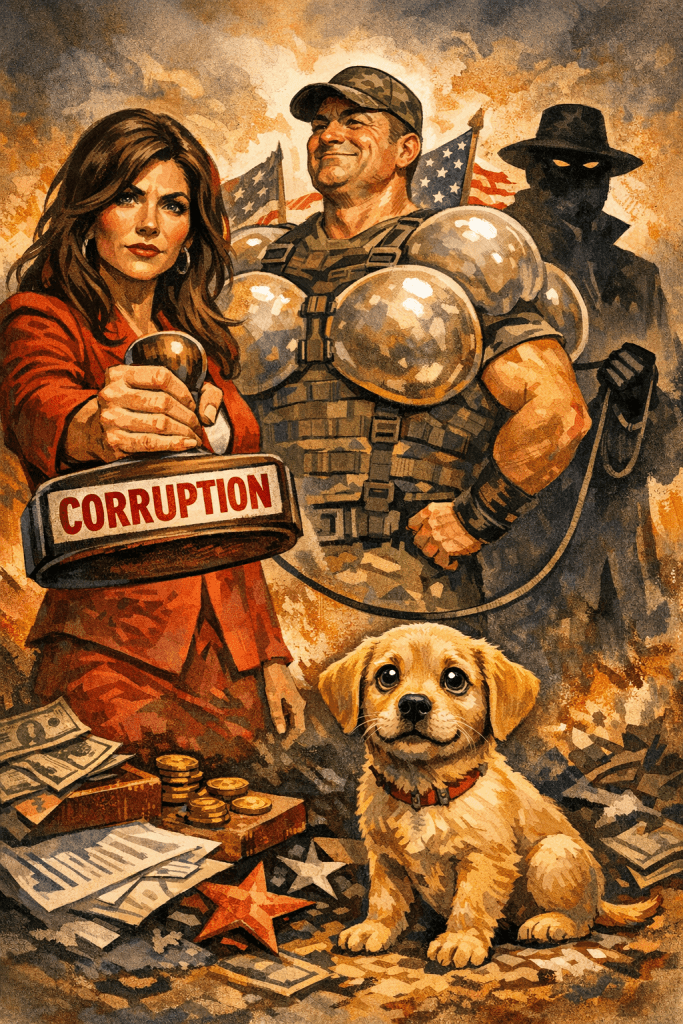
Kristi Noem is the same woman who smiled her Mar‑a‑Lago smile while cheering on the cruelty of ICE like it was a halftime show. And she really thought she was untouchable. She encouraged the worst of it. The raids, fear, brutality, and the “show them no mercy” energy that echoed the darkest chapters of history. She did it with a grin. With a camera‑ready face. And with the confidence of someone who believed she’d never be held accountable.
She wanted to take anything into custody that breathed wrong in Trump’s direction. Which included blow‑up animals, parade balloons, inflatable flamingos, and anything that dared to stand against the man she treated like a holy relic. She acted like Donald Trump wasn’t the con artist the entire country warned her about. She acted like loyalty to him was a retirement plan. But the check bounced.
And then Trump hit her with a “You’re fired!” Which had that same energy as a Dollar Tree cashier clocking out early. Because the register froze and they simply don’t get paid enough for this. But the real plot twist? Her husband, Mr. “Family Values” himself, is now living his best life as a cross‑dressing boob boy. And honestly? Good for him. Somebody in that marriage deserved joy, sequins, and breathable fabric.
Meanwhile, Pam “I Have the Files on My Desk” Bondi is out here giving us the greatest trilogy since Lord of the Rings like:
- “I have the files on my desk.”
- “I don’t have the files on my desk.”
- “What are the files?”
Ma’am. This is not a Nancy Drew novel. This is not a Hardy Boys mystery. This is a Florida woman with a ring light and a dream. Here’s the part that hits the deepest nerve. Pam Bondi who spent years doing the “I don’t have the files” shuffle, while survivors of Epstein’s abuse begged for acknowledgment she never gave. She never even acknowledged the Epstein survivors. Not when she was Florida Attorney General. Not when they begged for accountability. Not when they asked for meetings. Not when they asked for justice.
Survivors and advocates have said for years that she ignored them. Dismissed them. And prioritized political loyalty over human suffering. And now she’s out here crying on camera about being “betrayed?” The only betrayal that mattered was the one she committed against the people who needed her most. Public criticism has followed her for years. Because she didn’t meet with them. She didn’t prioritize them. And she didn’t use her power to pursue accountability when she had the chance.
And so here we stand. We’re watching Kristi Noem and Pam Bondi wobbling down the political driveway tumbling down the marble steps of their own hypocrisy. Like two contestants eliminated in the first round of a reality show nobody asked for. Their mascara is running. With their heels in their hands whispering, “Donald, please don’t do this.” Donald Trump, patron saint of Save Myself First Ministries, simply adjusted his tie and said, “Ladies, I love you, but I love me more.” And he tossed them off the political porch like yesterday’s potato salad. The silence that followed could’ve been bottled and sold as a conservative Christian essential oil.
They’ve been politically guillotined by the very man they worshipped like their Orange Mussolini Messiah Daddy. The same man who told them he’d protect them. The same man who said he’d always be there. The same man who turned around and cut them loose the second it benefited him. Pam and Kristi, the country wasn’t lying to you. He was. So, put that in your Epstein pipe and smoke it.
And this is only the beginning. The fall of Trump and the collapse of MAGA isn’t a single moment. It’s a season. A reckoning. A slow‑motion implosion of every grifter, every sycophant, every “family values” fraud who thought proximity to power would save them. Two down. Many more to go.
And as the dust settles. As the excuses crumble. And the crocodile tears dry on the marble floors of Mar‑a‑Lago, let the record show That the South remembers. The gays remember. The survivors remember. And history remembers.
And now I’ll say this with my full chest, “Kristi, Pam, Bye Felicias! May the truth follow you louder than your lies ever did. May accountability find you faster than your loyalty found Trump. And may the fall of this corrupt movement be as dramatic as the chaos it unleashed.” Thanks for reading! What are your thoughts on these two useless human beings with no souls?
Affirmation: I release the chaos of hypocrites. The noise of liars. And the weight of other people’s fake values. I walk in truth, glitter, and ancestral clarity.
***Don’t forget to watch the video!***
#ThisPuzzledLife






 This Puzzled Life